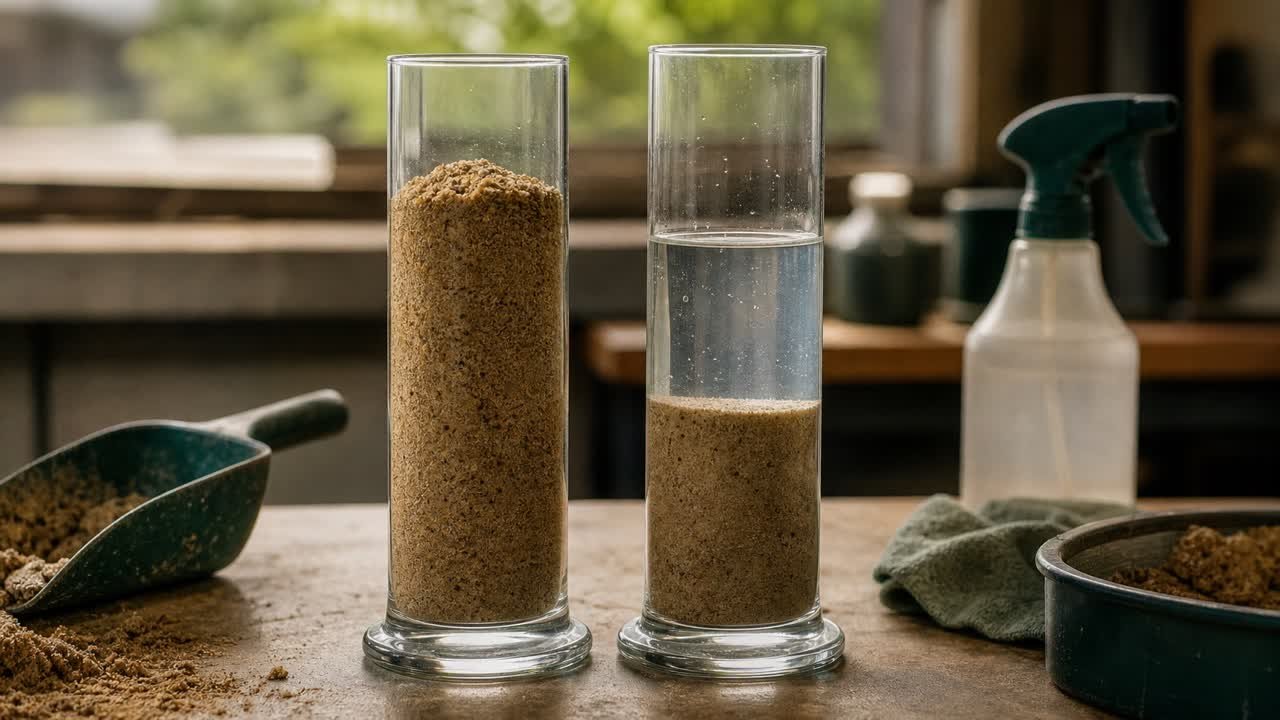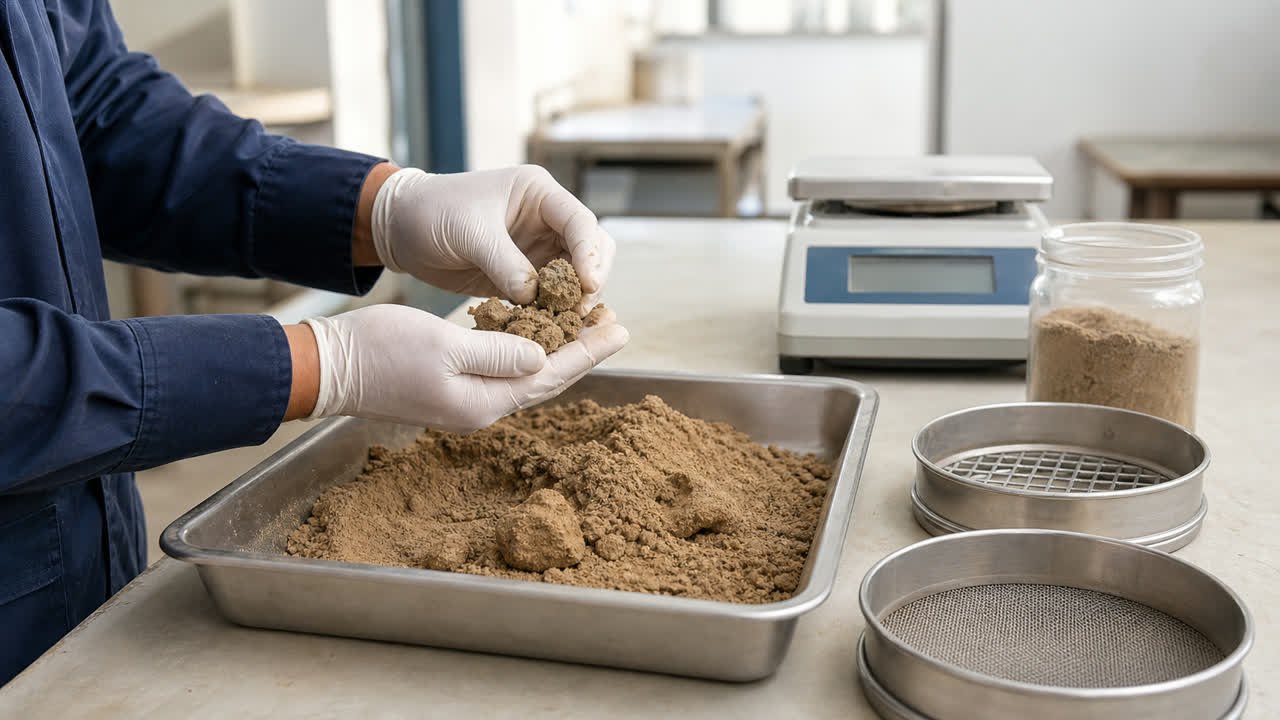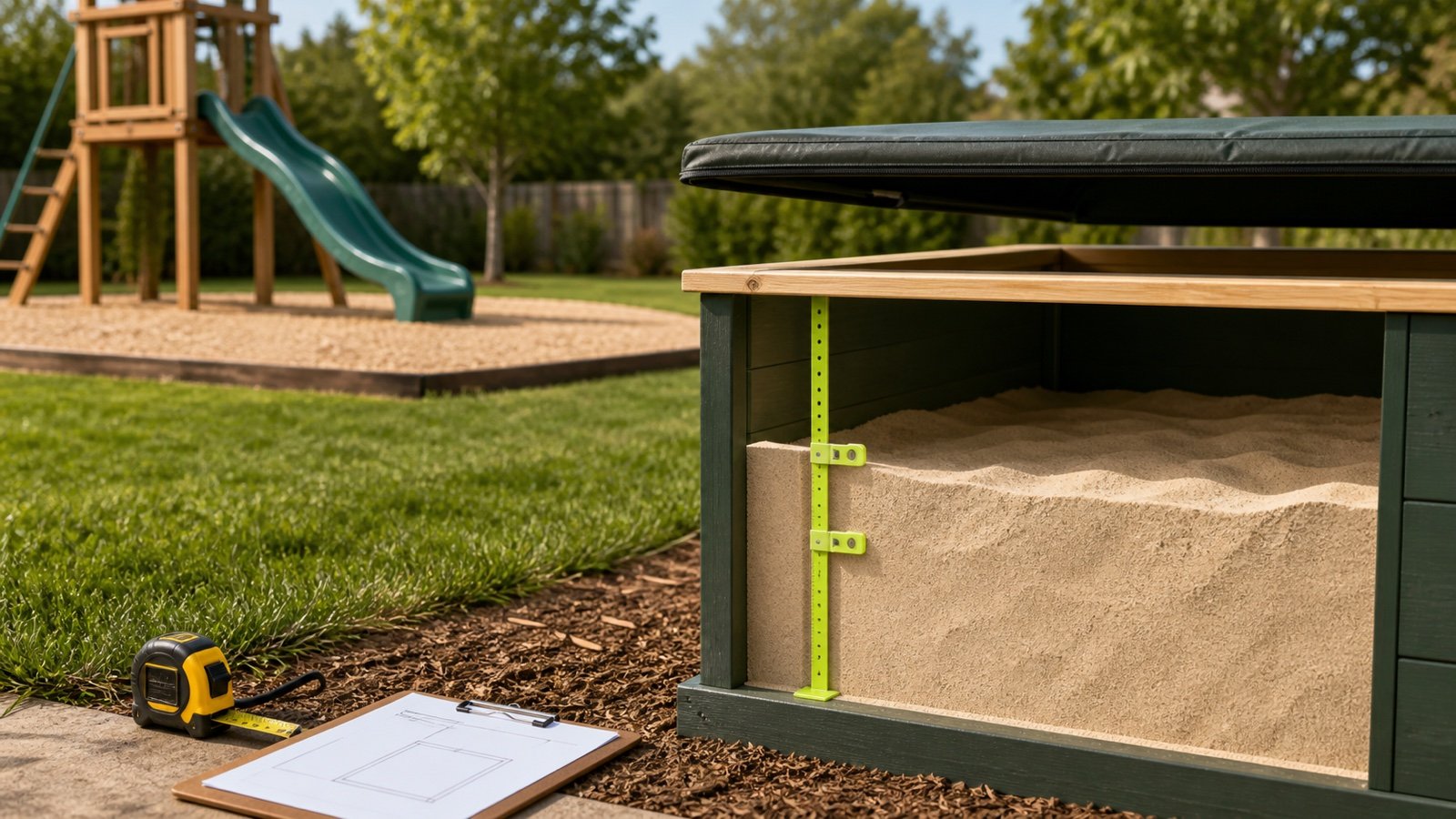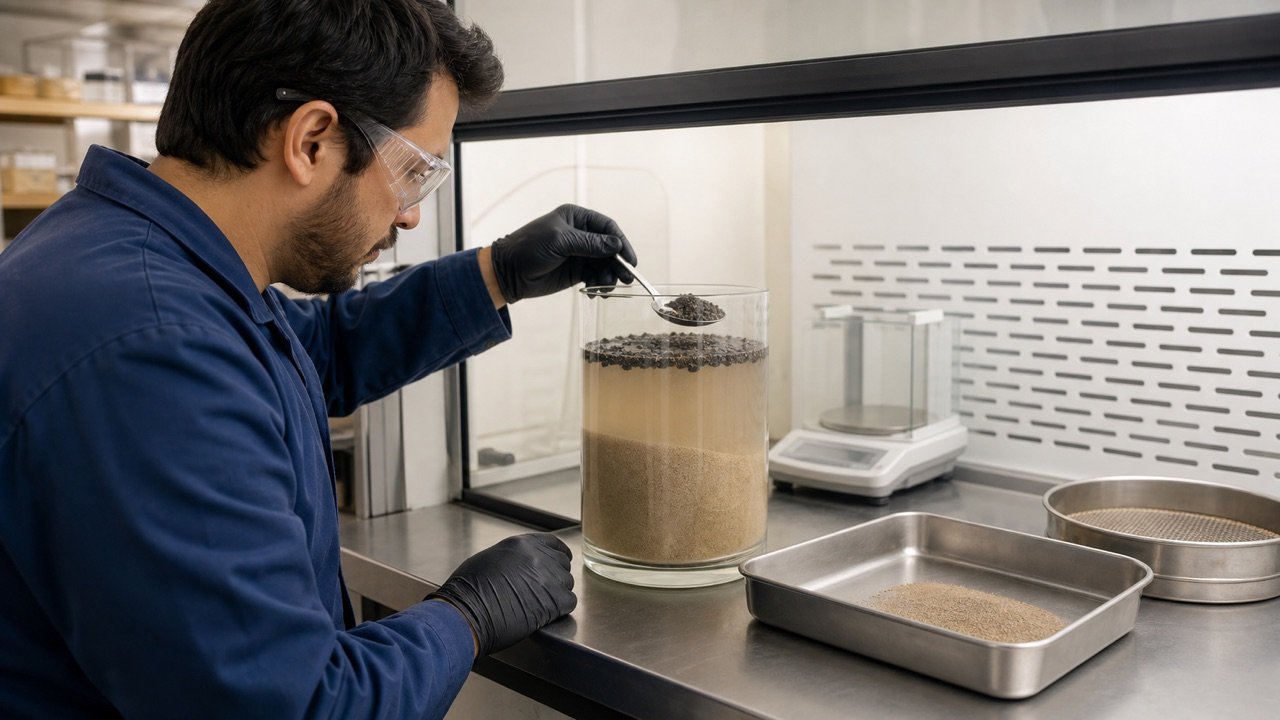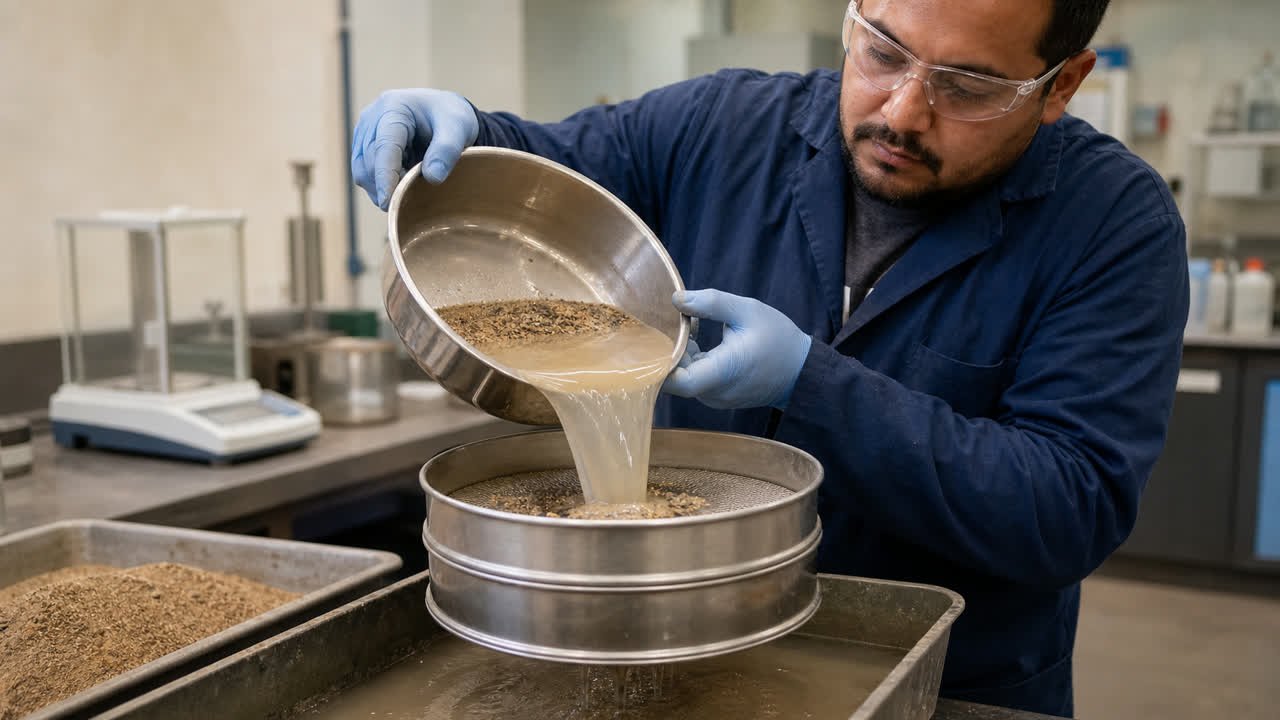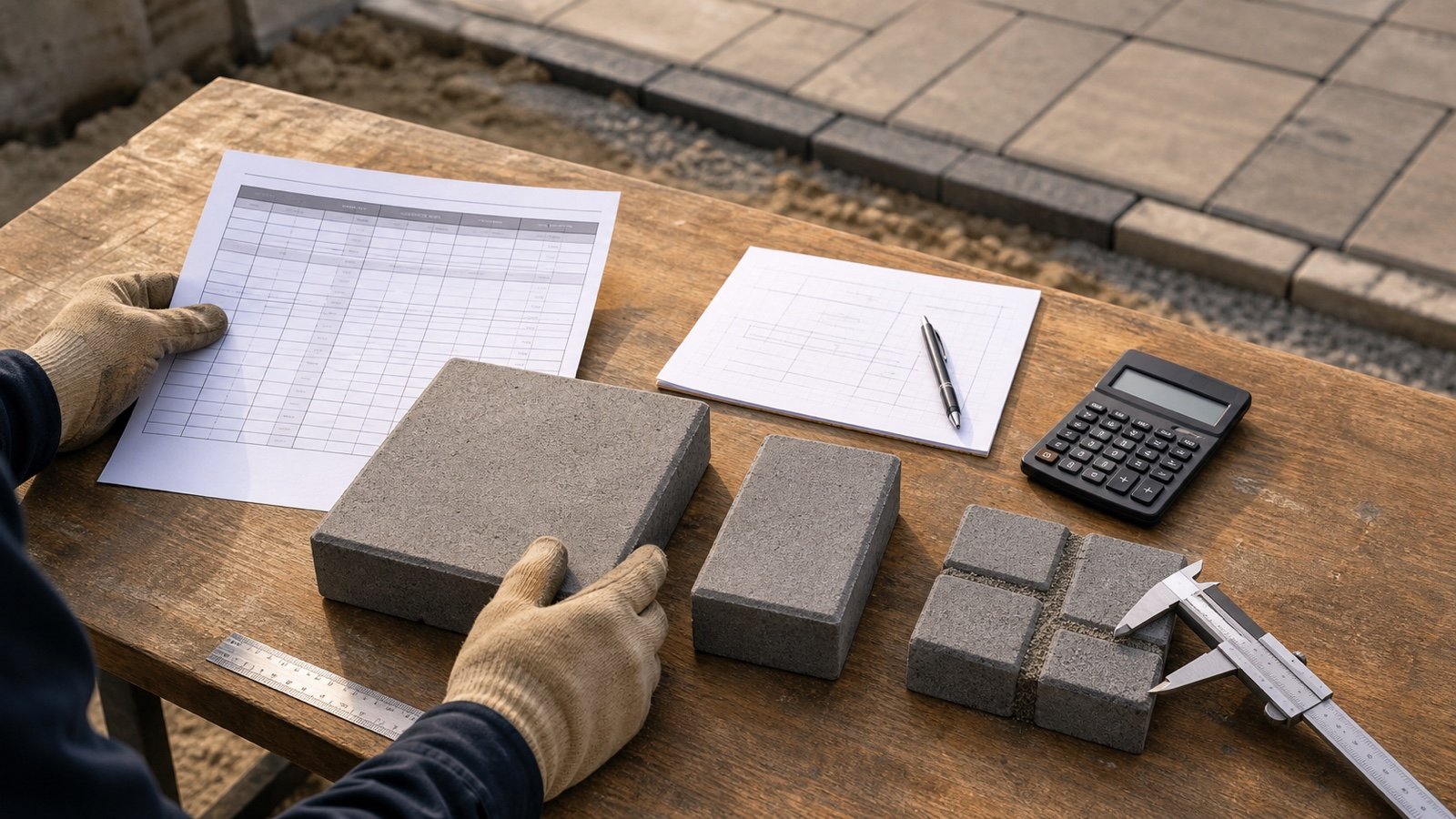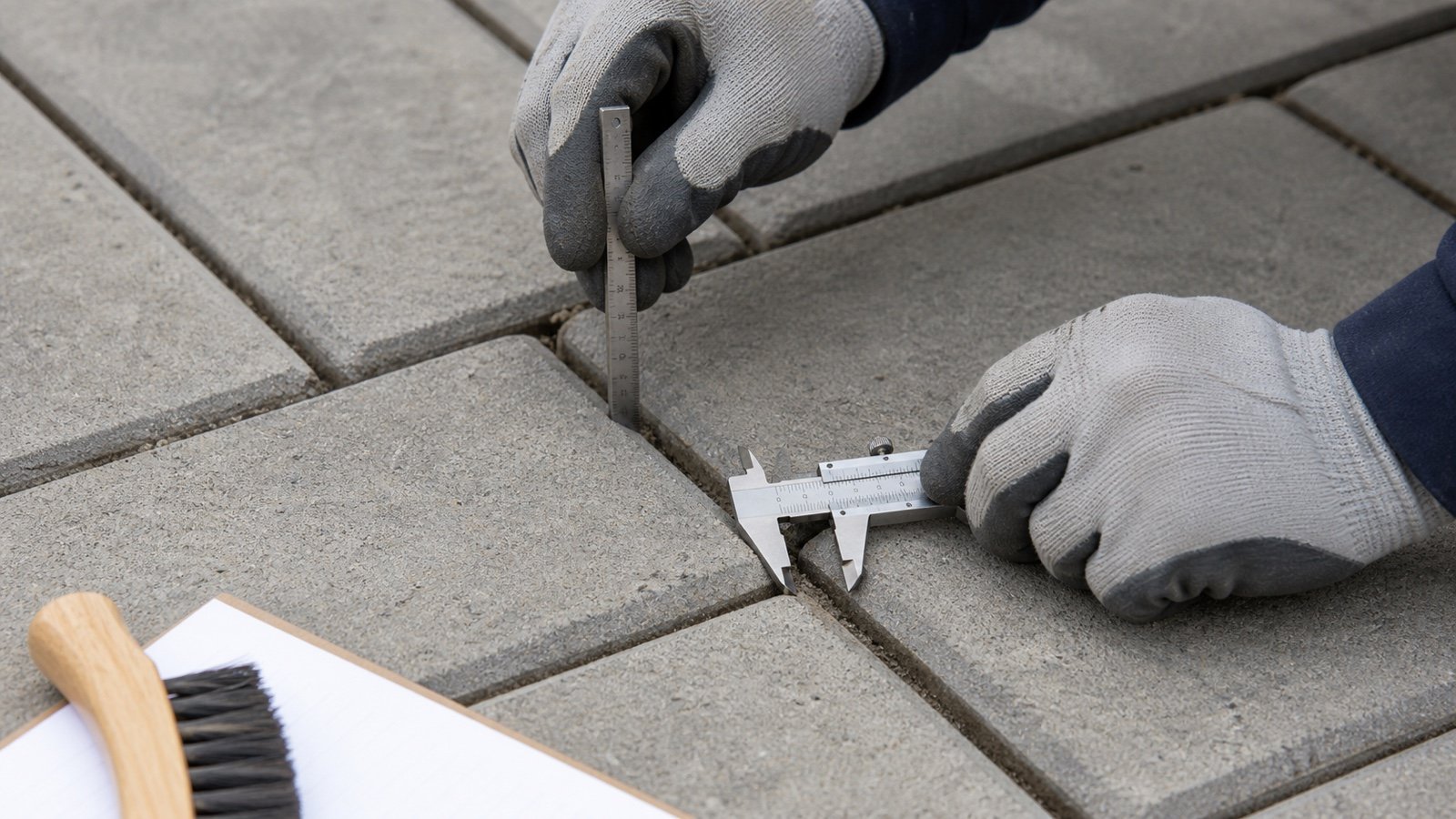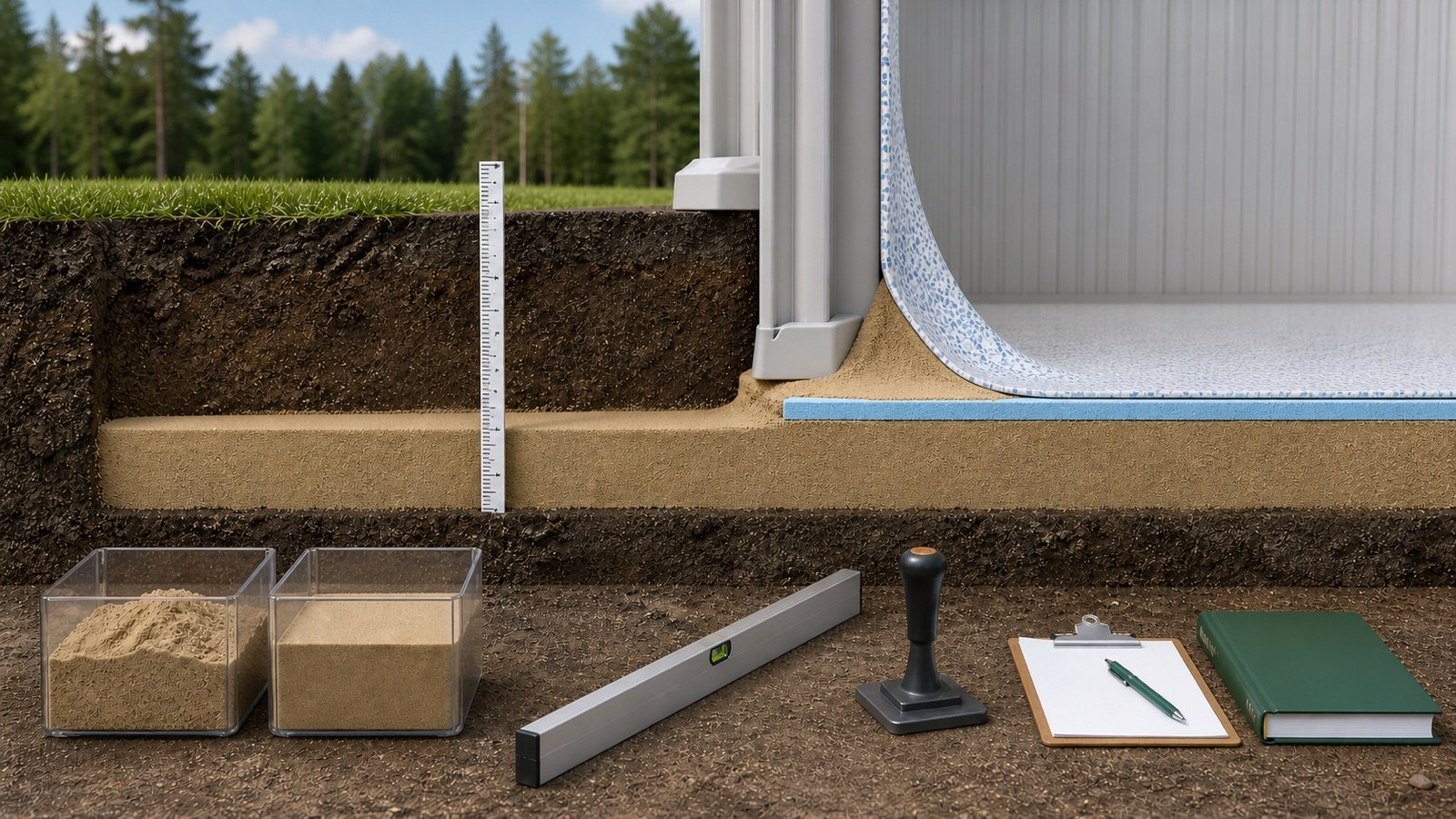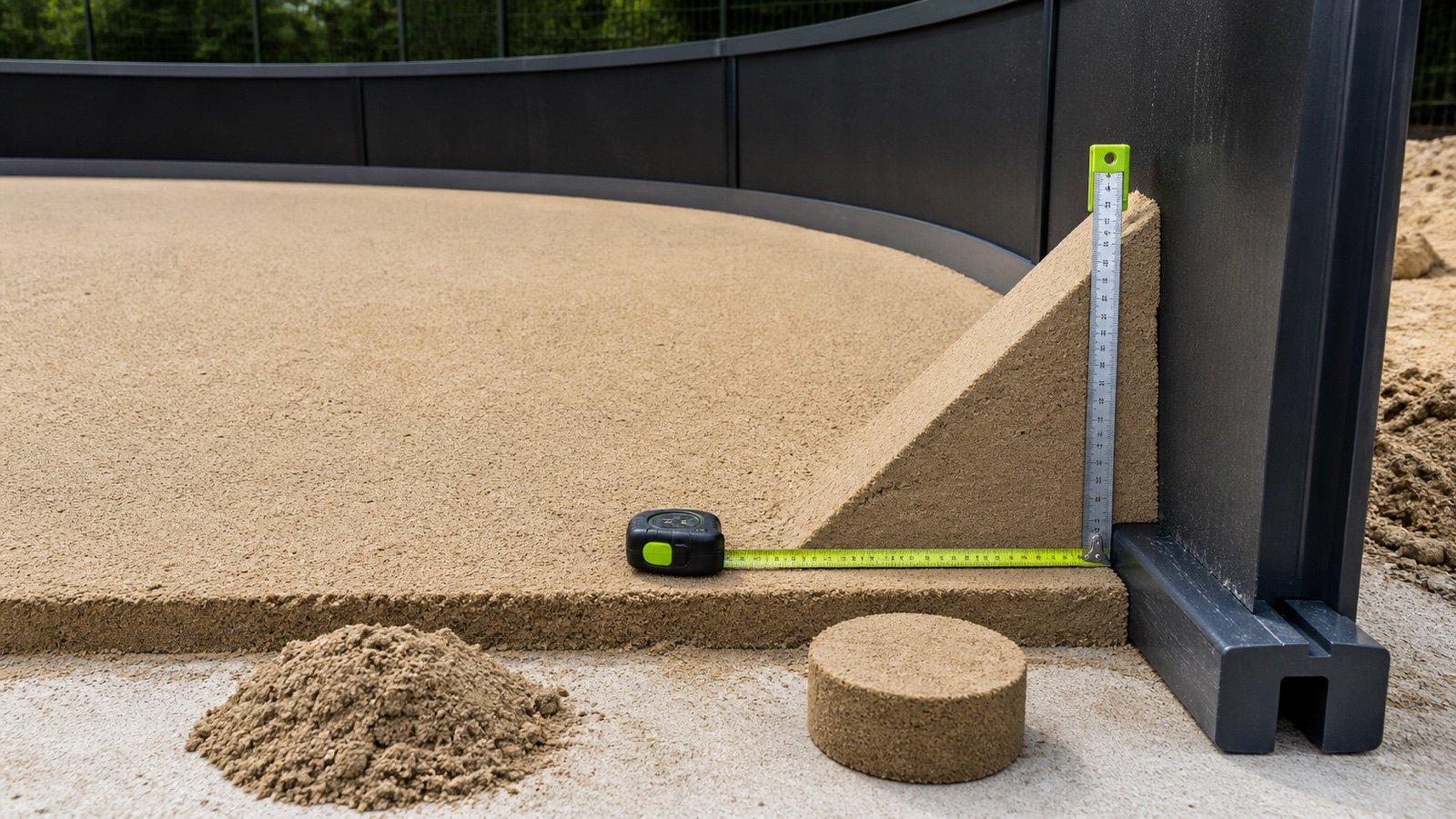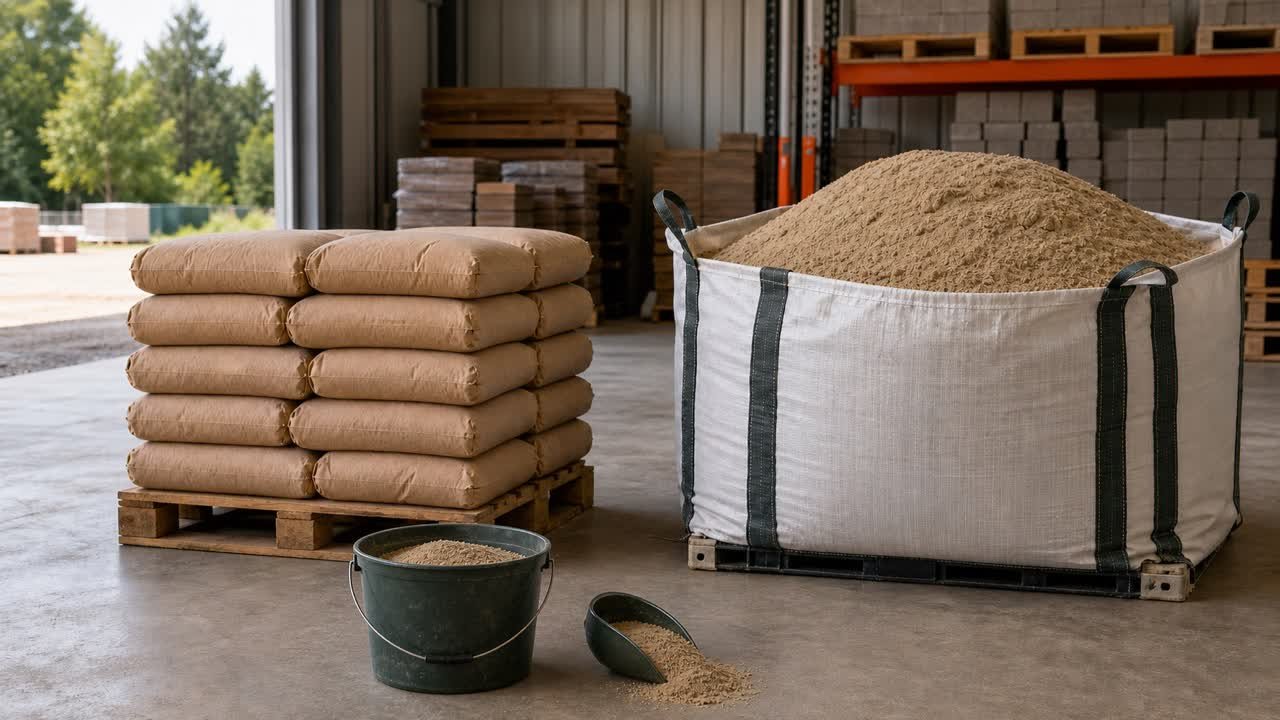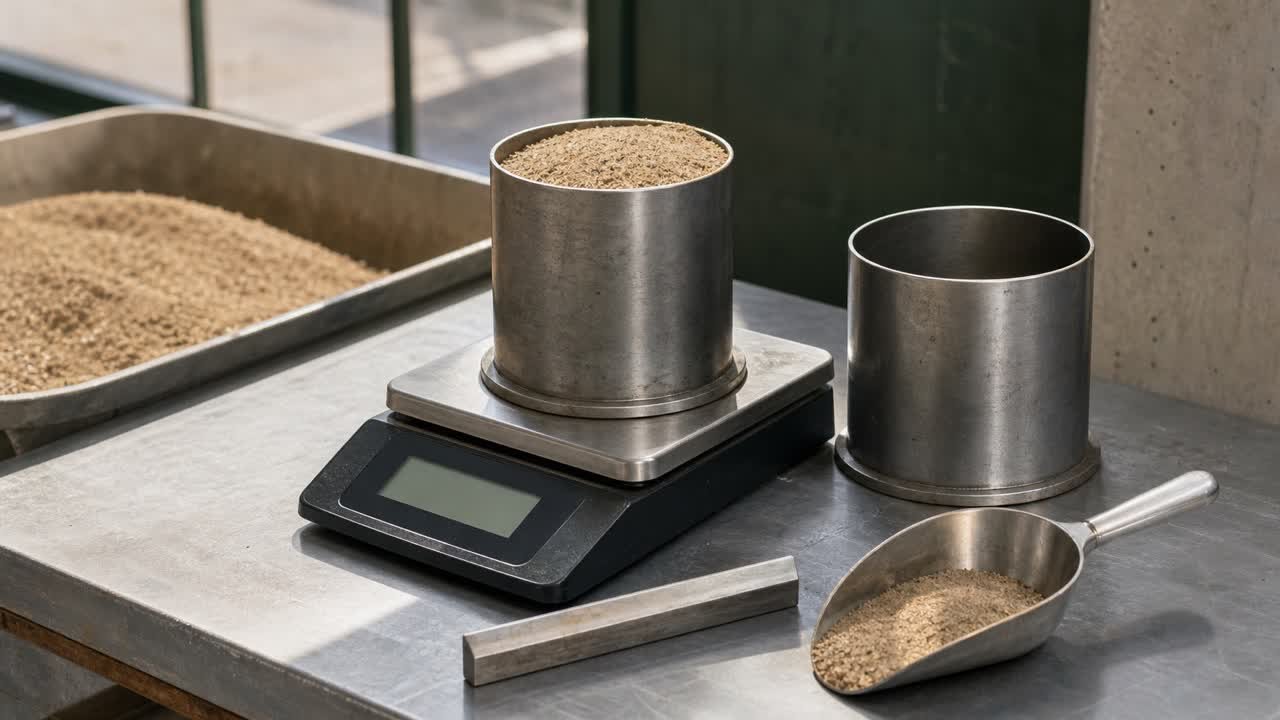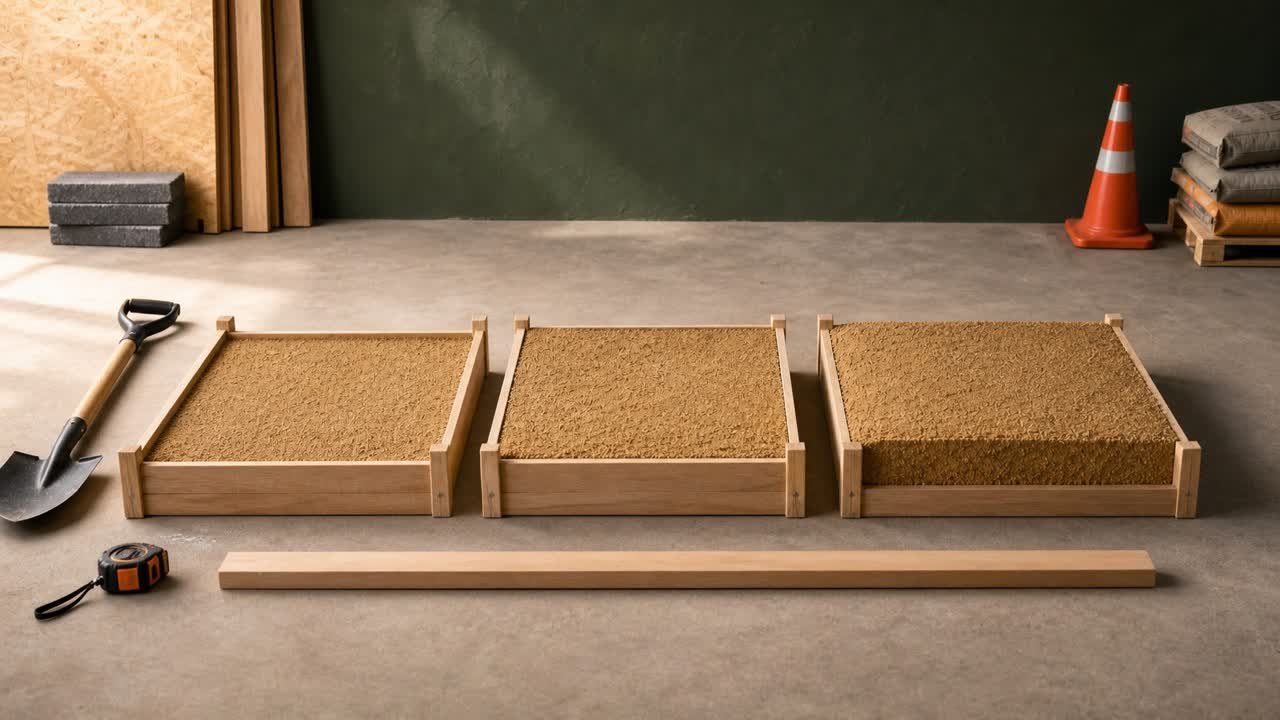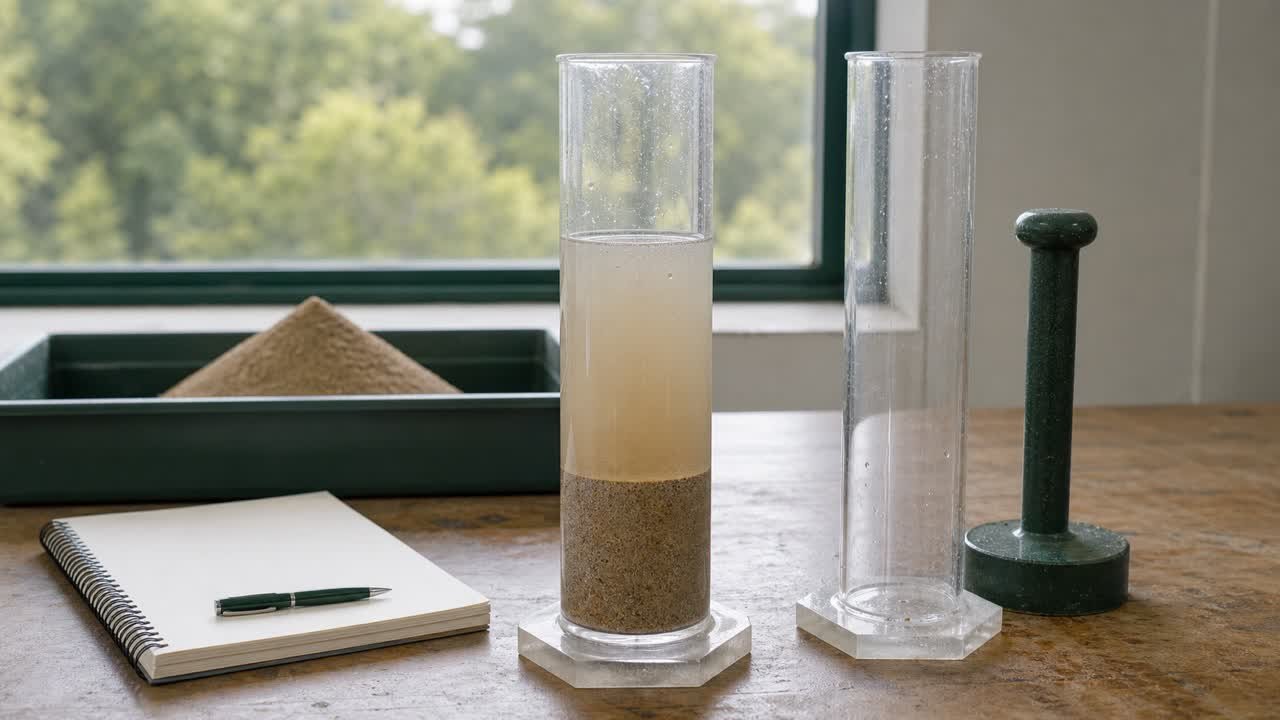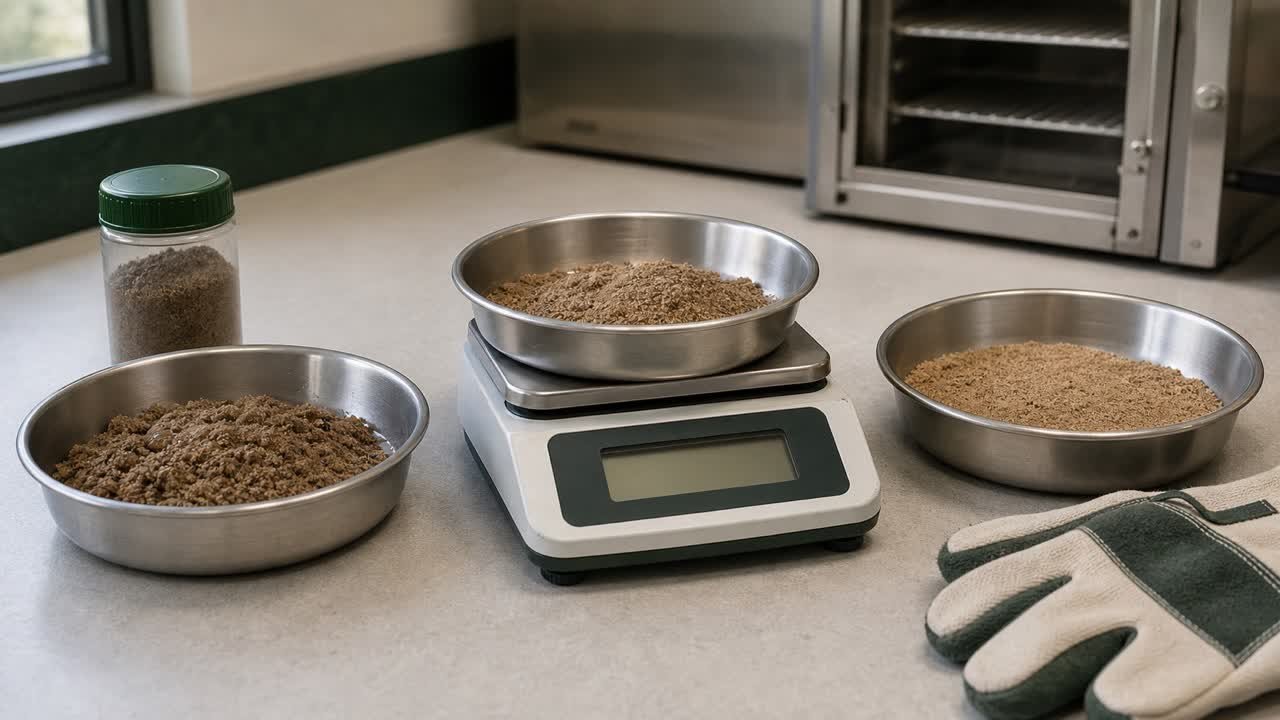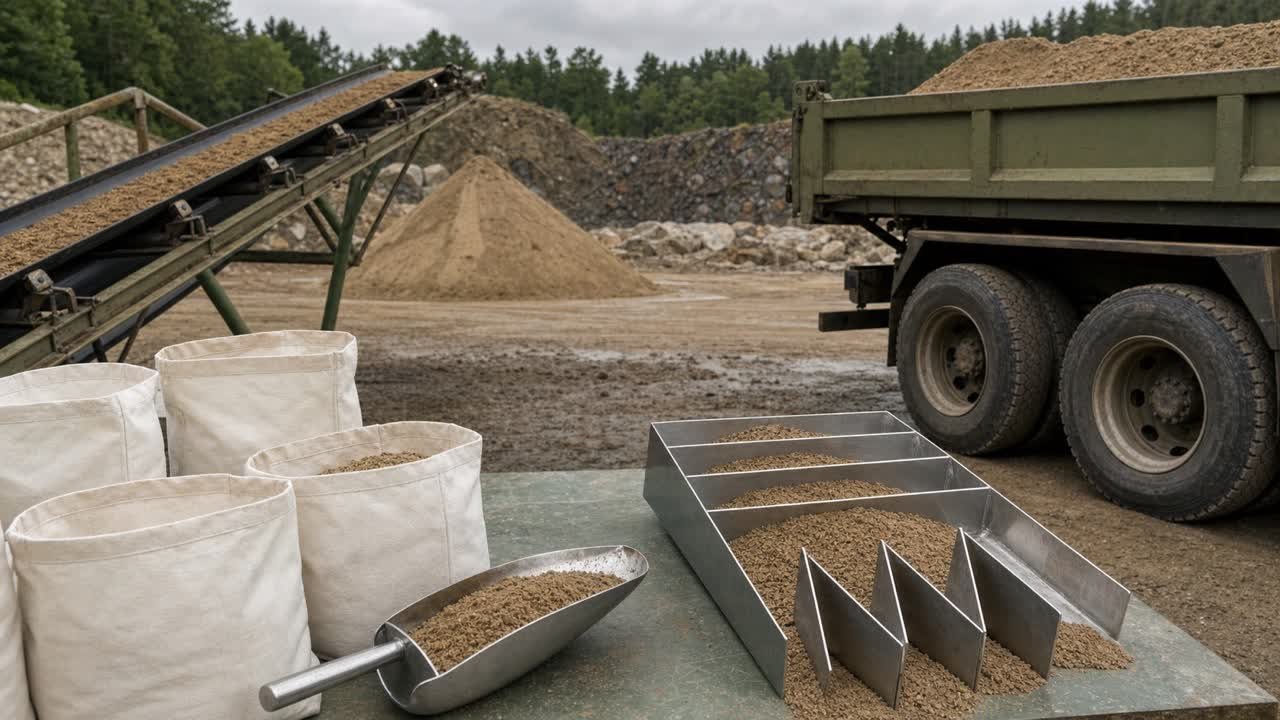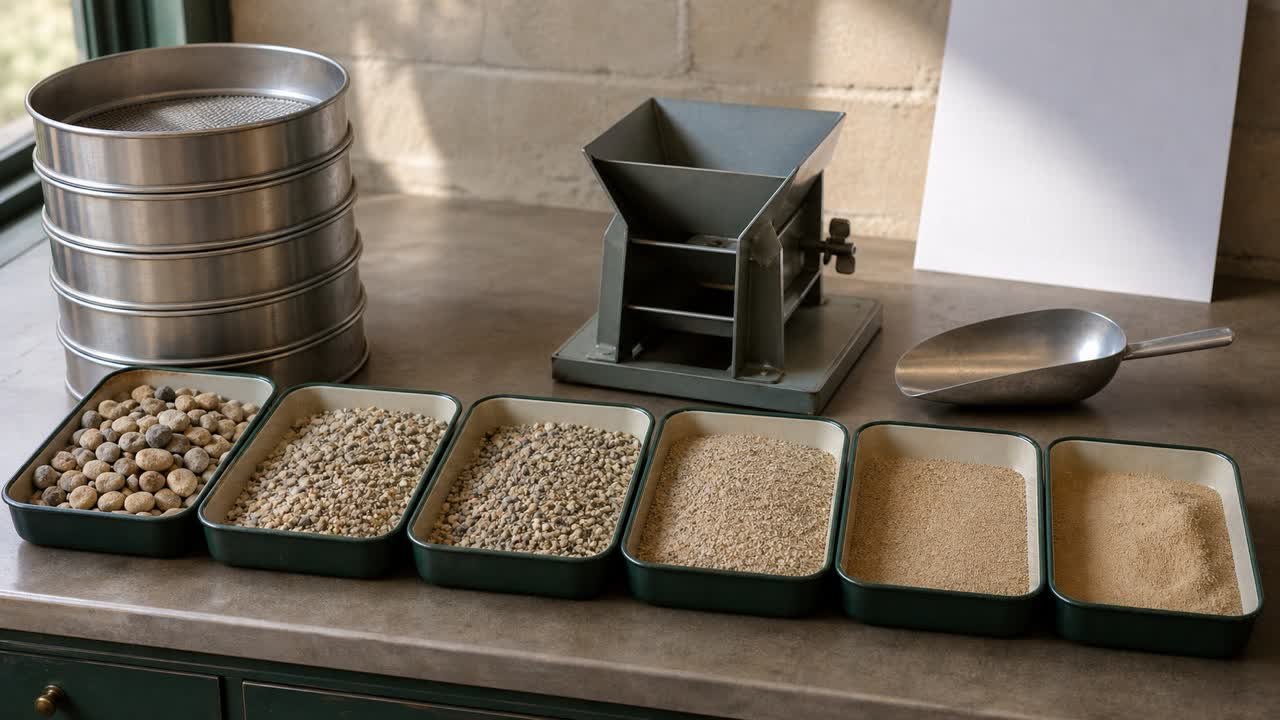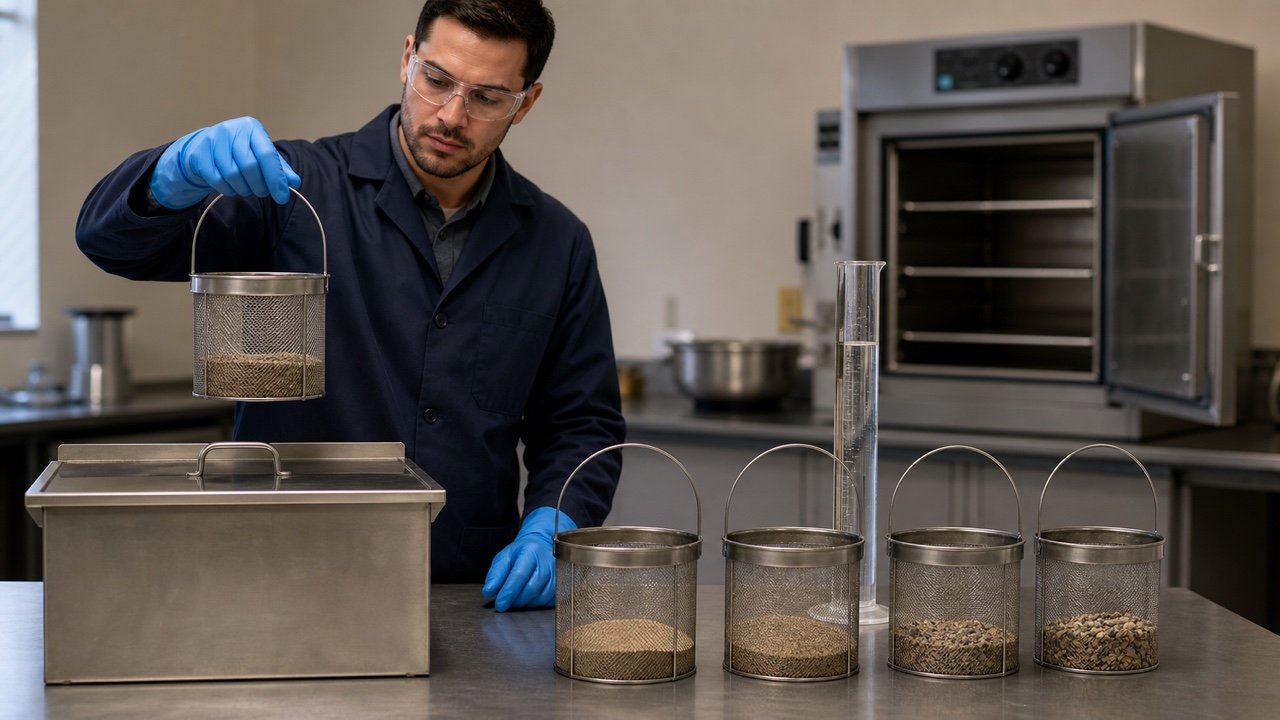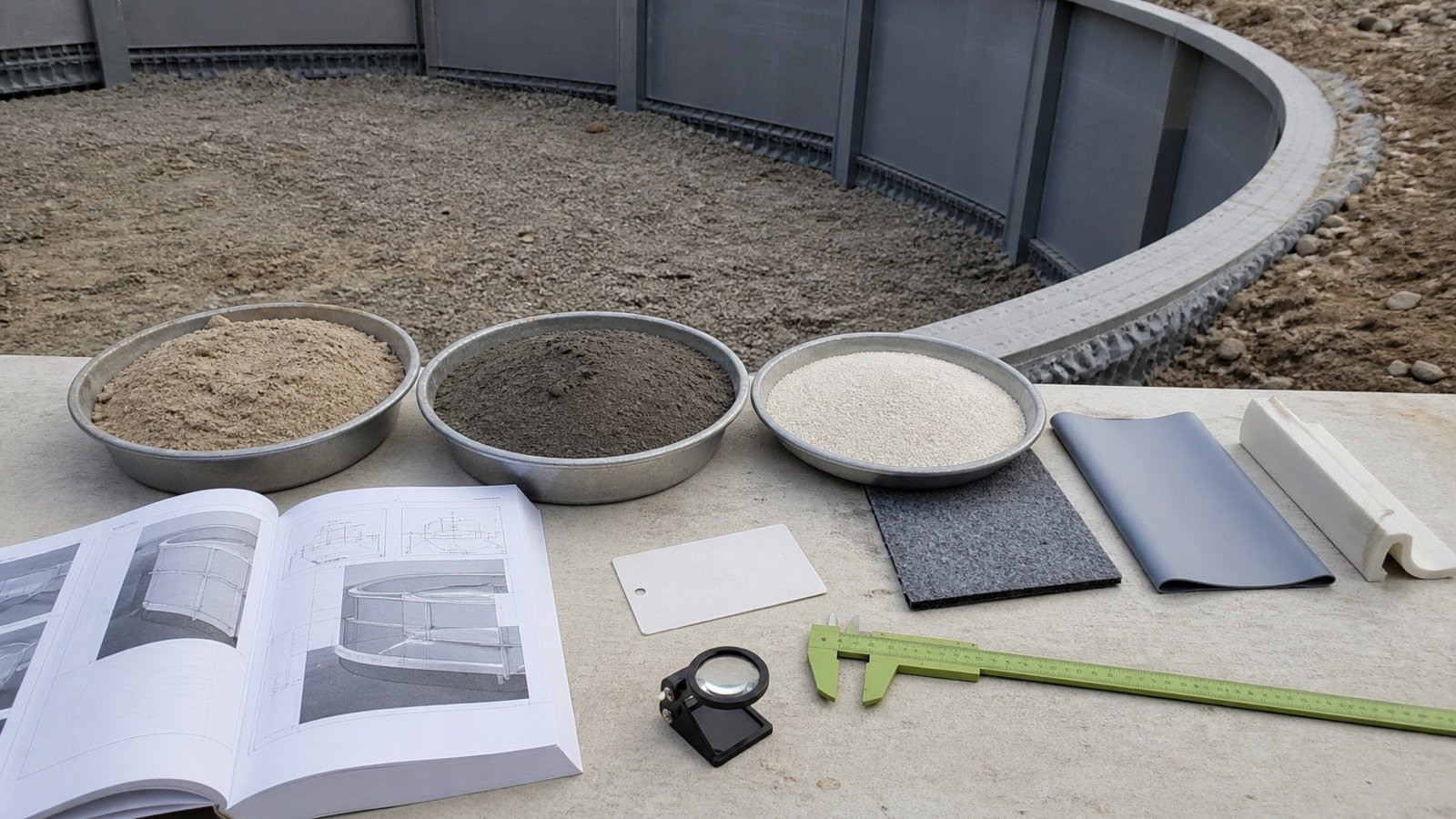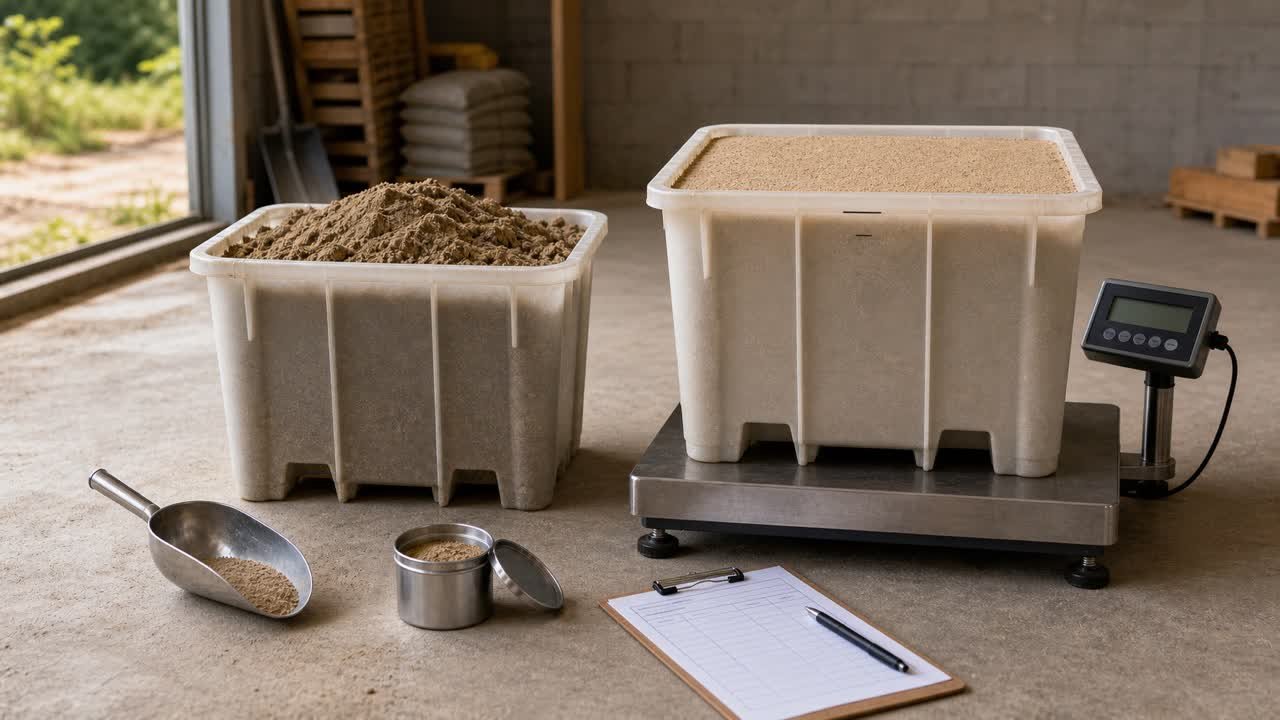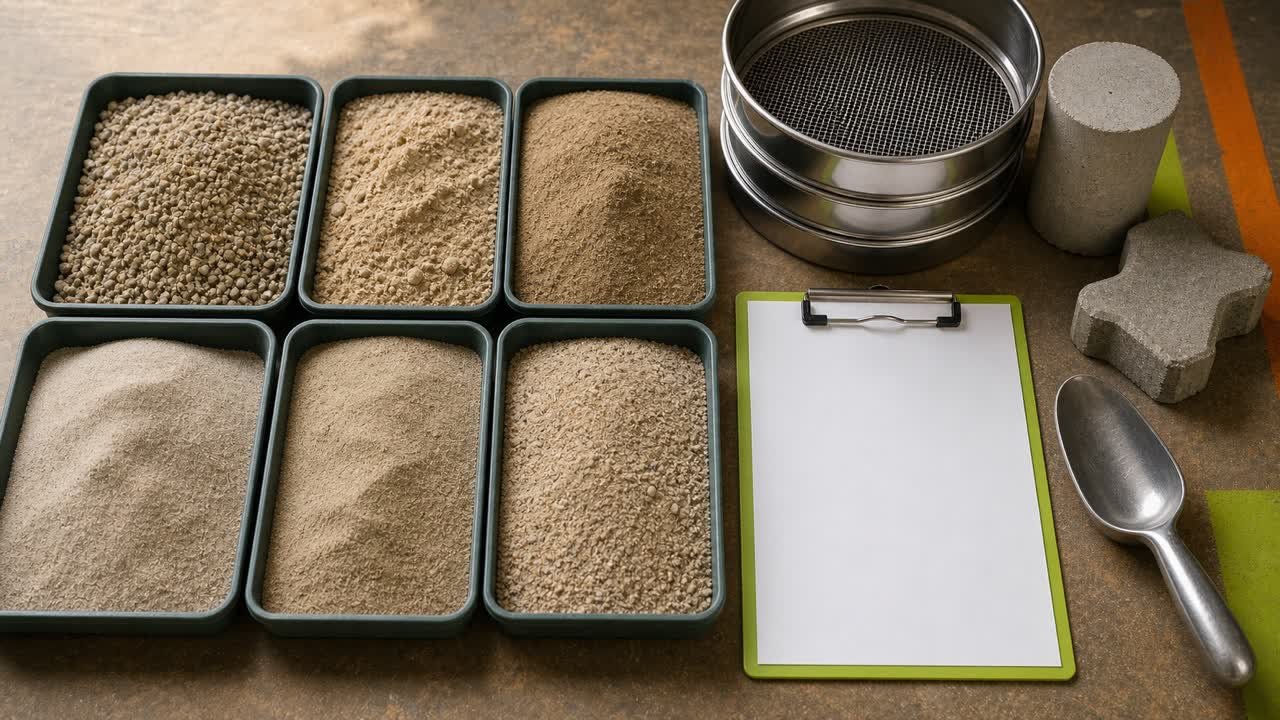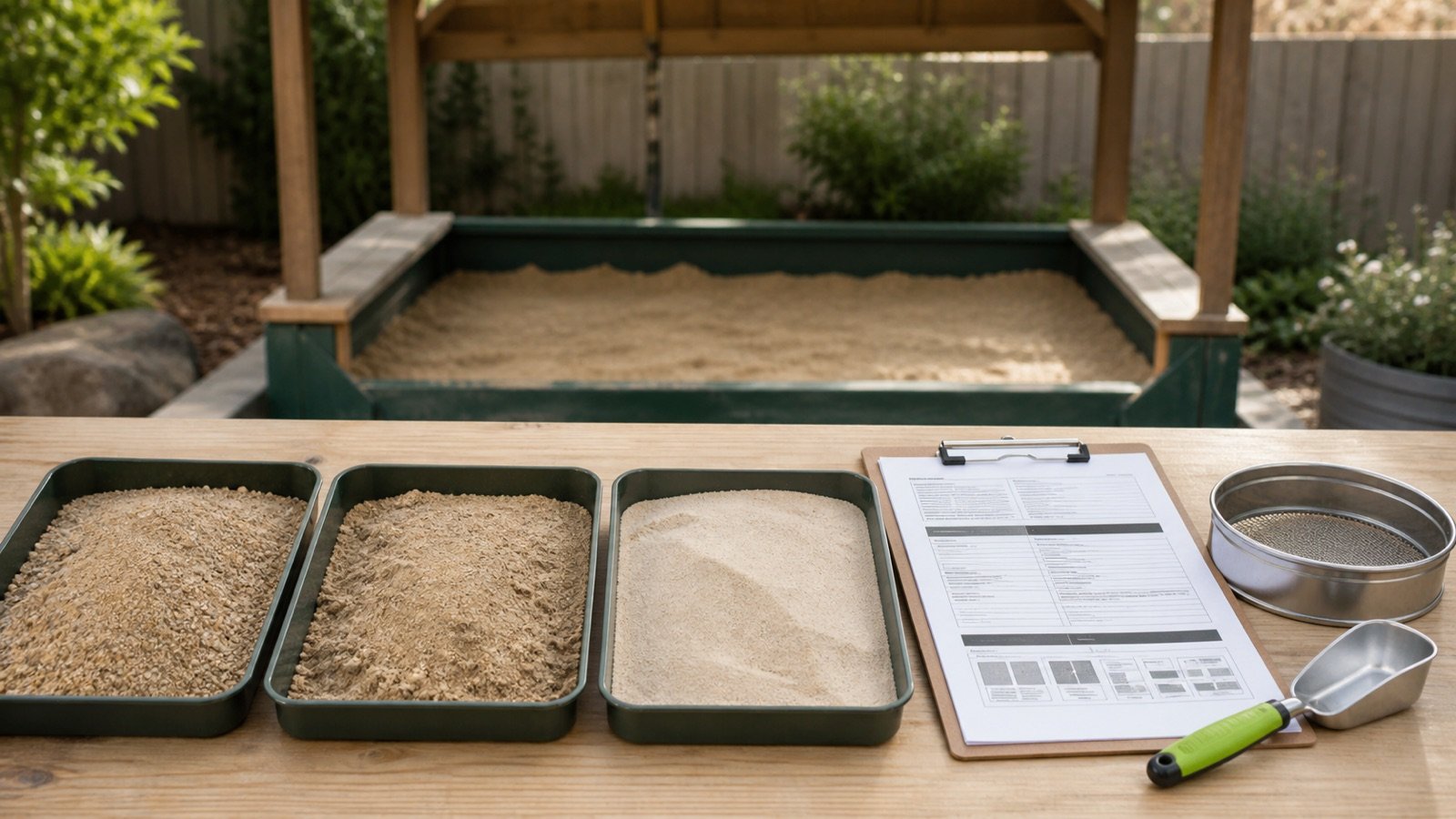
The bag name alone cannot tell you how a sand product was processed, what the manufacturer permits, which precautions apply or how much volume the package supplies. Appearance cannot answer those questions either.
Choose from the current record for the exact product. Keep the label, manufacturer page, technical data sheet and safety data sheet with the order calculation so the material identity and quantity basis stay connected.
Which sand product belongs in your sandbox?
Use a product whose current manufacturer information names children's sandboxes, sandboxes or play areas as an intended application. Check the product identifier on the bag against the technical data sheet and SDS, then follow every handling, storage and use instruction that applies to the site.
A generic recommendation such as "washed, screened play sand" gives you search terms for the store. The named documents decide whether a particular bag or bulk material fits the project.
Write down the manufacturer, product name, product number, package mass, published volume or coverage, document revisions and unresolved restrictions. Change any of those details and you have a new product check.
| Check | Where to find it | Decision it controls |
|---|---|---|
| Exact product identifier | Bag label and SDS Section 1 | Whether all documents refer to the same material |
| Recommended use and restrictions | Manufacturer page, data sheet and SDS Section 1 | Whether the maker names sandbox or play-area use |
| Hazards and precautions | Label and SDS Section 2 | Dust, contact, ventilation and other product instructions |
| Handling and storage | SDS Sections 7 and 8 plus the label | How adults receive, open, place and store the material |
| Package mass and volume basis | Label and technical data sheet | How the calculator converts measured volume into packages |
| Document date and contact | Data sheet, SDS and manufacturer page | Whether the record is current or needs manufacturer confirmation |
What do current play-sand product records state?
Current manufacturer records show why the exact product matters. QUIKRETE's November 2020 sand and gravel data sheet identifies Premium Play Sand No. 1113-51 as specially graded sand that has been washed and screened for children's sandboxes. It lists a 50 lb package and says the product is best used damp.
Sakrete's current Natural Play Sand page describes that named product as screened and washed for sandboxes or landscaping. Its linked technical sheet identifies sandbox use and gives package coverage. The same sheet tells users to avoid breathing dust, states that the product contains crystalline silica and directs them to read the SDS.
U.S. Silica's current Snow White Play Sand page supplies a third named example. It says that product is washed and extensively screened and lists sandboxes, parks, play areas and daycares among its applications.
| Named product | Manufacturer statement checked | Information still needed |
|---|---|---|
| QUIKRETE Premium Play Sand No. 1113-51 | Washed and screened for children's sandboxes; 50 lb package; best used damp | Current bag label and SDS for the product and market supplied |
| Sakrete Natural Play Sand | Screened and washed fine sand for sandboxes; published yield and dust instructions | Current label, SDS and confirmation when the available sheet or packaging differs |
| U.S. Silica Snow White Play Sand | Washed and extensively screened; sandbox and play-area applications listed | Current quote, packaging, label, SDS and delivery basis for the supplied product |
These examples document 3 products. They do not create a composition, dust level, certification or package yield for other products sold under a similar trade name.
What do "washed" and "screened" tell you?
They tell you that the named manufacturer describes washing and particle-size screening in that product record. The words can help you compare processing statements across documents.
The reviewed sources do not define one universal washing method, screen size, contaminant limit or dust test for every retail play-sand product. Ask the manufacturer or supplier for the missing value when your project requires one. Keep any test report tied to its sample, method, date and lot or source.
Color, softness and a clean-looking sample cannot replace that record. A sample tray can help you judge feel or moldability after the document gate passes; it cannot prove composition or restrictions.
Can a product sold as play sand contain crystalline silica?
Yes. Sakrete's Natural Play Sand technical sheet names sandbox use and also states that the product contains crystalline silica. It tells users to avoid breathing dust, control dust and read the SDS.
This named example is why a "play sand" trade name should never become a claim of silica-free composition or zero dust. Read the current label and SDS for the product in front of you. If the documents are missing, conflict with the bag or leave a concern unresolved, contact the manufacturer before purchase or choose another fully documented product.
OSHA's Hazard Communication Standard governs workplace hazard communication. Its Appendix D explains the SDS structure: Section 1 identifies the product, recommended uses and restrictions; Section 2 covers hazard statements and precautions; Sections 7 and 8 cover handling, storage and exposure controls.
That structure is a useful reading map. An SDS is a hazard-communication document within its stated scope, not a consumer sandbox approval or a medical opinion.
Can you use mason sand, all-purpose sand or fill sand?
Use another material only when the supplier or manufacturer gives the exact supplied product a documented sandbox or play-area use that meets the project requirements. A construction trade name describes a market or application class; it does not provide the missing child-play use statement.
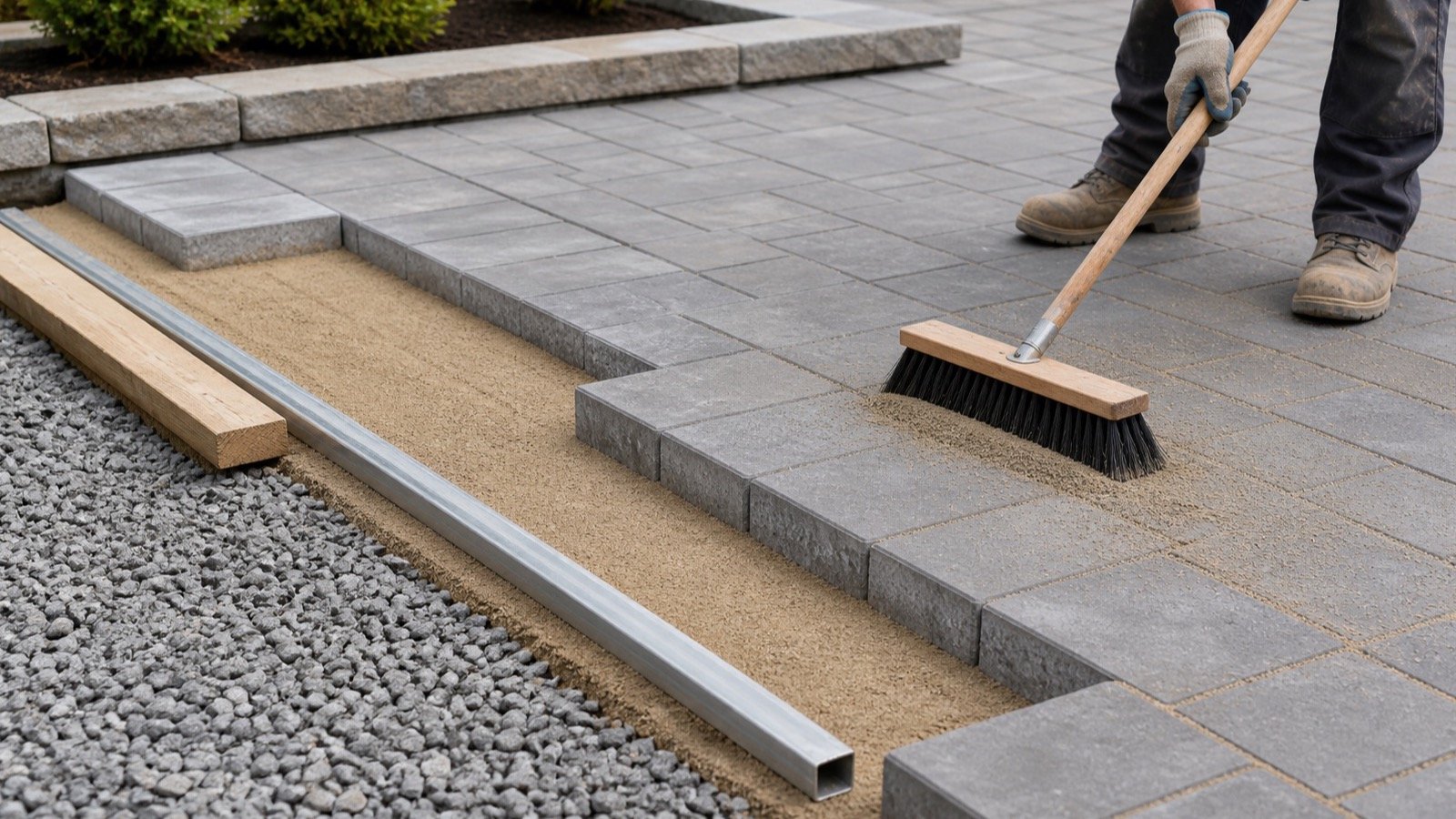
QUIKRETE's own data sheet separates products by use. It describes All-Purpose Sand for concrete, paver underlayment, traction and potting-soil mixing, while it gives Premium Play Sand a separate children's-sandbox statement. That distinction belongs to those named products and their current documents.
The construction sand selection guide covers bedding, concrete, masonry and other building applications. Use it for those tasks rather than transferring a construction specification into a sandbox.
How should you check a bulk-sand quote?
Ask the supplier to identify the exact material and source before accepting the quote. "Washed sand" or "fine sand" leaves the intended use, gradation basis, handling record and quantity condition unresolved.
- Record the supplier, location, quote date and product name.
- Ask for the manufacturer's or producer's written sandbox/play-area use statement.
- Match the product identifier across the quote, data sheet, SDS and delivery ticket.
- Record the source, processing statement, test method and report date when the supplier provides test data.
- Confirm whether the selling unit is mass or loose volume and which moisture or stockpile condition applies.
- Record delivery fees, minimum increments and the allowed rejection process.
- Inspect the delivered material against the accepted product and ticket before placement.
A bulk supplier may have a documented product that fits the job. The written record decides that question. Retail bags may also differ by producer, region or revision, so retain one current bag label with the project file.
How do package labels change the quantity estimate?
Package mass and package volume are separate quantities. QUIKRETE's reviewed data sheet lists 50 lb for its named product and gives no package volume on that sheet. Sakrete's current product record publishes a yield for its named Natural Play Sand.
Do not convert every 50 lb bag to one fixed cubic-foot value. Use the current product's published volume or coverage. When only mass is available, use a supported bulk density for that exact product and condition or ask the manufacturer for a volume basis.
Once you have the accepted inside dimensions, fill depth, product basis and allowance, enter them in the Play Sand Calculator. The sandbox measurement guide covers inside boundaries and displacement. The sandbox depth guide separates a model instruction from a custom fill line.
Does playground impact surfacing change the product choice?
It changes the scope. CPSC's public-playground handbook places sandboxes in a different section from active equipment and excludes ground-level sandboxes from the handbook's protective-surfacing recommendations.
Sand used beneath elevated playground equipment belongs to a fall-height, use-zone, tested-surfacing and maintenance decision. A bag intended for sandbox play does not establish impact attenuation. Keep the sandbox-content order and the protective-surfacing design in separate records.
Public facilities and childcare settings can also have purchasing, accessibility, sanitation, inspection and local compliance requirements. The responsible facility staff and qualified playground professionals should verify those requirements.
Which buying mistakes leave the product unverified?
- Choosing by color, softness or a photo without checking the product documents.
- Assuming every product called play sand has the same composition or dust instructions.
- Treating washed and screened as a universal certification.
- Reading a retailer description while ignoring a different manufacturer product number.
- Using an old data sheet without checking the current label and manufacturer page.
- Calling an SDS a consumer approval certificate.
- Applying one brand's package yield to another brand's 50 lb bag.
- Accepting a bulk quote that says only washed sand or fine sand.
- Using sandbox-fill documentation to approve protective surfacing beneath elevated equipment.
- Discarding the bag and delivery ticket before the material can be traced.
What should you save with the order?
- Photo or scan of the complete current bag label.
- Manufacturer, product name, product number and market or plant when shown.
- Current product page, technical data sheet and SDS.
- Intended-use statement and every stated restriction.
- Package mass, volume, coverage and applicable depth basis.
- Supplier quote, selling unit, delivery ticket and lot or source information.
- Sandbox model or drawing, accepted fill line and measured volume.
- Questions sent to the manufacturer and dated replies.
- Preparer, responsible checker, purchase date and later correction.
The Sand Bags vs Bulk guide explains selling units and delivery planning after the product and volume are known. Return to the Sand Material Planning hub for the published sand tools and guides.
Safety and scope limits
Follow the current label, technical data sheet, SDS, sandbox instructions and site requirements. Adults should control receiving, opening, placement, dust, storage, drainage, contamination checks and cover use under those instructions.
Stop when the exact product cannot be identified or its documents conflict. Ask the manufacturer, supplier, facility manager or a qualified professional to resolve the issue before use. This page does not certify a product, test composition, give medical advice or design public-playground impact surfacing.
The calculation methodology explains source and quantity checks. Report a product-record, source or display issue through the corrections route.
Sources and source scope
- QUIKRETE Sand & Gravel Products: named product uses, processing wording, package mass and November 2020 revision.
- QUIKRETE Premium Play Sand: current product identity, children's sandbox statement and manufacturer document links.
- Sakrete Natural Play Sand and its technical data sheet: named application, washing/screening statement, yield basis, dust warning and SDS direction.
- OSHA Appendix D to 29 CFR 1910.1200: workplace SDS structure and the information contained in Sections 1, 2, 7 and 8.
- CPSC Handbook for Public Playground Safety: public-playground activity separation and the protective-surfacing boundary for ground-level sandboxes.
- U.S. Silica Snow White Play Sand: one current manufacturer's processing and application statements for its named product.
Source scope: Each manufacturer supports statements about its named product only. OSHA supports the workplace SDS reading structure. CPSC supports the public-playground scope distinction. None of these sources creates a universal specification for every material sold as play sand.
Review note: Saleem Sial owns the research and editorial record. Live SERP review, manufacturer-document retrieval, claim comparison, scope review, editorial checks, build validation, link crawl, schema review and rendered QA form the internal publication gate. Waseem Sial, External Reviewer and Engineer, is listed for ongoing external review; no completed external-review date is claimed.