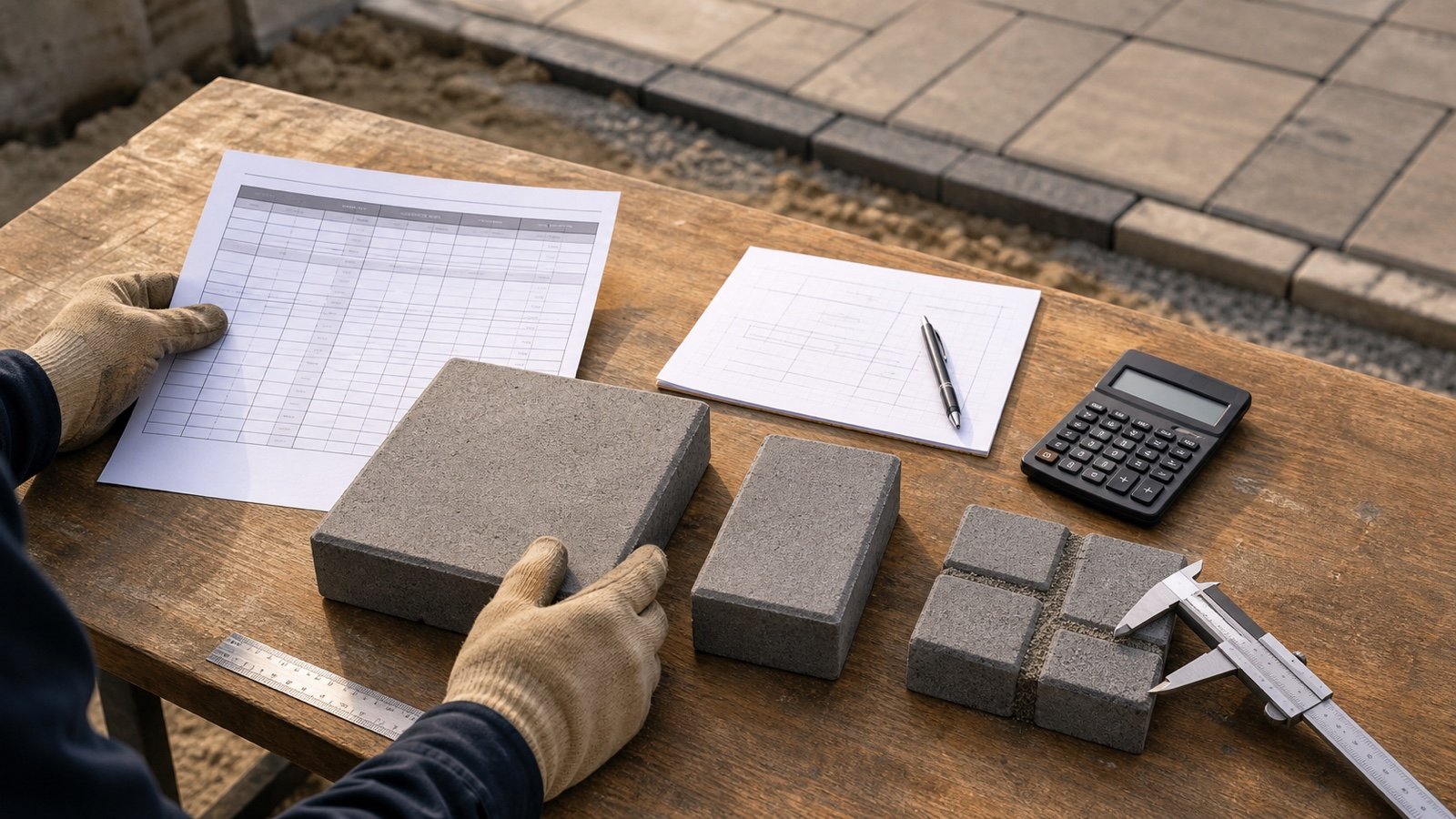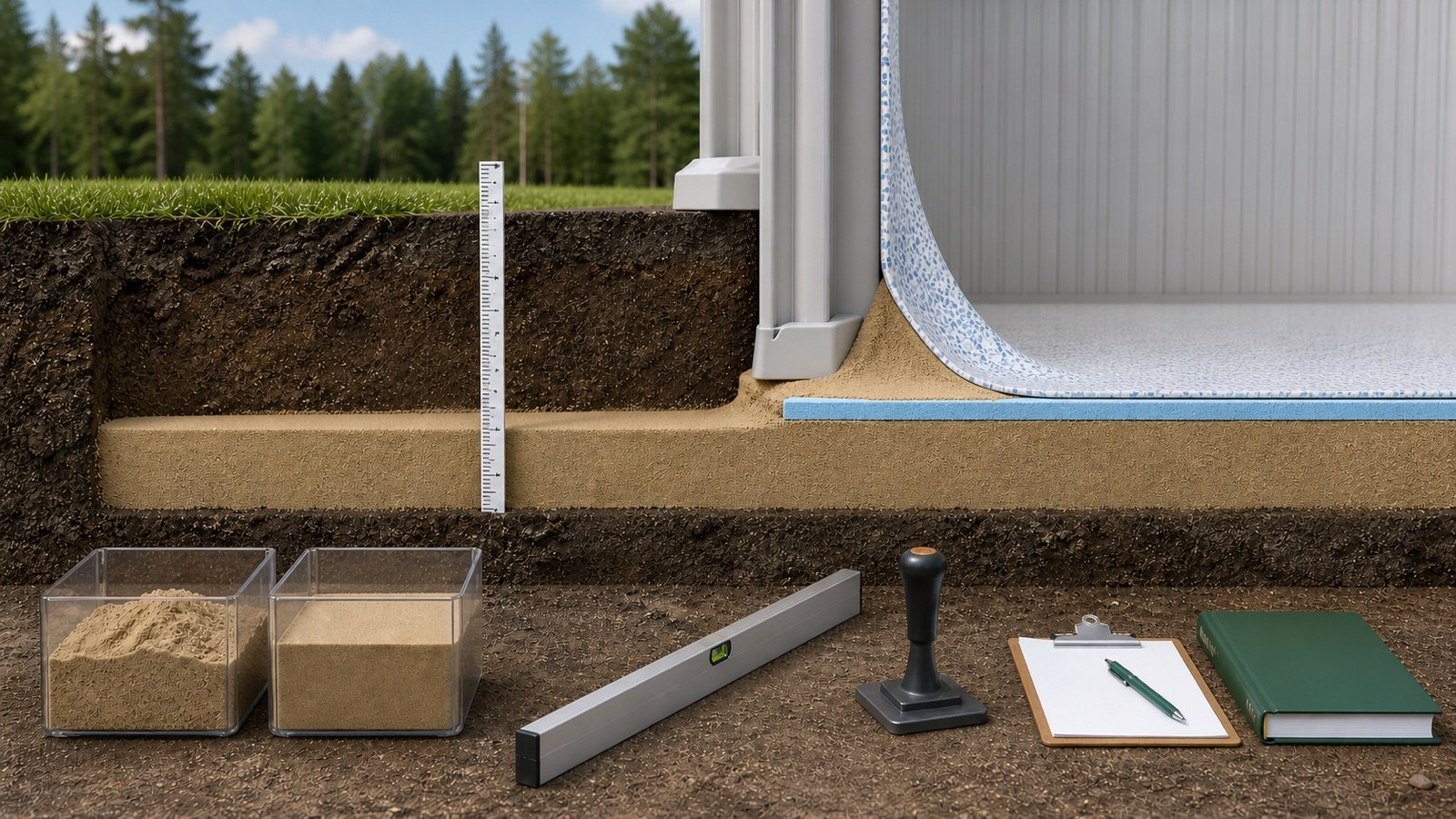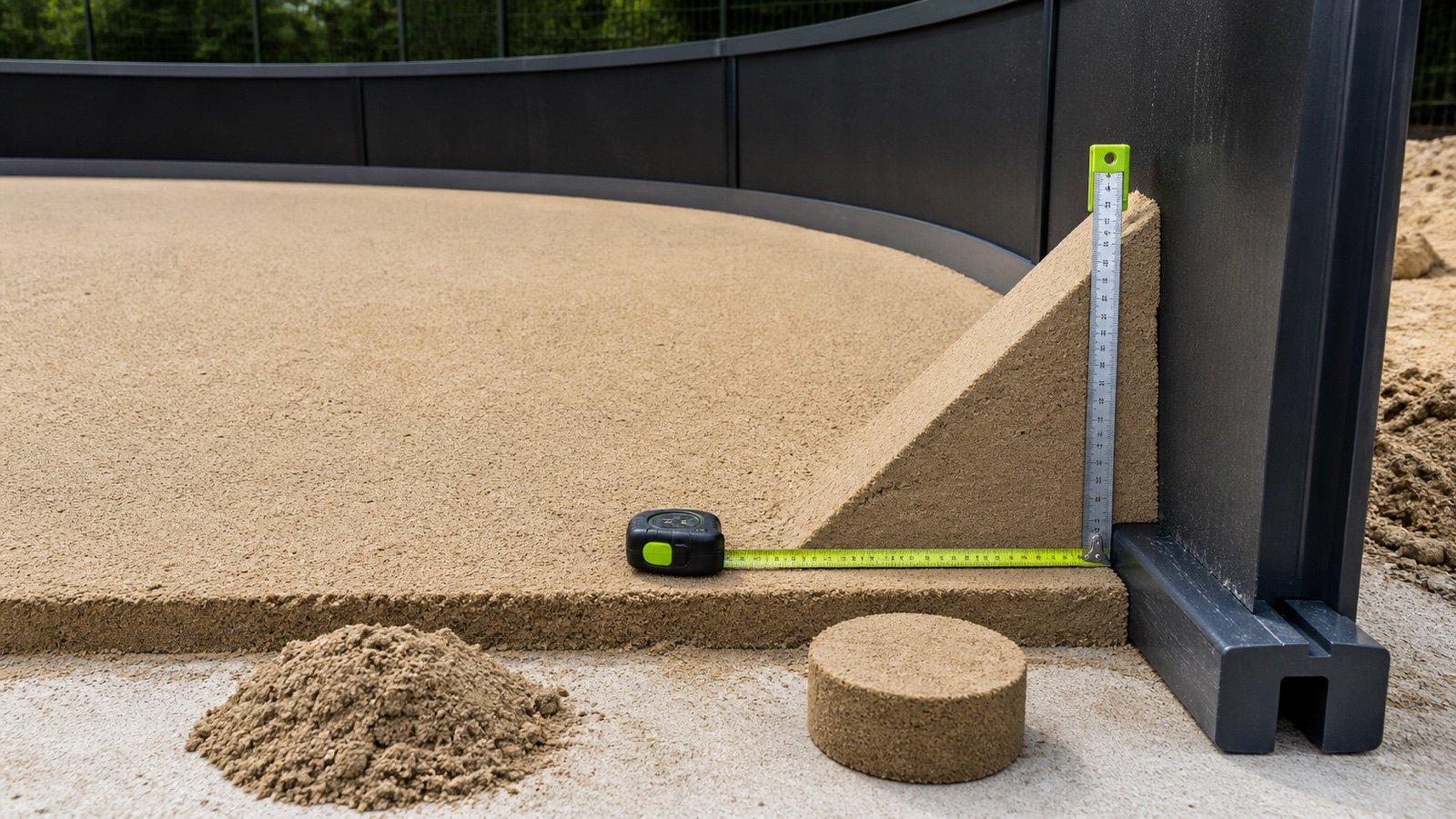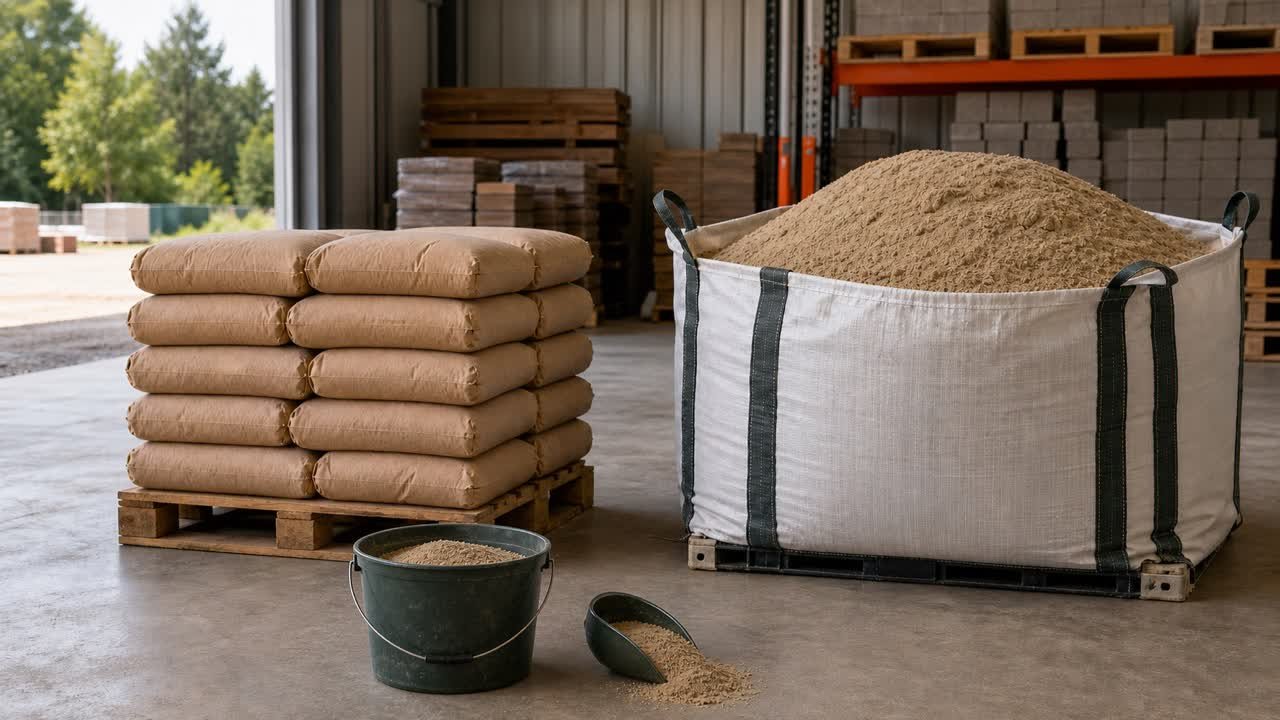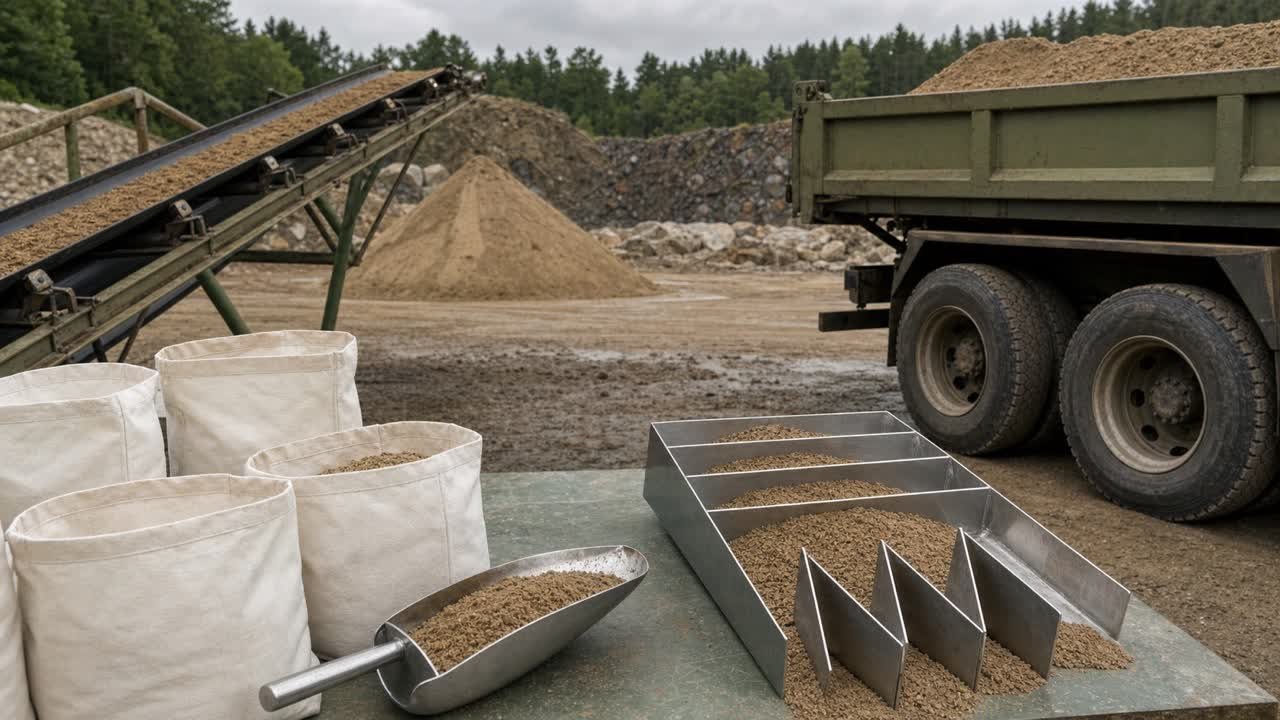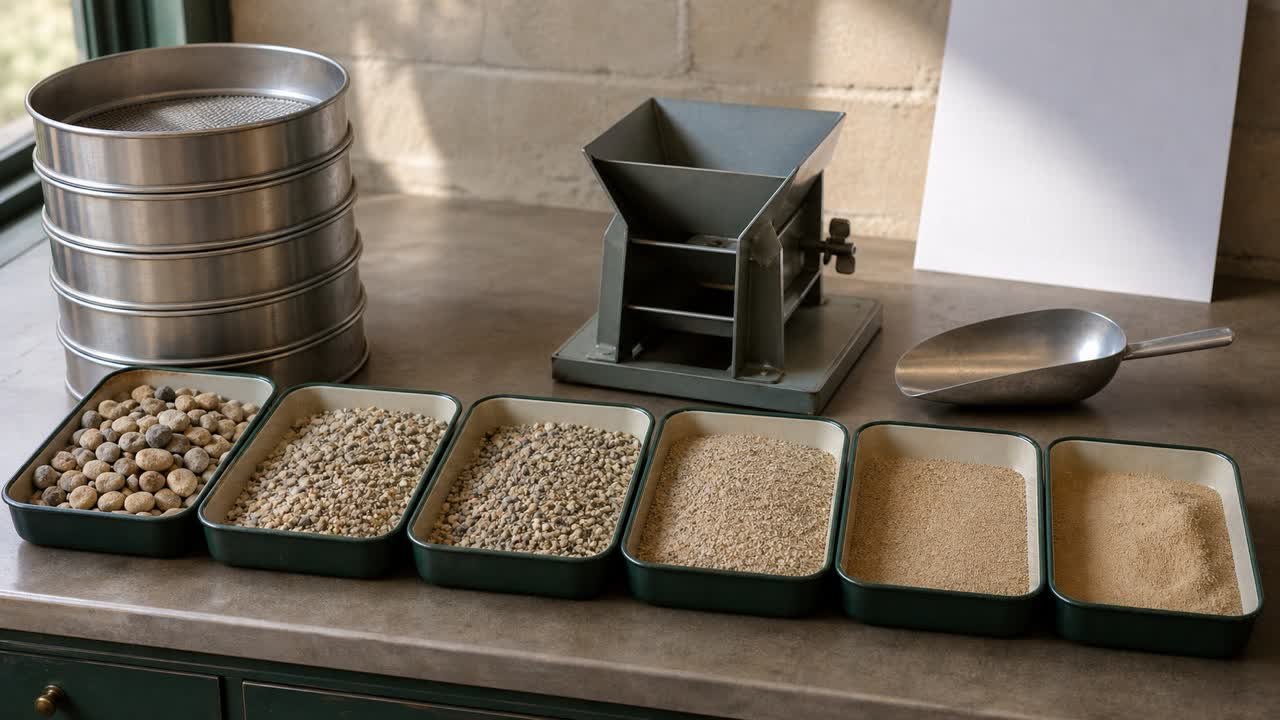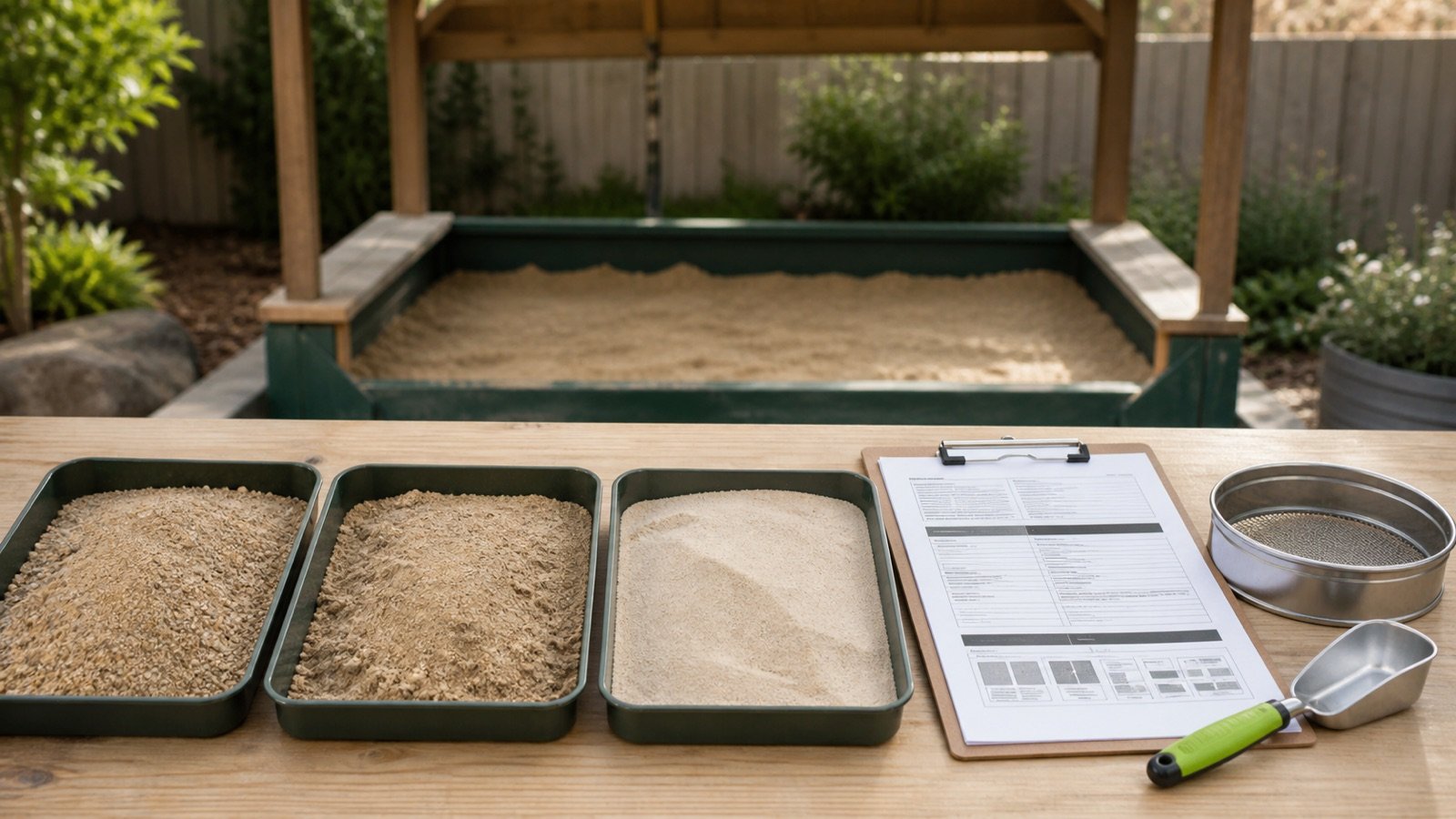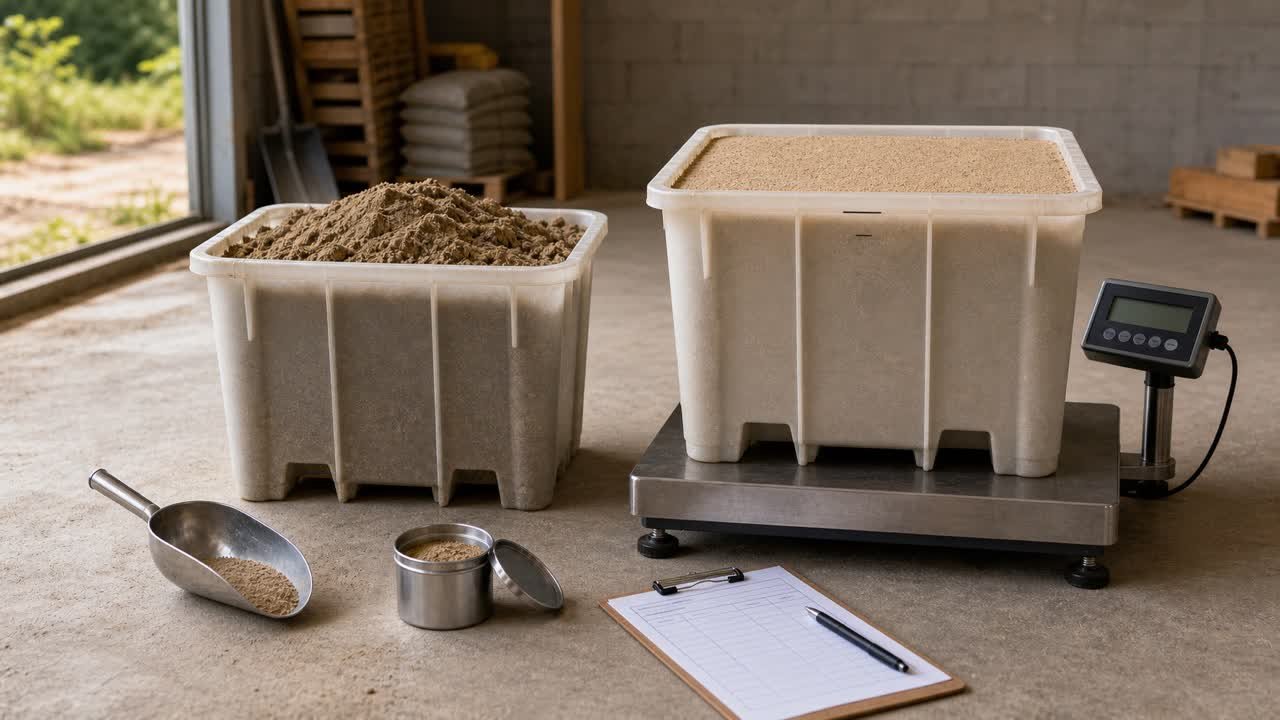
A sand volume does not have one dependable weight until you identify the product, bulk density, and material condition. Use the current supplier or project density for the exact sand, then keep its unit compatible with the measured volume.
How much does a cubic yard or cubic metre of sand weigh?
Multiply the sand volume by its documented bulk density. One cubic yard weighs exactly the stated pounds-per-cubic-yard density, while one cubic metre weighs exactly the stated kilograms-per-cubic-metre density.
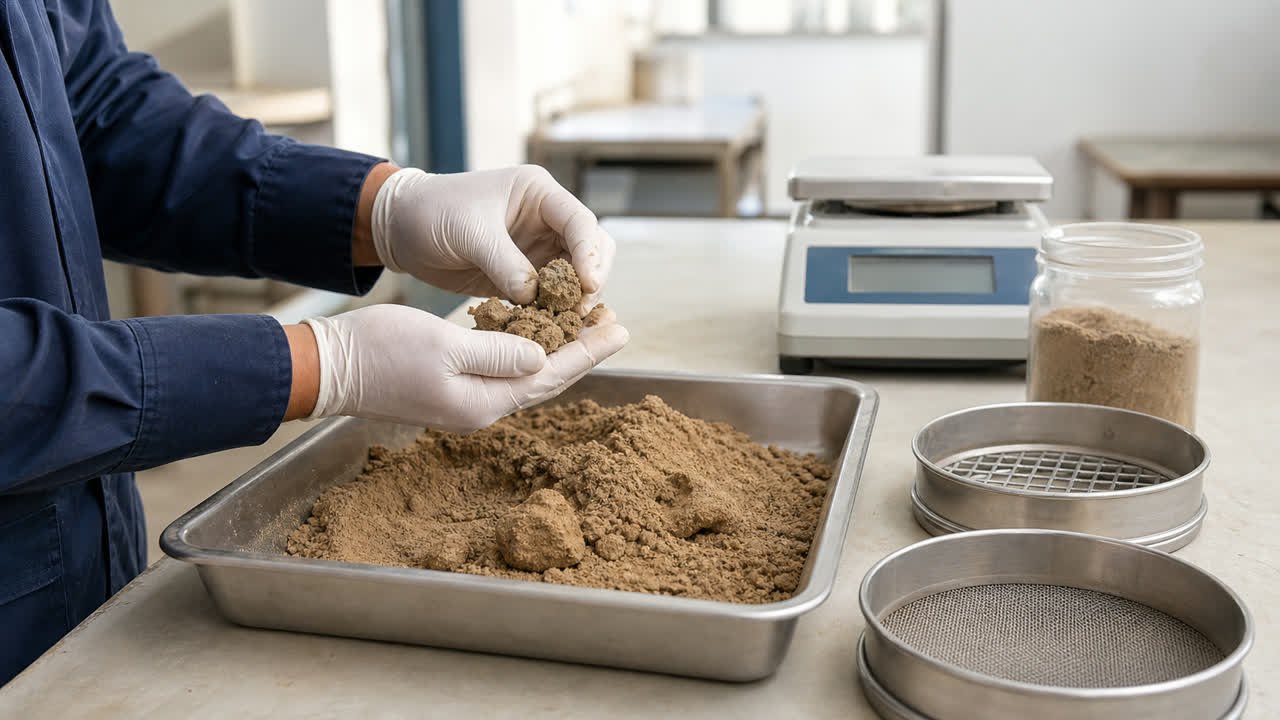
Loose, compacted, dry, damp, stockpiled, and delivered sand can occupy different bulk volumes. Record the exact product and condition attached to the density before using the chart.
Estimated mass = bulk volume × matching bulk density
If a supplier states density in lb/yd³, multiply cubic yards by that value to get pounds. If the supplier states kg/m³, multiply cubic metres by that value to get kilograms.
What density value should you use?
Use a current value for the selected supplier product in the same condition as the volume you are converting. A density from another sand, source, moisture state, or compaction method can produce a tidy calculation for the wrong material state.
| Record | What to confirm |
|---|---|
| Product | Exact supplier name, specification, gradation, and source when available |
| Density | Value and complete unit, such as lb/ft³, lb/yd³, kg/m³, or t/m³ |
| Condition | Loose, compacted, dry, damp, stockpiled, delivered, or another stated basis |
| Evidence | Supplier data, current test report, project document, or documented scale history |
| Date | Date the value was issued or confirmed |
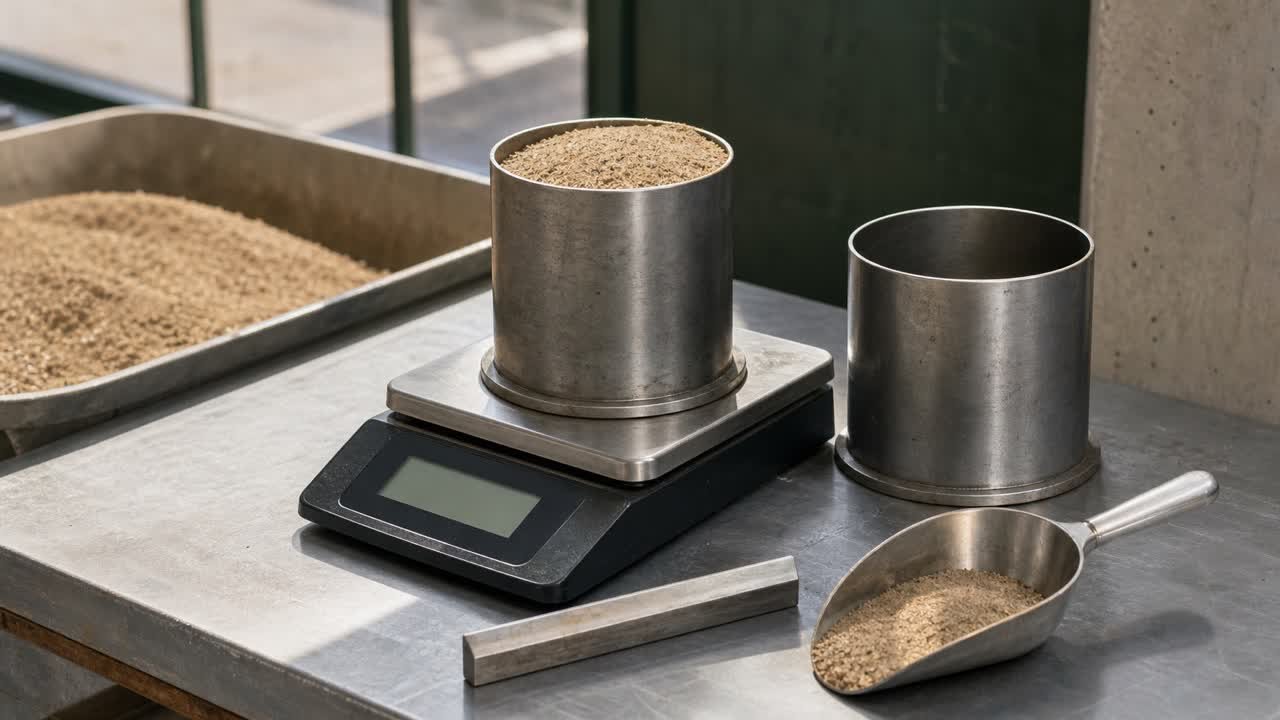
ASTM lists C29/C29M-23 as the active test method for bulk density and voids in aggregate. Its scope distinguishes loose and compacted conditions. The standard supports the need to identify the material condition; it does not provide one density for every sand.
Sand volume multiplier chart
Let D represent the supplier's bulk density in a unit that matches the volume column. The chart is symbolic so it works with a documented density instead of hiding a generic default.
| Sand volume | Estimated mass |
|---|---|
| 0.25 yd³ or m³ | 0.25 × D |
| 0.50 yd³ or m³ | 0.50 × D |
| 0.75 yd³ or m³ | 0.75 × D |
| 1.00 yd³ or m³ | 1.00 × D |
| 1.50 yd³ or m³ | 1.50 × D |
| 2.00 yd³ or m³ | 2.00 × D |
| 2.50 yd³ or m³ | 2.50 × D |
| 5.00 yd³ or m³ | 5.00 × D |
| 10.00 yd³ or m³ | 10.00 × D |
For example, if D is in lb/yd³, the result is pounds. If D is in kg/m³, the result is kilograms. Do not use the same numeric D after changing unit systems.
How do you convert cubic yards of sand to pounds and short tons?
Multiply cubic yards by density in lb/yd³ to obtain pounds. Divide pounds by 2,000 to obtain U.S. short tons.
Pounds = cubic yards × density in lb/yd³
Short tons = pounds ÷ 2,000
Assume a supplier documents 2,680 lb/yd³ for one selected sand and condition. For 3.25 yd³:
- Multiply volume by density: 3.25 × 2,680 = 8,710 lb.
- Convert pounds to short tons: 8,710 ÷ 2,000 = 4.355 short tons.
- Display 4.36 short tons if the estimate uses 2 decimal places, while retaining 4.355 in the calculation record.
The 2,680 lb/yd³ value is hypothetical. It demonstrates the method and does not describe sand generally.
How do you convert cubic metres of sand to kilograms and metric tonnes?
Multiply cubic metres by density in kg/m³ to obtain kilograms. Divide kilograms by 1,000 to obtain metric tonnes.
Kilograms = cubic metres × density in kg/m³
Metric tonnes = kilograms ÷ 1,000
Assume a documented density of 1,550 kg/m³ for the selected product and condition. For 2.40 m³:
- Multiply volume by density: 2.40 × 1,550 = 3,720 kg.
- Convert kilograms to metric tonnes: 3,720 ÷ 1,000 = 3.72 t.
The density in this example is hypothetical. Replace it with the value that applies to the actual sand.
How do you make the density units compatible?
Convert the density before multiplying when the supplier's unit and the project volume do not match. NIST Handbook 44, 2026 Appendix C lists 27 ft³ in 1 yd³ and 2,000 lb in 1 U.S. short ton.
| Starting density | Calculation | Converted density |
|---|---|---|
| D lb/ft³ | D × 27 | lb/yd³ |
| D lb/yd³ | D ÷ 27 | lb/ft³ |
| D lb/yd³ | D ÷ 2,000 | short tons/yd³ |
| D short tons/yd³ | D × 2,000 | lb/yd³ |
| D kg/m³ | D ÷ 1,000 | metric tonnes/m³ |
| D metric tonnes/m³ | D × 1,000 | kg/m³ |
A hypothetical density of 96 lb/ft³ converts to 2,592 lb/yd³ because 96 × 27 = 2,592. That equals 1.296 short tons/yd³ after dividing by 2,000.
Why can moisture change a sand volume-to-weight estimate?
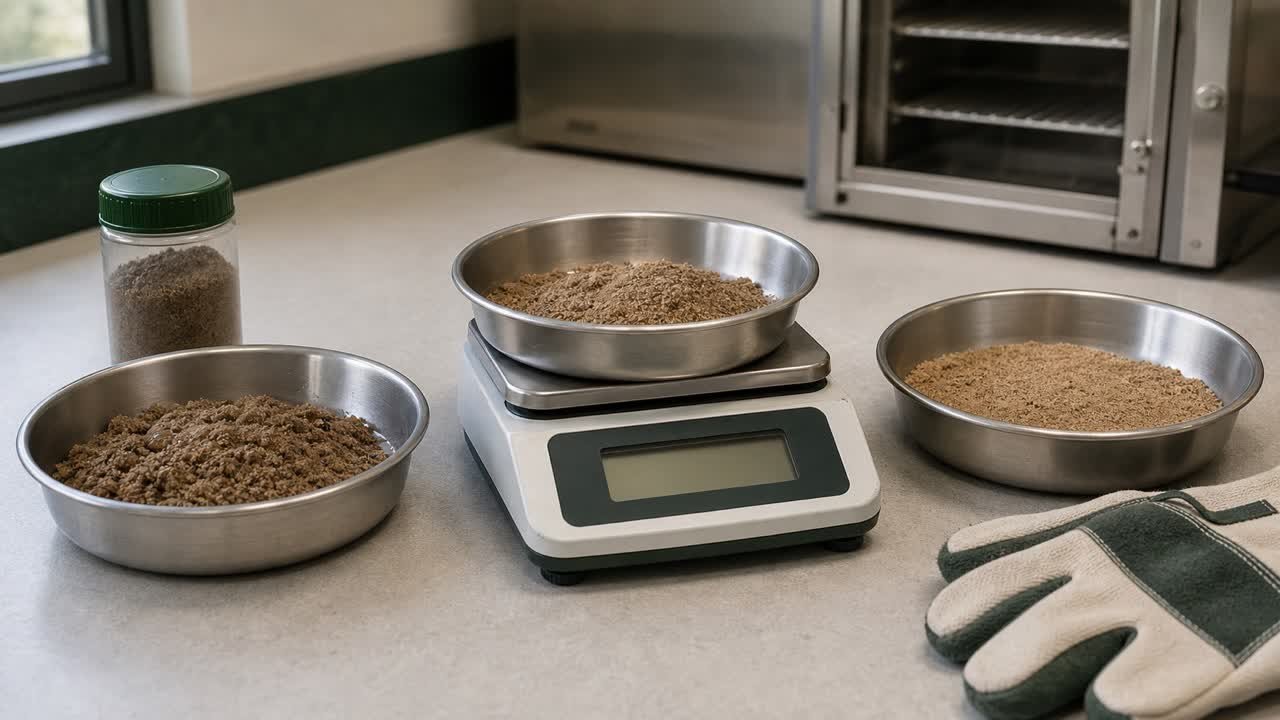
Moisture can change both the mass and the apparent loose volume of fine aggregate. The California Department of Transportation's Concrete Technology Manual explains that damp sand can bulk as moisture films hold particles farther apart. The amount depends on the sand and its condition.
This creates an important boundary: a density documented for one moisture and bulk condition should not be applied silently to a volume measured in another condition. ASTM C70-26 also treats surface moisture in fine aggregate as a measured property used for mass and mixing-water adjustments in concrete work.
Keep bulking separate from a general allowance
Sand bulking is a material-state effect. Waste, handling loss, site contingency, compaction, and supplier order rounding answer different questions. Record them separately so a reviewer can see why the final order differs from the geometric volume or estimated mass.
Is particle specific gravity the same as sand bulk density?
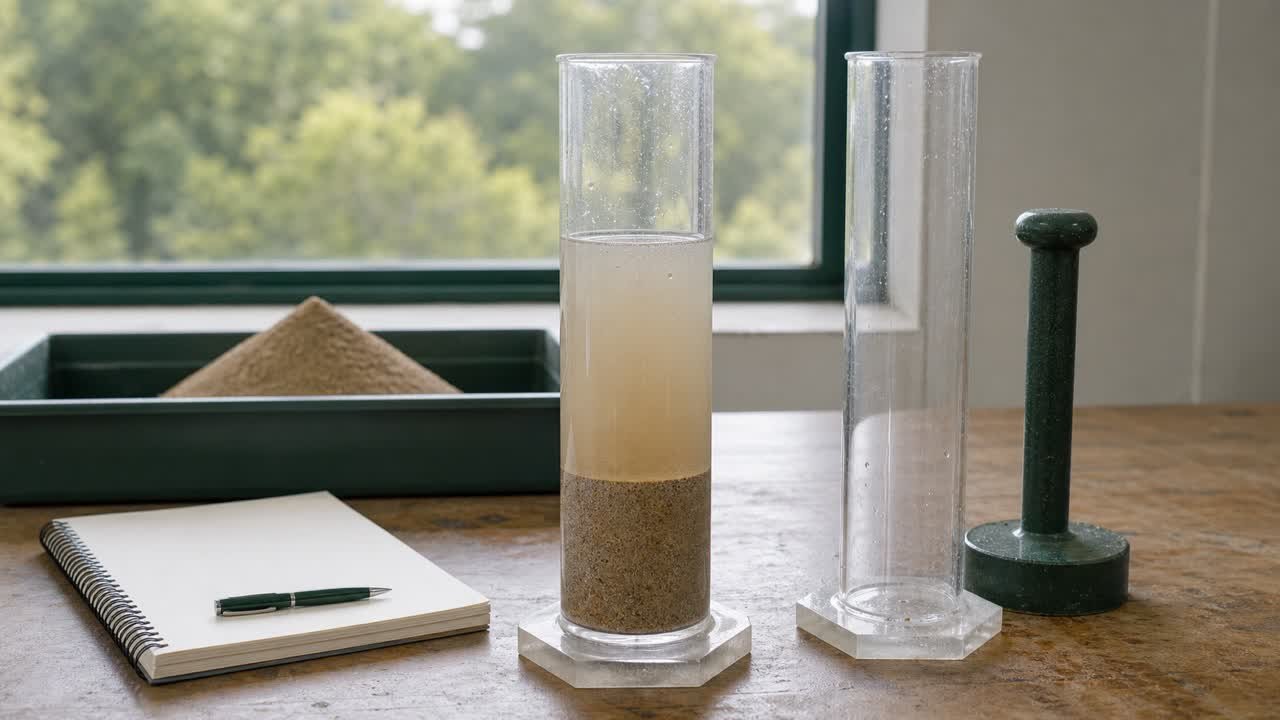
No. Particle density or specific gravity describes the solid aggregate particles. Bulk density relates mass to the total occupied bulk volume, including the voids between particles.
ASTM C127-25 explicitly distinguishes aggregate particle density from bulk density determined under C29/C29M. A sand order based on cubic yards or cubic metres needs bulk density for the relevant condition. Substituting particle specific gravity would ignore the spaces between grains.
How much does density uncertainty change the result?
Estimated mass changes in direct proportion to the density input when volume stays fixed. A documented density range should produce a result range rather than one falsely precise answer.
For a hypothetical 4.80 yd³ volume:
| Density | Estimated pounds | Estimated short tons |
|---|---|---|
| 2,500 lb/yd³ | 12,000 lb | 6.00 |
| 2,600 lb/yd³ | 12,480 lb | 6.24 |
| 2,700 lb/yd³ | 12,960 lb | 6.48 |
The range changes the estimate by 960 lb, or 0.48 short ton. Use a range only when a supplier, test, or project record supports it. A generic internet range does not establish the selected product's density.
How should you compare the estimate with a delivery ticket?
Compare the estimated mass with the supplier's net dispatched mass after confirming that both records describe the same delivery, product, and unit. Keep the original estimate visible instead of replacing it with the ticket value.
| Check | Estimate record | Delivery record |
|---|---|---|
| Product | Sand name, specification, and source used for density | Product shown on quote or ticket |
| Unit | lb, short tons, kg, or metric tonnes | Ticket unit and net quantity |
| Condition | Condition attached to the density | Available moisture or stockpile information |
| Stage | Measured, estimated, or ordered | Actual dispatched quantity |
| Difference | Expected mass from recorded inputs | Ticket mass minus expected mass |
A difference can come from the density evidence, moisture condition, volume measurement, order adjustment, retained material, or dispatch quantity. The comparison identifies what to investigate; it does not prove the cause by itself.
When should you round the result?
Keep the measured volume and density at their recorded precision through the multiplication. Round the displayed mass at the end, then apply any supplier selling increment as a separate order step.
For example, 2.375 yd³ × 2,645 lb/yd³ = 6,281.875 lb, or 3.1409375 short tons. Displaying 3.14 short tons is reasonable when the estimate uses 2 decimal places. Rounding both inputs before multiplication can create a different result.
Myth versus reality
| Myth | Reality |
|---|---|
| One cubic yard of sand always weighs the same. | The applicable bulk density depends on the product and stated material condition. |
| Wet sand always uses one higher conversion factor. | Moisture can change mass and apparent loose volume; use a documented value for the actual condition. |
| Specific gravity can replace bulk density. | Specific gravity describes particles, while bulk density includes voids in the occupied volume. |
| A calculated weight proves one truck can carry it. | Vehicle, route, axle, legal, and supplier controls determine usable payload. |
| Bag weight tells you bulk volume. | Package coverage needs the manufacturer's stated volume yield for the exact product. |
Questions to ask before ordering sand
- What exact product and source does the density describe?
- Is the value for loose, compacted, dry, damp, stockpiled, or delivered sand?
- Is the sand sold by scale weight, loader volume, bag, or truckload?
- What minimum order and selling increment apply?
- Will the supplier convert a volume request to scale weight at dispatch?
- What usable payload applies to the vehicle and route?
Use the Sand Calculator when you need to calculate volume from area and depth before converting that volume to mass. The Sand hub keeps product-selection, coverage, and ordering resources together.
Common sand weight mistakes
- Using a generic internet density without identifying the product or condition.
- Multiplying cubic feet by a density stated per cubic yard.
- Calling a U.S. short ton and a metric tonne the same unit.
- Using particle specific gravity as bulk density.
- Applying a dry or compacted density to a loose damp volume without explanation.
- Rounding the volume and density before multiplying.
- Hiding supplier order rounding inside the calculated mass.
- Treating estimated mass as a legal truck-payload decision.
Sources and scope
- ASTM C09.20 active standards list: identifies C29/C29M-23 as the active aggregate bulk-density and voids method.
- ASTM C127-25: distinguishes aggregate particle density from bulk density that includes interparticle voids.
- ASTM C70-26: surface-moisture measurement in fine aggregate and its stated use.
- California Department of Transportation Concrete Technology Manual, Chapter 4: sand bulking and moisture context for concrete-material proportioning.
- NIST Handbook 44, 2026 Appendix C: volume and mass unit relationships.
Scope: this chart estimates mass from a known bulk volume and documented bulk density. Supplier records, project documents, current specifications, responsible qualified people, and applicable transport rules control product selection, moisture corrections, mixture design, compaction, acceptance, ordering, and legal loading.