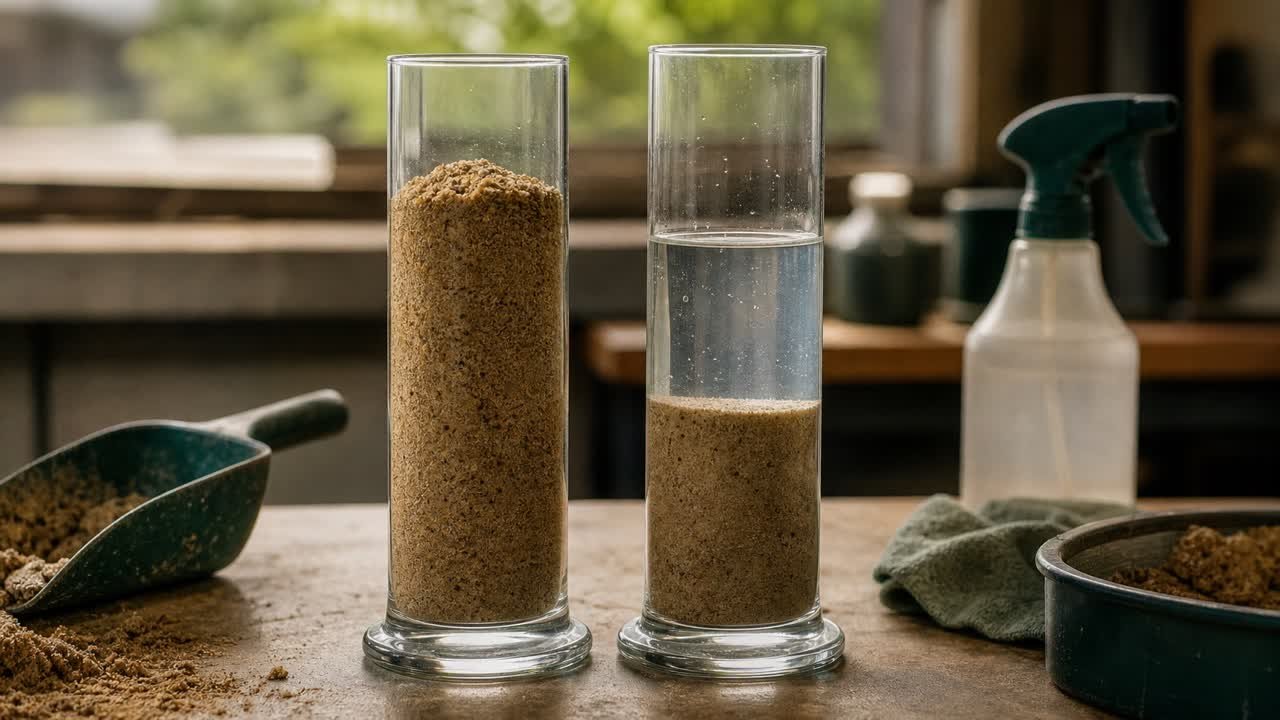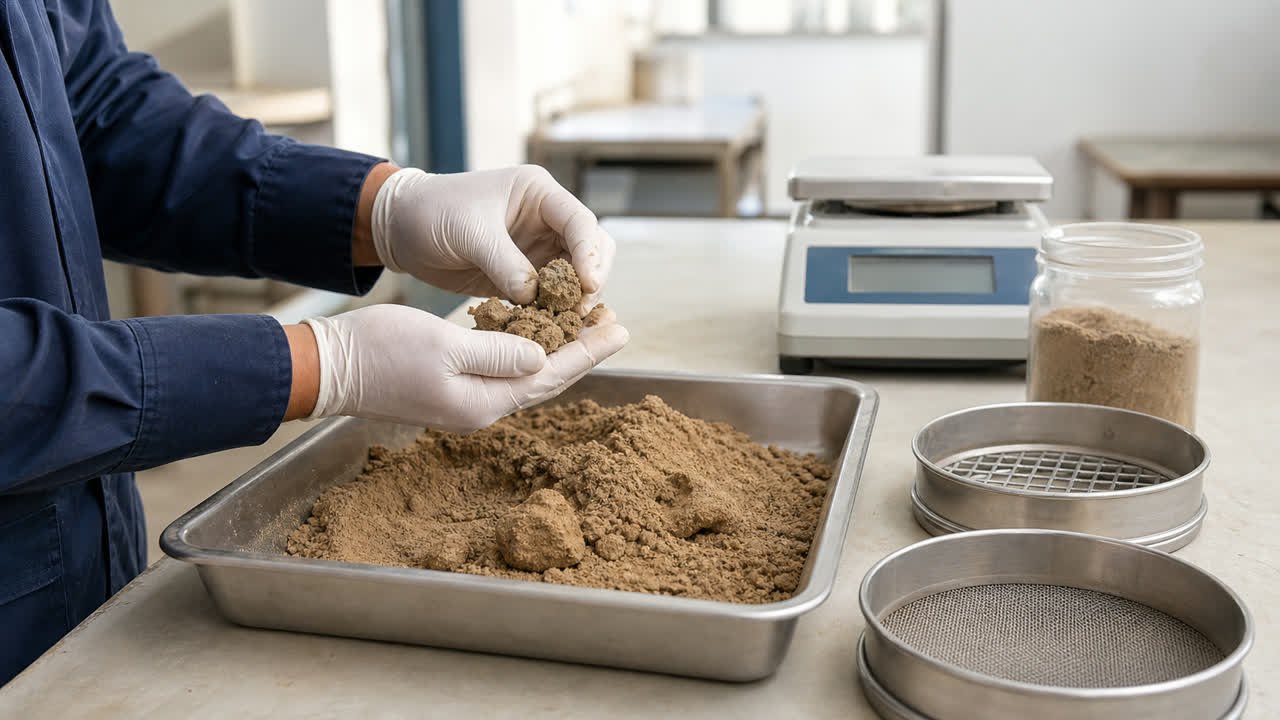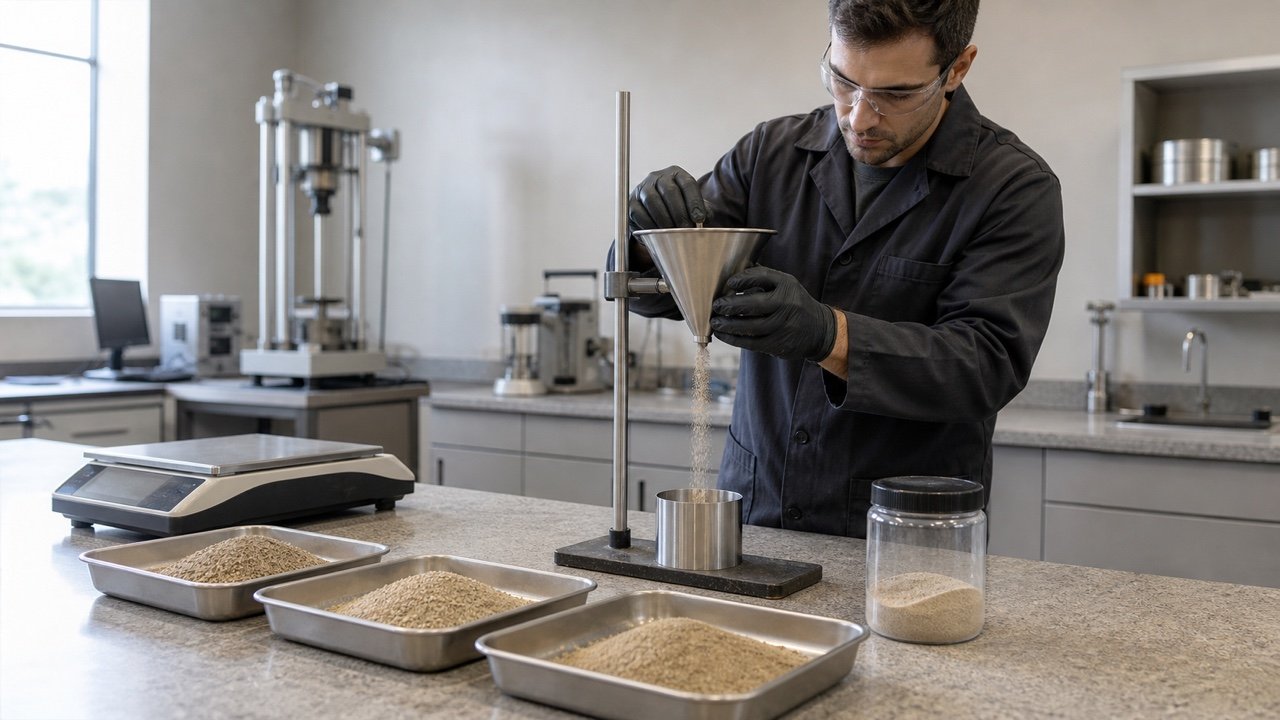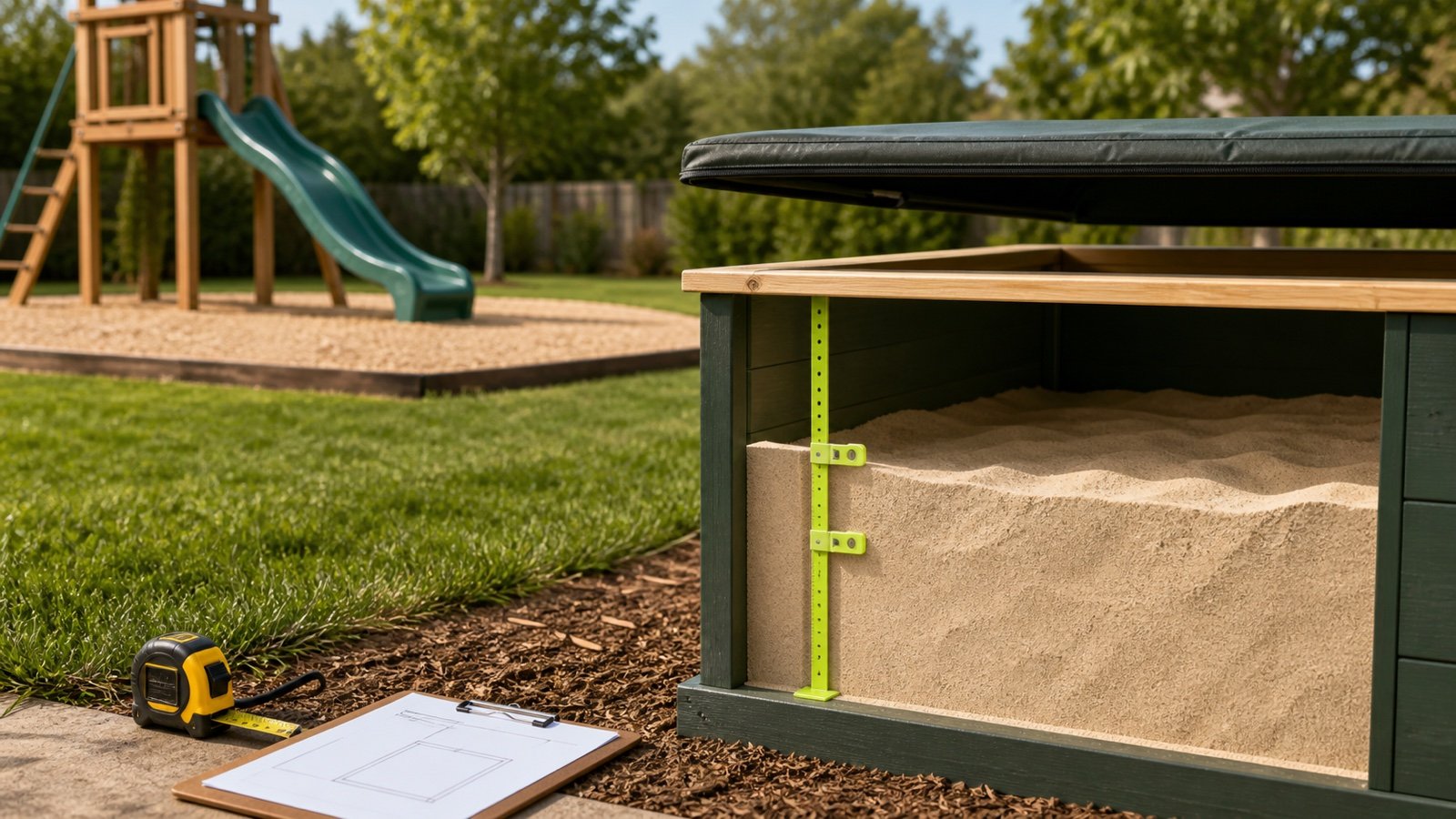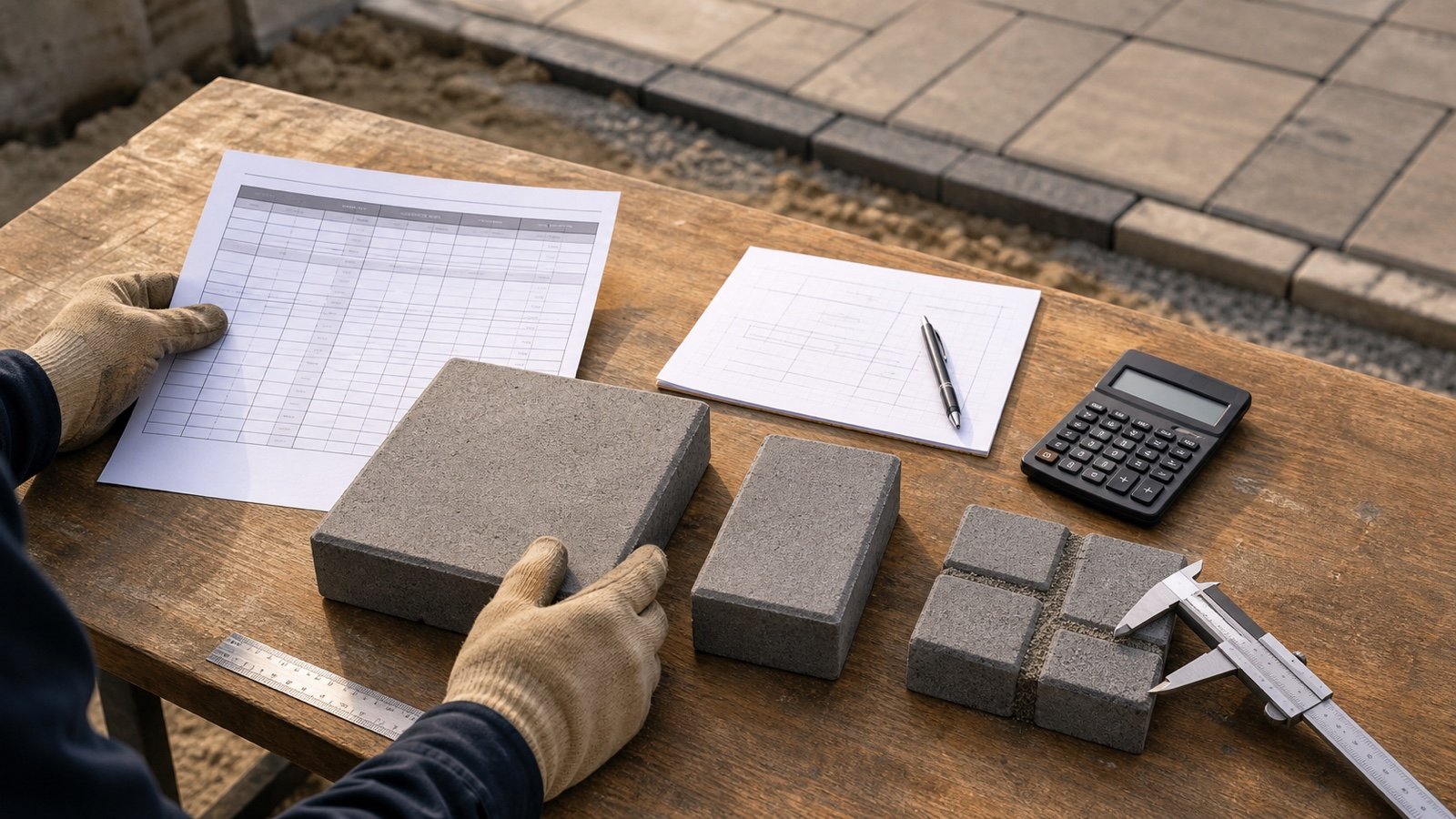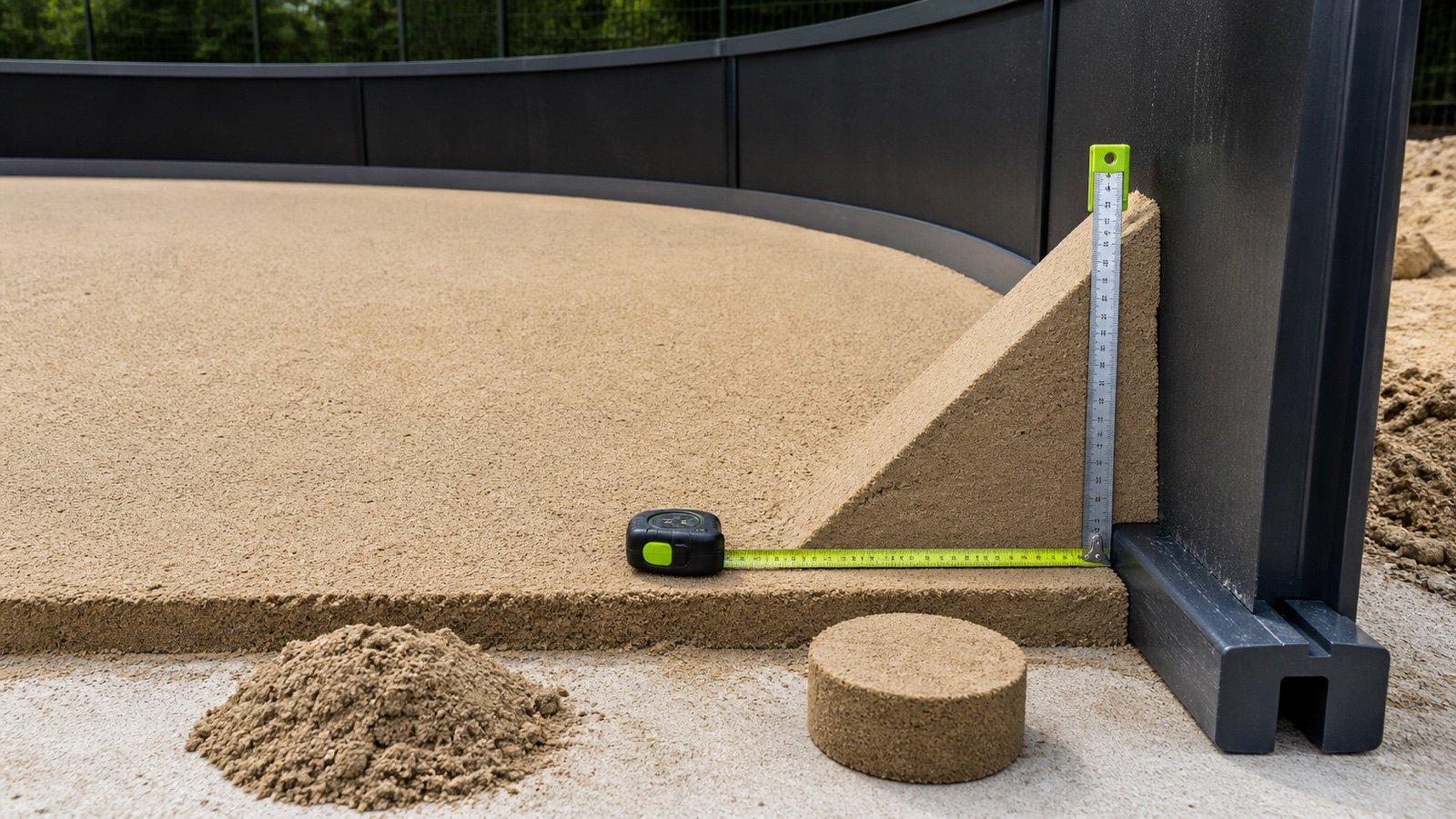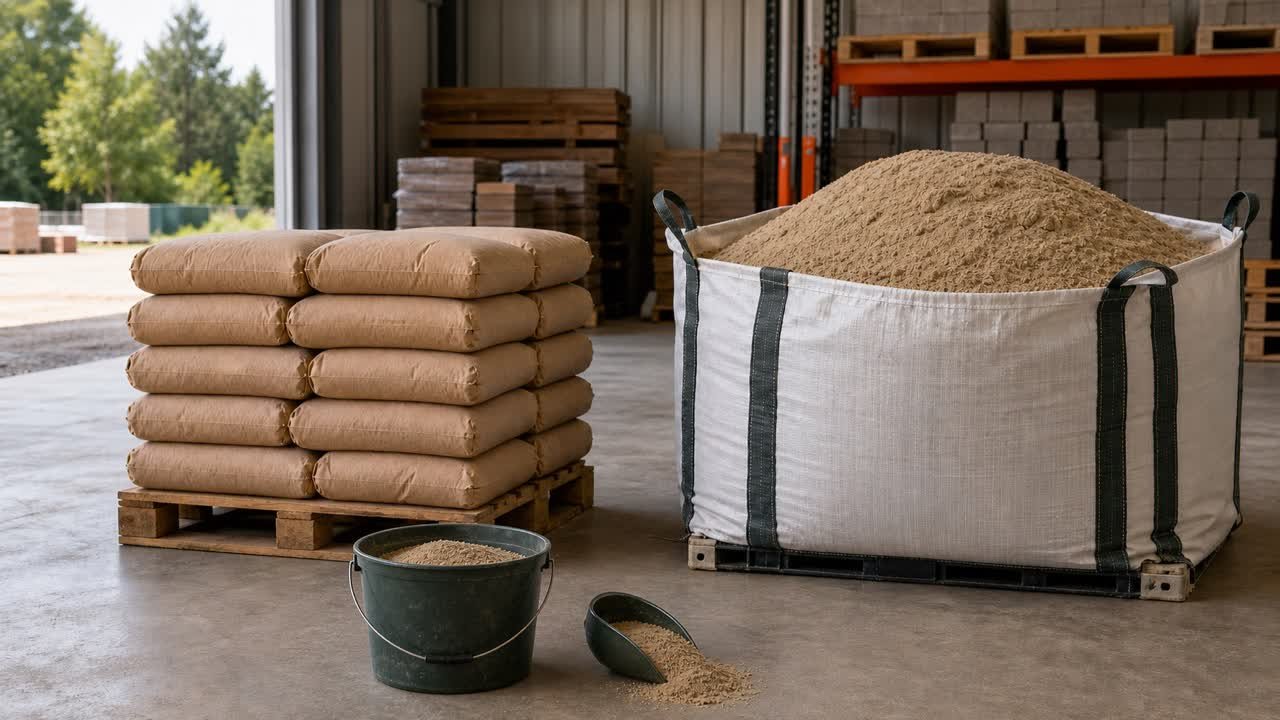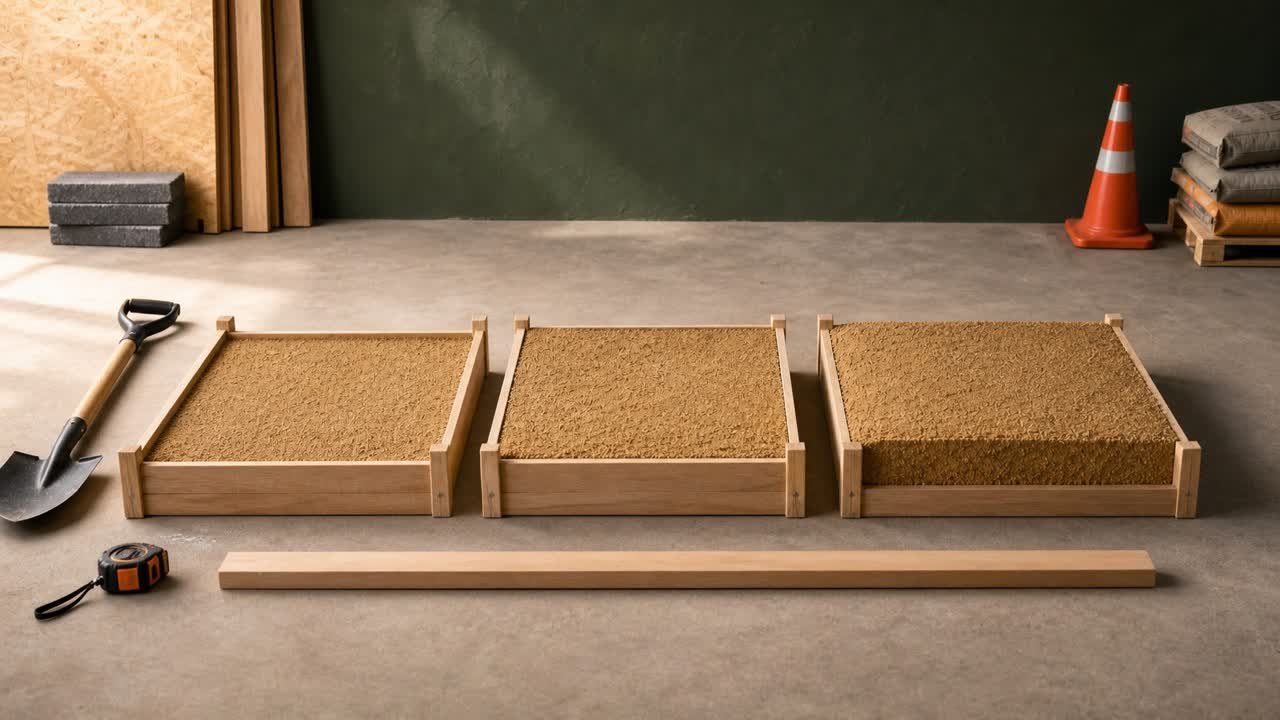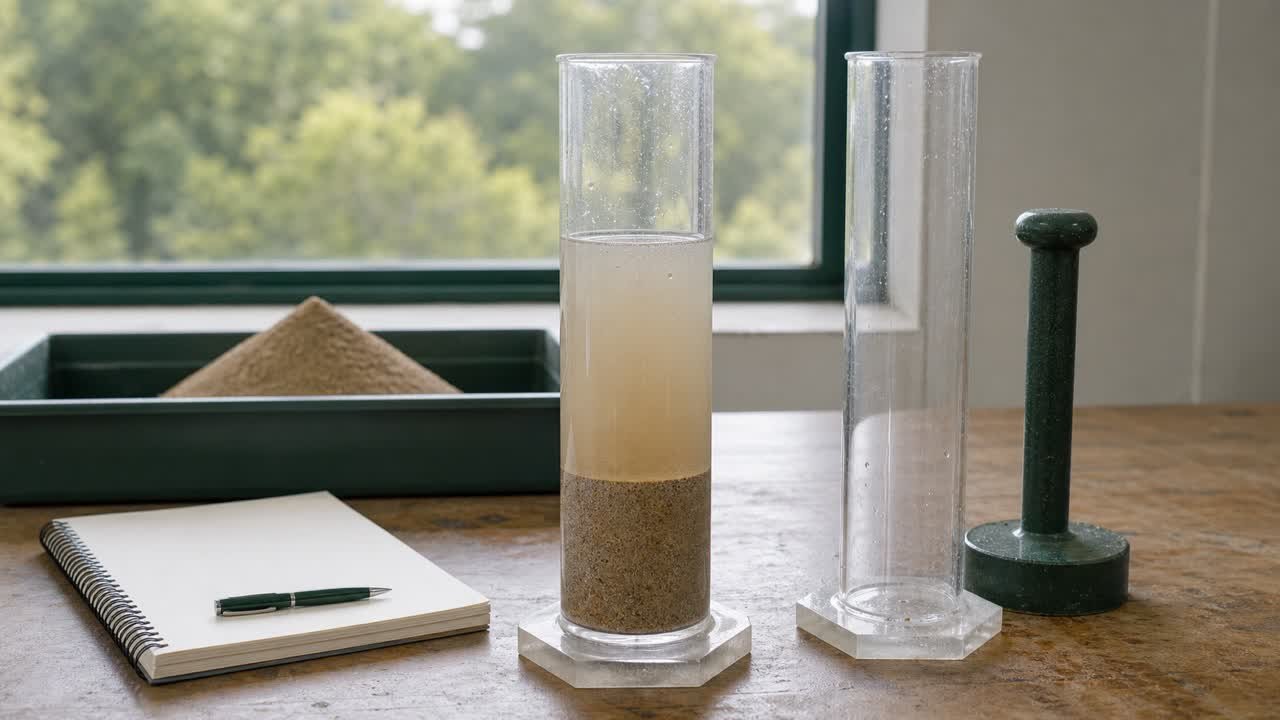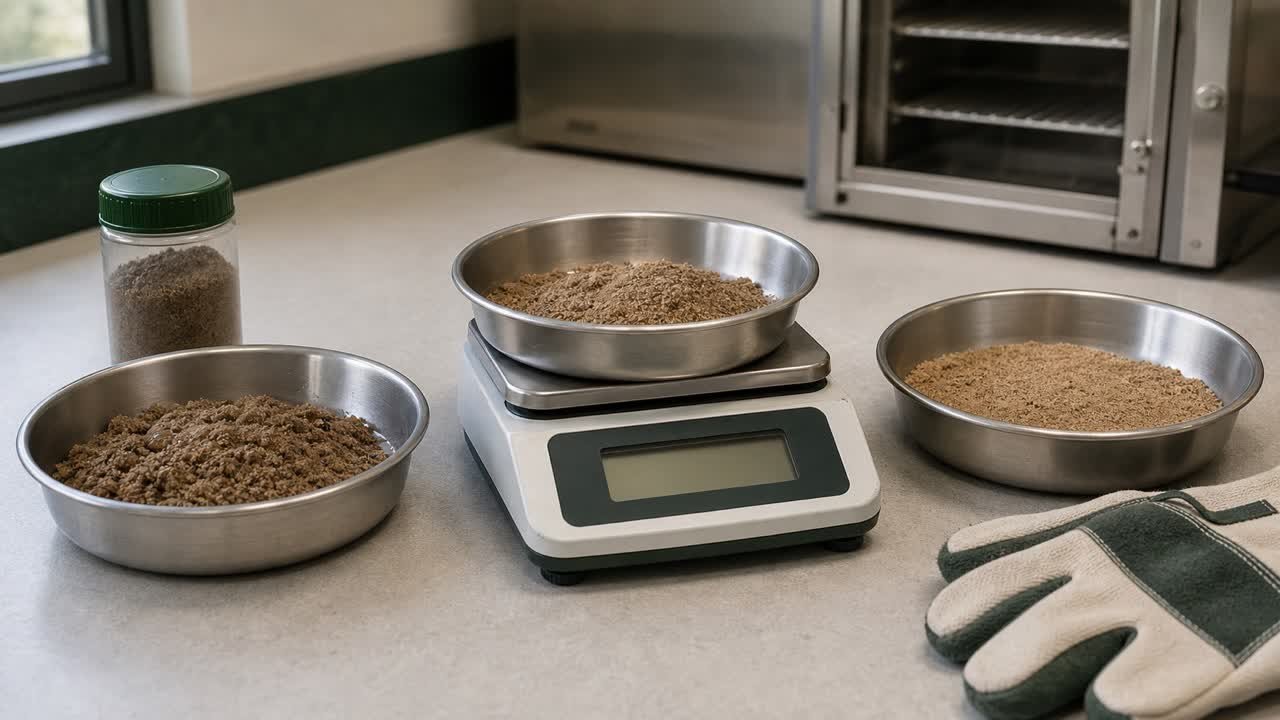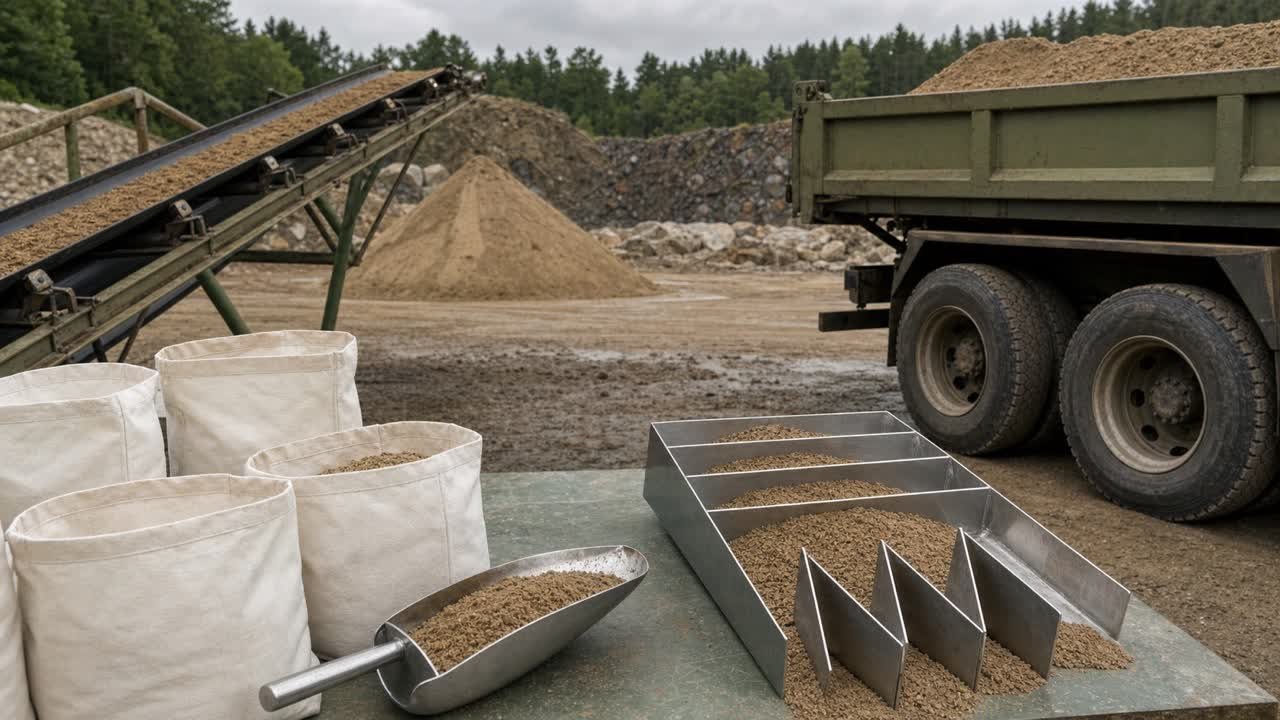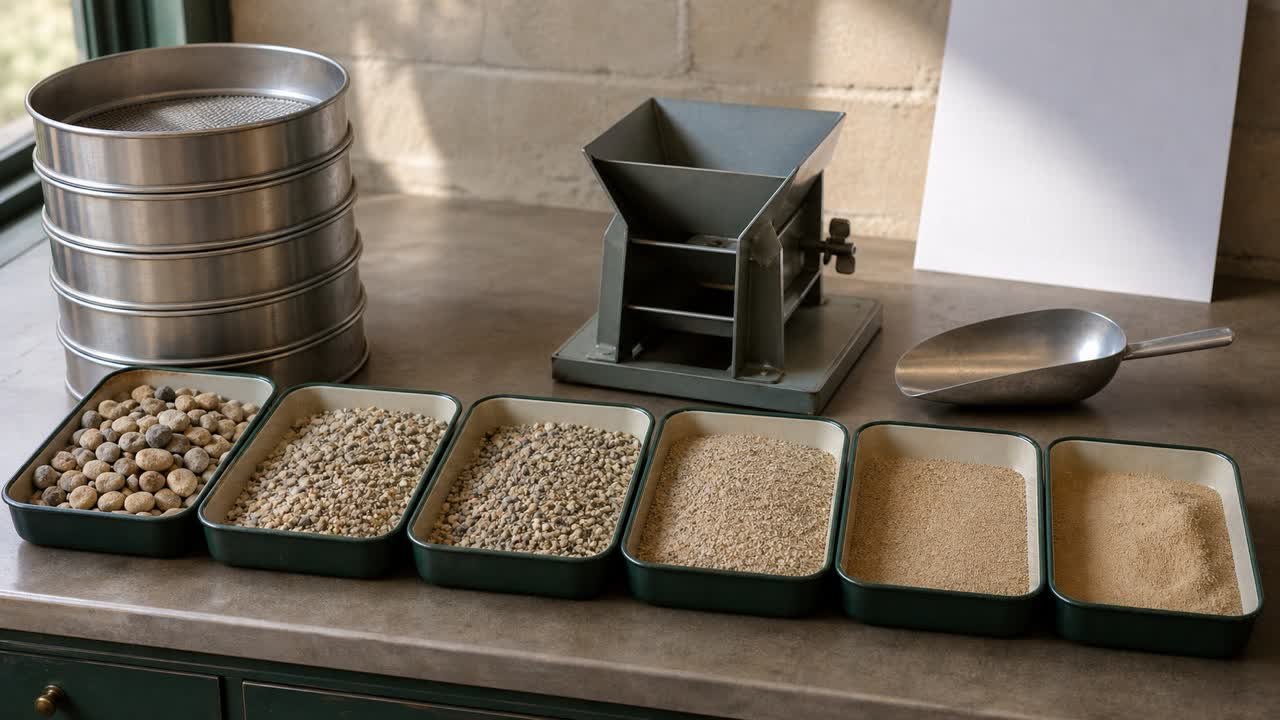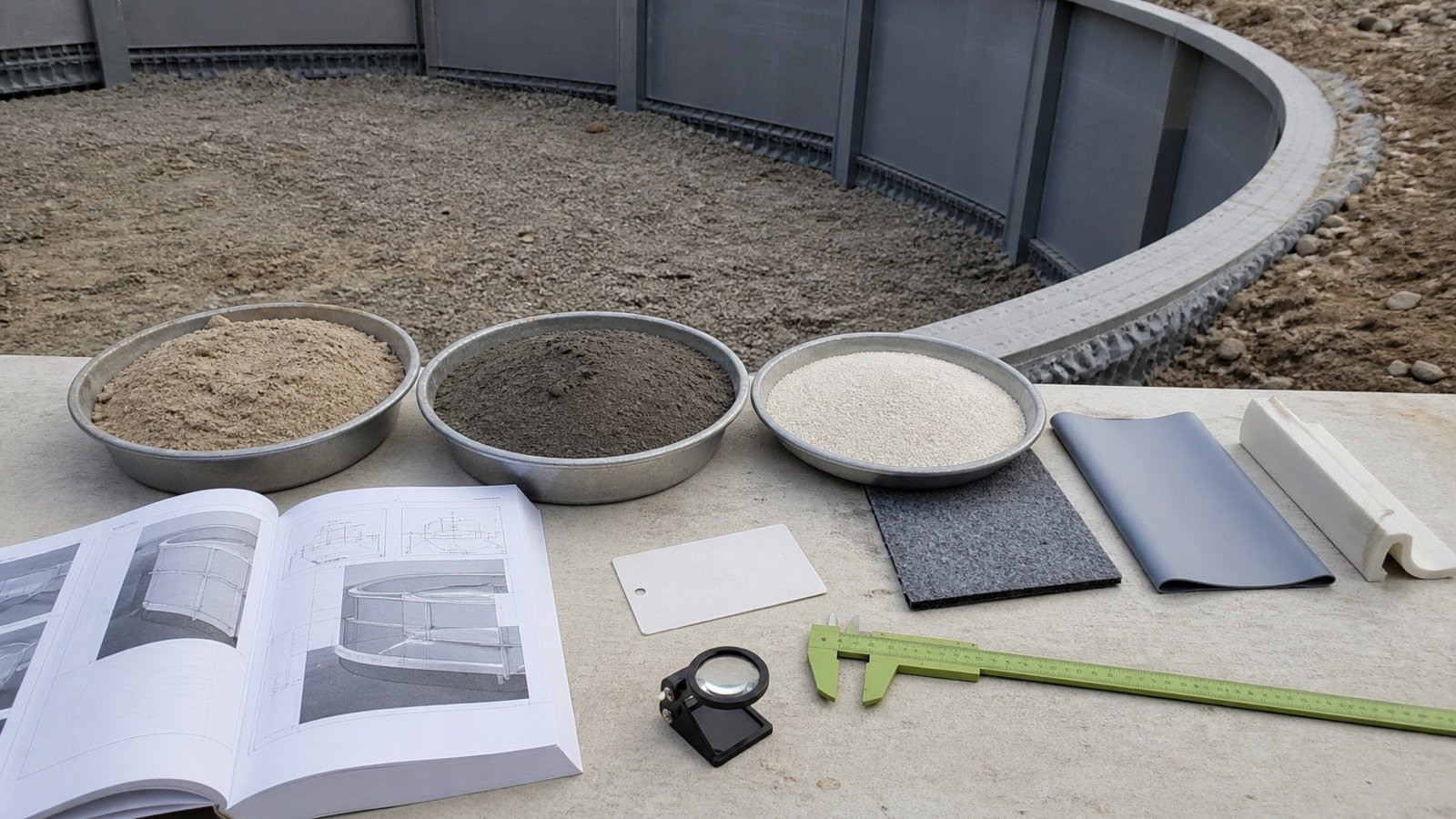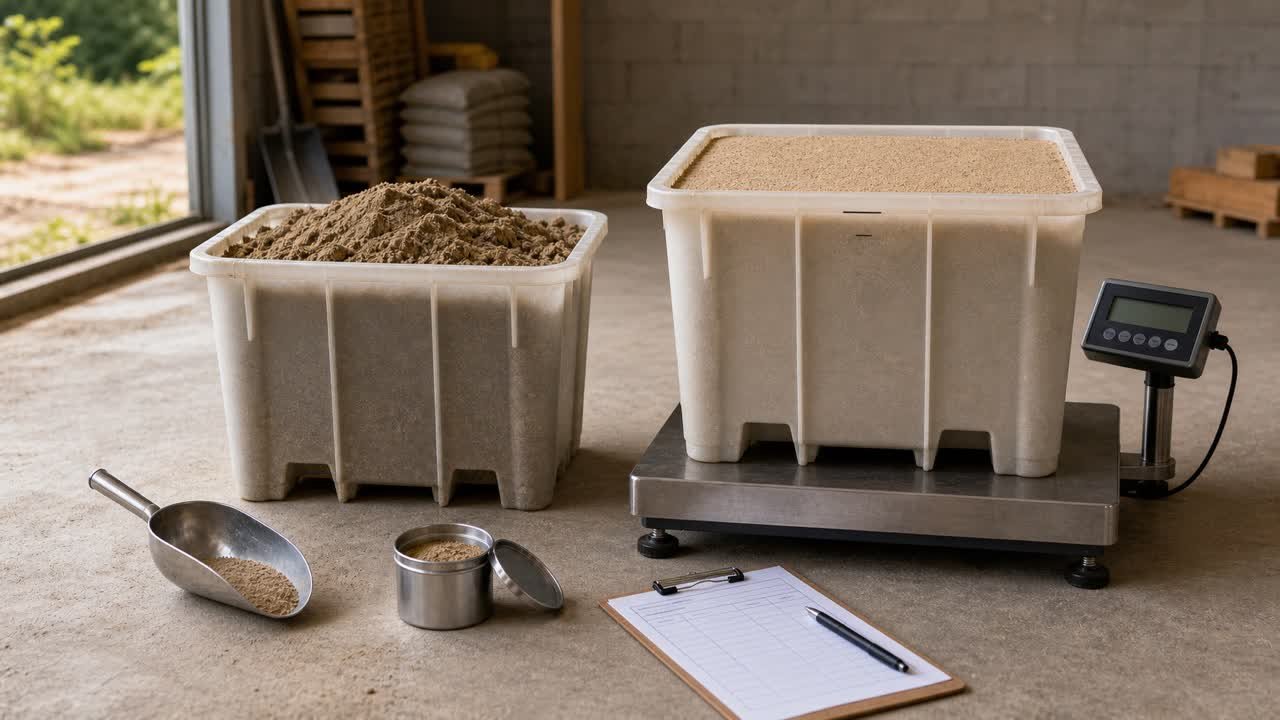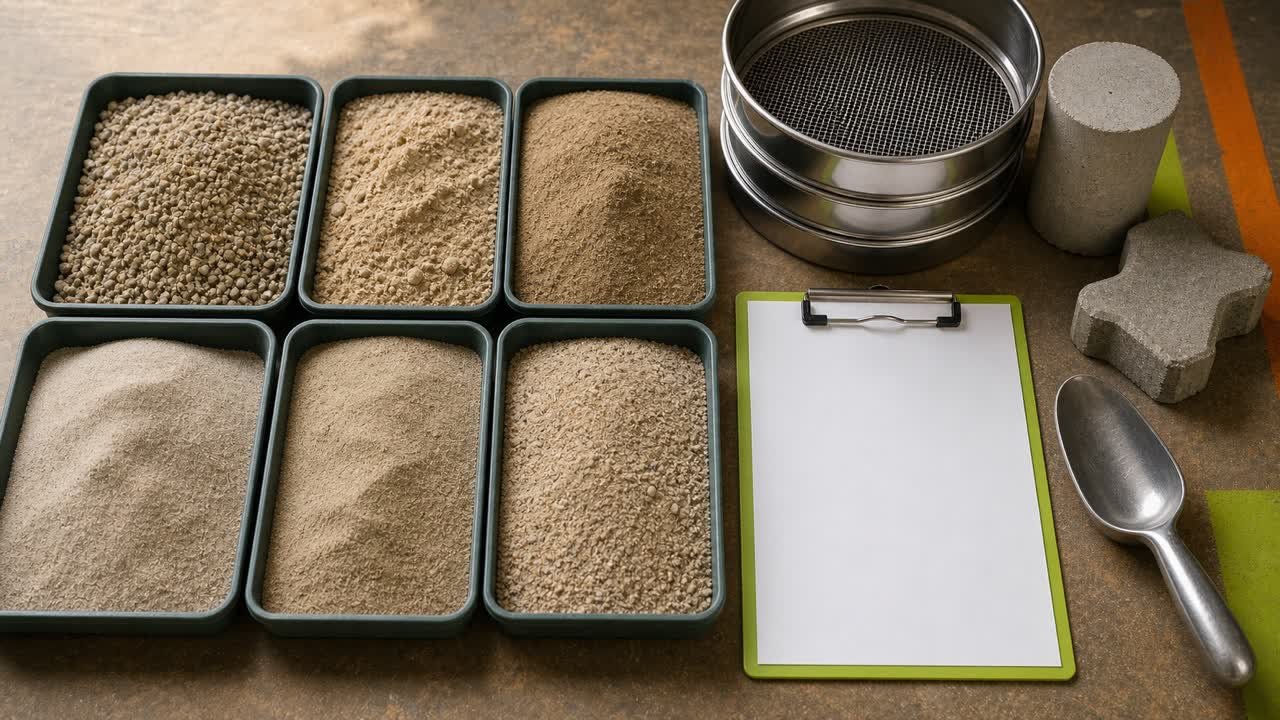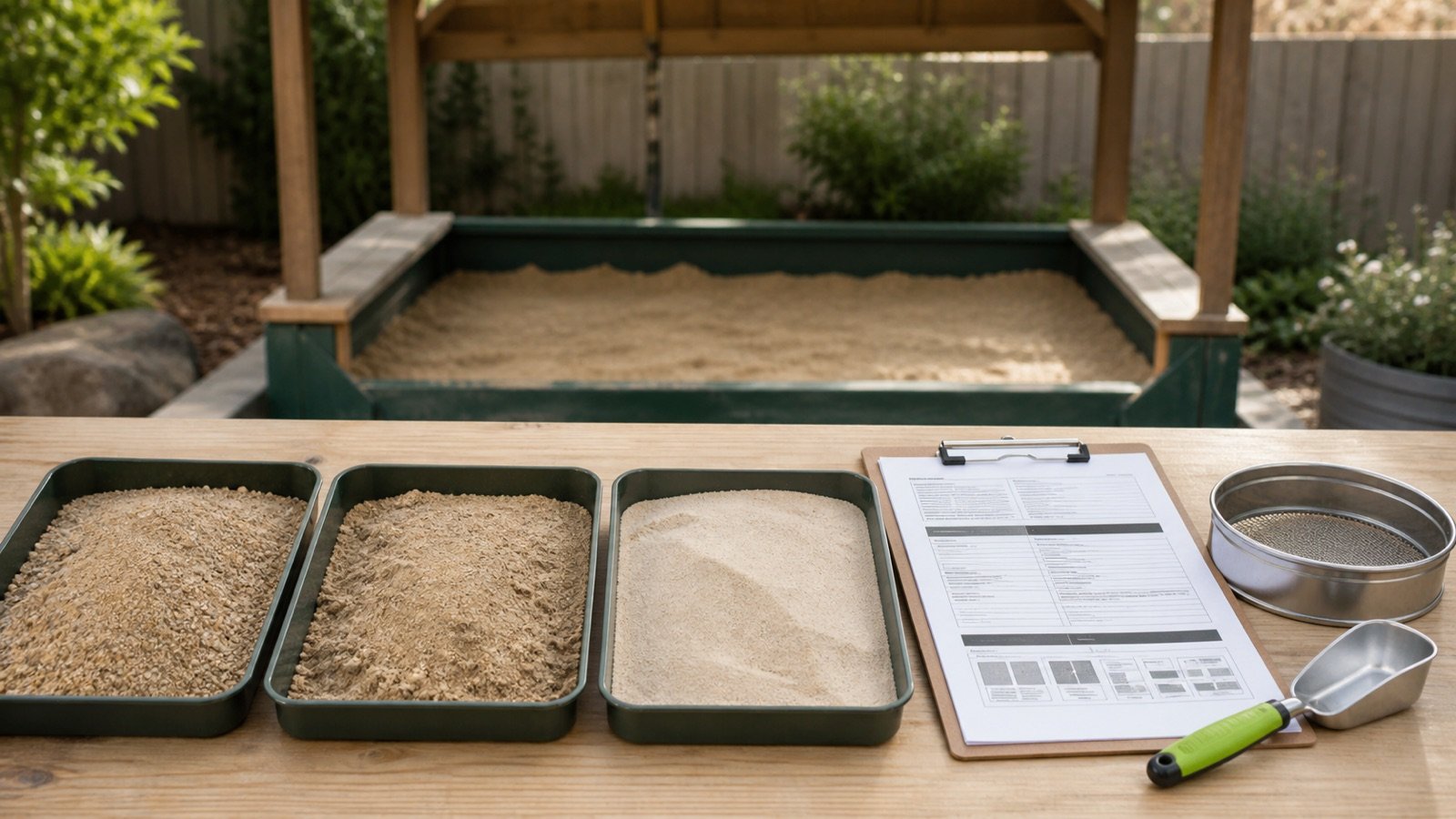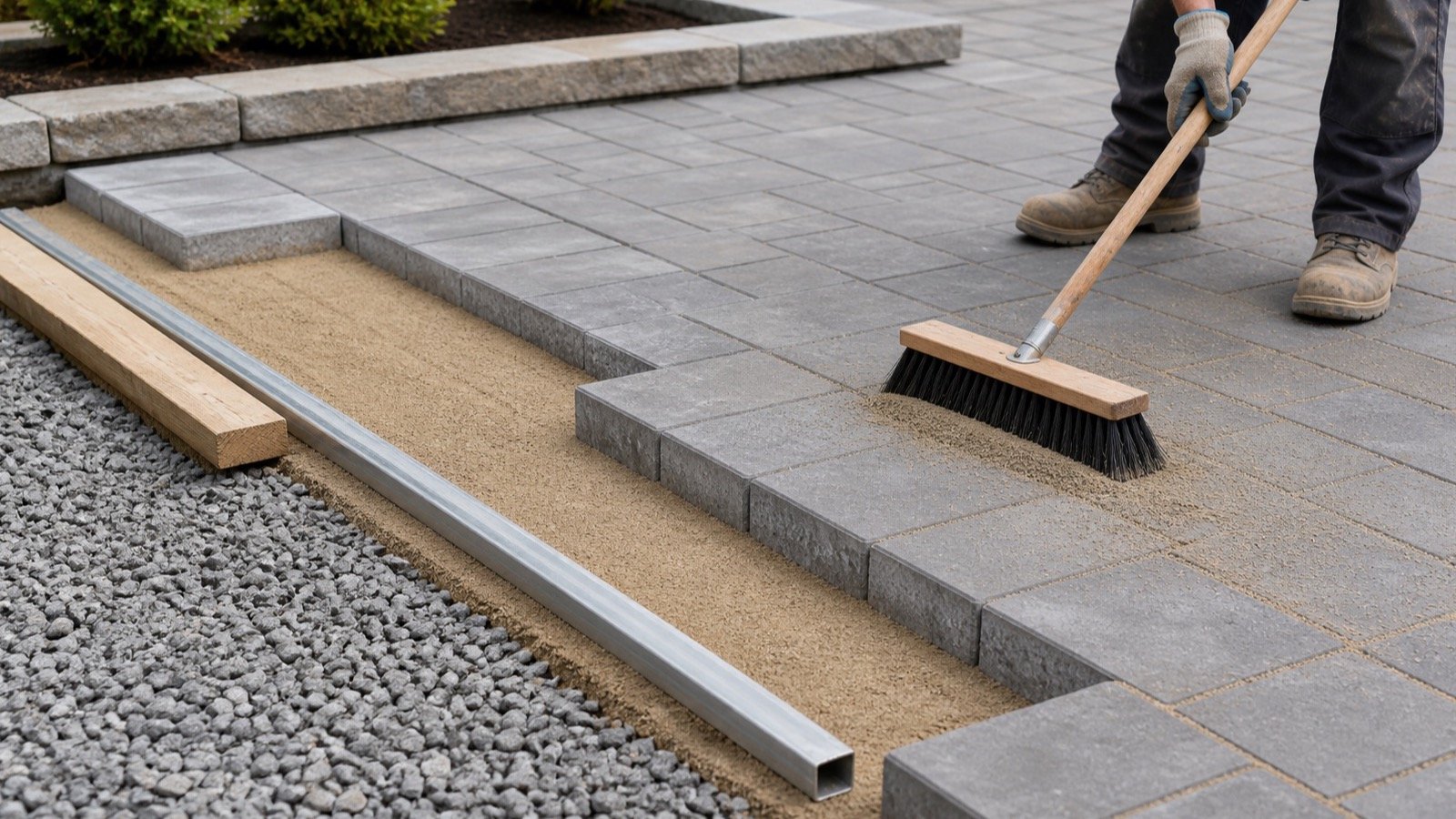
Paver projects can use sand in 2 locations, and each location needs its own selection and quantity record. A bag labelled “paver sand” does not tell you whether it belongs below the pavers or inside the joints.
Identify the pavement system, paver, traffic condition, bedding requirement, joint requirement, and current product instructions before buying material. Then use the Paver Sand Calculator to keep the 2 quantities separate.
What is the difference between paver bedding sand and joint sand?
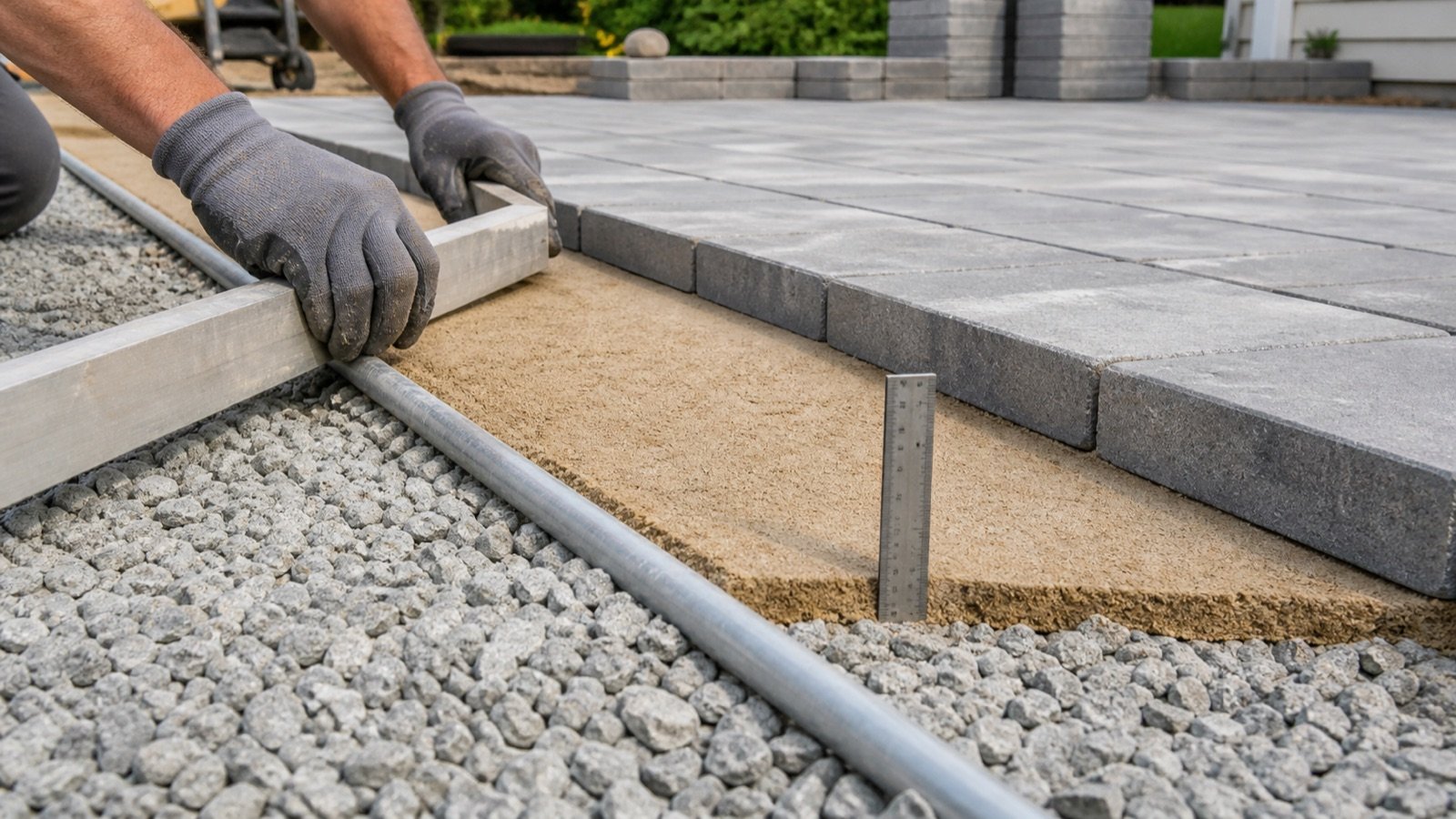
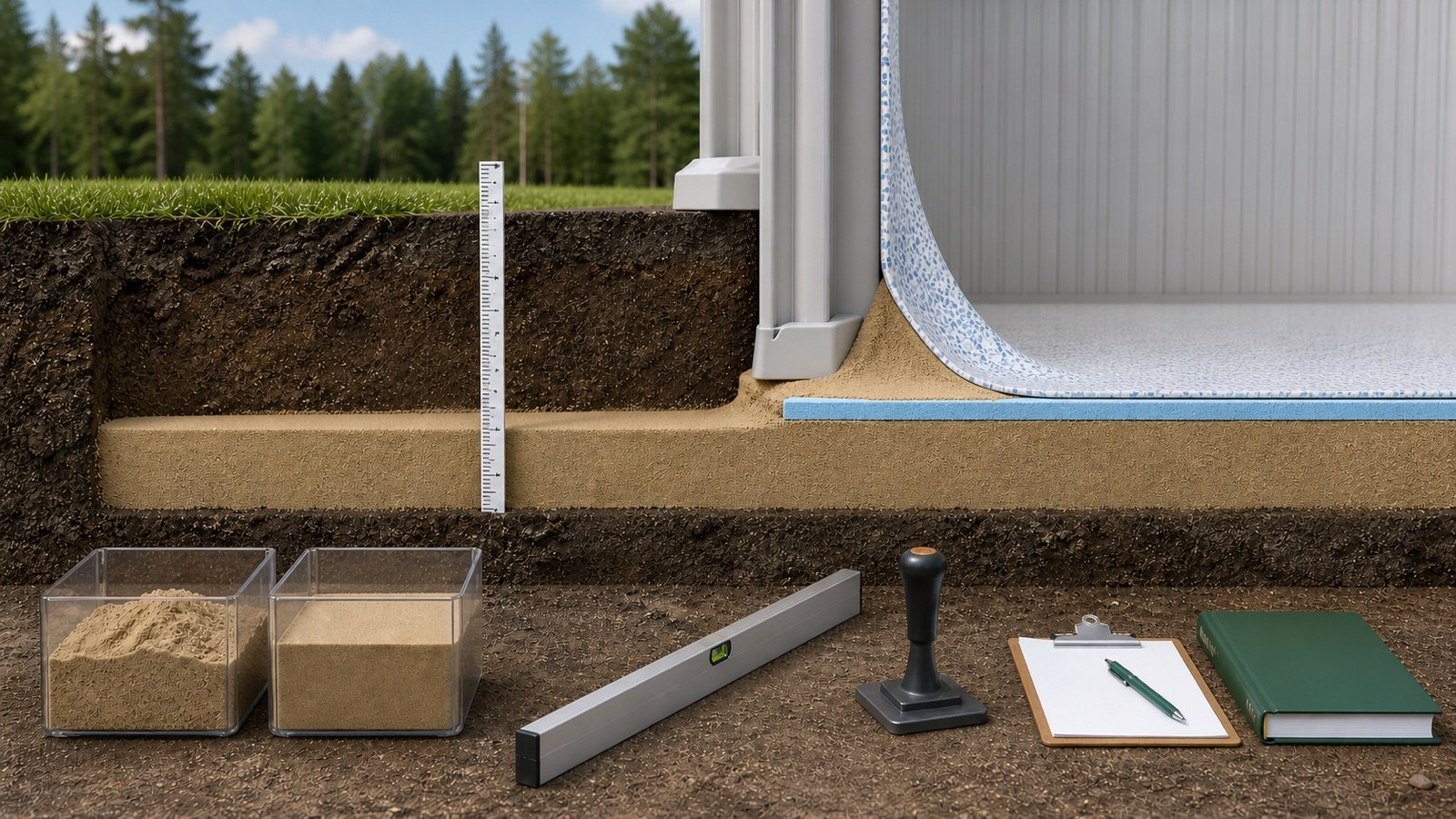
Bedding sand forms the selected layer between the accepted base and the pavers. Joint sand fills the gaps after pavers are placed and supports the joint function stated for the chosen pavement system.
The location changes the required properties, installation state, evidence, and quantity method. Bedding is calculated as area multiplied by depth. Joint material is often ordered from a named product's coverage for the actual paver size, joint width, joint depth, and bag size.
| Record | Bedding sand | Joint sand |
|---|---|---|
| Location | Below pavers and above the prepared base | Inside gaps between installed pavers |
| Main job | Provides the selected setting layer and the system functions named in its documents | Fills joints and supports the specified interlock or joint function |
| Selection evidence | Drawing, specification, system document, and supplier data | Drawing, specification, system document, and joint-product data |
| Quantity basis | Paved area × selected uncompacted depth | Named-product coverage or a verified joint-volume model |
| Installation state | Placed and screeded before pavers cover it | Swept and compacted after placement; stabilized products can add activation and curing |
Use “bedding below pavers” or “joint fill between pavers,” followed by the applicable specification or exact product. “Paver sand” alone leaves the main decision unresolved.
Where does each sand sit in the pavement?
Bedding sand is a continuous layer below the pavers. Joint sand occupies many narrow vertical spaces between units, so equal paved areas can use different joint quantities.
The base, bedding, paver, and joint are separate records. Joint sand does not replace a missing base or bedding layer. Bedding sand does not remove the need to fill joints where the selected system requires it.
Can the same sand be used for bedding and joints?
Sometimes, within a system that expressly permits it. CMHA PAV-TEC-002-22 says bedding sand can fill joints in its conventional interlocking-concrete-pavement method, while noting that the coarser material can require extra spreading and compaction effort.
The reverse substitution does not follow. The same CMHA document allows a finer joint sand in the cited method but says masonry sand should not be used as bedding. A named polymeric joint product also remains a joint product unless its current documentation explicitly approves another use.
Treat “allowed here” as a project-specific decision, not proof that every bedding, masonry, jointing, kiln-dried, or polymeric sand is interchangeable.
Why is “paver sand” an incomplete product name?
Retail and supplier labels vary by market. One product called paver sand may be bedding material, another may be loose joint fill, and another may contain a water-activated binder.
- State the location: bedding layer or paver joints.
- Name the pavement system and paver product.
- Record the material specification or exact product.
- Identify the loose, screeded, compacted, activated, or cured state where relevant.
- Keep the bag size, volume yield, density, or coverage basis.
- Record joint width, joint depth, paver size, surface, and traffic condition.
- Keep the document title, revision, market, and access date.
A supplier can confirm what a stocked product is. The applicable project and system documents decide whether it fits the work.
How do you select bedding sand?
Start with the accepted pavement-system detail and project specification. Confirm that the supplier's material record matches the named requirements and the actual traffic, drainage, climate, base, and paver conditions.
- Identify the assembly, such as conventional interlocking pavement, slabs, permeable pavers, an overlay, mortar set, or a proprietary panel system.
- Record the paver, use, traffic, base, drainage, edges, and required bedding state.
- Read the specified gradation and any durability, fines, moisture, or source requirements.
- Compare the supplier's current test or product record with those requirements.
- Confirm the selected uncompacted depth and finished-elevation method.
- Keep unresolved substitutions out of the approved quantity.
CMHA PAV-TEC-017-22 discusses bedding functions and added material-property checks for its vehicular interlocking-concrete-pavement scope. Its criteria should not be copied onto a different assembly without confirming applicability.
How do you select joint sand?
Match joint material to the system, paver, joint geometry, traffic, exposure, drainage, installation sequence, and maintenance plan. For a proprietary product, use the latest technical data for the exact market and package.
Record whether the material is loose joint sand, a dry stabilizer or polymeric blend, a liquid-stabilized system, or another approved product. Those options do not share one set of widths, depths, wetting steps, curing times, coverage values, or repair rules.
Techniseal SMARTSAND and Alliance Gator Supersand Bond show this boundary. Both are named joint products, but each publishes its own conditions and procedure. Neither record proves what another polymeric sand requires.
Is polymeric sand bedding sand?
No, not when the selected product is documented only for paver joints. A polymeric joint sand contains a binding system activated according to its instructions and belongs in the approved joint geometry.
The reviewed Techniseal SMARTSAND sheet identifies the product for interlocking concrete paver joints, warns against using it as capping sand, and requires a draining bedding layer. Alliance Gator's reviewed Supersand Bond page also separates joint material from bedding in its installation cross-section.
Do not spread a joint product below pavers because both materials contain sand. Check the exact data sheet when a proprietary system uses different terminology.
How are bedding and joint quantities calculated?
Calculate bedding as geometric volume. Calculate joint-product bags from current coverage unless a verified joint-volume model covers the actual pattern and material.
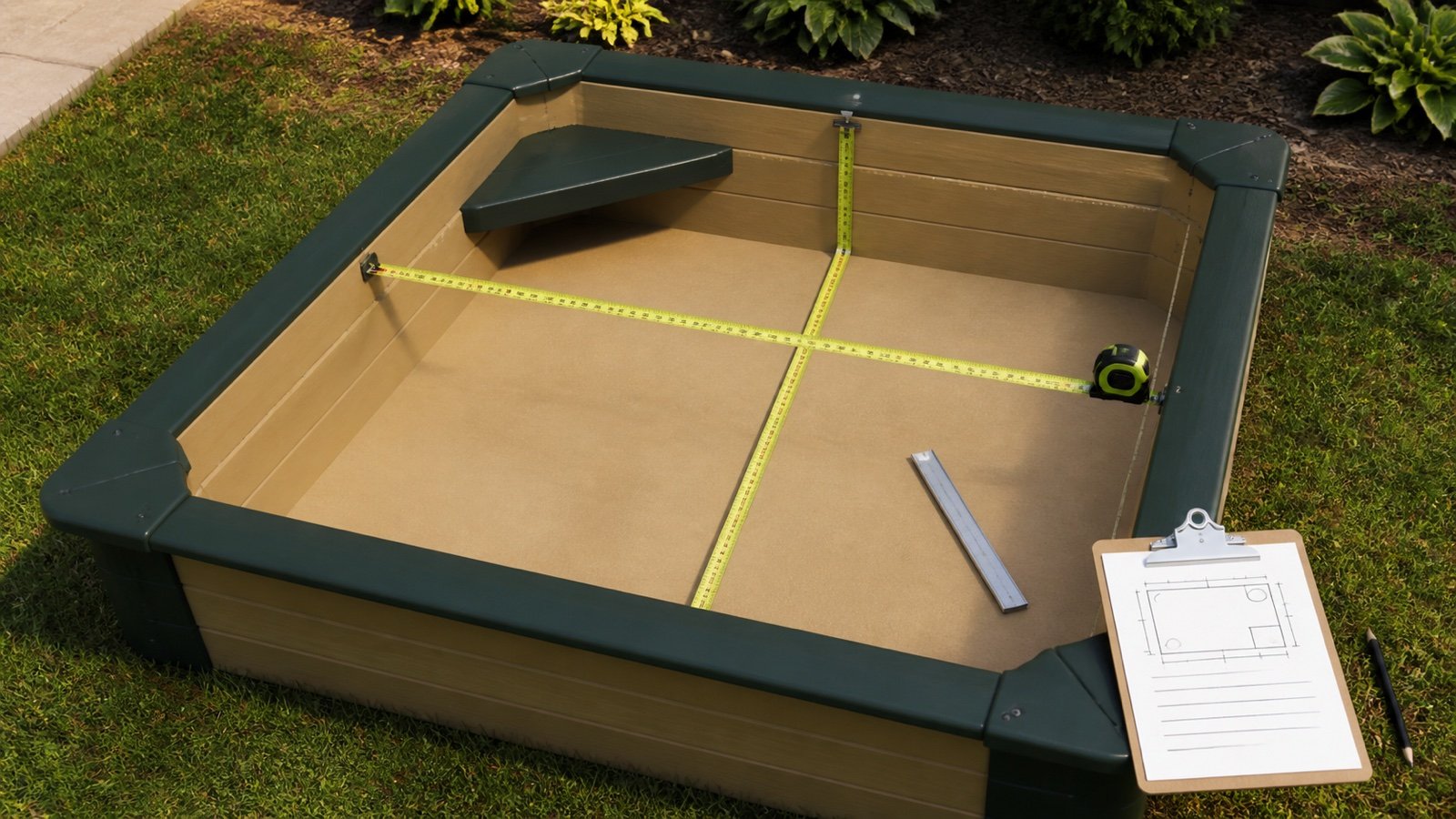
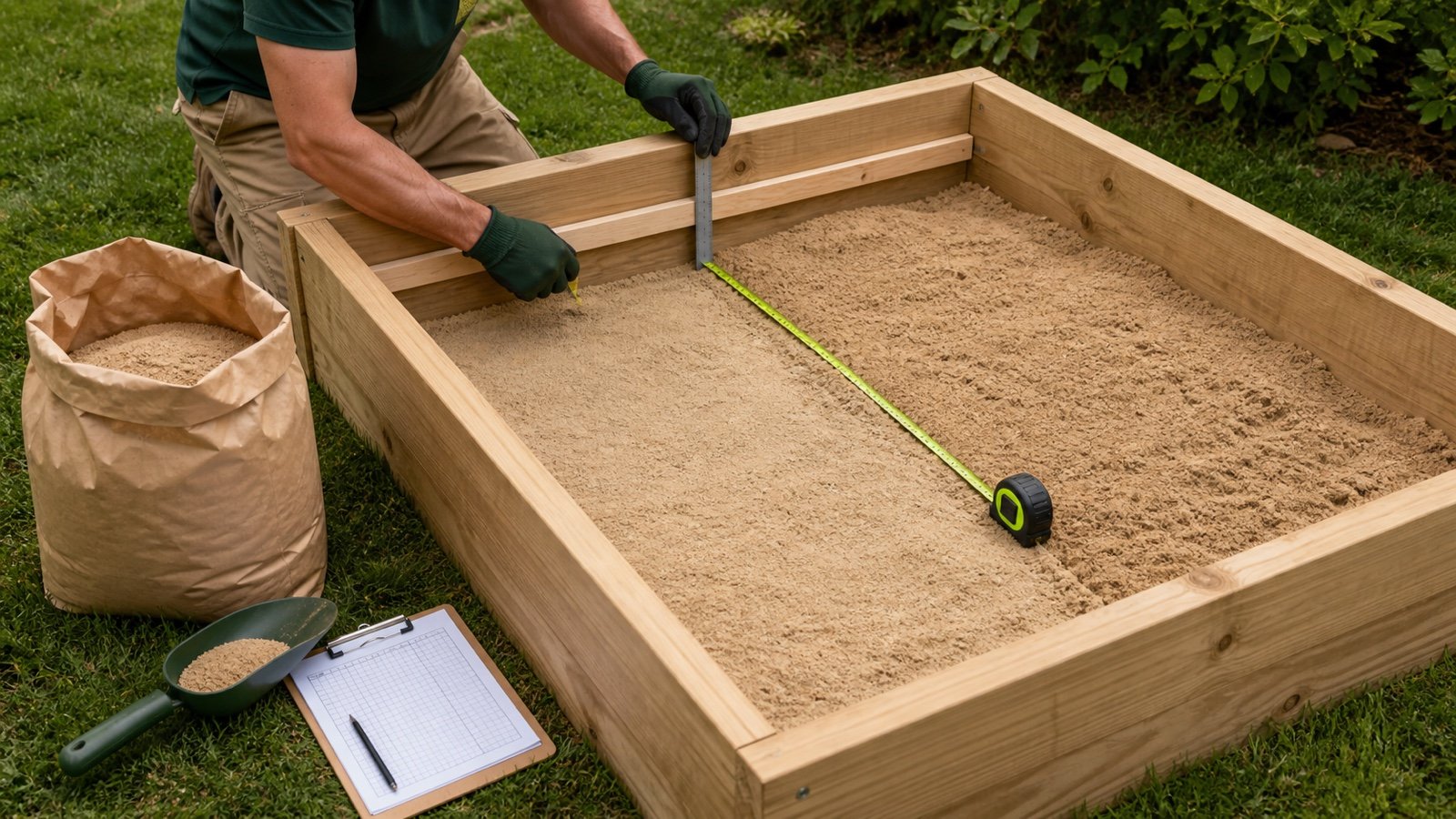
Metric bedding volume in m³ = paved area in m² × depth in mm ÷ 1,000
Imperial bedding volume in ft³ = paved area in ft² × depth in in ÷ 12
Imperial bedding volume in yd³ = volume in ft³ ÷ 27
Joint planning area = paved area × (1 + documented allowance % ÷ 100)
Whole joint bags = ceiling(joint planning area ÷ current coverage per bag)
Do not apply the joint allowance to bedding automatically. Keep bedding supplier-state conversion, handling allowance, bulk increment, package yield, and density as separate sourced entries.
Checked metric example
A 60 m² area with a selected 25 mm bedding depth requires 1.5 m³ of measured bedding. If the current joint product record supports 7 m² per bag for the actual paver and joints, and the project records a 5% joint-area allowance, the joint planning area is 63 m² and the order is 9 bags.
60 × 25 ÷ 1,000 = 1.5 m³; 60 × 1.05 ÷ 7 = 9 bags
Checked imperial example
A 300 ft² area with a selected 1 in bedding depth requires 25 ft³, or about 0.926 yd³. If the current product record supports 65 ft² per bag and the project records a 10% joint-area allowance, 330 ÷ 65 equals 5.077, which rounds once to 6 bags.
300 × 1 ÷ 12 = 25 ft³; 25 ÷ 27 = 0.926 yd³; 300 × 1.10 ÷ 65 = 5.077 → 6 bags
The coverage and allowances are hypothetical inputs used to check the method. They are not recommendations.
Why can equal patios need different joint-sand quantities?
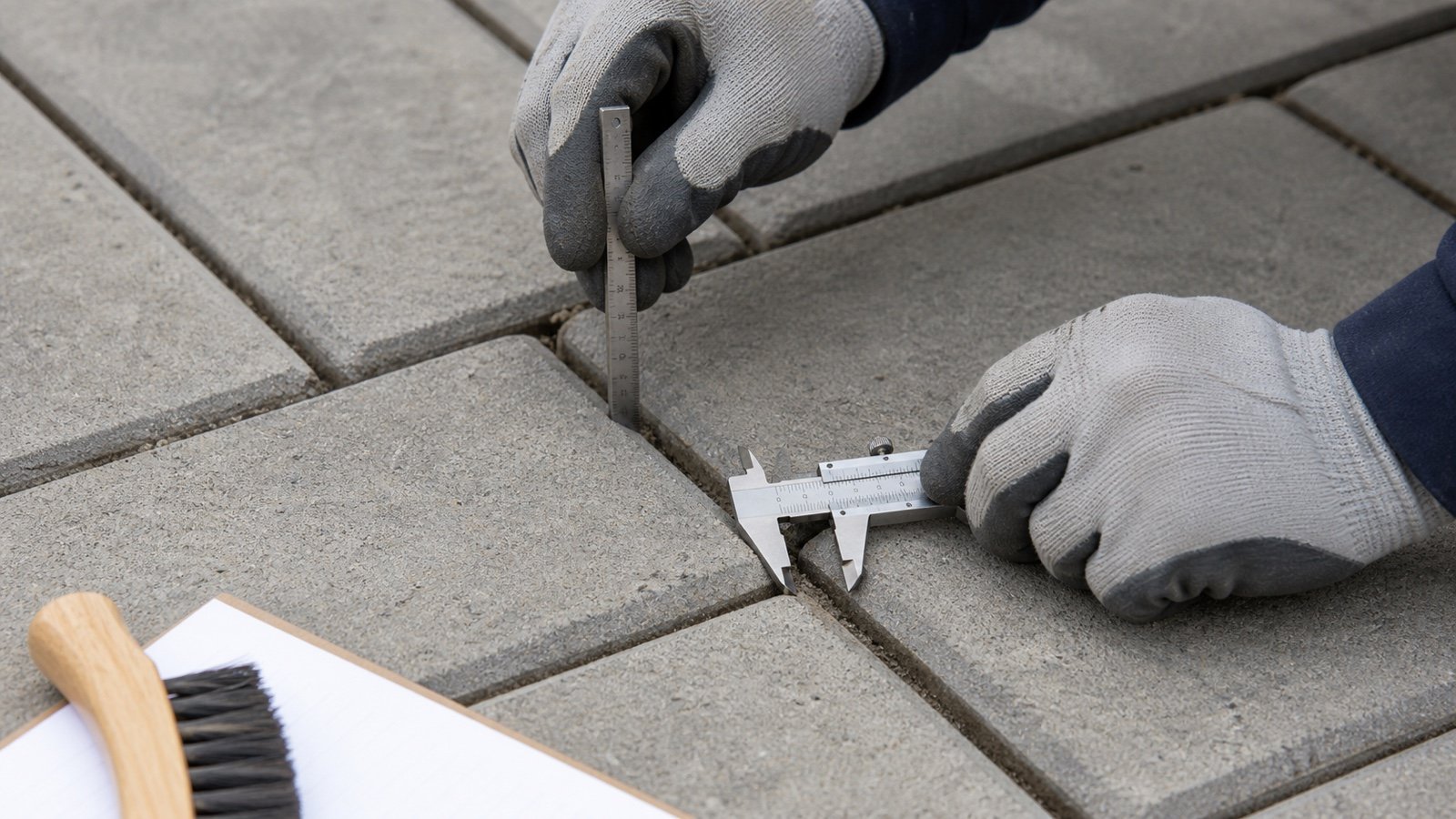
Joint quantity depends on more than area. Smaller units, wider or deeper joints, patterns, borders, cuts, chamfers, surface texture, compaction, and product characteristics can change how much enters the joints.
Alliance Gator publishes different Supersand Bond coverage ranges for narrow and wide joints from the same 50 lb bag. Techniseal's SMARTSAND sheet likewise says its amount depends on paver or slab shape and size plus joint width and depth.
Use the applicable row for the exact product. Calculate field pavers, borders, slabs, and repair areas separately when their coverage basis changes.
What changes when you are re-jointing existing pavers?
Re-jointing starts with the pavement condition, not a new-installation bag count. Record movement, missing or contaminated fill, remaining depth, drainage, edges, damaged units, bedding loss, and the reason the joints emptied.
A joint repair does not automatically require new bedding. It also does not prove that bedding is sound. Investigate rocking, settlement, pumping, open edges, migrating sand, or recurring washout before treating the work as a surface refill.
For a proprietary product, follow its current existing-pavement procedure. Do not place a thin polymeric cap over unknown fill unless that product permits the method and the required joint preparation is confirmed.
What moisture and weather checks apply to polymeric joint sand?
Use the selected product's current conditions. Premature moisture can activate binder on the paver surface, while insufficient or incorrect activation can leave the joint outside the documented procedure.
- Confirm that pavers, joints, bedding, and weather meet product requirements.
- Remove the specified dust and residue from paver faces.
- Use the required compaction sequence and finished joint level.
- Follow the named spray pattern, water amount, drainage requirement, temperature, and rain window.
- Protect the area for the stated setting or curing period.
Do not combine steps from several manufacturers. A procedure correct for one product can be incomplete for another.
Myth versus project record
| Myth | Project record |
|---|---|
| Any paver sand works in both locations. | Record bedding and joint materials separately with applicable sources. |
| Joint sand must always be polymeric. | Use the material required or approved for the selected system. |
| Polymeric sand can level pavers. | Use it only in the approved joint location and correct underlying issues separately. |
| One bag covers every patio equally. | Match coverage to bag size, paver, joint geometry, and revision. |
| A universal 10% allowance fixes uncertainty. | Measure zones and document the cause and value of each allowance. |
| New joint sand repairs a moving pavement. | Identify the cause of movement or material loss before refilling. |
Common bedding and joint-sand ordering mistakes
- Ordering “paver sand” without stating location or specification.
- Using a fine masonry or joint product below pavers without approval.
- Using a polymeric joint product as bedding or capping material.
- Applying bedding depth to the joint-bag calculation.
- Converting package weight to volume without a suitable record.
- Copying coverage without bag size and paver or joint conditions.
- Mixing products or procedures from different manufacturers.
- Applying one allowance to area, bedding volume, and joint coverage.
- Combining field pavers and borders when their coverage rows differ.
- Re-jointing before investigating settlement, movement, or drainage.
What should the 2-material order record contain?
| Field | Bedding record | Joint record |
|---|---|---|
| Area or zone | Area sharing one depth | Area sharing one paver and coverage basis |
| Material | Specification, product, source, and state | Loose or named stabilized product and bag size |
| Geometry | Uncompacted depth and elevation source | Paver size, joint width, depth, pattern, and borders |
| Quantity | Volume, state factor, yield, density, and increment where used | Coverage row, allowance reason, exact bags, and whole bags |
| Installation | Base acceptance, screed method, and protection | Joint condition, compaction, cleaning, activation, and weather |
| Traceability | Drawing, specification, supplier record, revision, and date | System or product document, market, revision, and date |
Use the paver bedding-depth guide to confirm the layer state and elevation record. The Types of Sand for Construction guide covers broader specification checks, while the Polymeric Sand Joint Width and Depth Guide shows how to measure changing gaps, chamfers, and prepared repair depth before selecting a coverage row. The Sand Bags vs Bulk guide separates selling units. Browse the Sand Material Planning hub for published sand resources.
What construction and safety limits apply?
This guide supports material identification and quantity planning. It does not design the pavement, base, drainage, slope, edge restraint, traffic capacity, accessibility, paver, joint, overlay, permeable system, or repair.
Use governing drawings, specifications, permits, current system and product instructions, site conditions, local requirements, safety controls, and responsible professionals. Cutting pavers and handling dry silica-containing material can create respirable crystalline silica. U.S. construction workplaces should follow applicable OSHA requirements and the employer's exposure-control process.
Sources and source scope
- CMHA PAV-TEC-002-22: bedding and joint locations, conventional-system material context, placement sequence, and system-specific use of bedding sand in joints.
- CMHA PAV-TEC-017-22: bedding functions and material-property considerations in its vehicular scope.
- Techniseal SMARTSAND data sheet and Alliance Gator Supersand Bond: named joint-product conditions, coverage dependence, and limits.
- NIST Handbook 44 (2026), Appendix C: unit relationships used in the examples.
- OSHA Respirable Crystalline Silica in Construction: U.S. occupational hazard and control context.
Source scope: CMHA supports the stated interlocking-concrete-pavement examples. Manufacturer records support only their named products and conditions. NIST supports unit relationships, and OSHA supports the named U.S. workplace context. Project documents, current system and product information, site conditions, local requirements, safety controls, and responsible people govern the work.
Review note: Saleem Sial owns the research and editorial record. Source extraction, page rendering, calculation fixtures, editorial review, build validation, link crawl, schema review, and rendered QA form the internal publication gate. Waseem Sial, External Reviewer and Engineer, is listed for ongoing external review; no completed review date is claimed.