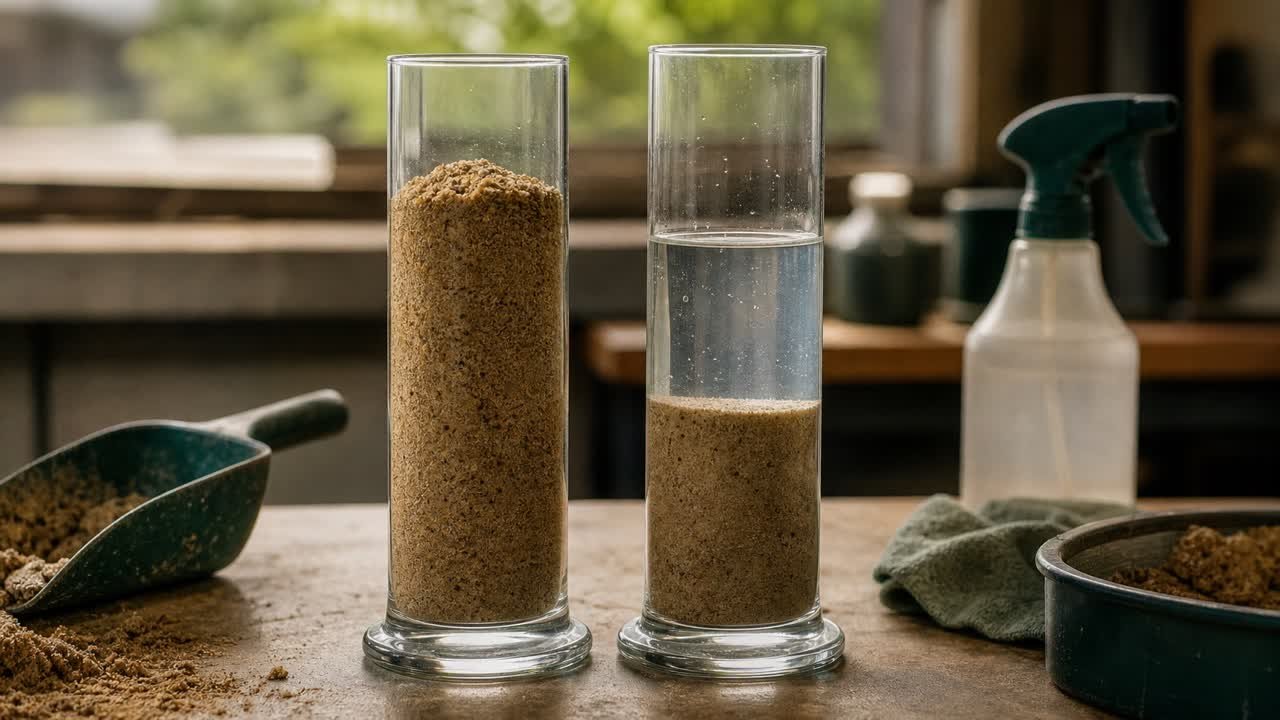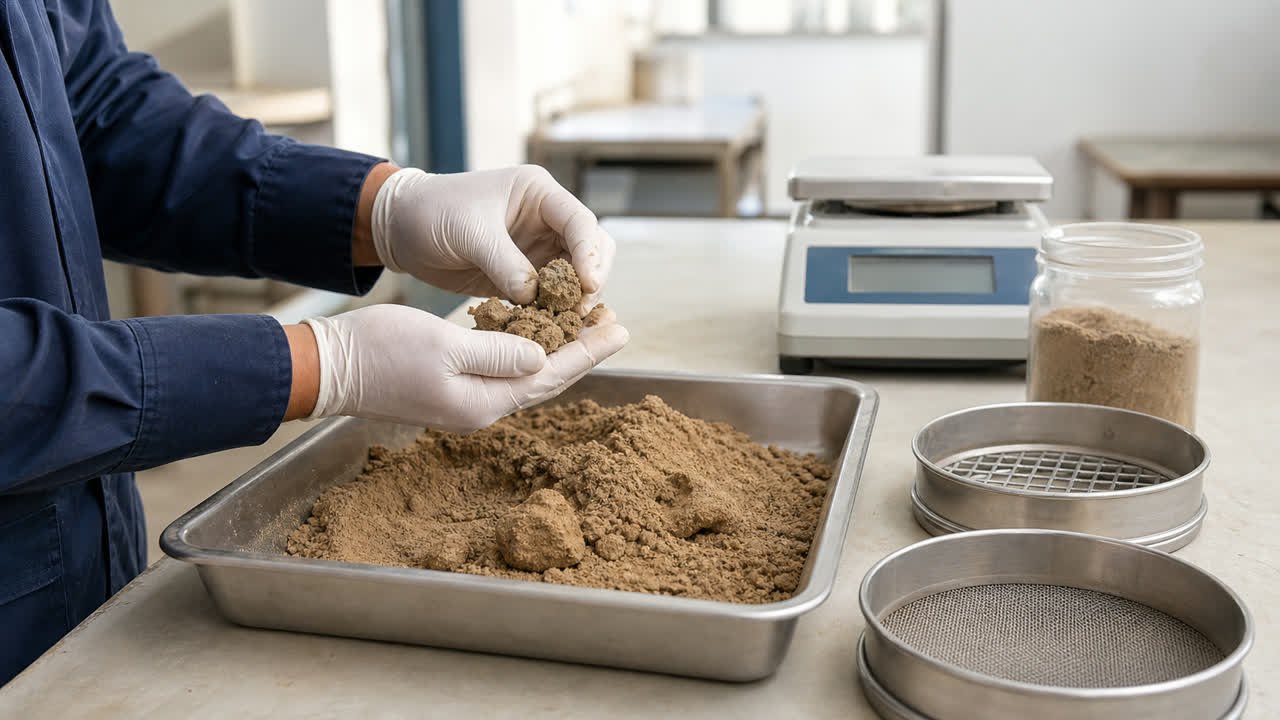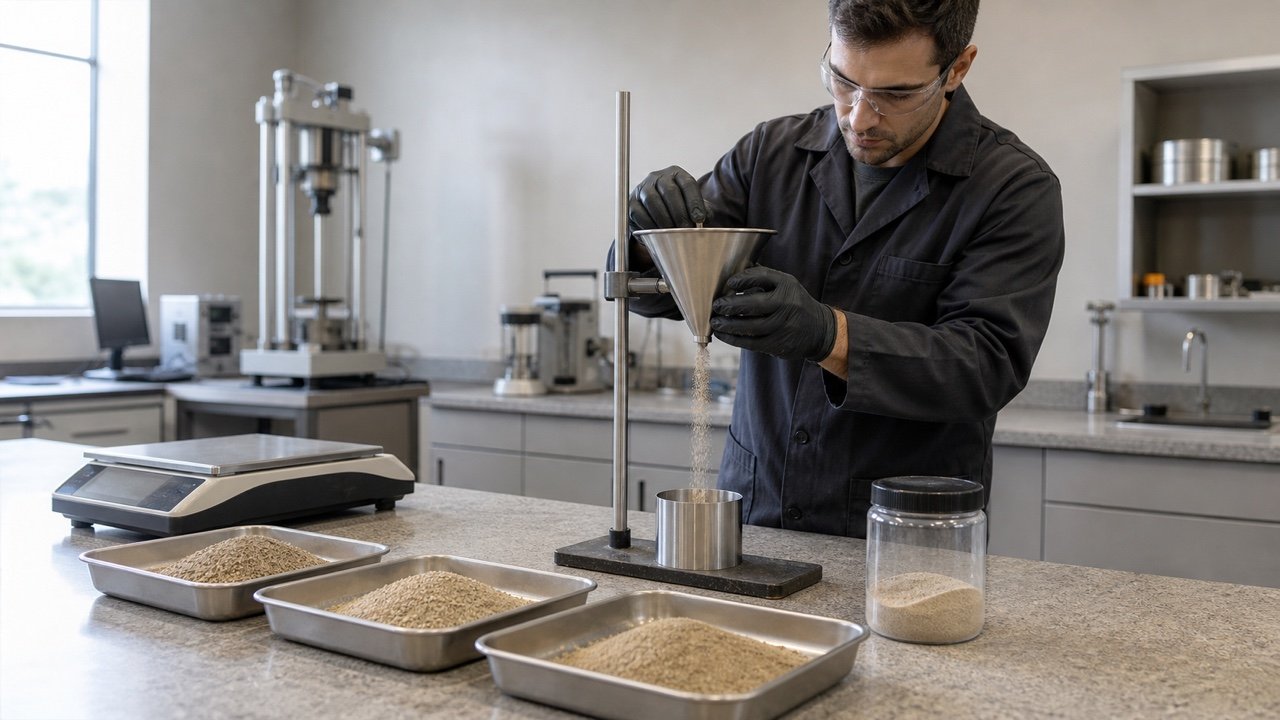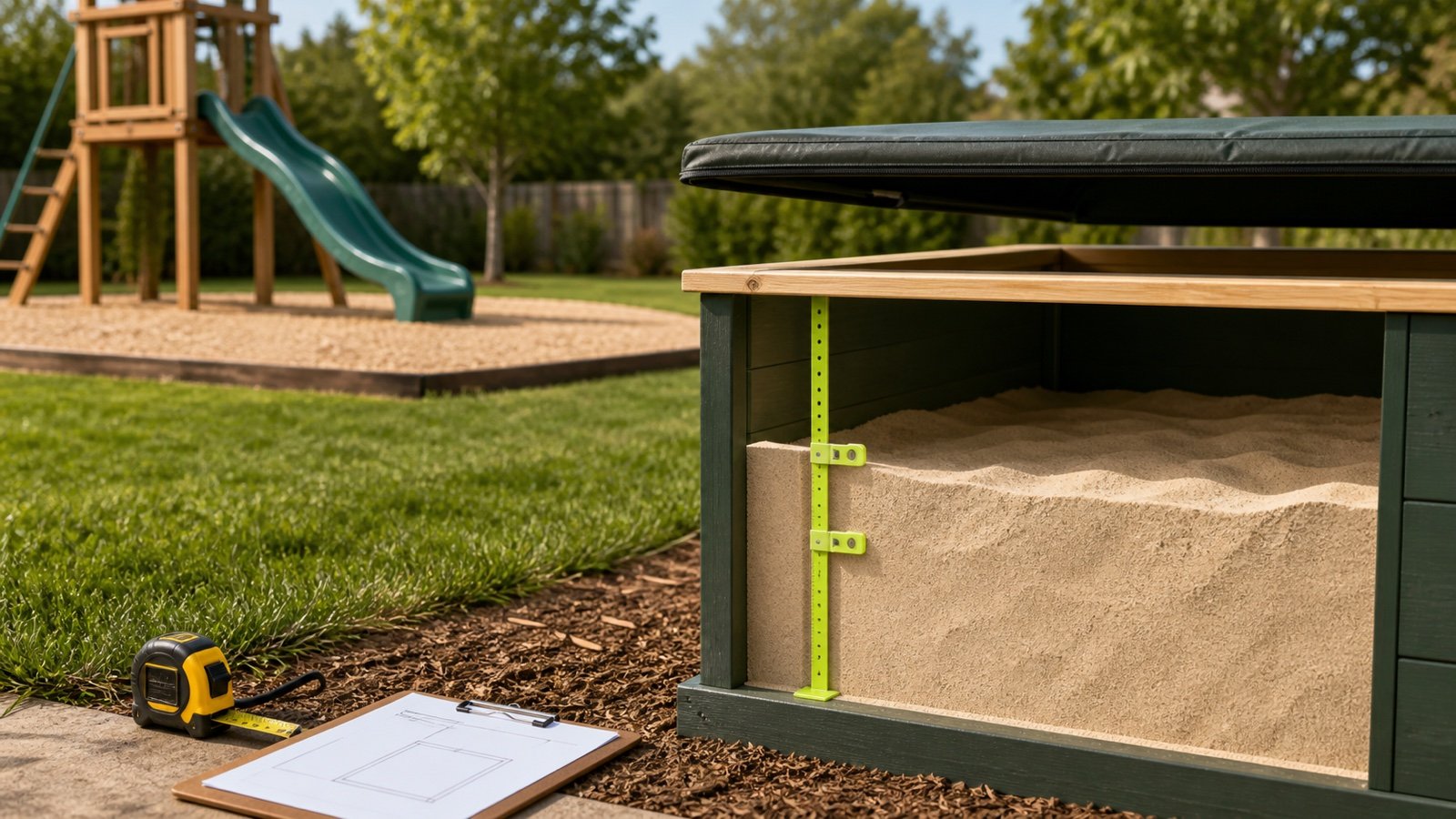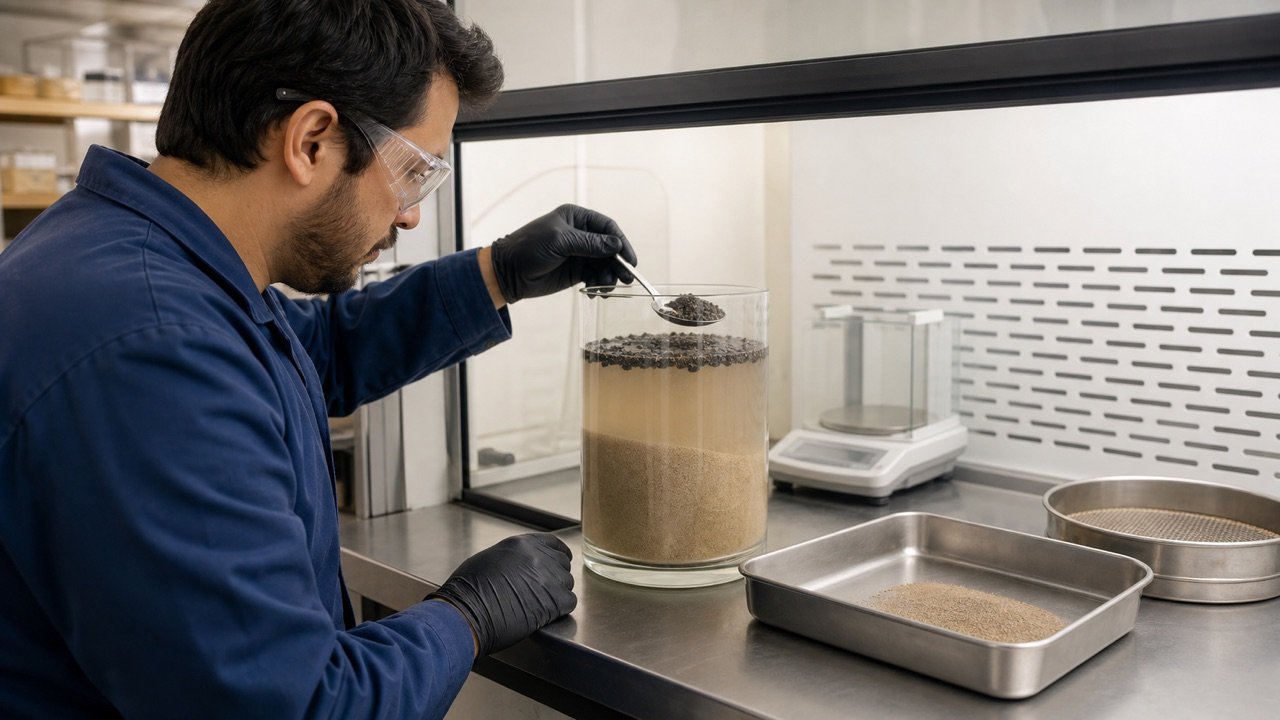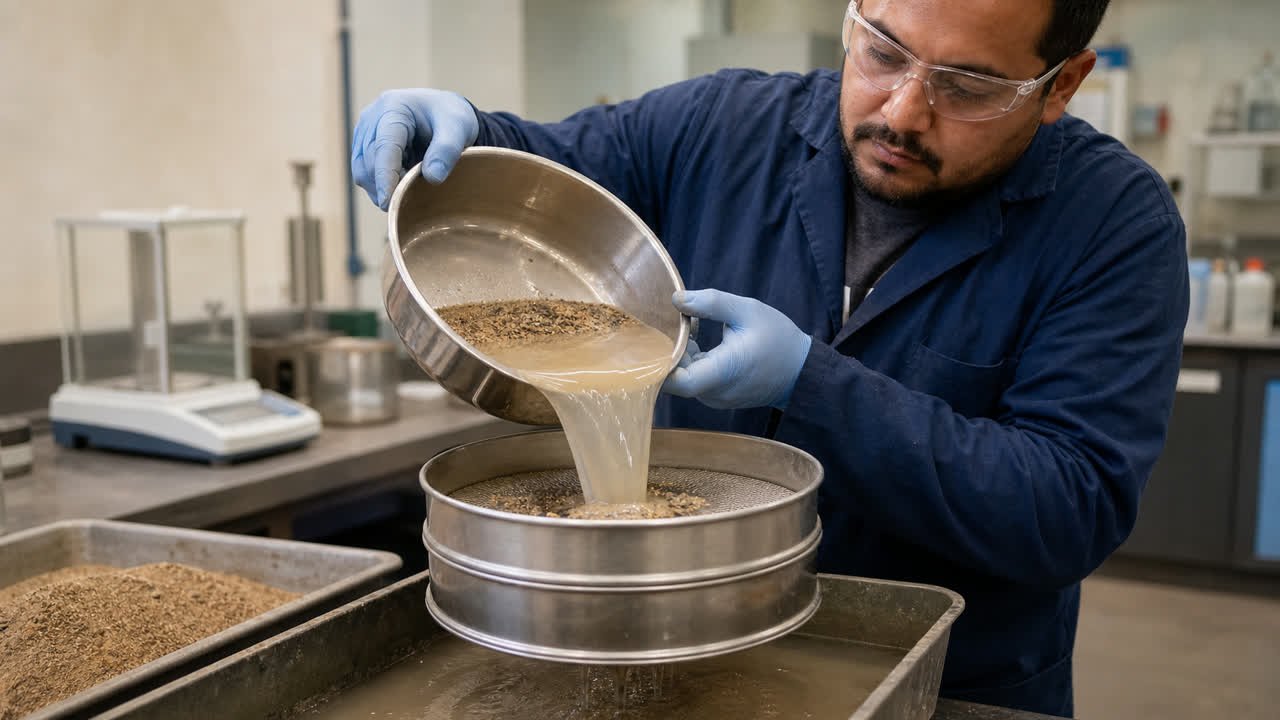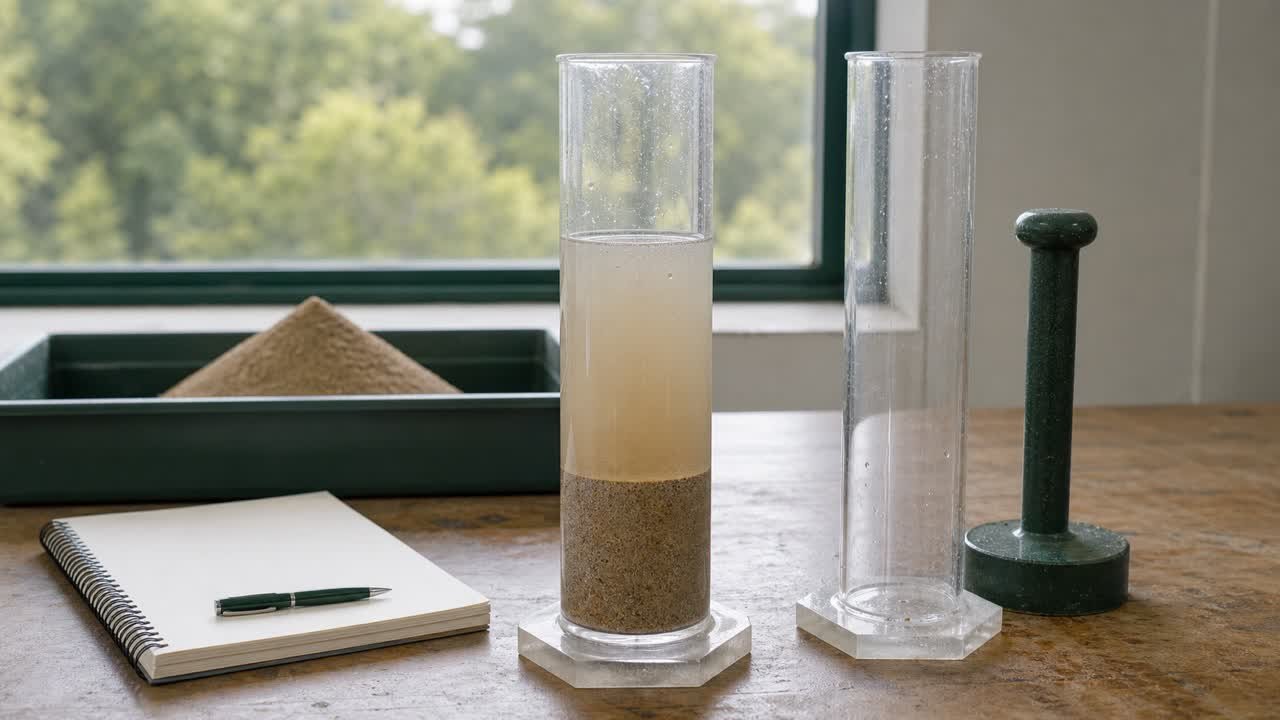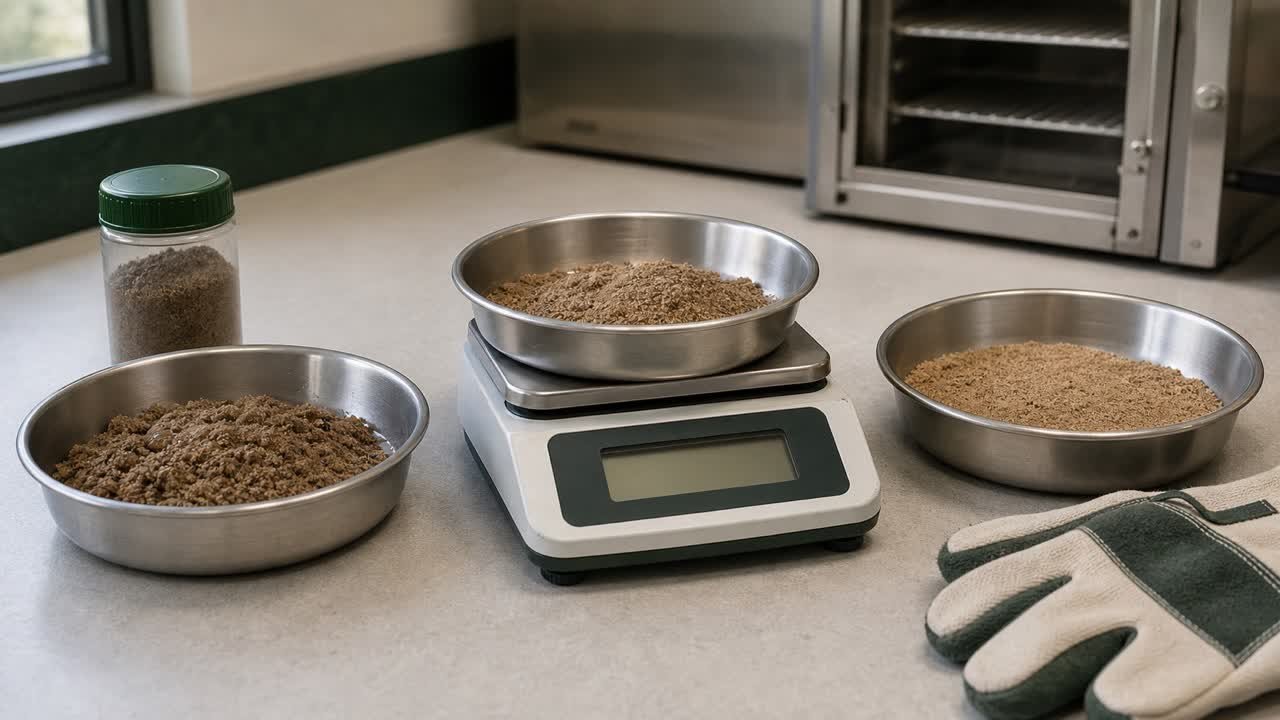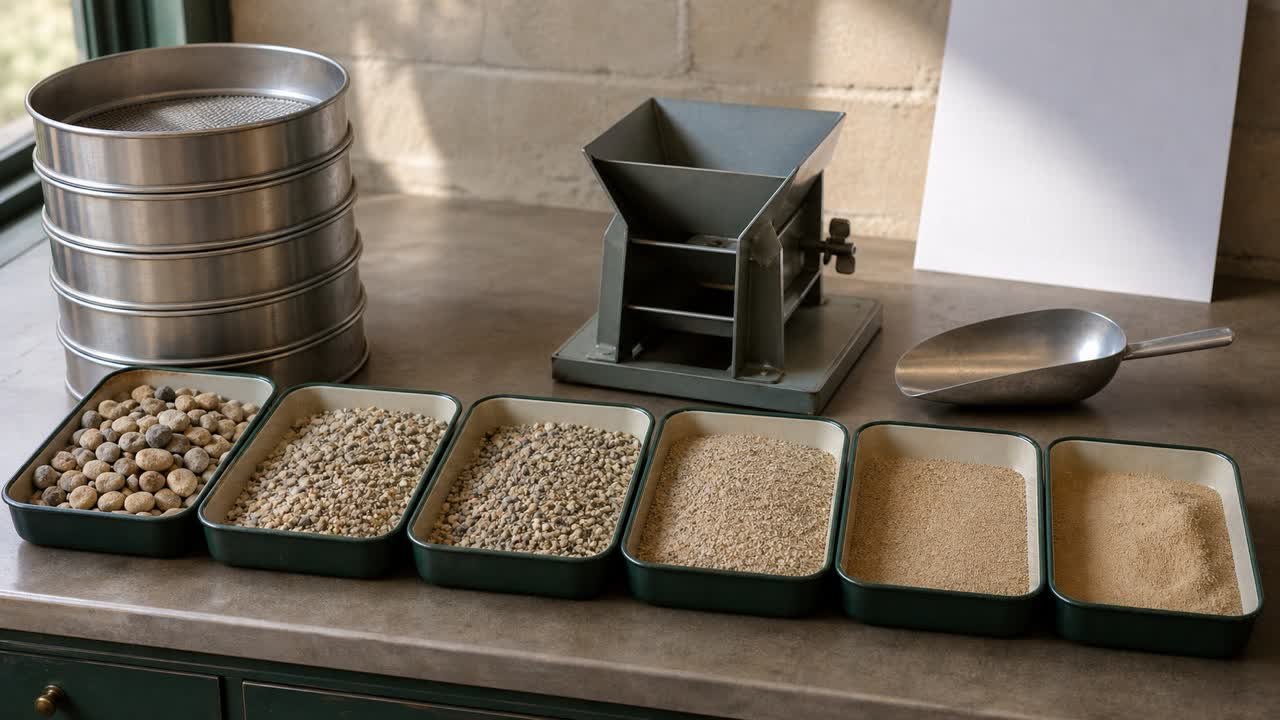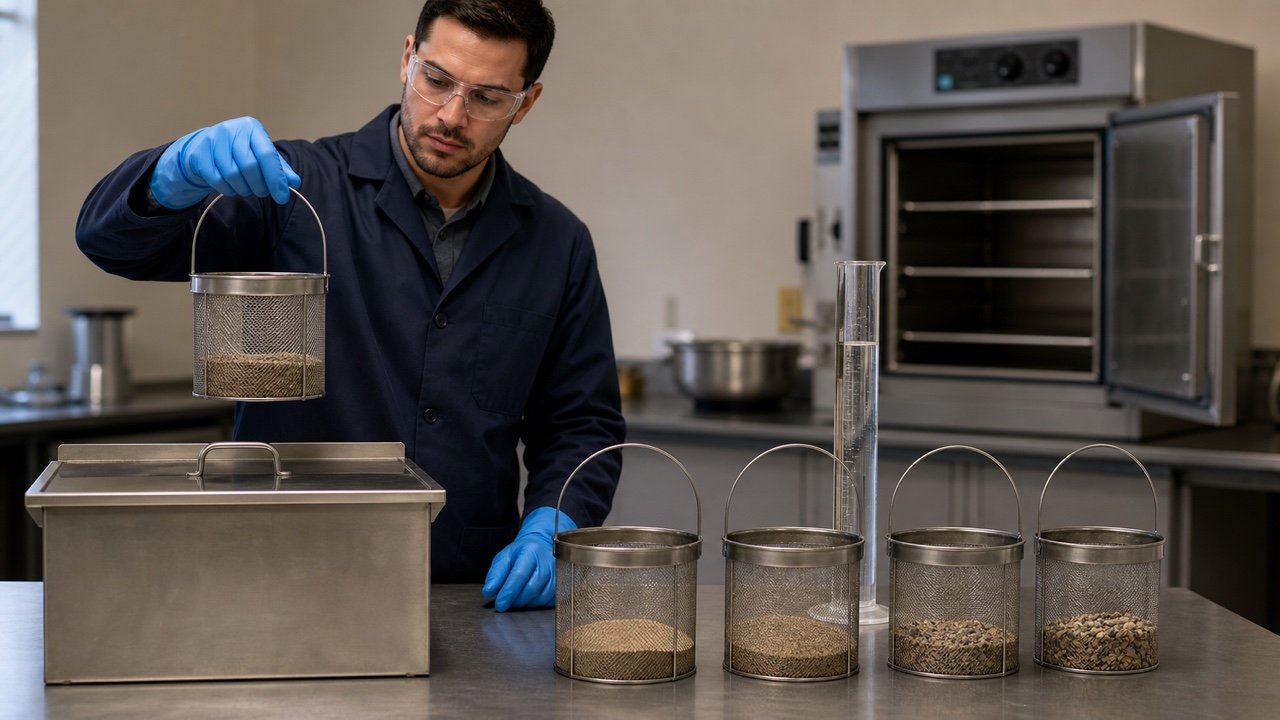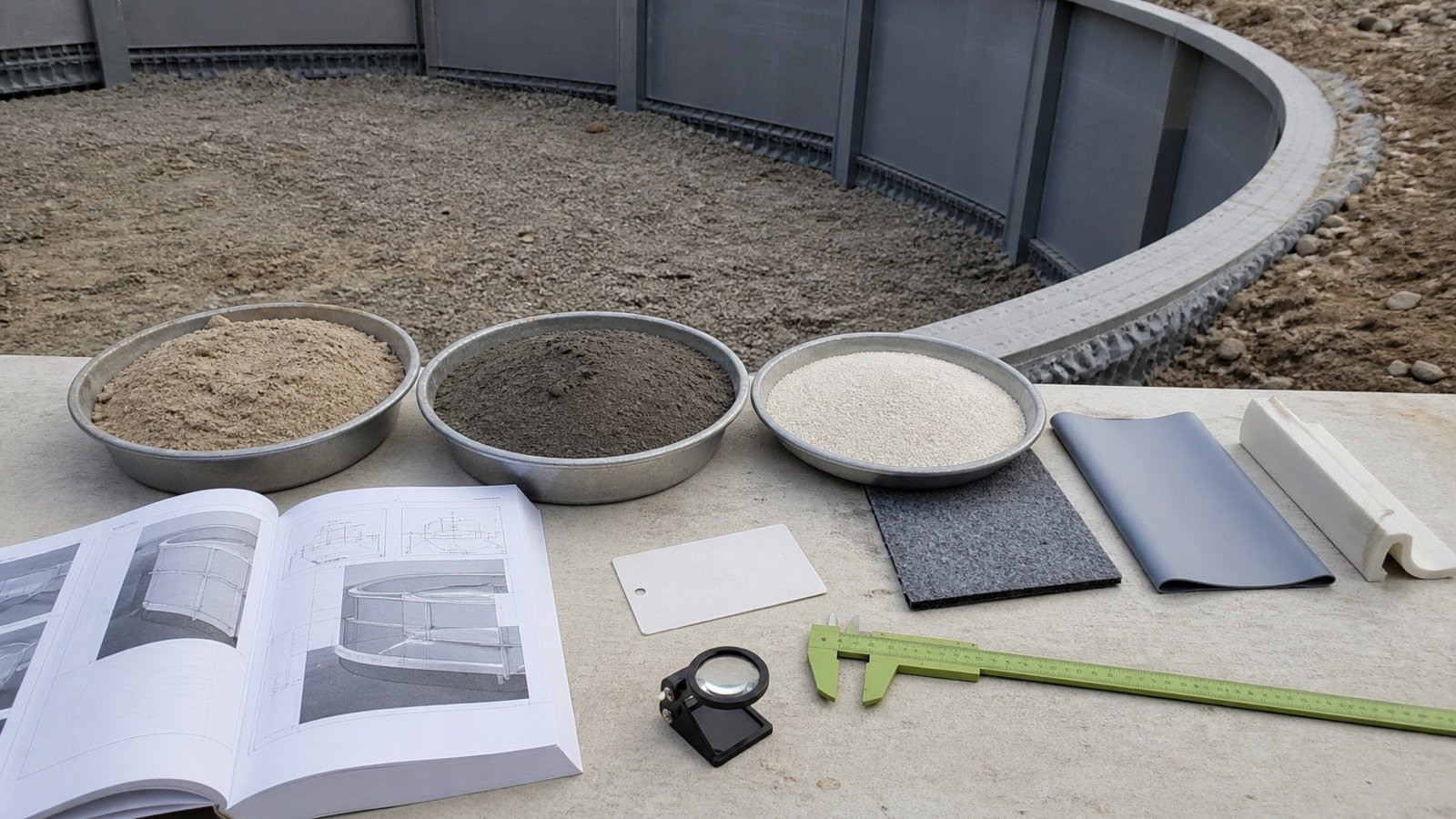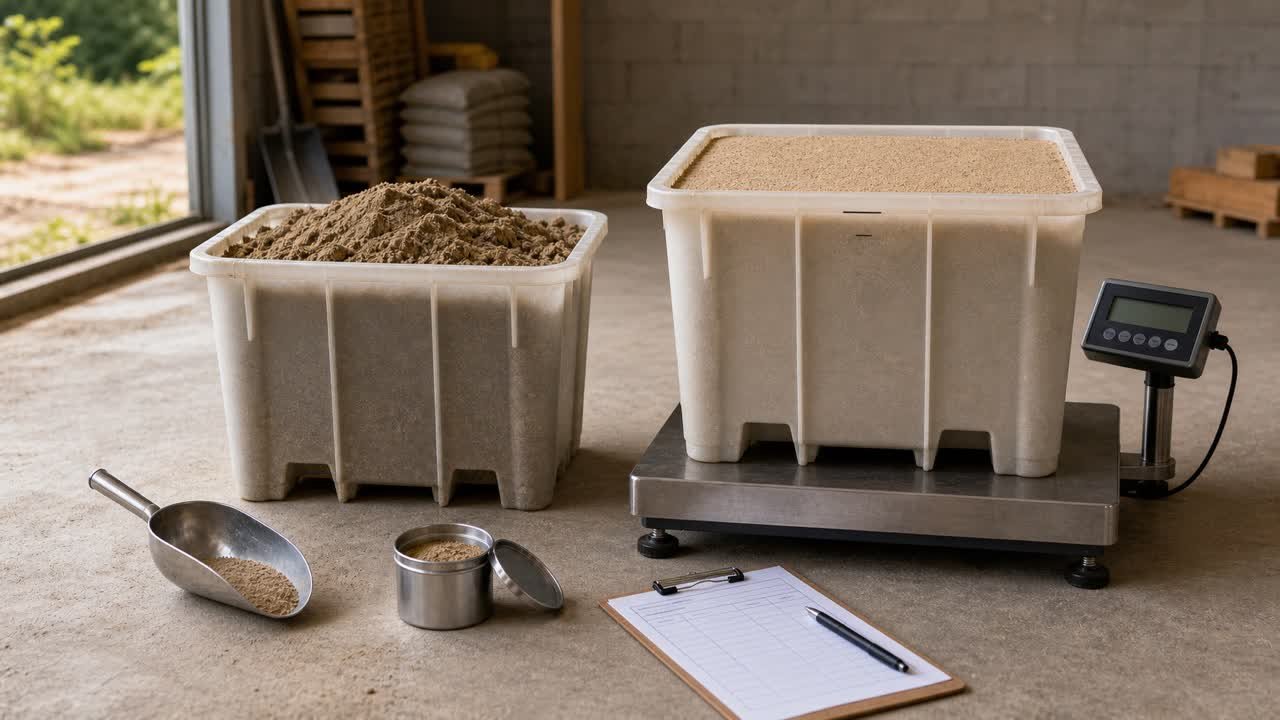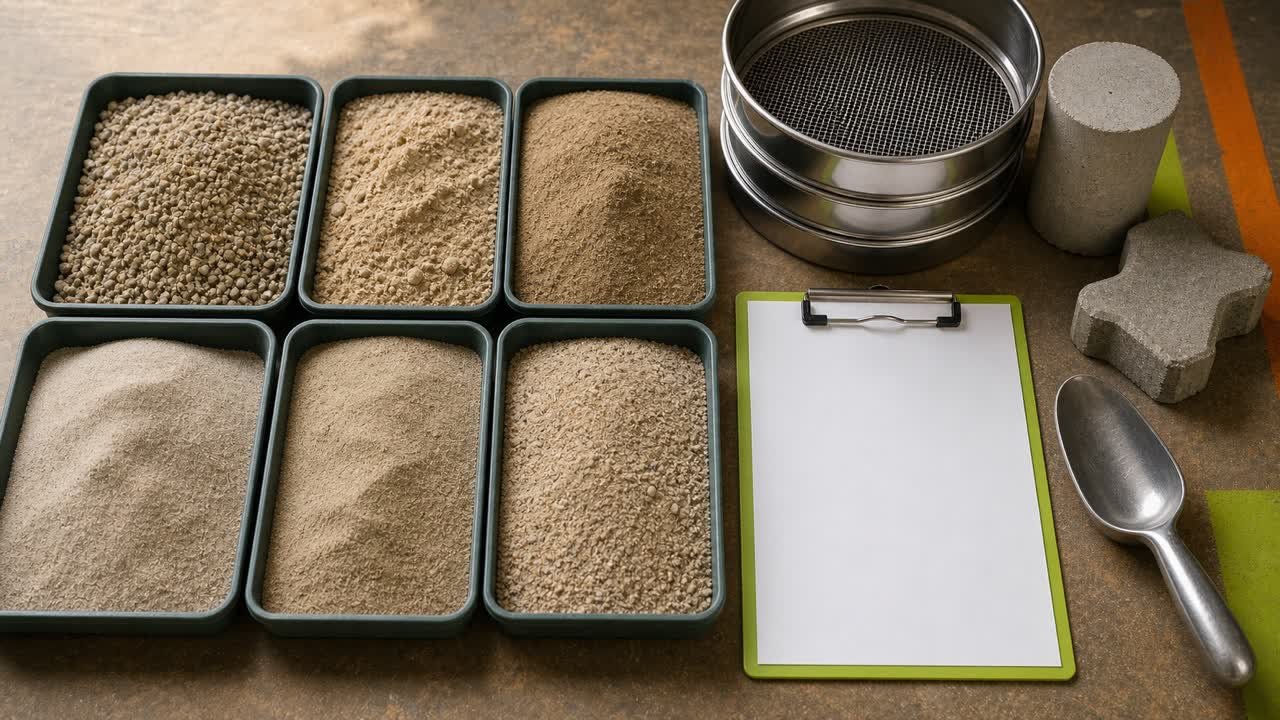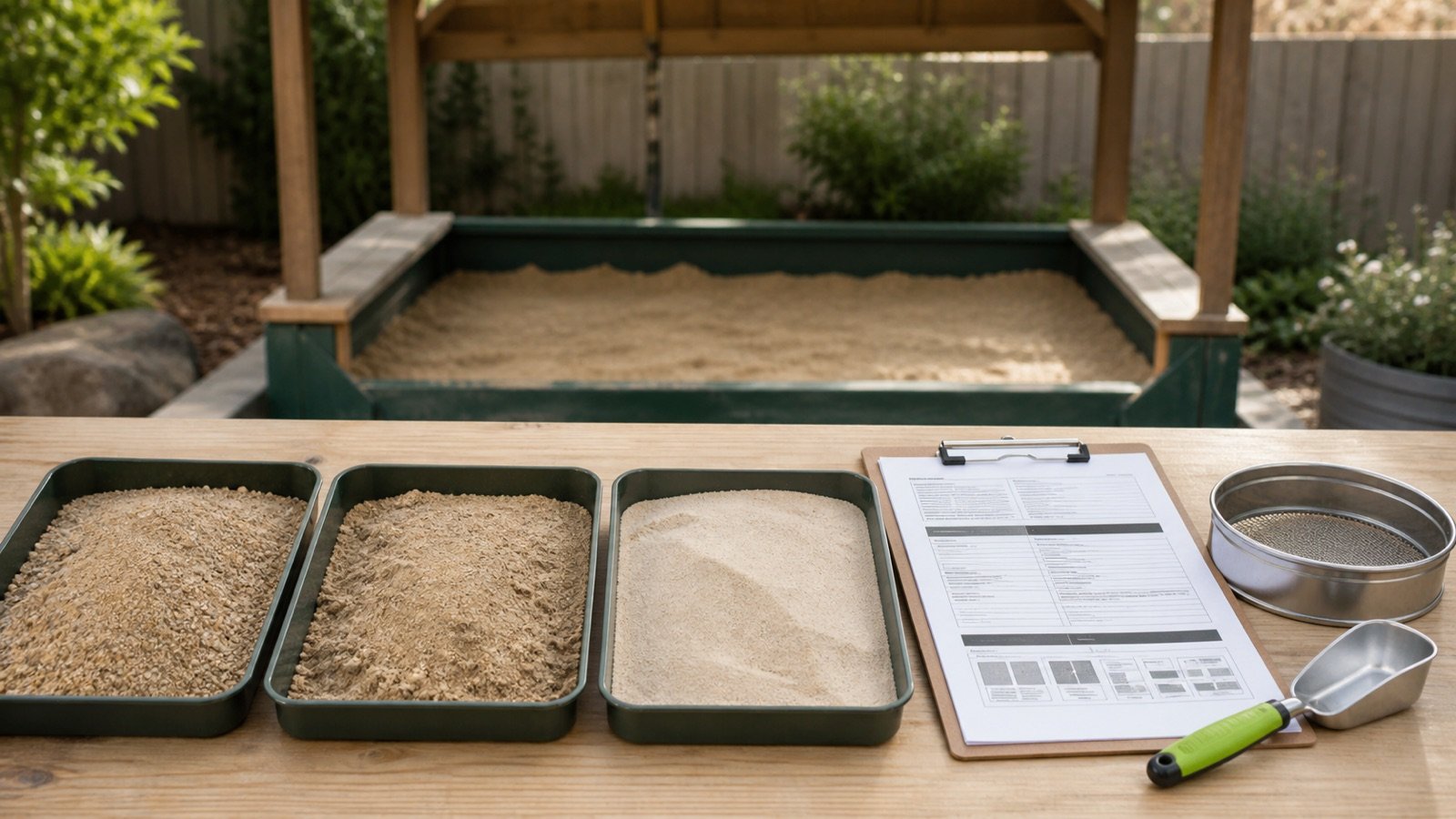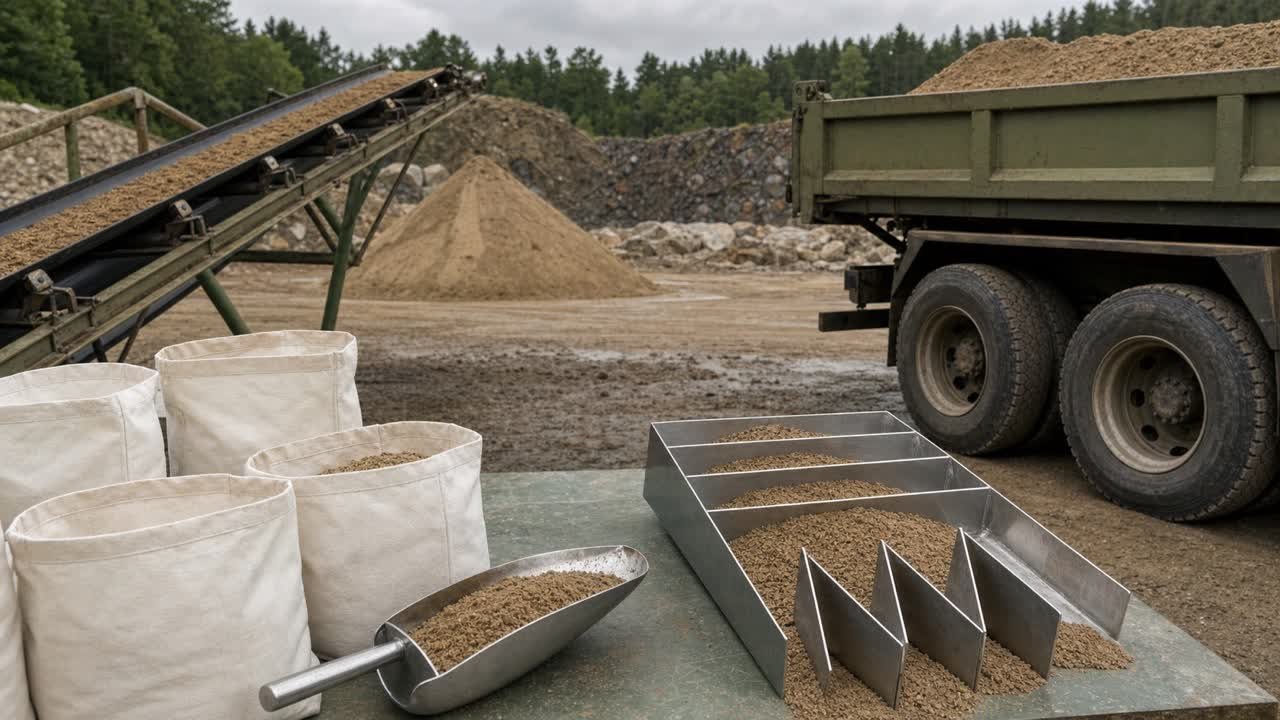
A laboratory can calculate a sand gradation to the nearest reported percentage, but the result still depends on the field sample. One convenient scoop may contain more surface fines, more coarse grains, or a different moisture condition than the material being loaded.
Start by defining the material and lot that the sample must represent. Then use the sampling point, number of portions, field-sample mass, equipment, reduction method, and safety procedure required by the project or laboratory.
How do you collect a representative sand sample?
Collect multiple unbiased portions from the approved sampling point, combine only the portions assigned to the same lot, and reduce the composite without selecting or losing particles. Label the sample at the collection point so the later test can be traced to the material, place, and time represented.
The exact procedure changes with the source. A stopped belt, a flowing stream, a fine-aggregate stockpile, and a truck delivery do not use one interchangeable method.
Ask for the contract sampling plan, quality-control manual, laboratory instruction, or responsible project reviewer's direction. Sample counts and masses in one agency method do not automatically apply to another project.
What do lot, increment, composite, and test specimen mean?
These terms keep a sample from being confused with the much larger quantity it is meant to represent. Write the project's own definitions on the sampling record when they differ.
| Term | Practical meaning | Question to answer |
|---|---|---|
| Lot | The defined quantity, production period, stockpile, shipment, or acceptance unit represented by a result | Where does this sample's authority begin and end? |
| Increment or portion | Material collected once at one location or time | Was each part selected without convenience bias? |
| Composite field sample | The approved combination of increments from one stated lot | Do all combined portions belong together? |
| Test specimen | The reduced amount used for a particular laboratory test | Was it reduced without changing its composition? |
| Duplicate | A separate portion used under a stated quality-control plan | Was it collected or split as the plan requires? |
| Reserve sample | Material retained under documented storage and custody conditions | Can it still represent its original condition if reopened? |
A test specimen is smaller than the field sample. That size reduction should preserve the proportions of coarse grains, fine grains, and any material that tends to segregate.
Which sand sampling point should you use?
Use the point named by the governing document. Where the plan offers a choice, a controlled full cross-section of a belt or flowing stream can capture material across the stream, while a stockpile method needs enough locations to address segregation.
| Sampling point | What the method must capture | Main limitation |
|---|---|---|
| Stopped conveyor belt | The full belt width and every particle between the approved templates | Unexpected start-up and loss of fines |
| Flowing stream | The entire cross-section with a suitable mechanical or hand-held device used from a safe position | Partial cuts favor one part of the stream |
| Fine-aggregate stockpile | Multiple approved locations or insertions tied to the active material or load face | Surface weathering and size segregation |
| Truck or delivery | The material and delivery interval stated by an approved method | One accessible point may not represent the load |
Do not move to the easiest location after the lot is defined. A sample from yesterday's stockpile face cannot automatically represent today's production belt or a later delivery.
What should you record before collecting sand?
Prepare the record and labeled container before touching the material. A good sample with an uncertain identity cannot support a clear acceptance decision.
- Project, material description, source, supplier, and product code.
- Stockpile, batch, production run, vehicle, ticket, or other lot reference.
- The exact lot boundary, such as a stated quantity or production period.
- Sampling location, date, time, sampler, and governing method with revision.
- Required increment count, field-sample mass, apparatus, and reduction method.
- Visible moisture, crust, contamination, segregation, or a change in production.
- Container type, seal number where used, destination laboratory, and requested tests.
- The applicable site access, personal protective equipment, traffic, dust, and equipment-isolation controls.
Use clean tools and containers that will not add material or lose fine particles. If a moisture test is planned, confirm the required container and closure before sampling.
How is sand sampled from a stopped conveyor belt?
Only trained and authorized people should sample a belt under the site's approved shutdown, isolation, and verification procedure. The belt must remain unable to start while the person is in the sampling area.
- Coordinate with plant personnel and apply the site's required energy-control procedure.
- Verify the belt condition and safe access before entering the sampling position.
- Place the approved templates across the belt at the required spacing.
- Remove all sand between the templates across the full belt width.
- Sweep every fine particle within the isolated section into the sample container.
- Collect the remaining random increments and combine them only as the method directs.
- Clear tools and personnel, then let authorized plant staff restore the equipment under the site procedure.
The FHWA Field Materials Manual calls for a stopped belt, templates shaped to the belt, a full-width sample, and care to collect all fines. SCDOT SC-T-2 also says the inspector must communicate with plant personnel so the conveyor cannot activate during collection.
United States energy-control requirements depend on the workplace and task. OSHA 29 CFR 1910.147 addresses unexpected energization during servicing and maintenance in its general-industry scope and lists exclusions, including construction employment. Follow the rules and site procedure that apply to the actual operation.
How is sand sampled from a flowing stream?
Pass the approved sampler through the entire stream cross-section without overflowing, bouncing material out, or collecting only one edge. Use a mechanical sampling device when the governing plan or site conditions require one.
FHWA guidance recommends cutting the entire cross-section of a flowing aggregate discharge and shows purpose-made sampling devices. The device, travel path, timing, and number of cuts must come from the applicable method and site risk assessment.
Never reach into a moving belt, chute, or discharge stream. If the whole stream cannot be crossed from the approved safe position, stop and have the responsible person select another method.
How is fine aggregate sampled from a stockpile?
Use multiple locations or approved tube insertions across the part of the stockpile that represents the stated lot. Avoid one exposed surface scoop, a spill at the toe, or a visibly segregated pocket unless the purpose is to investigate that exact condition.
- Identify the stockpile and the current shipping or load face where the governing program requires it.
- Inspect the face for contamination, crusting, runoff, wet and dry zones, and size segregation.
- Mark random locations across the permitted part of the pile.
- Remove biased surface material or insert the approved sampling tube as the named method requires.
- Collect the specified portions without dropping fines.
- Combine equal or otherwise specified portions into one field sample only when the plan calls for a composite.
- Record any area that was inaccessible and ask whether a new plan is needed.
SCDOT SC-T-2 requires 6 or more stockpile locations for its fine-aggregate procedure and removes the surface to reach moist material. The NCDOT 2026 Aggregate QC/QA program uses at least 5 insertions with a department-approved tube in its stated fine-aggregate tube-sampling procedure. Those numbers and apparatus details belong to those programs. They are examples of method-specific controls, not a universal rule.
Should you climb onto a sand stockpile?
Do not climb, tunnel into, or stand below an unstable face to reach a planned point. Ask site management and the responsible reviewer for a safe access method or another approved sampling point.
Stockpiles can shift, equipment can enter the area, and a face can be undercut. The sampling plan must fit the site's traffic and material-handling controls.
Can you sample sand from a truck or delivery?
Yes, but only when the governing method defines a safe collection point and explains what part of the delivery the sample represents. A scoop from the top, tailgate, or first discharge may be convenient without being representative.
Tie the sample to delivery tickets, vehicle or load numbers, product code, source, time range, and unloading point. If several loads form one lot, record the first and last included ticket and the rule used to select increments.
If the delivery is already placed, do not silently replace the planned delivery method with a pile or layer sample. Record the change and obtain the responsible reviewer's direction because the represented material and sampling bias may have changed.
How do you combine and reduce a field sample?
Combine only increments assigned to the same composite, mix them as the method directs, and reduce the field sample with an approved splitter or quartering procedure. Each reduction should preserve the sample's particle-size and moisture distribution for the intended test.
A riffle splitter divides a freely flowing sample through alternating chutes. Other materials or methods may use a mechanical divider, miniature stockpile, quartering, or another named process. Use the device, passes, cleaning procedure, and minimum mass in the governing method.
- Do not handpick grains that look typical.
- Do not pour off fines, brush material onto the floor, or return spilled material without an approved rule.
- Do not combine different products or lots to reach a target mass.
- Do not discard one split before labels and required duplicate or reserve portions are confirmed.
- Clean the splitter between materials and check that every chute is clear.
FHWA separates field sampling from field-sample reduction. The NCDOT manual gives its own splitting procedures and device requirements. Follow the reduction standard named for the project instead of importing NCDOT details into unrelated work.
How should a sample be handled when moisture matters?
Place the required moisture portion in the specified moisture-tight container promptly and keep it sealed. Sun, wind, heat, a porous bag, or repeated opening can change the condition before the laboratory measures it.
Ask whether gradation, moisture, density, organic impurities, or another test needs a separate specimen or preservation method. One container and one preparation path may not suit every requested test.
Worked example: a traceable sampling plan
Assume a project defines one lot as washed concrete sand loaded from Stockpile A's east face between 09:00 and 11:00 on 2026-07-31. The approved plan permits 3 random stopped-belt increments from approximately equal production intervals.
- Prelabel the container with product CS-02, Stockpile A, east load face, date, lot period, project, and sampler.
- Select 3 random times within the stated 2-hour lot rather than the start, middle, and end by convenience.
- At each time, authorized plant staff apply the approved belt-control procedure.
- Collect the full-width material between the templates, including all fines.
- Combine the 3 increments, then reduce the field sample by the named laboratory method.
- Seal the required portions and connect delivery tickets 1041 through 1047 to the custody record.
The 3-increment count is part of this illustrative approved plan. It is not a default for every sand lot. If production changes, a load comes from another face, or the belt cannot be safely isolated, stop and have the responsible reviewer redefine the sample.
Which sampling errors can change the result?
| Observed issue | Possible bias | Action before testing |
|---|---|---|
| Only the stockpile surface was scooped | Weathered, dried, washed, or segregated surface material may dominate | Resample under the approved stockpile method |
| One belt edge was missed | The increment does not cover the full cross-section | Reject the increment and follow the plan for a replacement |
| Fines remain on the belt or splitter | Gradation can appear coarser | Stop, document the loss, and follow the method's resampling rule |
| Different lots were combined | The composite no longer represents one defined acceptance unit | Separate the records and obtain a revised sampling decision |
| Moisture container stayed open | Measured moisture may be lower than the sampled condition | Document exposure and ask whether resampling is required |
| Label was written later | Source, time, or lot can be assigned incorrectly | Do not guess; quarantine the sample and resolve its identity |
What should the sample label and custody record contain?
Use a unique sample ID that stays with the container, request, test report, and any reserve. The label needs enough information to distinguish the sample without relying on someone's memory.
- Unique sample ID and project.
- Material, product code, supplier, source, and stockpile.
- Lot, batch, ticket range, vehicle, or production-period reference.
- Sampling point, method, date, time, and sampler.
- Composite details and requested tests.
- Container count, seal number, preservation requirement, and laboratory.
- Each custody transfer, with person, organization, date, time, and condition.
Photographs can help document the sampling point and material condition, but they do not replace the written lot definition, method, or custody record.
Does one sand sample prove the whole stockpile is uniform?
No. A result applies to the lot defined by the project's sampling and acceptance plan. It does not prove that every part of a stockpile, every future load, or a different production period has the same properties.
Sampling also does not prove material suitability by itself. The laboratory must run the required tests, and the responsible reviewer must compare those results with the correct project specification and acceptance rules.
After sampling, the sand sieve analysis guide shows how to check retained mass, percent passing, fineness modulus, wash-fines scope, and report traceability. The construction sand selection guide explains why product names and appearance do not replace technical records.
Questions to ask the lab, supplier, or project reviewer
- What exact quantity, time period, stockpile, or delivery does one sample represent?
- Which sampling method, revision, project modification, and safety procedure apply?
- Which point is approved: stopped belt, flowing stream, stockpile, truck, or placed material?
- How many increments and what minimum field-sample mass are required?
- How should the field sample be combined, reduced, split, and cleaned between products?
- Does moisture or another requested property need a separate sealed portion?
- What labels, seals, tickets, photographs, and custody signatures are required?
- What happens when an increment spills, a point is inaccessible, production changes, or lot identity is uncertain?
Use the Sand material planning hub for selection, coverage, weight, ordering, and testing guides. Once the product, dimensions, and supplier data are confirmed, the Sand Calculator can estimate geometric volume and documented mass or package quantities.
Sources and source scope
- FHWA Field Materials Manual: field sampling from fine-aggregate stockpiles, flowing streams, and stopped conveyor belts; full-width collection, fines recovery, field-sample reduction, and contract precedence in Federal Lands Highway work.
- SCDOT SC-T-2, Methods of Sampling Fine Aggregates: South Carolina fine-aggregate belt and stockpile procedures, field-sample target, portion counts, and conveyor communication warning within that method.
- NCDOT 2026 Aggregate QC/QA Program Manual: current shipping-face context, belt cross-section and fines collection, approved tube sampling, sample labeling, and sample splitting within the named North Carolina program.
- OSHA 29 CFR 1910.147, Control of Hazardous Energy: general-industry scope, exclusions, employer energy-control programs, authorization, isolation, and verification where the standard applies.
Scope: this page is a field-planning and record guide. The current contract, sampling method, laboratory procedure, acceptance plan, site rules, applicable law, and responsible qualified people control the work. Do not enter a conveyor or unstable stockpile area without the required training, authorization, and site controls.
BuildQuantities.com records its research and review process on the methodology page. Report a source, measurement, unit, safety, or rendering problem through the corrections route.