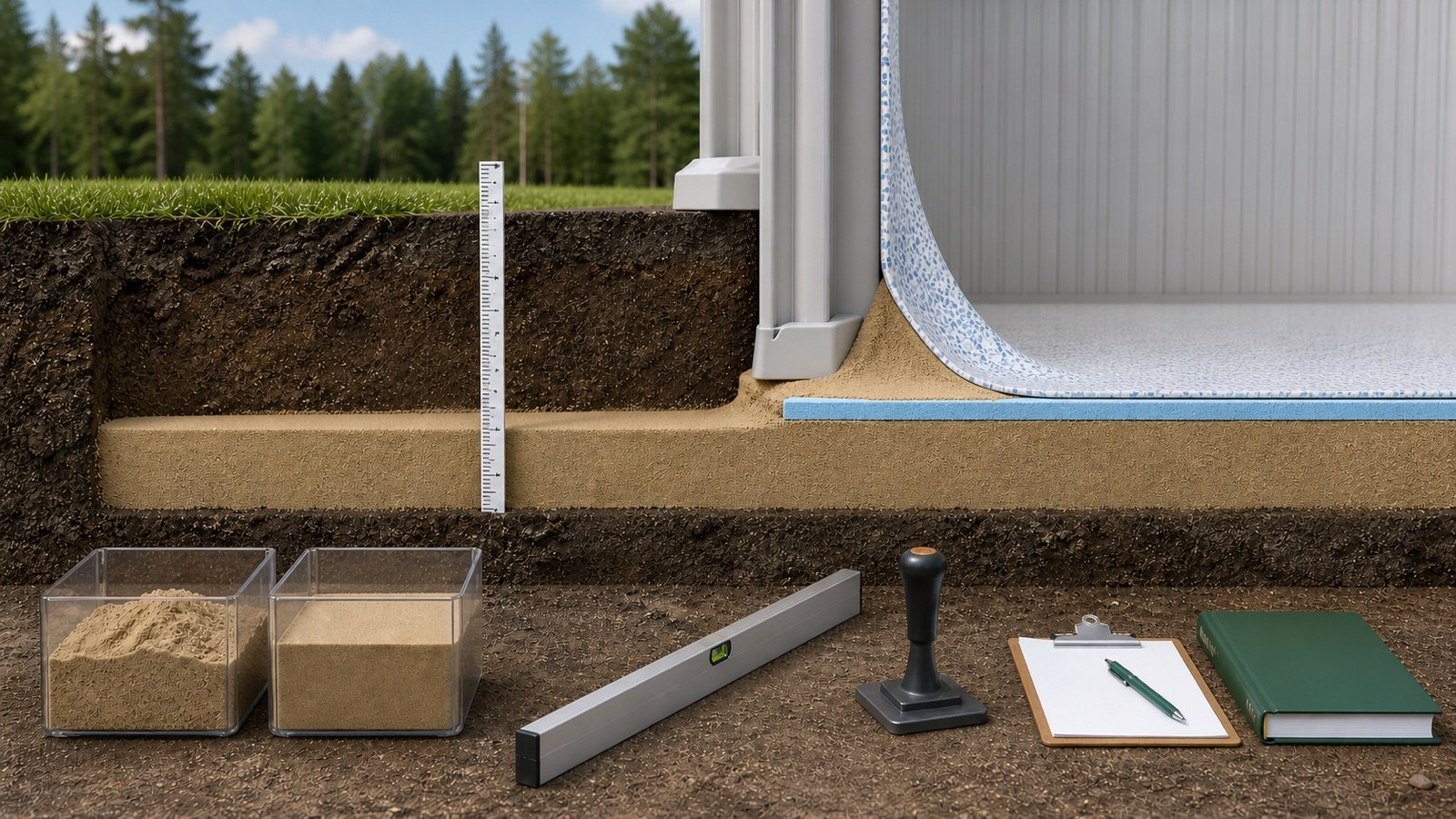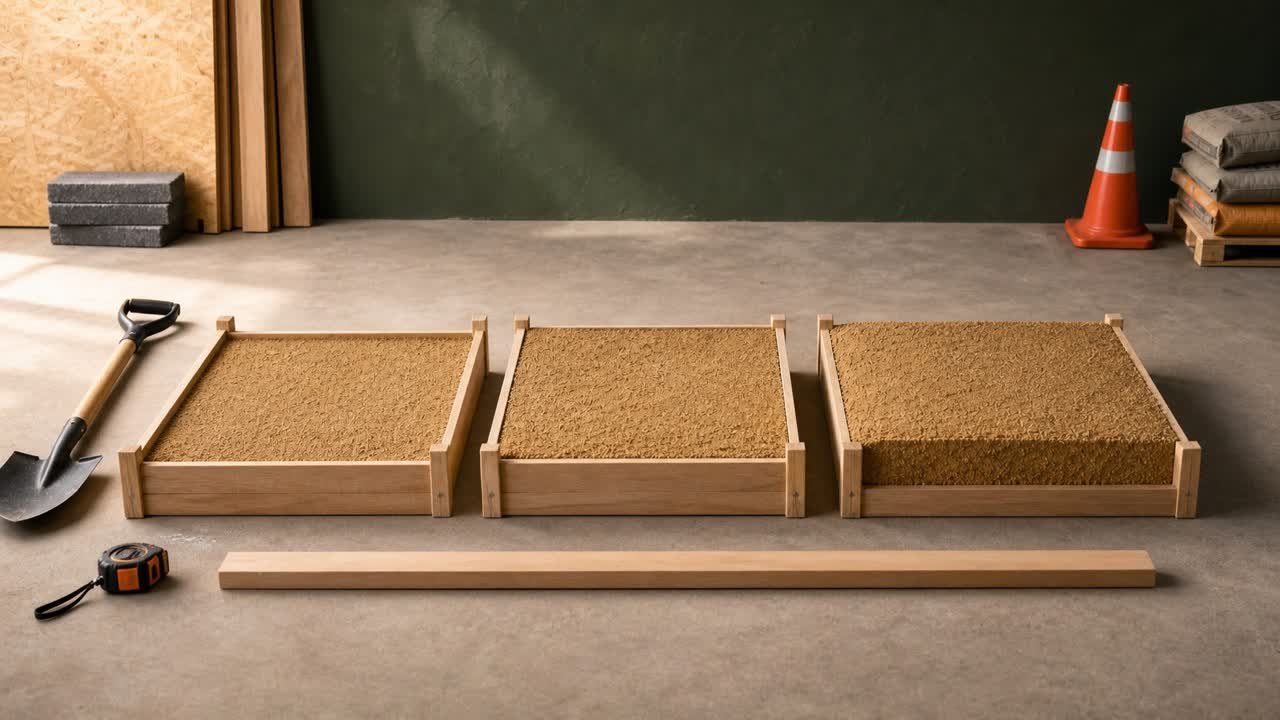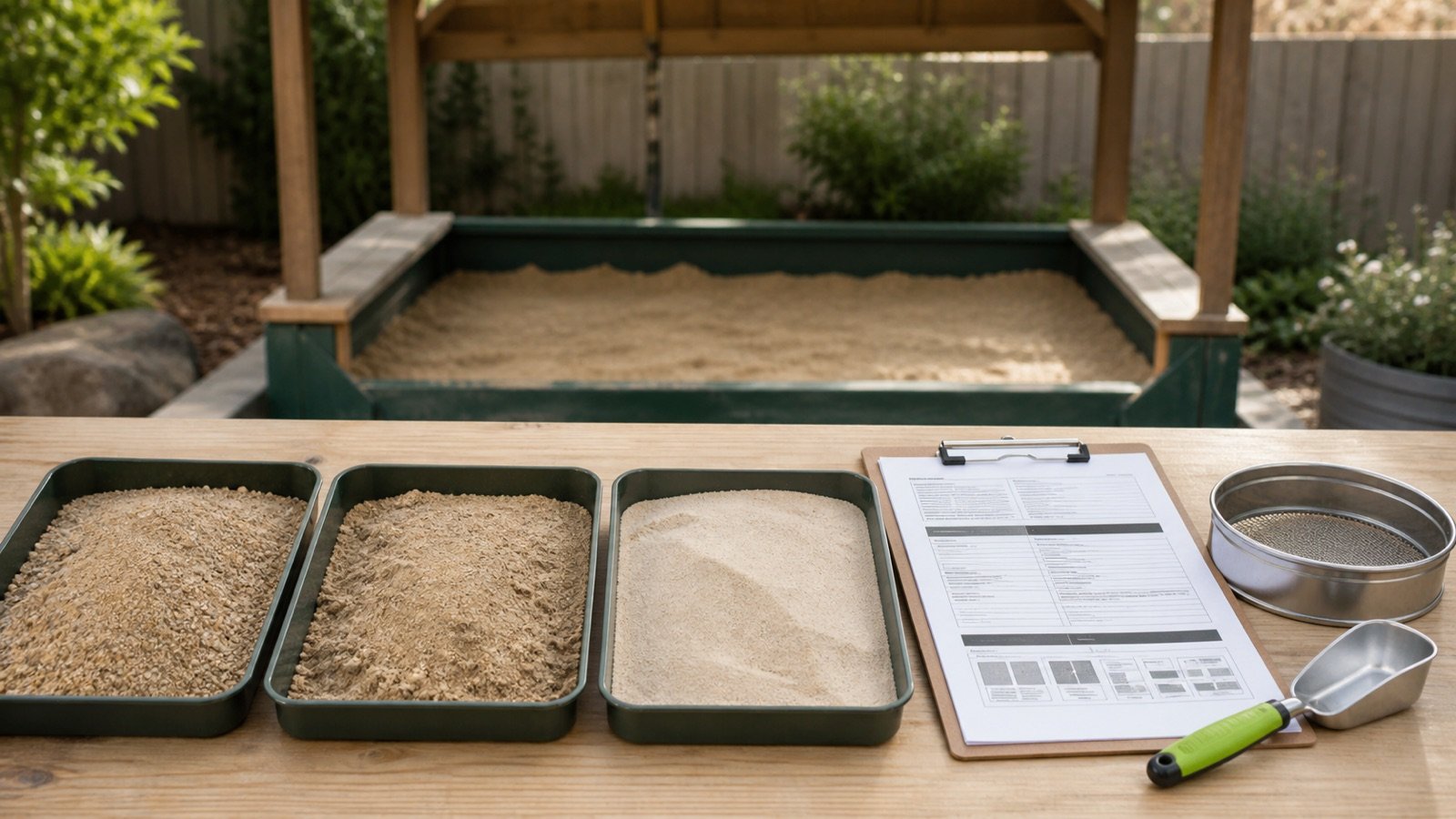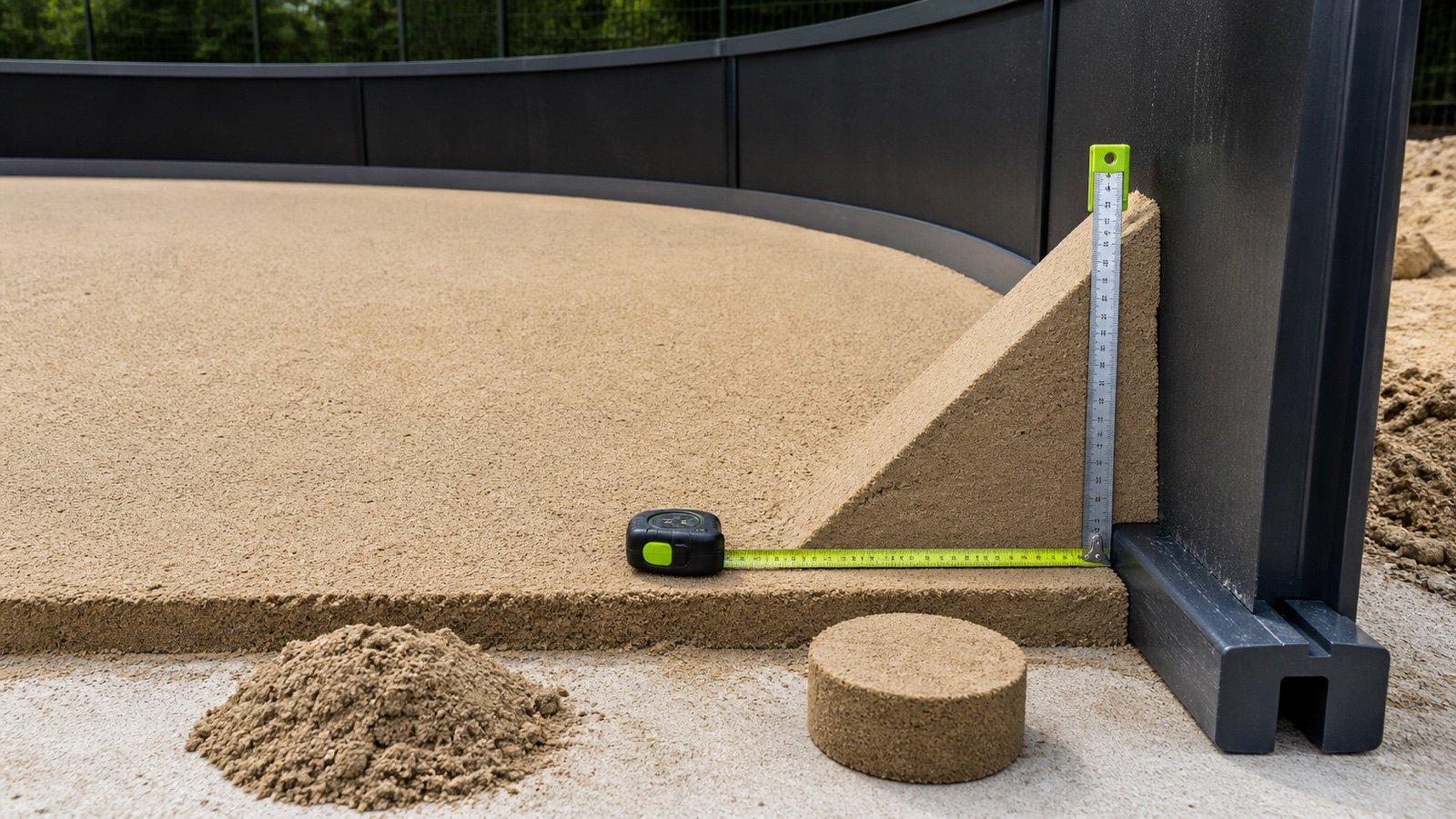
A pool cove is the transition between an above-ground pool wall and its floor. When the approved detail uses compacted sand or another granular material, its volume follows the wall perimeter rather than the full pool area.
Calculate the flat base and cove on separate lines. The current instructions must first approve the cove material, finished shape and dimensions; some systems use a preformed cove or another material instead of sand.
How much sand is needed for a pool cove?
Multiply the inside wall perimeter by the approved finished cross-sectional area of the cove. A triangular detail uses one-half of its horizontal base run multiplied by its vertical height.
Cove volume = wall perimeter × approved finished cove cross-sectional area
Triangular cove area = base run × height ÷ 2
Use one unit system throughout the formula. Convert inches to feet before calculating cubic feet, or millimetres and centimetres to metres before calculating cubic metres.
Height does not define the amount of material. You also need the horizontal run and the cross-sectional shape from the exact pool, liner or cove instructions.
What must be confirmed before calculating?
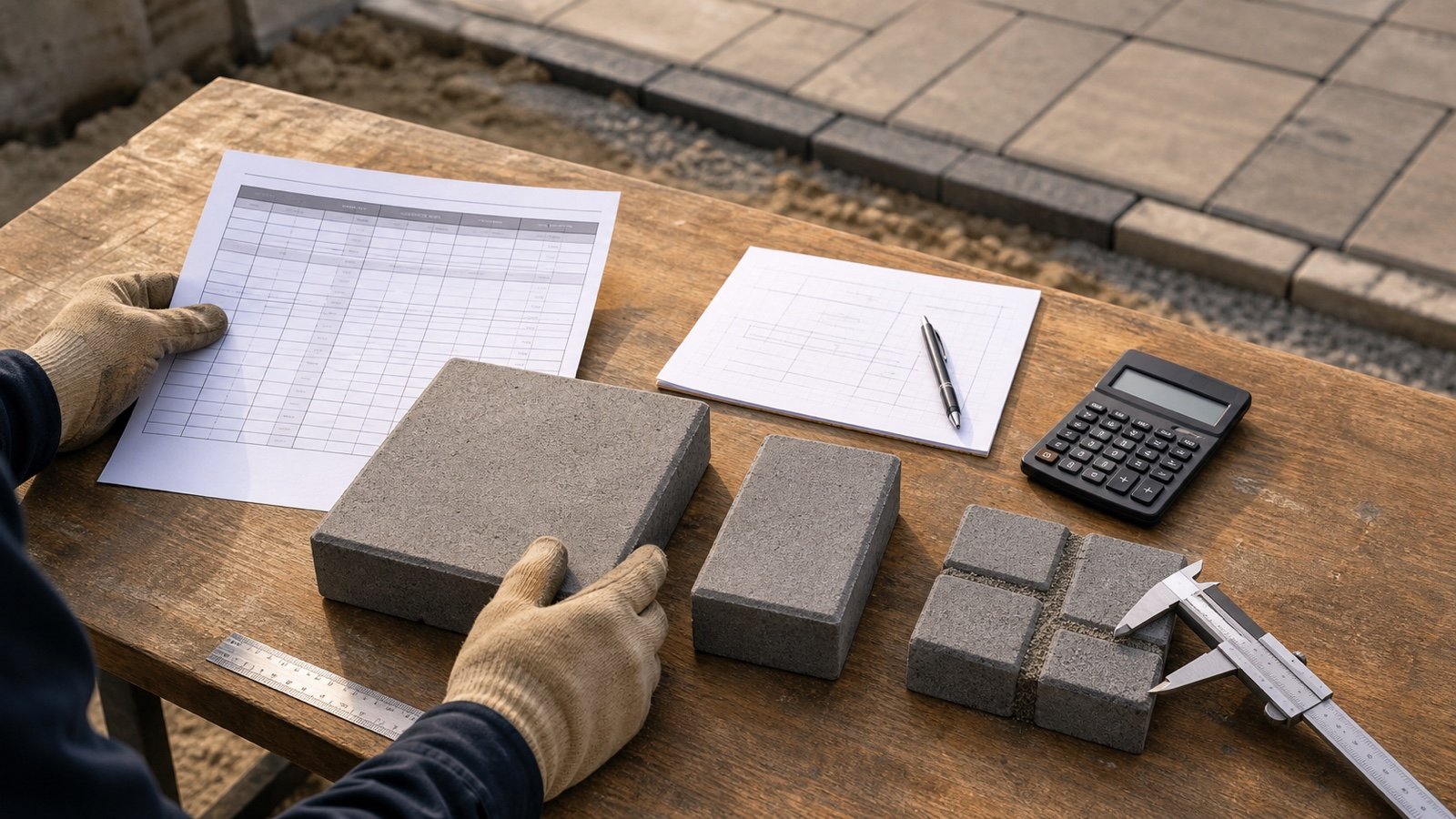
Identify the pool manufacturer, model, size, wall shape and current installation-manual revision. Then record the cove material, permitted alternative, finished dimensions and compaction instruction.
| Input | What to record | Why it matters |
|---|---|---|
| Wall perimeter | Inside wall line that receives the cove | Sets the length of the cove |
| Cross-section | Triangle, curve, trapezoid or supplied profile | Controls area at every point along the wall |
| Height | Approved finished vertical dimension | One dimension of the section |
| Base run | Approved finished horizontal dimension | Second dimension of a triangular section |
| Material | Exact sand, aggregate, earth or preformed product permitted by the instructions | Determines whether a volume calculation applies |
| Material state | Loose, moist, compacted or finished | Prevents a finished volume from being treated as a delivery volume |
The pool-base measurement guide explains how to keep the floor footprint, work area, support excavation and wall line separate.
How do you find the cove perimeter?
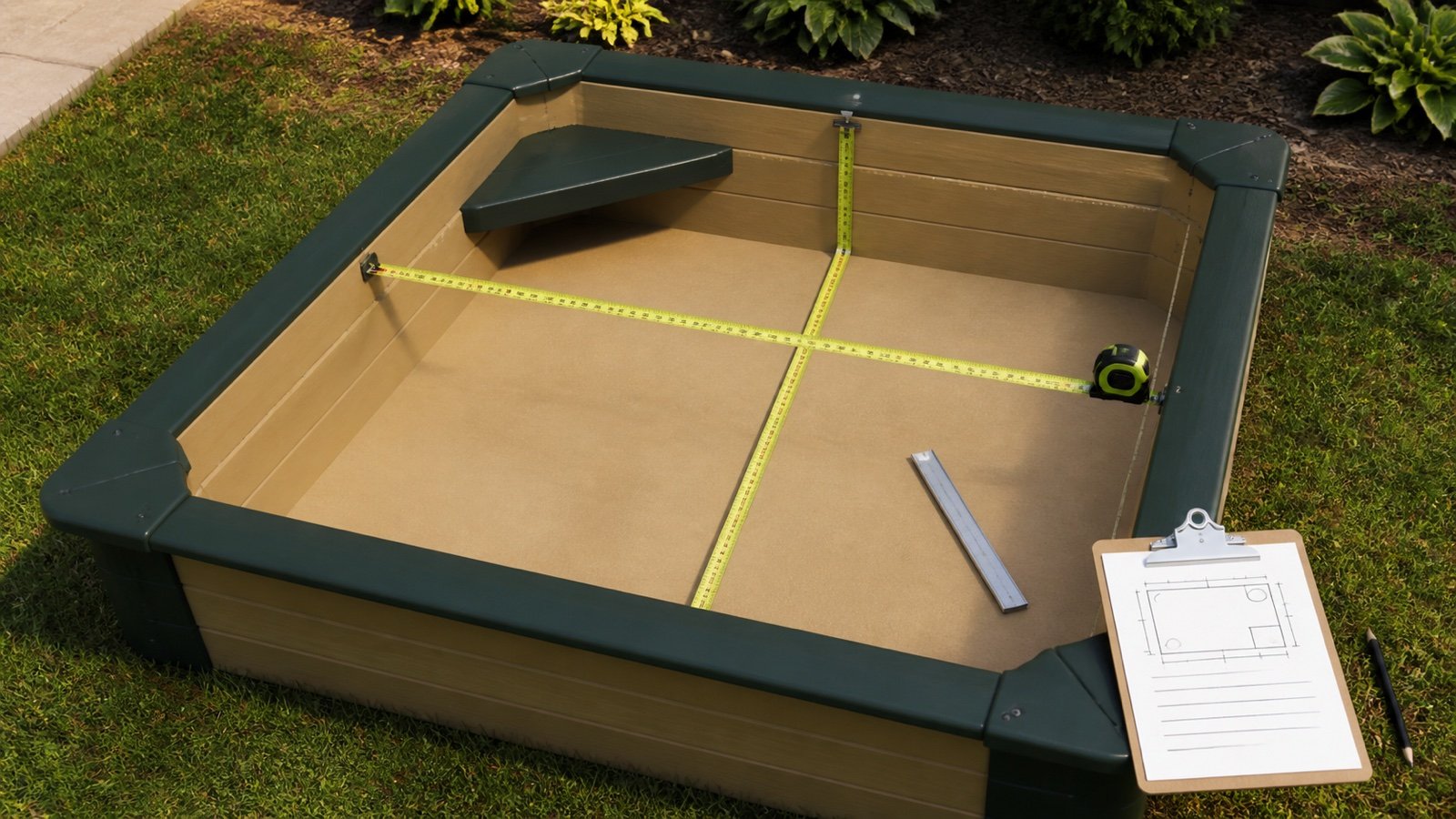
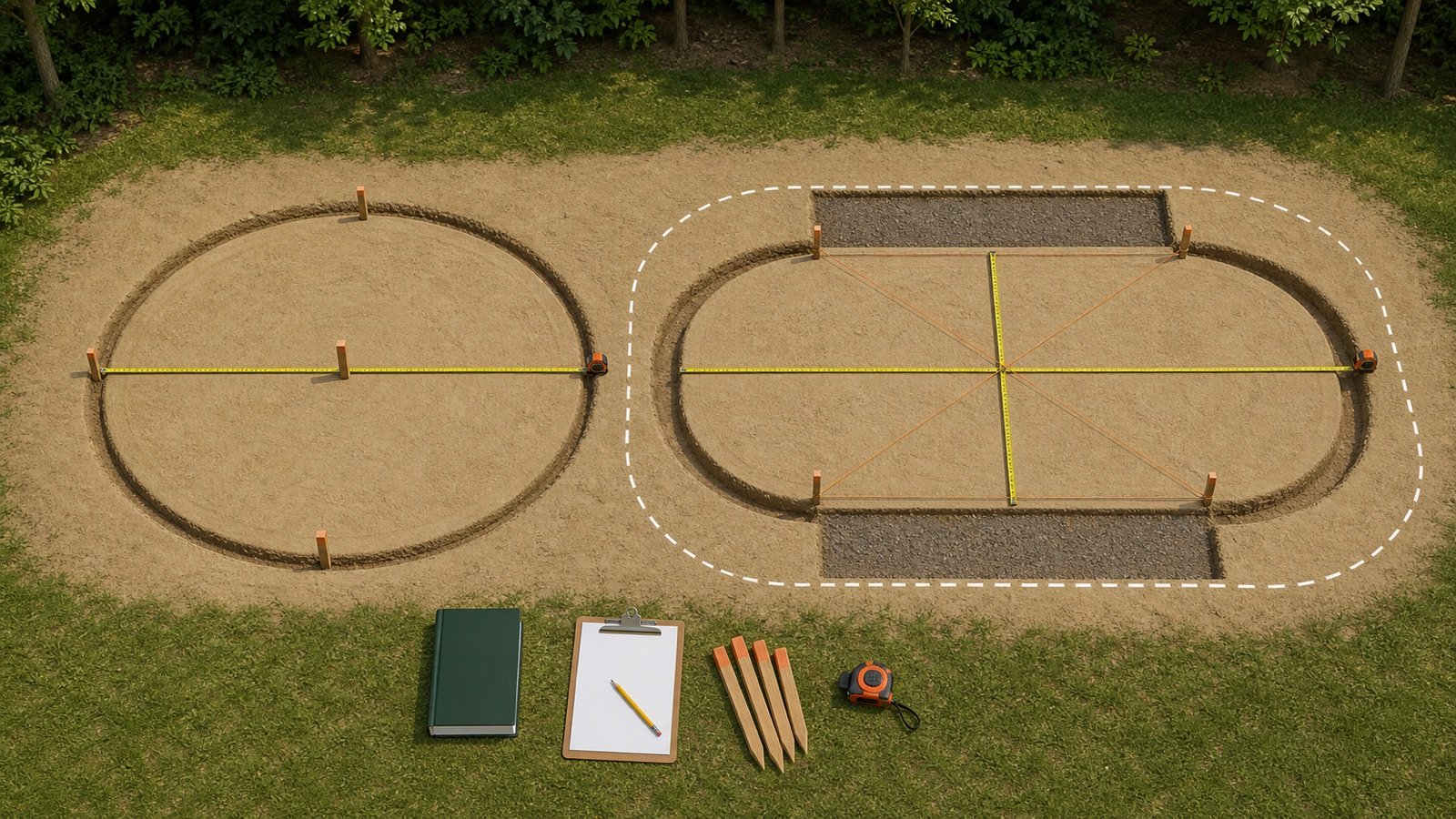
Use the inside wall line shown by the approved pool detail. A round wall uses its inside diameter. A racetrack oval uses the total inside length and width only when its plan has 2 straight sides and 2 semicircular ends.
Round perimeter = π × inside diameter
Racetrack-oval perimeter = 2 × (total length − total width) + π × total width
An ellipse uses a different perimeter method. An oval pool may also have a manufacturer-defined wall shape, side channels or transitions that do not match a simple racetrack. Use a dimensioned drawing or measured approved wall line when the plan shape differs.
Worked round-pool cove example
Assume a checked project detail permits a compacted triangular cove 6 in high with an 8 in base run around a 24 ft round inside wall. These values demonstrate the formula; they do not specify another pool.
- Wall perimeter: π × 24 = 75.3982 ft.
- Cove height: 6 ÷ 12 = 0.5 ft.
- Cove base run: 8 ÷ 12 = 0.666667 ft.
- Triangular area: 0.5 × 0.666667 ÷ 2 = 0.166667 ft².
- Finished cove volume: 75.3982 × 0.166667 = 12.5664 ft³.
- Cubic yards: 12.5664 ÷ 27 = 0.4654 yd³.
Finished cove result: 0.465 yd³, or 12.566 ft³. Keep this geometric result separate from loose delivery quantity, supplier density and ordering increments.
How does the cove compare with the flat base?
For the same 24 ft round footprint, a hypothetical uniform 2 in flat layer is 75.3982 ft³, or 2.7925 yd³. The example cove adds 12.5664 ft³, or 0.4654 yd³.
| Zone | Geometry | Finished volume |
|---|---|---|
| Flat base | Circle area × 2 in uniform depth | 2.7925 yd³ |
| Cove | Round perimeter × 6 in by 8 in triangular section | 0.4654 yd³ |
| Combined geometric volume | Only if the approved material and finished state match | 3.2579 yd³ |
Use the Pool Base Sand Calculator for the uniform flat layer. Add the 2 geometric volumes only after confirming that both zones use the same approved material and describe the same finished state.
Worked racetrack-oval cove example
A checked racetrack wall is 30 ft long and 15 ft wide. The same hypothetical triangular section is 6 in high and 8 in along the floor.
- Straight wall length: 2 × (30 − 15) = 30 ft.
- Combined semicircular ends: π × 15 = 47.1239 ft.
- Total wall perimeter: 77.1239 ft.
- Finished cove volume: 77.1239 × 0.166667 = 12.8540 ft³.
- Cubic yards: 12.8540 ÷ 27 = 0.4761 yd³.
The result changes with wall geometry even when cove height and run stay unchanged. Do not use an ellipse formula for a racetrack or a racetrack formula for a manufacturer-specific oval.
How is a metric cove calculated?
Assume a checked 7.3 m round wall and an approved triangular section 150 mm high by 200 mm along the floor. Convert both section dimensions to metres first.
- Perimeter: π × 7.3 = 22.9336 m.
- Section area: 0.15 × 0.20 ÷ 2 = 0.015 m².
- Finished volume: 22.9336 × 0.015 = 0.3440 m³.
- Litres: 0.3440 × 1,000 = 344.0 L.
This geometry fixture stops at 344 L of finished compacted volume. A supplier order needs documented yield for the loose material condition.
Why can cove height be misleading?
Two coves can have the same height and different volumes. A wider triangular run increases area, while a curved or truncated profile changes the area again.
The CARVIN Equinox round-pool guide provides a complete example for its named system: a compacted triangular lip 3 to 6 in high and 8 to 12 in long. ABGAL's liner instruction states a cove at least 15 cm high but does not state a horizontal run in the extracted instruction. That height cannot support an independent volume calculation.
Radiant's Metric Oval R8 manual gives a combined masonry-sand schedule intended to provide a 2 in floor layer and a separate 4 in wall cove, then instructs the installer to form the cove 3 to 4 in high. That schedule can check its own named installation; it should not be reverse-engineered into a universal cove width.
When is the triangular formula unsuitable?
Use the triangular formula only when the approved finished detail is triangular or when the responsible project record explicitly accepts it as a planning approximation. A rounded hand-formed cove may have less area than its enclosing triangle, while an irregular or bulged cove may have more in places.
| Cove condition | Quantity method | Record needed |
|---|---|---|
| Triangular granular cove | Perimeter × base × height ÷ 2 | Finished dimensions and permitted material |
| Curved formed cove | Approved cross-sectional area × perimeter | Profile drawing, template or accepted measured area |
| Trapezoidal cove | Perimeter × trapezoid area | Both parallel sides and section height |
| Preformed cove pieces | Perimeter ÷ net installed length per piece, rounded up under product instructions | Piece length, joint treatment and package count |
| Combined manufacturer schedule | Use only within the named schedule scope | Exact model, size, floor detail and cove option |
How should a preformed pool cove be ordered?
A preformed cove is counted by installed length rather than sand volume. Divide the approved wall perimeter by the usable installed length of one piece, then follow the product instructions for joints, cuts, corners and package rounding.
Do not add a sand-cove allowance when the accepted detail uses foam or another supplied profile. CARVIN's cited guide directs users of a prefabricated cove to that product's instruction manual.
How do compaction and supplier units affect the order?
The perimeter formula gives finished geometric volume. It does not convert a loose truckload or bag into a compacted cove without product-specific evidence.
- Record the cove's finished compacted volume first.
- Use a manufacturer yield, supplier condition or accepted project test to convert finished volume to loose quantity.
- Use bulk density only for the exact material and stated condition when converting volume to estimated mass.
- Use package net volume or documented coverage when calculating whole packages.
- Apply a named handling allowance separately, then round to the supplier's selling increment.
The Sand Bags vs Bulk guide explains purchasing records without mixing package mass, bulk density and installed volume.
Which mistakes change the cove result?
- Adding cove height to the flat floor depth.
- Using height without a base run or cross-sectional shape.
- Measuring the outside of the pool frame instead of the approved inside wall line.
- Treating every oval wall as an ellipse or racetrack.
- Using a generic cove dimension instead of the exact pool or liner instructions.
- Calculating sand when the accepted system uses a preformed cove or another material.
- Calling a loose delivery volume a compacted finished volume.
- Applying a universal density, compaction percentage or waste factor.
- Combining the cove with supports, trenches, wall track or slope correction.
- Rounding each intermediate dimension before the final volume.
What should be checked before the liner covers the cove?
Follow the exact installation sequence and inspection points. The quantity record should preserve the condition that later becomes hidden.
- Confirm the permitted cove material and approved alternative.
- Mark the inside wall perimeter and any transitions or interruptions.
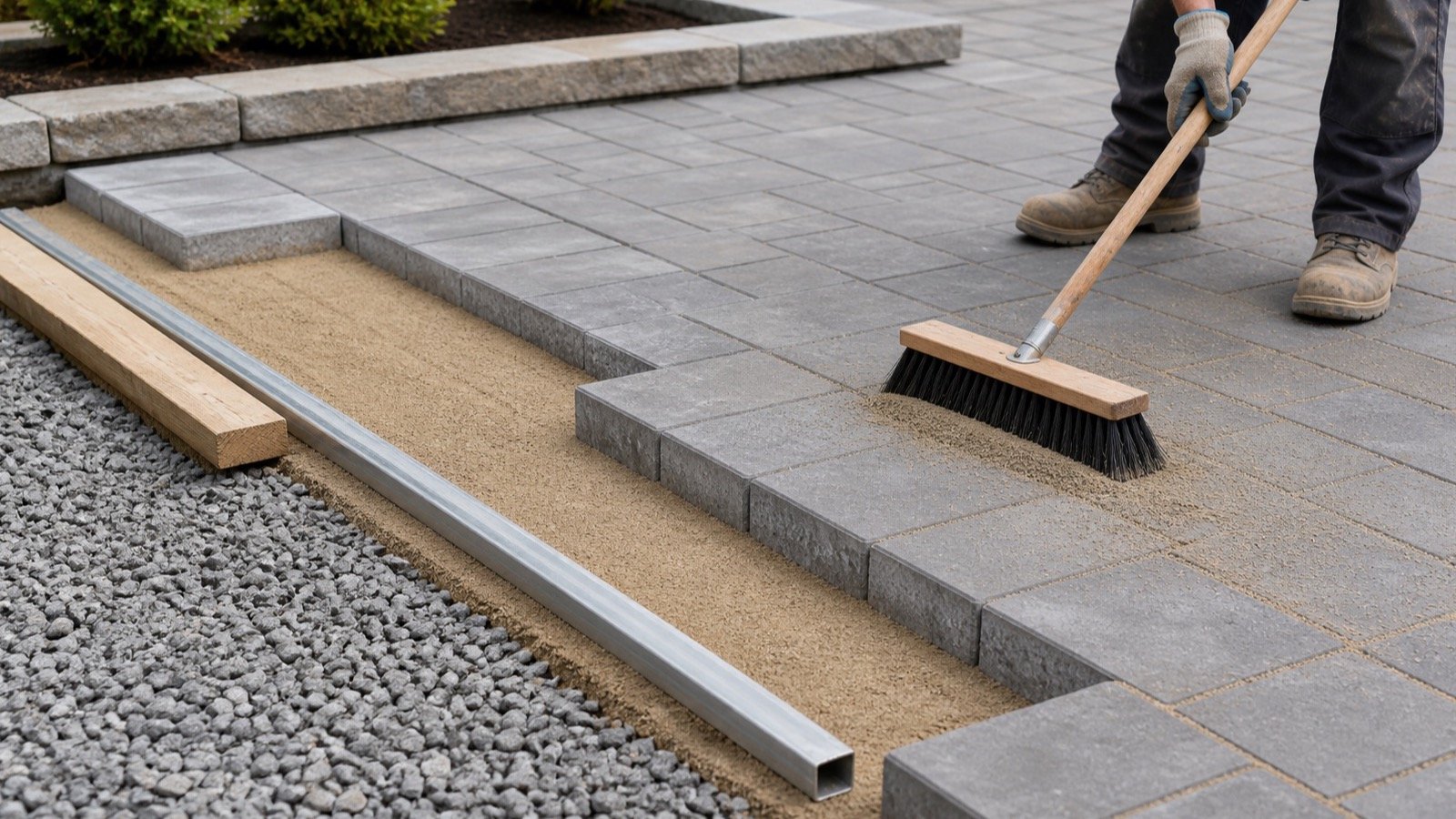
- Place and compact the material under the stated procedure.
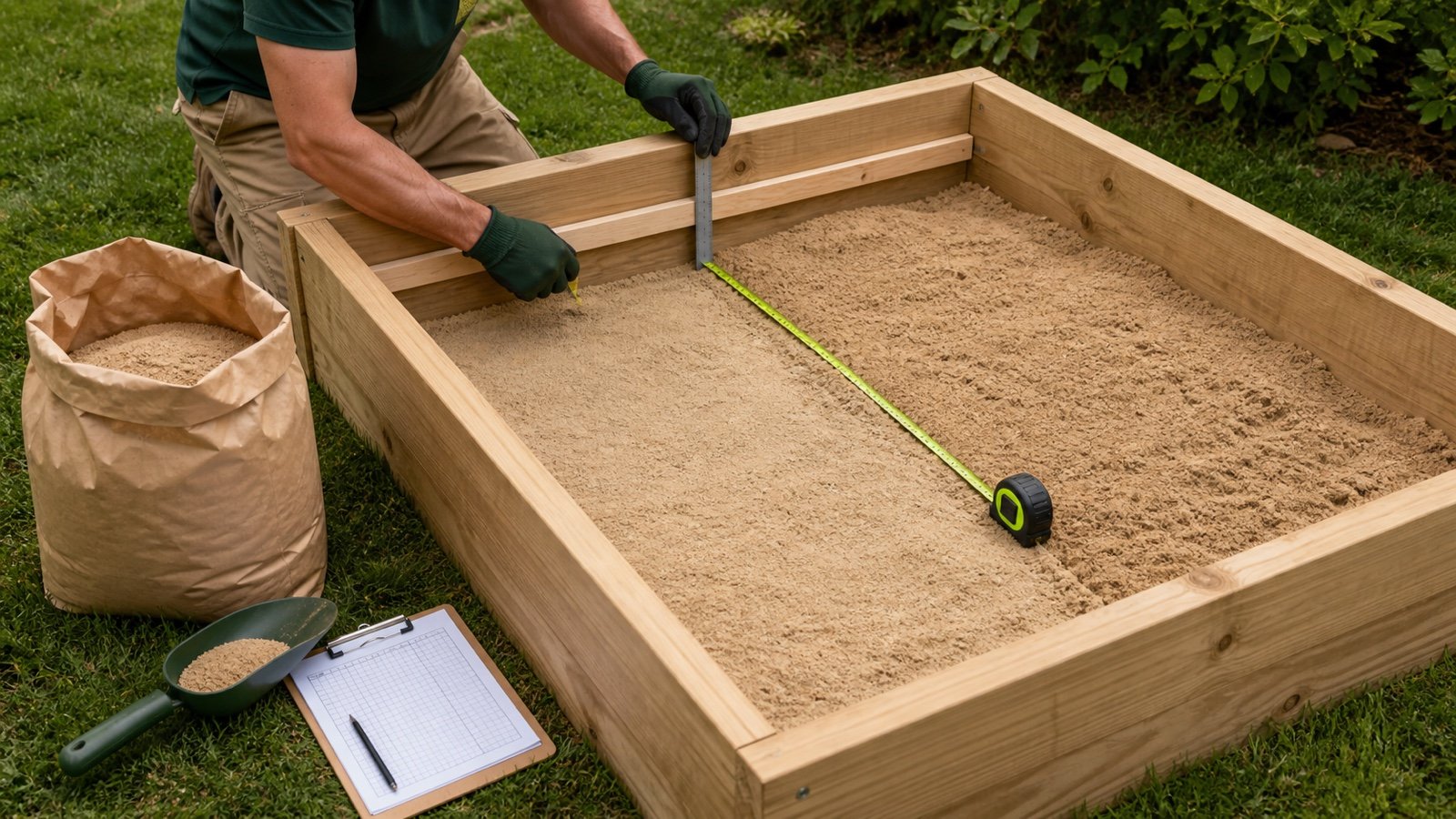
- Check height, floor run and profile with the approved template or measuring method.
- Check the connection to the flat base and wall for gaps, sharp particles and unsupported liner areas.
- Record finished measurements and photographs before installing the liner or pad.
- Reconcile remaining material without changing the accepted profile to consume surplus.
Safety and installation limits
This guide estimates quantity after a cove detail has been approved. Its scope excludes foundation selection, earthwork design, wall-support approval and compaction-equipment selection. Manufacturer instructions still control the installation.
Stop when the manual is missing, supplied components conflict with the detail, the wall line is unstable or the site has unresolved drainage, utility, electrical, permit or ground-support conditions. Use the pool-base depth guide to document the flat layer and material state.
The calculation methodology explains unit and fixture checks. Report a formula, source or rendered-page issue through the corrections route, and use the Sand Material Planning hub for the current calculator cluster.
Sources and source scope
- CARVIN Equinox Round Above Ground Pool User's Guide: one round system's triangular cove, material, dimension, compaction and preformed-cove instructions.
- Radiant Metric Oval Installation Manual R8: one oval system's separate floor and cove instructions and combined sand schedule.
- ABGAL Above Ground Pool Liner Installation: one liner maker's separate floor layer and minimum cove height.
- NIST Handbook 44 (2026), Appendix C: area and volume unit relationships used in the fixtures.
Source scope: Each manufacturer or liner document governs only its named system and revision. NIST supports the unit relationships. The current instructions for the exact pool, liner and cove product, plus approved project documents, site conditions, permits, local rules and responsible qualified people, control the installation.
Review note: Saleem Sial owns the research and editorial record. Live source retrieval, PDF extraction, formula fixtures, source comparison, editorial review, build validation, link crawl, schema review and rendered QA form the internal publication gate. Waseem Sial, External Reviewer and Engineer, is listed for ongoing external review; no completed external-review date is claimed.