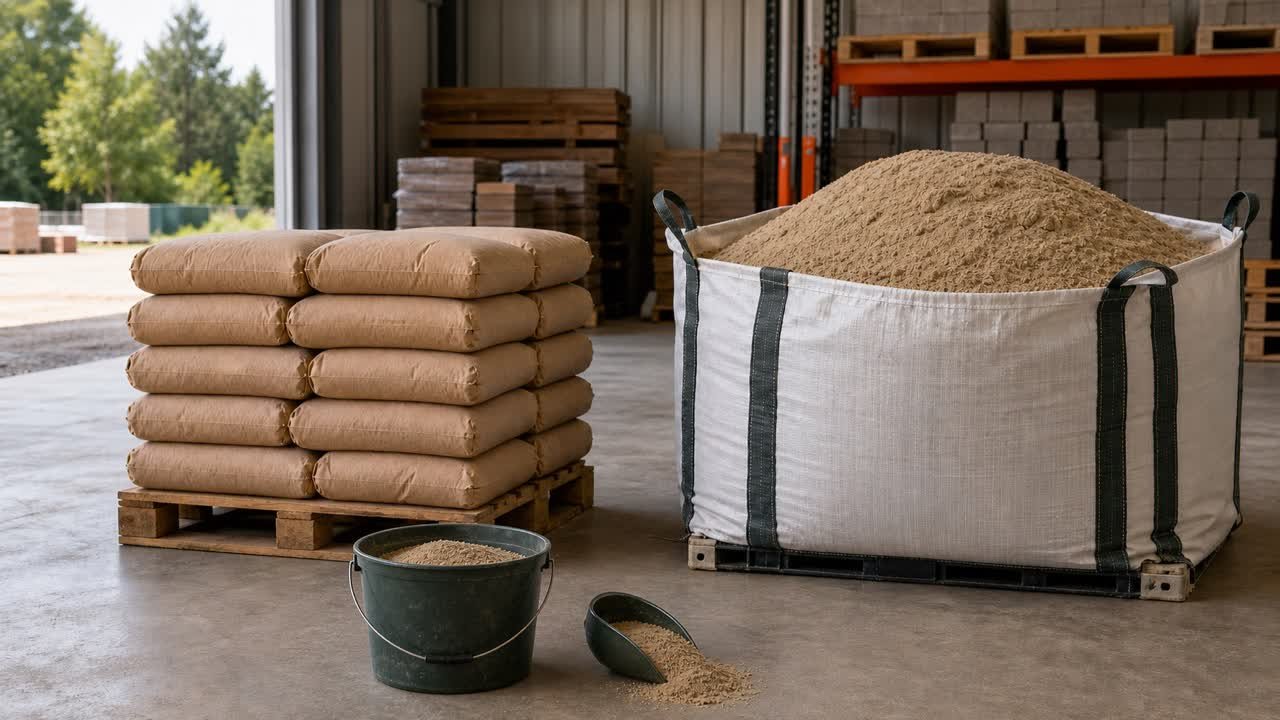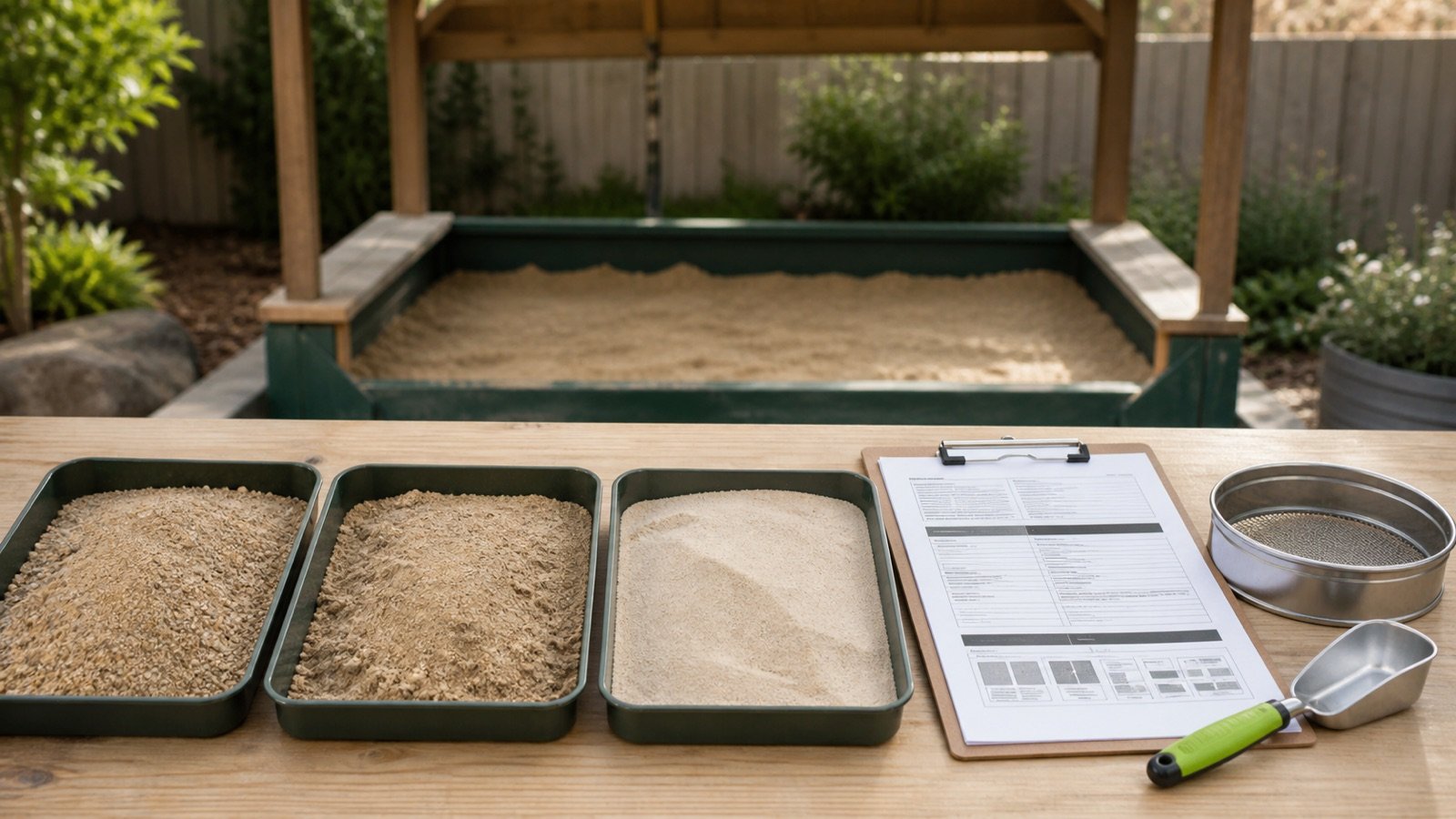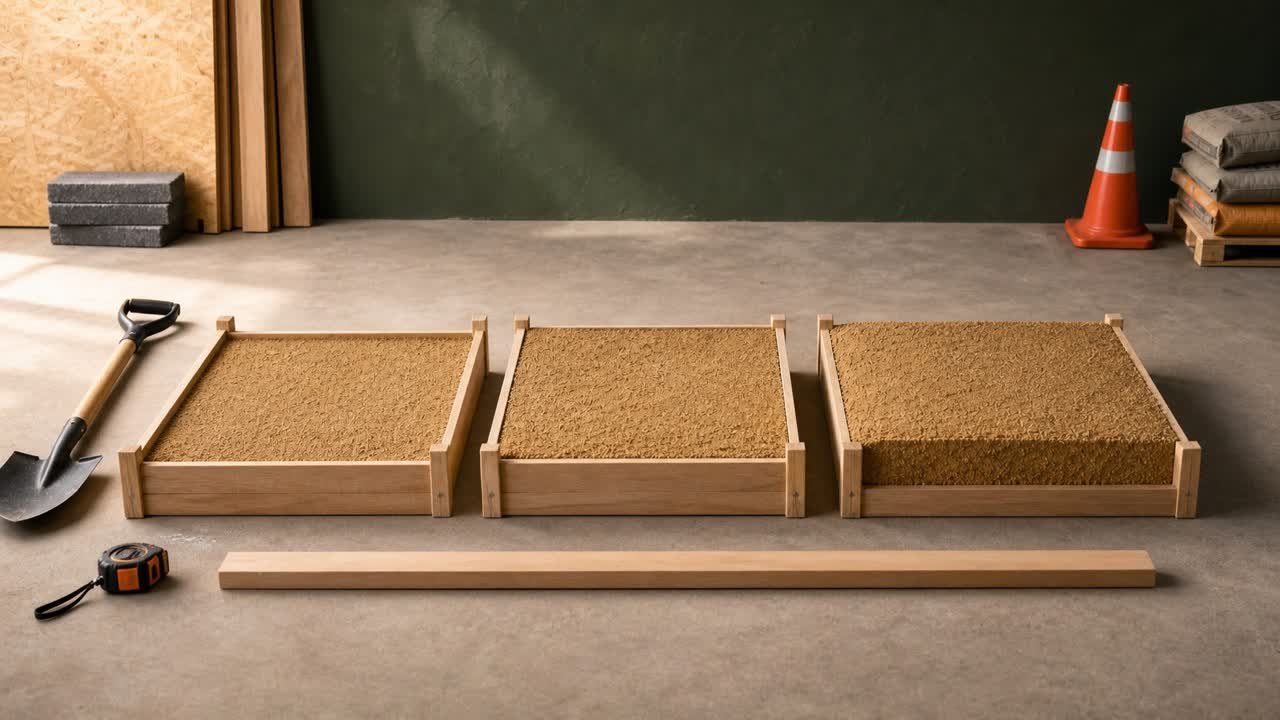
A sand delivery can cover a wide shallow area or a smaller deep layer. You need the material volume and the required depth in compatible units to calculate the coverage.
How much area does sand cover?
One cubic yard of sand covers 324 ft² at 1 in deep, 162 ft² at 2 in, 108 ft² at 3 in, or 81 ft² at 4 in. One cubic metre covers 100 m² at 10 mm, 50 m² at 20 mm, 40 m² at 25 mm, or 20 m² at 50 mm.
The tables assume a uniform layer and a known volume. They do not include compaction, settlement, spillage, uneven subgrade, supplier density, bag yield, minimum order, or delivery rounding.
How much area does one cubic yard of sand cover?
Coverage equals volume divided by depth. NIST Handbook 133, 2026 Appendix E lists 27 cubic feet in one cubic yard. A 1 in layer equals 1/12 ft, so one cubic yard covers 27 ÷ (1/12), or 324 ft².
| Uniform depth | Coverage | Calculation |
|---|---|---|
| 0.5 in | 648 ft² | 324 ÷ 0.5 |
| 1 in | 324 ft² | 324 ÷ 1 |
| 1.5 in | 216 ft² | 324 ÷ 1.5 |
| 2 in | 162 ft² | 324 ÷ 2 |
| 3 in | 108 ft² | 324 ÷ 3 |
| 4 in | 81 ft² | 324 ÷ 4 |
| 6 in | 54 ft² | 324 ÷ 6 |
| 9 in | 36 ft² | 324 ÷ 9 |
| 12 in | 27 ft² | 324 ÷ 12 |
Coverage in ft² = cubic yards × 324 ÷ depth in inches
A half-yard covers half the table area. Two cubic yards cover twice the area. Multiply the table value by the known cubic-yard quantity before adding any separate project allowance.
How much area does one cubic metre of sand cover?
One cubic metre equals 1,000 litres. Convert depth from millimetres to metres, then divide one cubic metre by that depth. A 25 mm layer equals 0.025 m, so one cubic metre covers 1 ÷ 0.025, or 40 m².
| Uniform depth | Coverage | Calculation |
|---|---|---|
| 10 mm | 100 m² | 1,000 ÷ 10 |
| 20 mm | 50 m² | 1,000 ÷ 20 |
| 25 mm | 40 m² | 1,000 ÷ 25 |
| 30 mm | 33.333 m² | 1,000 ÷ 30 |
| 40 mm | 25 m² | 1,000 ÷ 40 |
| 50 mm | 20 m² | 1,000 ÷ 50 |
| 75 mm | 13.333 m² | 1,000 ÷ 75 |
| 100 mm | 10 m² | 1,000 ÷ 100 |
| 150 mm | 6.667 m² | 1,000 ÷ 150 |
| 200 mm | 5 m² | 1,000 ÷ 200 |
Coverage in m² = cubic metres × 1,000 ÷ depth in millimetres
Use unrounded values through the calculation and round the displayed area at the end. The repeating values at 30, 75, and 150 mm continue beyond the three decimal places shown.
Depth controls coverage
The same volume covers less area as the layer gets deeper. Doubling depth cuts coverage in half. A cubic yard spread 1 in deep covers 324 ft²; the same yard spread 2 in deep covers 162 ft².
The required depth comes from the application, project documents, product instructions, local requirements, and responsible designer or installer. A coverage chart converts a selected depth. It does not select that depth.
Keep separate layers separate
A bedding layer, joint fill, pipe bedding, trench backfill, play-area surface, and lawn topdressing can use different sand products and depth rules. Calculate each product and layer as a separate section. The Types of Sand for Construction guide explains how trade names connect to specifications and supplier records.
Worked imperial coverage example
A delivery record shows 2.5 yd³ available for a uniform 2 in layer. Use the imperial coverage formula:
- Start with 324 ft² per cubic yard at 1 in.
- Divide by the selected 2 in depth: 324 ÷ 2 = 162 ft² per cubic yard.
- Multiply by 2.5 yd³: 162 × 2.5 = 405 ft².
The ideal geometric coverage is 405 ft². Compare that area with the project footprint before applying an allowance. If the supplier rounds the order to another increment, record the calculated volume and ordered volume on separate lines.
Worked metric coverage example
A project has 1.6 m³ available for a uniform 40 mm layer:
- One cubic metre covers 1,000 ÷ 40 = 25 m².
- Multiply by 1.6 m³: 25 × 1.6 = 40 m².
The ideal coverage is 40 m². The result assumes the full 1.6 m³ belongs to that layer and the receiving surface already meets the project tolerances.
Package coverage needs volume yield
A bag's net mass does not state its coverage. Use the current manufacturer's volume yield for the selected product. Metric coverage equals litres per package divided by depth in millimetres because one litre spread 1 mm deep covers one square metre divided by 1,000.
Package coverage in m² = package litres ÷ depth in millimetres
A documented 20 L yield spread 20 mm deep covers 1 m² in ideal geometry. The number demonstrates the formula and does not claim that sand bags use a universal 20 L yield.
In imperial units, convert the package yield to cubic feet and divide by depth in feet:
Package coverage in ft² = package ft³ × 12 ÷ depth in inches
A documented 0.5 ft³ yield at 2 in covers 3 ft². Use the package label or manufacturer sheet that matches the exact product and package size.
Tonne coverage needs supplier density
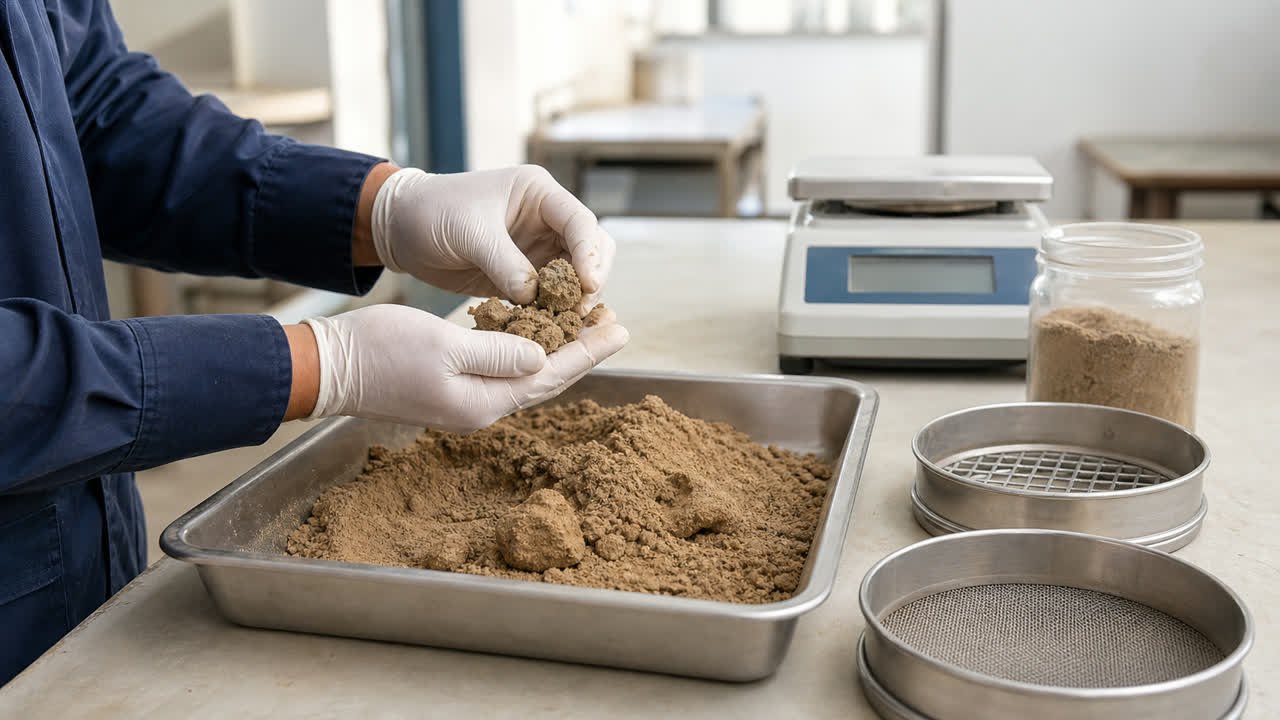
A tonne or short ton measures mass, so its coverage depends on bulk density and material condition. Convert mass to volume with a current density for the selected sand, then divide volume by depth.
ASTM C29/C29M covers loose and compacted aggregate bulk density. Its scope and significance warn that a test result does not establish the degree of compaction in a stockpile or hauling unit, and moisture can affect bulk behavior.
Volume = mass ÷ matching bulk density
Coverage = converted volume ÷ selected depth
A table that gives one fixed coverage area per ton hides the density assumption. Record the density value, unit, loose or compacted condition, moisture basis, source, product identifier, and date beside the result.
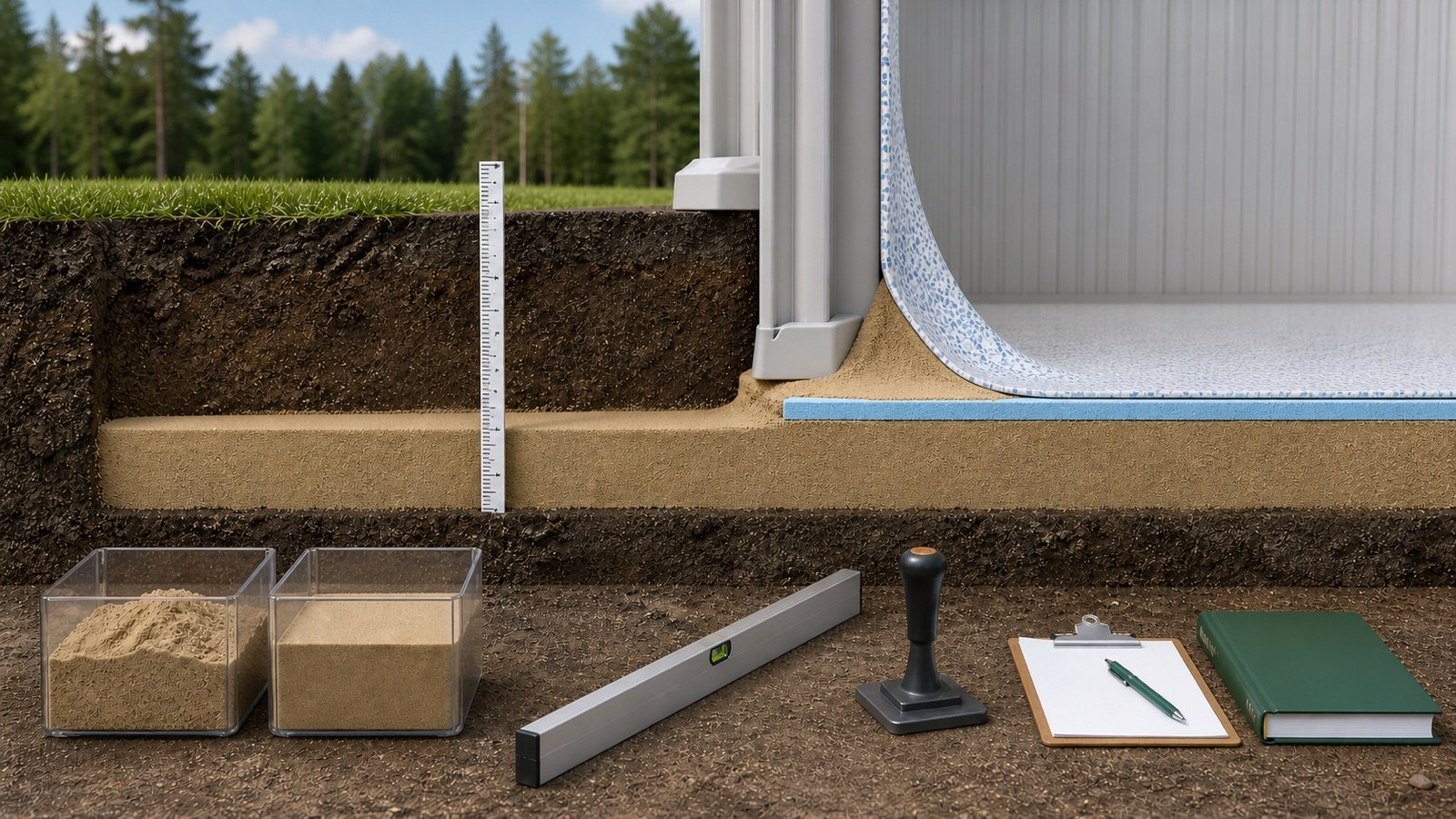
Loose, placed, compacted, and maintained depths differ
Depth words describe different stages. A truck carries delivered material. A crew screeds or places a layer. Equipment or use can consolidate it. Maintenance can restore material that moves or wears away. Treat each stage as a separate record.
| State | Record | Control source |
|---|---|---|
| Measured requirement | Area and required finished depth | Drawing, specification, product system, or responsible designer |
| Delivered | Ticket quantity and stated material condition | Supplier ticket and quote |
| Loose or screeded | Depth before consolidation | Installation method and project requirement |
| Placed or compacted | Depth and test result after the required operation | Project quality plan and field testing |
| Maintained | Depth after use, displacement, weather, or replenishment | Inspection and maintenance program |
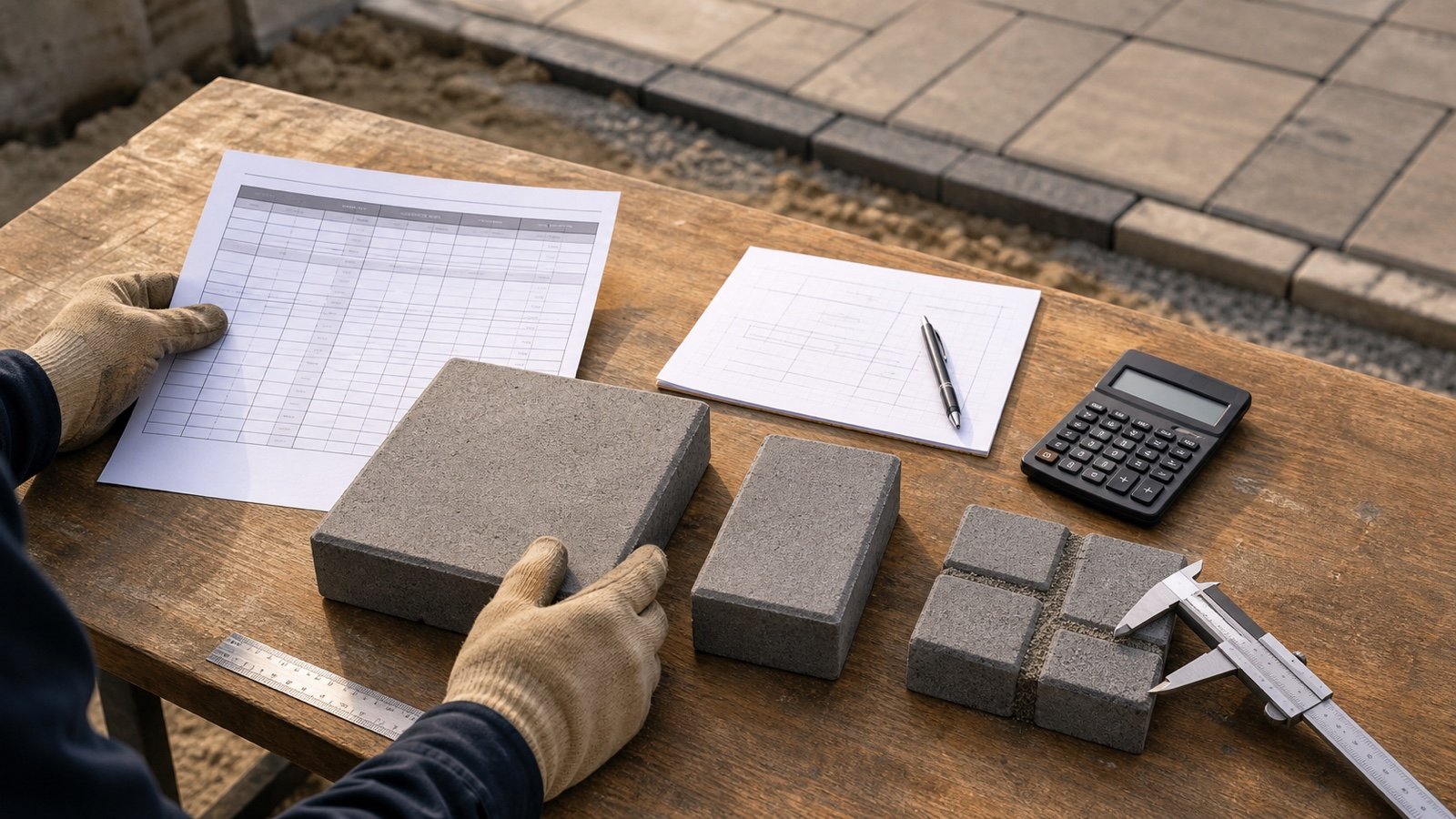
Paver bedding example
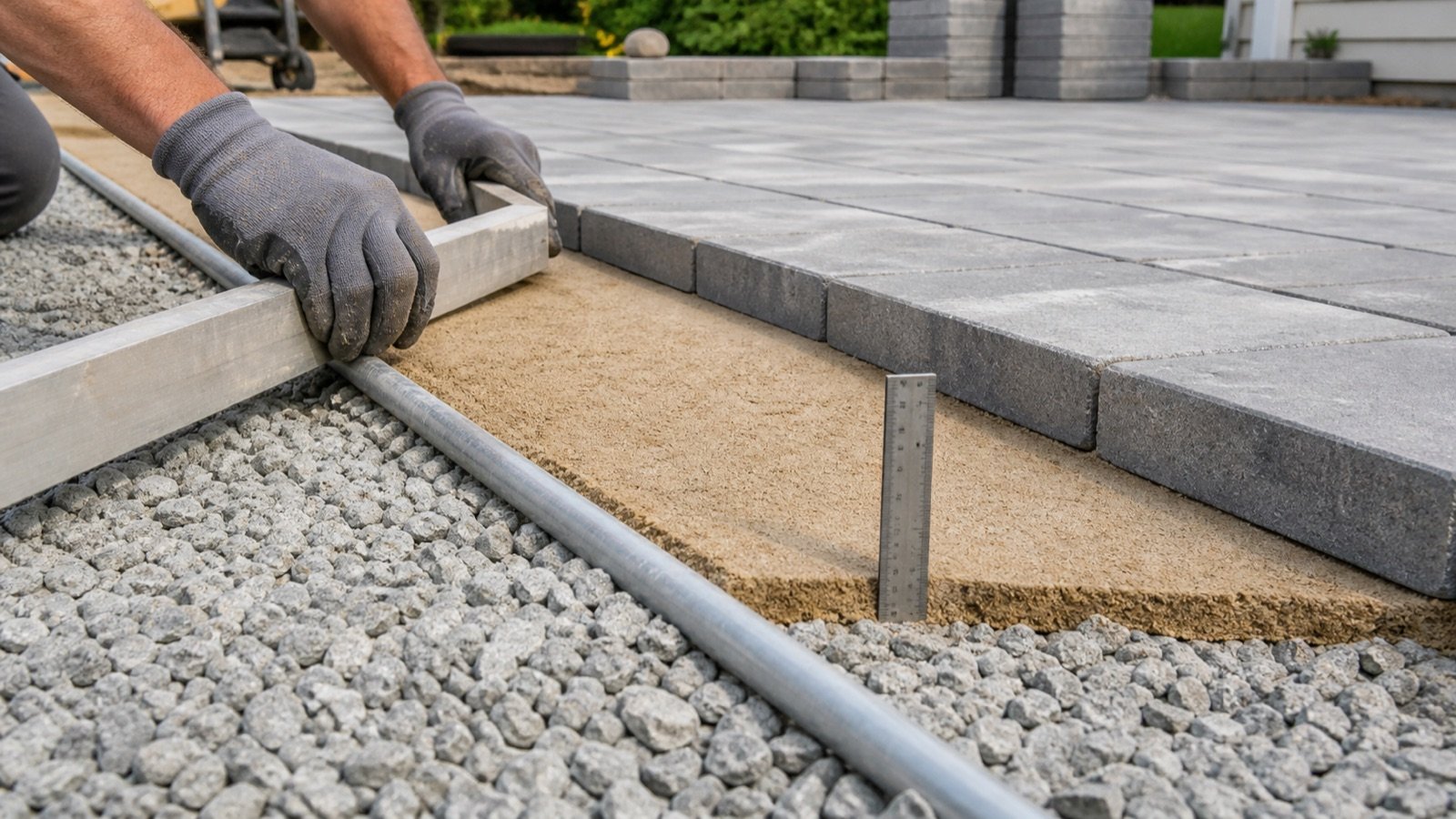
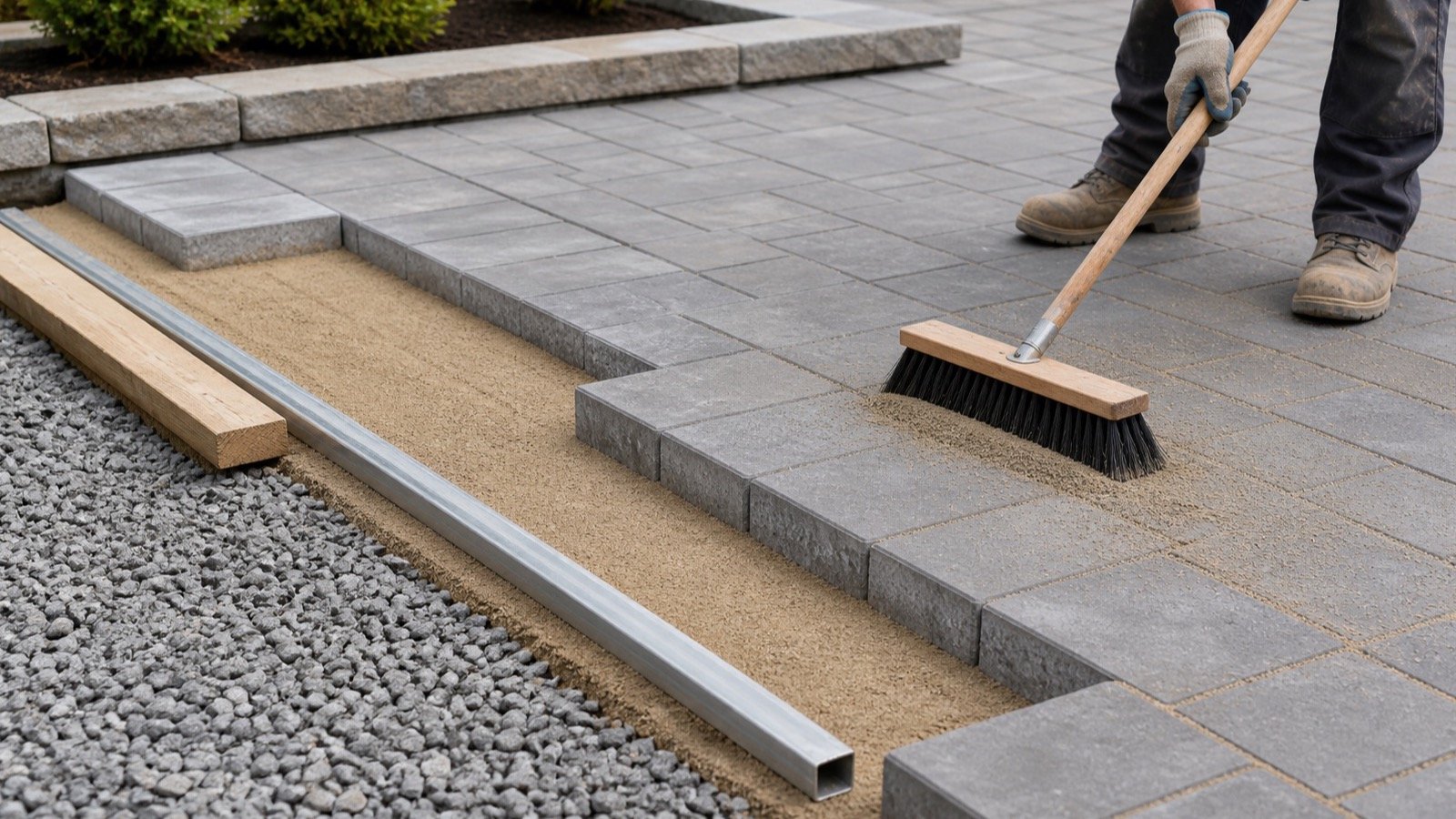
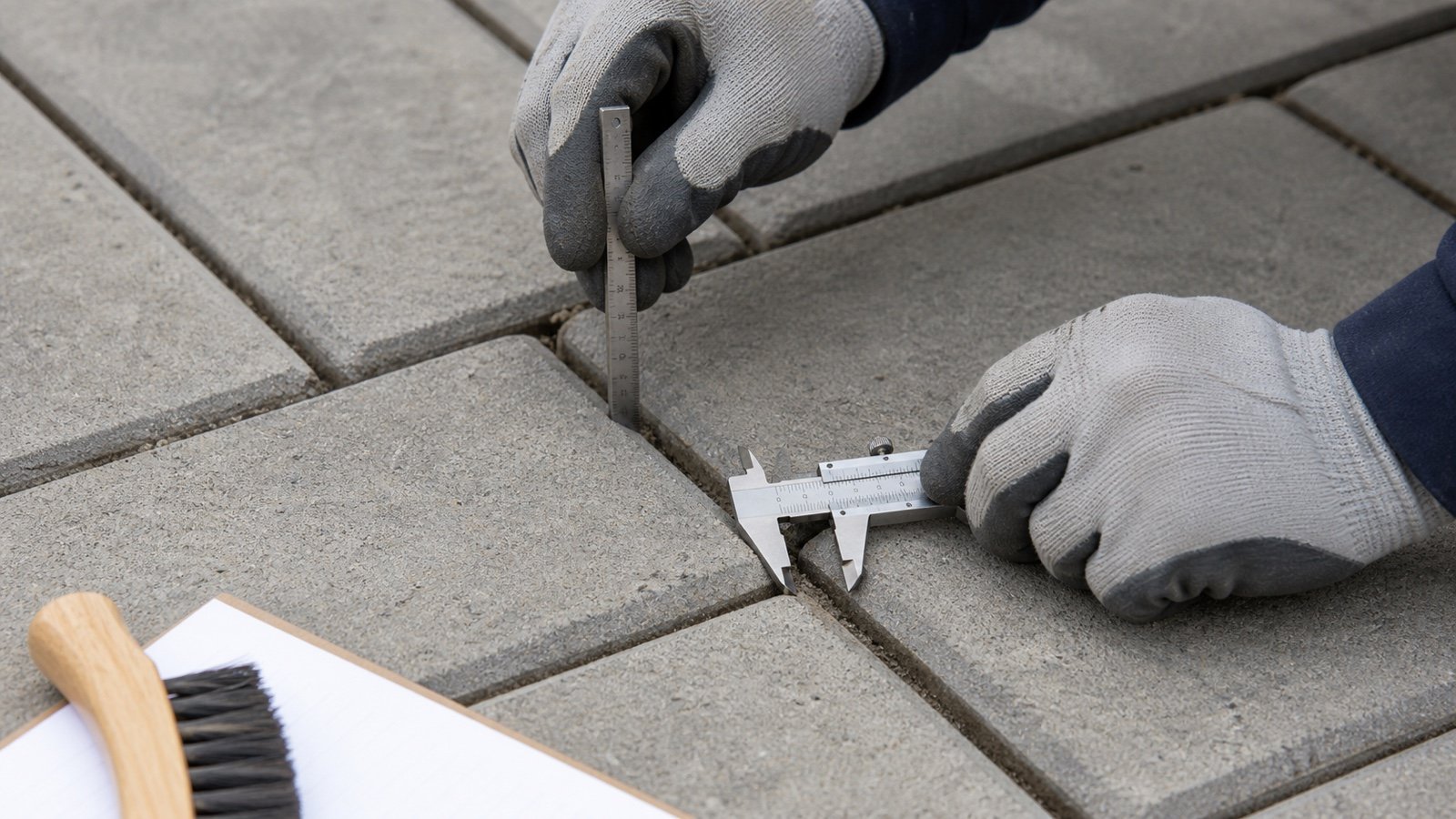
CMHA construction guidance describes a nominal uncompacted bedding-sand layer for interlocking concrete pavement and warns against using bedding sand to correct an uneven base. Another CMHA guide notes that consolidation varies with local sand and should be checked in a mock-up.
The coverage calculation uses the depth required by the applicable pavement documents. The base must meet its own elevation and tolerance requirements. Filling base depressions with extra bedding sand changes the layer and can create an uneven surface.
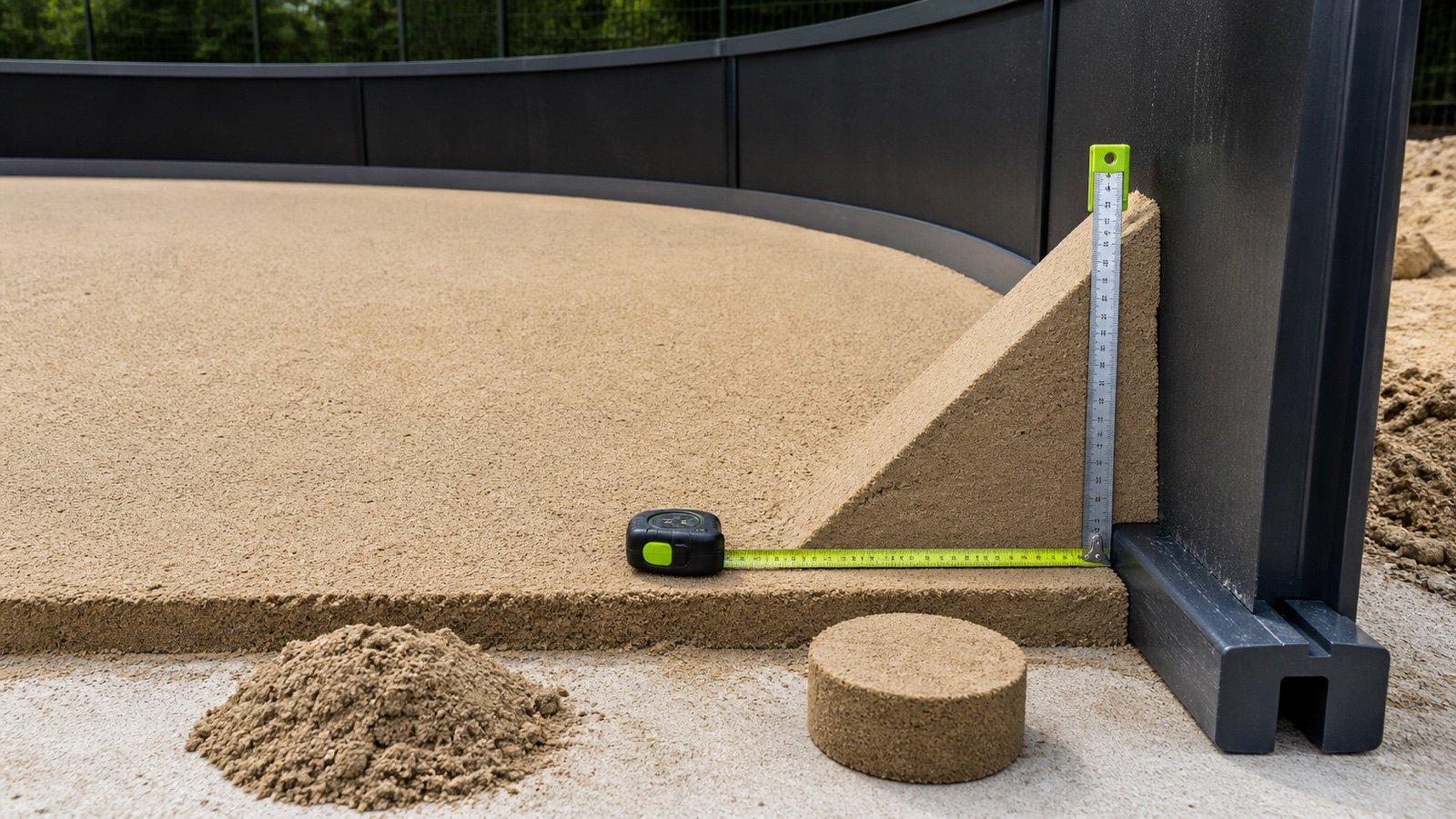
Play-area maintenance example
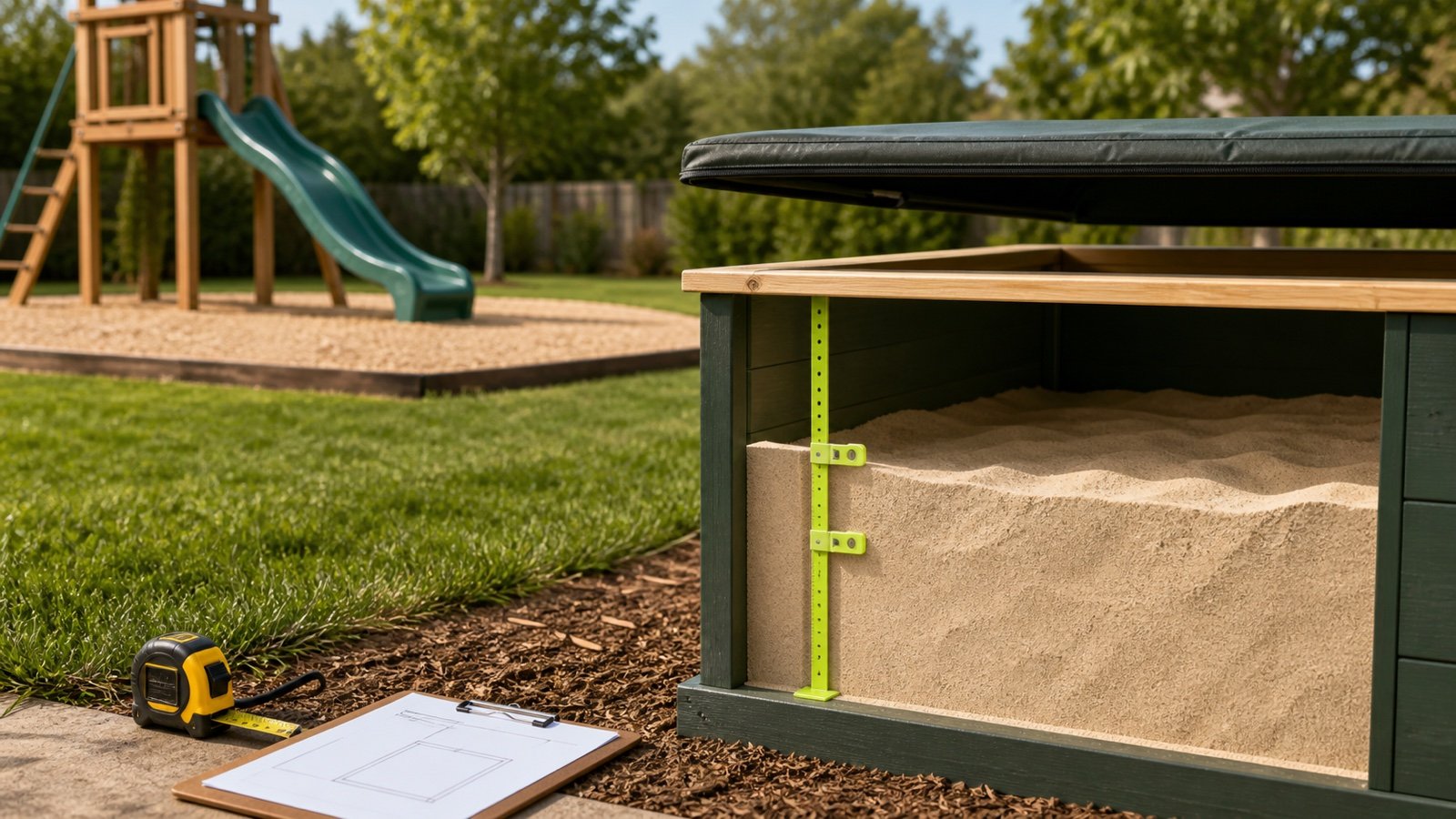
The CPSC Public Playground Safety Handbook treats public-playground loose-fill surfacing through installed and compressed depth, critical height, drainage, displacement, containment, performance, accessibility, and maintenance. Staff must inspect high-use areas and restore displaced material.
A delivery coverage chart cannot replace that system. Calculate the ordered volume from the required installed state, then maintain the surface according to the governing safety and inspection program.
Changing depth needs section calculations
One average depth works only when it represents the volume. A project with correlated low spots and wide areas can produce a different volume from area multiplied by one casual average. Divide the footprint into zones that share a defensible depth.
| Section | Area | Depth | Volume |
|---|---|---|---|
| A | 120 ft² | 1 in | 10 ft³ |
| B | 80 ft² | 2 in | 13.333 ft³ |
| C | 40 ft² | 3 in | 10 ft³ |
| Total | 240 ft² | Sectioned | 33.333 ft³, or 1.235 yd³ |
Keep the section totals before rounding. The calculation shows why a 240 ft² footprint has no single coverage answer until the depth distribution is known.
Measure irregular areas before using the chart
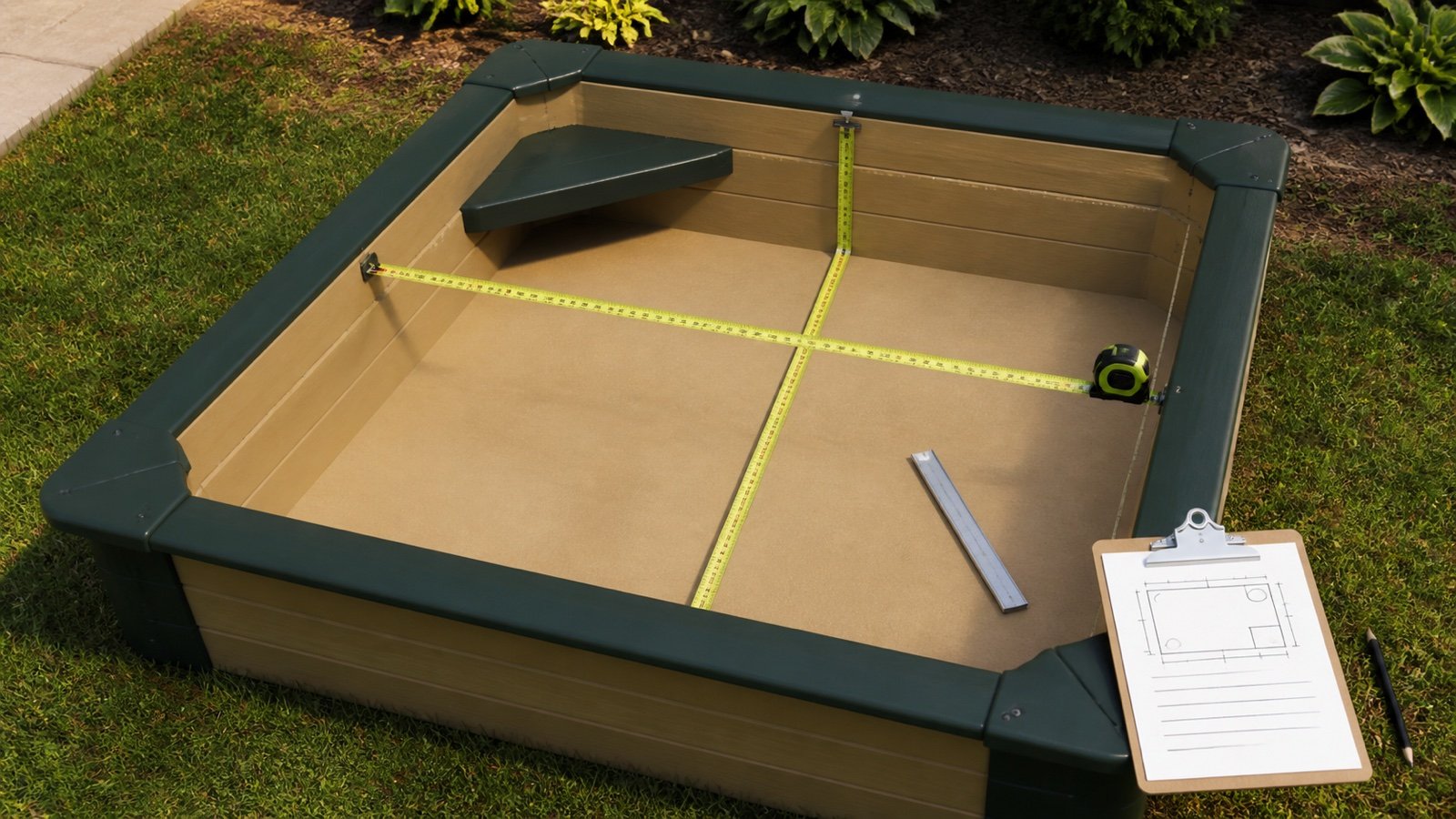
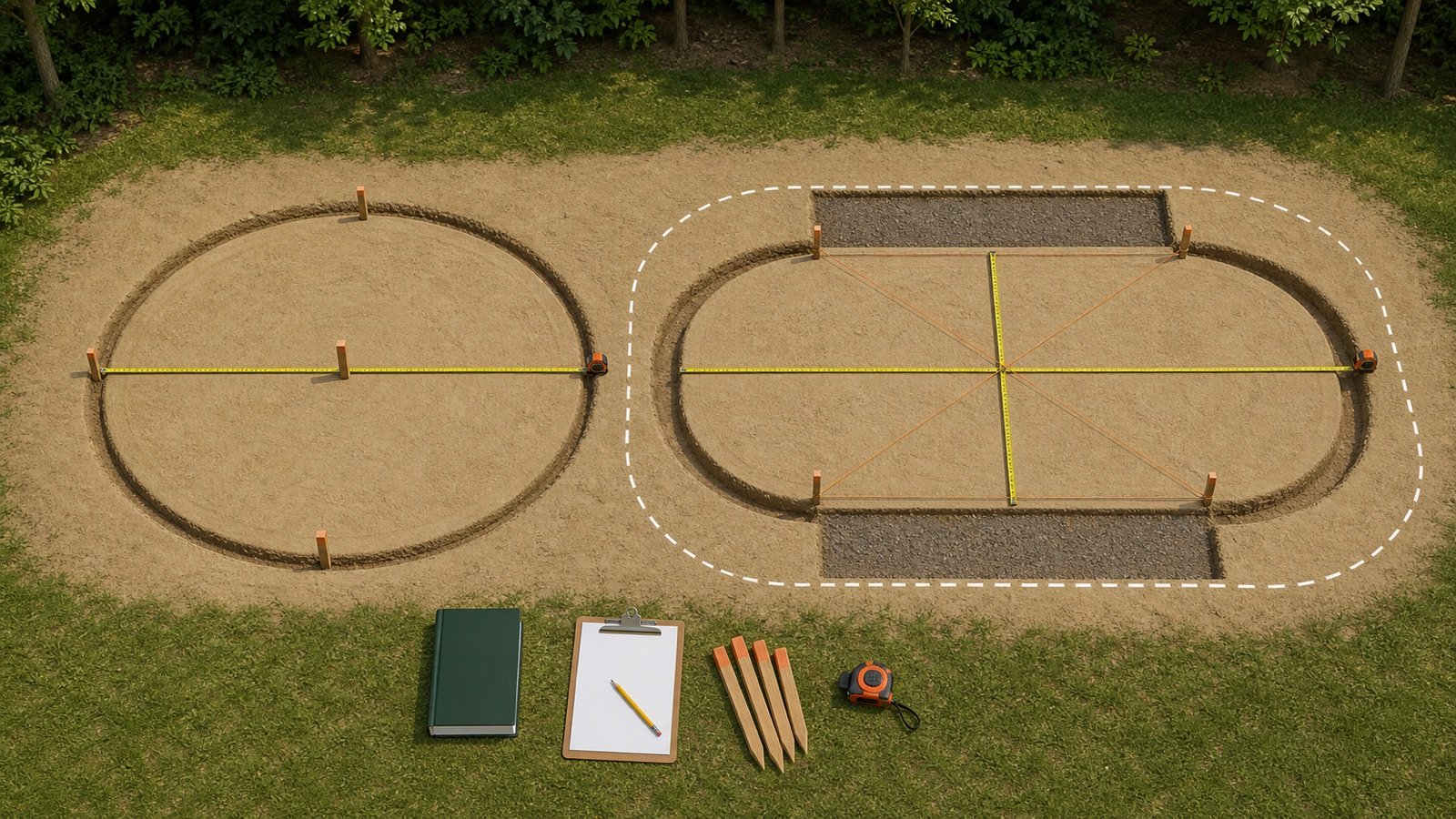
Break an irregular footprint into rectangles, circles, triangles, or surveyed sections. Subtract openings that will not receive sand. Measure tapered strips in shorter segments or use a defensible average width when the taper changes at a steady rate.
Mark section names on a sketch and carry those names into the calculation record. A later field check can then isolate a changed edge or depth instead of replacing the whole estimate.
Use depth pins and benchmark areas
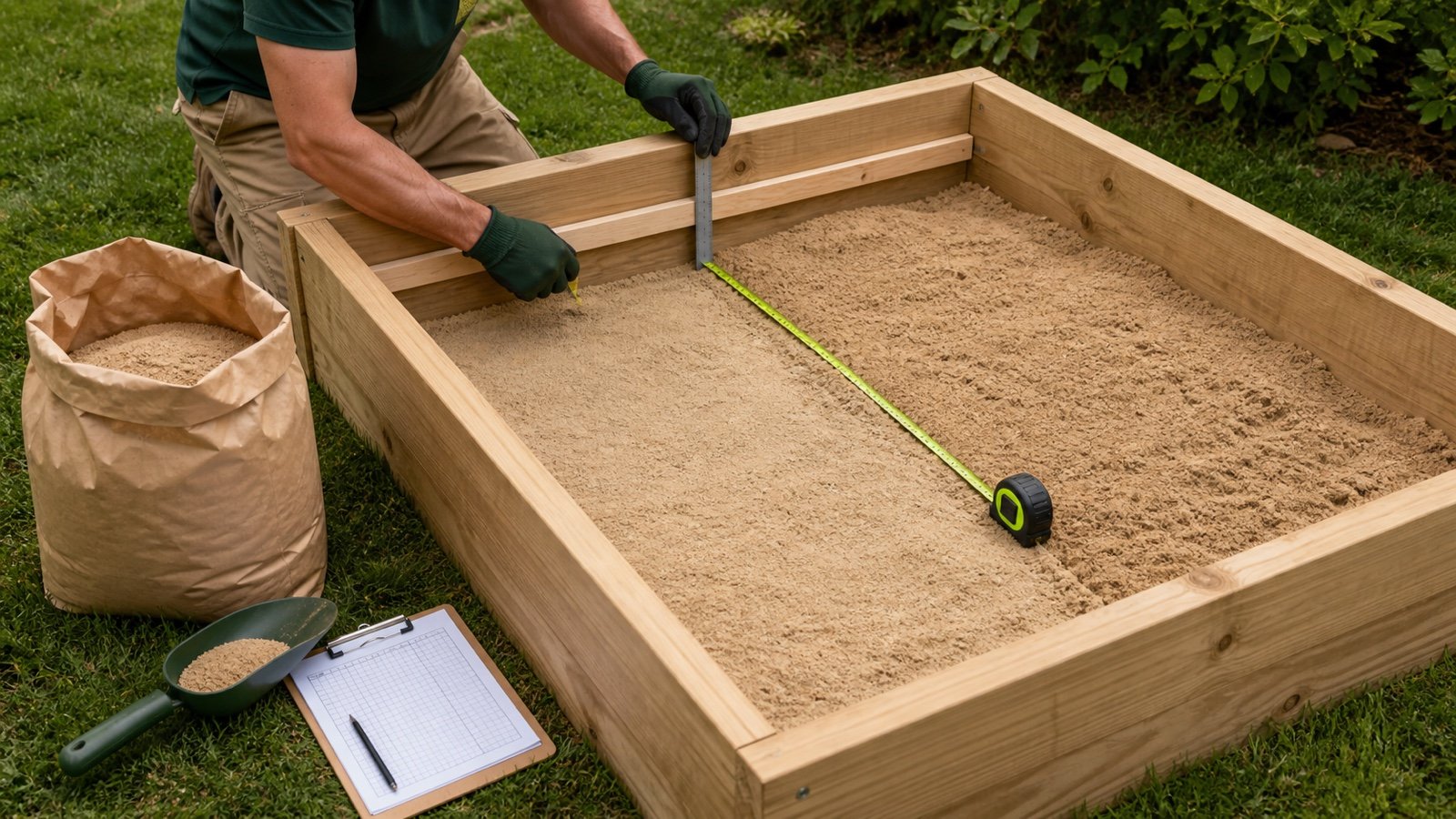
Set depth references that match the installation method and finished elevation. A small benchmark area gives the crew a check on spread rate before the full delivery disappears across the site.
- Confirm the receiving surface and selected depth.
- Measure a test area with clear boundaries.
- Record the sand volume placed in that area.
- Check depth at several planned locations without disturbing the layer beyond the allowed method.
- Compare the field spread with the geometric coverage and investigate the cause of a material difference.
Possible causes include an incorrect footprint, uneven base, wrong depth, misplaced material, different delivery quantity, consolidation, moisture-related volume behavior, or measurement error. The comparison identifies a question; it does not prove which party caused the difference.
Reconcile a partial delivery without guessing
A truck ticket, covered area, and measured layer depth can create an independent volume check. Multiply the accepted covered area by the measured depth and compare that geometric volume with the ticket quantity in compatible units.
Keep timing and state aligned. A loose delivery quantity should not be compared directly with a compacted field volume unless the project has a supported conversion. Check leftover stockpiles, material outside the target area, edge loss, and the measurement method before declaring a shortage.
Myth versus reality
| Myth | Reality |
|---|---|
| One ton of sand covers a fixed area. | Mass coverage needs the selected product's bulk density and matching material condition. |
| Every bag covers the same area. | Package coverage needs the current volume yield and selected depth. |
| A cubic yard always covers 100 ft². | One cubic yard covers 100 ft² at 3.24 in. Coverage changes with depth. |
| One average depth works for an uneven site. | Depth zones preserve the actual volume distribution. |
| A fixed waste percentage corrects any estimate. | Allowance follows measured uncertainty, placement method, project requirements, and supplier increments. |
| Delivered volume equals compacted volume. | Delivered, loose, placed, compacted, and maintained states require separate records. |
Build a supplier-ready coverage record
- Project section and measured area.
- Required depth, material state, and source of the requirement.
- Exact sand product and specification.
- Measured geometric volume before allowance.
- Allowance value and written basis.
- Supplier density and condition when converting weight.
- Manufacturer volume yield when calculating packages.
- Supplier order unit, minimum, increment, ticket quantity, and delivery date.
Use the Sand Calculator when you know area and depth and need volume, optional supplier-density mass, or whole packages from a documented yield.
Common sand coverage mistakes
- Using inches as feet or millimetres as metres.
- Applying a ton-coverage chart with an unidentified density.
- Entering bag mass as bag volume yield.
- Using one layer depth across separate materials.
- Hiding compaction or supplier rounding inside the measured area.
- Rounding section volumes before adding them.
- Using bedding sand to correct a base outside tolerance.
- Comparing delivered loose volume with compacted in-place volume as if they share one state.
Sources and scope
- NIST Handbook 133, 2026 Appendix E: exact and published volume-unit relationships.
- ASTM C29/C29M: loose and compacted aggregate bulk-density context and limitations.
- CMHA PAV-TEC-002: interlocking-concrete-pavement bedding-sand construction context.
- CMHA PAV-TEC-015: local-sand consolidation and mock-up context.
- CPSC Public Playground Safety Handbook, July 2025: loose-fill surfacing depth, performance, displacement, and maintenance context.
Scope: the tables provide ideal geometric coverage from a known volume and uniform depth. Project documents and responsible qualified people control product selection, required depth, design, compaction, safety, field testing, acceptance, and maintenance.