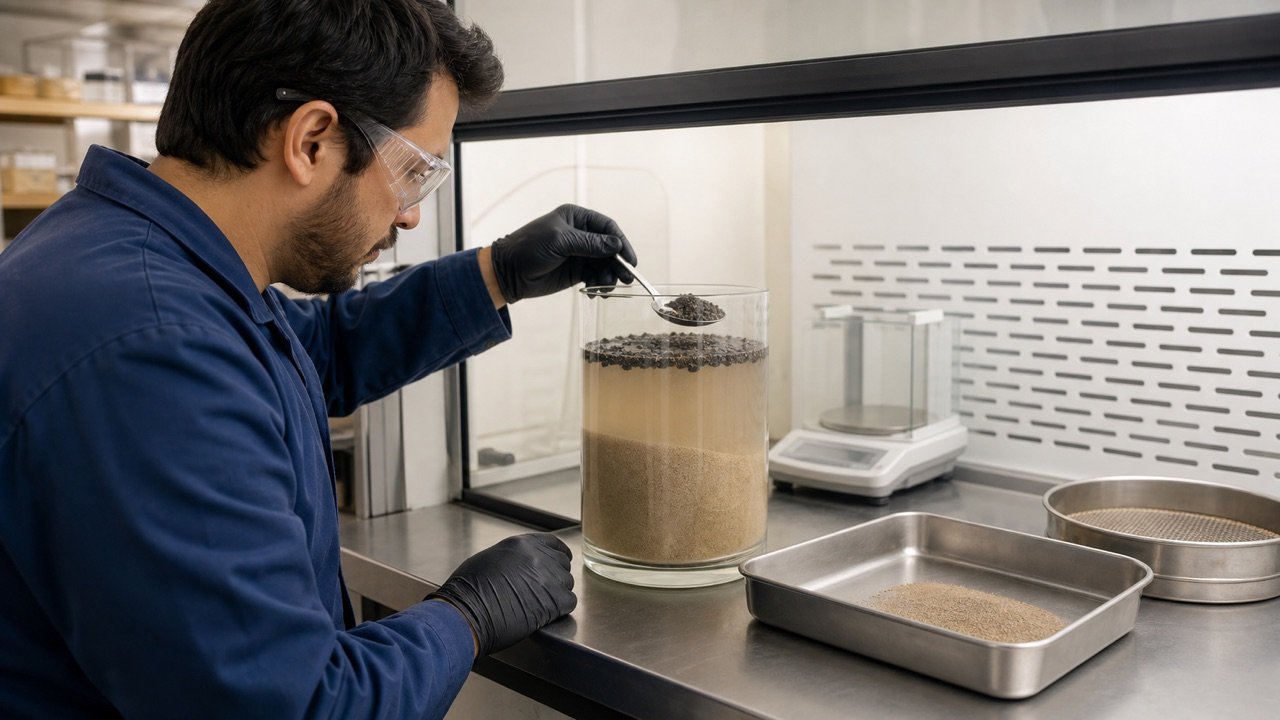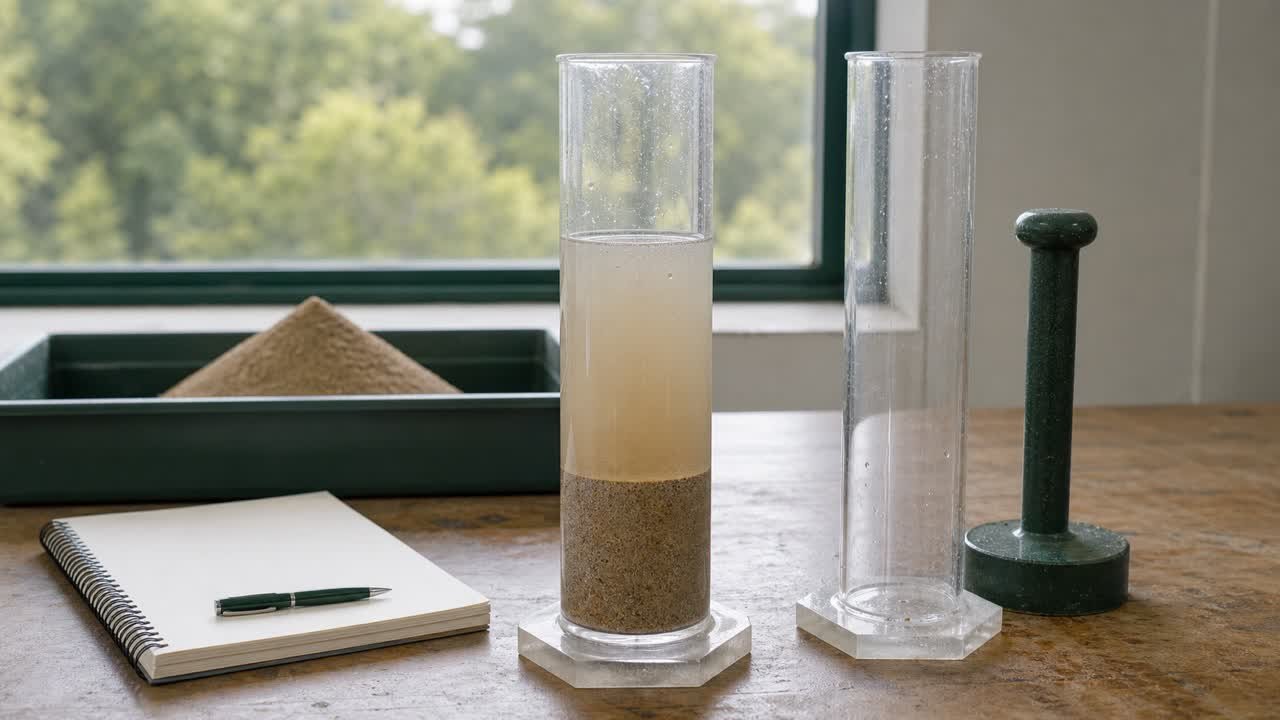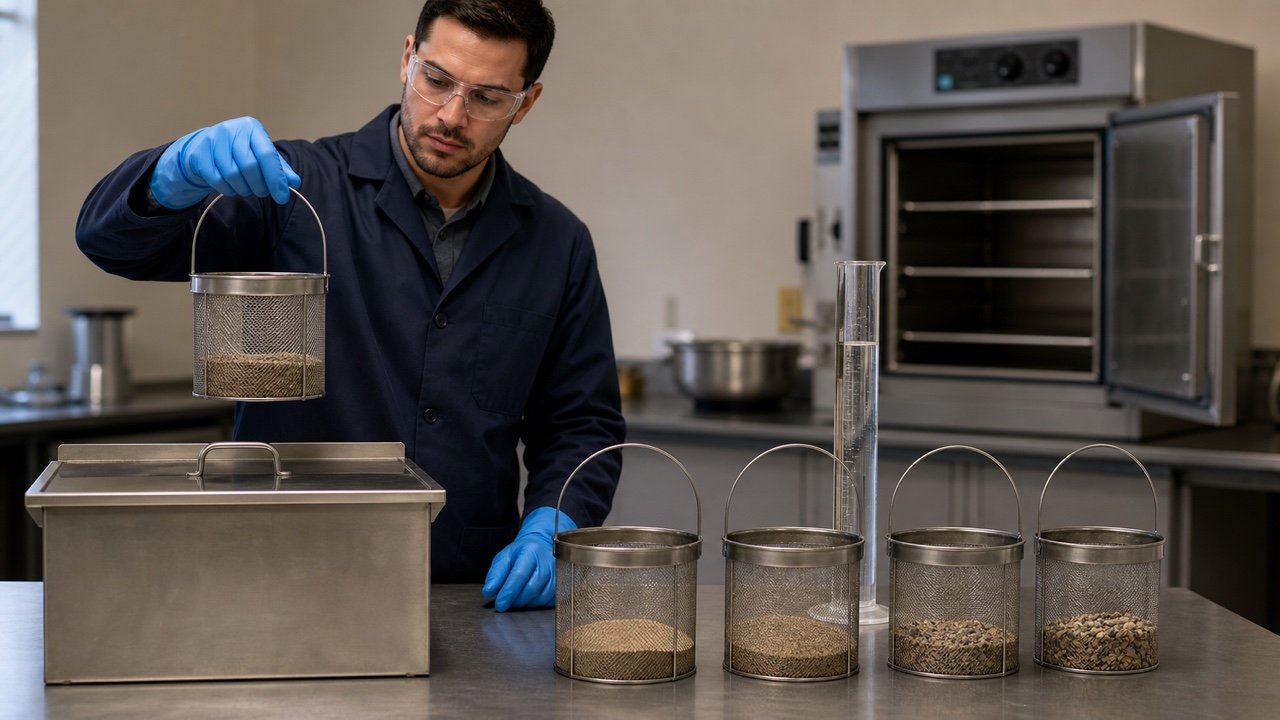
An organic-impurities color test screens fine aggregate for substances that may affect mortar or concrete performance. A useful report identifies the sample and lot, names the exact method and color reference, records the comparison, and connects that result to the project's next step.
The comparison is preliminary. It does not measure a percentage of organic matter, and it does not approve or reject every sand source by itself.
What does a darker organic-impurities test result mean?
A darker result is a warning that injurious organic impurities may be present in the tested fine aggregate. Under ASTM C40/C40M, it is a reason to investigate the effect on mortar strength through ASTM C87/C87M or the follow-up required by the project documents.
Do not translate darker into an automatic, universal rejection. The test method, specification, sample identity, lot represented, and required follow-up determine the decision.
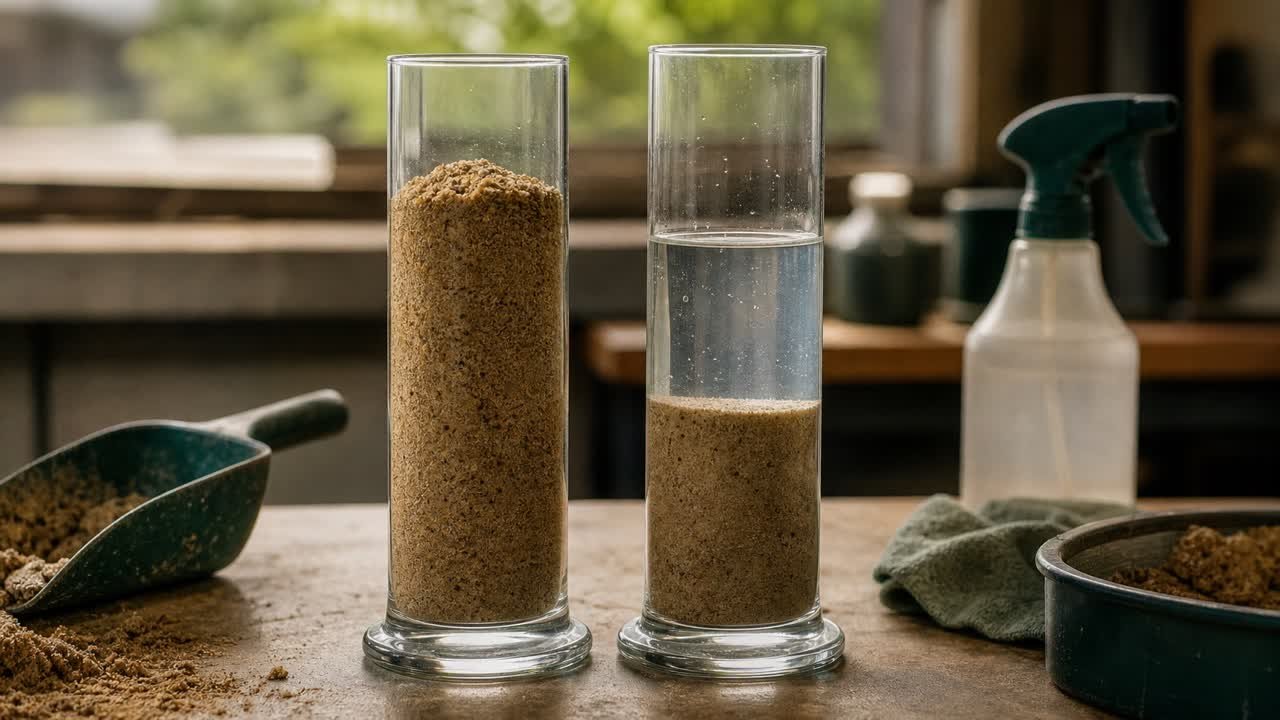
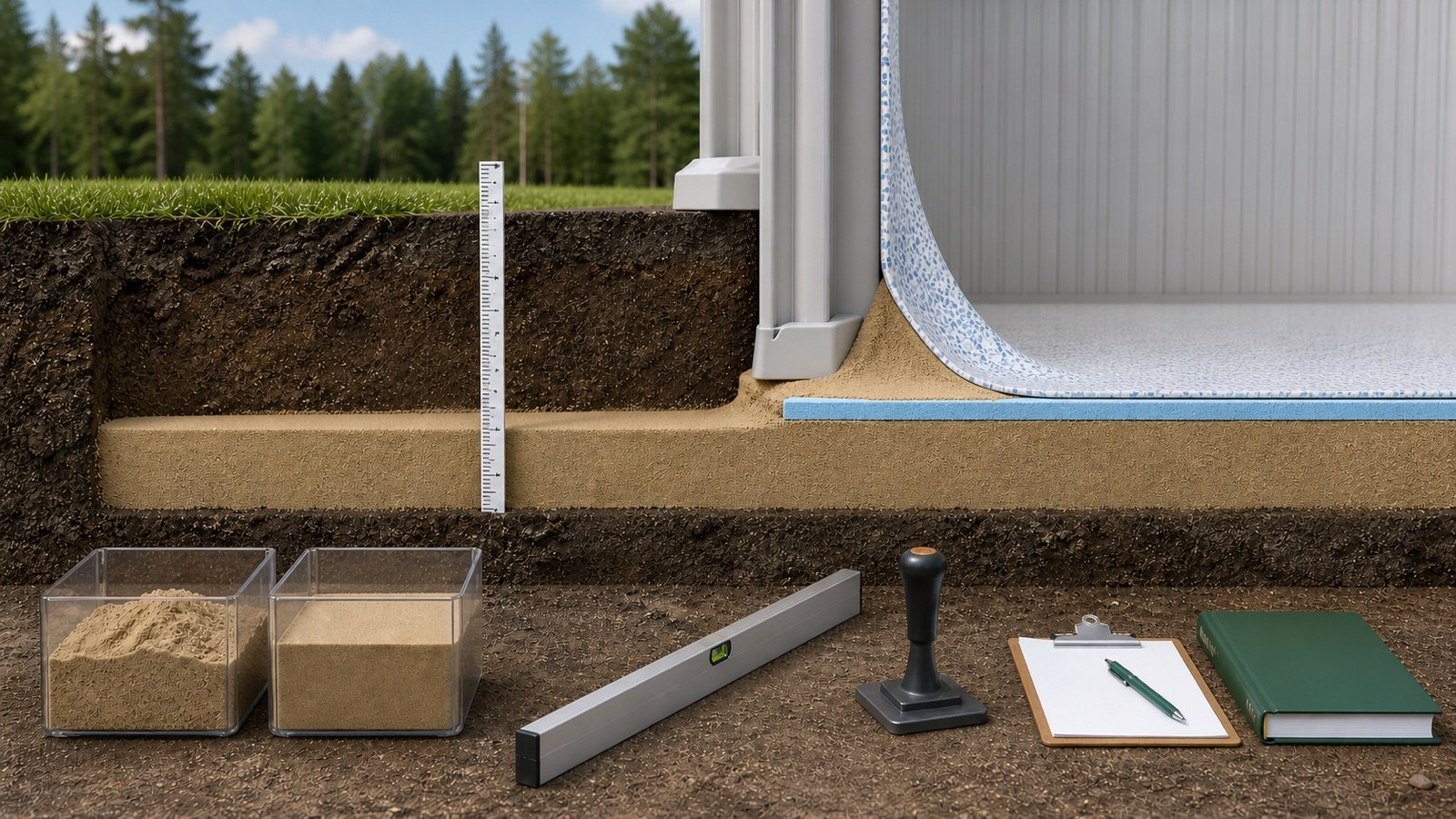
The featured diagram explains the decision path. Its colors are not a laboratory standard and cannot be used to classify a sample.
What does ASTM C40/C40M measure?
ASTM C40/C40M-20 provides a preliminary color comparison for organic impurities in fine aggregate intended for concrete. Its public significance statement says a darker liquid color warns that injurious organic impurities may be present.
The result is comparative, not quantitative. It does not report organic matter as a mass percentage, identify the chemical compound, or predict concrete strength. The color can prompt another test, but it cannot replace that test.
The ASTM method is used in the context of fine-aggregate requirements such as ASTM C33/C33M. The current controlled standard and the project specification govern the full procedure, reference, and acceptance action.
How should lighter, equal, and darker results be read?
Record the comparison exactly as the governing method requires. An accessible TxDOT Tex-408-A method illustrates reporting the liquid as lighter than, darker than, or equal to the standard color.
| Recorded comparison | What it supports | What to do next |
|---|---|---|
| Lighter than the specified reference | The tested specimen did not produce a darker comparison under the named method | Record the result and apply the project's remaining aggregate requirements |
| Equal to the specified reference | The specimen matched that reference under the named method | Use the exact project acceptance wording; do not substitute a different agency's threshold |
| Darker than the specified reference | ASTM describes this as a warning that injurious organic impurities may be present | Hold the final decision and use C87/C87M or the follow-up named by the project |
| Comparison uncertain or procedure deviation recorded | The report may not support a reliable classification | Document the issue and obtain a valid test under the governing method |
Lighter or equal does not establish every property needed for concrete. Gradation, deleterious materials, soundness, abrasion, moisture, absorption, alkali-silica reactivity, and other requirements remain separate when the project specifies them.
How is ASTM C87/C87M different from the color test?
C40/C40M is the preliminary screen. ASTM C87/C87M-23 evaluates the effect of organic impurities on mortar strength by comparing mortar made with the unwashed fine aggregate against mortar made with a washed portion.
| Question | C40/C40M | C87/C87M |
|---|---|---|
| What is observed? | Liquid color relative to the specified reference | Mortar-strength effect in the method's comparative specimens |
| What role does it serve? | Preliminary warning | Strength-effect follow-up |
| Does it report organic content by mass? | No | No |
| Does it create a universal project acceptance rule? | No | No; apply the governing specification |
The distinction prevents two common errors: rejecting an entire source from one preliminary comparison, or approving a darker result without the specified follow-up.
Which report details should be checked before using the result?
Trace the result from the bottle back to the material it represents. A color label without a source, lot, and method record is not enough for a purchase or acceptance decision.
- Project and material: identify the project, intended use, fine-aggregate product, and applicable specification edition.
- Source and lot: record the producer, pit or quarry, stockpile, delivery, lot, and quantity represented.
- Sample: retain the sample number, location, sampler, sampling date, and chain-of-custody details.
- Method: name the exact standard or agency method and revision. Do not report only "organic test."
- Reference: identify the color standard, plate, disk, or prepared reference required by that method.
- Preparation and timing: confirm that the laboratory followed the method's specimen, solution, waiting-period, and viewing requirements.
- Result: record lighter, equal, darker, or the exact terminology required by the method.
- Deviation: document unusual drying, contamination, unclear color, damaged equipment, or another departure.
- Decision: cite the project clause that accepts the result, requires follow-up, or directs retesting.
Sampling defines the material represented by the result. The sand sampling guide explains why one convenient scoop cannot automatically represent a stockpile, conveyor stream, or delivery lot.
Worked decisions: what should happen after the report arrives?
These examples show how to use the records. They do not replace the project's acceptance plan.
Example 1: the liquid is equal to the specified reference
The report identifies the source, stockpile, sample number, ASTM C40/C40M-20, reference used, test date, and an equal comparison. Record that exact result and review the project's remaining fine-aggregate requirements.
Do not write "sand approved" solely from this test. Equal only describes the comparison for the identified specimen under the named method.
Example 2: the liquid is darker than the specified reference
The report is traceable and the comparison is darker. Treat it as the ASTM-described warning, keep the affected lot linked to the report, and request C87/C87M or the follow-up stated in the project documents before making the final decision.
The result does not reveal the percentage of organic matter, clay content, or expected compressive strength. Those conclusions need different evidence.
Example 3: the specimen was dried at high temperature
The retrieved Michigan DOT aggregate procedure warns that high-temperature drying can burn organic particles and invalidate its test.
If a report governed by that procedure used the prohibited preparation, document the deviation and obtain a valid result. Do not rescue the result by choosing a convenient color interpretation.
Which conditions can make the comparison unreliable?
A color comparison depends on a controlled specimen, solution, reference, time, and viewing condition. A missing control can change the observed color or break the link between the result and the sampled material.
| Condition | Why it matters | Review action |
|---|---|---|
| Wrong or unrecorded sample | The result cannot be tied to the intended stockpile or lot | Resolve traceability or resample |
| Wrong method or revision | Reference, preparation, timing, or reporting rules may differ | Compare the report with the contract requirement |
| Undocumented color reference | The words lighter or darker have no auditable comparison point | Identify the exact reference required and used |
| Unsuitable lighting or background | Visual judgment can shift | Repeat the comparison under the method's viewing conditions |
| Wrong comparison time | The liquid may not have developed as required | Check the recorded start and comparison times |
| High-temperature drying where prohibited | Organic particles may be altered or burned | Reject the invalid test record and retest correctly |
| Contaminated container, solution, or specimen | Foreign material can alter the test liquid | Document the event and obtain a controlled repeat |
Do not borrow exact timing, solution concentration, or plate limits from this article. The current licensed standard or named agency method controls those laboratory steps.
Can this test be performed safely on site?
The method involves sodium hydroxide solution. The NIOSH Pocket Guide identifies eye and skin contact as exposure routes and lists controls that include preventing contact and providing suitable emergency washing facilities.
Use a qualified laboratory or trained personnel working under the governing procedure, the product safety data sheet, the employer's chemical-hygiene plan, and local safety requirements. This page does not provide a do-it-yourself mixing or handling procedure.
Is the organic-impurities test the same as sand equivalent?
No. The organic-impurities test is a comparative color screen for substances that may affect mortar or concrete performance. The sand equivalent test produces an empirical index related to clay-like fines and dust under a separate sedimentation method.
Sieve analysis reports particle-size distribution. Moisture-content testing measures water relative to a defined dry-mass basis. One result cannot stand in for the others.
| Test or check | Primary question | What it does not establish alone |
|---|---|---|
| Organic-impurities color test | Is the liquid darker than the specified reference? | Organic percentage or final strength effect |
| Sand equivalent | What is the relative sand-to-clay-like fines index? | Organic impurities or gradation |
| Sieve analysis | How is mass distributed across sieve sizes? | Organic impurities or moisture |
| Moisture content | How much water is present on the stated dry-mass basis? | Organic impurities, gradation, or suitability |
Common organic-impurities report mistakes
- Using an online diagram, photograph, or screen color as the reference standard.
- Reporting "pass" without the exact comparison and governing project clause.
- Calling a darker comparison an automatic rejection of the entire source.
- Calling a lighter or equal comparison a complete fine-aggregate approval.
- Converting the color into a made-up percentage of organic matter.
- Omitting the method designation, revision, reference type, sample, or lot.
- Applying another agency's plate number or threshold without project authority.
- Ignoring prohibited drying, contamination, wrong timing, or unsuitable viewing conditions.
- Skipping the specified strength-effect follow-up after a darker result.
- Confusing organic impurities with clay-like fines, particle-size distribution, or moisture.
After the fine aggregate has been accepted for its intended use, use the Sand Calculator to estimate volume and supplier-density mass. Return to the Sand material planning hub for quantity tools, test guides, and reference charts.
Sources and source scope
- ASTM C40/C40M-20, Standard Test Method for Organic Impurities in Fine Aggregates for Concrete: active public designation, preliminary-test purpose, darker-color warning, C33/C33M context, and C87/C87M follow-up. The licensed standard controls the complete procedure.
- ASTM C87/C87M-23, Standard Test Method for Effect of Organic Impurities in Fine Aggregate on Strength of Mortar: active public designation, comparison of mortar made with unwashed and washed aggregate, and the strength-effect role after a darker C40/C40M result.
- Michigan DOT, Procedures for Aggregate Inspection: an agency-specific color-test workflow, viewing context, follow-up strength testing, and the warning about high-temperature drying. Its thresholds are not universal.
- TxDOT Tex-408-A, Organic Impurities in Fine Aggregate for Concrete: an accessible agency example of lighter, darker, or equal result wording. Verify the current contract method and revision.
- NIOSH Pocket Guide to Chemical Hazards: Sodium Hydroxide: exposure routes, symptoms, contact controls, and emergency-response context. It is not a test procedure or project PPE plan.
- FHWA-HRT-05-056: federal research context describing AASHTO T 21/ASTM C40 as an approximate determination of injurious organic compounds in fine aggregate.
Scope: this page interprets report wording and next-step records. The current test method, project documents, sampling plan, laboratory procedure, safety program, acceptance rules, and responsible qualified people control testing and material approval.
BuildQuantities.com records its source and editorial checks on the methodology page. Report a source, unit, test-method, or rendering problem through the corrections route.