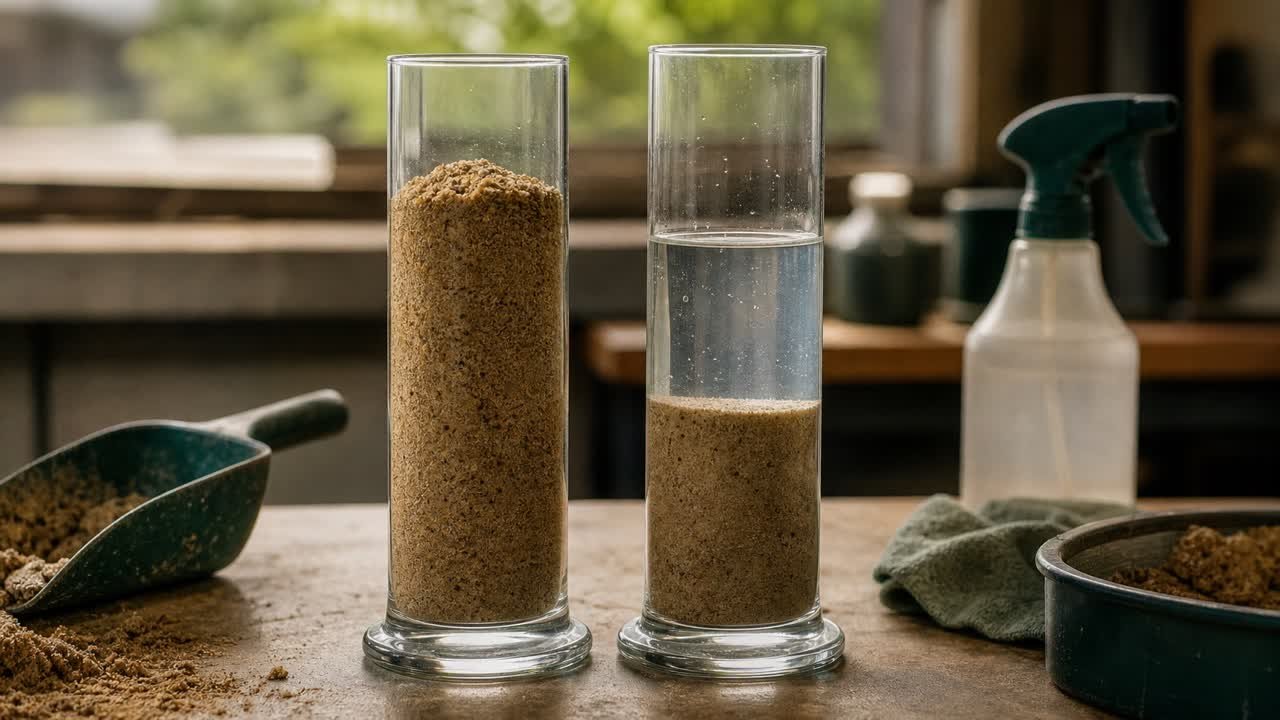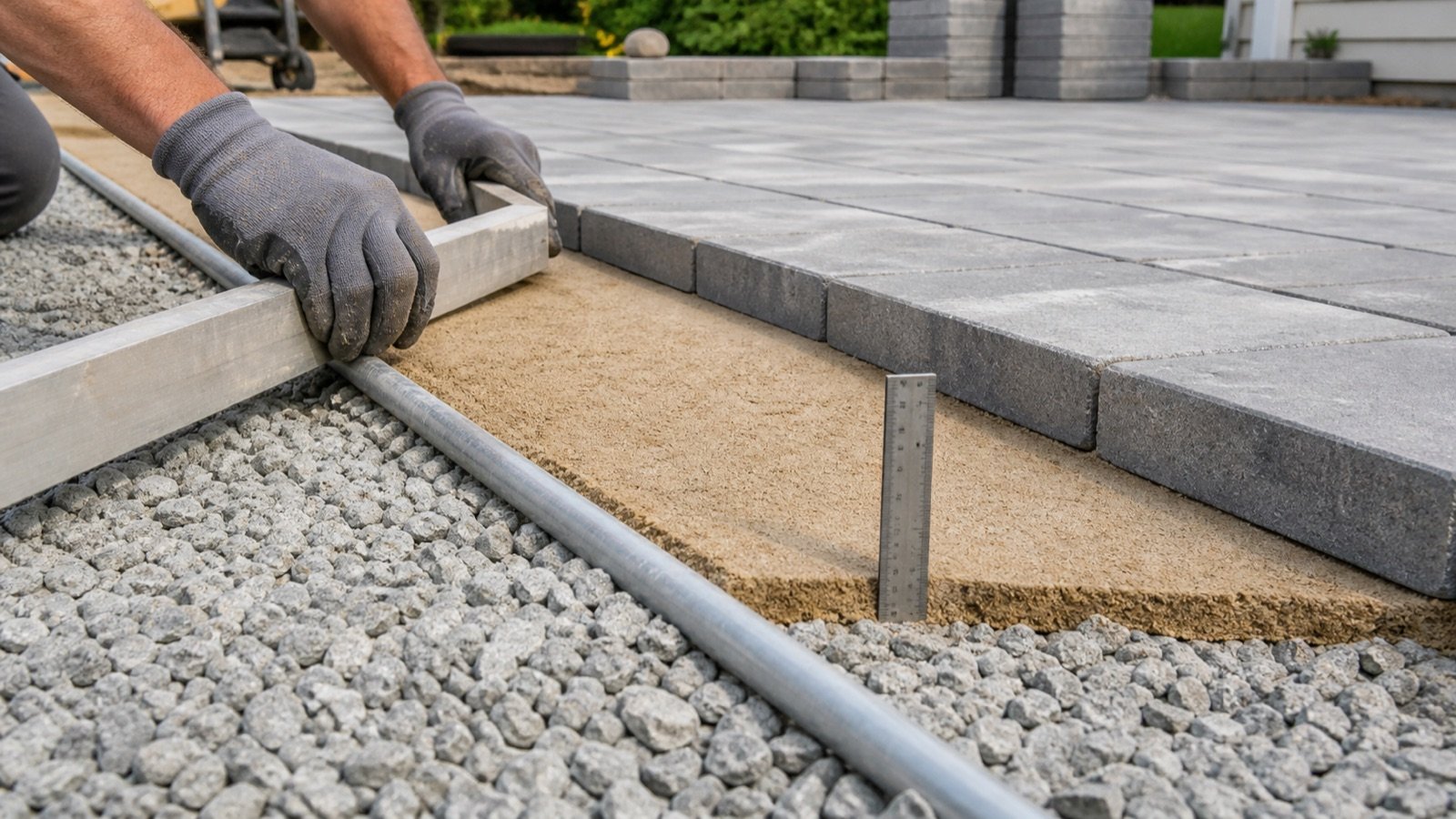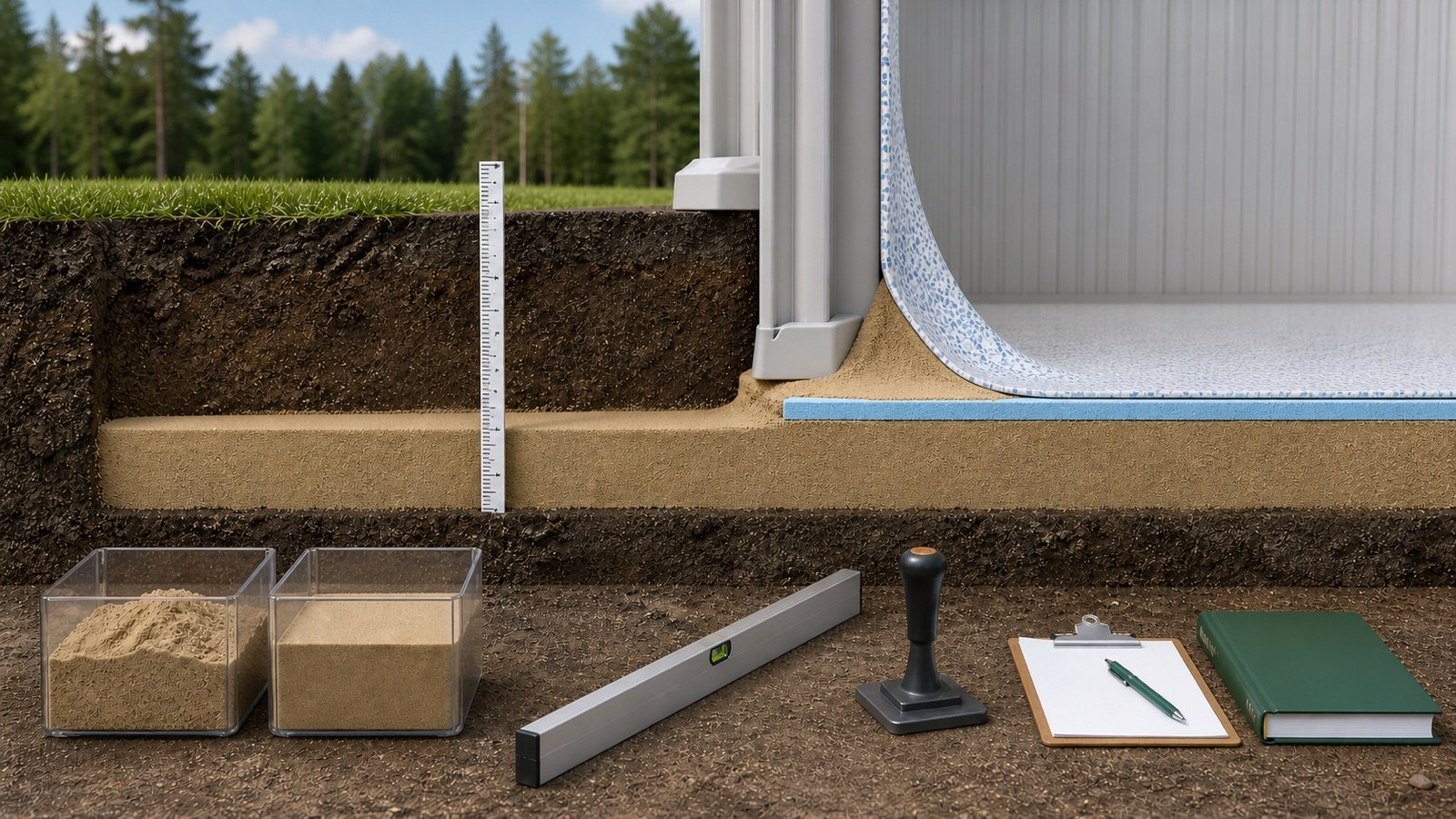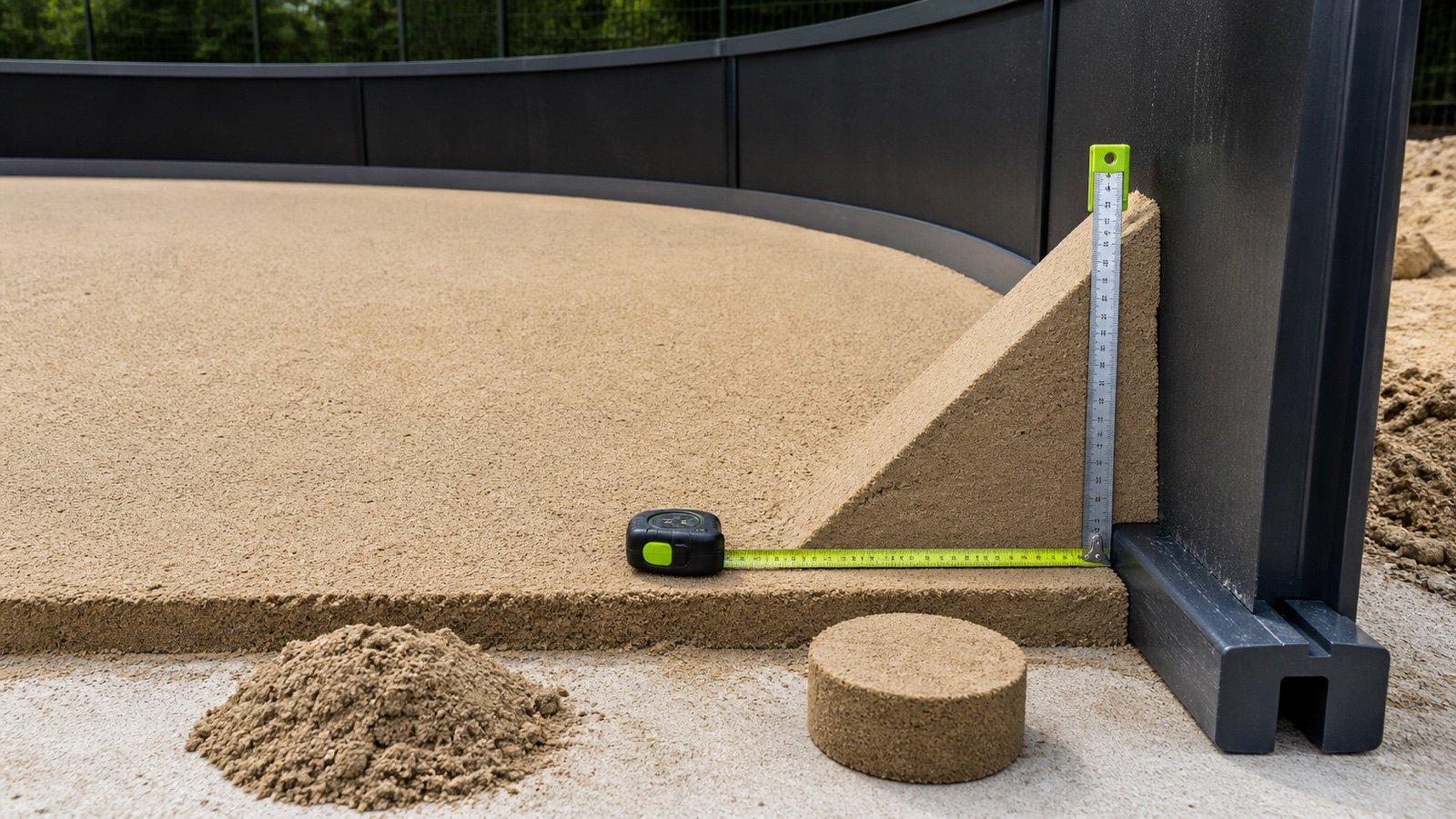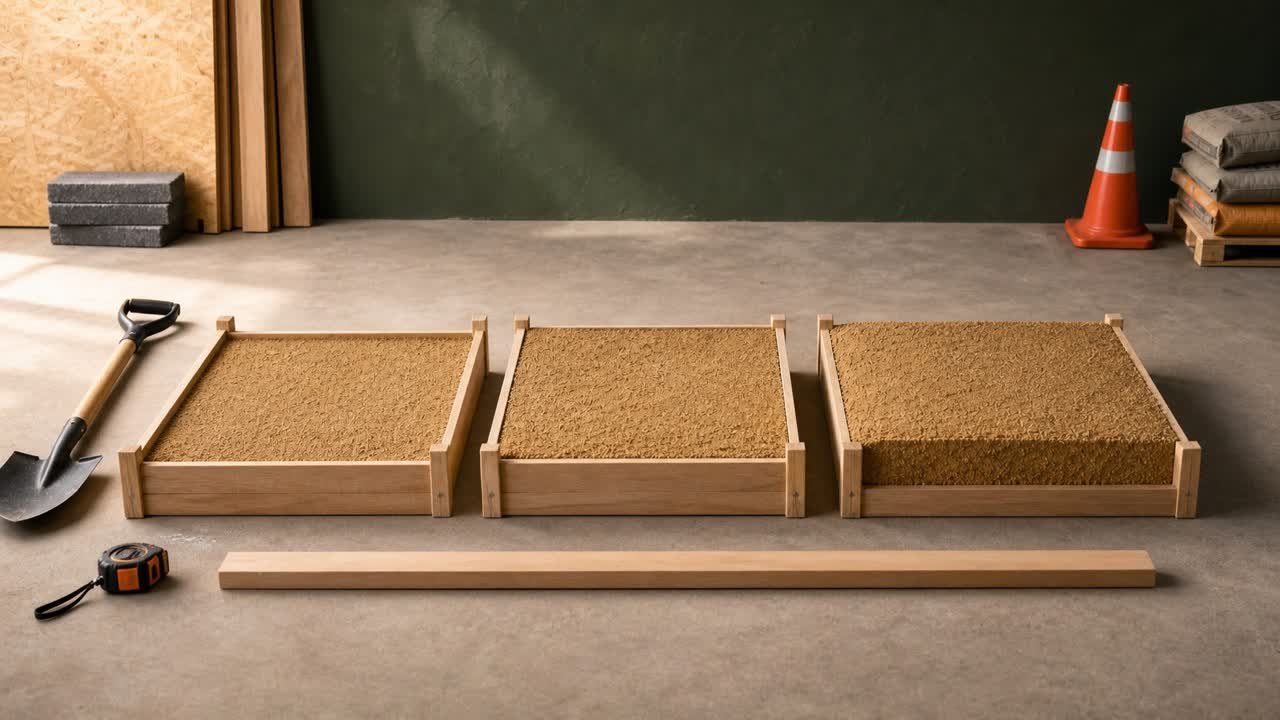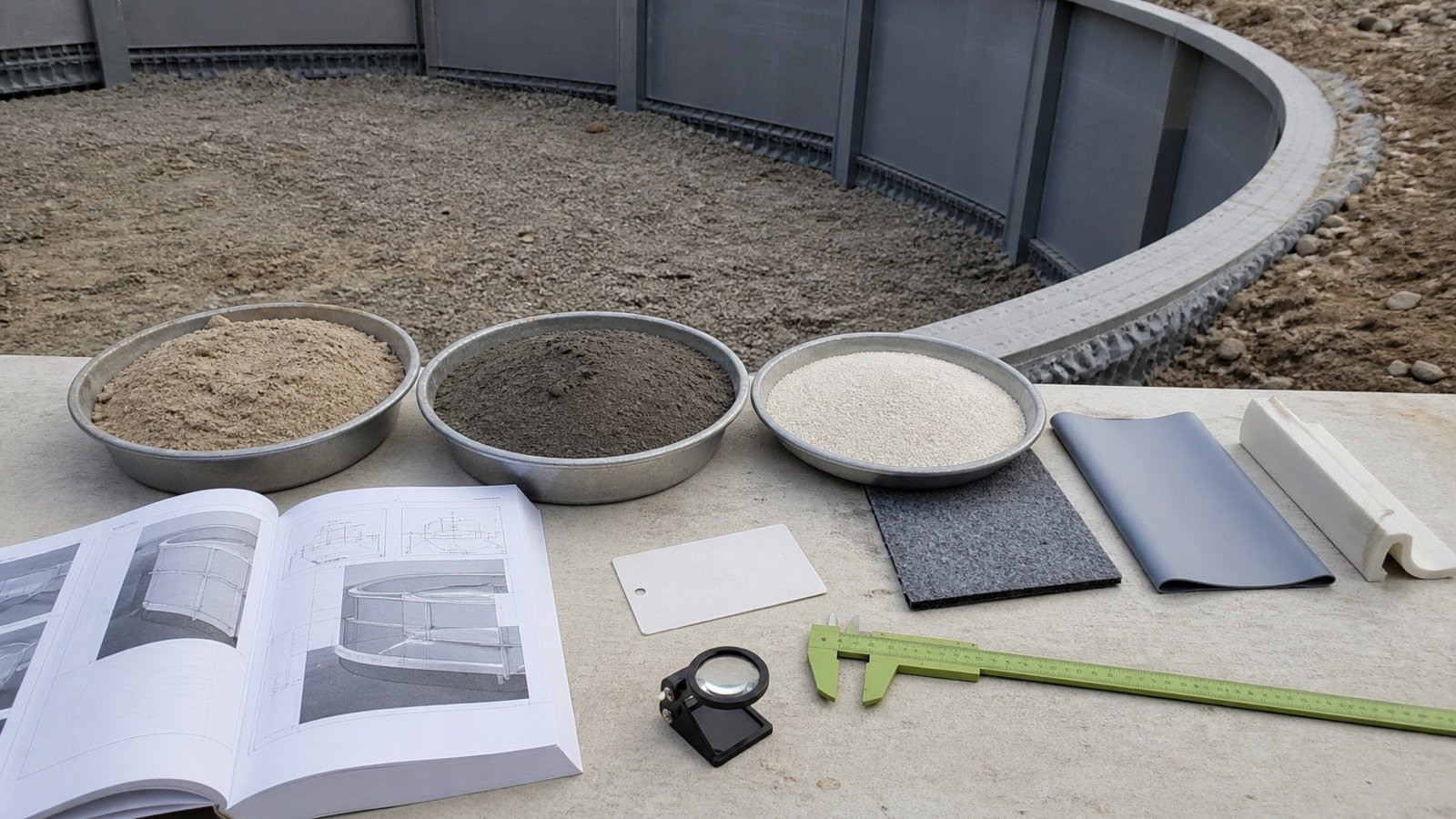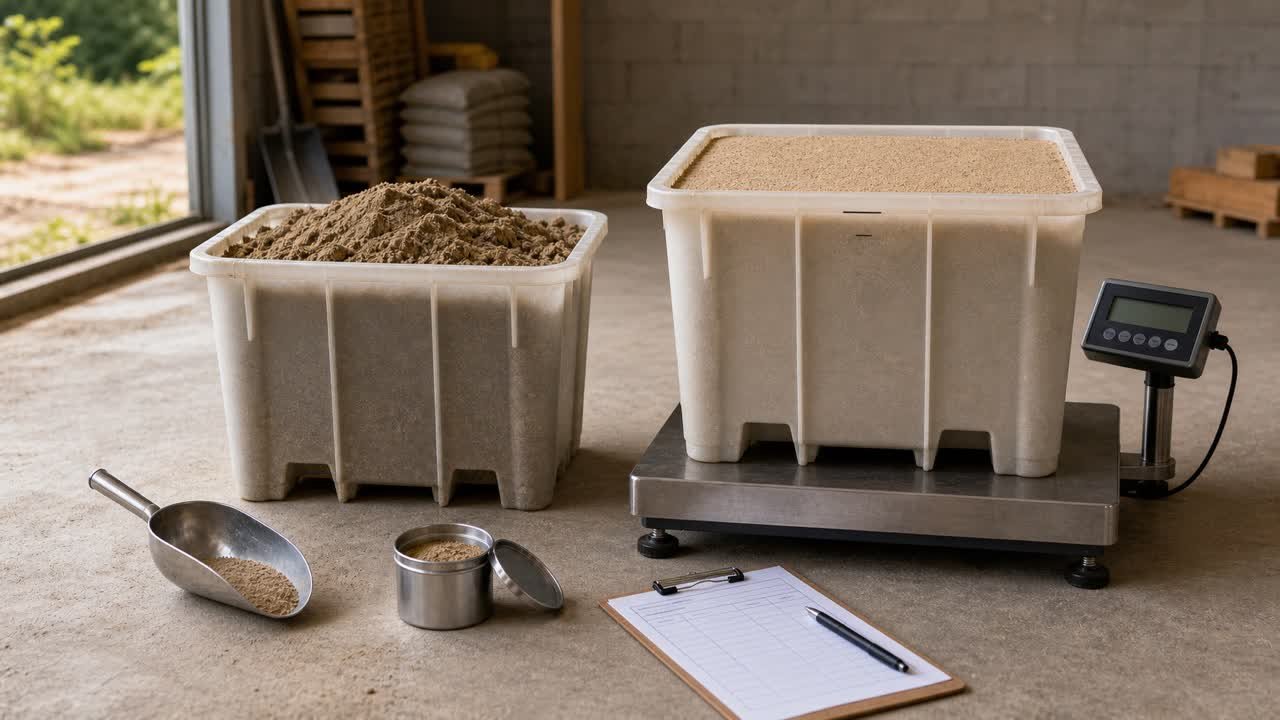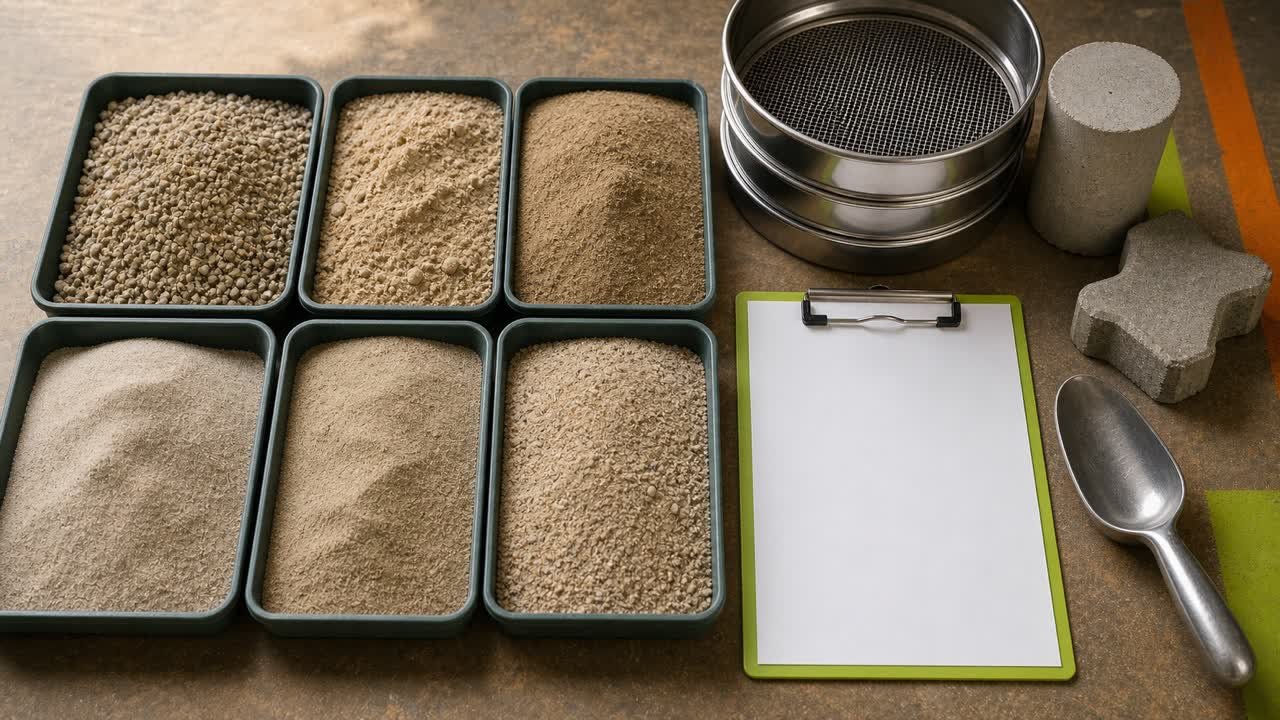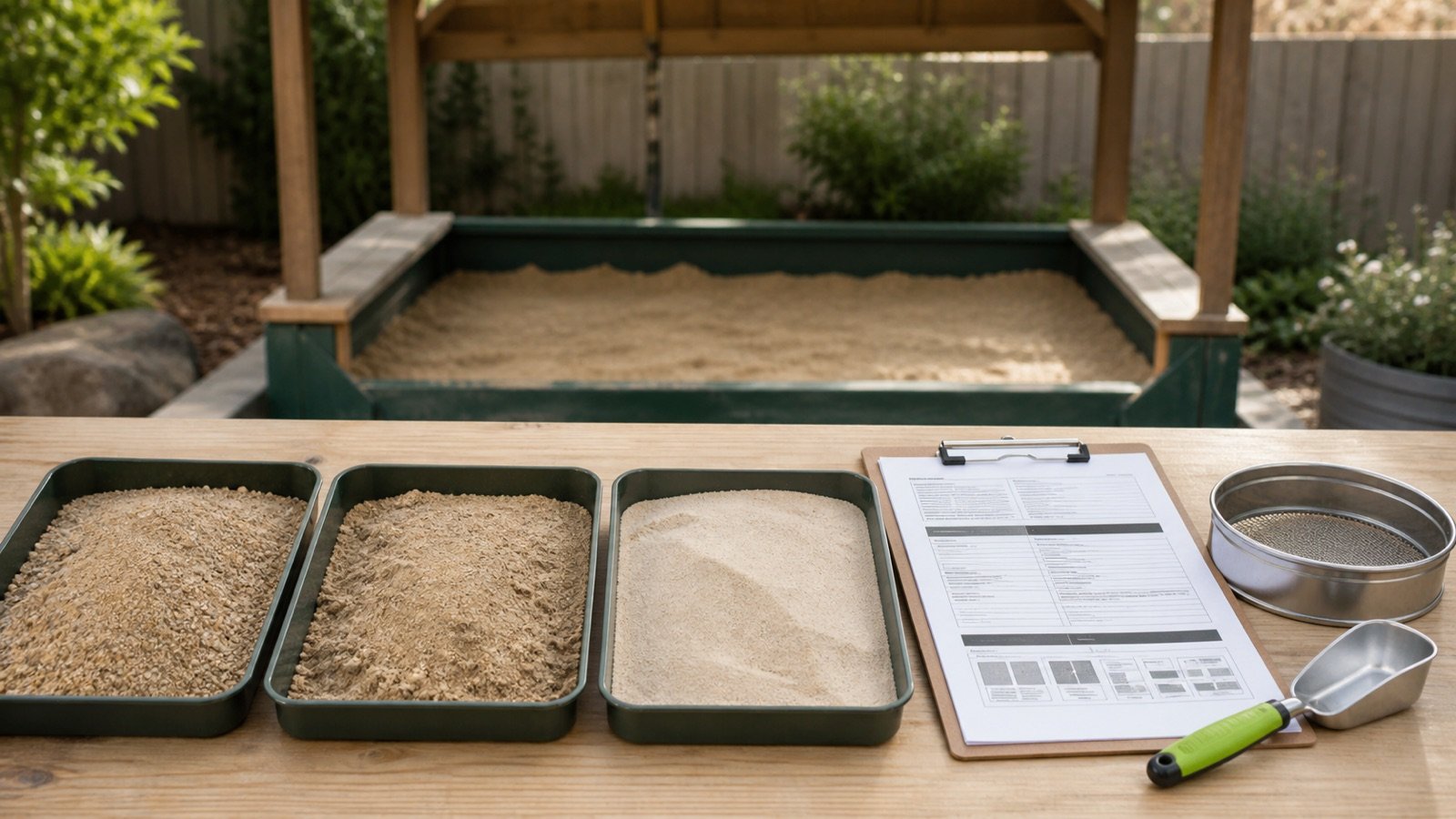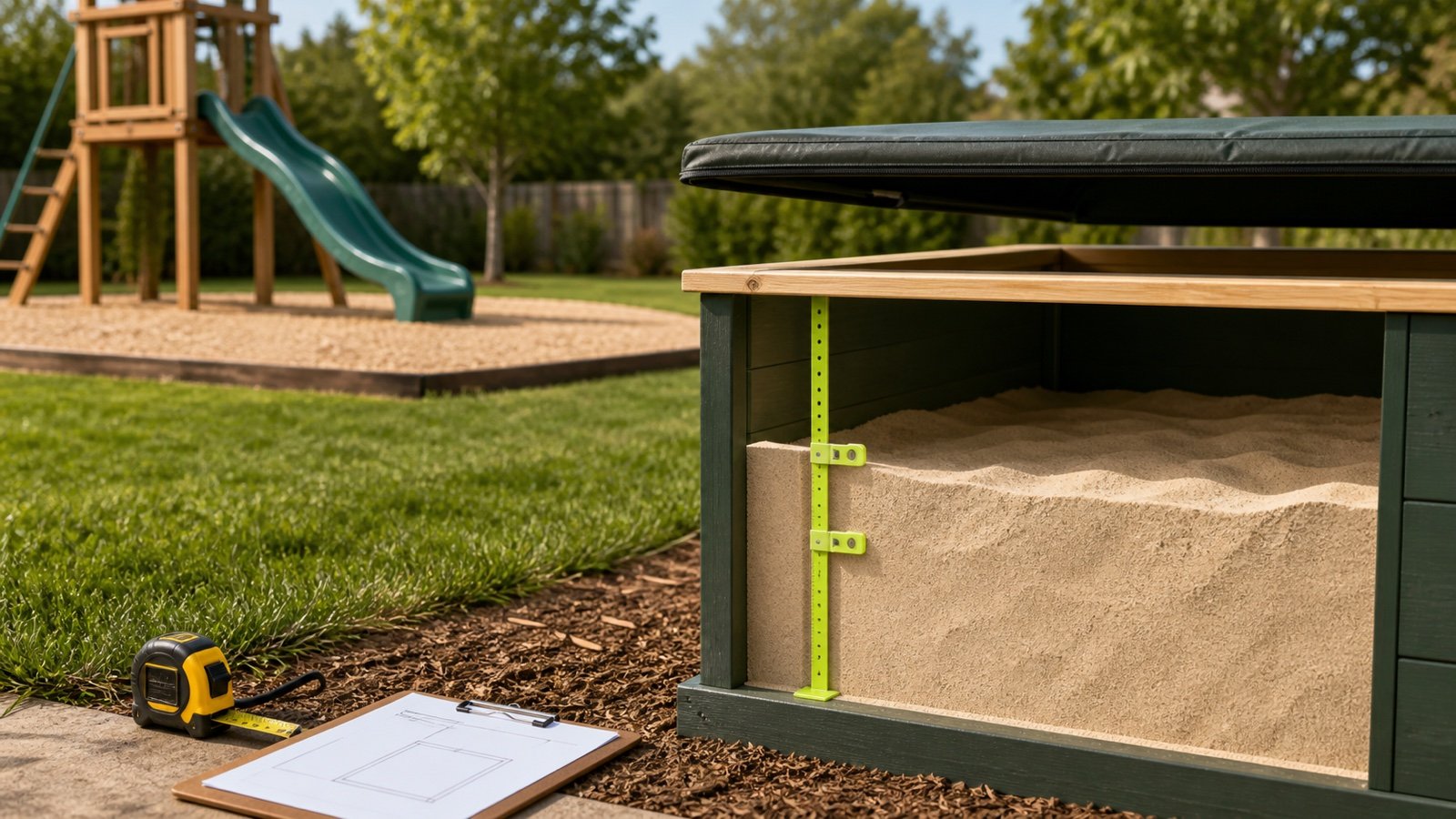
Sand depth changes the quantity, total mass, usable digging space and remaining wall height. A depth copied from a search result can belong to another sandbox model or to protective surfacing around elevated playground equipment.
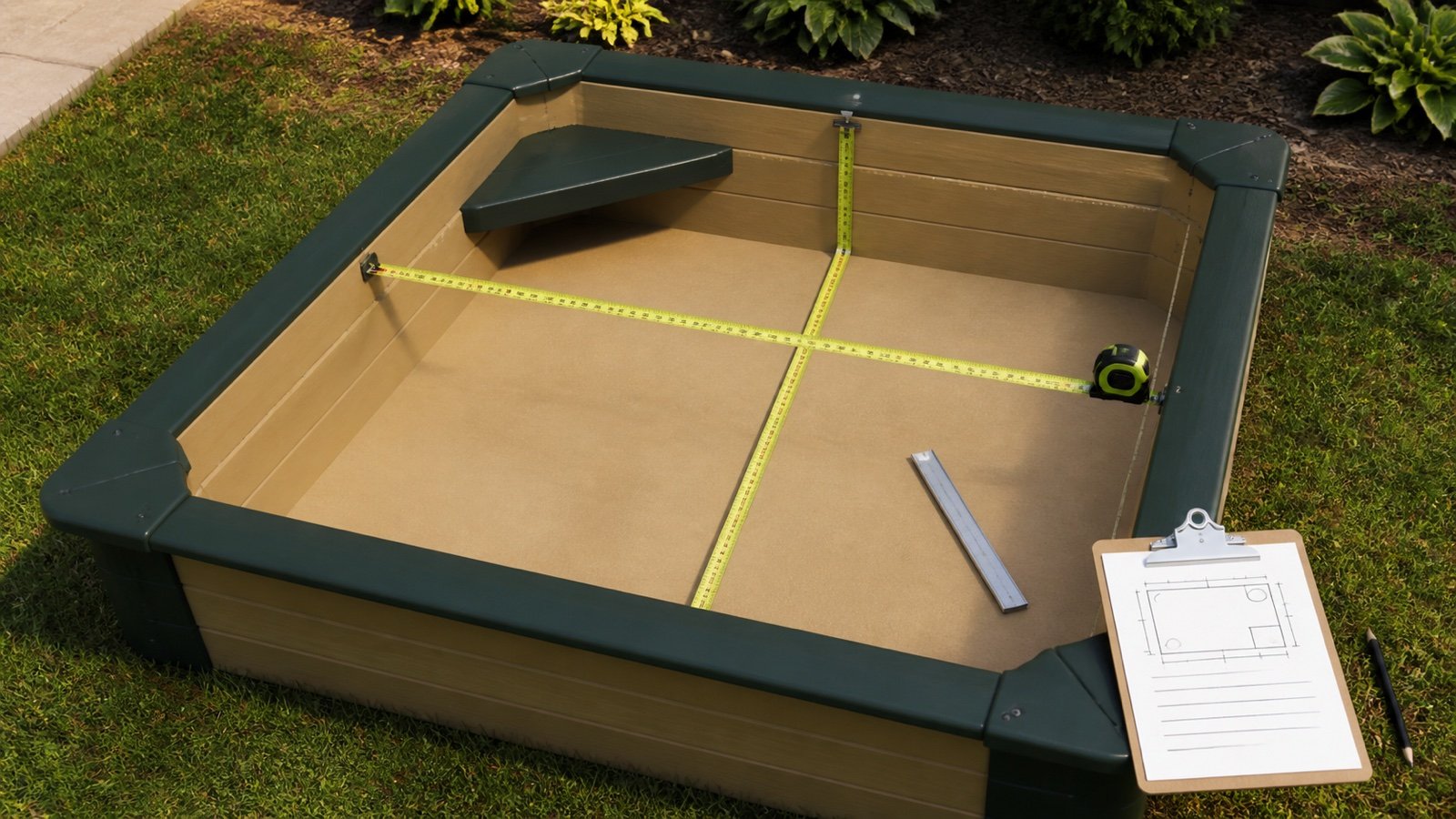
Start with the exact sandbox instructions. For a custom box, mark a target line that fits the usable inside height, permanent seats, cover and intended use, then record that decision before calculating volume.
How deep should you fill a sandbox with play sand?
Use the depth, fill line or sand capacity stated for the exact manufactured sandbox. Action Play Systems, for example, tells installers to fill its listed sandbox kits to a minimum depth of 4 to 6 in. That instruction applies to those kits.
A custom ground-level sandbox has no universal depth in the primary sources checked for this page. Choose and document a fill line from the box geometry, cover clearance, intended play and responsible adult's plan. Public playground impact-surfacing depths answer a separate fall-protection question.
Write one of these on the record: named sandbox model, custom ground-level sandbox, or protective surfacing under elevated equipment. The governing source and calculation change with that classification.
| Context | Depth source | Quantity handoff |
|---|---|---|
| Manufactured sandbox or sand table | Current manual, marked fill line or model capacity | Use the maker's geometry or capacity basis |
| Custom ground-level sandbox | Documented project fill line within the usable inside wall | Inside area × selected depth, less permanent displacement |
| Public sandbox at ground level | Facility requirements, current equipment documents and responsible playground review | Keep sandbox contents separate from nearby use-zone surfacing |
| Loose-fill beneath elevated equipment | Fall height, tested surfacing system, CPSC guidance, ASTM F1292 and applicable requirements | Use a protective-surfacing design and maintenance record |
Why do manufacturer depth examples differ?
Sandbox dimensions, wall profiles, seats, covers and intended settings differ. A number from one manufacturer gives evidence for the named product and no other box.
Action Play Systems' guide dated January 15, 2021 covers its 4 ft × 8 ft, 8 ft × 8 ft and 12 ft × 12 ft kits. It tells installers to face the sand-depth guide marks inward and fill with sand to 4 to 6 in minimum. The same guide has separate cover installation instructions.
Badger Basket's current SKU 99892 page uses another basis. It lists an assembled size of 46.5 in × 46.5 in × 8.75 in and says the model holds up to 750 lb of sand. It also identifies 4 corner seats, a fabric liner and a cover.
Do not turn Badger Basket's 750 lb capacity into a depth with a generic density. The public product page does not state the usable inside floor dimensions, corner-seat displacement or product-specific bulk density needed for that conversion. Use the maker capacity as the model record.
Do CPSC playground surfacing depths set sandbox fill depth?
CPSC's public-playground loose-fill depths apply to protective surfacing around equipment with a fall hazard. The handbook lists ground-level sandboxes among equipment excluded from those protective-surfacing recommendations.
The public handbook gives 9 in as a minimum compressed sand surfacing depth for a stated fall-height context. It also tells planners to account for at least 25% compression over time. CPSC's public checklist tells readers to start with at least 12 in of loose-fill material around public playground equipment.
Those values belong to a fall-zone surfacing system, its use zone and maintenance plan. They do not instruct a homeowner to put 9 or 12 in of sand inside a ground-level sandbox. A sandbox beside elevated equipment can require 2 separate records: contents inside the box and protective surfacing around the equipment.
How do you choose a fill line for a custom sandbox?
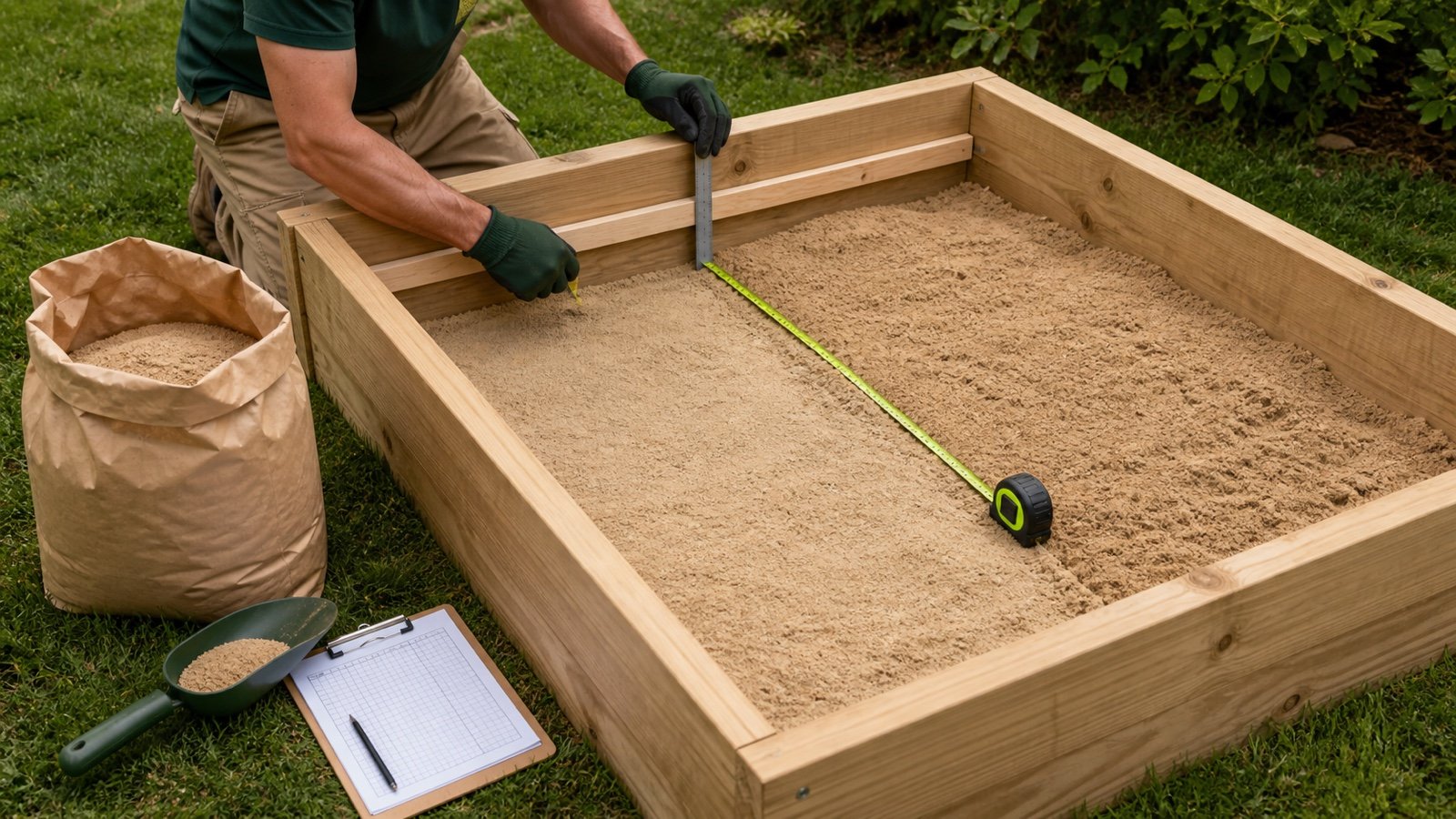
Choose the line after you know the usable inside height and how the finished box will close and drain. Mark the selected level on every side before ordering.
- Measure from the usable inside floor, liner or retained base to the lowest wall edge that contains sand.
- Record fixed seats, steps and center forms that occupy space below the planned line.
- Check how the cover, lid, seat or folding panel closes on the exact box.
- Choose the digging depth for the intended use under responsible adult supervision.
- Mark the line with removable tape or a durable mark permitted by the product instructions.
- Measure the same vertical depth at several points.
- Enter the accepted value in the Play Sand Calculator.
The sandbox measurement guide covers inside boundaries, tapered walls, uneven floors and built-in displacement. Keep raw readings with the chosen fill line.
How much space should remain above the sand?
Use the clearance required by the exact cover, seats, wall profile and maker instructions. The reviewed primary sources do not set one universal freeboard percentage for every sandbox.
Test the empty box's cover or lid before the fill. Record the lowest closure component and any part that projects below the rim. Keep the selected sand surface below that component by the required clearance.
A wall-height percentage from the calculator is a measurement check. It does not approve a fill line. A 6 in fill in an 8 in inside wall uses 75% of that measured wall height; a raised corner does not add retaining height along a lower side.
How much does 1 extra inch change the sand quantity?
Multiply the checked inside area by 1/12 ft. A wider box adds more material for every extra inch of depth.
Added ft³ per inch = inside area in ft² ÷ 12
Added litres per centimetre = inside area in m² × 10
| Inside sandbox size | Inside area | Added volume per 1 in |
|---|---|---|
| 4 ft × 4 ft | 16 ft² | 1.333333 ft³ |
| 4 ft × 6 ft | 24 ft² | 2.000000 ft³ |
| 6 ft × 6 ft | 36 ft² | 3.000000 ft³ |
| 8 ft × 8 ft | 64 ft² | 5.333333 ft³ |
Keep these as volume increments. Convert volume to packages only with the current product's net volume or with its package mass and a supported density for the same product and condition.
Worked comparison: 4 in and 6 in in a 4 ft square box
A 4 ft × 4 ft inside footprint has an area of 16 ft². The 4 in and 6 in values below compare quantity; they do not select a depth for another box.
| Target depth | Unrounded volume | Cubic yards | Named 0.5 ft³ packages |
|---|---|---|---|
| 4 in | 5.333333 ft³ | 0.197531 yd³ | 11 |
| 6 in | 8.000000 ft³ | 0.296296 yd³ | 16 |
| Difference | 2.666667 ft³ | 0.098765 yd³ | 5 additional whole packages |
Sakrete's cited Natural Play Sand sheet uses a 4 ft × 4 ft × 4 in example. It rounds 4 in to 0.33 ft, reports 5.28 ft³ and gives 11 bags using its named 0.5 ft³ package yield. Using the exact 4/12 conversion gives 5.333333 ft³ and the same 11-package order.
NIST Handbook 44 states that 27 ft³ equals 1 yd³. Package count depends on the current named product; a 50 lb mass label does not establish a universal volume.
Metric depth comparison for a 2.0 m × 1.2 m box
A 2.0 m × 1.2 m inside floor covers 2.4 m². Each additional 1 cm of uniform depth adds 24 L before permanent displacement.
| Target depth | Calculation | Measured volume |
|---|---|---|
| 10 cm | 2.4 × 0.10 | 0.24 m³, or 240 L |
| 15 cm | 2.4 × 0.15 | 0.36 m³, or 360 L |
| 20 cm | 2.4 × 0.20 | 0.48 m³, or 480 L |
The table shows how volume changes. It does not assign a depth to an age group, product or facility.
Should you add 25% for settling?
Do not apply CPSC's 25% compression planning note to ordinary sandbox contents. The cited note sits within the public-playground loose-fill protective-surfacing section.
Mark the accepted sandbox fill line and measure actual loss or settlement against it. Add a user-controlled allowance only when the product, project or measured history supports it. Keep the measured volume and added allowance on separate lines.
A first fill can be bought in stages when supplier terms and access allow it. Fill to the accepted line under the product instructions, let the material reach its relevant condition, then record any measured top-up rather than changing the original depth record.
What if the floor or sand depth is uneven?
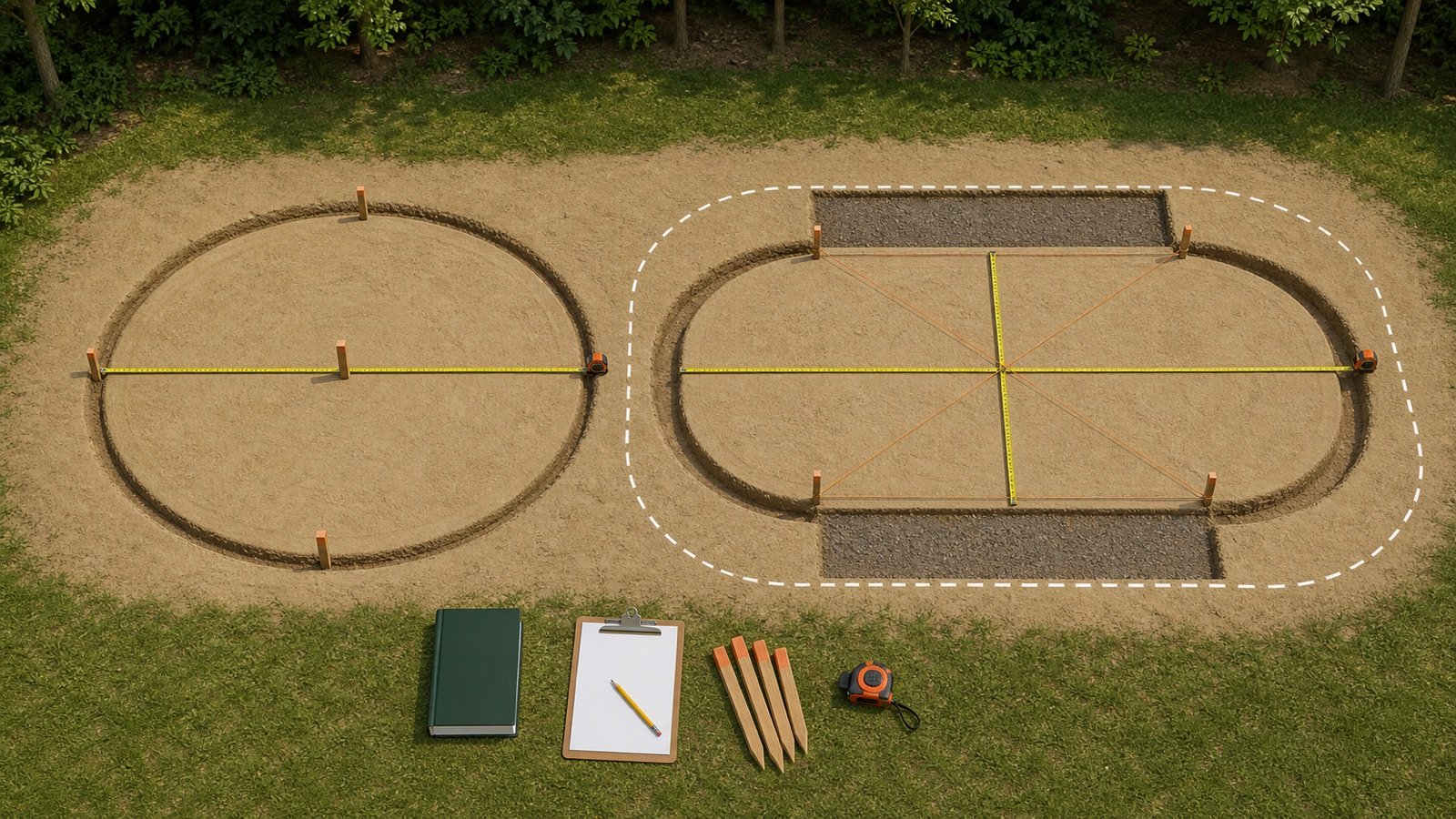
Divide the footprint into zones and use a separate average depth for each checked zone. Add the unrounded zone volumes before package rounding.
Total measured volume = Σ (zone area × zone average depth) − permanent displacement
Sand moves during use, so a single hole does not define the maintained fill line. Rake or level the surface under the applicable maintenance plan before checking the average depth. Record thin areas separately when they expose the base or affect the intended use.
Which depth mistakes change the order or the safety scope?
- Using outside wall height as available inside fill depth.
- Copying a depth from another sandbox model.
- Treating a maker's mass capacity as a depth without inside geometry and product density.
- Applying CPSC public fall-zone surfacing values to ordinary sandbox contents.
- Using a ground-level sandbox fill as protective surfacing beneath elevated equipment.
- Ignoring a cover, seat or lid that projects below the rim.
- Measuring from the ground beneath a retained liner instead of the usable inside floor.
- Applying the deepest point across an uneven floor.
- Using a universal freeboard or settlement percentage without a project basis.
- Converting a 50 lb bag to volume without a current product yield or supported density.
- Rounding every zone before adding the volumes.
- Refreshing the date or fill mark without a real check.
What should the depth record contain?
- Sandbox manufacturer, model, manual or product-page date.
- Classification: manufactured sandbox, custom ground-level sandbox or protective surfacing.
- Usable inside floor datum, wall height and selected fill line.
- Cover, lid, seat and permanent-feature clearances.
- Inside area, repeated depth readings and zone sketch.
- Maker depth, fill line or capacity when provided.
- Measured volume before displacement and allowance.
- Package yield or supplier density for the exact material and condition.
- Public playground fall height, tested surfacing and inspection record when applicable.
- Preparer, responsible checker, date and later corrections.
Use the Play Sand Calculator after the depth decision is recorded. The Sand Bags vs Bulk guide covers selling units and delivery after the volume and product are known. Return to the Sand Material Planning hub for other published sand tools.
Safety and scope limits
Follow the current sandbox instructions, product label and applicable requirements for the site. Check structural condition, sharp parts, drainage, contamination, supervision and cover operation before use.
A public playground or childcare facility can require a qualified playground review, tested surfacing, accessibility provisions, inspection records and local compliance. This quantity guide does not calculate critical height, certify ASTM F1292 performance or design a use zone.
The calculation methodology explains unit and fixture checks. Report a source, formula or display issue through the corrections route.
Sources and source scope
- Action Play Systems Sandbox Install Guide: named kit sizes, dated 4 to 6 in minimum instruction, depth marks and cover steps.
- Badger Basket Simple Sandbox with Liner and Cover: one model's assembled dimensions, up to 750 lb capacity, corner seats, liner and cover.
- CPSC Handbook for Public Playground Safety: ground-level sandbox exclusion and separate public-playground loose-fill surfacing scope.
- CPSC Public Playground Safety Checklist: initial loose-fill and use-zone checks around public equipment.
- Sakrete Natural Play Sand Technical Data: rectangular coverage method and one named 0.5 ft³ package example.
- NIST Handbook 44 (2026), Appendix C: unit relationships used in the fixtures.
Source scope: Action Play Systems and Badger Basket support only their named products. CPSC supports the public-playground distinction and surfacing context. Sakrete supports its named package example, and NIST supports unit relationships. The exact sandbox instructions, facility requirements, site conditions and responsible people control the fill decision.
Review note: Saleem Sial owns the research and editorial record. Live SERP review, source retrieval, scope comparison, depth-volume fixtures, editorial review, build validation, link crawl, schema review and rendered QA form the internal publication gate. Waseem Sial, External Reviewer and Engineer, is listed for ongoing external review; no completed external-review date is claimed.