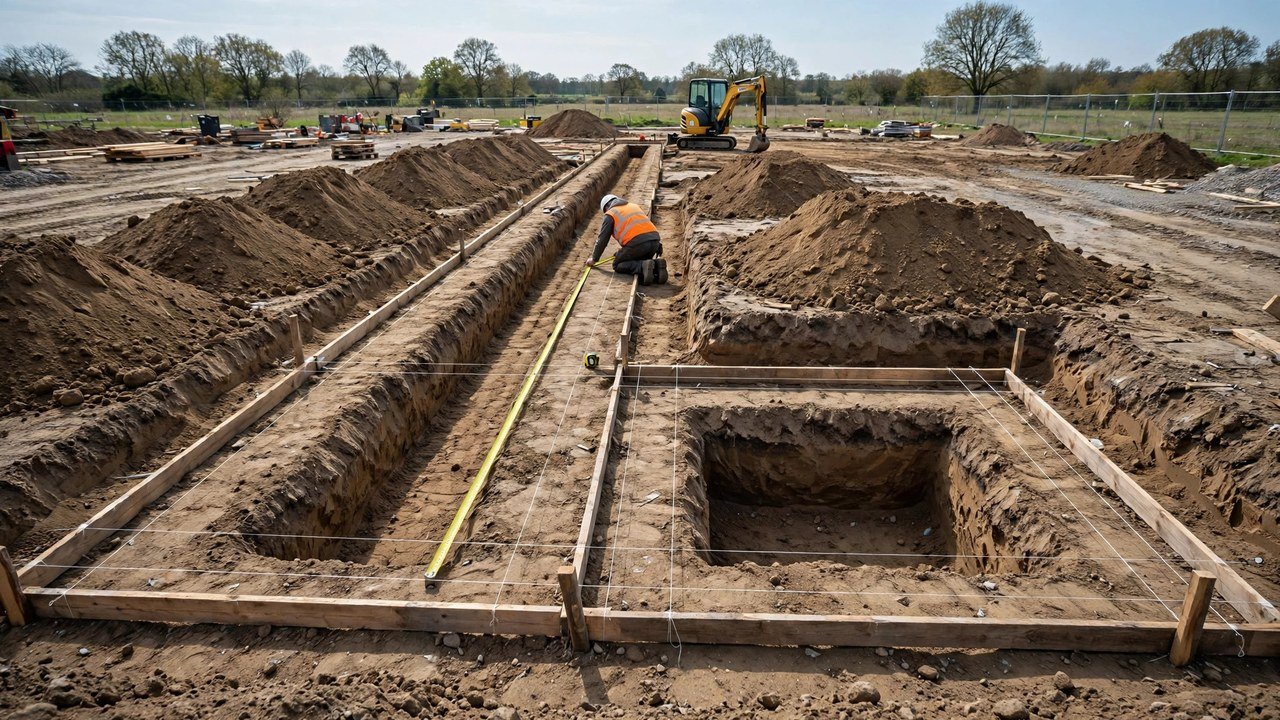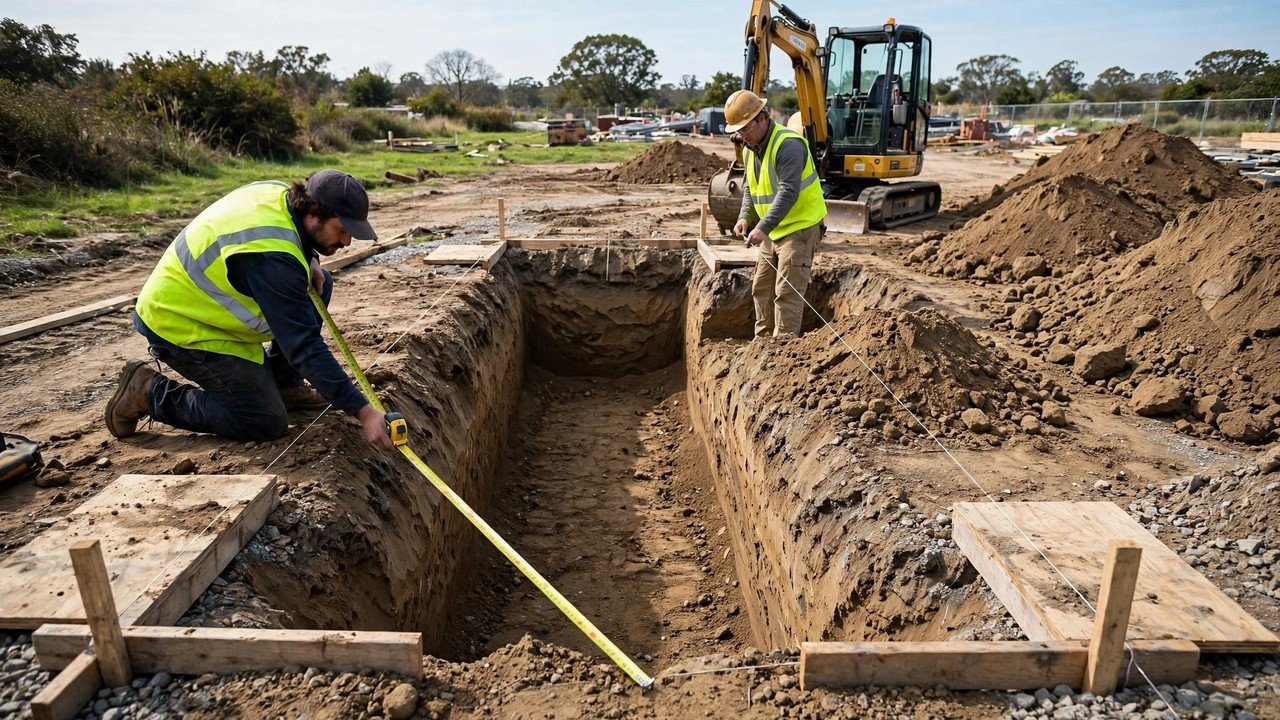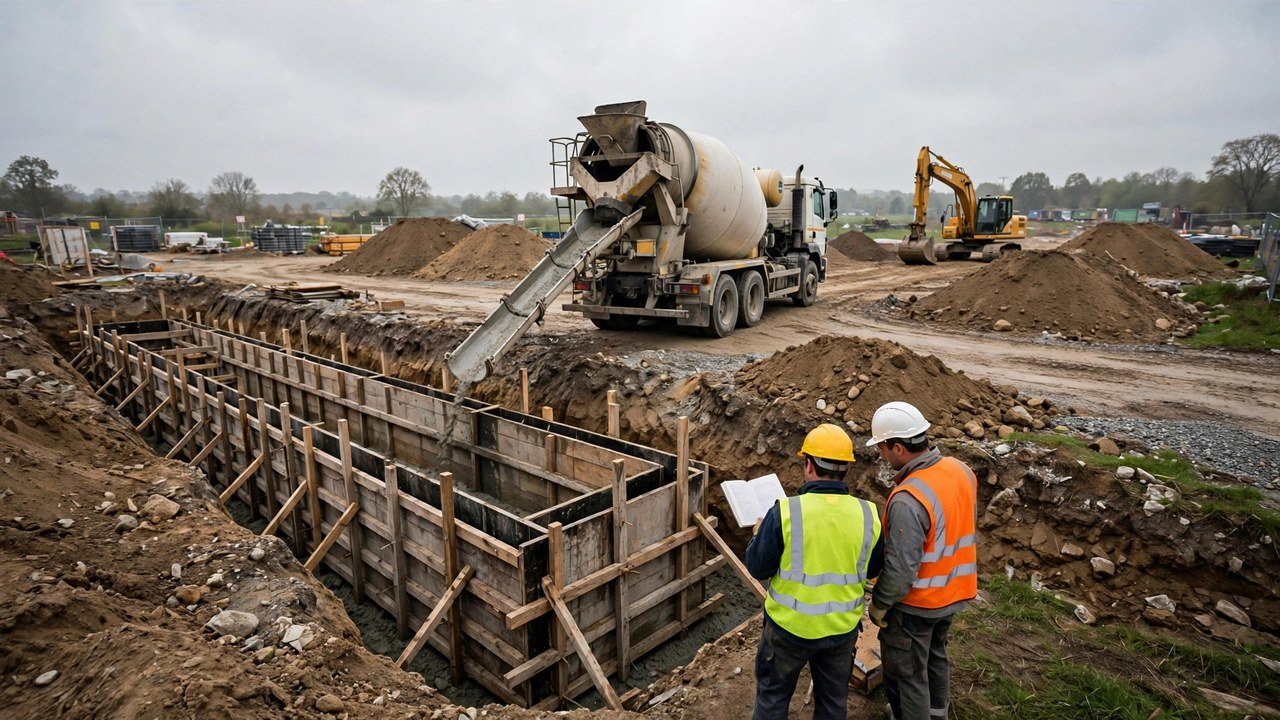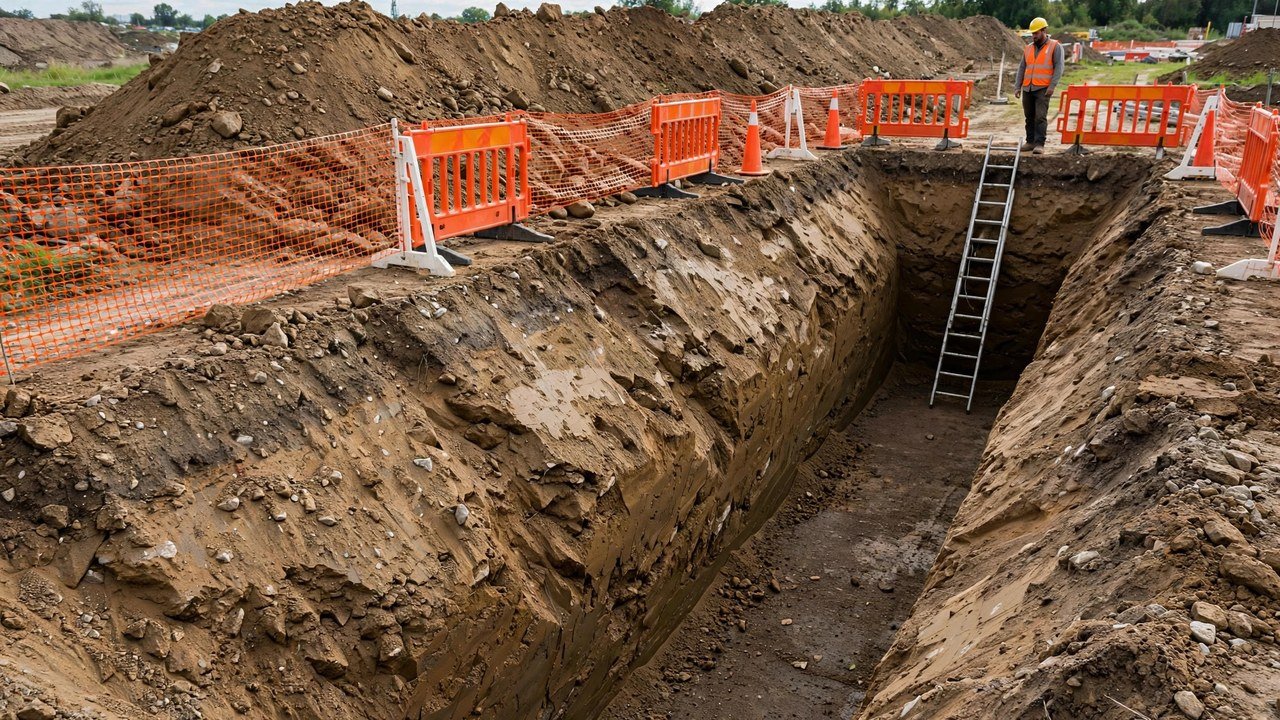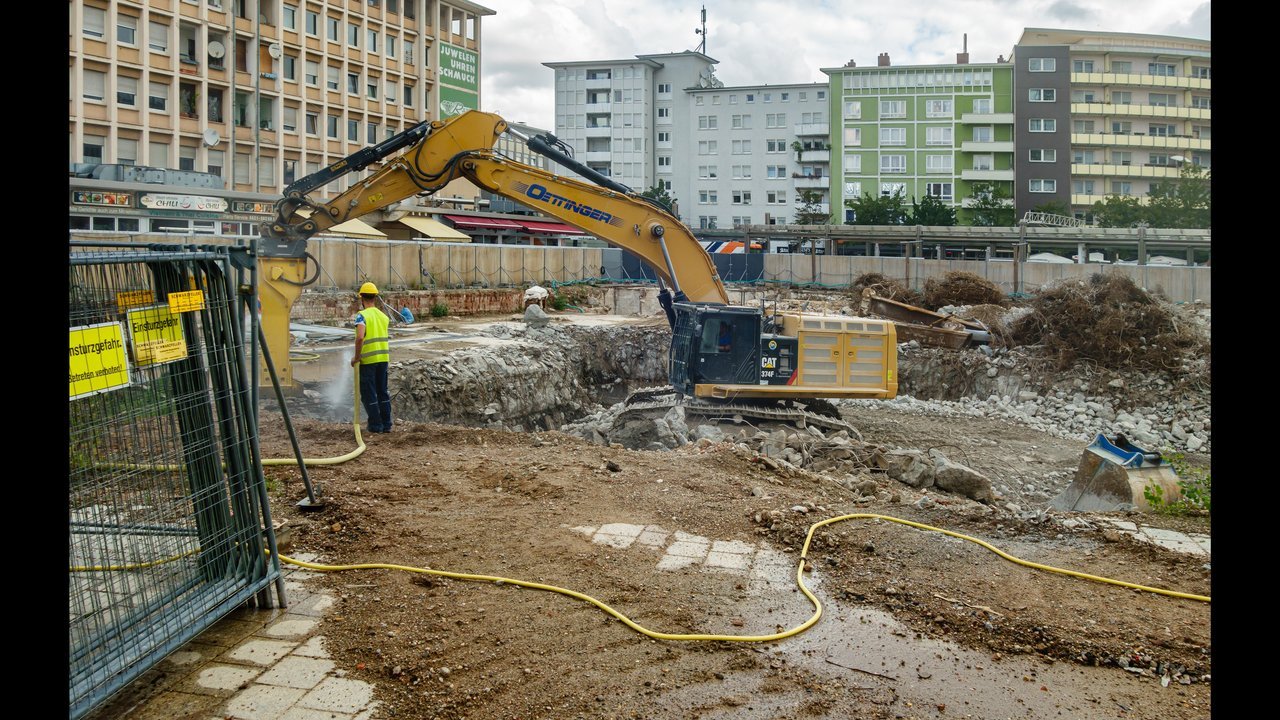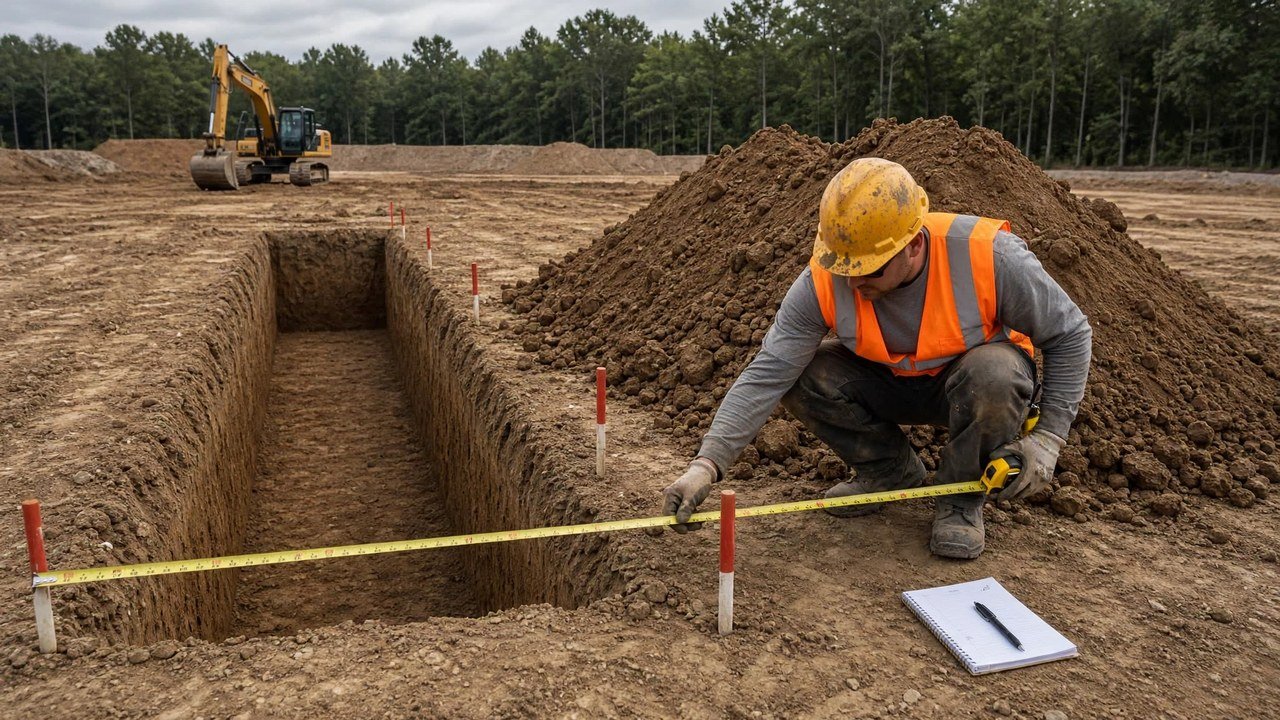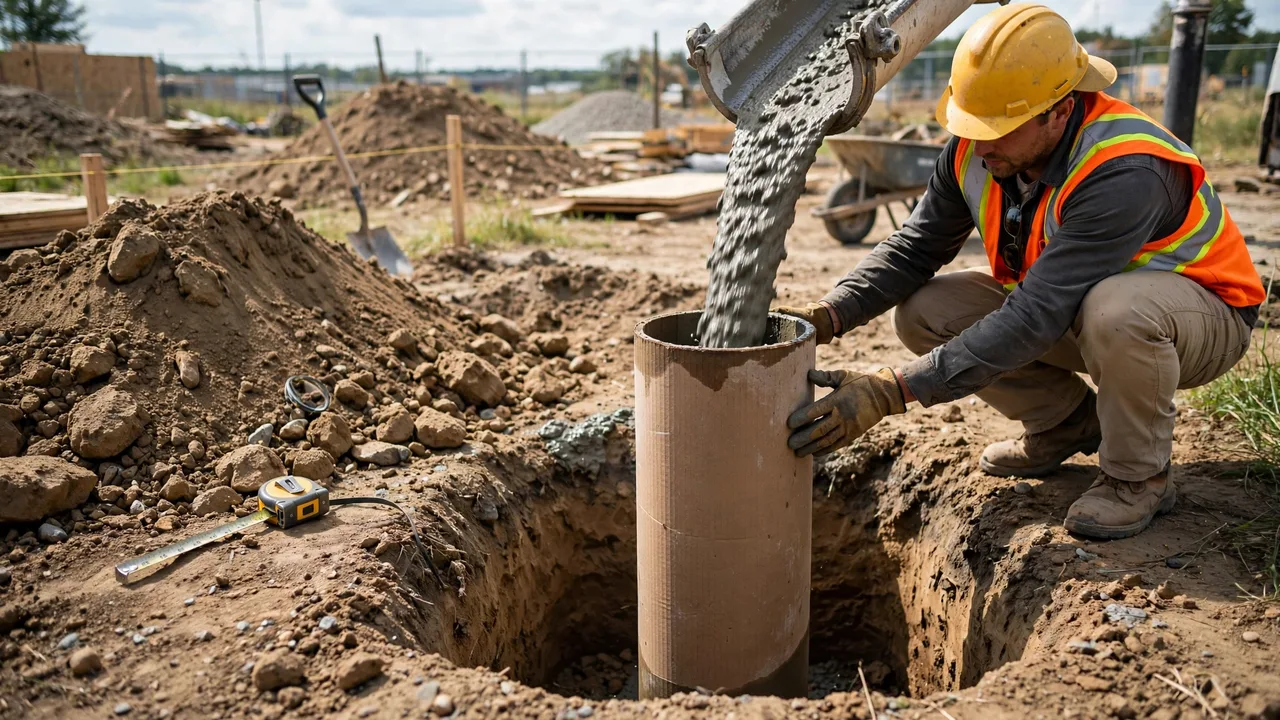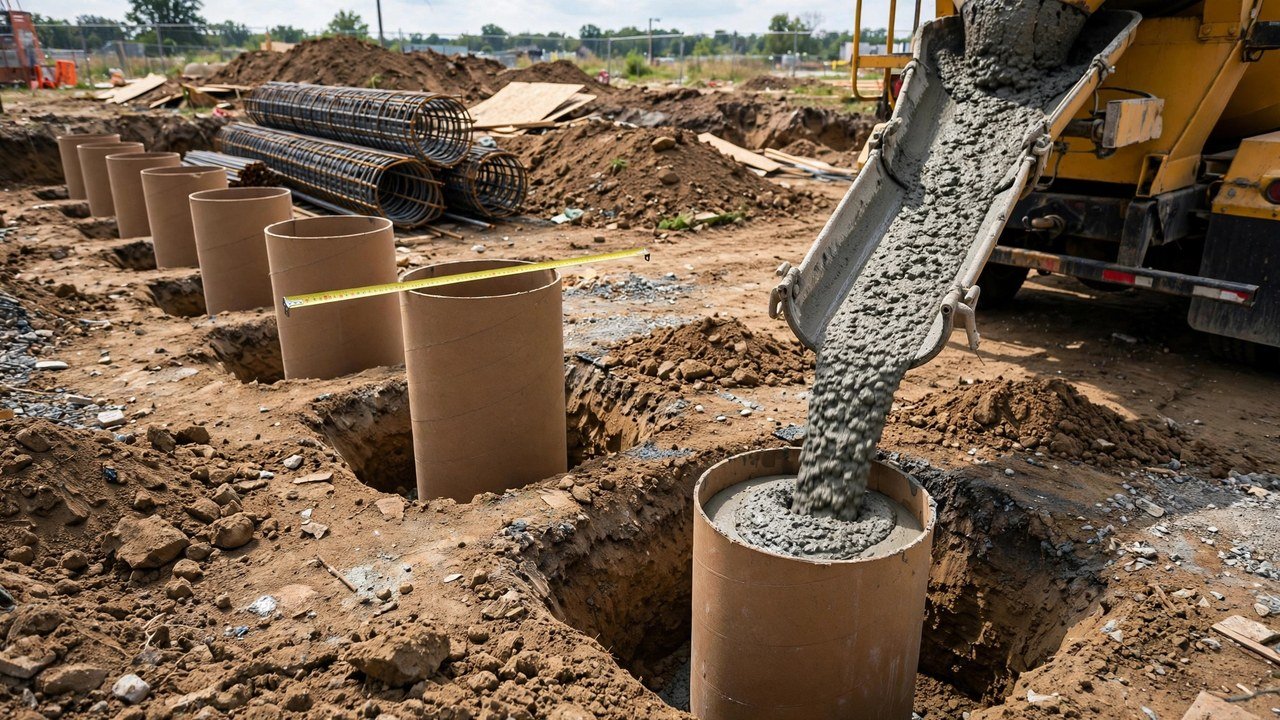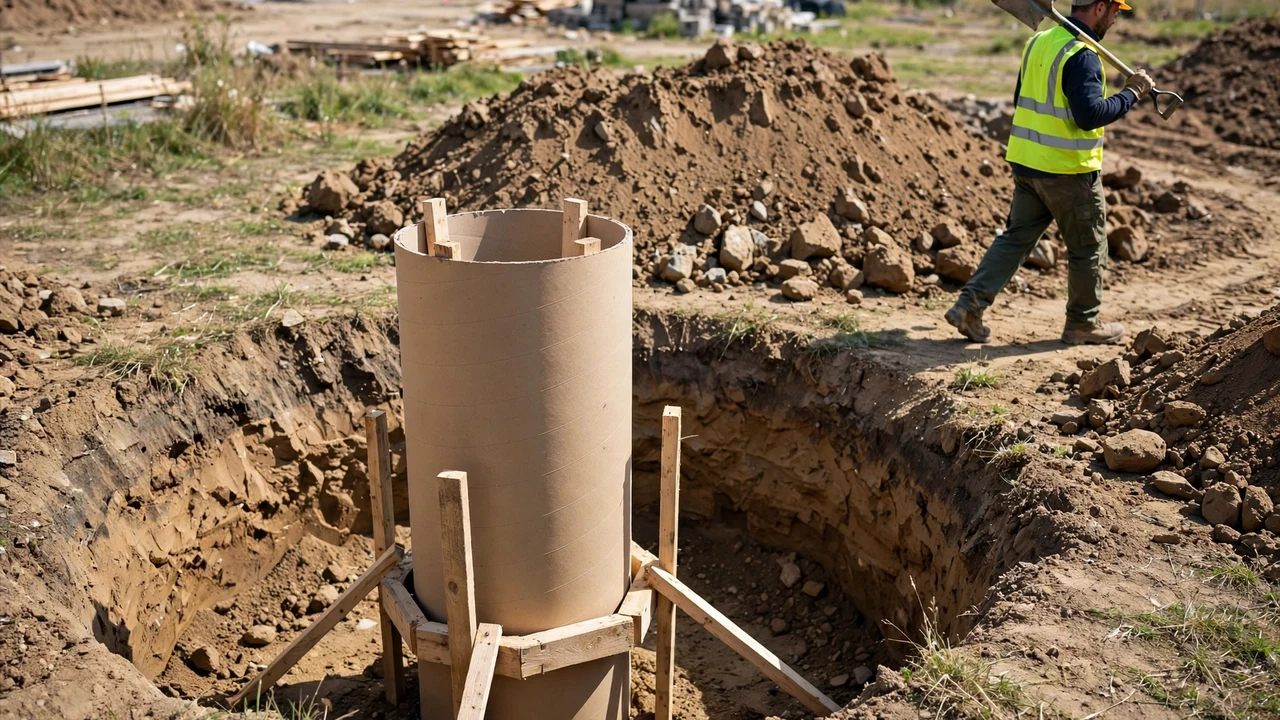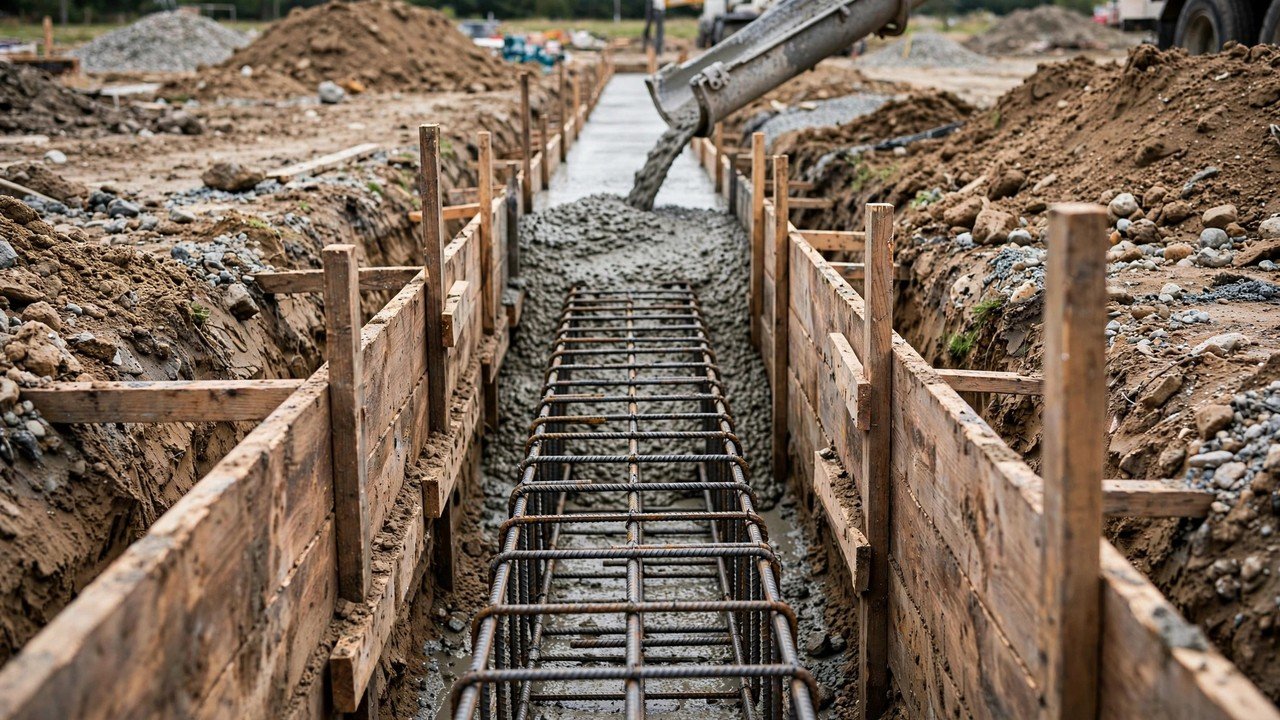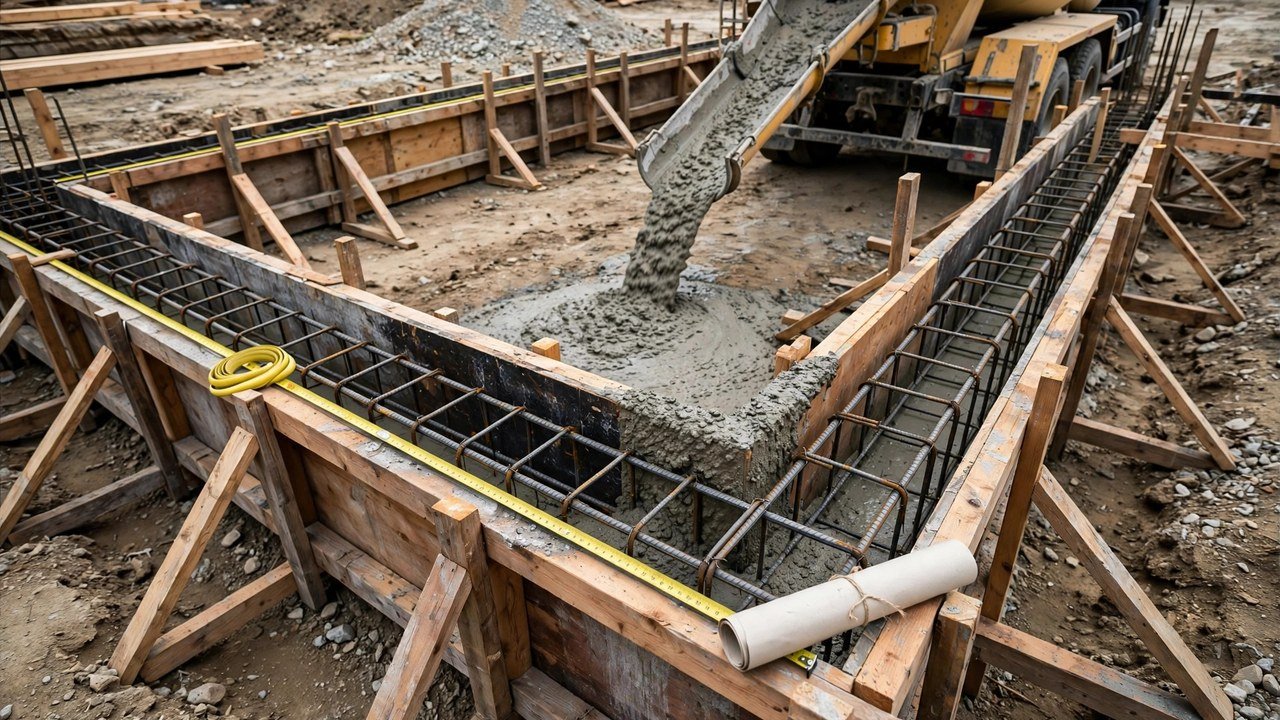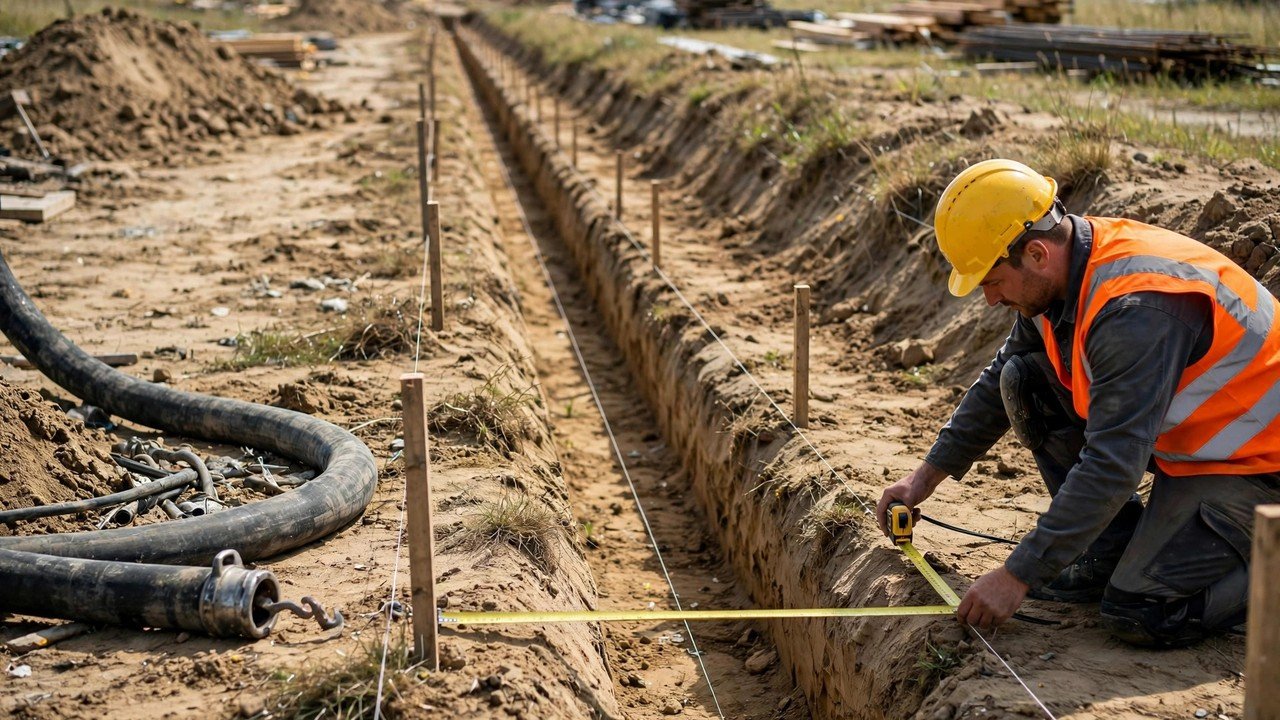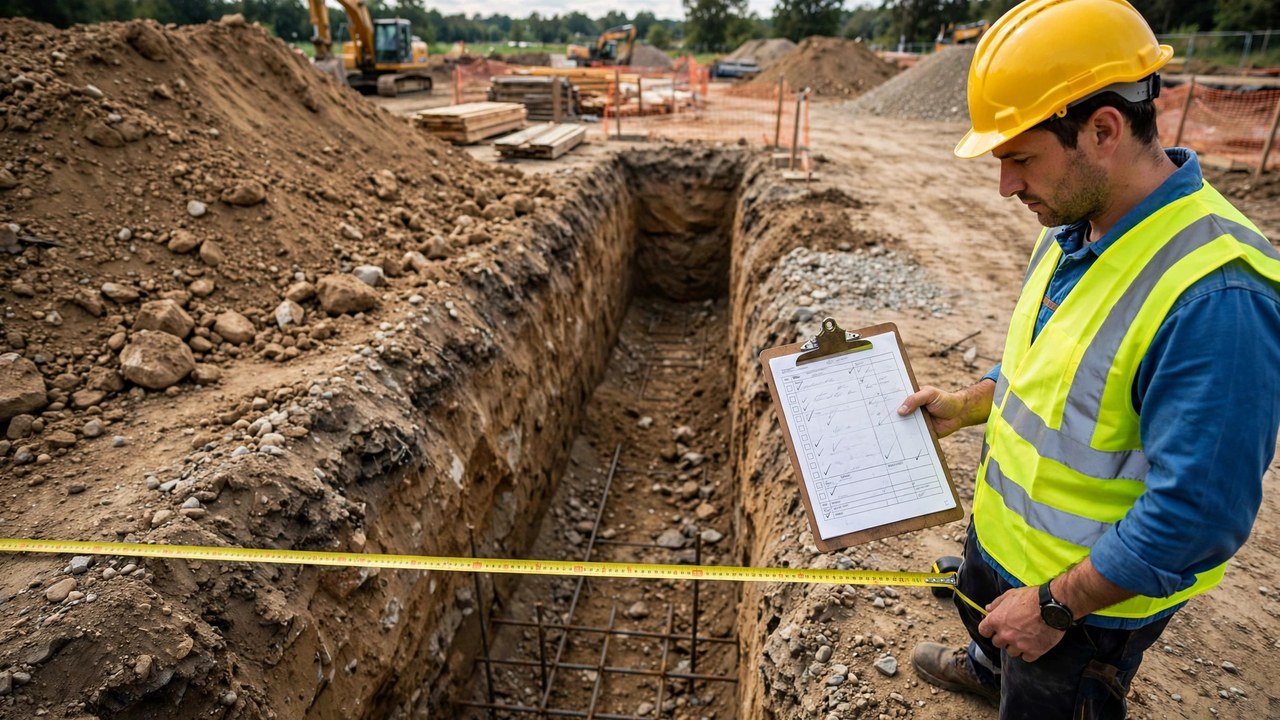
A foundation wall order has three parts: the checked net volume, the project's own ordering allowance recorded as a separate line, and the mix and delivery details the supplier needs to batch and schedule the load. The order record keeps the net volume untouched and rounds the final quantity up to the supplier's selling increment.
What does a foundation wall concrete order need to state?
State the order quantity in cubic yards or cubic metres, the mix designation and strength from the drawings or specifications, the coarse aggregate size, the slump at delivery, air entrainment where specified, any admixtures, the delivery date and time, the placement method, and the site access conditions. ASTM C94, the U.S. ready-mixed concrete specification, lists aggregate size, slump at the point of delivery, air content, and the proportioning option among the ordering information the purchaser should specify.
| Field | What to record | Where it comes from |
|---|---|---|
| Quantity | Net volume plus the project allowance, rounded up to the selling increment | The checked measurement record |
| Mix designation and strength | The specified mix, exactly as written | Drawings or specifications |
| Coarse aggregate size | The designated size or sizes | Drawings or specifications |
| Slump at delivery | The specified slump at the named point | Drawings or specifications |
| Air content | The required air content | Drawings or specifications, where air-entrained concrete is specified |
| Admixtures | Type and dosage range | Drawings or specifications |
| Delivery date, time, rate | When trucks arrive and how fast concrete is placed | The pour plan |
| Placement method | Chute, pump, or crane | The pour plan |
| Site access | Road weight limits, clearances, turning space, washout point | Site conditions |
How do you turn the measured volume into an order quantity?
Take the checked net volume from the measurement record and add the project's own ordering allowance as a separate line with its own basis. Then round up to the supplier's selling increment.
Order quantity = net volume × (1 + project allowance), rounded up
Worked example: the measurement guide's rectangular foundation holds 777.7778 ft³ net, which is 28.8066 yd³. This project's record carries a 5% ordering allowance for form spread and placement loss: 28.8066 × 1.05 = 30.2469 yd³. Rounded up to the half-yard selling increment, the order is 30.5 yd³. The 5% figure is this example project's recorded assumption, not a recommendation.
Metric check: 777.7778 × 0.028316846592 = 22.0243 m³ net. With the same 5% allowance: 22.0243 × 1.05 = 23.1255 m³. Convert back: 23.1255 × 1.30795 = 30.2469 yd³. The two paths agree.
A second fixture: one 40 ft wall run, 8 ft high, 8 in. thick. 40 × 8 × 0.6667 = 213.3333 ft³ = 7.9012 yd³ net. With the same 5% project allowance: 7.9012 × 1.05 = 8.2963 yd³, rounded up to 8.5 yd³. Check by cross-section: 40 × 8 × (8 ÷ 12) = 213.3333 ft³; the result is identical.
Record the allowance as its own line with its own basis: form spread, over-excavation backfill, placement loss. A hidden allowance inside the measured volume cannot be checked or adjusted on the next pour.
What mix details does the supplier need?
Give the supplier the mix exactly as the drawings or specifications state it: the mix designation, the required strength, the maximum coarse aggregate size, the slump at delivery, the air content where air-entrained concrete is specified, and any admixtures. Do not raise the strength or wetten the slump “to be safe”. The mix is a design decision, and a changed mix may not suit the exposure or the reinforcement.
State the placement method in the order. Concrete placed by pump needs a mix that moves through the line; concrete discharged from the chute does not. The supplier adjusts the mix design to the placement method, so “pump” or “chute” belongs in the order, not in a phone call after the truck arrives. Supplier ordering guides list the same items: placement method, rate of supply, site access, delivery time, and testing requirements.
How do you plan the delivery?
Book the delivery date and time against the pour plan, and tell the supplier the expected placement rate so the plant can sequence the trucks. Confirm site access before the first truck rolls: road weight limits, overhead clearances, turning space, and where the truck will set up. Name a washout point for chute cleaning; supplier production guides list washout facilities as a pre-delivery check. Agree on the ticket procedure: each load arrives with a delivery ticket showing the mix, the quantity, and the batch time.
ASTM C94 bases the purchase on the cubic yard or cubic metre of freshly mixed, unhardened concrete as discharged from the transportation unit. It also notes that hardened concrete can appear short because of waste, spillage, over-excavation, spreading forms, loss of entrained air, or settlement of wet mixtures, none of which is the producer's responsibility. That is why the project's own allowance sits in the order record, not in a dispute with the supplier.
What do you check when the truck arrives?
- The delivery ticket matches the order record: mix designation, quantity, and batch time.
- The load is the specified mix, not a substituted one. A wrong mix placed in the wall cannot be un-poured.
- Slump is checked where the specification requires it, at the point the specification names.
- No water is added to the load beyond what the ticket and specification allow. Extra water raises the water-cement ratio and lowers strength.
- Each truck is discharged within the specification's time limit from batching. A truck waiting on site is concrete aging in the drum.
Mistakes that change the order
- Ordering from the outside-face volume instead of the centreline volume; each corner counts twice.
- Burying the allowance inside the measured volume so it cannot be checked.
- Rounding the order down to the nearest increment instead of up.
- Specifying a higher strength or a wetter slump than the drawings allow.
- Adding water on site to make the concrete flow faster.
- Booking trucks before the forms are measured and accepted, then ordering a short load under time pressure.
What limits apply to this order?
The drawings and specifications control the mix, the strength, the dimensions, and the tolerances. This page orders concrete; it does not design the wall. Workplace rules for formwork and excavation sit with the project's safety plan. For covered U.S. work, OSHA 29 CFR 1926.703 covers cast-in-place concrete formwork, and 29 CFR 1926.651 and 1926.652 cover excavation conditions.
Sources and scope
- ASTM C94/C94M, Standard Specification for Ready-Mixed Concrete, ASTM International: the basis of purchase (cubic yard or cubic metre of freshly mixed unhardened concrete as discharged from the transportation unit; batch volume from batch mass and density) and the ordering information the purchaser should specify (coarse aggregate size, slump at delivery, air content, proportioning option). Section text verified against a published copy; retrieved 2026-10-09.
- Ordering Premixed Concrete, supplier ordering guide: the ordering items a supplier needs (strength grade, slump, placement method, rate of placement, site access, testing). Scope: supplier practice guidance in an Australian standards context.
- Ready-Mixed Concrete Production Guide, Concrete NZ: ordering and dispatch logistics (site access constraints, delivery timing, placement method, rate of supply, washout facilities).
- NIST Handbook 133 (2026), Appendix E: cubic-foot, cubic-yard, and cubic-metre unit relationships.
Source scope: ASTM C94 sets the U.S. ready-mixed concrete purchase and ordering framework; the supplier guides document ordering practice and delivery logistics. NIST supports the unit conversions, and the worked fixtures on this page verify the arithmetic independently. None of these sources selects the mix, sets the allowance, or designs the wall for a specific project.
Enter the checked measurements in the Concrete Wall Calculator to total the wall sections and convert to the supplier unit. Build the measurement record with the foundation wall measurement guide, run the excavation safety checks before forms go in, and keep material states separate with the bank versus loose volume guide. The Foundation Quantity Planning Tools and Guides hub lists the related foundation calculators and guides.
Review note: Saleem Sial owns the research and editorial record. Source checks, build validation, and rendered QA form the internal publication gate. Waseem Sial, External Reviewer, Engineer, is listed for ongoing external review; no completed review date is claimed.