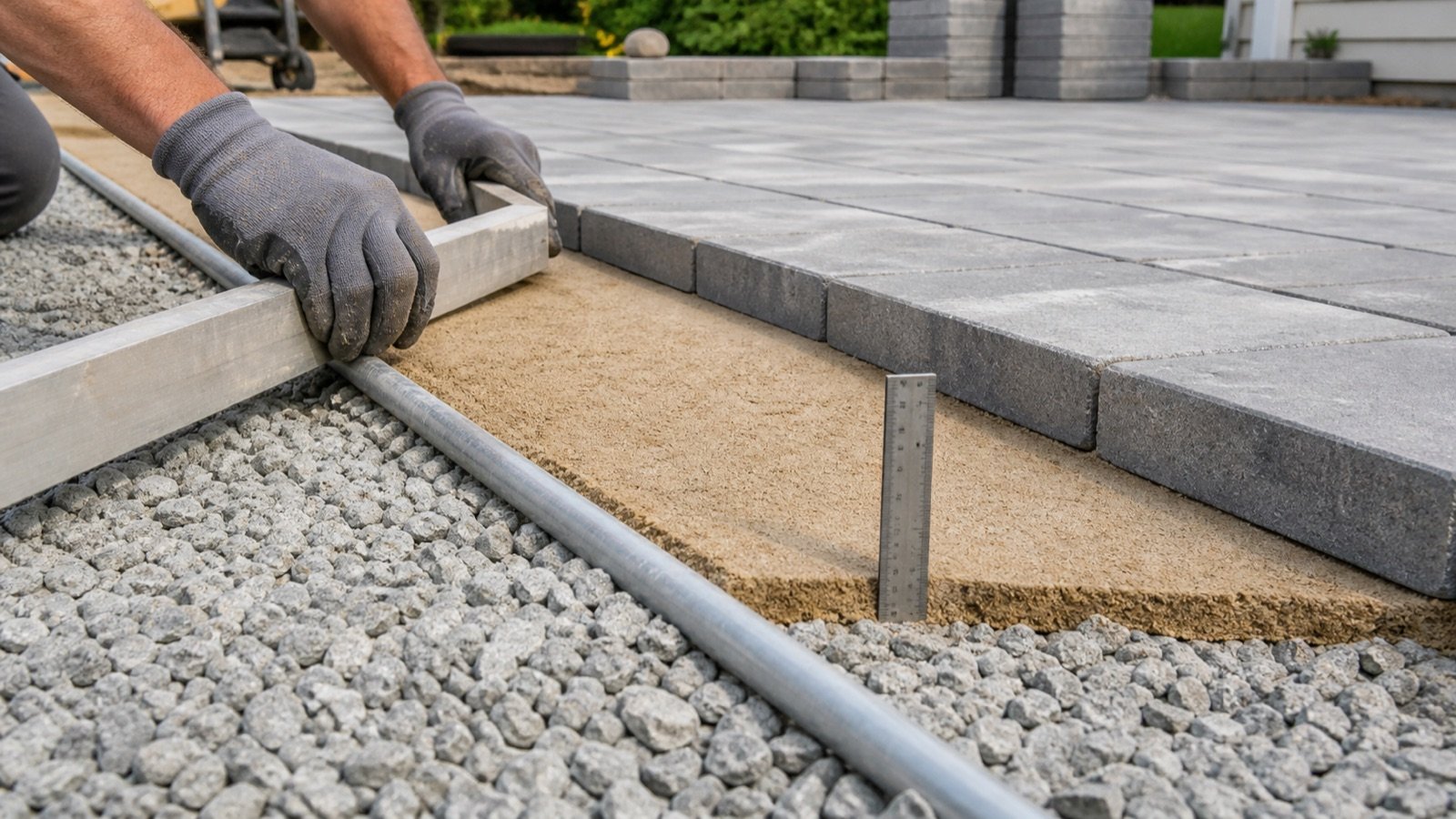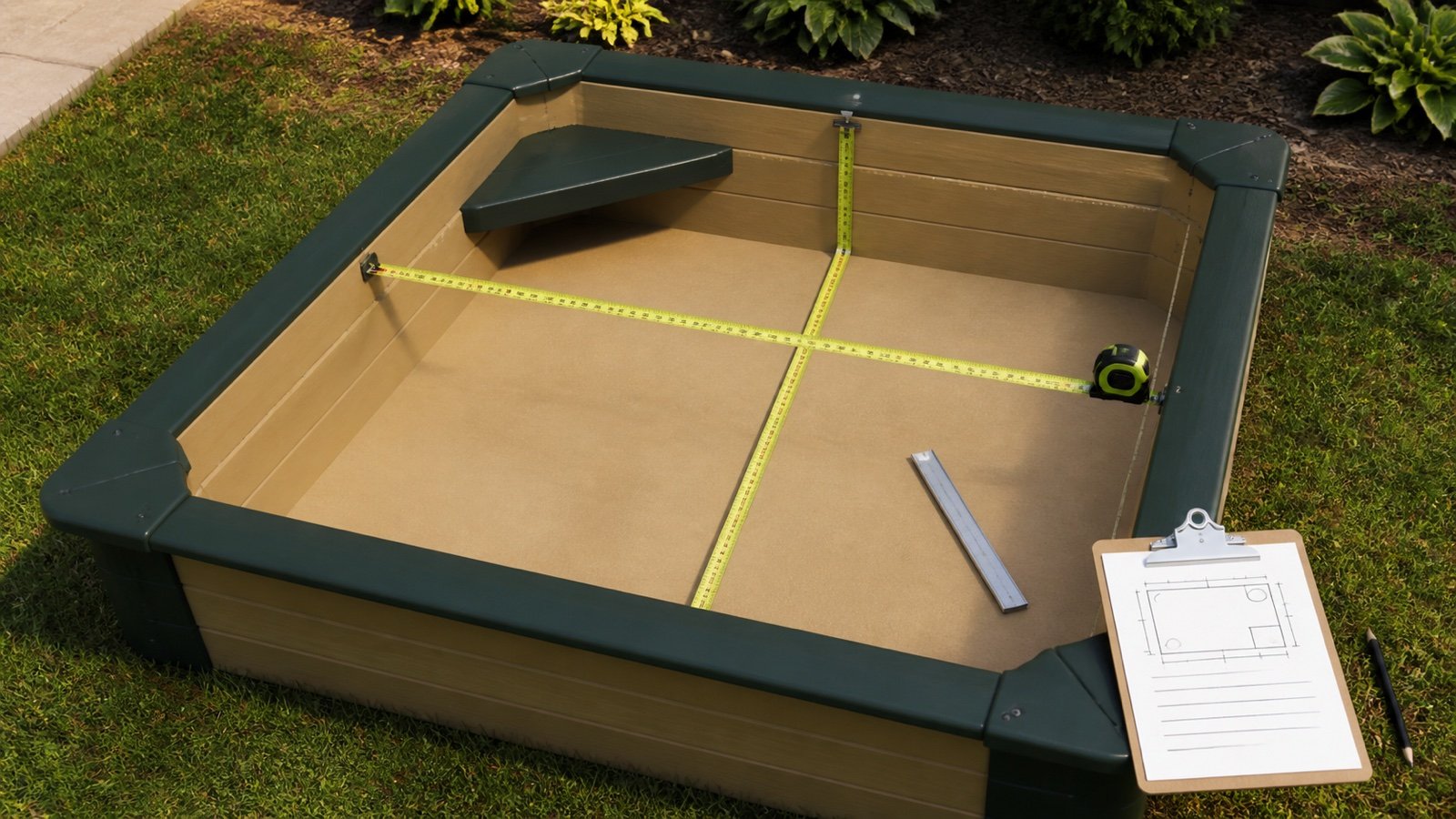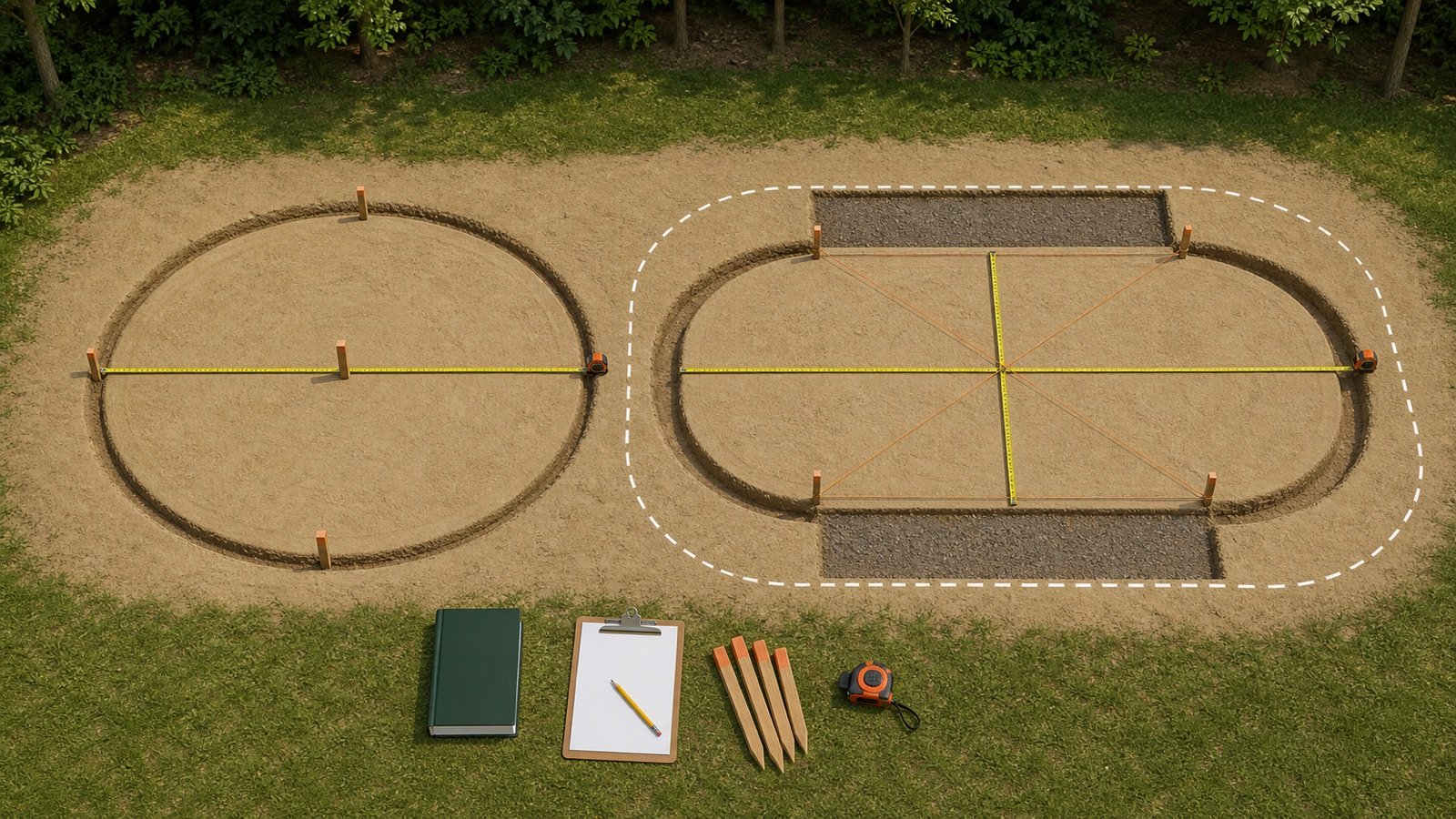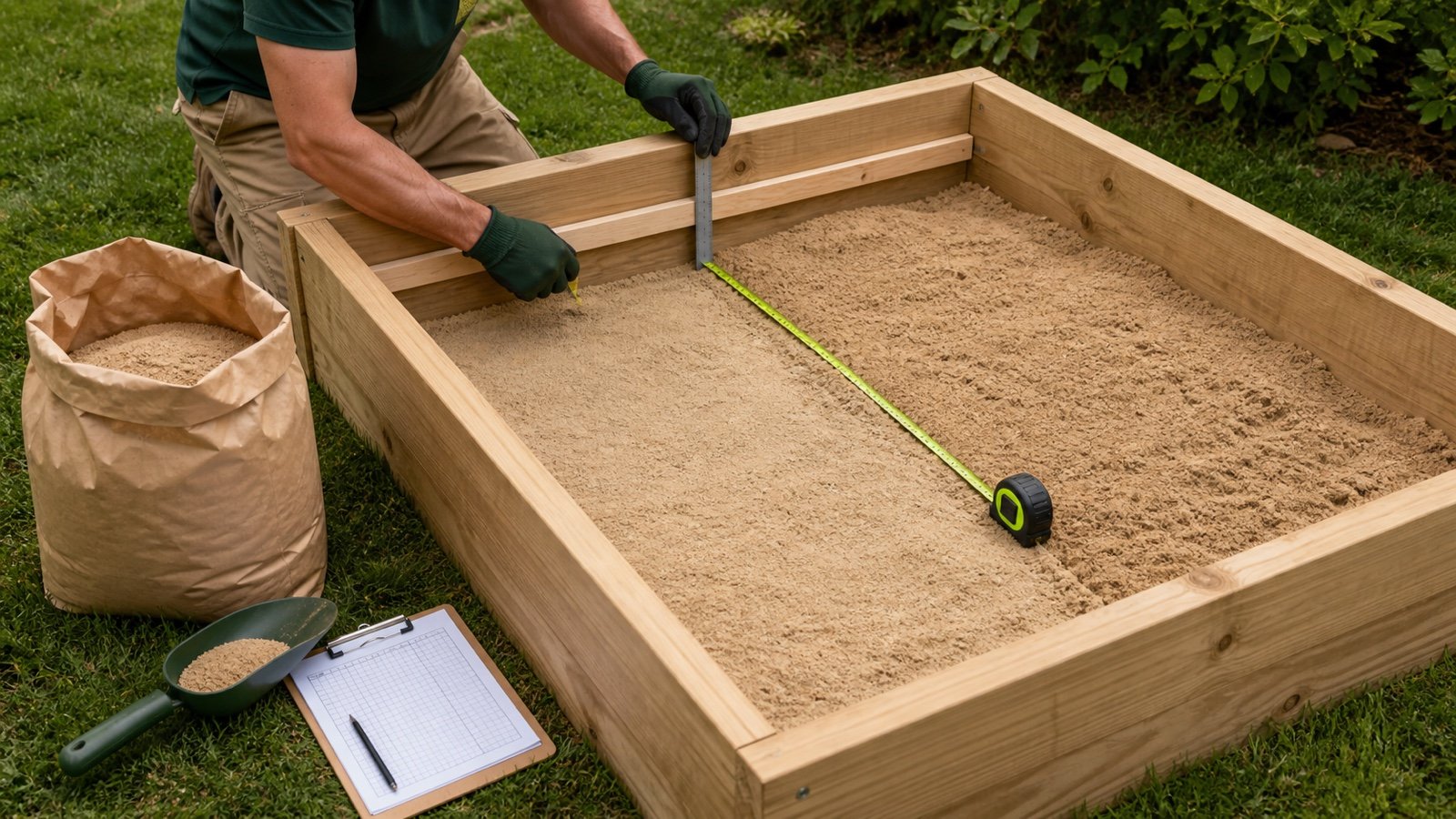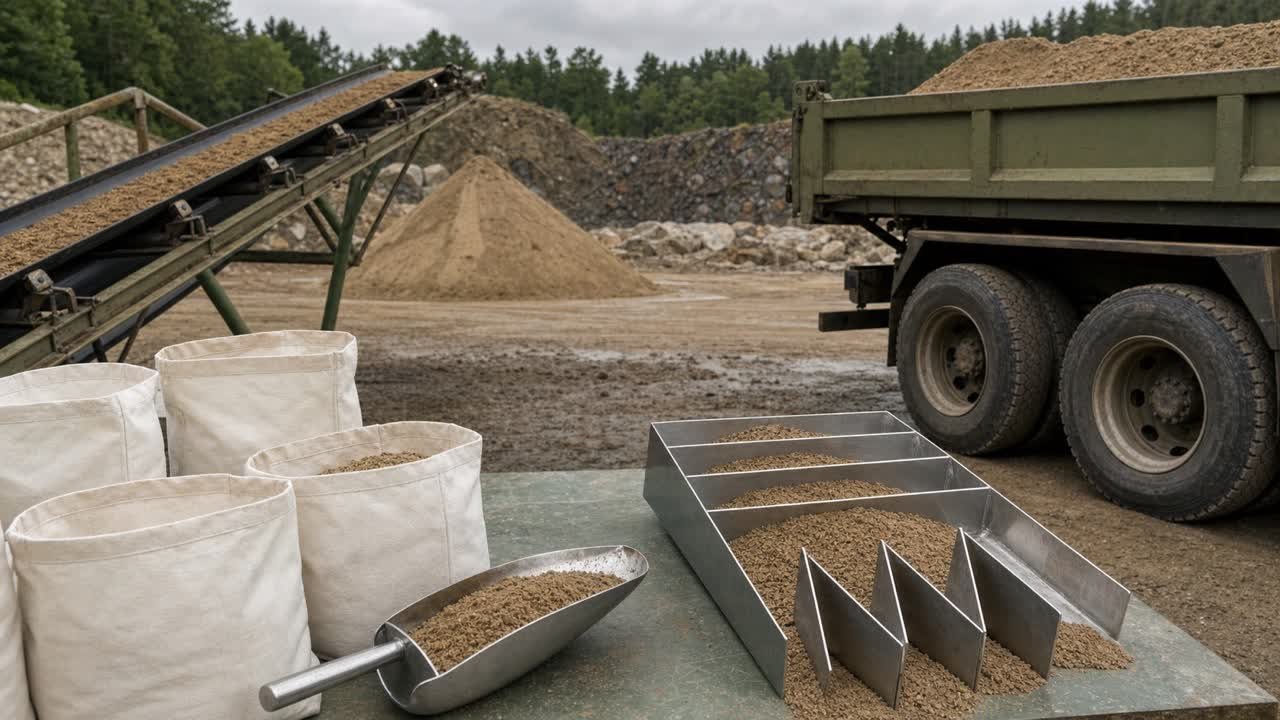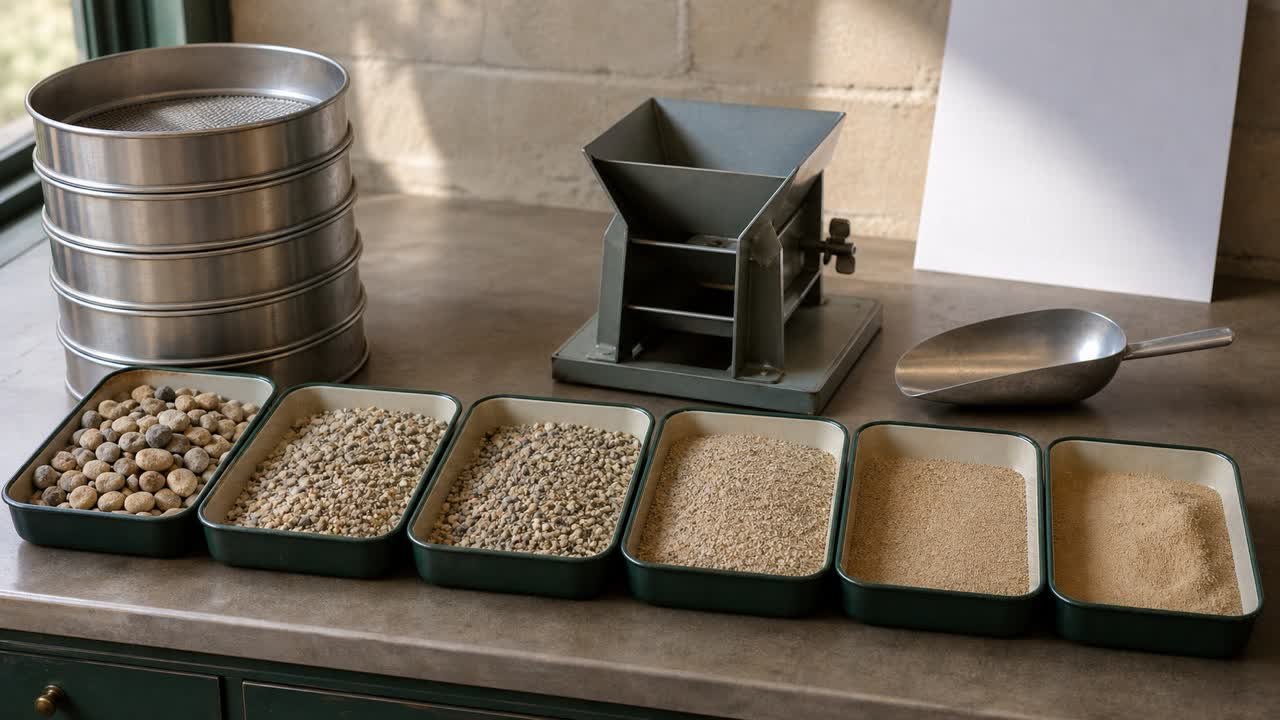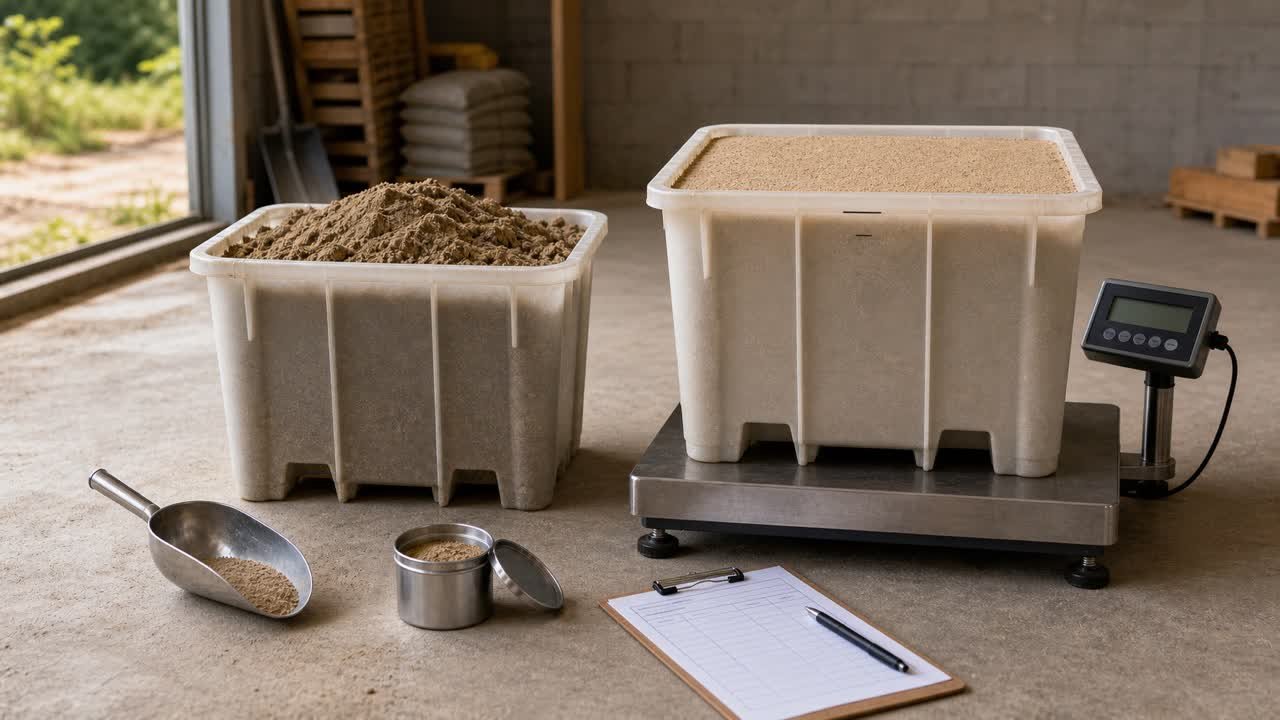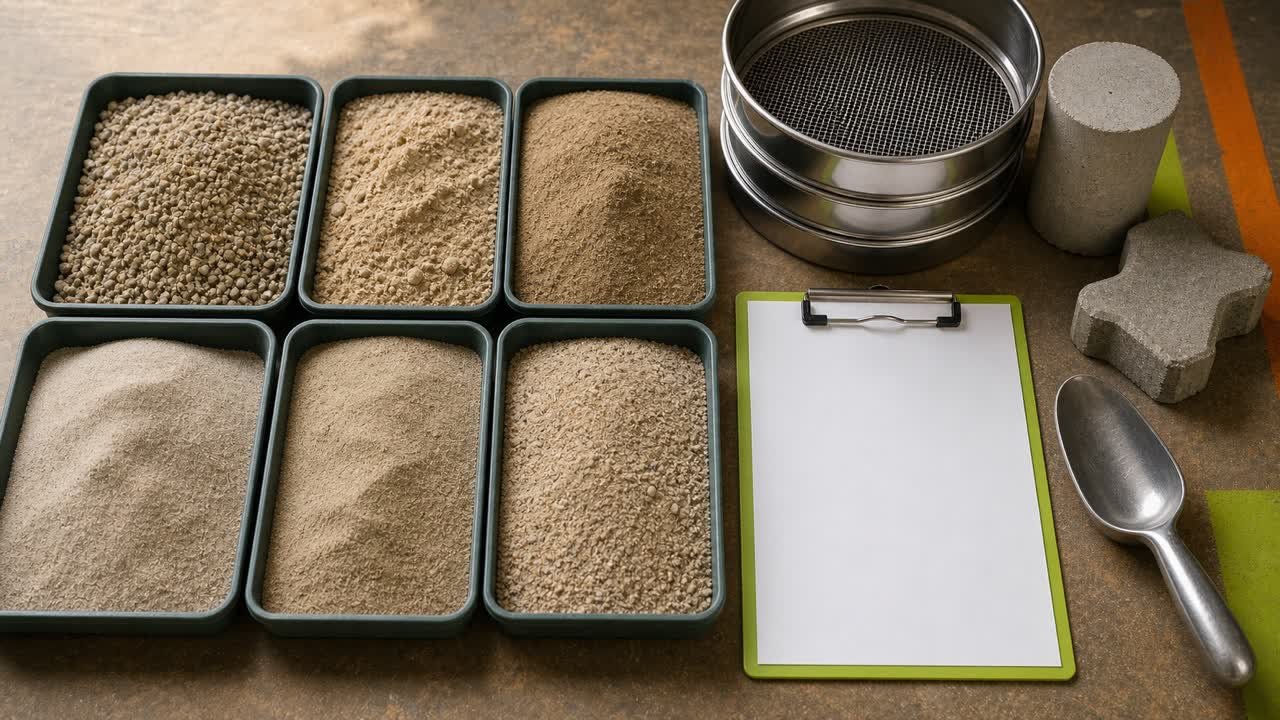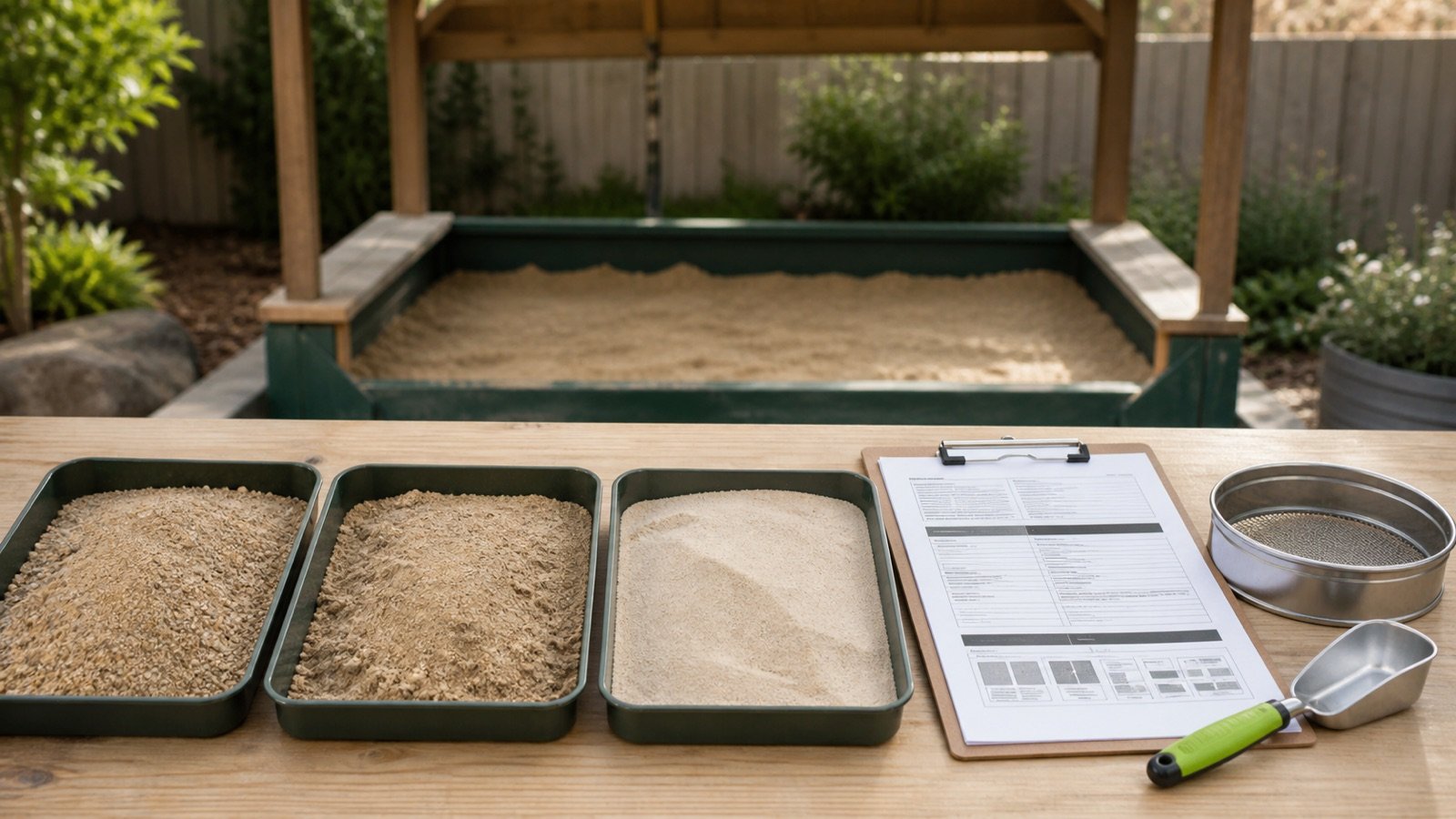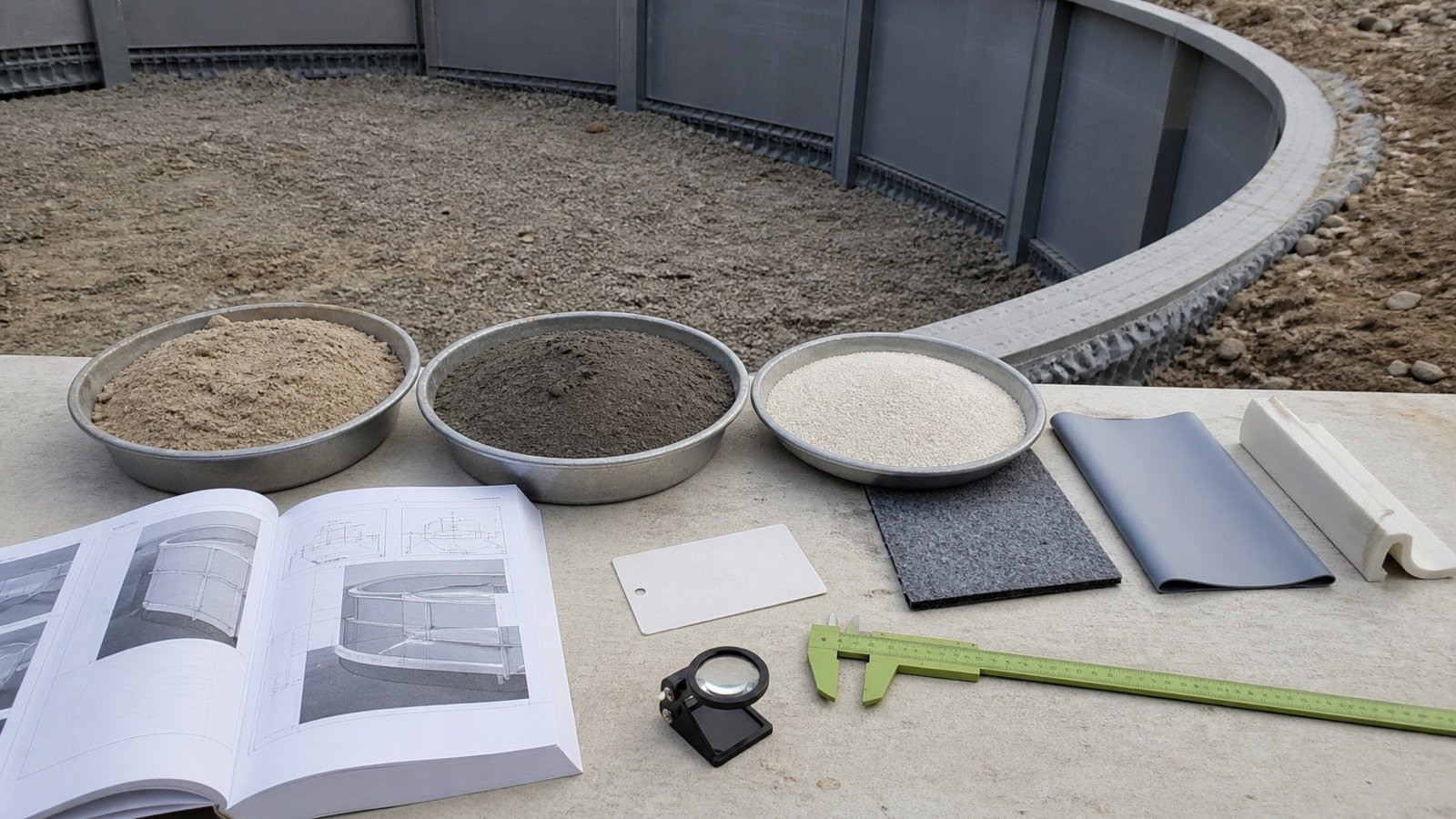
Use the base material named by the current instructions for the exact above-ground pool, liner and foundation assembly. A supplier's label such as mason sand, play sand, concrete sand or stone dust cannot approve the product by itself.
The manuals reviewed for this guide use materially different systems. One names clean washed masonry sand, another accepts compaction sand or fine rock dust with a liner-contact mat, and a Bestway frame-pool manual rejects sand as levelling fill and as a loose setting surface.
What sand should you use under an above-ground pool?
Use the exact material and layer sequence stated by the pool and liner instructions. Record the manufacturer, model, size, manual revision, material wording, finished depth, compaction state and any pad or geotextile before asking a supplier for a product.
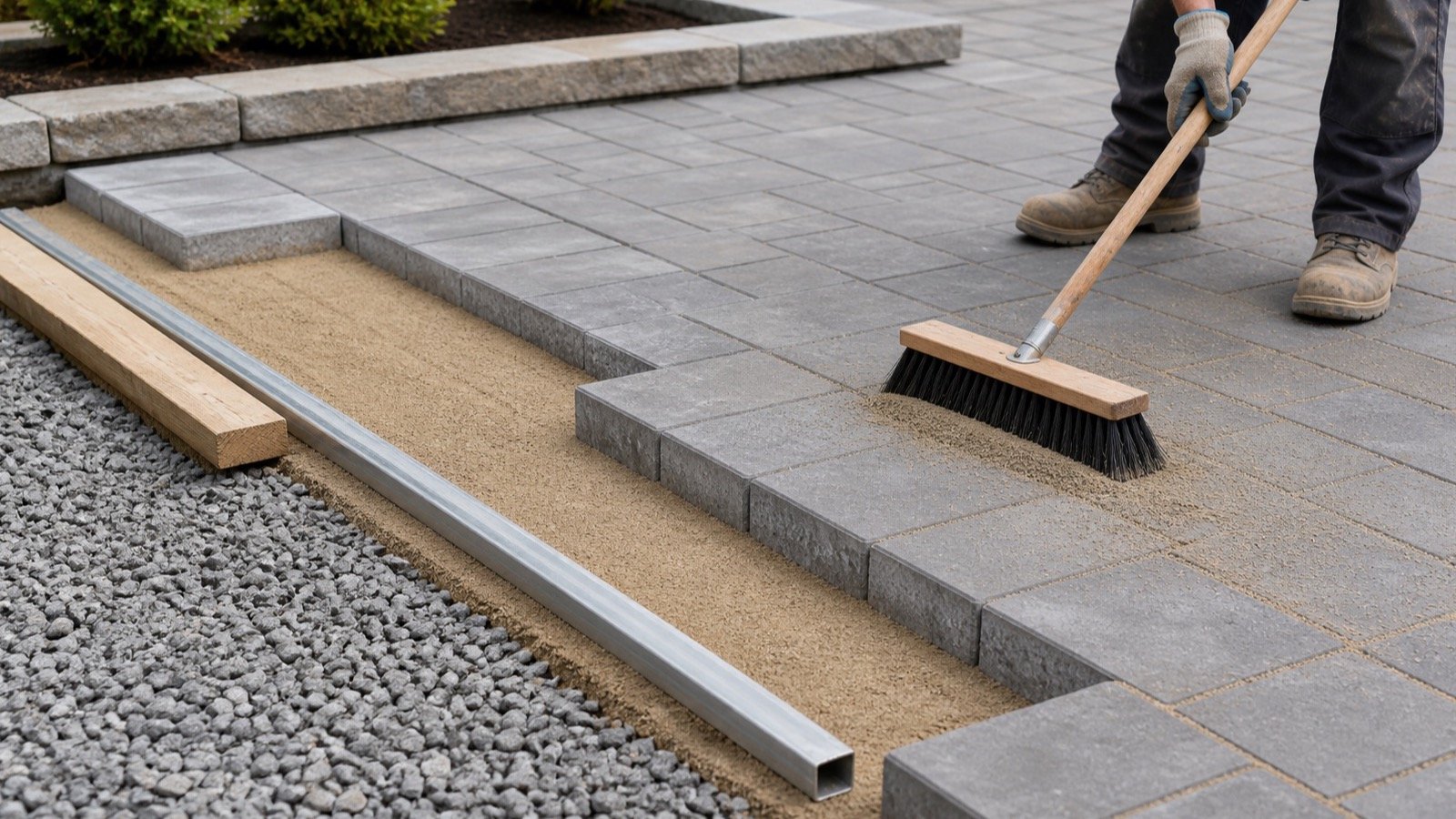
Clean washed masonry sand is one valid answer for Radiant's cited oval system. CARVIN's cited round system names compaction sand or fine rock dust and requires a synthetic geotextile mat above rock dust. Bestway S-S-004972 gives a different site rule. Each answer stays inside its own manual.
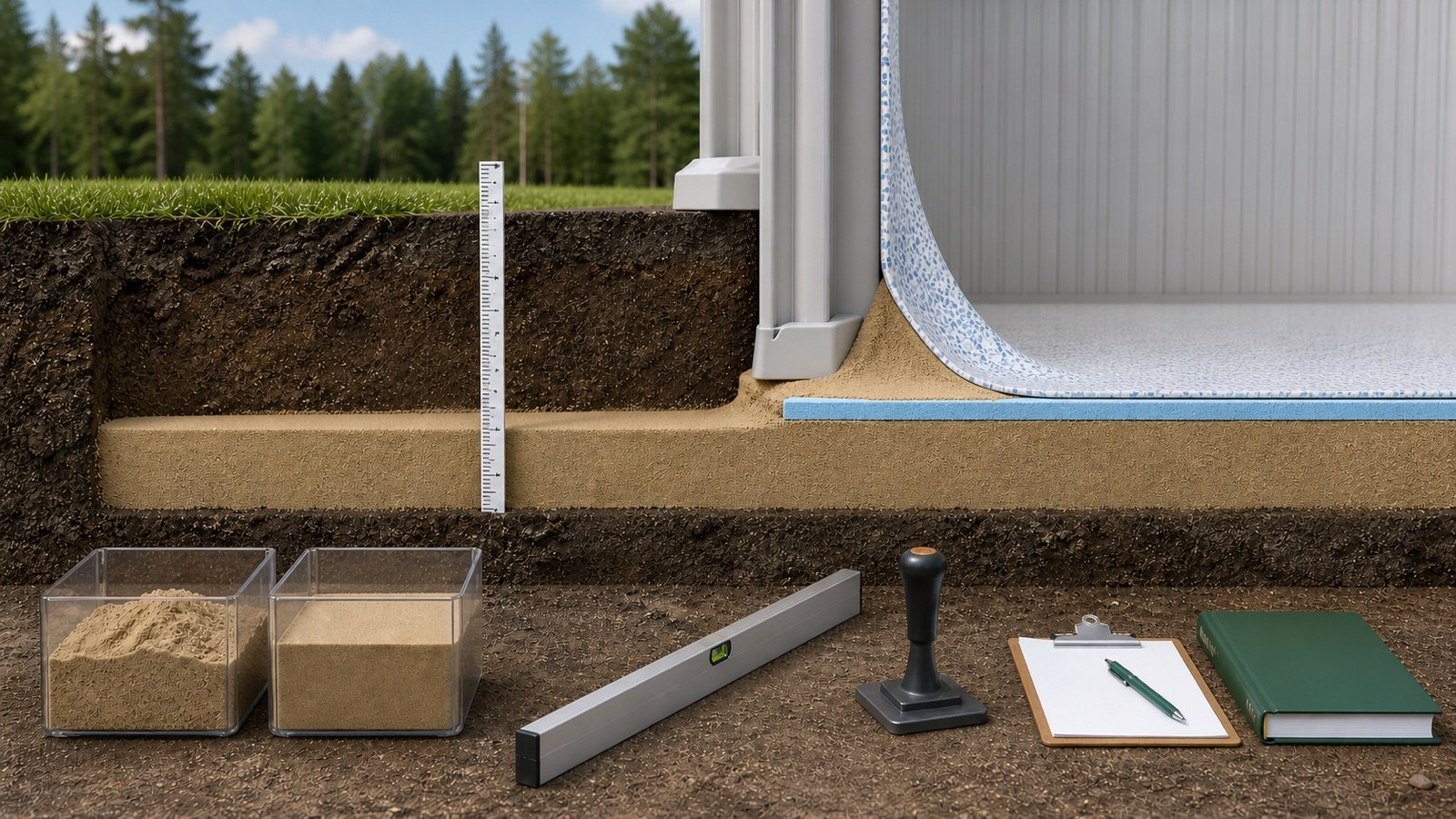
A material can be acceptable in one floor, cove or liner system and unsuitable in another. Keep the pool wall, supports, flat base, liner-contact layer and cove on separate specification lines.
How do current pool instructions differ?
The source comparison shows why a universal best-sand list can mislead. The documents govern different wall, rail, support and liner systems.
| Named document | Material or assembly language | Decision for that system |
|---|---|---|
| Radiant Metric Oval R8 | Clean washed masonry sand or other suitable base material; later schedule uses masonry sand | Match a supplier product to the exact manual wording and floor/cove detail |
| CARVIN Equinox Round | Compaction sand or fine rock dust; synthetic geotextile mat; prefabricated cove is an option | Preserve the full layer sequence and keep the liner off direct rock-dust contact |
| Bestway S-S-004972 | Sand must not create a level base; mud, sand and soft or loose soil are unsuitable setting locations | Prepare the firm site under that manual rather than adding a generic sand layer |
| Sahara Oval Instructions | Neutral-alkalinity sifted earth or fine sand without pebbles; cover straps and pressure plates | Verify material condition, chemistry and full cover within this named oval detail |
| ABGAL liner instruction | Illustrates Builders Fatty Sand and states a smooth, compacted 5 cm floor plus a separate cove | Reconcile the liner instruction with the exact pool-frame instructions before acceptance |
These examples document the variation. Apply each material only within its named system and accepted supplier match.
Is mason sand a complete pool-base specification?
Treat the mason-sand label as a starting product description. The accepted record still needs the exact pool-manual language, supplier product identity, source, condition and any stated grading, cleanliness or contamination limits.
ASTM C144-25 covers aggregate used in masonry mortar. Its stated scope does not certify an aggregate for contact with a pool liner or for a pool foundation. A supplier can sell an ASTM C144 masonry aggregate that still needs separate approval under the selected pool system.
| Record | What it proves | What remains open |
|---|---|---|
| Supplier name: mason or mortar sand | How the supplier markets or groups the product | Exact source, grading, debris condition and pool approval |
| ASTM C144 statement | Claimed conformity for masonry-mortar aggregate within the cited edition | Pool, liner, support and cove suitability |
| Pool manual: clean washed masonry sand | The named system accepts that material description | Whether the offered local product matches it |
| Approved sample or submittal | The recorded product was accepted for the named project | Delivery identity, material changes and installed condition |
The construction sand selection guide explains why concrete, masonry, fill, manufactured and play-surface materials follow different specifications.
Can fine rock dust go under a pool liner?
Use fine rock dust only where the exact assembly permits it. CARVIN's Equinox round guide accepts fine rock dust or compaction sand for its draining foundation and then requires a quality 100% synthetic needle-punched geotextile pool mat.
The same guide tells the installer not to place the liner directly on rock dust. The base material and liner-contact layer therefore form 2 separate components. Copying only the rock-dust phrase from the manual would omit a controlling part of the assembly.
Record the geotextile product, cut size, overlap or joint instructions and position separately from the rock-dust quantity. A general landscape fabric, weed barrier or unknown felt is not automatically the named pool mat.
Can play sand, concrete sand or washed sand be used?
A product name alone cannot settle the decision. Compare the supplier's actual product record with the exact words and assembly requirements in the current pool and liner instructions.
- Play sand: accept it only when the controlling documents and responsible installer approve that exact product and condition. A bag's intended use for play does not establish pool-base performance.
- Concrete sand: its intended concrete-aggregate use does not establish liner-contact suitability. Check grading, particle condition, contaminants and the manual's accepted material.
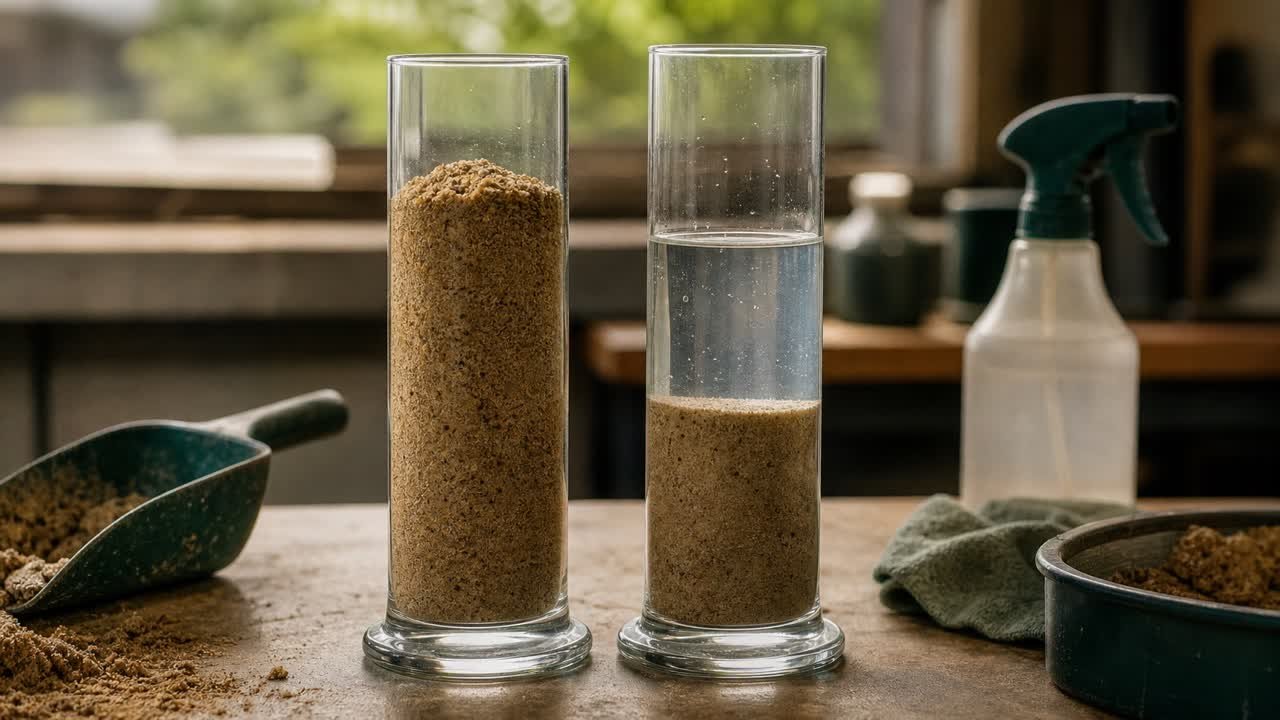
- Washed sand: The washed label describes processing but does not identify the full grading, particle shape, source or accepted pool system.
- Manufactured sand or screenings: verify the source, grading, fines, sharp or oversized particles, liner-contact layer and exact approval.
- Local names: mortar sand, brick sand, fatty sand, plaster sand and similar terms can describe different products across suppliers and countries.
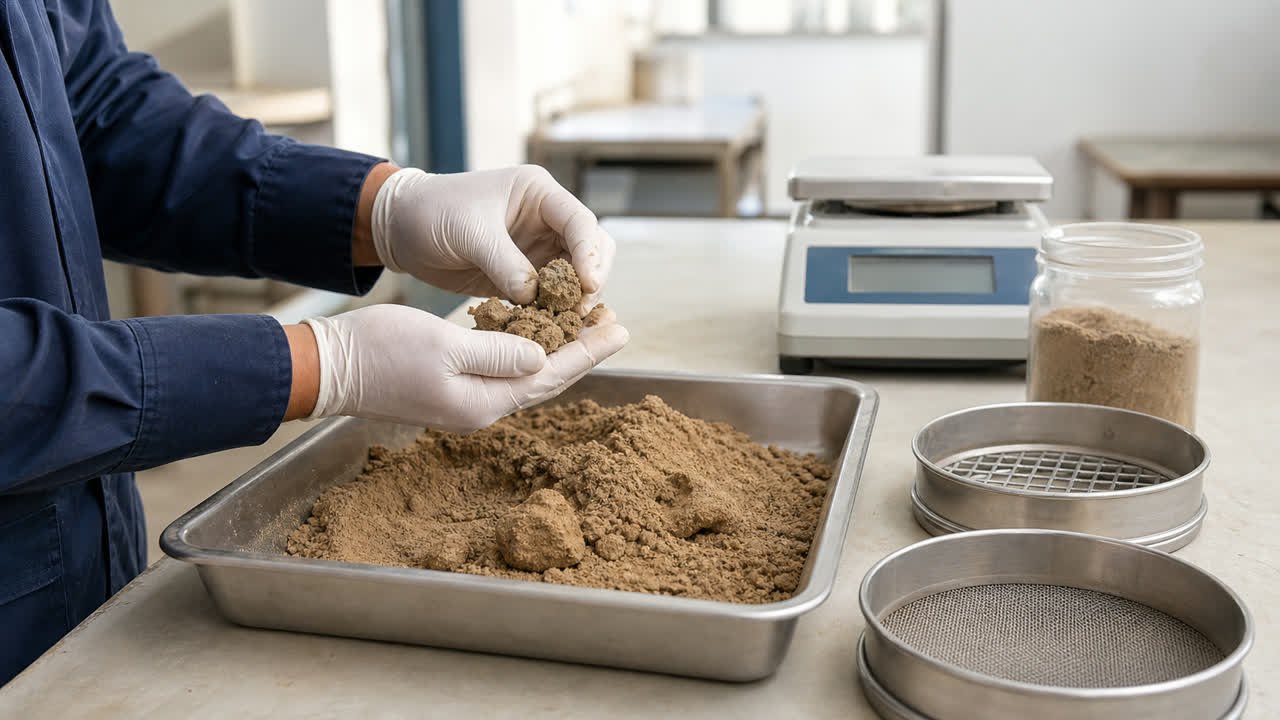
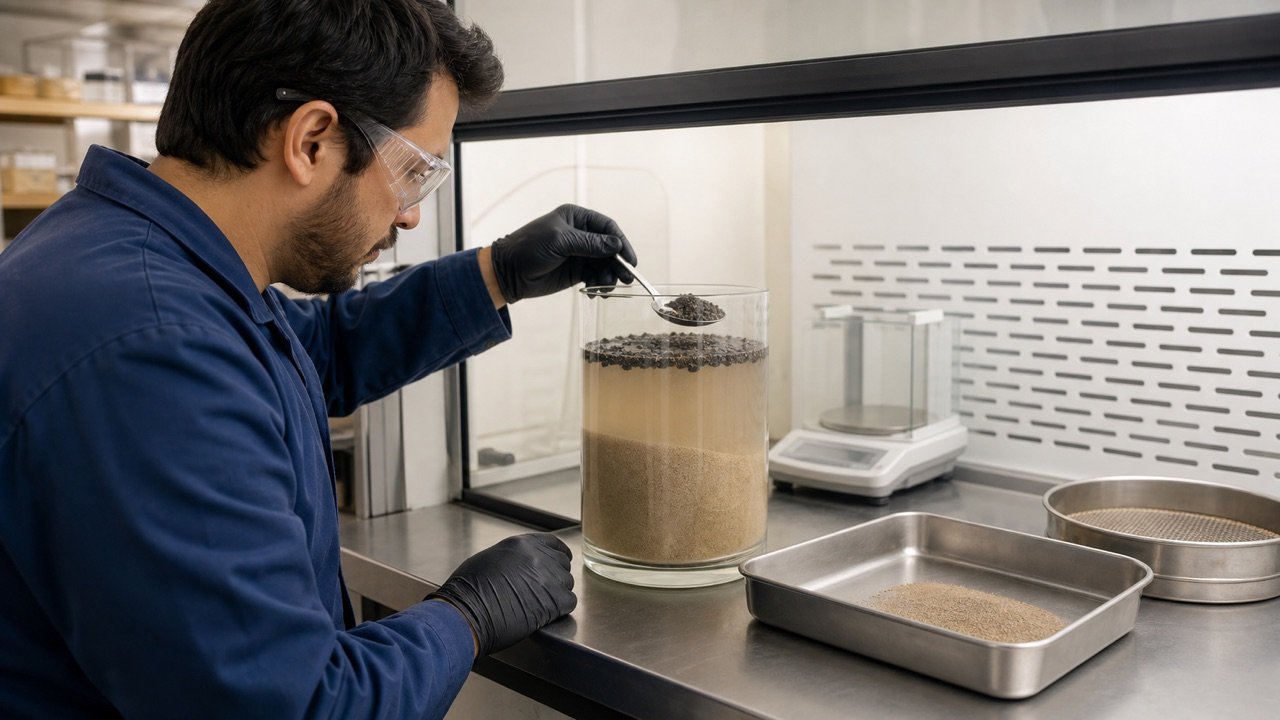
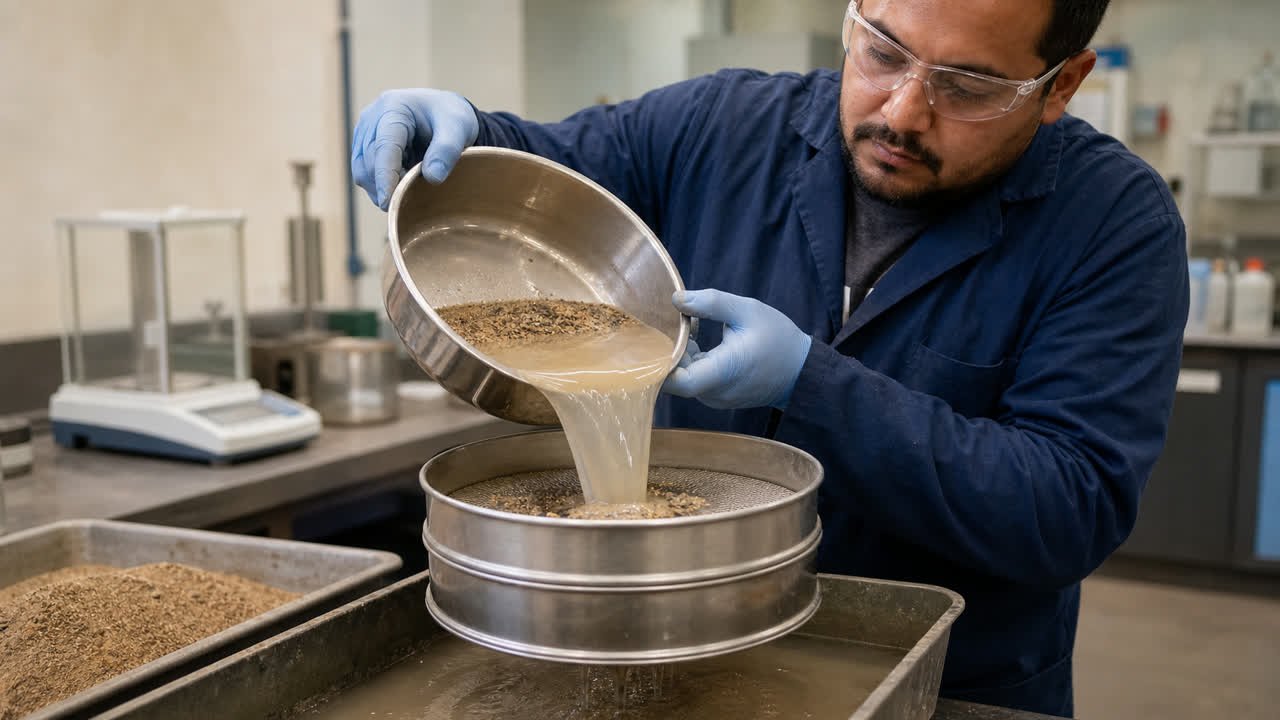
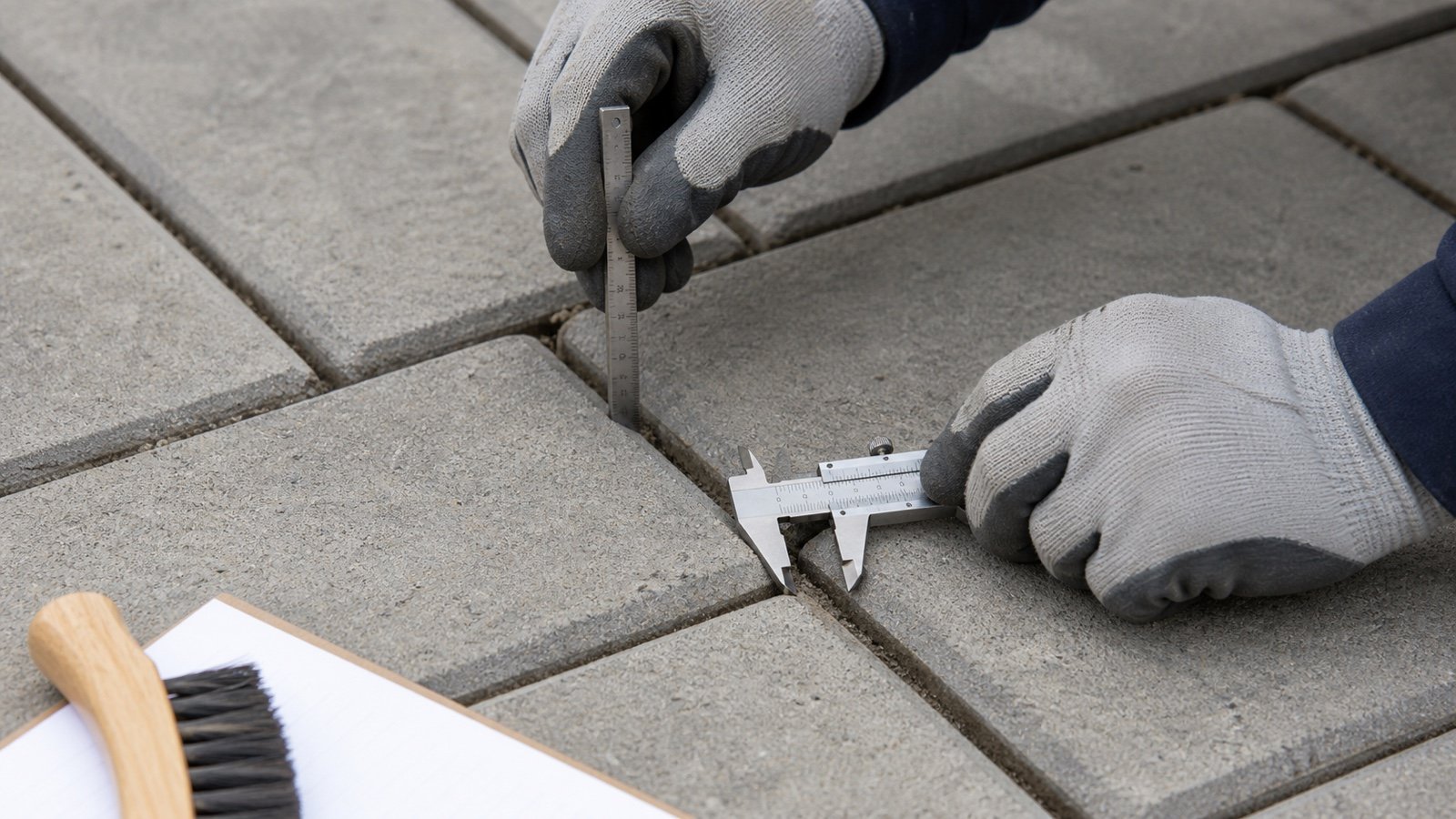
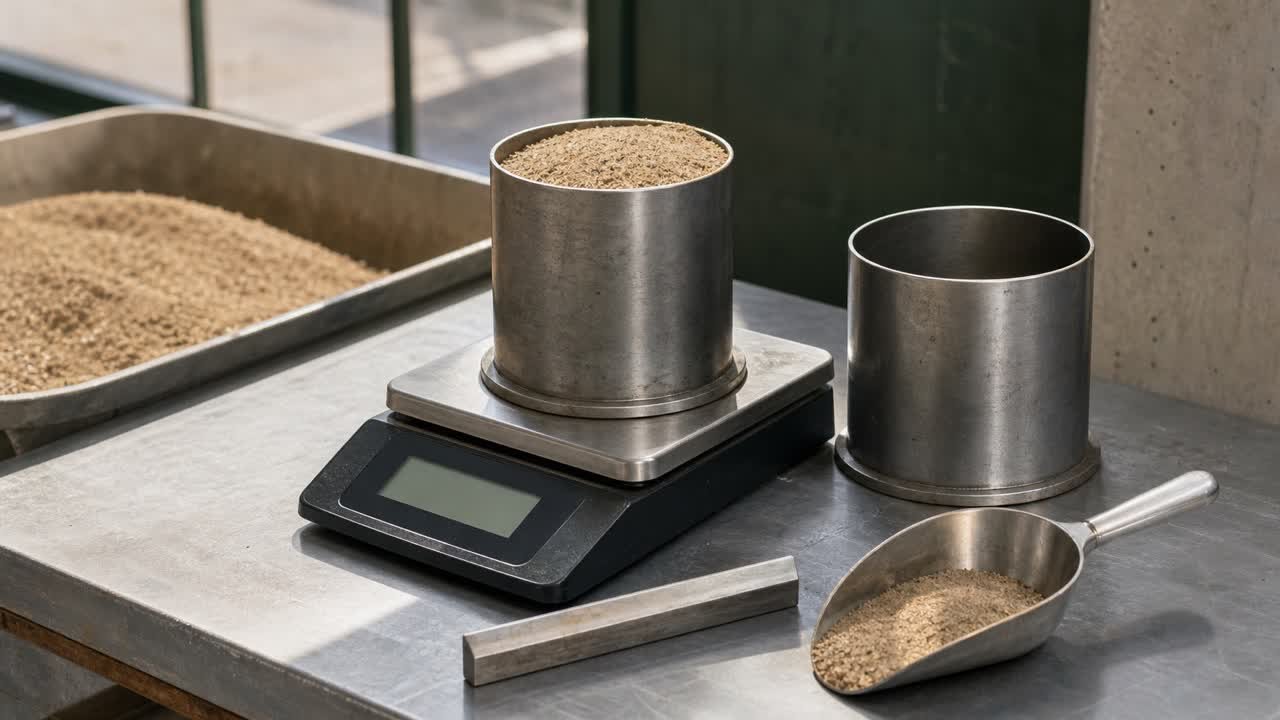
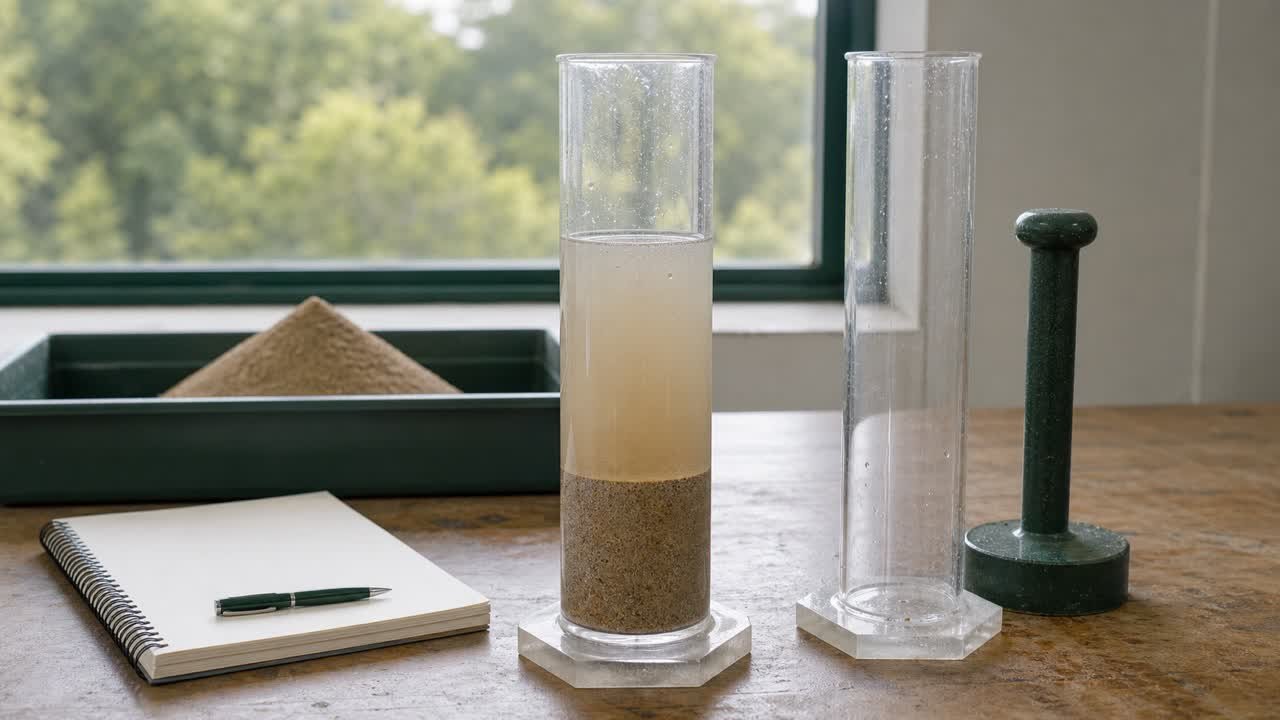
Visual color and a handful test cannot prove the product record. Use a current data sheet, representative sample, delivery ticket and written approval route when the manual's wording leaves a supplier match unresolved.
Can sand level a sloping pool site?
Follow the exact site-preparation instruction before selecting a base material. Bestway S-S-004972 says sand must not create a level base and requires excavation where needed for its named products.
A flat sand layer cannot design support over fill, weak ground, drainage problems or a slope. Keep cut and fill earthwork, retaining, support blocks, rails, legs and buttresses outside the pool-base material quantity until an approved site detail defines them.
The pool-base measurement guide separates the approved inner layer from the larger level site and support excavations.
Does a pool pad replace the specified sand or base?
A pad changes the liner-contact assembly only where all controlling instructions permit it. It cannot erase a required foundation, cover depth, rail support or component clearance without written approval.
CARVIN's cited guide places a synthetic geotextile mat between rock dust and liner. Sahara's cited oval manual says vermiculite or foam alone will not properly cover its straps and pressure plates, so it still requires at least 2 in of soil or sand over those components.
Record pad type, thickness, seams, position and compatibility. Keep foam boards, geotextile, commercial pool pads and ground sheets as distinct products rather than combining them under one generic pad allowance.
Does a preformed cove change the base material?
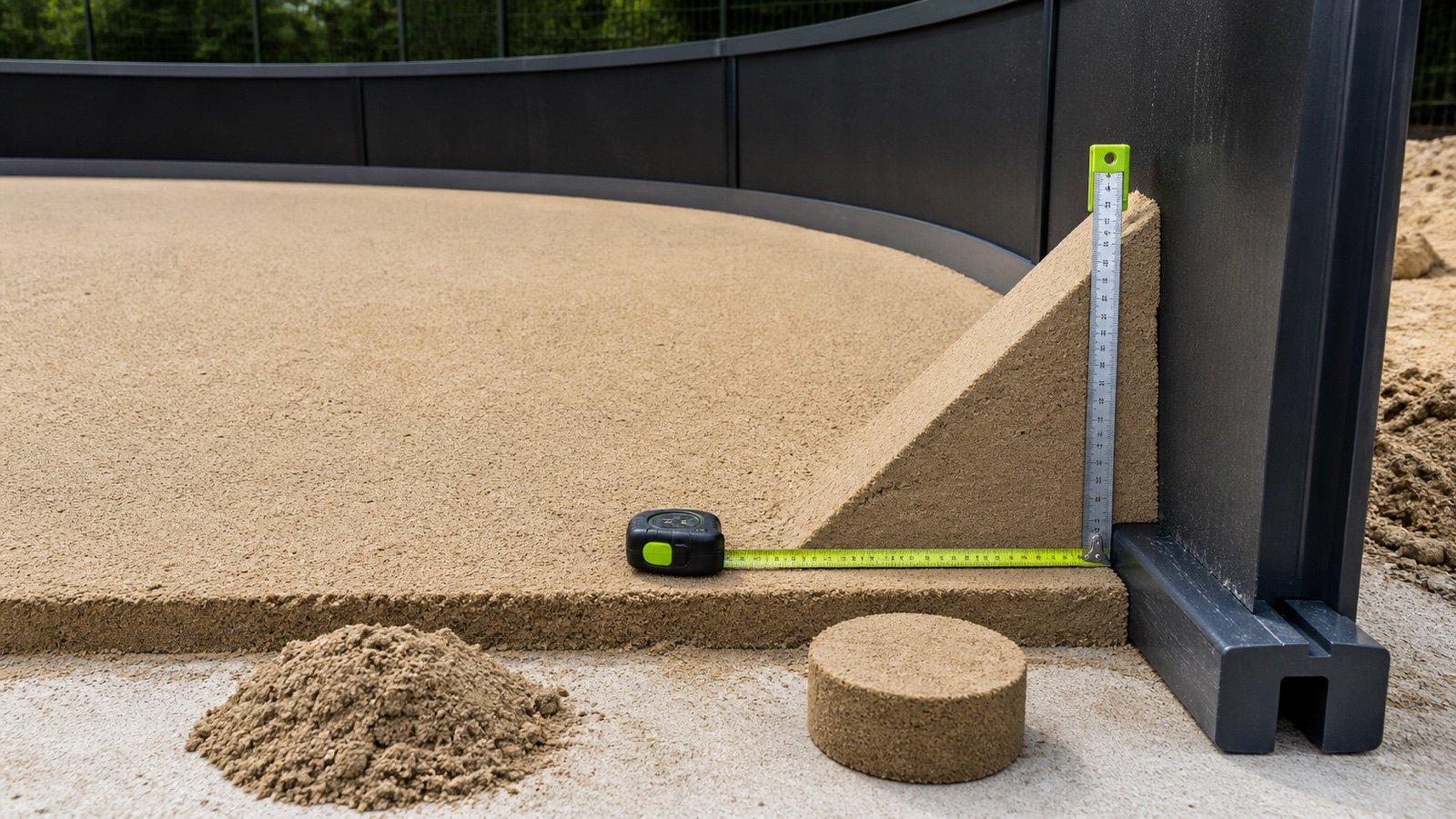
A preformed cove changes the perimeter-cove quantity where the exact pool and cove instructions approve it. It does not automatically change the flat floor material.
CARVIN lists a prefabricated cove as an option and sends the installer to that product's instructions. Use the pool-cove quantity guide to keep granular cove volume or preformed piece count separate from the flat base.
Is pool filter sand suitable for the base?
Filter media and pool-base material have separate specifications and quantities. Choose filter media from the exact filter model manual, not from the pool footprint or base-material name.
Bestway's cited #58516 filter manual specifies pool-grade #20 silica media within its stated particle-size range and charge for that filter. That requirement controls the filter vessel only. It supplies no approval for material under a liner.
Store the filter model, media specification and charge on a separate record. A pool can have a sand filter while its frame manual requires a prepared site with no sand base.
What should you ask the material supplier?
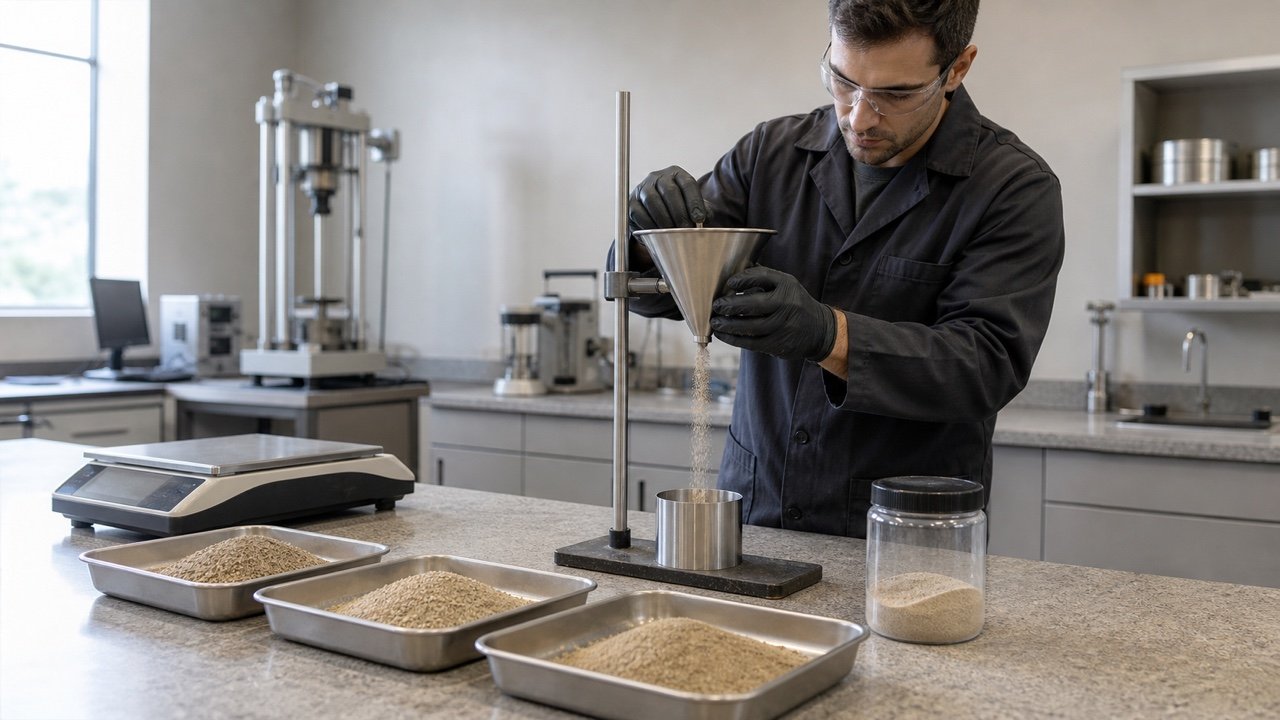
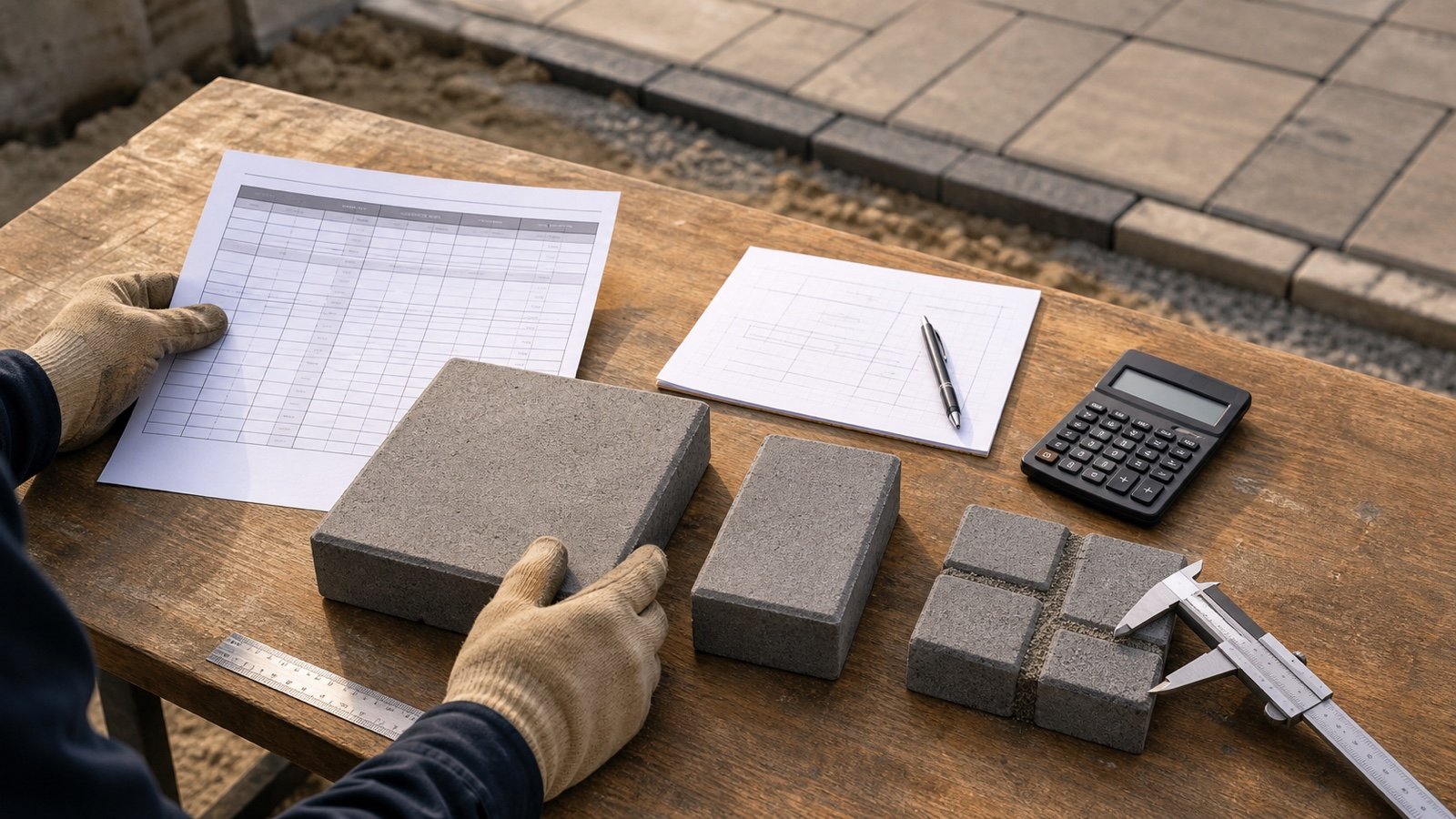
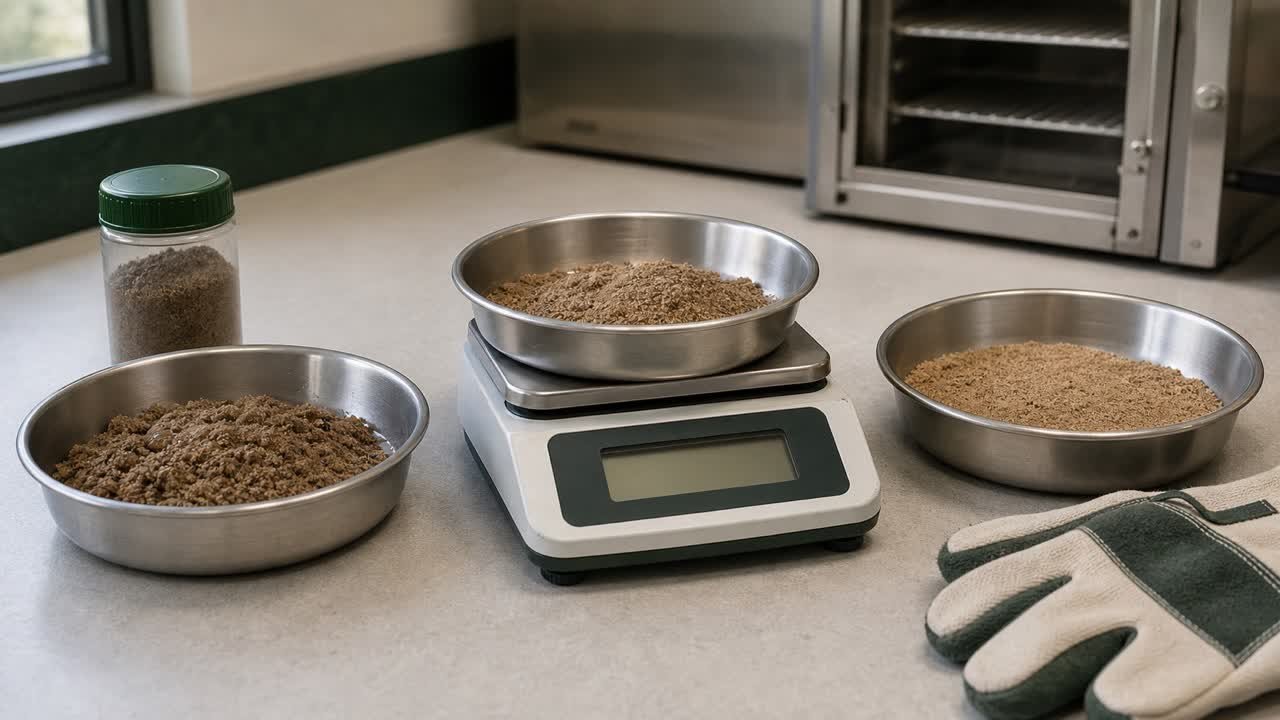
Give the supplier the manual wording and request an identifiable product, not a verbal pool-sand substitute. Keep a sample and ticket tied to the final delivery where practical.
- Ask for the exact product name, stock code, source location and current data sheet.
- Request the grading or particle-size record when the manual or approval process needs it.
- Confirm the product is free from stones, debris or contaminants prohibited by the controlling instructions.
- Record whether the material is natural, manufactured, washed, screened or blended.
- Ask whether the source or processing can change before delivery.
- Record the selling unit, loose condition, moisture basis, minimum order and delivery increment.
- Obtain approval from the manufacturer, installer or project authority when the local product name does not match the manual clearly.
| Field | Example entry | Check |
|---|---|---|
| Pool record | Manufacturer, model, size, manual title and revision | Matches the pool being installed |
| Manual wording | Exact accepted material and layer sequence | Page and drawing recorded |
| Supplier product | Product name, stock code and source | Current data sheet and sample attached |
| Material condition | Loose delivery, moisture condition and processing | Compatible with quantity conversion |
| Acceptance | Named person, organization, date and scope | No unresolved substitution remains |
| Delivery | Ticket, date, quantity, vehicle and lot | Matches the accepted product |
How do you calculate quantity after choosing the material?
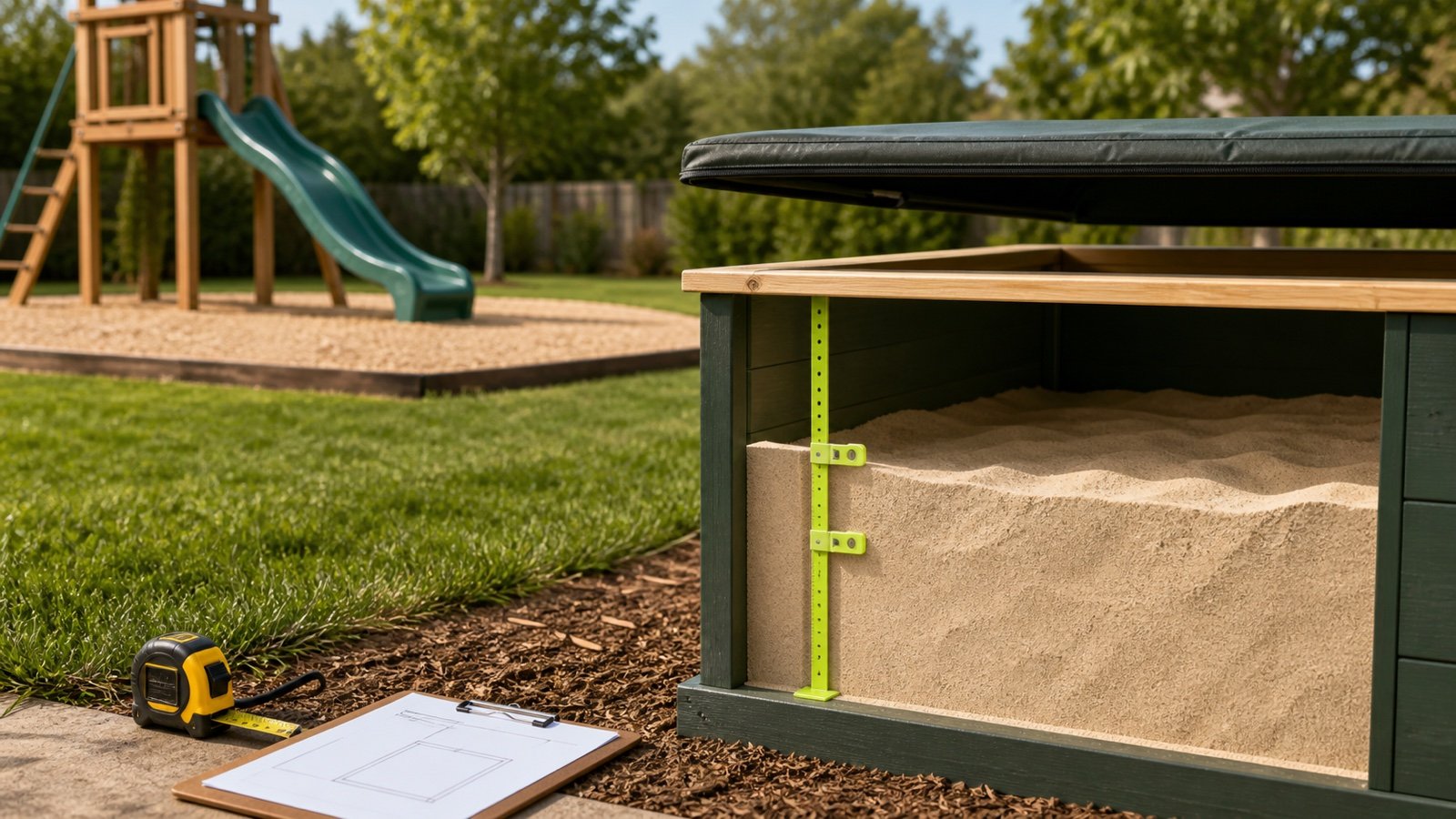
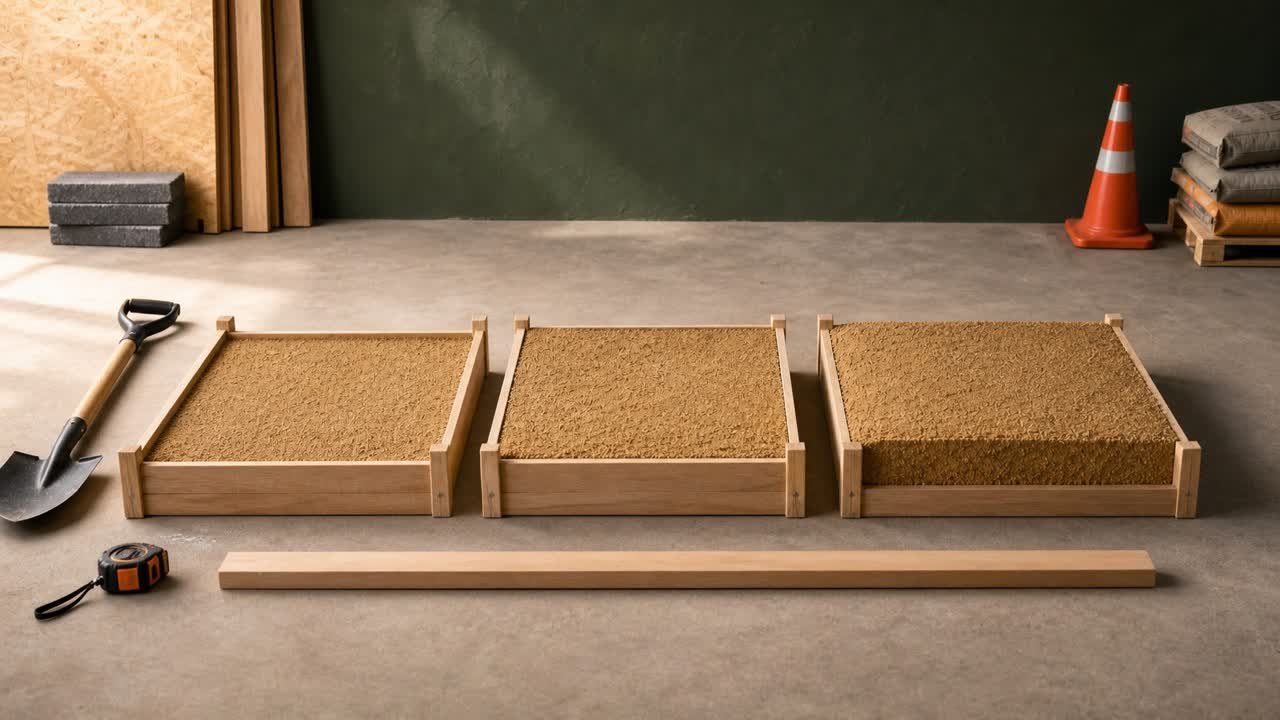
Enter the approved flat footprint and finished depth in the Pool Base Sand Calculator. The measured volume belongs to the finished uniform layer described by the same material record.
Use the pool-base depth guide to distinguish loose placement from finished compacted thickness. Convert finished volume to a supplier order only with a product-specific density, yield or accepted material-state relationship.
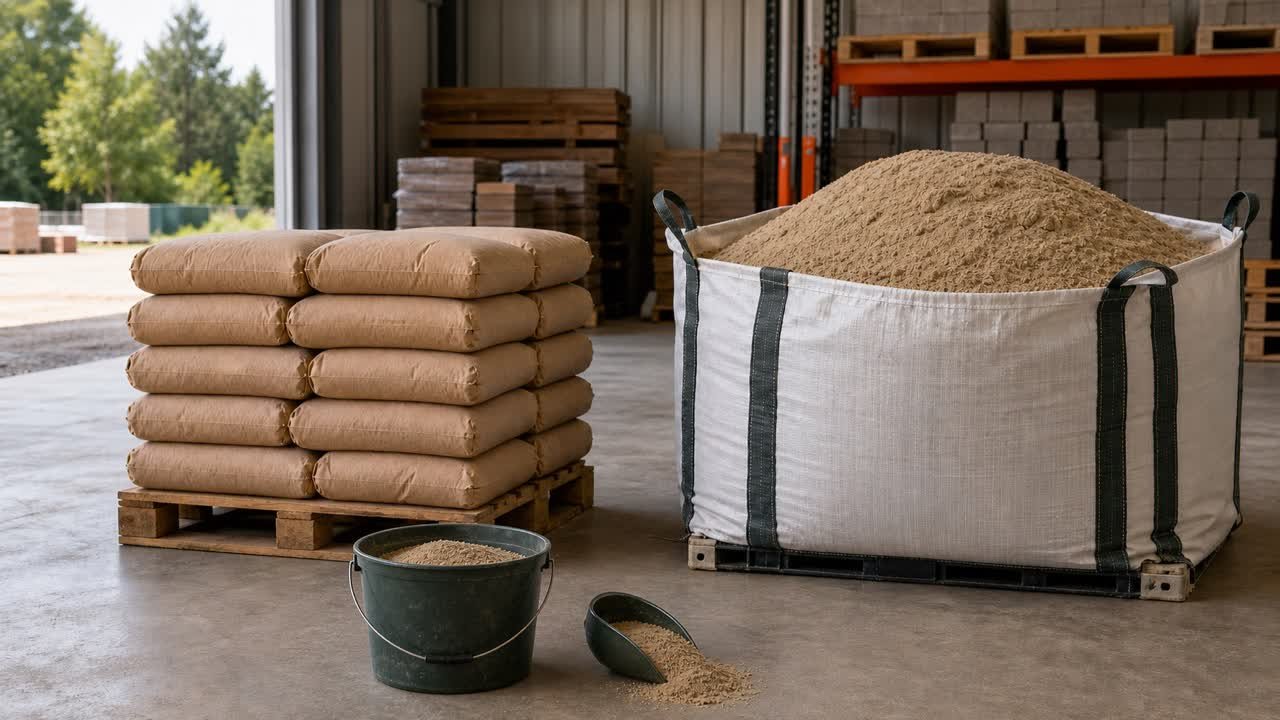
The Sand Bags vs Bulk guide covers package records, delivery access and selling increments. Keep a 0% default allowance until a named project reason supports another value.
Common material-selection mistakes
- Buying a product labelled pool sand before finding the exact pool and liner manuals.
- Treating mason sand as one identical product across every supplier.
- Using ASTM C144 as proof of pool-base suitability.
- Copying another pool's sand, stone-dust, gravel, concrete or pad assembly.
- Using sand to build up a low side where the manual requires excavation to firm ground.
- Putting a liner directly on rock dust when the named system requires a synthetic mat.
- Assuming a pool pad removes required cover over straps, plates or supports.
- Combining the flat base, cove, support excavation and filter media in one order line.
- Approving a product by color, feel, bag artwork or supplier nickname.
- Using a generic density or ton-per-yard conversion from another material.
- Accepting a delivery without checking the product code, source and ticket against the approved sample.
What should the final material record contain?
- Pool and liner manufacturer, model, size and component list.
- Manual titles, revisions, pages, drawings and retrieval dates.
- Accepted base, liner-contact and cove materials on separate lines.
- Finished depth, compaction state and required surface condition.
- Supplier product, source, processing, data sheet, grading and representative sample.
- Prohibited stones, debris, chemistry, organics or contaminants stated by the controlling documents.
- Pad, geotextile, foam, ground sheet and preformed-cove product records.
- Accepted substitution record with person, organization, date and scope.
- Measured finished volume, supplier conversion, allowance reason and selling increment.
- Delivery ticket, lot or source confirmation, photographs and unresolved site conditions.
Safety and installation limits
This page supports material selection after the pool system has been identified. Foundation design, ground support, drainage, retaining, electrical work, utility location, barriers, permits and structural installation remain outside its scope.
Stop the material order when the current manual is missing, the supplier product cannot be identified, the pool and liner instructions conflict or the site condition falls outside the approved assembly. Use the manufacturer and responsible qualified people to close that decision.
The calculation methodology explains source and review controls. Report a material, source or page issue through the corrections route, or return to the Sand Material Planning hub.
Sources and source scope
- Radiant Pools, Metric Oval Installation Manual R8: one oval system's clean washed masonry sand or suitable-base language and floor/cove schedule.
- CARVIN Equinox Round Above Ground Pool User's Guide: one round system's compaction-sand or fine-rock-dust assembly, synthetic mat and cove alternatives.
- Bestway Pool Manual S-S-004972: one frame-pool family's site and sand-levelling restrictions.
- Sahara Oval Instructions: one oval system's fine-sand or sifted-earth detail, component cover and material-chemistry warning.
- ABGAL Above Ground Pool Liner Installation: one liner maker's named sand, finished floor and surface process.
- ASTM C144-25: aggregate-for-masonry-mortar scope; it supplies no pool-base approval within that scope.
- Bestway Sand Filter Owner's Manual #58516: one filter model's separate pool-grade media specification and charge.
Source scope: Each pool, liner and filter document governs its named product and revision. ASTM C144 governs masonry-mortar aggregate within its scope. The exact pool assembly, supplier product, site conditions, permits, local rules and responsible qualified people control the material decision.
Review note: Saleem Sial owns the research and editorial record. Live SERP review, direct PDF retrieval, text extraction, source comparison, supplier-record review, editorial checks, build validation, link crawl, schema review and rendered QA form the internal publication gate. Waseem Sial, External Reviewer and Engineer, is listed for ongoing external review; no completed external-review date is claimed.