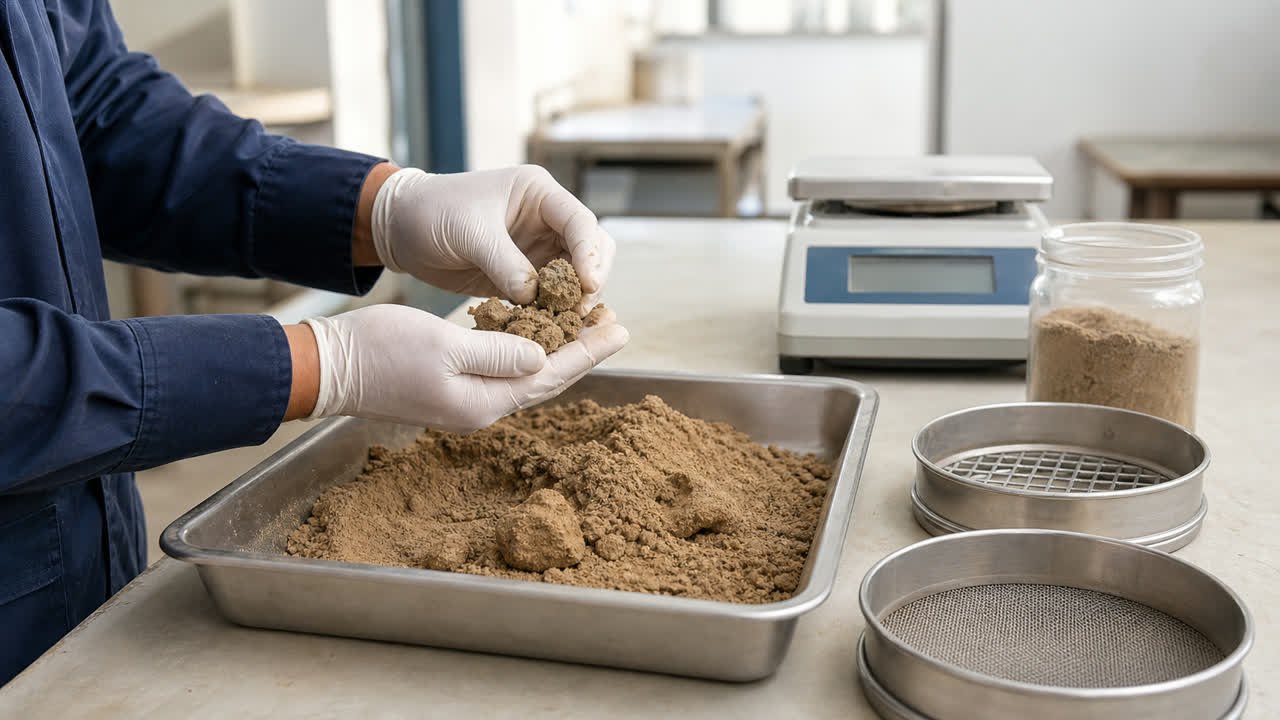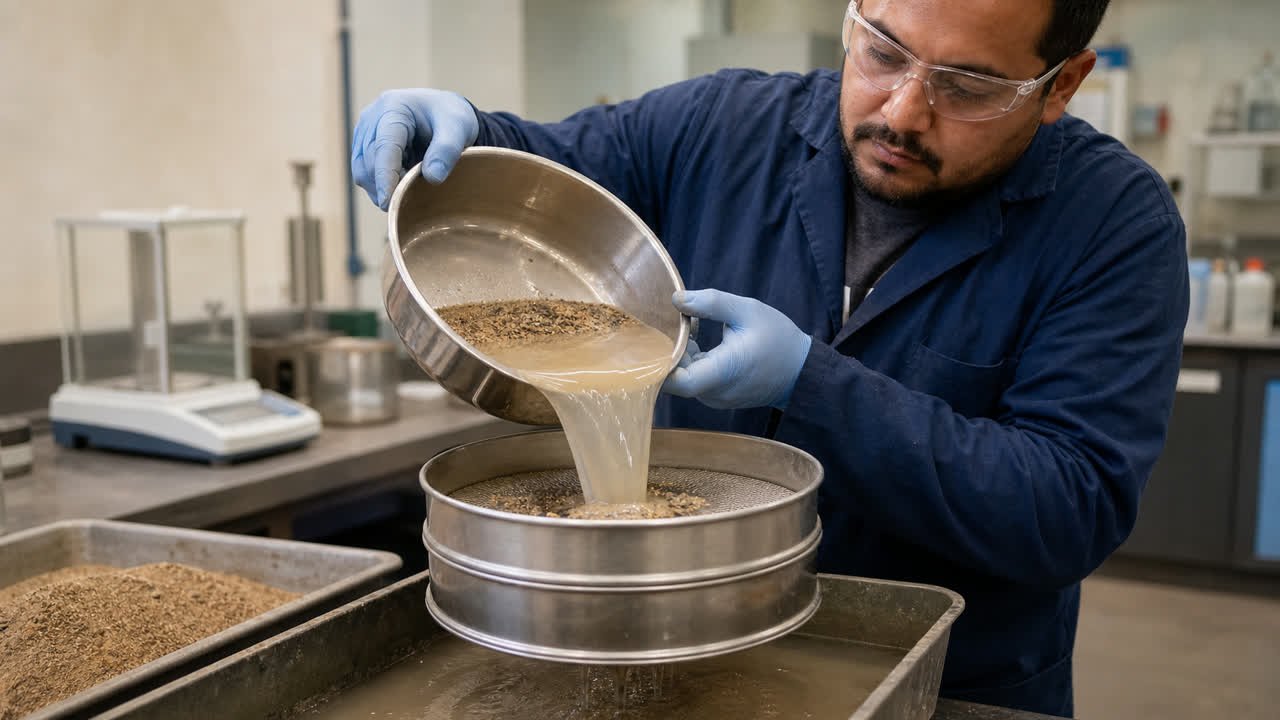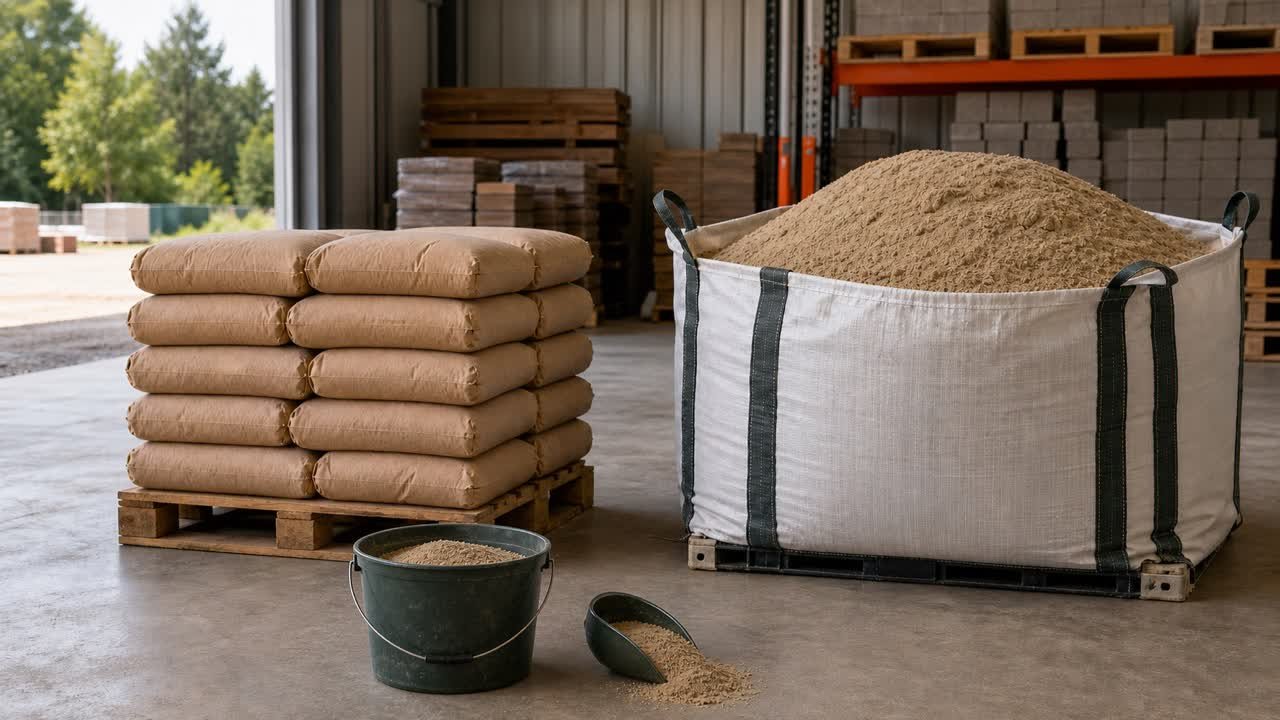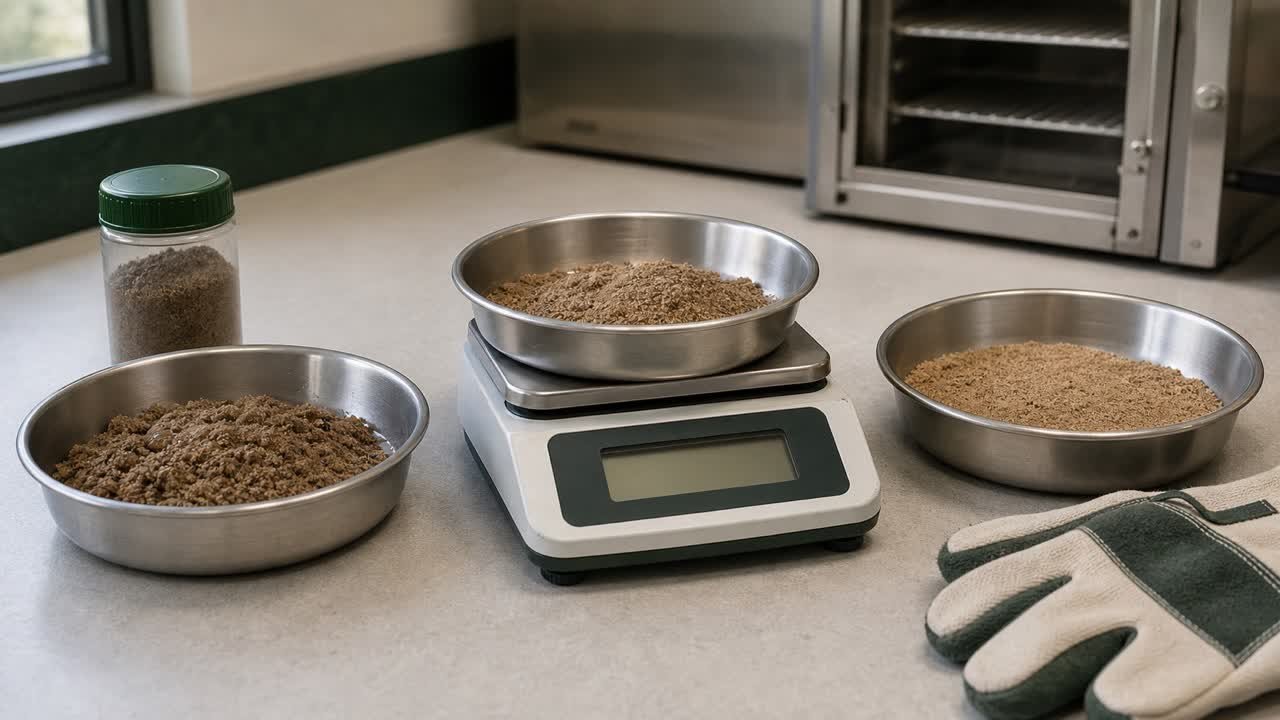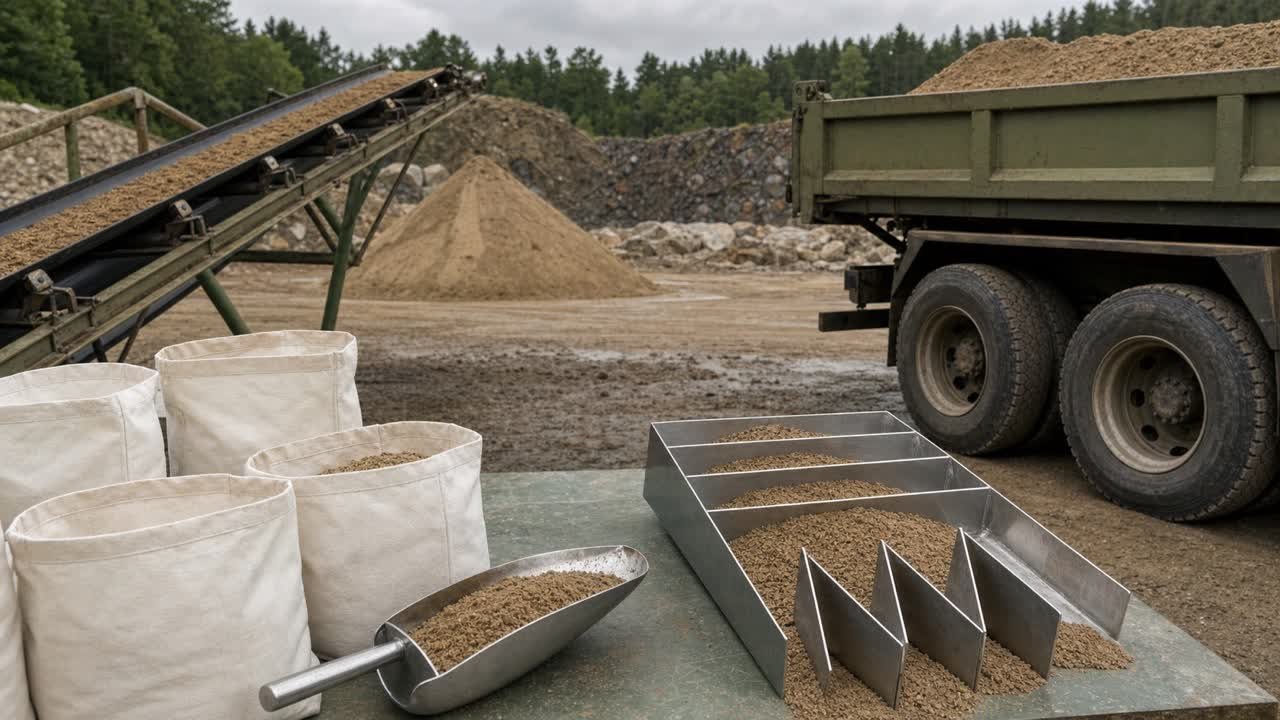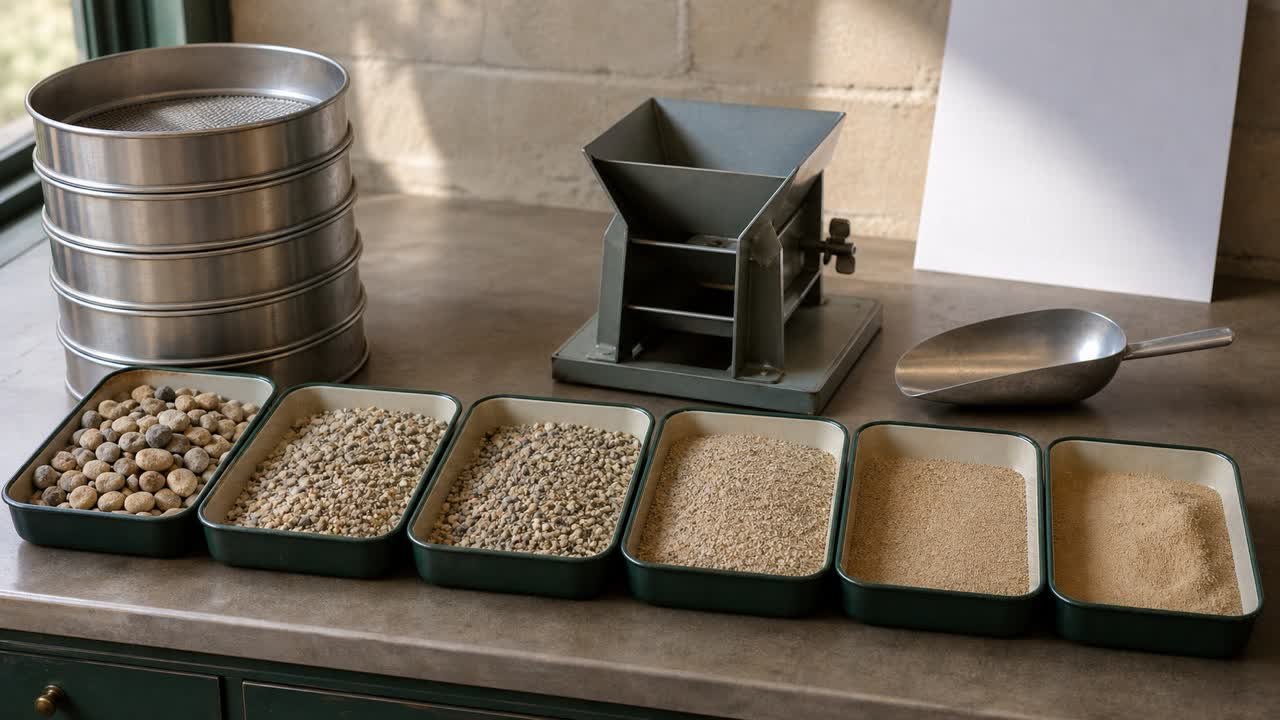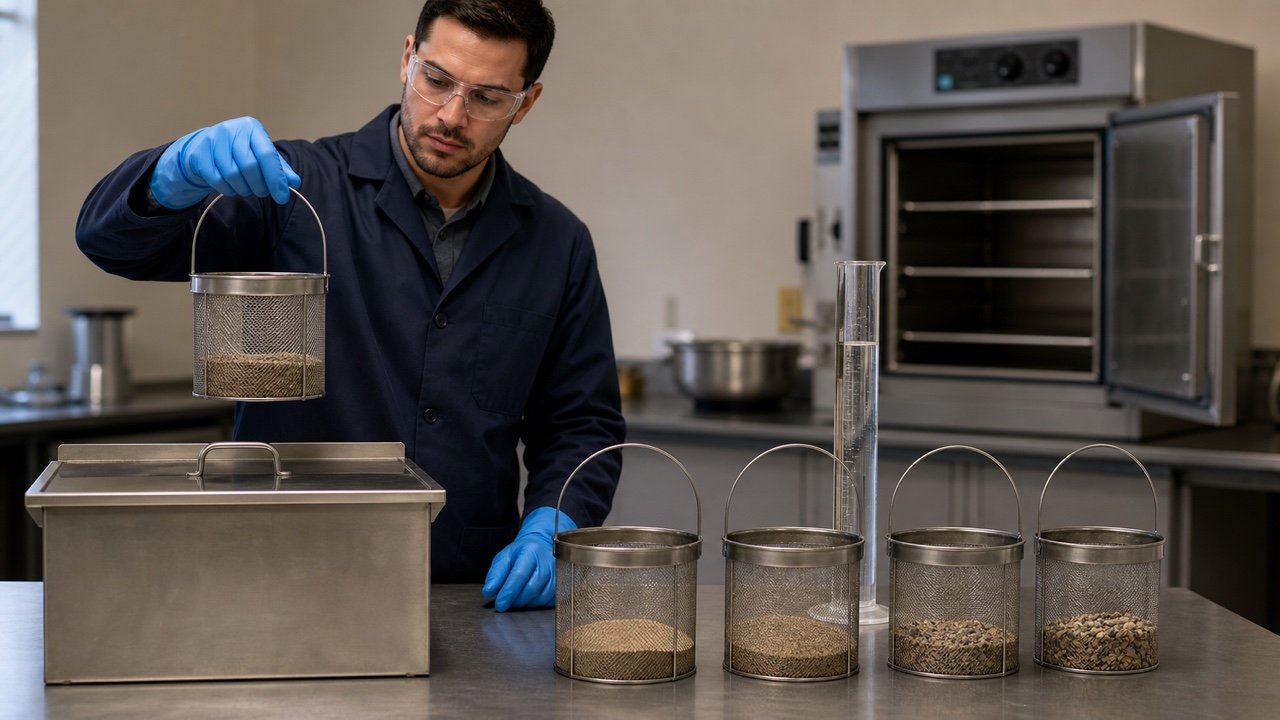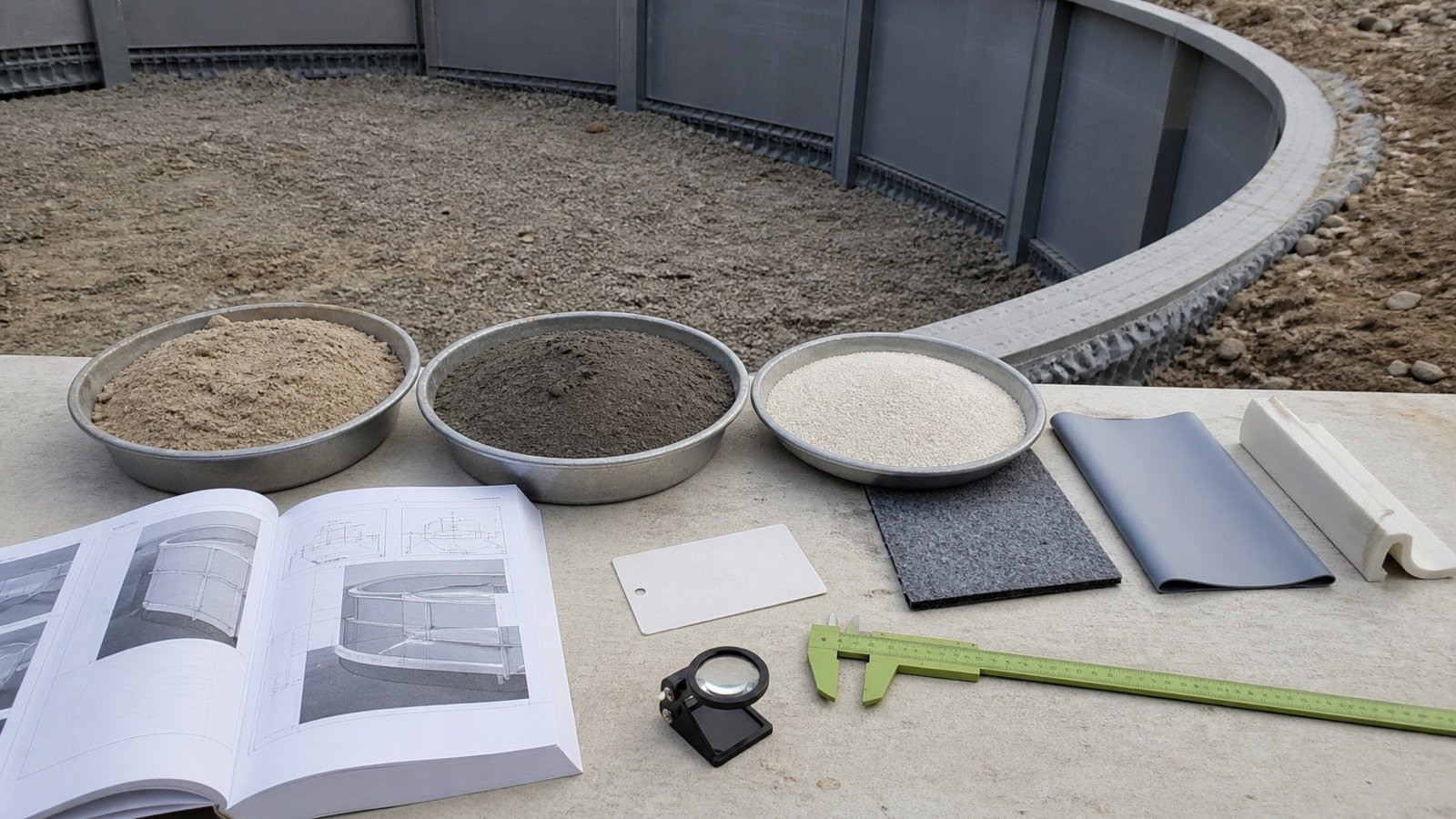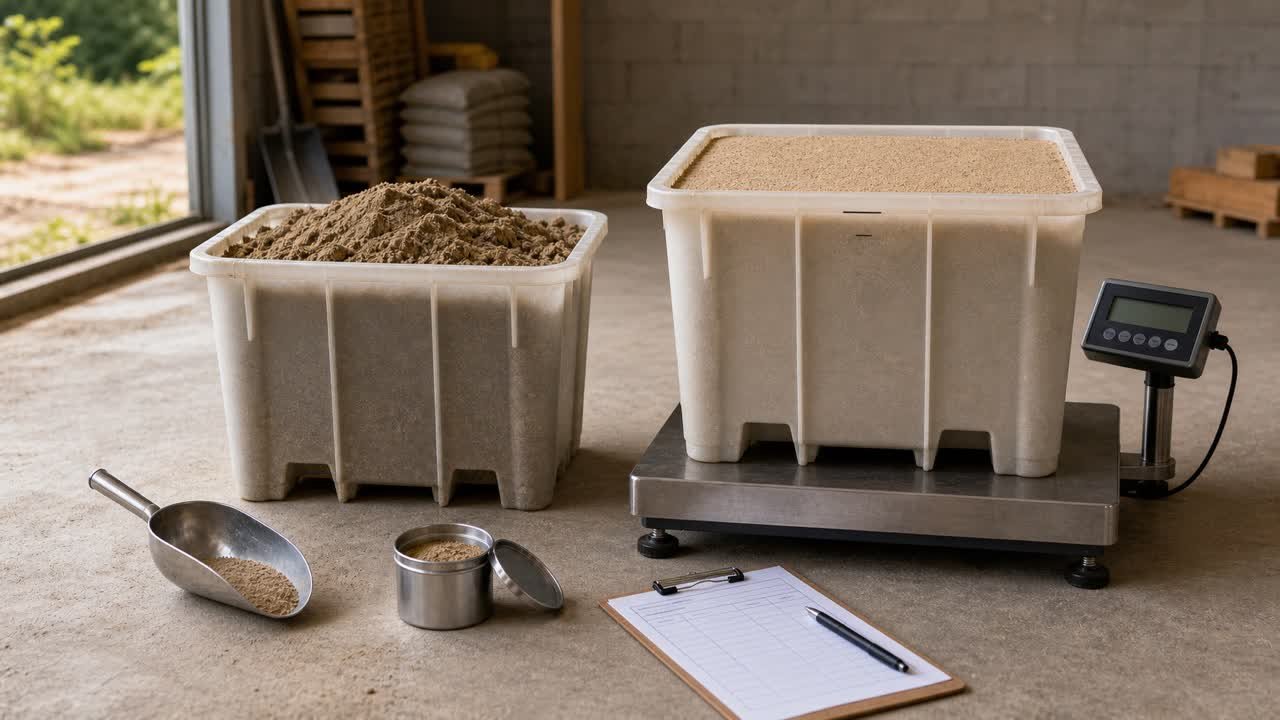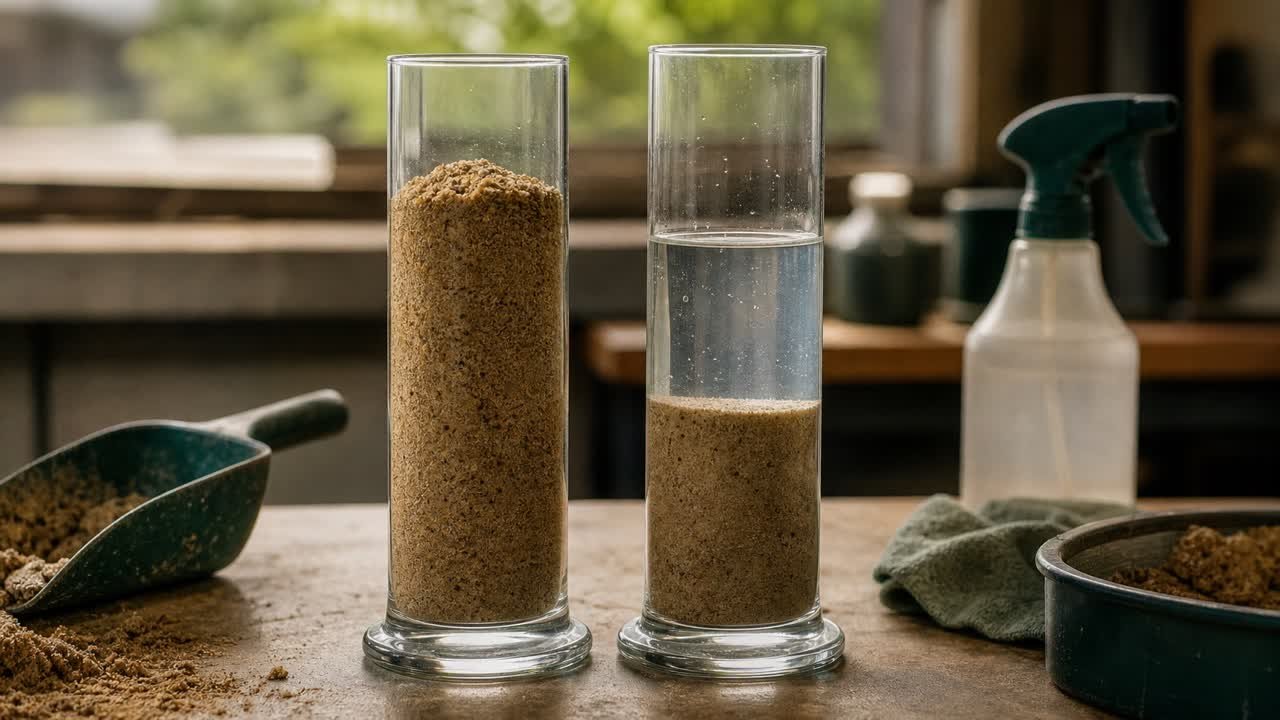
Damp fine aggregate can occupy more loose volume than the same sand after inundation. Moisture films and water menisci can hold grains farther apart, so a struck measure of damp sand may contain less aggregate than its apparent volume suggests.
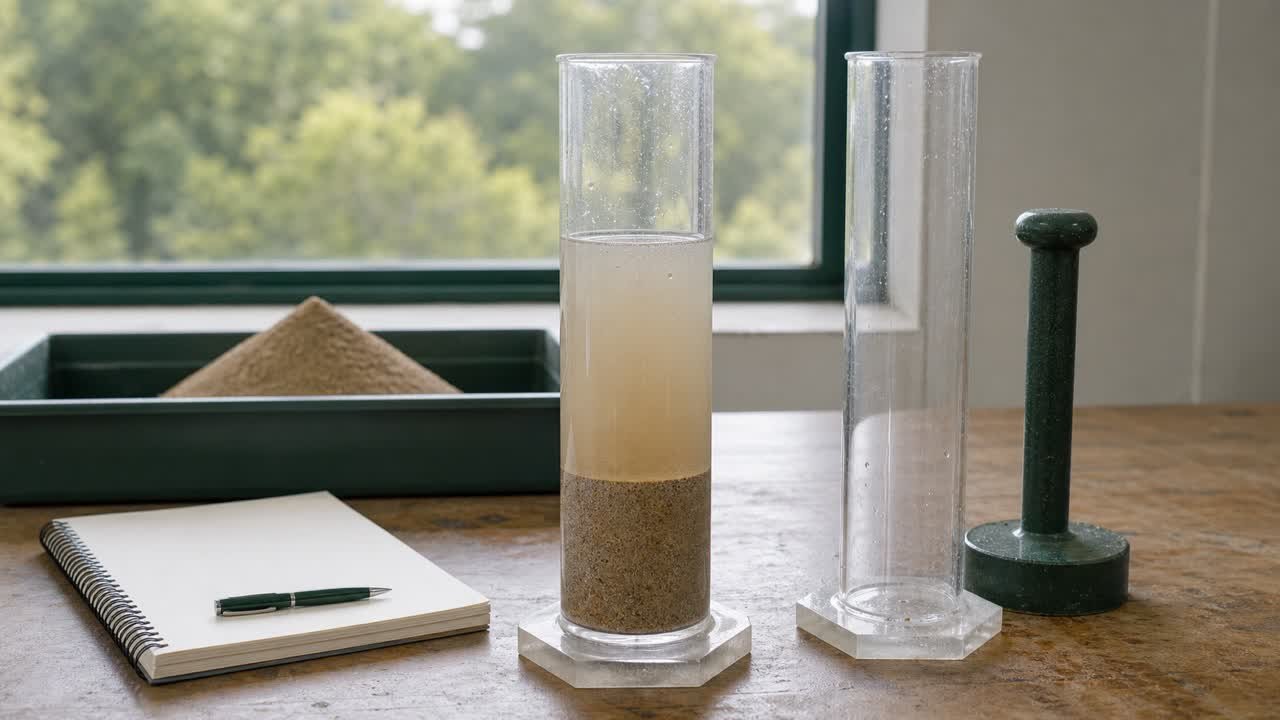
A field bulking test compares a controlled loose damp volume with the volume occupied after the same sample is placed in water. Use the measured factor for that sand sample and condition. Recheck it when the source, grading, moisture, or handling changes.
What is bulking of sand?
Bulking of sand is the increase in apparent loose volume associated with moisture around fine-aggregate particles. The effect matters when sand is measured or proportioned by volume.
Added water also changes mass, and field compaction changes packing. Record bulking, moisture content, bulk density, compaction, handling allowance, and supplier rounding as separate quantities.
Caltrans explains that a loose volume of moist sand can weigh less than the same volume of dry sand because moisture menisci push particles apart. Caltrans uses this point to explain why concrete aggregate proportioning by mass gives better control than uncorrected volume batching.
Bulking depends on the actual sand and its current condition. Grain-size distribution, particle shape, surface texture, moisture distribution, sampling, filling method, and disturbance can change the result. A fixed internet percentage cannot verify a stockpile or delivery.
When does a sand bulking correction apply?
Apply a bulking correction when a governing method requires it and sand is measured by loose volume in a damp condition. The correction links the measured damp loose volume to the reference condition defined by that method.
| Situation | Quantity concern | Required check |
|---|---|---|
| Volumetric concrete or mortar batching | A struck damp-sand measure may contain less aggregate than an uncorrected volume schedule assumes | Governing batch procedure, current sample, bulking factor, and moisture adjustment |
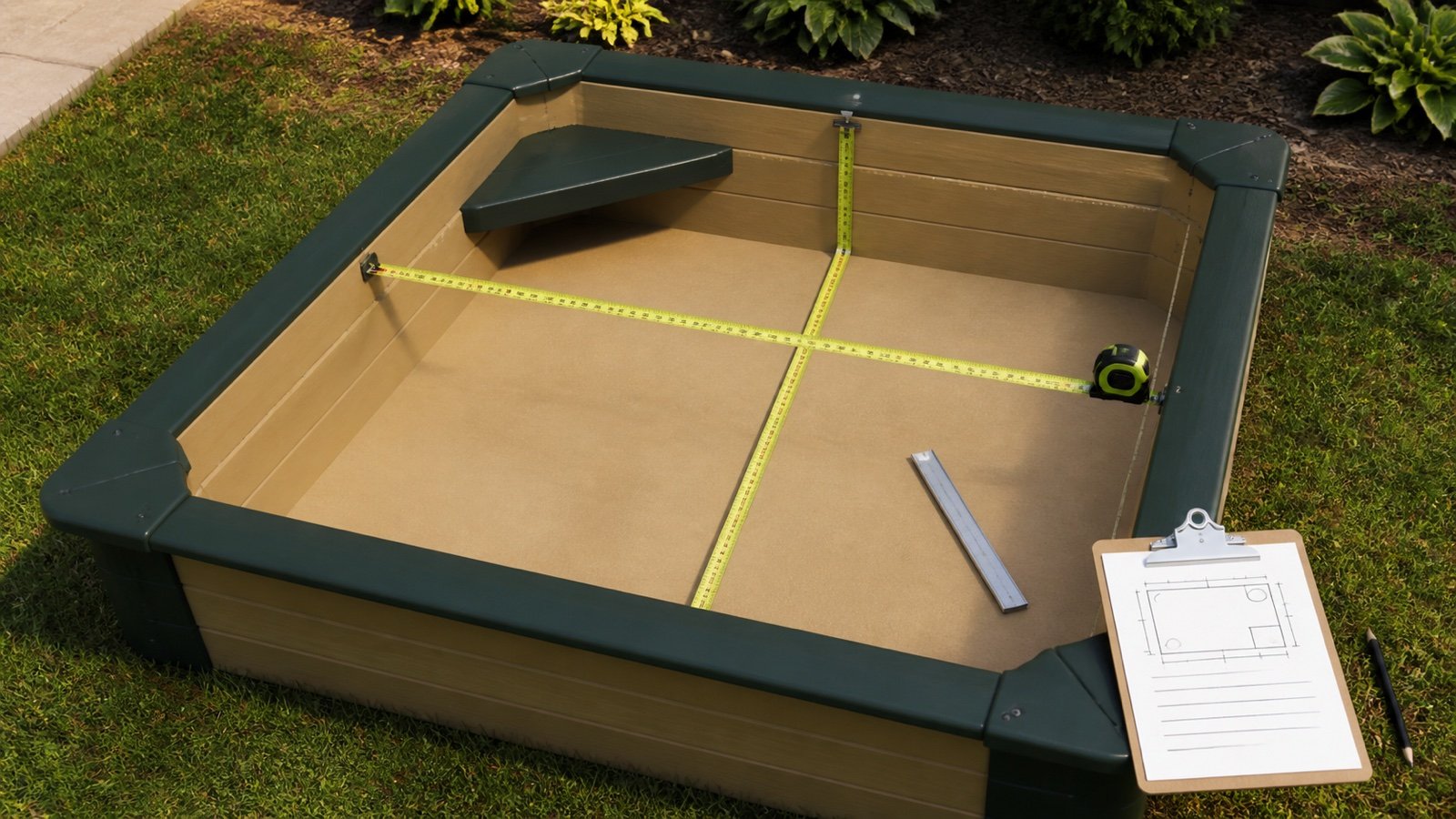
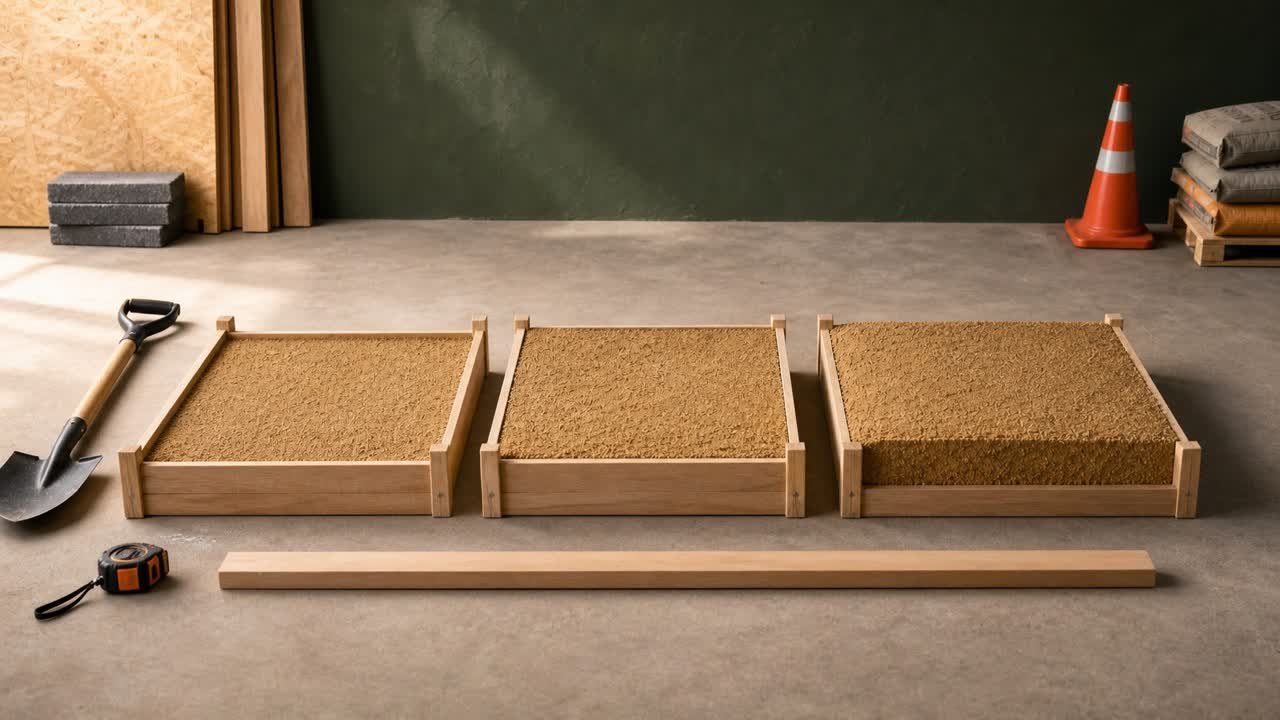
| Site boxes, buckets, or gauge measures | Equal container volumes can contain different aggregate quantities as moisture changes | Container calibration, filling method, current material condition, and accepted correction |
| Loose stockpile or loader-volume record | Surface moisture and packing can change apparent volume and bulk density | Representative sampling, measurement basis, and supplier or project method |
| Sand sold by scale weight | Bulking does not change the scale reading, while moisture contributes to delivered mass | Ticket mass, moisture basis, product identity, and applicable purchase terms |
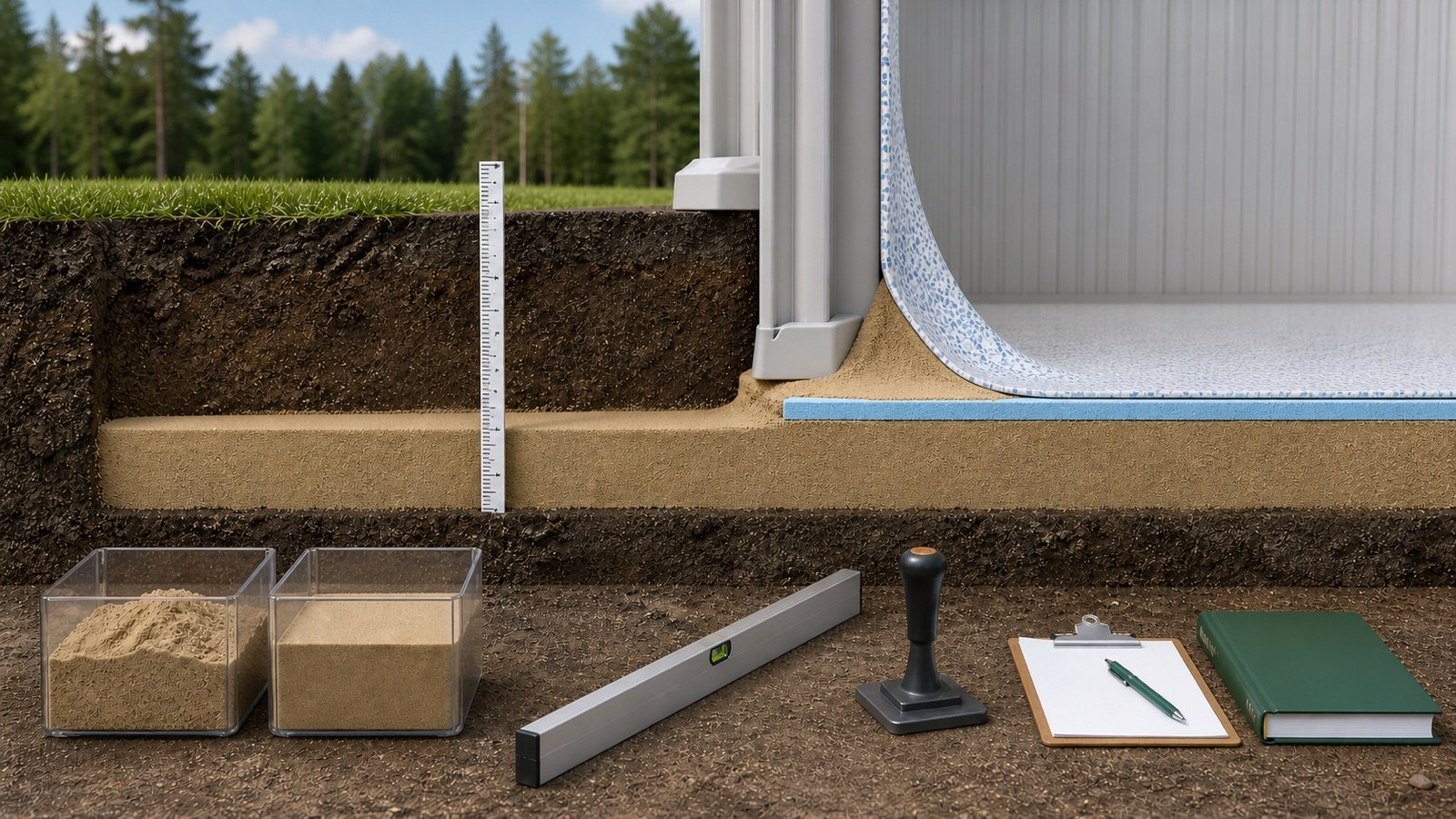
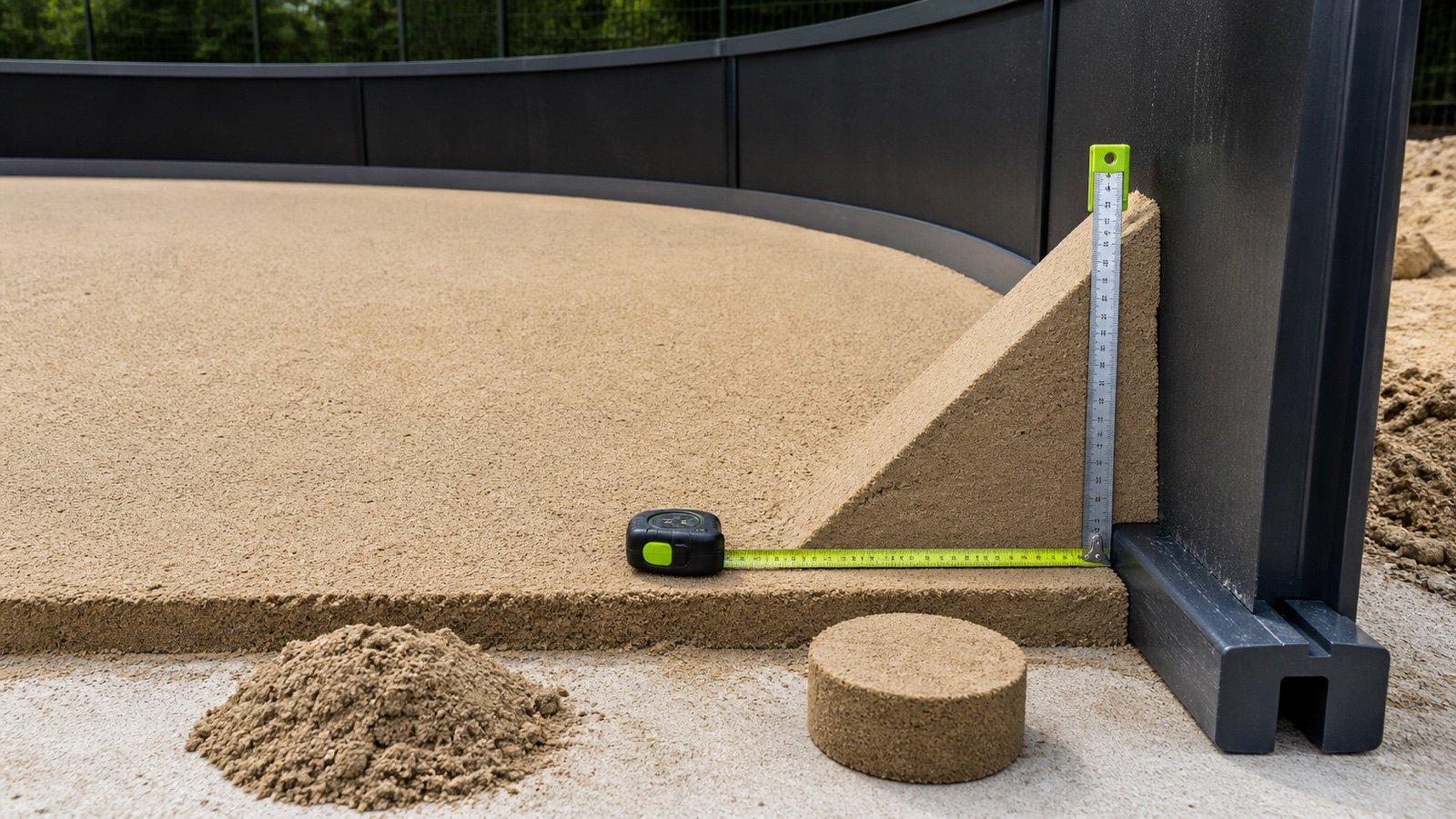
| Finished compacted layer | The target space and density use a different material state from a loose damp measure | Project compaction specification, test method, lift records, and measured yield |
The Sand Calculator calculates geometric volume from area and depth. Label that result as the required project volume before applying any project-approved conversion to a loose delivery or batching state.
How do you test sand bulking in the field?
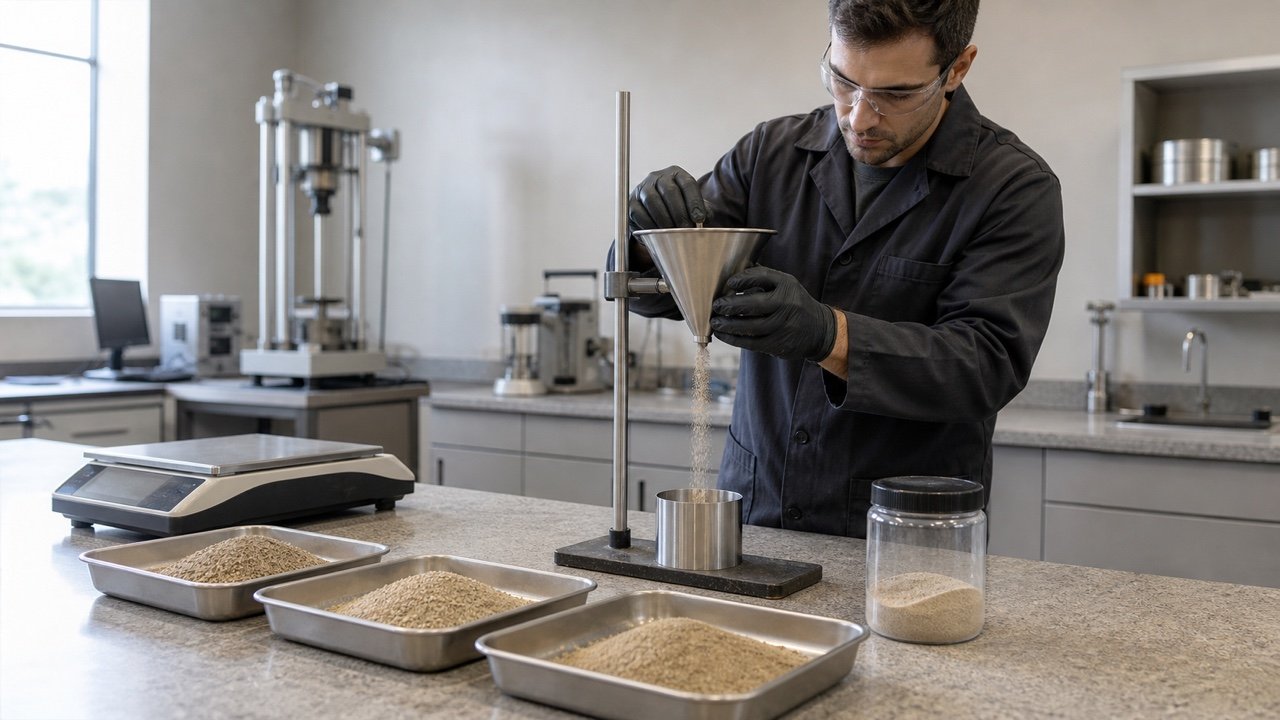
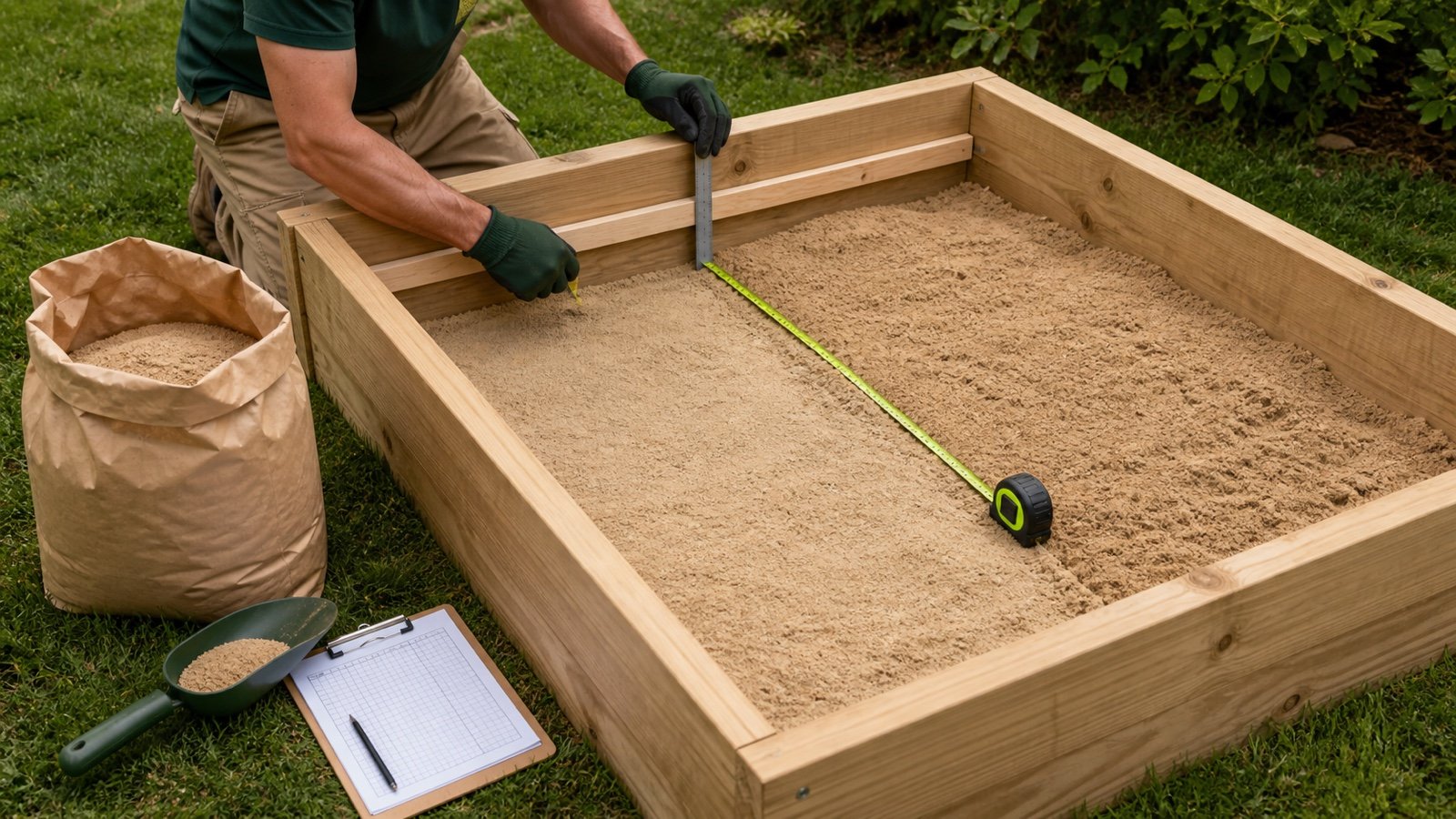
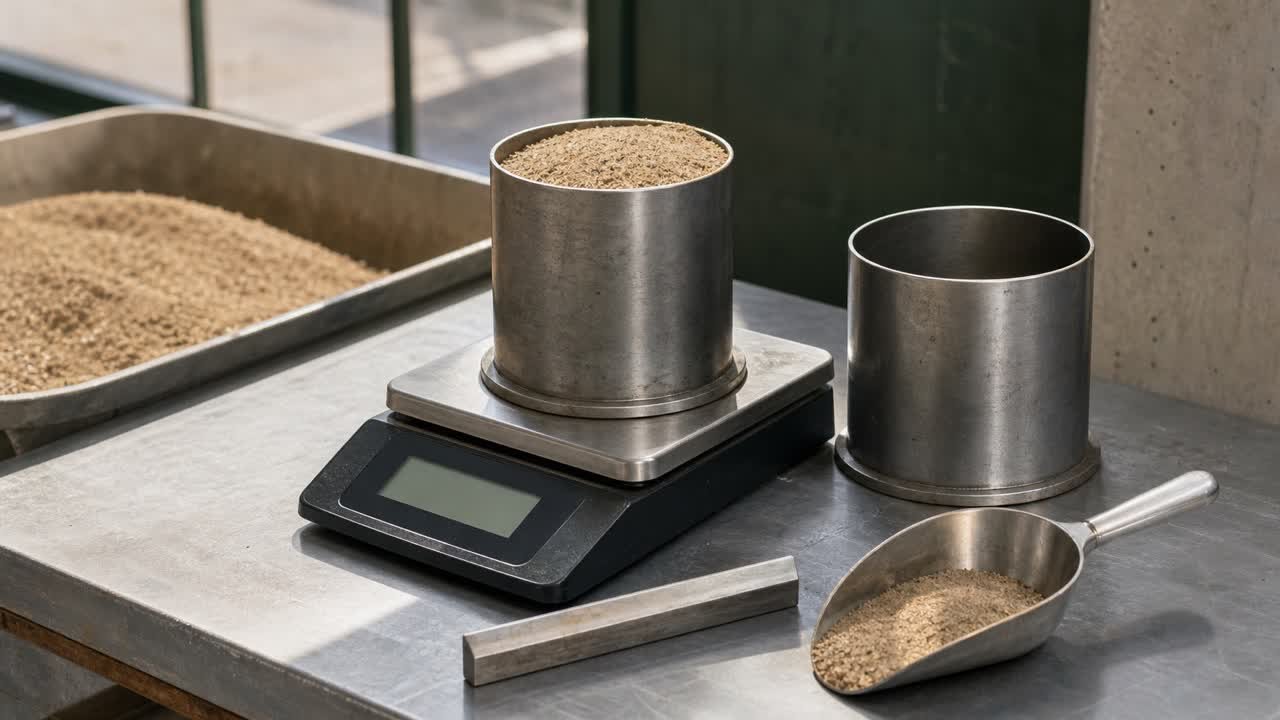
Use the test method named by the project or organization. Georgia Department of Transportation GDT 36 provides one public method with a representative sample, a 0.5 ft³ measure, water, a straightedge, and a ruler.
- Take a representative sample. GDT 36 calls for quartering or a sampler. Keep the sample linked to its stockpile, delivery, location, and time.
- Fill the measure consistently. Drop the sand with about the same force used when it flows into the mixer measuring hopper.
- Strike the top level. The initial damp loose volume, V1, is 0.5 ft³ for the GDT 36 apparatus.
- Transfer the sample without loss. Restart if sand spills because the 2 measurements must cover the same material.
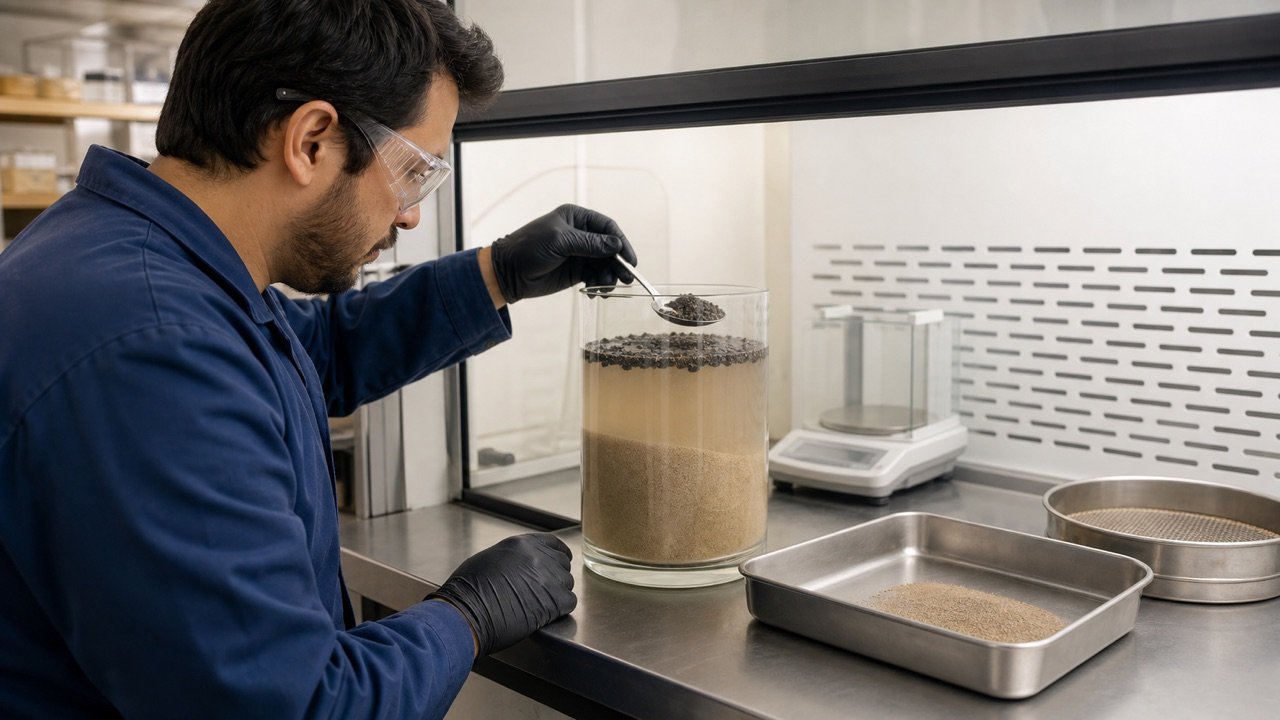
- Fill the measure with water. Pour the measured sand into the water slowly.
- Measure the inundated volume. GDT 36 uses the distance from a straightedge to the top of the sand to calculate V2.
- Calculate and report the factor. Divide the original damp loose volume by the inundated volume.
This summary explains the quantity logic. Follow the complete current test document, apparatus requirements, safety controls, sampling plan, and project acceptance process when a formal result is required.
What is the sand bulking formula?
The bulking factor is the damp loose volume divided by the inundated reference volume for the same sample.
Bulking factor, B = V1 ÷ V2
Bulking percentage = (B - 1) × 100
The same percentage can be written directly from the 2 measured volumes:
Bulking percentage = (V1 - V2) ÷ V2 × 100
| Symbol | Meaning | State |
|---|---|---|
| V1 | Initial struck volume of the representative sand sample | Damp and loose under the stated filling method |
| V2 | Volume occupied by the same sample after inundation under the stated method | Inundated reference condition |
| B | Ratio V1 ÷ V2 | Dimensionless factor tied to the sample and procedure |
Use matching volume units for V1 and V2. The ratio is unchanged whether both values are recorded in cubic feet, cubic metres, litres, or millilitres.
Worked example: calculate a 25% bulking result
Assume a hypothetical field test begins with 0.50 ft³ of damp loose sand. After the same sample is inundated, it occupies 0.40 ft³.
| Step | Calculation | Result |
|---|---|---|
| Bulking factor | 0.50 ÷ 0.40 | 1.25 |
| Bulking percentage | (1.25 - 1) × 100 | 25% |
| Direct percentage check | (0.50 - 0.40) ÷ 0.40 × 100 | 25% |
A metric check gives the same ratio. A 15 L damp loose sample that occupies 12 L after inundation has a factor of 15 ÷ 12 = 1.25 and a bulking result of 25%.
The values are calculation fixtures. They do not state a normal or recommended bulking percentage for a supplier product or project.
How do you correct a measured damp sand volume?
Choose the equation from the quantity you know. Write the state beside both the input and result.
Convert measured damp loose volume to its reference equivalent
Divide the measured damp loose volume by the test factor.
Reference-equivalent volume = measured damp loose volume ÷ B
With a measured damp loose volume of 10.0 m³ and a tested factor of 1.25:
10.0 ÷ 1.25 = 8.0 m³ in the stated reference condition.
Find the damp loose volume for a required reference volume
Multiply the required reference volume by the tested factor. GDT 36 uses this direction to obtain an equivalent loose damp volume from a compacted volume under its stated method.
Required damp loose volume = required reference volume × B
For an 8.0 m³ required reference volume and a tested factor of 1.25:
8.0 × 1.25 = 10.0 m³ damp loose.
Keep the result inside the scope of the chosen test and project procedure. An inundated sample volume, a laboratory dry bulk-density measure, a supplier loader volume, and an accepted field-compacted layer are distinct measurement conditions.
Does 25% bulking mean the sand contains 25% water?
No. The bulking percentage compares 2 volumes. Moisture content compares water mass with the mass basis defined by the test.
| Quantity | Typical calculation basis | What it answers |
|---|---|---|
| Bulking percentage | Change between damp loose and reference volumes | How the apparent occupied volume changed |
| Total evaporable moisture | Mass lost when a representative sample is dried under the stated method | How much evaporable water the sample contains |
| Surface moisture | Field or plant moisture determination using the stated method and aggregate properties | Moisture available outside the saturated surface-dry aggregate condition |
| Bulk density | Aggregate mass divided by occupied bulk volume under a named loose or compacted procedure | Mass-to-volume conversion for that condition |
| Percent compaction | Field dry density compared with the specified laboratory reference density | Whether placed material meets the project density criterion |
ASTM C70-26 covers field determination of surface moisture in fine aggregate by displacement in water. ASTM C566-25 covers total evaporable moisture in an aggregate sample by drying. Those methods answer moisture questions, while GDT 36 reports a volume bulking factor.
How is bulking different from loose-to-compacted yield?
Bulking describes the volume effect measured by the specified sand test. Loose-to-compacted yield compares a delivered or placed loose quantity with the finished material quantity produced under a project placement and compaction process.
Compacted yield can change with grading, moisture conditioning, lift thickness, equipment, compactive effort, confinement, target density, and loss. Use a test section, delivery and placement records, geotechnical data, or another approved source for that relationship.
Do not apply a bulking factor and a general compaction percentage without checking their definitions. The 2 factors can overlap or use different reference conditions. Write each equation before combining any supported factors.
Why can a dry bulk-density test differ from a damp stockpile?
ASTM C29/C29M-23 determines aggregate bulk density on a dry basis in a loose or compacted condition. ASTM notes that hauling units and stockpiles can contain absorbed and surface moisture, and surface moisture affects bulking.
The standard also says the relationship between compaction in a hauling unit or stockpile and the condition produced by its test is unknown. A C29/C29M result can support a purchase conversion only when its condition and use fit the agreement.
Use the Sand Weight Chart to calculate mass from a documented bulk density. Keep the density source, dry or moisture basis, loose or compacted method, sample date, and product identity with the calculation.
When should the sample be retested?
Retest at the frequency required by the governing process and whenever the sample may no longer represent the material being measured.
- After rain, drainage, drying, sprinkling, or another visible moisture change.
- When the sand source, product, grading, or stockpile changes.
- When loading, handling, or the volumetric filling method changes.
- When the stockpile shows moisture segregation, crusting, ponding, or mixed deliveries.
- When volume checks, batch records, scale tickets, or placed yield stop reconciling.
A sample can be measured carefully and still fail to represent the full stockpile. Record where and when it was taken, the sampling method, recent weather, visible condition, apparatus, operator, repeated results, and material batch.
Common sand bulking mistakes
- Using a generic maximum percentage as the current stockpile factor.
- Calling the inundated reference volume a measured dry volume.
- Using a moisture-content percentage as a bulking percentage.
- Applying the factor in the wrong direction.
- Dividing by 25 instead of converting 25% to a factor of 1.25.
- Testing one sample and using it after rain or a material-source change.
- Losing sand between the initial and inundated measurements.
- Changing the filling or strike-off method between tests.
- Using an uncalibrated container or reading a sloped surface from one point.
- Combining bulking, compaction, handling loss, and order allowance in one input.
- Applying a dry test density to a damp loose delivery without a supported correction.
- Using a field quantity check as approval for a concrete mix or compacted fill specification.
What should a sand bulking record contain?
- Project, location, material use, specification, method, and revision.
- Supplier, product, source, stockpile or delivery, and sample point.
- Date, time, recent weather, and visible moisture condition.
- Sampling and reduction method.
- Container identity, calibrated volume, straightedge, ruler, and water source.
- Filling force, strike-off method, spills, and repeated trials.
- V1, V2, units, bulking factor, and bulking percentage.
- Equation direction used in the quantity calculation.
- Separate moisture, bulk-density, compaction, allowance, and order records.
- Preparer, checker, acceptance status, retest trigger, and linked batch or delivery.
Sources and source scope
- Georgia DOT GDT 36, Bulking of Sand: representative sampling, apparatus, inundation procedure, bulking factor, and stated volume-conversion direction for that method.
- Caltrans Concrete Technology Manual, Chapter 4: explanation of moisture-related sand bulking and mass proportioning in concrete-production context.
- ASTM C29/C29M-23: dry aggregate bulk density in loose or compacted condition and stated limits for stockpile and purchase conversions.
- ASTM C70-26: surface-moisture determination in fine aggregate and its stated field or plant use.
- ASTM C566-25: total evaporable moisture in aggregate by drying.
Scope: this guide explains volume correction using the stated field-test method. Governing specifications, complete standards, approved mix or earthwork procedures, laboratory and field tests, supplier records, and responsible qualified people control material acceptance and construction.
Use the Sand Calculator for the measured project volume, return to the Sand Material Planning hub, or check which sand specification belongs in the quantity.