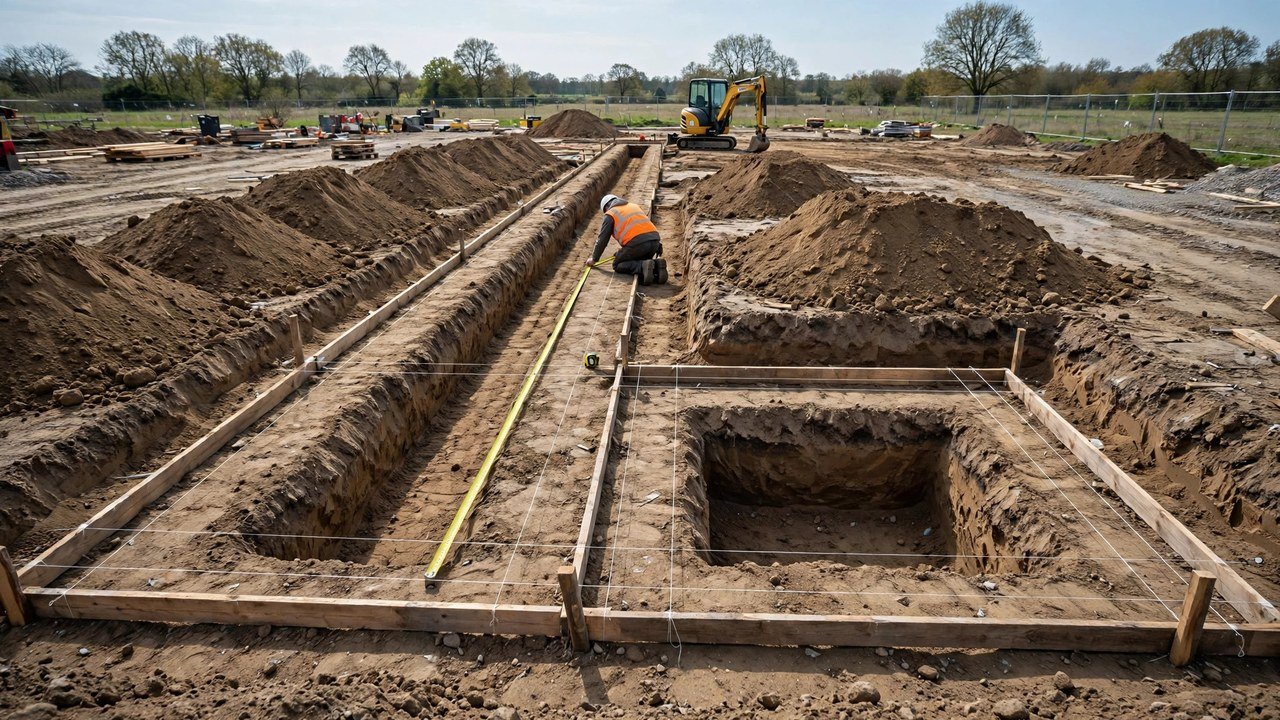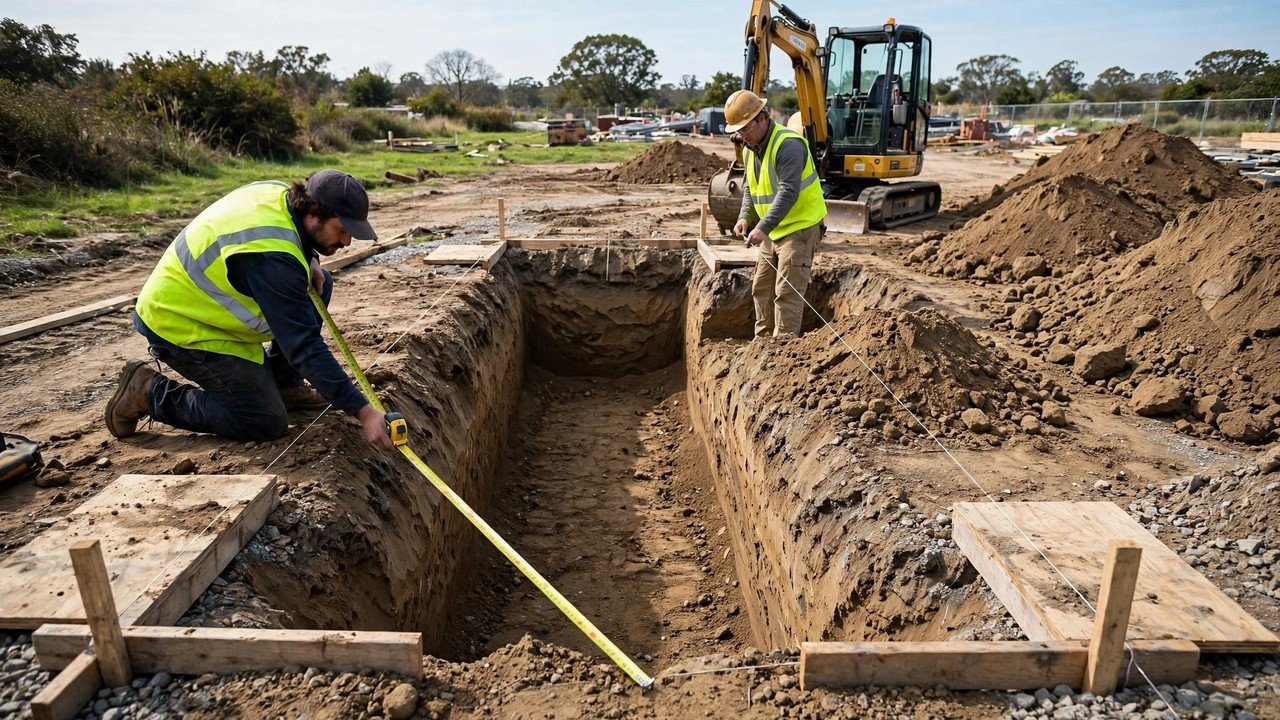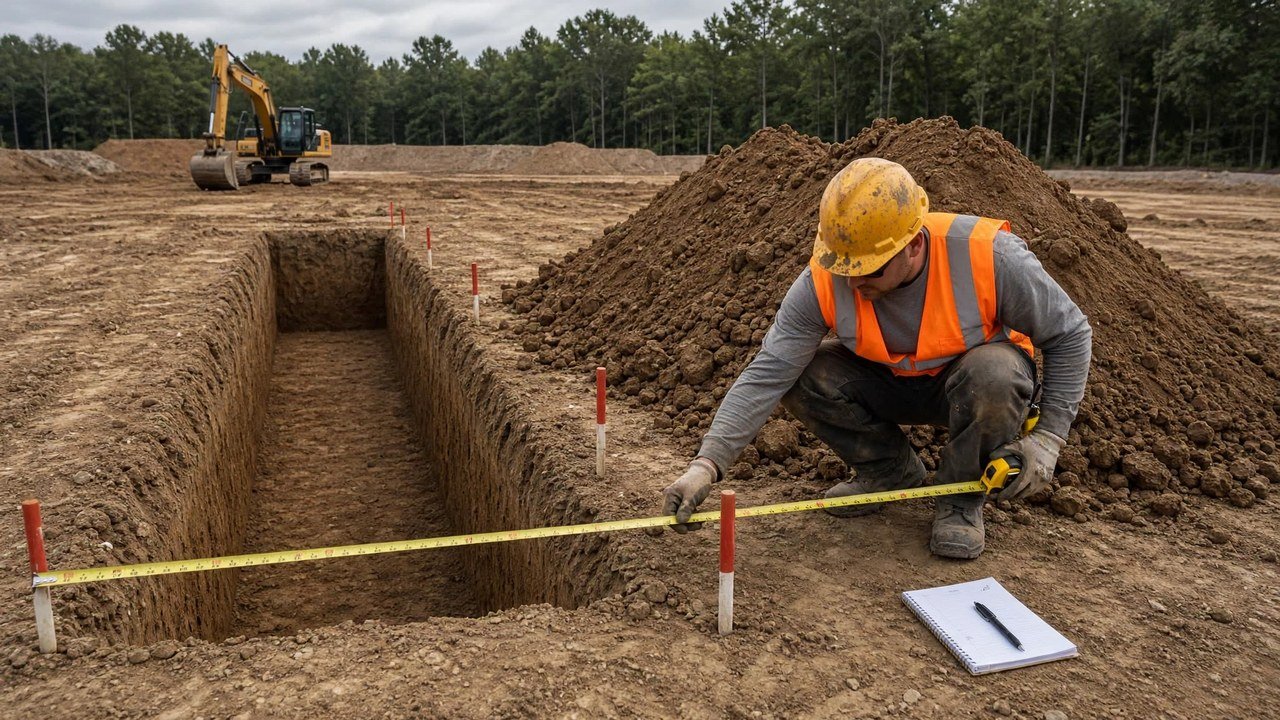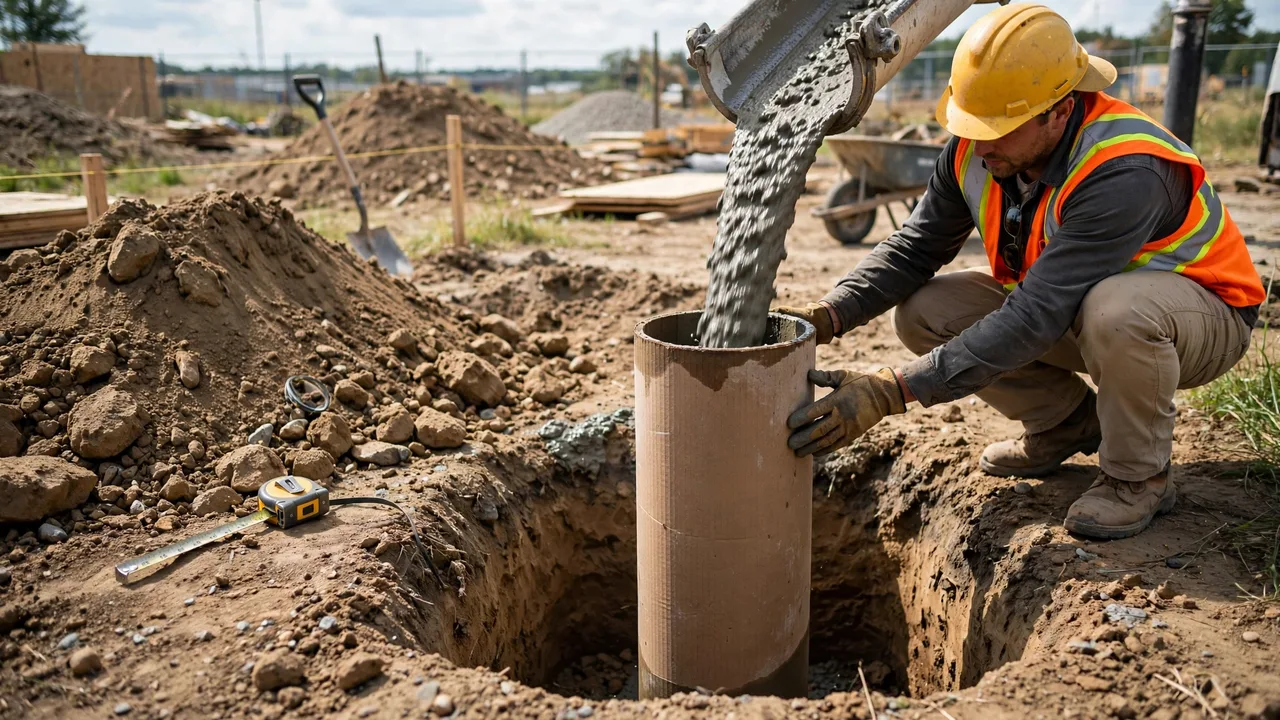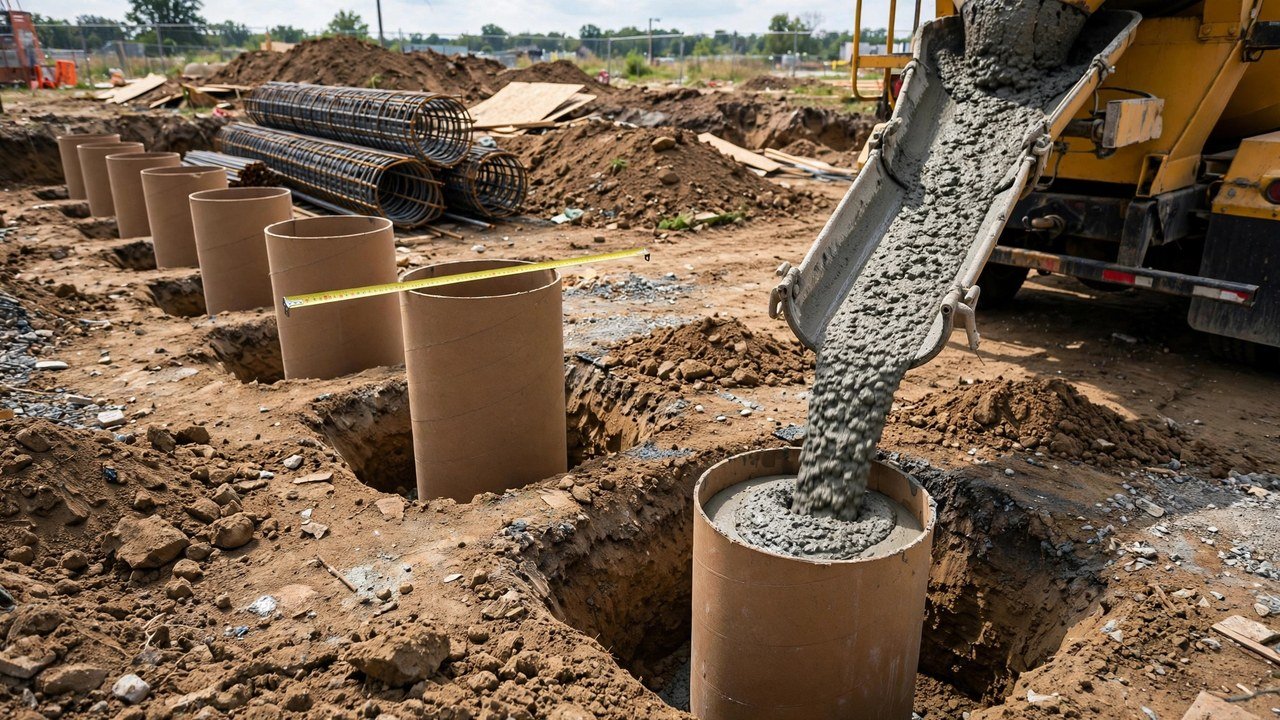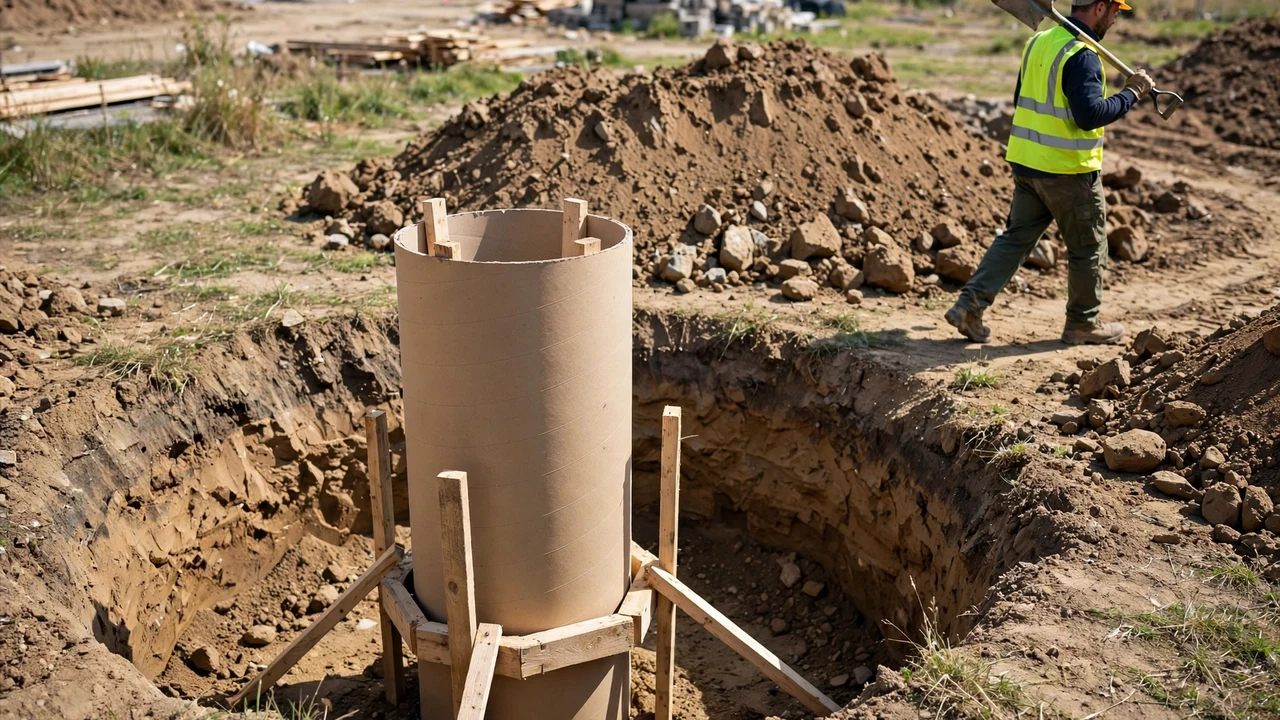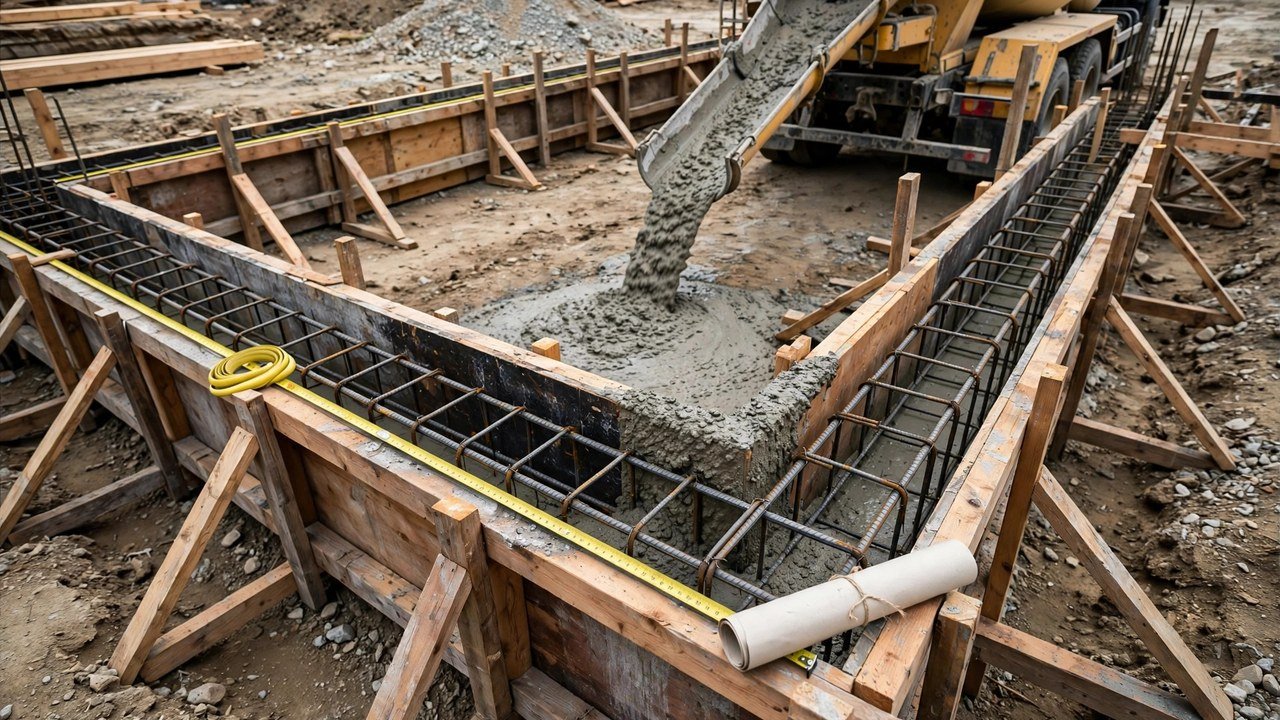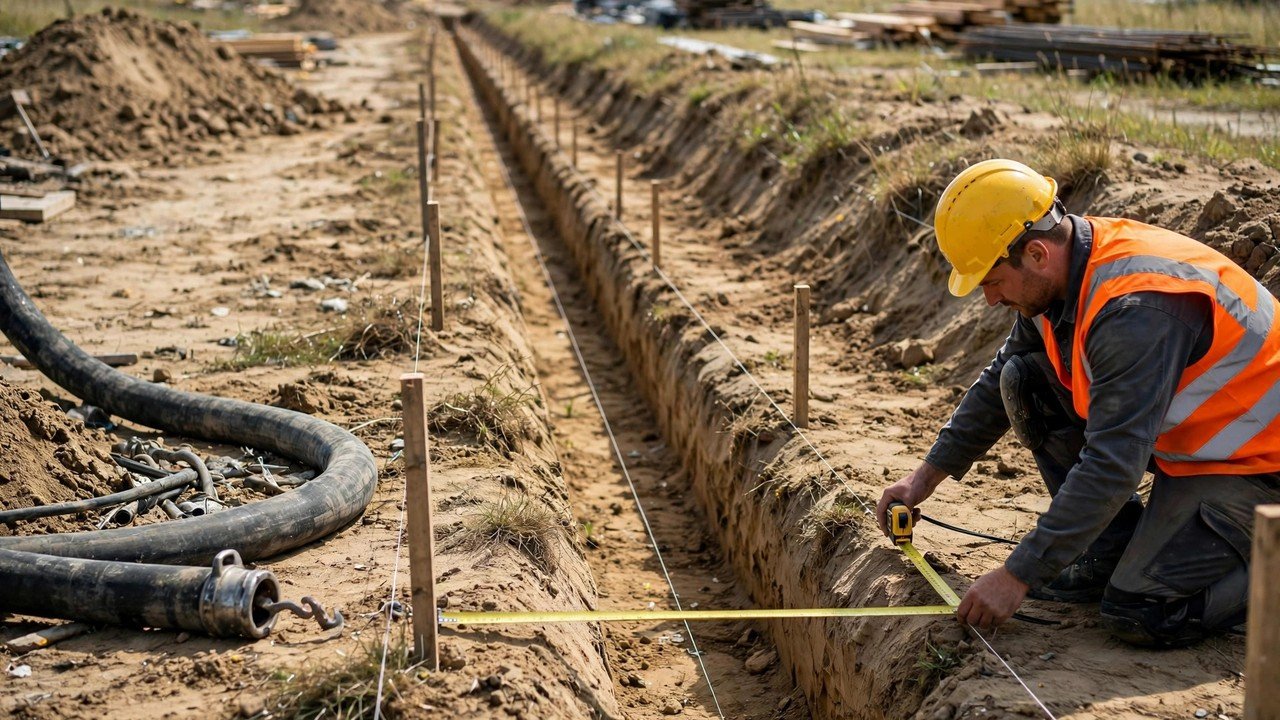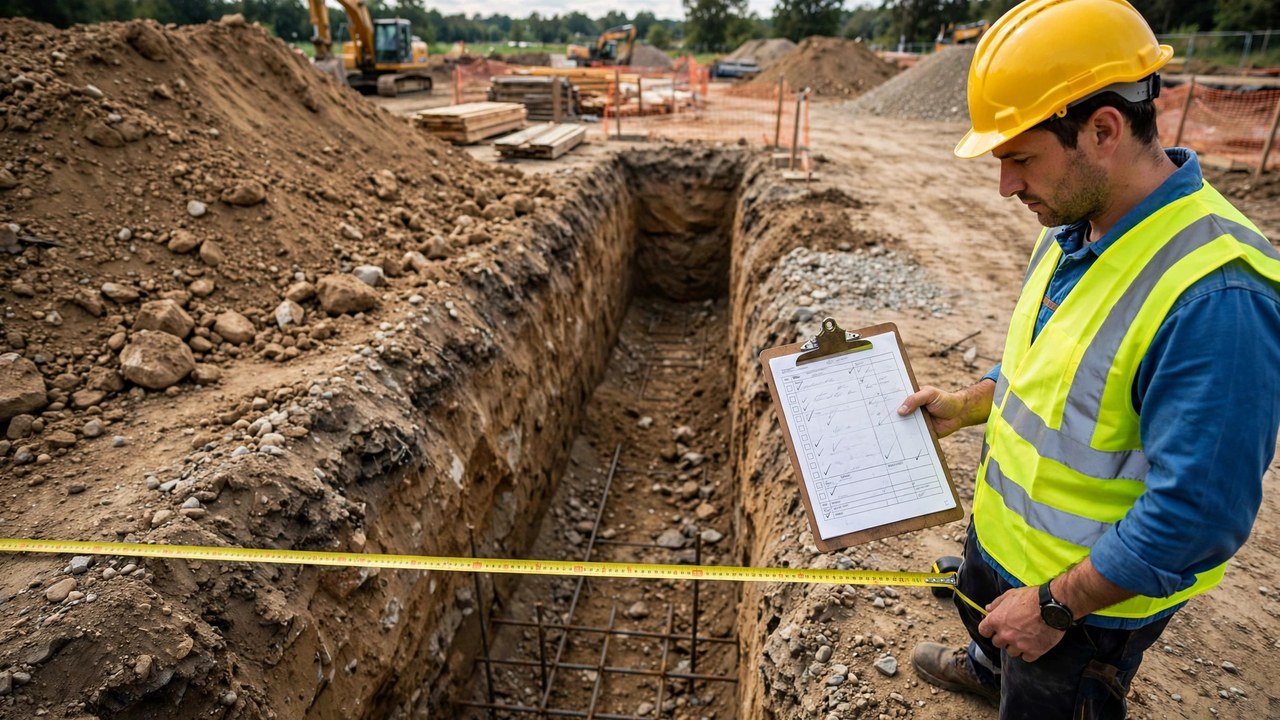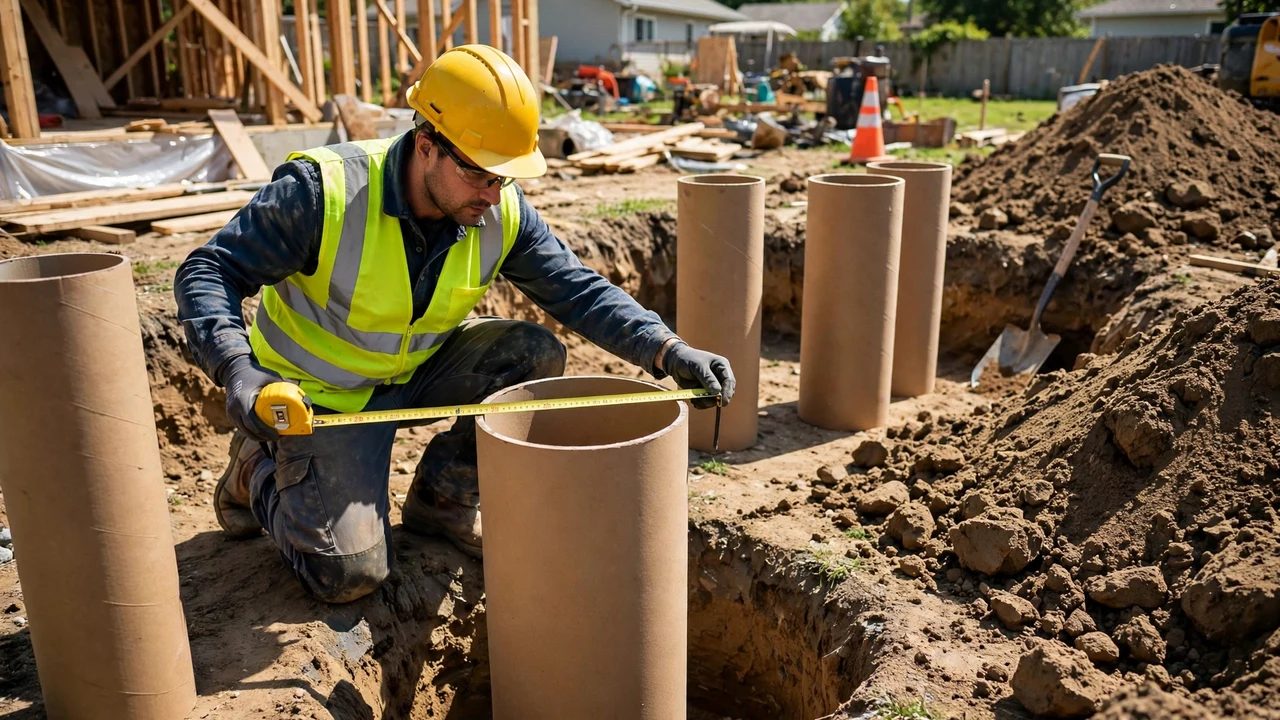
A pier footing poured inside a round form tube is a concrete cylinder. Measure the inside diameter, the pour height, and any wider footing base, then count the piers. Those 4 field records turn into a net concrete volume you can defend at the order desk.
What measurements does a Sonotube pier footing need?
Record the inside diameter of the tube at pour level, the pour height from the bearing surface to the planned top of concrete, the dimensions of any wider footing base, and the number of identical piers.
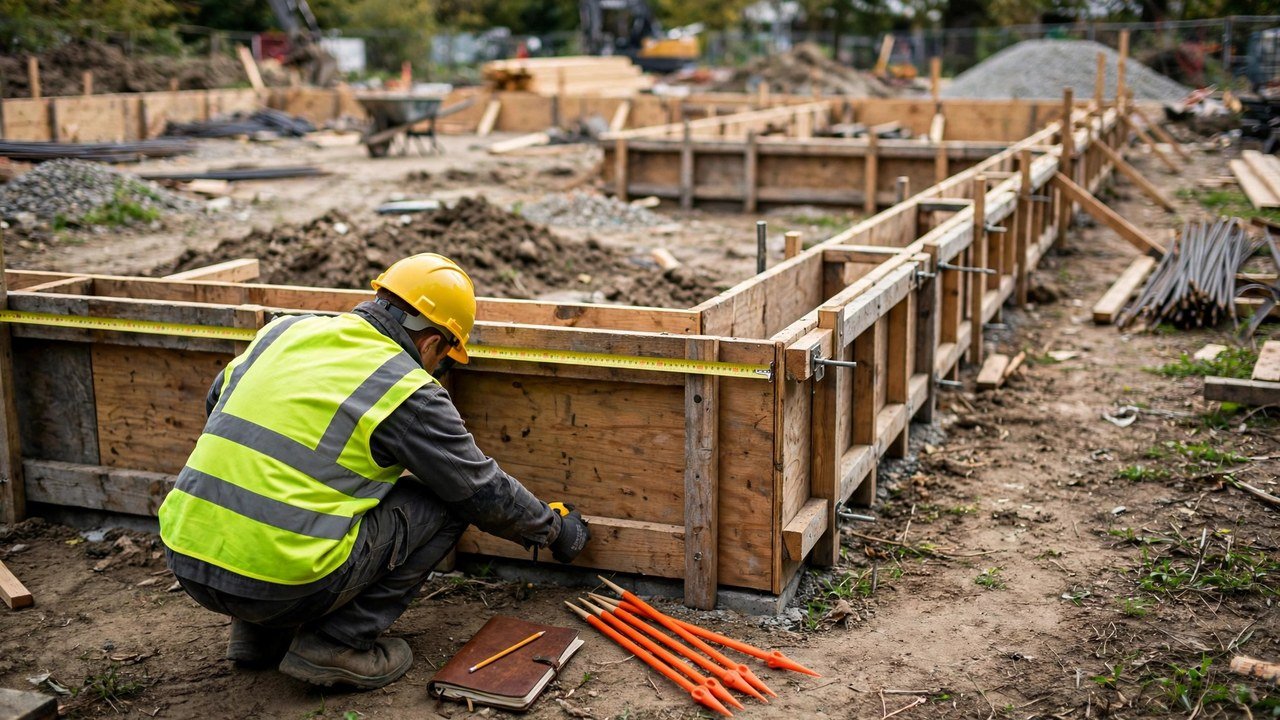
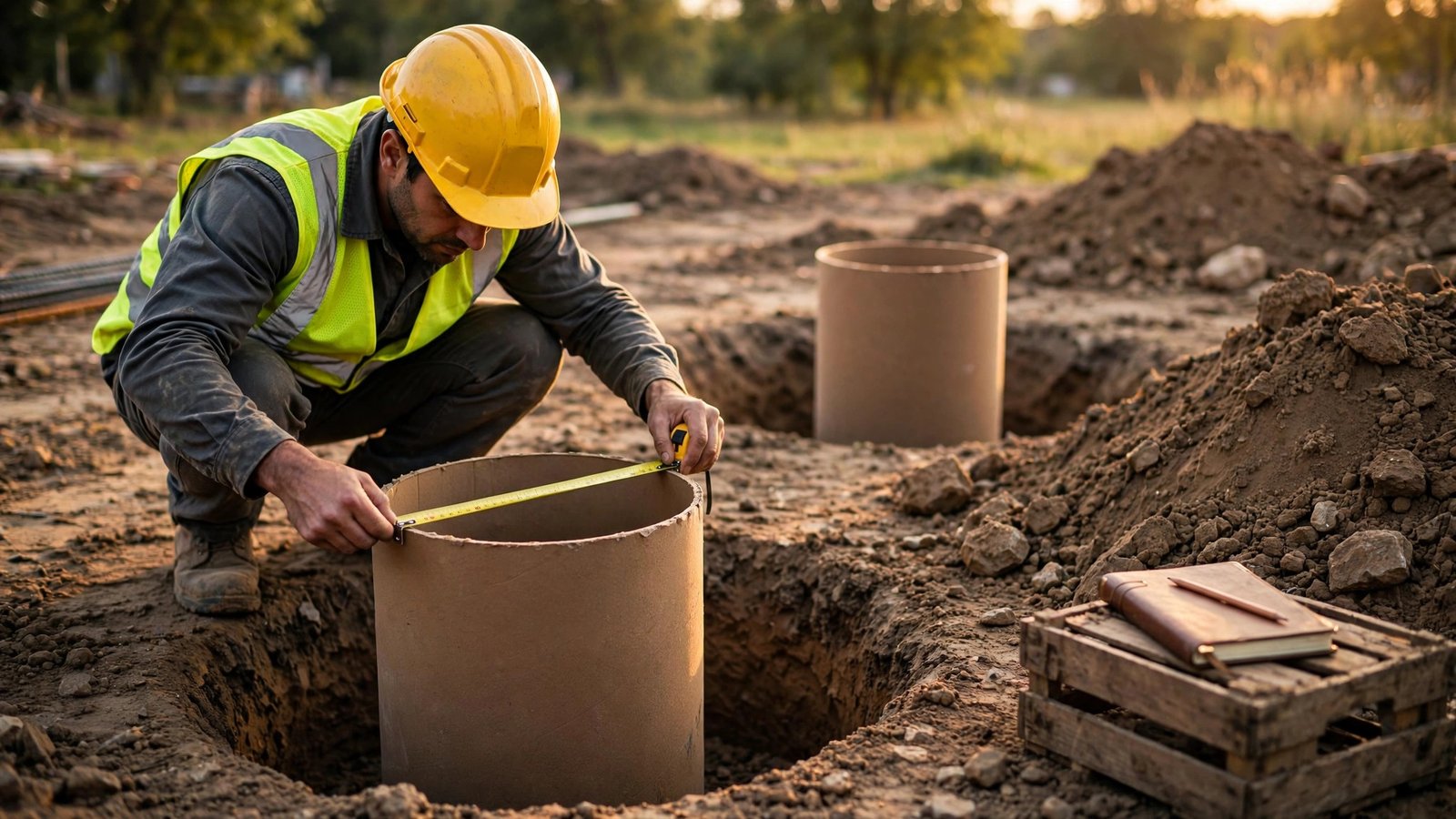
- Measure the inside diameter at 2 perpendicular positions near the top of the tube and average the 2 readings.
- Measure the pour height from where the concrete will start (the hole bottom or the footing base) up to the planned concrete top.
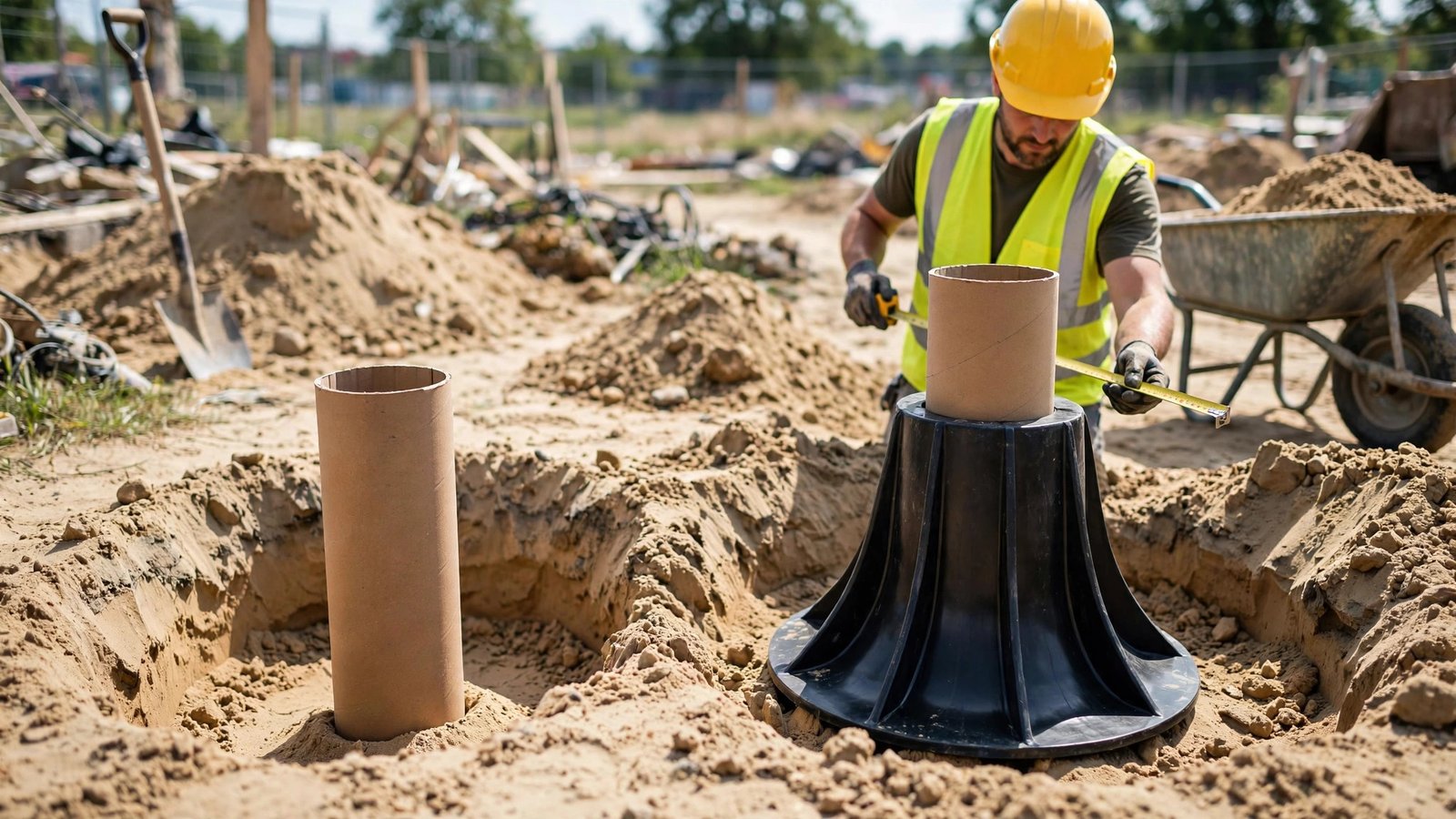
- Measure a wider footing base separately: length × width × depth for a square pad, or diameter × depth for a round base.
- Count the piers that share the same measurements.
Why measure the inside diameter instead of trusting the tube label?
Sonoco's Builder's Tube product data states that diameter sizes are nominal and adds: "If critical, you need to measure." The tube wall itself takes space, and handling can leave a tube slightly out of round.
Concrete fills the inside of the tube, so the inside diameter controls the volume. Measure across the inside of the opening at 2 perpendicular positions and use the average when the readings differ. The post-hole concrete volume guide explains the same inside-vs-nominal problem for augered holes.
How do you measure the pour height?
Measure from the surface the concrete will rest on up to the planned top of the concrete, and mark that top line on the tube. The tube often extends above the planned concrete level, so the tube's full length is not the pour height.
Drop a tape from the top line to the hole bottom or to the top of the footing base, whichever the concrete starts on. Read the tape at the bottom without letting it bow. Two people make this faster: one holds the tape at the mark, the other reads at the bottom.
What if the footing base is wider than the tube?
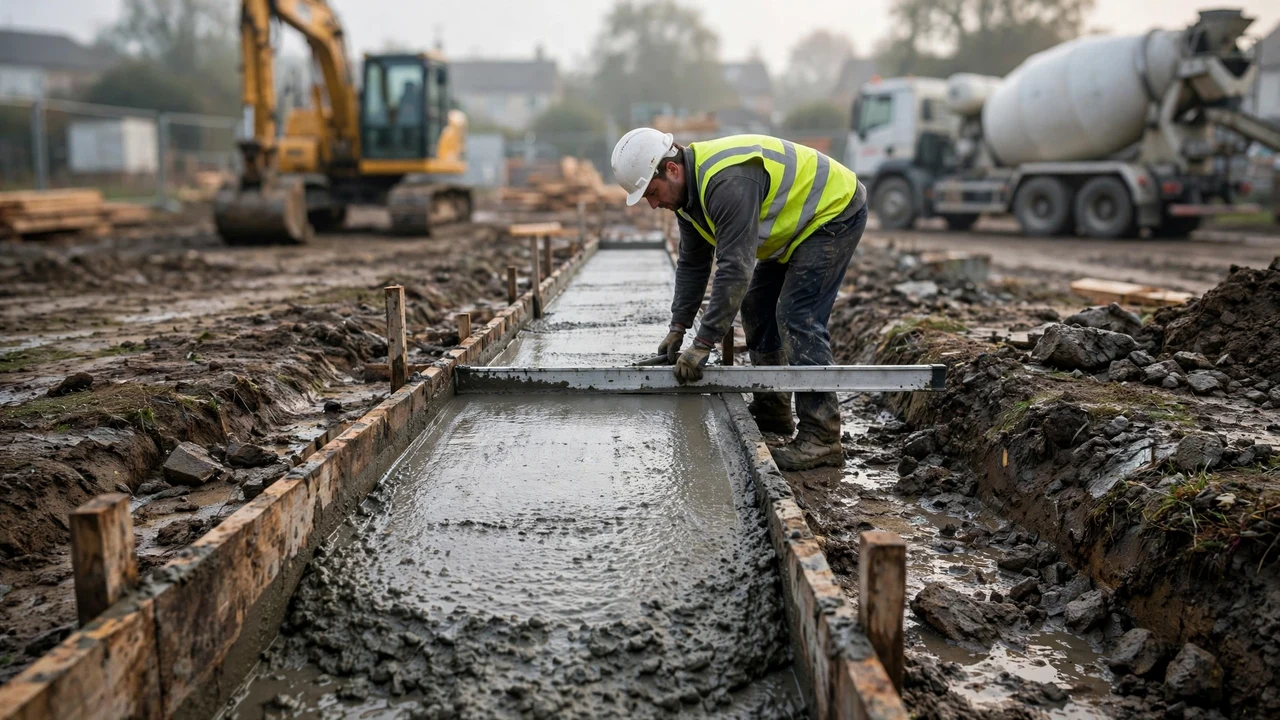
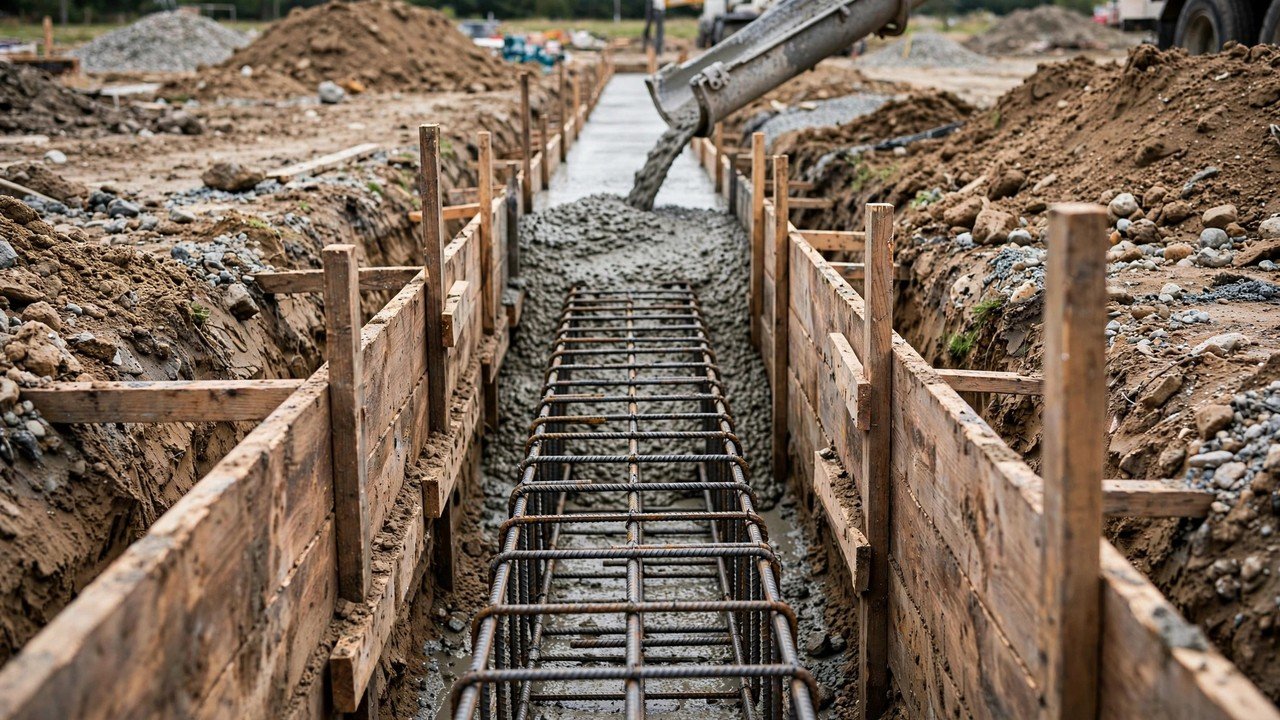
Measure the base separately and add its volume to the tube volume. A square pad is length × width × depth. A round base uses the same cylinder formula as the tube. Keep the 2 volumes on separate lines before adding them, so a later check can tell tube concrete apart from base concrete.
How do you turn the measurements into concrete volume?
Use the cylinder formula with the diameter and height in the same linear unit.
NIST Handbook 44 (2026), Appendix C, lists the length and volume relationships these conversions rely on.
Worked imperial example
A measured 12-inch inside diameter and a 48-inch pour height.
- Diameter squared: 12 × 12 = 144 in².
- Cross-section: π × 144 ÷ 4 = 113.0973 in².
- Volume: 113.0973 × 48 = 5428.67 in³.
- Convert to cubic feet: 5428.67 ÷ 1728 = 3.1416 ft³.
- Convert to cubic yards: 3.1416 ÷ 27 = 0.11635 yd³, reported as 0.116 yd³ net per pier.
Result: 0.116 yd³ net per pier. Independent check: π × r² × h with r = 6 in gives π × 36 × 48 = 5428.67 in³. Both paths agree.
Worked metric example
A measured 300 mm inside diameter and a 1.2 m pour height.
V = π ÷ 4 × 0.09 × 1.2 = 0.08482 m³. Independent check: π × 0.15² × 1.2 = 0.08482 m³. Both paths agree.
Net volume per foot of pour height
The table gives net tube volume for 1 ft of pour height, computed from a measured inside diameter with the formula above.
| Measured inside diameter | Volume per foot of height |
|---|---|
| 6 in | 0.196 ft³ |
| 8 in | 0.349 ft³ |
| 10 in | 0.545 ft³ |
| 12 in | 0.785 ft³ |
Multiply the table value by the measured pour height in feet for one pier, then by the pier count. Sonoco's chart lists 0.80 ft³ per foot for a nominal 12-inch tube; the 0.785 ft³ figure uses a measured 12-inch inside diameter, and the difference is chart rounding at the nominal size. Use the manufacturer chart as a sanity check, not a substitute for measuring.
Keep the unrounded volume in the worksheet and round the reported number last. Rounding the per-pier volume before multiplying by the pier count compounds the error across every pier.
Common measuring mistakes
- Measuring the outside diameter instead of the inside.
- Using the tube's full length as the pour height.
- Mixing inches and feet in one multiplication.
- Leaving a wider footing base out, or burying it inside the tube number.
- Rounding the per-pier volume before multiplying by the pier count.
- Ordering from the nominal tube label without a field measurement.
Sources and scope
- Sonoco, Sonotube Builder's Tube product data (accessed 2026-10-09): nominal sizes, concrete per foot of height, single-use and placement guidance, and the "Diameter sizes are nominal. If critical, you need to measure." note.
- Sonoco, Sonotube Round Concrete Forms product data (accessed 2026-10-09): cubic-yard requirements by diameter and column height.
- NIST Handbook 44 (2026), Appendix C: length and volume unit relationships used in the conversions.
Scope: the method calculates net concrete volume from stated dimensions. Footing dimensions, loads, rebar, mix selection, placement, frost depth, and acceptance follow the project drawings, specifications, and responsible qualified people.
Review responsibility: Saleem Sial owns the published calculation, source, and editorial checks. Waseem Sial, External Reviewer and Engineer, remains listed for ongoing external review; no completed external-review date is claimed.
Next, see how footing excavation volume differs from concrete volume, plan the dig with the Footing Excavation Volume Calculator, or return to the Foundation Calculators hub.