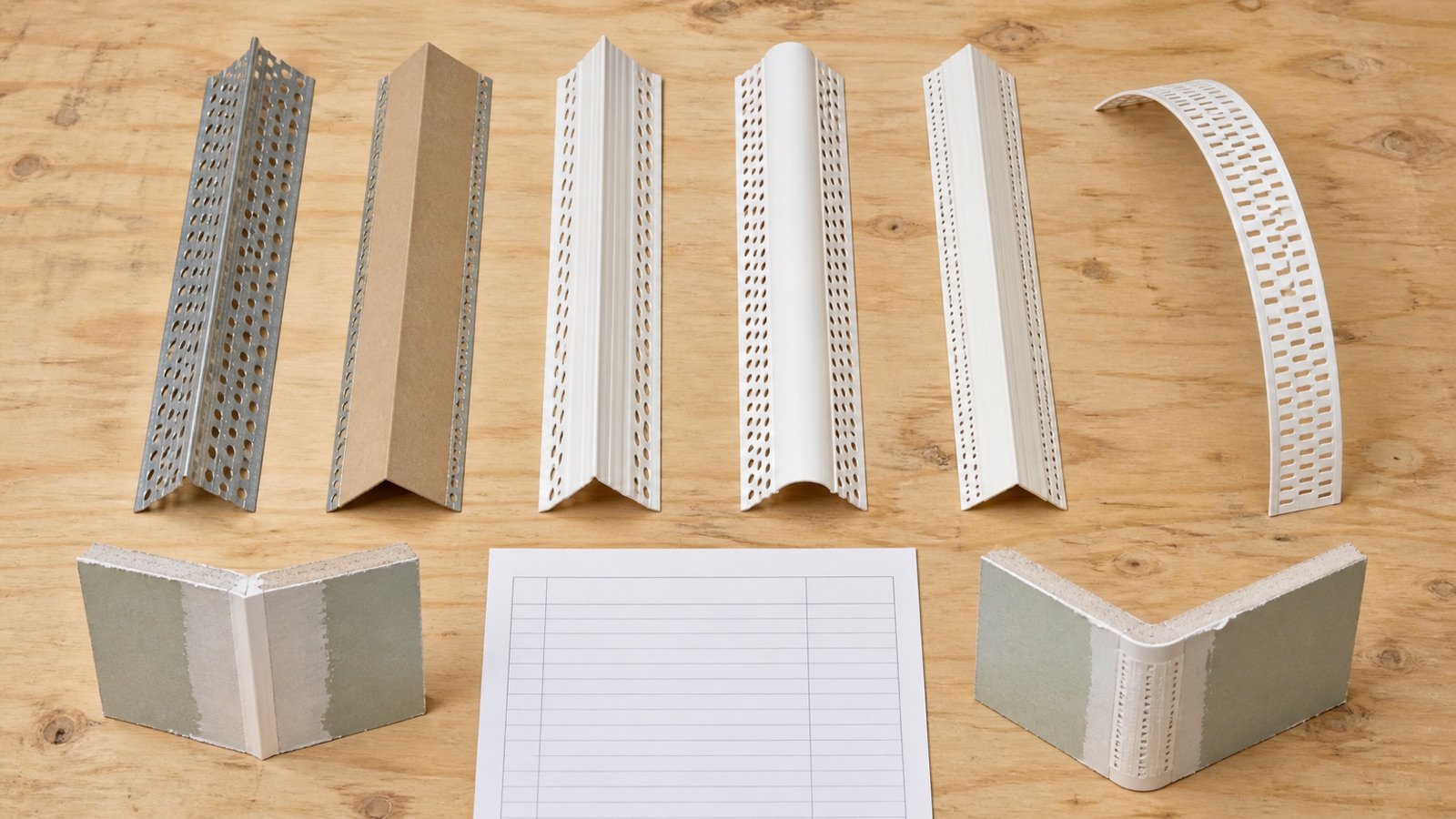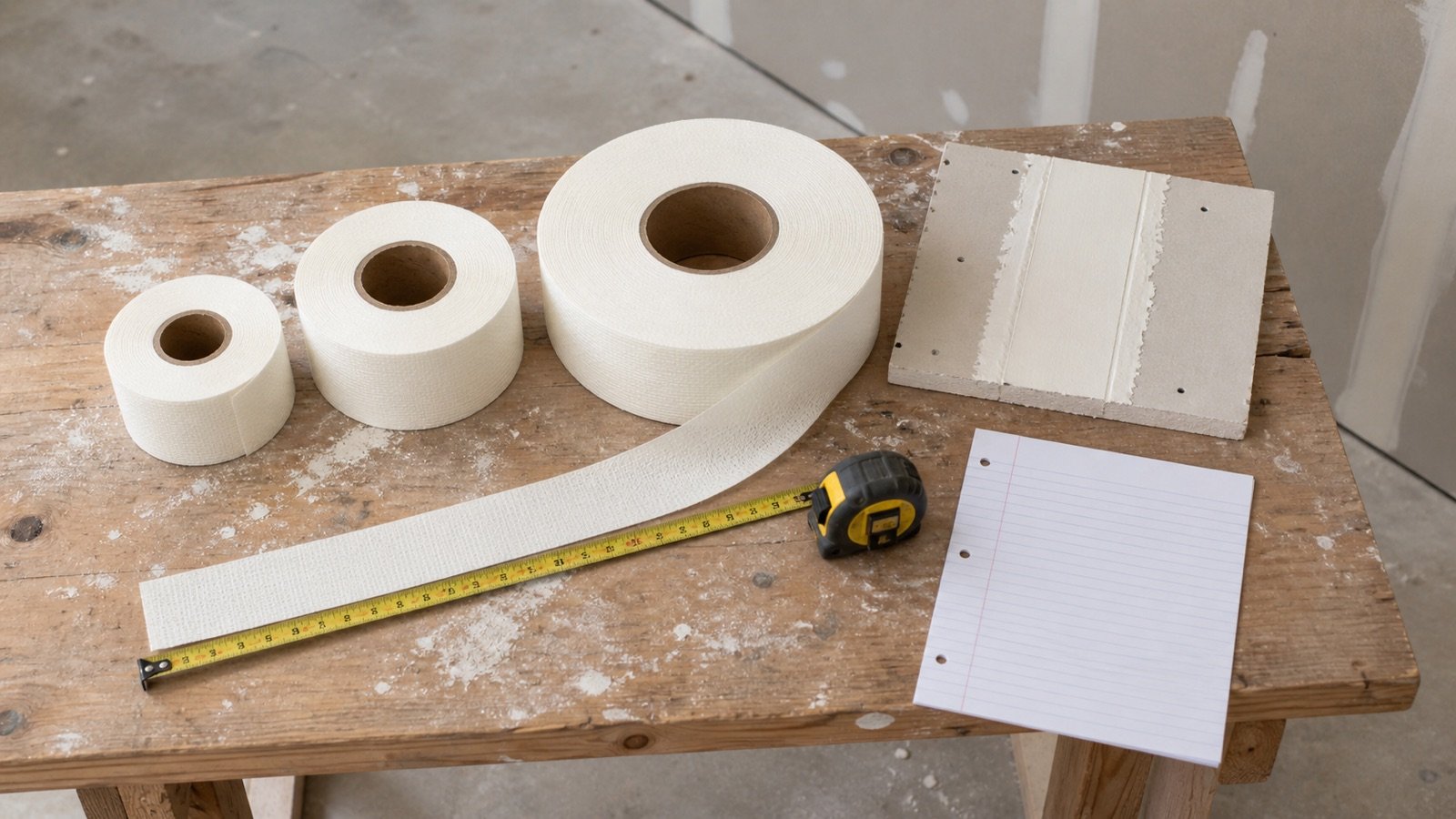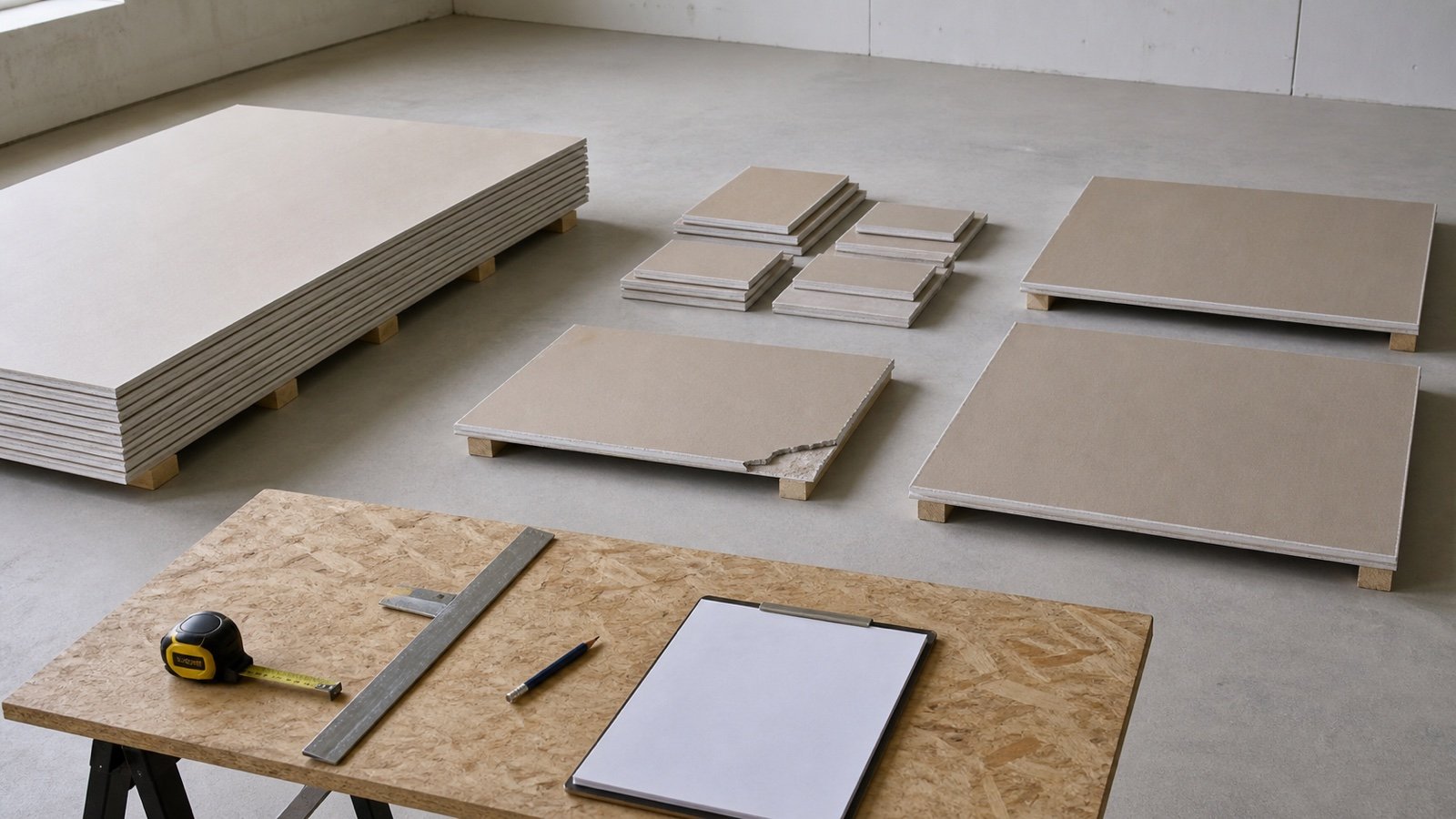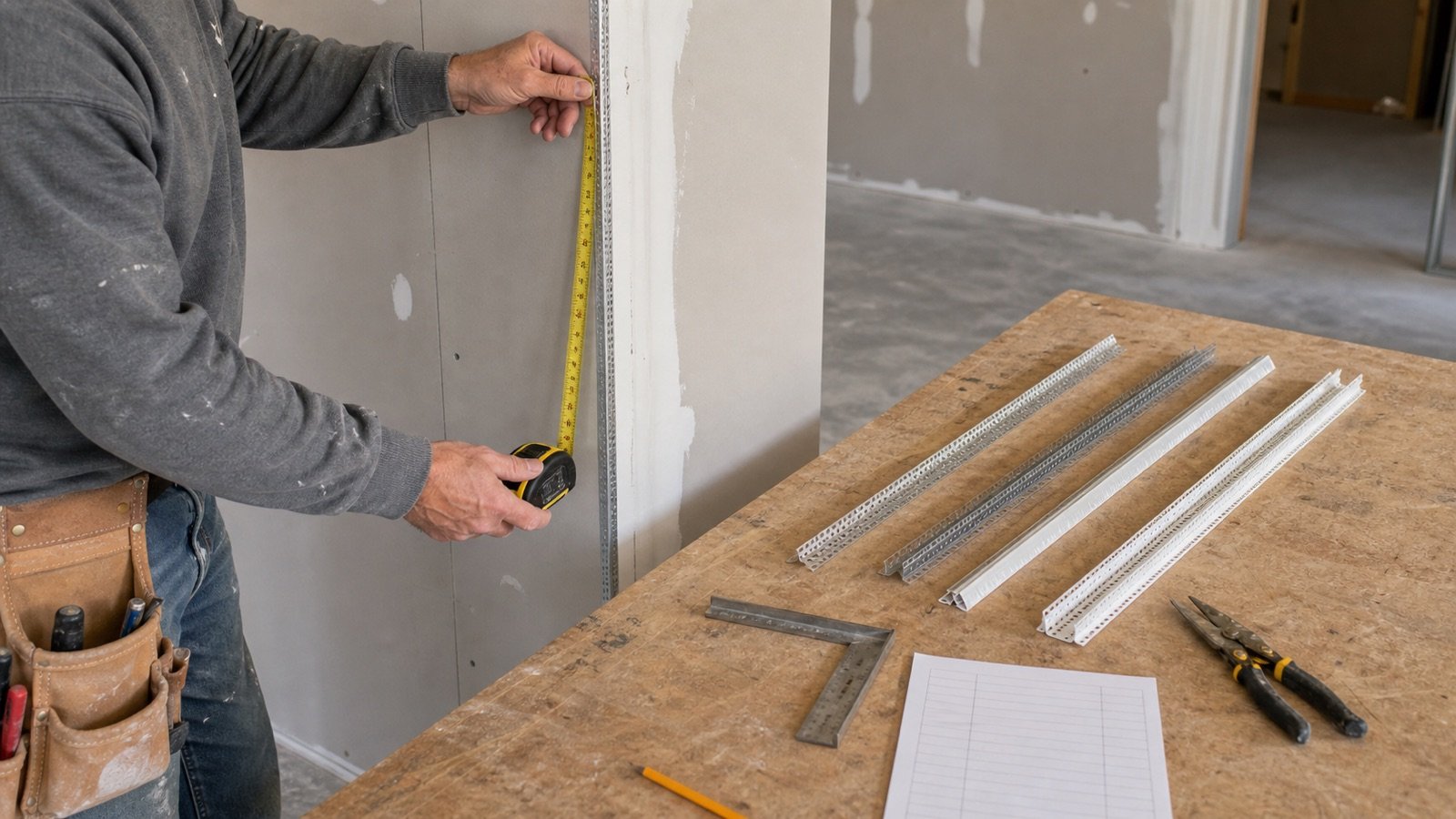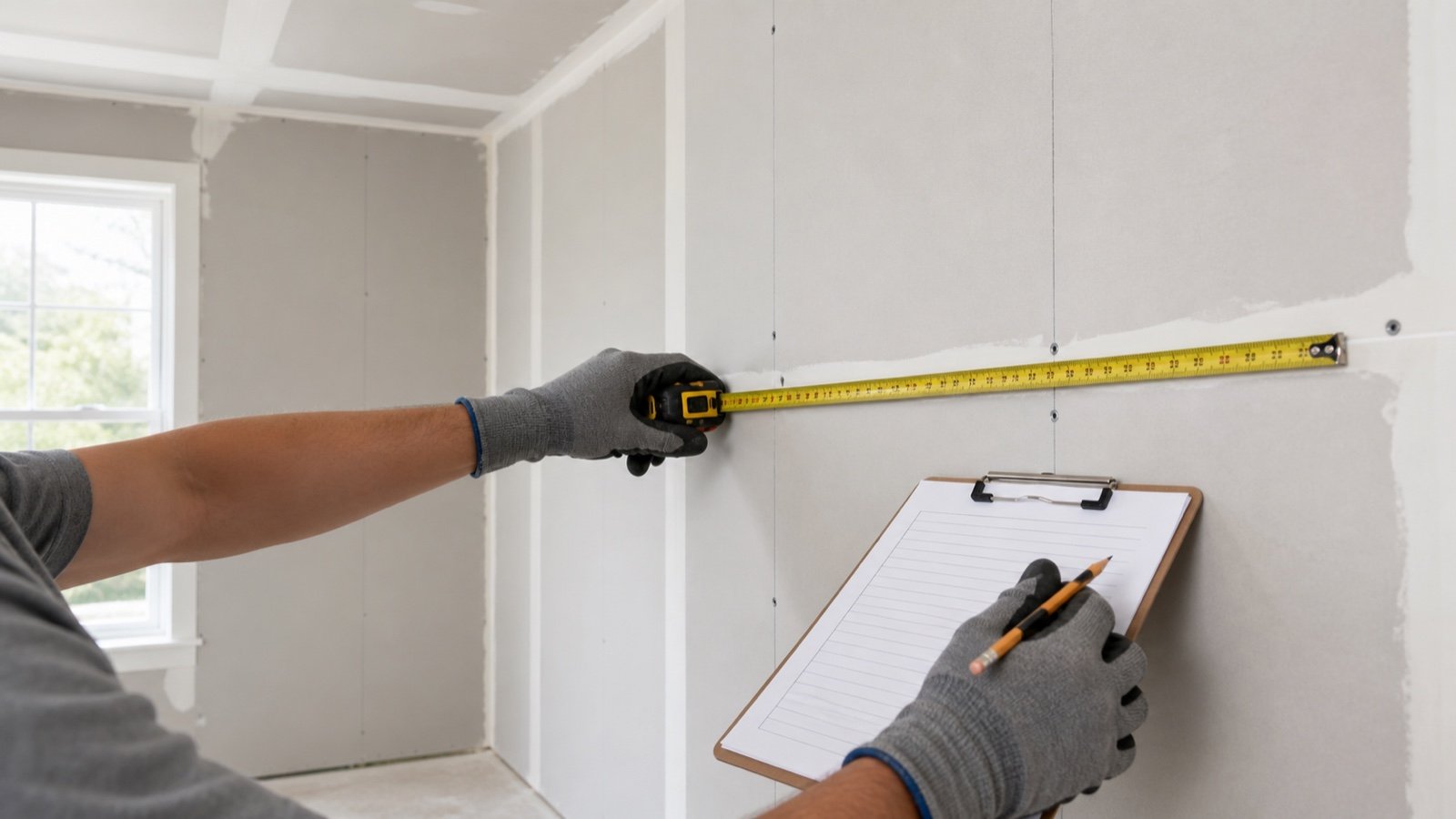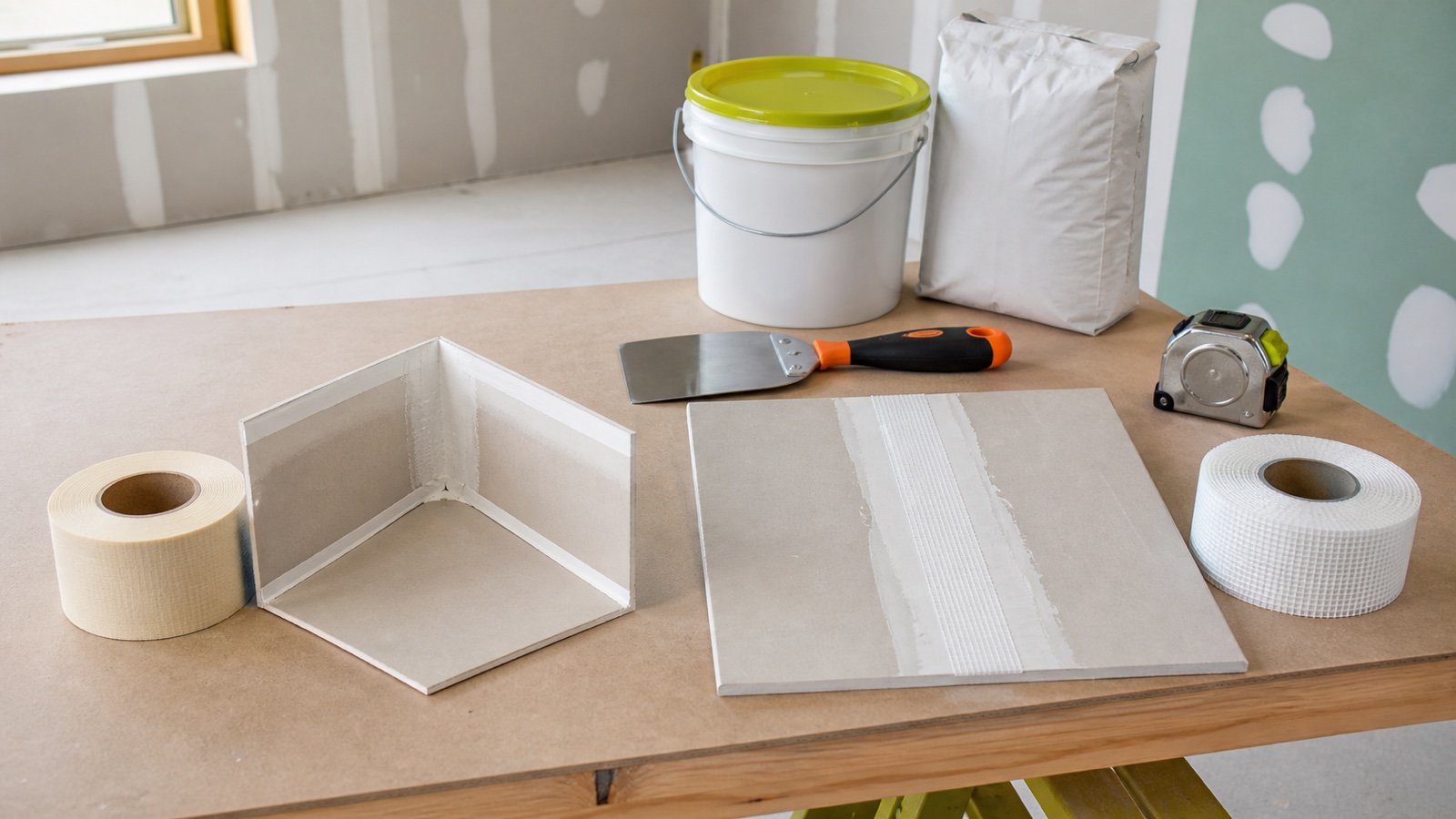
Paper and fiberglass mesh drywall tape use different application methods and can require different joint compounds. Select the tape system from the project documents and the current instructions for the exact products before converting joint lengths into rolls.
A mixed project needs separate quantity rows. Flat joints assigned to fiberglass tape cannot share a roll count with paper tape assigned to inside angles, even when both rolls show the same nominal length.
Should you use paper or fiberglass mesh drywall tape?
Paper tape is the documented choice for flat joints and inside angles in many interior drywall systems. Fiberglass mesh can suit named flat-joint or repair systems when the manufacturer specifies a compatible setting-type compound.
USG J2140 reports that its paper joint tape works with drying-type and setting-type compounds. The same paper states that fiberglass tape requires setting-type compound and recommends paper for corners and wall-to-ceiling intersections. Apply those findings to the named USG systems and check another manufacturer's current instructions before substitution.
| Decision | Paper joint tape | Fiberglass mesh tape |
|---|---|---|
| Adhesive | Needs a compound bed for embedment | Named products may have self-adhesive backing |
| First compound coat | Use the compatible drying-type or setting-type compound named by the manufacturer | Use the setting-type compound named by the manufacturer for the first coat |
| Inside angles | Center-creased paper is documented for corners in the cited USG system | Check the exact product instructions and project detail |
| Flat joints | Common in hand and machine-applied interior joint systems | Can be used in a documented fiberglass and setting-compound system |
| Takeoff | Own subtotal, stock record and roll count | Own subtotal, stock record and roll count |
| Main verification | Tape, compound, application and finish documents | Tape, first-coat compound, application and finish documents |
Why does joint compound compatibility control the choice?
The tape, compound and application method form one joint-treatment system. A self-adhesive mesh tape can stay on a panel before coating, though that tack does not prove compatibility with the compound placed over it.
USG J2140 describes tests in expansion, compression, shear and bending. Within the tested systems, fiberglass tape with drying-type compound was weaker than paper tape with drying-type compound in compression, shear and bending. USG calls for setting-type compound when fiberglass tape is used.
USG's current fiberglass product page names Durabond or Easy Sand setting-type compound for the first coat. It permits a named setting-type or ready-mixed product for the second and final coat. That sequence does not support using ready-mixed compound for the first coat.
Write the tape manufacturer, product name, first-coat compound, second-coat compound and document revision on the takeoff. The word “mesh” alone does not identify a tested combination.
Where does paper tape fit in a drywall schedule?
Paper tape can cover flat joints and inside angles when the selected system permits it. Its center crease makes a straight fold for inside corners and wall-to-ceiling intersections.
USG J1736 describes its paper tape for joints and corners in interior gypsum drywall. The sheet calls for a thin compound layer, paper-tape embedment and enough compound under the feathered edge to maintain the bond. It also states a minimum 55°F (13°C) building temperature during panel application and joint finishing for that product.
- Assign flat and butt joints to the paper-tape row when the accepted system uses paper.
- List vertical inside corners and wall-to-ceiling angles that receive paper tape.
- Keep paper-faced corner products on their own stock rows.
- Keep control joints, reveals and untreated boundaries outside the ordinary tape total.
Where does fiberglass mesh tape fit?
Fiberglass mesh fits a documented system that names the tape, its first-coat setting compound and its permitted joint locations. Manufacturer instructions can cover flat joints, cracks, repairs or another defined application.
USG's current product page lists its fiberglass tape for drywall and plaster holes and cracks. J780A also gives an inside-corner method for the named product. J2140 recommends paper at corners and wall-to-ceiling intersections in its system guidance, so a project team should resolve those documents through the current product instructions and project specification rather than applying a broad internet rule.
National Gypsum's current paper-tape guidance gives a similar compatibility check: its mesh summary calls for setting-type compound and places paper tape on flat seams and inside corners for the described products. Agreement across 2 manufacturers supports checking this combination, while each manufacturer still controls its own products.
How does tape choice change the quantity takeoff?
Classify every measured joint by the accepted tape system before calculating rolls. Add allowance and round to whole packages within each product row.
- Measure each taped joint once along its centerline.
- Assign a product code to each accepted joint.
- Add the paper-tape lengths.
- Add the fiberglass-tape lengths on a separate row.
- Apply the documented allowance to each row.
- Divide each planning length by that product's current roll length.
- Round each product ratio up to whole rolls.
- Deduct existing usable stock only after verifying the product and remaining length.
Product planning length = product base length × (1 + allowance ÷ 100)
Product rolls = ceiling(product planning length ÷ declared roll length)
The drywall joint measurement guide explains the centerline ledger. Enter each product subtotal in a separate run of the Drywall Tape Calculator.
Worked example: separate paper and fiberglass rows
A takeoff assigns 84 ft of inside angles to paper tape and 190 ft of flat joints to fiberglass tape. The approved order record uses a 5% allowance, 75 ft paper rolls and 250 ft fiberglass rolls.
| Product row | Base length | With 5% allowance | Declared roll | Whole rolls | Purchase remainder |
|---|---|---|---|---|---|
| Paper tape | 84 ft | 88.2 ft | 75 ft | 2 | 61.8 ft |
| Fiberglass tape | 190 ft | 199.5 ft | 250 ft | 1 | 50.5 ft |
The order is 2 paper rolls and 1 fiberglass roll. Adding the lengths first gives 287.7 ft after allowance, though that combined figure cannot produce a valid package schedule because it removes the product boundary.
For a metric check, 75 ft equals 22.86 m and 250 ft equals 76.2 m using NIST's exact 1 ft = 0.3048 m relationship. Converted lengths support arithmetic. They do not prove that those package labels are sold in another market.
Can an area coverage rate choose the tape?
An area rate estimates length for a named product. It does not select the product, confirm compound compatibility or allocate tape between flat joints and corners.
USG J1736 gives approximate coverage of 370 ft per 1,000 ft² for its paper tape. J780A gives the same approximate imperial rate for its named fiberglass tape. Equal published planning rates do not make the tape systems interchangeable.
A 2,400 ft² board-area check at that named rate produces 2,400 × 370 ÷ 1,000 = 888 ft of tape before allowance. The result must still be split by product if the accepted schedule uses paper at angles and fiberglass on flats.
Which comparison claims need a product-document check?
| Claim | Evidence to check | Quantity effect |
|---|---|---|
| Mesh works with any compound | Named tape and first-coat compound instructions | Can change the selected system and compound order |
| One tape is best for every joint | Joint location, tested system and project detail | May require separate flat-joint and angle rows |
| Self-adhesive means compound is optional | Coating and fill instructions for the tape | Compound remains part of the material schedule |
| Both products have the same coverage | Manufacturer, product, qualifier and reference area | Does not permit one combined roll count |
| A converted roll is stocked locally | Supplier SKU, label length, market and quote date | Controls whole-package rounding |
| Ordinary tape covers every corner | Corner bead, trim, movement-joint and assembly details | May move the length to another product row |
How should hybrid tape systems be recorded?
A hybrid schedule needs one location code and one quantity row per product. Keep the matching compounds beside the tape row so purchasing cannot separate the materials.
| Field | Example entry |
|---|---|
| Location class | Flat joints, inside angles or repair seams |
| Tape product | Manufacturer and exact product name |
| First coat | Named drying-type or setting-type compound |
| Later coats | Named permitted products |
| Base length | Accepted joint-centerline subtotal |
| Allowance | Percentage and reason |
| Package | Supplier SKU and current roll length |
| Document | Product data, specification and revision date |
The drywall material takeoff worksheet can hold those fields beside sheets, compound, fasteners and trim. Use the Drywall Joint Compound Calculator only after recording a compatible compound and its applicable coverage source.
Which project conditions require another document?
- Fire-resistance-rated or sound-control assemblies with prescribed joint treatment.
- Glass-mat, fiber-reinforced, paperless, exterior or tile-back panels.
- Control joints, movement joints, deflection heads, reveals and proprietary trims.
- Multilayer construction where each layer can have a different treatment scope.
- Wet or high-humidity locations with panel-system restrictions.
- Large gaps, damaged edges or repairs that need an approved repair method.
- Cold or poorly ventilated conditions outside product instructions.
A tape comparison does not approve a tested assembly or repair. Confirm current drawings, specifications, manufacturer instructions, safety data and local requirements.
What should you check before ordering?
- Each joint appears once in the measurement ledger.
- Every joint has an accepted tape product code.
- The first-coat compound matches the exact tape instructions.
- Inside angles, flats and repairs follow their current details.
- Each tape product has its own base length and allowance.
- Roll length comes from the current supplier SKU or label.
- Whole rolls are rounded within each product row.
- Existing stock has a verified type, condition and usable length.
- Document revision, market and retrieval date remain attached.
Return to the Drywall planning hub for the current sheet, tape and compound workflow. The calculation methodology explains unit and rounding checks. Report a source or formula issue through the corrections route.
Sources and source scope
- USG Matching Joint Compound with the Proper Joint Tape J2140 supports the named paper and fiberglass test findings, compound compatibility and corner guidance.
- USG Sheetrock Paper Joint Tape J1736 supports the named paper-tape application, inside-angle features, approximate coverage, package lengths and temperature limit.
- USG Sheetrock Fiberglass Drywall Tape J780A supports the named fiberglass application, first-coat method, approximate coverage and package lengths.
- USG Sheetrock Fiberglass Joint Tape product page supports the current product identity and its named first- and later-coat products.
- National Gypsum paper joint tape guidance supports its current paper-versus-mesh location and setting-compound summary.
- NIST Handbook 44, 2026 Appendix C supports the exact foot-to-metre conversion.
Source scope: Manufacturer sources control only their named products and systems. NIST controls the unit relationship. These sources do not select a project system, approve another manufacturer's combination, set a universal allowance, confirm local stock or replace tested assembly documents.
Review note: Saleem Sial owns the research and editorial record. Source checks, independent fixtures, editorial review, build validation, link crawl, schema review and rendered QA form the internal publication gate. Waseem Sial, External Reviewer and Engineer, is listed for ongoing external review; no completed review date is claimed.