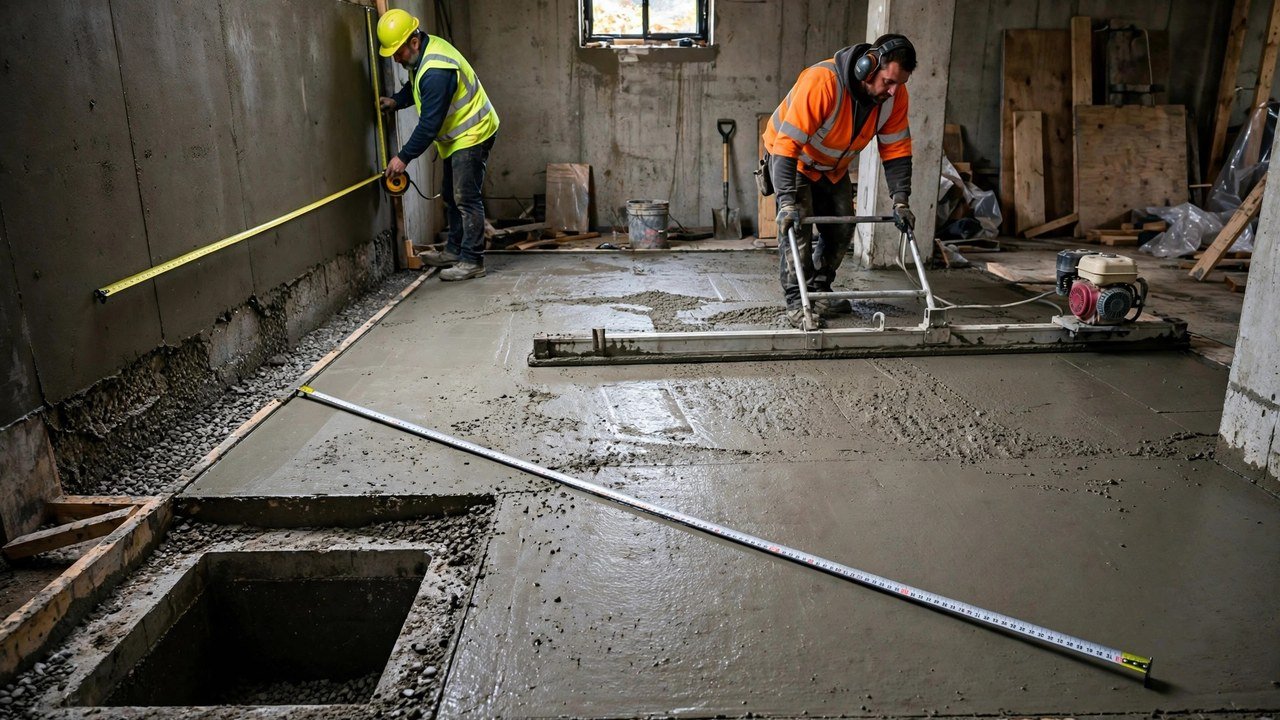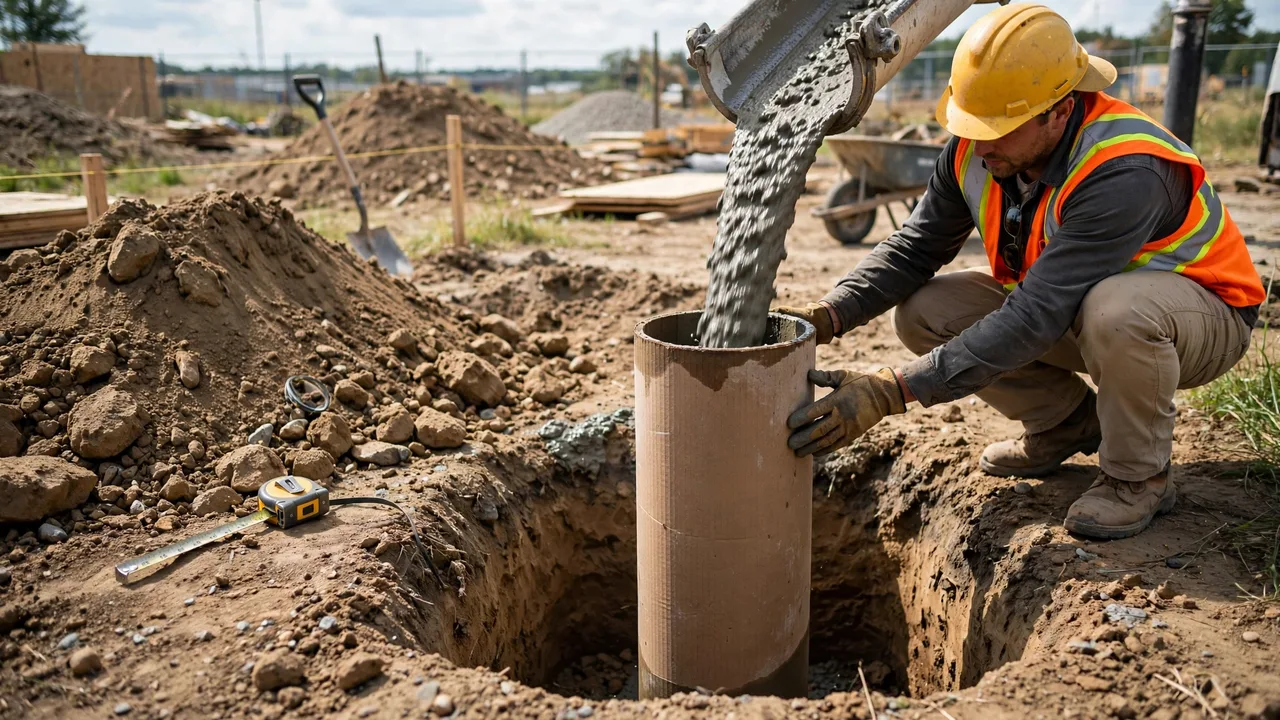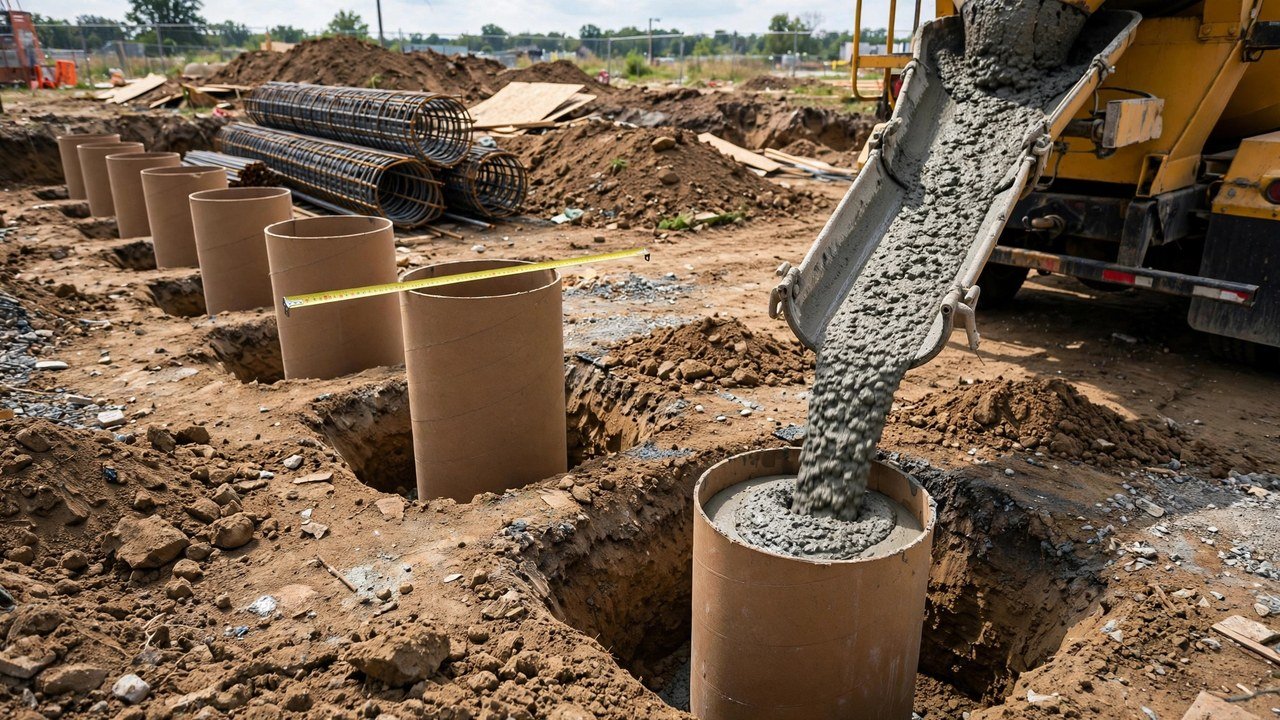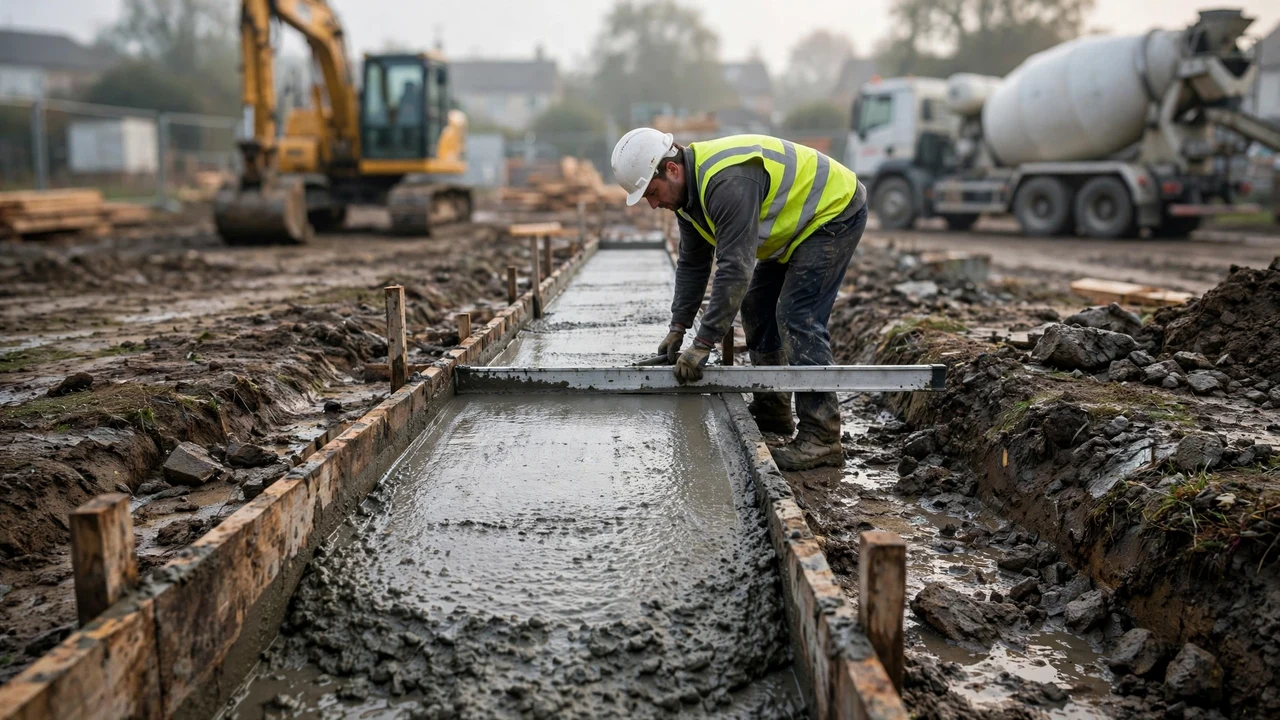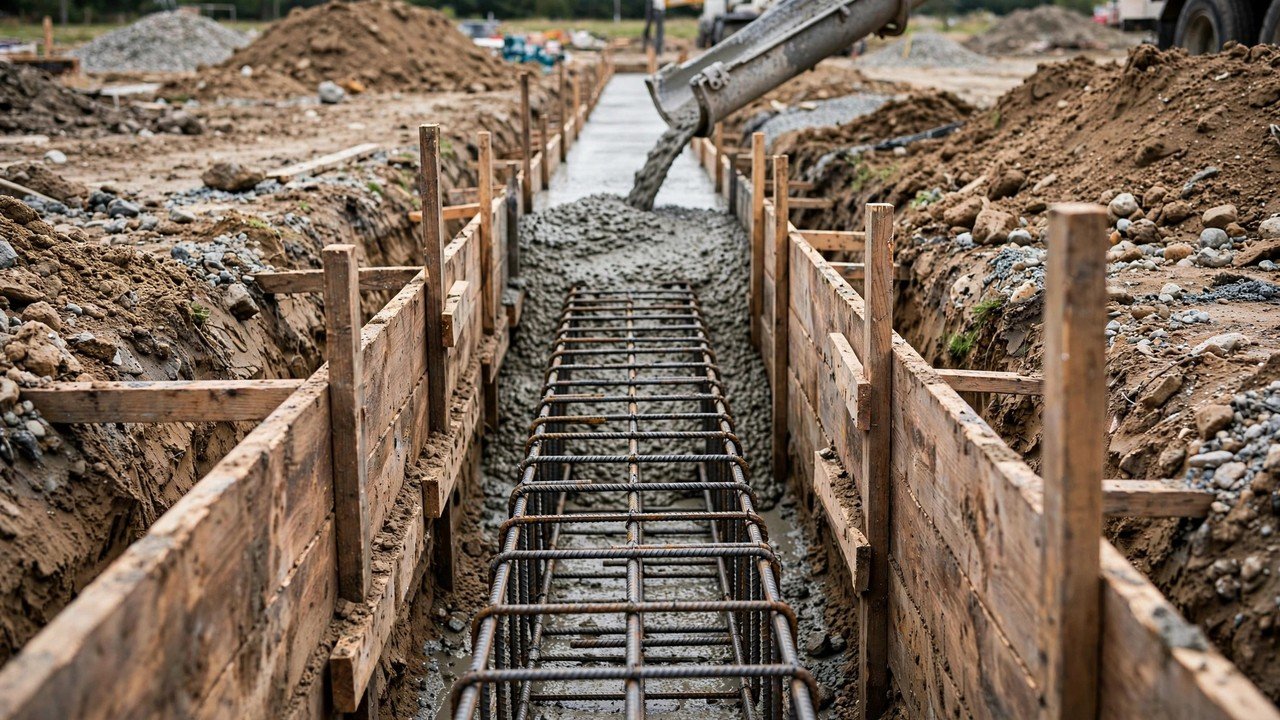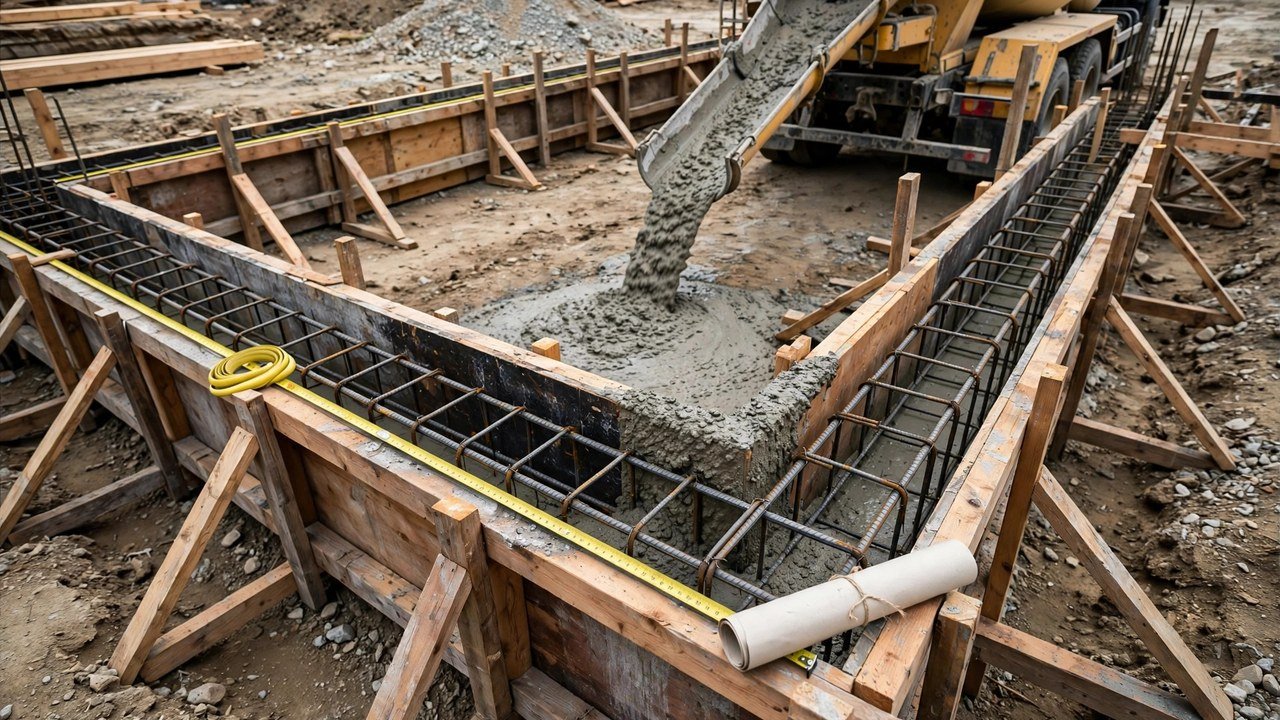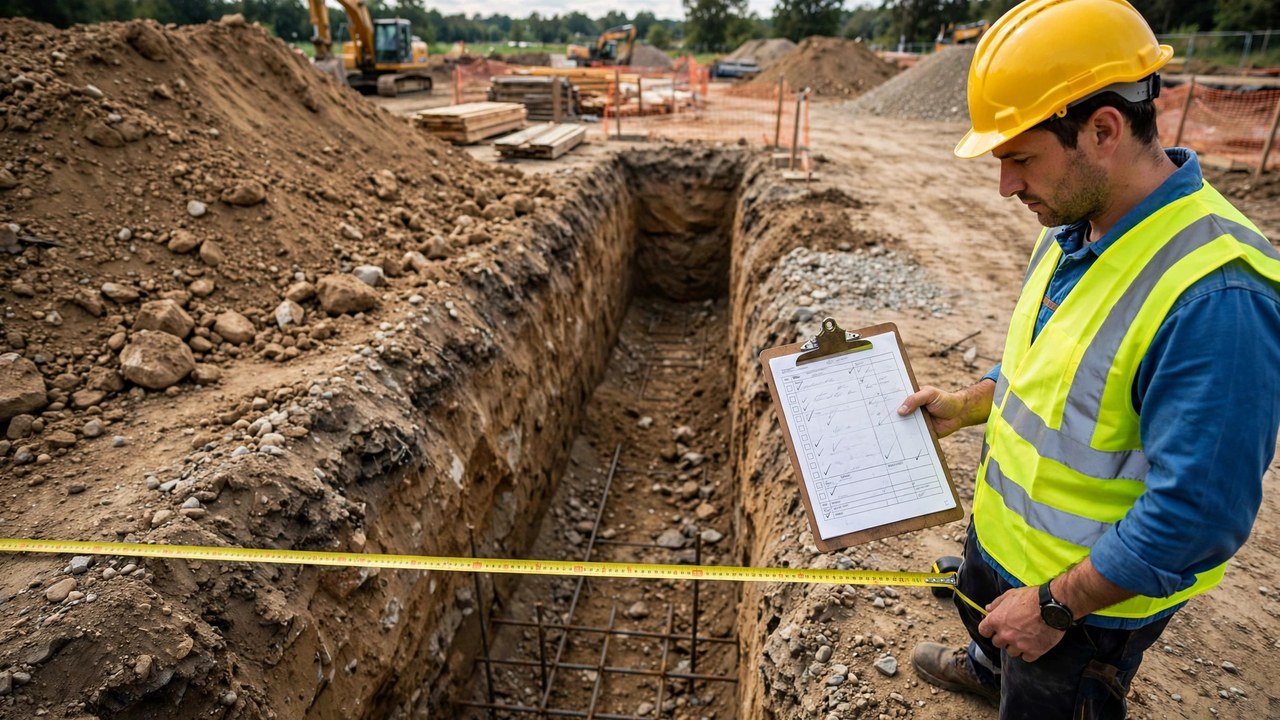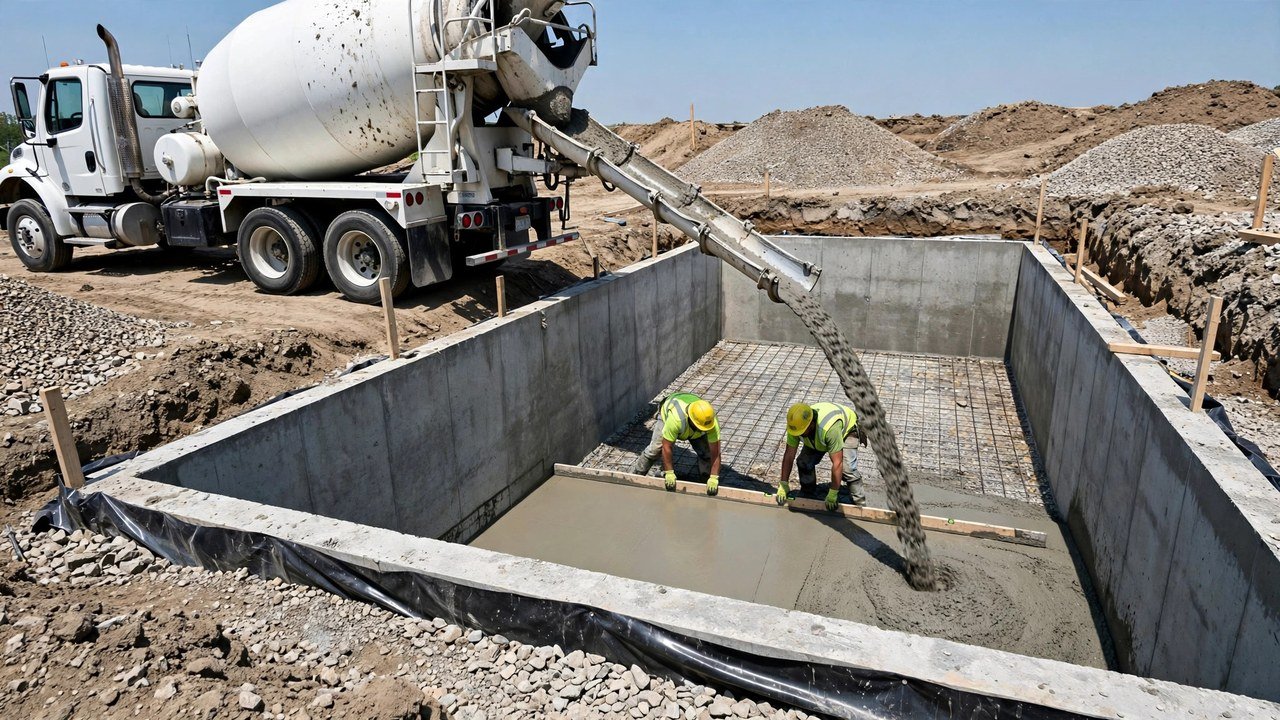
A basement slab concrete order starts with the checked measured volume from the inside-wall measurement, adds a stated allowance on its own line, and converts the total into whole truckloads plus the mix and schedule details the plant needs. The NRMCA states that the quantity ordered should be 4% to 10% more than the plan-dimension estimate, to cover contingencies such as waste, over-excavation, and spreading of forms (CIP 31, which points to CIP 8 for yield discrepancies).
What does a basement slab concrete order contain?
Five items: the measured volume, the allowance, the rounded order quantity in the supplier's selling unit, the truck plan, and the mix and delivery details. Record the allowance beside the measured number so a later check can separate what was measured from what was added.
Write "10.764 m³ measured + 5% allowance = 11.31 m³ order" rather than recording 11.31 m³ alone. A single number cannot be rechecked.
How do you turn the measured volume into an order quantity?
Multiply the measured volume by 1 plus the allowance written as a decimal. A 5% allowance becomes a multiplier of 1.05.
Order volume = measured volume × (1 + allowance % ÷ 100)
Choose the allowance from project evidence inside the 4 to 10% range that CIP 31 states. A finished subgrade inside straight walls sits near the low end; rough subgrade, out-of-square walls, or spread forms move it toward the high end. The allowance is a recorded choice, not a fact, and the drawings and subgrade condition justify it.
What does the order calculation look like for a basement slab?
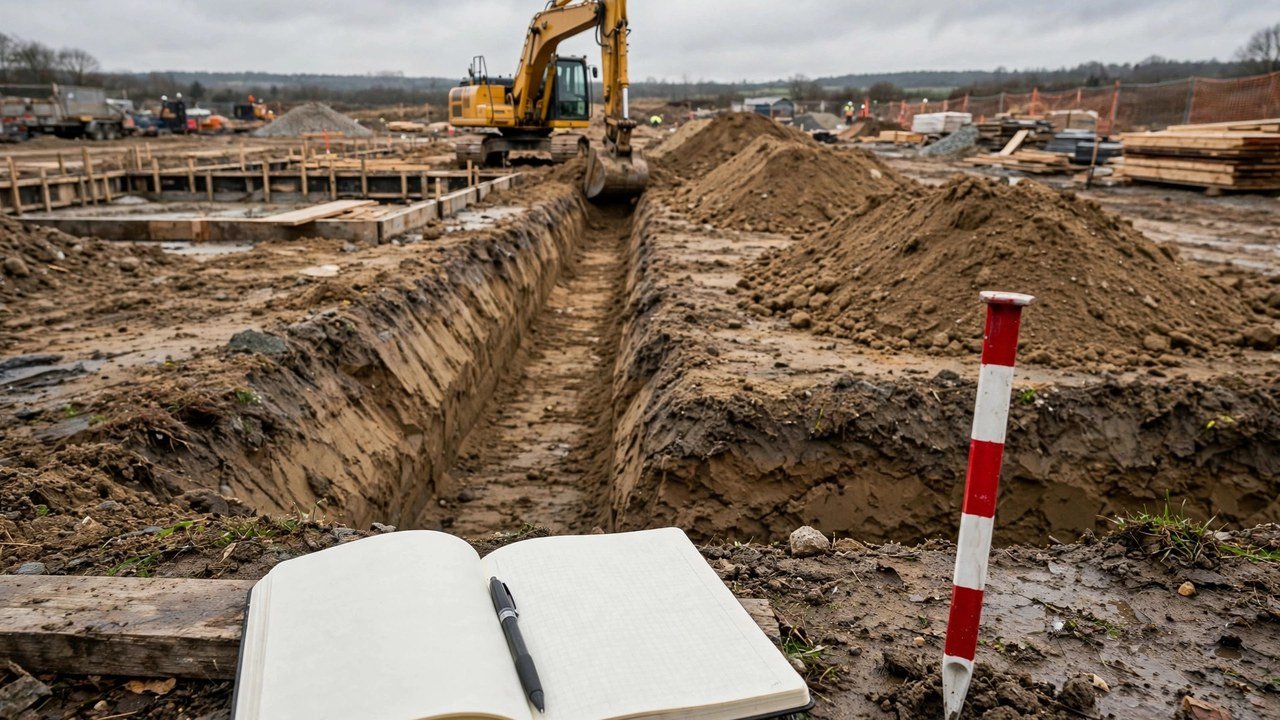
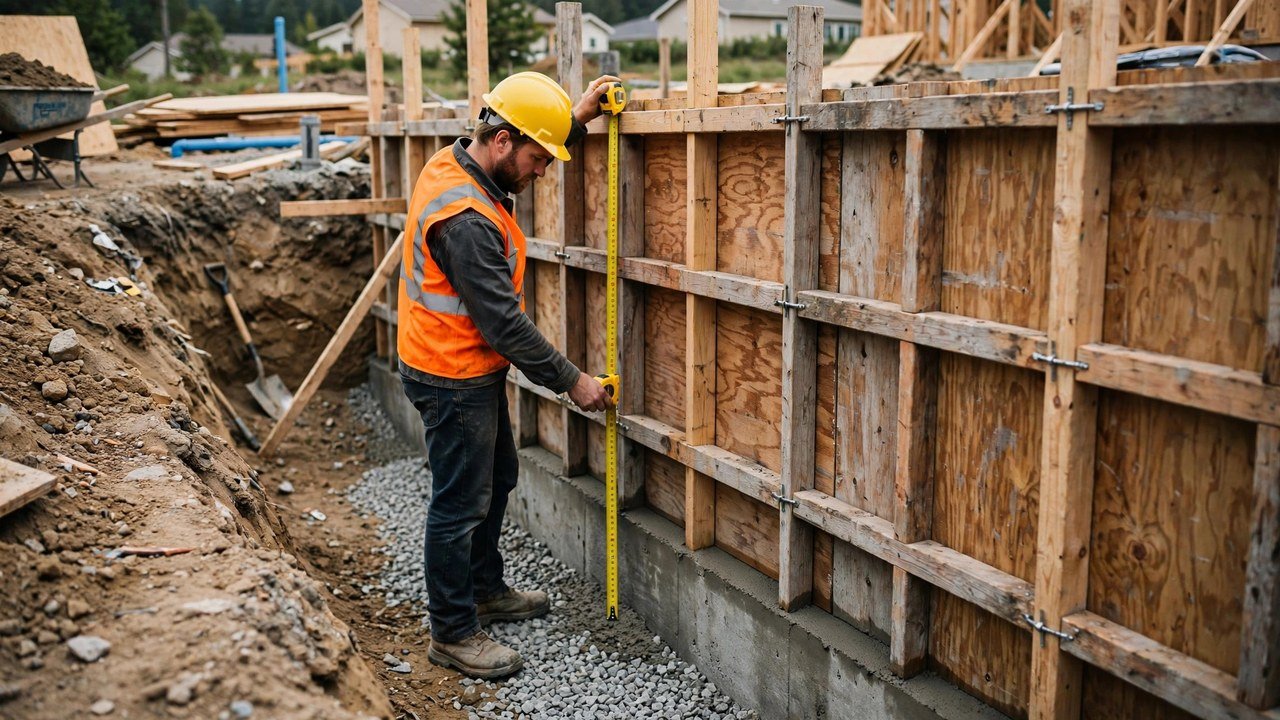
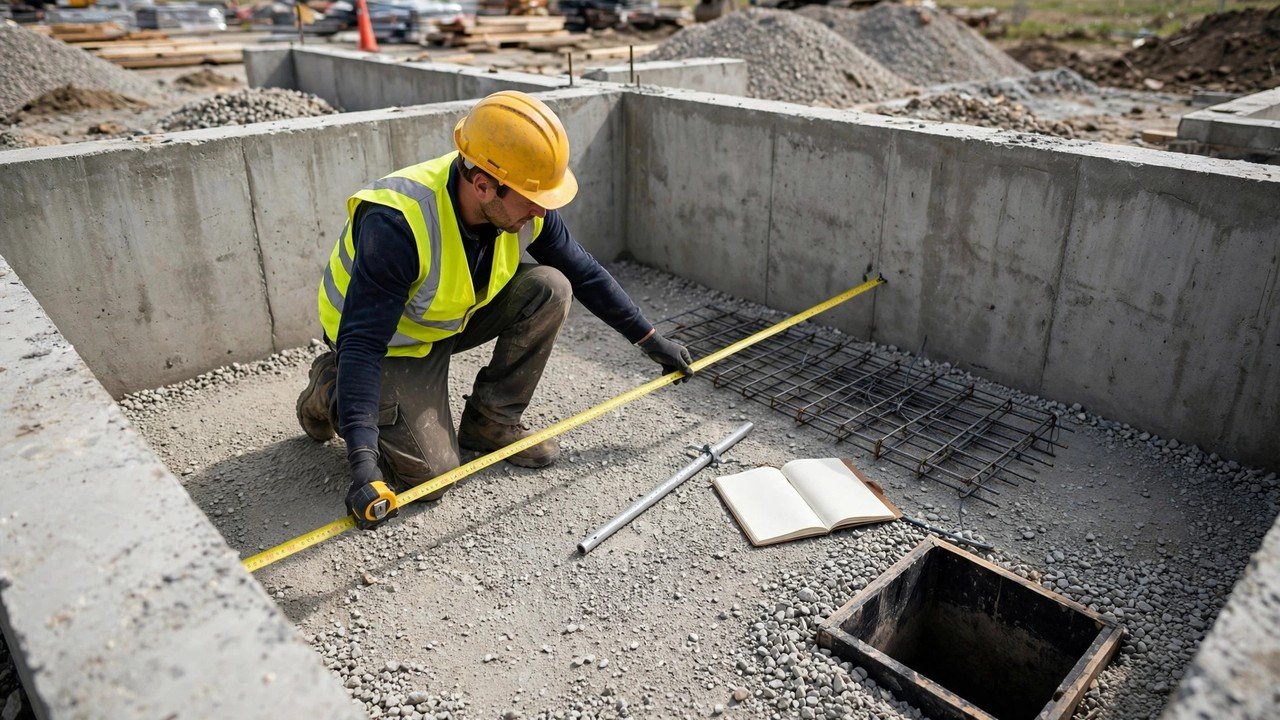
Take the 12.0 by 9.0 m interior from the measurement guide, with the checked volume of 10.764 m³ after the sump pit deduction.
- Choose the allowance. The subgrade is finished and the walls are straight, so the record uses 5%.
- Convert to a multiplier: 1 + 5 ÷ 100 = 1.05.
- Multiply: 10.764 × 1.05 = 11.3022 m³.
- Round the order line up to the supplier's selling increment: 11.31 m³.
Result: the order line reads 11.31 m³, with 10.764 m³ measured and a 5% recorded allowance.
| Allowance | Multiplier | Order line | When it fits |
|---|---|---|---|
| 4% | 1.04 | 11.20 m³ | Finished subgrade, straight walls, tight forms |
| 5% | 1.05 | 11.31 m³ | The worked example |
| 10% | 1.10 | 11.85 m³ | Rough subgrade, out-of-square walls, known spread |
How many trucks does the order need?
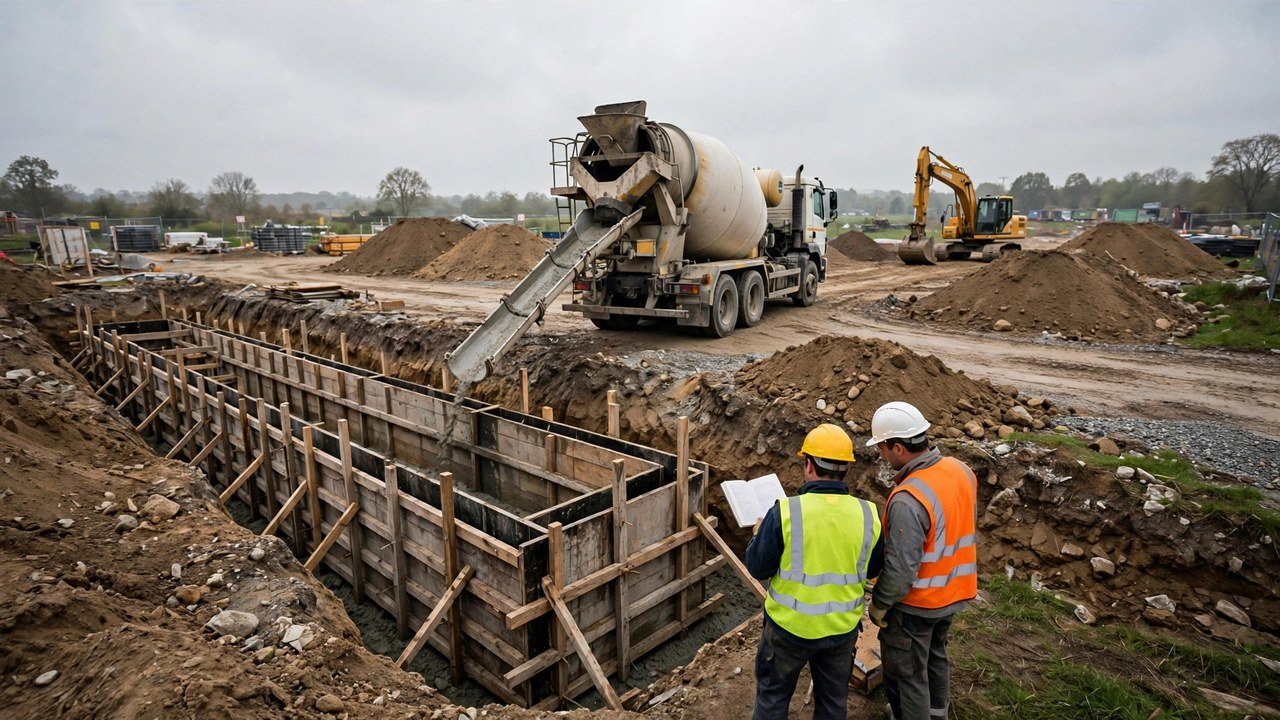
Divide the order volume by the usable mixer capacity, then round up to a whole truck. CIP 31 states truck mixer capacity between 8 and 12 yd³ (5 to 9 m³). Ask the supplier for the usable capacity; it is usually below the drum's rated maximum.
Trucks = order volume ÷ usable mixer capacity, rounded up
For 11.31 m³ and a 9 m³ usable load, the ratio is 11.31 ÷ 9 = 1.257, so the plan uses 2 trucks. Split the order so neither load becomes a small clean-up load: CIP 31 advises avoiding clean-up loads under 4 yd³ (2.5 m³), so two balanced loads of about 5.66 m³ keep both above that line. Confirm the small-load terms with the supplier either way.
Near the end of the pour, re-measure the remaining volume and adjust the final truck. That reevaluation is the CIP 8 discipline, and it prevents waiting for a final short load after the plant has closed.
An imperial cross-check: a 40 by 30 ft interior at 4 in deep gives 40 × 30 × (4 ÷ 12) = 400 ft³, and 400 ÷ 27 = 14.8148 yd³. A 5% allowance makes 14.8148 × 1.05 = 15.5556 yd³, so the order line reads 15.56 yd³. With a 10 yd³ usable load, 15.56 ÷ 10 = 1.556 rounds up to 2 trucks.
What details does the plant need with the order?
CIP 31 lists the ordering information the producer needs. Keep the requirements simple and relevant to the slab:
- The order quantity in the selling unit, cubic yards or cubic metres, as discharged from the truck mixer.
- The specified strength as a performance requirement. CIP 31 notes 3500 to 5000 psi (25 to 35 MPa) as typical for most concrete applications; the drawings and specification set the value for this slab.
- The nominal maximum coarse aggregate size, smaller than the narrowest dimension the concrete must flow through, including the slab thickness. CIP 31 notes 3/4 or 1 in. (19 or 25 mm) for most applications.
- The required slump for placing and finishing, typically 3 to 5 in. (75 to 100 mm) for slabs.
- Air entrainment only where the service exposure requires it. The CIP 31 target is 4 to 6% of the volume for 3/4 or 1 in. aggregate. An interior basement slab that never sees freezing does not need it by default.
- The delivery address with directions, the nature and location of the pour, the delivery rate the crew can sustain, the estimated start time, and the expected pour duration.
- A contact person on site, and a copy of the project specification where one applies.
Order the mixture by performance where possible and give the producer the project specification. The producer develops the mixture composition; the purchaser communicates the requirements.
How should the delivery be scheduled?
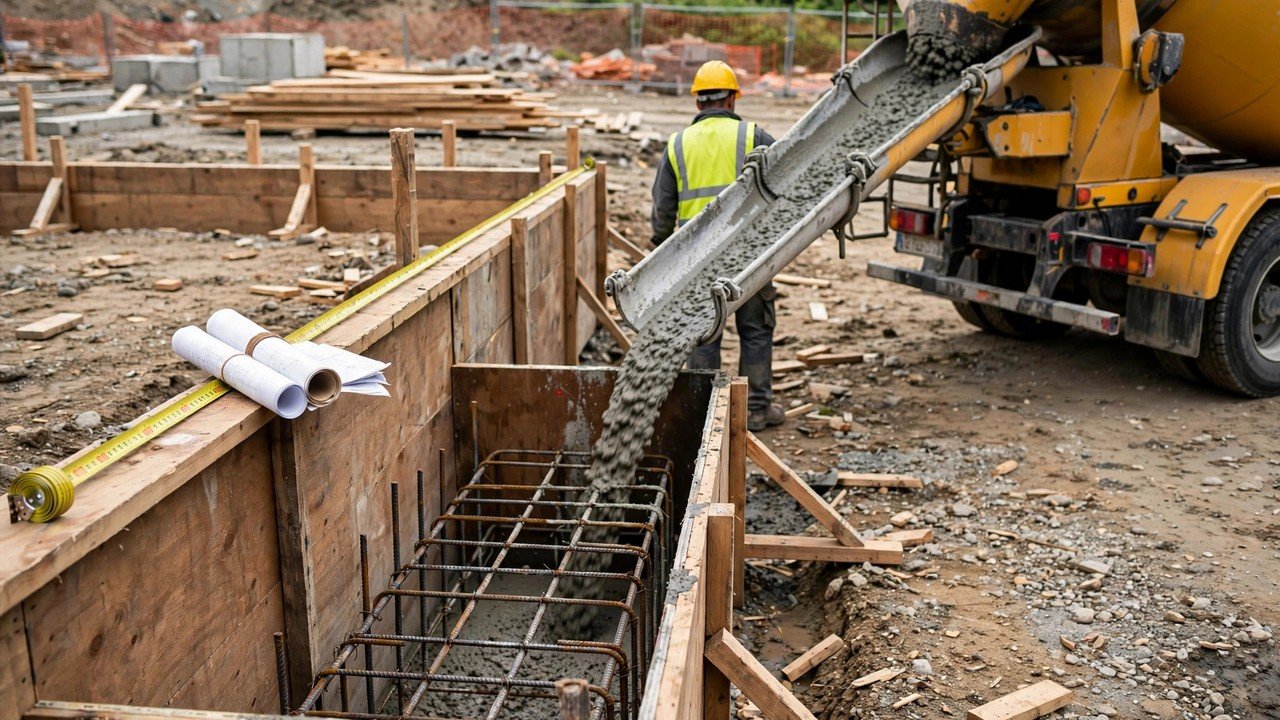
Place the order well in advance of the delivery date and notify the producer immediately of any schedule change or work stoppage. Concrete is a perishable product, so the crew, subgrade, and placement equipment must be ready when the first truck arrives.
Sequence the trucks against the placement rate, because ready-mixed concrete is discharged under time limits. ASTM C94 governs the ready-mix transaction; the widely cited limit is 90 minutes or 300 drum revolutions from the start of mixing, whichever comes first. Confirm which edition the purchase order references.
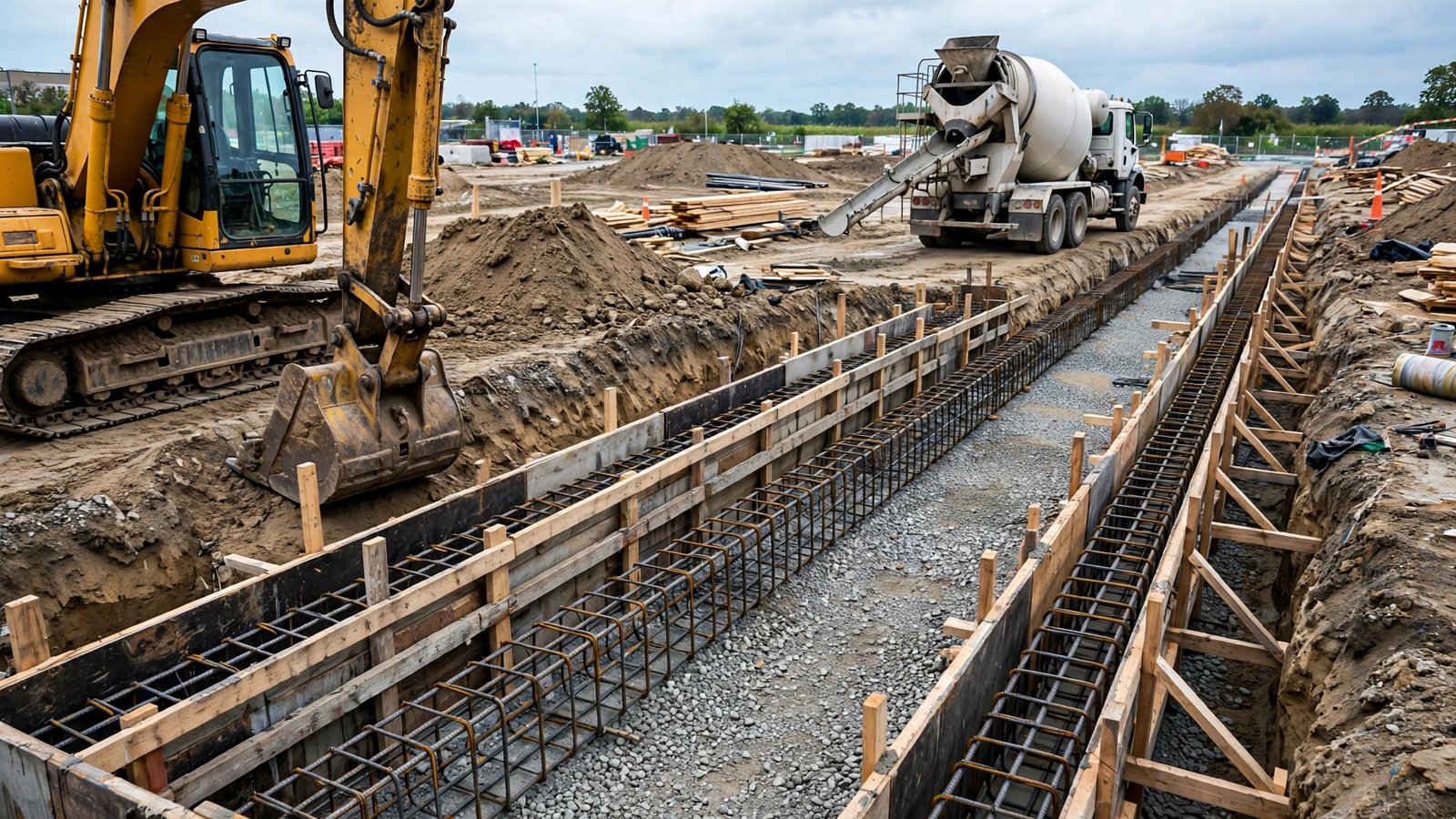
A loaded truck mixer weighs about 80,000 lbs (36,000 kg) per CIP 31 and may not maneuver on loose dirt or cross residential curbs and pathways. Plan firm access to the chute or pump position before the pour day, and arrange washout facilities on site.
Check and sign the delivery ticket at discharge and note any special occurrence on the ticket. The ticket is the only contemporaneous record of what was delivered, when, and in what state.
Common basement slab ordering mistakes
- Ordering the measured volume with no allowance, then short-loading the last truck.
- Recording the allowance inside the measured number so the order cannot be checked.
- Rounding the order quantity down to the selling increment instead of up.
- Planning fractional trucks instead of whole truckloads.
- Sending the final balance as a clean-up load under 4 yd³ (2.5 m³) without confirming the small-load terms.
- Ordering before the subgrade is finished, so the depth datum behind the measurement does not survive.
- Specifying the mix by price instead of by the drawings: strength, aggregate size, slump, and air follow the specification.
- Booking trucks without confirming access for an 80,000 lb (36,000 kg) loaded mixer.
Safety and professional scope
Quantity planning does not select the mix, the placement method, or the pour sequence. The project drawings, specification, and the responsible qualified people control those decisions. Fresh concrete causes chemical burns: CIP 31 warns to keep it off skin and eyes and to wear rubber boots, gloves, eye protection, and protective clothing. The basement excavation safety guide covers the pit the walls were built in.
Sources and scope
- NRMCA, CIP 31: Ordering Ready Mixed Concrete (2000, 2016): the 4 to 10% order contingency, truck mixer capacity of 8 to 12 yd³ (5 to 9 m³), clean-up loads under 4 yd³ (2.5 m³), ordering information, delivery scheduling and access, delivery tickets, and the chemical-burn caution.
- Nevada Ready Mix, summary of NRMCA CIP 8: Discrepancies in Yield: reevaluating the required quantity near the end of the pour and adjusting the last trucks.
- NIST Handbook 44, 2026 Appendix C: cubic-foot, cubic-yard, litre, and cubic-metre relationships.
Scope: the formulas turn a measured volume into an order quantity. The drawings, specification, subgrade condition, supplier selling units and capacities, vehicle and route limits, applicable law, and the responsible qualified people control the accepted allowance, the mix, and the delivery plan.
Review responsibility: Saleem Sial owns the published calculation, source, and editorial checks. Waseem Sial, External Reviewer and Engineer, remains listed for ongoing external review; no completed external-review date is claimed.
Next, use the Concrete Slab Calculator to check the volume, read the basement excavation safety guide before the pour day, or return to the Foundation Calculators hub.