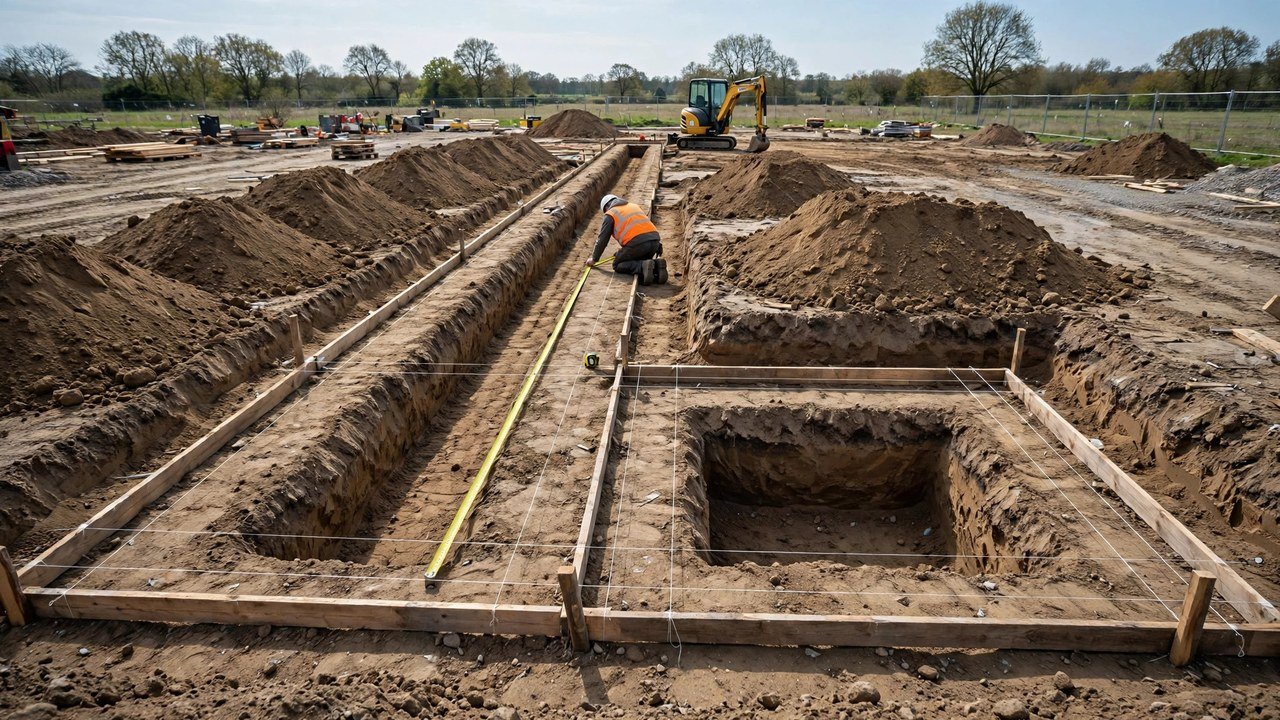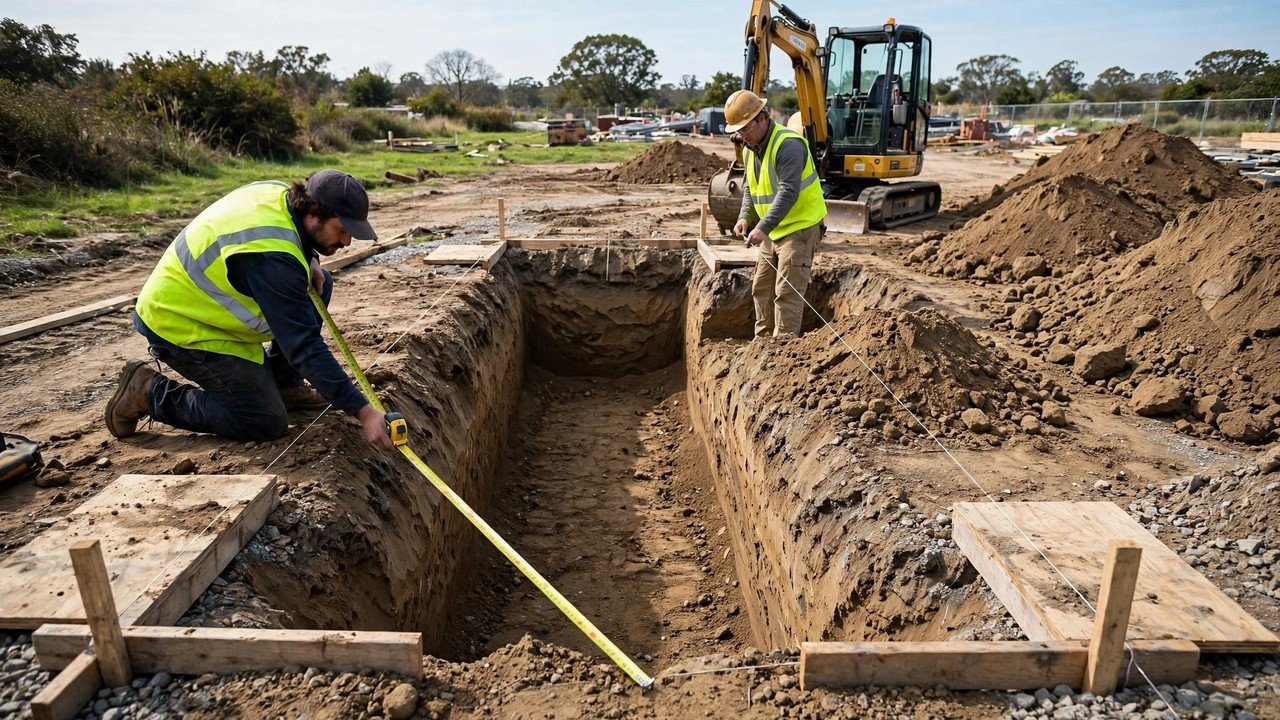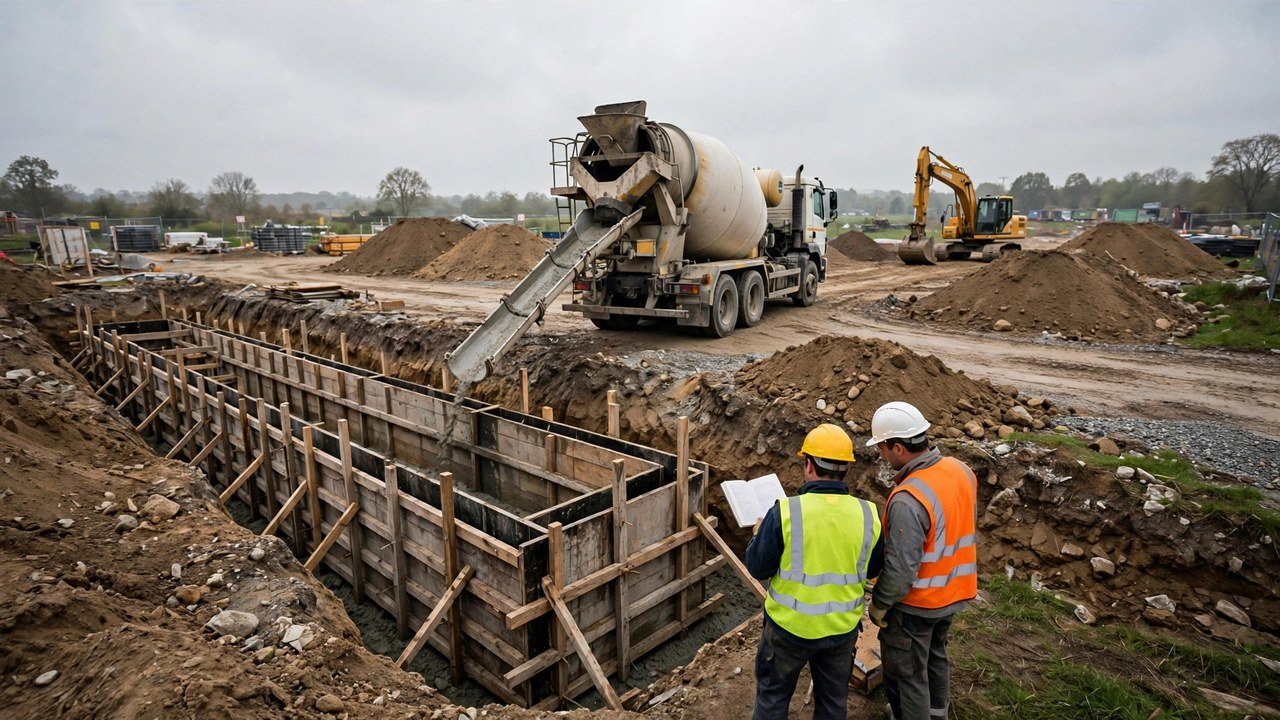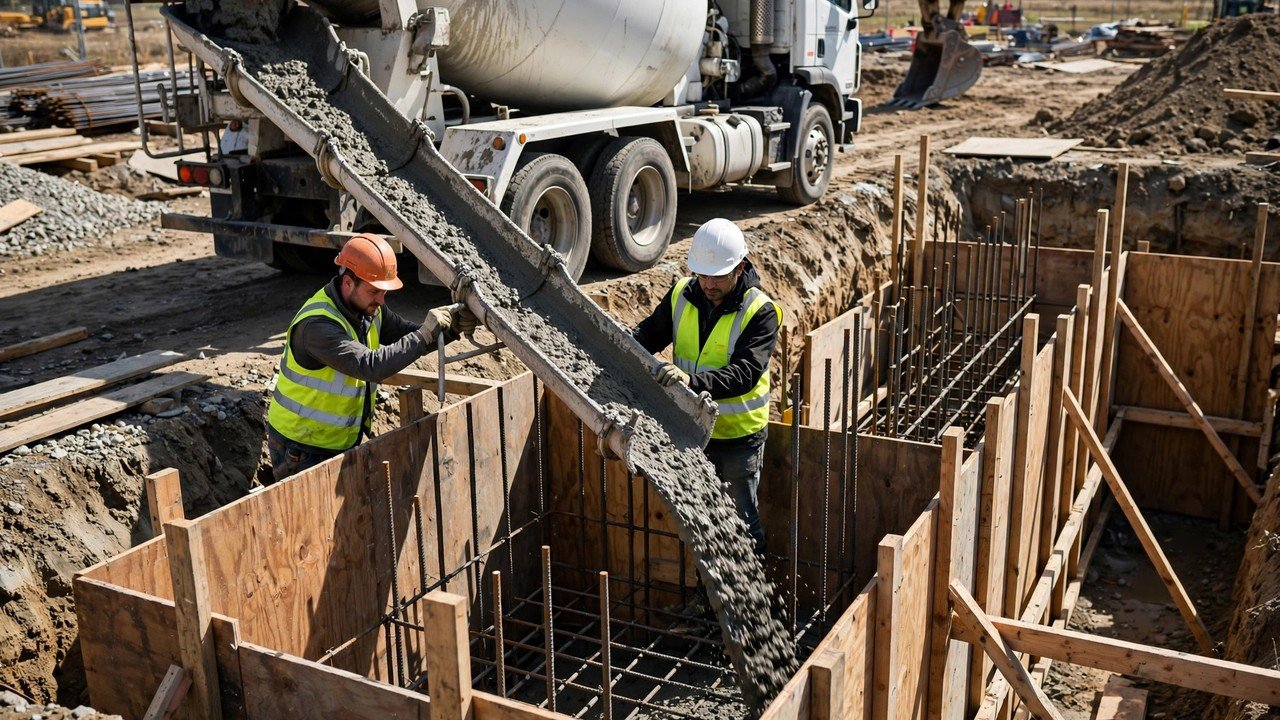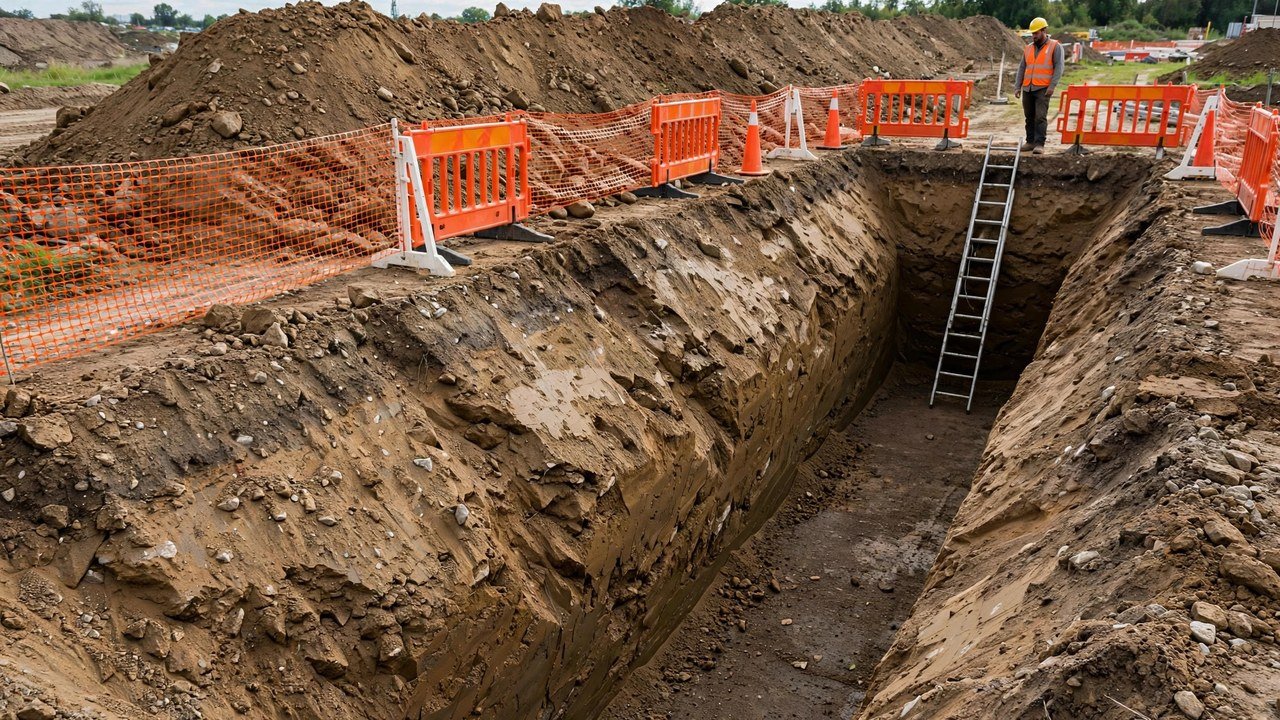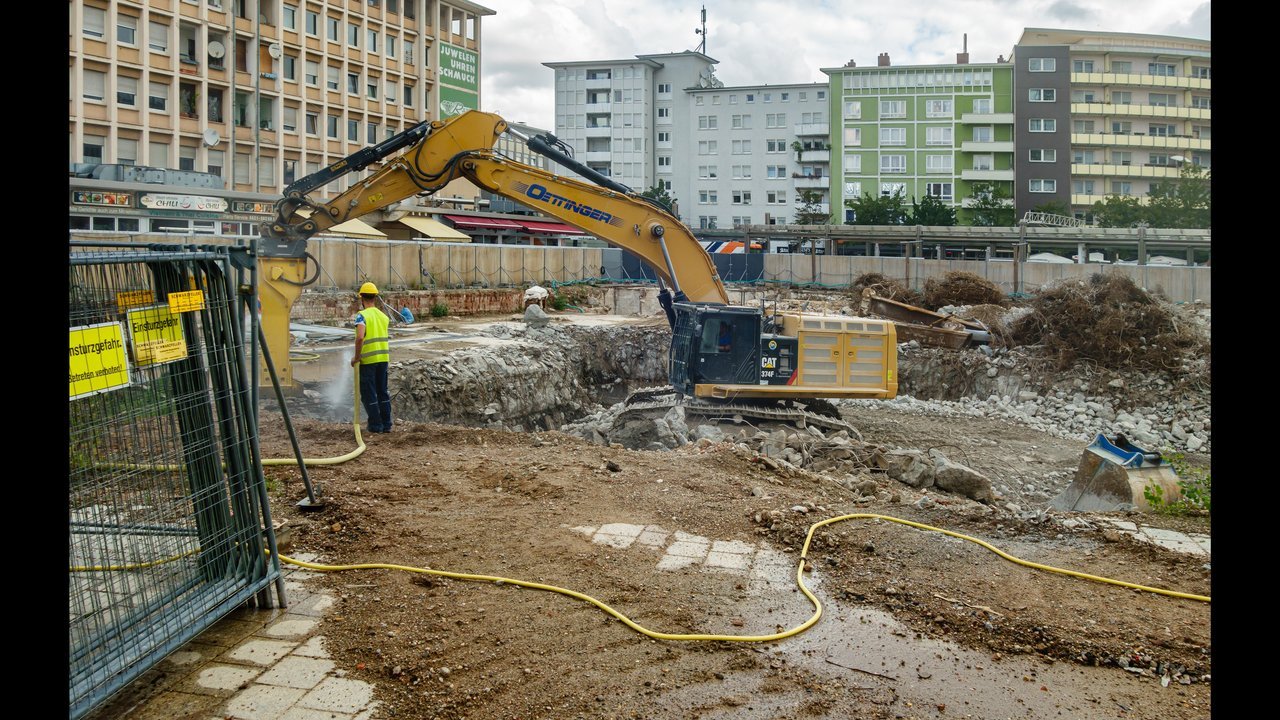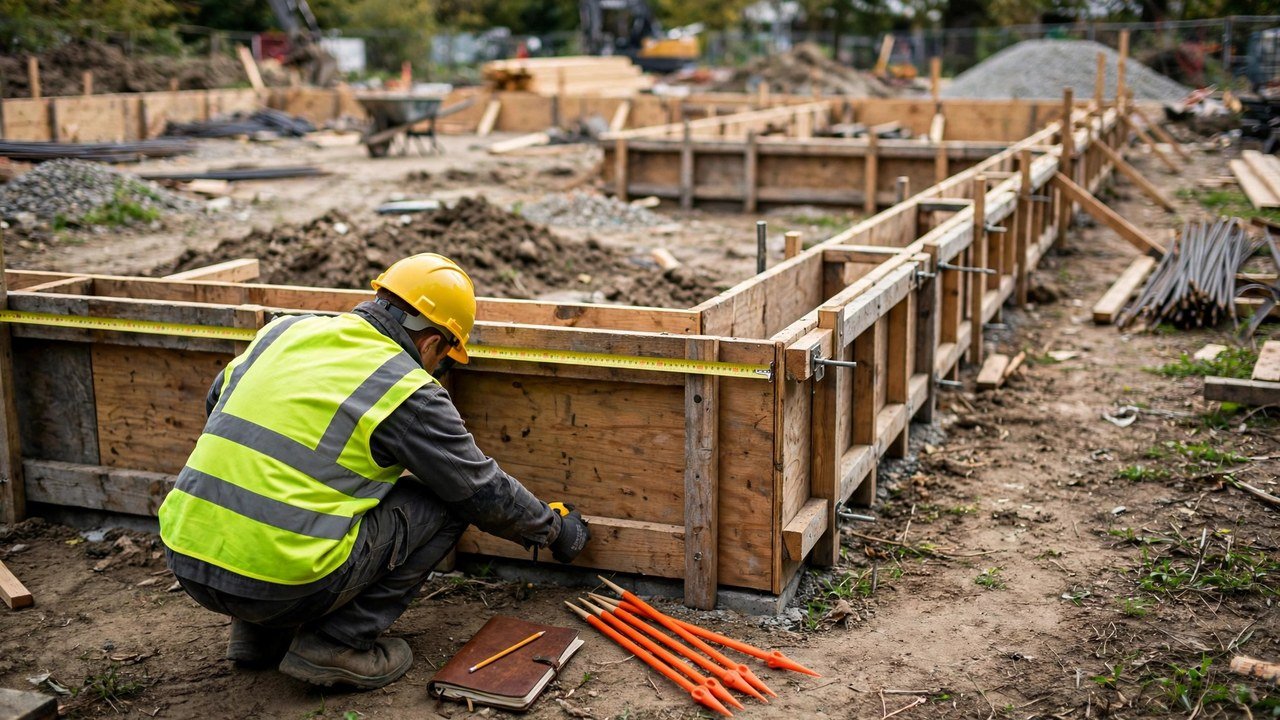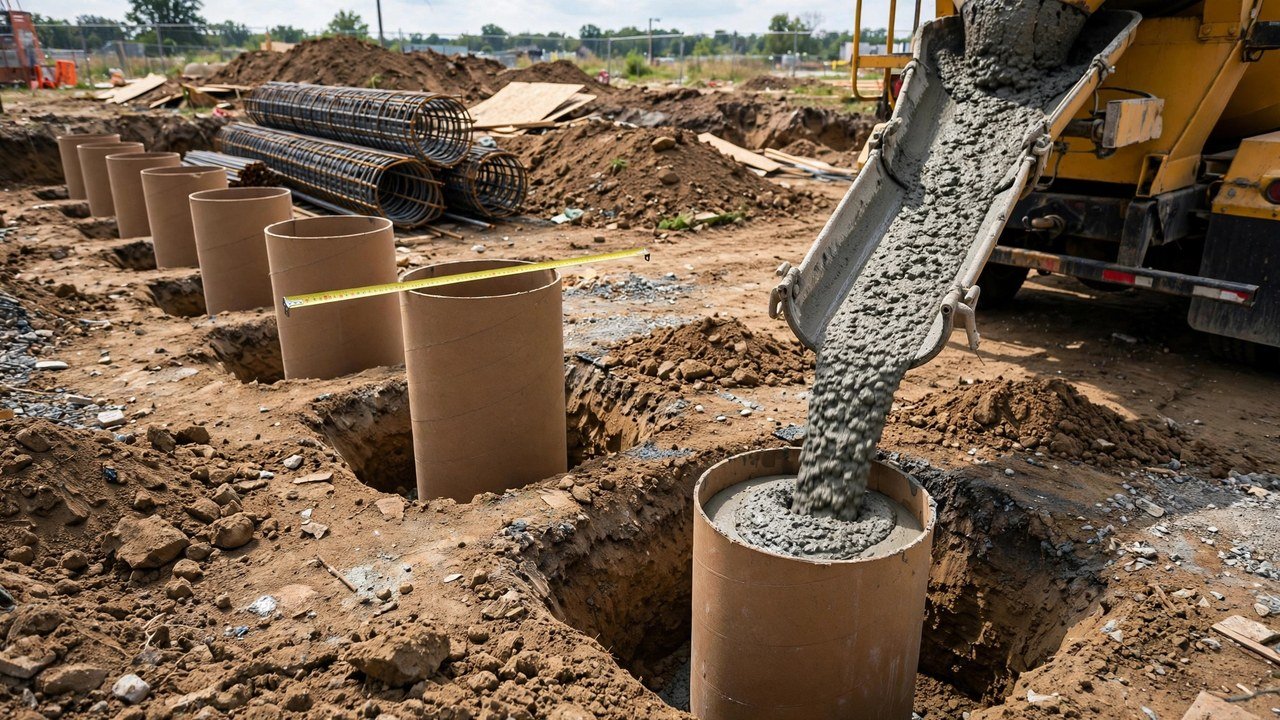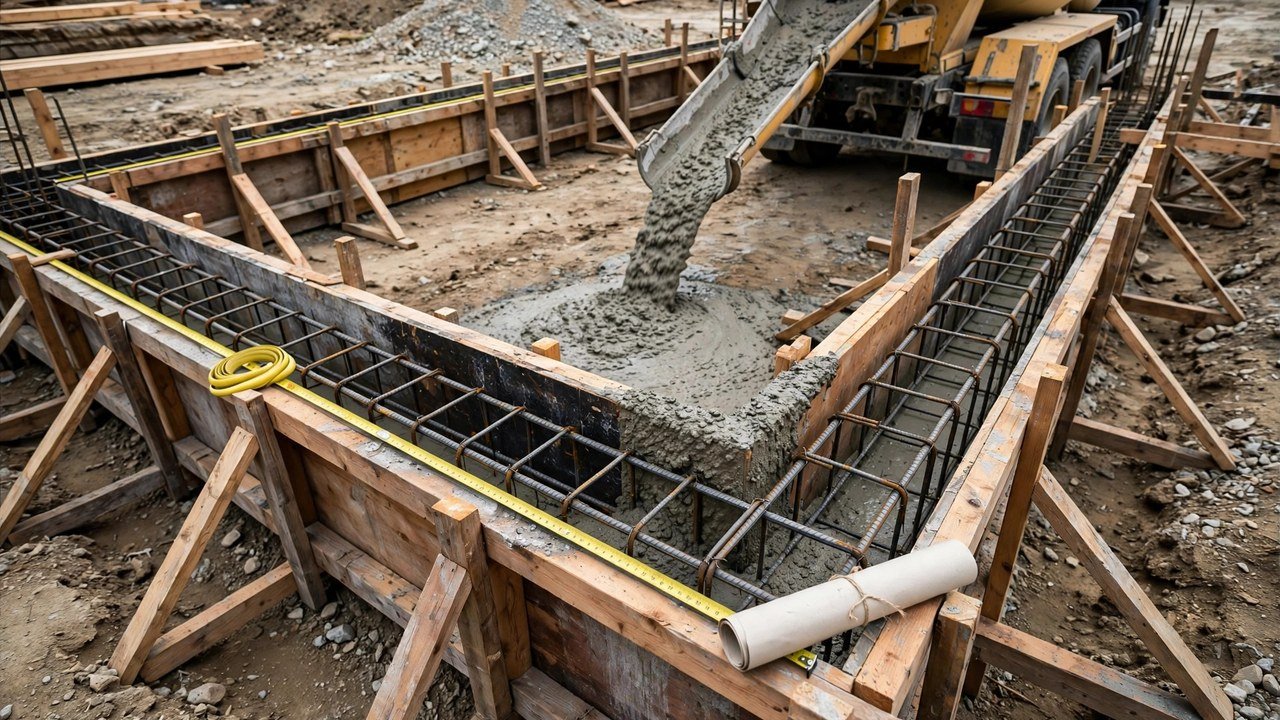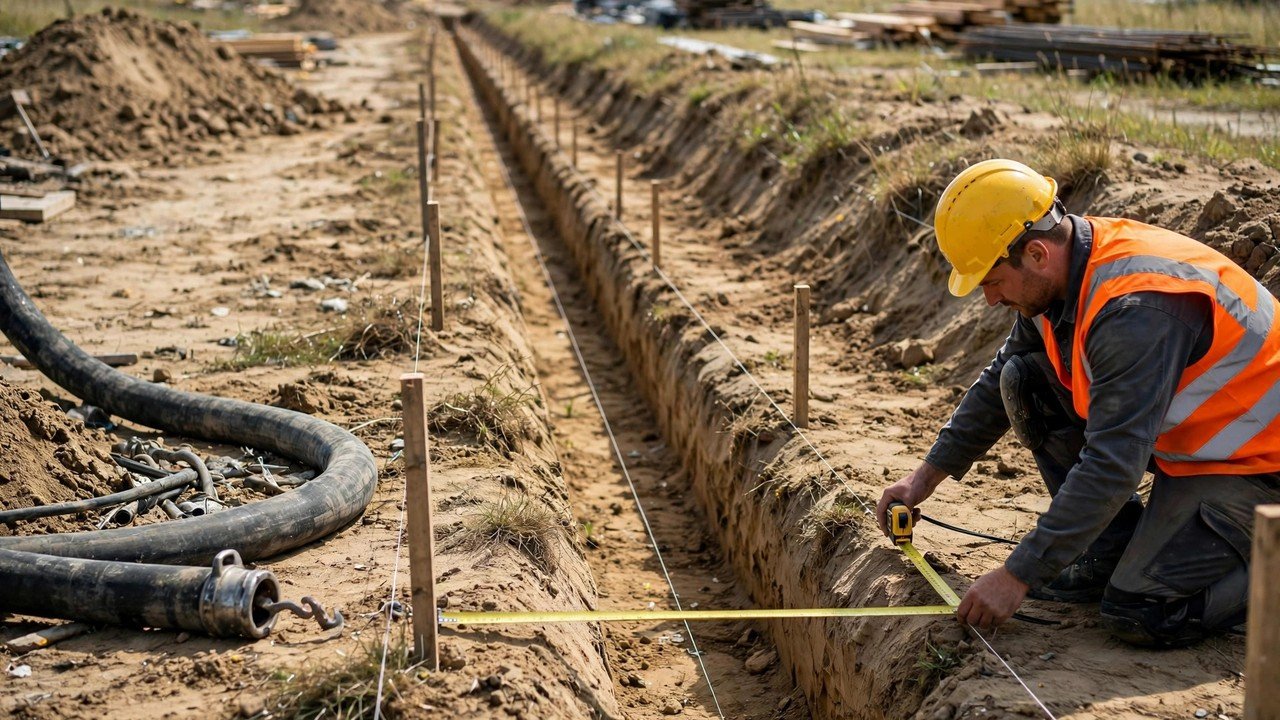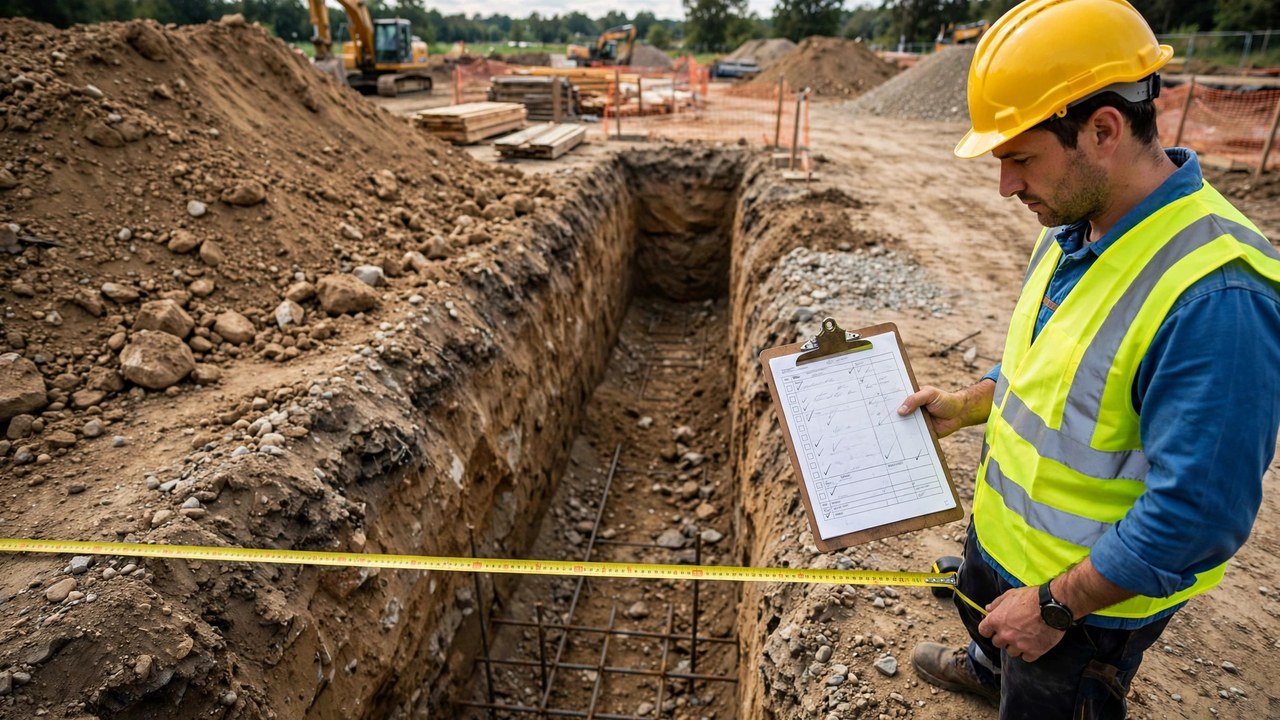
A pier footing method is the combination of base shape, form type, pour count, and equipment that puts the pier in the ground. Match the method to the soil, the load, the frost depth, and the site access before you order forms or schedule the pour.
Which pier footing method fits your project?
Choose the method after six questions: what the drawing specifies, what the soil is, how heavy the load is, how deep the frost line sits, what equipment reaches the site, and when the pier must carry load. No method is the default. Each one solves a different combination of those six.
| Method | What it is | Fits best when | Main check |
|---|---|---|---|
| Straight cardboard form tube | Round fiber tube set in a dug hole and poured full | You need uniform round piers and the soil holds its shape | Tube bearing area against the load; tube sizes are nominal |
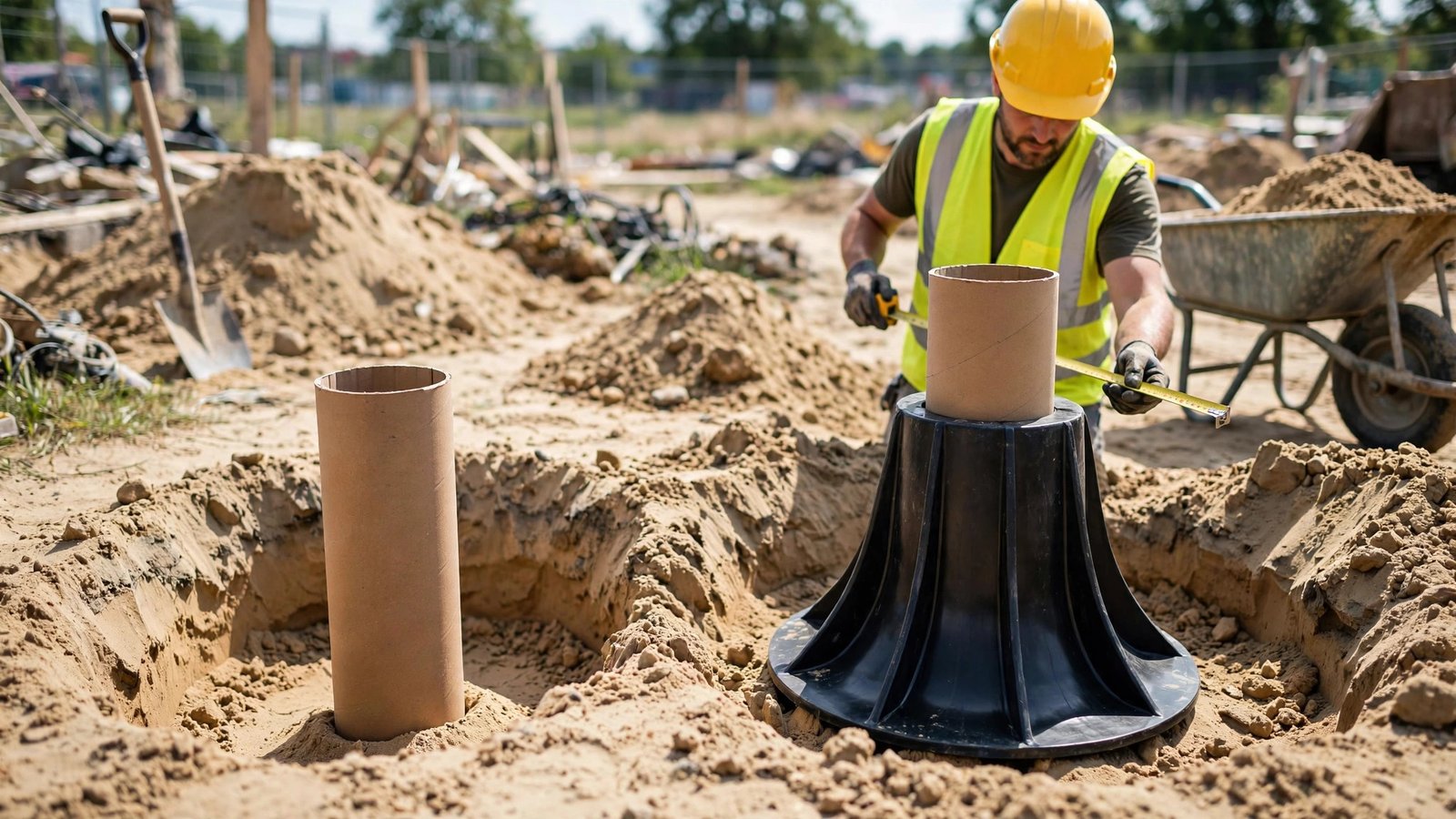
| Tube plus flared plastic footing form | Bell-shaped plastic base with a tube attached on top; one pour | You want more bearing area without hand-digging a wide base | Base model size against the load and the tube diameter |
| Hand-dug spread footing plus tube pier | Wide flat pad poured first, pier formed above; two pours | The drawing calls a specific pad size or the soil suits a wide flat base | Pad dimensions and curing time between pours |
| Direct-pour pier, tube only above grade | Hole poured directly; tube used only for the exposed portion | Firm cohesive soil stays open and clean during the pour | Hole diameter and wall stability |
| Precast concrete pier | Factory-cast unit set on a prepared bearing surface | Light loads, shallow depth, and speed matter most | The unit's rated use and a level bearing bed |
| Helical pile | Steel shaft with helical plates turned into the soil by a hydraulic drive head | Poor soils, tight access, or no time to wait for concrete to cure | Supplier or engineer design and specialist installation |
What does each method ask you to do?
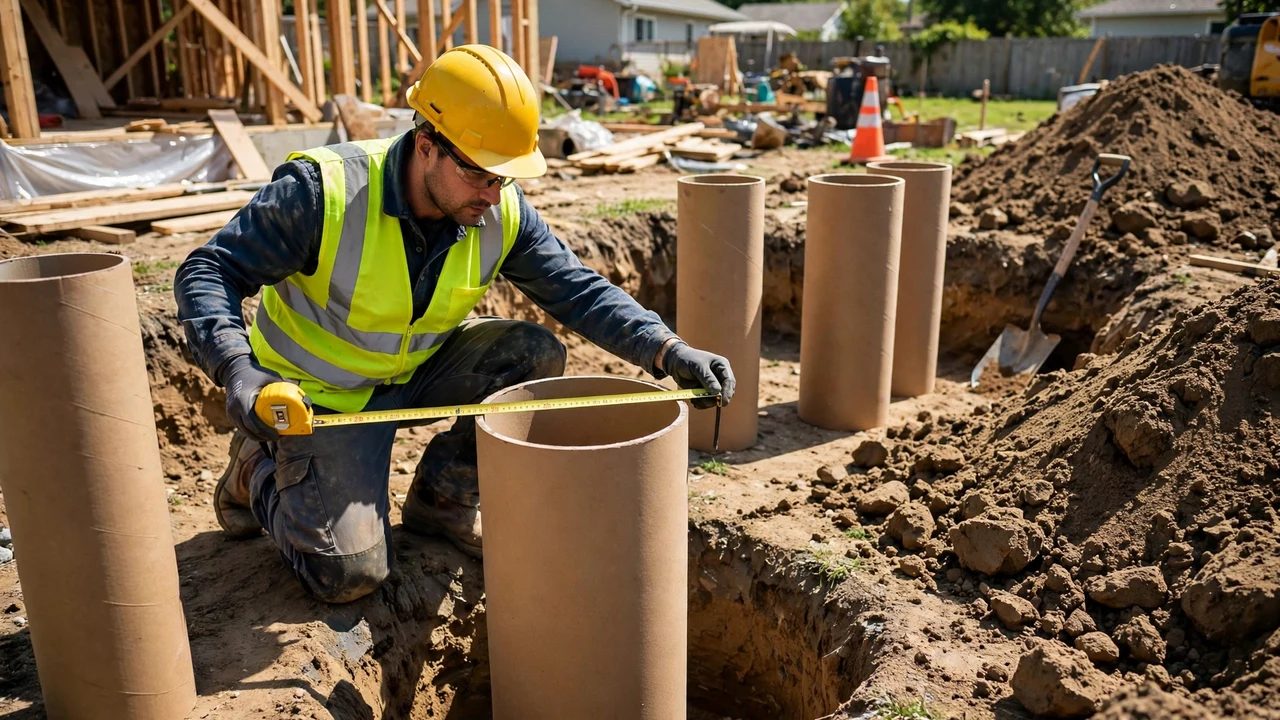
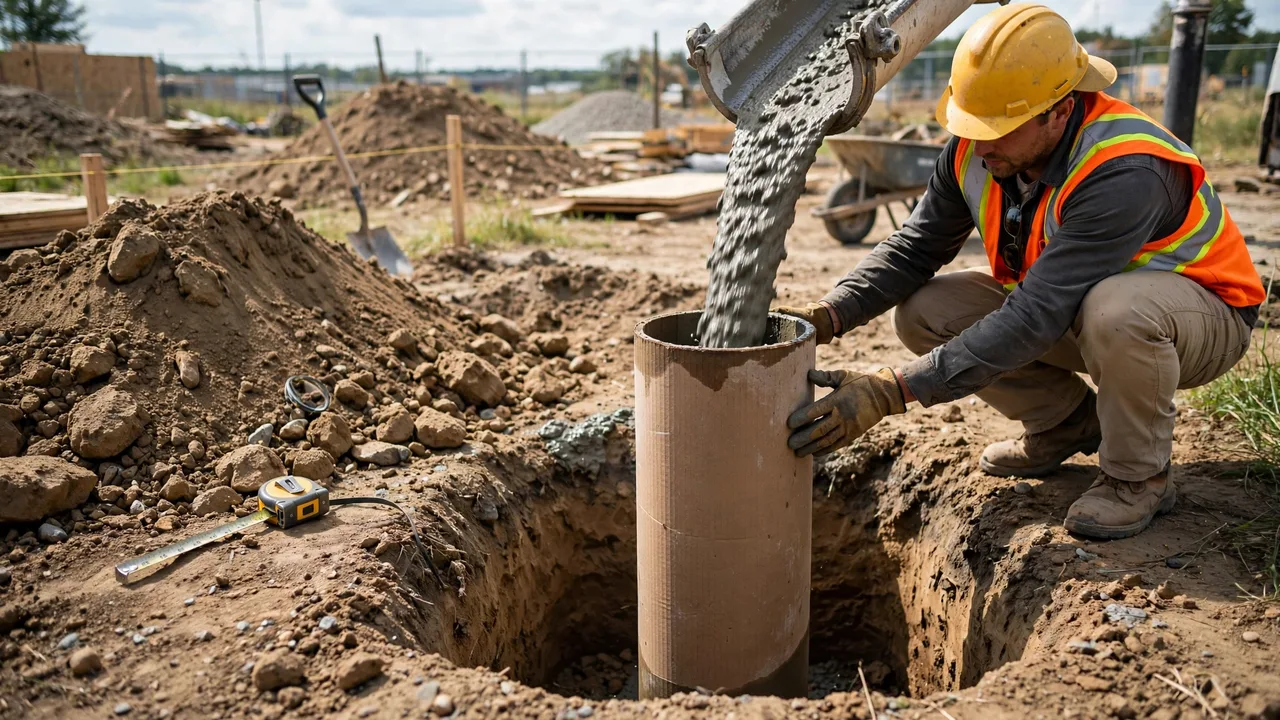
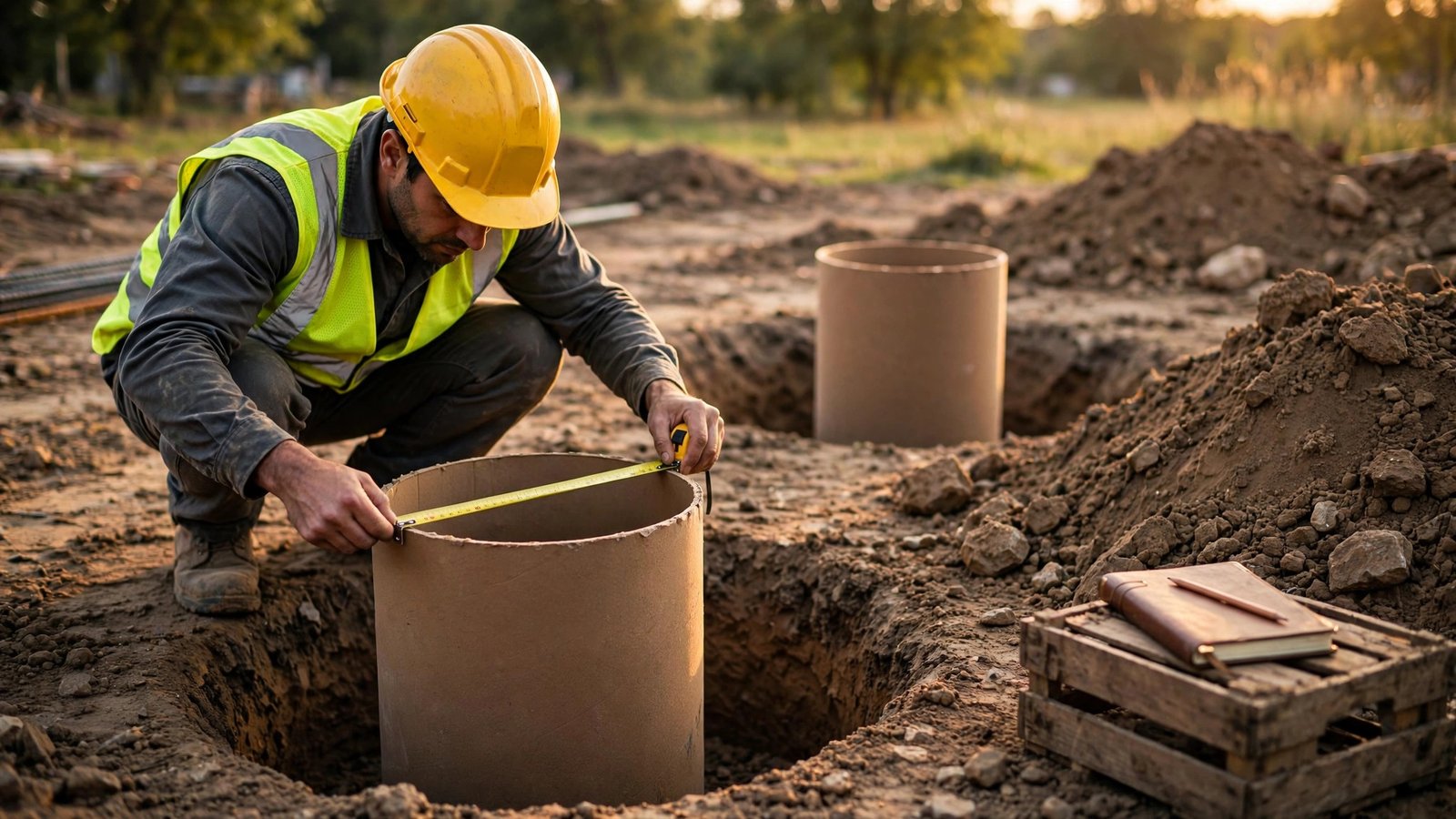
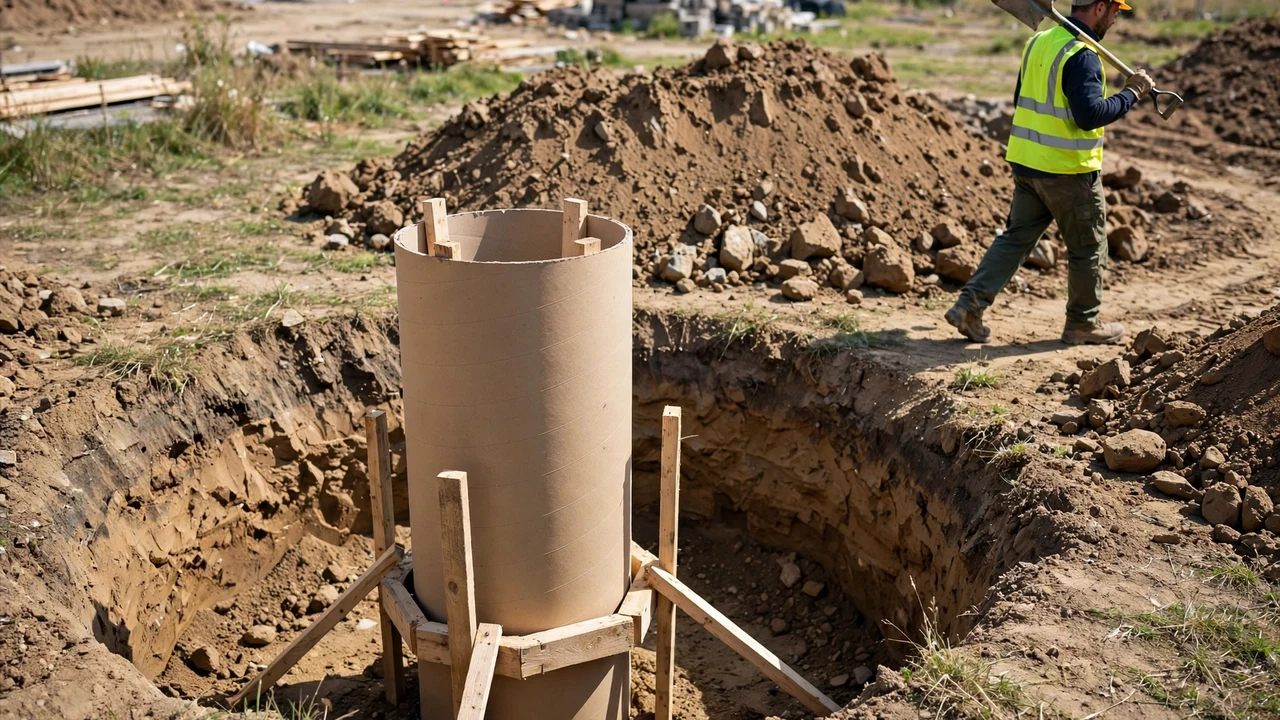
A straight cardboard form tube is the simplest build. Dig the hole, set the tube, and pour it full. The tube stays in the ground. Sonoco describes its Builder's Tube as single-use and warns that diameter sizes are nominal, so measure the inside diameter when the number matters to the calculation.
A tube plus flared plastic footing form adds a bell-shaped base under the tube. Bigfoot Systems makes its footing forms in four models: BF20, BF24, BF28, and BF36, with 20, 24, 28, and 36-inch base diameters. Each model accepts standard construction tubes on its top. The form is recycled HDPE plastic with sloped sides and small vent holes that let trapped air escape while the concrete is placed. You attach the tube, lower the assembly into the hole, and complete the base and pier in one pour.
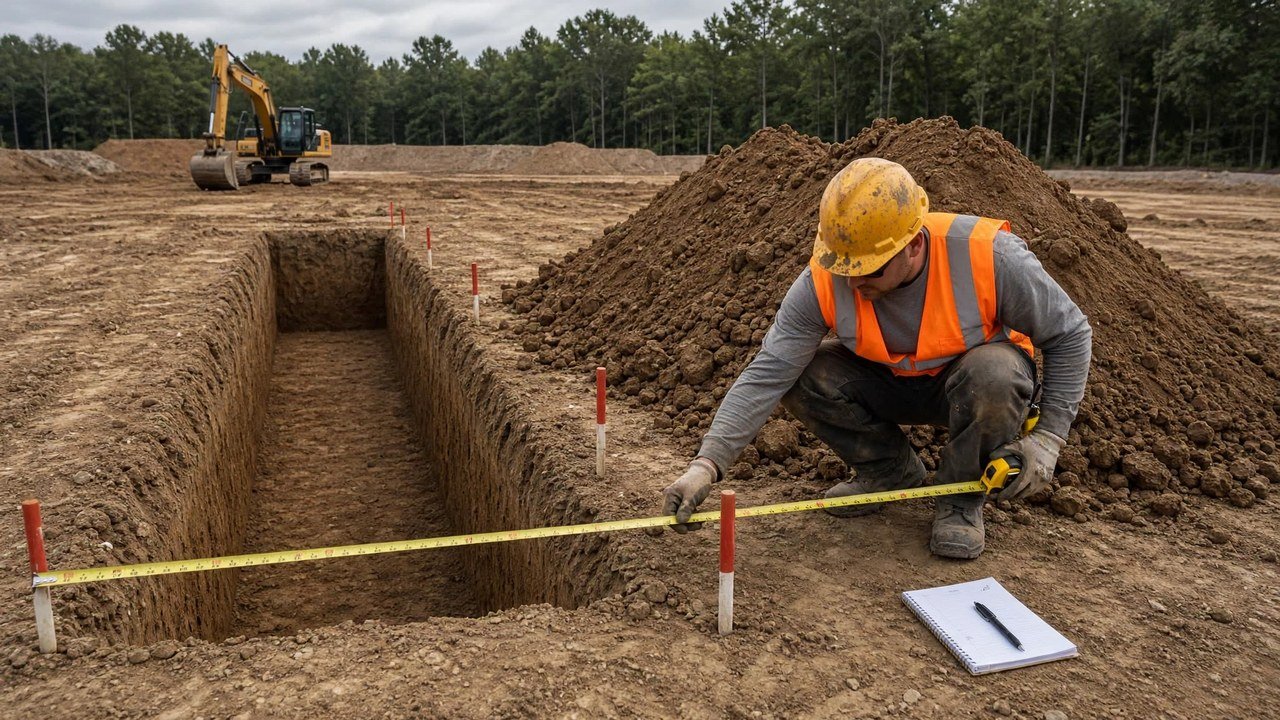
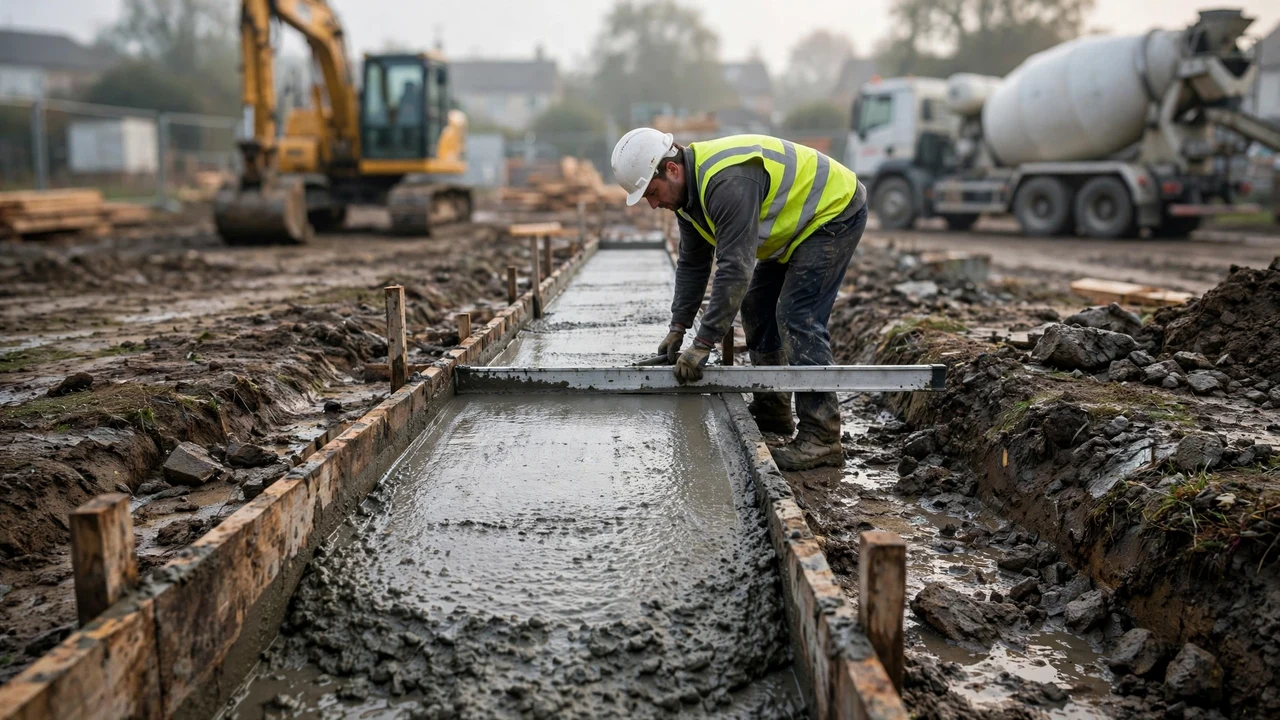
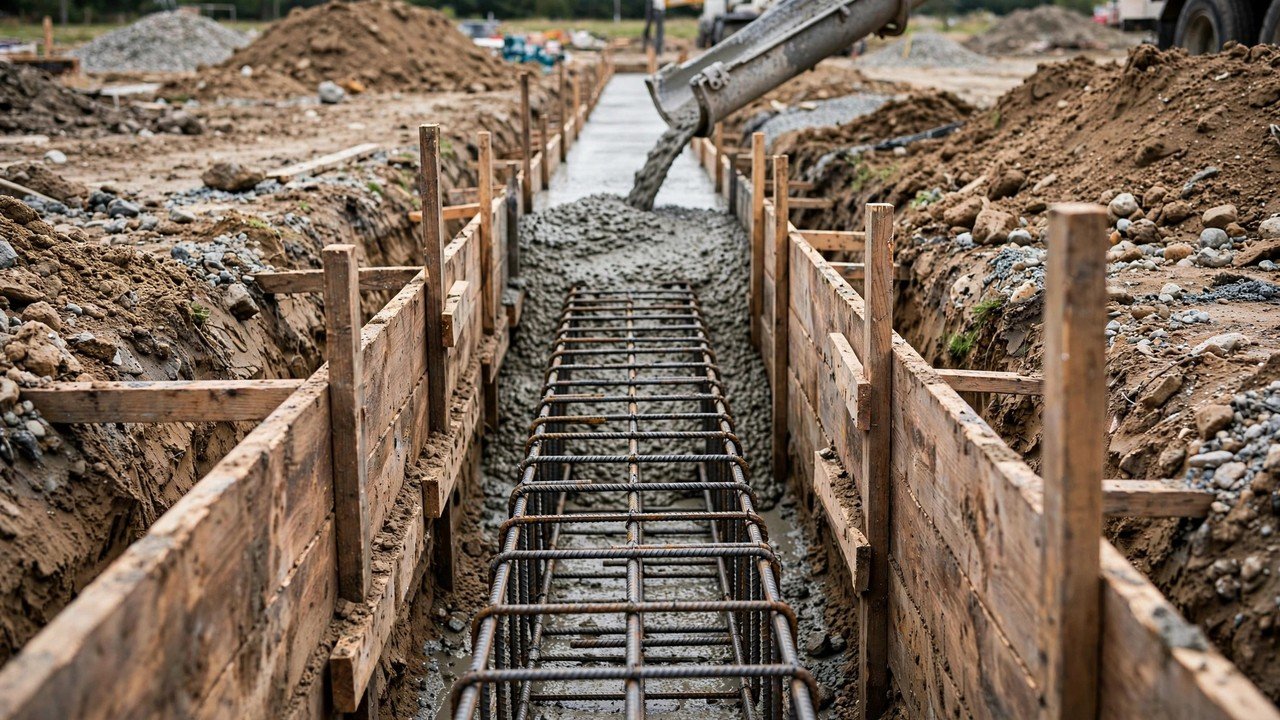
A hand-dug spread footing plus tube pier separates the base from the column. Excavate a wide pad, pour it, let it set, then form the pier above it. This method costs a second pour and a return trip, but it produces a base whose dimensions you control exactly, which suits drawings that name a pad size.
A direct-pour pier skips the tube below grade. The hole itself becomes the form, and the tube forms only the portion above the ground. Builders use it in firm cohesive soil that holds a clean hole. It saves form material, but the poured pier copies the hole's irregular shape, which leaves a rougher surface for frost to grip.
A precast concrete pier removes pouring from the site. Set the unit on a compacted, level bearing bed at the specified depth. The method suits small light structures and short frost depths. Check the unit's rated use, because a precast block meant for a shed does not automatically carry a deck post.
A helical pile reaches stable soil mechanically. The drive head turns the shaft until the helical plates reach a depth where the soil holds them. There is no excavation, no form, and no curing wait. Design and installation usually run through the supplier or an engineer, which is why this method enters the list only when the other five do not fit.
How much bearing area does each base give you?
The base decides how many square inches of soil carry the pier load. Calculate bearing area with the circle formula.
Bearing area = π × (diameter ÷ 2)²
A 10-inch tube base gives π × 25 = 78.54 in², which is 0.5454 ft². A 28-inch flared base gives π × 14² = π × 196 = 615.75 in², which is 4.2761 ft². The flared base offers 615.75 ÷ 78.54 = 7.84 times the bearing area of the 10-inch tube.
Check a load against that area. Take a pier carrying 4,000 lb with a drawing-stated allowable bearing pressure of 2,000 psf. The 2,000 psf value is a fixture from a drawing or geotechnical record, not a recommendation.
- Required area: 4,000 ÷ 2,000 = 2 ft² = 288 in².
- Required diameter: 2 × √(288 ÷ π) = 19.15 inches.
- 20-inch base: π × 10² = 314.16 in² = 2.1817 ft², which covers the fixture.
- 10-inch tube alone: 4,000 ÷ 0.5454 = 7,335.7 psf, which exceeds the 2,000 psf fixture.
Result: under these fixture values, the 20-inch flared base carries the pier and the 10-inch tube alone does not. The check takes four lines. Run it with your own load and the bearing value from your project record before choosing between a straight tube and a flared base.
What six questions narrow the choice?
What does the drawing specify? The drawing wins. If it names a flared form model, a pad size, or a pier diameter, the method is decided. This guide serves projects where the builder selects the method.
What is the soil? Firm cohesive soil that holds a clean hole supports direct-pour or a straight tube. Loose, sandy, or caving soil favors a tube below grade. Weak or variable soil pushes toward a flared base for more area, or toward helical piles designed for that soil.
How heavy is the load? Compare the pier load with the base area using the four-step check above. Larger loads or weaker soil demand larger bases, which usually means a flared form or a spread footing.
How deep is the frost line? Piers must sit below the frost depth set by the local code. Deeper frost makes each hole more expensive to dig, which favors methods with fewer trips: one-pour tube-plus-form over two-pour spread footing.
What equipment reaches the site? A post-hole digger and a wheelbarrow build every concrete method on this list. Helical piles need a hydraulic drive head, and rocky ground may need a drill or excavator to form any hole at all.
When must the pier carry load? Concrete methods need curing time. Helical piles and precast piers accept load immediately. Tight schedules on difficult soil are the helical pile's natural case.
Where do the drawing and the code override every preference?
No preference in this guide overrides the project documents or the local code. The IRC sets two minimums worth knowing for U.S. residential work: exterior footings go at least 12 inches below the undisturbed ground surface (R403.1.4), and piers and other permanent supports need frost protection, most commonly by extending below the local frost line (R403.1.4.1). Footings must not bear on frozen soil. The IRC also permits isolated plain concrete footings for detached one- and two-family dwellings up to three stories with stud bearing walls (R403.1.3.6).
Local amendments, frost depths, and permit rules change the numbers. Confirm the depth, diameter, and reinforcement requirements with the building department and the drawing before the method choice is final.
What mistakes show up most in method selection?
- Choosing the tube diameter for the column look instead of checking the base area against the load.
- Pouring onto disturbed, loose, or frozen soil instead of undisturbed bearing material below the frost line.
- Treating the manufacturer's nominal tube size as the measured size in the calculation.
- Assuming every pier in a group carries the same load instead of checking the heaviest one.
- Ordering forms before the load and bearing values are known, then discovering the base is too small.
- Picking direct-pour in caving soil, where the hole cannot hold its shape long enough to pour.
- Using helical piles without the supplier or engineer design that sets their depth and capacity.
Sources and scope
- Sonoco, Sonotube Builder's Tube product data (accessed 2026-10-09): nominal sizes and the "measure when critical" note, single-use guidance, per-foot concrete volumes.
- Bigfoot Systems footing forms, CCMC evaluation report (accessed 2026-10-09): four models BF20, BF24, BF28, and BF36 with 20, 24, 28, and 36-inch base diameters; bell-shaped recycled HDPE construction; construction-tube attachment; vent holes that release trapped air during the pour. The report's stated opinion ran until October 2021; it is used here for the product description and size facts only.
- ICC codes, Chapter 4 Foundations (accessed 2026-10-09): exterior footing minimum depth (R403.1.4), frost protection for piers (R403.1.4.1), and isolated concrete footings for small residential buildings (R403.1.3.6).
- NIST Handbook 44 (2026), Appendix C: length and area unit relationships used in the bearing-area arithmetic.
- Google Search Central, Creating helpful, reliable, people-first content and Guidance on generative AI content, retrieved 2026-10-08: the people-first and AI-assistance content standards applied during drafting.
Scope: the bearing-area arithmetic in this guide uses stated fixture values to show the comparison method. The project drawings, geotechnical record, soil allowable bearing pressure, frost depth, loads, reinforcement, and applicable law control the accepted method and final dimensions. No source here sets a project allowance, a soil bearing value, or a code-acceptable method for a specific site.
Review responsibility: Saleem Sial owns the published calculation, source, and editorial checks. Waseem Sial, External Reviewer and Engineer, remains listed for ongoing external review; no completed external-review date is claimed.
Next, use the field measurement guide once the method is chosen, the worked example to run the full calculation, and the Foundation Calculators hub for related tools.