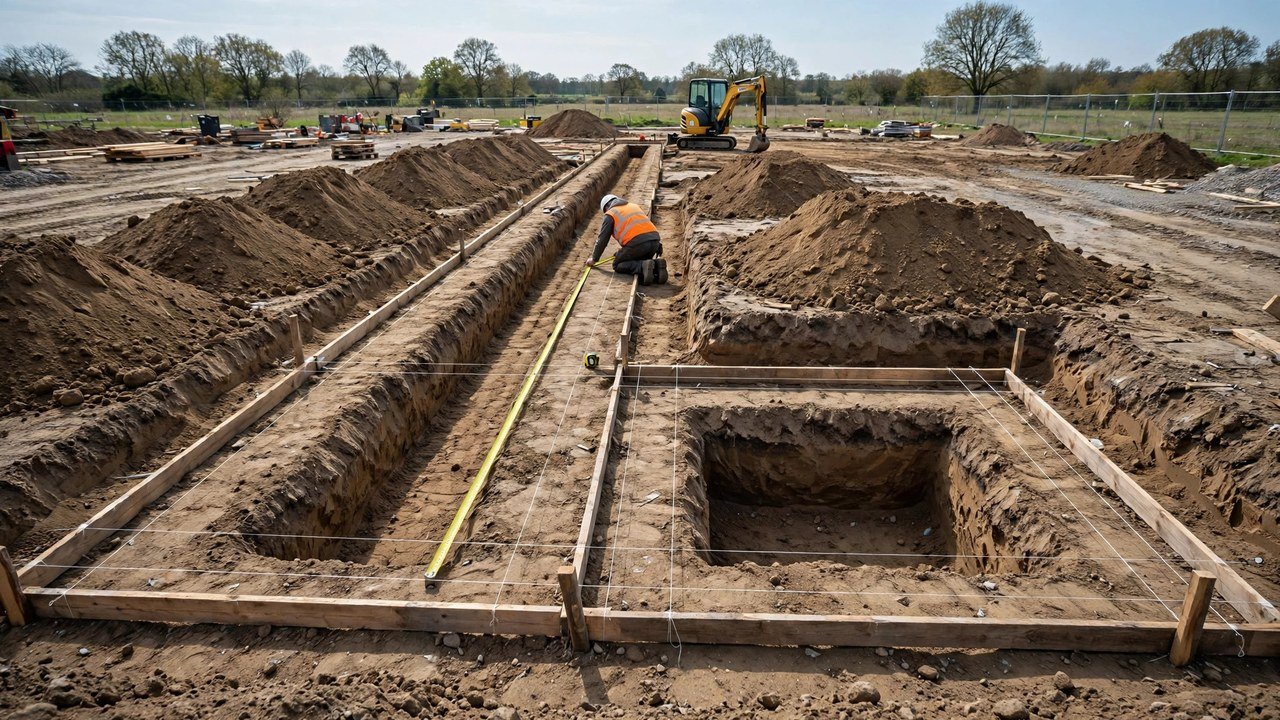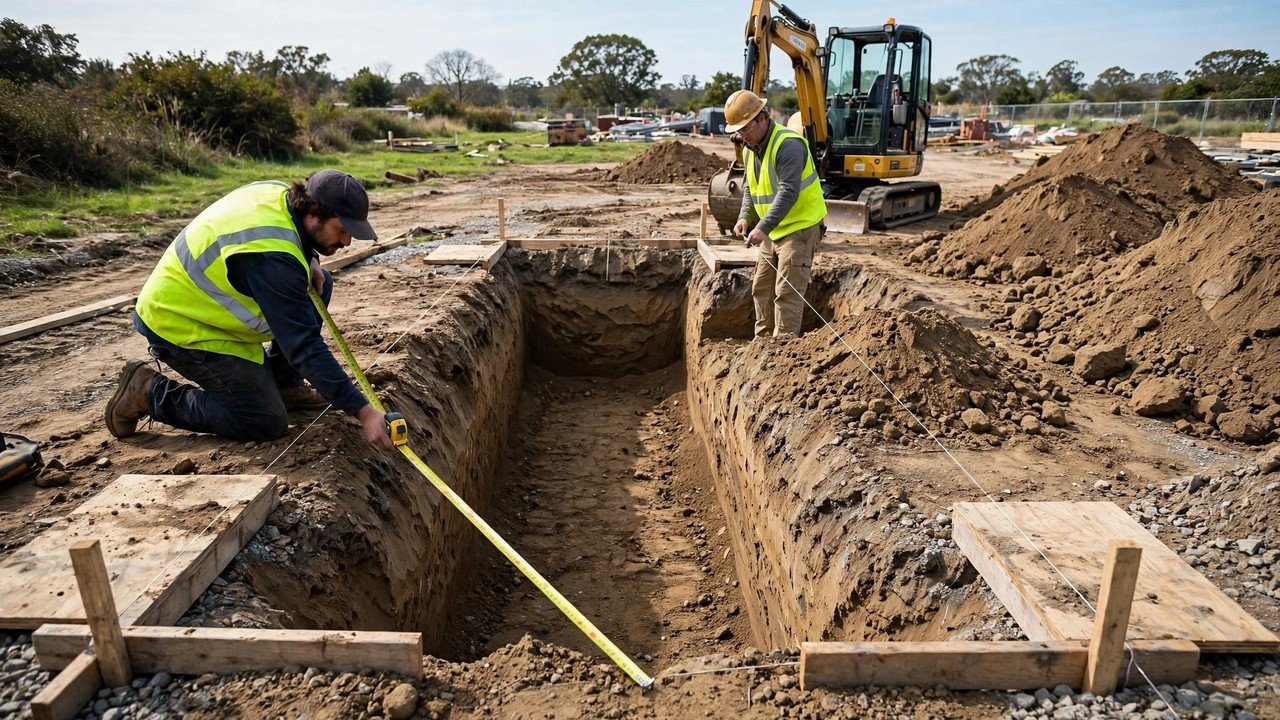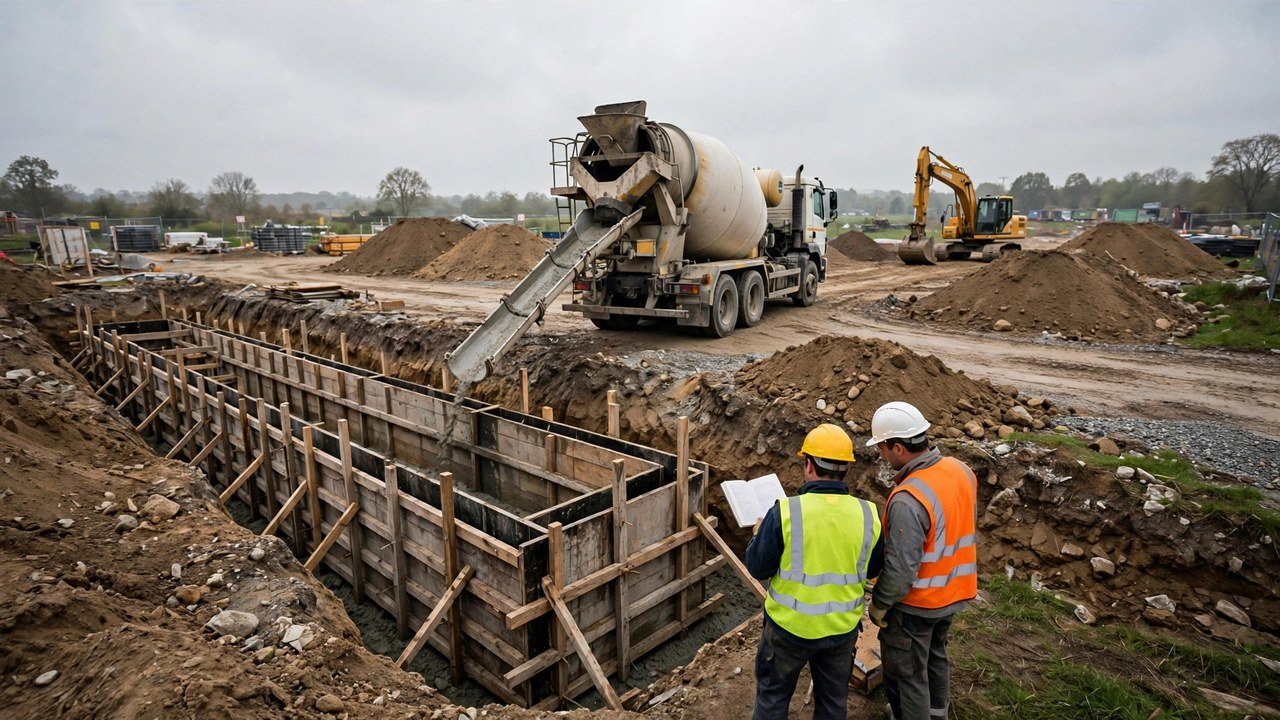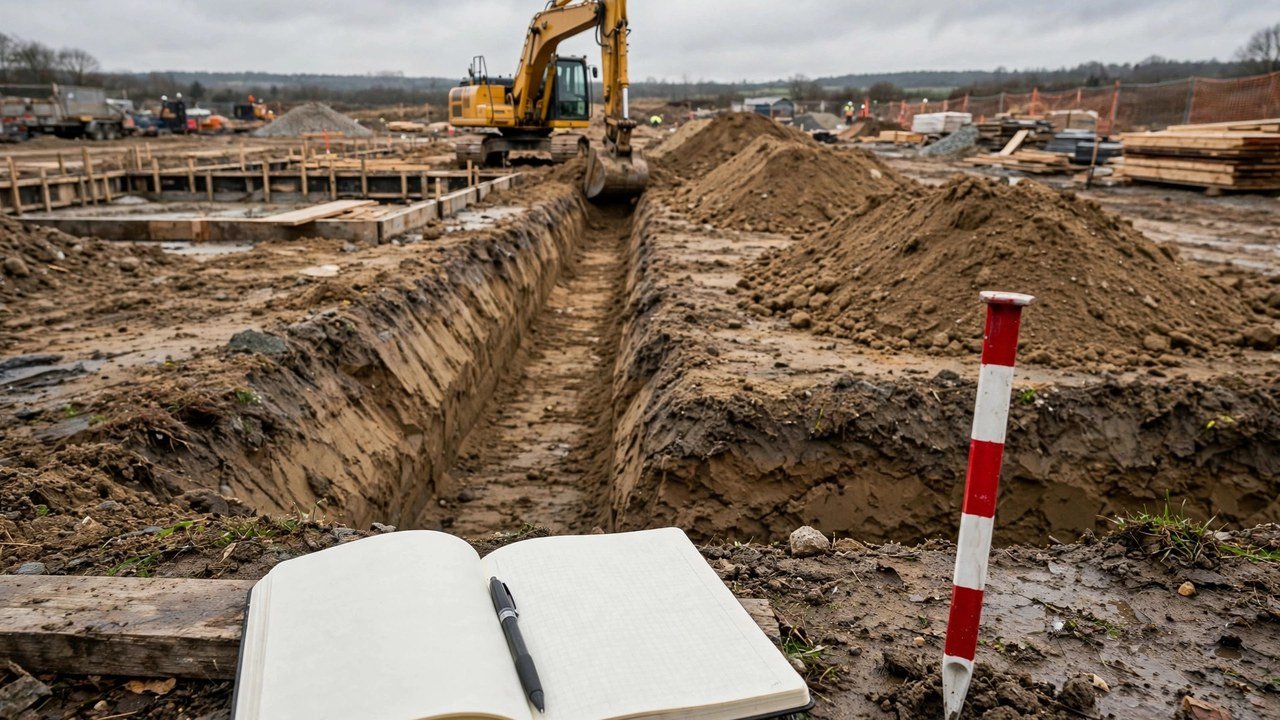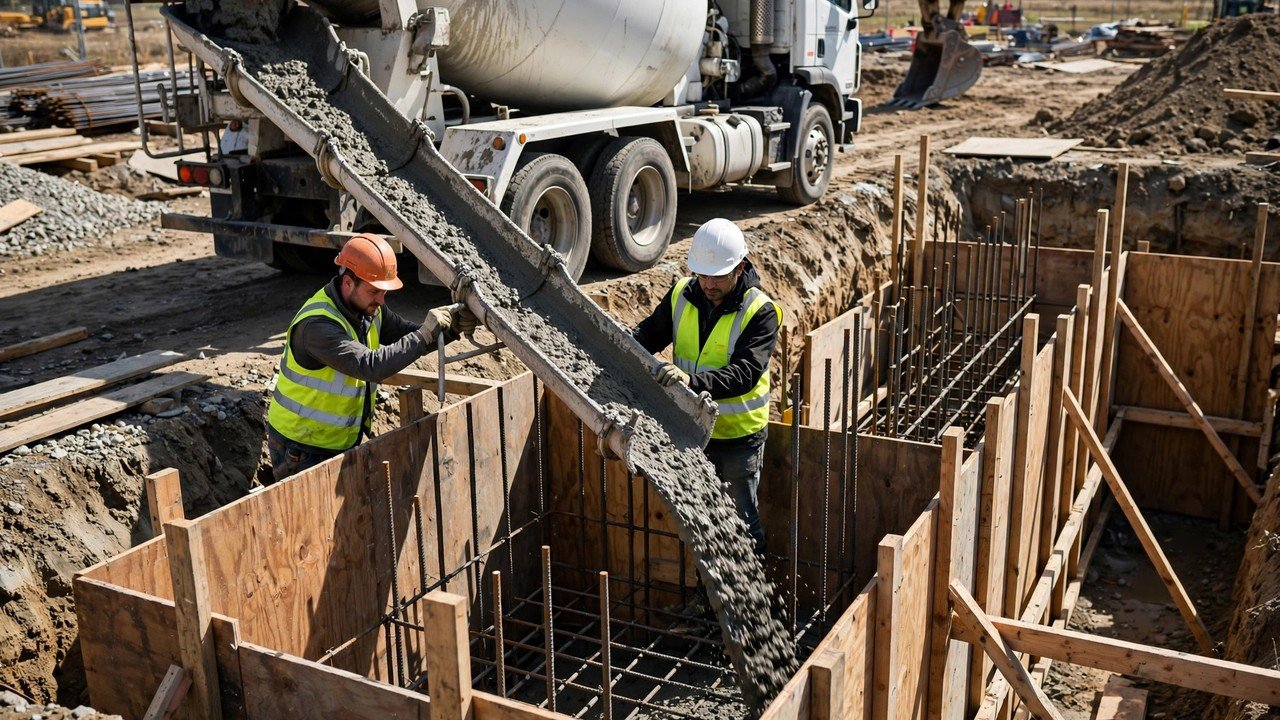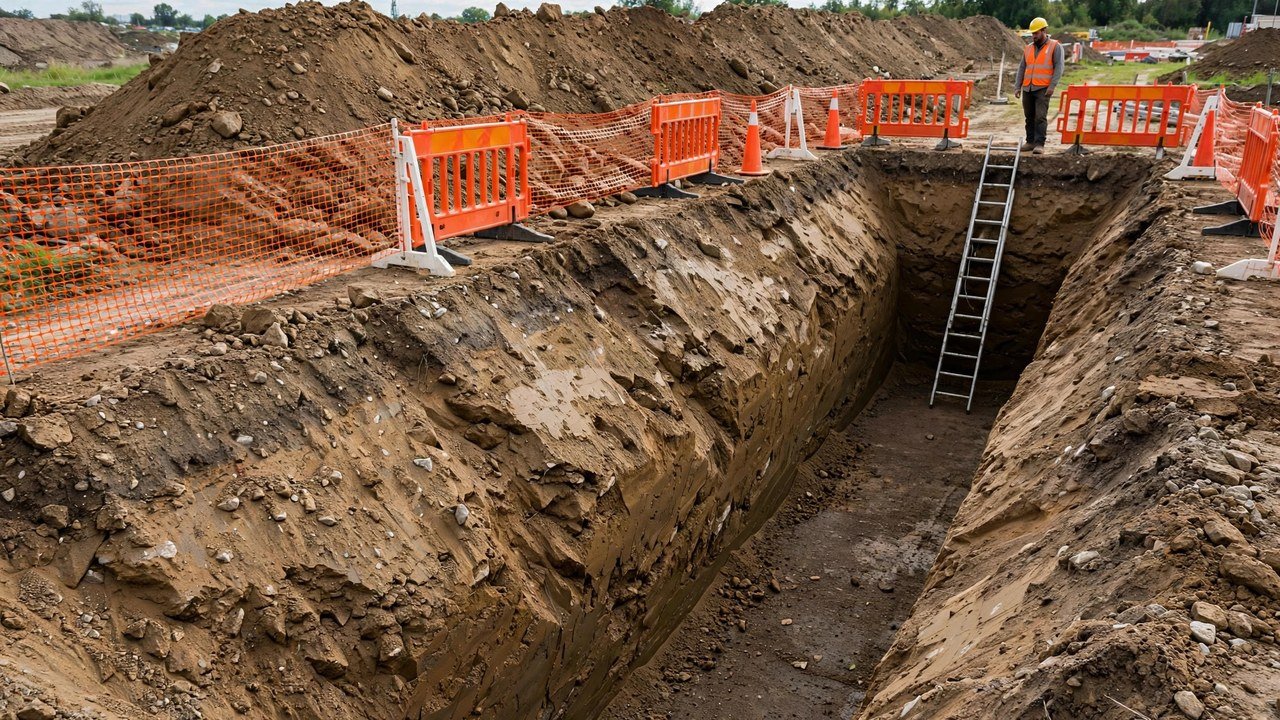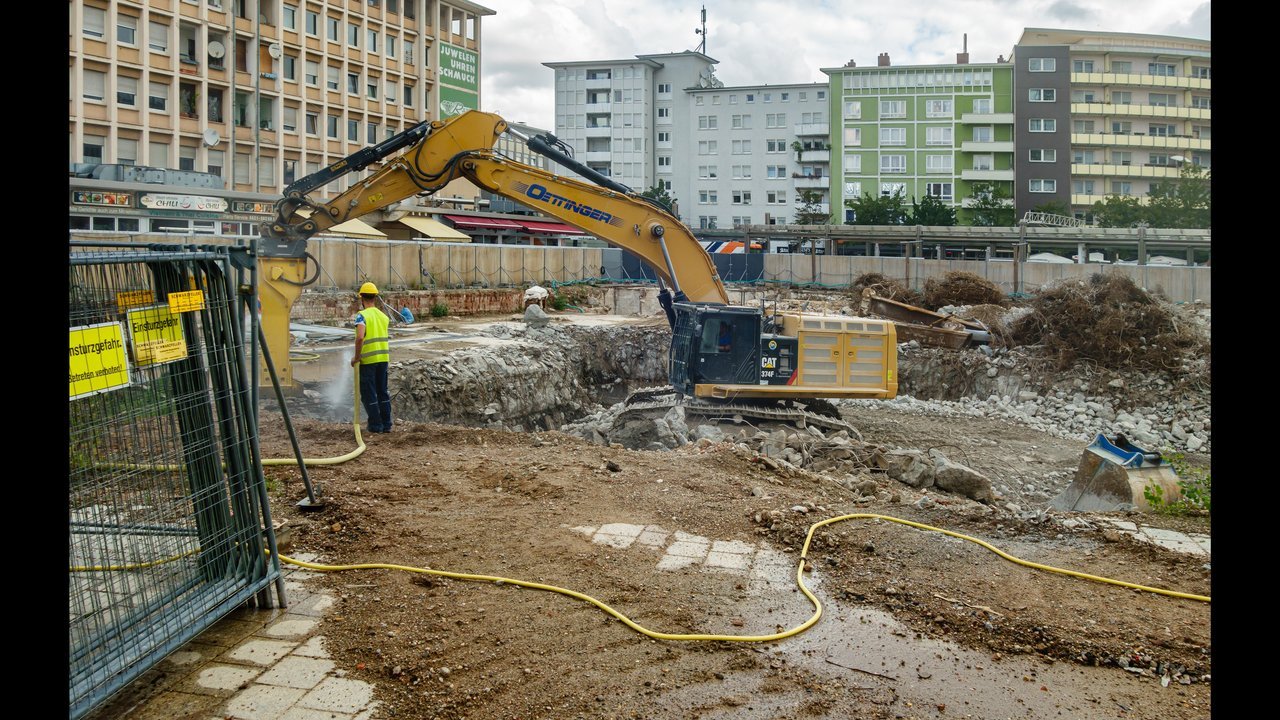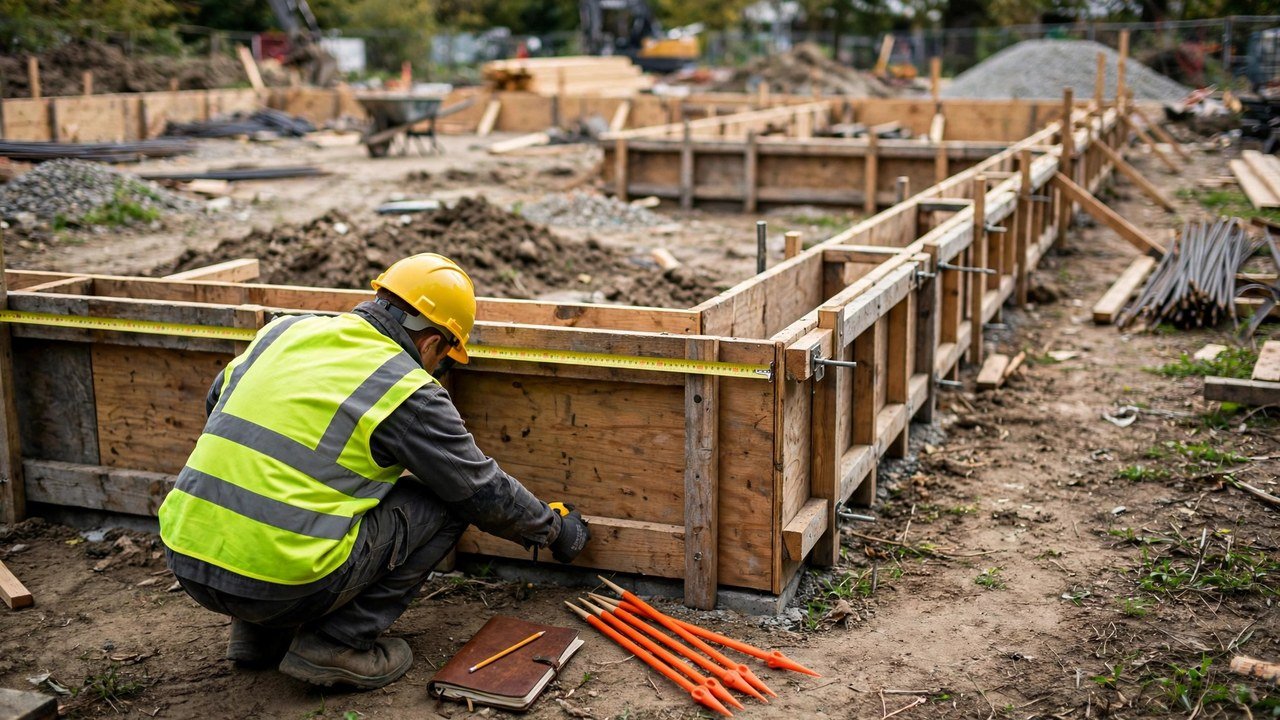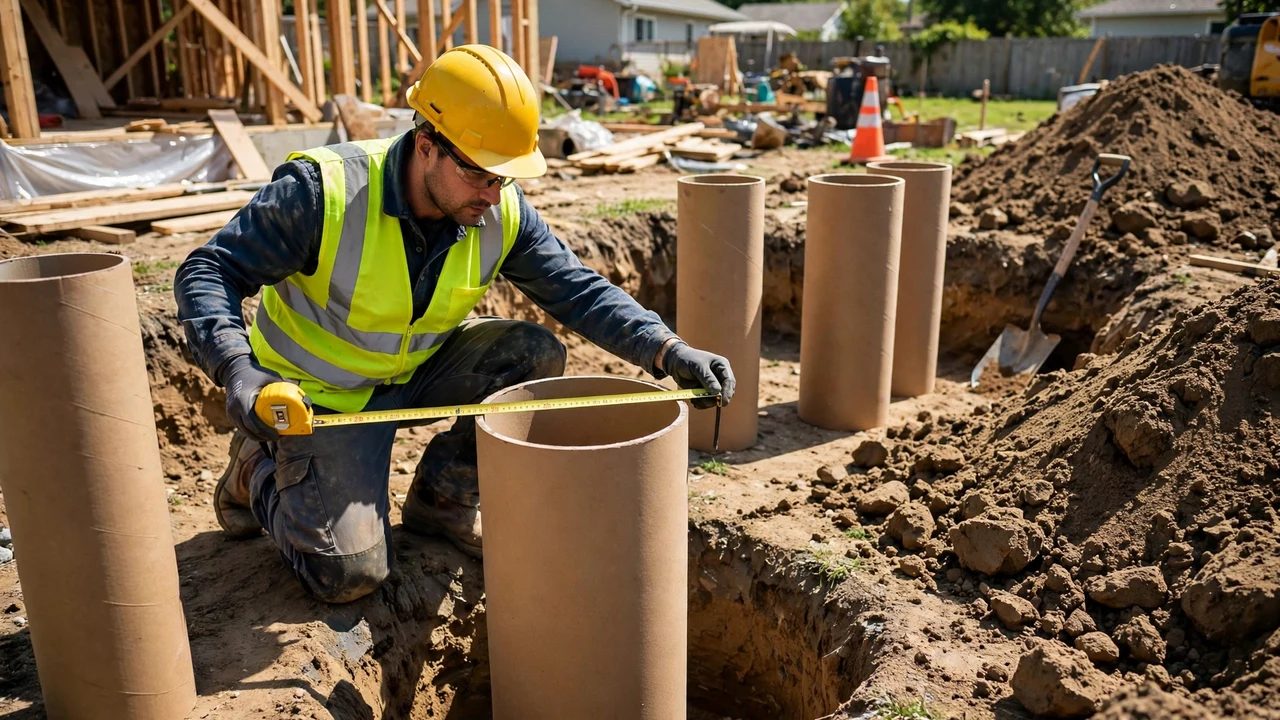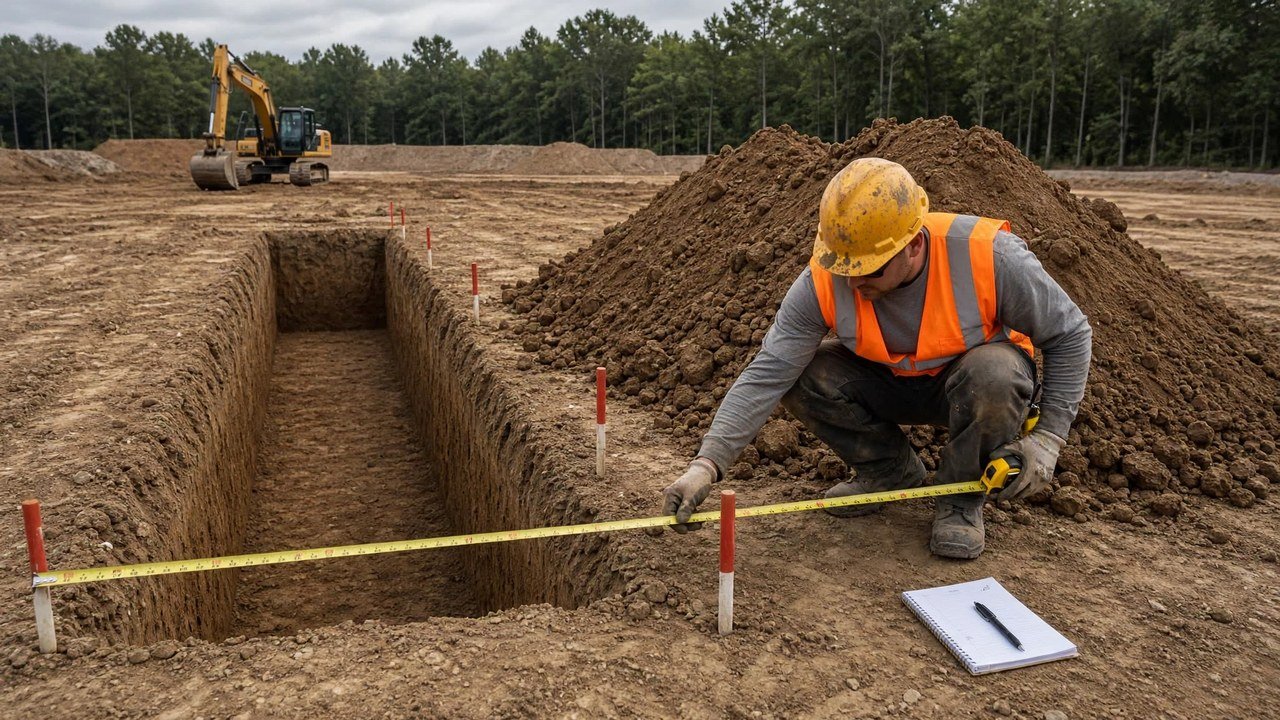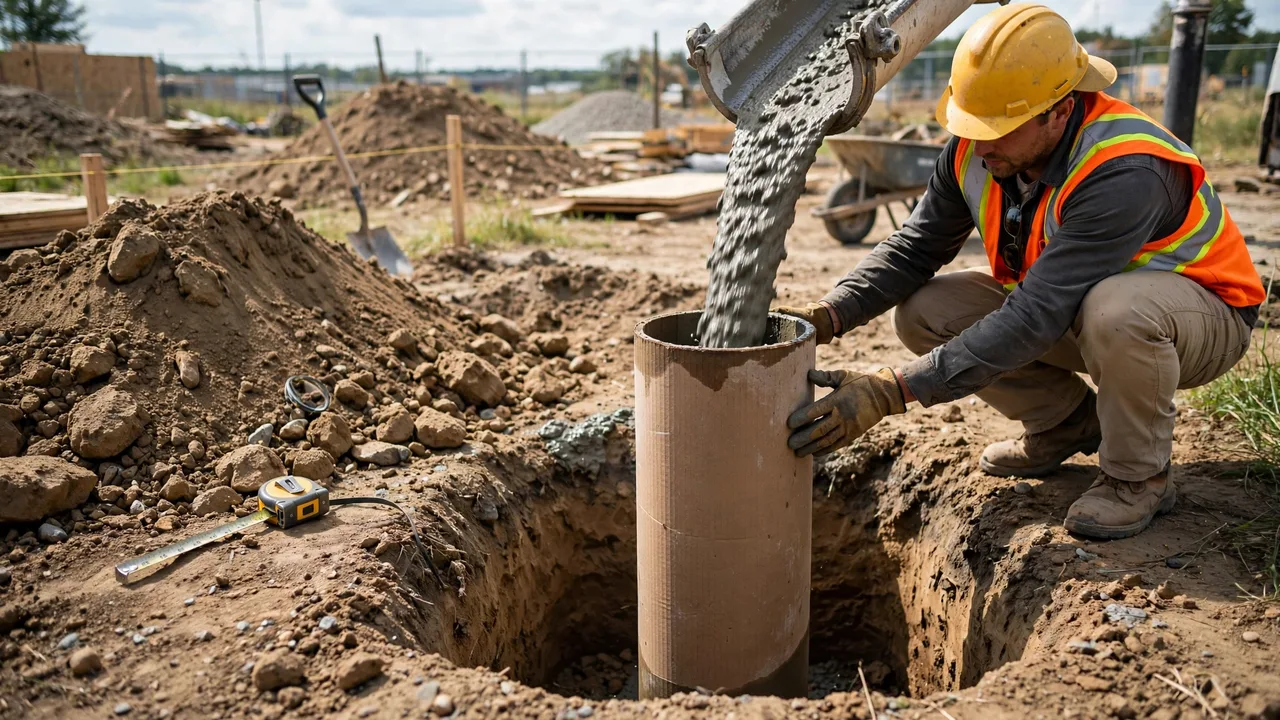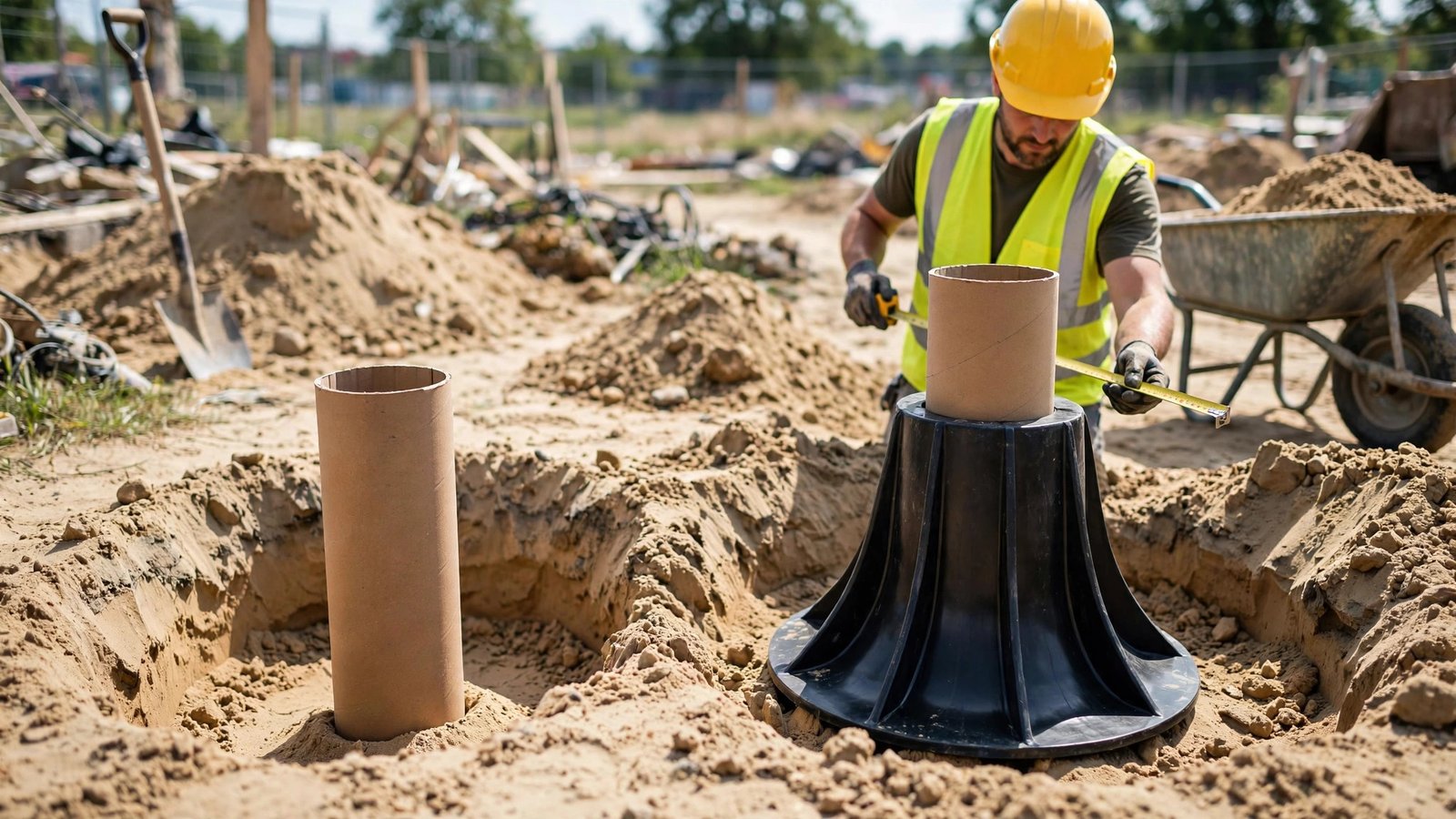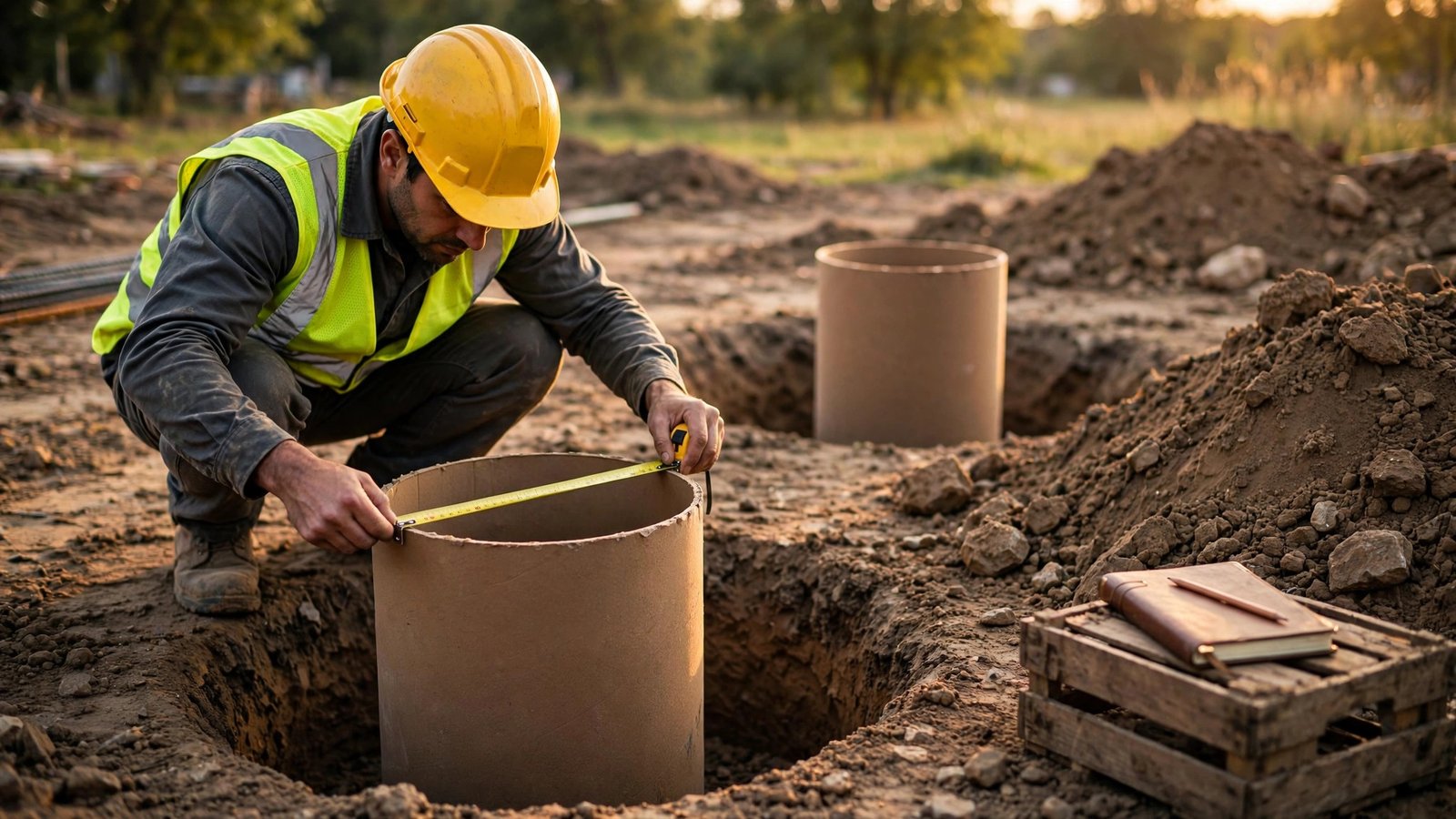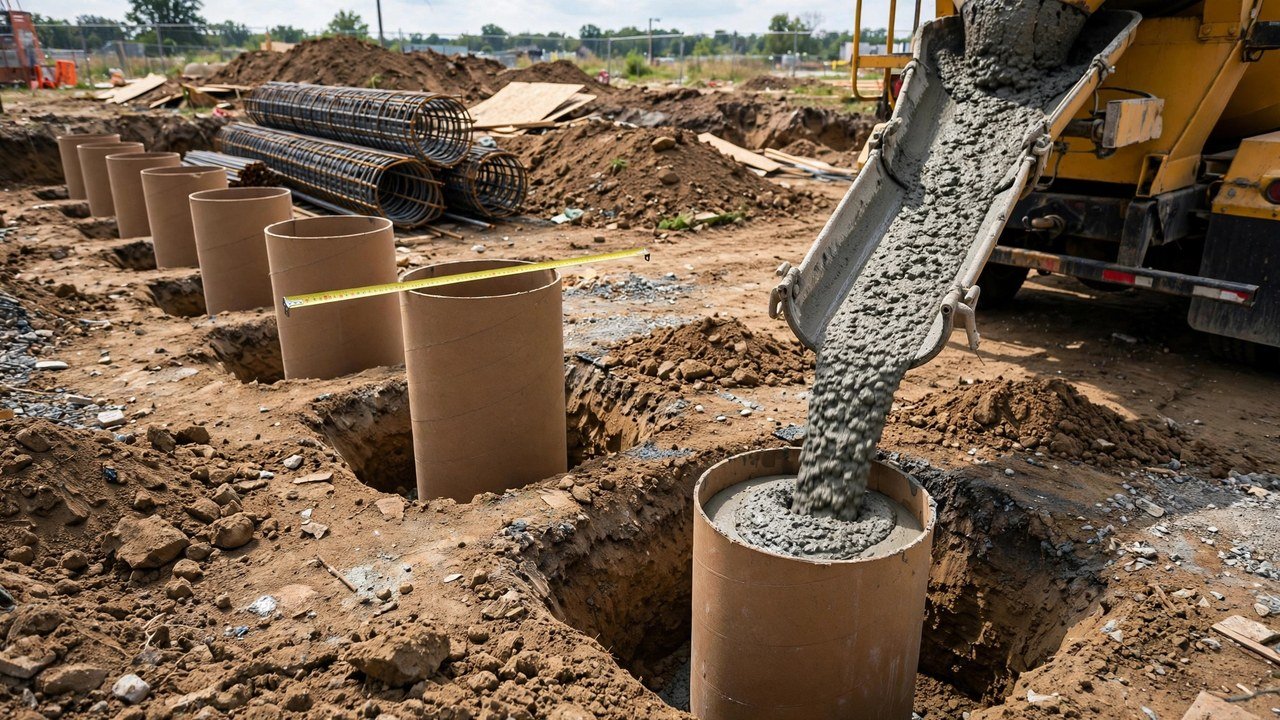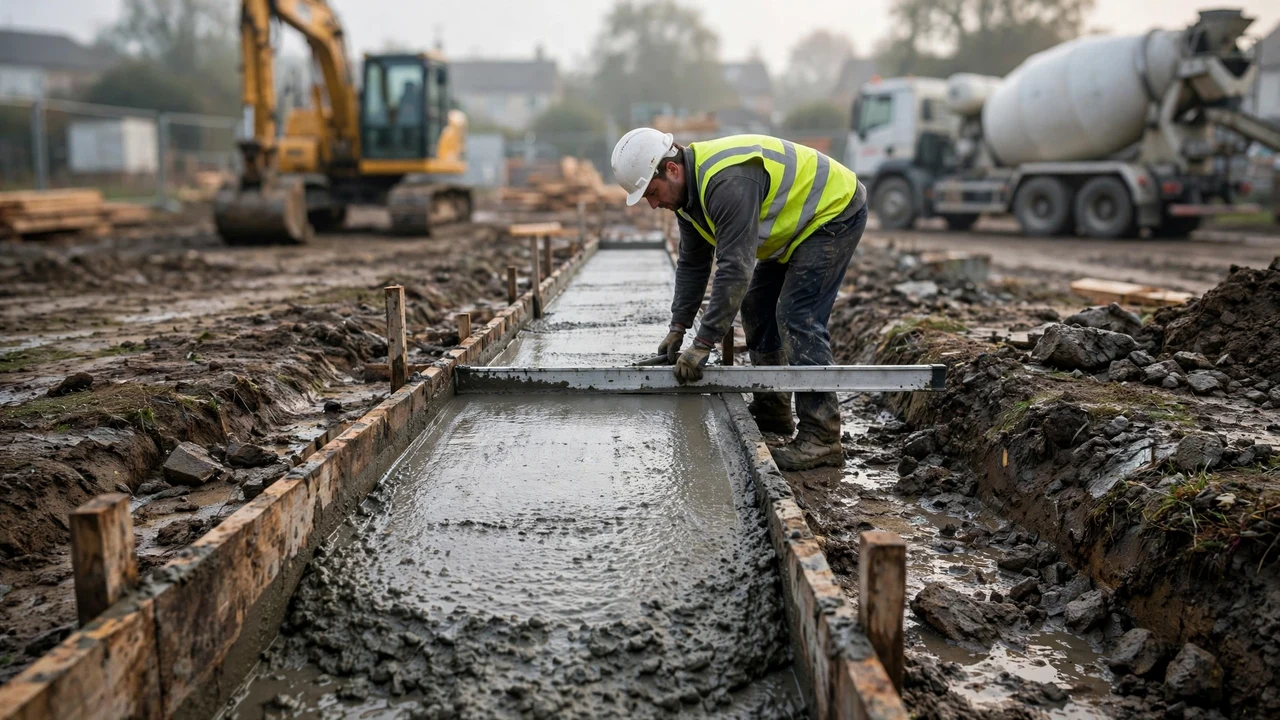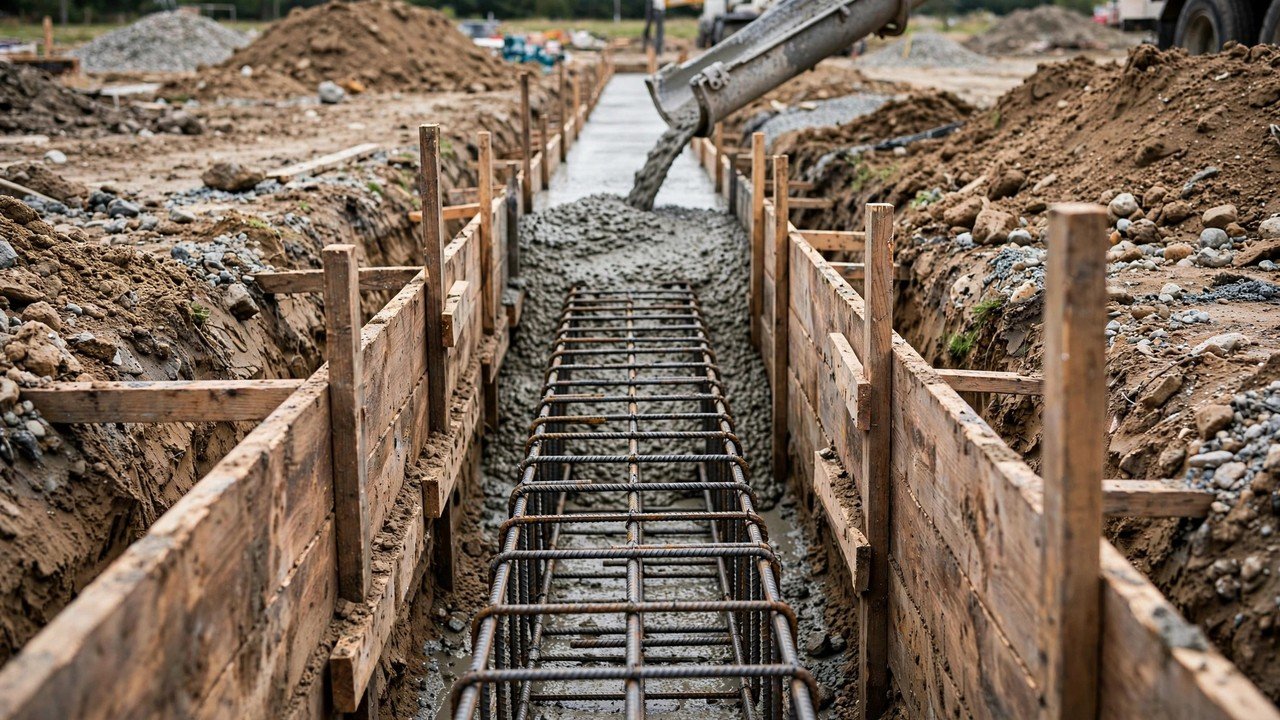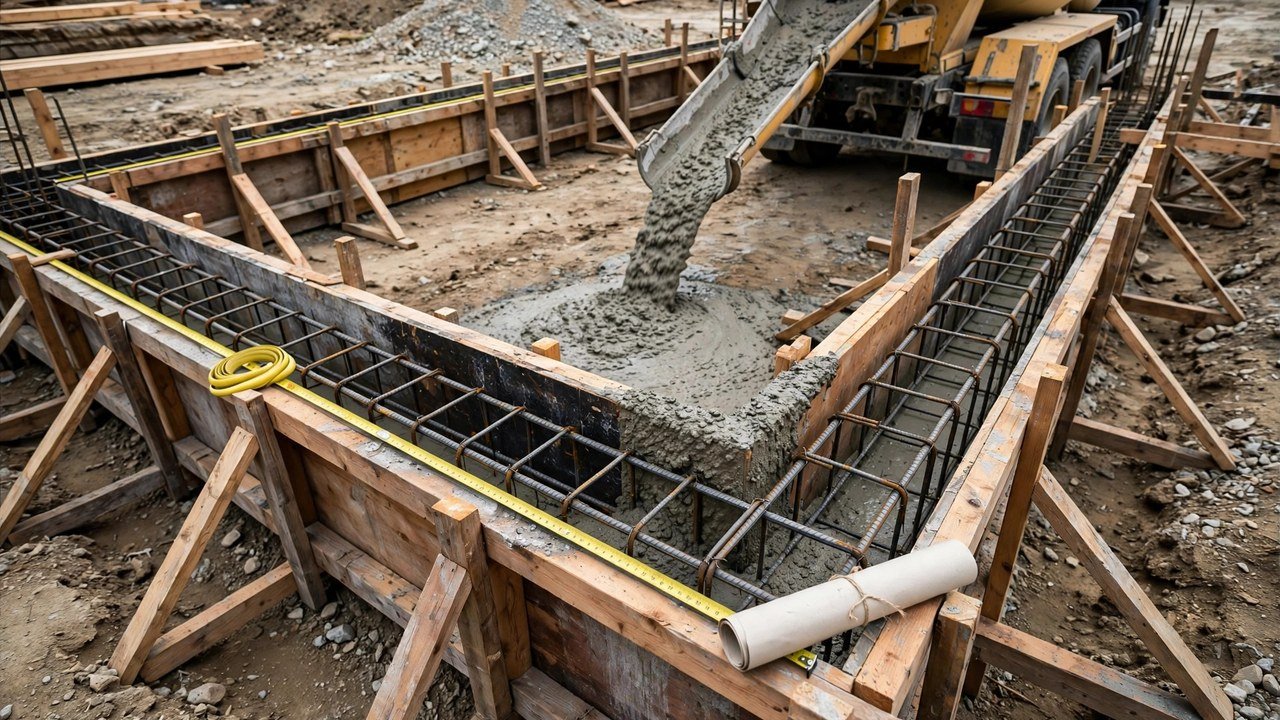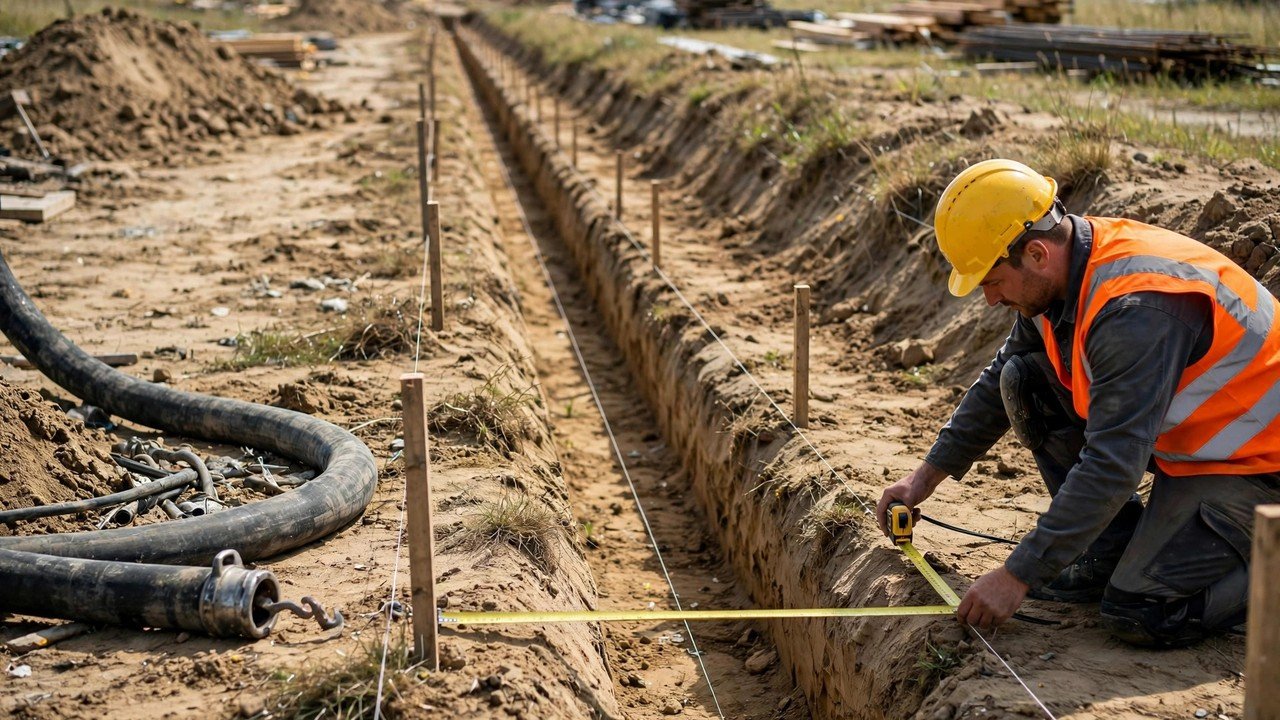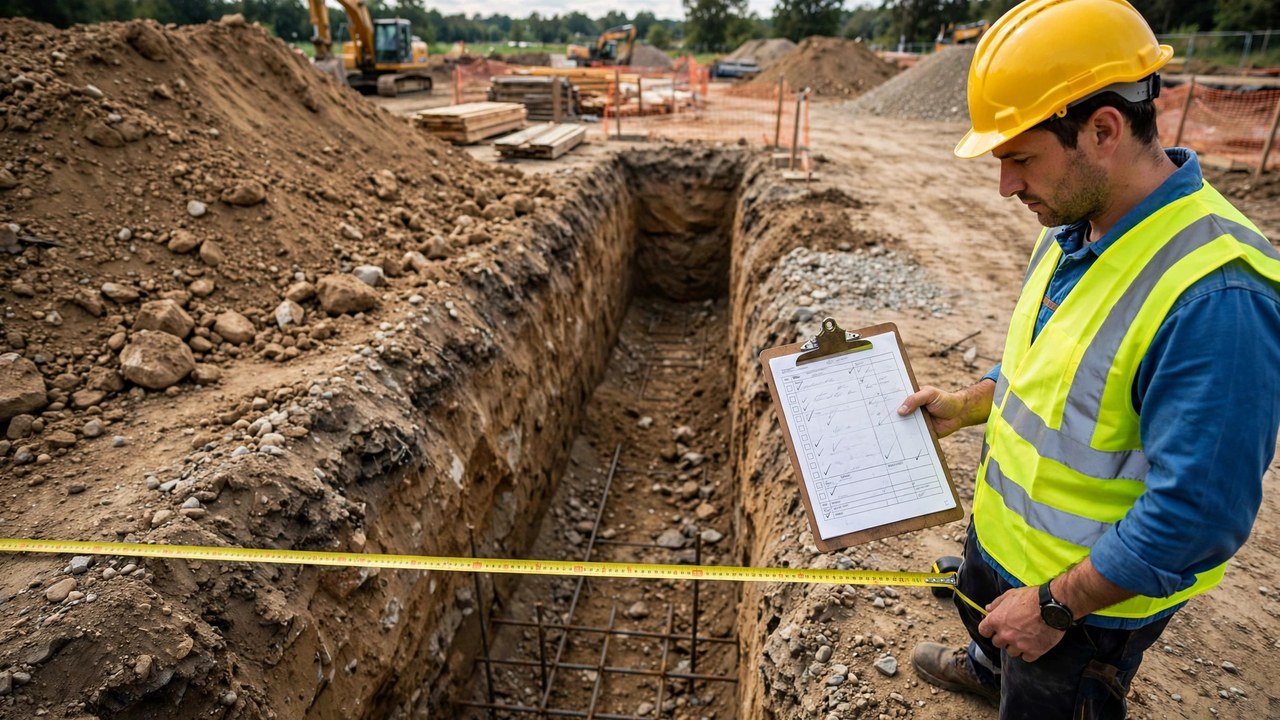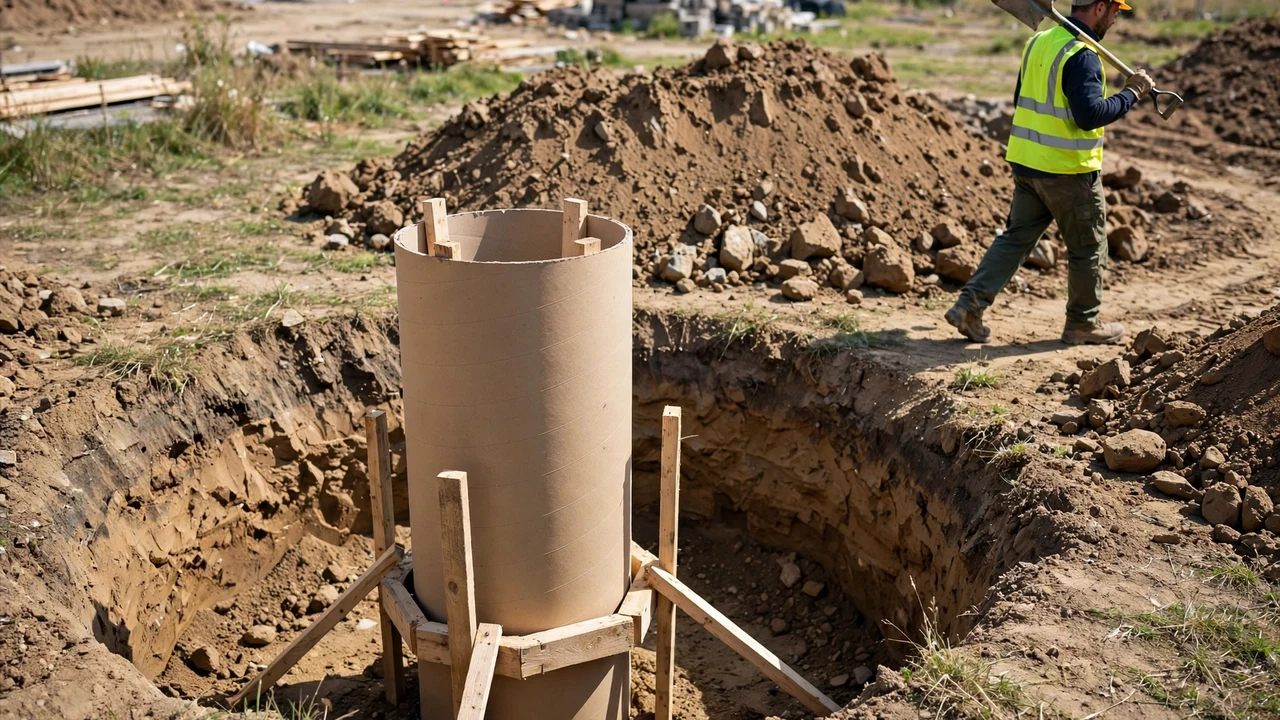
A pier footing combines 3 hazard families in one small work area: the open hole, the round form tube, and the concrete pour. Control them in order. Check utilities before digging, control the hole while it is open, brace the tube within the manufacturer's limits, pour within the product's rules, and protect skin from wet concrete.
What are the main hazards around a Sonotube pier footing?
The 5 hazards that cause most trouble are utility strikes during digging, cave-in or fall-in at the open hole, water entering the hole, a tube that shifts or fails during the pour, and chemical burns from wet concrete. Each has a standard control, and each control belongs to a different phase of the work.
| Phase | Hazard | Standard control |
|---|---|---|
| Before digging | Striking a buried utility | Locate utilities before the first hole; call the one-call service ahead of the legal notice period |
| Hole open | Cave-in or fall-in | Spoil and equipment back from the edge; mark, barricade or cover open holes; inspect daily |
| Hole open | Water accumulation | Do not work in accumulated water without precautions; divert surface water |
| Tube set and pour | Tube shift or failure | Set plumb with bracing; respect the above-grade limits; pour within the manufacturer's rate rules |
| Pour | Wet-concrete skin burns | Waterproof gloves, boots and eye protection; wash promptly with soap and water |
What should you check before digging the first hole?
Confirm what is under the ground and what stands near it. Start with utilities. Under 29 CFR 1926.651(b), the estimated location of underground installations must be determined before an excavation is opened, and utility owners are contacted within the customary local response times. In the U.S., call 811 at least 3 business days before digging; utility locators mark lines with paint, stakes or flags, and mechanical digging stays clear of the marks. Other countries use their local one-call service. A strike can injure people and damage gas, electric, water or telecom lines, so treat the call as part of the hole layout, not an extra.
Next, check the surface. Remove or support surface encumbrances that could create a hazard, as 1926.651(a) requires. Look at adjacent structures: where excavation could endanger a building, wall or pavement, 1926.651(i) requires support systems such as shoring, bracing or underpinning, or an engineer's determination that the work will not pose a hazard. Finally, decide the water plan before rain decides it for you. If water can accumulate in the hole, plan diversion or dewatering up front.
How do you keep an open pier hole safe?
Keep the edge clear and the hole covered or guarded. Under 1926.651(j)(2), excavated material and equipment stay at least 2 ft (0.61 m) from the edge of the excavation, or are held by retaining devices that stop them falling or rolling in. Spoil piled at the lip is the material most likely to slide back into a small pier hole, so the 2-ft rule is the working-space rule that matters most on this task.
Protect against loose soil on the hole face too. 1926.651(j)(1) requires scaling to remove loose material, protective barricades at intervals, or equivalent means where loose rock or soil could fall or roll from the face. For a small augered hole, the practical controls are marking the hole, barricading it, or covering it, especially before leaving the site overnight. Open holes also attract people, pets and equipment, so a cover or barricade does more work than a warning ever will.
Keep mobile equipment away from the edge. Where equipment operates adjacent to the hole and the operator cannot see the edge clearly, 1926.651(f) requires a warning system such as barricades, hand or mechanical signals, or stop logs. Inspect the holes daily. A competent person inspects excavations, adjacent areas and protective systems before work starts, as needed during the shift, and after every rainstorm or other hazard-increasing occurrence under 1926.651(k)(1). Rain changes soil behavior overnight, so the inspection after rain is the one that most often finds a new problem.
What changes when a pier hole is deep or belled?
Entry rules get stricter and entry itself becomes the thing to avoid. OSHA requires cave-in protection for employees in excavations, with narrow exceptions: entirely in stable rock, or less than 5 ft (1.52 m) deep where a competent person's examination shows no indication of a potential cave-in, per 1926.652(a)(1)(ii). Deck piers often sit below that depth once frost line and the footing base are added, so plan for the deeper number, not the hopeful one.
For bell-bottom pier holes or other deep and confined footing excavations, 1926.651(g)(2)(ii) requires an employee in the hole to wear a harness with a securely attached lifeline, on a line separate from any material-handling line and individually attended at all times. The simplest compliance for small pier work is to keep people out of the hole: measure depth from the surface, lower and set the tube from the edge, and treat any required entry as a planned, attended operation, never a quick step down.
How should the Sonotube be set and braced?
Set the tube plumb and hold it there with light bracing. Sonoco's field-use guidance for Sonotube Round forms calls for minimal bracing to bring the form to plumb, using light lumber or scaffolding, with the column foot secured by collars where needed. Store tubes dry at the job site, vertically to maintain roundness, with the ends covered. Tubes stored horizontally are elevated at least 4 in and supported along the full length so they keep their shape.
Respect the above-grade limits, which differ by product line. The Sonotube Builder's Tube line is designed for below-grade placement and may be used up to 3 ft above the ground line, with minimal bracing required above 2 ft of ground line. A tall tube with no bracing is the common DIY failure point: concrete pressure works on the whole exposed height, and wind adds a sideways load the tube was never designed to take. Match the bracing to the exposed height, and keep the tube plumb through the pour.
What are the safe pour limits?
Pour within the form's rated behavior, not beyond it. Sonoco designs standard-length Sonotube Round forms to be poured in a single lift and instructs users not to exceed ACI recommended pour rates. Concrete is vibrated during the pour for the Round line. The Builder's Tube line is different: it is not used with mechanical vibrators, and it is not designed to be stripped from the cured concrete, so a release agent goes in before the pour when stripping is desired.
The manufacturer does not publish a pour-rate number on the page; the instruction points to ACI rates, so this article states no rate. The practical controls are sequencing and watching. Pour steadily so the tube fills evenly, watch plumb as the tube fills, and stop and brace further if the tube starts to move. Strip the Round form 24 to 48 hours after the pour, and do not leave the form on the column for more than 5 days.
How do you protect skin and eyes from wet concrete?
Treat wet concrete as a chemical hazard. Portland cement is caustic, and contact with wet cement, mortar or slurries can cause severe skin irritation or chemical burns that may not be apparent or painful for 12 to 48 hours after 1 to 6 hours of exposure. Portland cement safety data sheets call for impervious clothing, waterproof gloves and boots, and eye protection, with prompt washing of any affected area with soap and water. OSHA's Portland cement skin guidance covers the same ground: gloves, boots and other PPE selected for alkali exposure, plus skin-care work practices.
The delay is the trap. Hands, knees and shins do most of the contact work around a pier pour, and the burn can start hours after the shift ends. Wear the gloves and boots from the first bag, change out of cement-soaked clothing promptly, and wash before eating or drinking.
What should happen after the pour?
Finish the work area, not just the concrete. Strip the Round tube in the 24-to-48-hour window so it does not bond to the column. Keep spoil and equipment back from the edge during backfilling; the 2-ft rule applies to the open hole phase, and backfilling is still open-hole work. Backfill around the tube in controlled lifts so the tube is not pushed off plumb by a sudden load on one side. Watch for undermined adjacent pavement or structures as the work closes out, and restore covers or barricades until every hole in the line is filled.
Common pier footing safety mistakes
- Digging without a utility locate, or digging after the locate marks have expired.
- Piling spoil at the lip of the hole, inside the 2-ft setback.
- Leaving augered holes open and unmarked overnight.
- Stepping into a hole to measure it instead of measuring from the surface.
- Running a tube more than 2 ft above grade with no bracing.
- Pouring faster than the form's rated behavior to finish quickly.
- Using a mechanical vibrator in a Builder's Tube, which the manufacturer prohibits.
- Skipping gloves and boots because the pour is short.
- Working in a water-filled hole without precautions after rain.
- Backfilling in one dump that shoves the tube off plumb.
Sources and scope
- OSHA, 29 CFR 1926.651, Specific Excavation Requirements: utility location, surface encumbrances, equipment warning systems, bell-bottom lifeline rule, water accumulation, adjacent structures, loose-soil protection, 2-ft spoil setback, and daily inspections for covered U.S. construction excavation work.
- OSHA, 29 CFR 1926.652, Requirements for Protective Systems: cave-in protection and the less-than-5-ft competent-person exception.
- Sonoco, Sonotube Round Concrete Forms product data: storage, bracing, single-lift pouring, ACI pour-rate limit, vibration, and 24-to-48-hour stripping with a 5-day maximum.
- Sonoco, Sonotube Builder's Tube product data: below-grade design, up-to-3-ft above-grade use, bracing above 2 ft, no stripping design, and the no-mechanical-vibrator rule.
- Portland cement safety data sheet (Capitol): caustic skin-burn hazard, delayed symptoms, and PPE and washing guidance.
- Duke Energy, Dig safely: call the free 811 service: U.S. 811 mechanics and Common Ground Alliance damage context.
Scope: the OSHA controls apply to construction work covered by U.S. OSHA, 29 CFR Part 1926, Subpart P. They do not set structural design, payable quantity, or another country's rules. The Sonotube rules are manufacturer handling instructions for the named product lines. Project drawings, specifications, geotechnical information, local codes, utility-locate law, and responsible professionals control the actual work.
Review responsibility: Saleem Sial owns the published calculation, source, and editorial checks. Waseem Sial, External Reviewer and Engineer, remains listed for ongoing external review; no completed external-review date is claimed.
Next, measure the tube with the Sonotube measurement guide before ordering concrete, check the enlarged excavation envelope with the footing excavation safety guide, or compare excavation and concrete volumes with footing excavation vs concrete volume. For volume tools, use the Footing Excavation Volume Calculator or browse the Foundation Calculators hub.