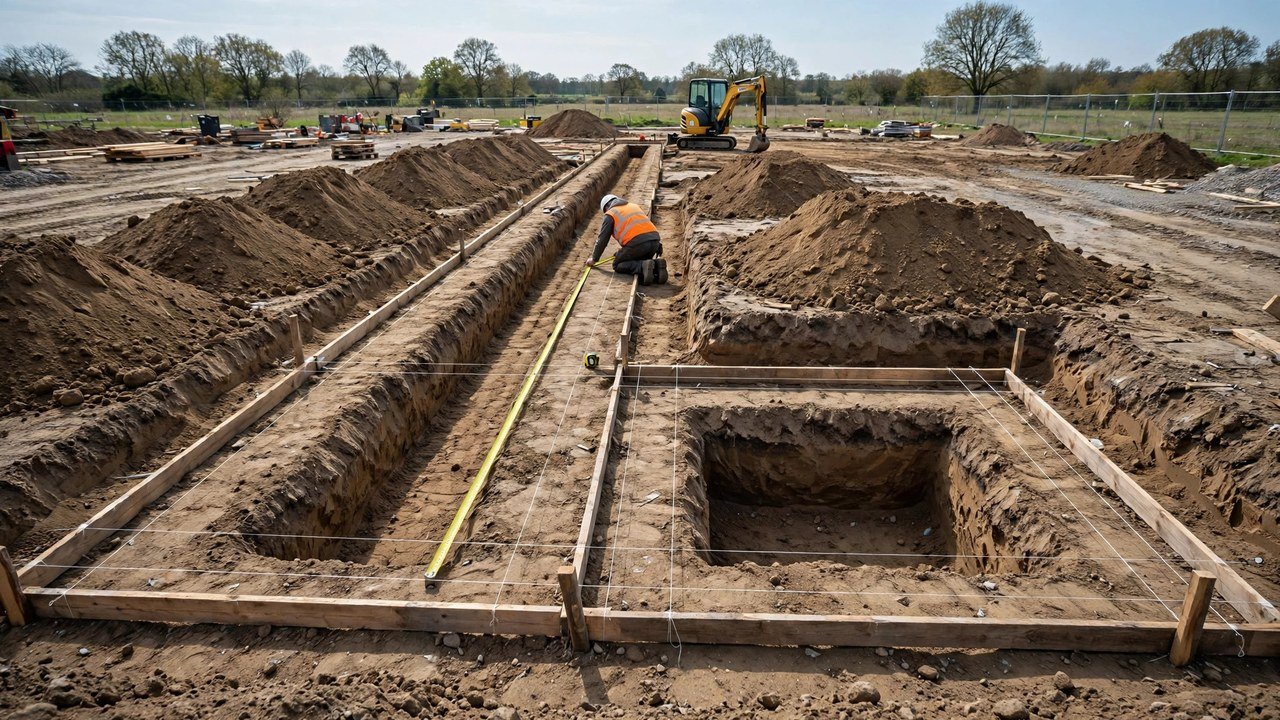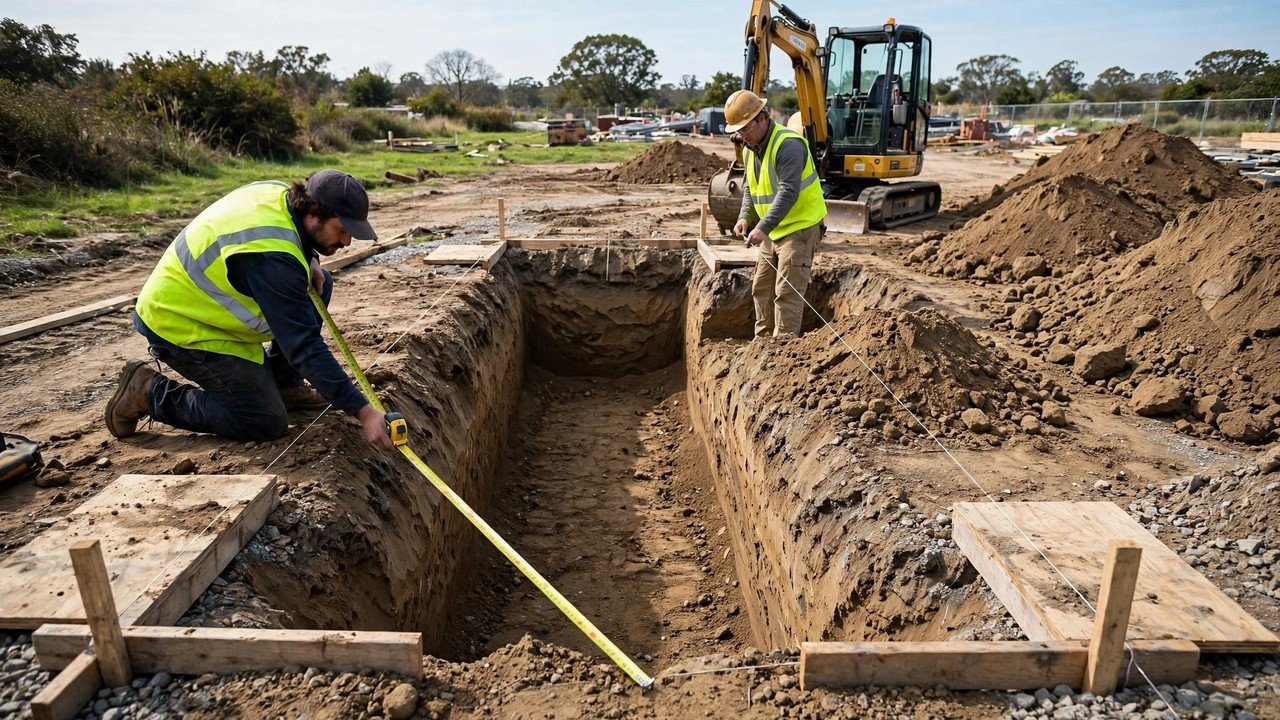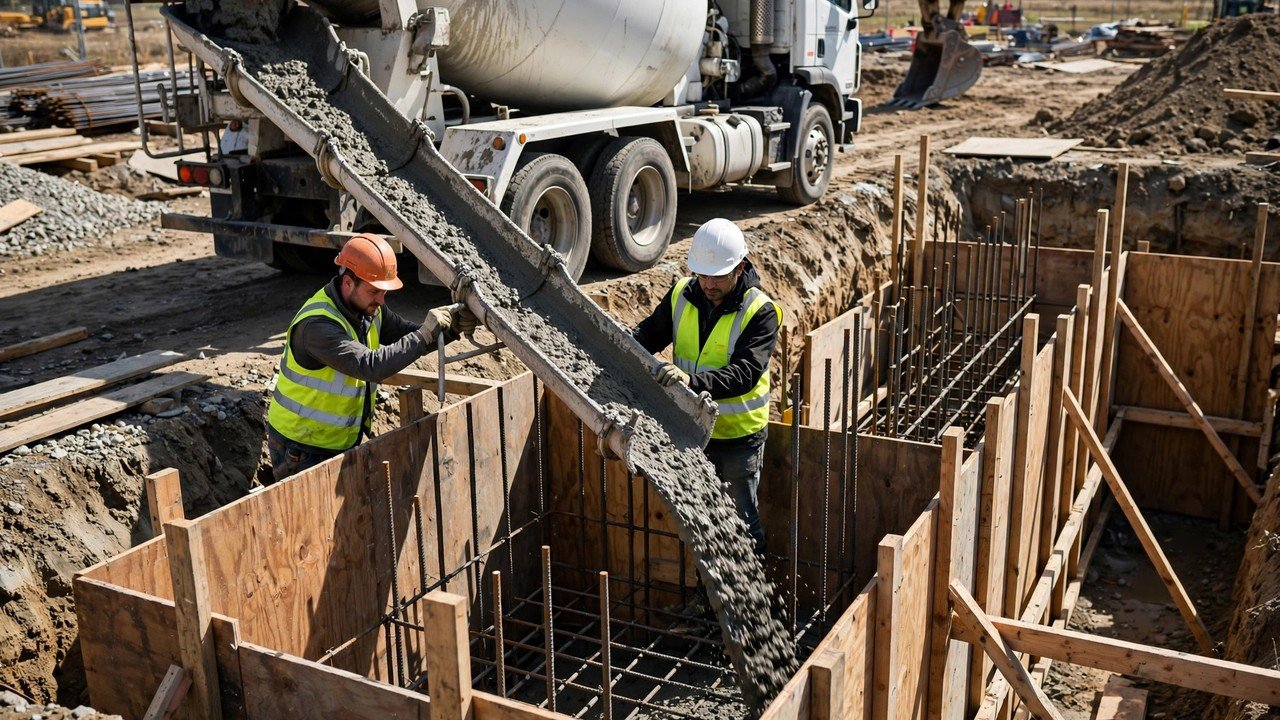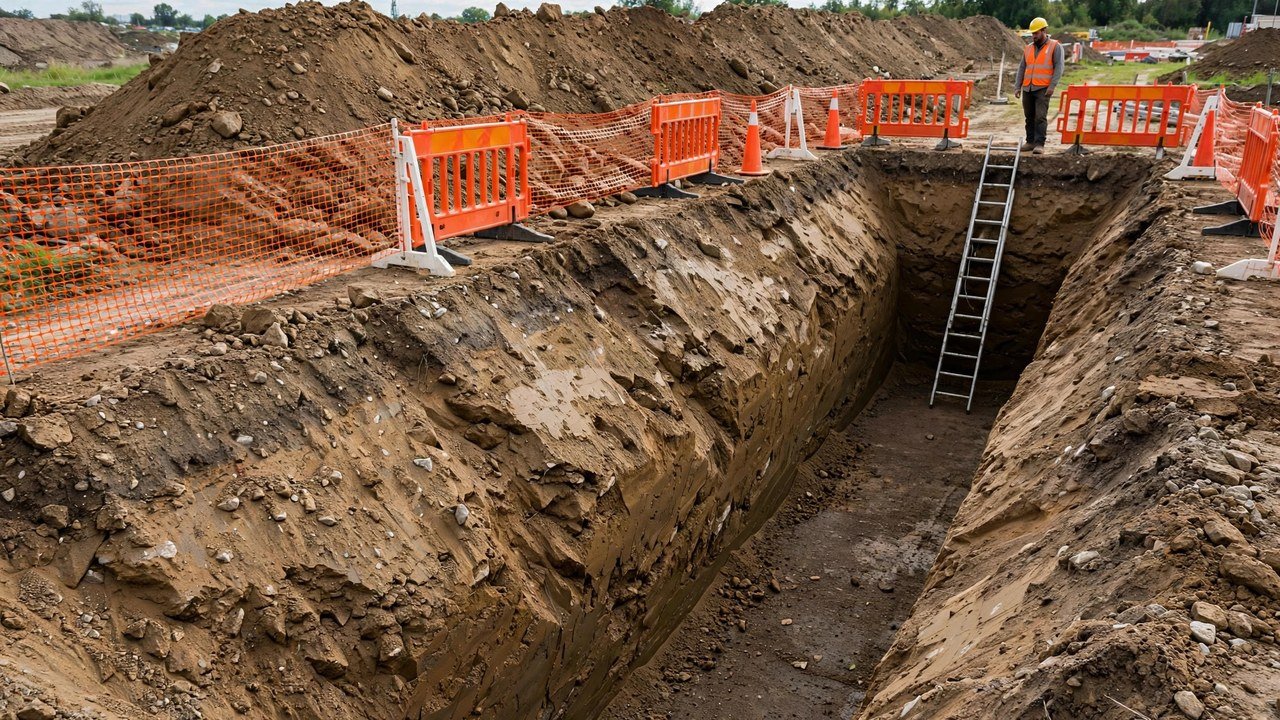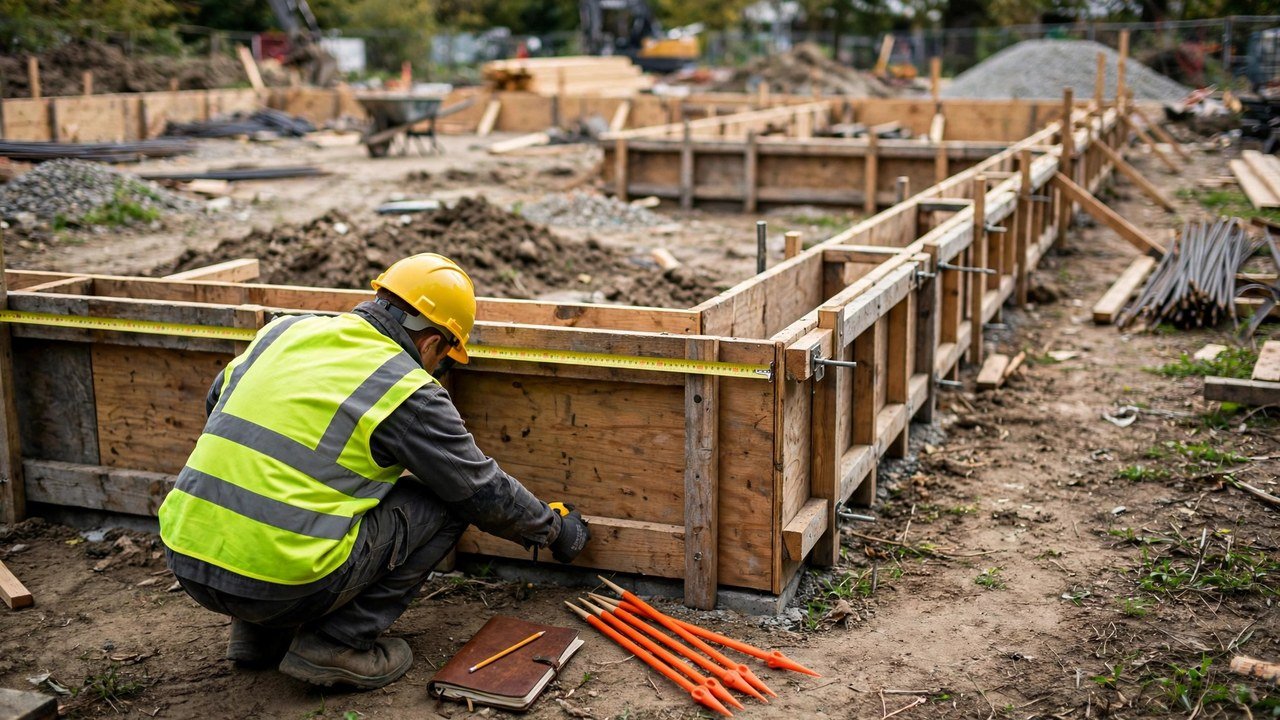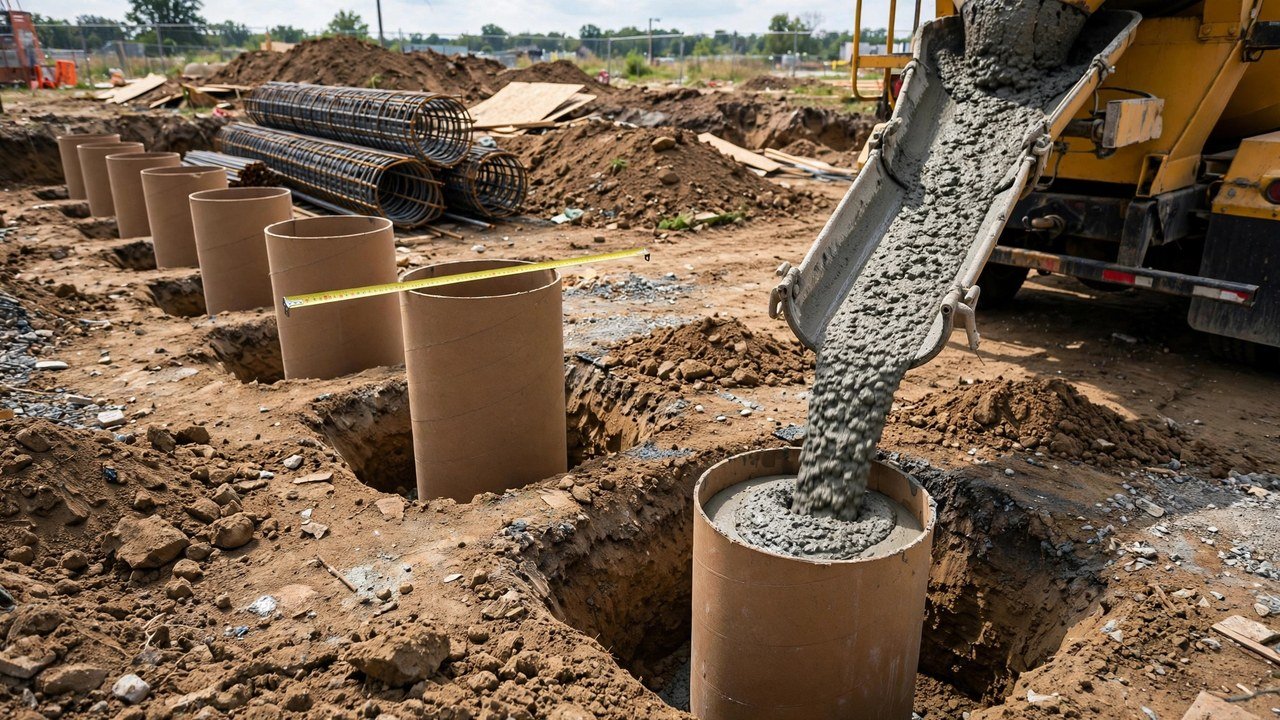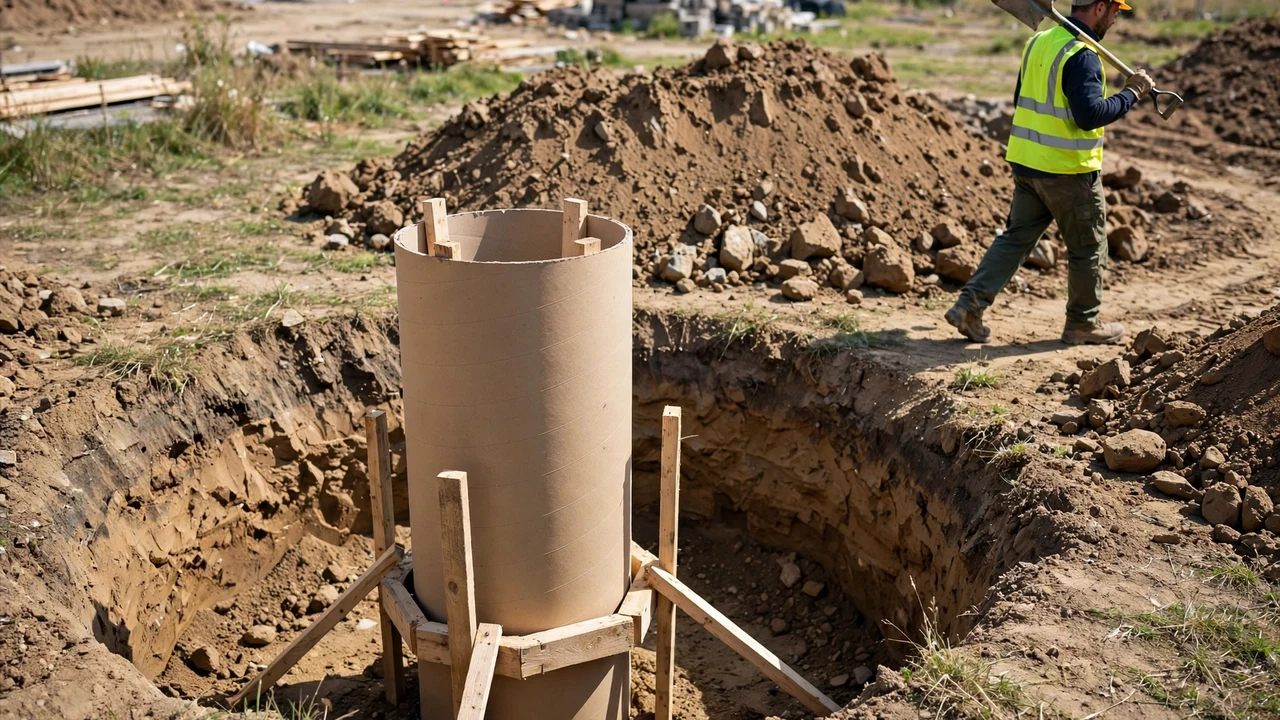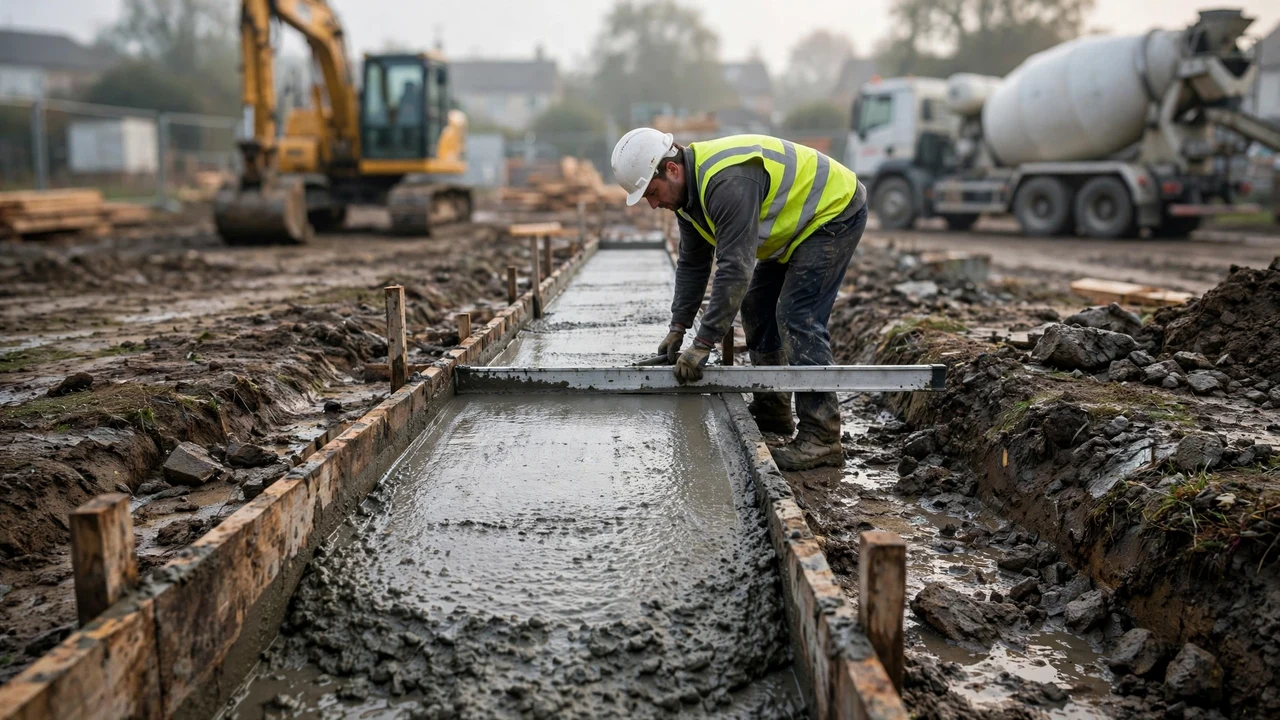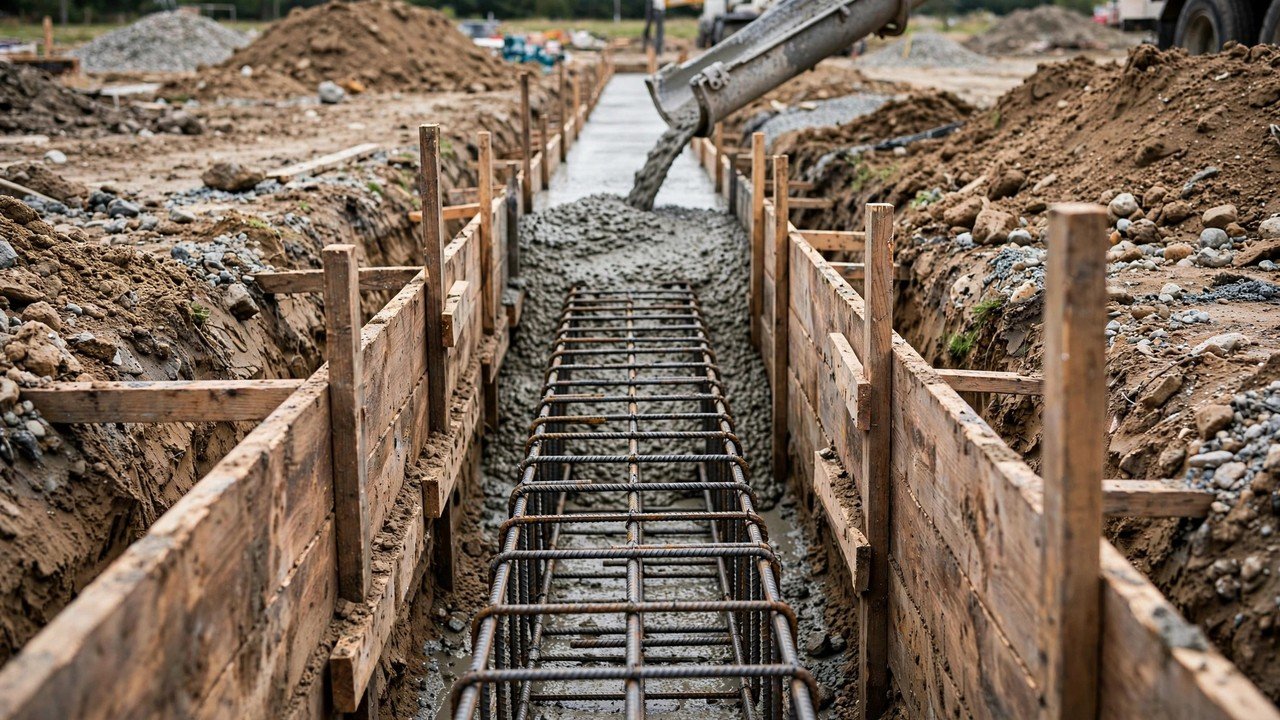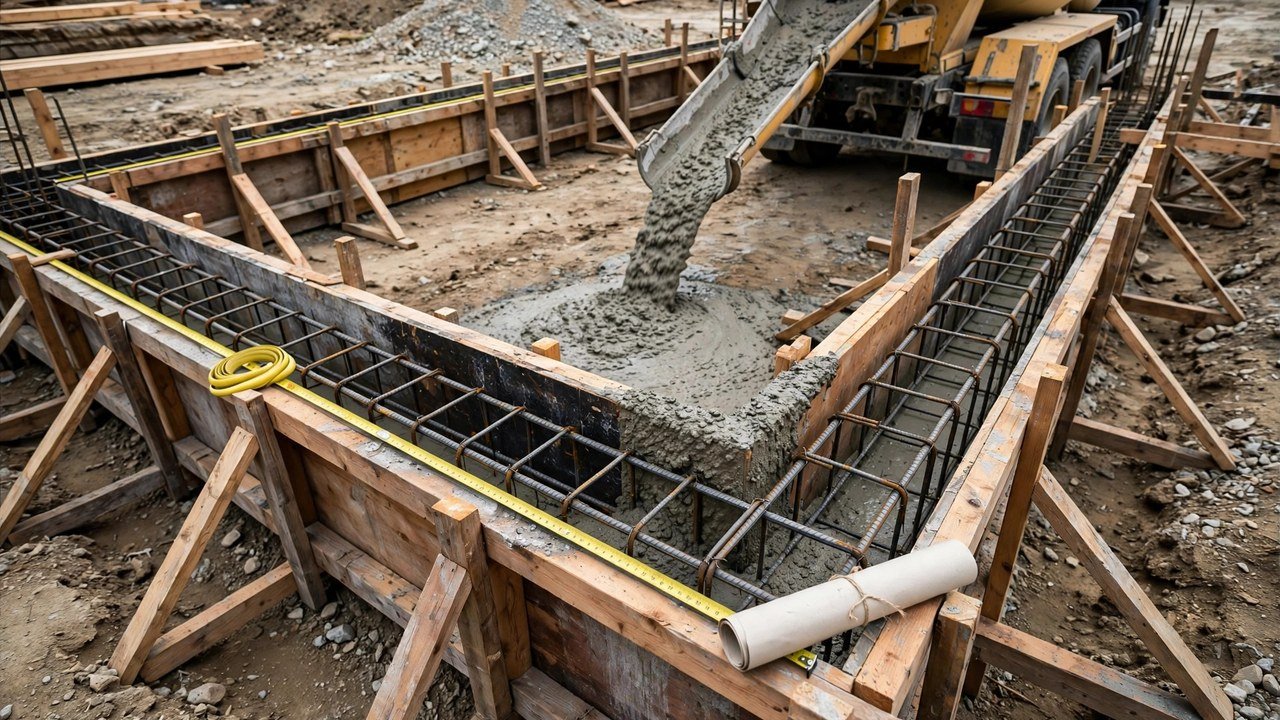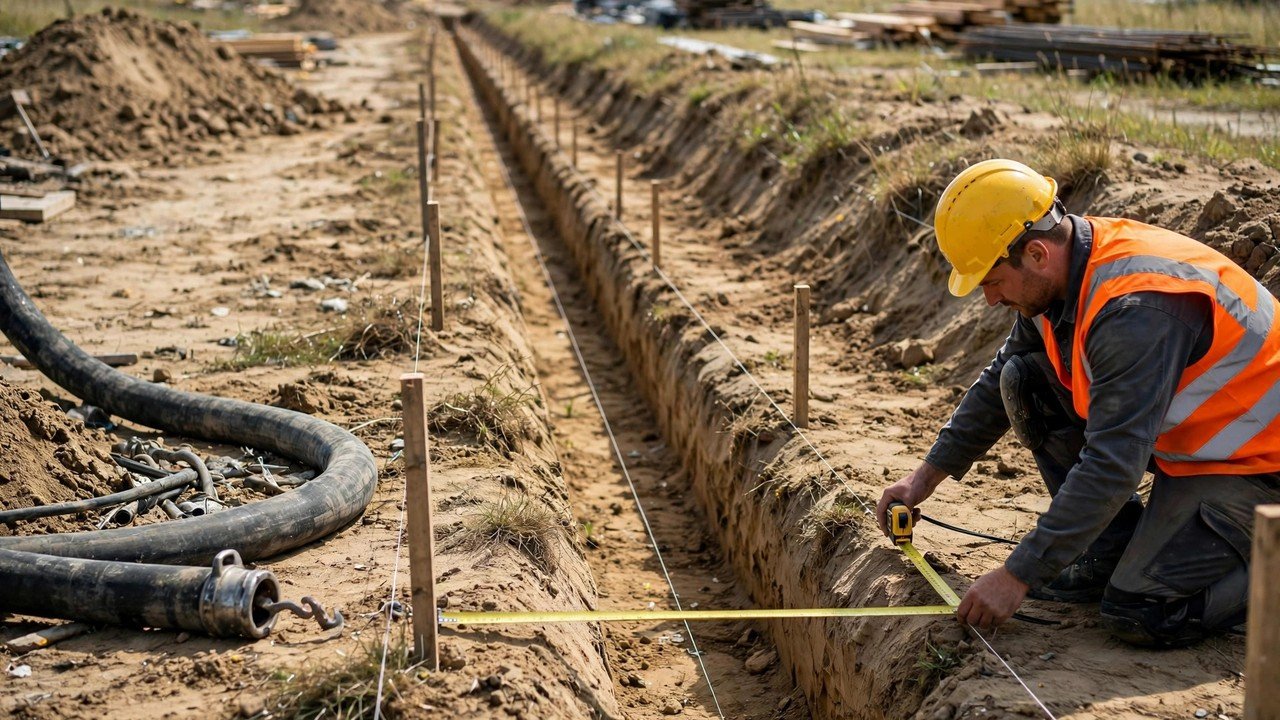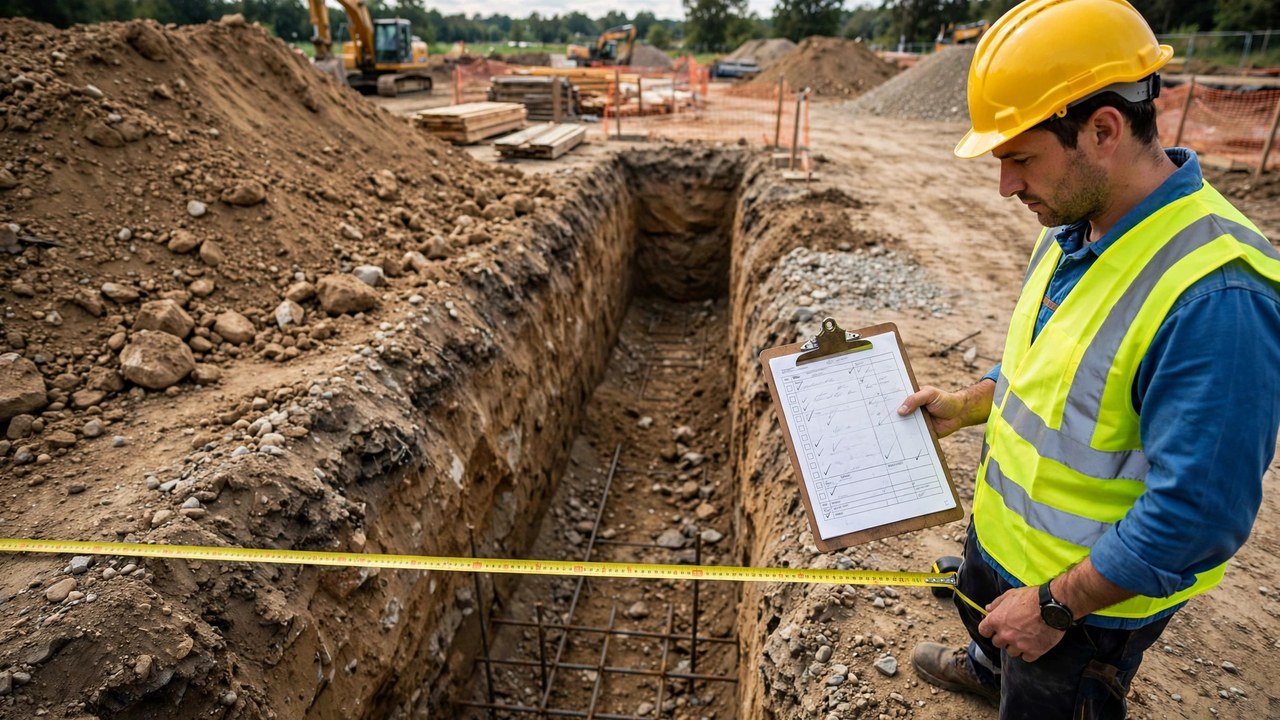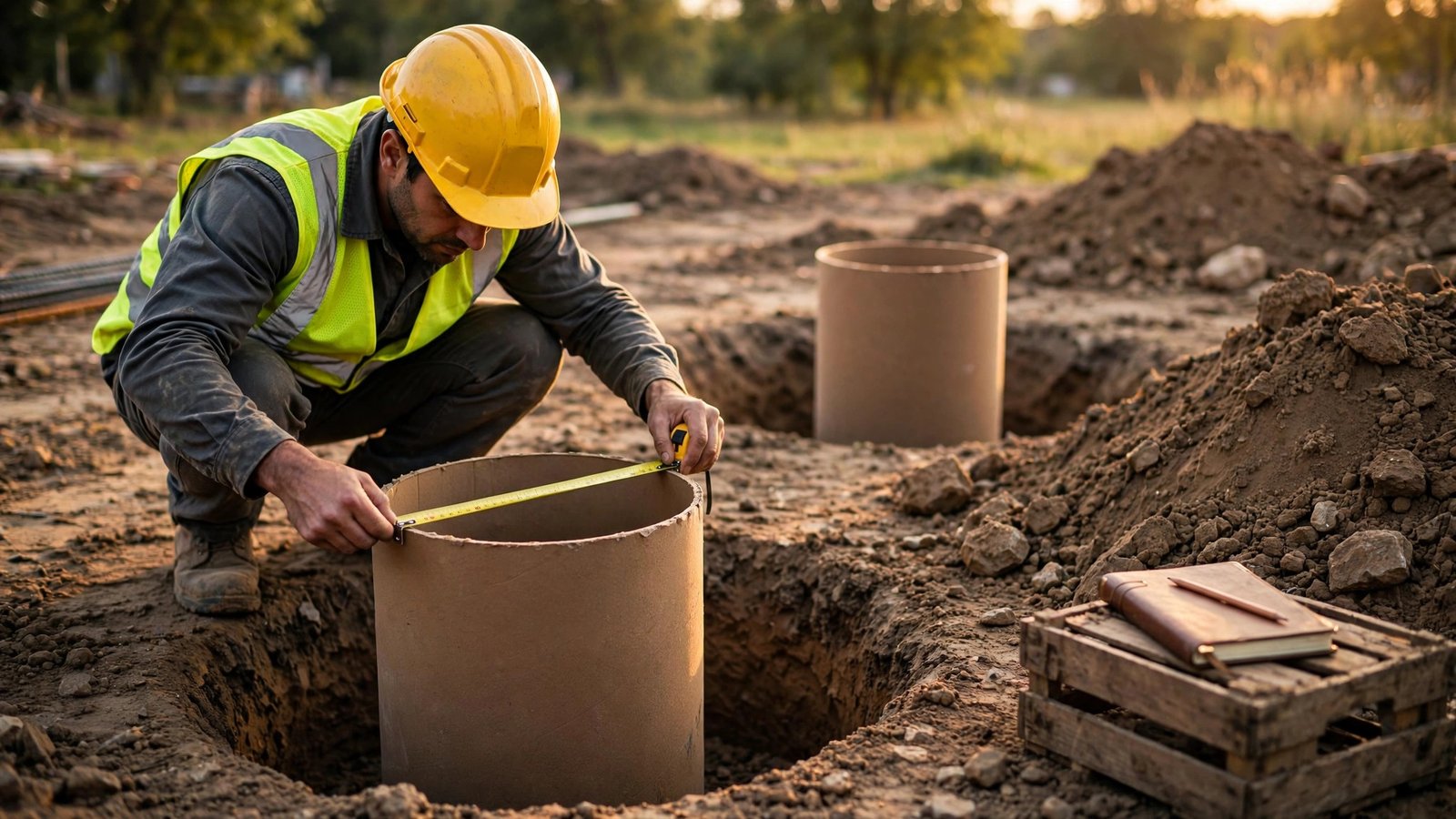
A Sonotube pier concrete calculation is one cylinder formula with 4 inputs: inside diameter, pour height, any wider footing base, and pier count. The formula rarely fails. The inputs fail. Each mistake below moves the ordered volume in a predictable direction, and each one carries its own check.
What goes wrong most often in a Sonotube pier concrete calculation?
The diameter is wrong, the pour height is wrong, or the units are mixed. An outside-diameter reading adds the tube wall to both sides of the diameter. A pour height taken to the top of the tube includes tube that will never hold concrete. Inches entered beside feet without conversion inflate the result by two orders of magnitude. Fix the inputs before touching the math.
How do you check a pier concrete calculation before ordering?
Run these 5 checks in order. A calculation that passes all 5 is ready for the order record.
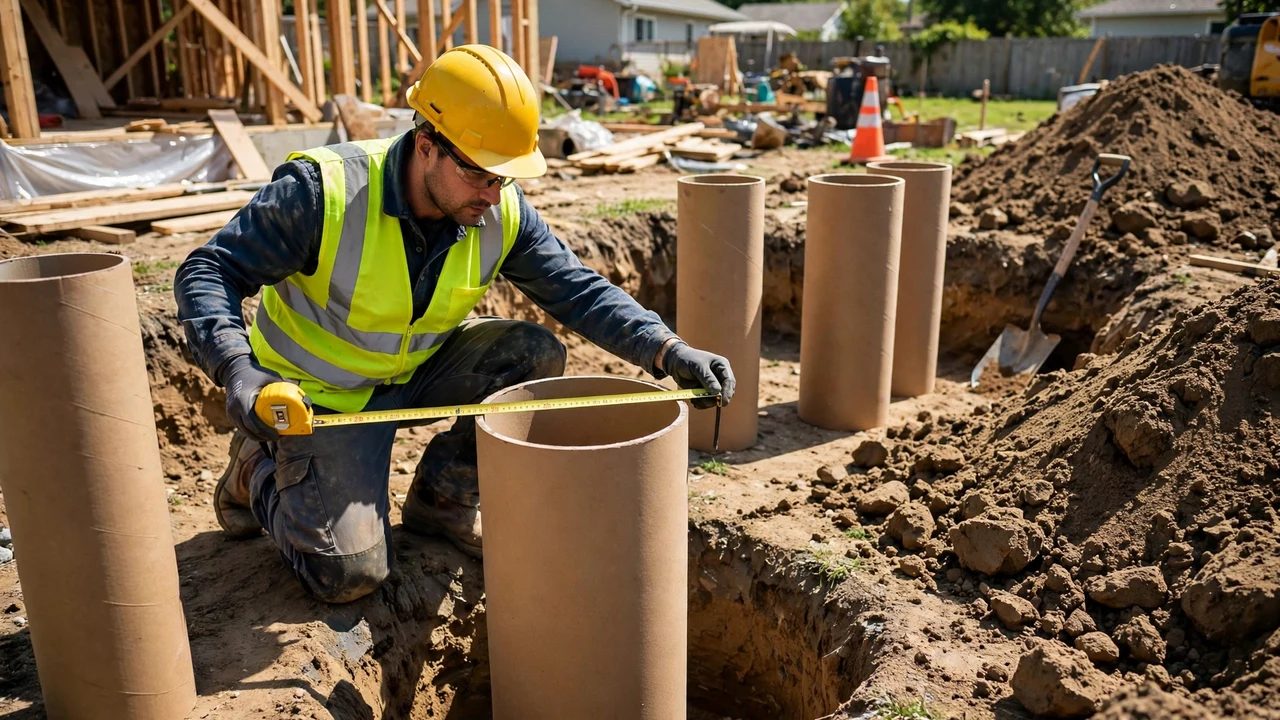
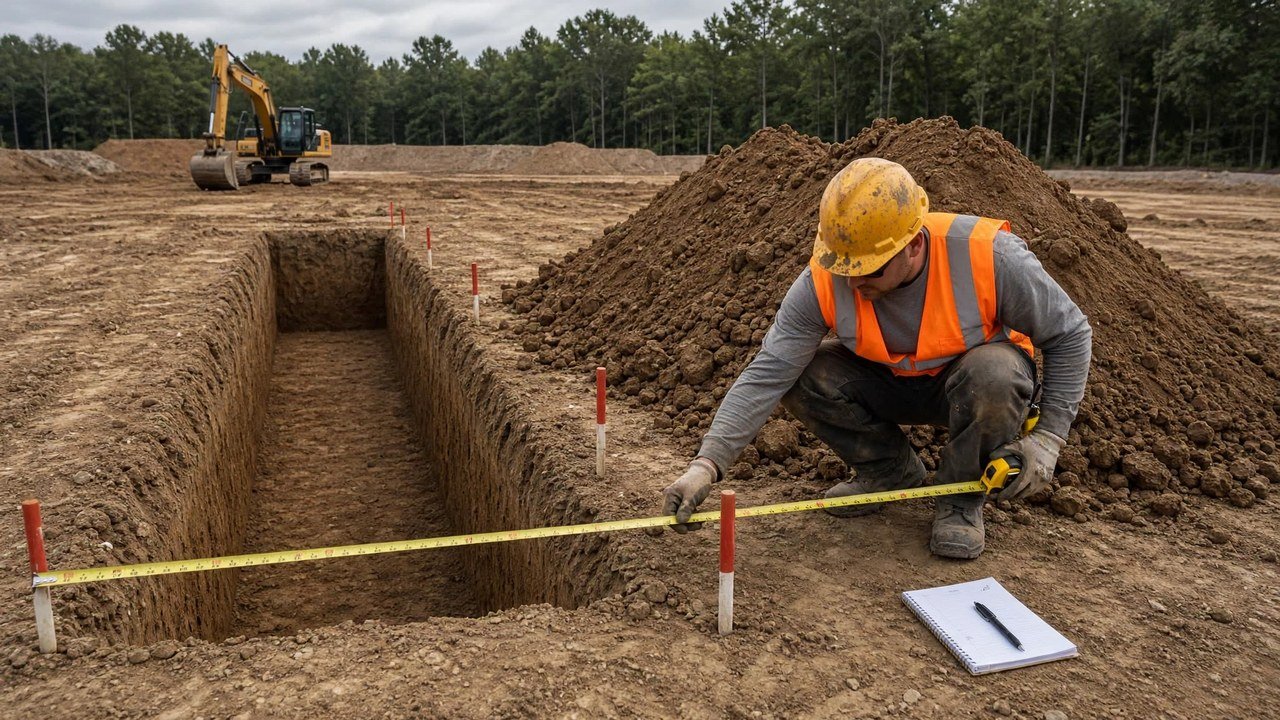
- Confirm the diameter is the measured inside diameter, taken across the opening at 2 perpendicular positions and averaged. Confirm the pour height runs from the bearing surface to the planned concrete top marked on the tube.
- Convert the diameter and height to one unit before multiplying. In imperial work, that usually means inches with inches, then dividing by 1728.
- Keep any wider footing base on its own worksheet line. Multiply the per-pier volume by the pier count last.
- Divide cubic inches by 1728 for cubic feet and cubic feet by 27 for cubic yards, then run the arithmetic backward once.
- Keep full precision to the end. Apply any allowance to the calculated volume only, and round the final order quantity upward.
Worked check fixture
A round form tube has a 12 in measured inside diameter and a 48 in pour height.
- Diameter squared: 12 × 12 = 144 in².
- Cross-section: π × 144 ÷ 4 = 113.0973 in².
- Volume: 113.0973 × 48 = 5428.67 in³.
- Convert: 5428.67 ÷ 1728 = 3.1416 ft³.
- Convert: 3.1416 ÷ 27 = 0.1164 yd³.
The independent check agrees: π × r² × h with r = 6 in gives π × 36 × 48 = 5428.67 in³. The metric cross-check agrees: a 0.3048 m diameter and 1.2192 m height give π ÷ 4 × 0.09290 × 1.2192 = 0.08896 m³, and 0.08896 × 35.3146667 = 3.1416 ft³.
Which diameter mistakes change the concrete volume?
Measuring the outside diameter instead of the inside
Concrete fills the inside of the tube, so the wall thickness holds no concrete. An outside reading puts the wall inside the formula on both sides of the diameter and reads a few percent high. Check: measure across the inside of the opening at 2 perpendicular positions and average the 2 readings. The field measurement guide shows where each dimension is taken.
Using the nominal tube label as the inside diameter
Sonoco's Builder's Tube product data states that diameter sizes are nominal and adds: "If critical, you need to measure." The published chart lists 0.80 ft³ per foot of height at the nominal 12-inch size, while the formula at a true 12-inch inside diameter gives 0.785 ft³ per foot. The chart runs about 2% high because it is rounded at the nominal size. Check: use the chart as a sanity check and the measured diameter for the order.
Entering the diameter where the formula needs the radius
The πr²h form needs the radius, which is half the measured diameter. Entering 12 where the formula expects 6 quadruples the result: π × 12² × 48 = 12.5664 ft³ instead of 3.1416 ft³. Check: halve the measured diameter before it enters πr²h, or use the πd² ÷ 4 form directly.
Skipping the square
A cylinder's cross-section needs the diameter squared. Multiplying by the diameter once gives π × 12 ÷ 4 × 48 = 452.39 in³ (0.2618 ft³), which is 1/12 of the correct 5428.67 in³. Check: square the diameter first, then multiply by π ÷ 4 and the height.
Which pour-height mistakes change the concrete volume?
Using the tube's full length as the pour height
The tube often extends above the planned concrete top, and that extra tube holds no concrete. Six extra inches on the 12-inch fixture adds 0.7854 × 0.5 = 0.3927 ft³ per pier. Check: mark the planned concrete top on the tube and measure to that line, not to the tube's cut end.
Pouring into a hole wider than the tube
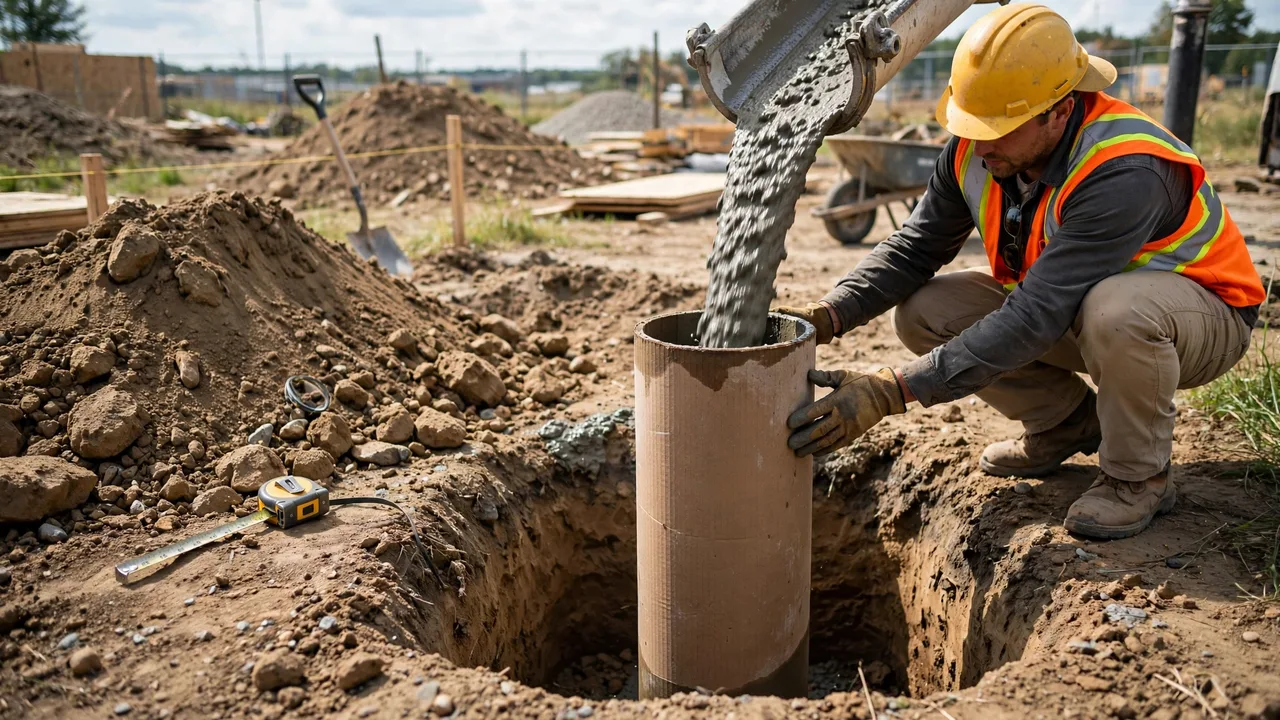
When the augered hole is wider than the tube, concrete flows into the gap around the tube. The tube calculation misses that concrete, so the pour runs short. Check: backfill and compact around the tube before the pour, or measure the hole and calculate the annular volume on a separate line. The post-hole volume guide covers hole-based concrete directly.
Forgetting the wider footing base
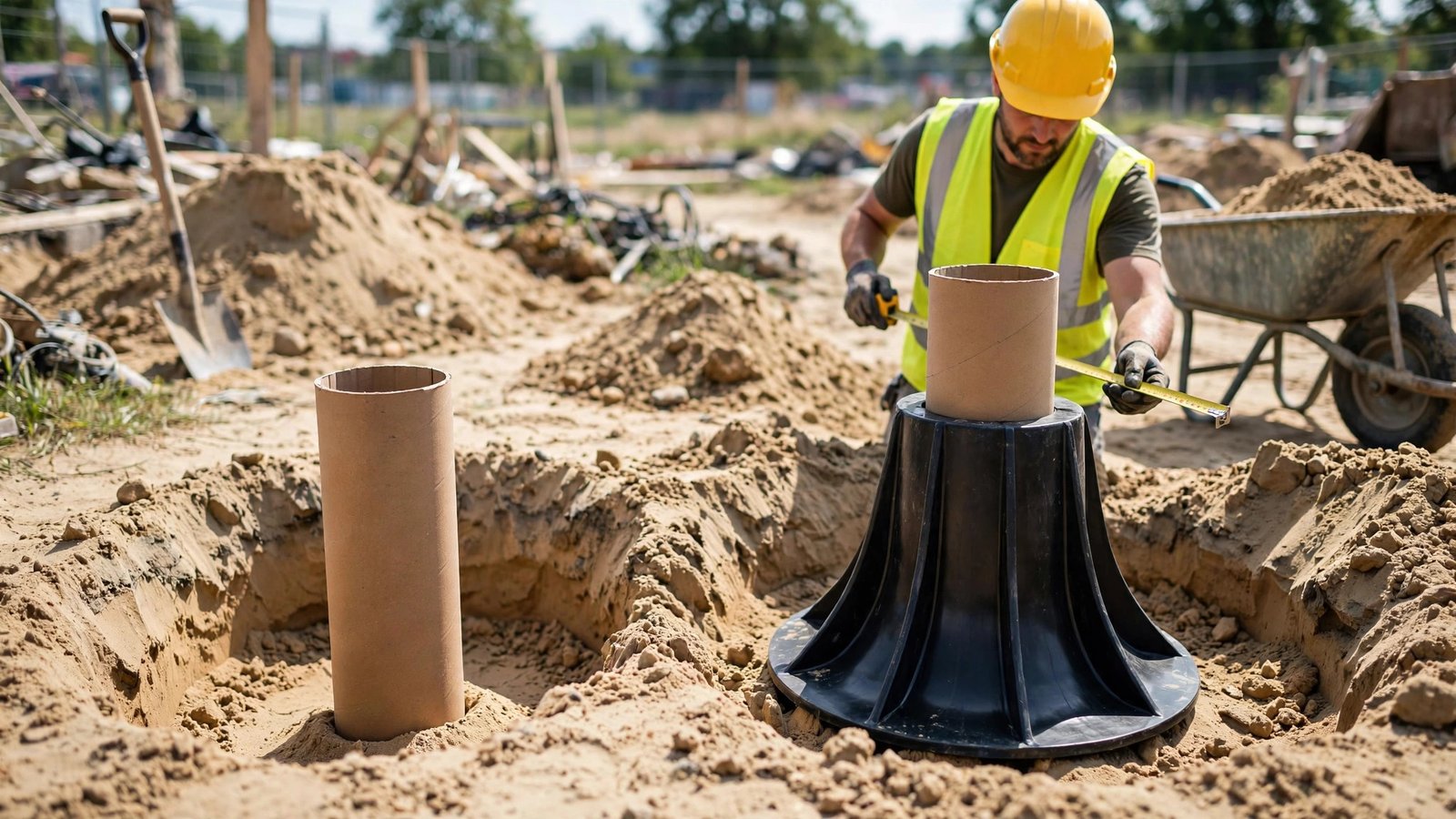
A square pad or round base under the tube is a separate volume. A 2 ft × 2 ft × 1 ft pad holds 4 ft³ (0.1481 yd³), and every pier with a forgotten base runs short by that amount. Check: measure each base on its own line and add it after the tube volume. The ordering guide shows the worksheet layout.
Which arithmetic mistakes change the concrete volume?
Mixing inches and feet
A 12 in diameter with a 4 ft height entered unconverted gives π × 144 ÷ 4 × 4 = 452.39, labeled cubic feet. The correct 3.1416 ft³ shows the error is 144×. Check: when a result looks implausible, scan the units of every input before rechecking the math.
Dividing cubic feet by 9 instead of 27
One cubic yard equals 27 cubic feet exactly. Dividing 3.1416 ft³ by 9 gives 0.3491 yd³, three times the correct 0.1164 yd³. Check: run the conversion backward. A result about 3 times the expected size points at the wrong divisor.
Applying the allowance to each dimension
A 5% allowance added to the diameter and height multiplies the volume by 1.05³ = 1.1576, because the diameter enters the formula twice. On the 3.1416 ft³ fixture that gives 3.6367 ft³ instead of 3.2987 ft³. Check: apply any allowance to the calculated volume only, and record it as a planning allowance, not as a measured quantity.
Rounding the per-pier volume before multiplying
Rounding 0.1164 yd³ to 0.1 before multiplying by 8 piers gives 0.8 yd³ instead of 0.9308 yd³, and the shortfall of about 0.13 yd³ grows with the pier count. Check: carry full precision through the pier-count multiplication, then round the order quantity up to the supplier's selling increment.
Which supply-side mistakes change the order?
Using bag yields from a different product
Bag yield is product-specific. Borrowing one product's yield figure for another mix shifts the bag count even when the volume is right. If the data sheet for the product on the shelf lists 0.6 ft³ per bag, the 3.1416 ft³ fixture needs 3.1416 ÷ 0.6 = 5.24 bags, rounded up to 6. A different figure gives a different count. Check: confirm the yield on the bag or data sheet of the product actually being bought.
Losing a pier from the count
Every missing pier removes its whole volume: one dropped 12-inch pier removes 3.1416 ft³. Check: count the piers on the plan and tick each one off against the worksheet before the total is final.
All thirteen mistakes in one list
| Mistake | Effect on the volume | Check |
|---|---|---|
| Outside diameter measured instead of inside | Overorders | Measure inside at 2 positions, average |
| Nominal label used as inside diameter | Slightly overorders | Measure and use the field reading |
| Diameter entered where the radius belongs | Quadruples the volume | Halve the diameter or use πd² ÷ 4 |
| Diameter not squared | 1/12 of the correct volume | Square the diameter first |
| Tube full length used as pour height | Overorders | Measure to the marked concrete top |
| Hole wider than the tube ignored | Underorders | Backfill or calculate the annulus |
| Wider footing base forgotten | Underorders | Measure the base on its own line |
| Inches and feet mixed | Massively overorders | Convert to one unit first |
| Cubic feet divided by 9 | Triples the yd³ result | Run the conversion backward |
| Allowance applied to each dimension | Overorders | Apply allowance to the volume only |
| Per-pier volume rounded early | Underorders | Round once, upward, at the end |
| Bag yield borrowed from another product | Both directions | Confirm the yield on the bag bought |
| Pier dropped from the count | Underorders | Tick every pier off the plan |
Safety and professional scope
This article fixes calculation errors. It does not set pier diameter, depth, reinforcement, concrete mix, or placement method. Those come from the project drawings, specifications, and the responsible qualified people. Excavation work follows the site's excavation safety plan.
Sources and source scope
- Sonoco, Sonotube Builder's Tube product data (accessed 2026-10-09): nominal sizes, concrete per foot of height, single-use and placement guidance, and the "Diameter sizes are nominal. If critical, you need to measure." note.
- Sonoco, Sonotube Round Concrete Forms product data (accessed 2026-10-09): cubic-yard requirements by diameter and column height.
- NIST Handbook 44 (2026), Appendix C: length and volume unit relationships used in the conversions.
- QUIKRETE Concrete Mix No. 1101 data sheet: bag yields are product-specific; named product only.
- Pier footing measurement, pier footing ordering, post-hole volume, and footing excavation vs concrete volume on this site: related methods kept separate from this calculation-check article.
Scope: the formulas calculate a stated concrete volume from verified inputs. The project drawings, specifications, soil and geotechnical information, applicable law, and the responsible qualified people control the accepted dimensions and final order quantity.
Review responsibility: Saleem Sial owns the published calculation, source, and editorial checks. Waseem Sial, External Reviewer and Engineer, remains listed for ongoing external review; no completed external-review date is claimed.
Next, use the field measurement guide when the dimensions are not yet taken, or the ordering guide when the checked volume is ready for the supplier.