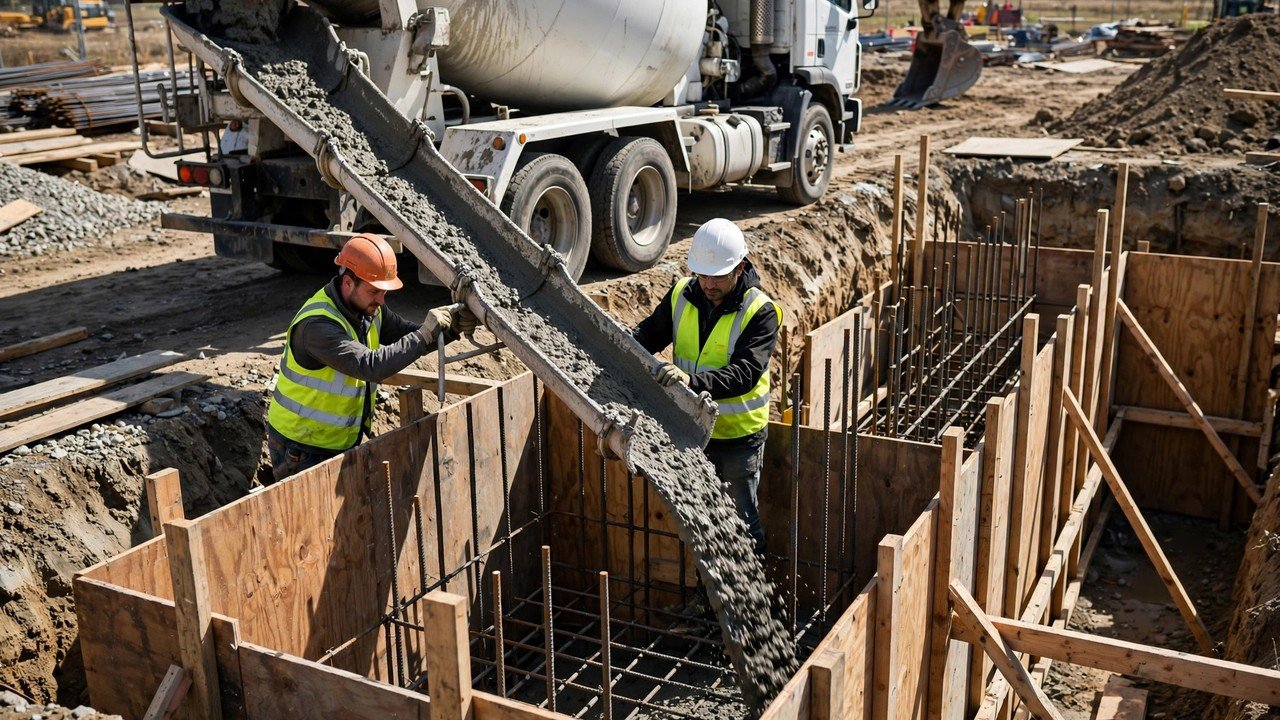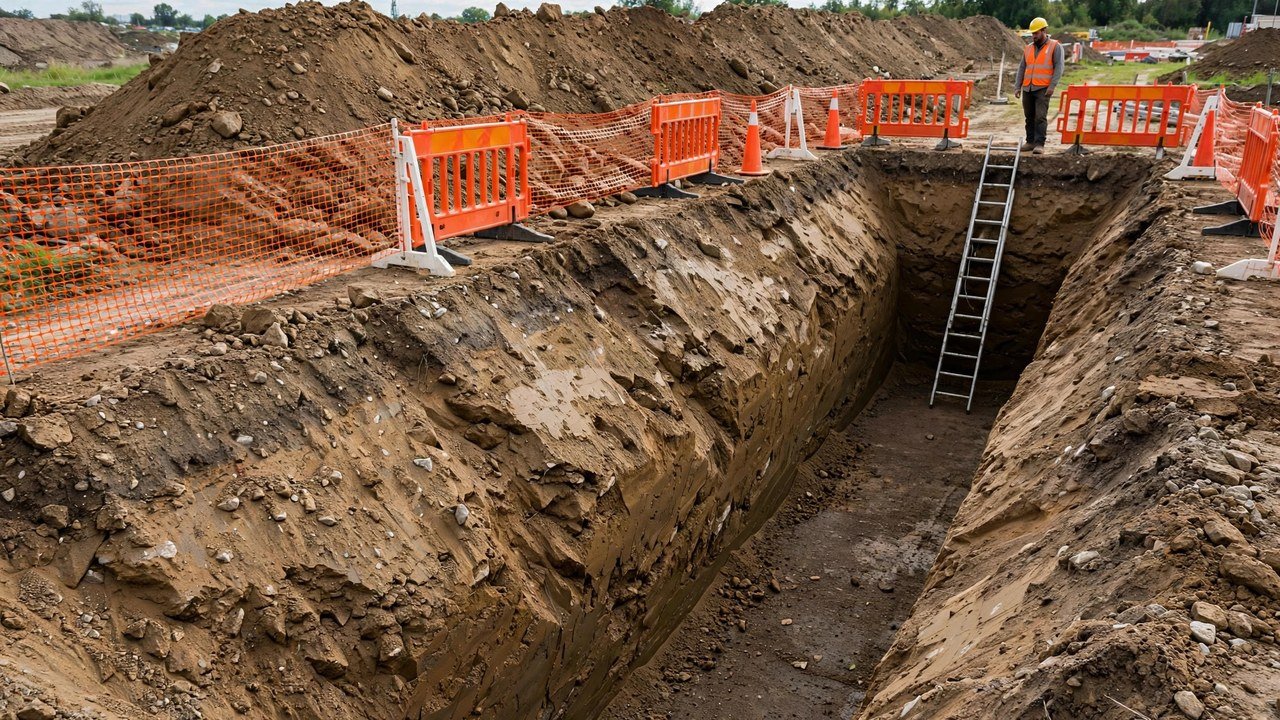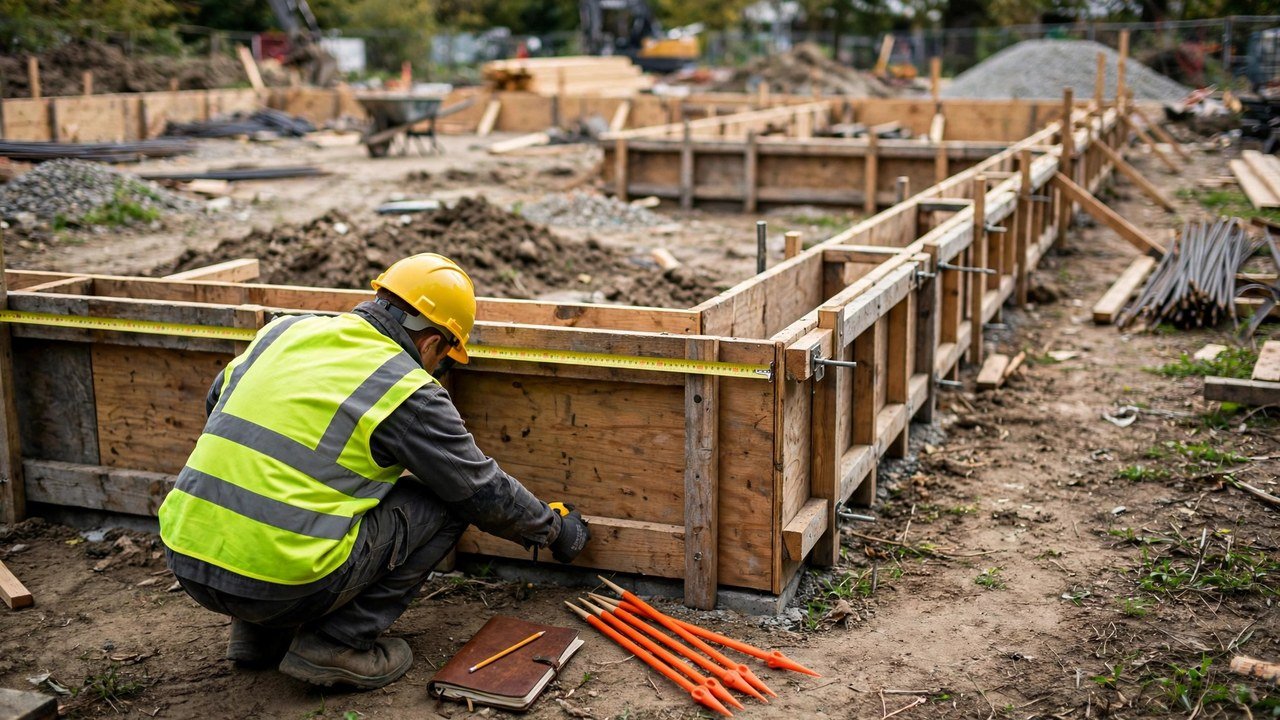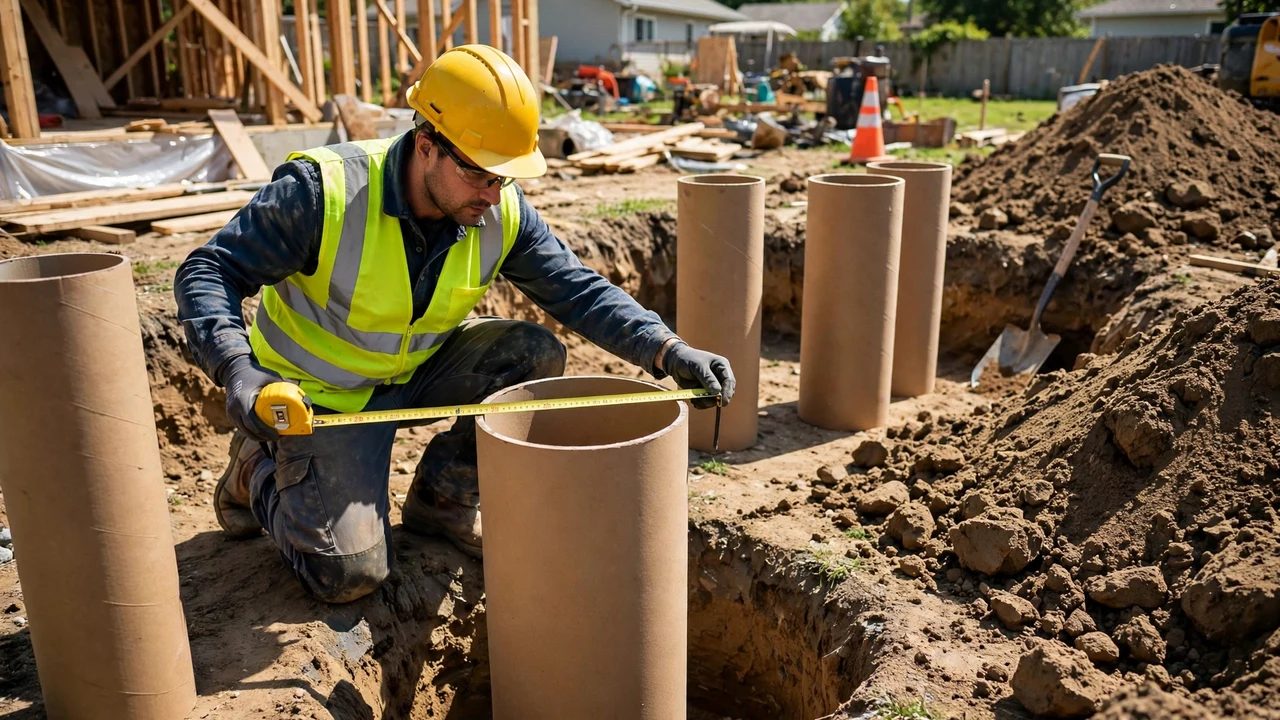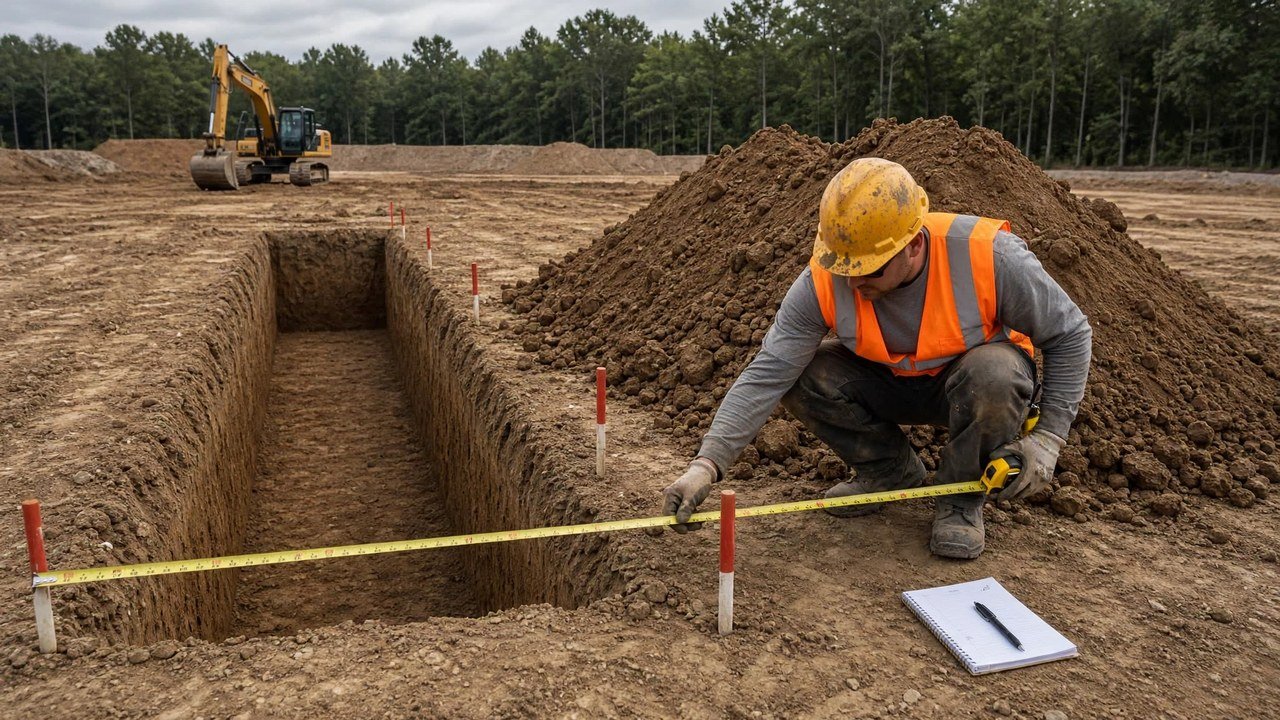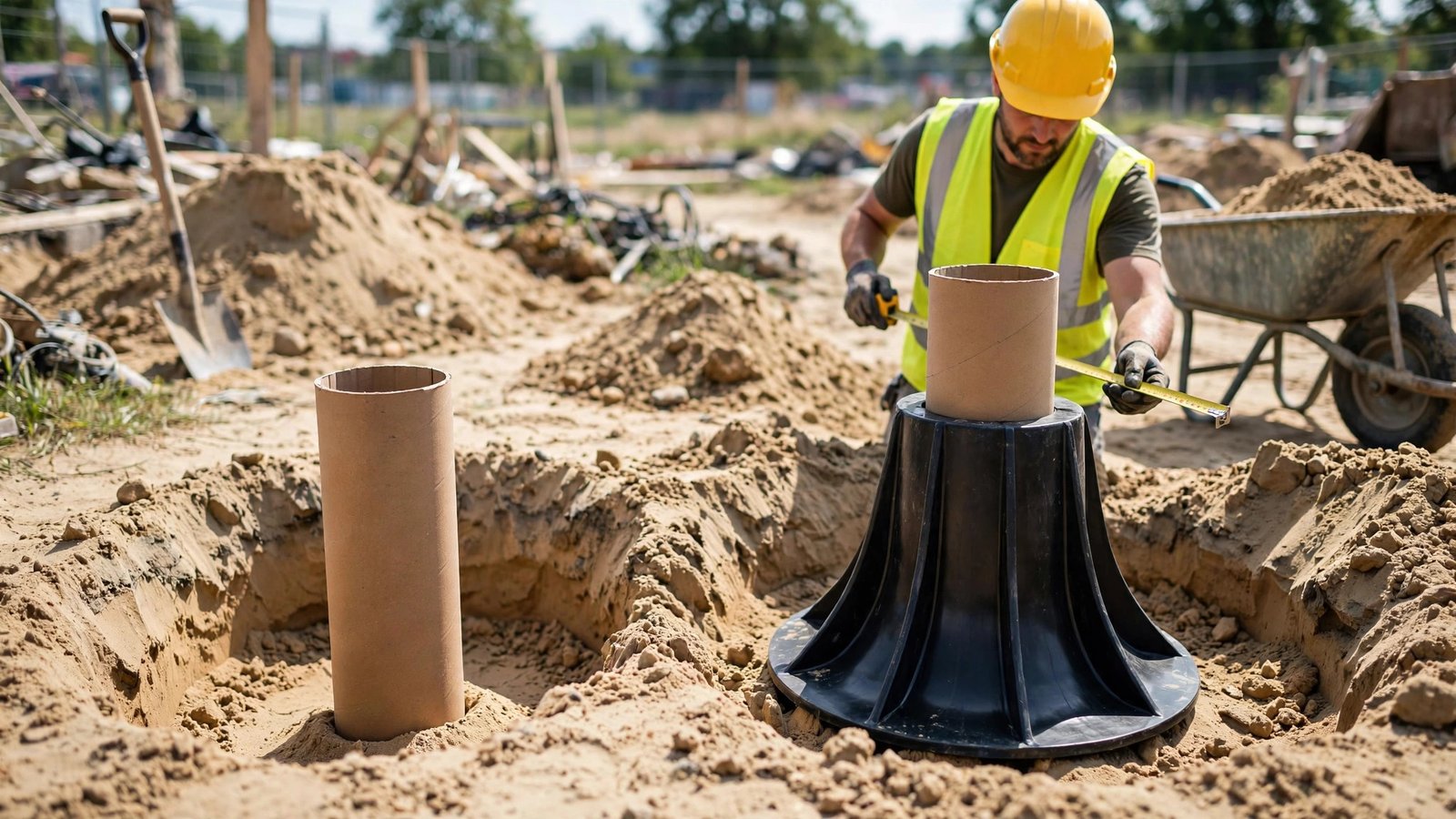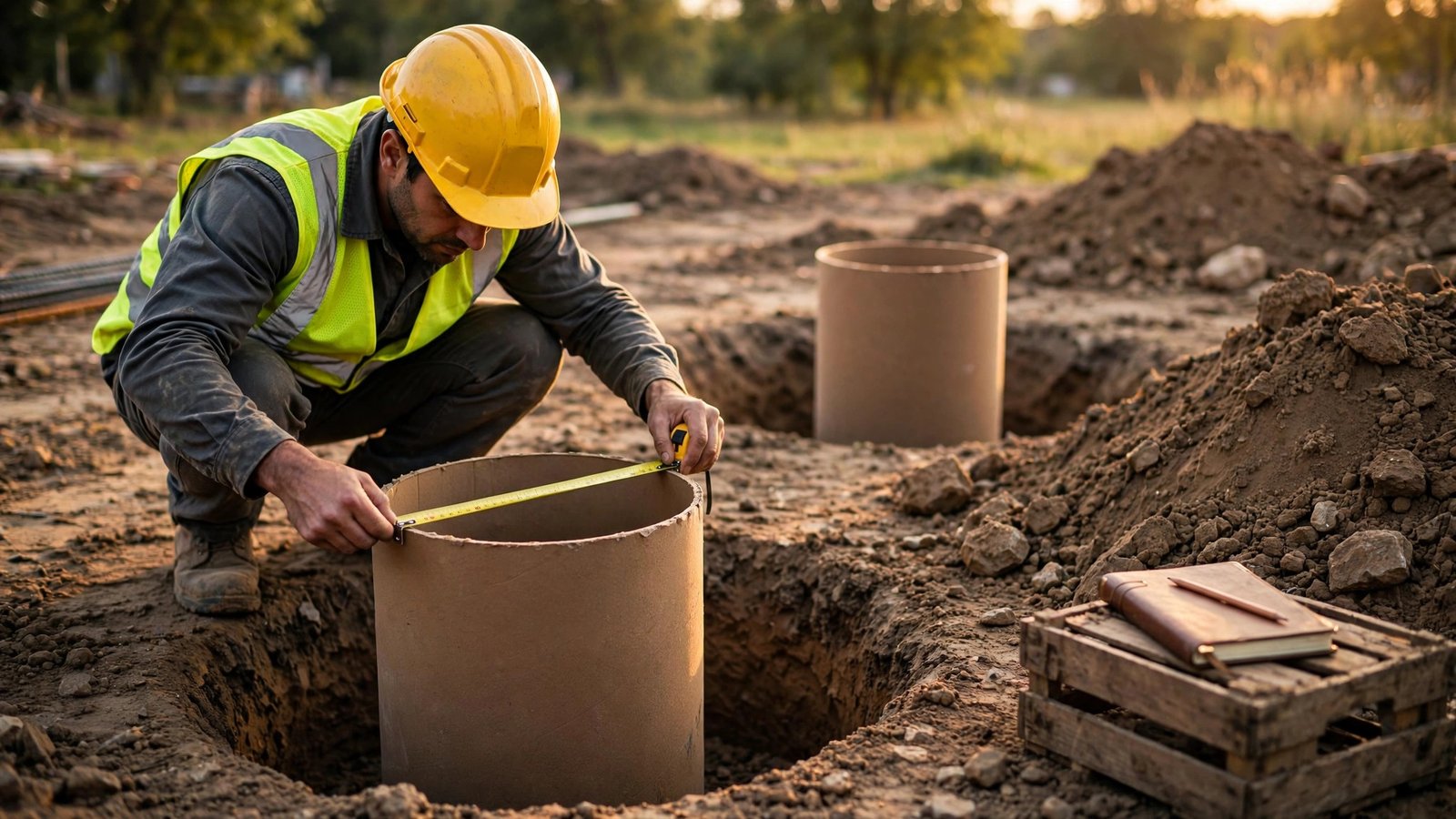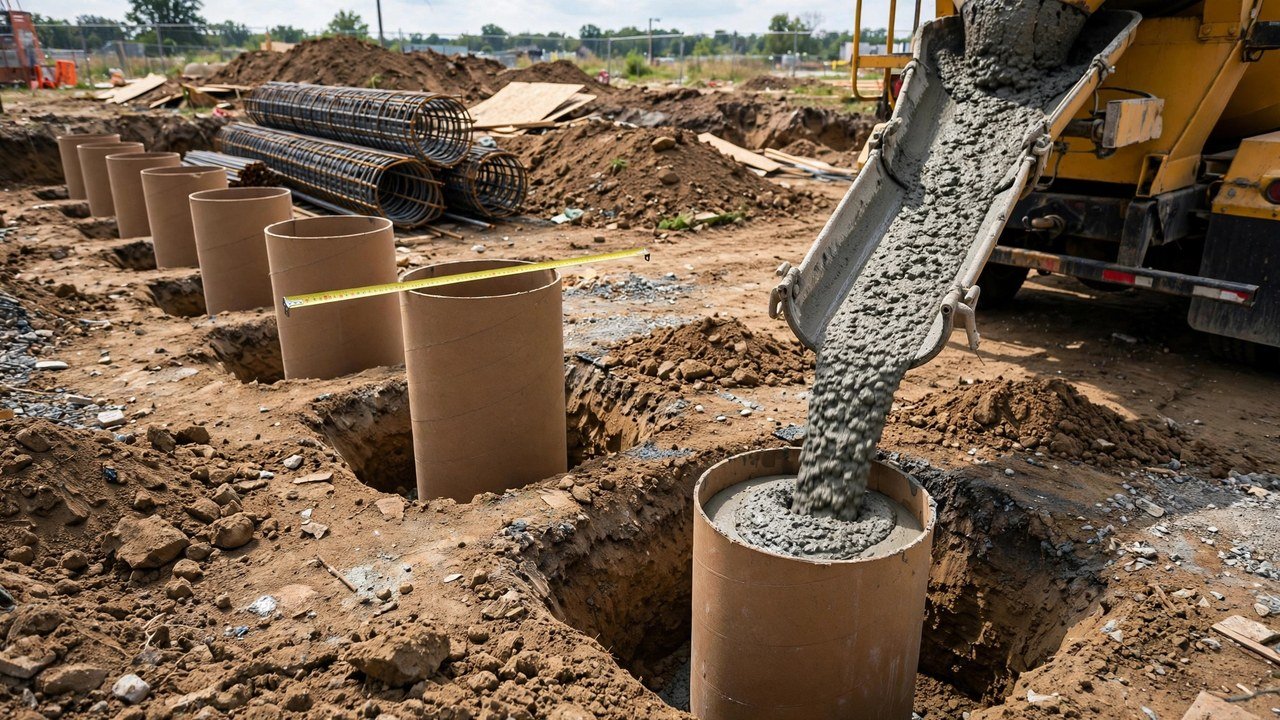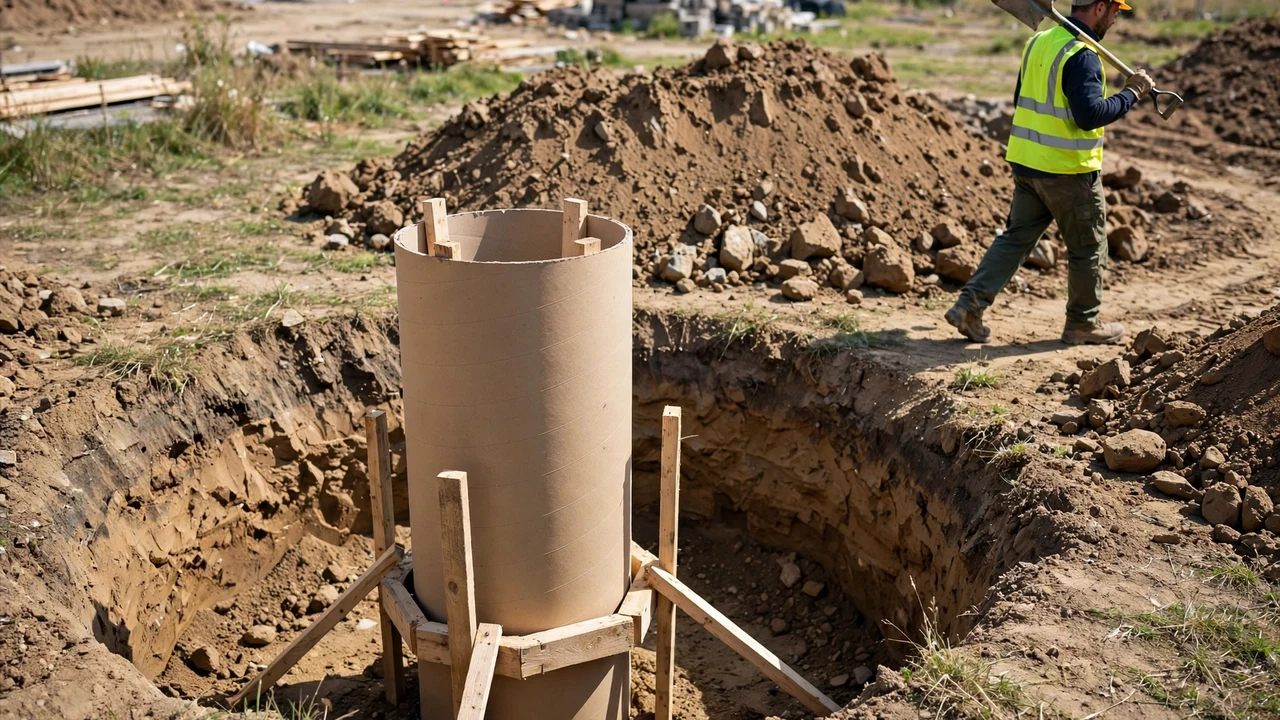
Six piers with a measured 10-in inside diameter and a 48-in pour height need 13.09 ft³ of concrete. That converts to 0.4848 yd³. This example walks through that calculation from the first measurement to the last check.
How much concrete does this example need?
One pier takes 2.1817 ft³. Six identical piers take 13.09 ft³, which is 0.4848 yd³. These are the target values, and every step below returns to them.
How is one pier volume calculated?
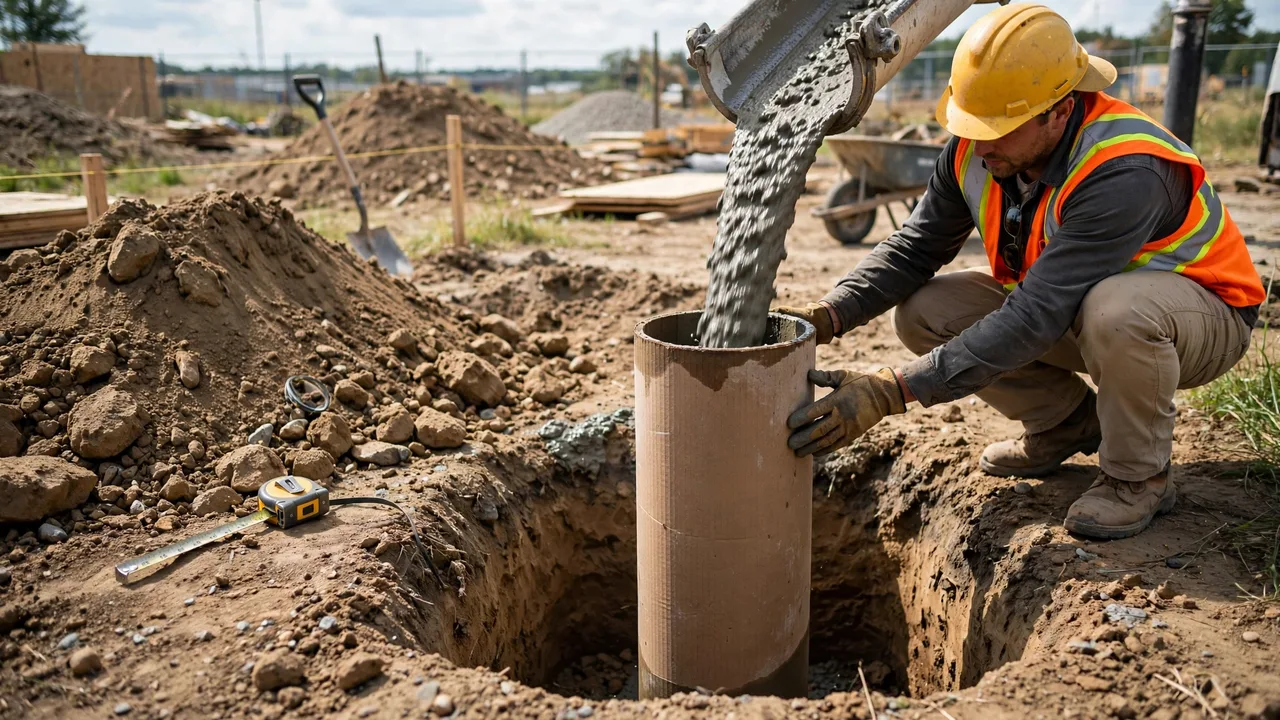
A Sonotube pier is a cylinder. Multiply the cross-section area by the pour height, using the measured inside diameter and the height from the bearing surface to the marked concrete top.
Pier volume = π × (inside diameter ÷ 2)² × pour height
- Halve the diameter: 10 ÷ 2 = 5 in.
- Square the radius and multiply by π: 3.14159 × 25 = 78.5398 in² of cross-section.
- Multiply by the pour height: 78.5398 × 48 = 3769.9112 in³.
- Convert to cubic feet: 3769.9112 ÷ 1728 = 2.1817 ft³.
Keep the full 2.181663 ft³ in the worksheet until all six piers are added. Rounding each pier to 2.18 ft³ first gives 13.08 ft³, which hides about 0.01 ft³. The gap is small here and grows with pier count.
How do the six piers add up?
Multiply the unrounded per-pier volume by the pier count, then convert the total into the unit the supplier uses.
- Six-pier total: 6 × 2.181663 = 13.08998 ft³, recorded as 13.09 ft³.
- Cubic yards: 13.08998 ÷ 27 = 0.4848 yd³.
How does the bag count work out?
Divide the allowed volume by the named product's stated yield, then round up to whole bags. A yield figure belongs to one product and one data sheet edition, so it never travels to another bag without a fresh check.
Whole bags = ceiling(planning volume ÷ named product yield)
- Bag calculation: 13.08998 ÷ 0.60 = 21.82, rounded up to 22 bags of the named 80-lb QUIKRETE Concrete Mix No. 1101.
- Reverse check: 22 × 0.60 = 13.2 ft³, which covers the 13.09 ft³ total.
This is a volume check only. It does not set the order quantity. The pier footing ordering guide separates allowances and supplier rounding from the measured volume.
| Line | Arithmetic | Quantity |
|---|---|---|
| Cross-section area | π × (10 ÷ 2)² | 78.5398 in² |
| Per-pier volume | 78.5398 × 48 ÷ 1728 | 2.1817 ft³ |
| Six-pier total | 6 × 2.181663 | 13.09 ft³ |
| Cubic yards | 13.08998 ÷ 27 | 0.4848 yd³ |
| Whole bags | ceiling(13.08998 ÷ 0.60) | 22 bags |
How do you cross-check against the manufacturer's table?
Sonoco publishes a concrete-requirements table for its round concrete forms, in cubic yards by nominal diameter and column height. Open the table, read the cell for the nearest nominal size and pour height, and compare it with the value calculated from the measured inputs.
A match confirms the arithmetic. A mismatch points at a measurement, a unit mix, or an assumed diameter that the tube label did not earn. Sonoco warns that diameter sizes are nominal and should be measured when they matter. The Sonotube measurement guide shows how to take that reading.
What changes if the measured diameter is slightly smaller?
Volume scales with the square of the diameter, so a small diameter miss costs more than it looks. If the tube actually measures 9.75 in instead of 10 in:
- Volume ratio: (9.75 ÷ 10)² = 0.950625.
- Per-pier concrete: 2.1817 × 0.950625 = 2.0739 ft³.
- The pier takes about 4.9% less concrete than the 10-in figure.
Across six piers, that 0.25-in shortfall removes about 0.65 ft³ from the total. The pier footing mistakes guide lists this among the diameter errors that change concrete volume.
What is the metric cross-check?
Six piers with a measured 300 mm inside diameter and a 1.2 m pour height give a separate fixture in metric units.
- Per-pier volume: π × (0.3 ÷ 2)² × 1.2 = 0.08482 m³.
- Six-pier total: 6 × 0.084823 = 0.5089 m³.
A unit-consistency check ties the two systems together. Convert the imperial example: 10 in = 0.254 m and 48 in = 1.2192 m, so π × (0.254 ÷ 2)² × 1.2192 = 0.06178 m³, and 0.06178 × 35.3146667 = 2.1817 ft³. The same pier lands on the same value in both systems.
What does this example not cover?
- A pier with a wider footing base. That base is a separate volume line, never folded into the tube. The ordering guide shows the worksheet layout.
- A post embedded in the pier. Subtract the displaced volume. The post displacement guide covers that adjustment.
- Allowances, supplier increments, and short-load terms. Those are ordering decisions, not part of the worked geometry.
- Diameter, depth, reinforcement, and frost protection choices. They follow the drawings, the local code, and the qualified designer, not this example.
Sources and source scope
- Sonoco, Sonotube Builder's Tube product data (accessed 2026-10-09): nominal sizes, concrete per foot of height, single-use guidance, and the "Diameter sizes are nominal. If critical, you need to measure." note.
- Sonoco, Sonotube Round Concrete Forms product data (accessed 2026-10-09): cubic-yard concrete requirements by diameter and column height, used for the cross-check method.
- NIST Handbook 44 (2026), Appendix C: length and volume unit relationships used in the conversions.
- QUIKRETE Concrete Mix No. 1101 data sheet: the named 80-lb bag's approximate yield used in the bagged fixture.
- NRMCA CIP 31, Ordering Ready Mixed Concrete: stated ready-mix ordering practice, including sale by volume.
Source scope: Sonoco supports the nominal-size warning and the cross-check table. NIST supports the unit arithmetic. The QUIKRETE data sheet supports only the named bag's approximate yield. NRMCA supports its stated ordering practice. None of these sources sets a project allowance, tube size, pour height, or acceptance decision.
Review responsibility: Saleem Sial owns the published calculation, source, and editorial checks. Waseem Sial, External Reviewer and Engineer, remains listed for ongoing external review; no completed external-review date is claimed.
Next, work from your own measurements with the Sonotube measurement guide, turn the volume into an order with the pier footing ordering guide, or return to the Foundation hub for the related calculators.