
Drainage Gravel Calculator: Trench and Pipe Volume
Calculate drainage gravel for a rectangular trench zone, subtract actual pipe outside-diameter volume, and prepare a supplier-rounded order.
Open Drainage Gravel Calculator: Trench and Pipe VolumeConstruction workflow
Choose a gravel calculator, coverage guide, size chart, weight chart, or cost worksheet for measuring and ordering.
3 working calculators 21 supporting resources
Available now
Each calculator solves one defined quantity task and keeps its assumptions, formula, units, and limits visible.
Calculate drainage gravel for a rectangular trench zone, subtract actual pipe outside-diameter volume, and prepare a supplier-rounded order.
Open Drainage Gravel Calculator: Trench and Pipe VolumeCalculate separate placed and supplier-order quantities for a gravel driveway base and surface layer, including a uniformly tapered footprint.
Open Driveway Gravel Calculator: Base and Surface LayersCalculate gravel area and measured volume in metric or imperial units, with separate optional allowance and supplier-density mass stages.
Open Gravel Calculator: Volume, Yards and WeightSupporting resources
These guides and charts answer separate decisions around the material calculation.
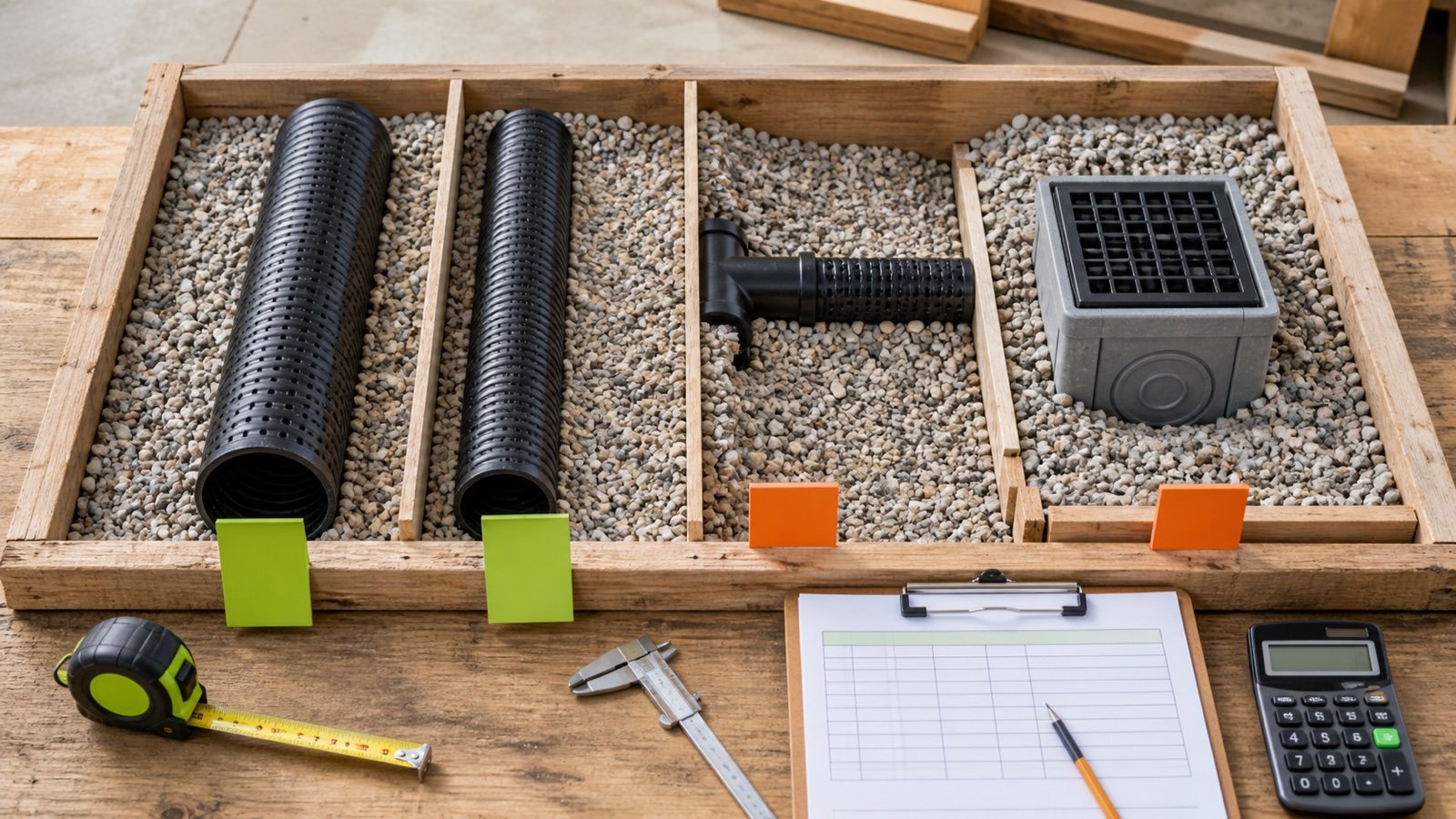
Calculate drainage gravel around multiple pipes, unequal run lengths, fittings and catch basins by separating straight runs from junction and structure displacement.
Read Drainage Gravel for Multiple Pipes and Structures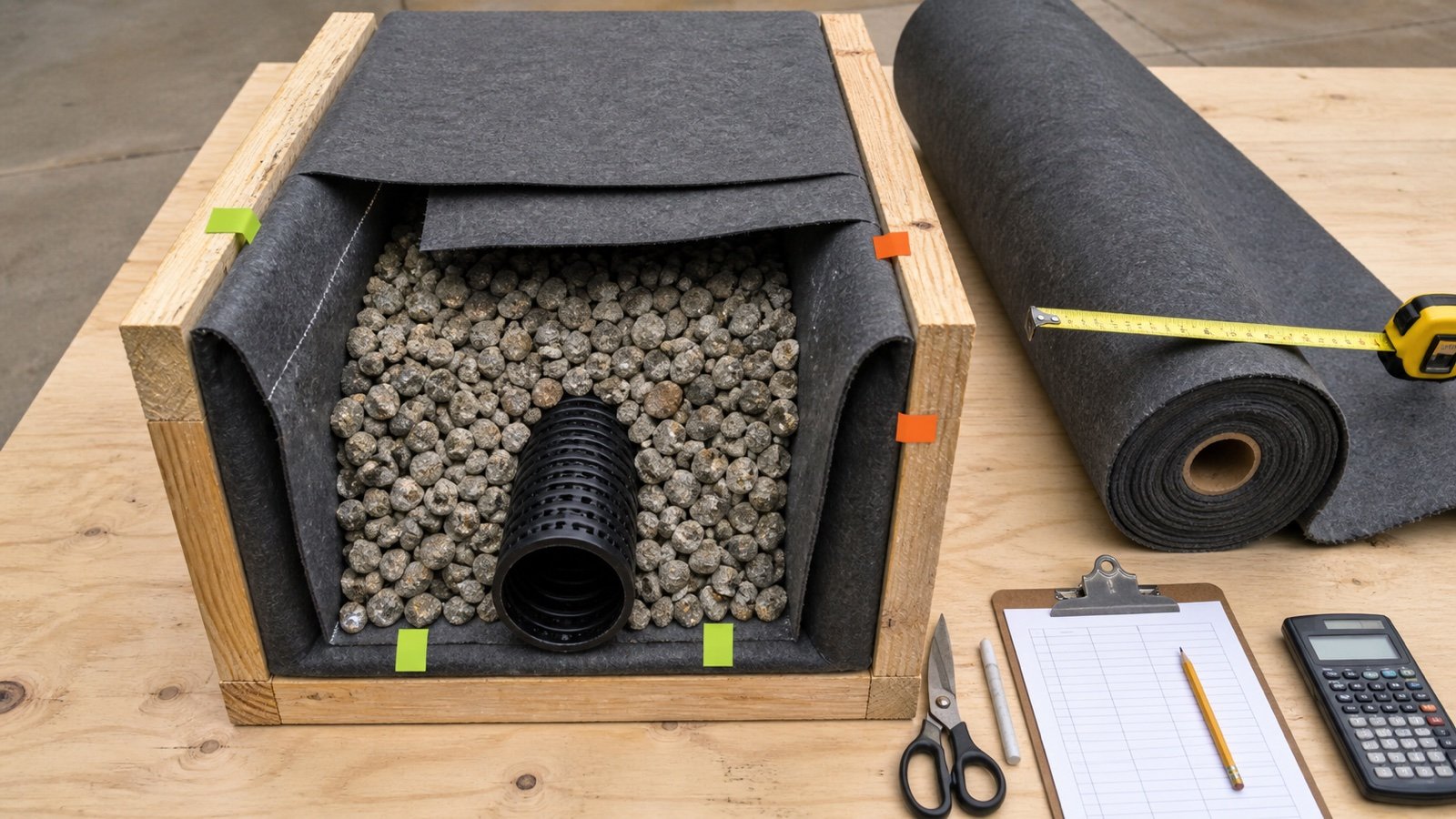
Calculate drainage-trench geotextile wrap width, seam-adjusted cut lengths and whole rolls from an approved fabric layout and confirmed roll dimensions.
Read Drainage Trench Geotextile: Area, Overlaps and Rolls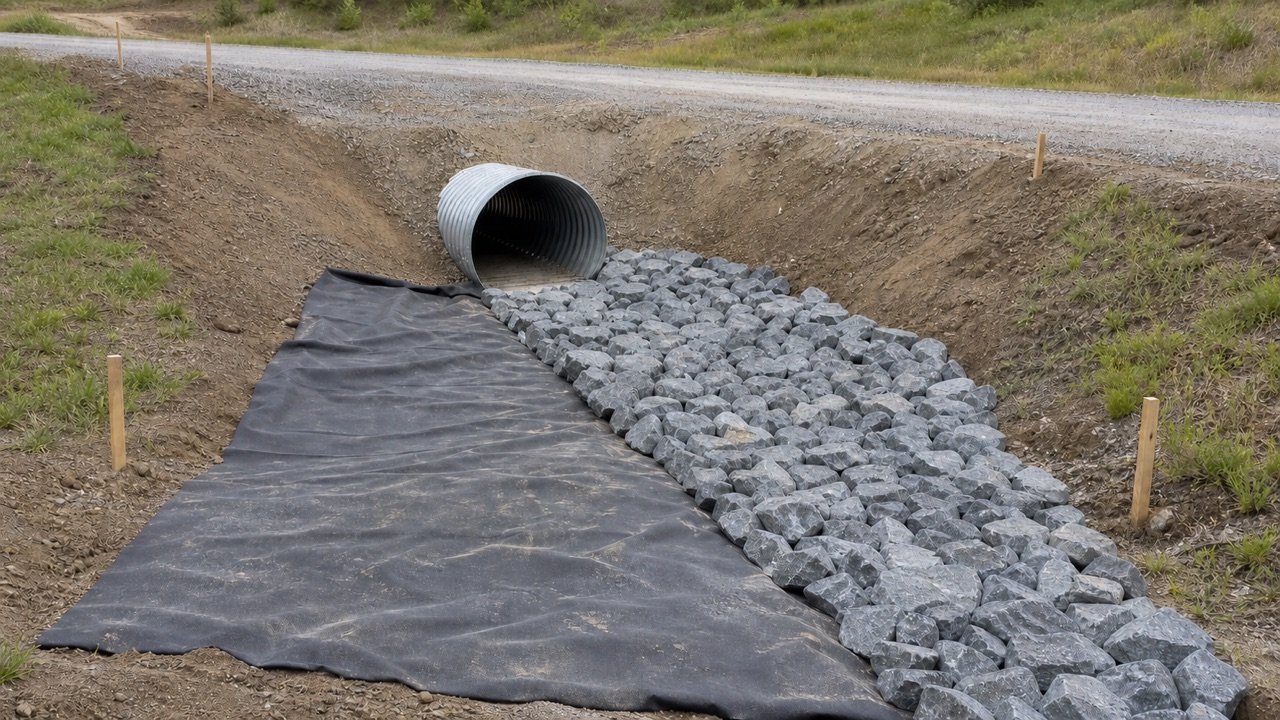
Calculate riprap apron volume, sloped geotextile area, toe-trench rock, and supplier quantities from an approved driveway culvert end detail.
Read Driveway Culvert End Protection: Riprap and Geotextile Quantities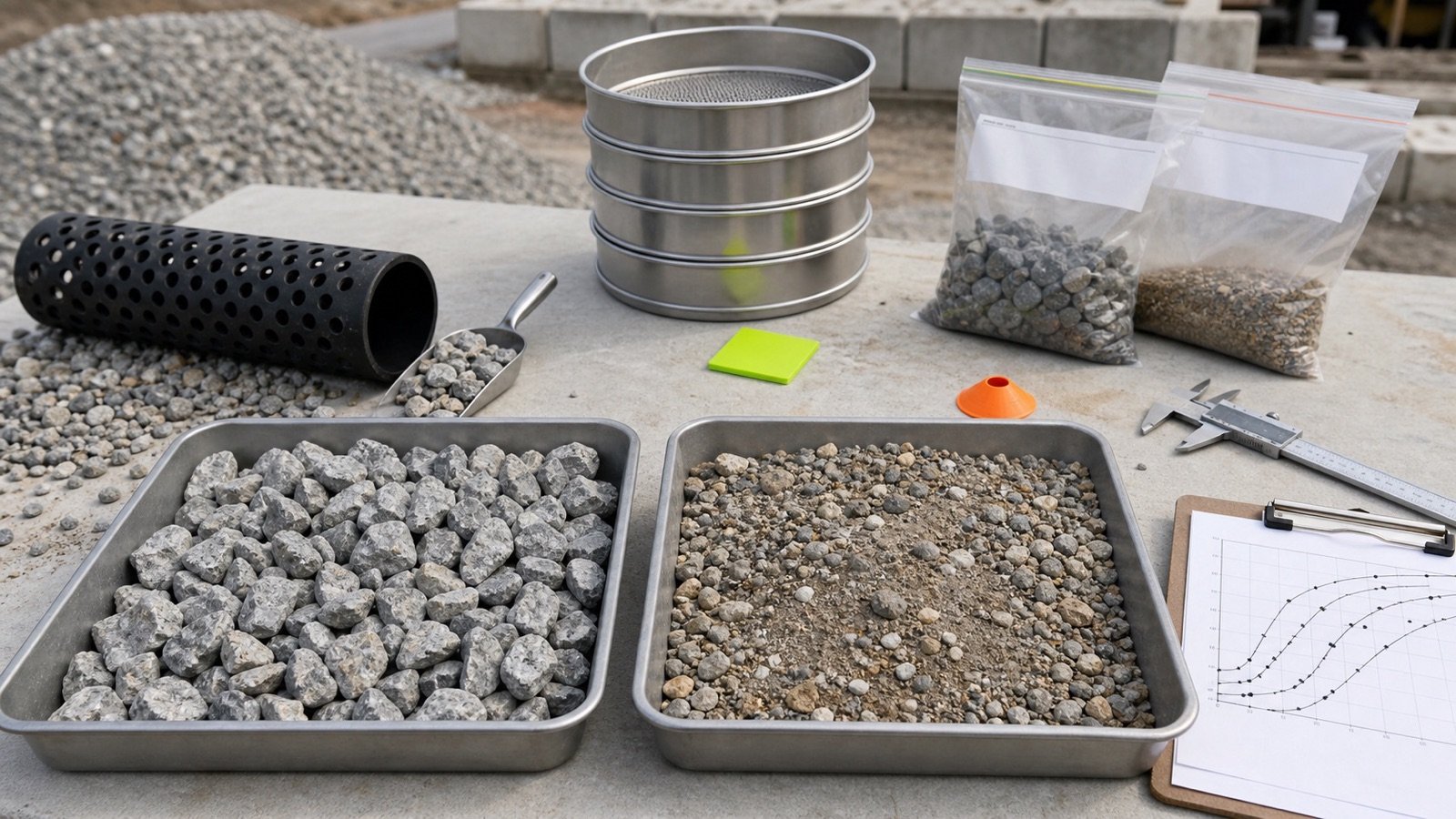
Check French drain gravel size, fines, gradation and filter compatibility against an approved detail and a current supplier report before ordering.
Read French Drain Gravel: Size, Fines and Filter Checks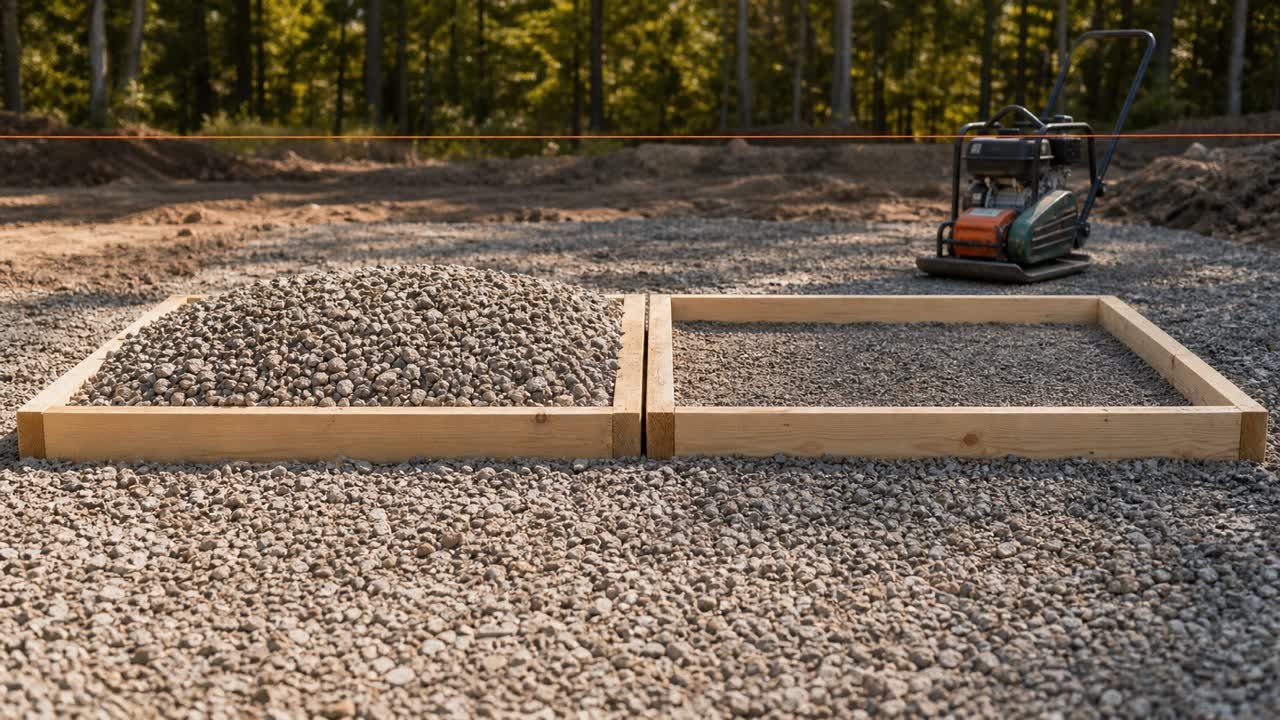
Convert compacted gravel depth to loose volume using a documented factor, checked examples, field yield, and the correct meaning of 95% compaction.
Read Gravel Compaction: Loose Volume and Finished Depth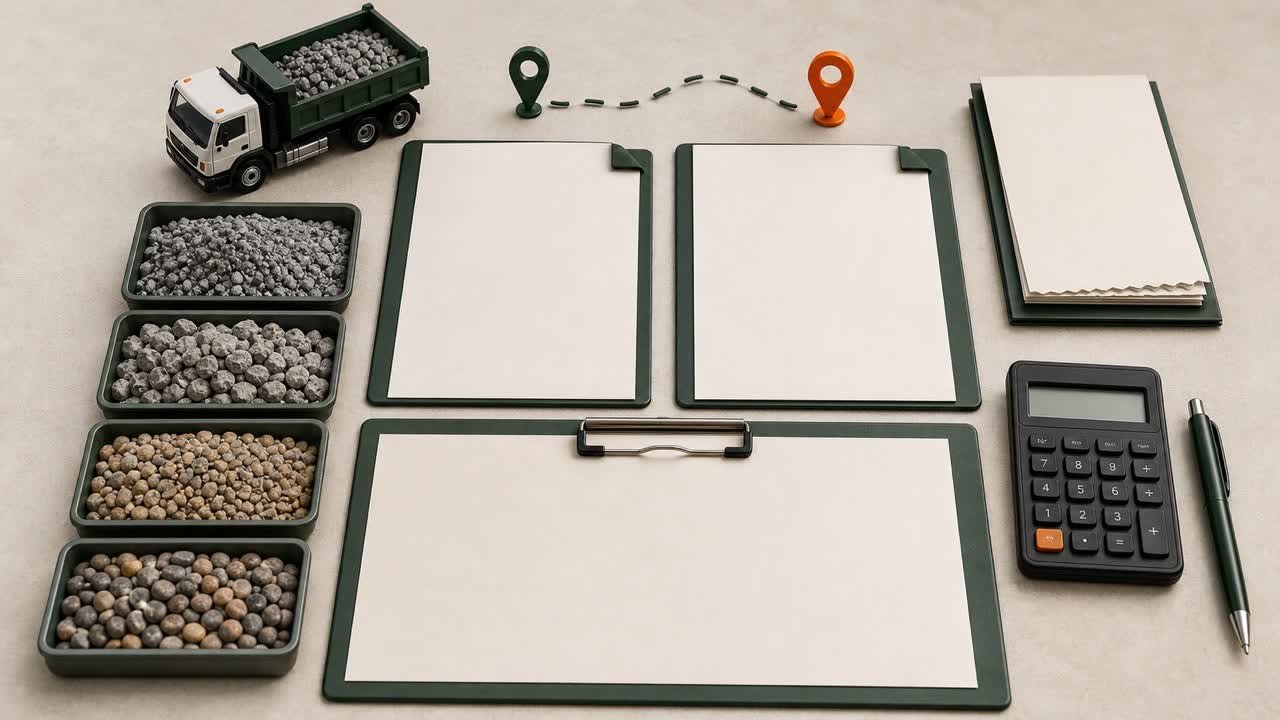
Estimate total gravel project cost from measured quantity, current supplier pricing, delivery, fees, tax, equipment, and related materials.
Read Gravel Cost Guide: Build a Delivered Estimate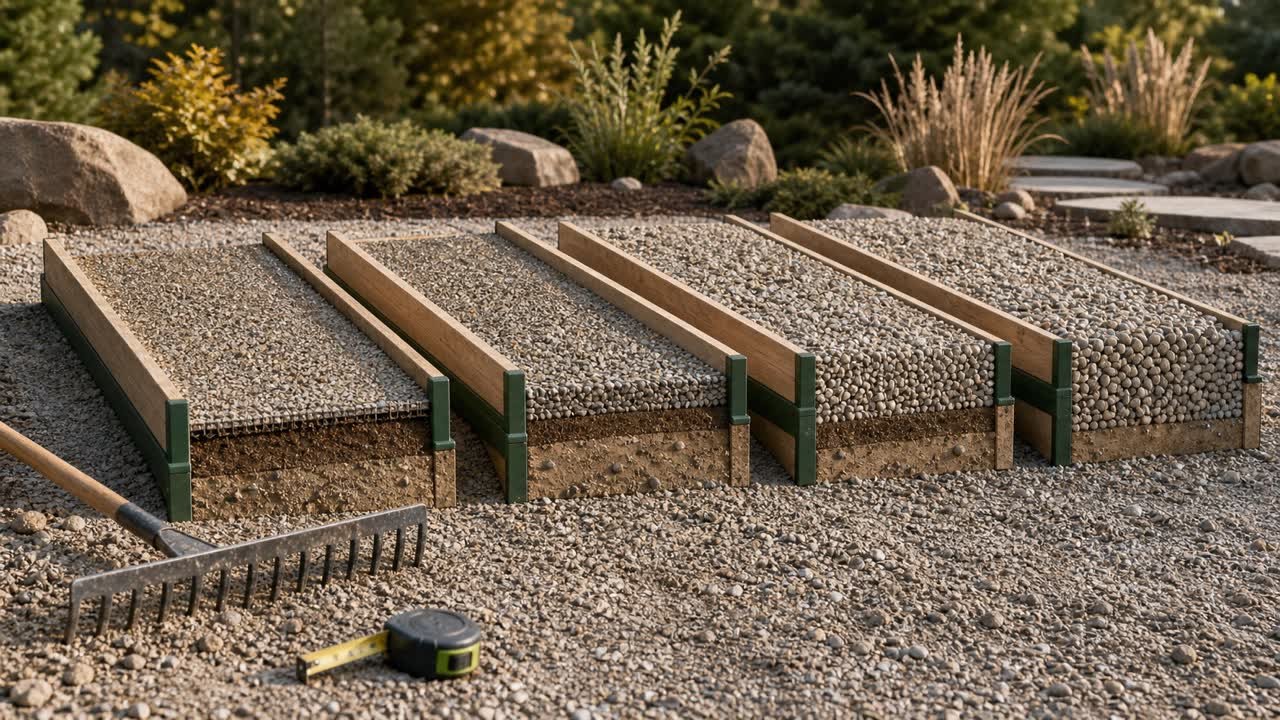
Check gravel coverage by depth for cubic yards and cubic metres, then calculate unlisted depths, changing sections, and remaining project volume.
Read Gravel Coverage Guide: Cubic Yards and Cubic Metres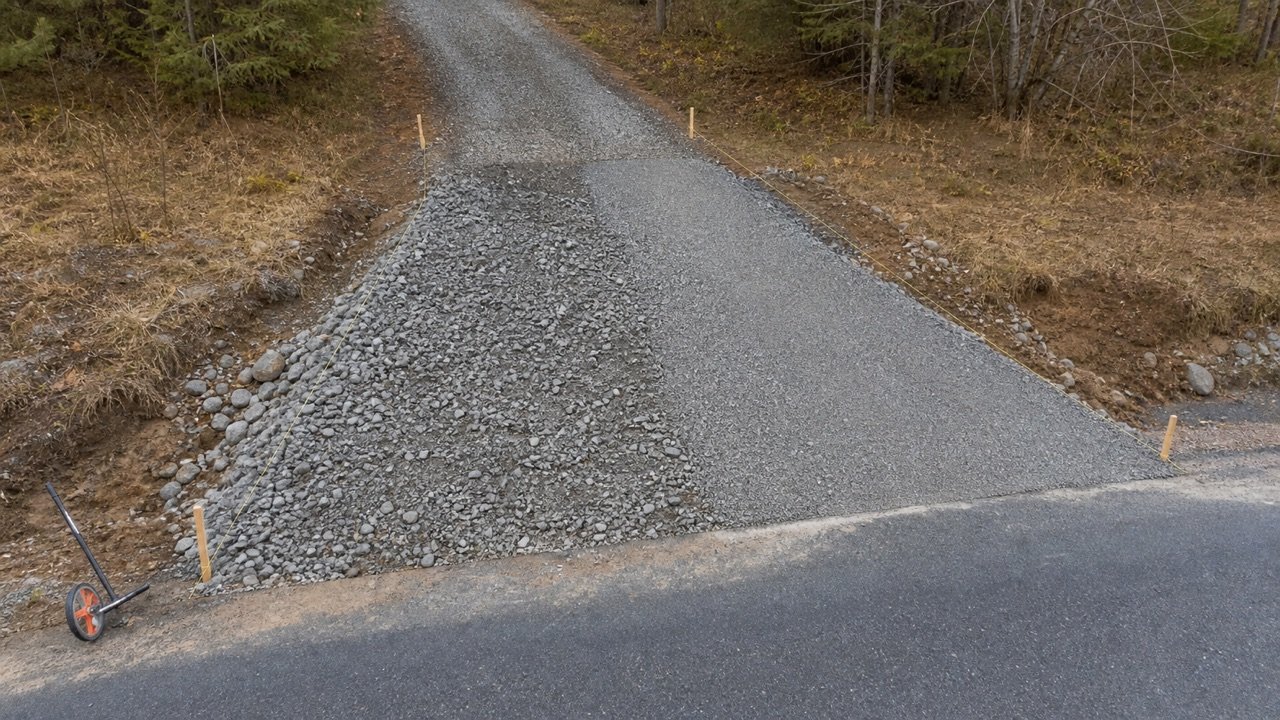
Calculate a gravel driveway apron's flared area, excavation, base and surface volumes, road tie-in, and supplier order from an approved detail.
Read Gravel Driveway Apron Quantities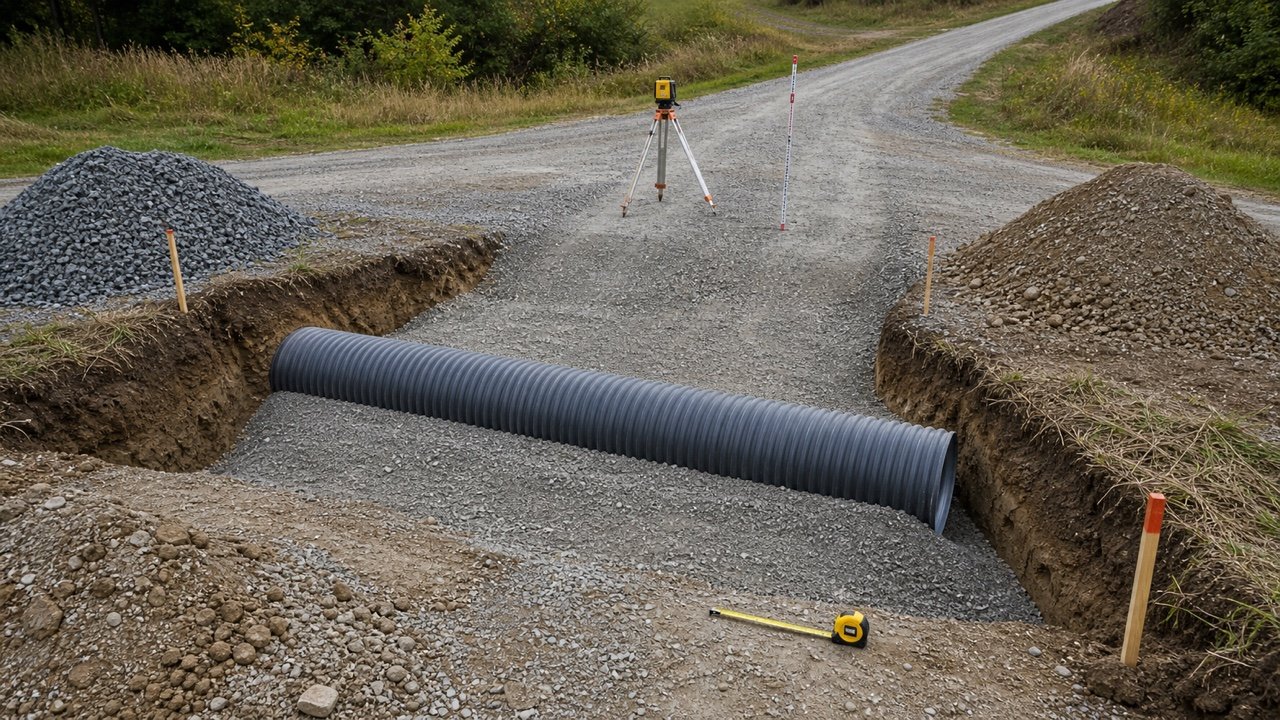
Calculate driveway culvert excavation, bedding, pipe displacement, backfill zones, reusable spoil, and supplier order quantities from an approved detail.
Read Gravel Driveway Culvert Quantities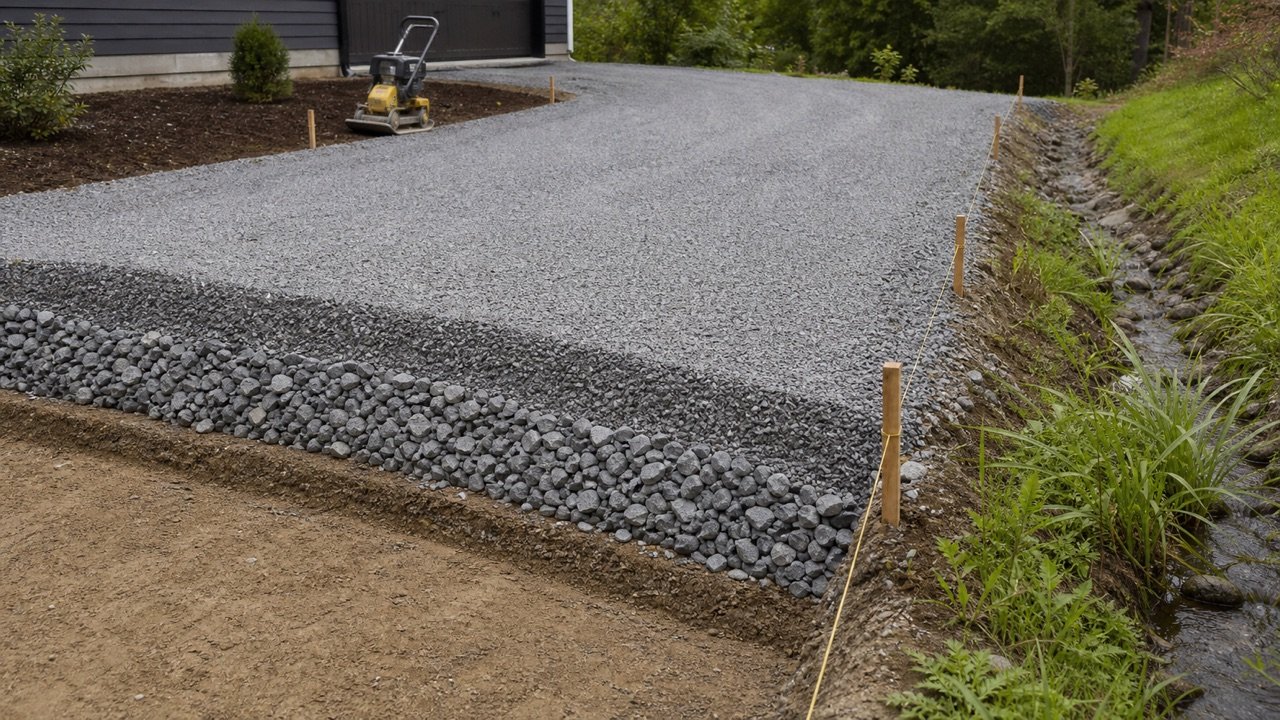
Plan gravel driveway depth by layer, calculate compacted cubic yards or metres, and keep drainage, compaction, density, and supplier inputs separate.
Read Gravel Driveway Depth: Layers and Quantities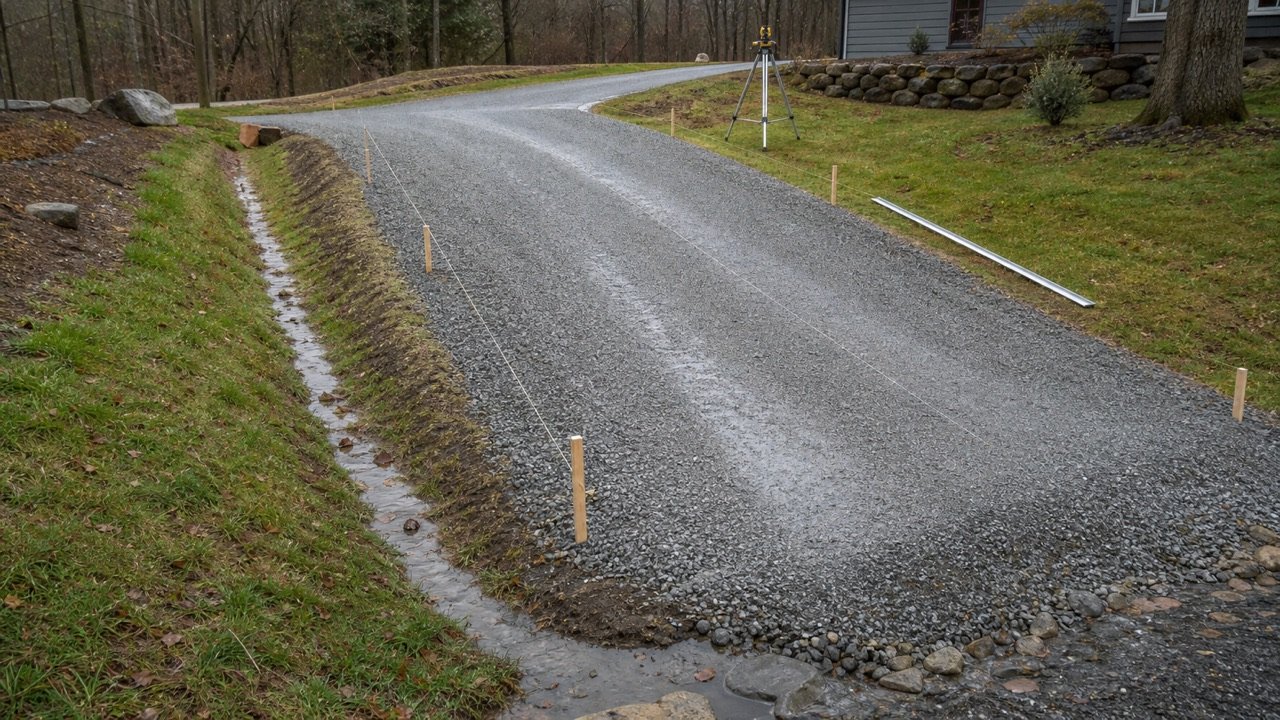
Measure gravel driveway crown, crossfall and longitudinal grade, calculate fall in metric or imperial units, and check the route to a stable outlet.
Read Gravel Driveway Drainage: Crossfall and Grade Checks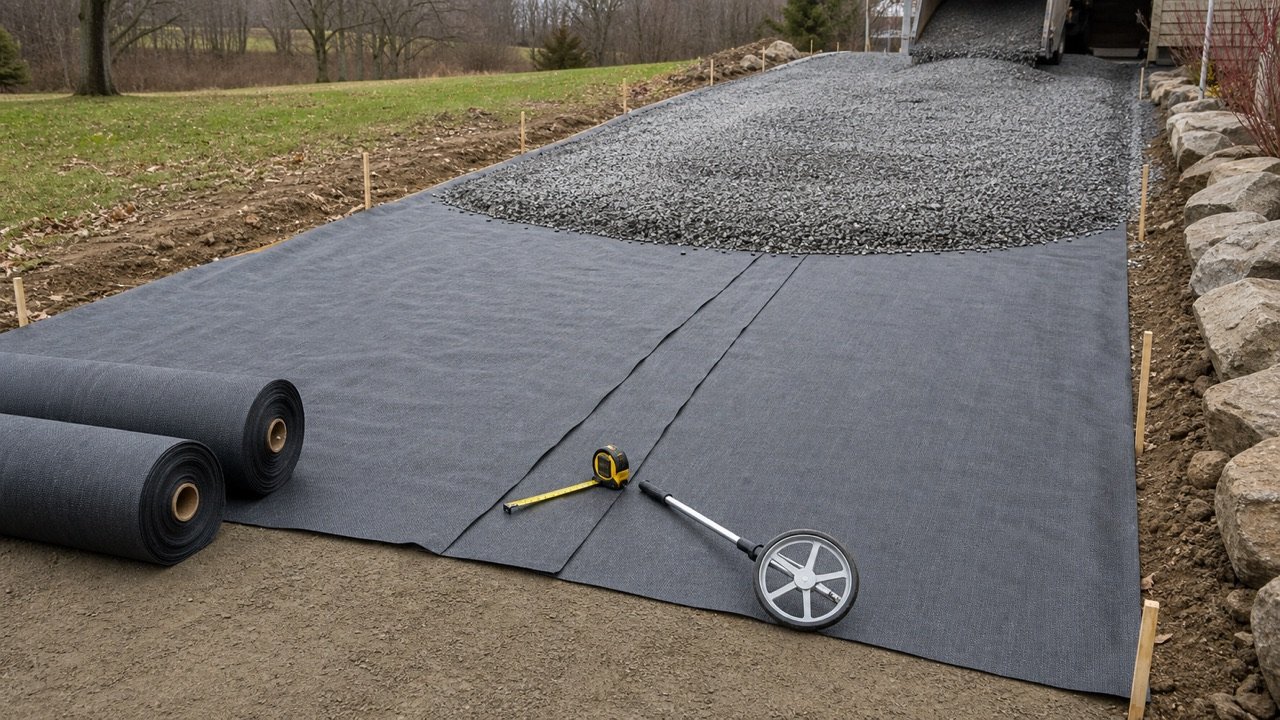
Calculate gravel driveway geotextile panels, overlaps, continuous cut lengths, patches and whole rolls without relying on gross fabric area alone.
Read Gravel Driveway Geotextile: Area, Overlaps and Rolls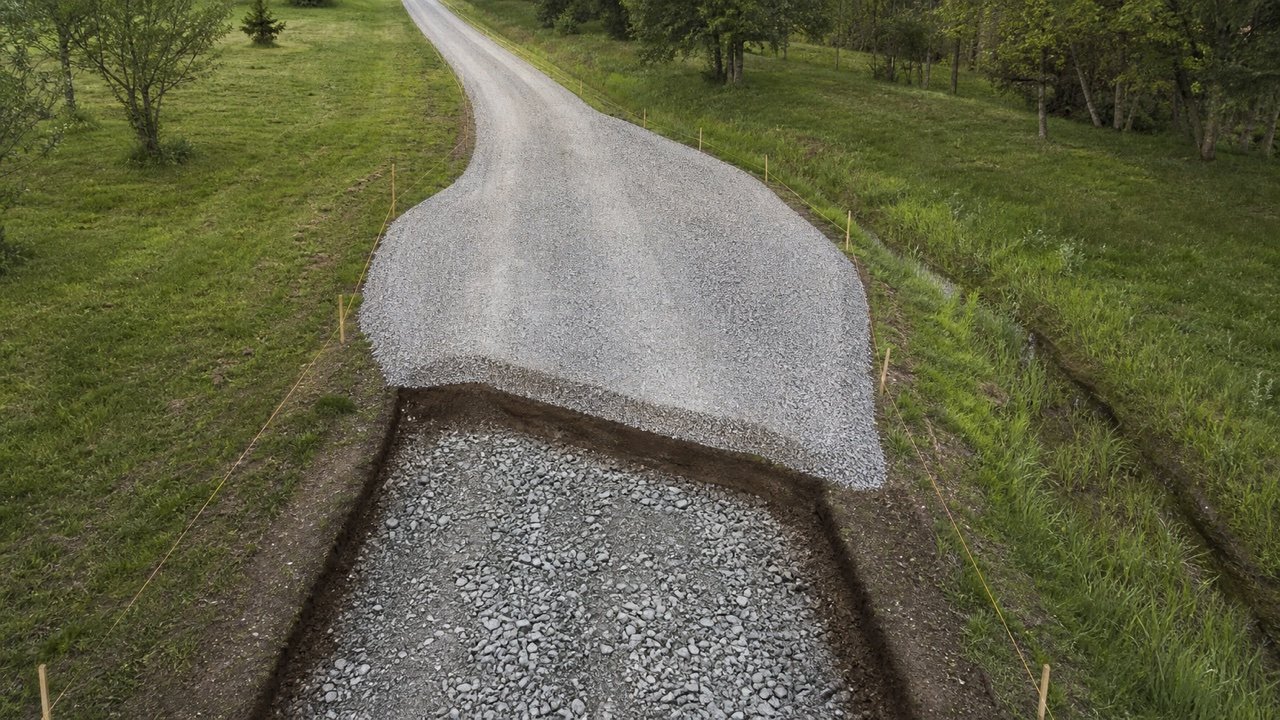
Calculate a gravel driveway passing bay's parallel widening, entry and exit tapers, net layer volumes, outer edge, grading, and supplier order.
Read Gravel Driveway Passing Bay Quantities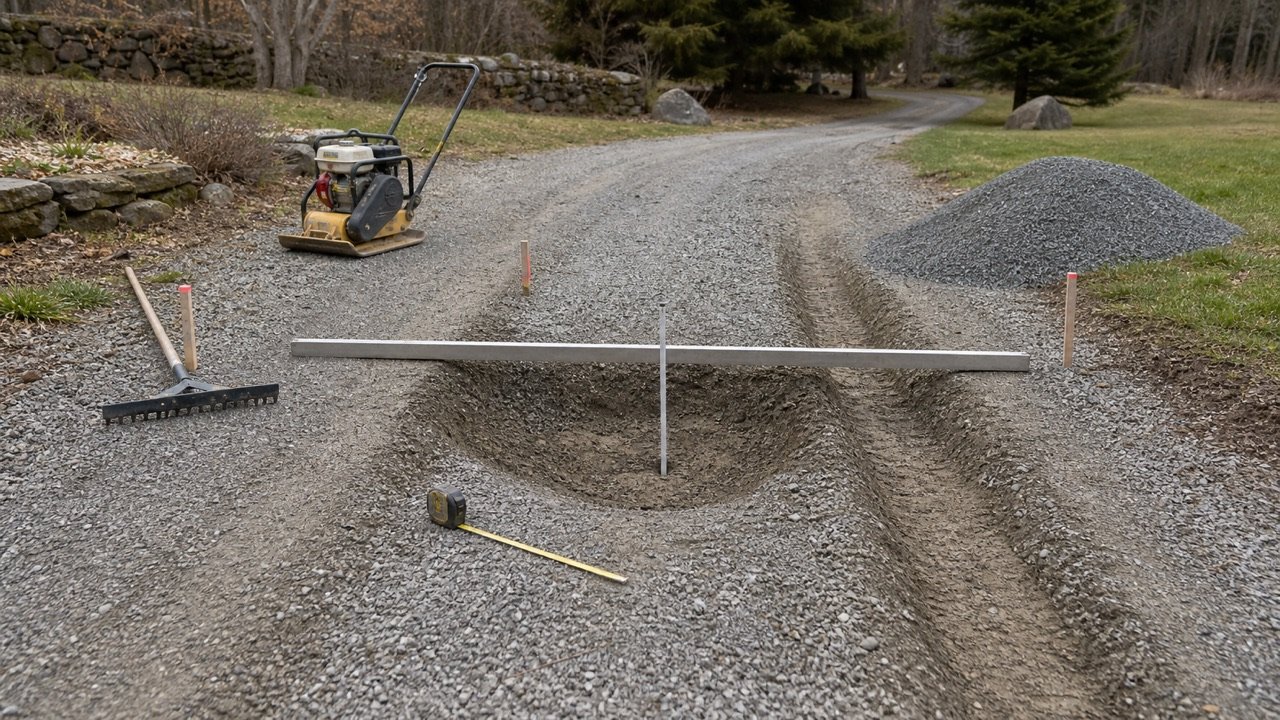
Measure gravel driveway potholes and ruts, calculate compacted repair volume, and separate surface filling from drainage, base, and subgrade repairs.
Read Gravel Driveway Repair: Pothole and Rut Quantities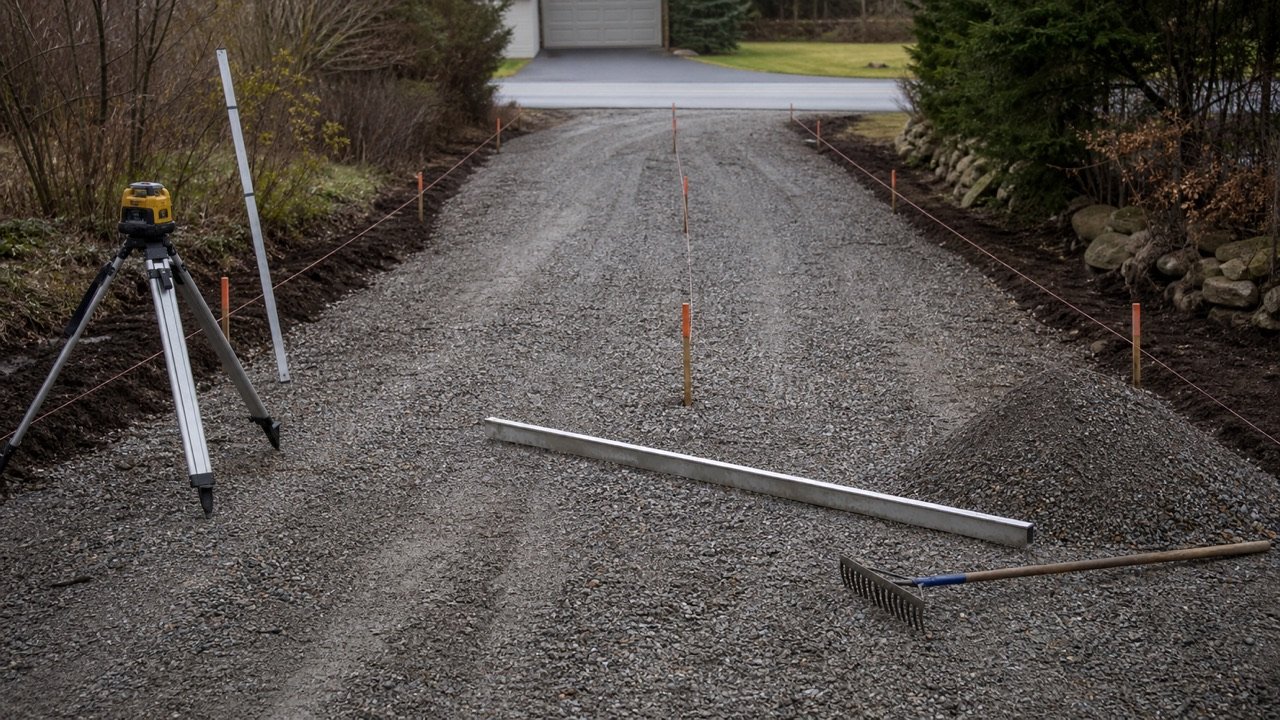
Measure an existing gravel driveway, calculate compacted resurfacing volume, track cut and reusable gravel, and prepare a supplier-ready top-up quantity.
Read Gravel Driveway Top-Up: Resurfacing Quantities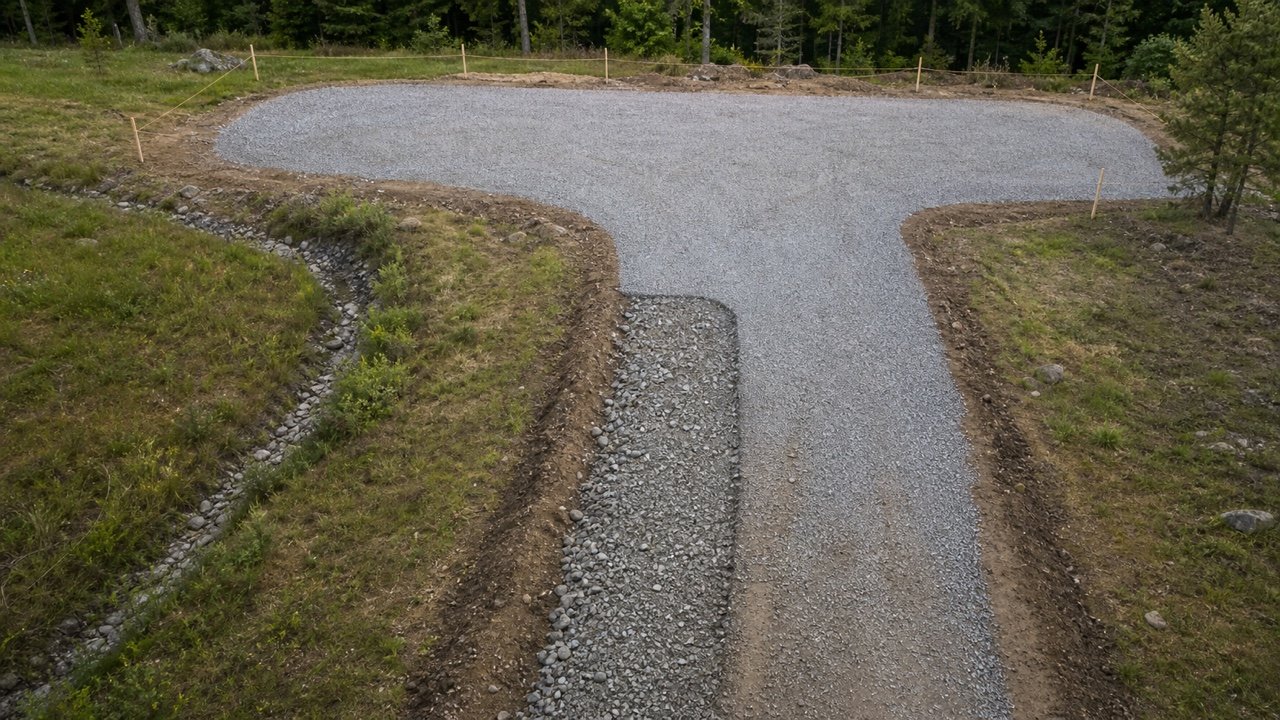
Calculate net gravel quantities for circular, ring, hammerhead, T, and Y driveway turnarounds, including overlaps, separate layers, curves, and grading limits.
Read Gravel Driveway Turnaround Quantities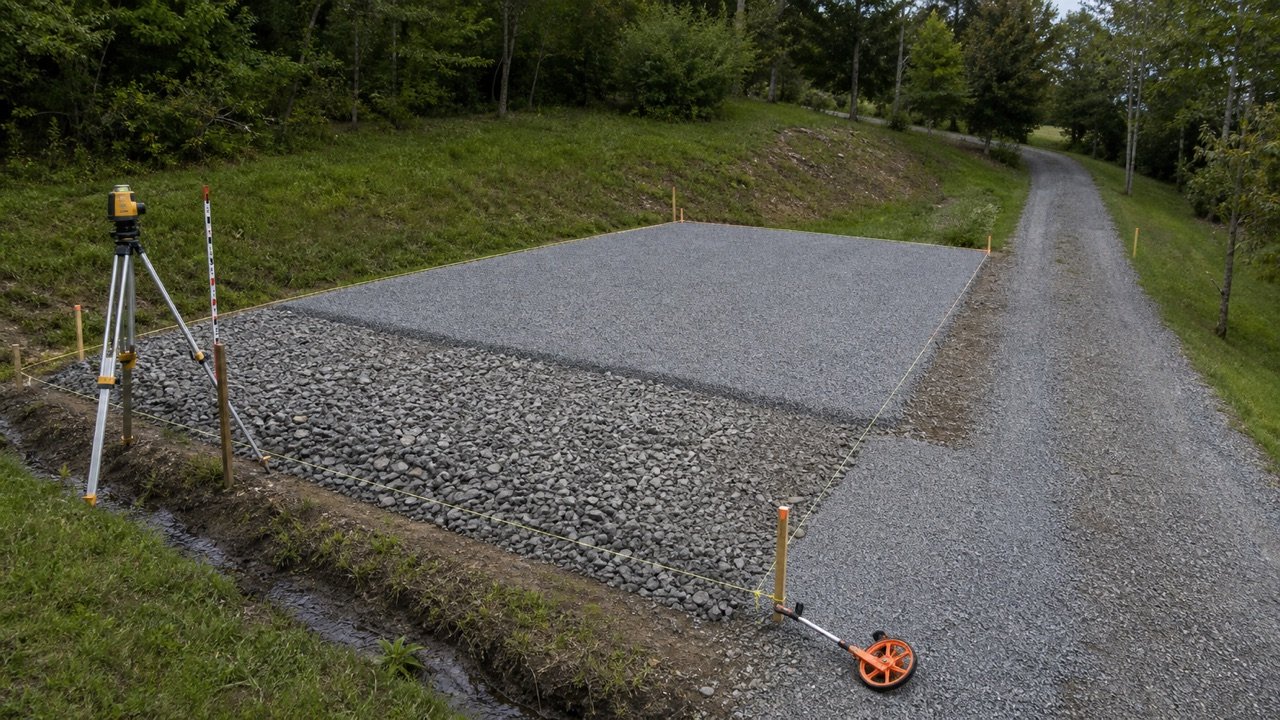
Calculate a gravel parking pad's net area, excavation, sloped fill, base, surface layer, drainage exclusions, and supplier order.
Read Gravel Parking Pad Quantities: Base, Surface and Sloped Fill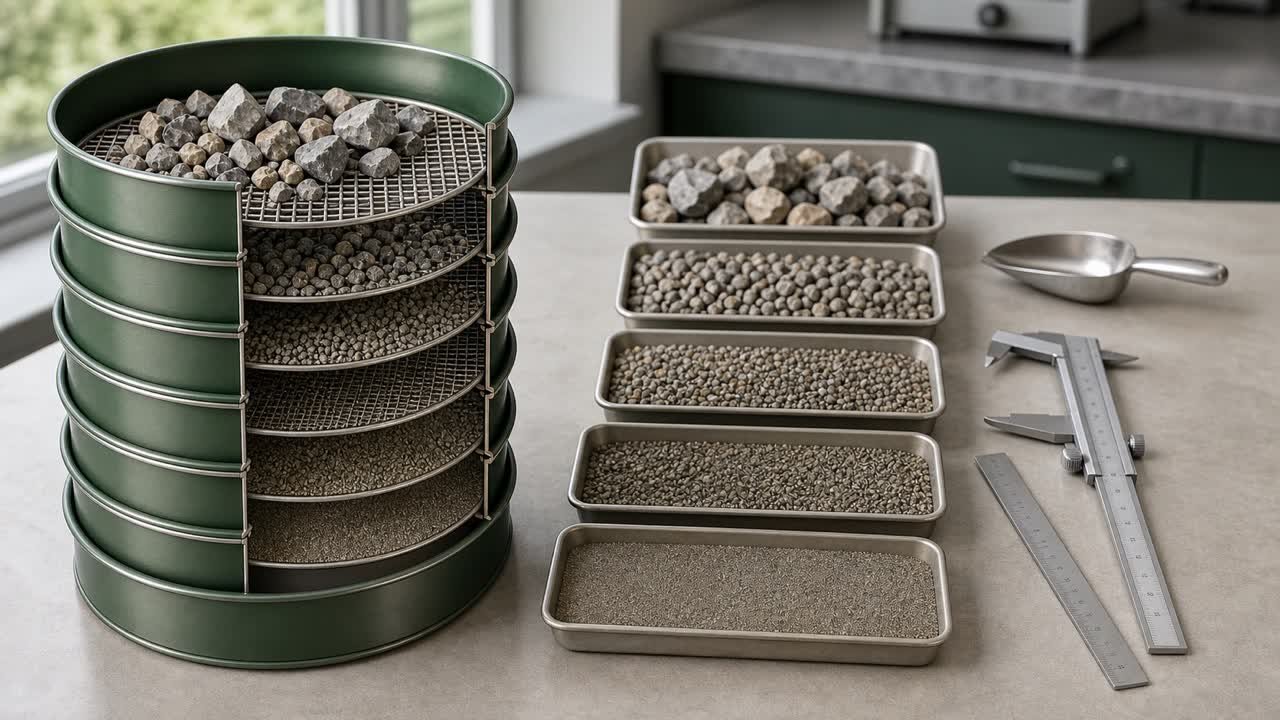
Read gravel sieve sizes and percent-passing data, check a gradation report for arithmetic errors, and compare supplier evidence with a project specification.
Read Gravel Size Chart and Gradation Guide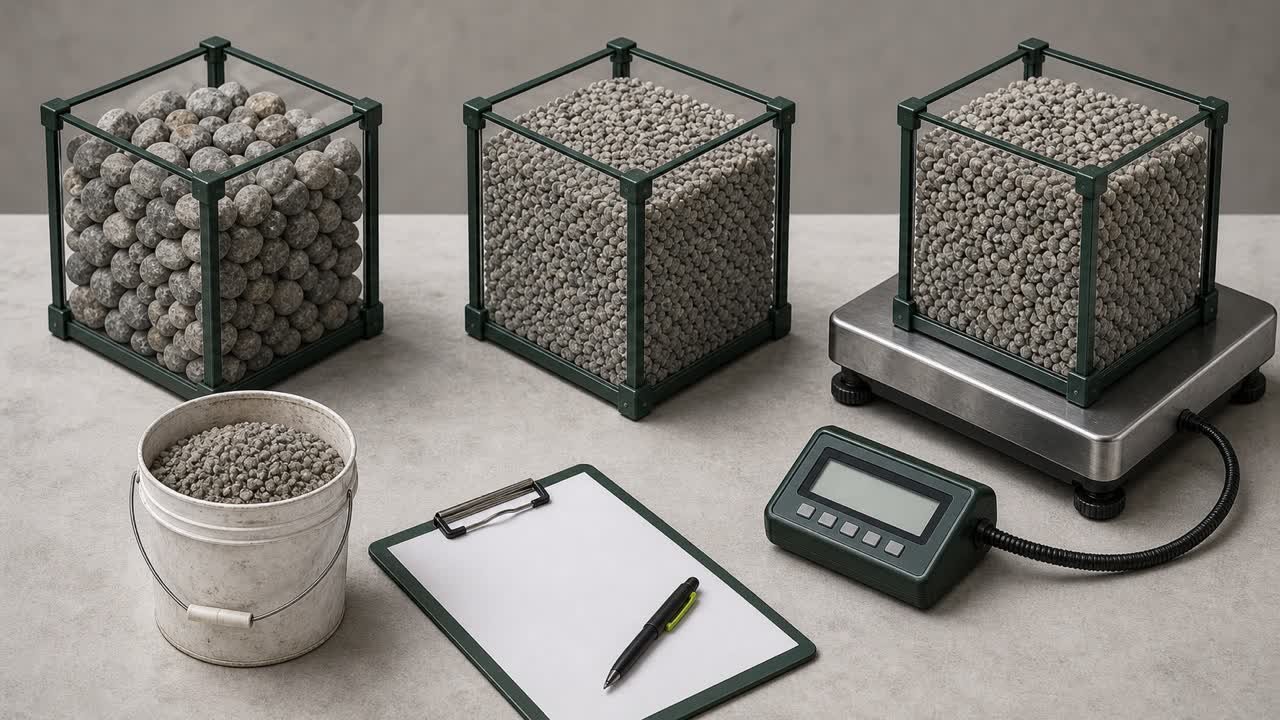
Convert gravel volume to estimated weight using the selected supplier product's bulk density and stated material condition.
Read Gravel Weight Chart Using Supplier Density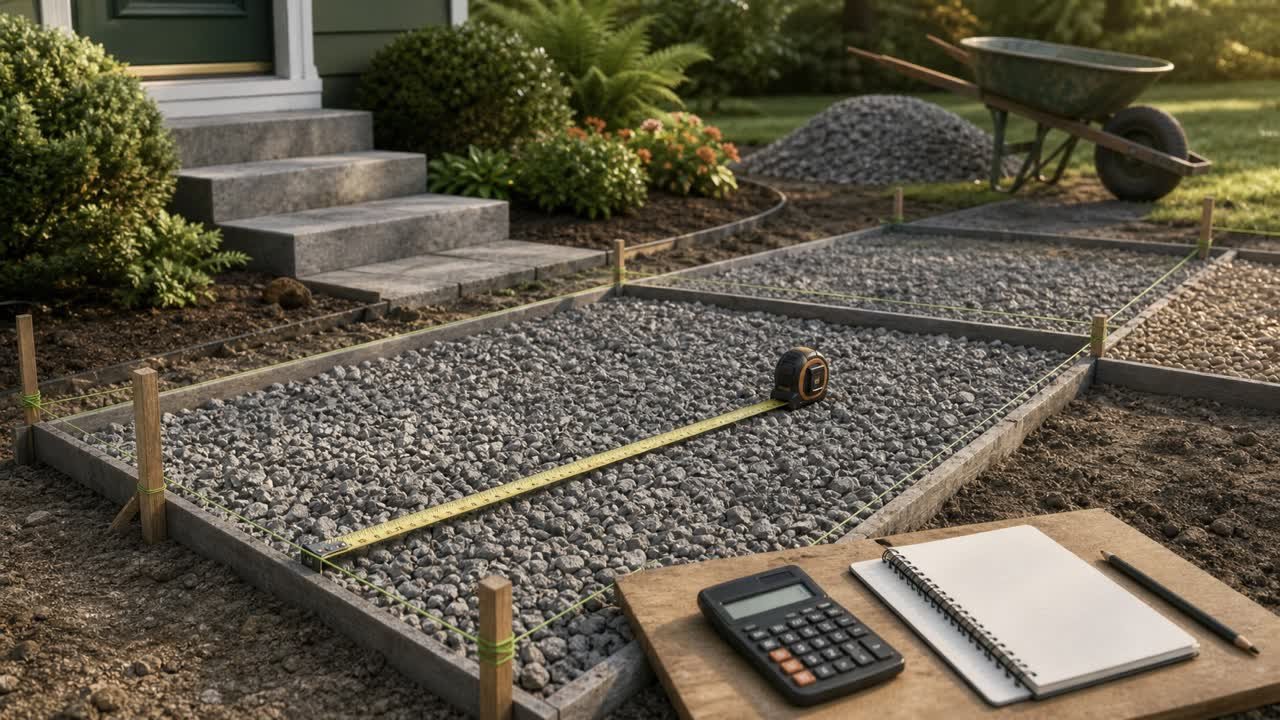
Calculate gravel volume from area and depth, bracket uncertain measurements, and turn the checked result into a supplier-ready order.
Read How Much Gravel Do I Need?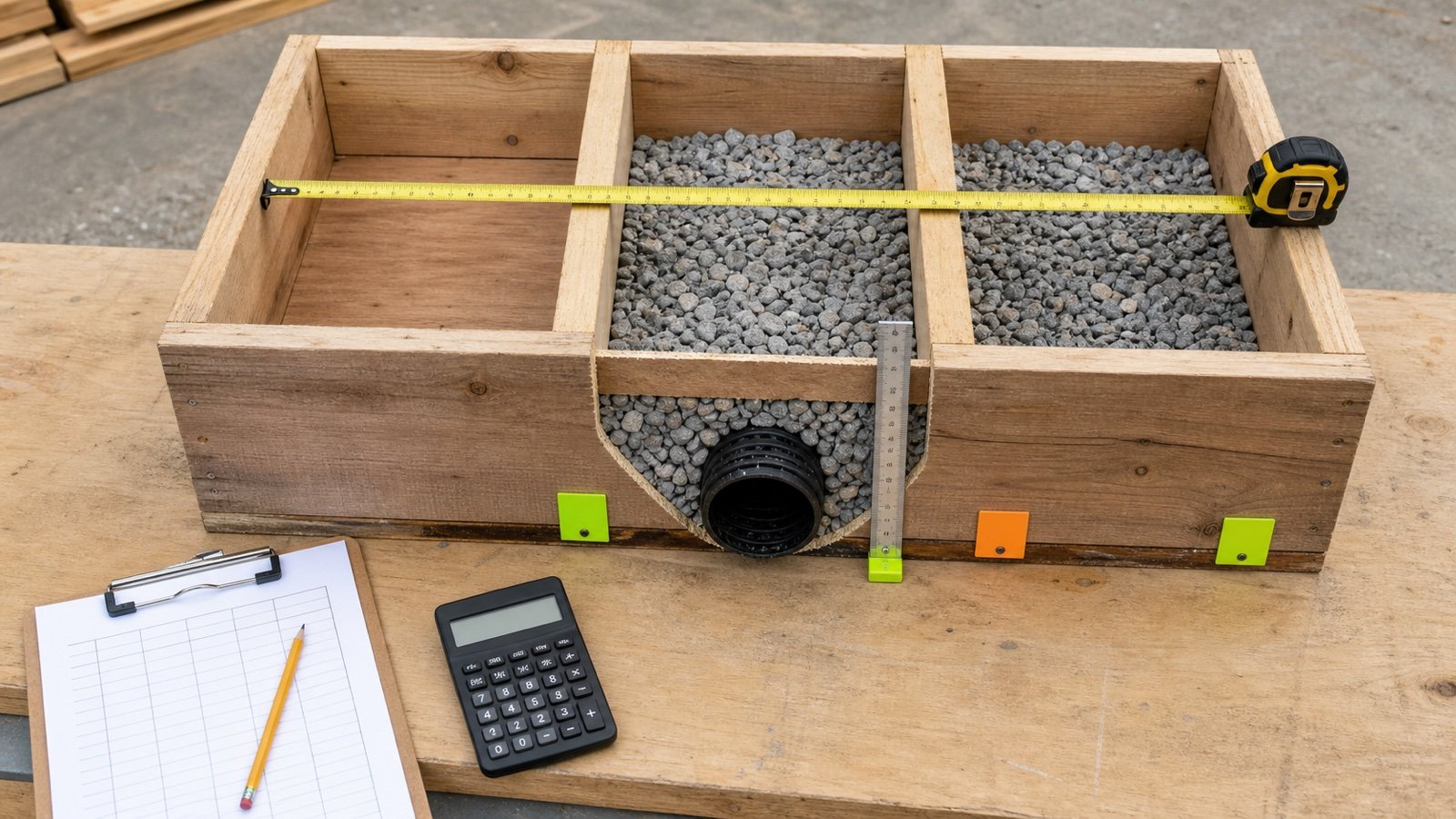
Measure drainage-gravel width, depth, route length and pipe outside diameter, then record constant or changing trench sections without hiding variations in one average.
Read How to Measure a Drainage Trench for GravelStart a gravel quantity with the project area and required finished depth. Use the selected supplier's product data for gradation, bulk density, selling unit, minimum order, and delivery terms.
The calculator handles rectangle, circle, and known-area geometry in metric or imperial units. It keeps measured volume, an optional user-entered allowance, and an optional supplier-density mass conversion as separate result stages.
Five reviewed Gravel resources cover measured quantity, coverage by depth, particle-size terminology, supplier-density conversion, and delivered cost. The calculator, articles, and charts link to the same Gravel hub.
Labels such as pea gravel, river rock, crushed stone, and driveway gravel can describe different gradations across markets. Compare the supplier's product data with the project requirement before ordering.