You can calculate gravel volume from the project dimensions. Converting that volume to weight requires the bulk density and material condition for the exact product.
How much does gravel weigh?
Gravel weight equals volume multiplied by bulk density. Because bulk density changes with product gradation, particle shape, moisture, handling, and compaction state, the safest planning chart uses the current supplier value for the exact product.
Record the product, source, moisture condition, and whether the value represents loose, stockpiled, rodded, delivered, or compacted aggregate. The multiplication can be correct while the material states are mismatched.
Weight formula
Estimated mass = volume × supplier bulk density
Keep the units compatible. If volume is in cubic yards and density is short tons per cubic yard, the result is short tons. If volume is in cubic metres and density is kilograms per cubic metre, the result is kilograms.
Volume multiplier chart
Let D represent the supplier's bulk density for the chosen product and stated material condition.
| Volume | Estimated mass |
|---|---|
| 0.25 yd³ or m³ | 0.25 × D |
| 0.50 yd³ or m³ | 0.50 × D |
| 0.75 yd³ or m³ | 0.75 × D |
| 1.00 yd³ or m³ | 1.00 × D |
| 1.50 yd³ or m³ | 1.50 × D |
| 2.00 yd³ or m³ | 2.00 × D |
| 5.00 yd³ or m³ | 5.00 × D |
| 10.00 yd³ or m³ | 10.00 × D |
The multiplier table works with any compatible density unit and keeps D as a required supplier input.
Illustrative calculation
Suppose a supplier states a bulk density of 1.40 short tons per cubic yard for the selected product and condition. For 2.50 cubic yards:
2.50 yd³ × 1.40 short tons/yd³ = 3.50 short tons.
The 1.40 value above is hypothetical and demonstrates the method only. Replace it with the current value supplied for the actual product.
Keep volume and mass states aligned
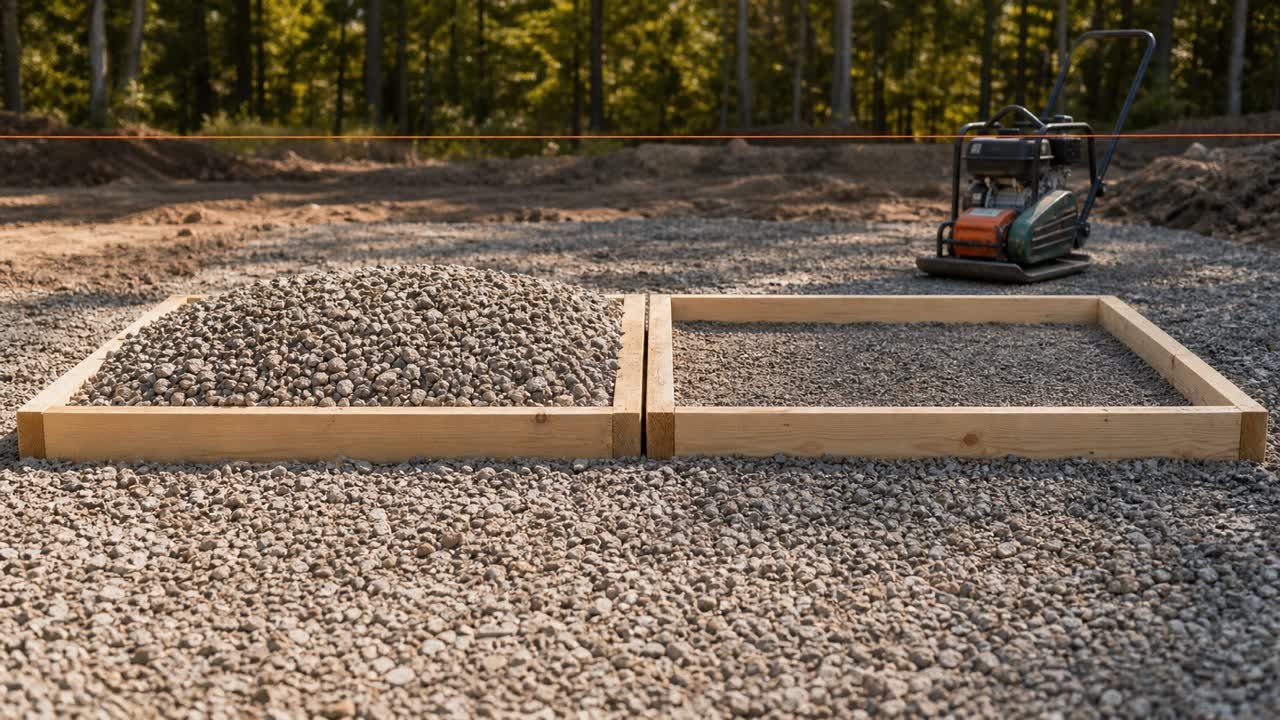
A compacted layer volume, loose loader-bucket volume, bag yield, and scale-ticket mass describe different states or measurements. Before multiplying, confirm what the volume represents and what condition the density represents. A mathematically correct multiplication answers the intended question when the volume and density states match.
If the supplier gives pounds per cubic yard, multiply cubic yards by that value to obtain pounds. Divide by 2,000 only when the desired result is U.S. short tons. If the supplier gives kilograms per cubic metre, multiply cubic metres by that value to obtain kilograms, then divide by 1,000 for metric tonnes.
Example with pounds
A supplier states 2,700 lb/yd³ for the selected product and condition. A measured volume of 1.85 yd³ gives:
1.85 × 2,700 = 4,995 lb, or 2.4975 short tons.
This supplier value is hypothetical. The example shows why intermediate rounding matters: rounding 2.4975 tons to 2.50 for display is reasonable, while rounding the volume to 2 yd³ before multiplication would change the estimate materially.
Distinguish bulk density from particle specific gravity
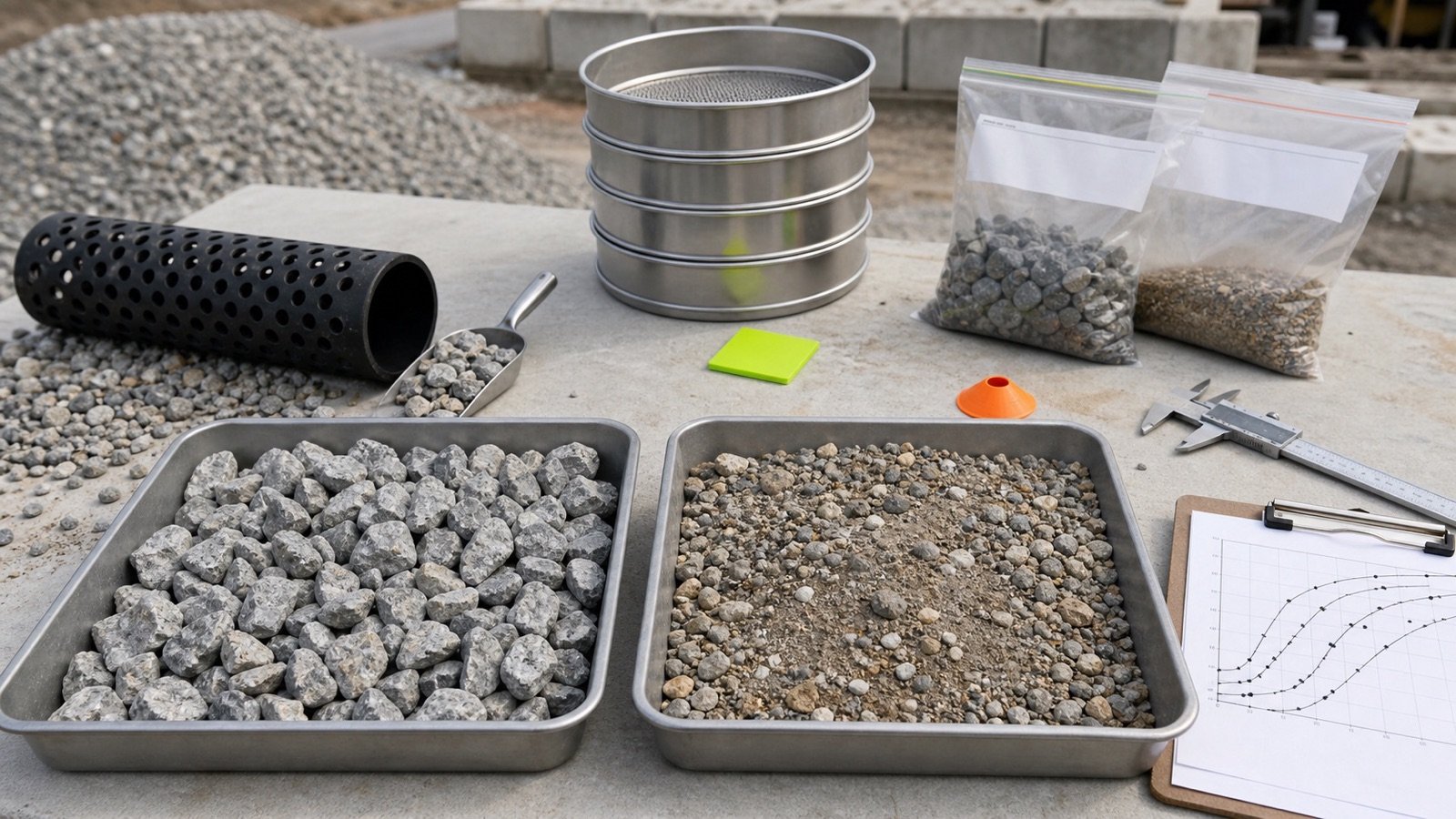
Bulk density or unit weight relates the mass of a bulk material to the total volume it occupies, including the spaces between particles. Particle specific gravity describes the solid mineral particles relative to water. These values answer different questions.
A volume-to-order conversion needs the product's bulk density for a stated condition. Substituting particle specific gravity in the mass formula would treat the spaces between particles as solid material and produce a different result.
Convert a density into compatible units
Convert density before multiplying when the supplier and project volumes use different units.
| Supplier density | Conversion | Compatible density |
|---|---|---|
| 105 lb/ft³ | 105 × 27 | 2,835 lb/yd³ |
| 2,835 lb/yd³ | 2,835 ÷ 2,000 | 1.4175 short tons/yd³ |
| 1,650 kg/m³ | 1,650 ÷ 1,000 | 1.65 metric tonnes/m³ |
The numbers in this table illustrate unit conversion. They are hypothetical supplier-density inputs and carry no claim about a particular gravel product.
See how density uncertainty changes the estimate
Estimated mass changes in direct proportion to density when volume stays fixed. A 5% change in the density input produces a 5% change in estimated mass.
For an illustrative volume of 4.20 yd³, a documented supplier range of 1.30 to 1.45 short tons/yd³ would produce 5.46 to 6.09 short tons. The 0.63-ton spread belongs in the planning record until the supplier confirms the applicable value.
Use a range only when the supplier or project evidence supplies one. A generic internet range cannot establish the selected product's order weight.
Reconcile the estimate with a scale ticket
A certified or supplier scale ticket records actual dispatched mass under the supplier's process. Compare that mass with the estimate after confirming that both records describe the same product, delivery, and quantity stage.
| Check | Estimate record | Delivery record |
|---|---|---|
| Product and source | Selected product used for density | Product shown on ticket |
| Mass unit | lb, short tons, kg, or metric tonnes | Ticket unit and net mass |
| Material condition | Condition stated with density | Moisture or condition information supplied |
| Quantity stage | Measured, planning, or ordered quantity | Actual dispatched load |
| Difference | Expected mass from recorded inputs | Ticket mass minus expected mass |
A difference can come from product condition, density evidence, volume measurement, order rounding, or delivery quantity. Keep the original inputs visible before revising future estimates.
Myth and reality: mass conversion needs context
| Myth | Reality |
|---|---|
| All gravel uses one tons-per-yard value. | Product gradation, particle characteristics, moisture, and bulk condition influence the applicable density. |
| Specific gravity can replace bulk density. | Specific gravity describes solid particles; bulk density relates an occupied bulk volume to mass. |
| A correct multiplication proves the order. | The volume state, density state, selling unit, and supplier increment must also align. |
| Estimated material mass proves truck capacity. | Vehicle, route, axle, legal, and supplier controls determine usable payload. |
Density evidence record
| Field | Why it matters |
|---|---|
| Exact product and source | Different gradations and sources can have different unit weights. |
| Density value and unit | Prevents mixing lb/ft³, lb/yd³, tons/yd³, and kg/m³. |
| Material condition | Loose, rodded, moist, and compacted values describe different states. |
| Test or supplier basis | Shows whether the number came from a current report, scale history, or estimate. |
| Date received | Lets the estimator recheck the value when the source or product changes. |
Round after the full conversion
Keep the measured volume and supplier density at their recorded precision through the multiplication. Round the displayed mass at the end and preserve the unrounded result in the estimate record.
For example, 4.275 yd³ × 1.365 short tons/yd³ = 5.835375 short tons, displayed as 5.84. Rounding the inputs first to 4.28 and 1.37 produces 5.8636 short tons. The difference comes from the calculation sequence.
The supplier's selling increment and dispatch process can require a later order adjustment. Record that adjustment separately from the calculated mass.
Compatible unit paths
- yd³ × lb/yd³ = lb; divide by 2,000 for U.S. short tons.
- ft³ × lb/ft³ = lb.
- m³ × kg/m³ = kg; divide by 1,000 for metric tonnes.
Questions to ask the supplier
- Is the stated density for loose, stockpiled, delivered, or compacted material?
- Does moisture materially affect the sale or load calculation?
- Is the product sold by scale weight, loader volume, bag, or truckload?
- What are the truck's legal payload and the supplier's minimum order?
- Will a volume order be converted to weight at dispatch?
Truckload planning
Truck count needs the estimated mass plus a confirmed usable payload for each trip. Payload limits depend on the vehicle, regulations, route, product condition, and supplier operations. Divide the estimated mass by a confirmed usable payload only for planning, round up to whole trips, and keep the unrounded result visible. The supplier or carrier remains responsible for legal loading.
Common mistakes
- Multiplying cubic feet by a density stated per cubic yard.
- Calling a short ton, long ton, and metric tonne the same unit.
- Using a compacted density with a loose delivery volume without explanation.
- Using a generic product name in place of the selected supplier's density value.
- Assuming calculated mass equals the legal payload of one truck.
Why a universal chart can mislead
“Gravel” includes natural and processed aggregates with different size distributions and conditions. USGS describes construction aggregates as sand, gravel, and stone that may be processed and sorted by size. A single internet weight can therefore hide the exact product and state required for a defensible conversion.
Return to the Gravel hub to keep the selected product, volume, and supplier unit together.
Sources and scope
- U.S. Geological Survey: Construction aggregates: aggregate material context.
- NIST customary-to-metric conversions: unit conversion reference.
- FHWA aggregate unit-weight test summary: loose or compacted bulk-density context.
Source scope: FHWA distinguishes aggregate unit weight and moisture-related material states. The selected supplier's density remains a required input. Sources checked 28 July 2026.