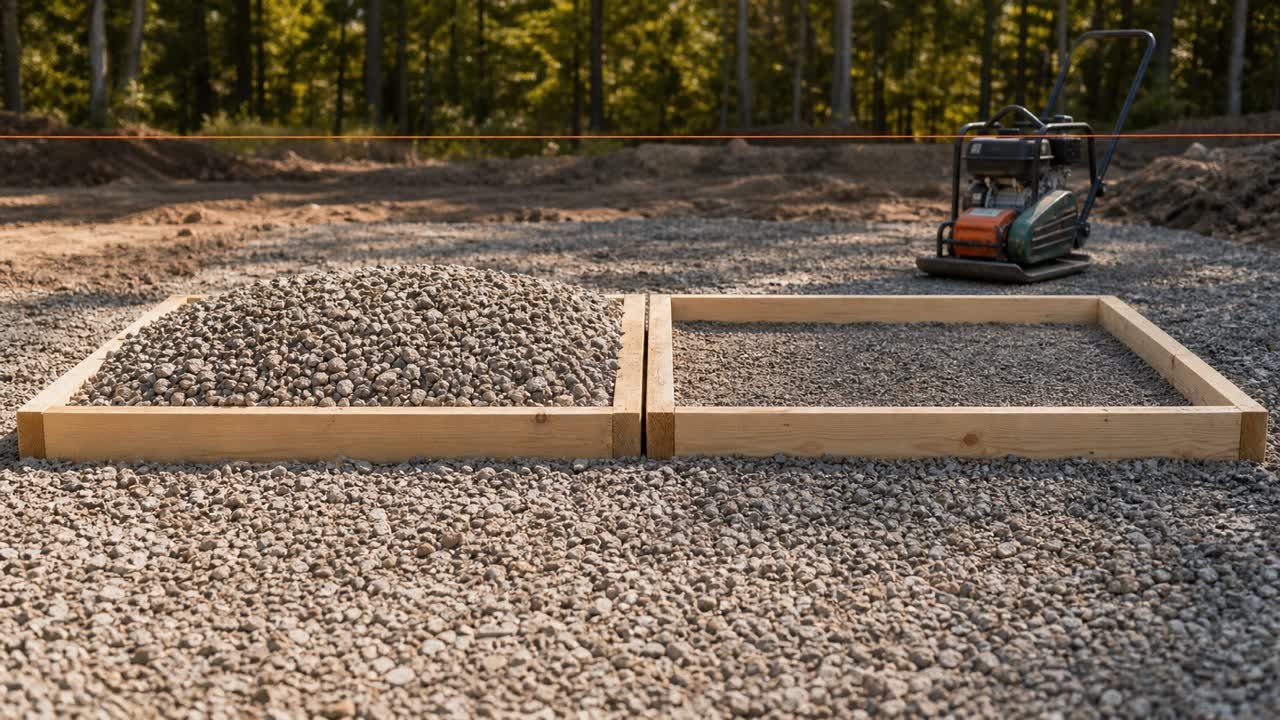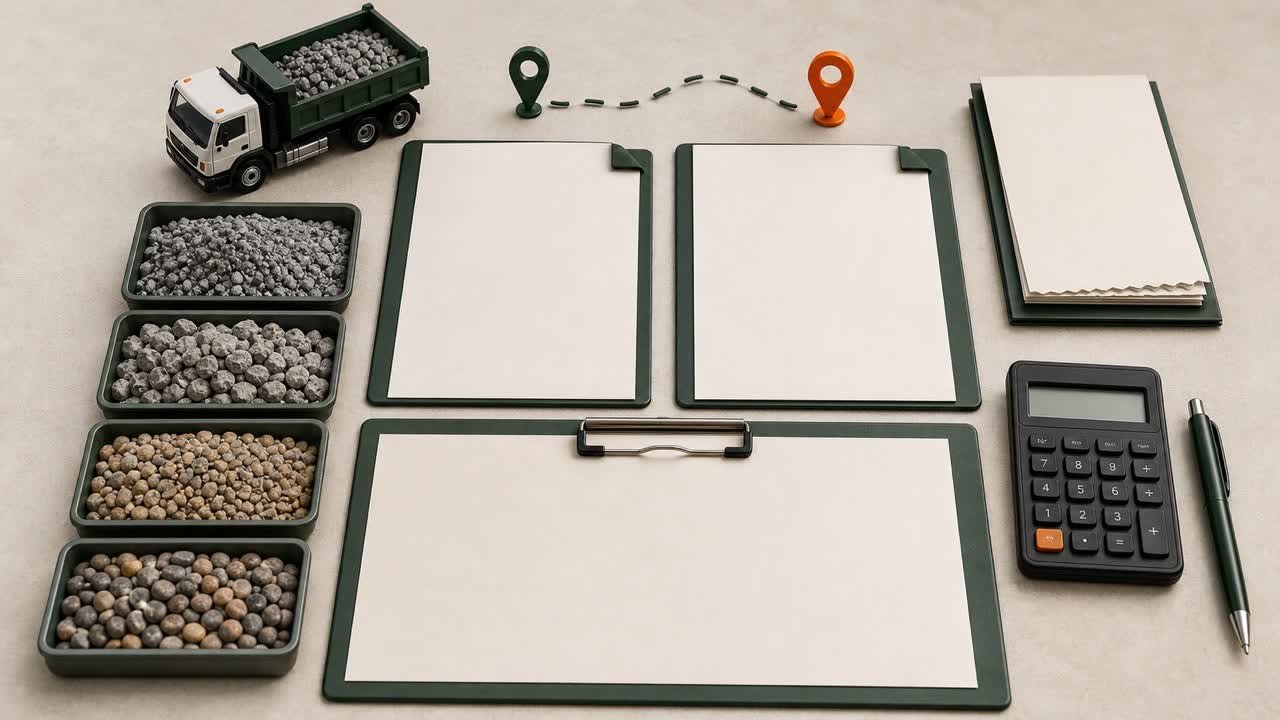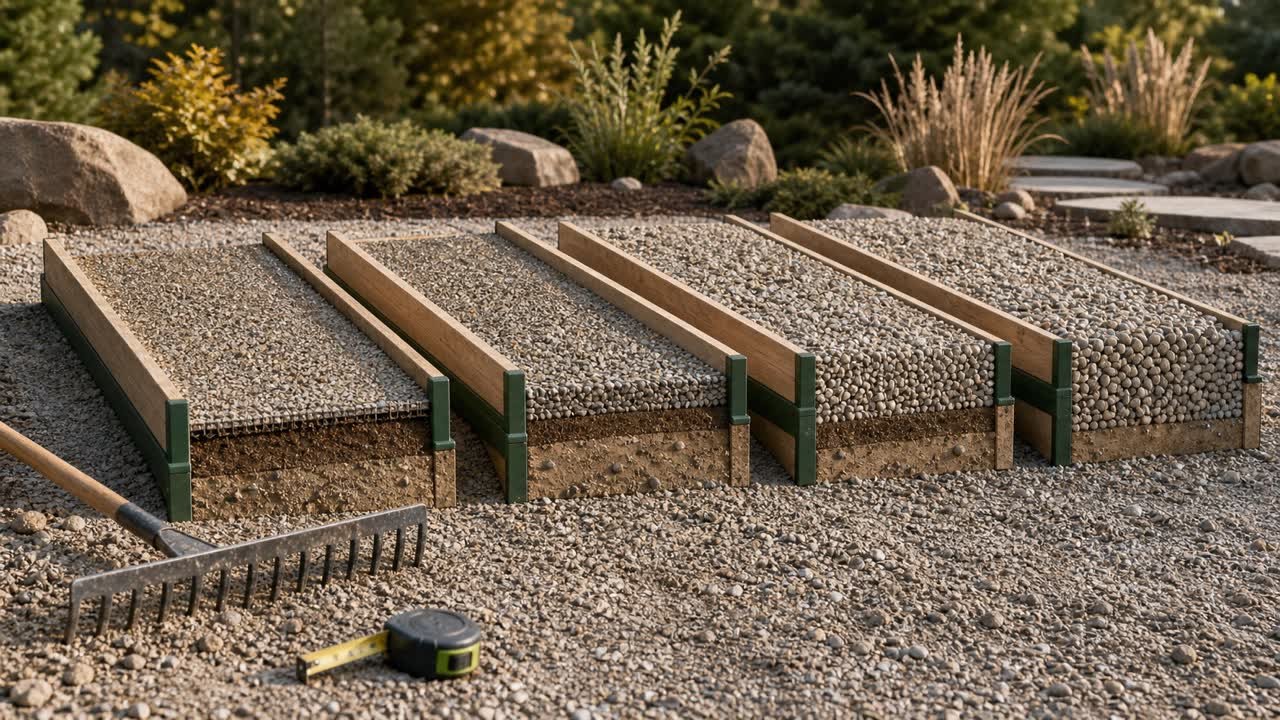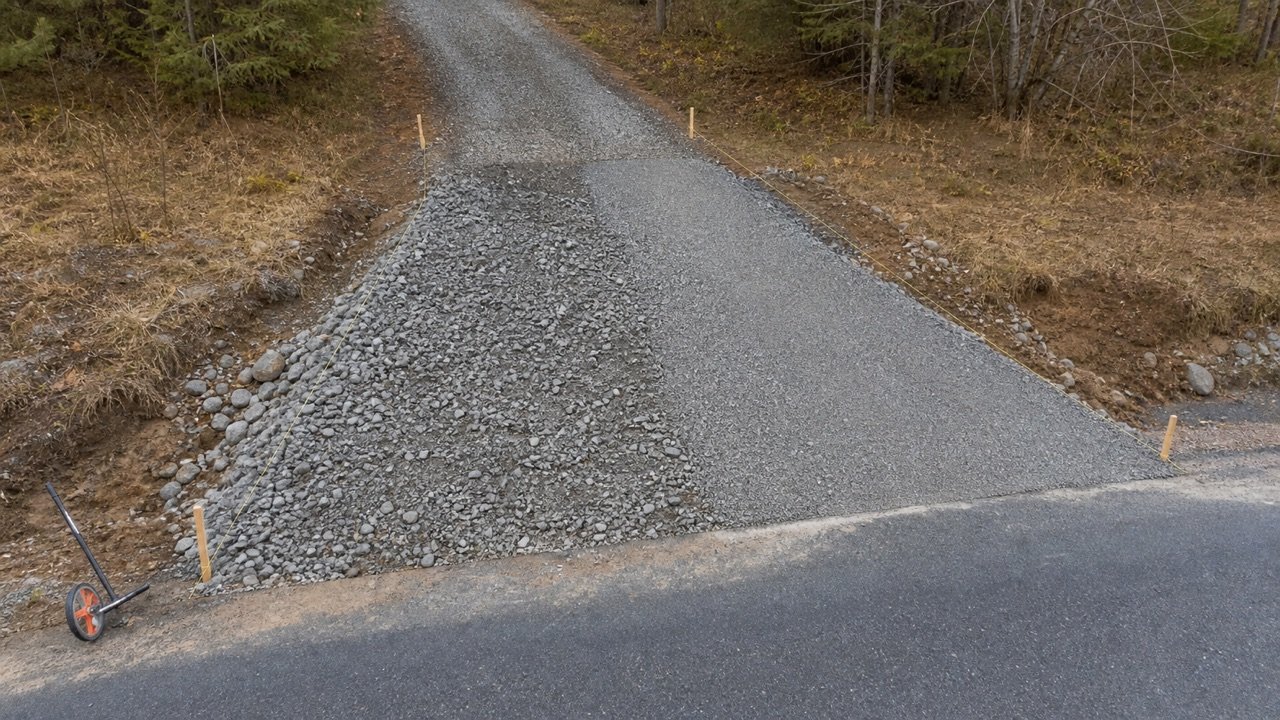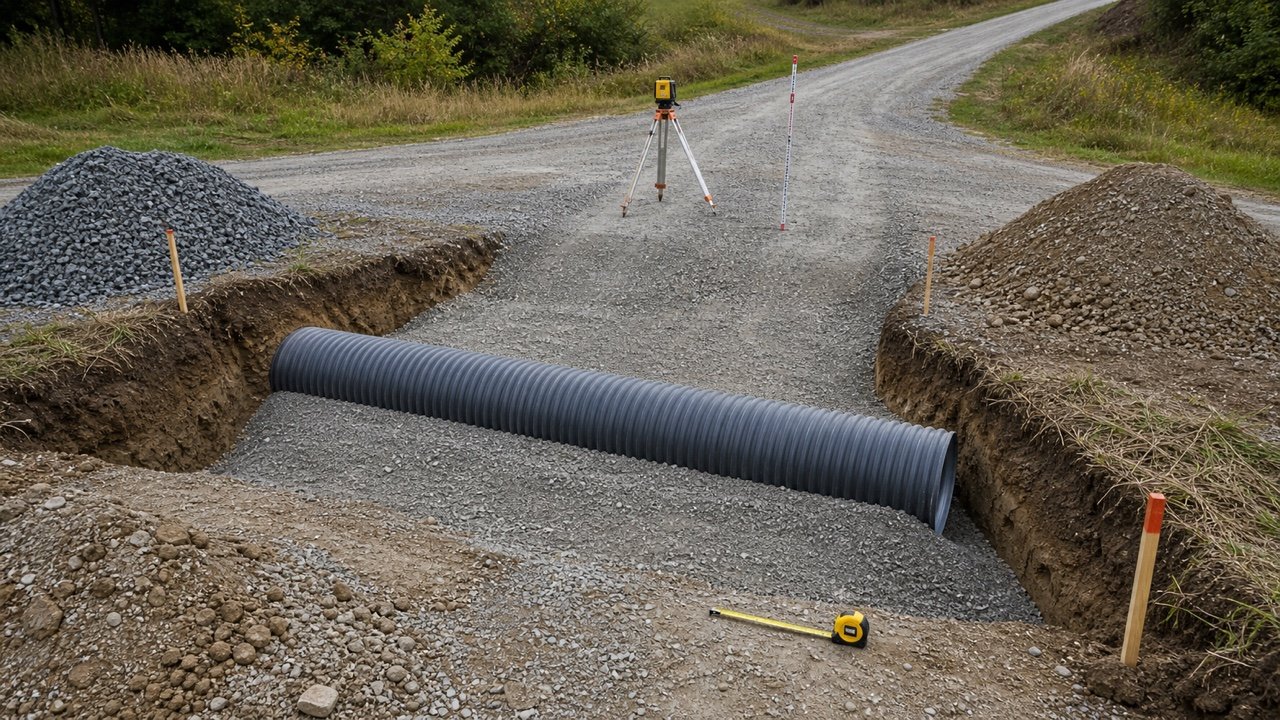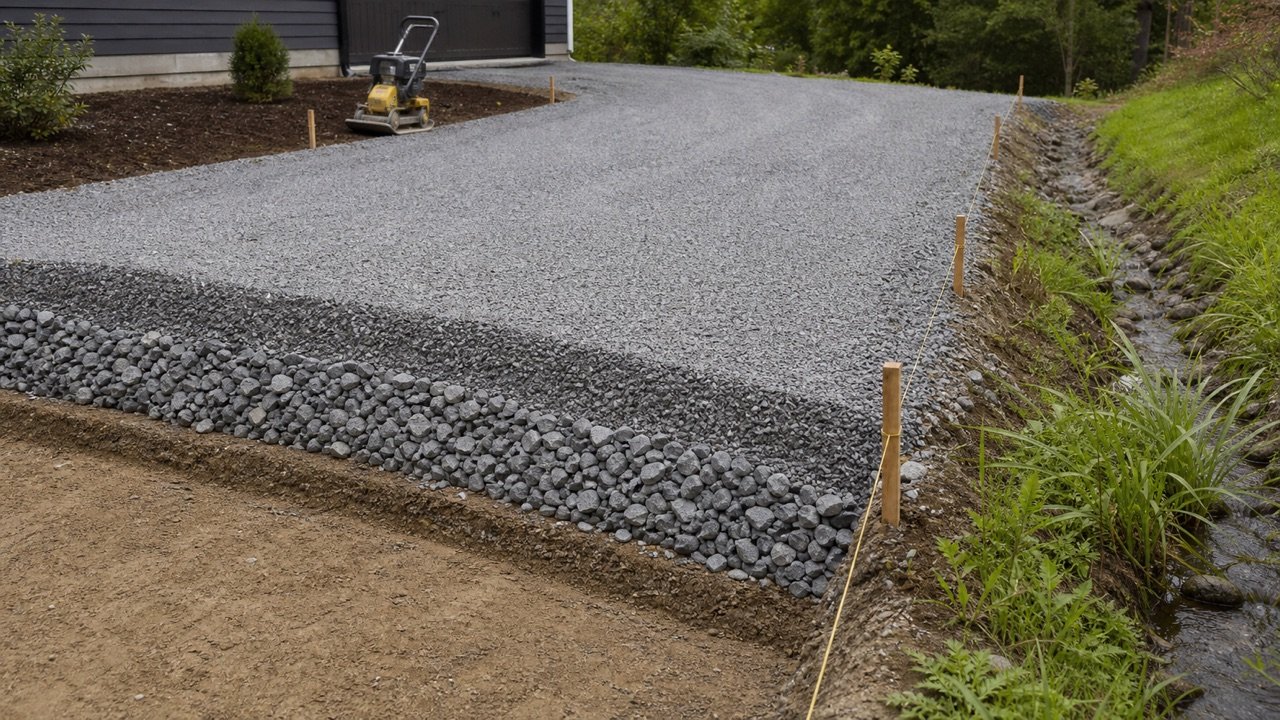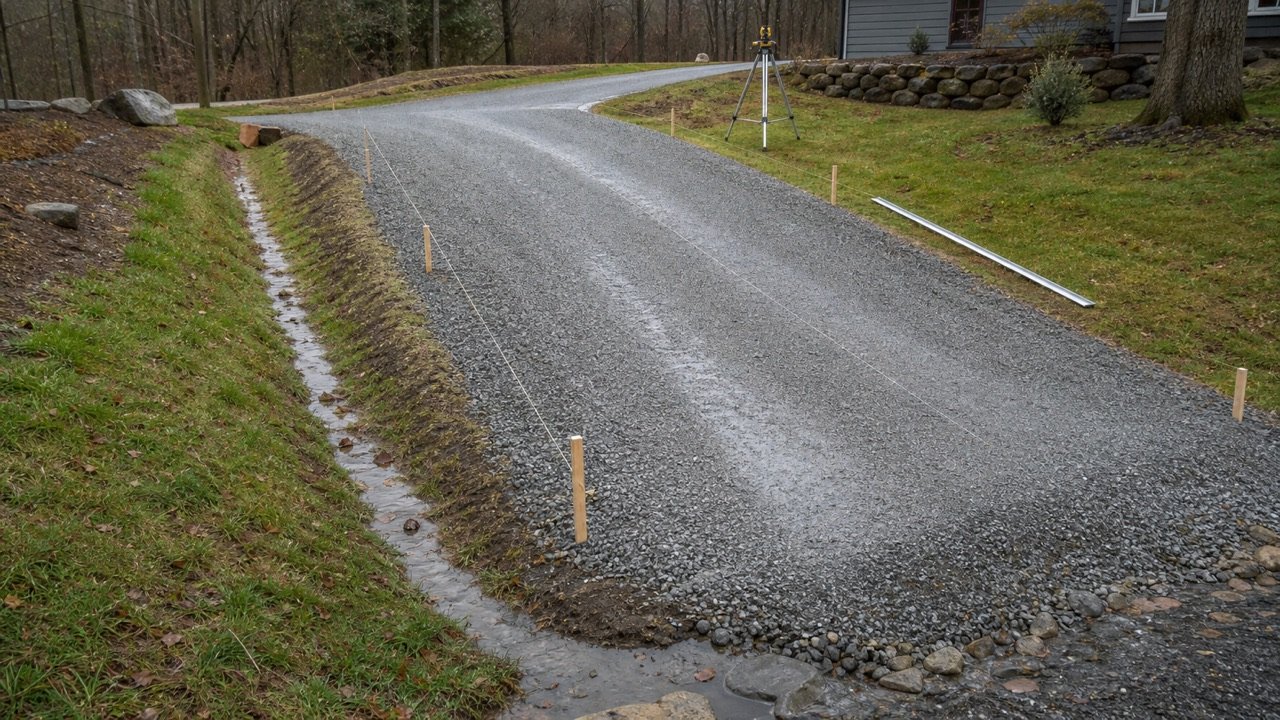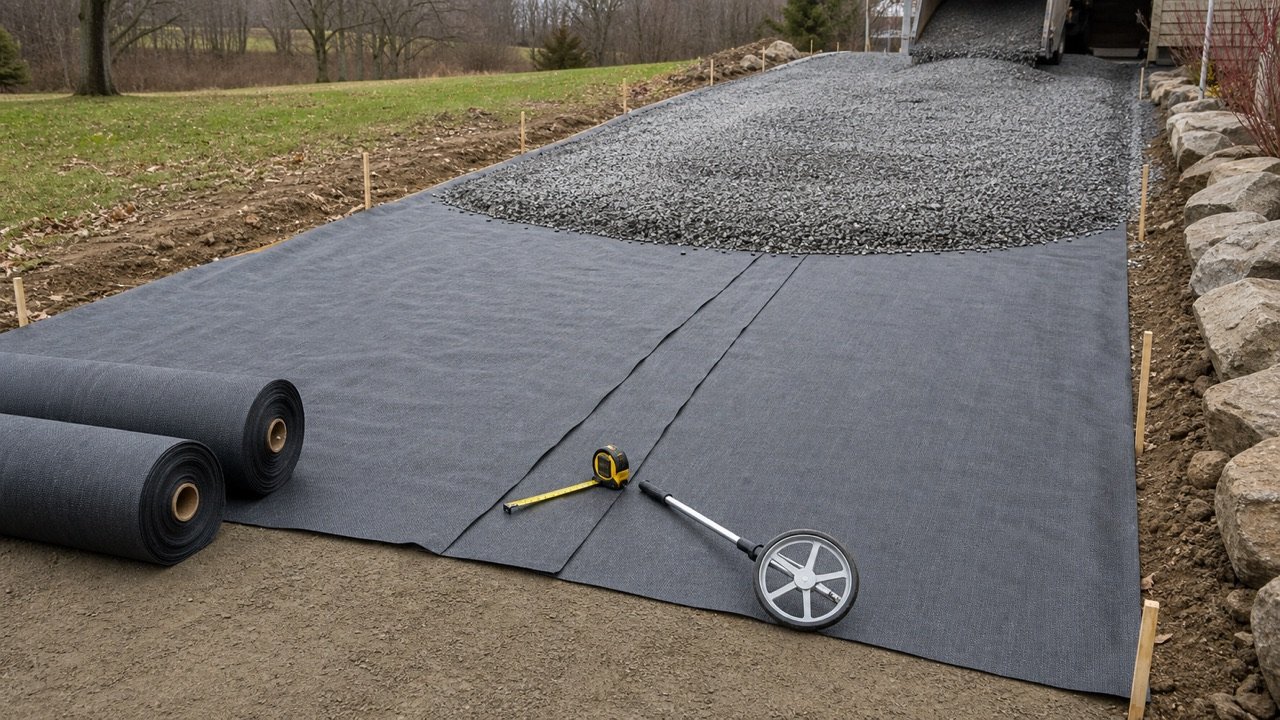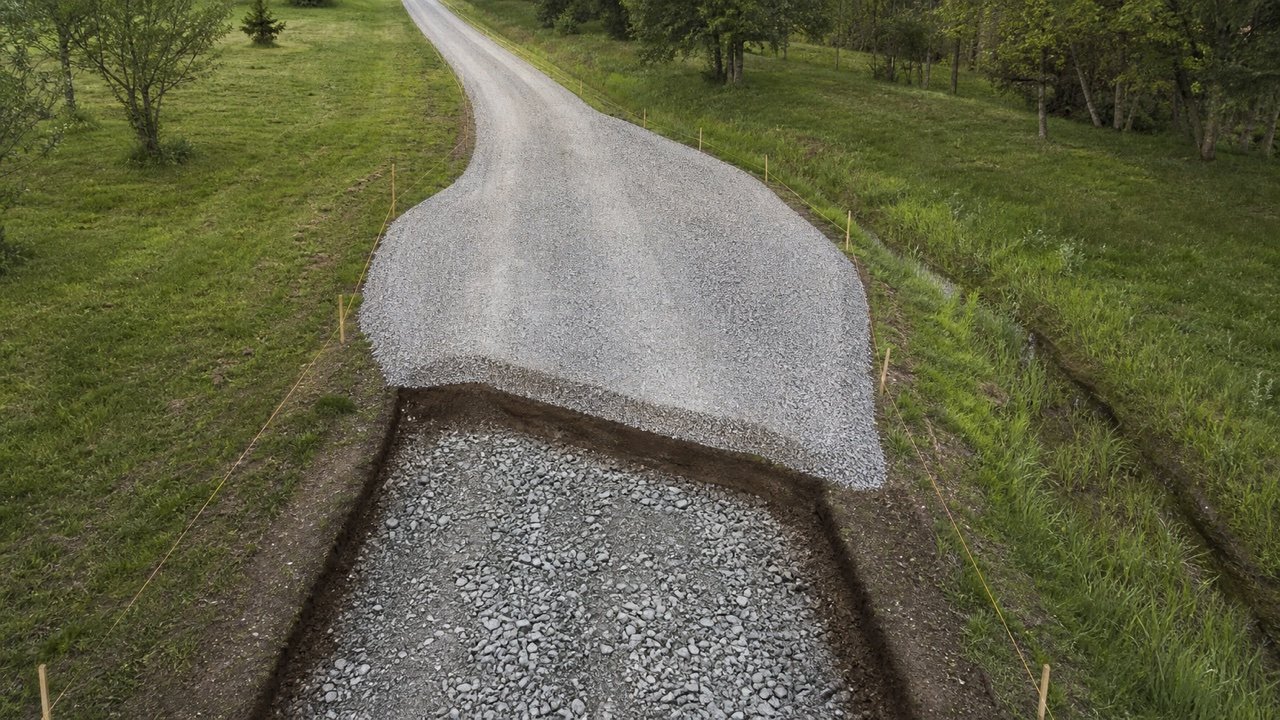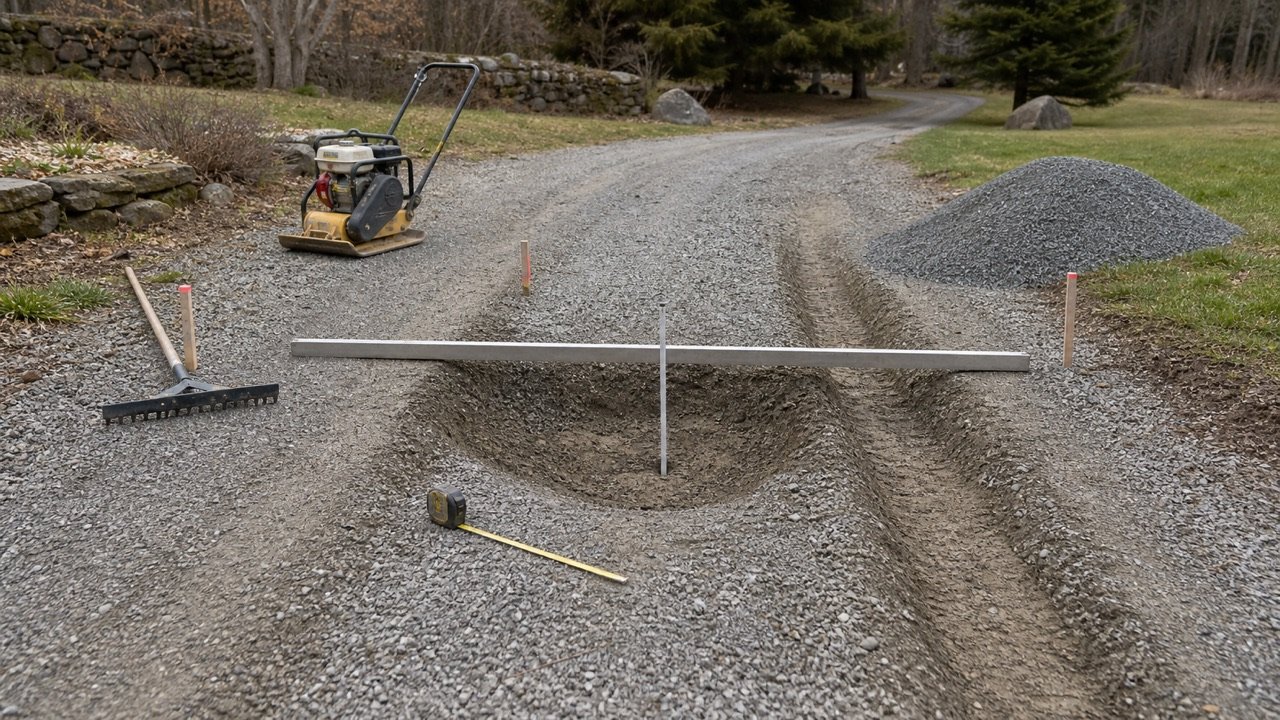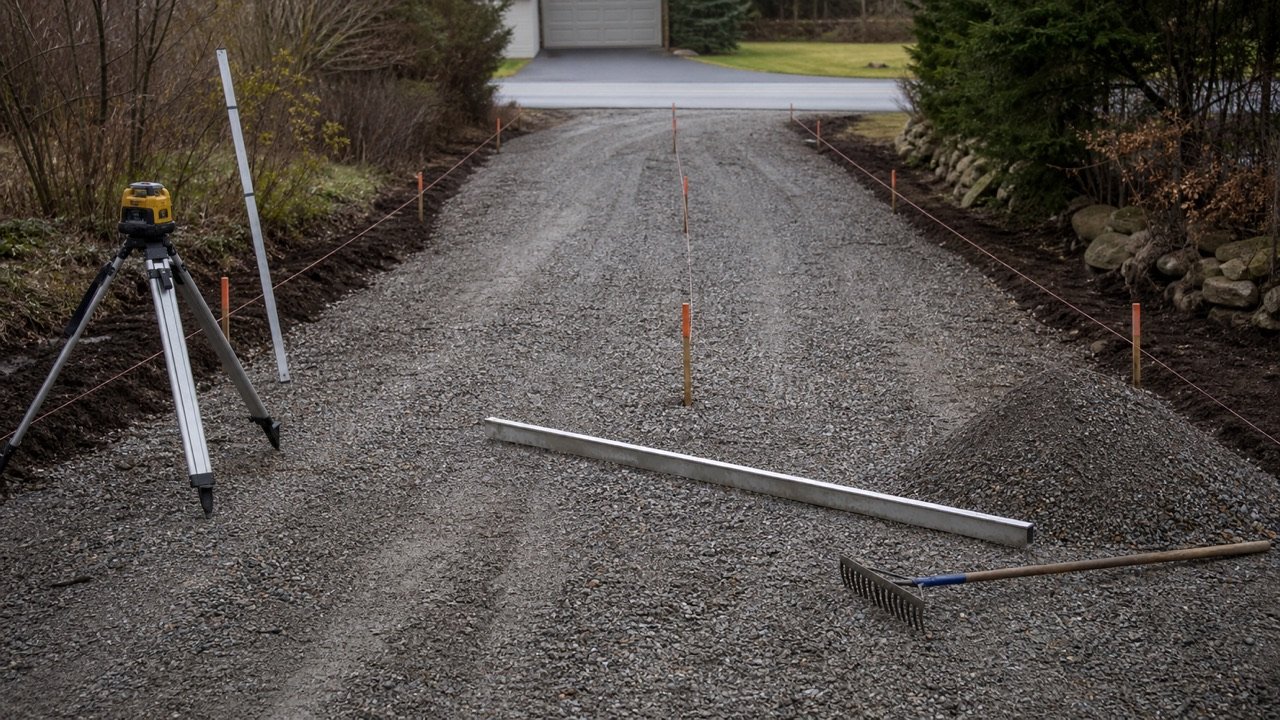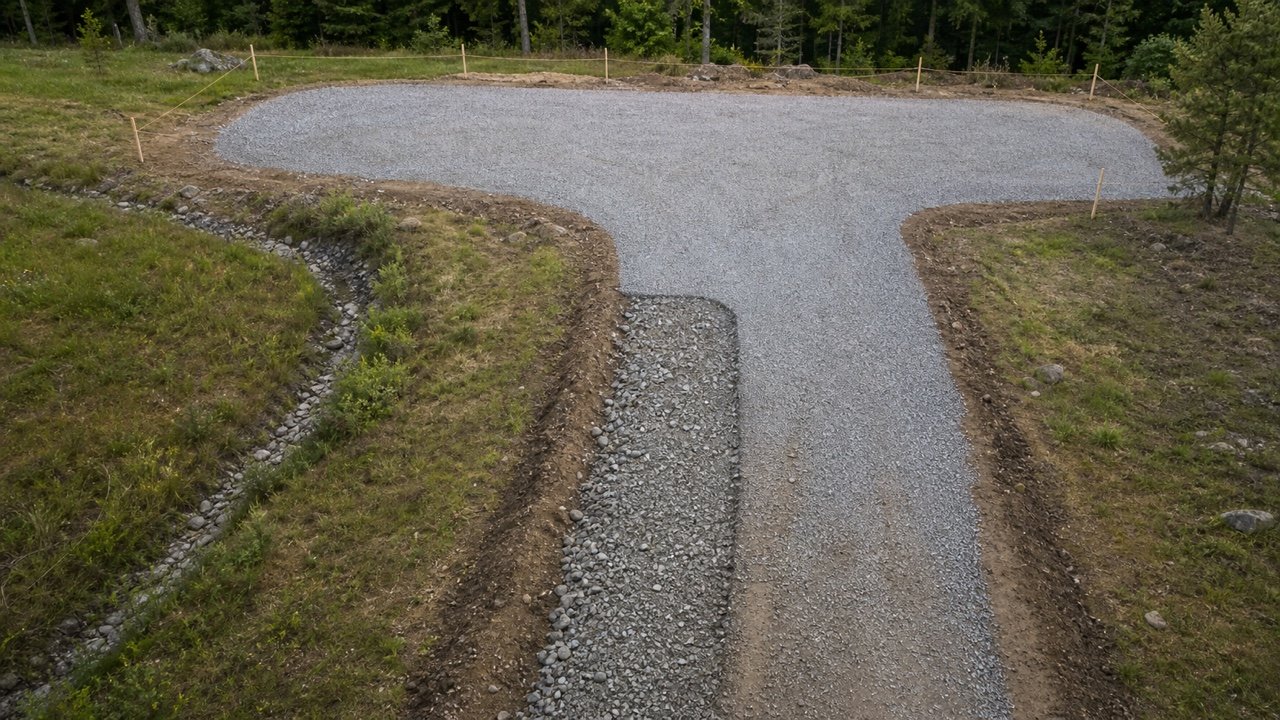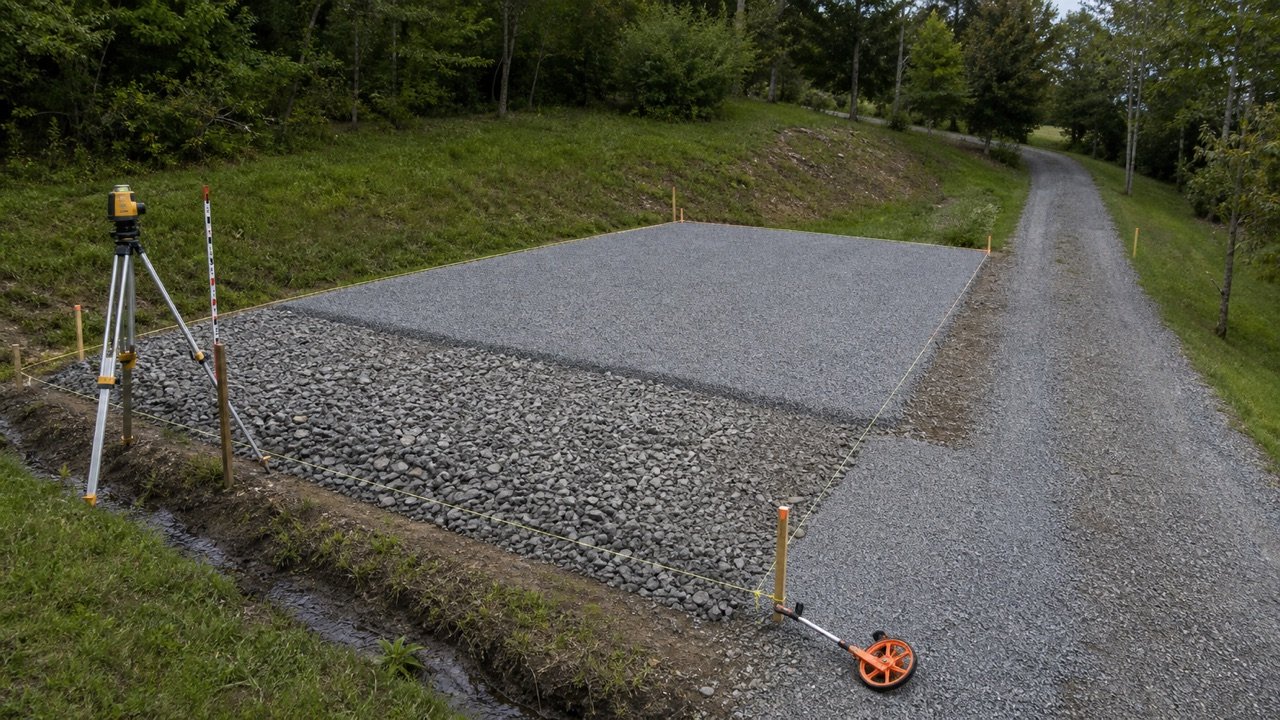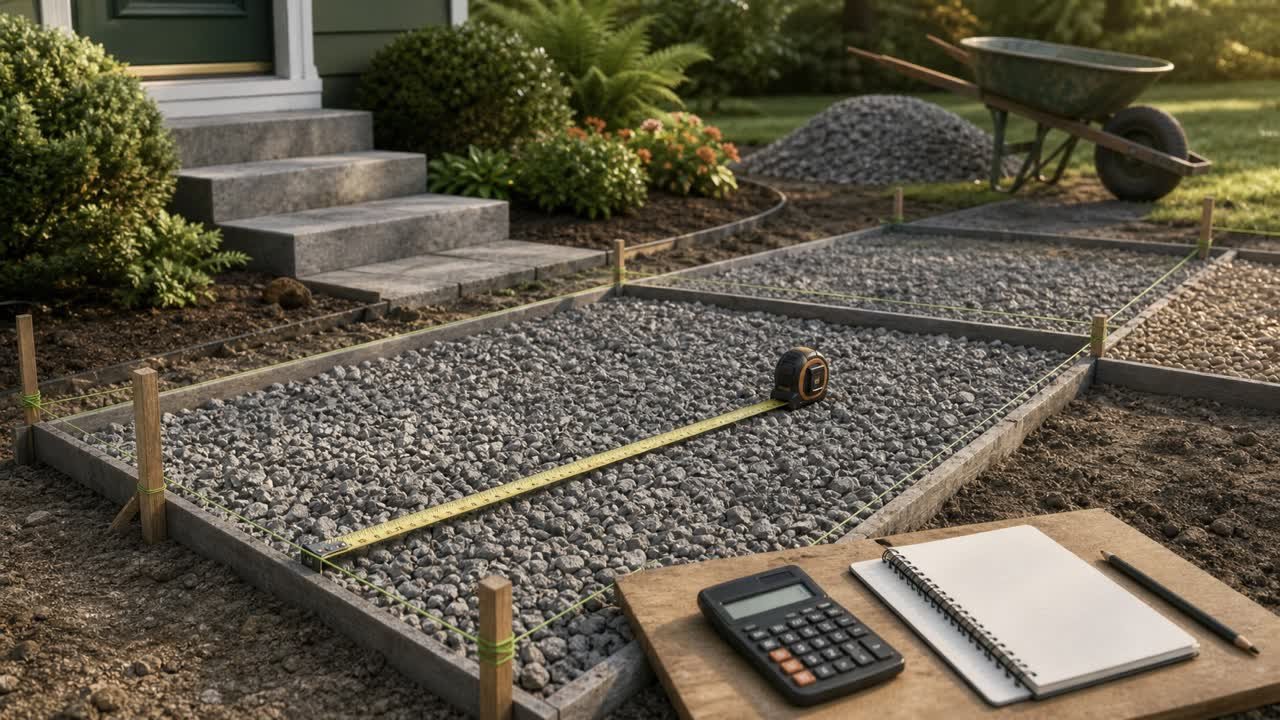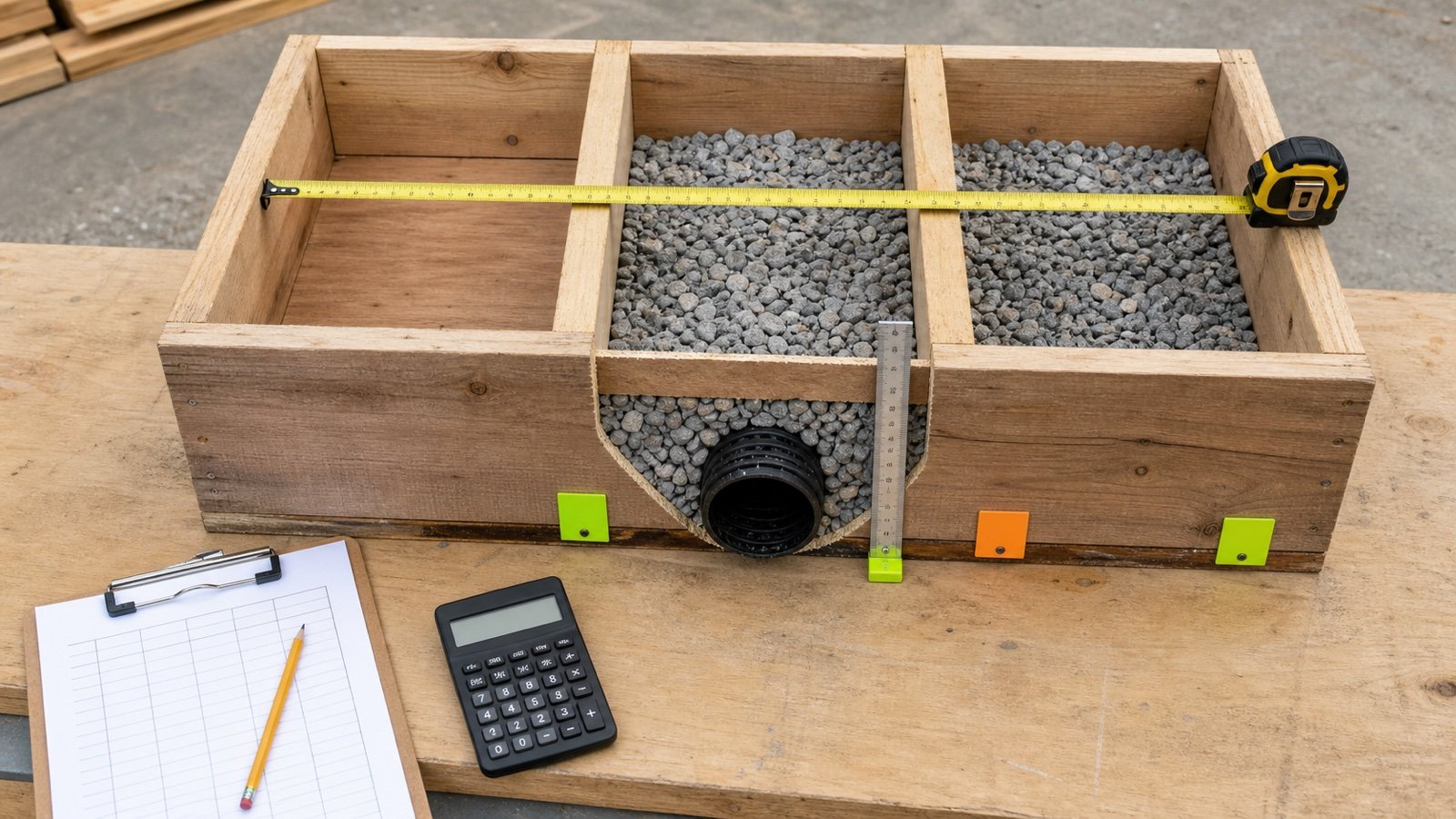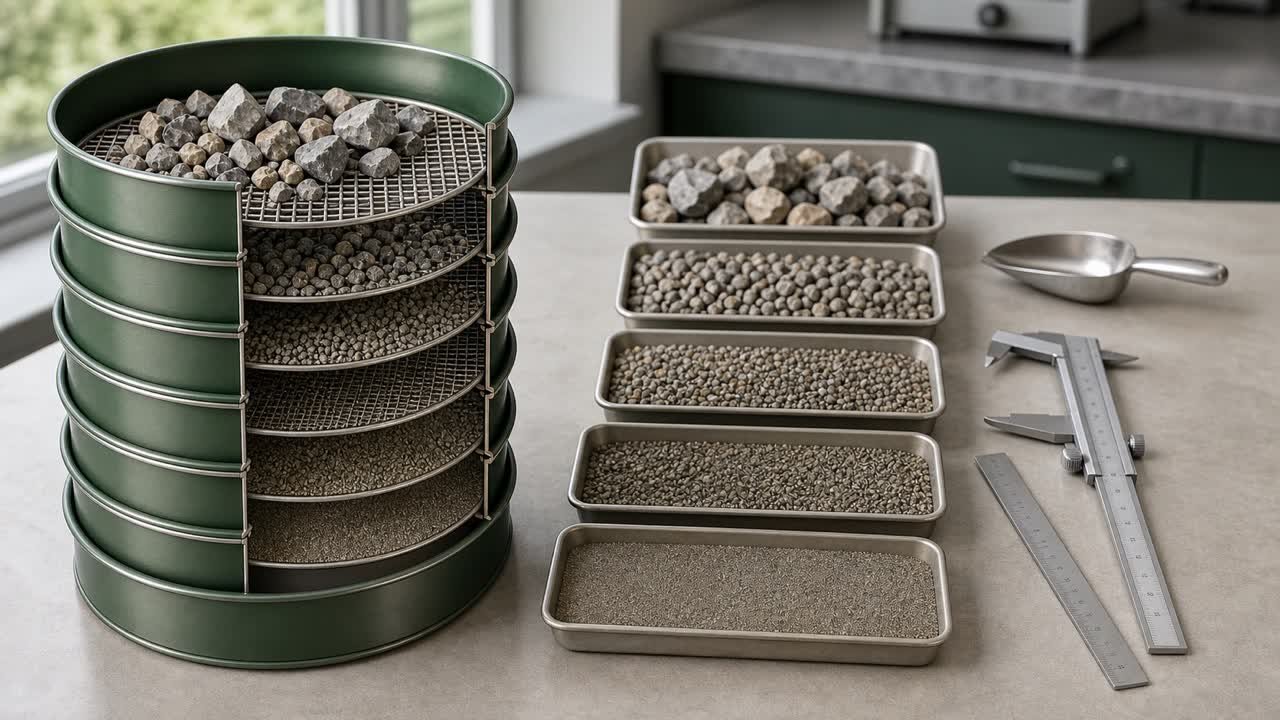
Gravel names vary between suppliers, regions, and project specifications. Use the chart to translate opening references, then check the whole gradation report before selecting or ordering a product.
The page also shows how to find retained size bands, catch an impossible percent-passing sequence, and connect the accepted material with the quantity calculation.
What do gravel sizes and gradation labels mean?
A gravel size label gives a useful starting reference, but the complete meaning comes from the stated specification and percent-passing limits. Supplier terms such as pea gravel, river rock, base gravel, and crushed stone can vary, so compare the offered product's current sieve report with the project requirement.
A 3/4-inch label names one physical reference. A product specification or gradation report adds the percentage passing several sieves and any other required properties.
Particle-size reference
The following table converts common inch openings to millimetres. Product naming and approval come from the governing specification and supplier evidence.
| Opening reference | Millimetres | What it tells you |
|---|---|---|
| No. 4 sieve | 4.75 mm | Boundary between gravel and sand in the cited FHWA geotechnical soil terminology. |
| 3/8 in | 9.525 mm | Physical opening reference; full gradation requires multiple sieves. |
| 1/2 in | 12.7 mm | Physical opening reference; a product specification includes additional limits. |
| 3/4 in | 19.05 mm | Physical opening reference often seen in aggregate descriptions. |
| 1 in | 25.4 mm | Physical opening reference. |
| 1 1/2 in | 38.1 mm | Physical opening reference. |
| 2 in | 50.8 mm | Physical opening reference. |
| 3 in | 76.2 mm | Upper gravel boundary cited in FHWA geotechnical terminology. |
What gradation means
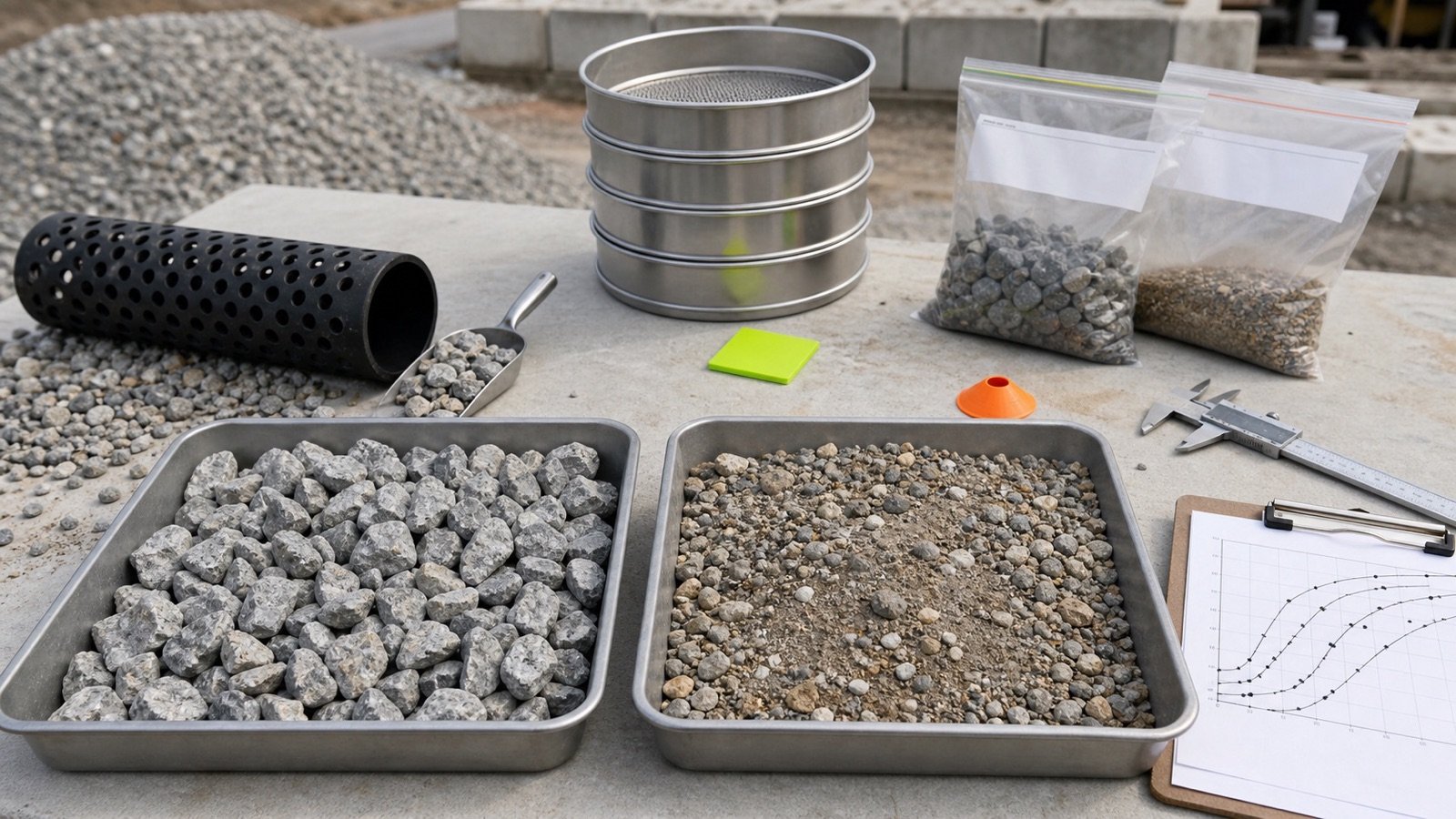
Gradation describes the distribution of particle sizes across the listed sieve openings. FHWA explains that gradation is measured by separating aggregate through progressively finer sieves and recording how much material passes or is retained.
Two products can share a top-size label and still have different amounts in the intermediate and fine size bands. FHWA's granular-base guidance explains that gradation, particle shape, durability, stability, drainage, and fines all matter within that pavement-material scope. Use the requirements written for the actual layer rather than transferring one application's limits to another.
How to read a gradation table
A gradation table normally lists a series of sieve openings and the permitted or measured percentage passing each one. Read the whole column:
- Find the largest listed opening and note whether all or only a stated percentage must pass.
- Follow the intermediate sieves to see whether the material contains a broad blend or a narrower band of sizes.
- Check the fine sieves separately; a top-size label alone says nothing about the amount of fines.
- Confirm whether the table shows a project limit, a supplier test result, or a generic example.
- Compare like with like: the same test method, sieve units, and percentage basis.
A chart copied from another region may use a different agency designation or product name. The sieve openings and percentages are more useful than assuming two trade labels mean the same material.
Calculate percent retained between sieves
Percent passing is cumulative. The value at one sieve includes every smaller particle that passes that opening. Subtract the percentage passing the smaller sieve from the percentage passing the larger sieve to find the percentage retained between them.
Percent retained between two sieves = percent passing larger sieve − percent passing smaller sieve
Consider an illustrative sample with 100% passing 1 in, 85% passing 3/4 in, 40% passing 3/8 in, and 8% passing the No. 4 sieve. The bands contain 15% between 1 in and 3/4 in, 45% between 3/4 in and 3/8 in, and 32% between 3/8 in and No. 4. The remaining 8% passes the No. 4 sieve.
These percentages demonstrate how to read cumulative data. They are an arithmetic example and carry no product approval or application recommendation.
How can you check a gradation report for arithmetic errors?
Read the sieve rows from the largest opening to the smallest. Percent passing can stay the same or decrease as openings get smaller; it cannot rise at a smaller opening because that smaller sieve cannot pass more of the same sample.
| Opening | Report A | Report B | Check |
|---|---|---|---|
| 1 in | 100% | 100% | Starting row |
| 3/4 in | 85% | 83% | Both decrease |
| 3/8 in | 40% | 86% | Report B rises from 83% to 86%; resolve the data error |
| No. 4 | 8% | 7% | Do not approve Report B from this row alone |
For Report A, the retained bands are 15%, 45%, 32%, and 8% passing the smallest displayed sieve. They total 100%. A total check confirms the arithmetic shown on this page, but it does not prove that the laboratory sample represented the offered stockpile or that the product meets a specification.
Do not silently sort, average, or correct supplier results. Ask the report issuer to confirm the row, units, sample, and revision so the project record preserves the original evidence and correction.
Recognize broad, open, and missing size bands
A broad distribution shows material across several listed sieve intervals. An open or narrowly graded material concentrates more of the sample within fewer size bands. A missing or very small intermediate band can indicate a gap in the measured distribution.
The words used for these patterns depend on the governing specification and test context. Compare the actual percent-passing curve or table with the permitted limits. A trade name alone cannot show where the sample falls between those limits.
Check the report behind the product label
A report describes an identified sample from a stated source and date. Connect it to the product offered for the order. A source, production process, stockpile, or lot change can justify updated evidence under the project requirements.
| Report field | Why it matters | Question to resolve |
|---|---|---|
| Product and source | Two pits or production lines can use the same sales name. | Does the report identify the material offered for this order? |
| Sample date or lot | Production and stockpiles can change over time. | How current and representative is the sample? |
| Sieve series and units | Comparable rows require the same openings. | Do the project and supplier tables use matching sieves? |
| Test method | Preparation and test procedures define how results were produced. | Does the governing requirement name a method? |
| Percent passing results | Each row describes cumulative material below an opening. | Does every required row fall within its permitted range? |
| Approval or reviewer | Substitution and acceptance authority belongs to the project process. | Who can accept a deviation or alternate material? |
Myth and reality: a size name is only the starting point
| Myth | Reality |
|---|---|
| A 3/4-inch label means every particle is 3/4 inch. | The label may refer to a top-size convention; the full distribution appears in the gradation data. |
| Matching maximum size proves two products are equivalent. | Intermediate percentages, fines, shape, durability, source, and test requirements can differ. |
| A photograph proves a clean or compliant gradation. | Visual review shows appearance; sieve results and required tests provide measurable evidence. |
| A familiar trade name carries the same meaning everywhere. | Supplier, agency, and regional naming conventions vary; openings and percentages make the comparison explicit. |
Use a decision path for substitutions
- Identify the exact governing material requirement and acceptance authority.
- Request the proposed product's current source and test information.
- Align the sieve rows, units, test method, and other specified properties.
- List each deviation separately and keep the top-size label as its own comparison field.
- Send the documented comparison through the project's approval process before ordering.
A full specification includes more than maximum size
A supplier description such as “3/4-inch gravel” supplies a size reference. The full percentage passing each sieve, particle shape, fines content, durability, source, test method, and acceptance limits require product and project data. Ask for the current report and governing requirement when performance matters.
Maximum size and nominal maximum size
These terms can have specification-specific definitions. Use the governing specification and test data to identify either value. Read the governing specification and supplier report together, including the percentage passing every listed sieve.
Side-by-side submittal check
| Check | Project requirement | Supplier evidence |
|---|---|---|
| Designation | Agency, standard, drawing, or specification name | Exact product and source location |
| Gradation | Permitted percent-passing range at each sieve | Current test result at the same sieves |
| Fines | Limit at the specified fine sieve | Reported value and test method |
| Other properties | Shape, durability, cleanliness, or material type where required | Matching test or declaration |
How to compare a product with a requirement
- Identify the project use and governing drawing, specification, or manufacturer instruction.
- Record the required material designation and gradation limits.
- Request the current supplier product data or test report.
- Compare the full gradation, other required properties, and the trade name.
- Have the responsible project professional resolve substitutions or unclear requirements.
Size, shape, and gradation are different
Particle size describes dimensions. Gradation describes how much material occurs across a range of sizes. Particle shape describes features such as angularity or elongation. These properties can interact, and each needs its own evidence. A photograph can show colour and visible shape; gradation and compliance require the applicable test data.
What happens after the gravel product is accepted?
Carry the accepted product name, source, material state, placed depth, and supplier selling unit into the quantity record. The size chart selects no universal depth, density, compaction factor, or allowance.
Use the Gravel Calculator for measured area and placed depth. The gravel quantity guide separates geometric volume from handling allowance and supplier rounding. Use the gravel weight chart only after a representative bulk density and material state have been identified.
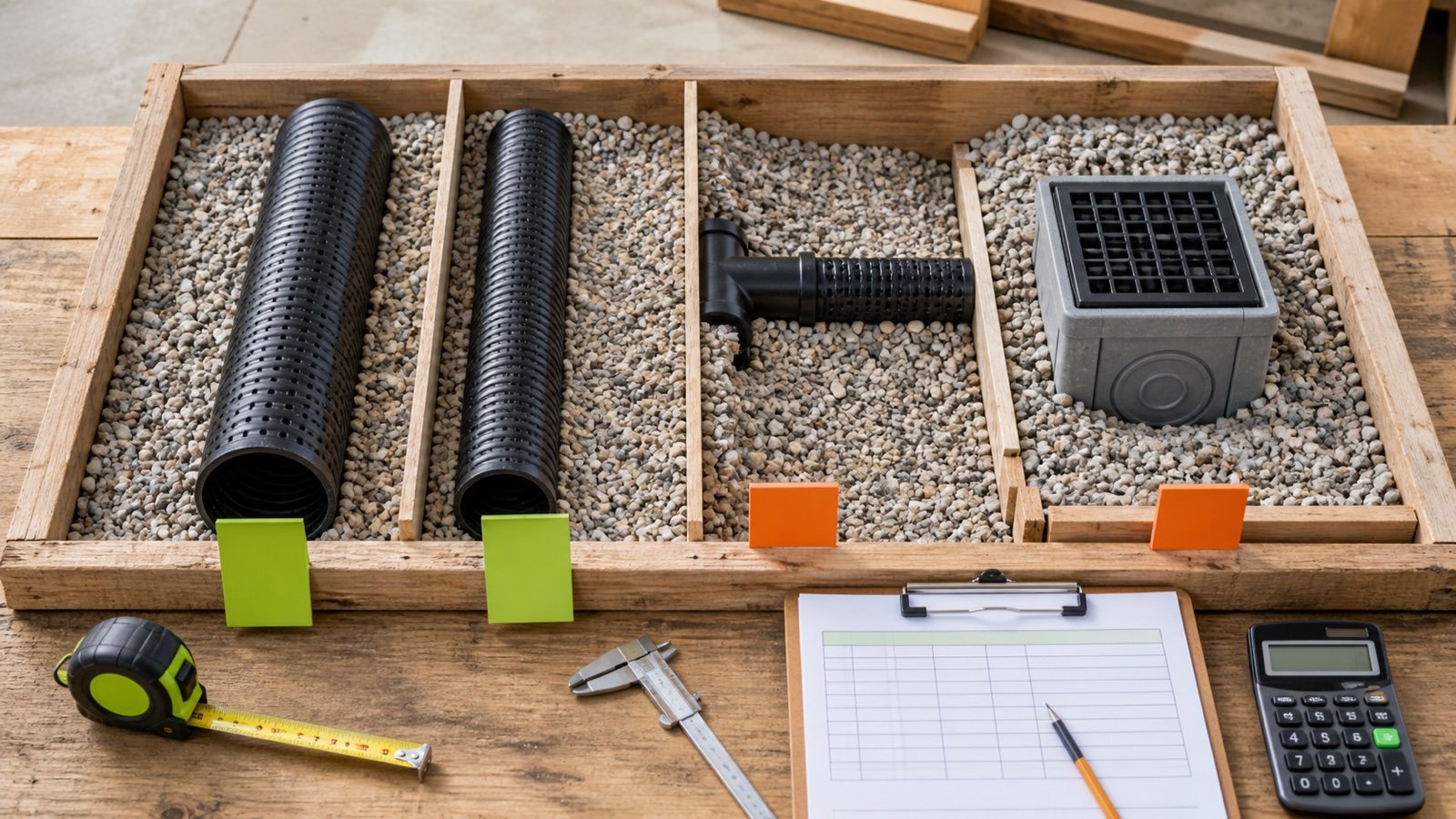
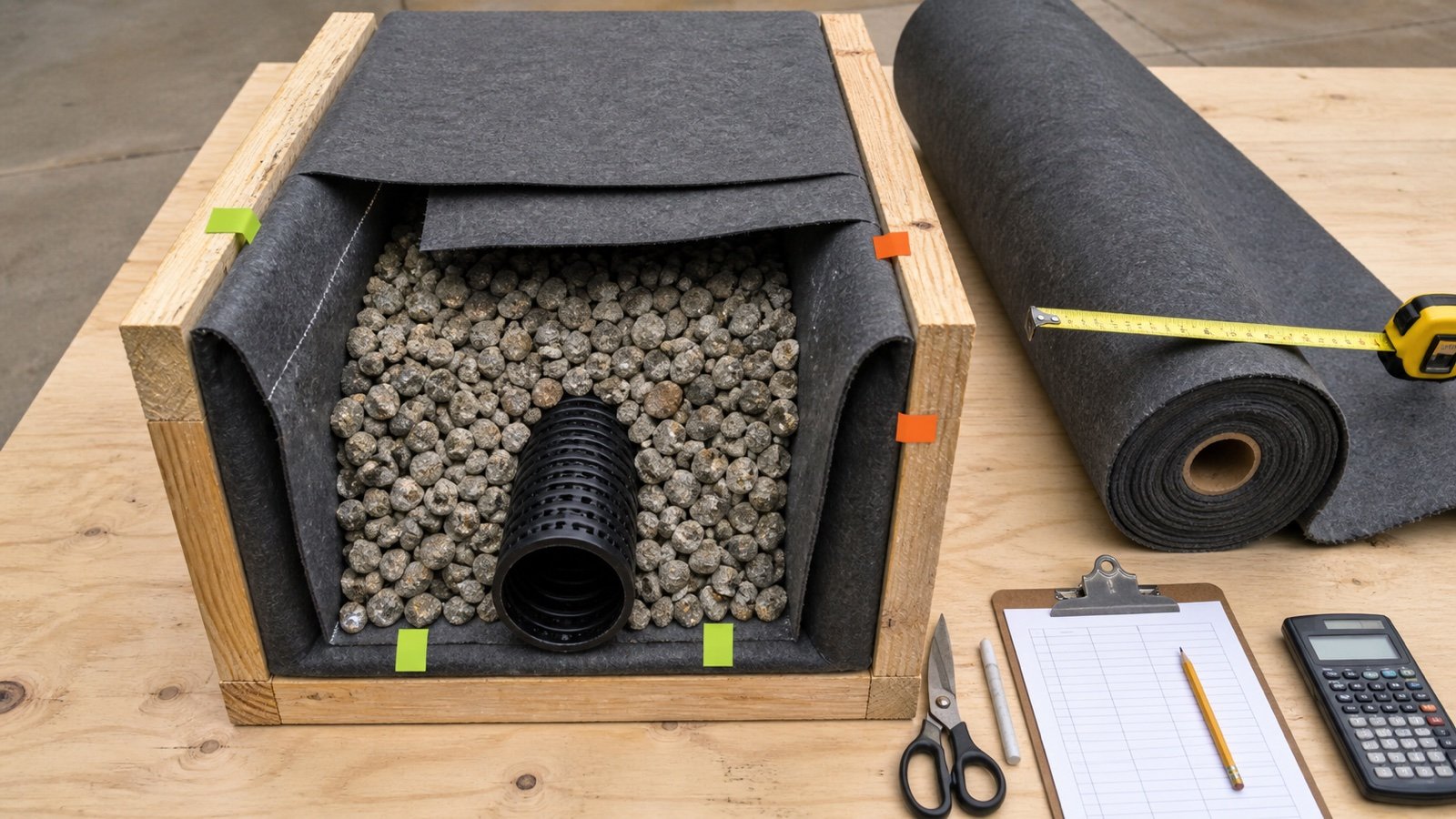
For a drainage trench, the accepted system detail can also depend on the surrounding soil, pipe openings, filter or geotextile, and outlet. The French drain gravel guide records those checks before the quantity is calculated.
Supplier comparison checklist
- Exact product name and source location.
- Current gradation or sieve report when required.
- Maximum and nominal-size terminology used by the supplier.
- Presence and permitted amount of fines.
- Crushed or natural aggregate description.
- Any durability, cleanliness, or application requirement in the project documents.
Return to the Gravel Material Planning hub to choose the matching calculator, coverage guide, weight chart, or cost worksheet.
Common mistakes
- Assuming every supplier uses “pea gravel” for the same size range.
- Choosing drainage material from stone size alone while ignoring fines and the full system design.
- Treating an approximate product photo as a gradation report.
- Using a landscape product label as proof of compliance with a structural or pavement specification.
Sources and scope
- FHWA LTPP aggregate gradation protocol: sieve sizes and percent-passing reporting.
- FHWA Geotechnical Engineering Circular, Chapter 5: particle-size terminology and gradation.
- FHWA granular base material guidance: application-specific gradation and material properties.
Source scope: FHWA material explains sieve analysis, percent-passing reporting, representative-sample concerns, particle-size terminology, and application-sensitive aggregate properties within its stated programs. It does not approve a local supplier product or set one gravel grade for every project. Project documents and the responsible acceptance process control the actual material.
Review note: Saleem Sial owns the research and editorial record. Conversion fixtures, retained-band arithmetic, monotonic-sequence checks, source review, build validation, link crawl, schema review, and rendered QA form the internal publication gate. Waseem Sial, External Reviewer and Engineer, is listed for ongoing external review; no completed review date is claimed. Sources rechecked 8 August 2026.