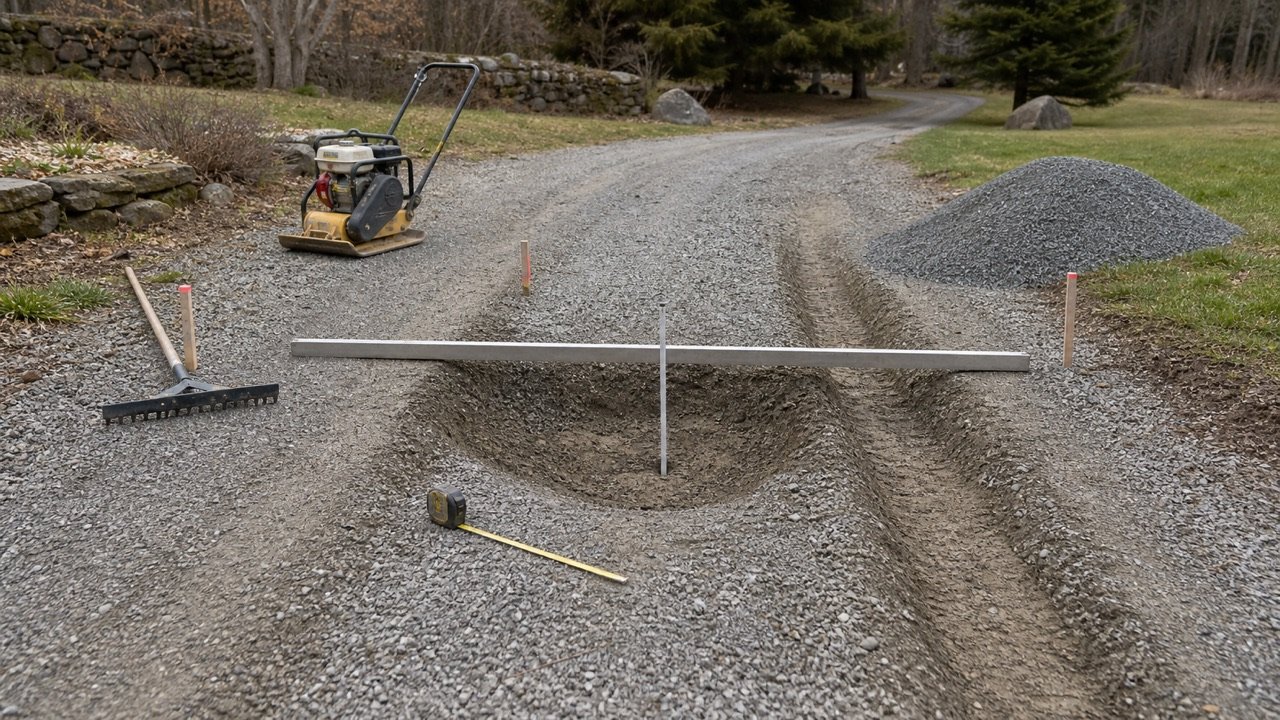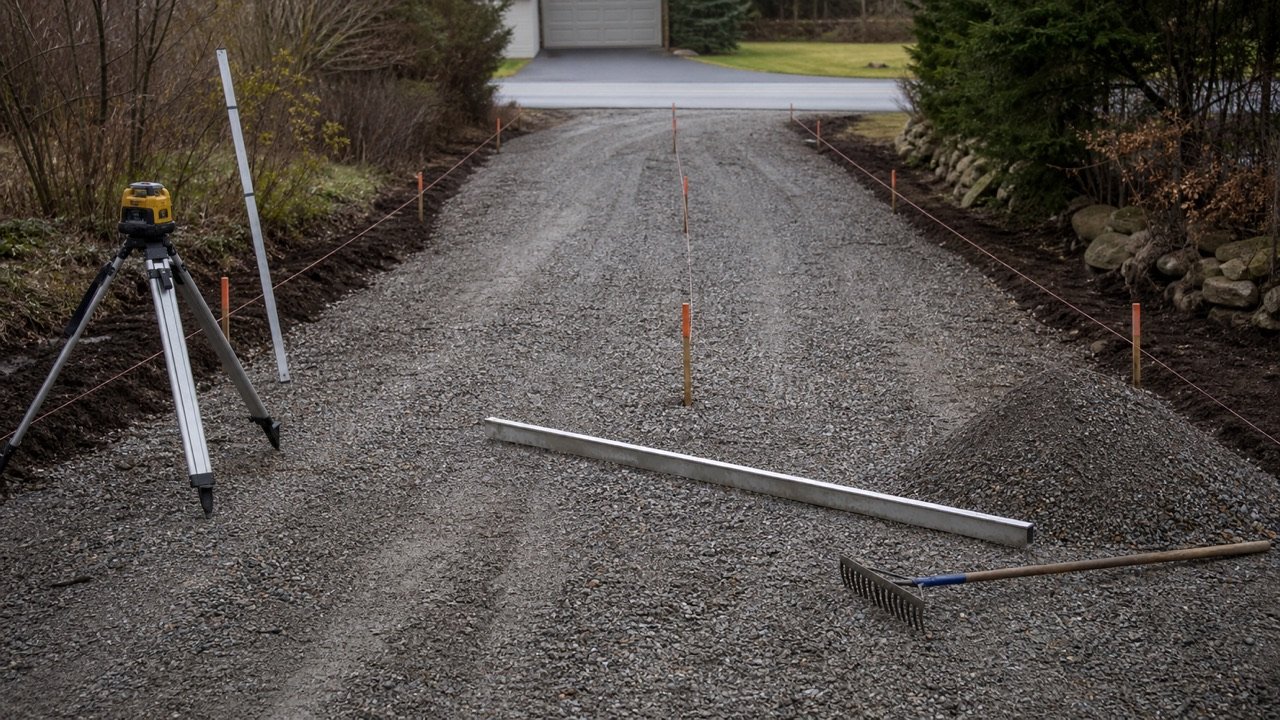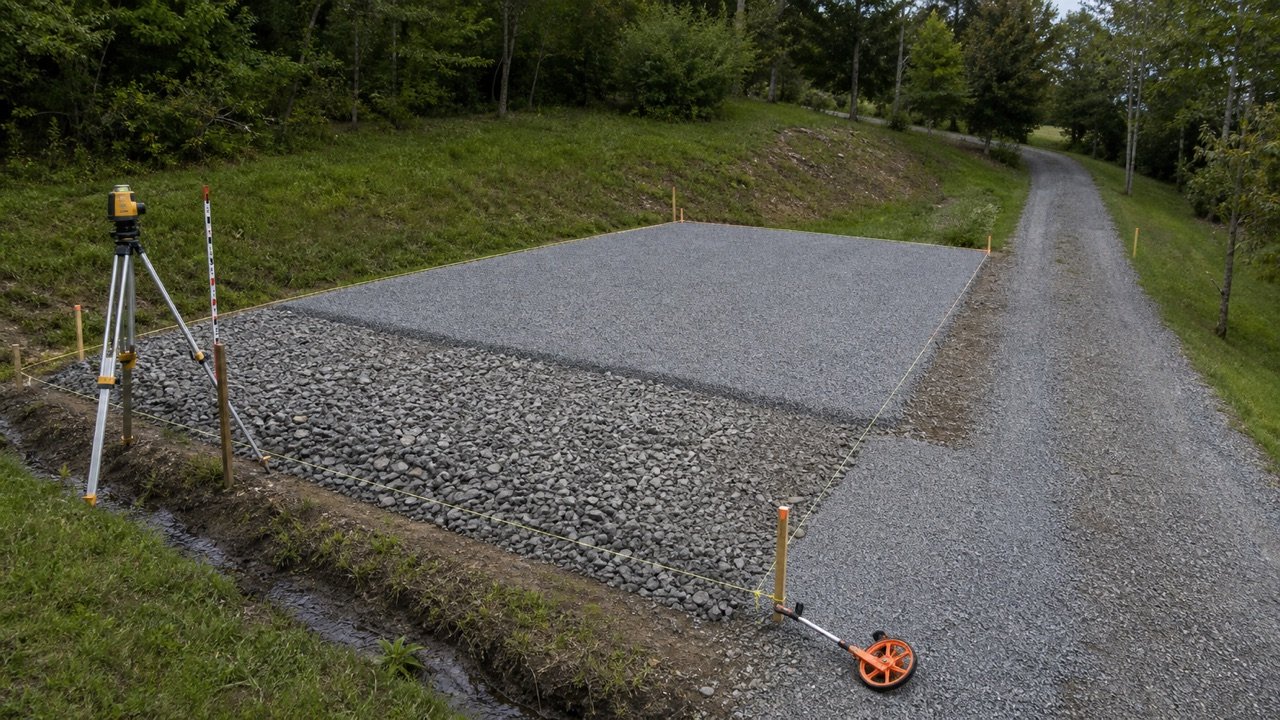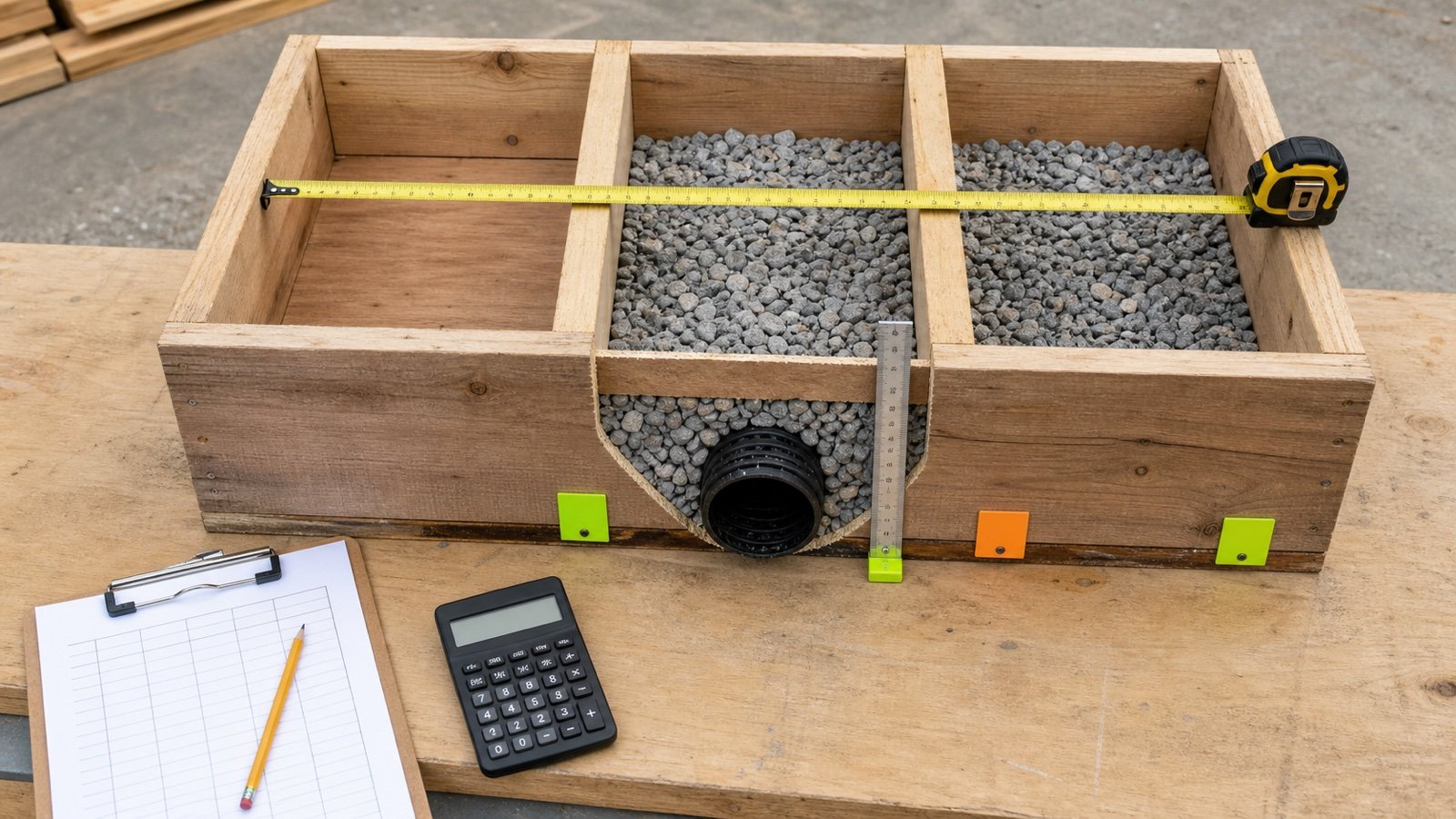
A gravel quote includes more than the price of the material. Delivery distance, minimum orders, fees, tax, equipment, site access, and supplier rounding can change the amount you pay.
How do you estimate the total cost of gravel?
A useful gravel budget combines the verified order quantity with a current quote for the exact product, then adds delivery, fees, tax, equipment, base preparation, and installation items that the material price does not include.
A low pickup price can lose its advantage after delivery, minimum-load fees, density conversion, and a selling-unit increment. Put every quote on the same product, quantity, delivery address, and inclusion basis.
Total-cost formula
Total estimate = material + delivery + fees + tax + related work
Use a current delivered quote for the project location. Product, quantity, quarry or yard location, haul distance, fuel conditions, truck access, minimum order, tax, and local market all affect the figure.
Build the estimate step by step
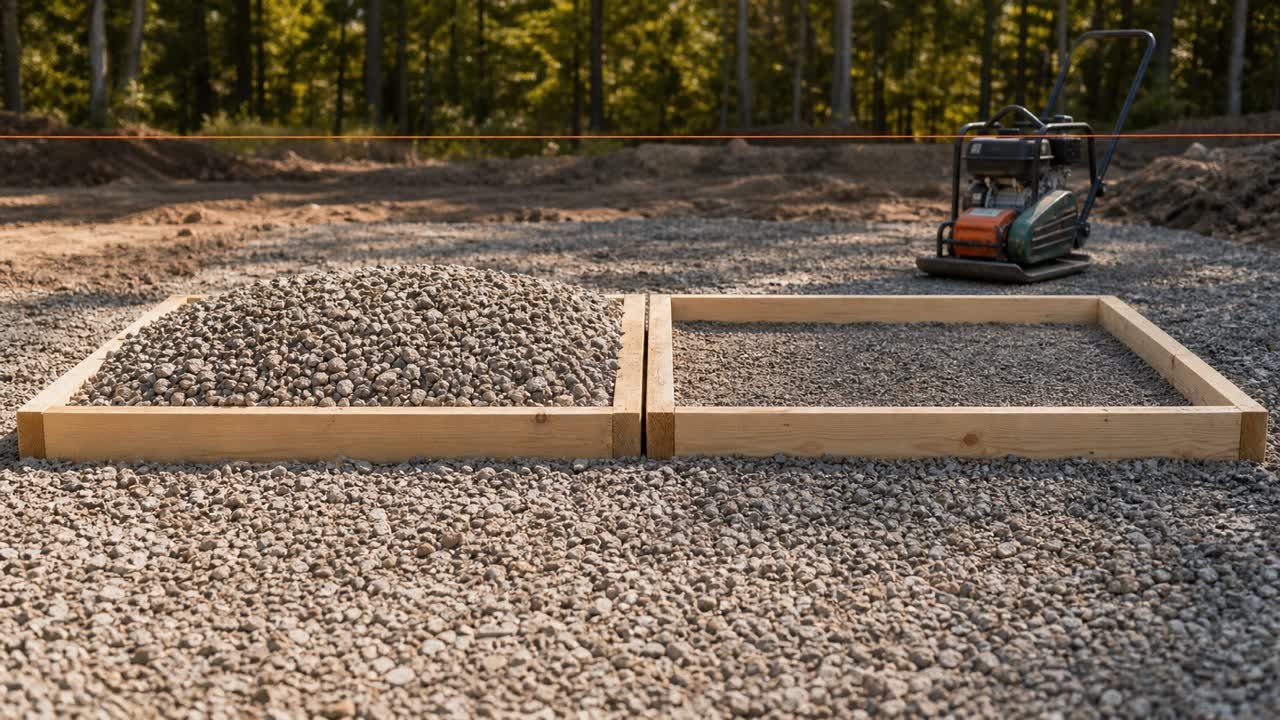
- Measure the project and calculate the required placed volume.
- Confirm the exact material and any governing specification.
- Convert the volume into the supplier's selling unit using the supplier's product data.
- Request a dated quote for the required quantity and delivery address.
- Add minimum-load, split-load, fuel, waiting-time, or difficult-access fees when quoted.
- Add tax and any separate equipment, labor, excavation, edging, fabric, base, drainage, or disposal cost.
- Record exclusions and label the document as a planning estimate, supplier quote, or contractor bid.
Quote worksheet
| Cost item | Information to record |
|---|---|
| Product | Name, gradation or specification, and supplier. |
| Quantity | Cubic yards, cubic metres, short tons, metric tonnes, bags, or loads. |
| Unit price | Current quoted price and quote date. |
| Material subtotal | Quantity × unit price. |
| Delivery | Base delivery charge, distance or zone, and included load size. |
| Additional fees | Minimum order, split load, fuel, waiting time, difficult access, or disposal. |
| Tax | Applicable local tax treatment. |
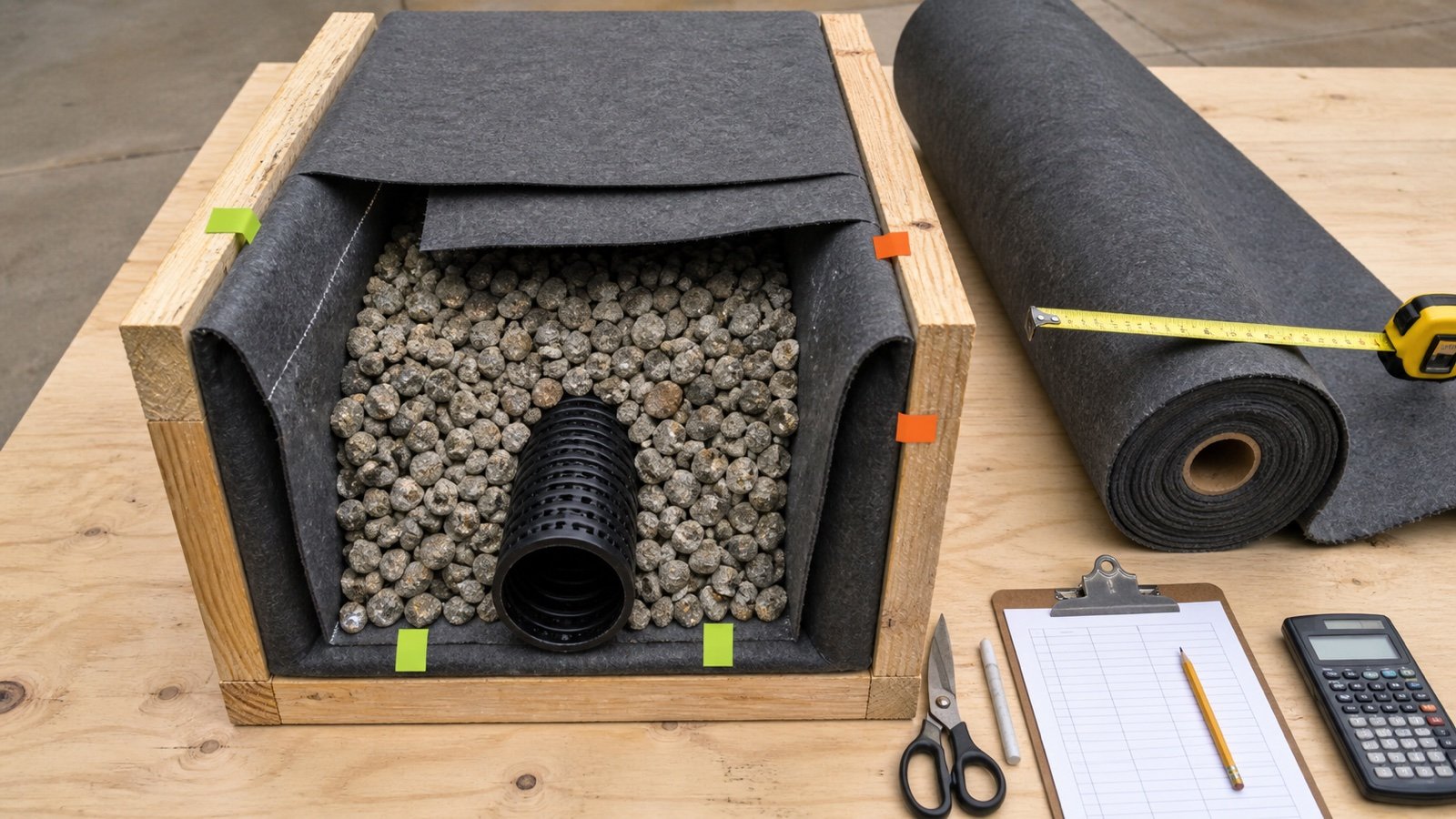
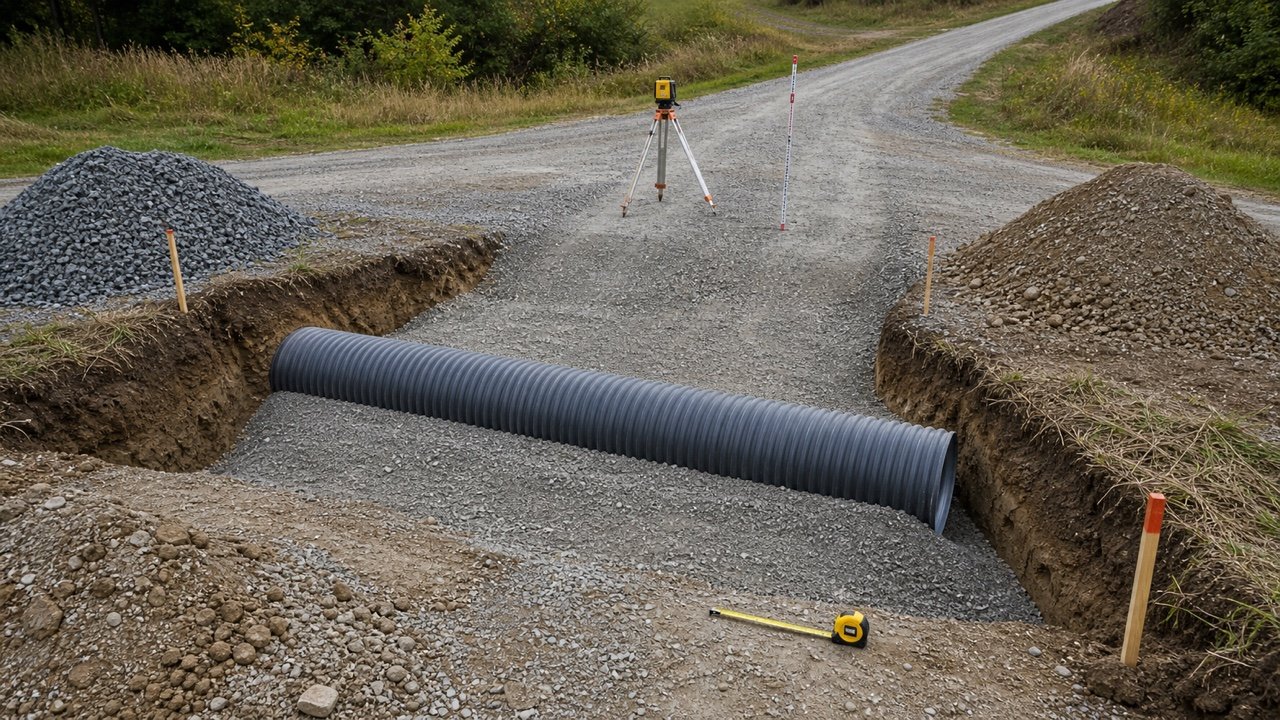
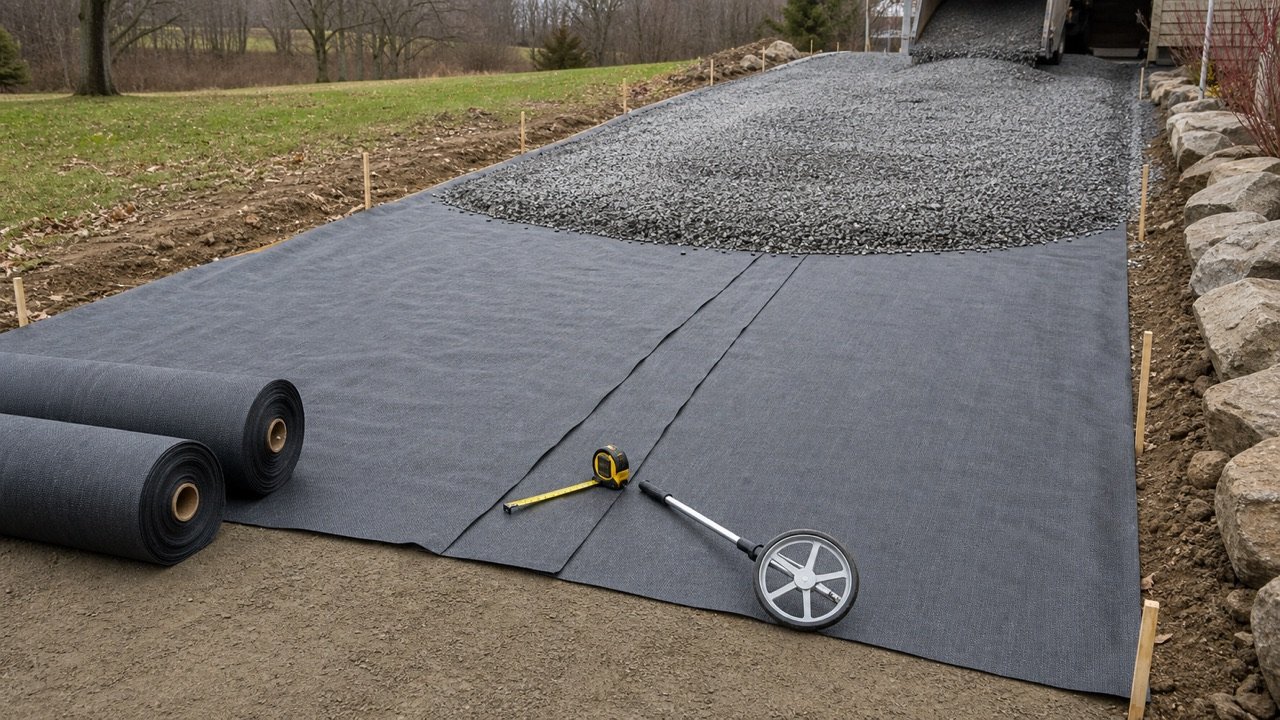
| Related work | Preparation, excavation, geotextile, edging, equipment, spreading, grading, and compaction. |
Illustrative estimate
Assume a project needs 4.0 units of material, the current supplier quote is $42 per unit, delivery is $95, quoted fees are $20, and estimated tax is $18. The material and delivery subtotal is:
(4.0 × $42) + $95 + $20 + $18 = $301.
These fictional figures demonstrate the calculation. Current project prices come from dated local quotes. Preparation, equipment, labor, drainage, edging, and disposal would be added separately when required.
Normalize two supplier quotes
- Confirm that both products meet the same project requirement.
- Convert the measured volume to each supplier's selling unit with that supplier's product data.
- Round each quantity using that supplier's minimum order and increment.
- Add delivery, fuel, split-load, waiting, tax, and quoted fees.
- Divide the delivered total by the usable ordered volume to compare like with like.
Delivered cost per usable unit = delivered quote total ÷ usable ordered quantity
Keep pickup and installed comparisons separate. Your vehicle's payload, loading rules, trips, time, fuel, unloading, and cleanup belong in a pickup comparison.
Compare different selling units
Two suppliers may quote the same job in different units. Convert them only with product-specific information:
- A per-yard quote needs the delivered or loader volume and any minimum increment.
- A per-ton quote needs scale weight or a volume-to-mass estimate using the quoted product density.
- A bag quote needs the package volume or stated yield and the number of whole bags.
- A truckload quote needs the included quantity, payload or volume basis, and delivery terms.
After conversion, compare the delivered cost for the required usable quantity together with product compliance and quote scope.
Worked comparison across two selling units
Assume the measured planning quantity is 4.00 yd³. Supplier A sells by cubic yard at a fictional $42/yd³, with $95 delivery, $20 in other quoted fees, and $18 tax. Its delivered total is $301, or $75.25 per ordered cubic yard.
Supplier B sells the same qualifying product by short ton. Its stated density is a hypothetical 1.35 short tons/yd³, so 4.00 yd³ converts to 5.40 short tons. A 0.50-ton selling increment rounds the order to 5.50 tons. At a fictional $38/ton, plus $80 delivery, $15 in fees, and $20 tax, the delivered total is $324.
| Comparison | Supplier A | Supplier B |
|---|---|---|
| Quoted unit | $42 per yd³ | $38 per short ton |
| Rounded order | 4.00 yd³ | 5.50 short tons |
| Equivalent volume from stated density | 4.00 yd³ | 5.50 ÷ 1.35 = 4.074 yd³ |
| Delivered total | $301 | $324 |
| Cost per equivalent ordered yd³ | $75.25 | $79.53 |
The smaller quoted unit-price number belongs to a different unit. The delivered total, equivalent usable quantity, product compliance, and quote terms decide the comparison. Every figure in this example is fictional.
Separate quantity allowance from budget contingency
A quantity allowance changes the material order. A budget contingency reserves money for defined uncertainty. Keep them on separate lines because applying both to the same risk can count it twice.
| Record | Changes | Evidence |
|---|---|---|
| Measured quantity | Geometric volume | Field dimensions and required depth |
| Quantity allowance | Material amount | Measurement tolerance, placement condition, settlement, handling, or project requirement |
| Supplier rounding | Ordered amount | Minimum order and selling increment |
| Budget contingency | Reserved cost | Named price, schedule, access, or scope uncertainty under the estimator's process |
Record the basis and owner of each allowance or contingency. This page supplies no default percentage.
Compare pickup, delivered, and installed scope
| Quote scope | Usually needs to be recorded | Common external items |
|---|---|---|
| Pickup material | Product, quantity, unit price, tax, loading terms | Vehicle payload, trips, fuel, time, unloading, cleanup |
| Delivered material | Pickup items plus address, haul, load size, access, unload point, waiting, and delivery fees | Site preparation, spreading, grading, compaction |
| Installed work | Material, delivery, labor, equipment, preparation, placement, exclusions, and acceptance basis | Items specifically excluded by the proposal |
Compare quotes within the same scope column. A supplier material quote and a contractor installed proposal answer different purchasing questions.
Control changes after the quote date
- Record the quote issue date, expiry, product, quantity, address, tax basis, and inclusions.
- Freeze the measured quantity revision used for that quote.
- Log later changes to area, depth, product, delivery access, schedule, or selling increment.
- Request a revised quote when a changed field affects the price or delivery basis.
- Keep the earlier version for comparison and label which quote supports the current estimate.
Myth and reality: unit price is only one cost field
| Myth | Reality |
|---|---|
| The lowest unit price creates the lowest project cost. | Selling unit, rounded quantity, delivery, fees, tax, access, and scope can change the delivered total. |
| A national price range can replace local quotes. | Product, source, location, date, haul, quantity, and market conditions belong in the project record. |
| Material allowance and cost contingency are the same. | One changes quantity; the other reserves budget for named cost uncertainty. |
| A planning estimate is a fixed supplier or contractor commitment. | A dated written quote or proposal defines the commercial offer and its terms. |
Second-delivery risk
Ordering too little can create another delivery charge, delay, colour or product variation, and idle equipment or labour. Ordering too much creates handling and disposal problems. The allowance decision should therefore be visible and project-specific. Record the measured quantity first, then show any allowance and supplier rounding as separate lines.
Ways to compare quotes fairly
- Compare the same product specification and quantity.
- Confirm whether quotes use volume or scale weight.
- Ask what load size and delivery distance the price includes.
- Check whether tax and fuel charges are included.
- Consider the cost of a second delivery if the first load is short.
- Choose a material that meets the project requirement, then compare its delivered total and terms.
Quote control fields
| Record | Question it answers |
|---|---|
| Quote date and expiry | Is the price still valid? |
| Product and source | Are both suppliers pricing comparable material? |
| Selling unit and rounded quantity | What will appear on the order? |
| Delivery address and access | Does the quote cover the actual trip and unload point? |
| Included and excluded fees | Which charges can still change the total? |
| Tax basis | Is tax included, excluded, or applied to selected lines? |
Common budgeting mistakes
- Using an old online price without a location or retrieval date.
- Comparing a per-ton quote with a per-yard quote without the product density.
- Forgetting delivery minimums or truck-access constraints.
- Leaving preparation, spreading, grading, compaction, or disposal out of the budget.
- Treating a planning estimate as a supplier quote or contractor bid.
Questions before accepting a quote
- How long is the quote valid?
- Does the price include tax, delivery, fuel, and minimum-load charges?
- What quantity and material condition does the selling unit represent?
- Can the truck reach and safely unload at the intended location?
- Who is responsible for permits, traffic control, surface damage, or waiting time?
- What happens if the delivered quantity is short or the material does not match the order?
Return to the Gravel hub to verify the measured quantity before requesting quotes.
Sources and update method
This guide intentionally contains no claimed market-price range. Use dated written quotes from suppliers serving the project location and retain the product, quantity, delivery, and exclusion details with the estimate.
- NIST Handbook 44 (2026), Appendix C: volume conversion relationships used before a quote is normalized.
- U.S. Geological Survey: Construction aggregates: construction-aggregate material and supply context.
Research scope: Live competitor pages were checked for expected cost questions. Their current-year price ranges were excluded; local written quotes control this worksheet. Review completed 28 July 2026.