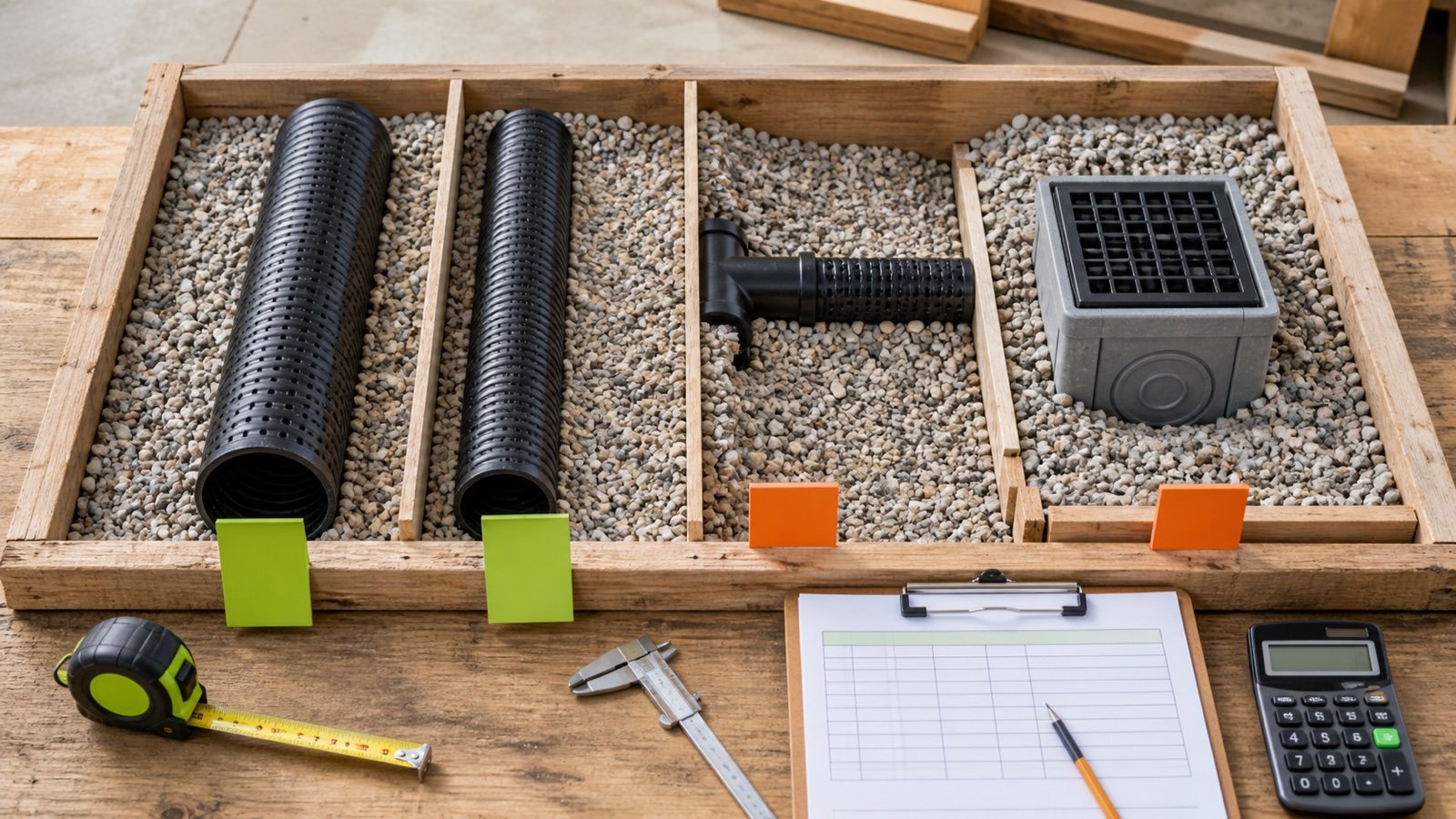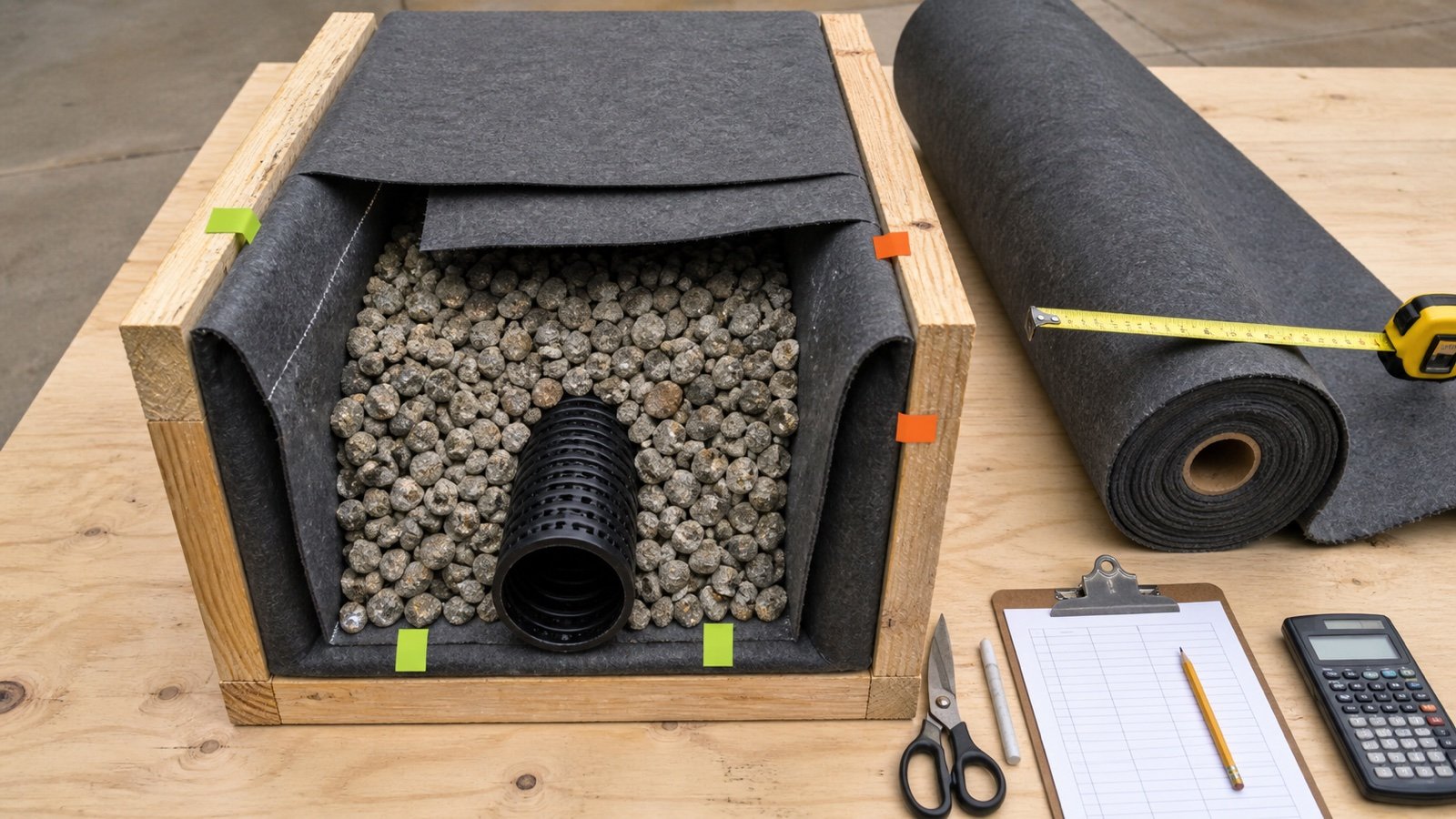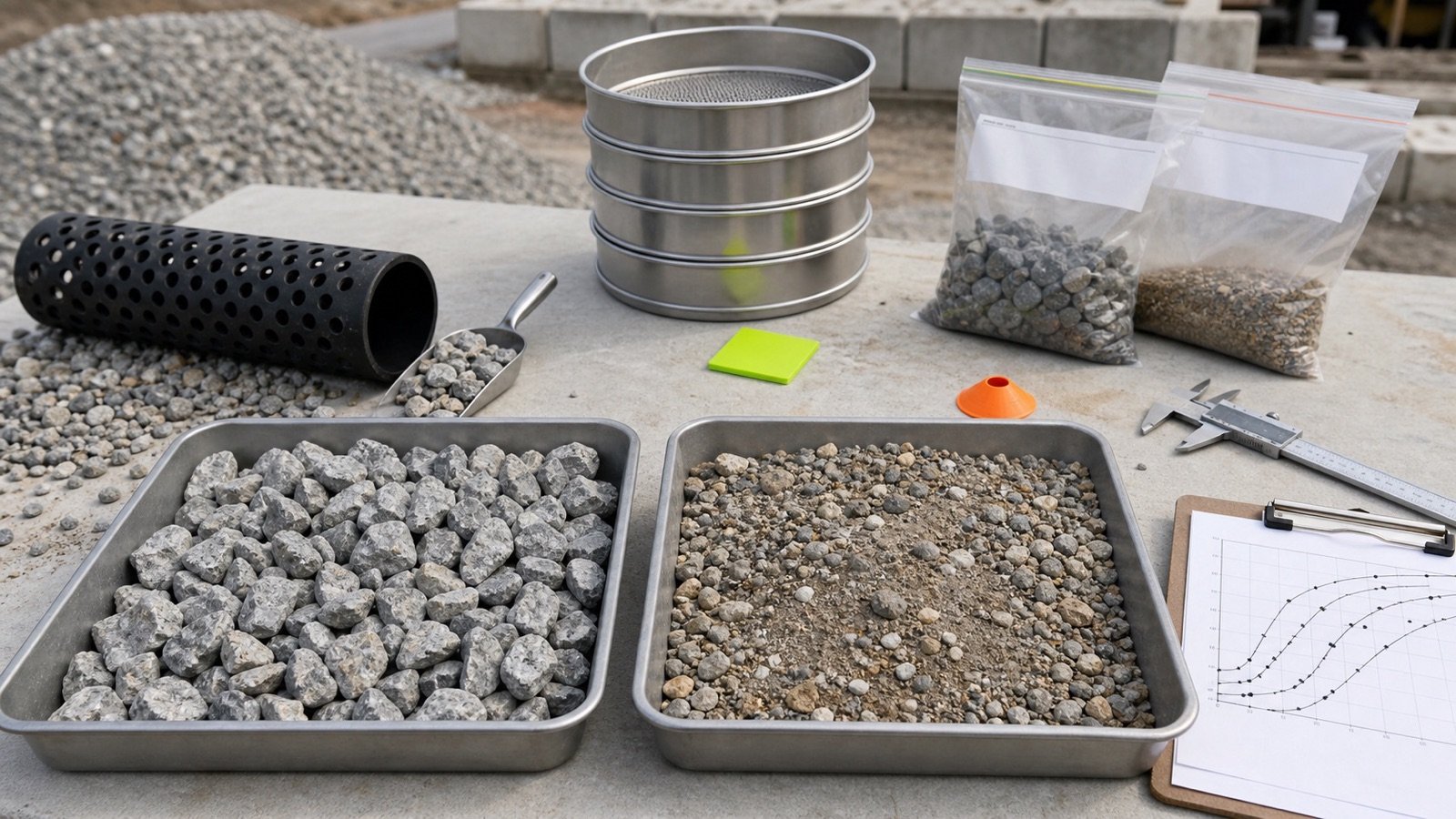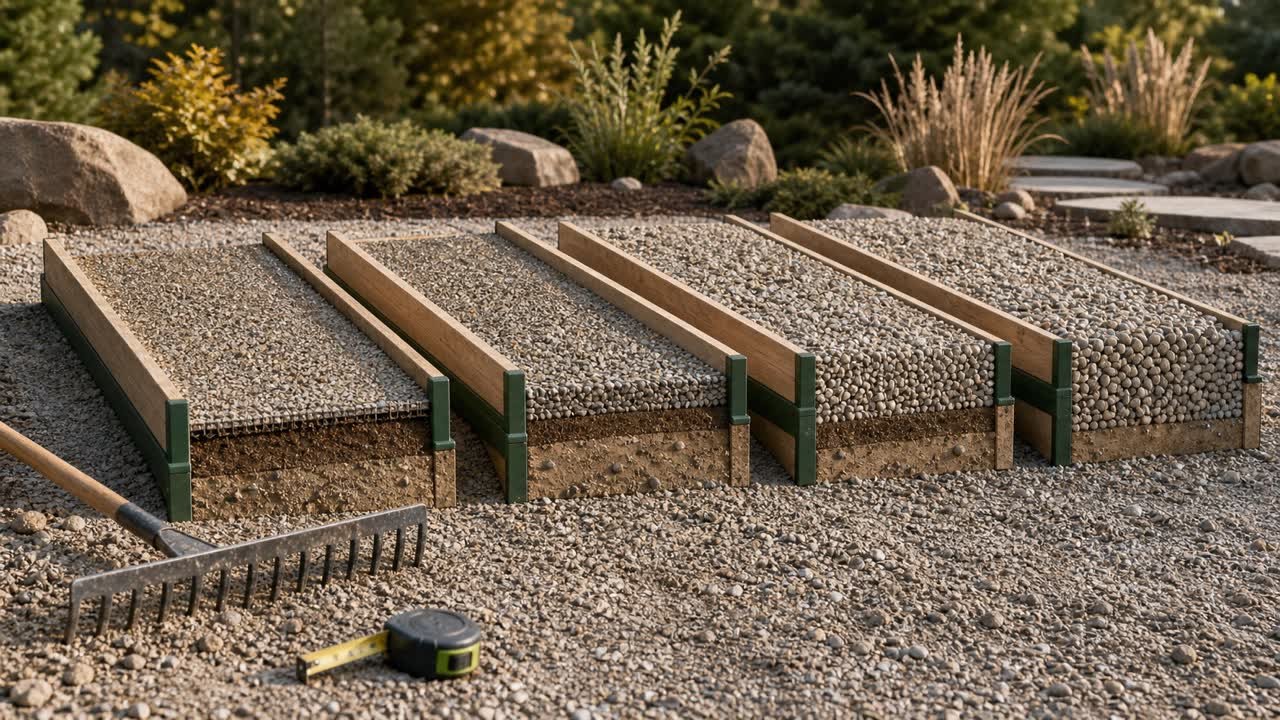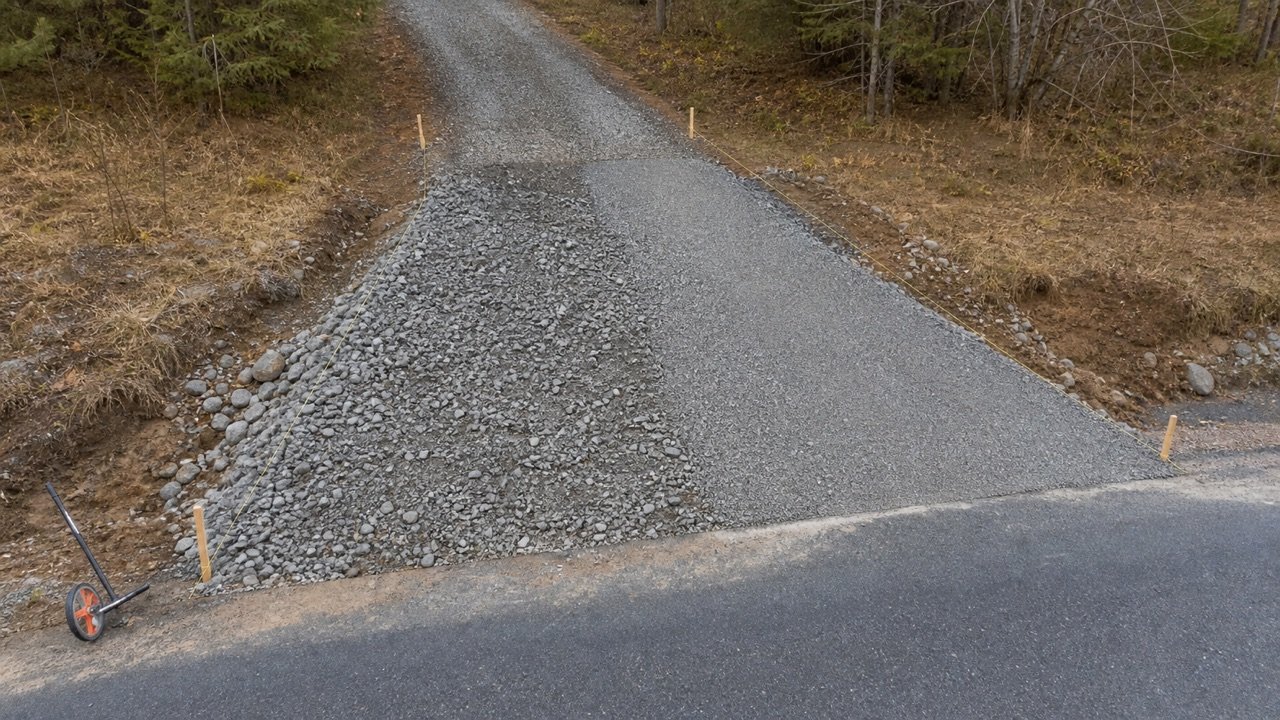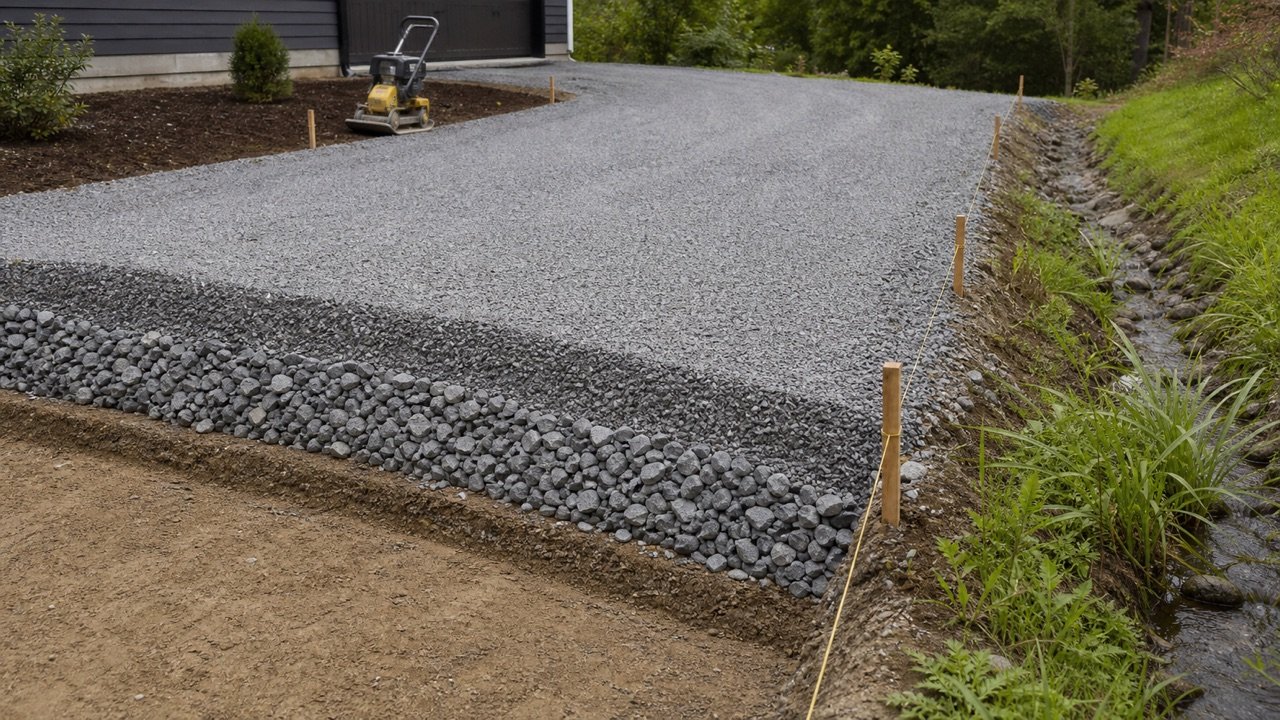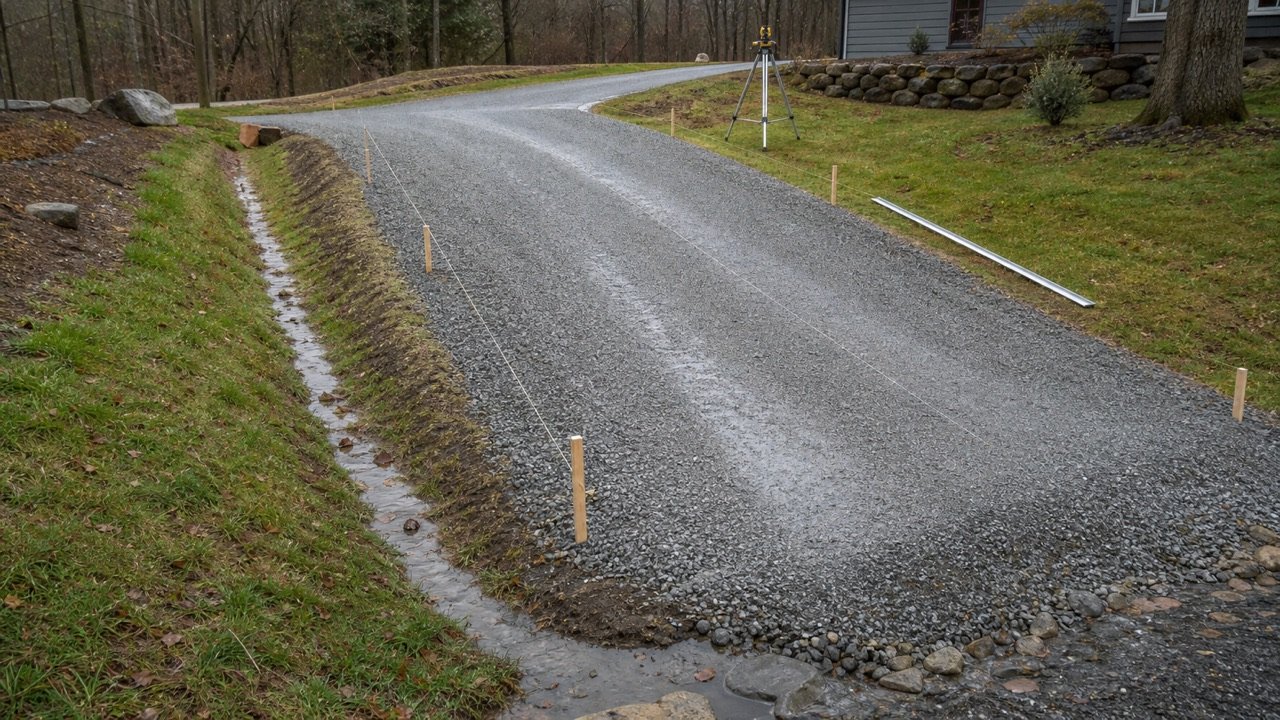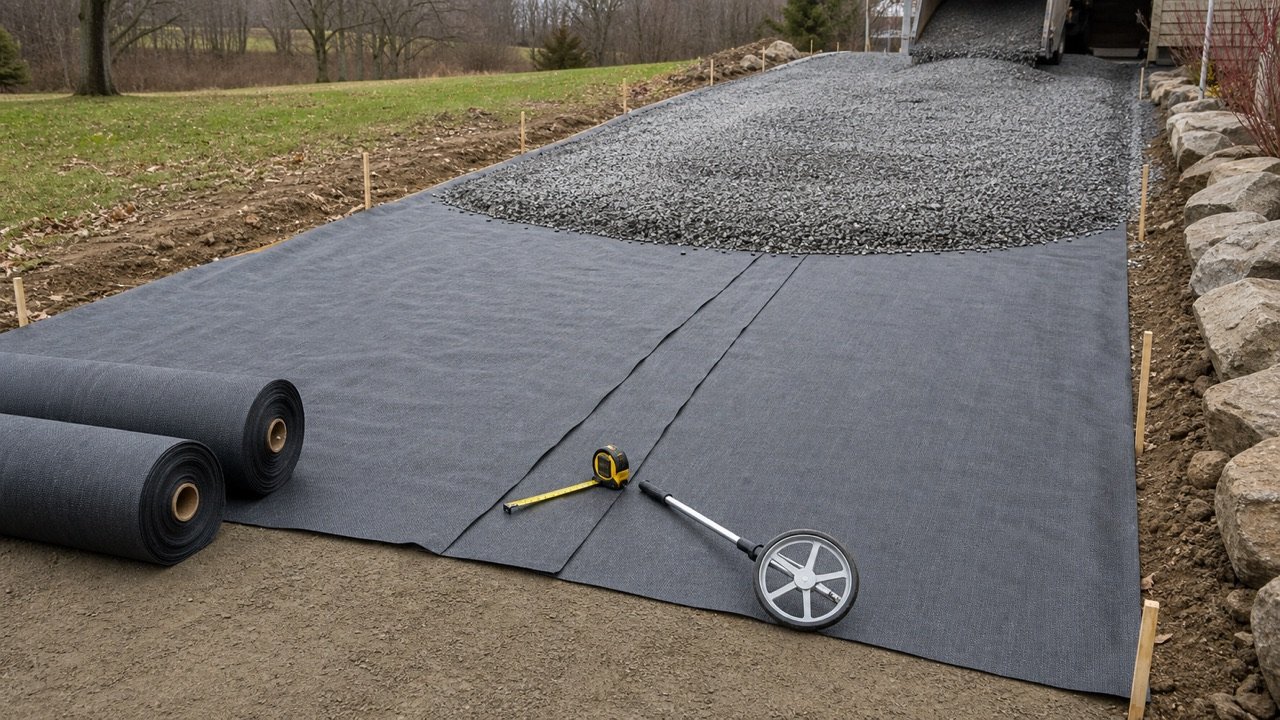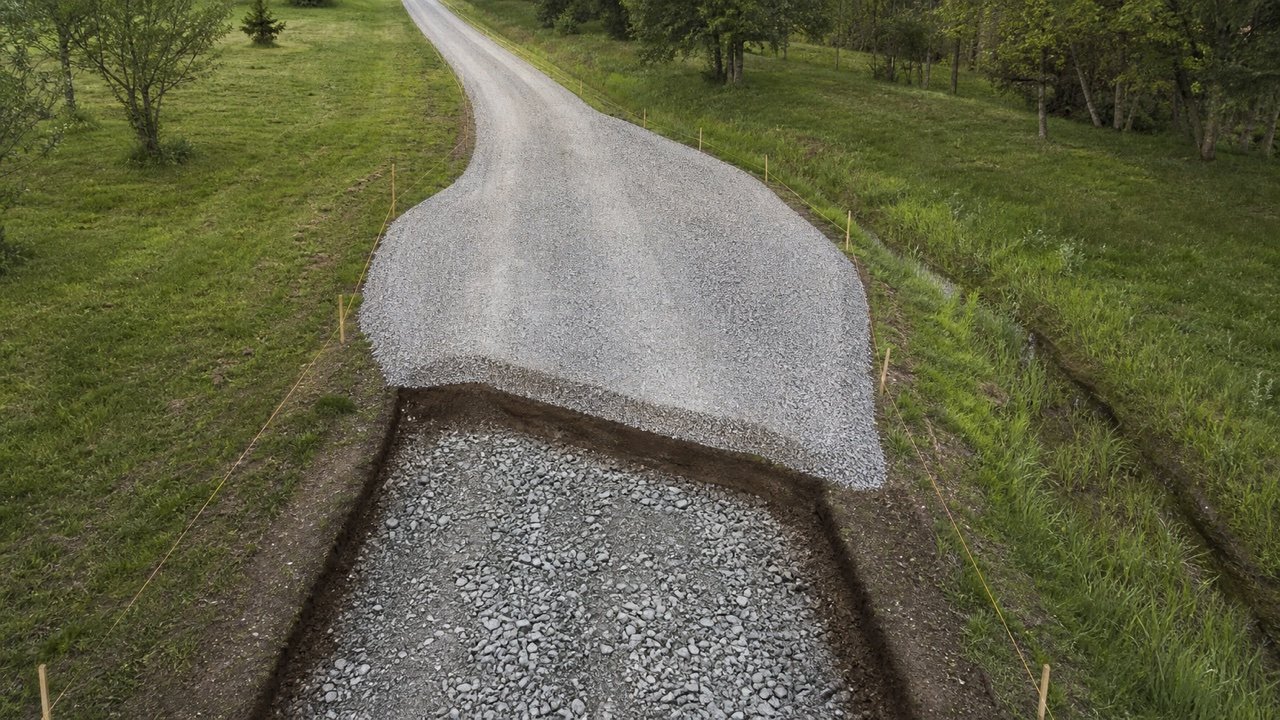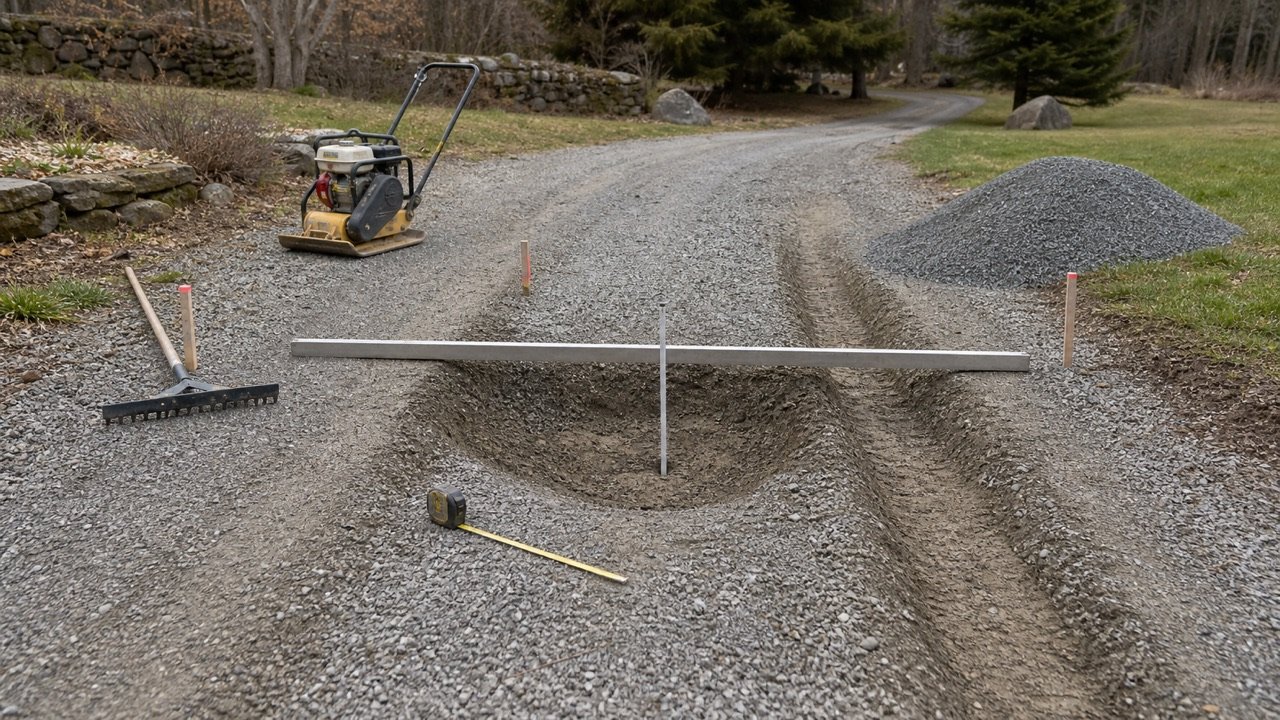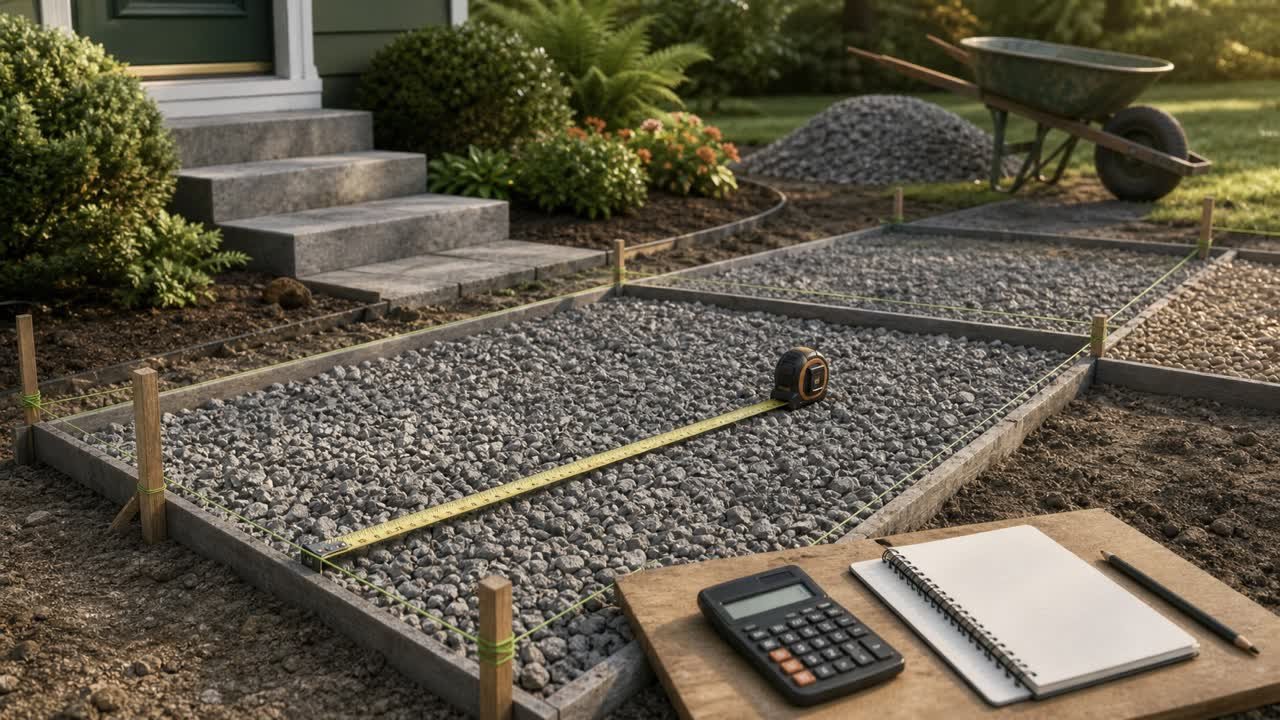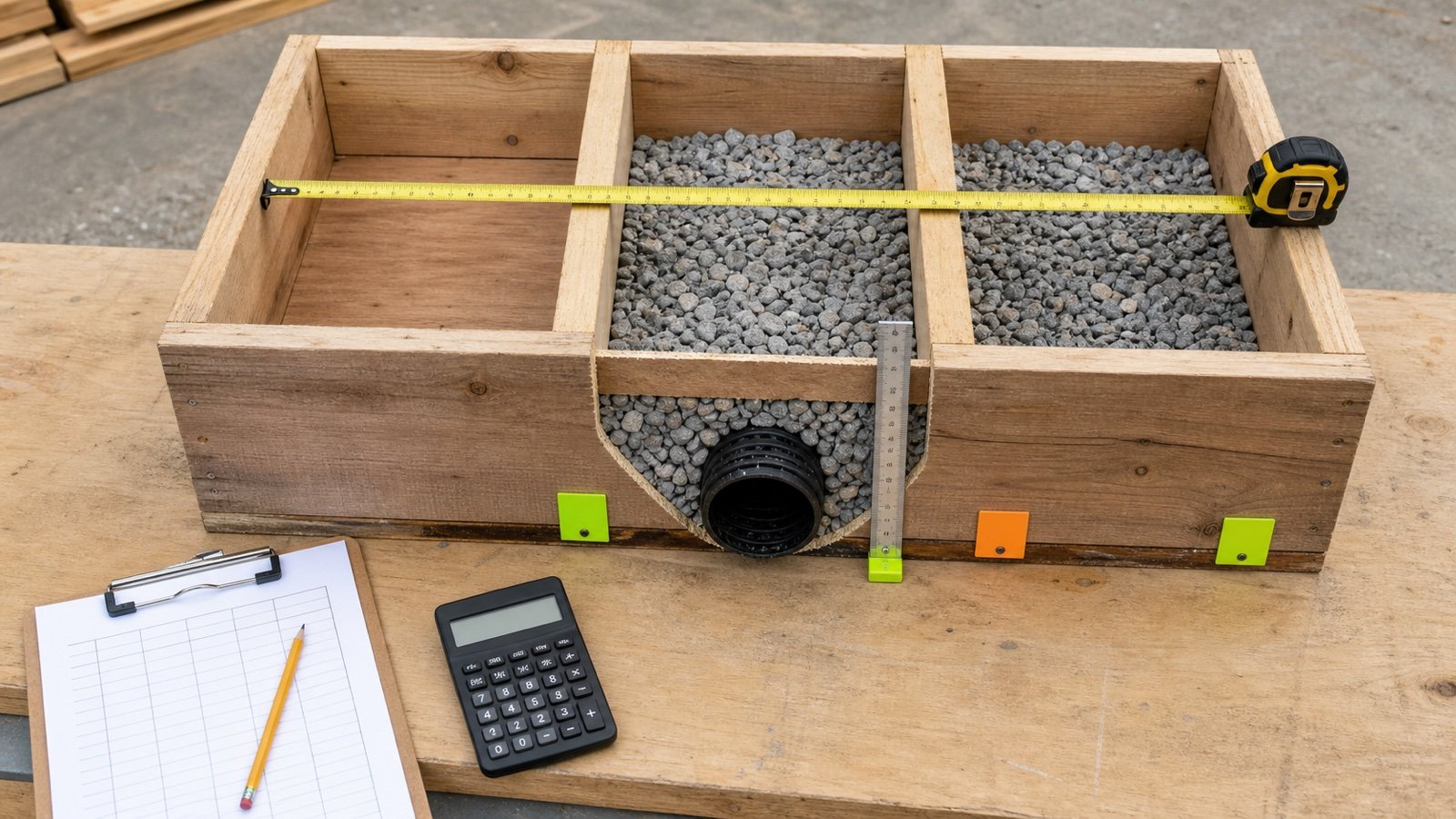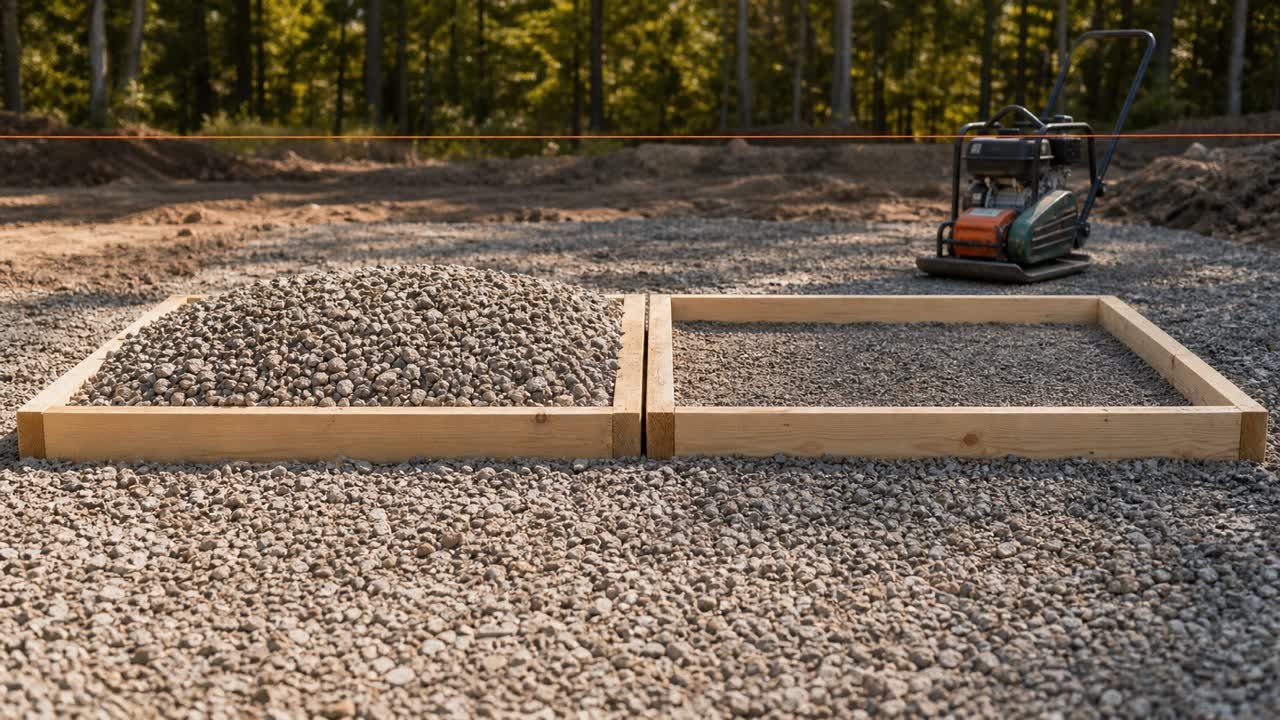
A gravel layer can have one volume when spread loose and a smaller volume after compaction. A useful estimate labels both states and converts between them with a factor supported by the selected material and the project method.
The required finished depth comes first. A trial section, matched density data, project records, or product-specific information can then establish the loose quantity needed to produce that compacted layer.
How much loose gravel is needed for a compacted layer?
Calculate the required compacted volume from area and finished depth. Multiply that volume by a documented loose-to-compacted factor.
Compacted volume = area × required compacted depth
Loose planning volume = compacted volume × loose-to-compacted factor
This page defines the factor as loose volume divided by compacted volume. A factor of 1.20 means 1.20 loose cubic metres or cubic yards are planned for each 1.00 compacted cubic metre or cubic yard.
Use the Gravel Calculator to calculate the geometric volume from measured area and required depth. Treat that result as compacted volume only when the depth entered is the required compacted depth.
Which gravel volume are you calculating?
Label every quantity before applying a factor. Bank, loose, compacted, delivered, and ordered quantities describe different boundaries or material states.
| Quantity | What it describes | Useful evidence |
|---|---|---|
| Required compacted volume | Net area multiplied by the accepted finished layer depth | Plans, specification, measured area, and finished-depth requirement |
| Loose spread volume | Material distributed before the stated compaction process | Trial area, loose lift readings, load records, and moisture condition |
| Delivered volume | Material measured at the delivery boundary | Ticket basis, legal measurement method, and supplier terms |
| Delivered mass | Scale-ticket mass for the selected product | Certified scale ticket and moisture or billing basis |
| Accepted compacted volume | Finished geometry that passes the project's checks | Survey, depth readings, density testing, and acceptance record |
| Order quantity | Purchase quantity after documented handling allowance and supplier rounding | Supplier selling unit, minimum order, increments, fees, and delivery plan |
OSMRE earthwork guidance uses separate bank, loose, and compacted volume labels because excavation and compaction change the volume occupied by the same material. The same discipline prevents a gravel estimate from mixing the finished layer with the delivered or ordered state.
How do you calculate a loose-to-compacted factor?
For a controlled trial covering the same plan area, divide the representative loose lift thickness by the accepted compacted thickness.
Loose-to-compacted factor = loose lift thickness ÷ compacted thickness
Loose planning volume = compacted volume × factor
The thickness method works when the loose and compacted measurements cover the same material, area, and boundaries. Measure enough points to represent the layer. Isolated high or low readings can distort a single-depth factor.
A factor can also come from matched dry bulk densities when the same dry material mass is being compared:
Loose-to-compacted factor = compacted dry bulk density ÷ loose dry bulk density
This density relationship requires representative dry densities for the same product and states. Wet bulk density can change with water content, so do not combine a wet delivered density with a dry compacted density.
How does a shrinkage percentage convert to loose volume?
Read the definition before using the percentage. When shrinkage is defined as the volume reduction divided by loose volume, divide compacted volume by one minus the shrinkage fraction.
Shrinkage fraction = (loose volume - compacted volume) ÷ loose volume
Loose volume = compacted volume ÷ (1 - shrinkage fraction)
Georgia DOT's base-course training uses this definition and formula. A 20% shrinkage fraction gives a loose-to-compacted factor of 1 ÷ 0.80 = 1.25.
| Method for 80.0 m³ compacted | Loose result | Compacted check at 20% shrinkage |
|---|---|---|
| 80.0 ÷ (1 - 0.20) | 100.0 m³ | 100.0 × 0.80 = 80.0 m³ |
| 80.0 × 1.20 | 96.0 m³ | 96.0 × 0.80 = 76.8 m³ |
Some documents use “compaction factor” for compacted volume divided by loose volume, while others use its inverse. Record the equation beside the factor. A label without a numerator and denominator is too ambiguous for a checked estimate.
Worked metric example
A base area measures 120 m² and requires an accepted compacted depth of 150 mm. A representative project trial used a 190 mm loose lift over the same area to produce an accepted 150 mm layer.
| Step | Calculation | Result |
|---|---|---|
| Convert compacted depth | 150 mm ÷ 1,000 | 0.150 m |
| Required compacted volume | 120 × 0.150 | 18.000 m³ |
| Loose-to-compacted factor | 0.190 ÷ 0.150 | 1.2666667 |
| Loose planning volume | 18.000 × 1.2666667 | 22.800 m³ |
The independent geometry check is 120 m² × 0.190 m = 22.800 m³. This result covers the loose-to-compacted state change in the documented trial. Add a handling allowance only when project evidence supports it, then apply the supplier's selling increment separately.
Worked imperial example
A 1,800 ft² area requires 4 in of compacted gravel. A representative trial shows that a 4.75 in loose lift produces the accepted 4.00 in finished layer.
- Calculate compacted volume: 1,800 × (4 ÷ 12) = 600 ft³.
- Convert volume: 600 ÷ 27 = 22.222222 yd³.
- Calculate the factor: 4.75 ÷ 4.00 = 1.1875.
- Calculate loose planning volume: 22.222222 × 1.1875 = 26.388889 yd³.
The independent lift check is 1,800 × (4.75 ÷ 12) ÷ 27 = 26.388889 yd³. Keep the unrounded result for the next documented adjustment and supplier conversion.
What does 95% compaction measure?
Percent compaction usually compares field dry density with the maximum dry density obtained from a specified reference test. A 95% requirement is a density acceptance ratio, not a statement that loose gravel loses 5% of its volume.
Relative compaction = field dry density ÷ reference maximum dry density × 100%
FHWA defines relative compaction this way and notes that the maximum dry density comes from a specified compaction test. For example, a field dry density of 2,060 kg/m³ and a reference maximum dry density of 2,150 kg/m³ gives:
2,060 ÷ 2,150 × 100 = 95.814%
That result says nothing about the original loose volume because the calculation contains no loose-volume or loose-density measurement. It cannot supply a 1.05 order multiplier.
Why does aggregate type change the method?
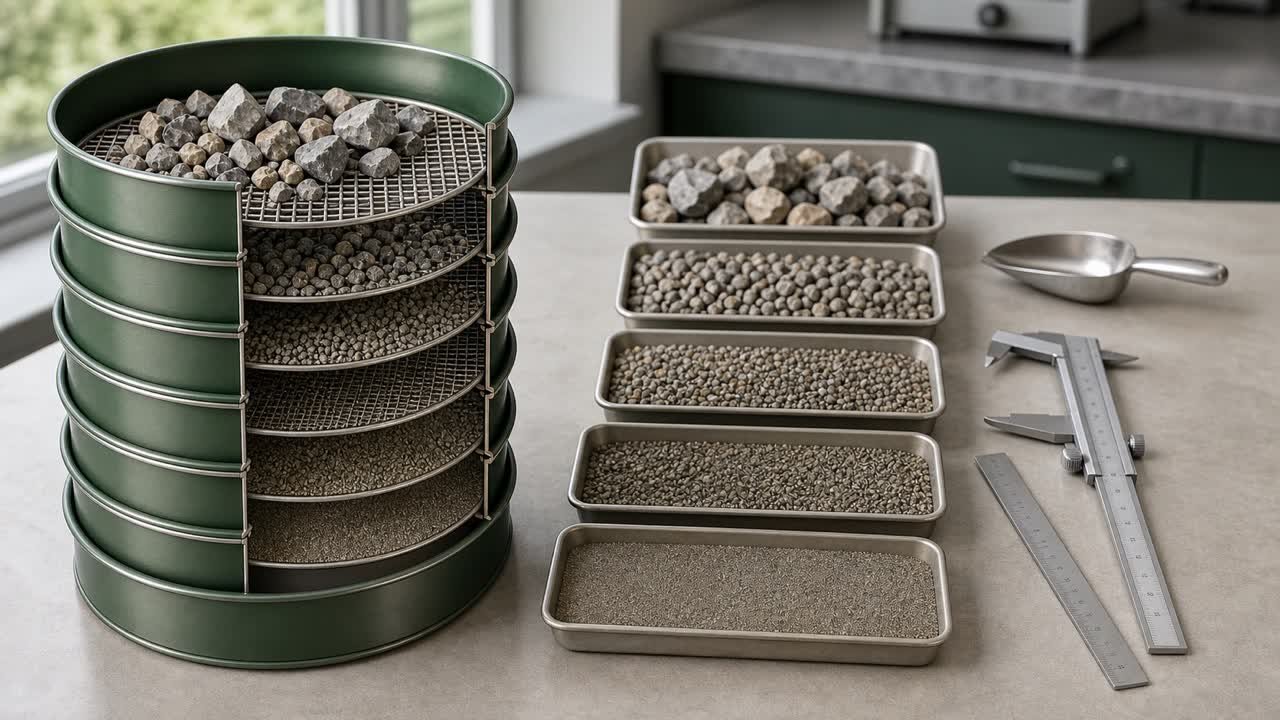
Gradation, particle shape, moisture, placement, and test method affect how an aggregate packs and how its density is evaluated. Use the procedure named in the project specification for the selected material.
FHWA research on geosynthetic reinforced soil tested a well-graded aggregate with a standard Proctor method and used a vibratory test for several open-graded aggregates. The open-graded materials had no reported optimum moisture content in that test table because they were free draining.
| Variable | Why it matters |
|---|---|
| Source and product | Quarry, rock type, crushing process, and specification can change the material. |
| Gradation | Dense-graded and open-graded aggregates have different void structures and may use different acceptance methods. |
| Moisture state | Water changes wet mass and can affect compaction behavior. |
| Loose placement method | Dumped, stockpiled, truck-measured, and evenly spread material do not share one automatic volume boundary. |
| Lift thickness and equipment | The project method may limit lift thickness and define equipment, passes, speed, or acceptance tests. |
| Finished acceptance | Depth, grade, density, stiffness, proof rolling, or another specified check may control acceptance. |
A factor from one material or trial should be rechecked when these conditions change. This page does not choose the compaction test or accept the finished work.
How do you establish a factor from a trial section?
Use a measured trial that represents the planned source, moisture range, layer, equipment, and acceptance method. Record both the input quantity and accepted output boundary.
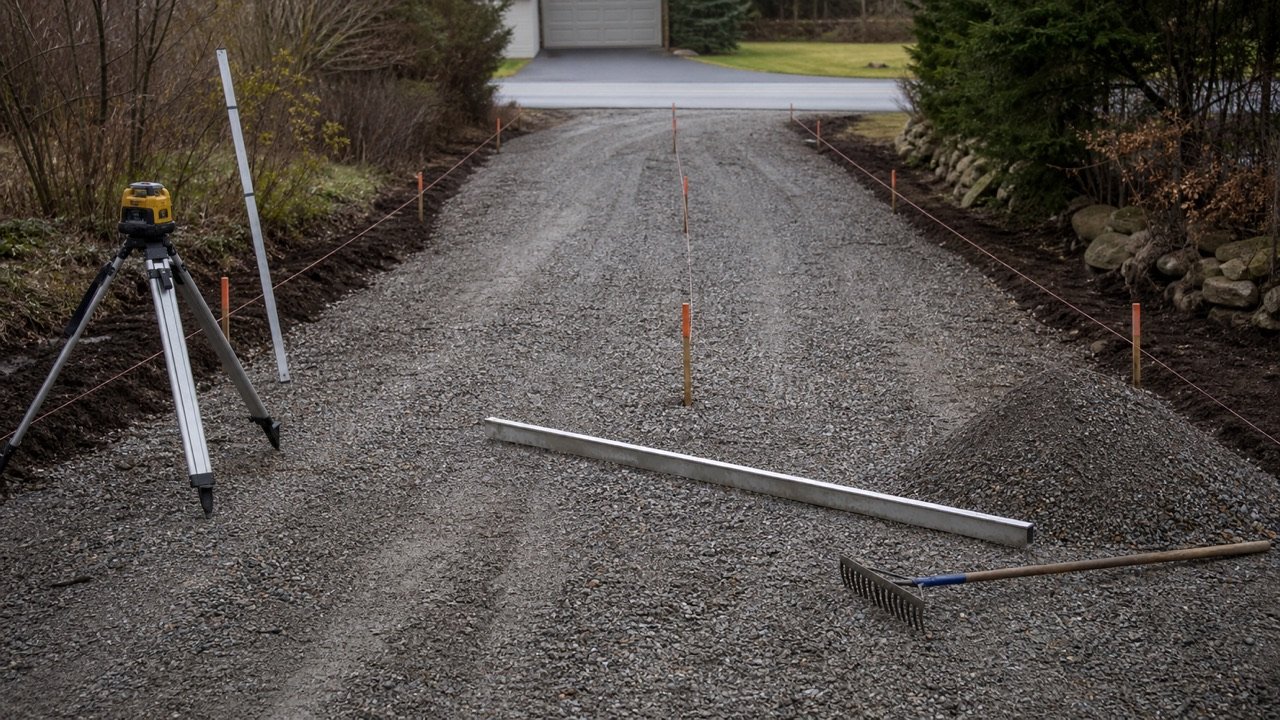
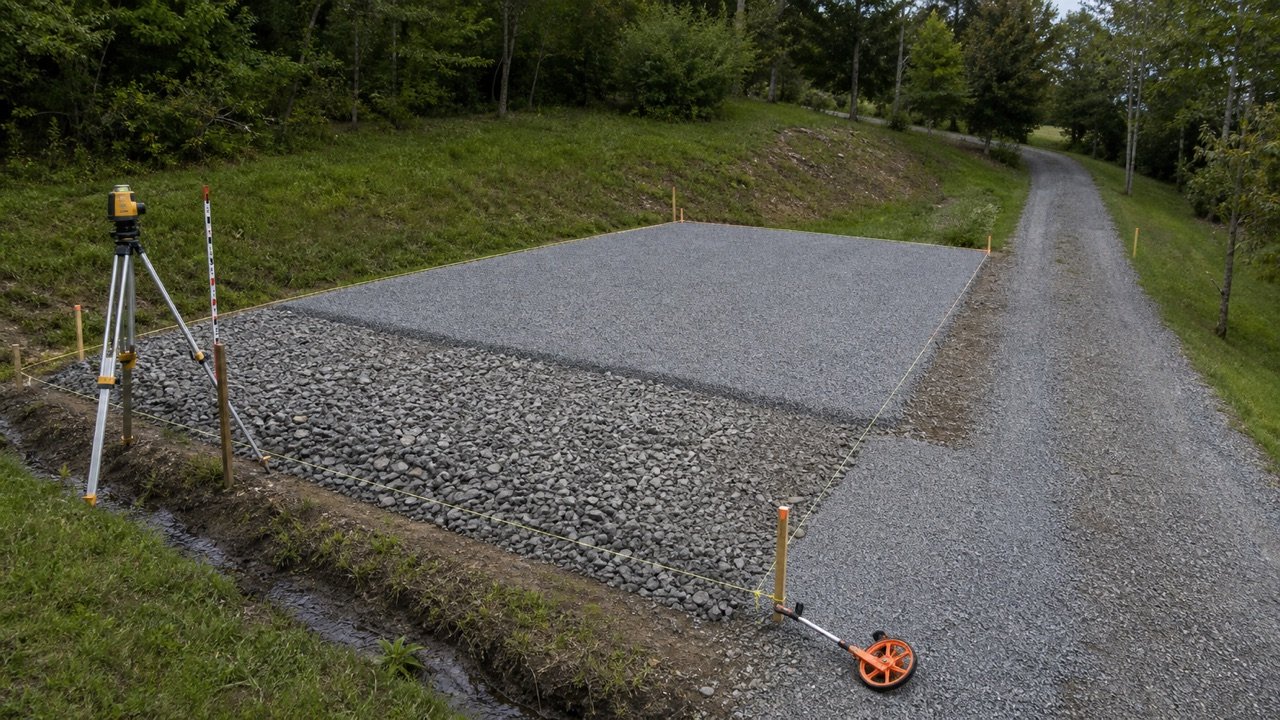
- Mark a trial area with a measured net plan area.
- Record the prepared-surface elevations or depth pins.
- Identify the aggregate source, product, gradation, moisture condition, and delivery-ticket basis.
- Measure the loose lift at representative points or reconcile a verified loose quantity across the marked area.
- Apply the approved compaction procedure.
- Verify the accepted finished surface, depth, and required field tests.
- Calculate the factor from the same area and boundaries.
- Record low, high, and average values instead of keeping only a rounded factor.
A trial factor supports planning under comparable conditions. It does not replace the specification, inspection, or acceptance testing.
How can delivery tickets check actual yield?
Compare cumulative delivered material with the compacted volume accepted in a clearly bounded section. Keep mass and volume records separate until a supported conversion connects them.
| Record | Minimum detail |
|---|---|
| Section boundary | Station, offset, area, layer, prepared surface, and finished surface |
| Design requirement | Compacted depth, grade, product, and acceptance method |
| Deliveries | Ticket number, date, source, product, mass or stated volume, and rejected or diverted loads |
| Placement | Weather, moisture condition, lift, equipment, passes when specified, and interruptions |
| Accepted output | Surveyed or measured volume, depth readings, test references, and acceptance status |
| Calculated yield | Delivered input divided by accepted compacted output, with both state labels |
Truck body capacity is not proof of the material volume carried on every trip. Scale tickets report mass, while struck or heaped body capacity describes a volume boundary. Use the supplier's documented measurement basis and the applicable legal requirements.
Should handling allowance be included in the compaction factor?
Keep it separate. The compaction factor converts between defined loose and compacted states. Handling allowance covers documented losses or measurement uncertainty, and supplier rounding converts the planning result into a purchasable quantity.
Order basis = compacted geometry × state factor × documented handling factor
Then round under the supplier's stated selling increment. Keeping each step visible makes it possible to update one assumption without changing the others.
The gravel cost guide explains how delivery, minimum quantities, and selling units affect the quoted total.
Common gravel compaction mistakes
- Using 95% relative compaction as 5% volumetric shrinkage.
- Adding a shrinkage percentage when its definition requires division by one minus the fraction.
- Copying a generic factor without identifying its material, moisture, and measurement states.
- Calling the calculator result “loose” when the entered depth is a compacted design depth.
- Using wet delivered density with dry compacted density.
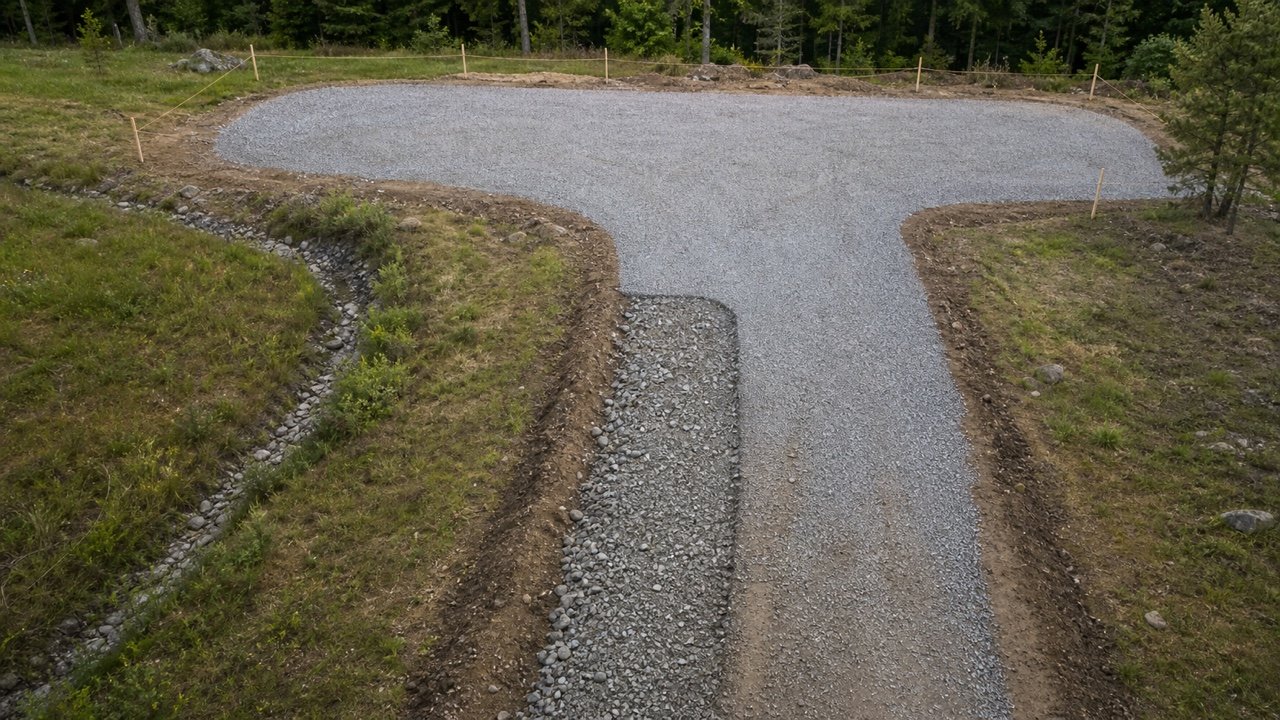
- Applying a dense-graded base factor to clean, open-graded drainage stone.
- Using one spot depth to represent an uneven trial area.
- Combining compaction, handling loss, contingency, and supplier rounding in one unexplained percentage.
- Assuming every truck carries its nominal body capacity.
- Rounding the geometric result before applying the documented factor.
- Using the quantity estimate to choose equipment, passes, lift thickness, moisture, or acceptance criteria.
What should the estimate record?
- Project, section, layer, drawing, specification, and revision.
- Net area and required compacted depth.
- Geometric compacted volume before adjustments.
- Material source, product, and gradation.
- Loose and compacted state definitions.
- Factor equation, value, source, date, and applicable conditions.
- Trial measurements or matched dry-density records.
- Separate handling allowance and its evidence.
- Supplier selling unit, rounding increment, minimum quantity, and quote date.
- Prepared by, checked by, open assumptions, and acceptance status.
Safety and scope
Project drawings, specifications, geotechnical recommendations, manufacturer information, and the responsible professionals control material selection, layer thickness, moisture, equipment, passes, test method, and acceptance. Required performance can change with drainage, frost, loading, confinement, subgrade, and local conditions.
This page checks quantity states and arithmetic. It does not design a pavement or foundation, approve a base course, set a lift thickness, select compaction equipment, or certify field acceptance.
Sources and source scope
- Georgia DOT, Base Course Inspection, Chapters 1 and 2: loose and compacted volume relationship and the stated shrinkage-factor equations.
- Office of Surface Mining Reclamation and Enforcement, Technical Reference 1, Appendix A: bank, loose, and compacted material-state terminology and project-factor context.
- FHWA, Geotechnical Engineering Circular, Chapter 5: relative-compaction definition, dry-density basis, and reference-test context.
- FHWA-HRT-13-066, Chapter 2: separate laboratory density methods and results for well-graded and open-graded aggregates in the reported research.
- NIST Guide to the SI, Appendix B.8: exact unit relationships used in the imperial conversion.
Scope: the sources support the material-state definitions, equations, percent-compaction meaning, test-method distinction, and unit conversions. They do not provide a universal gravel compaction factor. The selected material, project records, trial section, specification, and responsible people control the factor and acceptance method.
Calculate the initial geometry with the Gravel Calculator, compare volume-only coverage in the Gravel Coverage Guide, or return to the Gravel hub.