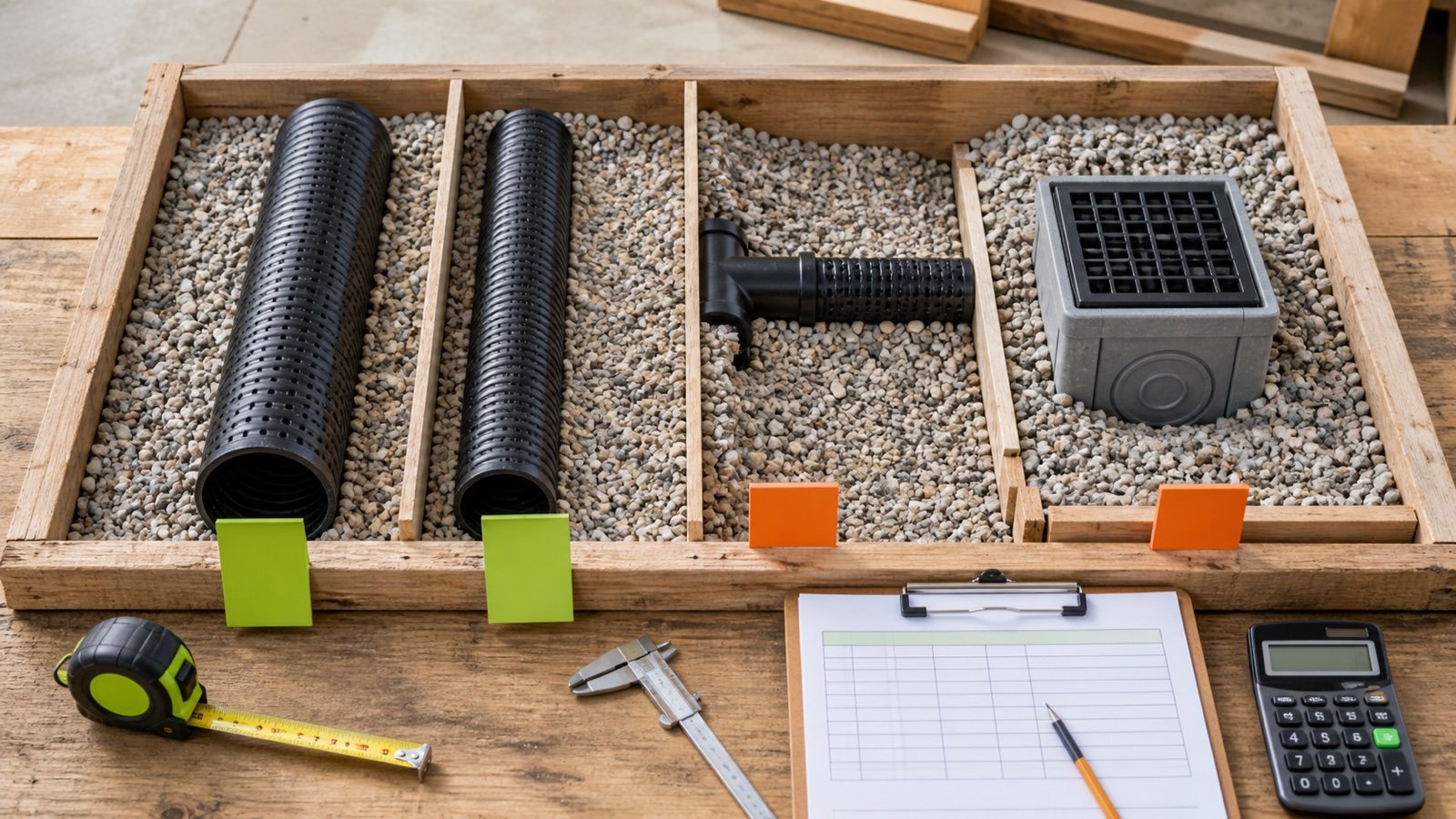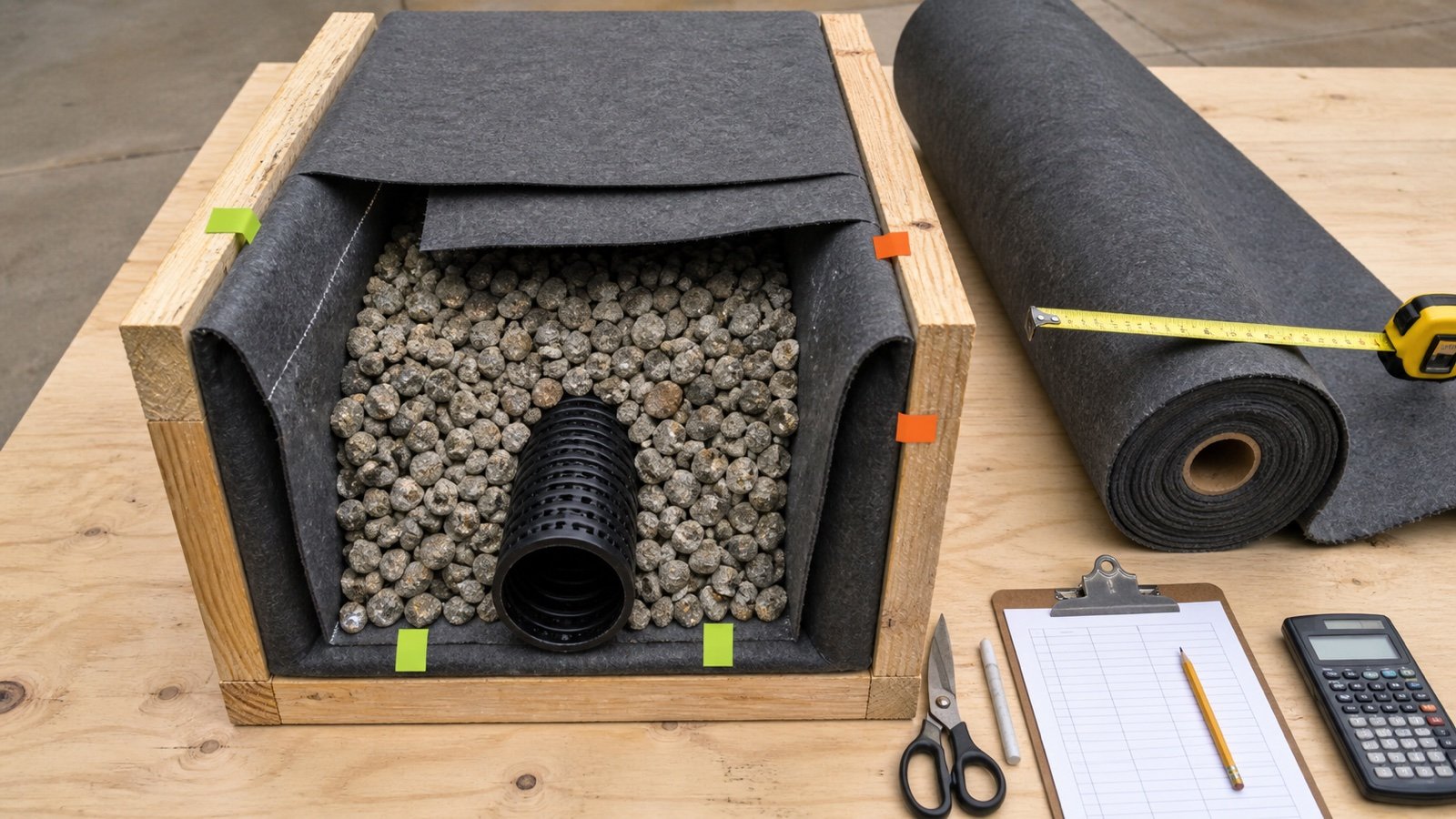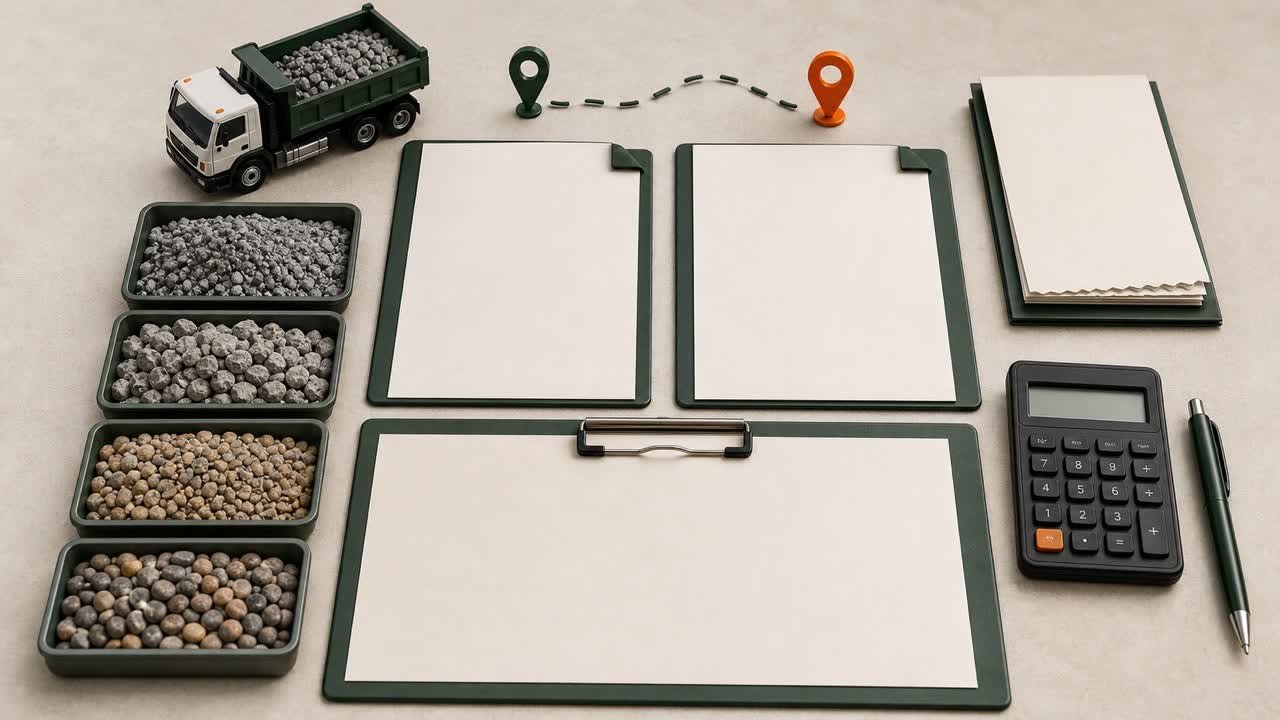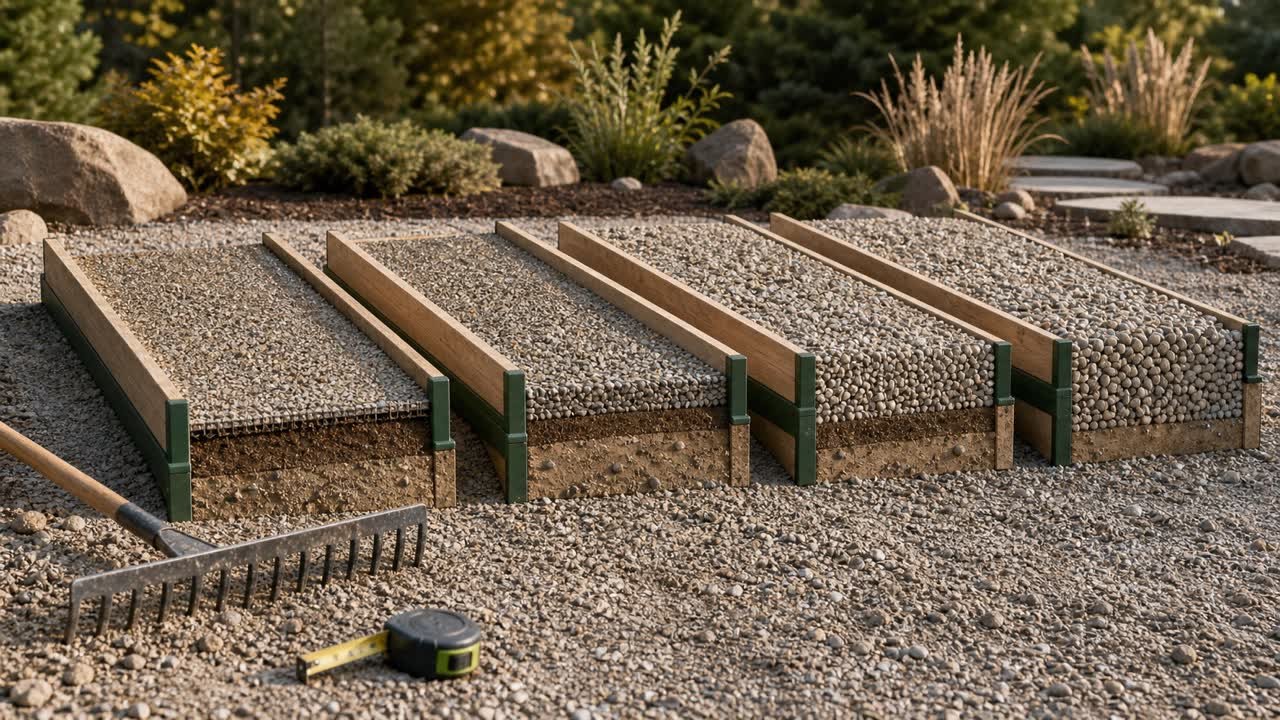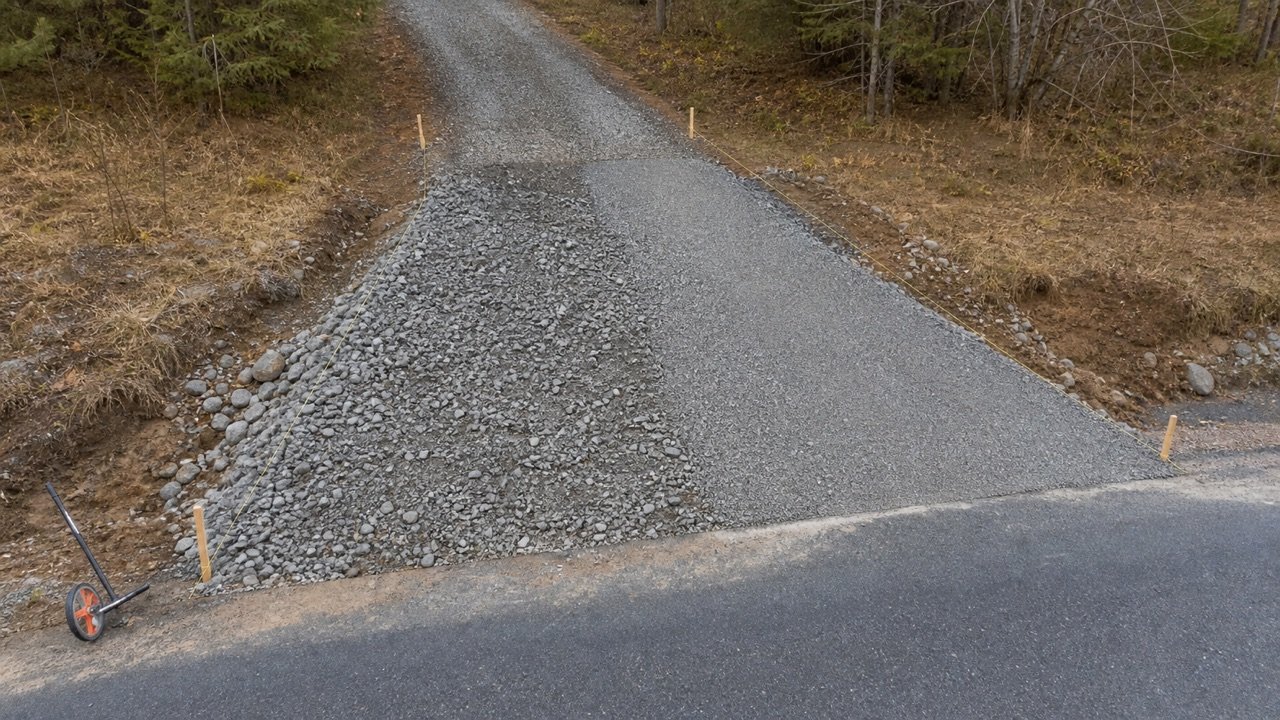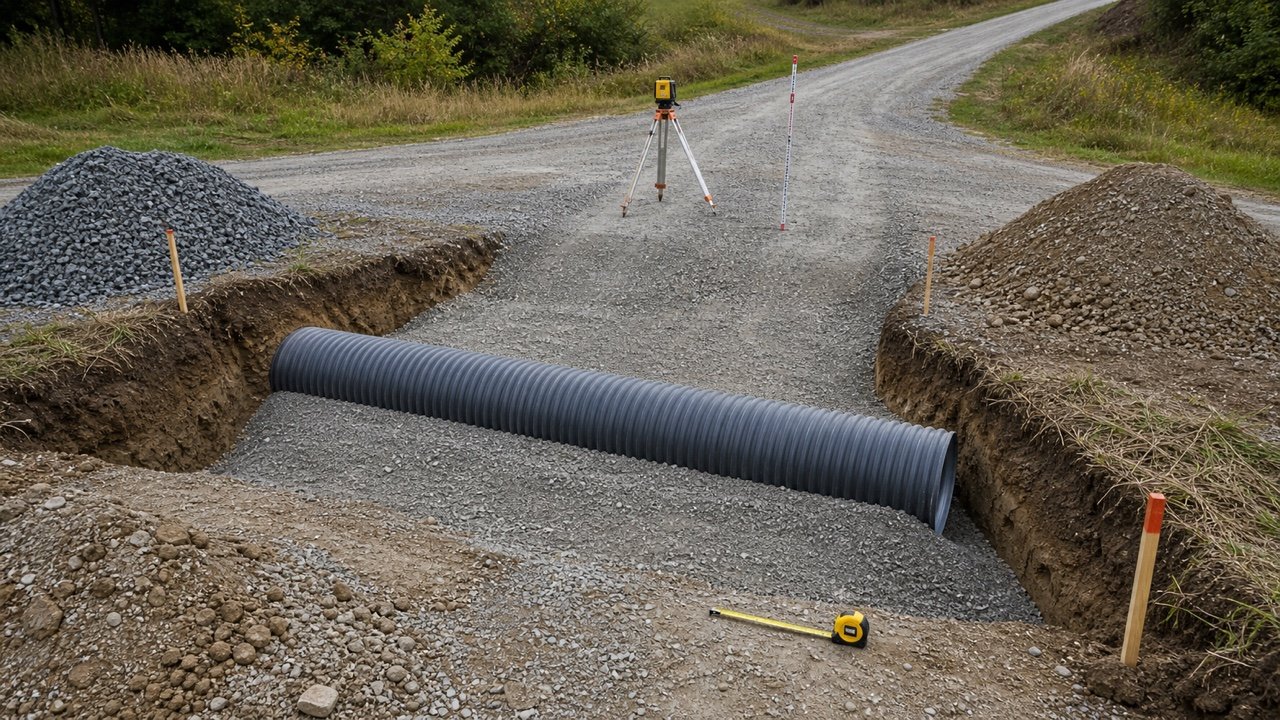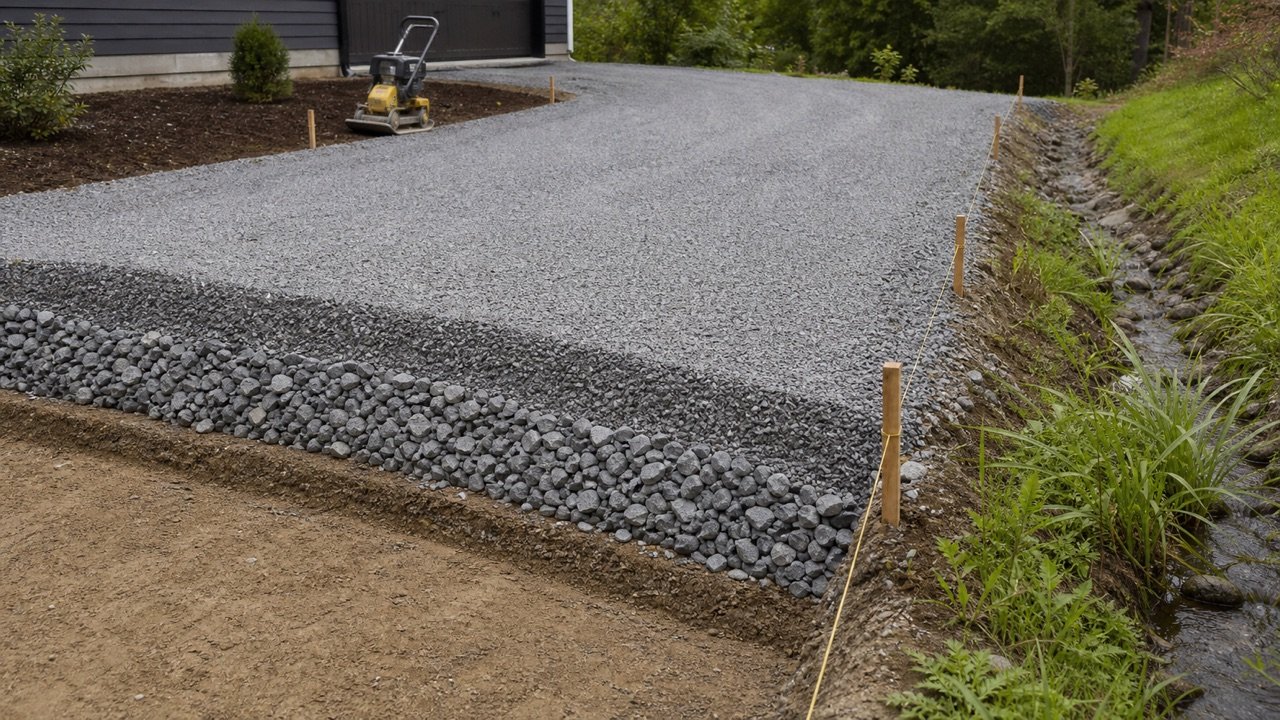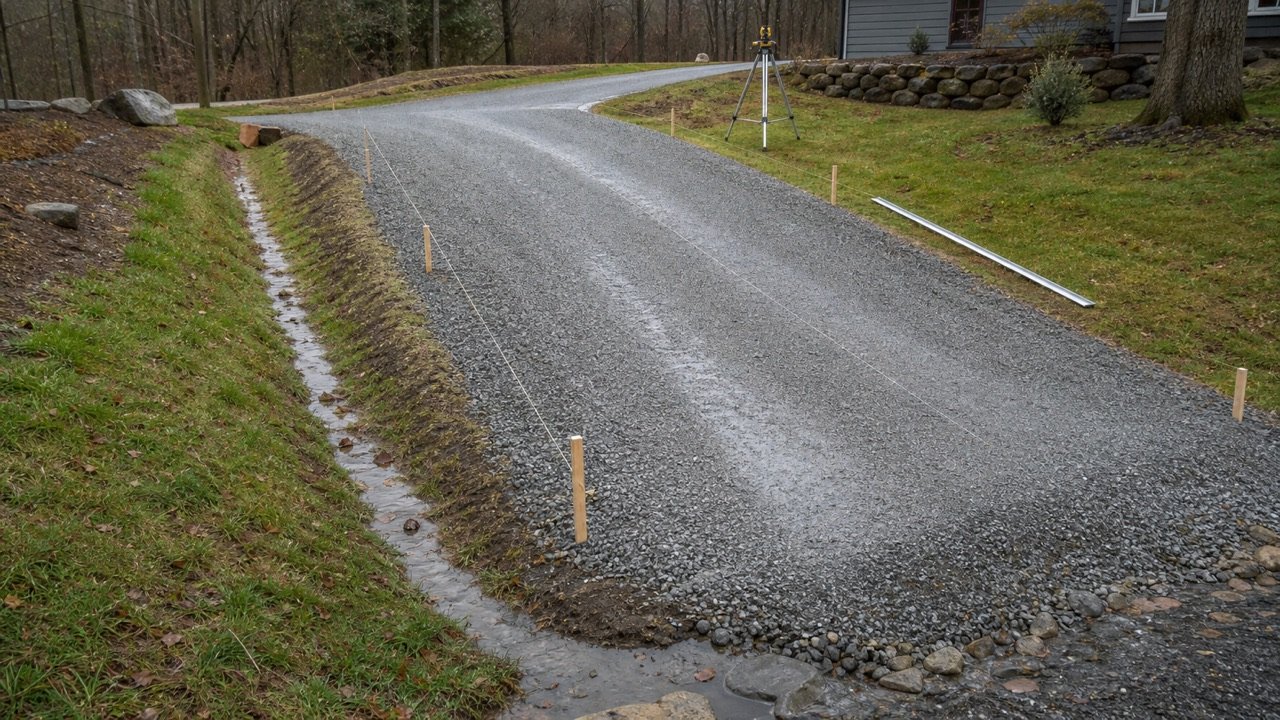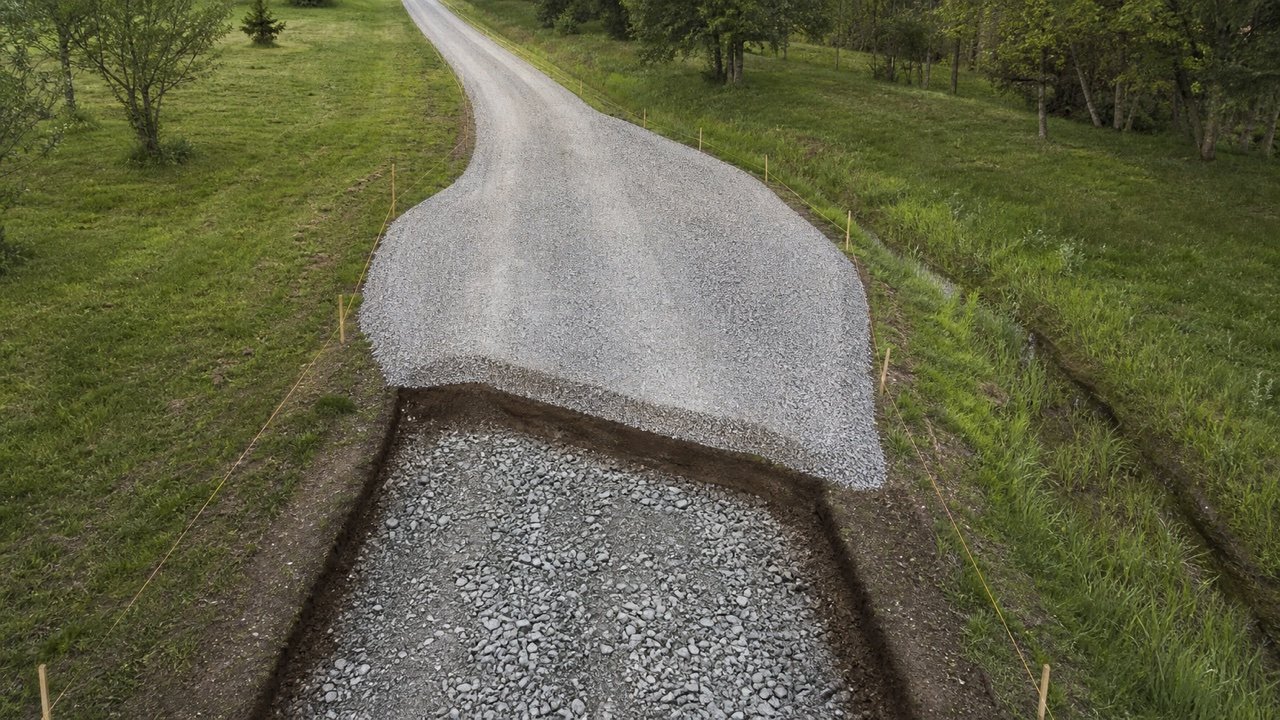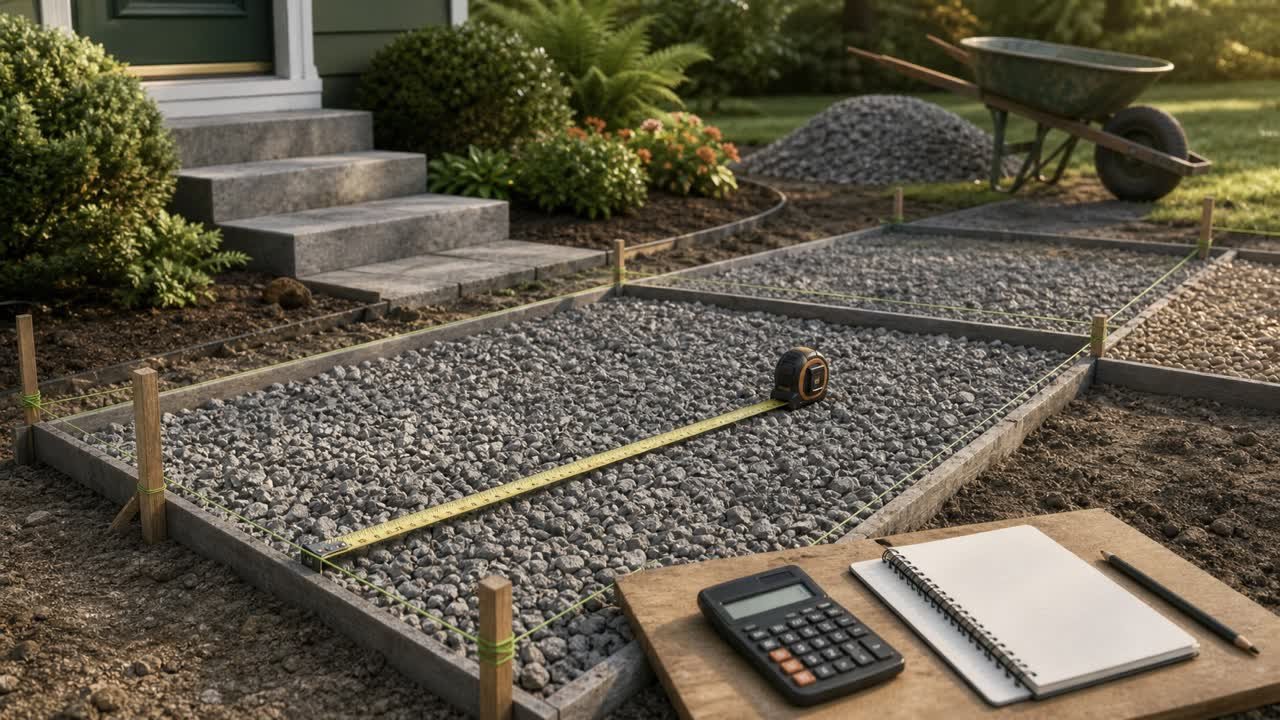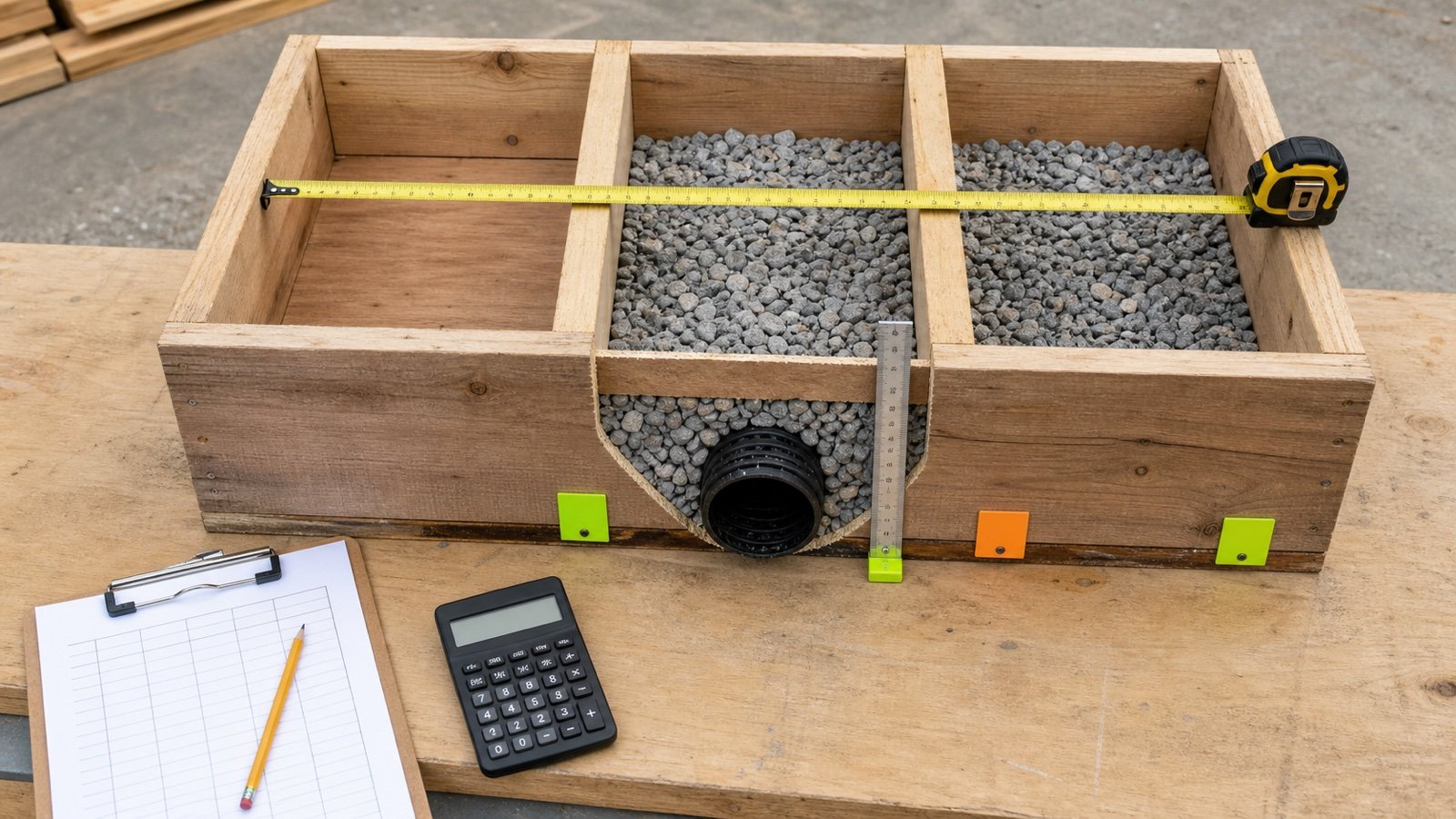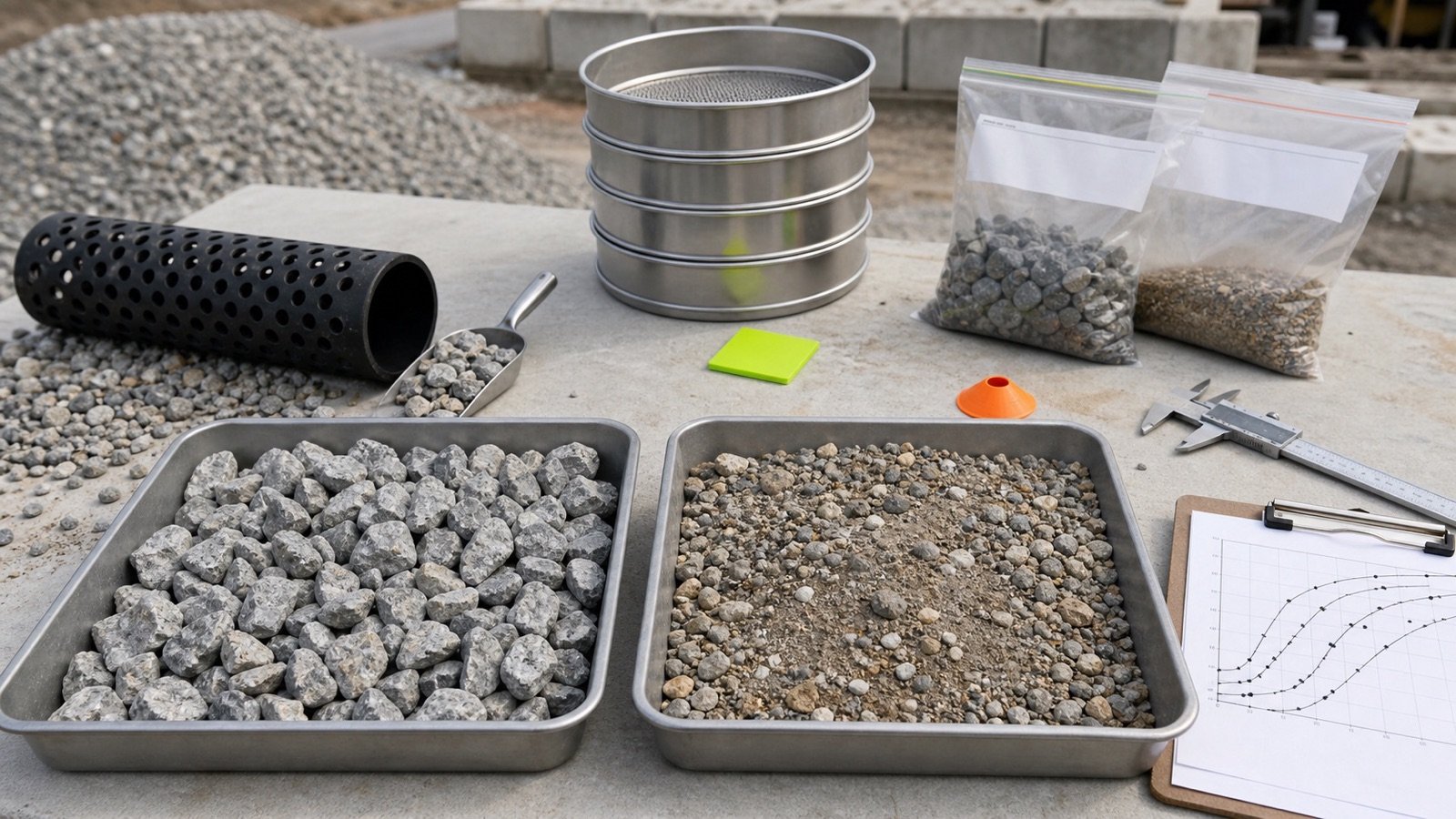
French drain gravel selection starts with the drain detail and the conditions around it. The aggregate may need to provide a hydraulic envelope, a soil-retaining filter, pipe bedding, or more than one of those functions.
Record the surrounding soil, pipe openings, filter or geotextile requirement, aggregate gradation, source and current supplier evidence before placing the order. A familiar sales name supplies only part of that record.
What gravel should you use in a French drain?
Use the aggregate, filter or envelope material named in the accepted project detail. If the detail gives performance or gradation requirements, compare every required field with the current supplier report for the proposed source and lot.
The surrounding soil, site water conditions, pipe openings and selected filter system can change the acceptable material. Use the Drainage Gravel Calculator after the product and placed-gravel zone have been confirmed.
Write the requirement beside the supplier result. Record the person or process that can accept a substitution or missing value.
Which record controls the gravel choice?
The accepted drawing, specification and applicable local criteria control the material. A supplier page can identify an available product, while the project record decides whether that product fits the drain.
| Record | Information to extract | Open question |
|---|---|---|
| Drain plan and section | Drain purpose, material zones, dimensions, pipe and outlet | Which zone receives this aggregate? |
| Specification or local criteria | Material designation, gradation, properties, tests and acceptance | Which edition and jurisdiction apply? |
| Soil or site record | Soil classification, grain-size data, water conditions and known clogging risks | Does the filter or envelope design use this record? |
| Pipe record | Product, outside diameter, perforation or joint openings and installation limits | Does the selected material stay outside the openings? |
| Supplier report | Product, source, sample or lot, date, test method and results | Does the report describe the material offered? |
| Approval record | Accepted product, deviations, conditions and responsible party | Has the proposed source been accepted? |
The NRCS national Code 606 page directs users to local Field Office Technical Guide documents. Its page was updated in 2026, while the linked national standard document is dated July 2022. Record both the document date and the local source used for the project.
Do product names prove suitability?
Product names identify what a supplier sells. They do not state the full particle-size distribution, soil compatibility, pipe-opening compatibility, sampling date or acceptance status.
| Term | Useful information | Still required |
|---|---|---|
| Washed | Supplier describes a washing process or cleanliness condition | Measured gradation, fines results, source and applicable cleanliness requirement |
| Clean or clear stone | Local sales term may indicate reduced fines | Definition, sieve report and lot identity |
| Drain rock | Supplier markets the product for drainage work | Exact gradation, intended application and project comparison |
| No. 57 or No. 67 | Named aggregate designation may connect to a published specification | Issuing specification, edition, source report and project acceptance |
| Pea gravel | Trade name for a small rounded product in many markets | Actual size distribution, shape requirement and system compatibility |
| Crusher run or dense-graded aggregate | Product name indicates a blended material in many markets | Full report and confirmation that its fines and gradation fit the named drain zone |
The Gravel Size Chart and Gradation Guide explains how to read percent-passing rows and why regional sales names need a stated specification.
How do filter, envelope, bedding and geotextile differ?
Each term describes a function or material zone. The accepted design can assign several functions to one material, or use separate products for each function.
| Term | Recorded function | Selection evidence |
|---|---|---|
| Filter | Pass water while controlling movement of the surrounding soil | Base-soil data and complete filter-design method |
| Hydraulic envelope | Improve flow conditions near the drain | Applicable envelope criteria and site conditions |
| Bedding or embedment | Support the pipe and maintain alignment under the stated loads | Pipe, trench, foundation and installation requirements |
| Geotextile filter | Provide selected retention and flow properties at a soil interface | Opening size, permeability, strength, durability and clogging review |
| Drainage aggregate zone | Occupy the measured gravel volume shown on the detail | Accepted cross-section, product and supplier report |
NRCS Code 606 separates filter envelopes from hydraulic envelopes and gives different selection rules. FAO drainage guidance also distinguishes a drain envelope from a strict filter and connects granular-envelope gradation to the soil and pipe perforations.
Which checks belong before purchase?
Close the technical identity before price and delivery terms are compared.
- Mark the aggregate zone and function on the accepted drain section.
- Record the governing document, revision, local criteria and acceptance authority.
- Connect the soil and pipe-opening data used by the filter or envelope decision.
- Request the proposed product's current source, sample identity and complete test report.
- Compare each required sieve and property on one line without substituting a trade name.
- Record deviations and obtain the required acceptance before ordering.
- Carry the accepted product and placed-zone limits into the quantity sheet.
How does a Code 606 supplier check work?
The following example uses only the national NRCS Code 606 hydraulic-envelope rows. It demonstrates a report comparison within that agricultural conservation-practice scope. It does not select gravel for a residential French drain.
Code 606 states that a sand-gravel hydraulic envelope has 100% passing the 1.5 in sieve, no more than 30% passing the No. 60 sieve and no more than 5% passing the No. 200 sieve. The 1.5 in opening equals exactly 38.1 mm.
| Row | Code 606 criterion | Report A | Numeric result |
|---|---|---|---|
| 1.5 in sieve | 100% passing | 100% | Pass |
| No. 60 sieve | 30% passing or less | 22% | Pass |
| No. 200 sieve | 5% passing or less | 4% | Pass |
Report A passes these 3 rows. Product identity, source, sample date, test method, other project requirements and local acceptance still need to be checked.
Fictional report B lists 100% passing 1.5 in, 34% passing No. 60 and 3% passing No. 200. The No. 60 result fails because 34% exceeds the 30% limit. The other 2 passing rows cannot cancel that deviation.
Why can a passing sieve table remain incomplete?
A sieve comparison covers the listed particle-size rows. The decision can also depend on material source, durability, particle properties, pipe support, soil condition, installation method, sample currency and tests named by the governing document.
A report describes its identified sample. Stockpile mixing, source changes, loader contamination and delivery from another product pile can break the connection between the report and the load.
How should you compare a supplier report?
Place the requirement and supplier result in adjacent columns. Preserve the original sieve names, percent basis, test method and units.
- Confirm that both documents refer to the same material function.
- Match the sieve rows and list missing rows as missing.
- Check every minimum, maximum and range without averaging separate limits.
- Check non-gradation properties on their own rows.
- Identify the proposed quarry, source, product, sample and report date.
- Send each deviation through the stated approval process.
Keep a supplier's photograph beside the record when it helps identify the load. Use test evidence for gradation and fines.
Where do pipe openings and geotextile enter the decision?
The material next to a perforated or open-joint pipe must work with those openings under the accepted design. A change in pipe product, slot pattern, joint opening or envelope material can require another compatibility check.
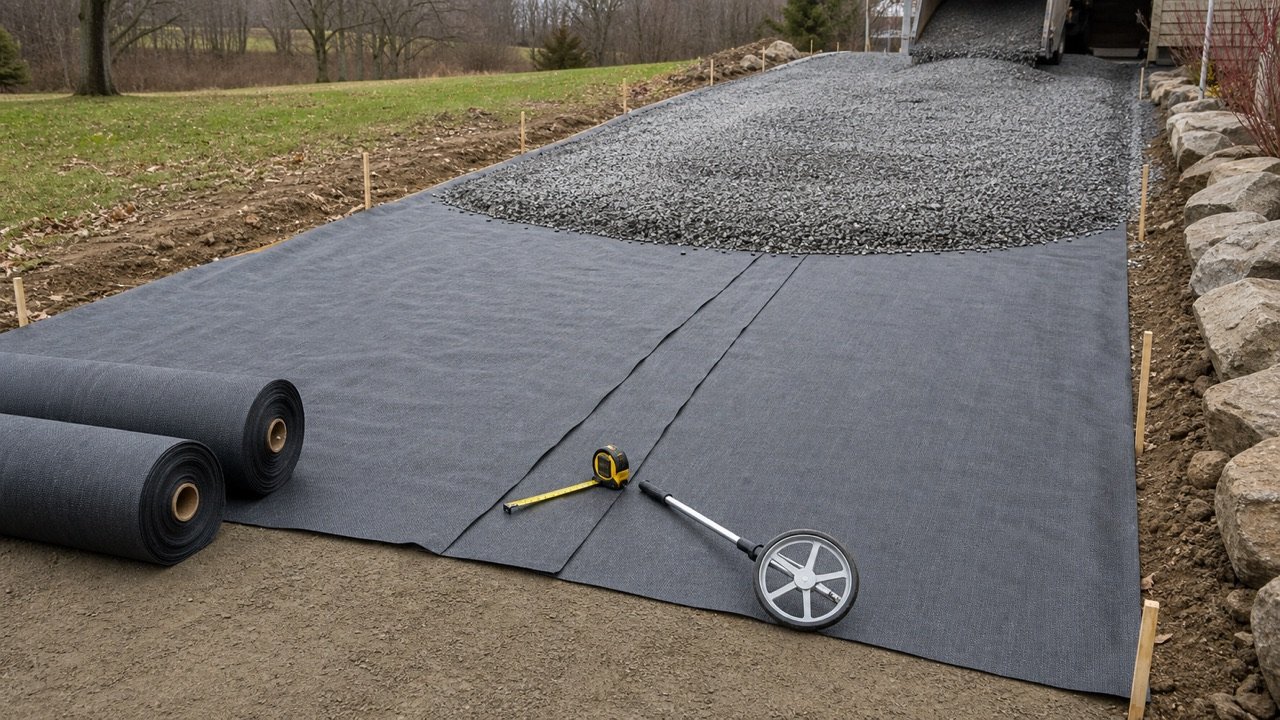
Geotextile selection also uses soil and hydraulic properties. NRCS Code 606 names effective opening size, strength, durability and permeability, and it calls for a clogging check in the stated high-silt condition. The drainage-trench geotextile guide calculates fabric area and rolls after the accepted fabric product and layout have been selected.
What should you do when no aggregate specification is shown?
Record the missing decision and request the applicable detail from the responsible designer, authority or local technical source. Give them the drain purpose, site and soil information, pipe product, outlet, proposed aggregate report and geotextile information.
A supplier recommendation can help identify products that are stocked in the area. Keep the final technical acceptance with the project process that owns the drainage design.
How should the delivered aggregate be checked?
Match the delivery ticket, product name and source with the accepted submittal before placement. Keep unlike products and contaminated loads out of the accepted stockpile.
- Check the ticket, source, product and delivery date.
- Compare the visible load with the accepted reference sample and flag unexpected fines, soil, debris or mixed sizes.
- Follow the stated sampling and testing process when verification is required.
- Record rejected, quarantined or substituted material by load.
- Keep loader buckets, travel routes and stockpiles from mixing accepted aggregate with fine material.
Visual checks can find an obvious mismatch. They cannot measure percent passing or approve an undocumented substitution.
Which details belong on the purchase order?
| Field | Record |
|---|---|
| Project and zone | Drain ID, station limits and aggregate function |
| Accepted product | Designation, source and approval reference |
| Technical evidence | Report number, sample or lot, test date and required properties |
| Quantity basis | Placed volume, documented state conversion and unrounded supplier basis |
| Selling terms | Volume or mass unit, increment, minimum, delivery basis and current quote |
| Delivery control | Source, ticket fields, delivery window, access and stockpile location |
| Change control | Contact and approval required for another product or source |
The Gravel Material Planning hub connects the quantity, weight, cost and drainage records.
Which French drain gravel mistakes create wrong orders?
- Ordering from a nominal size or trade name without the governing designation.
- Using one supplier's No. 57, pea gravel or drain rock description for another source.
- Accepting the word washed without the required gradation or cleanliness evidence.
- Checking the largest stone and ignoring intermediate and fine sieve rows.
- Using a photograph as a sieve report.
- Applying one agricultural, highway or supplier specification to a different project.
- Ignoring surrounding soil, pipe openings, geotextile properties or known mineral clogging conditions.
- Letting 2 passing rows offset a failed or missing requirement.
- Using an old report for an unidentified stockpile or changed source.
- Substituting a product after the quantity sheet and fabric layout have been completed.
What design and safety limits apply?
This page checks purchase records. It does not locate or size a drain, select pipe, design a filter, approve a geotextile, predict service life or confirm a discharge route.
Drainage design can require rainfall or groundwater information, soil evaluation, hydraulic capacity, grade, outlet permission, maintenance access, structural loading and local approvals. Iron ochre, manganese, sulfides, roots and fine soil can add project-specific clogging controls.
OSHA's U.S. excavation guidance addresses buried utilities, cave-ins, water, access, protective systems and competent-person inspections. Use safe sampling points and stay outside an unprotected excavation. Other jurisdictions may use different requirements.
Sources and source scope
- NRCS Subsurface Drain (Ft.) (606) landing page: current national record, 2026 update note and local Field Office Technical Guide boundary.
- NRCS Conservation Practice Standard 606, July 2022: filter need, hydraulic-envelope gradation, pipe bedding, geotextile properties and project-record requirements within its scope.
- NRCS NEH Part 633, Chapter 26: base-soil grain-size and sand-gravel filter-design method for hydraulic structures.
- FAO, Materials for subsurface land drainage systems, Chapter 3: granular-envelope functions and compatibility with soil and pipe perforations.
- NIST Handbook 44 (2026), Appendix C: exact inch-to-millimetre conversion.
- OSHA Trenching and Excavation eTool: U.S. excavation hazard and inspection context.
Source scope: NRCS and FAO support the need to connect aggregate, filter or envelope selection with soil, pipe and project criteria. The Code 606 numbers appear only in the labelled example from that standard. NIST supports the stated conversion, and OSHA supports the named U.S. workplace hazards. The accepted project documents and local authority control the actual product.
Review note: Saleem Sial owns the research and editorial record. Source checks, independent report fixtures, editorial review, build validation, link crawl, schema review and rendered QA form the internal publication gate. Waseem Sial, External Reviewer and Engineer, is listed for ongoing external review; no completed review date is claimed.