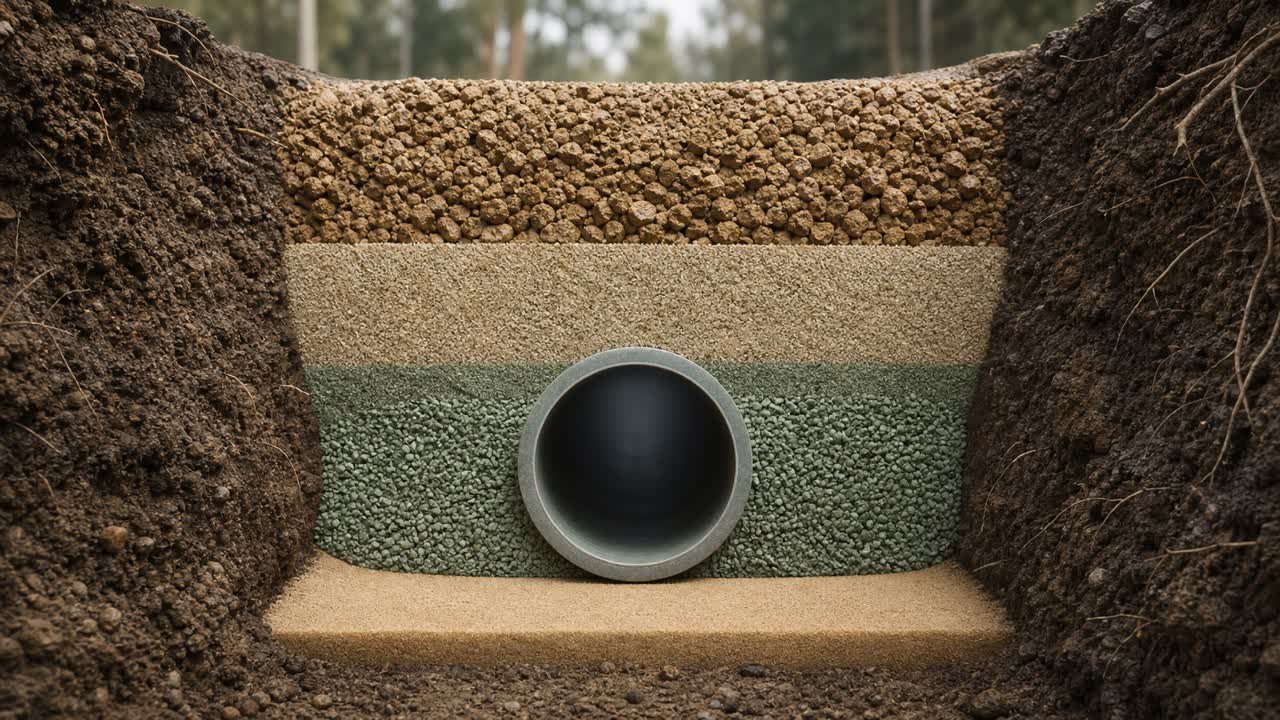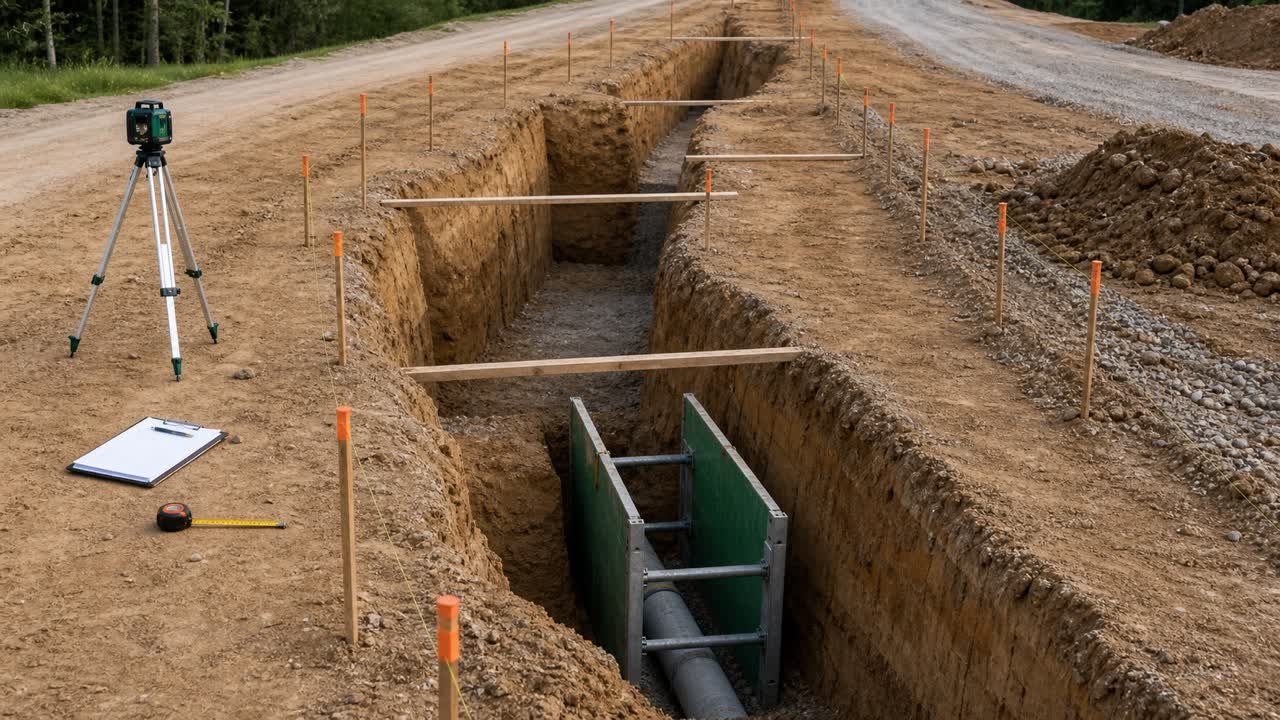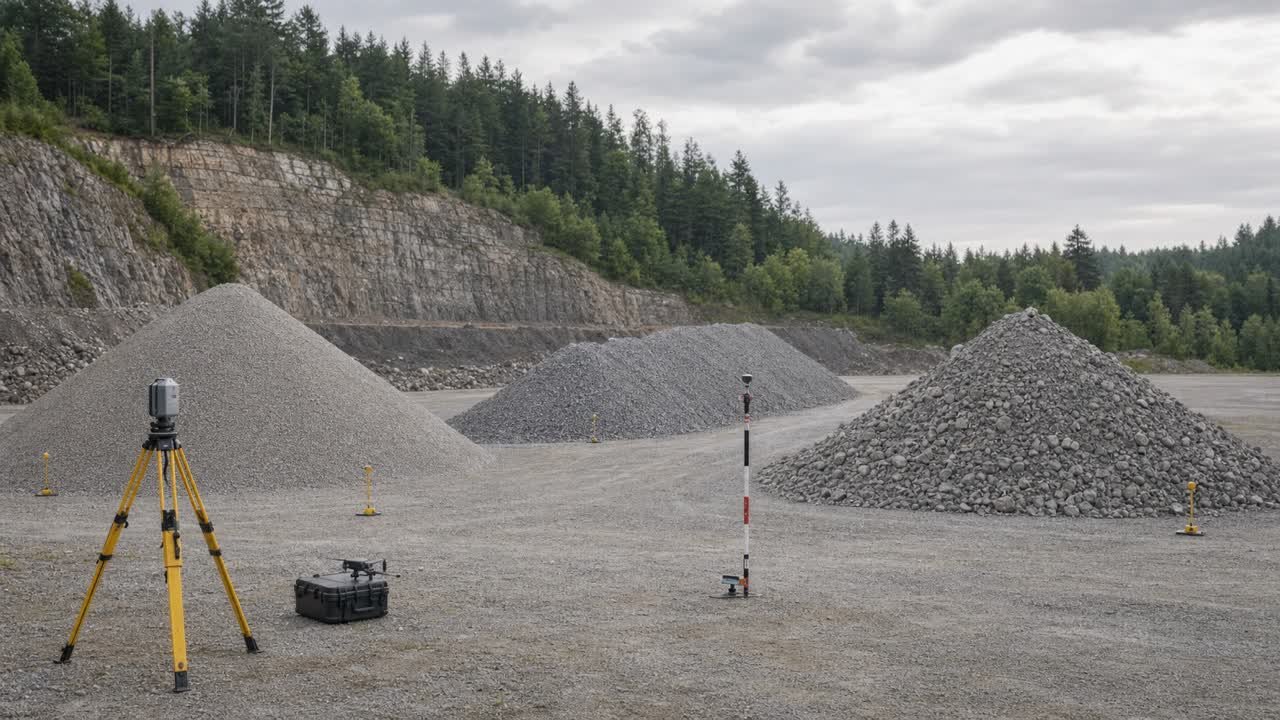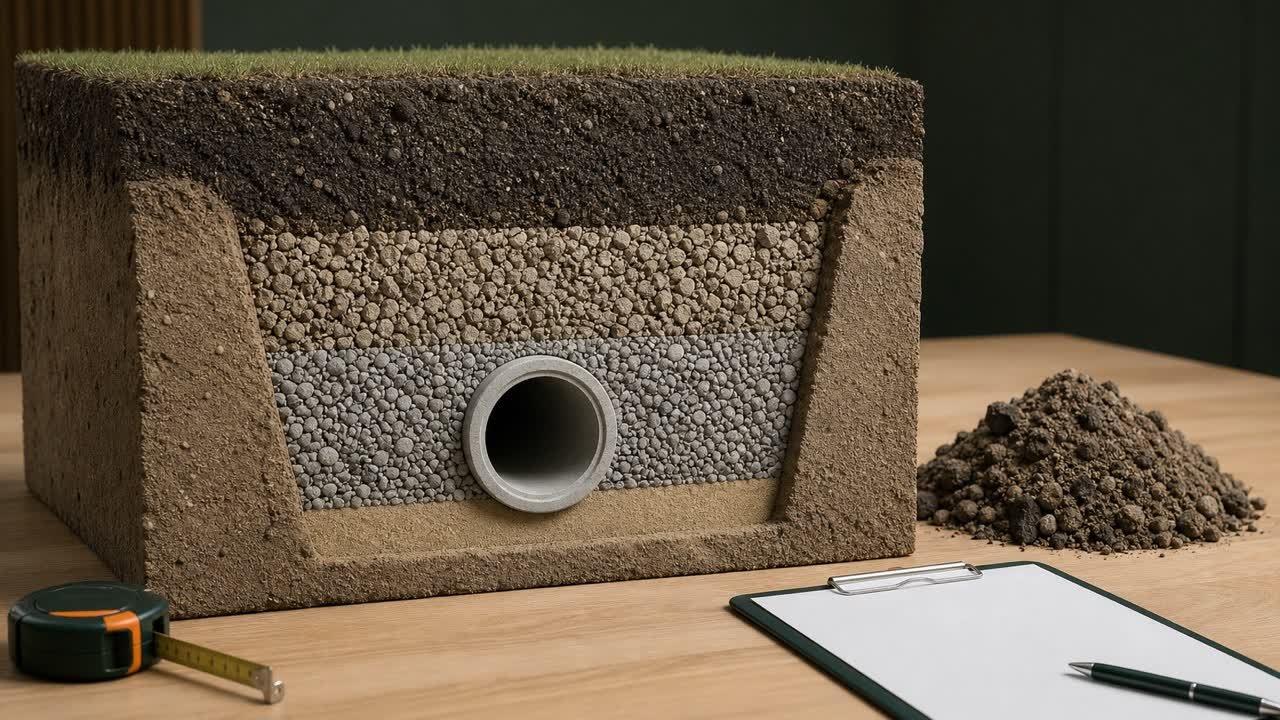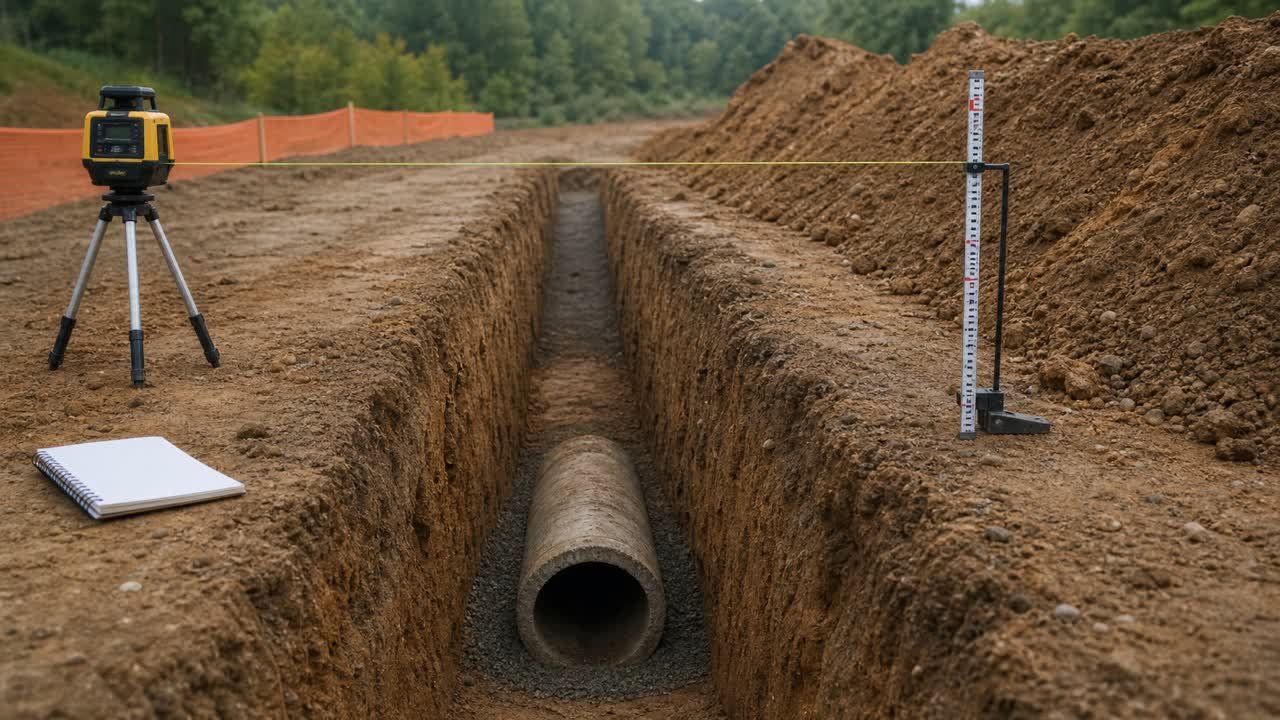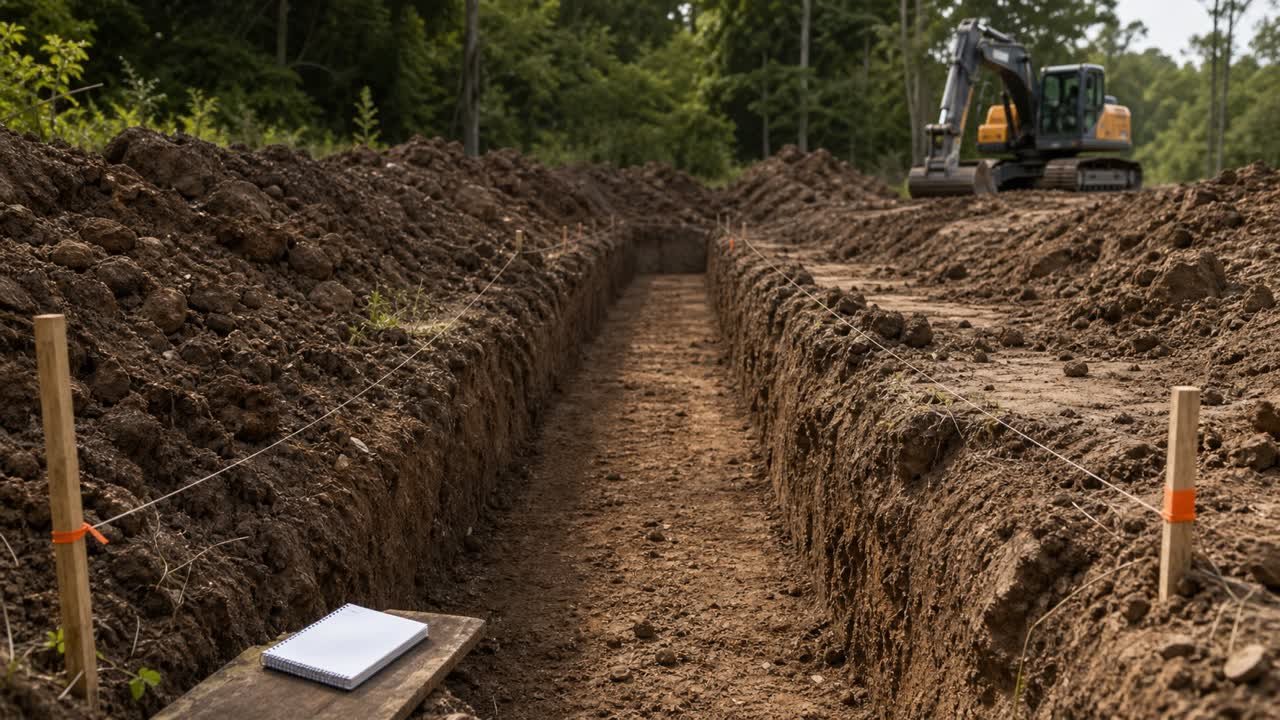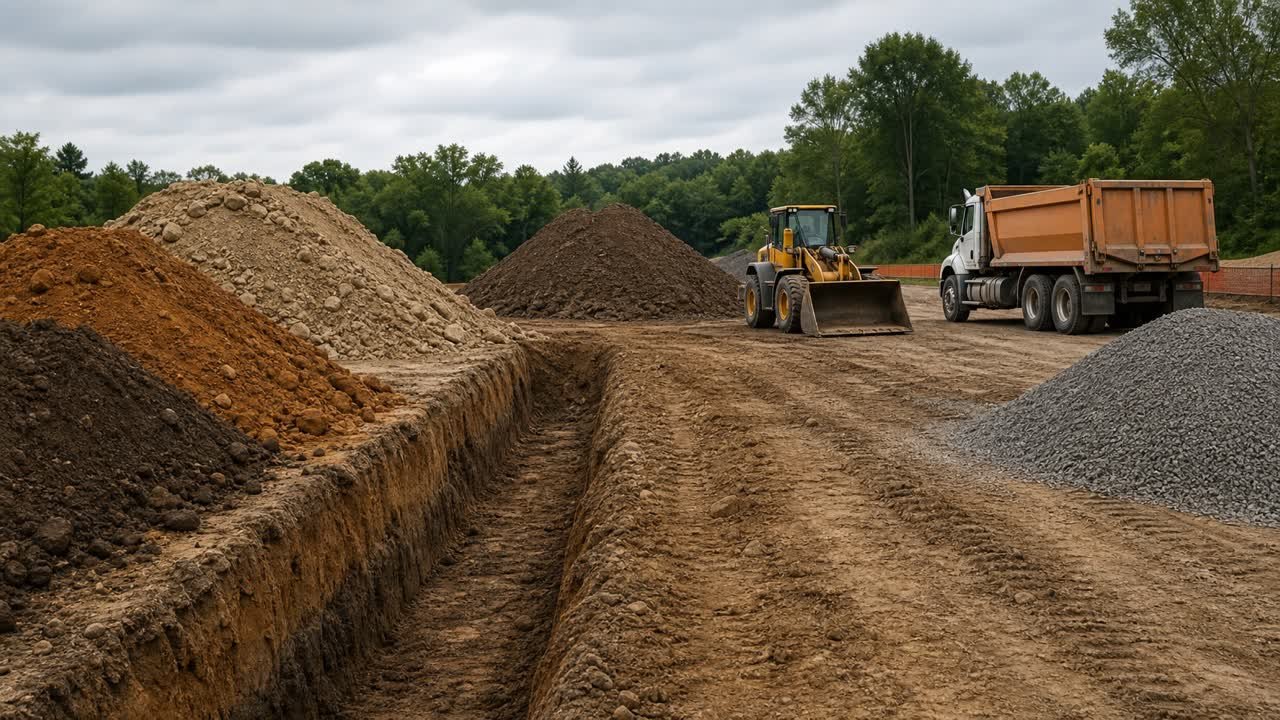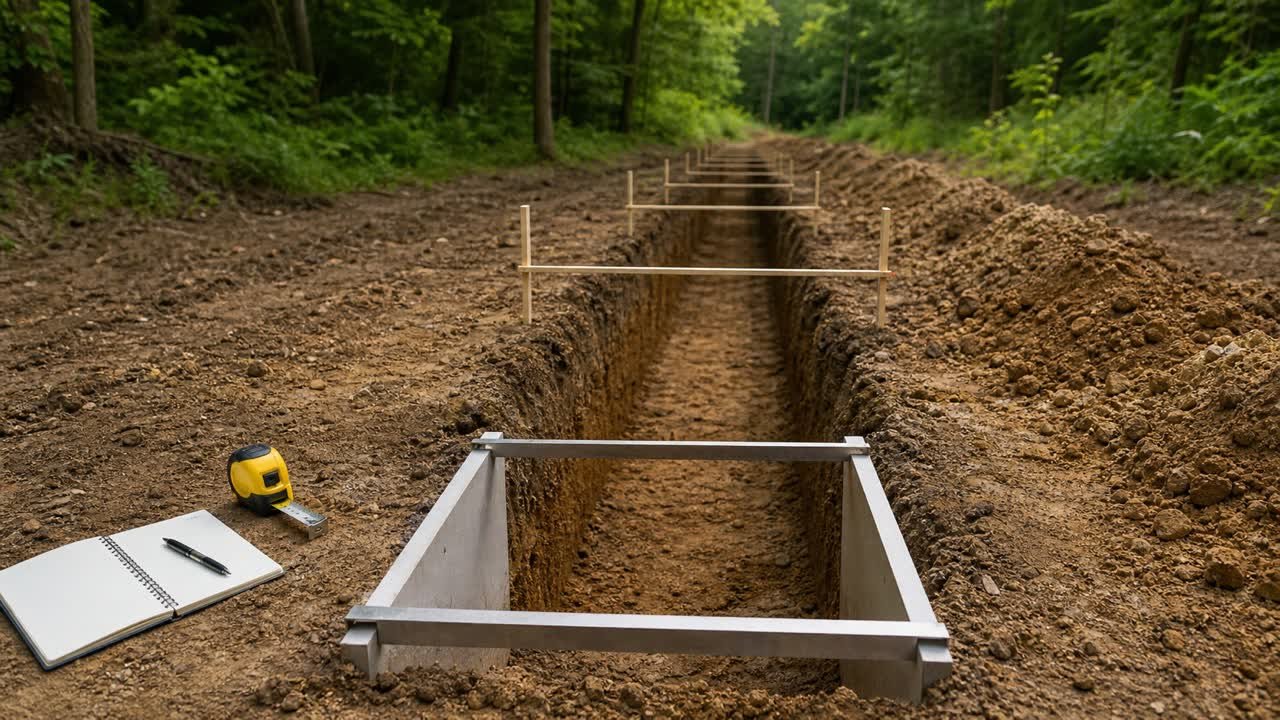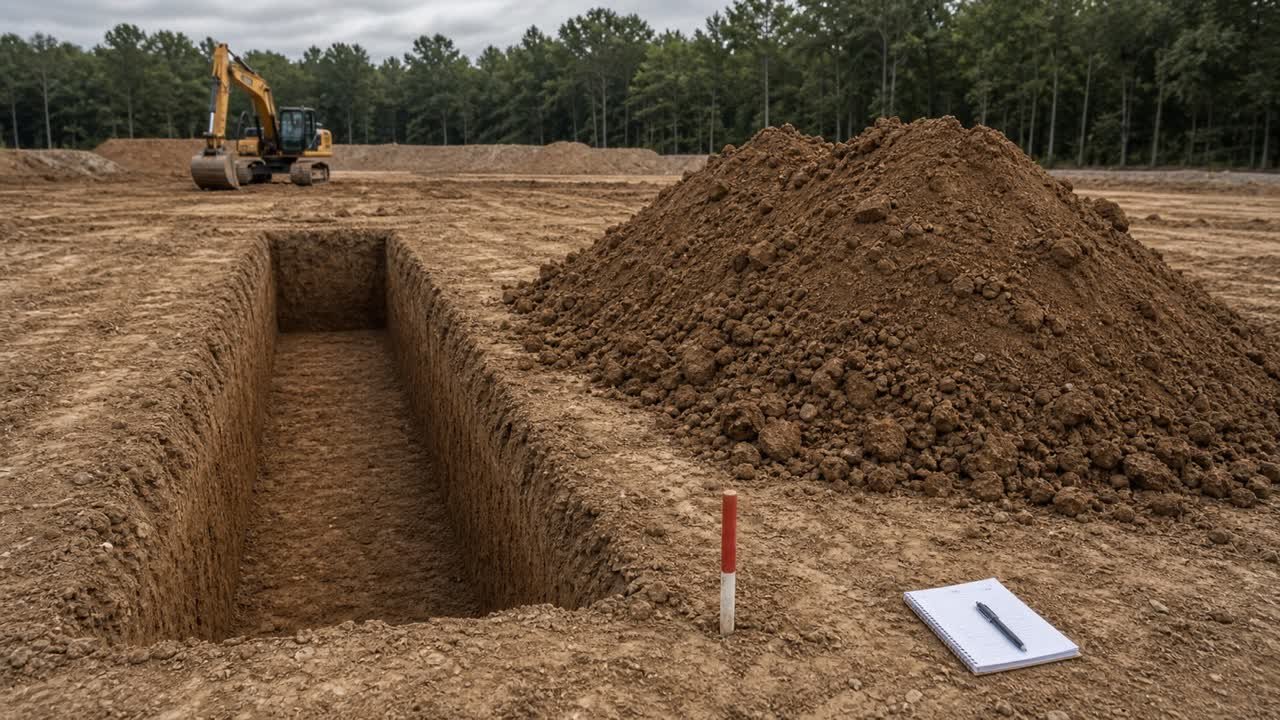
Excavated soil can occupy a different volume after digging because disturbance changes its void space and arrangement. Keep the original excavation volume and the loose handling volume as separate quantities, then connect them with a factor supported by the project material and measurement record.
What is the difference between bank and loose volume?
Bank volume is the material volume before excavation. Loose volume is the volume of that material after excavation and disturbance. A swell factor converts a bank quantity into a loose quantity for stockpile, equipment, or hauling plans.
Write 80 m³ bank and 94.4 m³ loose rather than recording 80 m³ and 94.4 m³ without labels. The unit alone does not identify the state.
| State | What it describes | Common record | Main check |
|---|---|---|---|
| Bank or in place | Material before it is excavated | Design cut, trench geometry, or pre-excavation survey | Boundary, surfaces, dimensions, and method |
| Loose | Excavated material after disturbance | Stockpile space, equipment production, or volume-based haul plan | Material-specific factor or direct measurement |
| Compacted or placed | Material after placement under a stated compaction process | Accepted fill or backfill zone | Specification, placement density, testing, and final geometry |
The U.S. Office of Surface Mining Reclamation and Enforcement defines these 3 states separately and describes swell as the volume increase caused when excavation fragments material and increases void space. Caterpillar also lists separate bank, loose, and compacted states and warns that material weight varies with moisture, particle size, and compaction.
Use the Trench Excavation Calculator when you need the bank volume from uniform rectangular dimensions. This guide explains the conversion and checking process after that geometry is known. Use the Fill Dirt Calculator for simple placed fill and loose-order geometry, and the Cut and Fill Volume guide when existing and proposed surfaces both change.
How do you convert bank volume to loose volume?
Multiply the bank volume by 1 plus the swell percentage written as a decimal. A stated 18% swell becomes a multiplier of 1.18.
Loose volume = bank volume × (1 + swell % ÷ 100)
Swell multiplier = 1 + swell % ÷ 100
Worked metric example
A measured excavation contains 80 m³ in place. Assume the project record supports an 18% bank-to-loose swell factor for that material and excavation condition.
- Convert 18% to a decimal: 18 ÷ 100 = 0.18.
- Add 1: 1 + 0.18 = 1.18.
- Multiply the bank volume: 80 × 1.18 = 94.4 m³ loose.
Result: 80 m³ bank converts to 94.4 m³ loose under the stated 18% assumption. The 14.4 m³ difference is a change in occupied volume, not extra soil mass created by excavation.
How do you convert loose volume back to bank volume?
Divide the loose volume by the same swell multiplier. This reverse check is useful when a haul estimate is recorded in loose units but the excavation takeoff is recorded in bank units.
Bank volume = loose volume ÷ (1 + swell % ÷ 100)
Using the metric example, 94.4 ÷ 1.18 returns 80 m³ bank. Multiplying loose volume by 1 minus the swell percentage would give 77.408 m³, so that shortcut does not reverse an 18% increase.
How can you calculate swell from measured volumes?
Use matched bank and loose measurements for the same material boundary. Subtract the bank volume from the loose volume, divide by the bank volume, and multiply by 100.
Measured swell % = (loose volume - bank volume) ÷ bank volume × 100
Worked cubic-yard example
Suppose an approved bank measurement is 52 yd³ and the matched loose measurement is 63.7 yd³.
- Volume increase: 63.7 - 52 = 11.7 yd³.
- Divide by the bank volume: 11.7 ÷ 52 = 0.225.
- Convert to a percentage: 0.225 × 100 = 22.5%.
The measured factor is 22.5% for that defined batch and measurement method. Record the material description, excavation and loading method, moisture condition, measurement dates, stockpile or vehicle method, retained material, and exclusions before using it elsewhere.
What is a bank load factor?
A bank load factor converts a loose volume back to its bank equivalent. It is the ratio of matched bank volume to loose volume.
Bank load factor = bank volume ÷ loose volume
Bank volume = loose volume × bank load factor
For 52 yd³ bank and 63.7 yd³ loose, the load factor is 52 ÷ 63.7 = 0.8163. Multiplying 63.7 yd³ loose by 0.8163 returns about 52 yd³ bank. Always record whether a factor is a percentage increase, a multiplier, or a bank load factor because the same number cannot be used in every formula position.
How do you translate a swell percentage into a load factor?
Divide 1 by the swell multiplier to obtain the bank load factor. Reverse that operation when a documented load factor must be expressed as a bank-based swell percentage.
Bank load factor = 1 ÷ swell multiplier
Swell % = (1 ÷ bank load factor - 1) × 100
An 18% bank-to-loose swell has a multiplier of 1.18 and a load factor of 1 ÷ 1.18 = 0.8474576271. Multiplying 94.4 m³ loose by 0.8474576271 returns 80 m³ bank.
| Recorded format | Definition | 18% fixture | Required label |
|---|---|---|---|
| Bank-based swell percentage | (loose - bank) ÷ bank × 100 | 18% | Percentage increase from bank to loose |
| Swell multiplier | loose ÷ bank | 1.18 | Multiply bank volume to obtain loose volume |
| Bank load factor | bank ÷ loose | 0.8474576271 | Multiply loose volume to obtain bank volume |
| Matched density ratio | loose bulk density ÷ bank bulk density | Equals the load factor when mass and material basis match | Record density state, moisture basis, source, and test or measurement method |
The 14.4 m³ increase in this fixture equals 18% of the 80 m³ bank volume and 15.254237% of the 94.4 m³ loose volume. Write the denominator beside any percentage. An 18% reduction applied to the loose quantity would use a different relationship and would not reverse an 18% bank-based swell.
Where should the swell factor come from?
Use the most project-specific reliable evidence available. A factor copied from an unlabeled online table provides little control over material, moisture, excavation method, or measurement state.
| Evidence | What to confirm | Main limitation |
|---|---|---|
| Approved project or geotechnical record | Material, source area, test or measurement basis, factor direction, and revision | May apply only to a named layer or condition |
| Matched project measurements | Same material boundary, bank method, loose method, dates, retained material, and exclusions | Measurement and reconciliation error can distort the factor |
| Accountable supplier, hauler, or equipment record | Material state, usable capacity, mass basis, moisture, and operating condition | Commercial or machine values may not describe the excavation bank state |
| Recognized reference table | Material description, density state, units, table edition, and stated limitations | Reference values require project verification |
OSMRE advises using the project plans and material information for swell and shrinkage factors and checking them against suitable engineering or equipment references. Caterpillar states that exact material characteristics require testing because moisture, grain size, and compaction change material weight and state.
How do you check a project factor in the field?
Define one material batch and close the record around it. The bank measurement and loose measurement must cover the same material, with additions, retained soil, spillage, rejected loads, and partial loads identified.
- Name the source area, layer, material description, and measurement period.
- Calculate the bank volume from the approved pre-excavation and excavation boundary method.
- Measure the loose state with an approved stockpile survey, calibrated loading record, or another controlled method.
- Reconcile material left in the trench, stockpiled elsewhere, reused directly, spilled, rejected, or mixed with another material.
- Calculate the factor and compare it with the estimate without overwriting the original assumption.
- Approve any revised planning factor through the project's quantity-control process.
A truck count multiplied by nominal body capacity is a planning estimate unless the loading method establishes actual volume. A surveyed stockpile also has uncertainty from its boundary and surface model. Scale tickets measure mass, so converting them to volume requires a density that represents the same material state and moisture condition.
How should mixed soil and rock layers be handled?
Calculate each material layer separately when its supported conversion differs. Add the converted loose volumes only after every layer has its own bank quantity and factor.
| Layer | Bank volume | Stated swell | Loose volume |
|---|---|---|---|
| Layer A | 45 m³ | 12% | 45 × 1.12 = 50.4 m³ |
| Layer B | 20 m³ | 45% | 20 × 1.45 = 29.0 m³ |
| Total | 65 m³ | 2 separate factors | 79.4 m³ |
The percentages are calculation fixtures, not recommended factors. A single unsupported 22% factor applied to 65 m³ would give 79.3 m³. That close result is a coincidence in this example and would not preserve the layer record for planning, payment, or later checks.
How do you keep a volume-state ledger?
Record every quantity with its state, boundary, source, unit, and conversion. A short ledger prevents design volume, actual excavation, truck records, disposal tickets, and compacted fill from becoming one unexplained total.
| Record | State | How obtained | Do not assume |
|---|---|---|---|
| Design excavation | Bank | Approved drawing, model, or cross-sections | It equals actual excavation or payment quantity |
| Actual excavation | Bank | Approved pre-work and post-work survey or section record | All excavated material left the site |
| Stockpile | Loose | Surveyed loose-material boundary | Its surface model exactly matches trucked volume |
| Truck plan | Loose | Loose volume divided by usable body volume | Every load is full or payload allows a full body |
| Scale tickets | Mass | Weighing record | Mass is volume without a matching density basis |
| Disposal or delivery tickets | Stated commercial unit | Facility or supplier record | The selling or billing unit matches bank volume |
| Accepted fill | Compacted or placed | Approved final geometry and testing record | Loose delivered volume equals accepted fill volume |
Where should the converted volume go next?
Send the converted quantity to the record that matches its material state and task. Preserve the source batch, boundary, factor, and unrounded quantity so the next worksheet does not repeat a conversion or deduction.
| Current quantity | Next task | Use this record |
|---|---|---|
| Measured loose stockpile volume | Check pile geometry, survey base, change, and uncertainty | Stockpile volume and survey checks |
| Approved reusable soil in a compatible state | Separate direct reuse, temporary storage, import, and export | Trench spoil balance |
| Final product-level planning quantity | Convert to supplier weight, volume, package, or delivery increment | Trench order-quantity conversion |
One material batch may appear in several records at different times. Do not add a loose stockpile total to a loose export total when the export quantity already comes from that stockpile. Reconcile additions, removals, direct reuse, and the closing inventory before reporting a material balance.
How does loose volume affect truck loads?
Divide the loose planning volume by the usable loose-volume capacity, then round a positive remainder up to a whole trip. Keep the exact ratio beside the rounded count.
Exact volume load ratio = loose volume ÷ usable truck body volume
For 94.4 m³ loose and a stated usable body volume of 11.5 m³, the ratio is 94.4 ÷ 11.5 = 8.2087. The volume-only plan rounds to 9 trips, with a partial final load.
Body volume shows available space. Material mass, moisture, legal payload, axle limits, route restrictions, access, loading practice, and safe operation can set a smaller usable load.
Obtain the vehicle and route limits from the responsible hauler and applicable authority. Use a project-representative loose bulk density when a mass check is required, and keep the density source and moisture condition with the calculation.
Which adjustments must remain separate?
Apply each adjustment to the stage it represents and keep its source visible. Combining them into one percentage makes the estimate difficult to check or revise.
| Adjustment | Applied to | Evidence |
|---|---|---|
| Over-excavation | Geometry outside the design or measured boundary | Field survey, approved method, drawing, or contract rule |
| Swell | Bank material converted to loose material | Project material record, matched measurement, or approved reference |
| Shrinkage or compaction conversion | Material converted to a placed state | Specification, density basis, testing, and accepted geometry |
| Handling loss or contamination | Named material flow or rejected quantity | Project record and disposal or recovery method |
| Commercial contingency | Cost or schedule exposure | Named risk, owner, value, and approval |
| Truck or supplier rounding | Final booking or dispatch quantity | Usable capacity, selling increment, payload, and quote |
Payment quantity follows the contract measurement provision. A design bank quantity, actual bank survey, loose truck estimate, and disposal ticket can all be correct while showing different numbers because their boundaries, states, or commercial units differ.
Common bank and loose volume mistakes
- Leaving BCY, LCY, BCM, or LCM off the calculation record.
- Applying a swell percentage to dimensions before calculating the bank geometry.
- Multiplying loose volume by 1 minus the swell percentage to reverse the conversion.
- Using a bank load factor as though it were a swell multiplier.
- Applying one factor across different soil, rock, moisture, or excavation conditions.
- Mixing bank, loose, and compacted values inside one total.
- Treating nominal truck body capacity as actual loaded volume or legal payload.
- Converting scale-ticket mass to volume with an unrelated density.
- Ignoring partial loads, retained soil, direct reuse, rejected loads, or stockpile changes.
- Replacing the original estimate without preserving the actual measured factor and its evidence.
Safety and professional scope
Volume conversion does not select excavation geometry, protective systems, equipment, haul routes, loading limits, or compaction requirements. Those decisions follow the project documents, applicable law, site conditions, material testing, vehicle records, and responsible competent or qualified people.
For U.S. construction work, OSHA identifies cave-ins as the main trench hazard. OSHA 29 CFR 1926.651 also covers underground installations, access and egress, hazardous atmospheres, water accumulation, adjacent structures, loose material, and competent-person inspections. Other countries use their own workplace rules.
Collect measurements from a safe location and through the approved survey or quantity-control method. Keep spoil, vehicles, and equipment at the distances and under the controls required by the governing safety plan.
Sources and scope
- U.S. Office of Surface Mining Reclamation and Enforcement, Directive TSR-1 Appendix A: bank, loose, and compacted volume definitions, swell, load-factor context, and documented earthmoving quantities.
- Caterpillar, Material Density Tables to Help Estimate Earthwork Volumes: material-state definitions, load-factor context, density variation, and the need for project testing.
- Trimble Viewpoint Estimating Help, Enter Swell and Yield Factors: separate BCY, LCY, and CCY states and layer-specific factor workflow.
- NIST Handbook 44, 2026 Appendix C: cubic-foot, cubic-yard, litre, and cubic-metre relationships.
- OSHA Trenching and Excavation and 29 CFR 1926.651: U.S. occupational excavation-safety context.
Scope: the formulas calculate stated material-state conversions. The governing drawings, survey and testing methods, geotechnical information, contract measurement provisions, safety plan, vehicle limits, supplier or disposal records, applicable law, and responsible qualified people control the accepted factor and final project quantity.
Review responsibility: Saleem Sial owns the published calculation, source, and editorial checks. Waseem Sial, External Reviewer and Engineer, remains listed for ongoing external review; no completed external-review date is claimed.
Next, use the changing trench measurement guide when width or depth varies, or return to the Earthwork & Drainage Calculators hub.