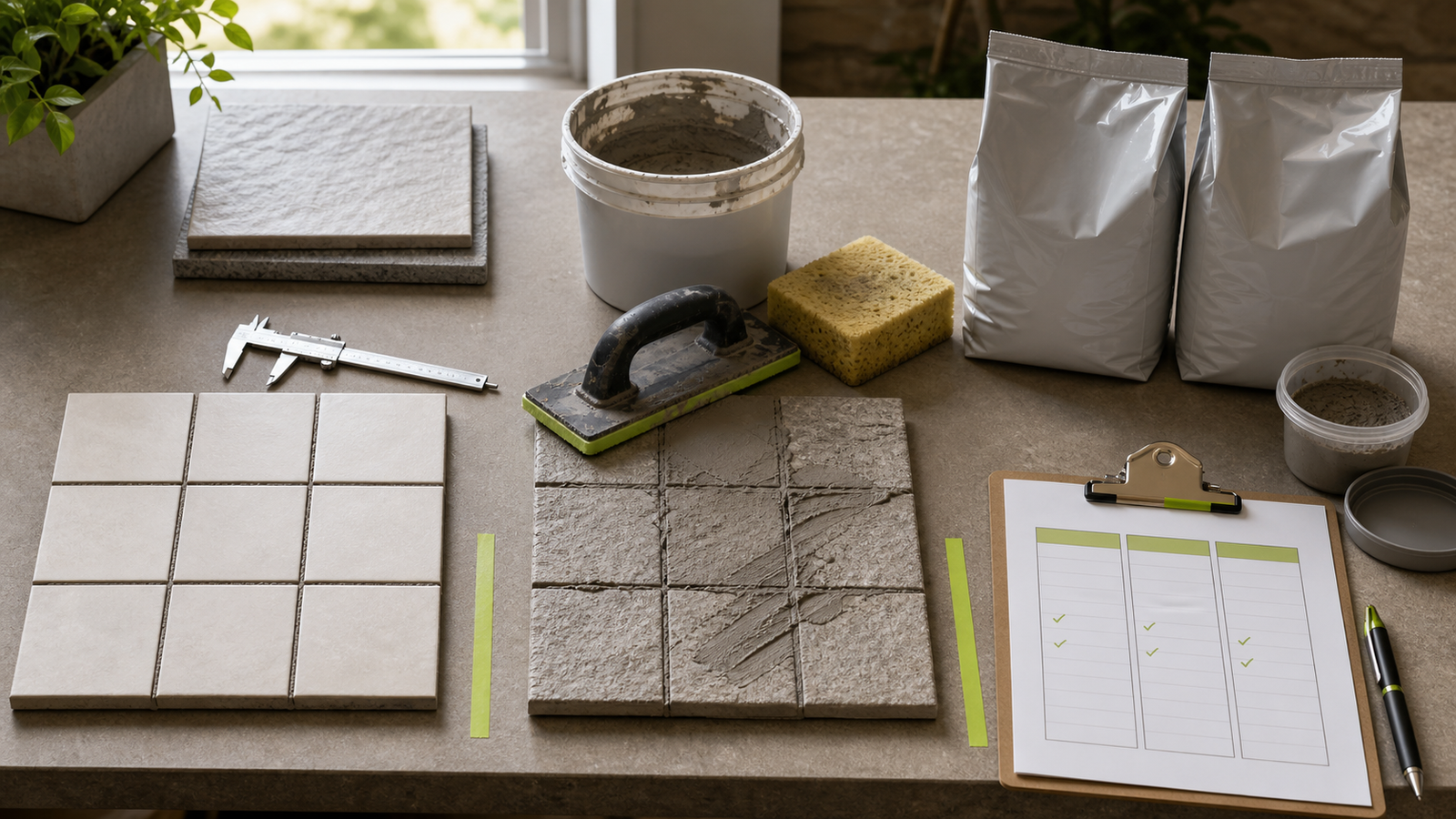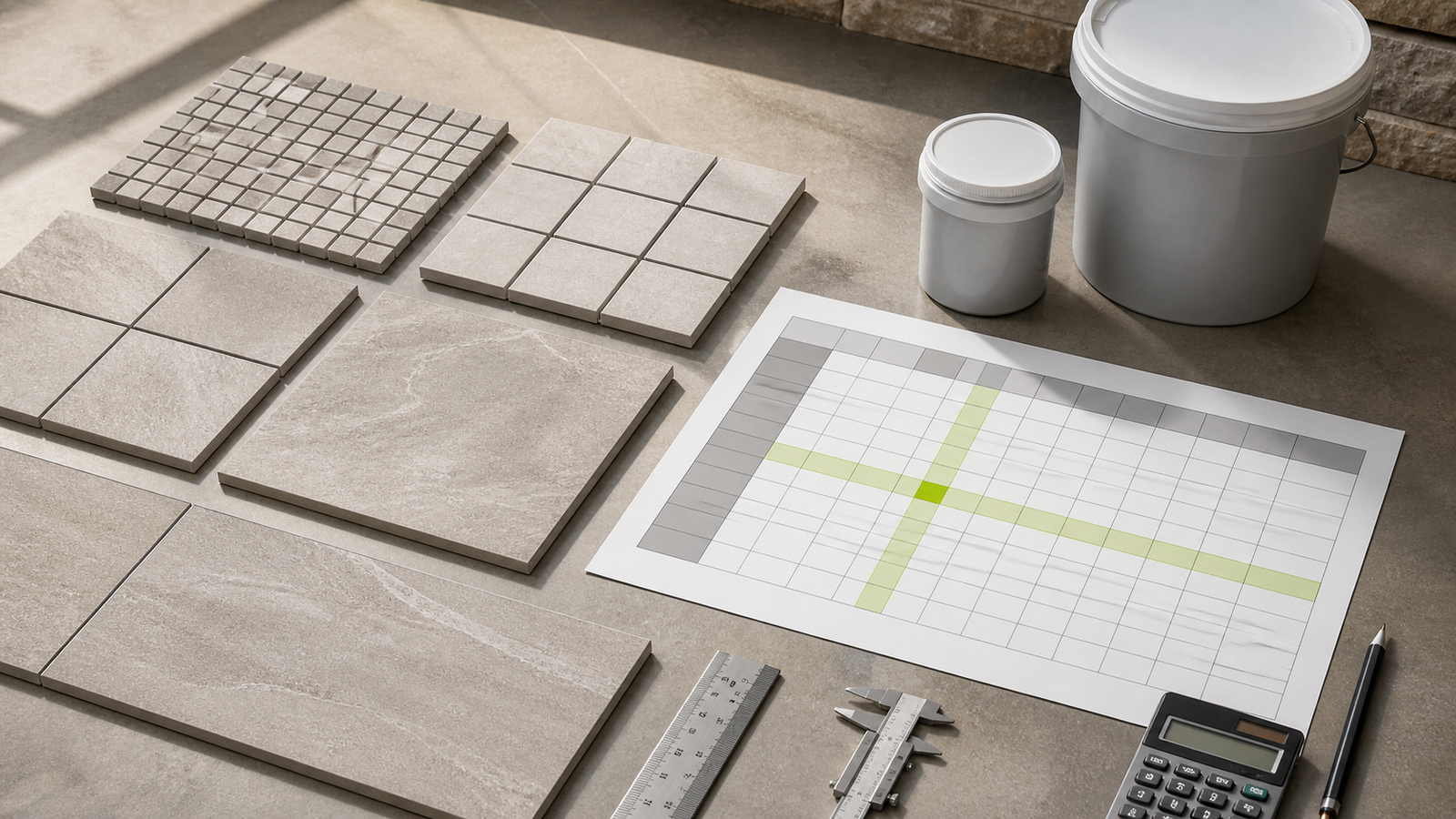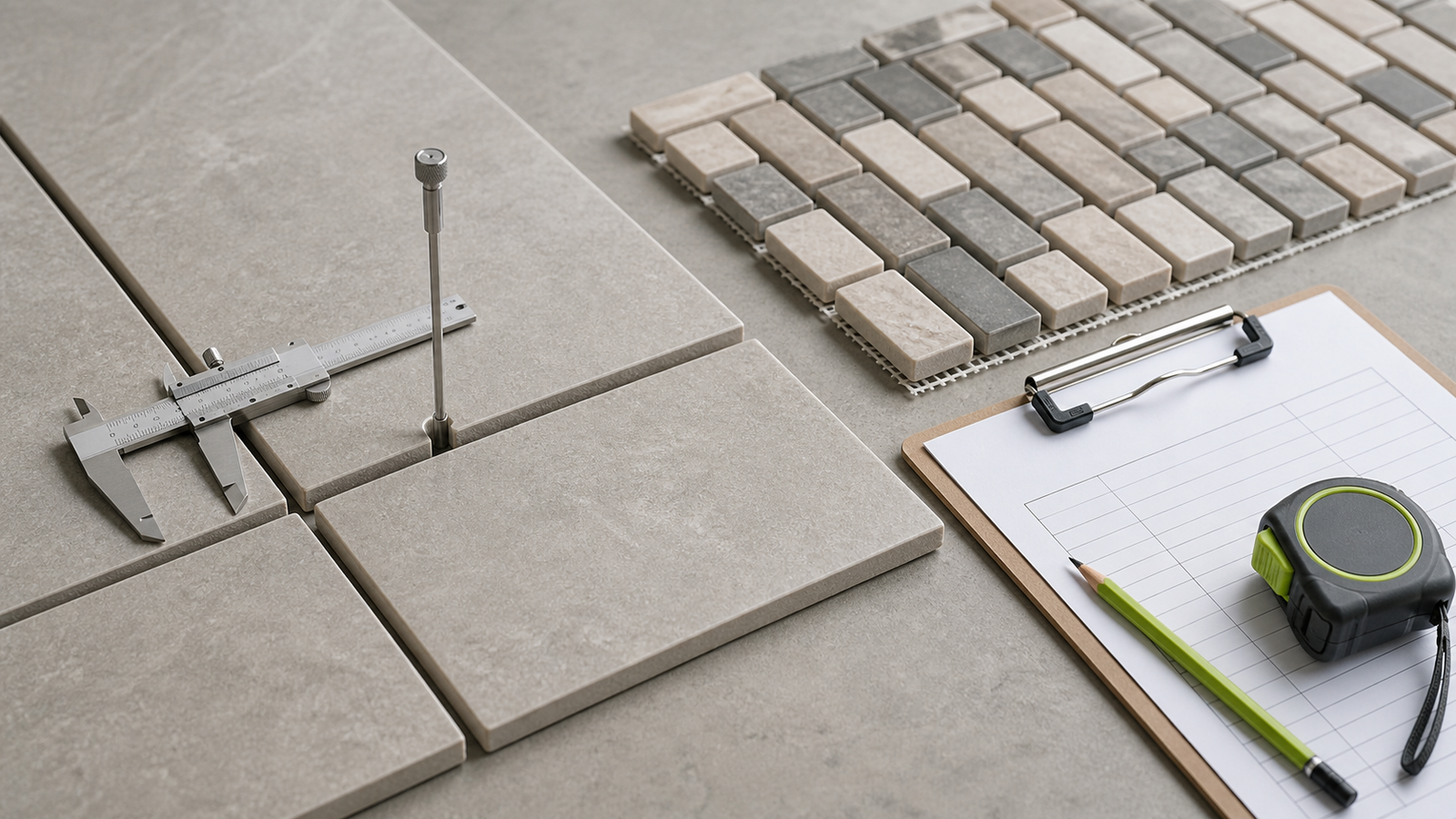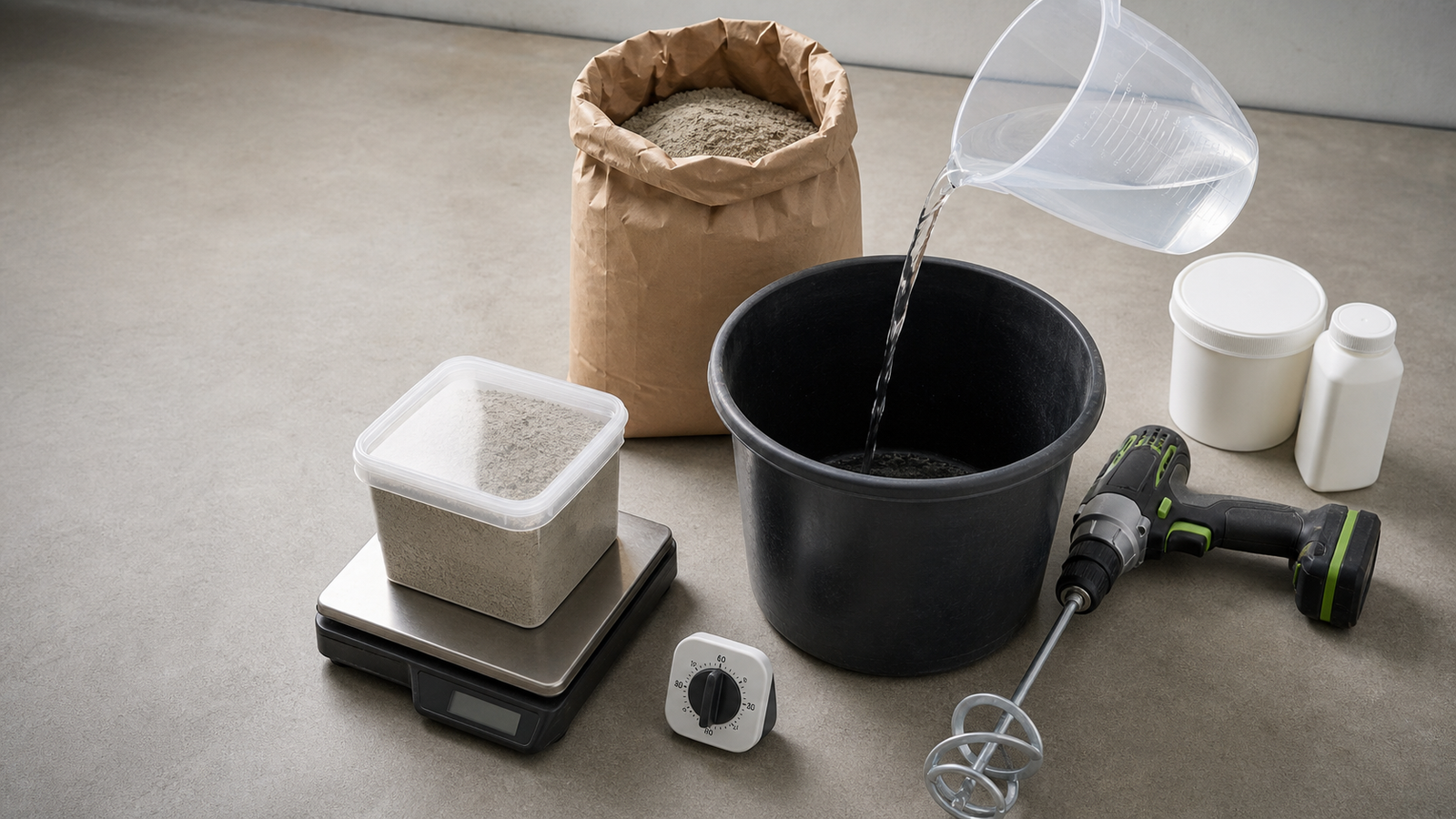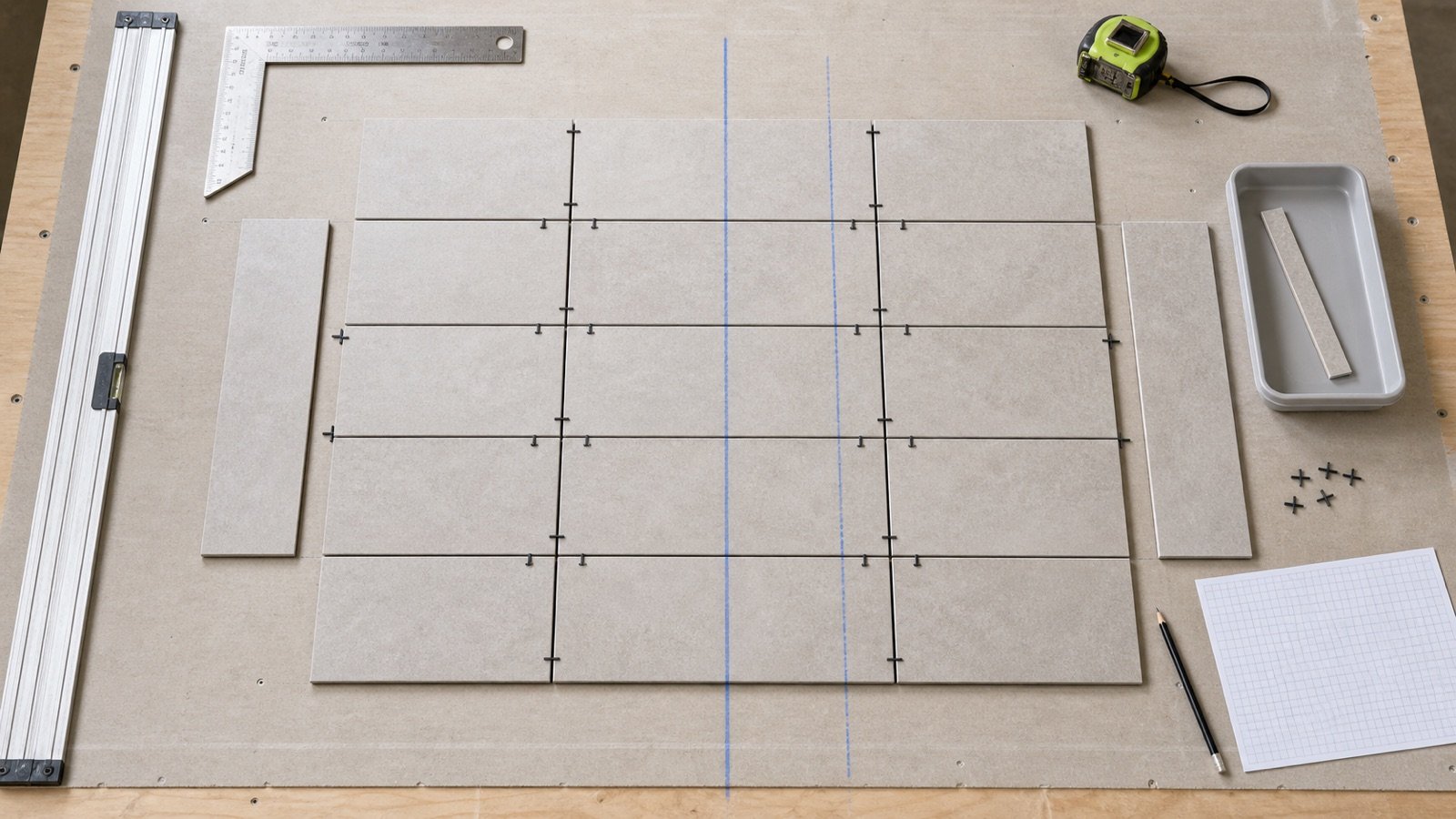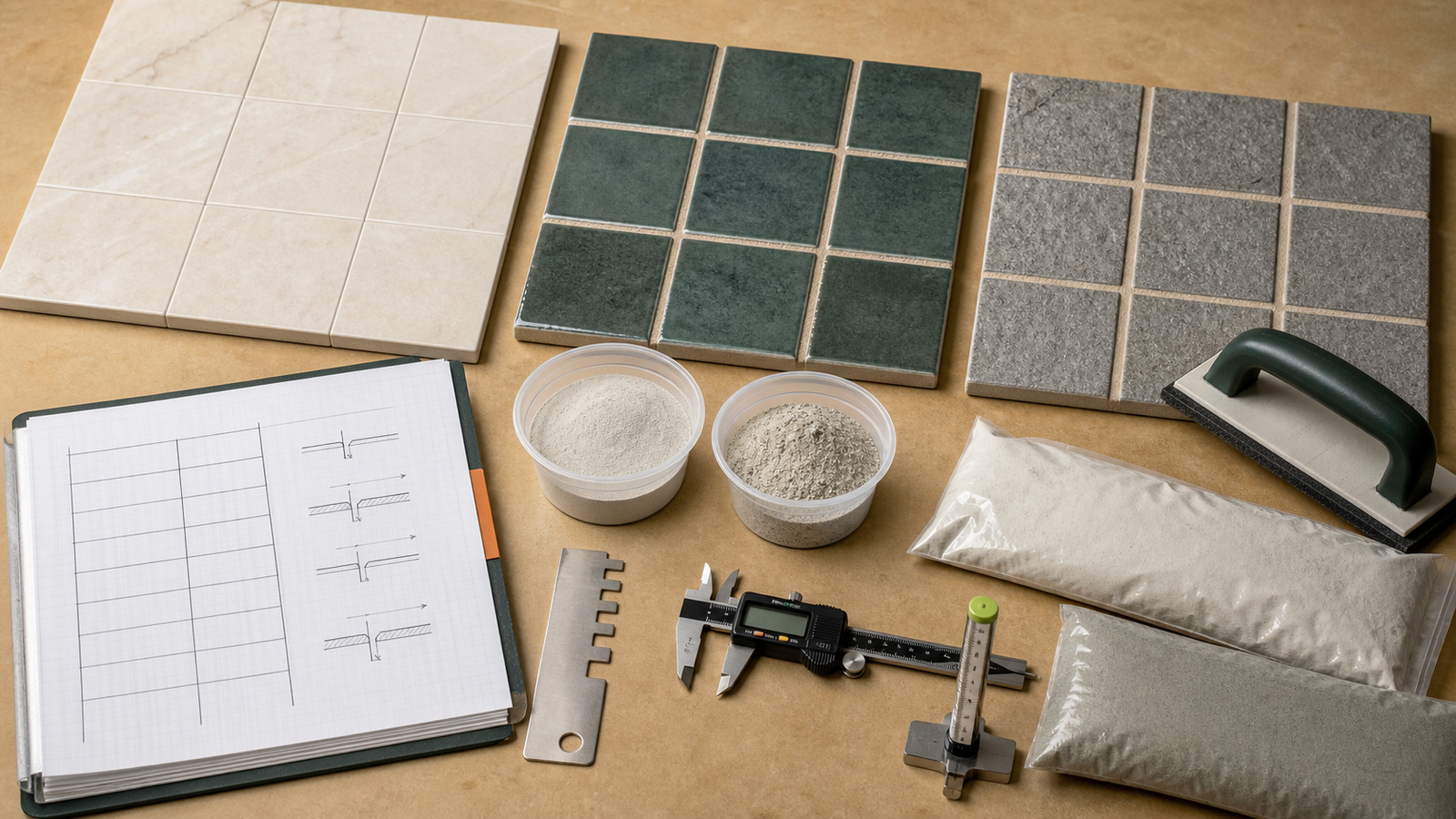
Sanded and unsanded grouts are 2 cement-grout categories, but the category name does not finish the selection. The measured joint range, tile surface, location, service conditions and exact product instructions must agree.
Select the product before copying a coverage value. Two grouts that accept the same joint width can use different package sizes and publish different coverage for the same tile.
Should you use sanded or unsanded grout?
Use a current grout product whose technical data covers the full measured joint range, the tile surface and the installation conditions. Sanded grout often appears in wider-joint product lines. Unsanded grout often appears in narrow-joint and scratch-sensitive surface instructions. Current ranges can overlap.
A room label such as floor, wall, shower or backsplash does not identify a product. Record the surface, exposure and service requirements, then check the current data sheet, package and project specification.
| Check | Record | Decision |
|---|---|---|
| Joint range | Minimum, typical and maximum clear width | Keep products that cover the complete range |
| Tile surface | Manufacturer, product, finish, porosity and texture | Check scratch, staining and cleanup limits |
| Location | Floor, wall, interior, exterior, wet, submerged or other stated condition | Keep products approved for the exact use |
| Service | Residential, commercial, chemical, thermal or traffic requirements | Match the project documents and product data |
| Test area | Product, tile sample, method, result and approval | Confirm surface and cleanup acceptability |
| Quantity basis | Selected product, package and matching coverage row | Send the supported value to the calculator |
What is the practical difference between sanded and unsanded grout?
Sanded cement grout contains aggregate that changes its texture and working range. Unsanded cement grout uses a finer composition for narrow joints and surfaces covered by its product instructions.
The category alone does not prove strength, stain resistance, sealing need, cure time, working time, chemical resistance or suitability for a tile. Read those properties in the selected product's current technical and safety data.
Is 1/8 inch a universal grout cutoff?
Current named products show that 1/8 in. can be an overlap point. CUSTOM Polyblend Plus Sanded Grout lists joints from 1/8 to 1/2 in. The current Polyblend Plus Non-Sanded TDS publishes coverage at 1/16 and 1/8 in.
LATICRETE's cement-grout FAQ gives another product-specific boundary. It lists a named unsanded grout for soft or polished surfaces at 1/8 in. or less and named sanded grouts for joints greater than 1/16 in. through 1/2 in.
Use tile-surface compatibility, service conditions, project requirements and a test area to complete the selection. A smaller package count cannot approve the product.
Are 1/8 inch and 3 mm the same boundary?
1/8 in. equals 3.175 mm. Manufacturers often pair 1/8 in. with 3 mm as a practical product label, so treat the source's units as written when the value sits at a limit.
Do not convert 3 mm to 1/8 in. and assume extra permitted width. Check the data for the sales market or ask the manufacturer's technical service to resolve an ambiguous boundary.
How does tile surface change the grout choice?
Polished stone, soft stone, some glass, soft glazes and other scratch-sensitive finishes need a product and method accepted for that surface. Aggregate size, grout color, surface porosity, texture and cleanup can affect the result.
Use a representative tile sample and the actual grout color. Follow the grout and tile manufacturers' test instructions. Record scratches, staining, pigment lodging, residue, cleanup effort and the accepted result before grouting the full area.
TCNA's grout guidance identifies scratch risk on some polished or soft surfaces and explains that tile edges and profiles affect joint measurements. LATICRETE recommends a test area for porous or rough stone and for material suitability.
Do floor and wall labels decide the grout type?
Floor or wall is one product-use field. Joint width, tile surface, exposure, traffic, substrate and the full installation system still need checks.
A vertical surface does not make every unsanded grout suitable. A floor does not make every sanded grout suitable. Use the exact product's listed applications and the project documents.
What if the joints vary across the tile field?
Measure the clear joint at representative field locations, sheet transitions, edges and visibly different zones. Record the minimum and maximum along with the accepted design width.
Keep a product only when its stated range covers the condition being grouted. If one area falls outside the range, split the takeoff or obtain a project decision. Do not hide a narrow or wide condition inside one average.
The grout-joint measurement guide shows how to record width, filled depth, mosaics and separate tile fields.
What about fine-aggregate, ready-to-use and epoxy grouts?
Current grout lines include products that do not fit a simple sanded-versus-unsanded choice. Some fine-aggregate cement grouts cover a wider joint range. Ready-to-use and resin-based grouts have their own surface, joint, mixing, cleaning, cure and service instructions.
Treat each as a separate named product. Do not transfer the coverage, sealer rule, working time, wash method or resistance claim from a cement grout or another formulation.
How does grout selection change coverage?
Coverage belongs to the selected product and package. Use the row that matches the tile dimensions, joint width and any stated tile thickness or joint depth.
For one source-labelled example, CUSTOM publishes the following rows for 12 × 12 × 3/8 in. tile at a 1/8 in. joint. The values are estimates and each row has a different package basis.
| Named product | Package | Published coverage | Metric value shown by source |
|---|---|---|---|
| Polyblend Plus Sanded | 25 lb | 348 ft² | 32.3 m² |
| Polyblend Plus Non-Sanded | 10 lb | 146 ft² | 13.6 m² |
The table shows package-based coverage after a product has passed the suitability checks. It does not show that one category is preferable or more efficient.
Worked example: 2 products accept the same joint width
A 300 ft² tile field matches the 12 × 12 × 3/8 in. and 1/8 in. rows above. This fixture uses 0% project allowance so the product and package difference stays visible.
- Sanded exact ratio: 300 ÷ 348 = 0.8621 package.
- Sanded whole packages: ceiling(0.8621) = 1 package.
- Sanded published coverage surplus: 348 − 300 = 48 ft².
- Non-sanded exact ratio: 300 ÷ 146 = 2.0548 packages.
- Non-sanded whole packages: ceiling(2.0548) = 3 packages.
- Non-sanded published coverage surplus: 3 × 146 − 300 = 138 ft².
Both named sources publish the 1/8 in. condition. Choose the suitable product first. Then enter its current coverage and package into the Grout Calculator.
Can coverage be compared by package count alone?
Package count combines formulation, package size and the published row. The example compares a 25 lb bag with a 10 lb box, so 1 package versus 3 packages is a purchasing result rather than a product-performance ranking.
Compare current price only after recording product, color, package, coverage row, supplier, market, tax, delivery, return terms and quote date. Keep allowance and whole-package surplus on separate lines using the grout allowance and package-rounding guide.
Which grout-selection shortcuts cause ordering errors?
- Using 1/8 in. as the only decision without checking the exact product.
- Treating 3 mm and 1/8 in. as exact equivalents at a published limit.
- Selecting from floor, wall, shower or backsplash alone.
- Assuming every product with aggregate will scratch every tile.
- Skipping a test area on polished, soft, porous or textured tile.
- Using one average when joint widths cross a product limit.
- Copying coverage from the other grout category or package size.
- Using package count to choose material suitability.
- Transferring mixing, sealing or cure instructions between formulations.
- Adding movement and change-of-plane joints to the grout quantity.
What should the final grout-selection record contain?
- Tile manufacturer, product, finish, sample and approved surface condition.
- Joint minimum, typical and maximum, units, locations and measurement date.
- Room or elevation, floor or wall, exposure and required service conditions.
- Grout manufacturer, exact product, color, package, market and technical-data revision.
- Joint-range statement, surface limitations and test-area result.
- Matching coverage row, planning area, allowance, whole packages and package surplus.
- Separate sealant, movement-joint, repair and cleaning records.
Use the grout coverage chart guide to read the selected product's row. Return to the Tile planning tools and guides for the full tile and grout workflow.
Safety and scope limits
Read the current product safety data before opening, mixing or cleaning grout. Control dust, use the stated protective equipment and follow the product's mixing, ventilation, temperature, cure and disposal instructions.
For covered United States construction work, OSHA's respirable crystalline silica standard requires employers to limit exposure and take specified protective steps. Other jurisdictions and products can have different requirements.
This guide does not approve a grout, tile, joint design, movement detail, waterproofing system, substrate, exposure class, finish or installation method. Project documents, current manufacturer data and responsible qualified people control those decisions.
Sources and source scope
- LATICRETE Cement Grouts FAQ: named sanded and unsanded product ranges, scratch-sensitive surface context and test-area advice.
- CUSTOM Polyblend Plus Sanded Grout: one named product's joint range, package and coverage rows.
- CUSTOM Polyblend Plus Non-Sanded Grout TDS-369: one named product's package, 1/16 and 1/8 in. coverage rows and jobsite-variation warning.
- Tile Council of North America Grout FAQ: tile variation, edge, profile, joint-measurement and surface-scratch context.
- NIST Handbook 44 (2026), Appendix C: inch, millimetre and area-unit relationships.
- OSHA crystalline silica in construction: United States construction exposure-control scope.
Source scope: Manufacturer sources support only their named products and stated markets. TCNA supports general tile and joint context. NIST supports unit relationships. OSHA supports the cited US workplace boundary. None of these sources selects a product for a specific project or proves site coverage.
Review responsibility: Saleem Sial owns the research and editorial record. Source checks, independent arithmetic, internal-link review, build validation, link crawl, schema review and rendered QA form the internal publication gate. Waseem Sial, External Reviewer and Engineer, remains listed for ongoing external review; no completed external-review date is claimed.