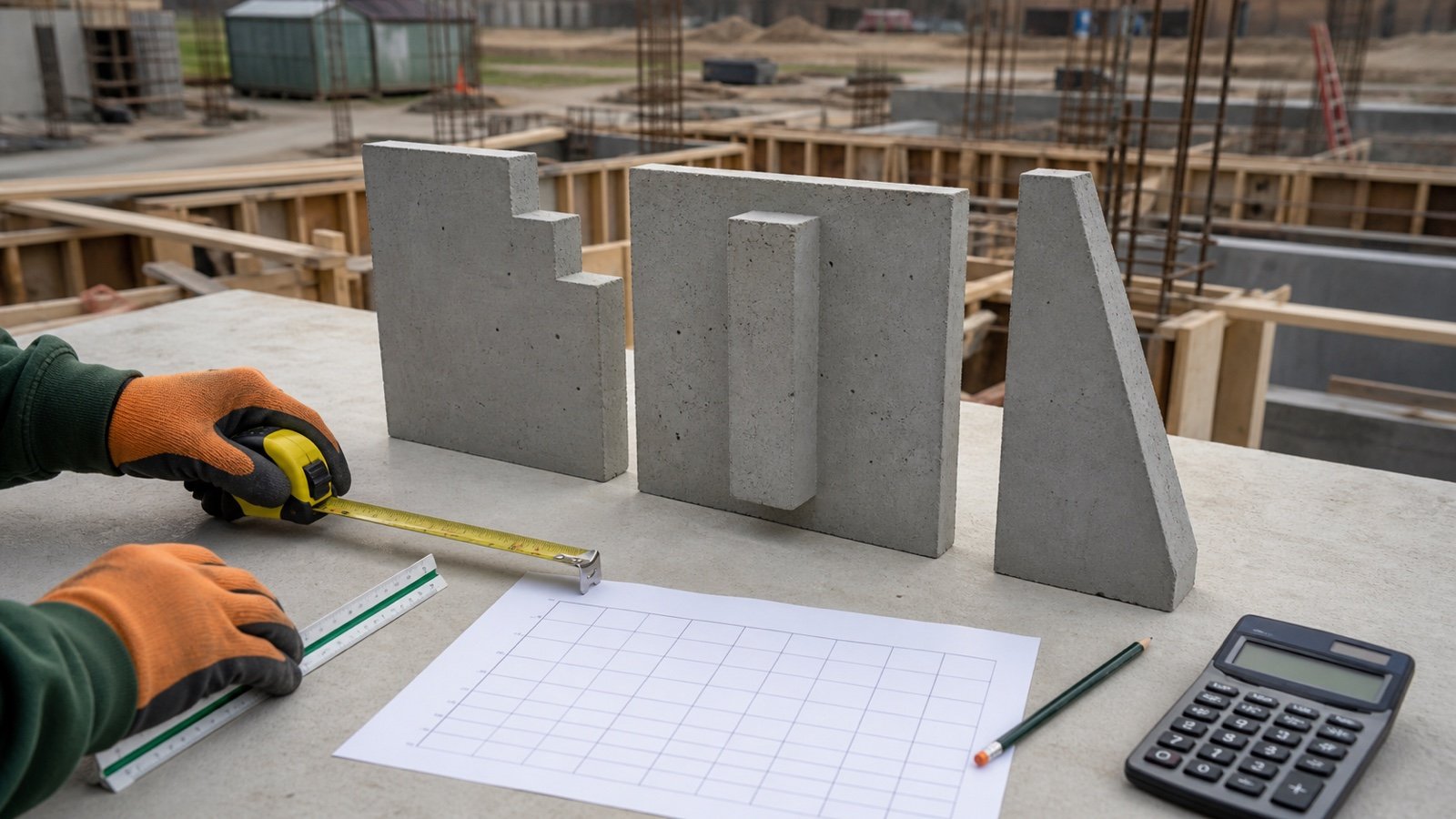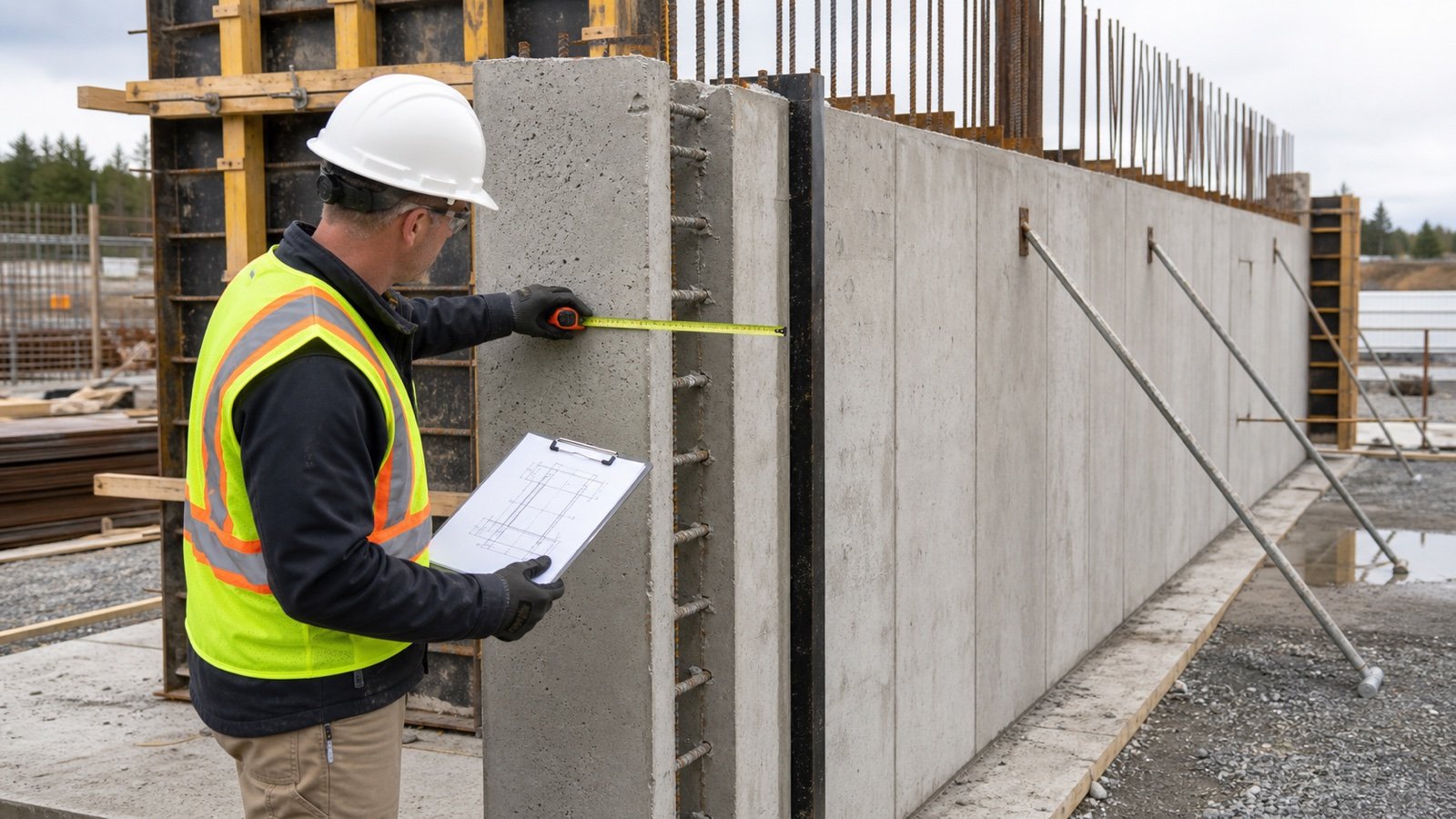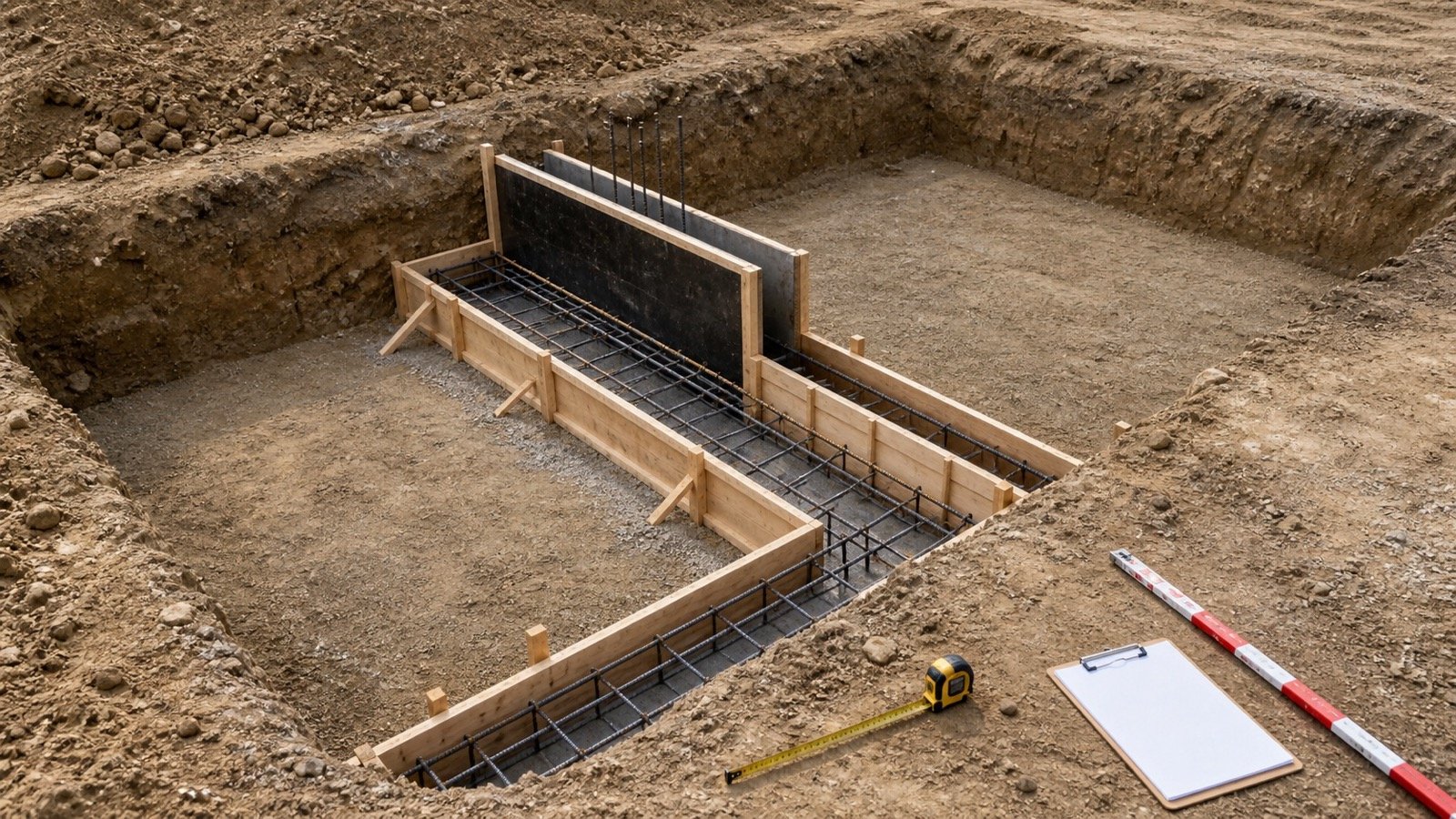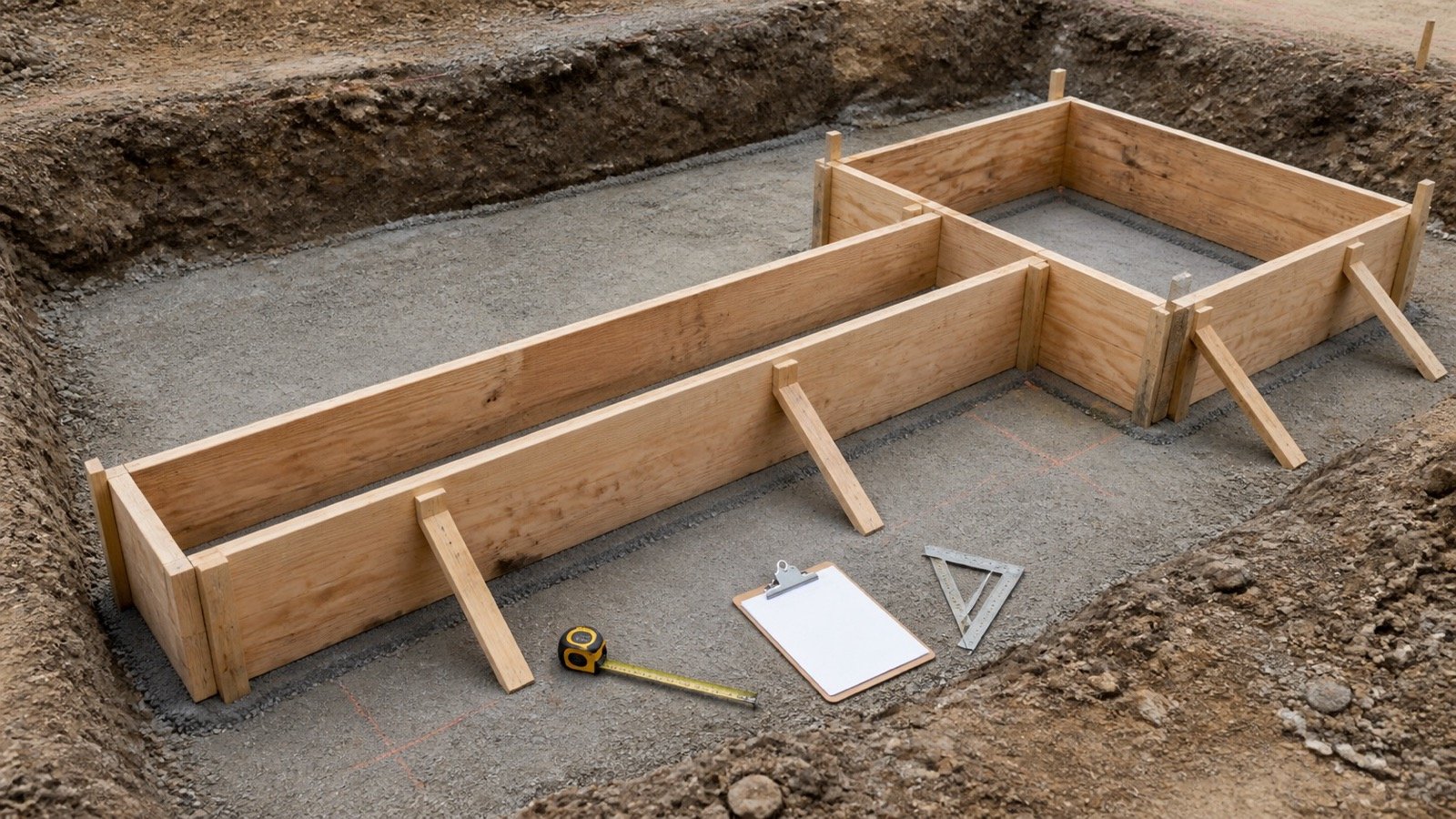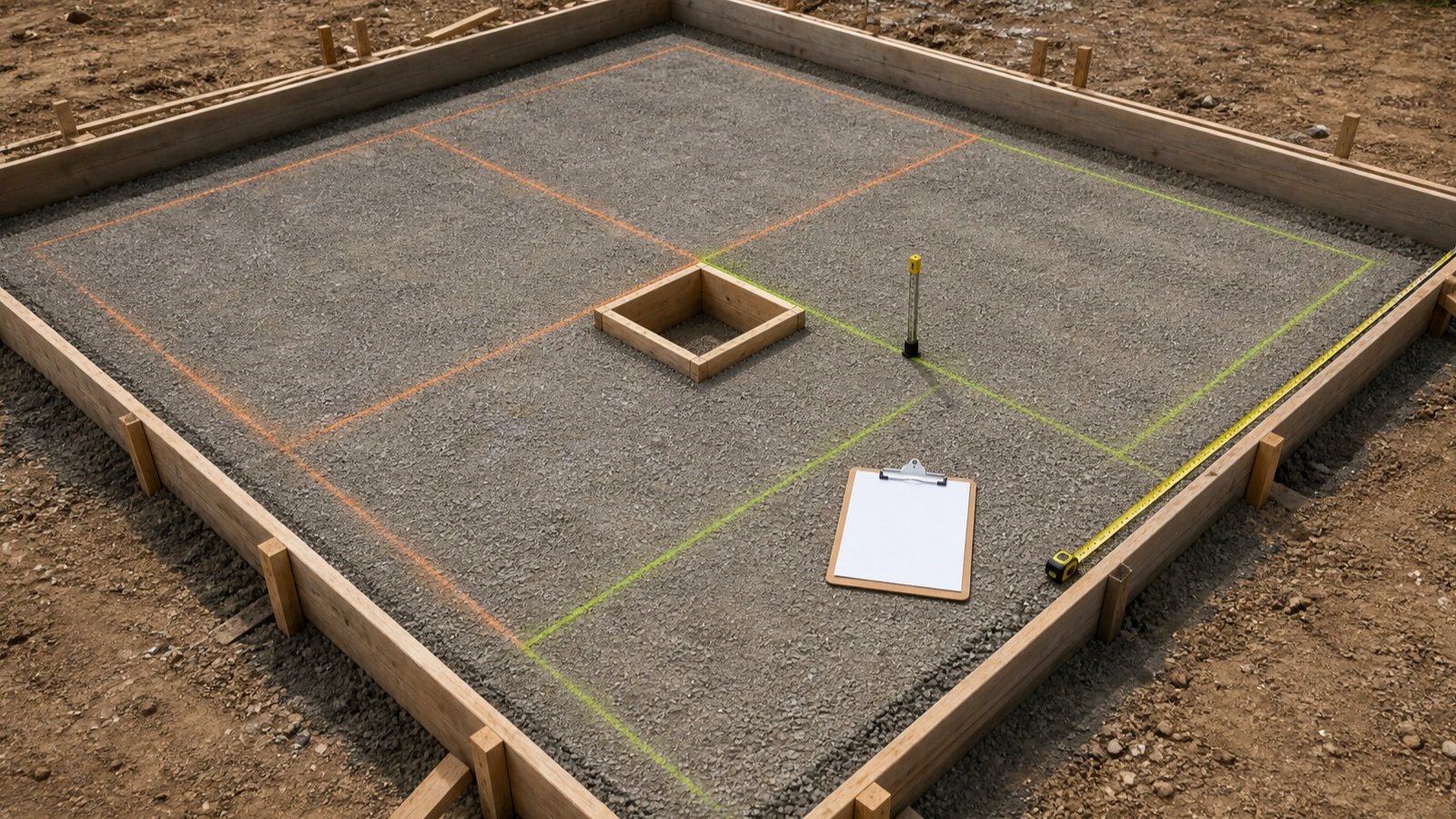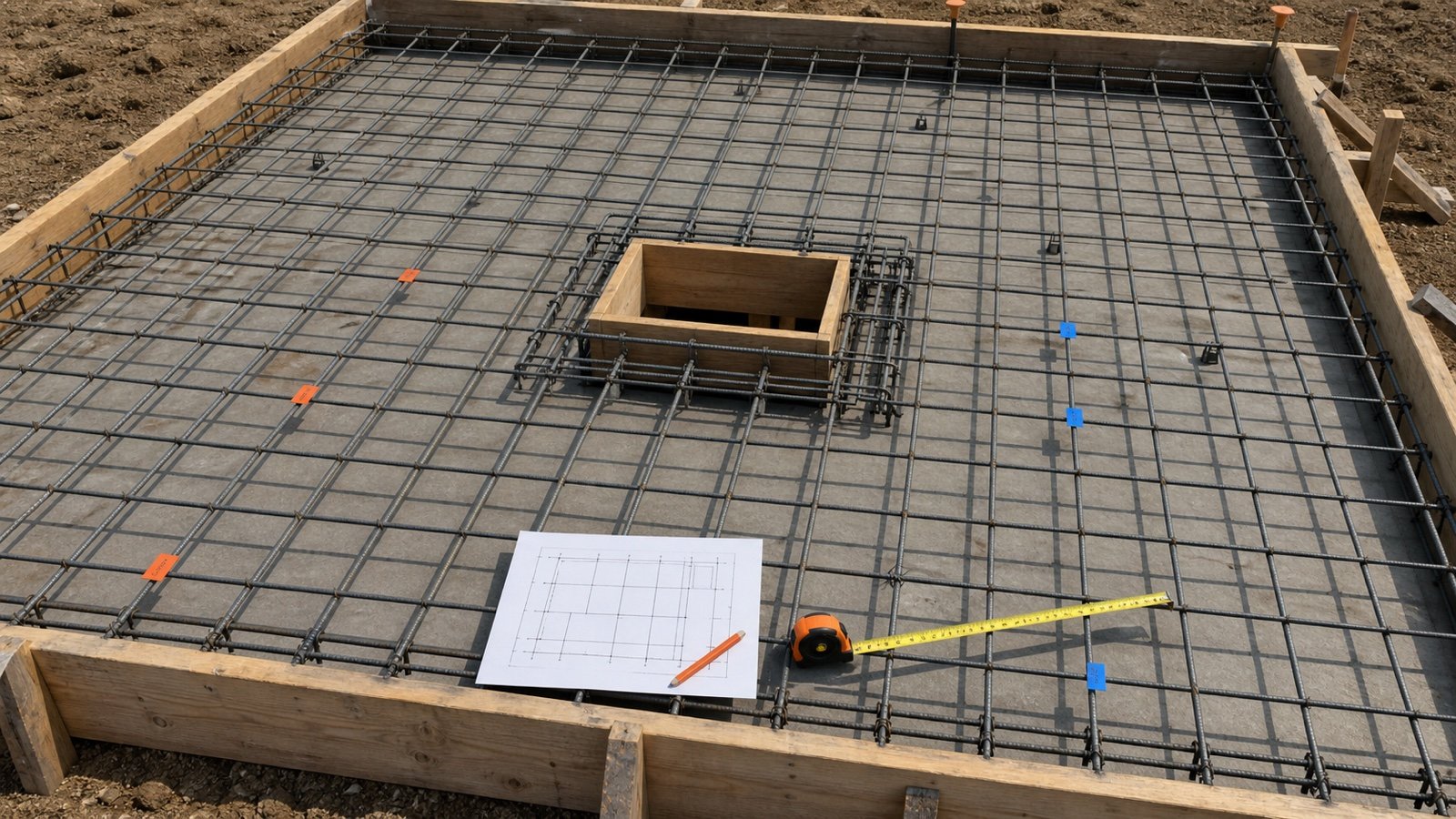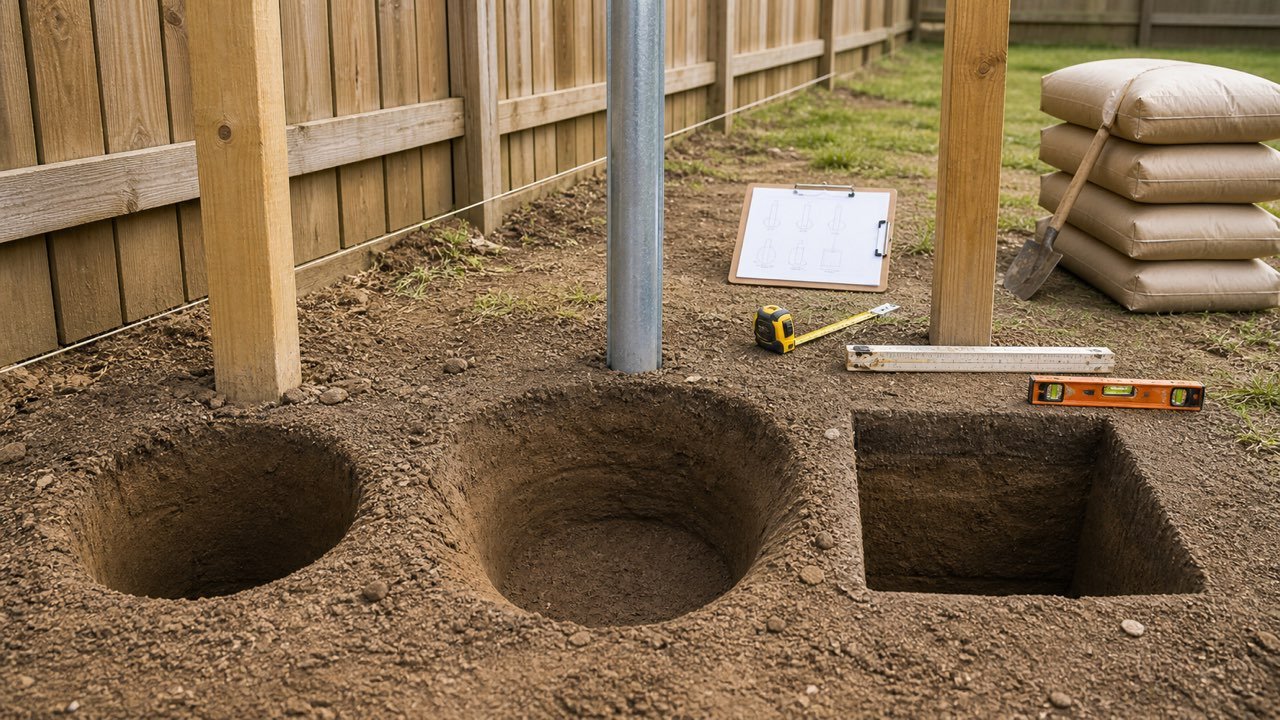
A post-hole concrete takeoff needs 2 solids: the space that will receive concrete and the part of the post or hardware inside that space. Calculate both from measured dimensions, subtract the occupied volume, and keep different hole groups on separate lines.
Use approved dimensions from the project, permit, product instructions, or responsible designer. A quantity calculation cannot select a safe hole diameter, depth, post connection, concrete product, or foundation detail.
How much concrete does a post hole need?
The net quantity is the concrete-filled hole volume minus the post, sleeve, or other verified object that occupies the same concrete zone. Multiply the unrounded net volume by the number of identical holes.
Net concrete per hole = concrete-filled hole volume - post displacement - other verified occupied volume
Group concrete volume = net concrete per hole × identical hole count
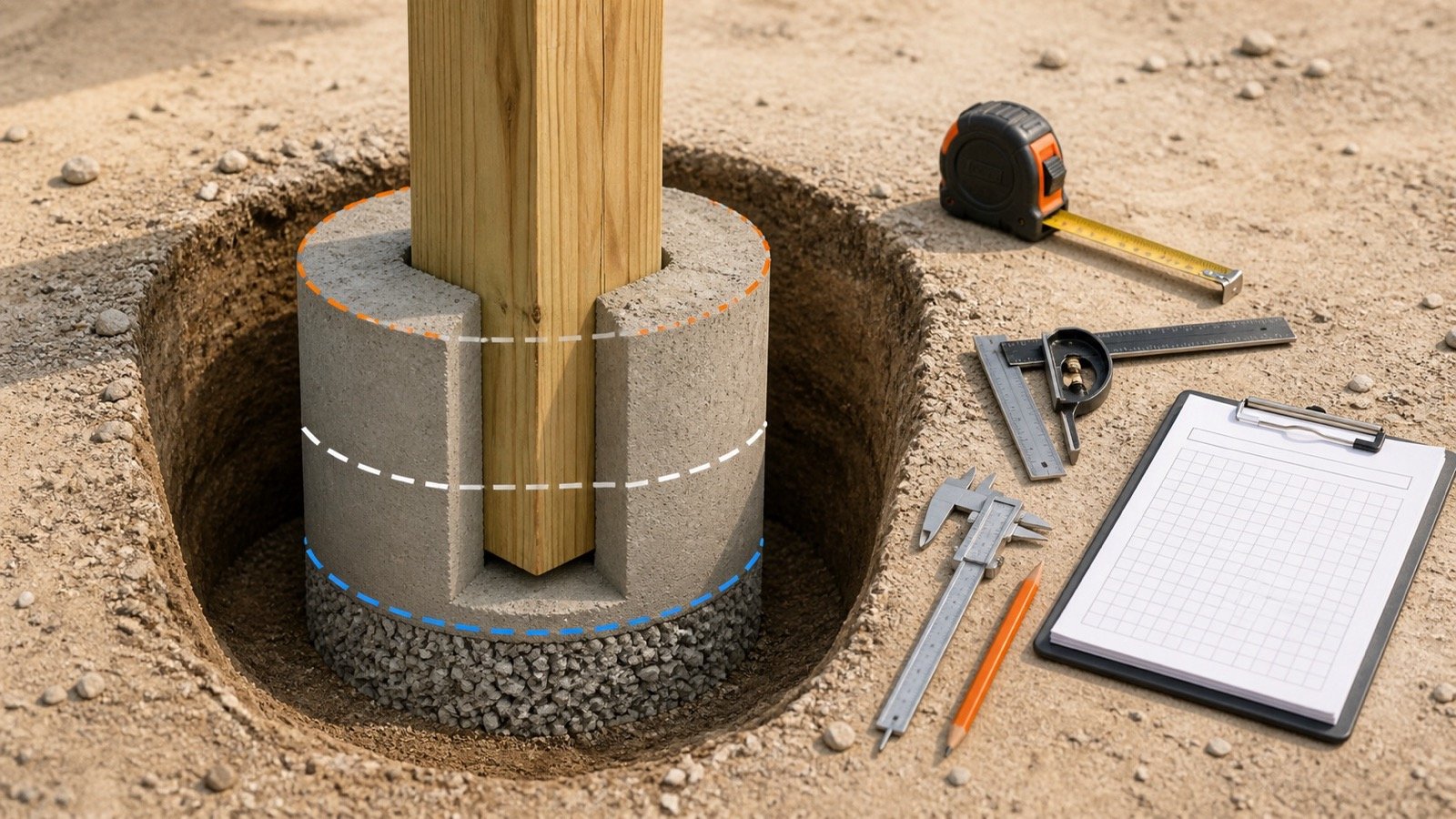
Total excavation depth, gravel depth, post embedment, concrete fill height and an above-grade collar can end at different levels. Record each vertical limit before using a formula.
Which measurements belong in a post-hole schedule?
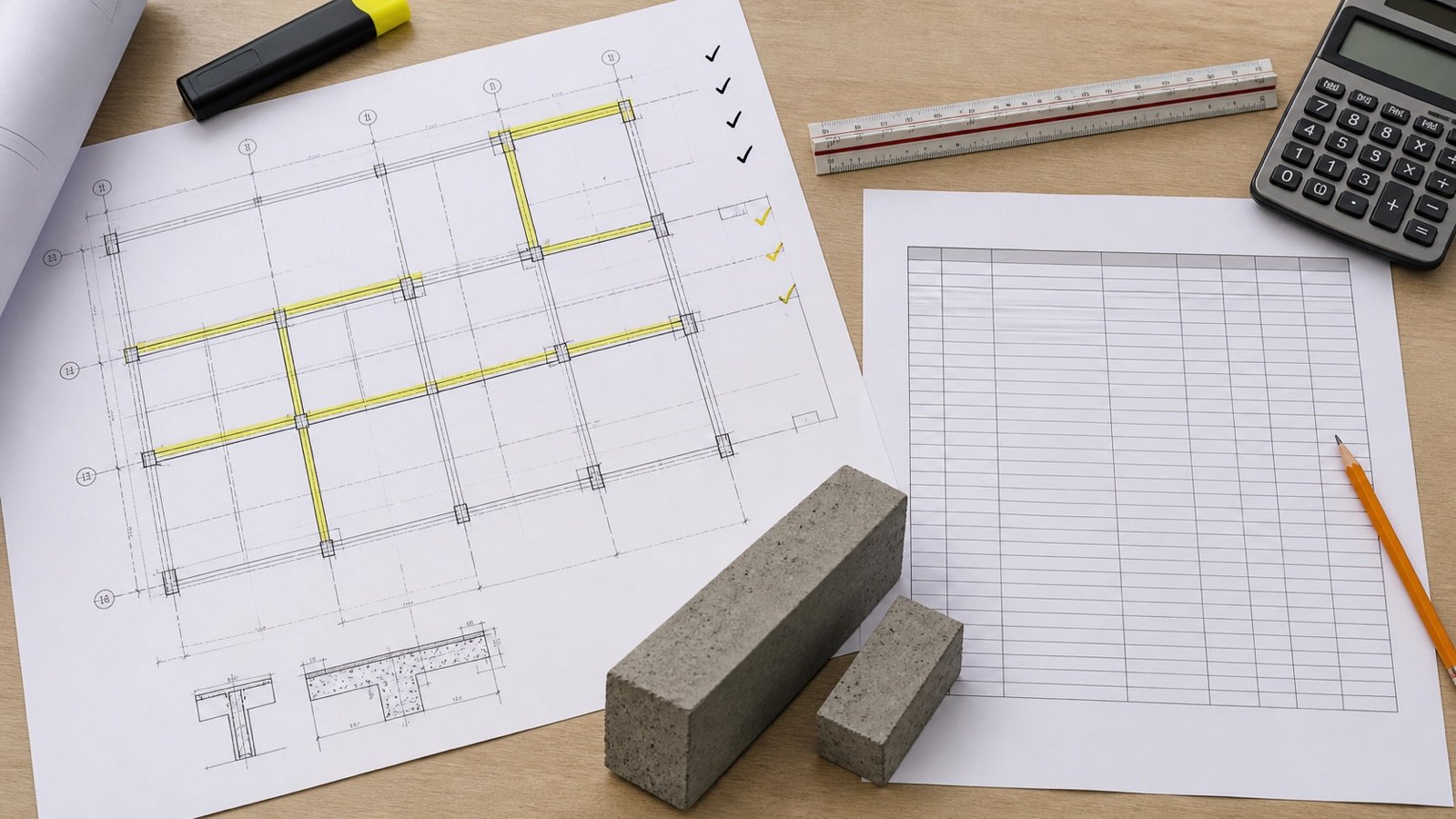
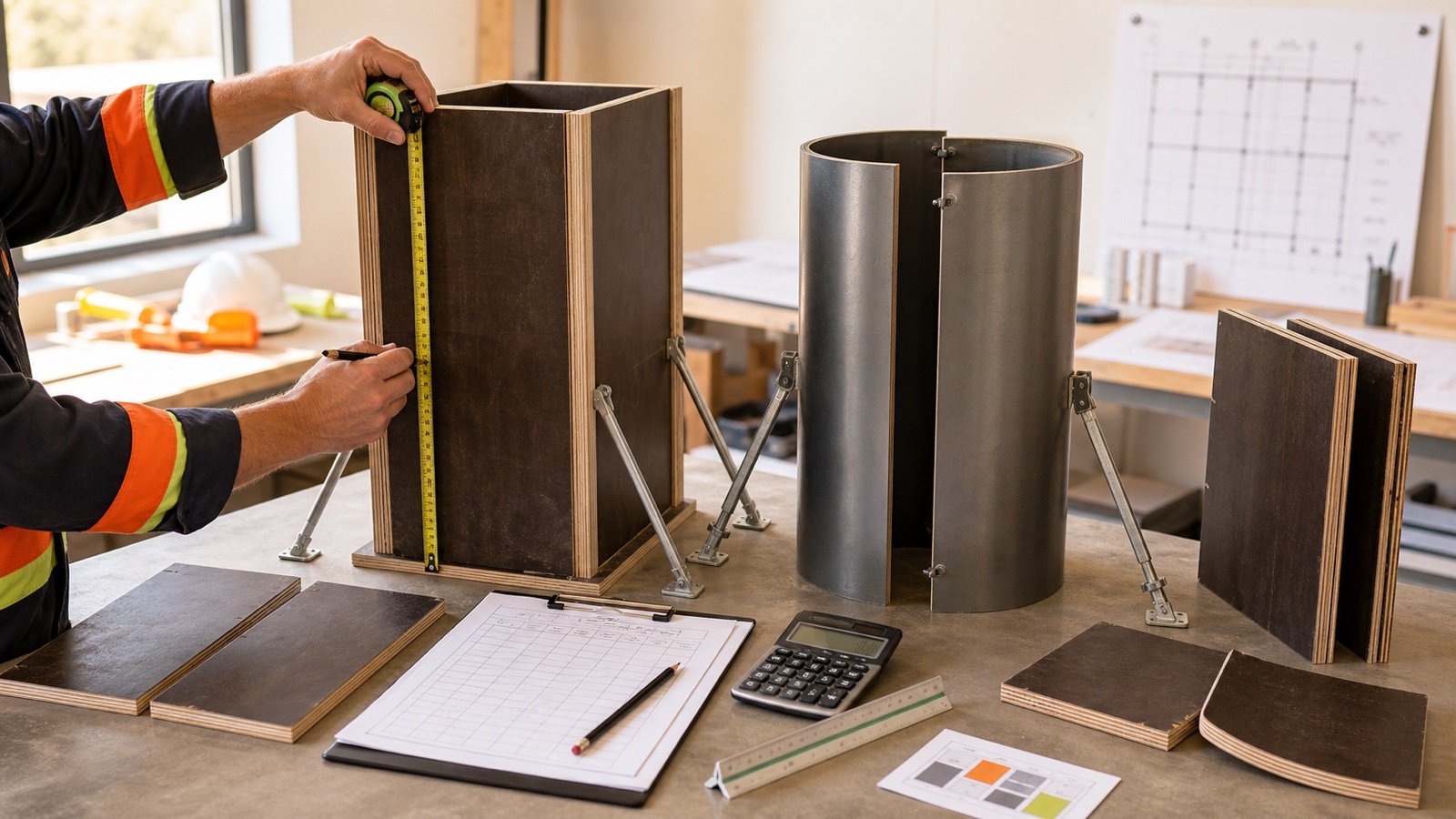
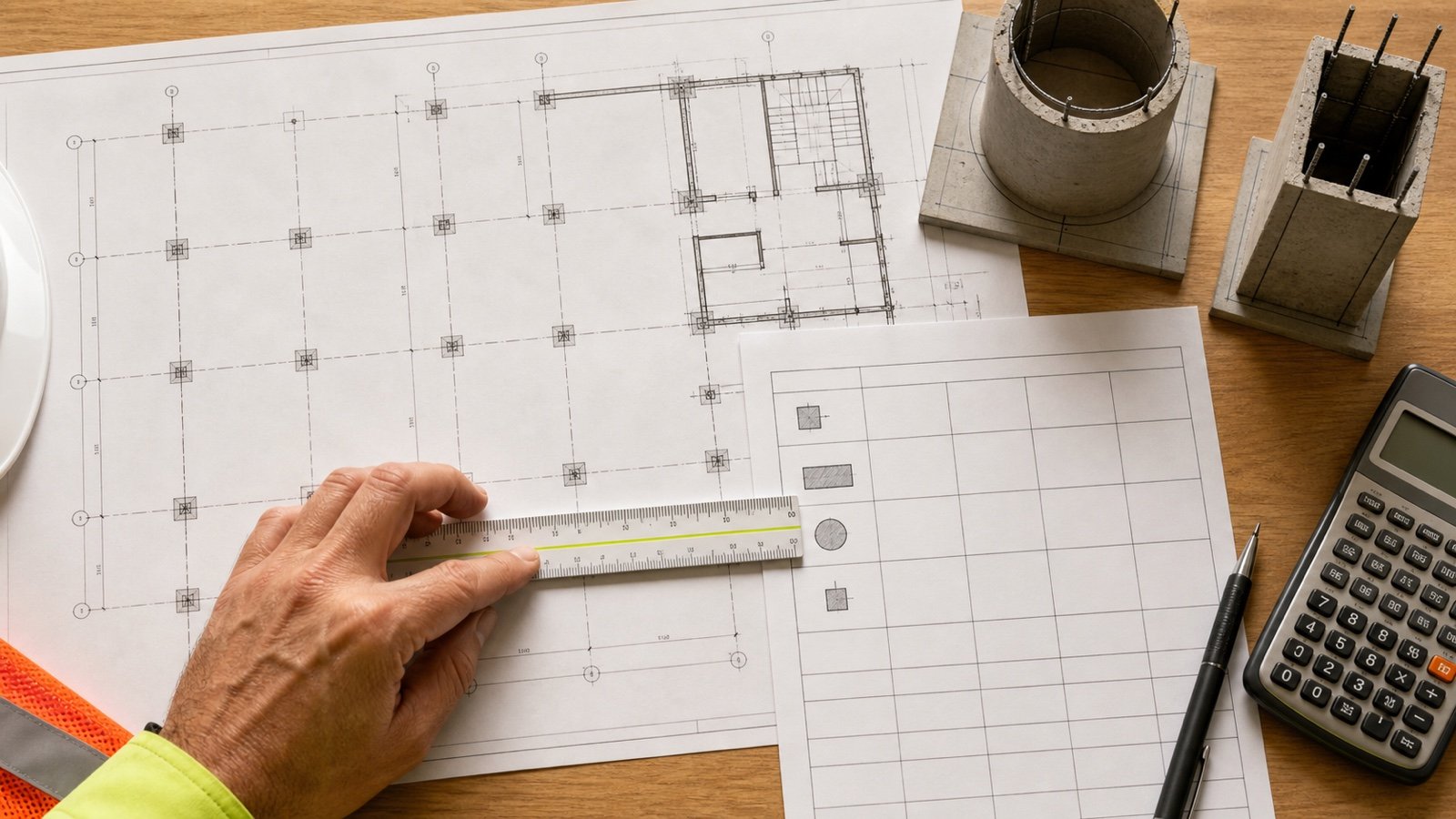
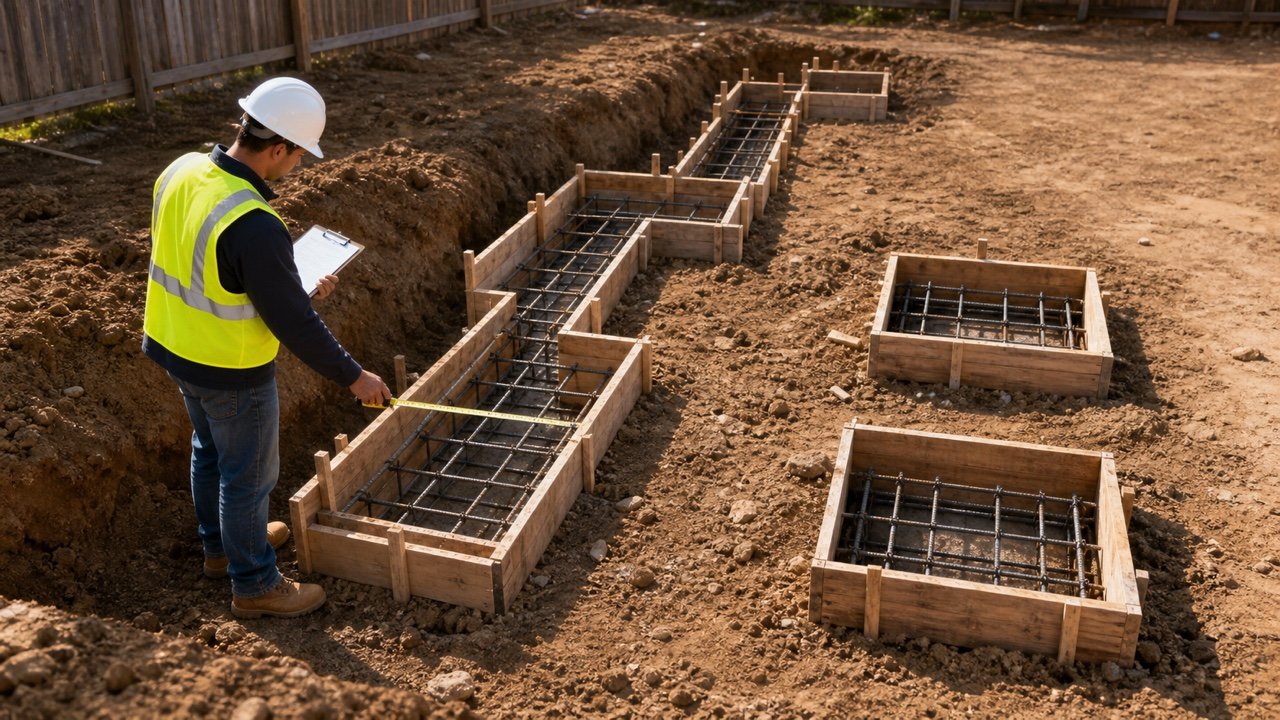
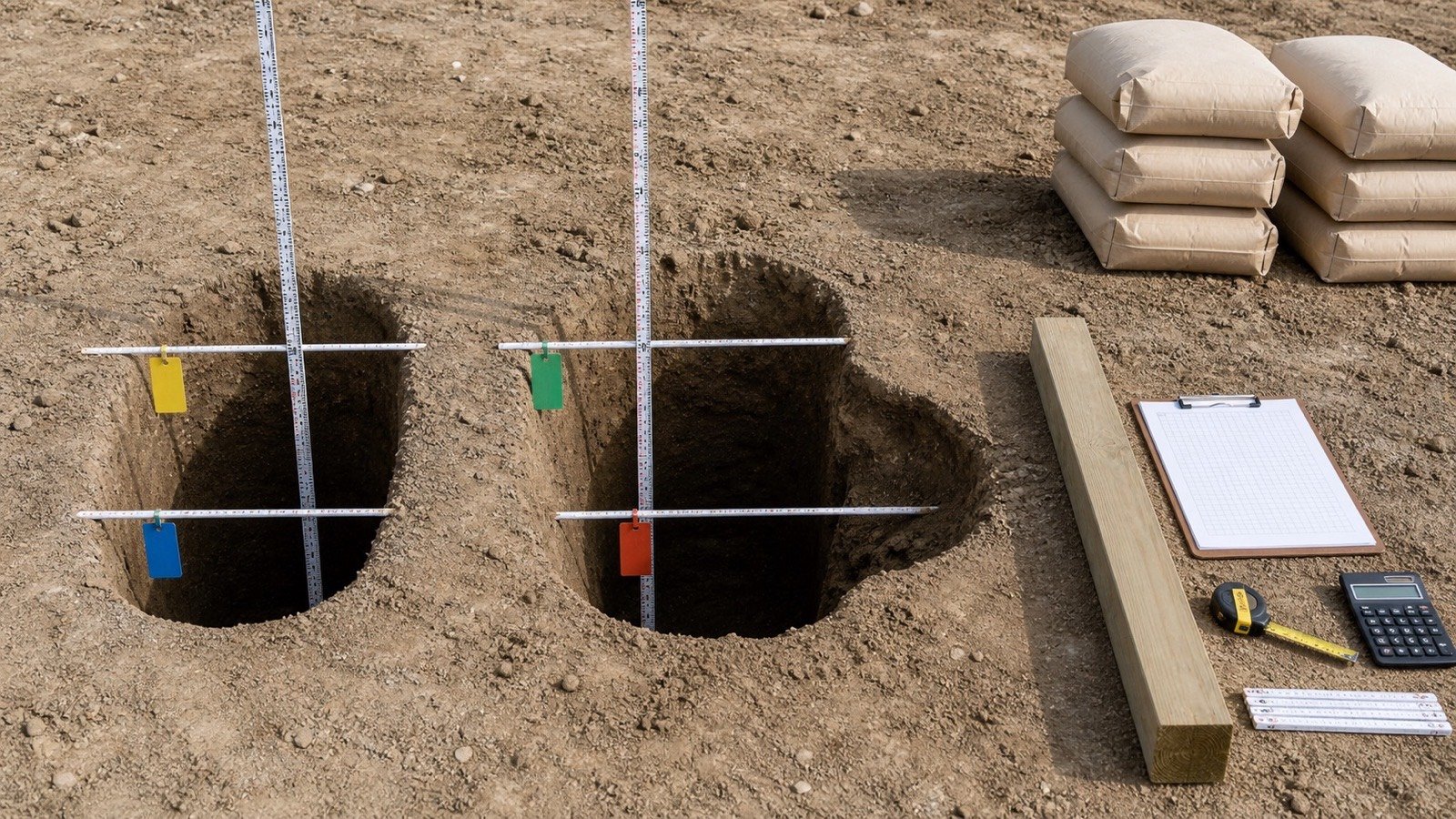
Measure the dimensions of each distinct concrete zone. Give line posts, corners, gates, end posts, signs and structural posts their own groups when their geometry or connection changes.
| Field | Record | Quantity check |
|---|---|---|
| Hole ID or group | Location, post type and count | Only identical holes share one calculation |
| Approved source | Drawing, permit, product instruction or design revision | Dimensions belong to the current detail |
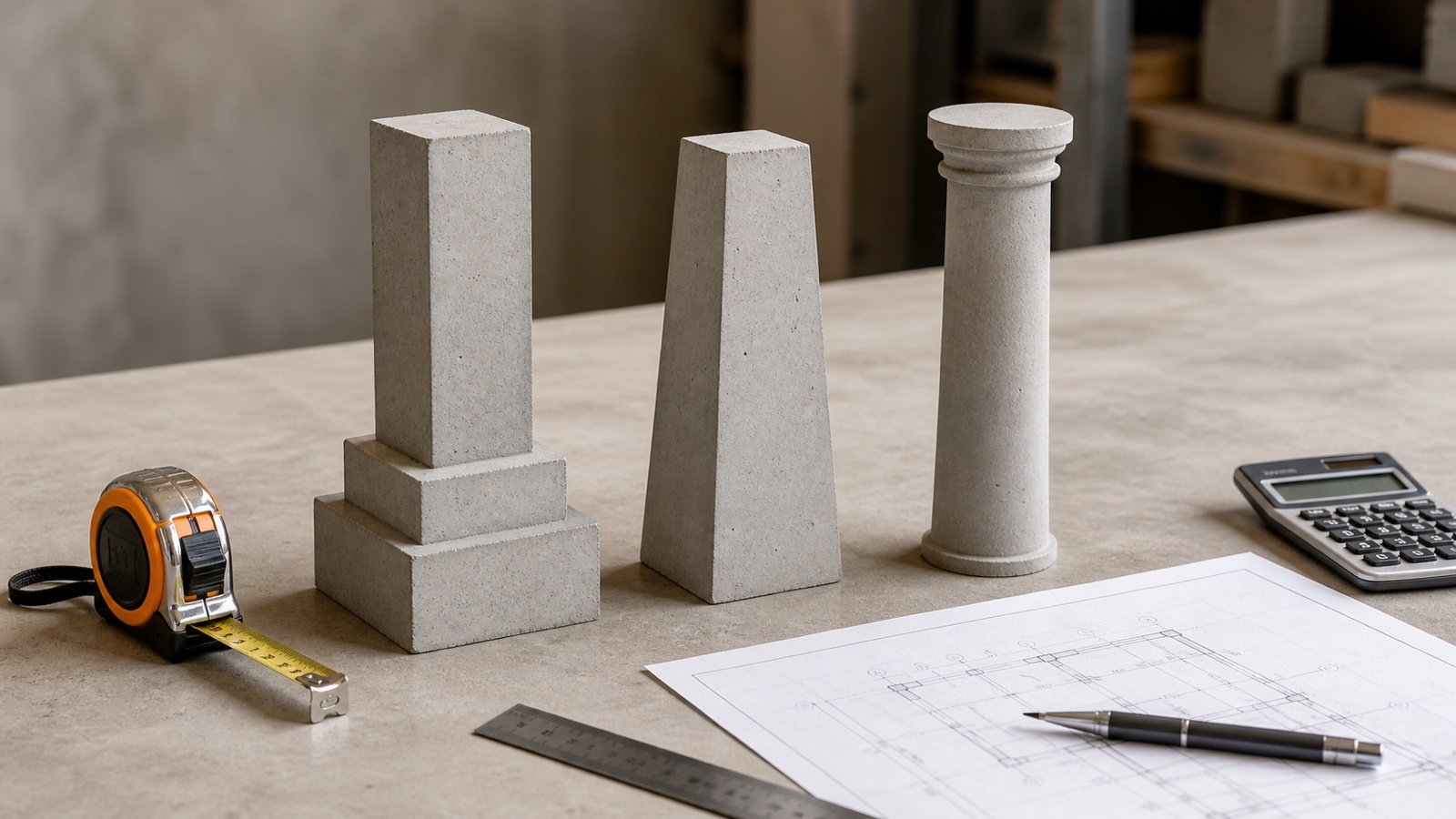
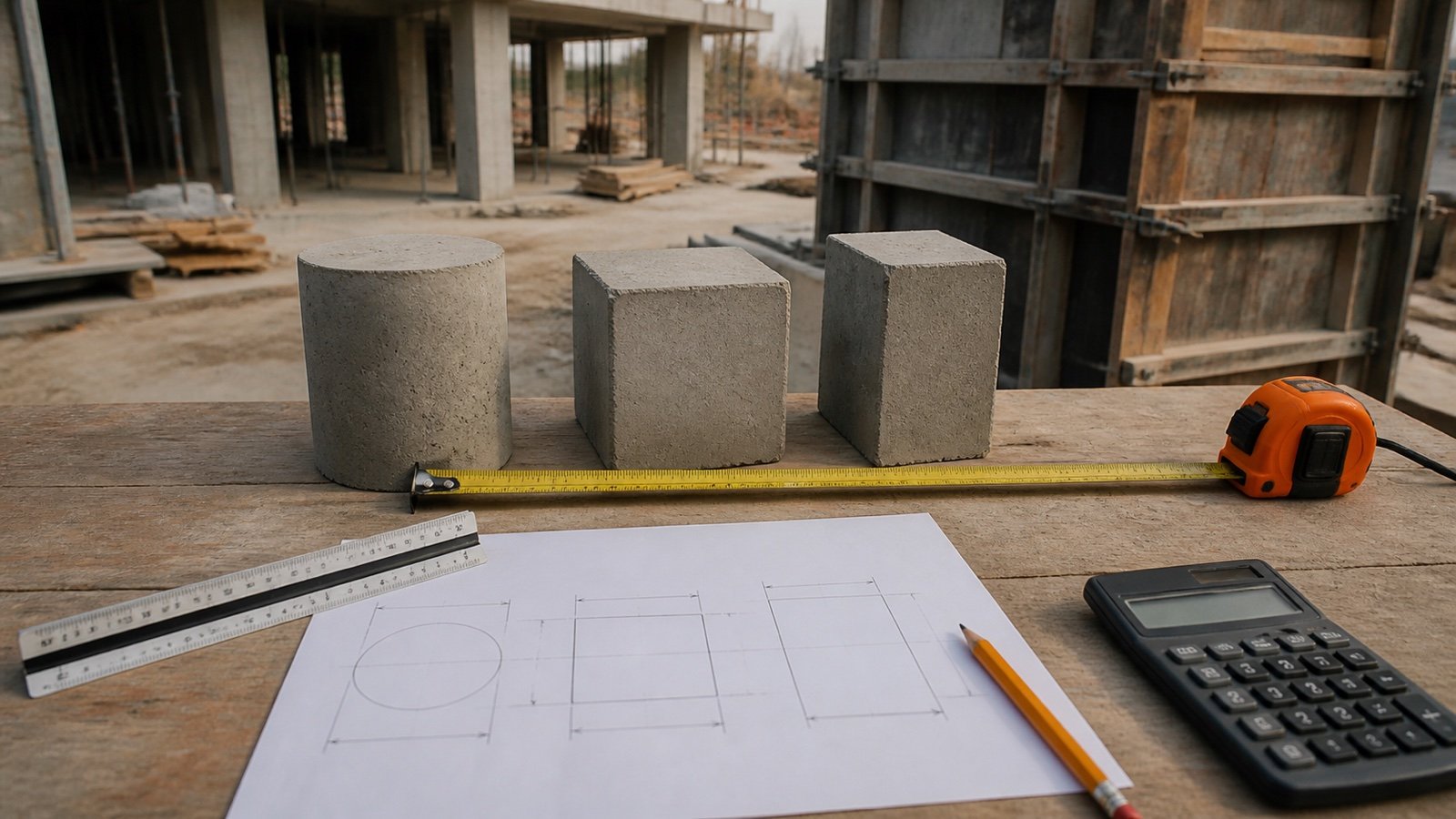
| Hole shape | Straight round, rectangular, tapered or measured sections | Formula matches the concrete boundary |
| Horizontal dimensions | Diameter, top and bottom diameters, or length and width | Units and measurement positions are stated |
| Concrete fill depth | Bottom and top limits of the concrete | Base and collar zones are included once |
| Post profile | Actual square, rectangular or round section | Nominal label has not replaced measured size |
| Post length in concrete | Physical overlap between post and concrete | Displacement stops where the post stops |
| Exceptions | Overbreak, collapse, rock, water, sleeves, hardware or changed levels | Each accepted change has a dated quantity line |
The Concrete Bags Calculator accepts a checked round or known volume. Complete this schedule first when holes taper, post depths differ, or several groups must be combined.
How do you calculate a straight round post hole?
Treat a straight round hole as a cylinder. Use the concrete-filled diameter and depth in compatible units.
Round hole volume = π × (diameter ÷ 2)² × concrete fill depth
For inch measurements, the result starts in cubic inches. Divide by 1,728 for cubic feet, then divide cubic feet by 27 for cubic yards. Keep the source value unrounded until the group total is complete.
How do you subtract a square or round post?
Multiply the post cross-sectional area by the length that sits inside the concrete. Use the installed section dimensions, not a nominal trade name.
Square or rectangular post displacement = width × thickness × length inside concrete
Round post displacement = π × (outside diameter ÷ 2)² × length inside concrete
| Condition | Displacement treatment |
|---|---|
| Embedded post reaches the concrete bottom | Use the full post length inside the concrete zone |
| Concrete extends below the post | Stop the post displacement at the post bottom |
| Concrete stops below finished grade | Use the stated concrete top, not the ground surface |
| Post bears on a cast-in or surface post base | Deduct only the hardware physically inside the concrete when the takeoff method requires it |
| Hollow post or sleeve | Use the external occupied solid unless concrete intentionally fills an approved internal void |
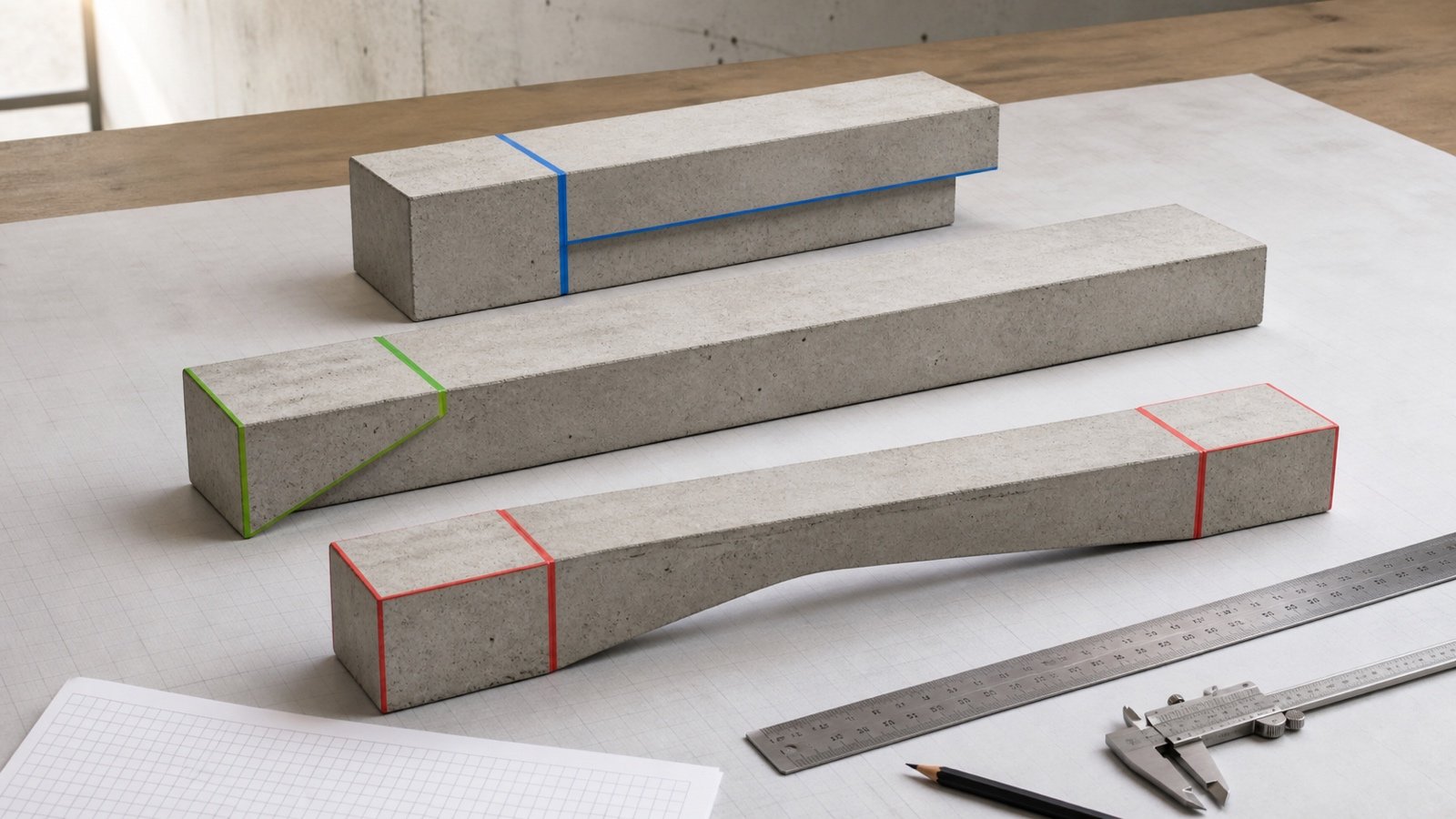
| Post section changes with depth | Calculate each physical section separately |
Small hardware can fall below the project's takeoff tolerance. Record the rule used. Do not deduct reinforcement, anchors, or minor inserts by habit.
Worked example: 12 round holes with square posts
A checked fence schedule has 12 identical straight holes. Each hole is 10 in in diameter with 24 in of concrete. Each post has an actual 3.5 in × 3.5 in section and occupies 22 in of the concrete depth.
- Gross hole: π × 5² × 24 = 1,884.955592 in³.
- Post displacement: 3.5 × 3.5 × 22 = 269.5 in³.
- Net per hole: (1,884.955592 - 269.5) ÷ 1,728 = 0.934870 ft³.
- Group total: 0.934870 × 12 = 11.218442 ft³.
- Cubic yards: 11.218442 ÷ 27 = 0.415498 yd³.
| Quantity | Per hole | 12-hole group |
|---|---|---|
| Gross hole | 1.090831 ft³ | 13.089969 ft³ |
| Post displacement | 0.155961 ft³ | 1.871528 ft³ |
| Net concrete | 0.934870 ft³ | 11.218442 ft³ |
The dimensions test the quantity method. They do not approve this fence, hole, post, soil condition, concrete product, or connection.
How do you calculate a tapered round hole?
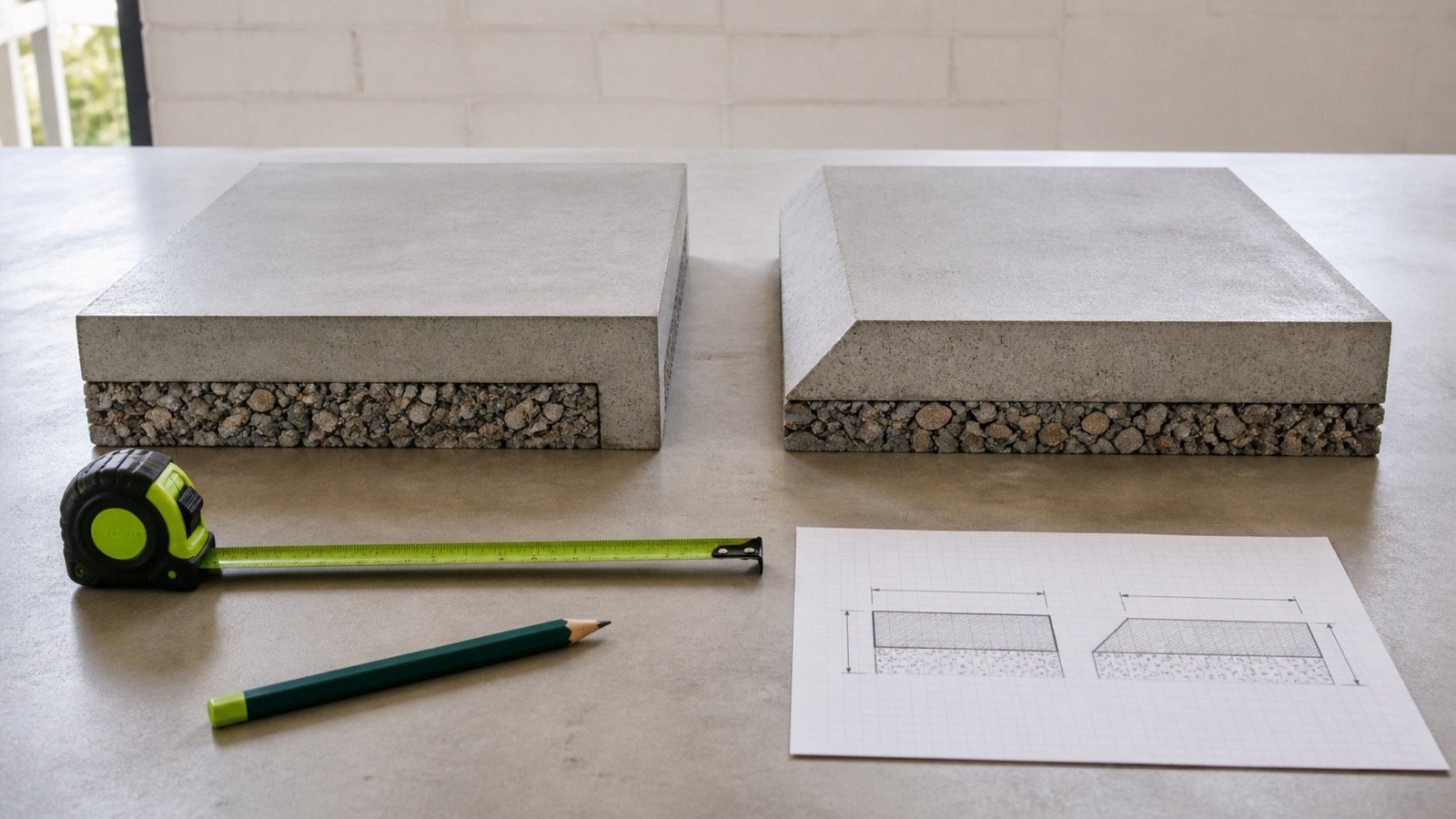
Use a circular frustum when the approved or accepted hole changes steadily from one measured diameter to another. The top and bottom circles must share a centreline, and the side must change at a steady rate.
Round frustum volume = π × depth ÷ 12 × (top diameter² + top diameter × bottom diameter + bottom diameter²)
A metric schedule has 6 identical holes. Each concrete zone is 0.35 m in top diameter, 0.45 m in bottom diameter and 0.80 m deep. A 0.10 m square post occupies 0.75 m of the concrete depth.
| Stage | Calculation | Result |
|---|---|---|
| Gross frustum | π × 0.80 ÷ 12 × (0.35² + 0.35 × 0.45 + 0.45²) | 0.101054564 m³ per hole |
| Post displacement | 0.10 × 0.10 × 0.75 | 0.007500000 m³ per hole |
| Net per hole | 0.101054564 - 0.007500000 | 0.093554564 m³ |
| 6-hole total | 0.093554564 × 6 | 0.561327382 m³ |
| Litres | 0.561327382 × 1,000 | 561.327382 L |
Use shorter measured segments when the diameter changes at several levels. A bell, step, side collapse, leaning bore, buried obstruction, or irregular hand-dug hole needs geometry that represents its accepted shape.
How do you calculate a square hole with a round post?
Multiply the square or rectangular concrete dimensions, then subtract the round post volume over the physical overlap.
Four square holes each measure 0.40 m × 0.40 m × 0.70 m. A 0.10 m diameter post occupies 0.65 m of concrete in each hole.
- Gross per hole: 0.40 × 0.40 × 0.70 = 0.112000000 m³.
- Round post: π × 0.05² × 0.65 = 0.005105088 m³.
- Net per hole: 0.106894912 m³.
- Four-hole total: 0.427579648 m³.
A rough square excavation can have rounded corners, local widening, or sloping sides. Use the specified formed dimensions or accepted field measurements that define the concrete boundary.
Does a gravel base reduce the concrete volume?
A separate non-concrete base reduces the concrete depth only when the approved detail places it inside the measured hole below the concrete. Record its compacted thickness and top level independently.
QUIKRETE's Setting Posts without Mixing instructions give one product workflow with gravel at the hole bottom and concrete stopping below grade. That manufacturer example shows why excavation depth and concrete depth need separate records. It does not set a universal base thickness or fill level.
| Zone | Quantity record |
|---|---|
| Non-concrete base | Material, compacted depth and separate volume |
| Concrete below the post | Gross concrete with no post displacement |
| Concrete around the post | Gross zone minus the post section |
| Unfilled depth below grade | Excluded from concrete volume |
| Above-grade collar | Added using its formed or approved geometry |
Draw the vertical section when more than 2 zones occur. This prevents subtracting the base twice or extending post displacement into concrete below the post.
Should every post hole be rounded to whole bags?
Combine unrounded volumes before package rounding when the same product, yield, allowance and workable pour group apply. Round each separate work stage only when its bags cannot supply another stage.
The 12-hole fixture totals 11.218442 ft³. A named product example with an approximate 0.60 ft³ yield gives:
- Combined quotient: 11.218442 ÷ 0.60 = 18.697403, so 19 whole bags.
- Per-hole quotient: 0.934870 ÷ 0.60 = 1.558117, which rounds to 2 bags for each hole.
- Rounding each hole first: 2 × 12 = 24 bags.
Per-hole rounding adds 5 bags in this fixture. A crew working on separate days may need several purchase or mixing groups, and opened material may have storage limits. Set the groups from the product instructions and placement plan before rounding.
How is post-hole volume converted to concrete bags?
Use the current mixed yield for the exact product and package. Divide the checked planning volume by that yield, then round once for the purchase group.
Exact bags = checked planning volume ÷ current mixed yield per bag
Whole bags = ceiling(exact bags)
QUIKRETE Concrete Mix No. 1101 lists approximate yields of 0.30 ft³ for a listed 40 lb bag, 0.45 ft³ for 60 lb, and 0.60 ft³ for 80 lb. These figures belong to that named data sheet. Check the current label, product number, package, market, revision, water instructions, storage condition and application limits for the material you will use.
Use the Concrete Bag Yield Chart to build the product record, then enter the verified yield and checked total in the calculator. Bag weight alone cannot supply mixed volume.
How should line, corner and gate holes be grouped?
Create one line for each repeated geometry and connection. Add the unrounded net group totals after each line passes its own dimension check.
| Group | Why it may differ | Record separately |
|---|---|---|
| Line posts | Repeated regular loading and spacing | Count, hole geometry and post profile |
| Corner or end posts | Connection and load path can change | Approved dimensions and hardware |
| Gate posts | Opening, hardware and loads can differ | Left and right post details |
| Repair holes | Old concrete, soil loss and changed boundary | Removed solid, accepted excavation and new concrete |
| Surface-base posts | Post may sit above concrete | Concrete pier plus cast-in or drilled hardware |
Do not copy a line-post quantity into a gate or structural-post line without the current detail. The quantity schedule should expose each difference instead of burying it in a project-wide percentage.
How should overbreak or a collapsed side be recorded?
Measure the accepted added concrete zone and add a dated field-change line. Keep it separate from a general handling allowance.
- Record the affected hole ID and original approved geometry.
- Describe the change, including depth range and horizontal limits.
- Resolve loose soil, water, utilities, stability and acceptance before placement.
- Calculate the revised accepted solid with valid sections.
- Subtract the original net volume to obtain the measured change.
- Update the product, pour-group and order record.
A default 10% buffer cannot describe one large collapse beside 1 post and no change beside 11 others. Measured sections show where the extra concrete goes and whether the hole still matches the approved foundation detail. The Oversized Post Hole Concrete guide compares the accepted changed volume with the original quantity.
Common post-hole quantity mistakes
- Using total excavation depth as concrete depth.
- Applying a generic hole diameter or embedment rule without project approval.
- Using post nominal size as the installed section.
- Subtracting the post through concrete below the post bottom.
- Subtracting a post that will sit on a surface or cast-in base.
- Using a cylinder for a tapered, stepped, collapsed or irregular hole.
- Combining line, corner and gate holes under one size.
- Hiding measured overbreak in an automatic allowance.
- Rounding every hole to whole bags before adding compatible work.
- Using bag mass as mixed yield.
- Assuming purchased package capacity guarantees placed volume.
- Leaving utility, soil, water, frost, permit, connection or structural decisions unresolved.
Review the Concrete Footing Volume guide when the work has separate pads, strips, pedestals or stepped foundations. Return to the Concrete Planning hub for bagged and ready-mix quantity workflows.
Safety and scope limits
Locate expected underground utilities before excavation. OSHA 29 CFR 1926.651 sets this requirement for covered U.S. construction work and requires safe location steps as work approaches an installation. Follow the utility-owner process, local law, site controls and responsible supervision that apply to the project.
Wet cement can cause caustic burns and dermatitis. Follow the current product safety data sheet, employer hazard assessment and required controls for skin, eyes, dust, lifting, mixing equipment, water and washing facilities.
This guide does not design a post foundation, choose an excavation method, approve a damaged hole, assess soil or frost, select concrete, detail reinforcement or hardware, or certify completed work. Stop the quantity handoff when the geometry, approval, product, utility location, ground condition or safety plan remains unresolved.
Sources and source scope
- NIST Guide to the SI, Appendix B: international-foot definition, unit relationships and conversion method.
- QUIKRETE Concrete Mix No. 1101 SPEC-DATA: named-product package sizes, approximate mixed yields and mixing context.
- QUIKRETE, Setting Posts without Mixing: one manufacturer-specific post-setting workflow showing separate gravel, concrete and unfilled zones.
- OSHA 29 CFR 1926.651: U.S. construction requirements for expected underground utility installations and other excavation conditions.
- OSHA concrete-products hazard guidance: wet-cement burn and dermatitis context.
Source scope: NIST supports unit conversion. The manufacturer sources support their named products and stated workflow. OSHA supports the cited U.S. workplace safety boundary. These sources do not set a universal post-hole design, allowance, yield, price, frost depth, connection, soil capacity or permit requirement. The worked dimensions are checked arithmetic fixtures.