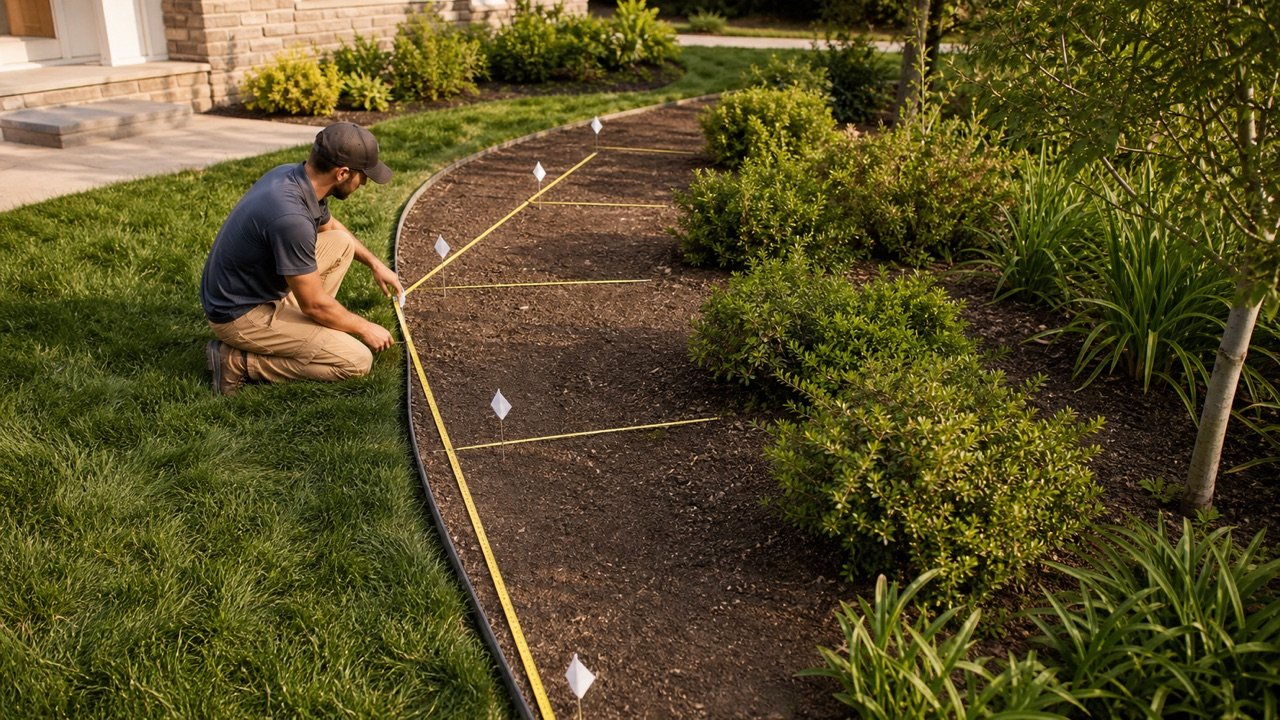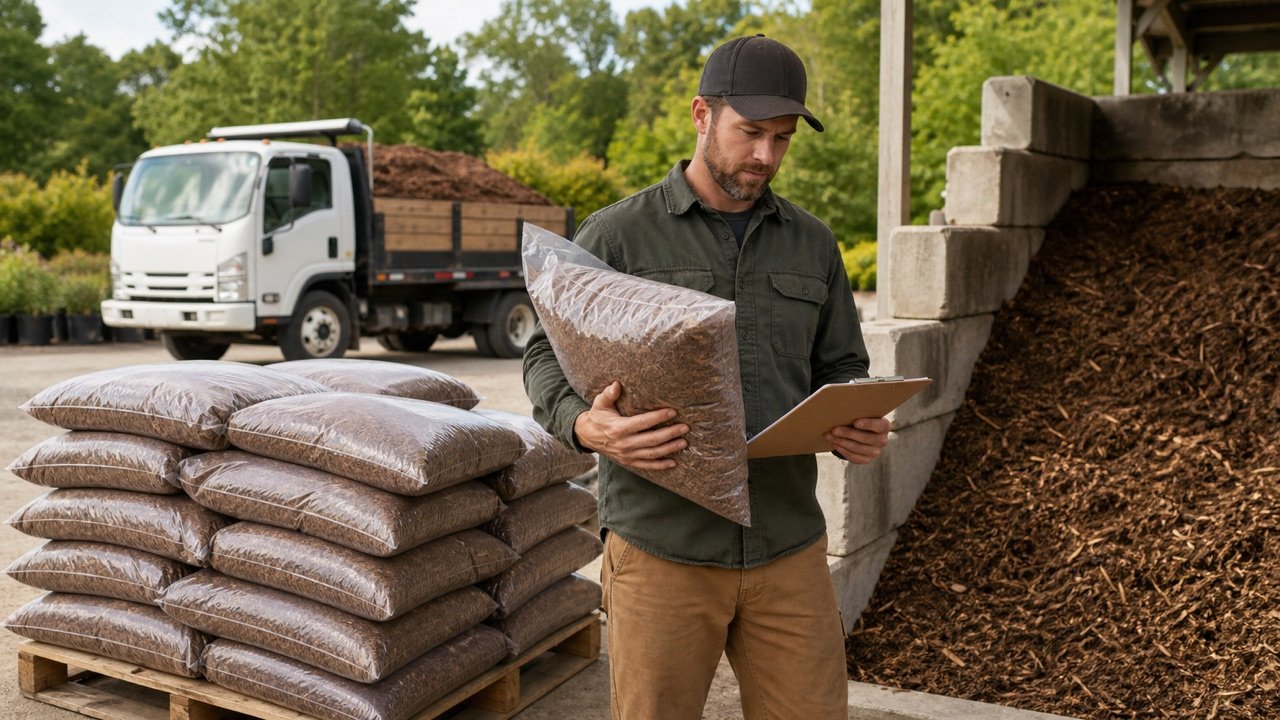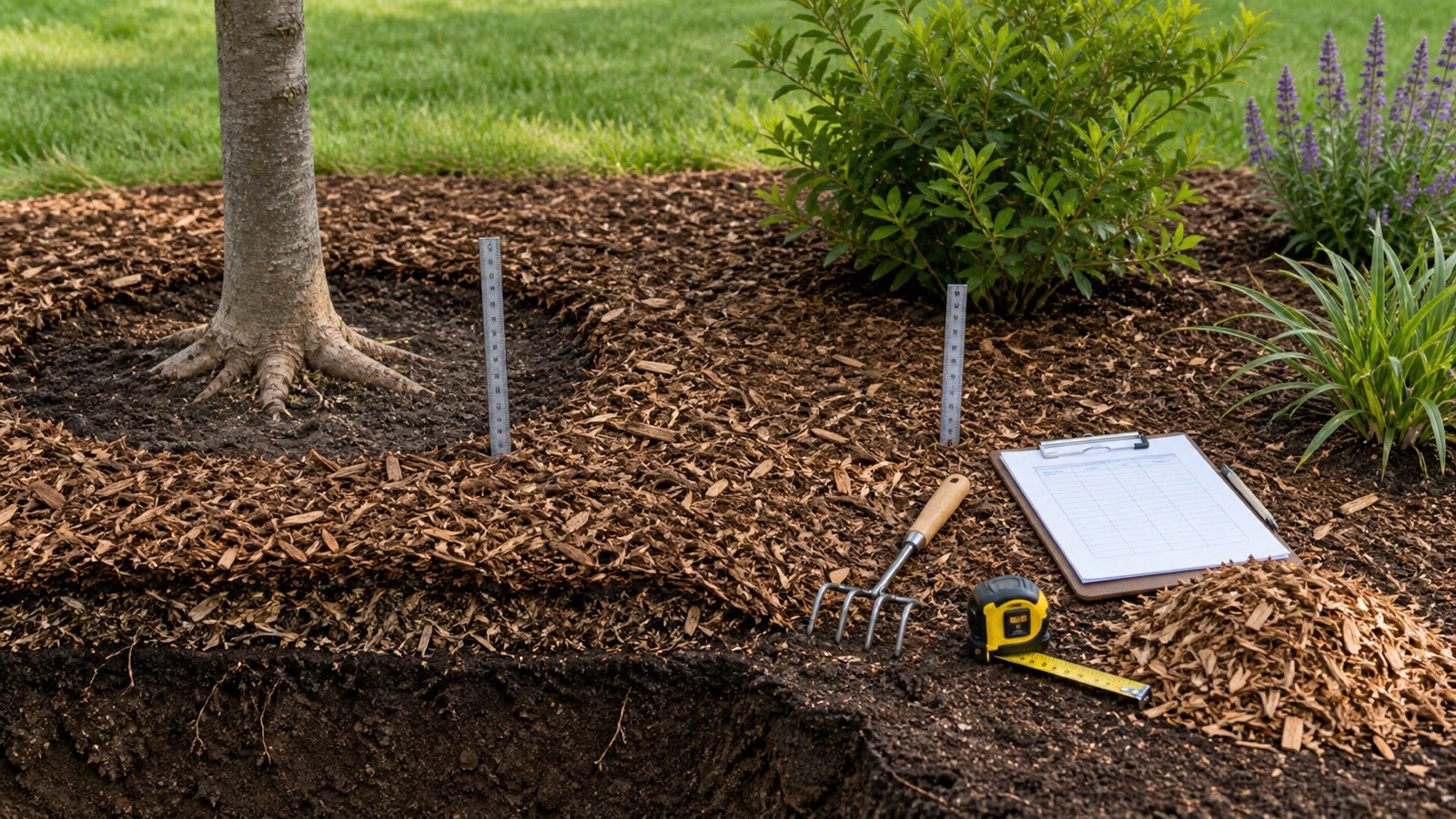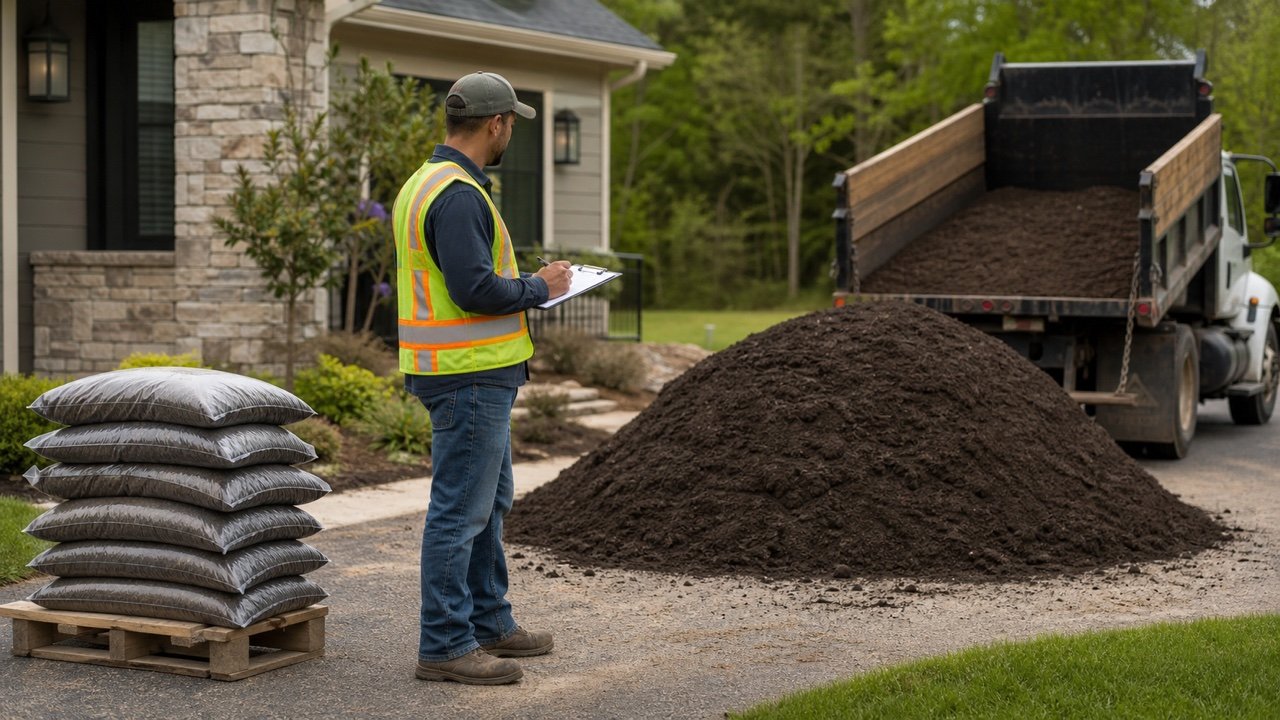
A compost calculation becomes hard to verify when the recipe sits in one file, delivery tickets in another and actual mixing notes nowhere. The final record should connect the approved quantity to the exact products, batches and application zones.
Use one revision-controlled chain for the plan, receipts, mixing, placement, exceptions and remaining material. Keep legal or certification records separately when a rule, contract or programme requires them.
What should a compost and soil-mix record contain?
A useful record answers five questions: what was planned, what arrived, what entered each batch, where it was applied and how the quantities closed. Each stage needs an ID or date that connects it to the next stage.
| Stage | Core fields | What the stage proves |
|---|---|---|
| Plan | Project, zone, dimensions, recipe source and revision, unit basis, component state and planned quantity | Which calculation and instruction controlled the work |
| Receive | Supplier, product, source, lot or stockpile, quantity, date, condition, ticket and technical sheet | Which material was available for acceptance |
| Batch | Batch ID, recipe revision, calibrated measure, actual component inputs, date and exceptions | What entered the mix |
| Apply | Zone, date, actual quantity, depth or method, conditions and responsible person | Where the material went |
| Reconcile | Opening quantity, receipts, rejects, returns, recorded use, closing quantity and difference | Whether the quantity trail closes |
It does not identify the delivered lot, confirm product suitability, prove the finished mixed volume or document where the material was applied.
Which quantity should start the record?
Start with an approved direct compost layer or an approved compost share of a measured mix zone. Do not switch between those modes after ordering without revising the calculation.
| Mode | Recorded depth | Compost quantity | Remaining record |
|---|---|---|---|
| Direct layer | Compost application thickness | Area × compost depth | Product, application zone, actual depth and receipt |
| Mix component | Total soil-mix zone depth | Total zone volume × approved compost share | Every other component, complete recipe and batches |
Use the Compost Calculator for either mode. Use the Garden Bed Compost Volume guide first when internal dimensions, excluded volume or total mix-zone depth remain unresolved.
How should a soil-mix recipe be defined?
Write the recipe source, revision, intended use and percentage basis before calculating any component. A complete recipe by volume should list every component and total 100%.
Planned component volume = approved total mix input × component share ÷ 100
Complete recipe check = sum of all component shares = 100%
A 25% mass recipe is not a 25% volume recipe. Converting between them needs compatible bulk density for each component under its stated material condition. Do not use unrelated internet densities to force a conversion.
Save the governing drawing, soil recommendation, product instruction, specification or responsible approval. The worksheet records a chosen recipe; it does not select one for the crop, plant, soil or site.
Why must the material state be recorded?
Component volume can change with hydration, expansion, screening, mixing, placement and settlement. Label the state that the percentage and measure describe.
| State or condition | Question to record | Risk if omitted |
|---|---|---|
| Loose screened compost | Was it measured loose from a bag, pile or container? | Placed or compacted volume may be substituted later |
| Compressed component | Does the recipe use compressed or expanded volume? | A block can be counted at the wrong state |
| Hydrated component | Was the specified hydration step complete before measuring? | Water uptake changes apparent volume |
| Moist or dry mass | Which moisture basis applies to a mass value? | Mass records become incompatible |
| Loose mixed input | Is the sum a planned input or a guaranteed finished yield? | Voids and mixing changes are hidden |
| Placed or settled mix | When and how was final volume or depth checked? | A receipt quantity is treated as accepted work |
Keep planned loose-component input separate from accepted finished volume. The sum of loose ingredients does not guarantee the same volume after blending and placement.
What product and lot evidence should be linked?
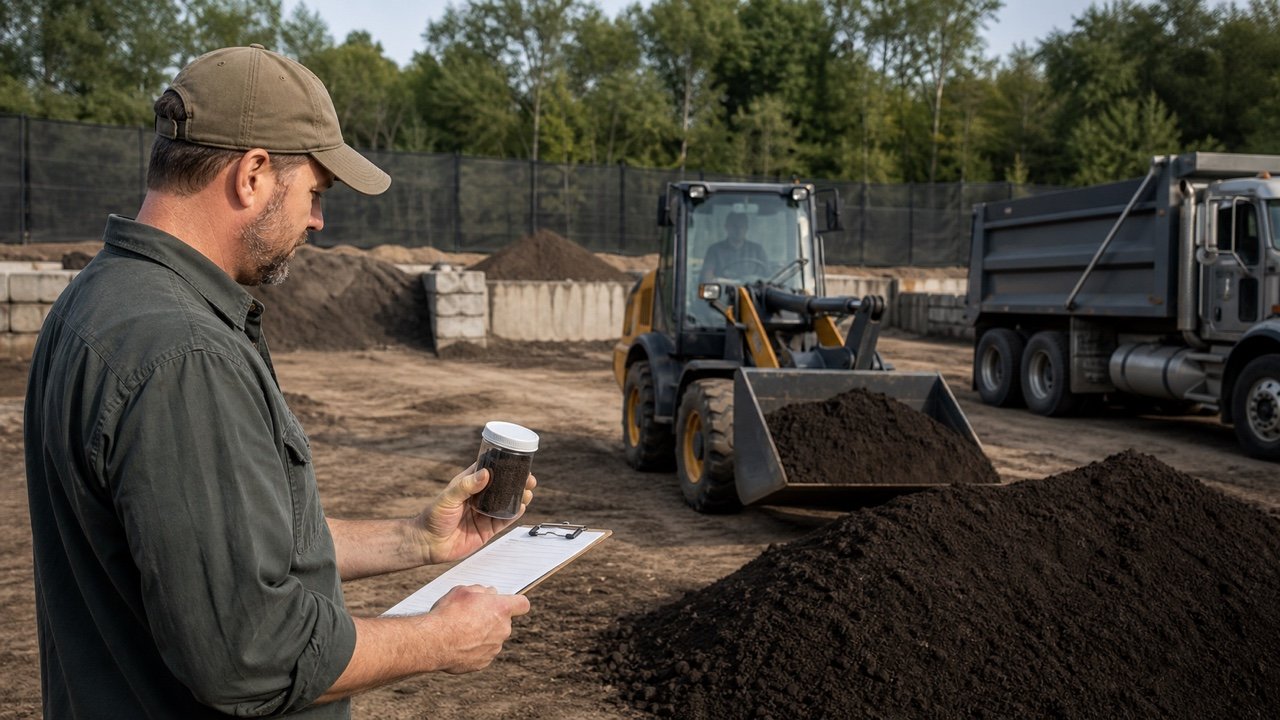
Connect each received component to the document used to accept it. Record product identity, supplier, production source, lot or stockpile identifier, delivery date, document issue date and any sample date.
U.S. EPA compost procurement guidance identifies maturity, odour, texture, nutrients, pH, salts, organic content, pathogens, metals, foreign matter, moisture and density as possible specification topics. The applicable project decides which fields and limits matter.
The U.S. Composting Council sample Compost Technical Data Sheet includes product, feedstock, sample and analytical information. Its STA rules describe a testing and information-disclosure programme and state that the programme does not warrant suitability for a particular use. Review the actual data and project requirements.
| Record field | Example entry type | Check |
|---|---|---|
| Component ID | COM-01, SOIL-02 or MIN-01 | Unique within the project |
| Product and source | Exact supplier product and facility or stockpile | Matches receipt and specification |
| Lot or ticket | Package lot, delivery ticket or supplier batch | Traceable to quantity received |
| Technical document | Title, revision, issue date and sample date | Current enough and applicable to the delivered source |
| Acceptance status | Accepted, held, rejected or accepted with condition | Named responsible decision |
How should receipts be connected to the plan?
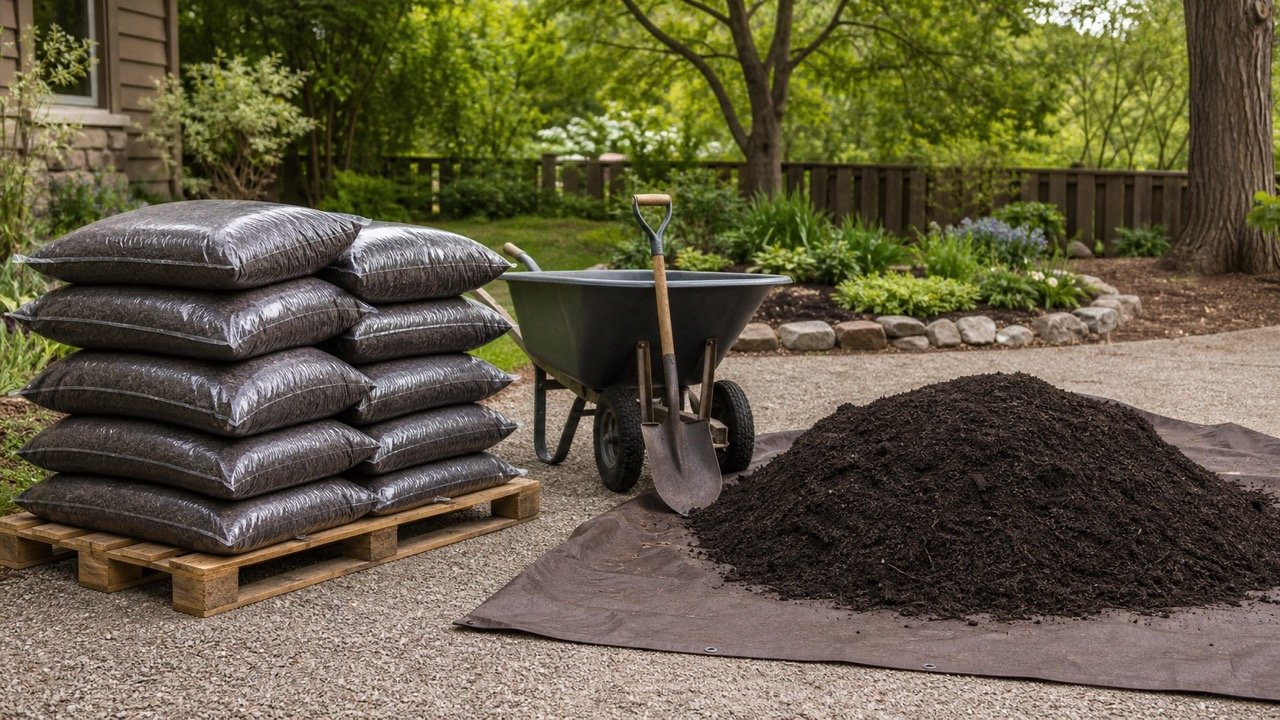
Record the ordered and received units without converting away the original evidence. Keep a bag count and net volume per current label, or retain the bulk ticket and its stated selling basis.
If a delivery changes product, source or lot, place it on hold until the acceptance route is complete. A similar colour or product name does not prove equivalence.
The Compost Bags vs Bulk guide provides the quote, rounding and receipt worksheet. Carry its chosen product, quantities, ticket and exceptions into this record instead of creating a second unmatched total.
What belongs on each batch card?
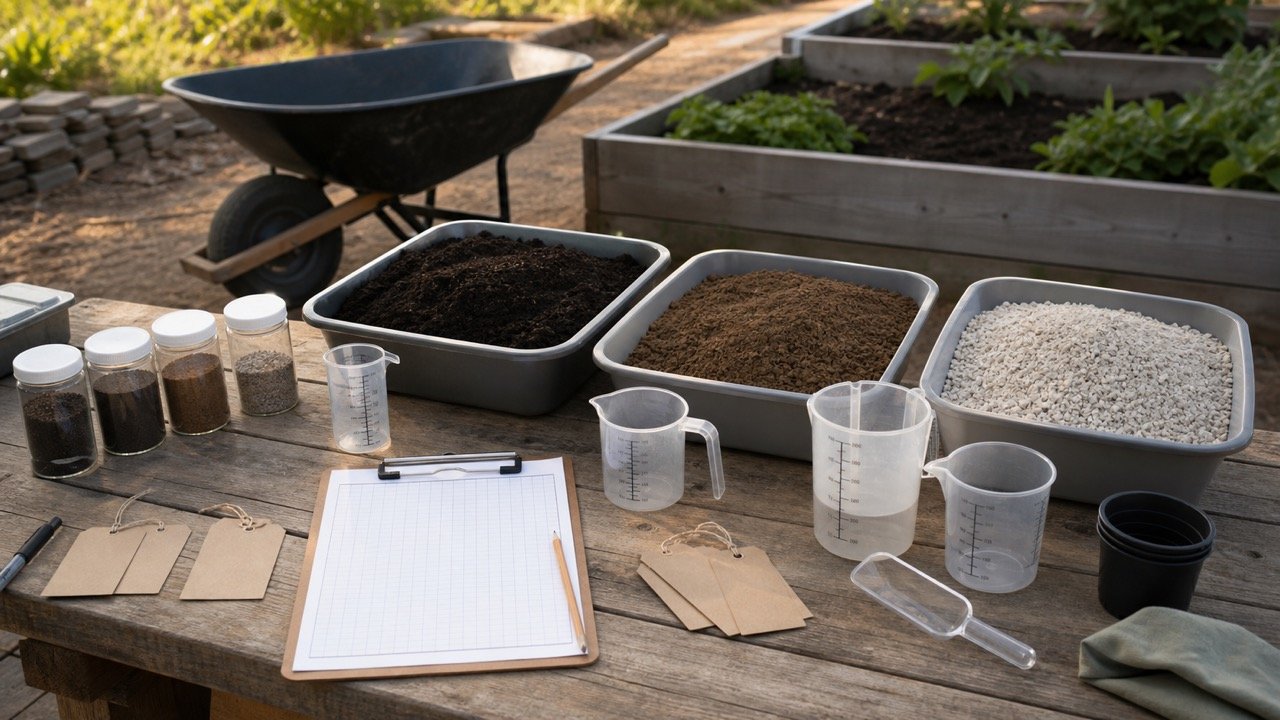
A batch card should identify the recipe revision and show every actual component input. Use a measure that has been checked for the intended volume and filling method.
- Project, zone and batch ID.
- Date, operator and recipe revision.
- Component ID, product, lot and acceptance status.
- Target and actual volume or mass for every component.
- Measurement tool ID and stated component condition.
- Mixing sequence and any required hydration or preparation step.
- Start, completion and hold status.
- Spill, shortage, substitution, reject, rework or unused remainder.
- Application zone or temporary storage location.
A bucket described as “5 gallon” is not automatically a calibrated 5 gal working measure. Establish the usable fill line and method, then keep the same method across comparable batches.
Worked example: six equal soil-mix batches
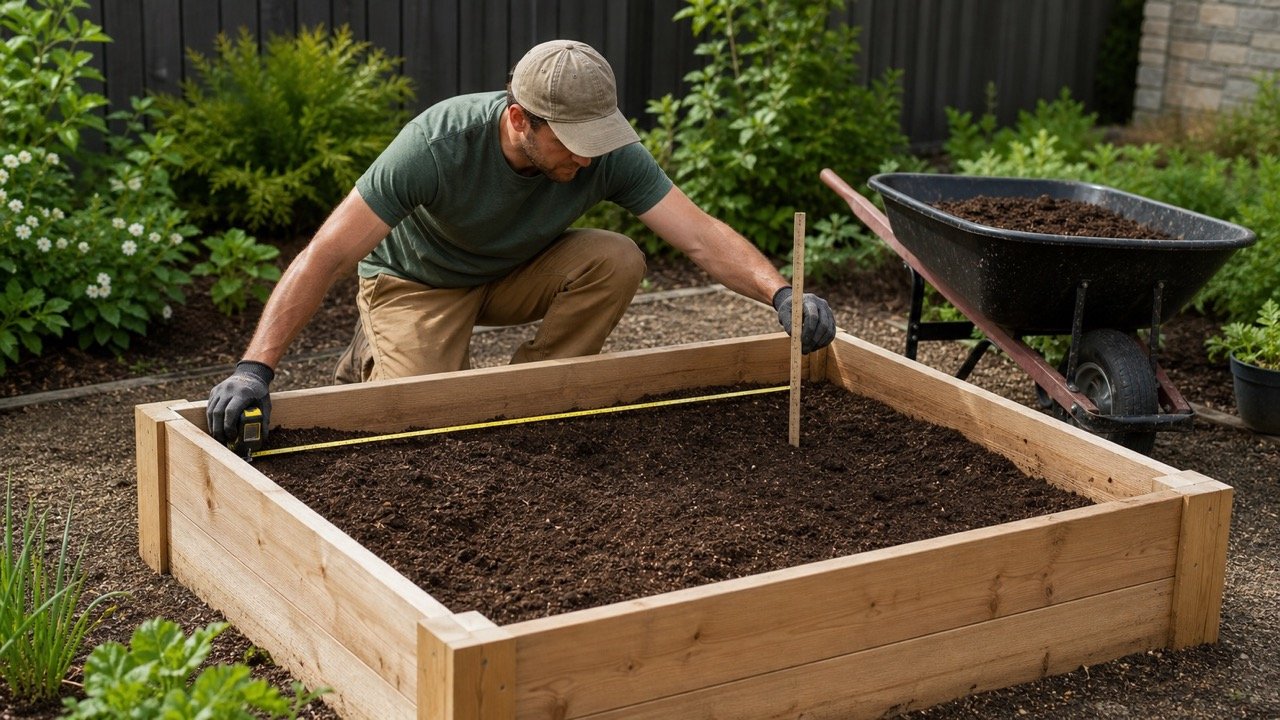
A hypothetical raised-bed zone measures 8 ft by 4 ft internally and has an approved 9 in mix depth. The approved loose-input recipe is 25% compost, 50% topsoil and 25% mineral or aeration component by volume.
- Net mix input: 8 × 4 × 9 ÷ 12 = 24 ft³.
- Compost: 24 × 25% = 6 ft³.
- Topsoil: 24 × 50% = 12 ft³.
- Third component: 24 × 25% = 6 ft³.
- Recipe total: 6 + 12 + 6 = 24 ft³ and 25% + 50% + 25% = 100%.
| Component | Share | Per 4 ft³ batch | Six batches |
|---|---|---|---|
| Compost | 25% | 1 ft³ | 6 ft³ |
| Topsoil | 50% | 2 ft³ | 12 ft³ |
| Mineral or aeration component | 25% | 1 ft³ | 6 ft³ |
| Total | 100% | 4 ft³ | 24 ft³ |
This fixture checks the input arithmetic. It does not prove that 24 ft³ of loose ingredients will yield 24 ft³ after mixing, placement and settlement.
How should a revised quantity change the batches?
Revise component quantities from the new approved net total. Do not keep the old batch count and quietly overfill the zone or change the final ratio.
Suppose an internal obstruction reduces the previous zone from 24 ft³ to 22 ft³. The same 25/50/25 recipe now needs 5.5 ft³ compost, 11 ft³ topsoil and 5.5 ft³ third component.
| Batch group | Compost | Topsoil | Third component | Total |
|---|---|---|---|---|
| Five full batches | 5 ft³ | 10 ft³ | 5 ft³ | 20 ft³ |
| Final partial batch | 0.5 ft³ | 1 ft³ | 0.5 ft³ | 2 ft³ |
| Revised total | 5.5 ft³ | 11 ft³ | 5.5 ft³ | 22 ft³ |
Six full batches would still make 24 ft³, which is 2 ft³ above the revised plan. The partial batch preserves the recipe and exposes the remaining inventory.
How should application zones be recorded?
Give every distinct area a zone ID and connect each batch to the zone where it was used. Split zones when recipe, product, depth, intended use or acceptance conditions differ.
| Field | Record |
|---|---|
| Zone identity | Plan reference, sketch, dimensions and permanent openings |
| Use | Lawn, planting bed, raised bed, tree area or another defined scope |
| Recipe | Revision and component basis |
| Applied batches | Batch IDs and actual recorded quantity |
| Method | Direct layer, incorporation depth, complete mix fill or stated project method |
| Condition | Date, relevant moisture or weather, substrate condition and deviations |
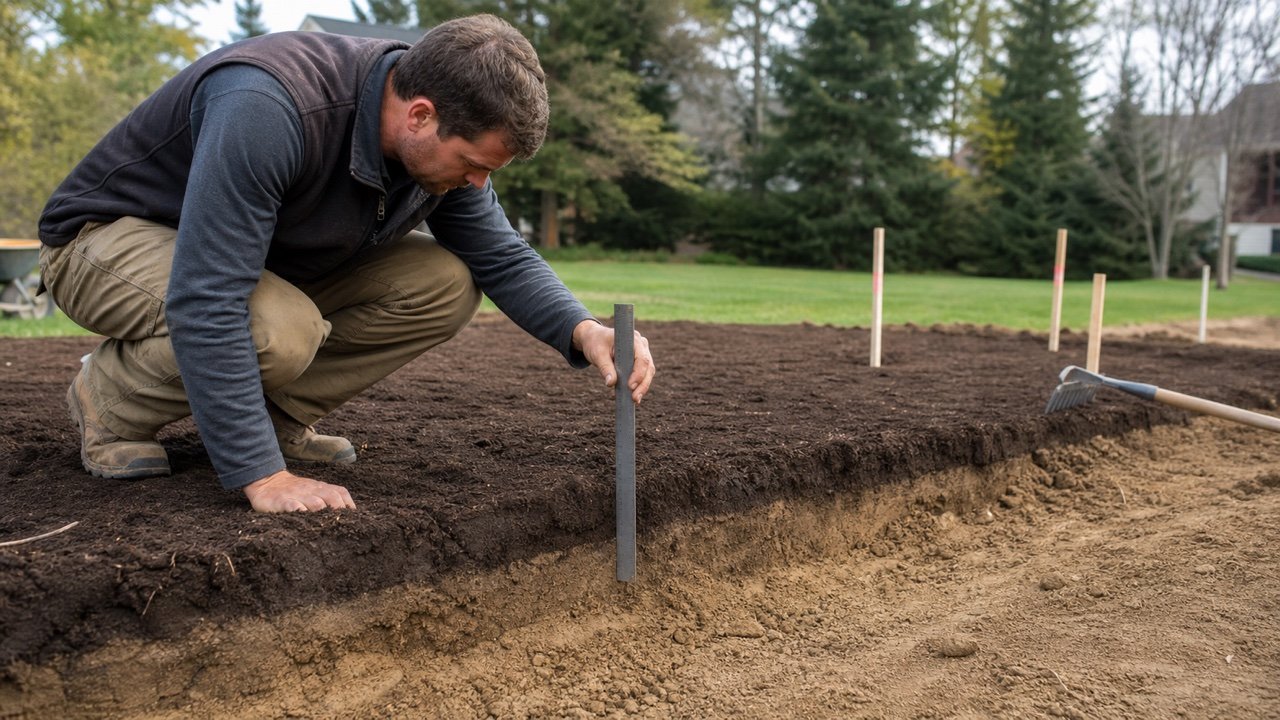
| Check | Depth, level, quantity, sample or other specified acceptance evidence |
Use the Compost Topdressing Depth guide when a direct layer needs a separate depth and field-check record.
How do you reconcile remaining material?
Close each component independently. An unexplained difference can point to a missing batch entry, damaged package, spill, returned material, wrong unit or measurement error.
Difference = opening quantity + received quantity - rejected or returned quantity - recorded use - closing quantity
For a hypothetical compost record, opening stock is 0 ft³, receipts are 6 ft³, recorded use is 5.5 ft³ and closing stock is 0.5 ft³. The difference is 0 + 6 - 0 - 5.5 - 0.5 = 0 ft³.
If 0.25 ft³ is rejected and only 0.25 ft³ remains, the record also closes: 0 + 6 - 0.25 - 5.5 - 0.25 = 0 ft³. The measurements still have tolerances; a zero arithmetic difference does not prove perfect physical measurement.
What happens when a lot or technical sheet changes?
Stop the affected material at a clear hold point. Compare the new product identity, source, lot and documents with the approved basis before it enters a batch.
- Record the time and batch at which the change was found.
- Identify unopened, mixed, applied and remaining quantities separately.
- Quarantine the affected material or mix where practical.
- Obtain the current technical data and required test evidence.
- Record the responsible accept, reject, rework or restricted-use decision.
- Revise the recipe or quantity only through the named approval route.
- Link the decision to every affected batch and zone.
Do not overwrite the earlier document or recipe. Keep both revisions so the completed work can be reconstructed.
When are separate legal or food-safety records needed?
Check the actual operation, crop, material, location and governing rules. A landscape worksheet cannot establish regulatory applicability or compliance.
For covered U.S. produce operations, FDA materials describe separate requirements for certain biological soil amendments of animal origin, including documentation for specified treatment processes or third-party supplied treated material. Use the current rule, FDA guidance and qualified food-safety advice for that scope.
On March 12, 2026, FDA released a risk assessment for untreated biological soil amendments of animal origin. Its update said the existing final rule had not set one specific universal waiting period and that FDA would consider next steps. Do not turn an old proposed interval, a hobby worksheet or this article into a current legal instruction.
Myth versus reality
| Myth | Reality |
|---|---|
| The calculator result is the final application record | It lacks received lots, actual batches, zones and exceptions. |
| Three components at 25%, 50% and 25% need no unit basis | The percentages must state volume or mass and the condition of each component. |
| A certification mark approves every use | Testing and disclosure support review; the project still decides suitability. |
| A delivery ticket proves accepted finished volume | It records a receipt under its stated basis, not mixed yield or placed acceptance. |
| A technical sheet always represents the delivered lot | Product source, sample date, issue date and lot relationship need checking. |
| A zero reconciliation difference proves exact field measurement | It proves only that the recorded arithmetic closes within the stated measurements. |
Common recordkeeping mistakes
- Saving only the final order quantity.
- Using an outside bed size when the mix fills the inside.
- Leaving permanent volume exclusions out of the zone record.
- Calling a percentage “parts” without stating volume, mass or component condition.
- Mixing compressed, expanded, hydrated and loose volumes in one recipe.
- Letting component shares total less or more than 100% without explaining the recipe scope.
- Using a product name without supplier, source, lot or delivery ticket.
- Attaching a technical sheet with no issue or sample date.
- Recording target batch inputs but not actual inputs.
- Substituting a component without a revision and acceptance decision.
- Applying one batch across different zones without allocation.
- Hiding a final partial batch by rounding every batch upward.
- Discarding earlier recipe and document revisions.
- Treating a project worksheet as proof of legal compliance.
What should the closeout record contain?
- Project, location, zone IDs, intended uses and controlled plan revision.
- Net dimensions, exclusions, direct-layer or mix mode and approved volume.
- Complete recipe, percentage basis, component states and source of approval.
- Product, supplier, source, lot, ticket, receipt, condition and acceptance for every component.
- Technical documents with issue, sample and retrieval dates.
- Batch cards with actual inputs, measure IDs, operators, dates and exceptions.
- Application-zone allocation, method, field checks and responsible person.
- Recipe, product, quantity and lot changes with hold and decision records.
- Opening, received, rejected, returned, used and closing quantities by component.
- Applicable regulatory, contract, certification and retention records kept under their own requirements.
Return to the Landscaping Planning hub to keep compost, topsoil, mulch and fill-dirt calculations connected without merging their product records.
Sources and source scope
- U.S. EPA, Comprehensive Procurement Guidelines for Landscaping Products: compost procurement and specification topics.
- U.S. Composting Council, sample Compost Technical Data Sheet: example product, feedstock, sample and analysis fields.
- U.S. Composting Council, STA Program Rules: testing-disclosure programme and suitability-warranty boundary.
- U.S. FDA, FSMA FAQs: U.S. Produce Safety Rule definitions and selected record requirements.
- U.S. FDA, March 12, 2026 BSAAO risk-assessment update: current risk-assessment and policy-development context.
- NIST Guide to the SI, Appendix B.8: volume-unit relationships.
Source scope: these sources support product-data, disclosure, unit and selected U.S. food-safety record boundaries. They do not select a soil recipe, approve a compost product, prove a delivered lot, guarantee finished yield, set a universal application interval or establish legal compliance. Both worked examples are hypothetical arithmetic fixtures.