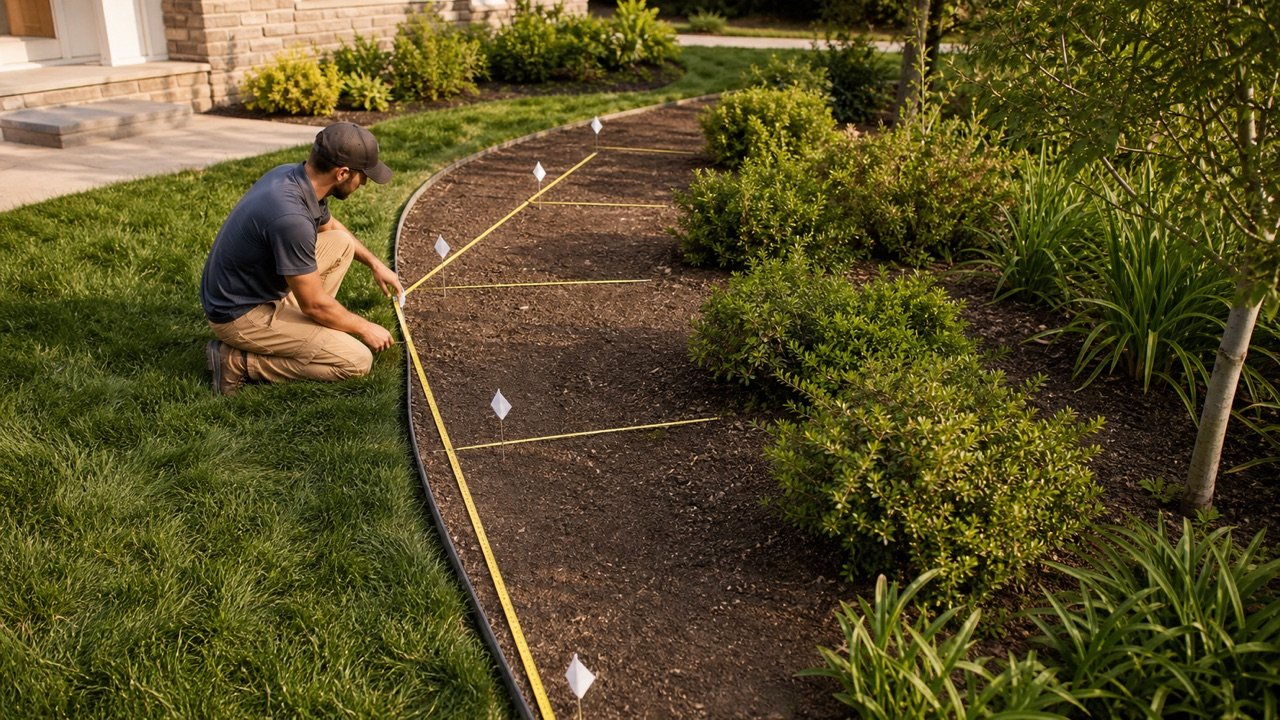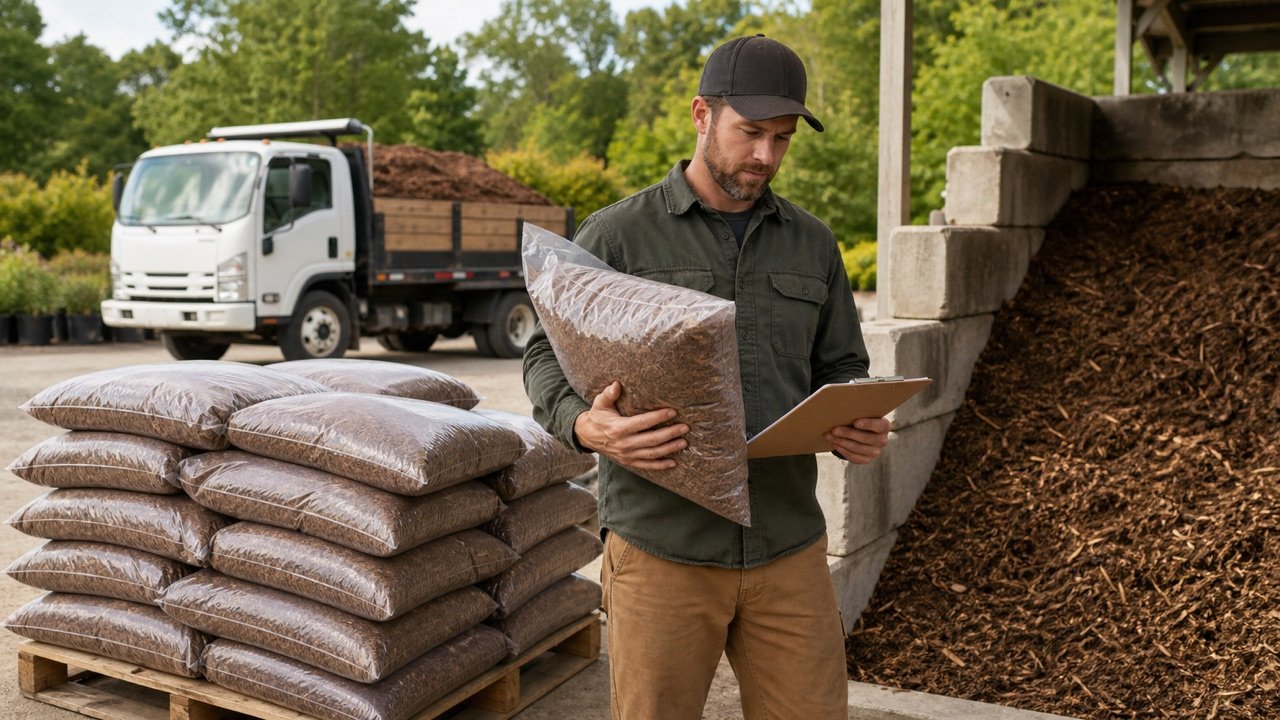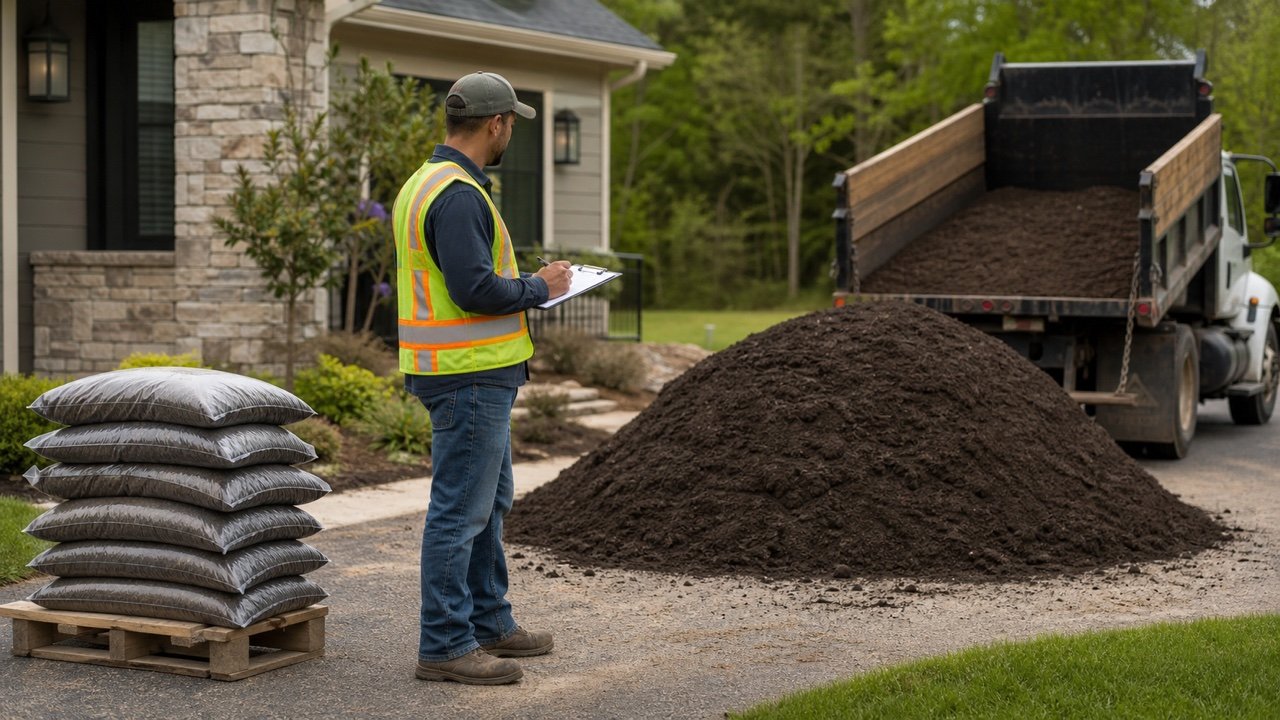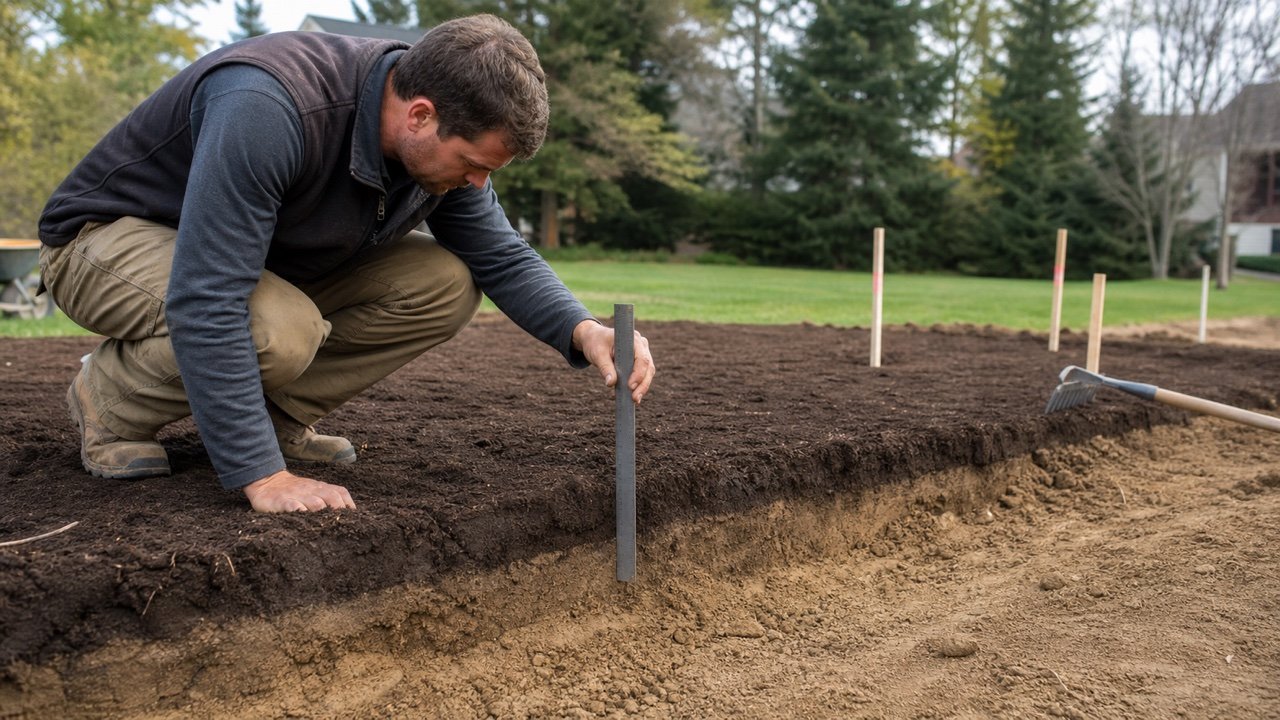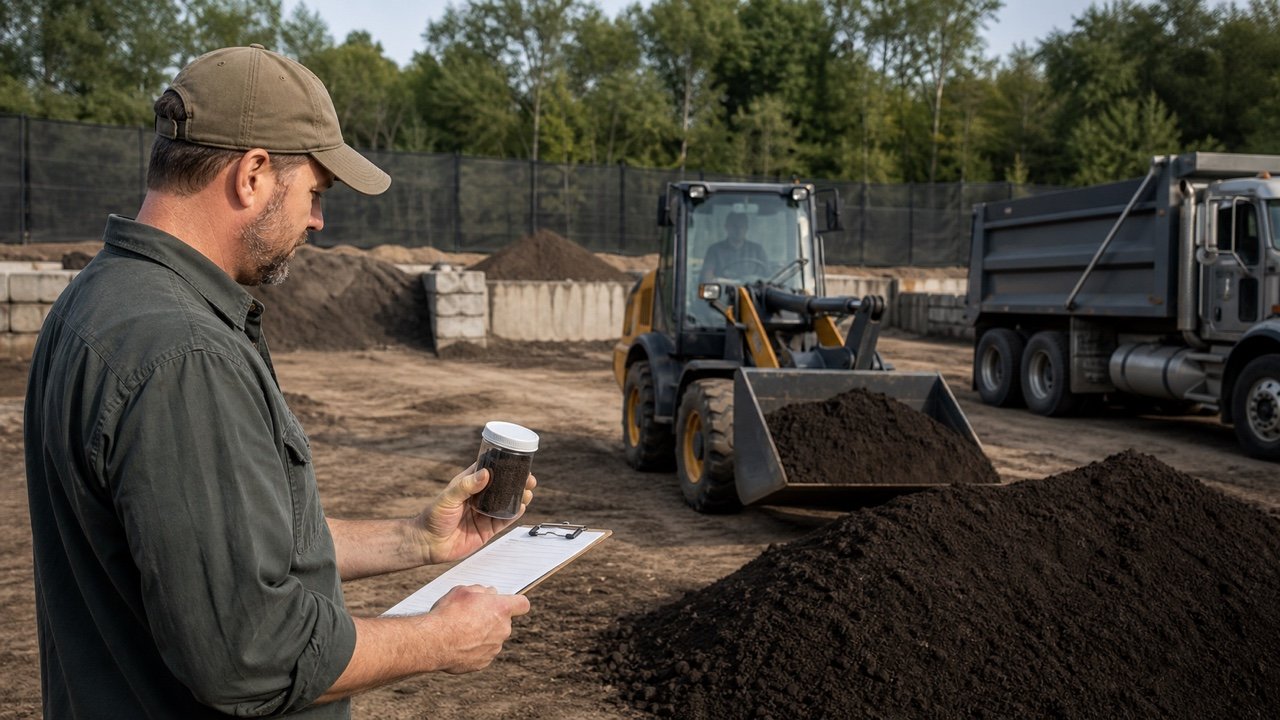
A topsoil volume can be converted to weight only after you have a bulk density that describes the same product and condition. Screened blend, moisture, stockpile packing and the point at which volume was measured can all change the result.
Use weight as a supplier and delivery check, not as a substitute for measuring the project area and depth. Keep the density source and material state beside every converted value.
How do you convert topsoil volume to weight?
Multiply the known bulk volume by a matching bulk density. Use a loose as-delivered density for loose delivery volume, or a placed-state density for placed volume. If those states do not match, stop and obtain a supported conversion.
Mass = bulk volume × matching bulk density
Pounds = cubic yards × 27 × pounds per cubic foot
Short tons = pounds ÷ 2,000
Kilograms = cubic metres × kilograms per cubic metre
Metric tonnes = kilograms ÷ 1,000
Ask the supplier or project source for the current product, density basis, moisture or dry-mass basis, represented state and measurement date. A precise conversion from an unrelated density is still the wrong result.
Calculate the approved area and depth with the Topsoil Calculator. Use the Topsoil Depth Guide when the added depth has not been selected from the project requirement.
Which density do you need?
You need bulk density, not particle density, and its volume state must match the volume being converted. The record must also say whether the mass represents dry soil solids or the total moist material being delivered.
| Term | What it describes | Can it convert a loose delivery volume? |
|---|---|---|
| Loose as-delivered bulk density | Total delivered mass divided by the represented loose bulk volume, under stated moisture and loading conditions | Yes, when product, lot or representative source, condition and units match |
| Dry bulk density | Dry soil mass divided by the stated total bulk volume, including pores | Only for dry-mass calculations on the same volume basis; it does not give wet gross delivery mass by itself |
| Placed bulk density | Mass divided by the installed or settled bulk volume under a stated condition | No, unless a documented loose-to-placed relationship connects the states |
| Field-horizon bulk density | A measured soil horizon under a defined field or laboratory method | Not automatically; a screened commercial blend or stockpile can be a different material and state |
| Particle density or specific gravity | Mass per volume of solid particles, excluding pore space between them | No; topsoil sold or placed has pore space |
| Package mass | Mass of one named product package | No, unless the package also has a reliable volume basis and the product/state matches |
The USDA Natural Resources Conservation Service defines soil bulk density from dry mass and total bulk volume, including pore space. Its laboratory manual also distinguishes bulk density from particle density and records the water state used for the volume. Those definitions explain the compatibility check; they do not provide one sale weight for every topsoil blend.
Why can dry and delivered weight differ?
Water adds to the gross delivered mass. An oven-dry or dry-solids bulk density therefore cannot be treated as total moist delivery mass unless a supported moisture calculation connects the two.
Water content on a dry-mass basis = (moist mass - dry mass) ÷ dry mass
Moist mass = dry mass × (1 + dry-basis water content)
Use this equation only when the water-content definition and sample basis are known. A statement such as “20% wet” is incomplete because it may describe water as a percentage of dry mass, total wet mass, volume, or an informal supplier condition.
Rain can change gross mass after a dry-density test, and drainage can change it again before delivery. It can also affect pile handling and access. Record the condition represented by the density or scale ticket rather than adding a generic wet multiplier.
Where should the topsoil density come from?
Use evidence that represents the material you plan to order. A current supplier record, representative laboratory result, controlled container-and-scale determination, or reconciled load record can be useful when its scope and method are documented.
| Source | Record before use | Main limit |
|---|---|---|
| Supplier product record | Product or blend, source, lot or period, state, moisture basis, units, method and date | A catalogue value may not represent the current stockpile or delivery condition |
| Laboratory or geotechnical result | Sample identity, method, fraction, water state, volume state and report date | A field horizon or dried sample may not represent loose commercial material |
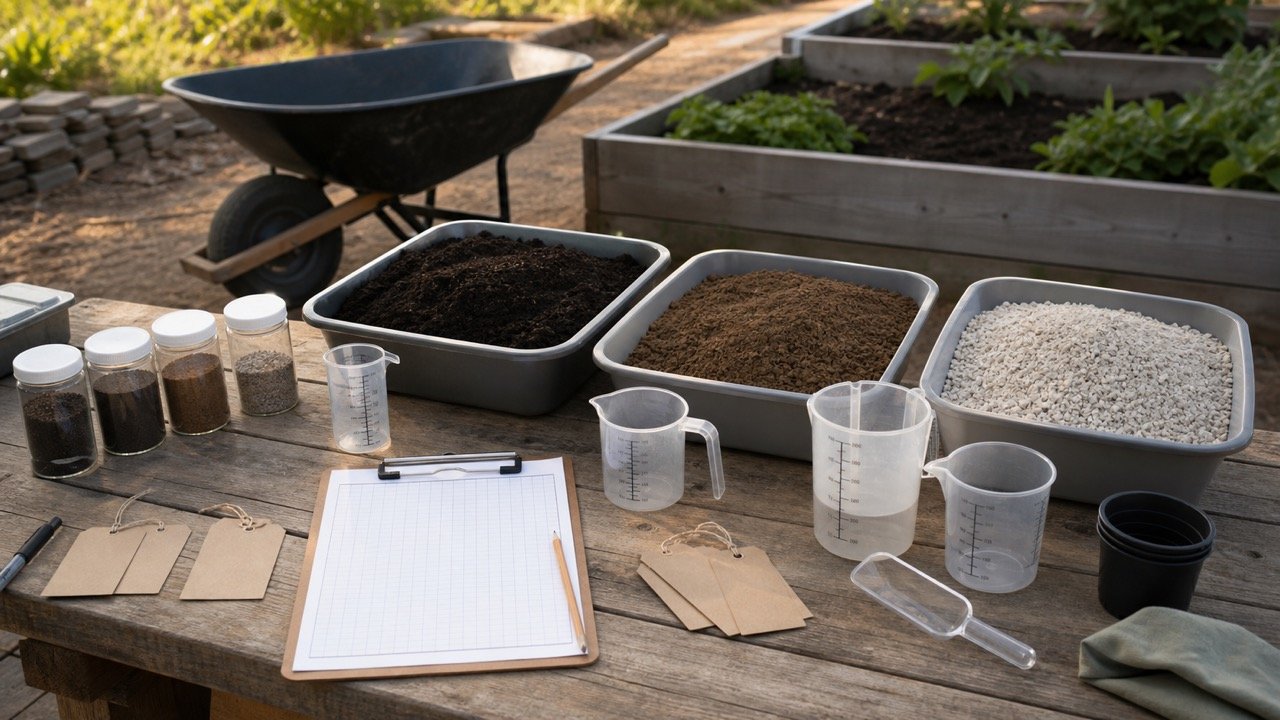
| Known container and calibrated scale | Internal volume, fill method, strike-off, tare, repetitions, moisture condition and scale record | Small samples can segregate and may not represent a mixed stockpile |
| Delivery or weigh reconciliation | Gross, tare and net mass; supported represented volume; product; date; moisture and loading condition | Truck-body rating alone does not prove the actual material volume |
| Published general value | Material definition, method, state, region and intended use | Use for context or a labelled scenario, not a final order or payload approval |
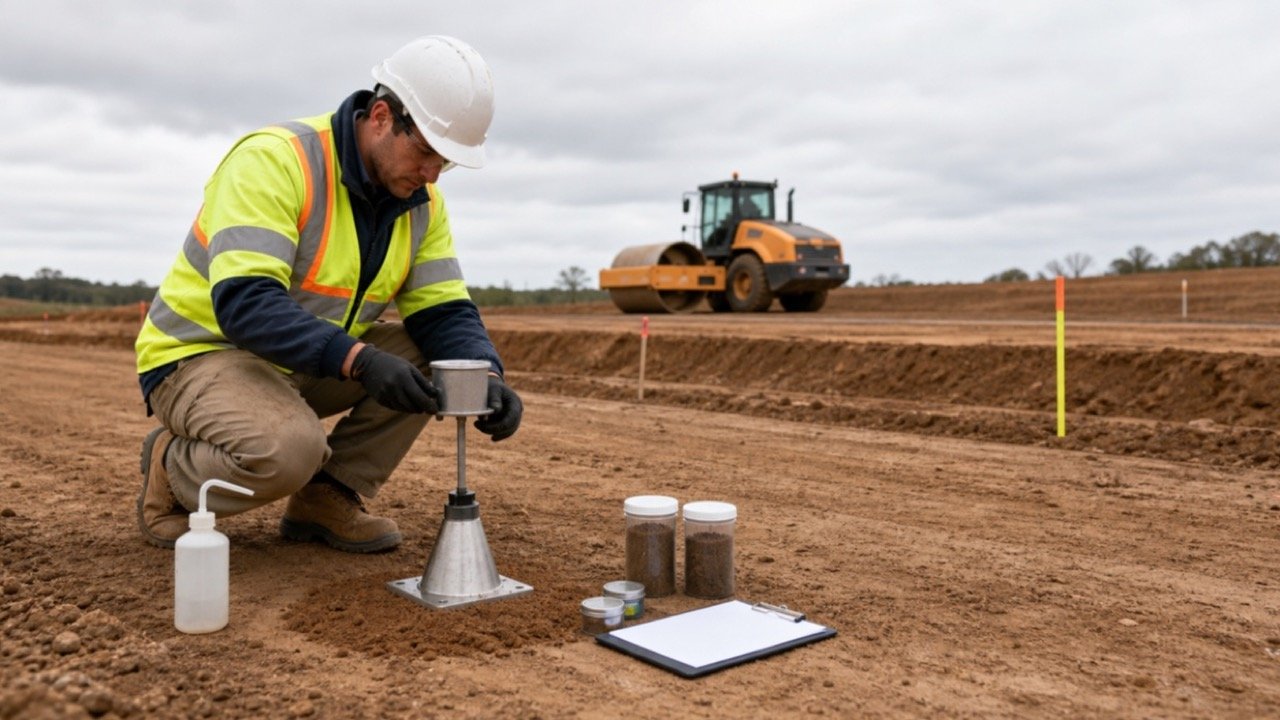
A household bucket filled and pressed by hand does not reproduce an established bulk-density method. USDA NRCS field instructions use controlled ring or core dimensions, flush trimming and sample handling for field soil. Loose blended material may need a method designed for its sale and loading state.
Worked cubic-yard example
A project has 4.25 yd³ of loose planning volume. The current supplier reports an as-delivered loose bulk density of 78 lb/ft³ for the represented product and condition.
| Stage | Calculation | Result |
|---|---|---|
| Loose volume | 4.25 × 27 | 114.75 ft³ |
| Calculated mass | 114.75 × 78 | 8,950.5 lb |
| Short tons | 8,950.5 ÷ 2,000 | 4.47525 short tons |
The 78 lb/ft³ value is a hypothetical fixture, not a typical topsoil density. The result applies only to a density with the stated product and loose as-delivered basis.
Worked cubic-metre example
A second project has 3.6 m³ of loose planning volume. A matching supplier or test record reports 1,250 kg/m³ for the represented state.
| Stage | Calculation | Result |
|---|---|---|
| Calculated mass | 3.6 × 1,250 | 4,500 kg |
| Metric tonnes | 4,500 ÷ 1,000 | 4.5 t |
The 1,250 kg/m³ value is another calculation fixture. Do not reuse it unless a current source supports it for the actual product and state.
What if the density is reported as a range?
Calculate a low and high mass with the accepted density bounds. Keep the range visible until a more representative density or ticket resolves it.
Low mass = volume × low density
High mass = volume × high density
For the same 4.25 yd³, a hypothetical 70 to 85 lb/ft³ scenario produces 8,032.5 to 9,753.75 lb. The spread is 1,721.25 lb.
| Scenario density | Calculation | Calculated mass |
|---|---|---|
| 70 lb/ft³ | 4.25 × 27 × 70 | 8,032.5 lb |
| 78 lb/ft³ | 4.25 × 27 × 78 | 8,950.5 lb |
| 85 lb/ft³ | 4.25 × 27 × 85 | 9,753.75 lb |
These scenario values show sensitivity only. They are not a published normal range. If the high end changes vehicle, fee, load, or access decisions, obtain a better source before ordering.
What changes when the supplier sells by weight?
Start with the seller's actual unit and quote terms. Convert the required compatible volume to a planning mass, then apply the seller's minimum and increment only after the base calculation is complete.
- Confirm the accepted product and the placed or loose planning volume.
- Obtain a density that matches the seller's material and measurement state.
- Calculate unrounded planning mass.
- Apply any documented handling or project adjustment as a separate line.
- Round once to the seller's weight increment or minimum.
- Record how the final quantity will be weighed and shown on the ticket.
When the supplier sells by volume, weight can still check payload, tickets and consistency. It does not prove volume unless the represented density and loading state are reliable. The Topsoil Bags vs Bulk guide covers package counts, bulk increments, current quote fees and access decisions.
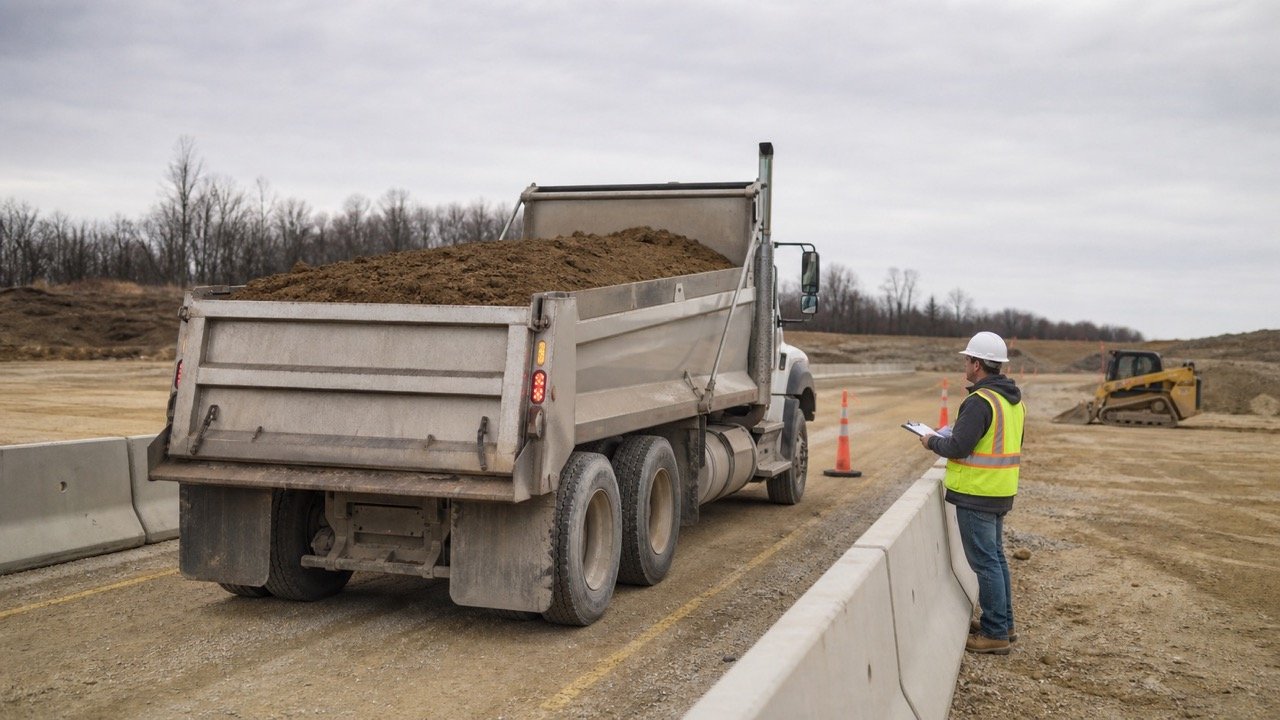
How do you check a delivery ticket?
Match each ticket to the order, product and delivery event. Preserve original records and investigate differences instead of forcing every load into one average.
| Record | What to check |
|---|---|
| Supplier and source | Legal or trading name, facility, product name and source or blend identifier |
| Date and delivery | Ticket number, date, time, vehicle and purchase order or project reference |
| Quantity basis | Whether sold by mass, measured volume, nominal load, package count or another stated basis |
| Scale fields | Gross, tare and net mass, units, scale identity and any required certification record |
| Material state | Loose or placed condition, visible moisture, rain, drainage, segregation and contamination check |
| Volume evidence | Supported measured quantity or loading record, not only nominal truck-body capacity |
| Receipt | Unload location, rejected or accepted quantity, shortages, photographs and receiving signature |
For split deliveries, list each ticket separately. Combine net mass only when the product and unit basis are compatible. Recalculate density only when the represented volume is also supported.
Can the converted weight set the number of truckloads?
It can support a preliminary load check, but it cannot approve the truck, trailer or route. Compare the planned cargo with the actual vehicle's usable capacity, axle and tyre limits, occupants, tools and equipment, then apply the governing road and commercial rules.
For covered U.S. vehicles, NHTSA explains that the vehicle placard states a combined occupant-and-cargo capacity and that the certification label carries gross vehicle weight information. Use the actual manufacturer's labels and instructions. A generic “yards per truck” table cannot replace them.
Usable material payload = lowest applicable allowed loaded mass - actual empty vehicle, occupants, tools and other cargo
That equation is a record structure, not a permit or loading approval. The lowest applicable limit can come from vehicle, axle, tyre, trailer, registration, road, bridge, commercial, licence or local requirements. Obtain responsible confirmation before collection or delivery.
How do loose and placed volume affect the result?
Loose delivery and finished placement can occupy different volumes even when dry soil mass is unchanged. Settlement, consolidation, compaction, mixing, screening, handling and moisture can alter the pore structure and bulk volume.
Do not multiply a placed volume by a loose-delivery density, then add a separate settlement percentage without checking whether the calculator already converted the states. Keep the steps in order:
- Measure the required finished or placed geometry.
- Apply only a documented placed-to-loose relationship for the named product and workflow.
- Convert the resulting loose order volume with a matching loose density when weight is needed.
- Keep handling allowance, supplier rounding and load planning as separate stages.
Use the Topsoil Settlement and Finished-Grade guide to derive a documented adjustment, distinguish topsoil settlement from deeper movement, and check the placed result.
Common topsoil weight and delivery mistakes
- Using one internet pounds-per-yard value for every screened, blended, wet or dry product.
- Using particle density or specific gravity as bulk density.
- Applying a field-horizon laboratory value to a loose commercial stockpile without compatibility evidence.
- Converting placed volume with a loose density, or loose volume with a placed density.
- Treating dry soil mass as total wet delivery mass.
- Adding a generic rain or wet percentage without a defined water-content basis.
- Assuming a truck body labelled by volume contains that exact measured volume.
- Dividing total order weight by a generic payload or truck capacity.
- Ignoring occupants, equipment, trailer, axle, tyre, route and jurisdiction limits.
- Averaging split-load tickets that represent different products or conditions.
- Rounding volume, density and each delivery before the complete unrounded check.
- Using weight to replace product-quality, depth, soil-test, specification or finished-grade decisions.
What should the density and delivery worksheet contain?
- Project, location, measured area, accepted depth, placed volume and calculation revision.
- Topsoil product, blend, source, intended use, specification and acceptance evidence.
- Required material state, planning adjustments and loose order volume.
- Density value or bounds, units, mass basis, volume state, moisture state, source, method and date.
- Unrounded mass calculation in pounds or kilograms and converted short tons or metric tonnes where needed.
- Supplier selling unit, increment, minimum, quote date, fees and delivery terms.
- Vehicle, trailer, occupants, equipment, manufacturer labels, route controls and responsible payload check.
- Ticket number, gross, tare, net, measured-volume evidence, condition, receipt and discrepancy.
- Prepared by, checked by, open assumptions, changes, photographs and approval route.
Return to the Landscaping Planning hub to keep topsoil, compost, fill dirt and mulch quantities in separate product records.
Sources and source scope
- USDA NRCS, Soil Quality Indicators: Bulk Density: dry-mass, bulk-volume and pore-space definition for field soil.
- USDA NRCS, National Soil Survey Handbook Part 618 Subpart A: named bulk-density definitions and soil-state scope.
- USDA NRCS, Kellogg Soil Survey Laboratory Methods Manual, Part One: distinction between bulk and particle density and the role of sample condition.
- USDA NRCS, Soil Health: Bulk Density/Moisture/Aeration: core-volume, water-content and dry bulk-density equations within its field method.
- USDA NRCS, SCMN Field Sampling Instructions: current controlled core/ring sampling and handling context.
- NIST Guide to the SI, Appendix B.9: cubic-yard and cubic-metre unit conversion.
- NHTSA interpretation GF004408 and NHTSA Importation and Certification FAQs: U.S. vehicle capacity placard and GVWR context.
Source scope: the soil sources define and measure bulk density under stated methods. They do not set a universal density for commercial topsoil. The vehicle sources explain manufacturer capacity labels in their U.S. scope; they do not approve a load, route or delivery. The worked density values are hypothetical arithmetic fixtures.