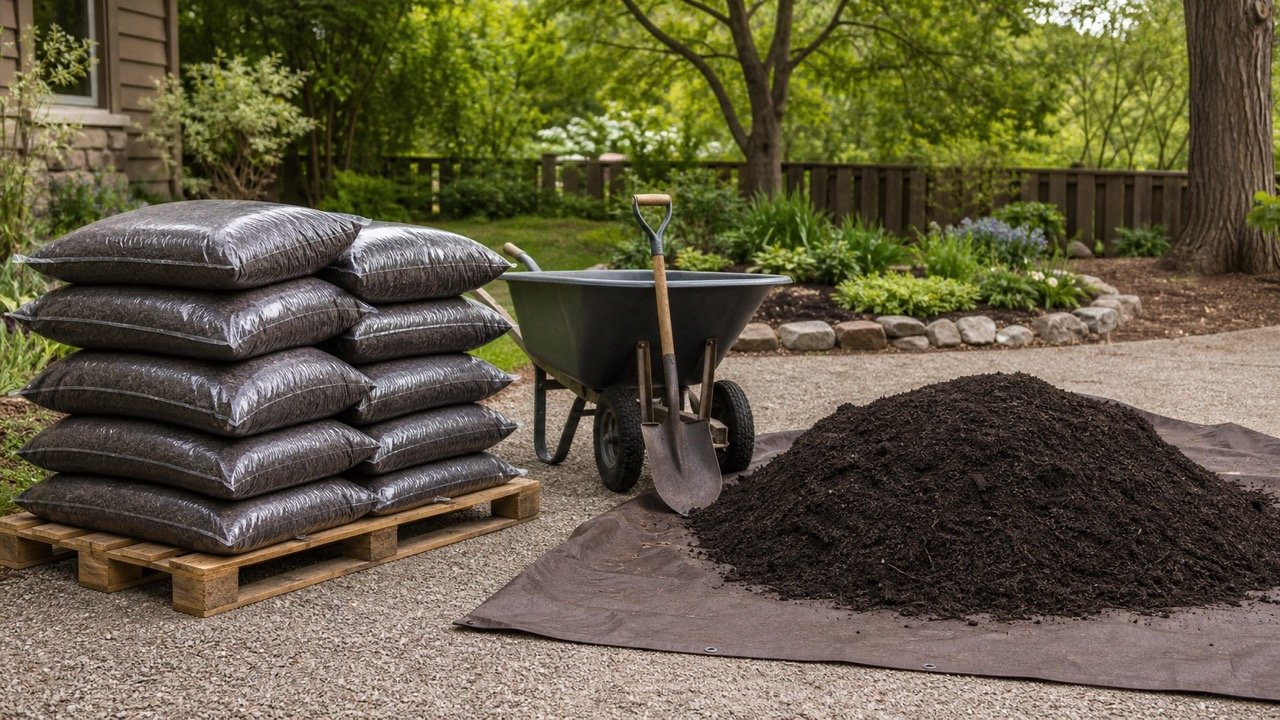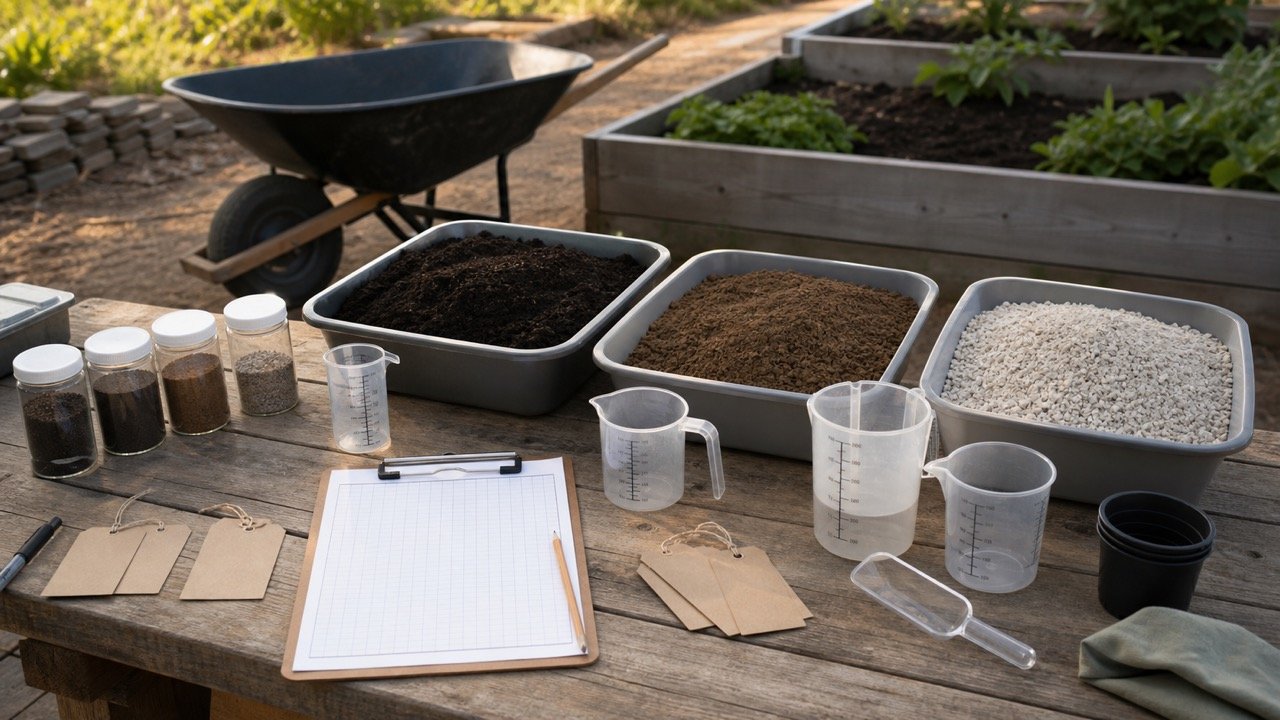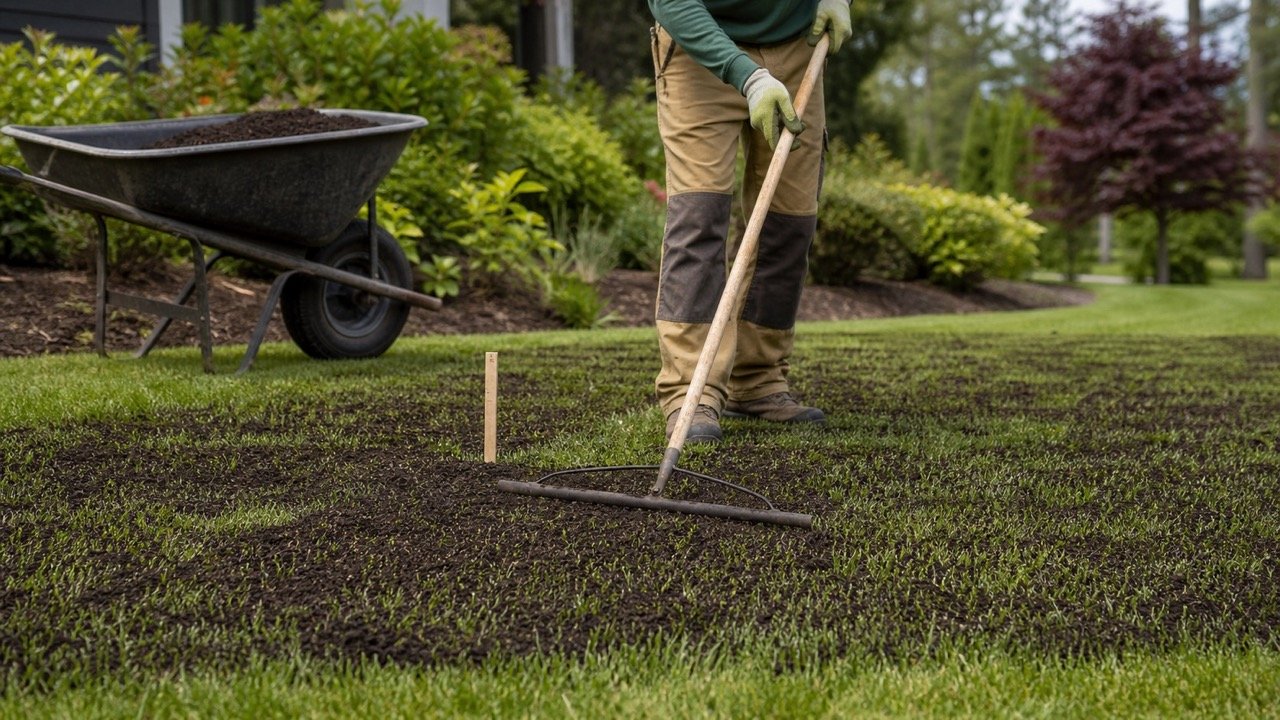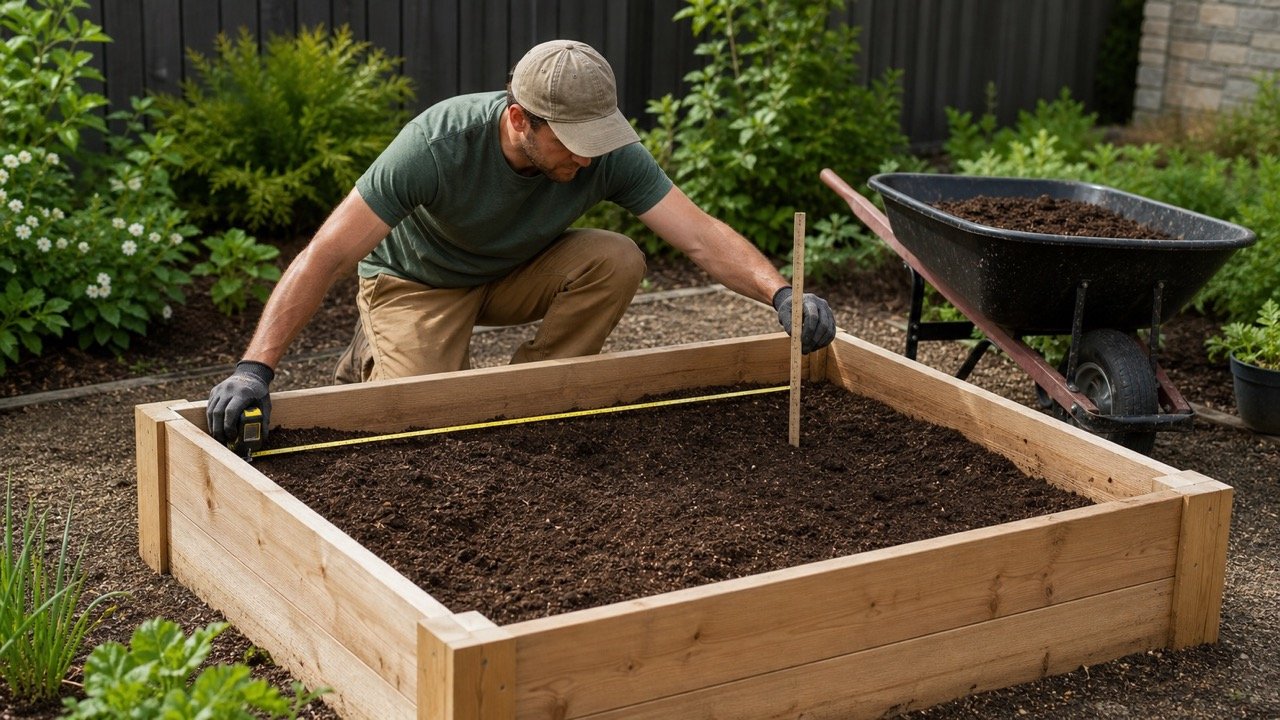
Topsoil depth has to match the planting use, the suitable soil already on site, the required final level, and the condition in which depth will be checked. A loose pile, a freshly spread layer, and a firmed or settled lawn profile do not describe the same quantity.
Choose the depth from applicable extension guidance, project drawings, specifications, soil assessment, and plant requirements. Then calculate only the depth that still needs to be added.
How deep should topsoil be?
There is no universal topsoil depth for every lawn, planting bed, tree, or raised bed. For one scoped example, Penn State Extension says a good-quality home lawn typically needs at least 4 to 6 in of topsoil at firmed or settled depth. Other planting and construction projects can require a different topsoil layer and a deeper combined rootzone.
Write down the planting use, source or specification, required final depth, suitable retained depth, measurement condition, and finished-level datum. A generic online table cannot replace those controls.
Use the Topsoil Calculator after the required added depth is known. The tool keeps placed volume separate from optional loose-delivery and handling adjustments.
Which depth should go into a topsoil calculation?
Enter the placed depth still required, not automatically the total desired soil profile and not the loose depth delivered by a truck. Deduct existing depth only when that retained soil is suitable, will remain in the finished profile, and counts toward the same requirement.
| Depth term | What it means | Quantity treatment |
|---|---|---|
| Required final topsoil depth | Topsoil layer required after the stated firming, settlement, or acceptance condition | Starting requirement from the applicable source |
| Suitable retained depth | Existing topsoil that remains, meets the required scope, and is measured from the same datum | Deduct only when verified |
| Added placed depth | Required final depth minus suitable retained depth, with a minimum of zero | Multiply by measured area |
| Total rooting depth | Combined suitable topsoil and subsoil available to roots | Do not treat the entire depth as imported topsoil without a design basis |
| Loose delivery depth or volume | Material condition before final placement and firming | Keep separate from the placed geometry |
| Finished grade allowance | Level needed for turf, mulch, paving edges, drainage, or another surface treatment | Check against the controlled datum, not as a hidden percentage |
Added placed depth = max(required final topsoil depth − suitable retained depth, 0)
If the retained layer fails the material specification, is contaminated, will be stripped, or cannot be accepted as topsoil, its physical thickness is not an automatic credit. The remediation or landscape design must decide how it is treated.
What do published depth recommendations actually cover?
Published values apply within their stated use, location, and construction assumptions. Use the table to understand scope, not to select a number by convenience.
| Source and use | Stated example or guidance | What must still be checked |
|---|---|---|
| Penn State Extension, new home lawn | Typically at least 4–6 in of good-quality topsoil at firmed or settled depth | Site condition, turf choice, drainage, grading, local advice, and whether the guidance fits the project |
| Cheshire East Council, grass in its landscape specification | 150 mm example, 100 mm minimum, and normally no more than 300 mm topsoil, with a separate combined-soil depth | Applicable planning approval, current specification, subsoil, testing, and design |
| Cheshire East Council, shrubs in its landscape specification | 200 mm topsoil example with a deeper combined soil profile | Plant mix, project details, suitable subsoil, and jurisdiction |
| Leeds City Council, tree planting areas | Topsoil spread normally not over 300 mm; suitable loosened subsoil provides the rest of the stated rooting depth | Tree design, soil certification, services, drainage, root volume, and approval |
| Kansas State Extension, home raised beds | Guidance discusses a 6–8 in bed depth and a mixed soil medium rather than one universal topsoil-only fill | Crop roots, native soil access, bed construction, drainage, and local growing advice |
The values differ because the tasks differ. A lawn's imported topsoil layer, a shrub bed's prepared soil profile, a tree rootzone, and a raised-bed growing medium are not interchangeable specifications.
How do existing soil and subsoil change the answer?
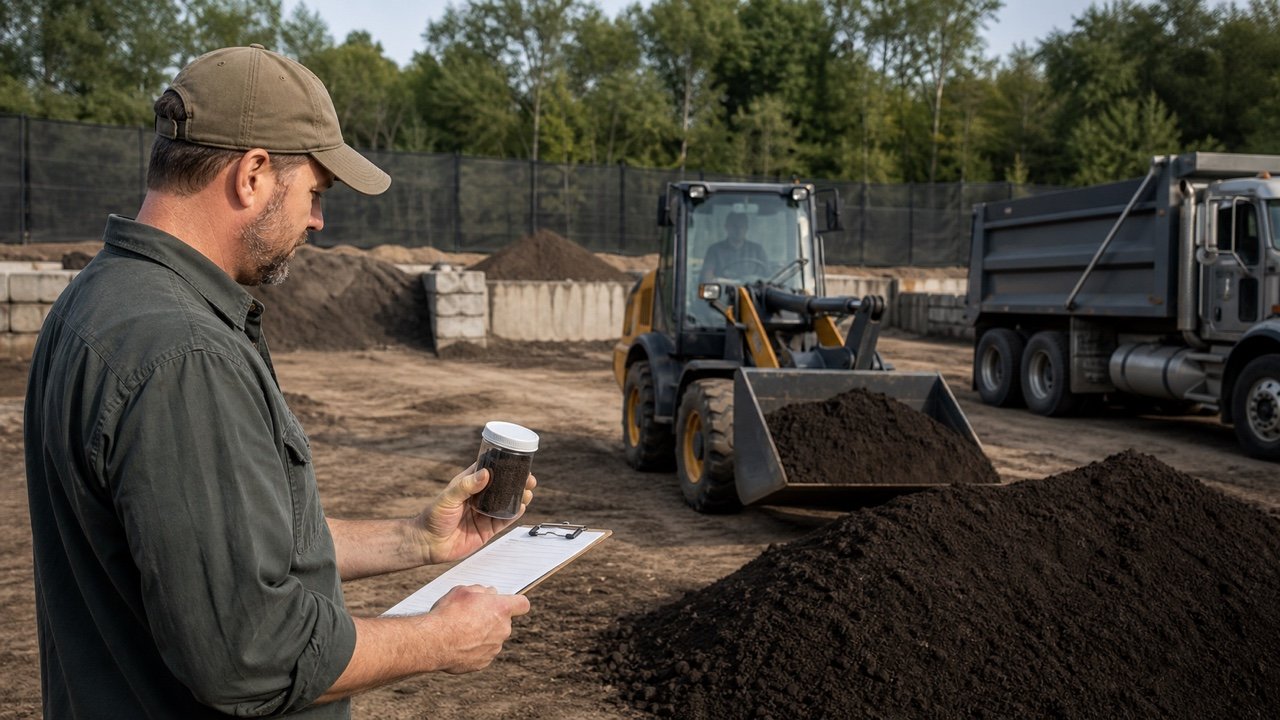
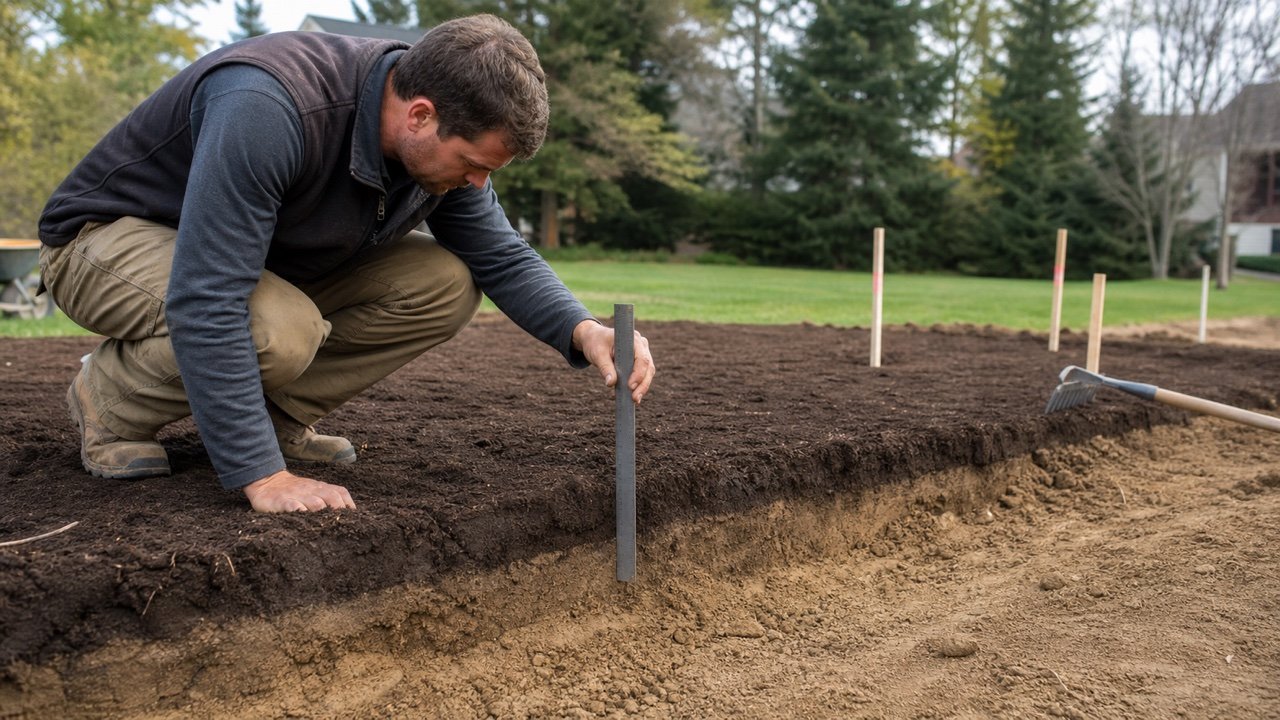
Inspect the soil profile before ordering. A site with suitable, uncompacted soil may need grading or amendment rather than a full new layer. A construction site with compacted or unsuitable subsoil may need controlled preparation beneath the topsoil.
Penn State's lawn-establishment guidance recommends incorporating about 2 in of topsoil into the upper 2 to 3 in of subsoil in its stated context. That gradual transition can reduce compaction and drainage problems at the interface. Dumping a uniform dark layer over a hard, smeared, or poorly draining surface does not correct the layer below it.
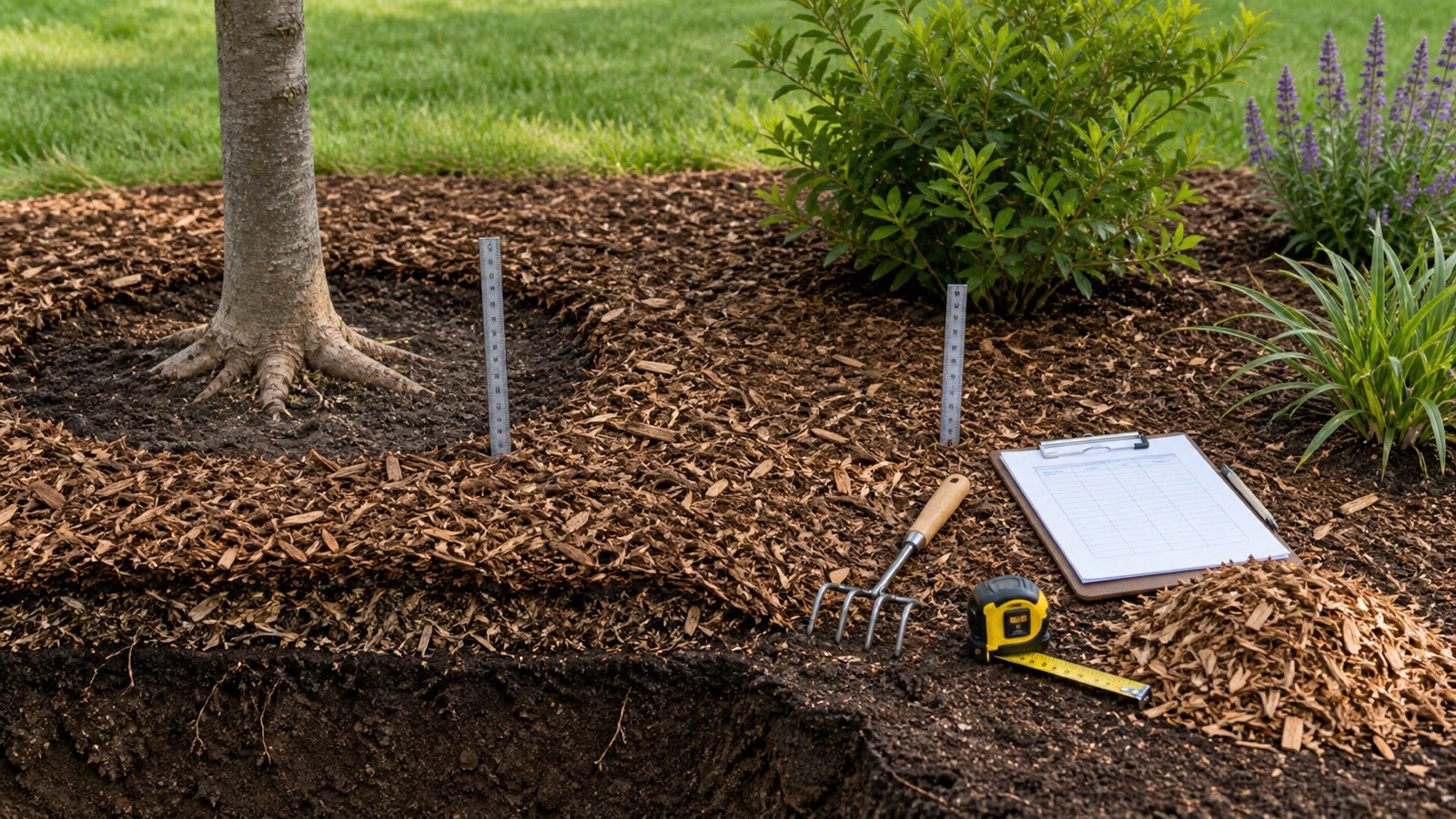
- Excavate small profile checks at representative high, low, disturbed, and undisturbed locations.
- Record existing suitable topsoil depth separately from unsuitable fill or subsoil.
- Check compaction, drainage, texture, debris, contamination requirements, and test records.
- Confirm which existing material will be stripped, loosened, blended, retained, or replaced.
- Keep topsoil depth and total suitable rooting depth as separate fields.
How is topsoil volume calculated from depth?
Multiply net area by the placed depth to add. Convert depth into feet when area is in square feet, or into metres when area is in square metres.
Cubic yards = area in ft² × added depth in inches ÷ 324
Cubic metres = area in m² × added depth in millimetres ÷ 1,000
Litres = area in m² × added depth in millimetres
NIST conversion references support the unit relationships. They do not select the depth, soil quality, loose-delivery adjustment, handling allowance, or supplier order increment.
Worked lawn example in cubic yards
A 1,200 ft² lawn has a documented required final firmed topsoil depth of 5 in. Profile checks show 1.5 in of suitable retained topsoil will remain and count toward that requirement.
- Added placed depth: 5 − 1.5 = 3.5 in.
- Placed volume: 1,200 × 3.5 ÷ 324 = 12.96296 yd³.
- Equivalent placed volume: 12.96296 × 27 = 350 ft³.
Keep 12.96296 yd³ as the placed geometry. A supplier's selling increment, a supported loose-to-placed adjustment, and a separately justified handling allowance belong to later ordering steps.
If the existing 1.5 in does not meet the same suitability requirement, the deduction is invalid. At the full 5 in added depth, the placed result would instead be 1,200 × 5 ÷ 324 = 18.51852 yd³.
Worked planting-bed example in cubic metres
A 72 m² planting zone requires a final topsoil layer of 200 mm under its project specification. A verified 50 mm suitable layer remains.
- Added placed depth: 200 − 50 = 150 mm.
- Placed volume: 72 × 150 ÷ 1,000 = 10.8 m³.
- Equivalent placed volume: 10.8 × 1,000 = 10,800 L.
This is one uniform zone. If half the bed retains 50 mm and the other half retains 100 mm, calculate the zones separately: 36 × 150 ÷ 1,000 + 36 × 100 ÷ 1,000 = 9 m³.
Should loose topsoil be spread to the final required depth?
Only if the controlling instruction defines acceptance in that loose condition. Many projects check a firmed, settled, or completed depth, so the initial loose layer can differ from the final accepted profile.
Do not use a universal settlement percentage. Texture, aggregation, organic content, screening, moisture, handling, machinery, lift thickness, and placement method can change the relationship. Obtain a project-specific factor from a specification, supplier statement, trial area, field measurement, or responsible professional.
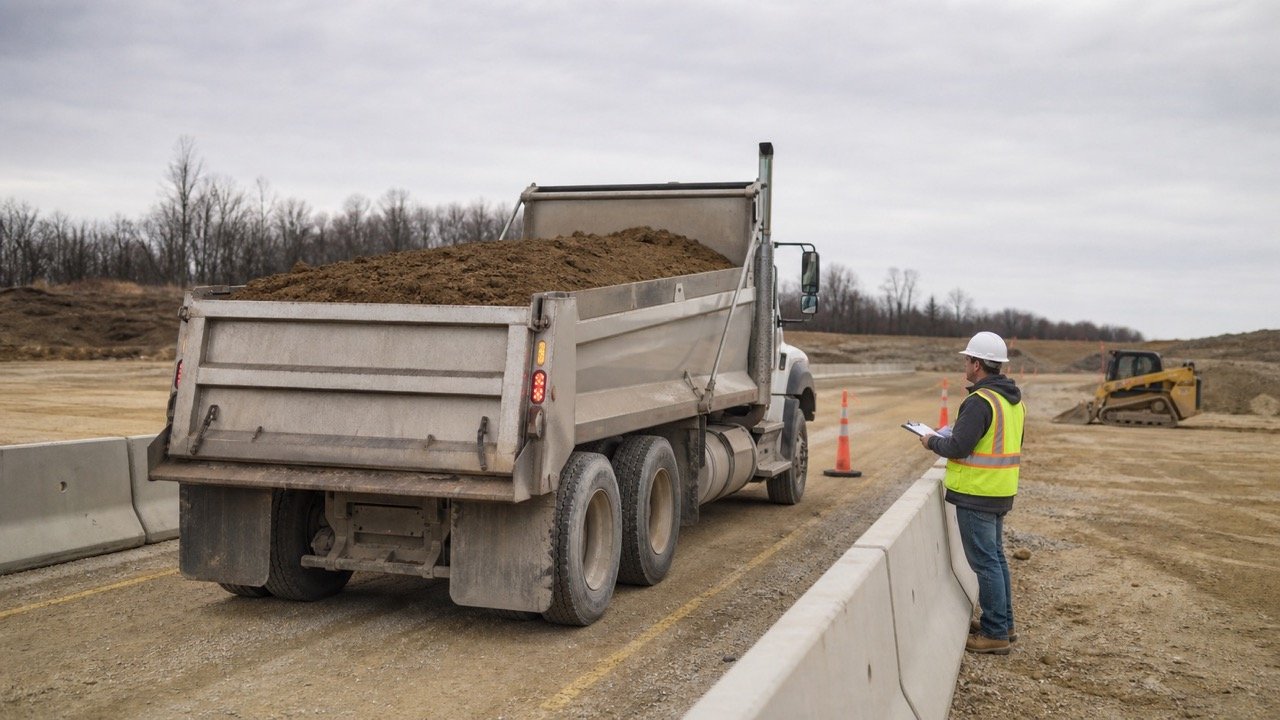
Record three values where they apply: the required final placed depth, the initial spread depth, and the measured depth after the stated firming or settlement condition. A delivery ticket records what arrived; it does not prove the accepted finished layer.
How should finished grade affect the topsoil depth?
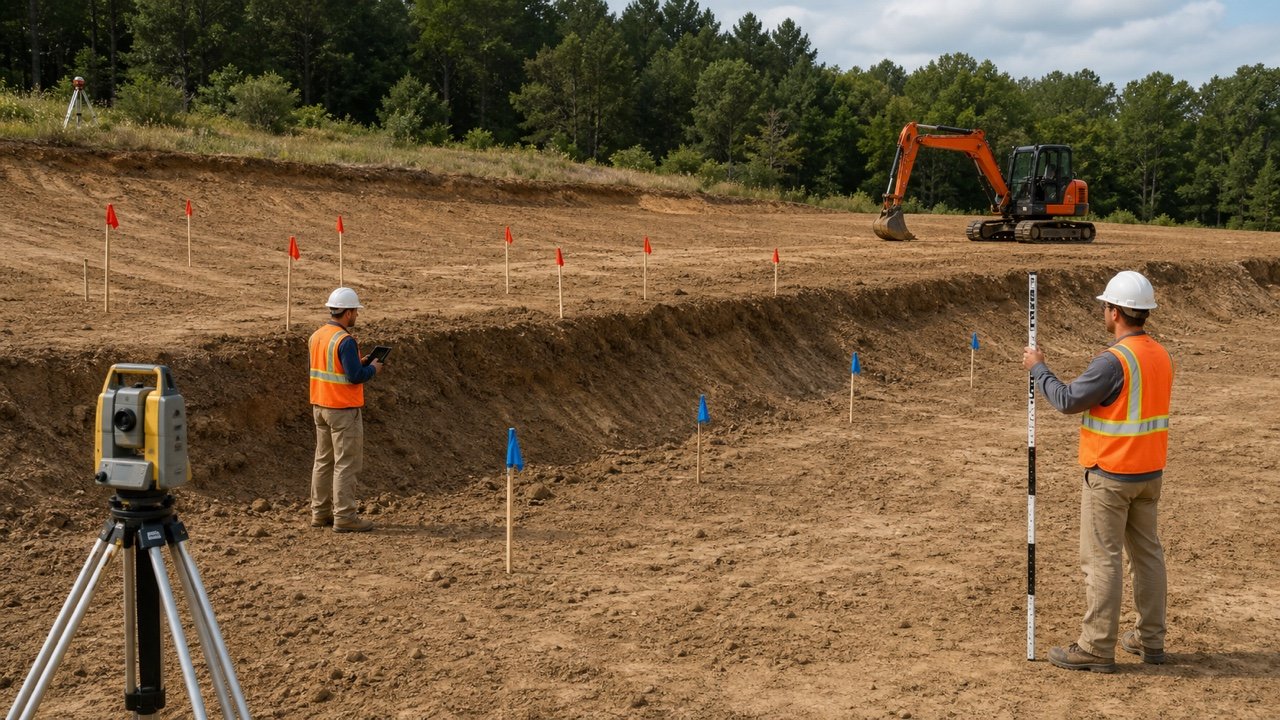
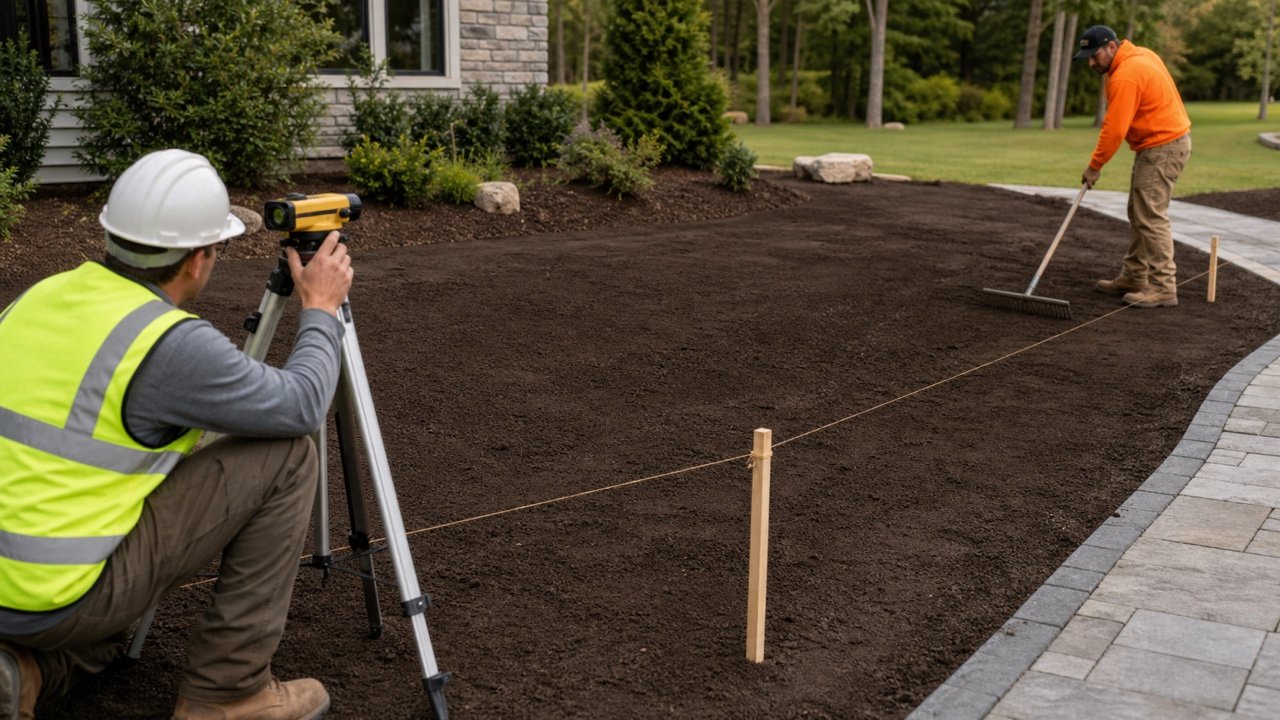
Set the final surface from the drawing or site datum before calculating the layer. Turf thickness, mulch, paving edges, door thresholds, damp-proof clearances, drainage falls, and settlement can limit the elevation available for topsoil.
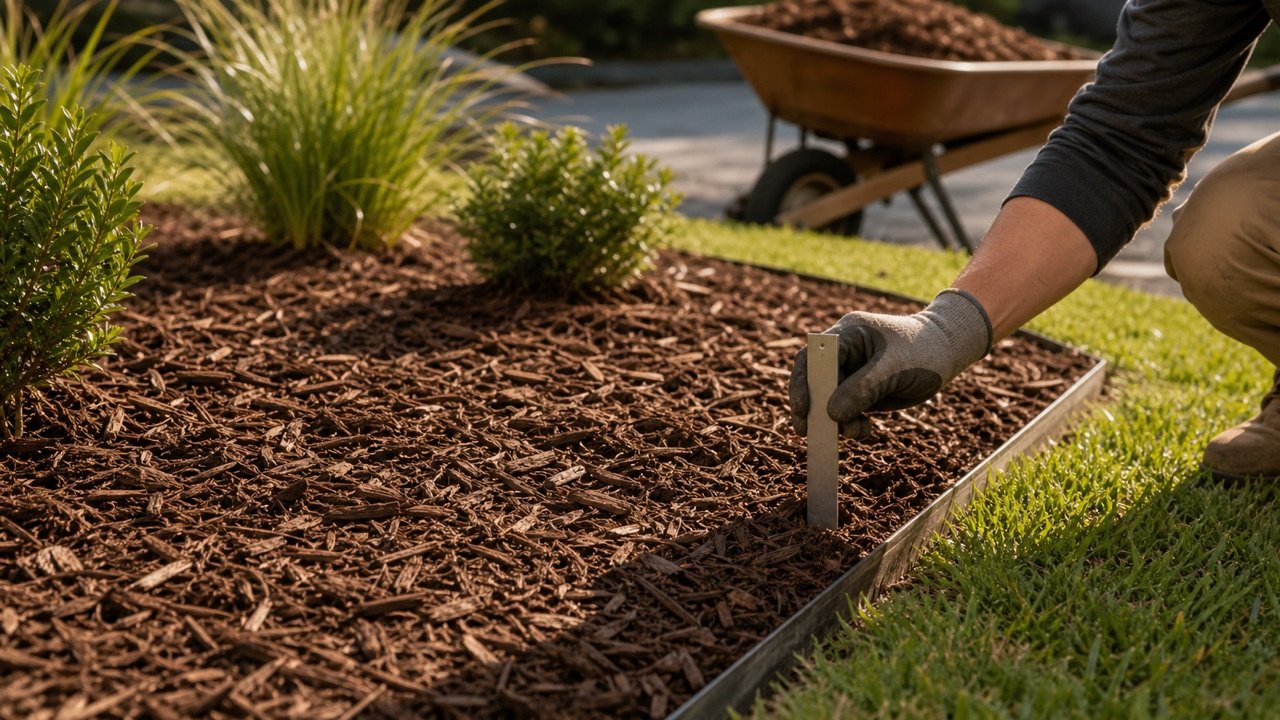
- Mark subgrade and finished-grade levels on stable stakes or controlled survey points.
- Reserve the specified thickness for turf, mulch, or another surface finish.
- Check drainage paths and do not raise soil against structures beyond permitted levels.
- Calculate wedges or separate zones when the required depth changes across the site.
- Recheck final levels after placement under the acceptance condition.
A 6 in topsoil requirement does not authorize raising the finished lawn 6 in above a doorway or paving edge. The subgrade, layer depths, and surface finish must fit between controlled levels.
How do you check topsoil depth in the field?
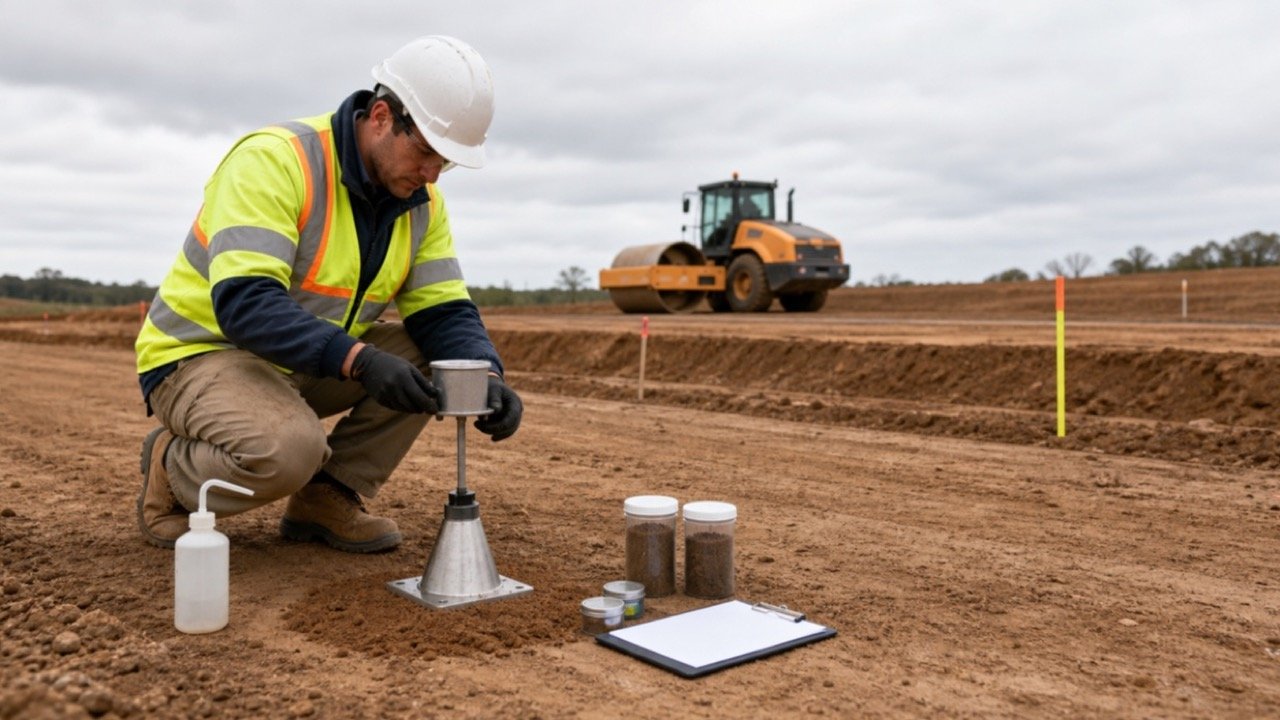
Use a planned grid or representative test locations, not one convenient edge. Record every reading and the layer condition at the time of measurement.
- Confirm the drawing, specification, area boundary, datum, and required measurement condition.
- Divide the area into zones by use, soil condition, depth, or grade.
- Select and mark repeatable check locations, including high, low, disturbed, and transition areas.
- Measure vertically from the accepted topsoil-subsoil interface to the controlled final surface.
- Record depth, units, date, location, moisture or firming condition, and any ambiguous interface.
- Investigate thin or excessive areas instead of averaging them away when a minimum or maximum applies.
For large, regulated, contaminated, or contract-controlled work, use the specified inspection, sampling, survey, and approval procedure. A home spot-check method does not replace it.
What changes for irregular areas and sloping grades?
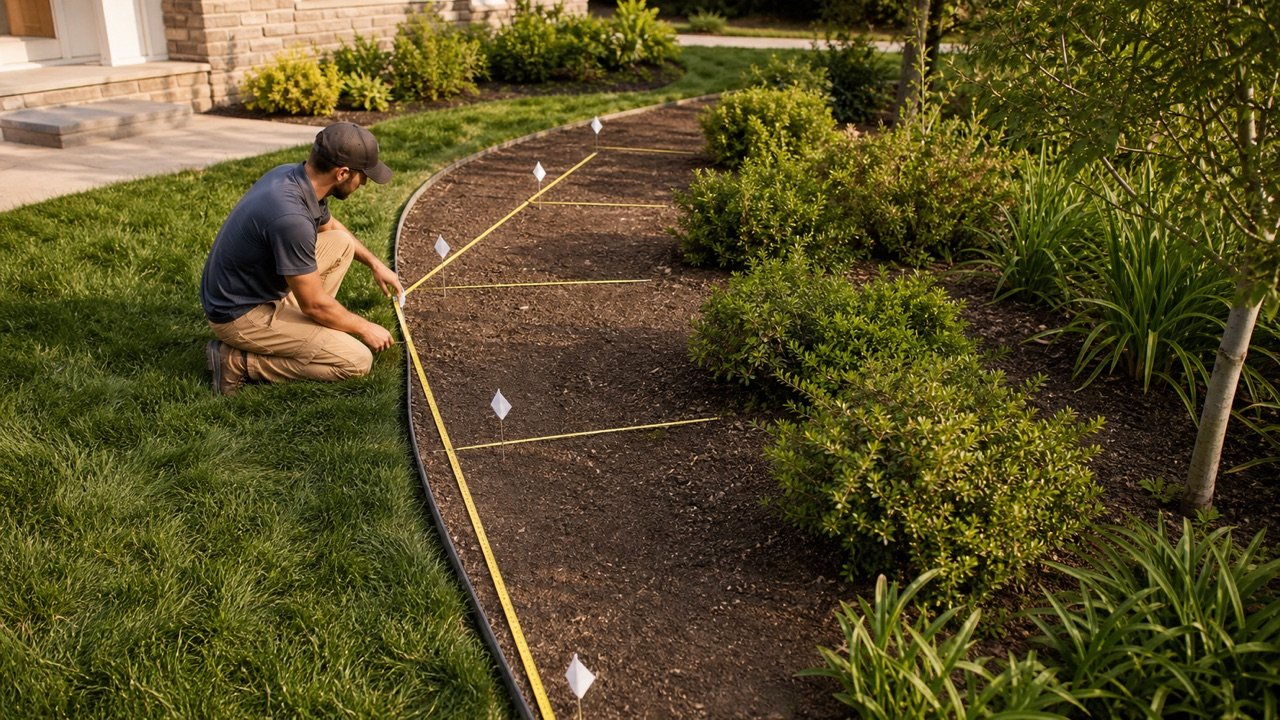
Measure irregular boundaries separately from depth. Use composite shapes, width stations, or controlled survey area, then divide the site into depth zones or model the finished and subgrade surfaces.
The irregular garden-bed measurement guide shows auditable composite and width-station methods that also help with plan area. For a sloping or variable-depth soil layer, cross-sections, spot levels, a grid, or a digital terrain model may be more suitable than one average thickness.
Do not use the maximum depth across the whole area. Do not use horizontal plan area as surface area without checking which geometric basis the specification requires.
Common topsoil-depth mistakes
- Taking the first depth in a supplier article as a universal requirement.
- Confusing imported topsoil depth with total plant rooting depth.
- Deducting existing soil that is unsuitable, contaminated, or scheduled for removal.
- Measuring a loose layer when the requirement applies after firming or settlement.
- Ignoring the transition between topsoil and compacted subsoil.
- Using one depth across changing grades, uses, or soil conditions.
- Forgetting the thickness of turf, mulch, or another surface finish.
- Adding a generic settlement or waste percentage with no evidence.
- Converting cubic yards to tons with an unrelated bulk density.
- Rounding every zone before the placed volumes are added.
What should the topsoil-depth record contain?
- Project, area ID, planting use, drawing or specification revision, and depth source.
- Required final topsoil depth, total rooting-depth requirement, and measurement condition.
- Existing profile observations, suitable retained depth, and soil-quality evidence.
- Subgrade and finished-grade datums, surface-finish allowance, and drainage constraints.
- Area method, depth zones, unrounded placed volume, and independent check.
- Loose-delivery factor and handling allowance only when separately supported.
- Product, supplier, material state, selling unit, quote date, test documents, and final order rounding.
- Field check locations, readings, date, corrective work, and acceptance status.
Continue in the Topsoil Calculator when the net added depth is approved. The landscaping planning hub links the related soil, compost, fill, and mulch tools. Use the Mulch Coverage Guide separately when a surface mulch layer affects the finished level.
Sources and scope
- Penn State Extension, Lawn Establishment: supports its home-lawn topsoil depth, interface incorporation, grading, firming, and establishment guidance.
- Cheshire East Council, Landscape scheme technical specifications: supports the stated UK examples separating topsoil depth from combined soil depth and specifying different planting uses.
- Leeds City Council, Planting checklist: supports its tree-area distinction between topsoil and loosened subsoil and its certification context.
- Kansas State University Research and Extension, Raised Bed Gardening: supports its home raised-bed depth and mixed-medium context.
- NIST Guide to the SI, Appendix B and NIST Handbook 133, 2026 Appendix E: support the unit relationships used in the calculations.
The page explains quantity planning from an approved depth. It does not design a rootzone, assess contamination, select a soil product, set a universal depth or settlement factor, approve grading or drainage, or replace drawings, specifications, permits, local horticultural guidance, laboratory testing, supplier records, or a qualified professional.