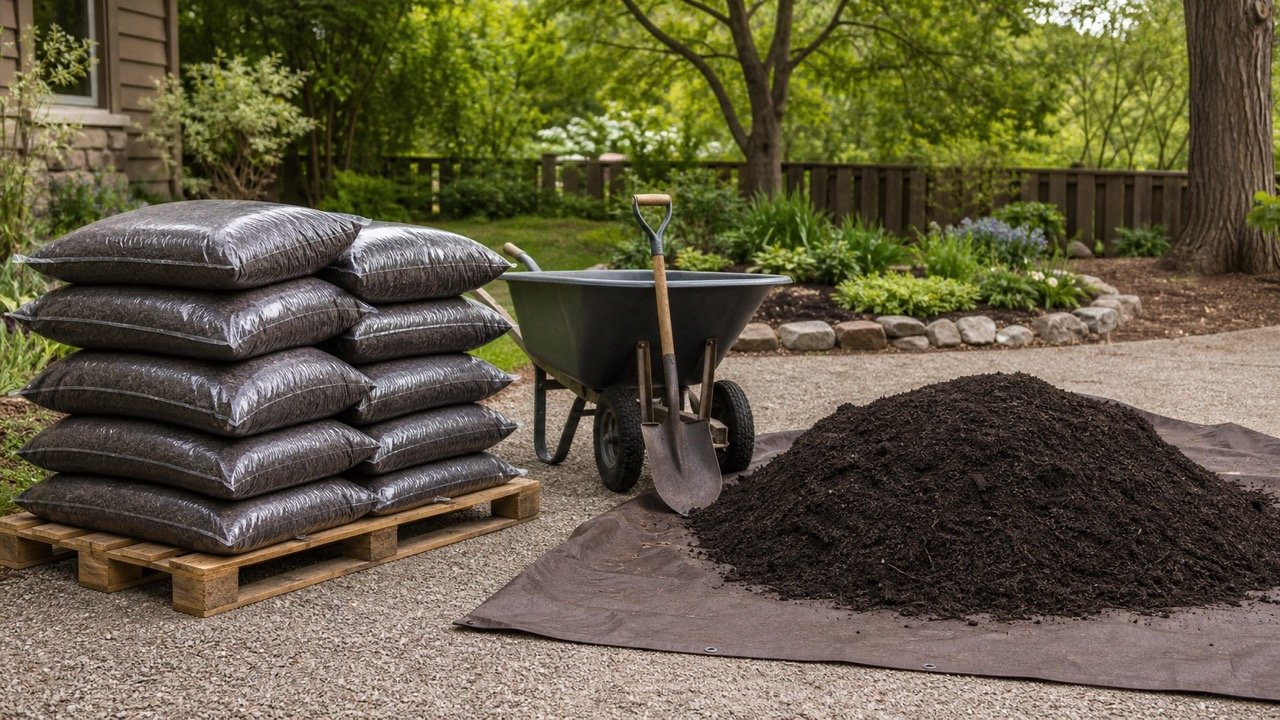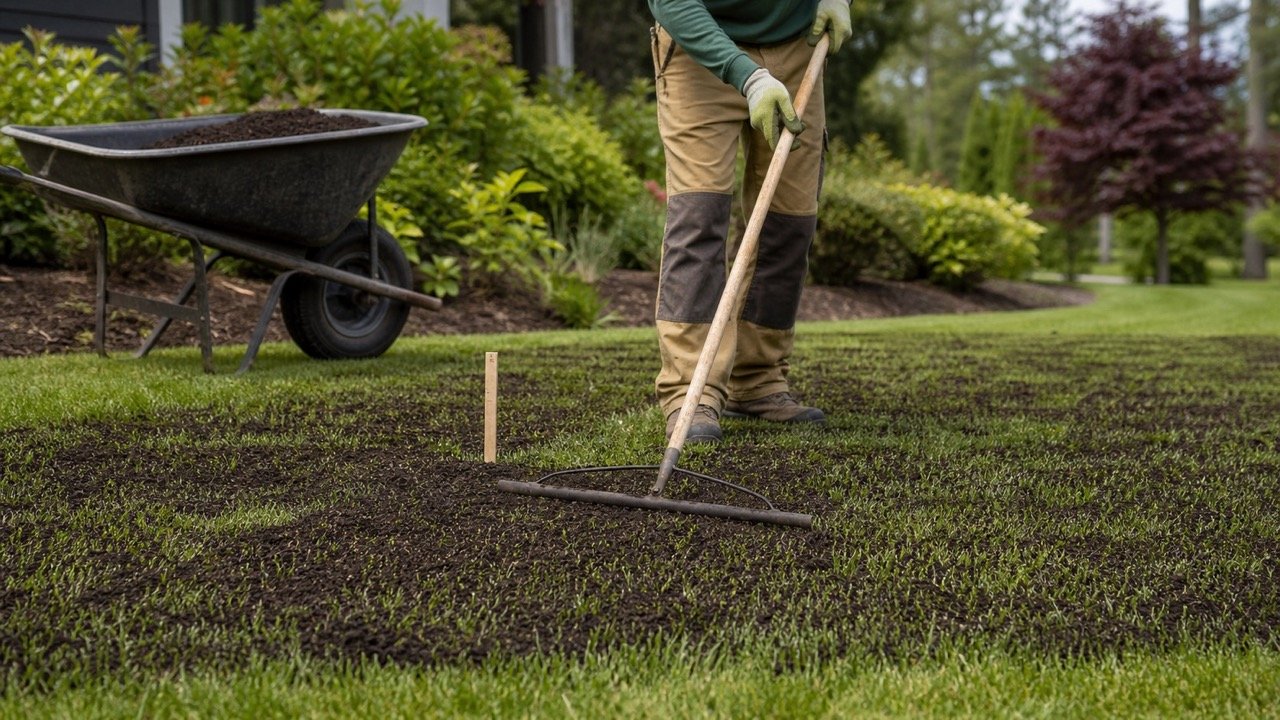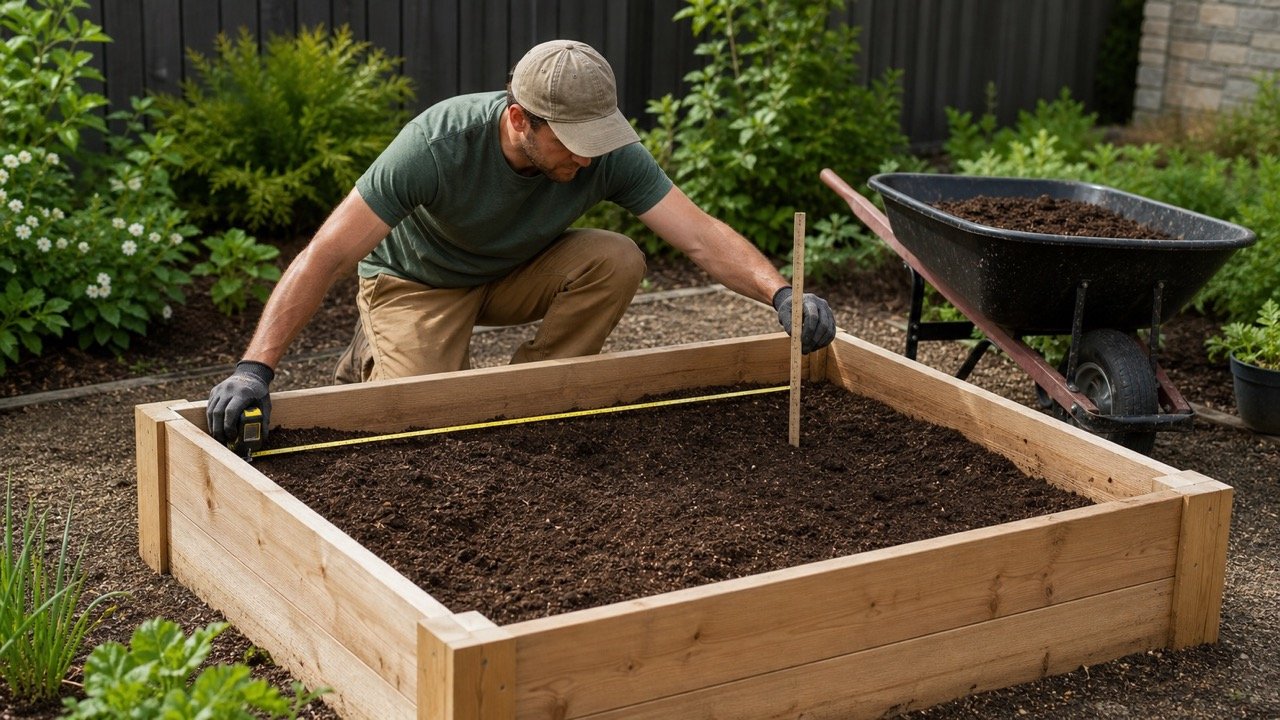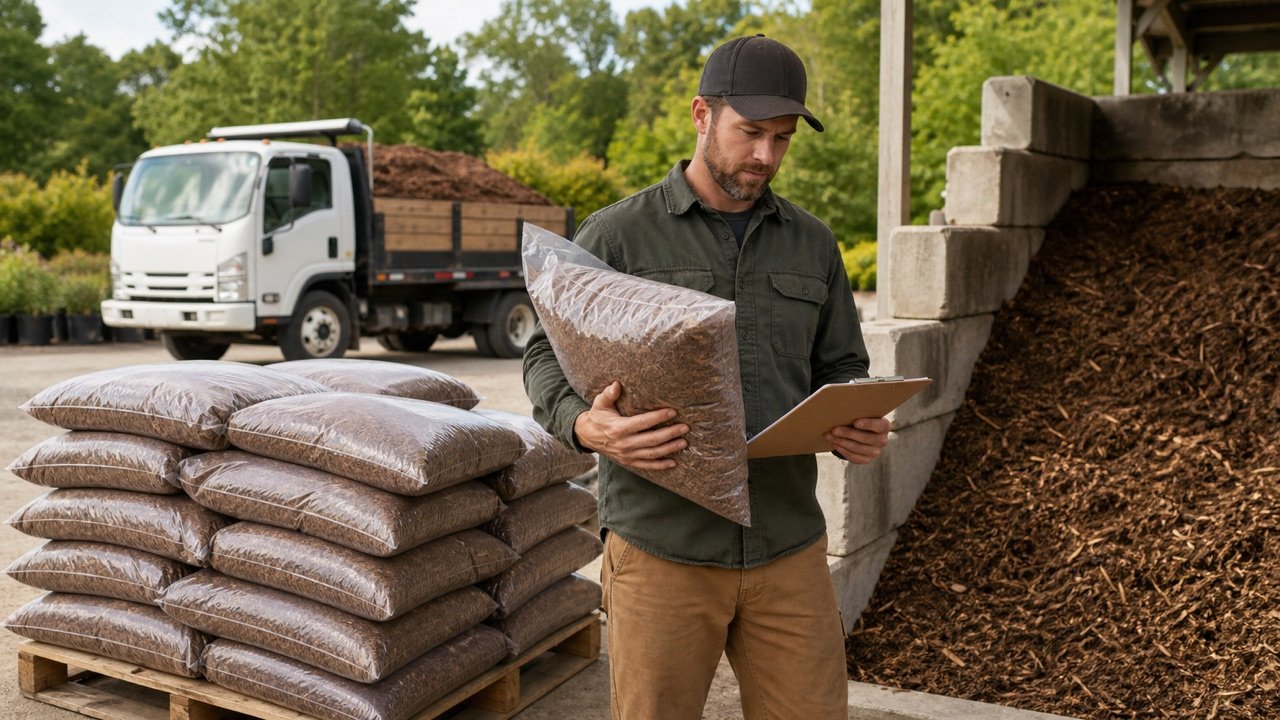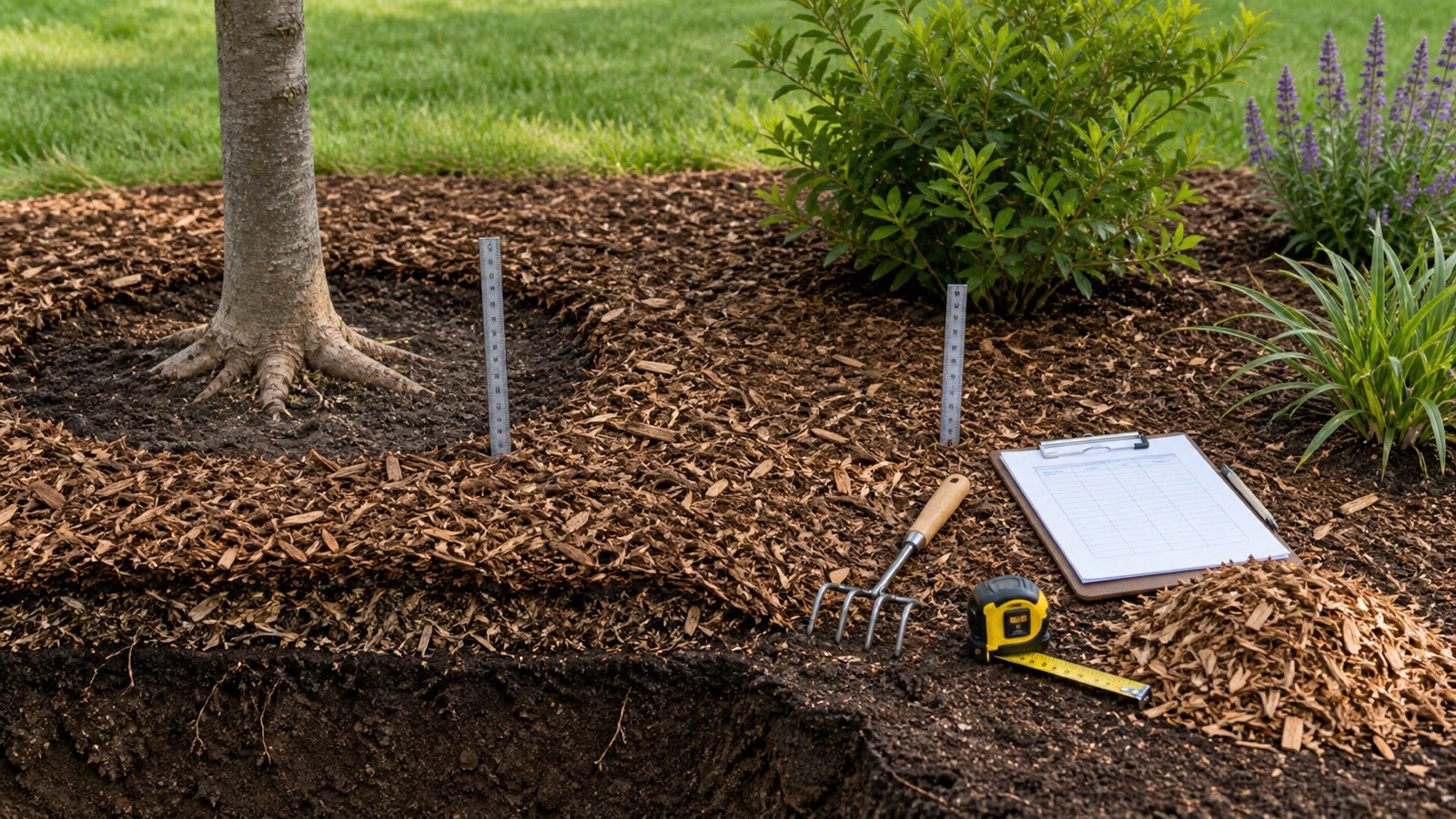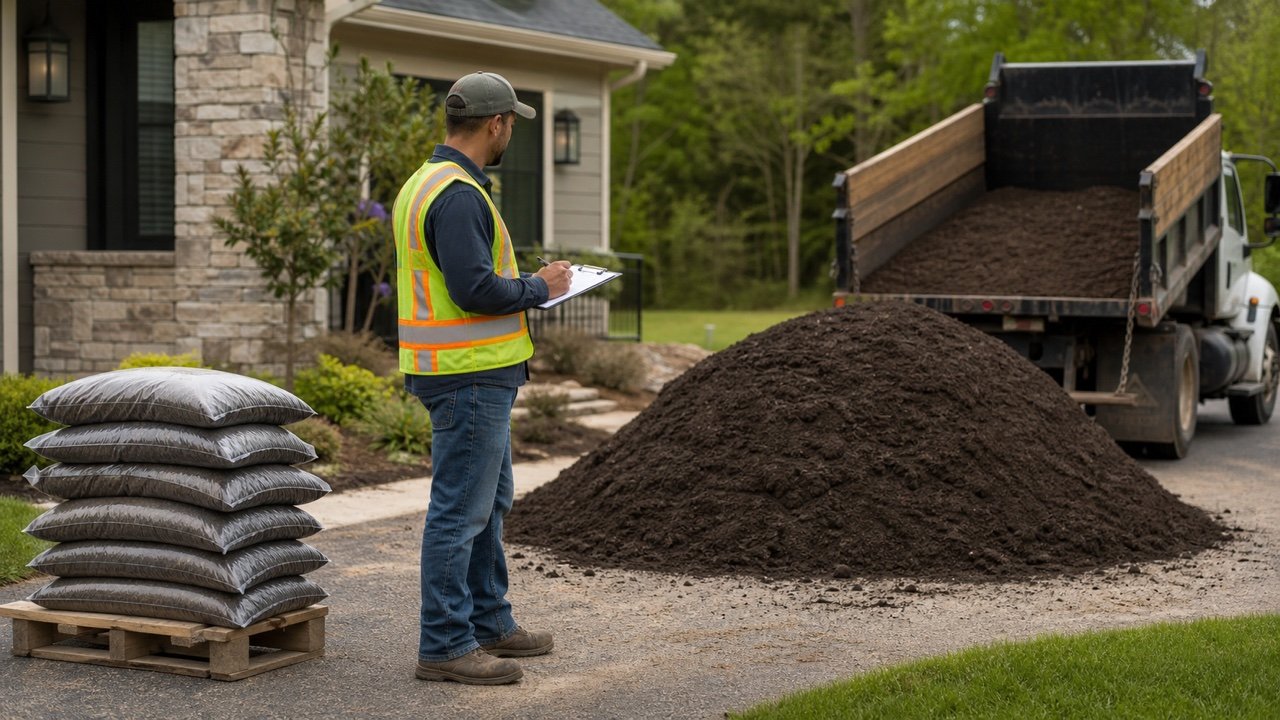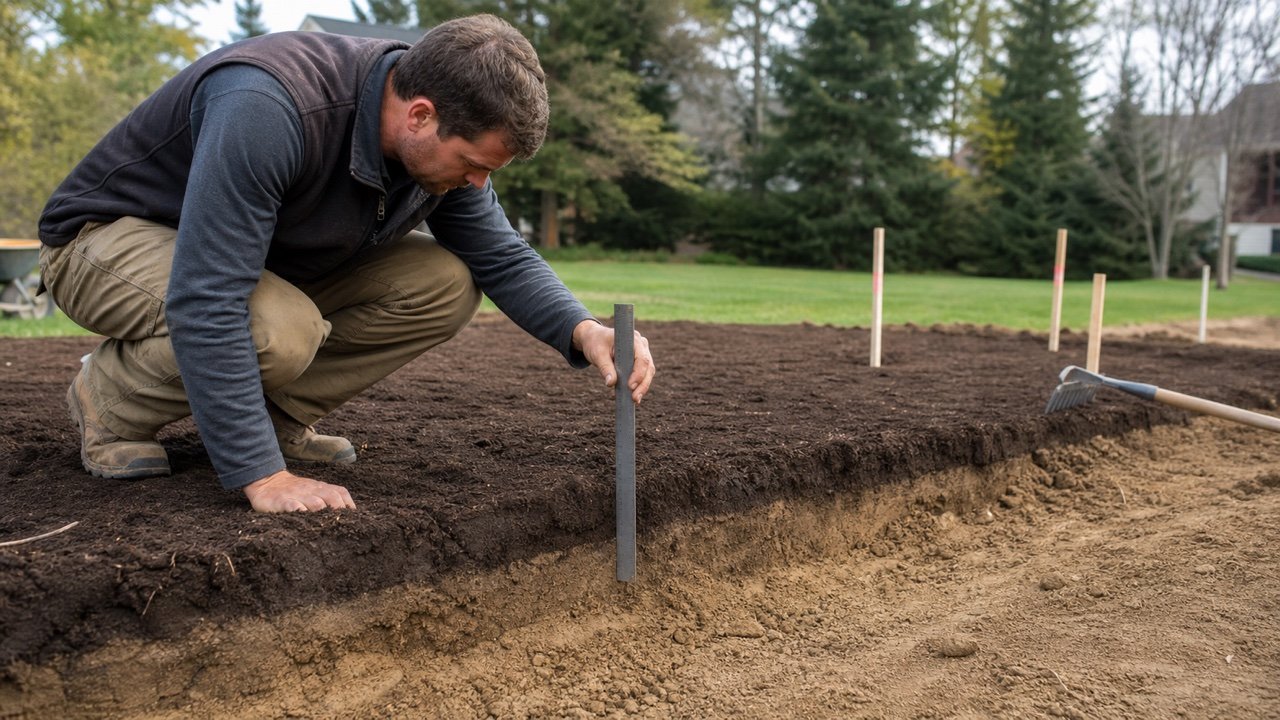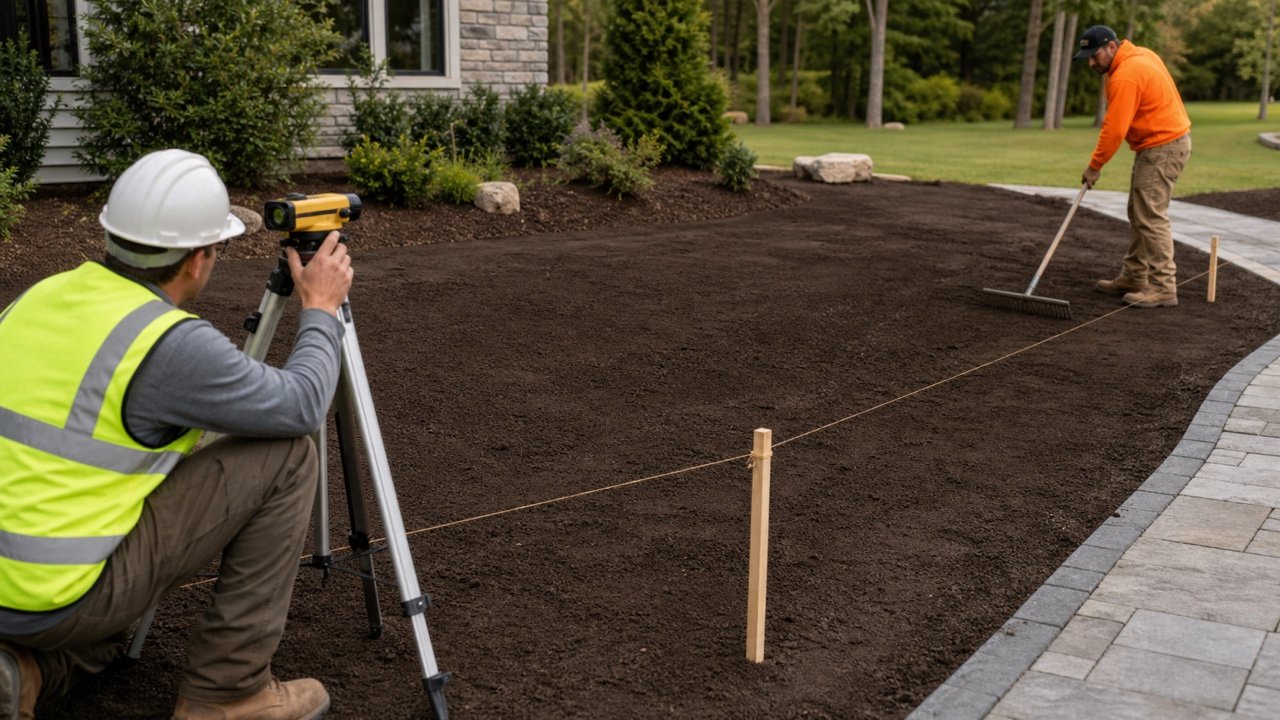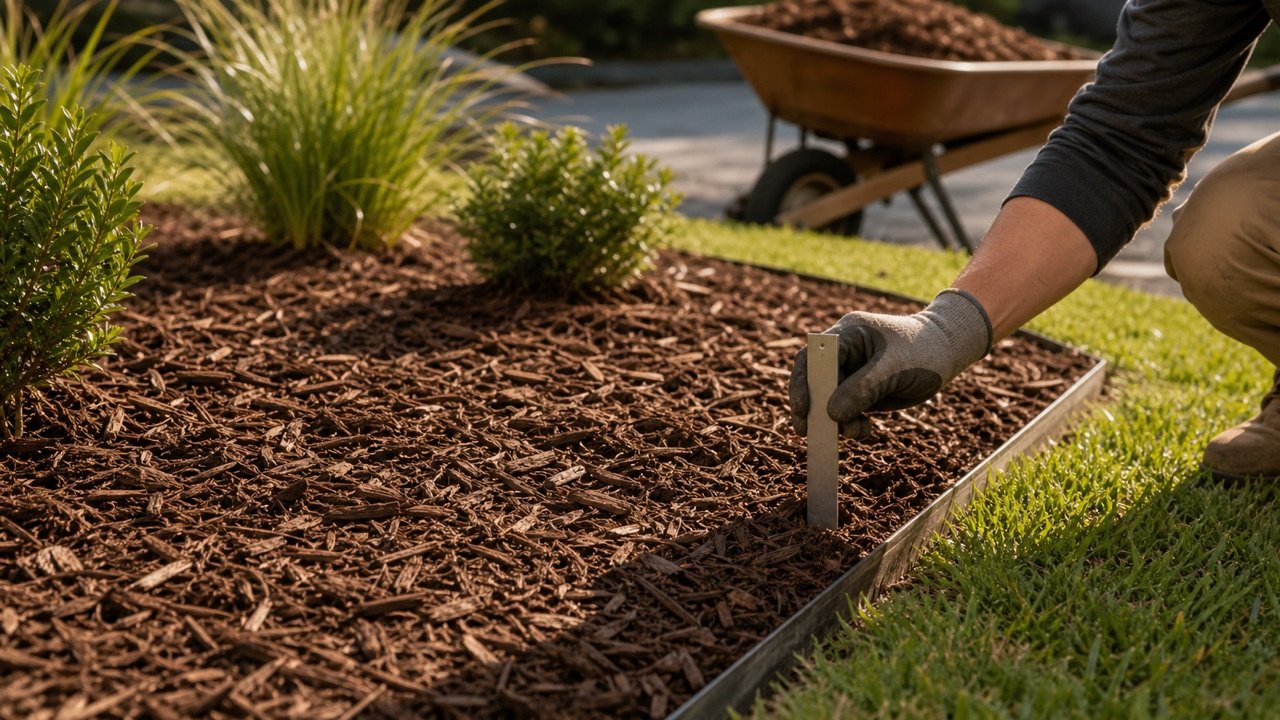
Mulch coverage depends on the volume available and the depth still needed across the bed. A cubic yard can cover 324 ft² at 1 in or 81 ft² at 4 in, so choosing the right depth matters as much as measuring the area.
Use these charts as geometry references. Check the existing layer, the current package label, applicable plant guidance, and supplier selling rules before ordering.
How much area does mulch cover?
One cubic yard covers 324 ft² at 1 in deep, 162 ft² at 2 in, 108 ft² at 3 in, or 81 ft² at 4 in. One cubic metre covers 40 m² at 25 mm, 20 m² at 50 mm, 13.333 m² at 75 mm, or 10 m² at 100 mm.
The chart assumes an even layer and a known material volume. It does not predict settling, decomposition, uneven grade, spillage, package fill, or supplier order increments.
Enter the measured bed and the depth still required in the Mulch Calculator when you need a project quantity instead of a one-unit coverage check.
How much does one cubic yard of mulch cover?
One cubic yard contains 27 cubic feet. At 1 in deep, that volume covers 27 ÷ (1 ÷ 12) = 324 ft². The University of Florida IFAS Extension publishes the same 324 ft² at 1 in and 108 ft² at 3 in values in its Florida landscape guidance.
| Uniform depth | Calculated coverage | Calculation |
|---|---|---|
| 1 in | 324 ft² | 324 ÷ 1 |
| 1.5 in | 216 ft² | 324 ÷ 1.5 |
| 2 in | 162 ft² | 324 ÷ 2 |
| 2.5 in | 129.6 ft² | 324 ÷ 2.5 |
| 3 in | 108 ft² | 324 ÷ 3 |
| 3.5 in | 92.571 ft² | 324 ÷ 3.5 |
| 4 in | 81 ft² | 324 ÷ 4 |
Coverage in ft² = cubic yards × 324 ÷ depth in inches
Multiply the table coverage by the known number of cubic yards. A half-yard covers half the listed area. Keep the exact value until the project total is calculated.
How much does one cubic metre of mulch cover?
Convert the chosen depth to metres, then divide 1 m³ by that depth. A 50 mm layer is 0.05 m, so 1 ÷ 0.05 = 20 m².
| Uniform depth | Calculated coverage | Calculation |
|---|---|---|
| 25 mm | 40 m² | 1,000 ÷ 25 |
| 40 mm | 25 m² | 1,000 ÷ 40 |
| 50 mm | 20 m² | 1,000 ÷ 50 |
| 60 mm | 16.667 m² | 1,000 ÷ 60 |
| 75 mm | 13.333 m² | 1,000 ÷ 75 |
| 80 mm | 12.5 m² | 1,000 ÷ 80 |
| 100 mm | 10 m² | 1,000 ÷ 100 |
Coverage in m² = cubic metres × 1,000 ÷ depth in millimetres
The repeating results at 60 and 75 mm continue past the 3 decimal places shown. NIST conversion guidance explains that unit conversion and rounding require an appropriate factor and suitable significant digits. Keep metric and U.S. customary calculations separate when possible.
How much area does one bag of mulch cover?
Use the net volume printed on the current package. Package sizes differ by product and market, so the columns below are reference volumes, not standard bag claims.
| Depth | 1.5 ft³ package | 2 ft³ package | 3 ft³ package |
|---|---|---|---|
| 1 in | 18 ft² | 24 ft² | 36 ft² |
| 2 in | 9 ft² | 12 ft² | 18 ft² |
| 3 in | 6 ft² | 8 ft² | 12 ft² |
| 4 in | 4.5 ft² | 6 ft² | 9 ft² |
Package coverage in ft² = package volume in ft³ × 12 ÷ depth in inches
| Depth | 40 L package | 50 L package | 60 L package |
|---|---|---|---|
| 25 mm | 1.6 m² | 2 m² | 2.4 m² |
| 50 mm | 0.8 m² | 1 m² | 1.2 m² |
| 75 mm | 0.533 m² | 0.667 m² | 0.8 m² |
| 100 mm | 0.4 m² | 0.5 m² | 0.6 m² |
Package coverage in m² = package volume in litres ÷ depth in millimetres
For a package volume missing from the table, use the formula with the label value. Divide the net project area by one-package coverage, combine compatible bed sections before rounding, and round the final package quotient up once.
Should a refresh use the full target depth?
No. Measure the usable mulch that remains and subtract it from the chosen target total depth. A bed with a 3 in target and 1 in retained layer needs 2 in added, not another 3 in.
| Bed condition | Calculation depth | Required check |
|---|---|---|
| New bare bed | Chosen target total depth | Confirm plant, material, drainage, and local guidance |
| Even retained layer | Target depth minus measured retained depth | Check several locations, not one convenient spot |
| Patchy retained layer | Calculate sections separately or use a documented measured average | Record thin and deep zones |
| Existing layer already at or above target | 0 additional depth until the condition is reviewed | Redistribution or removal may be more appropriate than adding material |
| Different target depths in one project | Separate quantity for each depth zone | Combine only after each unrounded volume is known |
The University of Minnesota Extension advises monitoring depth and replenishing organic mulch as it decomposes. Penn State's tree guidance also says to check existing depth before adding another layer. This check prevents repeated top-ups from becoming an excessive buildup.
Worked imperial refresh example
A measured bed has a net area of 450 ft². The chosen total depth is 3 in, and checks across the bed show 1 in of usable mulch will remain. The current package label states 2 ft³.
- Net depth to add: 3 − 1 = 2 in.
- Required bulk volume: 450 × 2 ÷ 324 = 2.7778 yd³.
- Equivalent cubic feet: 2.7778 × 27 = 75 ft³.
- Exact package quotient: 75 ÷ 2 = 37.5.
- Whole packages: 38.
The mathematical quantity is 2.7778 yd³ or 75 ft³. The bulk order still depends on the supplier's selling increment, minimum, loading method, delivery conditions, and project-approved allowance. Do not silently turn the result into 3 yd³ or add a percentage without recording why.
Worked metric refresh example
A 32 m² bed has a chosen target of 75 mm and 25 mm of retained usable mulch. The current package label states 40 L.
- Net depth to add: 75 − 25 = 50 mm.
- Required volume: 32 × 50 ÷ 1,000 = 1.6 m³.
- Equivalent litres: 1.6 × 1,000 = 1,600 L.
- Package count: 1,600 ÷ 40 = 40 packages.
No rounding is needed in this fixture. A different label volume changes the package result but not the measured 1.6 m³.
How should you choose mulch depth?
Use guidance that matches the plant, mulch texture, drainage, climate, and site. A coverage chart can price the effect of a depth decision, but it cannot make the horticultural decision. Use the Mulch Depth Guide for source-scoped material ranges, tree and plant clearances, and retained-layer measurement.
Minnesota Extension gives 2 to 4 in in its stated landscape context. Penn State Extension gives 2 to 4 in for landscape trees, recommends less on poorly drained soil, and notes 1 to 2 in for finely textured or double-shredded material. UF/IFAS recommends 3 in in its Florida-Friendly landscape context and 1 in around seedlings and small vegetables or herbs.
Check the applicable local extension advice, planting instructions, design documents, and material information. Keep mulch away from trunks and stems as the cited extension sources direct.
Why can field coverage differ from the chart?
The formula returns ideal geometric coverage. The placed result can change when the bed or material does not match that simple model.
- Existing grades and mulch depths vary across the bed.
- Coarse particles bridge and leave voids, while fine material can mat or consolidate.
- Organic material settles and decomposes over time.
- Material can spill, remain in the delivery area, or be excluded around trunks, stems, edging, drains, and fixtures.
- A bag's labelled net volume, a bulk loader's measurement, and a supplier's selling increment are separate records.
- A sloped surface has more actual surface area than its horizontal plan projection.
Measure after spreading at several representative locations. If the finished layer is outside the permitted range, correct the placement based on applicable guidance instead of changing the record to match the order.
How do you measure irregular mulch beds?
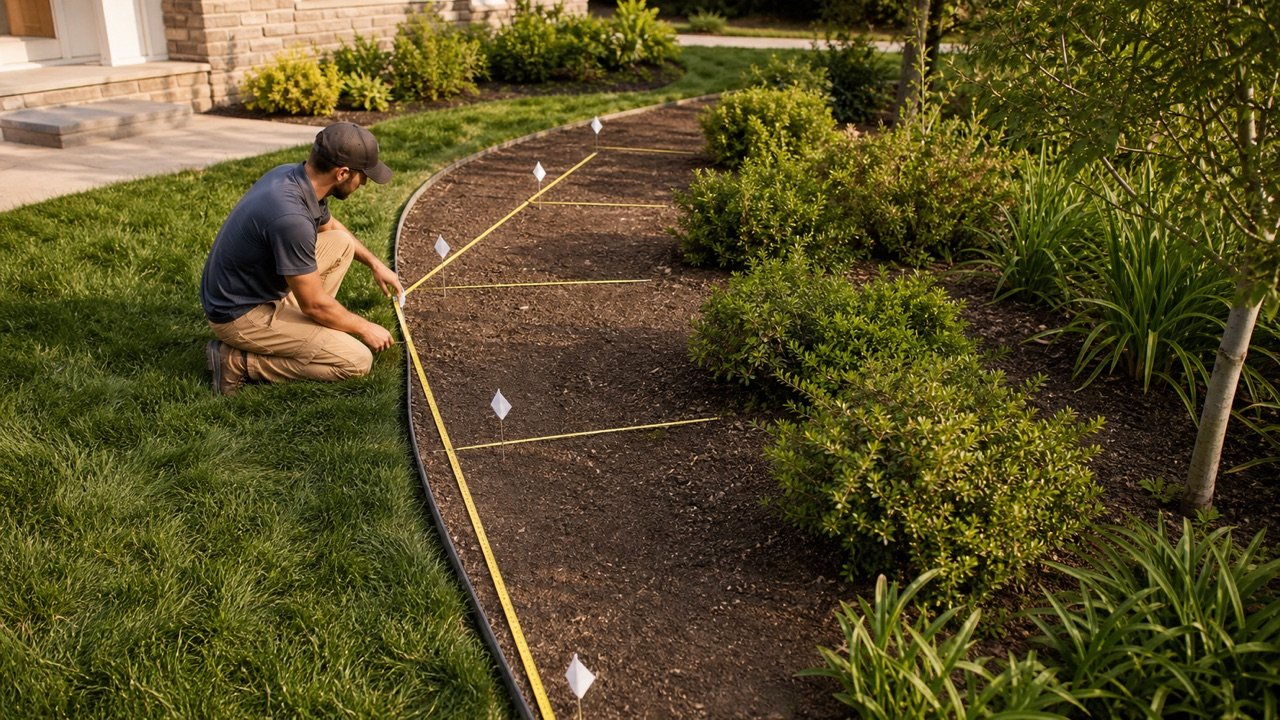
Split the bed into rectangles, circles, triangles, or measured strips. Deduct permanent areas that will not receive mulch, then add the net areas before multiplying by depth.
- Rectangle: length × width.
- Circle: π × radius².
- Triangle: base × perpendicular height ÷ 2.
- Changing-width strip: length × average of the two end widths, when the sides change approximately in a straight line.
Keep zones separate when their depths or retained conditions differ. Use known-area mode in the calculator for a surveyed or otherwise verified irregular area.
Common mulch coverage mistakes
- Using the full target depth for a refresh without checking the layer that remains.
- Treating a 2 ft³, 40 L, or any other package as universal instead of reading the label.
- Using inches or millimetres directly with square feet or square metres without the formula's conversion factor.
- Rounding every bed or package group before compatible quantities are combined.
- Adding a default allowance with no site, product, supplier, or project basis.
- Assuming the chart predicts settlement, decomposition, uneven spreading, or supplier delivery rounding.
- Choosing depth from a generic chart instead of applicable plant and site guidance.
- Piling mulch against trunks or stems to use leftover material.
What should the mulch quantity record contain?
- Bed identifier, net area, measurement date, geometry, deductions, and units.
- Chosen target depth, its source, retained usable depth, and net depth to add.
- Material name, product or supplier, package net volume or bulk selling unit, and quote date where relevant.
- Measured volume, any documented allowance and reason, package quotient, final whole packages, and supplier-rounded bulk order.
- Delivery access, unloading location, storage protection, spreading sequence, and post-placement depth checks.
Use the landscaping planning hub to move between mulch, topsoil, fill dirt, and compost tools. Keep soil volume in the Topsoil Calculator and soil-amendment share in the Compost Calculator; their material states and planning questions differ from surface mulch coverage.
Sources and scope
- University of Florida IFAS Extension, Choosing and Installing Mulches: supports stated Florida depth, coverage, measurement, replenishment, and placement guidance.
- University of Minnesota Extension, Mulching for soil and garden health: supports its stated depth range, material context, monitoring, replenishment, and plant-clearance guidance.
- Penn State Extension, Mulching Landscape Trees: supports tree-specific depth qualifications, drainage and texture exceptions, and existing-depth checks.
- NIST, Approximate Conversions from Metric to U.S. Customary Measures: supports conversion and rounding context.
- NIST Special Publication 447: supports 27 ft³ per yd³ and the cubic-yard to cubic-metre relationship.
The tables calculate ideal area from a known volume and uniform depth. They do not select a safe or suitable mulch, set a universal depth or allowance, verify a package or delivery quantity, or replace local horticultural advice, product instructions, supplier terms, landscape specifications, or professional assessment.