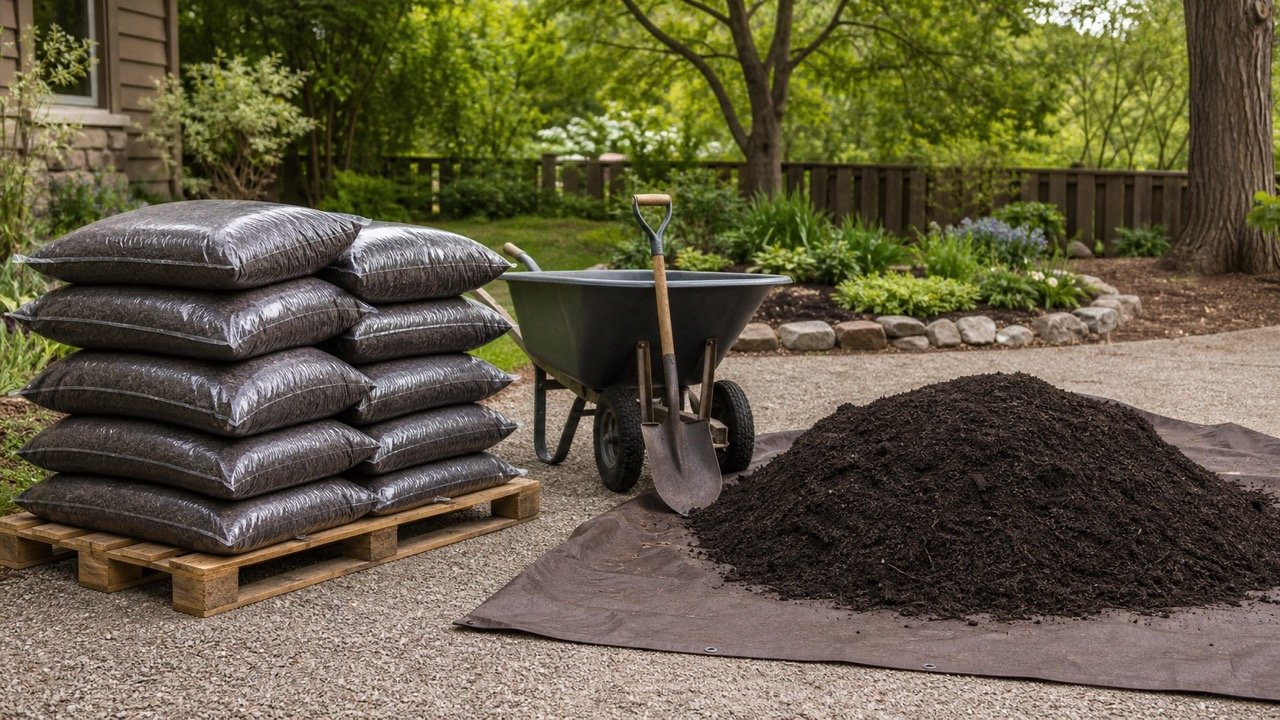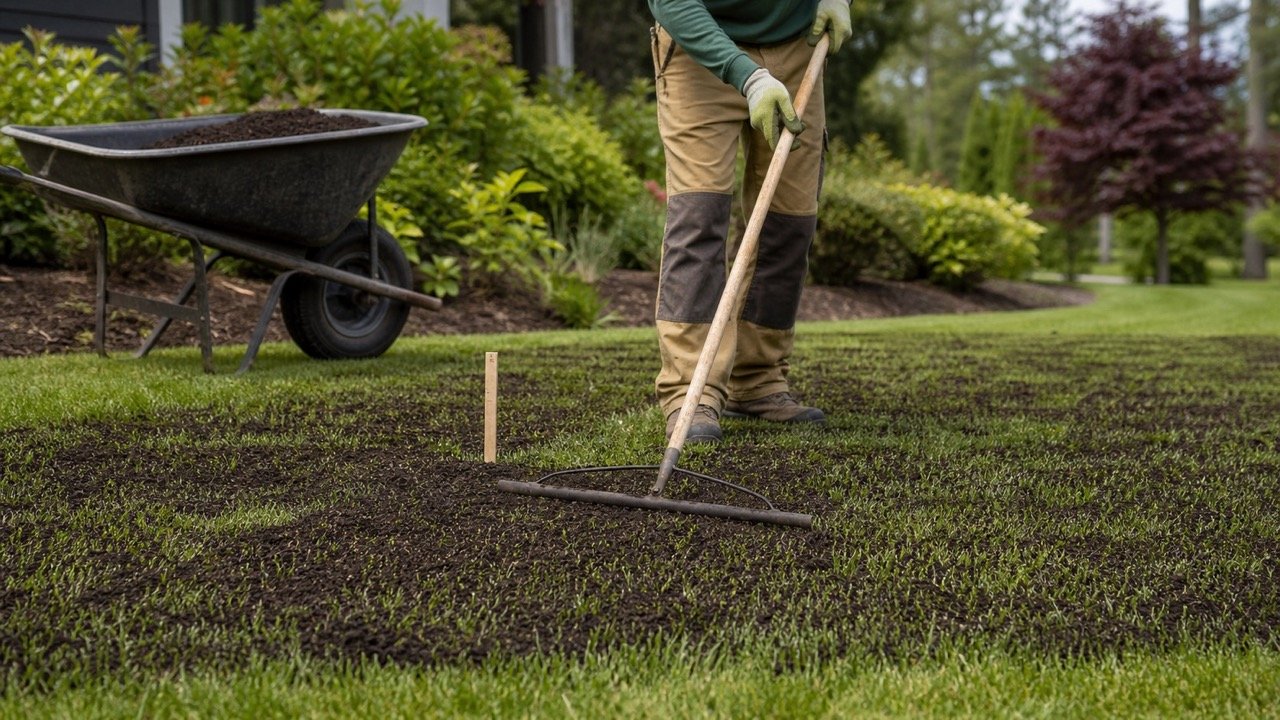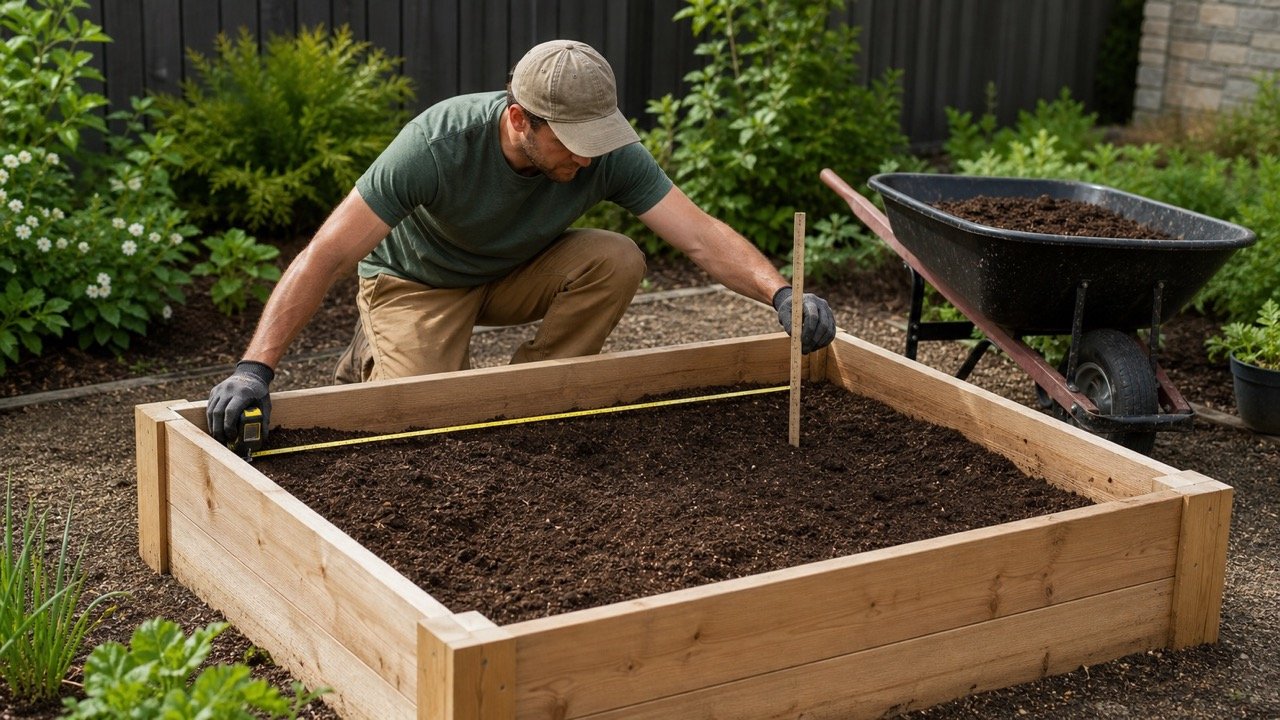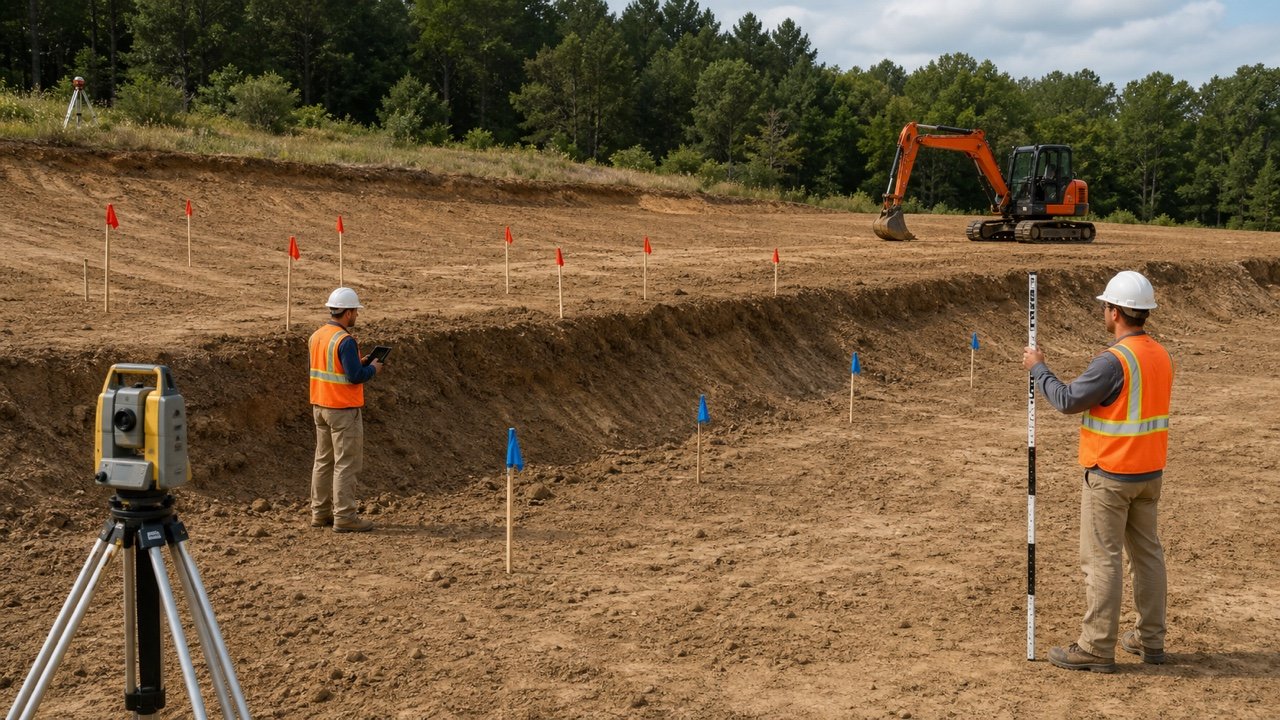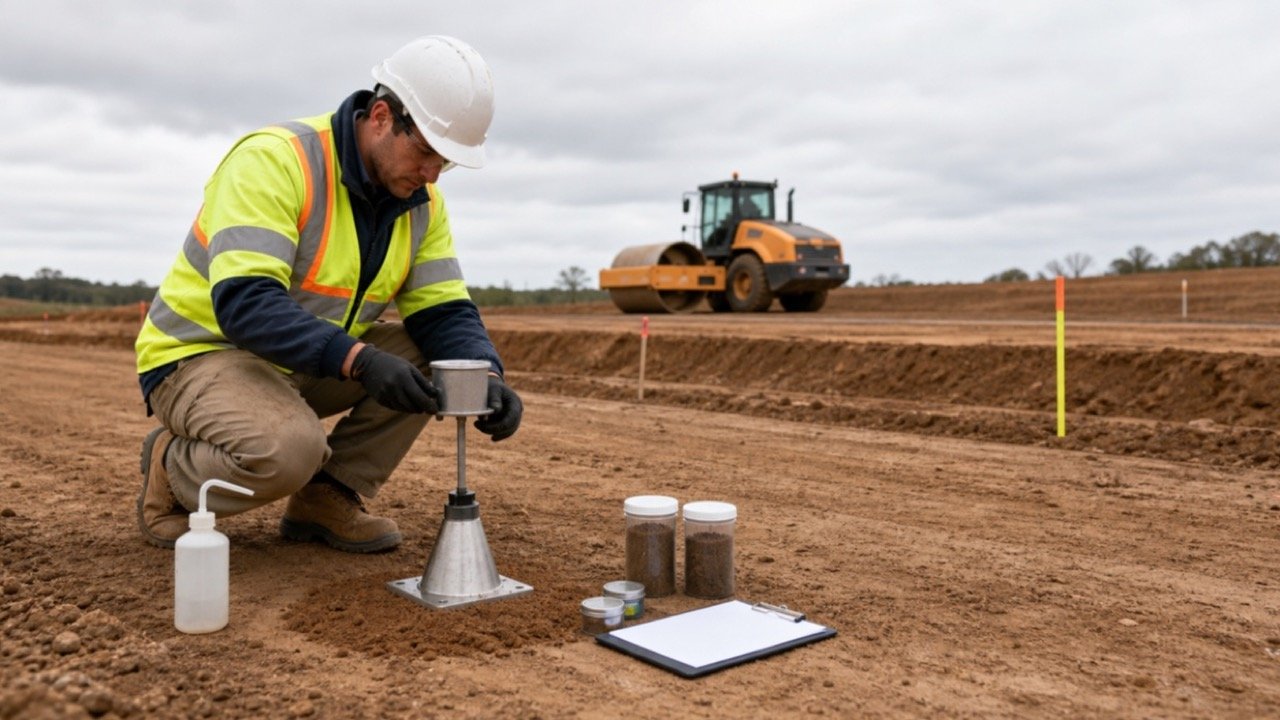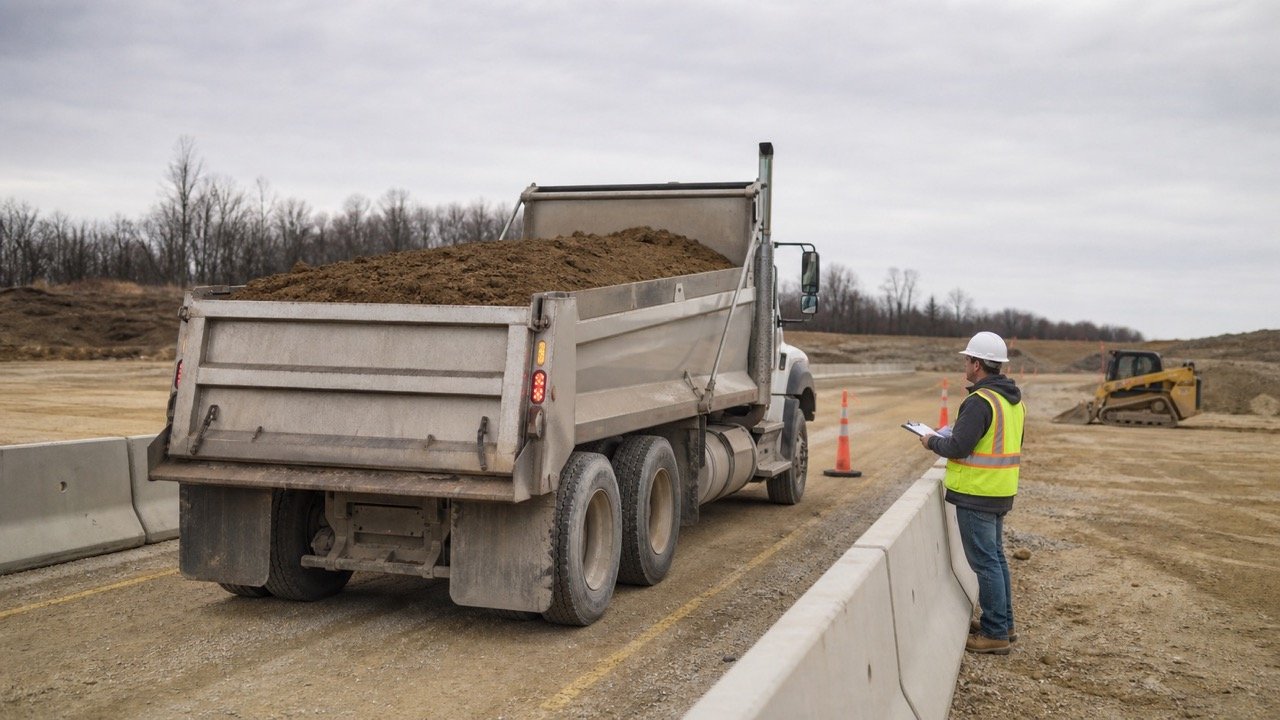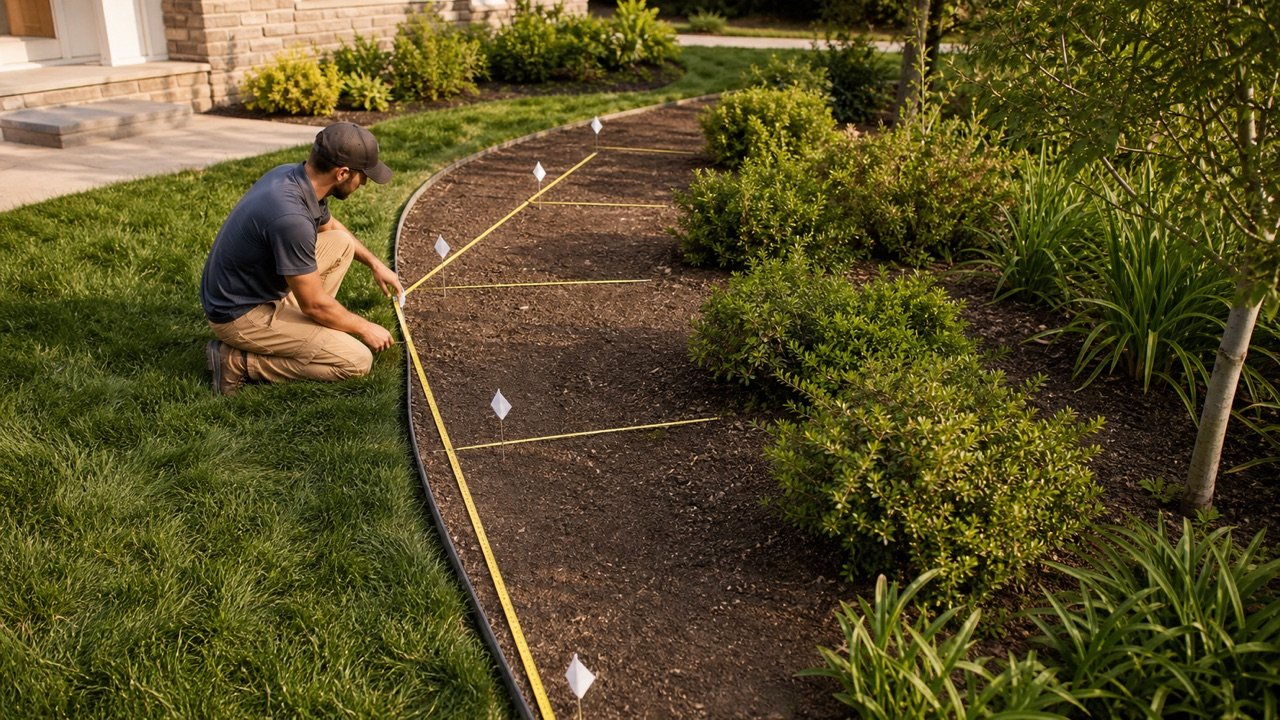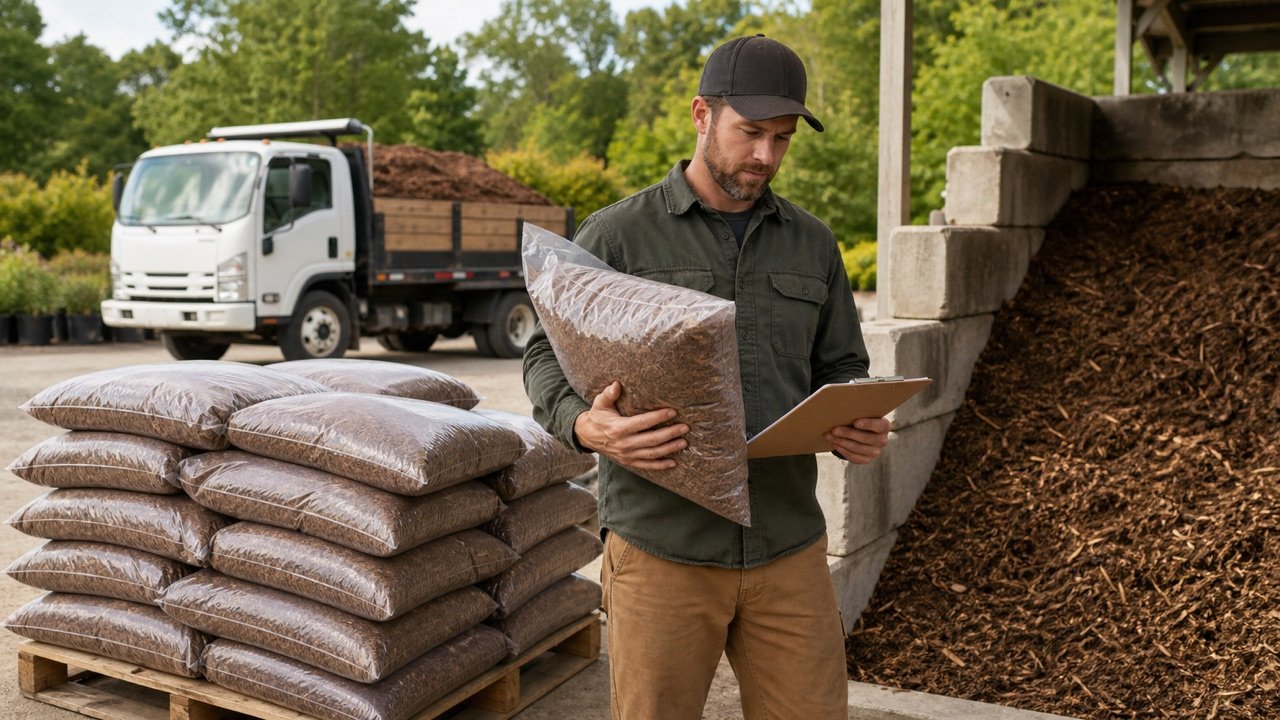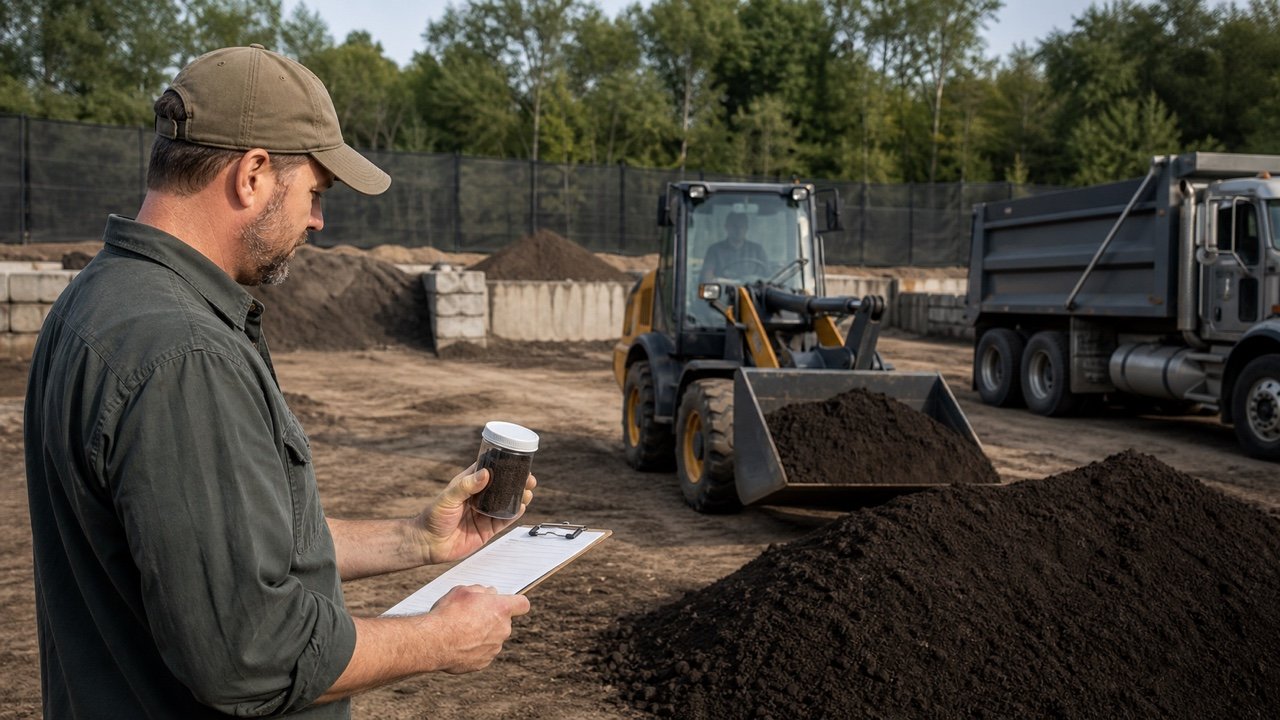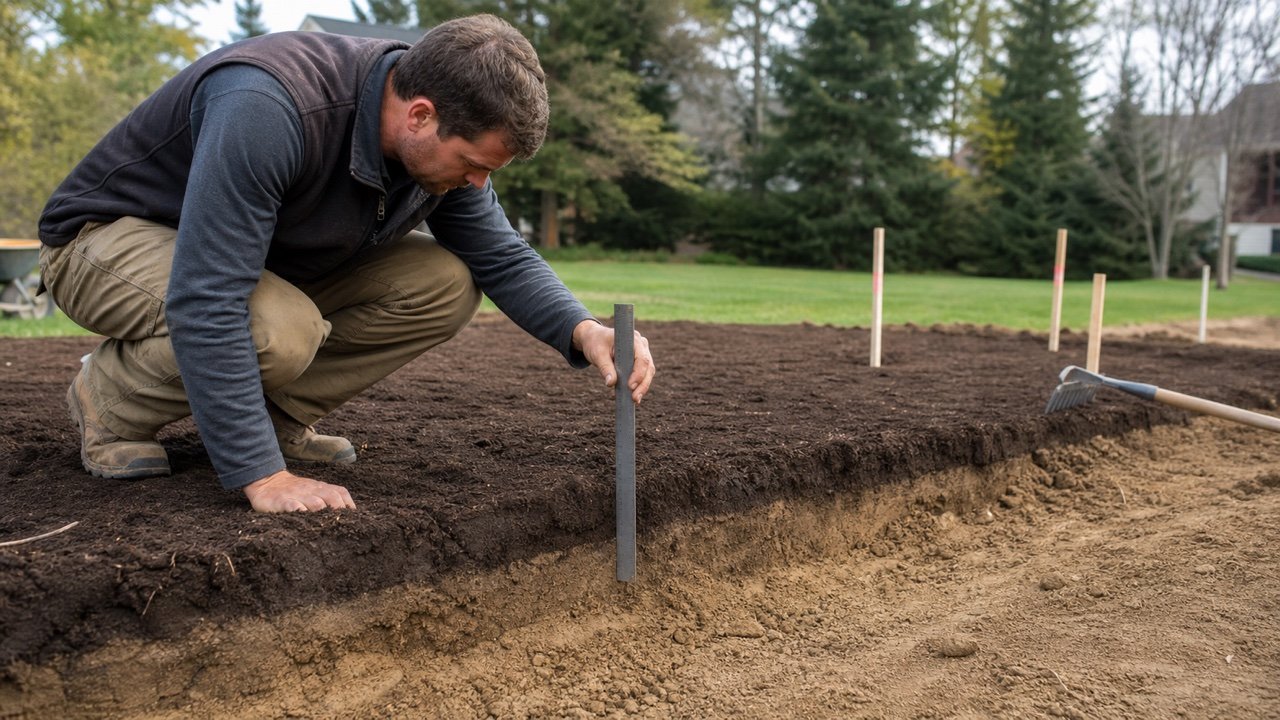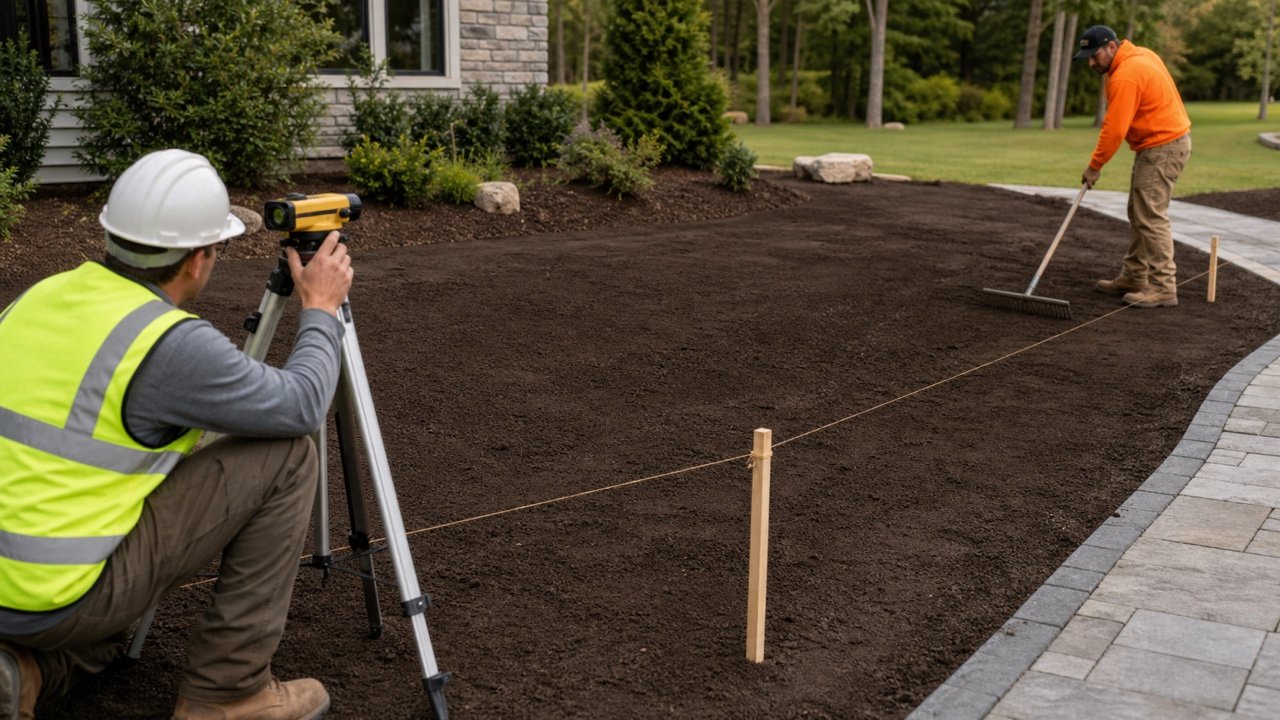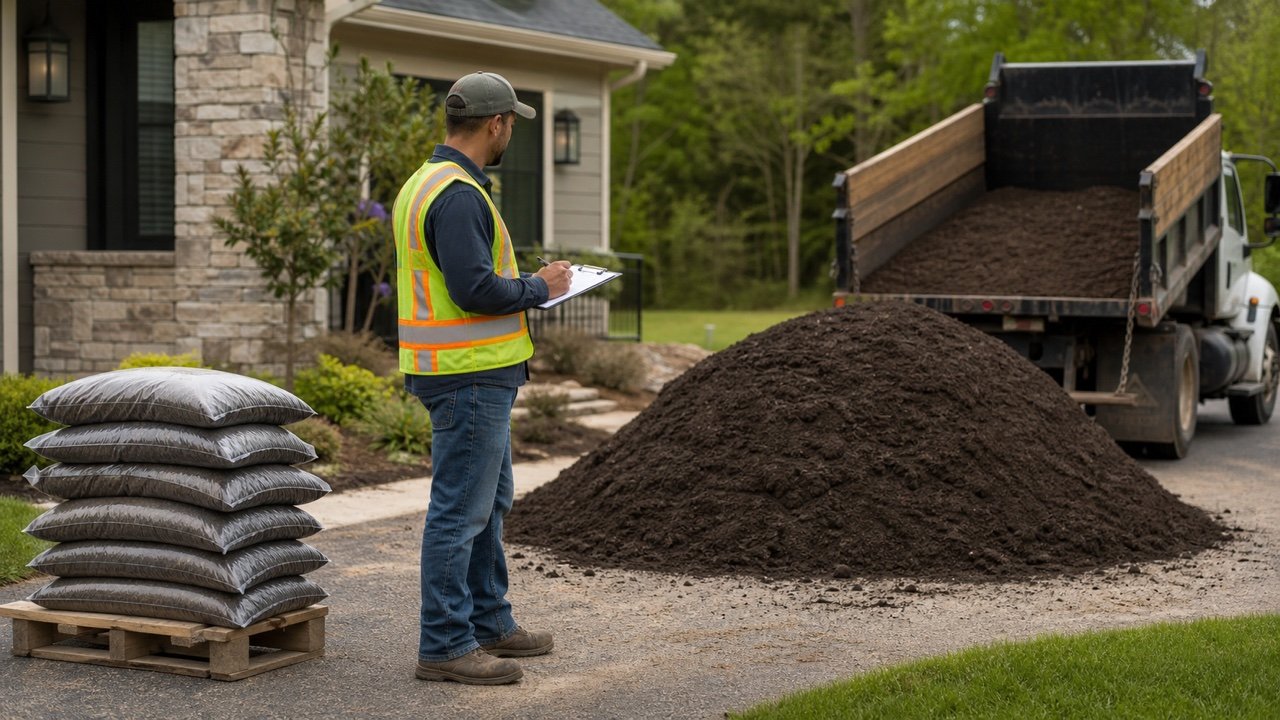
Bagged and bulk topsoil can have different blends, selling units, order increments, fees, handling needs, and delivery limits. A lower advertised unit price does not settle the decision until both routes provide a suitable product and enough accepted volume.
Start with the placed planning quantity from the project. Then collect current written quotes and compare the volume you must actually buy, not just the mathematical volume you need.
Should you buy topsoil in bags or bulk?
Choose the route that supplies an accepted topsoil product, covers the required planning volume, fits the site access and handling plan, and has the better complete quote. Bags often suit small or staged work. Bulk can suit larger continuous areas, but neither route is automatically cheaper or more suitable.
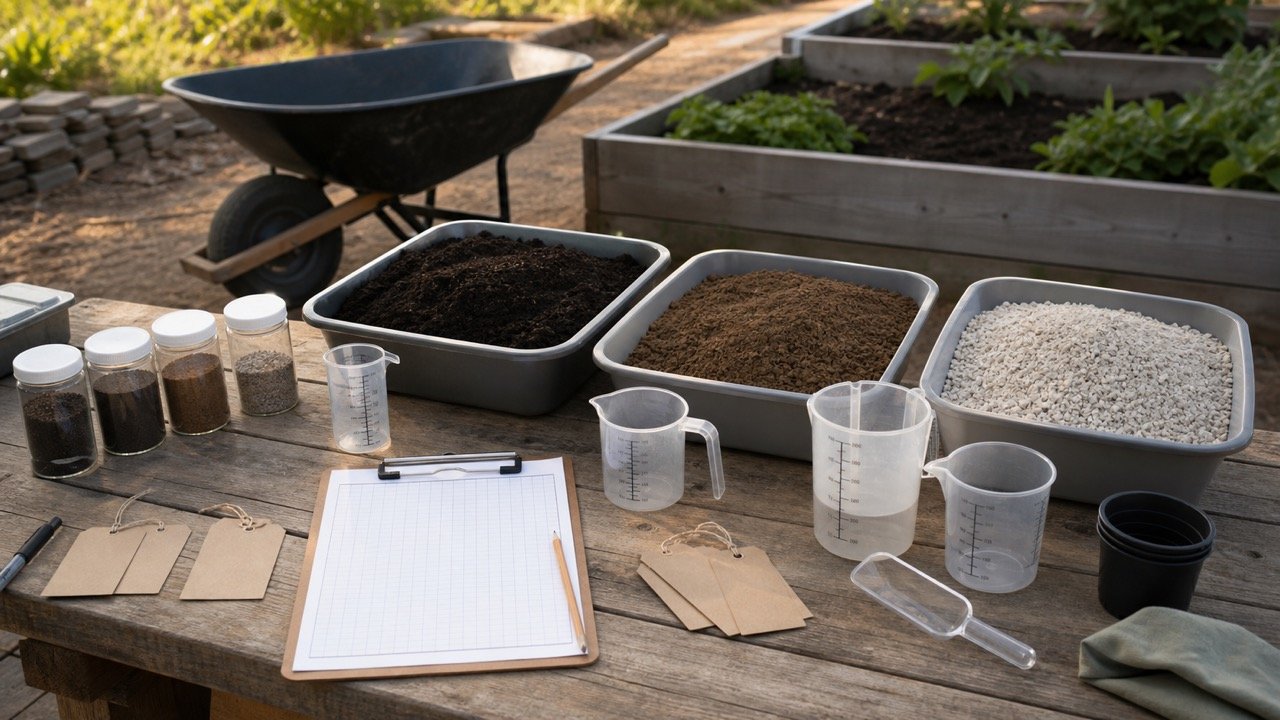
A bag labelled topsoil and a supplier's screened blend may not have the same source, texture, organic content, test record, or intended use. Reject an unsuitable option before calculating its apparent saving.
Use the Topsoil Calculator to establish placed and planning volume. Use the Topsoil Depth Guide first when the required added depth has not been approved.
What information do you need from each seller?
Request enough detail to identify the material, selling unit, quantity basis, complete charge, and delivery condition. A phone price without a product and delivery record cannot support a reproducible comparison.
| Check | Bagged route | Bulk route |
|---|---|---|
| Product | Exact name, contents, intended use, label and batch where relevant | Exact blend, source, screening, intended use and test or specification record |
| Quantity | Net volume per current package | Selling unit, load measurement basis and material state |
| Order rule | Whole bags, pallet quantity, minimum and returns | Minimum, increment, maximum per delivery and split-load policy |
| Price | Unit price, pallet discount, tax and route fees | Unit price, delivery, short-load, zone, waiting and tax charges |
| Logistics | Collection vehicle, lifting, storage and damaged bags | Truck access, tip location, surface protection, unloading and weather |
| Acceptance | Label, visible condition and required documentation | Delivery ticket, visible condition, sample or test documents and rejection procedure |
UC Agriculture and Natural Resources notes that packaged soils called topsoil can vary and advises reading the contents rather than assuming what is in the bag. The British Columbia Ministry of Agriculture similarly advises buyers to check physical and chemical suitability, inspect the source where possible, use a reputable supplier, and consider soil testing.
How do you convert bags to cubic yards?
Read the net volume on the current package. Convert the required cubic yards to cubic feet, divide by the package volume, and round the final quotient upward once.
Required ft³ = required yd³ × 27
Whole bags = ceiling(required ft³ ÷ net ft³ per bag)
A bag's weight is not its volume. Do not divide cubic feet by pounds or assume that every bag with the same mass contains the same volume.
| Example label volume | Exact quotient for 1 yd³ | Whole bags for at least 1 yd³ | Ordered volume |
|---|---|---|---|
| 0.75 ft³ | 36 | 36 | 27 ft³ |
| 1 ft³ | 27 | 27 | 27 ft³ |
| 1.5 ft³ | 18 | 18 | 27 ft³ |
| 2 ft³ | 13.5 | 14 | 28 ft³ |
These are arithmetic examples, not standard package sizes. NIST Handbook 130 provides current U.S. model packaging and labelling context, and Handbook 133 provides official net-content test procedures. Adoption and enforcement vary, and this worksheet does not perform a regulatory package test.
How do you convert metric packages to cubic metres?
One cubic metre contains 1,000 litres. Divide the required litres by the current package's labelled net volume and round up once.
Required litres = required m³ × 1,000
Whole packages = ceiling(required litres ÷ net litres per package)
| Example label volume | Exact quotient for 1 m³ | Whole packages | Ordered volume |
|---|---|---|---|
| 25 L | 40 | 40 | 1,000 L |
| 40 L | 25 | 25 | 1,000 L |
| 50 L | 20 | 20 | 1,000 L |
| 60 L | 16.667 | 17 | 1,020 L |
Keep the package volume and product identity together. A 40 L planting mix is not an automatic substitute for 40 L of the specified topsoil.
How should bulk supplier rounding be handled?
Round the required planning volume upward to the supplier's current selling increment and minimum. Record the exact requirement, rounded order, and over-order separately.
Bulk order = maximum(supplier minimum, ceiling(required quantity ÷ increment) × increment)
A 2.4 yd³ requirement with a 0.5 yd³ increment becomes a 2.5 yd³ order. A 0.55 yd³ requirement with the same increment and a 1 yd³ minimum becomes a 1 yd³ order, not 1.5 yd³.
Ask how the supplier measures the sold volume and what material state the quantity describes. Do not treat a truck body size as proof of delivered quantity, and do not infer a safe legal payload from a volume estimate.
How do you compare the complete cost?
Calculate the actual order required by each route, add all current quoted charges on the same tax basis, and note any usable surplus or non-returnable quantity.
Bag total = whole bags × bag price + bag-route fees
Bulk total = rounded bulk quantity × bulk unit price + delivery and quoted fees
Ordered-volume cost = route total ÷ volume actually ordered
Price per ordered volume helps explain the quote, but the final choice must also include suitability, access, handling, timing, storage, cleanup, and return conditions. Do not assign invented cash values to your labour merely to force one route to win.
Worked U.S. quote comparison
The following prices are a hypothetical calculation fixture, not current market data. A project needs 2.4 yd³. The accepted bag is labelled 0.75 ft³ at $3.80. An accepted bulk quote is $42 per yd³, sold in 0.5 yd³ increments, with $75 delivery.
- Required bag volume: 2.4 × 27 = 64.8 ft³.
- Exact bag quotient: 64.8 ÷ 0.75 = 86.4.
- Whole bags: 87, providing 65.25 ft³ or 2.4167 yd³.
- Bag total: 87 × $3.80 = $330.60.
- Bulk order: 2.5 yd³.
- Bulk total: 2.5 × $42 + $75 = $180.
Bulk is $150.60 lower in this fixture. That result changes with the quotes, fees, product acceptance, minimum, access, and bag label. It is not a general savings claim.
Worked small-order comparison
A second hypothetical project needs 0.55 yd³. The accepted 1 ft³ bag costs $4.50. Bulk is $45 per yd³ with a 1 yd³ minimum and $85 delivery.
- Required bag volume: 0.55 × 27 = 14.85 ft³.
- Whole bags: 15.
- Bag total: 15 × $4.50 = $67.50.
- Bulk order under the minimum rule: 1 yd³.
- Bulk total: 1 × $45 + $85 = $130.
Bags are $62.50 lower in this fixture and create only 0.15 ft³ of package over-order. The same conclusion may reverse if collection travel, a pallet minimum, delivery access, or the quotes change.
Worked metric comparison
A hypothetical project needs 1.7 m³. An accepted 40 L package costs €5.20. Bulk costs €78 per m³, rounds to 0.25 m³, and has a €72 delivery fee.
- Required litres: 1.7 × 1,000 = 1,700 L.
- Whole packages: ceiling(1,700 ÷ 40) = 43, providing 1,720 L.
- Package total: 43 × €5.20 = €223.60.
- Bulk order: 1.75 m³.
- Bulk total: 1.75 × €78 + €72 = €208.50.
Bulk is €15.10 lower in this fixture. A small price difference can be outweighed by access, storage, handling, returns, or product differences, so record those conditions before deciding.
When can bags be the practical choice?
- The accepted quantity is small and the bulk minimum creates substantial surplus.
- Work must be staged across several dates or isolated zones.
- Packages can be stored dry and moved through narrow access.
- A bulk truck cannot reach a safe legal tip location.
- The retailer accepts unopened surplus under current terms.
- The exact accepted product is available only in packages.
Check lifting, vehicle loading, trip count, packaging waste, torn bags, moisture exposure, and storage. Do not exceed a vehicle or person's safe capacity based on a generic bag weight.
When can bulk be the practical choice?
- A larger continuous area needs one accepted blend.
- The complete current quote remains favourable after delivery and minimums.
- A safe, permitted unloading area is available.
- The crew can protect, move, place, and cover the pile promptly.
- Delivery tickets and required product or test records are available.
- The rounded surplus has a planned, acceptable use.
Confirm access width, overhead clearance, turning space, surface capacity, drainage protection, traffic control, utility location, weather limits, contamination protection, waiting charges, and cleanup responsibility with the supplier and responsible site personnel.
Common bag-versus-bulk mistakes
- Comparing products that are both called topsoil but do not meet the same use or specification.
- Assuming one universal bag size, density, price, delivery fee, or bulk threshold.
- Using package mass as package volume.
- Comparing required bag volume with supplier-rounded bulk volume without showing over-order.
- Leaving delivery, short-load, tax, pallet, travel, or return terms out of one route.
- Using an unsupported settlement percentage to enlarge both orders.
- Assuming a truck can tip on a driveway or public road without checking permission and surface conditions.
- Approving vehicle payload or load count from a generic tons-per-yard figure.
- Treating the cheaper quote as proof of soil quality.
What should the purchase record contain?
- Approved placed depth, area, placed volume, and documented planning adjustments.
- Product identity, intended use, source, specification and test or label evidence.
- Bag net volume, whole count, pallet rule, unit price, fees and return terms.
- Bulk selling unit, increment, minimum, rounded volume, unit price and all delivery charges.
- Quote date, expiry, tax basis, delivery date and contact.
- Access, tip location, storage, protection, handling, inspection and rejection plan.
- Required quantity, ordered quantity, surplus, total and decision reason for both routes.
The landscaping planning hub connects topsoil with compost, fill dirt, and mulch tools. Do not substitute the Mulch Bags vs Bulk worksheet for soil without changing the product, depth, quality and delivery records.
Sources and scope
- NIST Handbook 130, 2026 current edition: supports U.S. model packaging and quantity-declaration context; local adoption must be checked.
- NIST Handbook 133, 2026 current edition: supports official net-content inspection and volume-test context.
- UC Agriculture and Natural Resources, Bagged Soils: supports checking package contents because products labelled as topsoil can vary.
- British Columbia Ministry of Agriculture, Buying Topsoil: supports product suitability, source inspection, supplier and testing checks within its stated scope.
This page is a quote and quantity worksheet. It does not publish current market prices, certify a product, perform a regulatory package test, set density or settlement, approve a vehicle load or unloading location, or replace specifications, soil testing, supplier terms, local rules, safety controls, or professional assessment.