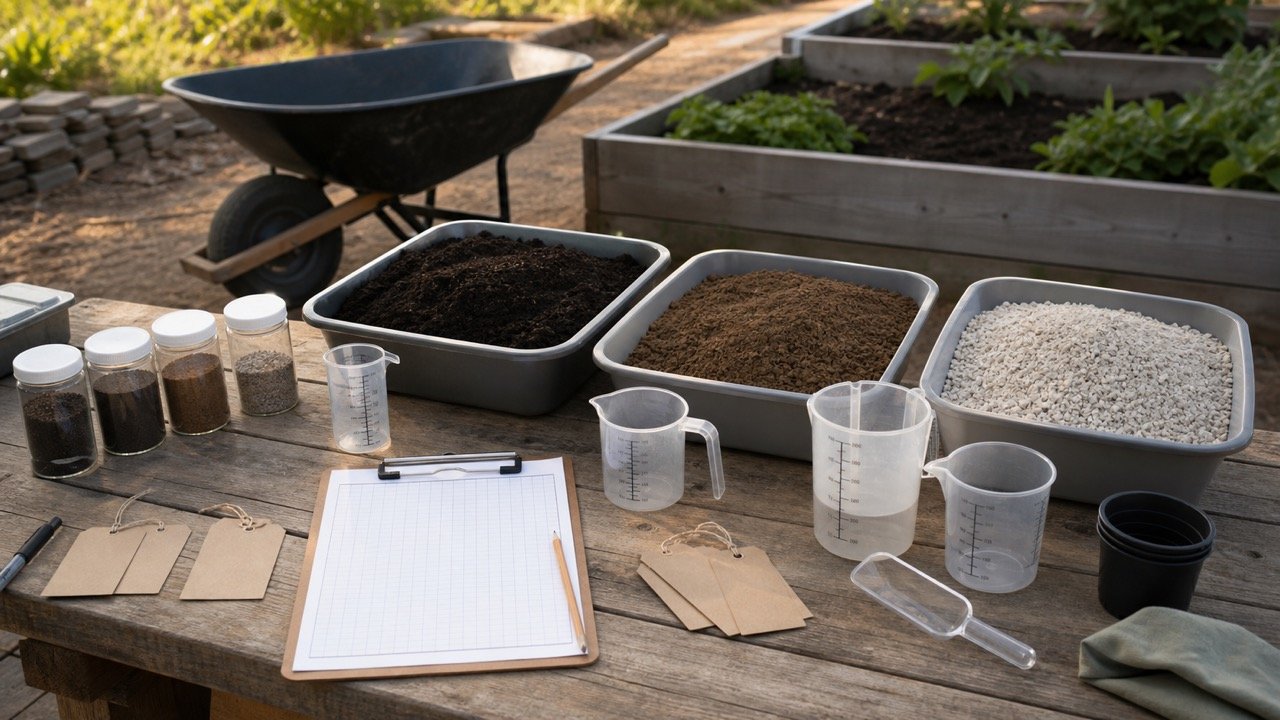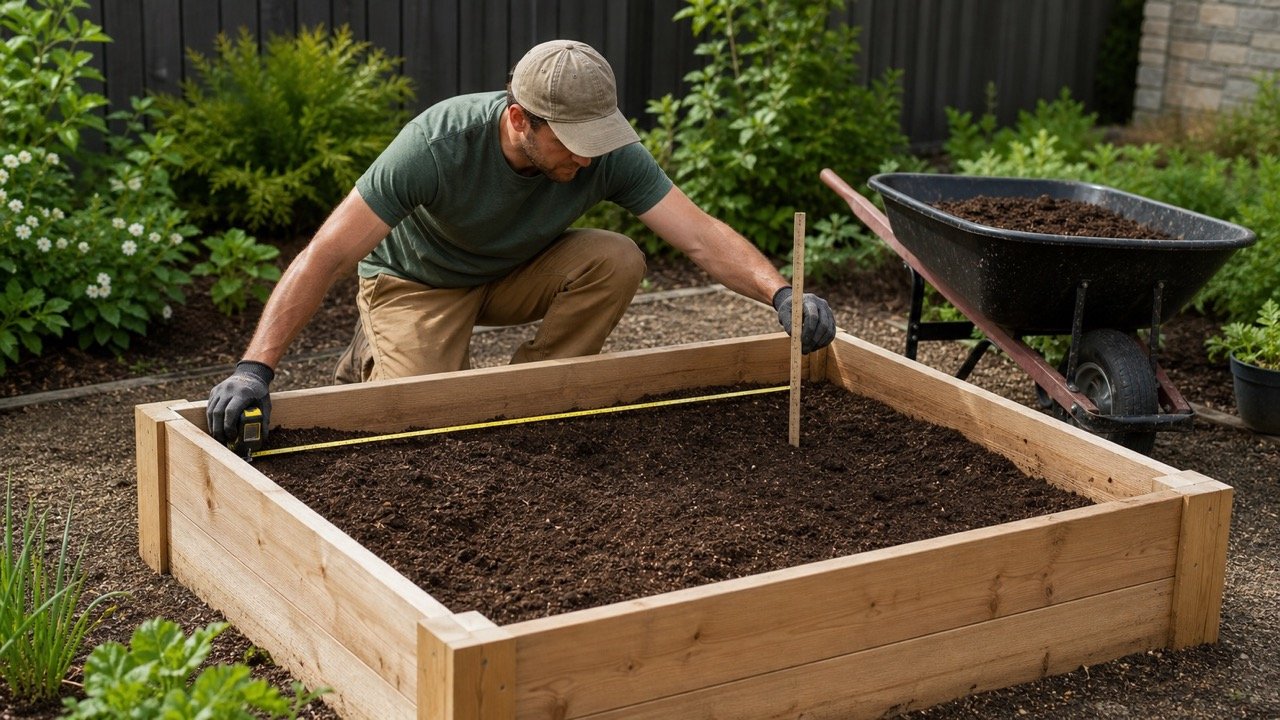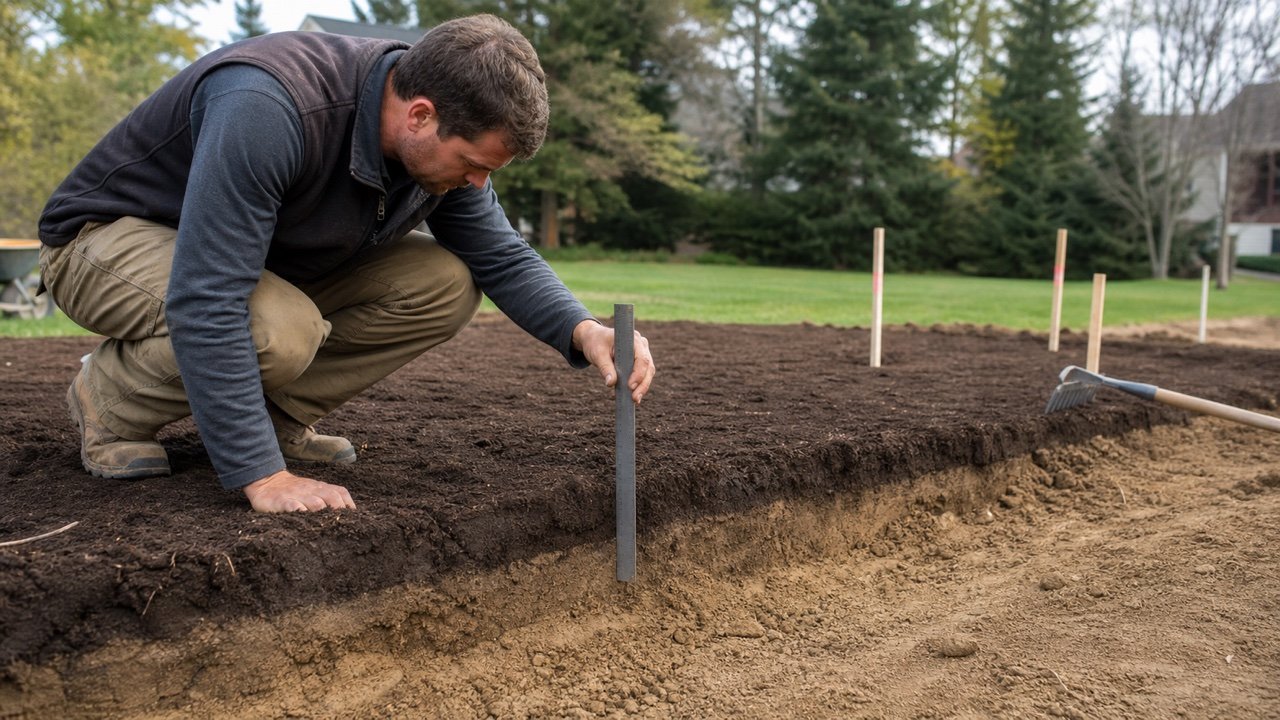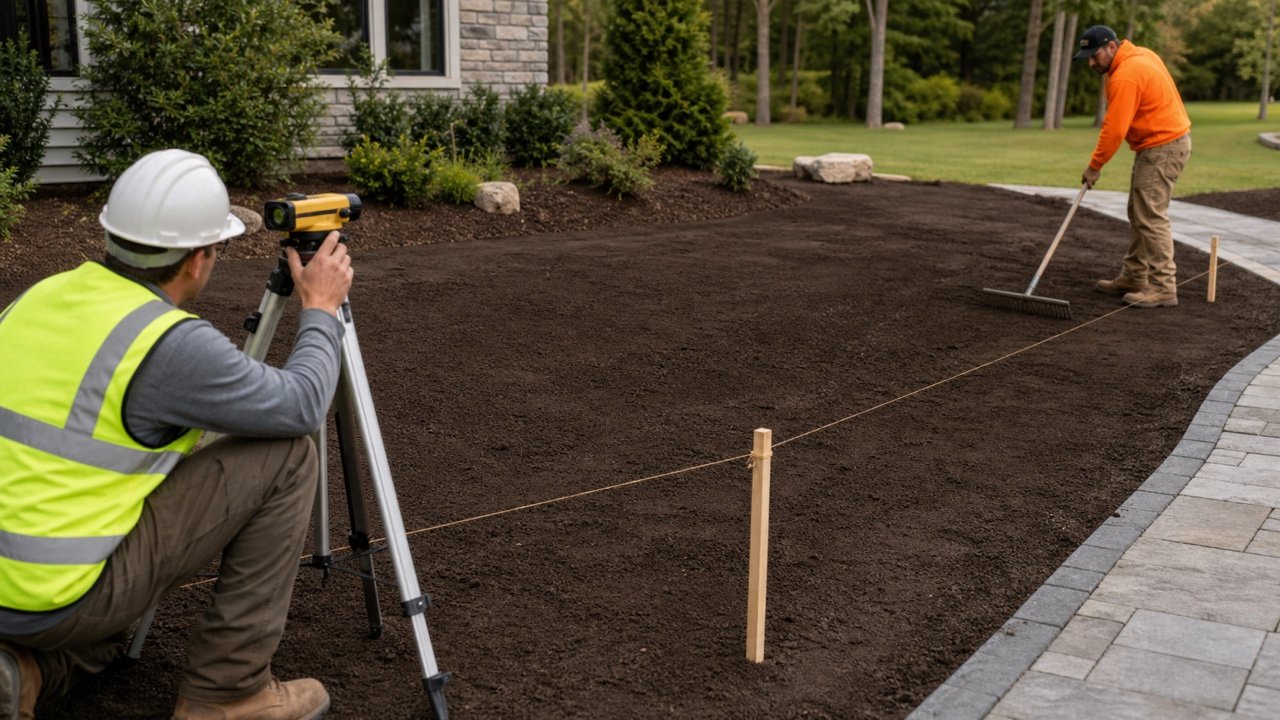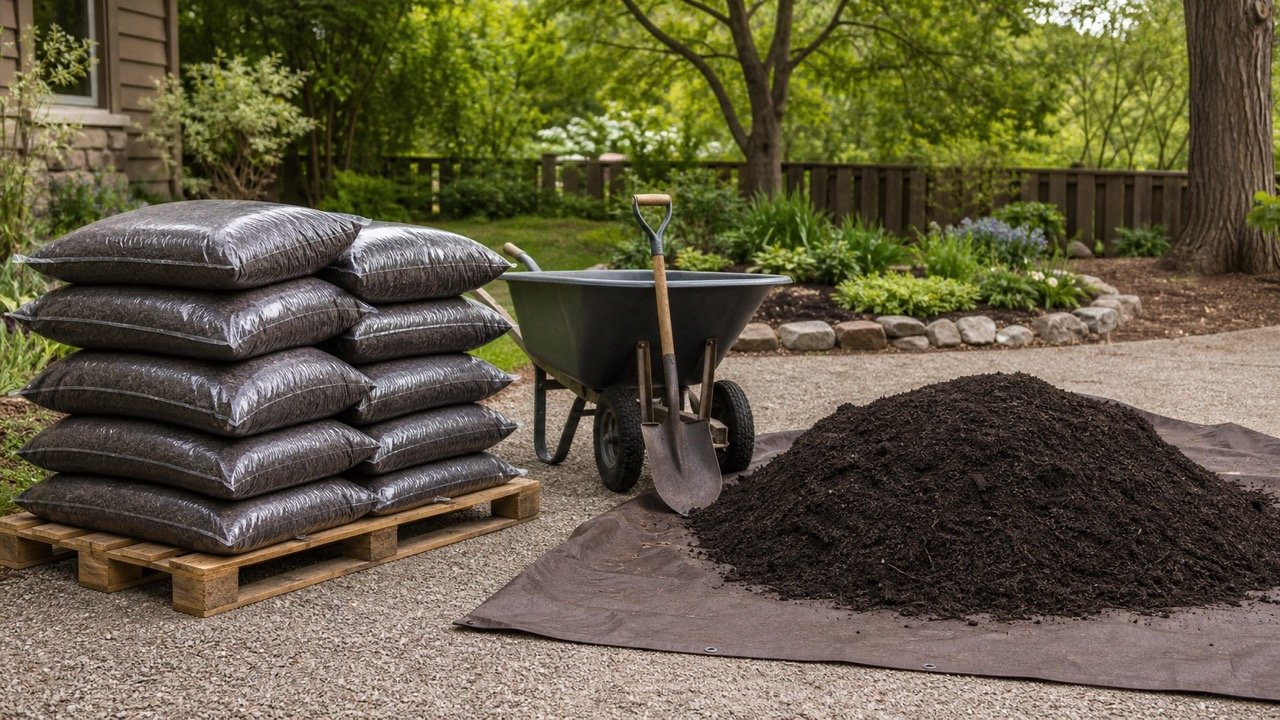
Bagged and bulk compost can serve the same measured project while arriving with different products, units, minimums, fees and handling needs. A price per bag and a price per cubic yard are not yet comparable.
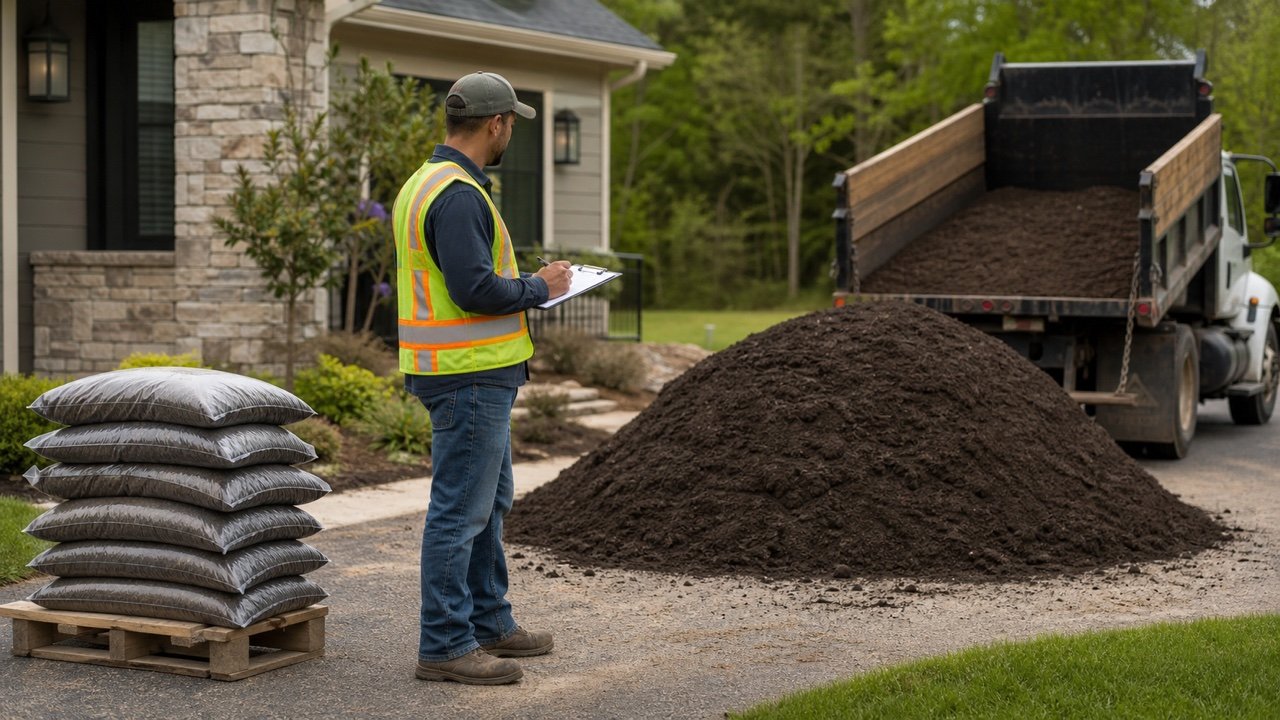
Freeze the required planning volume first. Then compare compatible compost using current written quotes, exact package net volume, bulk rounding, landed cost, usable surplus, access and receipt conditions.
Are compost bags or bulk cheaper?
Either option can have the lower landed cost. The result changes with required volume, bag size, promotions, bulk minimum, selling increment, delivery fee, pickup cost and surplus that the project can actually use.
A small order can favour bags because bulk delivery has a fixed fee or minimum. A larger compatible order can favour bulk because the fixed fee is spread over more volume.
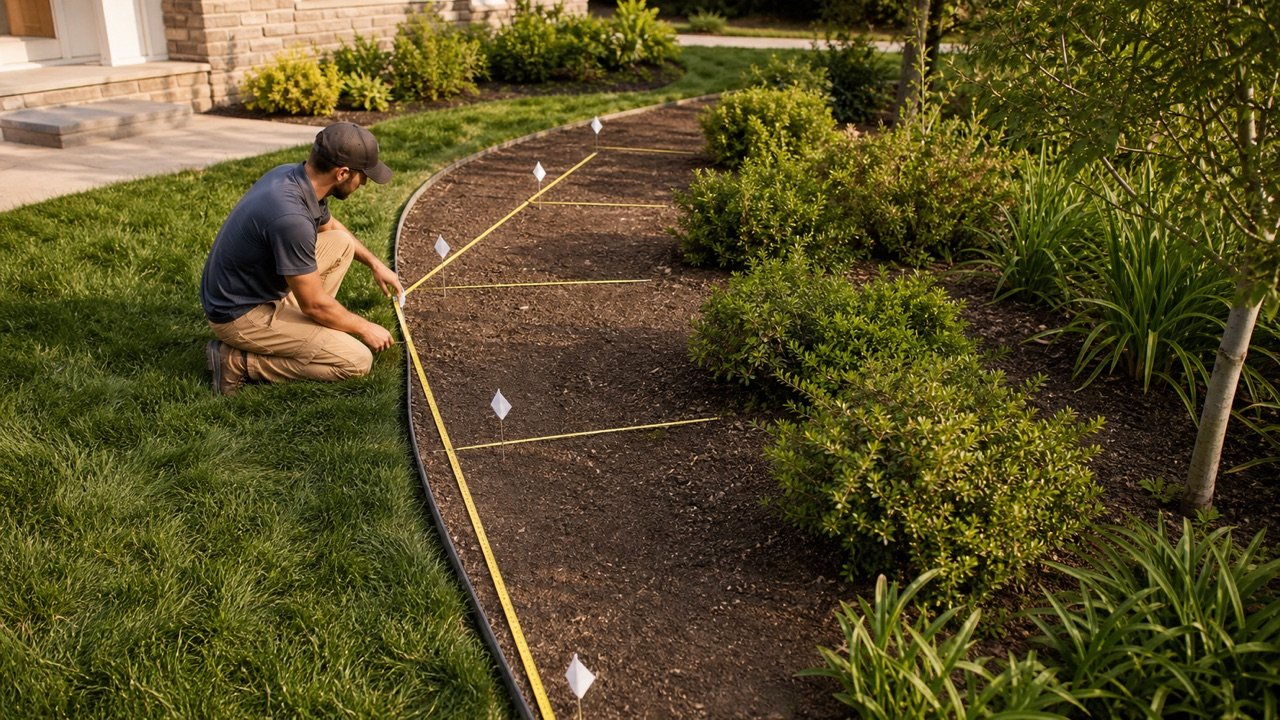
Start with the Compost Calculator to establish planning volume and whole packages from the current label. Use the Garden Bed Compost Volume guide when the complete mix zone or compost share is still unresolved.
What must match before price is compared?
Confirm that both offers satisfy the same intended use and project requirements. Similar product names can hide different feedstocks, maturity, screen, moisture, nutrients, salts, contaminants, certifications and directions.
| Check | Bagged offer | Bulk offer |
|---|---|---|
| Product identity | Brand, product, lot and package | Supplier, facility, product and stockpile |
| Feedstocks | Current label or technical data | Supplier declaration and technical data |
| Intended use | Label directions and limits | Product specification and use guidance |
| Physical condition | Maturity, screen, moisture and foreign matter | Maturity, screen, moisture and foreign matter |
| Analysis | Nutrients, pH, salts, stability and required health data | Same applicable current test fields |
| Acceptance | Project, soil and plant requirements | Same project, soil and plant requirements |
U.S. EPA procurement guidance identifies maturity, odour, texture, nutrients, pH, salt content, organic content, pathogens, metals, foreign matter, moisture and density as specification topics for compost products. Adapt the actual acceptance record to the project and jurisdiction.
The U.S. Composting Council describes STA as a testing and information-disclosure program. Its rules also state that the program does not warrant a product's quality or suitability for a particular use. Review the data rather than treating a logo as the complete decision.
What information belongs in each quote?
Record all terms on the same date and tax basis. A web price without location, product, stock and delivery terms is not a purchase quote.
| Field | Bagged compost | Bulk compost |
|---|---|---|
| Quantity unit | Net volume per current package label | Cubic yard, cubic metre, mass or another stated selling basis |
| Rounding | Whole packages, case or pallet | Minimum and order increment |
| Unit price | Price per package and promotion rules | Price per selling unit and volume tiers |
| Fixed fees | Pickup, delivery, pallet, deposit or service fees | Delivery, distance, fuel, small-load, wait, gate or service fees |
| Tax | Current quoted tax treatment | Current quoted tax treatment |
| Availability | Stock, lot, reservation and promotion dates | Source, production lot, dispatch and quote expiry |
| Receipt | Package count, damage and return terms | Ticket, quantity evidence, partial load and rejection terms |
| Site | Vehicle, unloading and dry storage | Access, overhead clearance, ground and protected dump area |
Does bag weight tell you how many bags are needed?
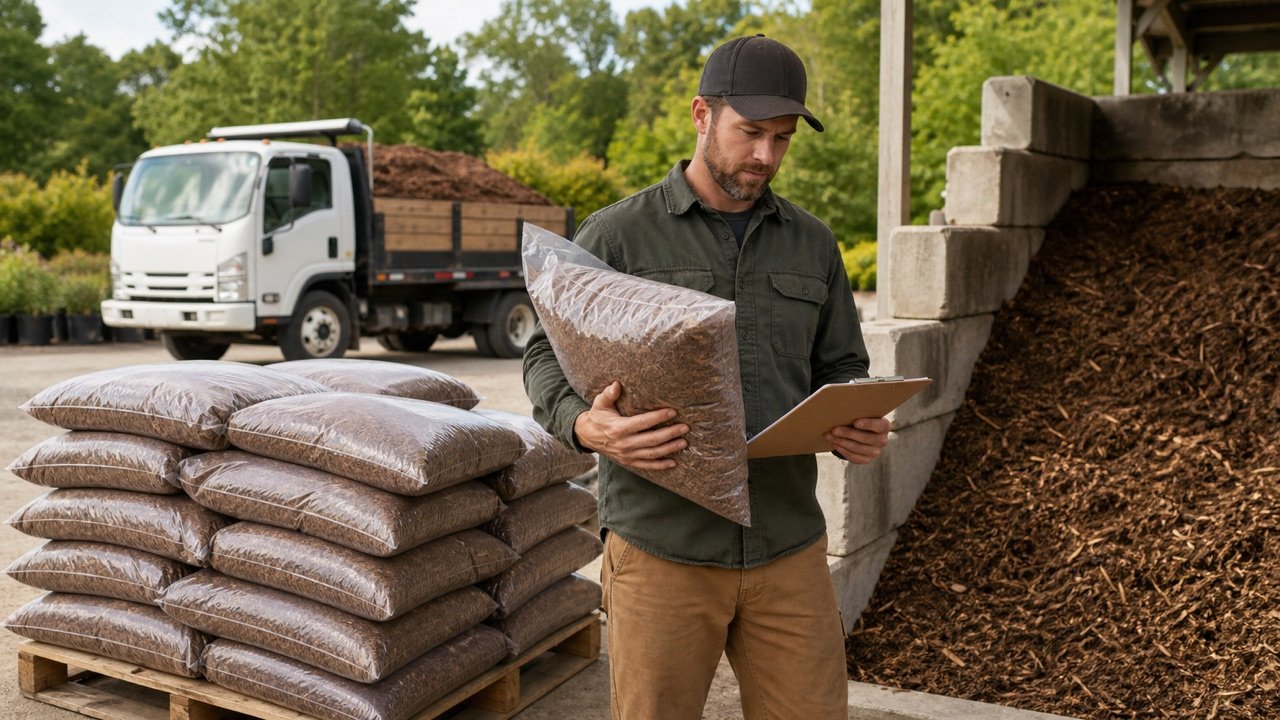
Package count for a volume estimate needs net volume per package. A 40 lb or 20 kg mass label cannot replace cubic feet or litres without a compatible product bulk density and material state.
Whole bags = ceiling(planning volume ÷ current package net volume)
Purchased bag volume = whole bags × package net volume
Oregon State University Extension notes that purchased compost bags often contain 1–2 ft³. That is an observed range, not a standard size. Read the exact current label.
NIST Handbook 133 provides official U.S. procedures for checking net-content statements on packaged goods. BuildQuantities.com does not claim to have tested a package. Record shortages or damaged bags through the retailer and applicable weights-and-measures route.
How is a bulk compost order rounded?
Apply the supplier's current minimum and increment once after the compatible planning volume is complete.
Increment-rounded quantity = ceiling(required volume ÷ increment) × increment
Bulk order = greater of supplier minimum and increment-rounded quantity
Confirm whether bulk is measured by loader bucket, truck body, scale mass converted under a stated density, certified measure or another method. A named cubic-yard order does not explain the measurement evidence by itself.
How do you compare landed cost?
Add every current fixed and variable charge that applies to each option. Divide by the required planning quantity to compare the cost of satisfying the same task.
Bag landed cost = whole bags × price per bag + applicable bag-option fees
Bulk landed cost = rounded bulk quantity × price per unit + applicable bulk fees
Effective landed cost = landed cost ÷ required planning volume
Include tax only from the current quote and governing rules. Add labour or travel time only when the buyer has an honest rate and scope. Do not borrow an online hourly value.
Worked example where bulk costs less
A hypothetical project requires 2.35 yd³, or 63.45 ft³, of compatible planning compost. All prices below are arithmetic fixtures in U.S. dollars and exclude tax.
| Field | Bags | Bulk |
|---|---|---|
| Unit | 1.5 ft³ bag | 0.5 yd³ increment |
| Unit price | $6.25 per bag | $62.00 per yd³ |
| Required purchase | ceiling(63.45 ÷ 1.5) = 43 bags | ceiling(2.35 ÷ 0.5) × 0.5 = 2.5 yd³ |
| Purchased volume | 64.5 ft³ = 2.388889 yd³ | 2.500000 yd³ |
| Fixed cost | $18.00 pickup | $78.00 delivery + $12.00 fee |
| Landed cost | 43 × 6.25 + 18 = $286.75 | 2.5 × 62 + 78 + 12 = $245.00 |
| Usable surplus | 0.038889 yd³ | 0.150000 yd³ |
| Cost per required yd³ | $122.021277 | $104.255319 |
Bulk is $41.75 lower in this fixture, before any excluded tax or labour. It also leaves more surplus, so the receiving plan must identify a compatible use or storage location for that 0.15 yd³.
Worked example where bags cost less
The same hypothetical unit prices produce the opposite result for a 0.55 yd³ requirement.
| Field | Bags | Bulk |
|---|---|---|
| Planning volume | 0.55 yd³ = 14.85 ft³ | |
| Purchase rule | 10 bags at 1.5 ft³ | 1 yd³ supplier minimum |
| Variable cost | 10 × $6.25 = $62.50 | 1 × $62.00 = $62.00 |
| Fixed cost | $8.00 pickup | $78.00 delivery + $12.00 fee |
| Landed cost | $70.50 | $152.00 |
Bags are $81.50 lower in this fixture. The bulk material price is slightly lower before fees, yet the 1 yd³ minimum and fixed charges control the final decision.
How should surplus affect the choice?
Count surplus as useful only when the exact compost has an approved destination, protected storage and suitable application timing. A lower unit price can create an unwanted pile.
| Question | Record |
|---|---|
| Can another zone use it? | Verified area, depth, soil and compost suitability |
| Can it be stored? | Covered location, runoff control, contamination protection and time limit |
| Can unopened bags be returned? | Retailer's current receipt, condition and return terms |
| Can bulk be rejected? | Inspection point, ticket, test evidence and supplier process |
| Will the product change? | Moisture, mixing, contamination and ongoing decomposition observations |
Do not apply surplus merely to make the quote seem economical. Use the source and soil evidence in the Compost Topdressing Depth guide before adding another layer.
When can bags be the better operational choice?
Bags can fit small, separated or access-limited work when the exact product and landed cost remain acceptable.
- Small quantity below a bulk minimum.
- Several beds need measured allocations.
- No safe dump area exists.
- Material must move through a narrow route or indoor space.
- Dry protected storage is available for unopened packages.
- Current return terms reduce surplus risk.
- The bagged product has the required evidence while the bulk option does not.
Plastic use, lifting, vehicle trips and disposal also matter. Record them rather than assuming every bagged job is easier.
When can bulk be the better operational choice?
Bulk can fit a larger compatible quantity when access, dump control, handling equipment and acceptance records are ready.
- The required volume clears the minimum without excessive surplus.
- The source and product data satisfy the project.
- The landed quote remains competitive after delivery and fixed fees.
- The route and receiving surface can safely handle the vehicle.
- A protected, contained dump location is ready.
- People and equipment can move the material without blocking access or mixing it with soil and debris.
- Ticket, partial-load and rejection procedures are agreed before dispatch.
Can you collect bulk compost in your own vehicle?
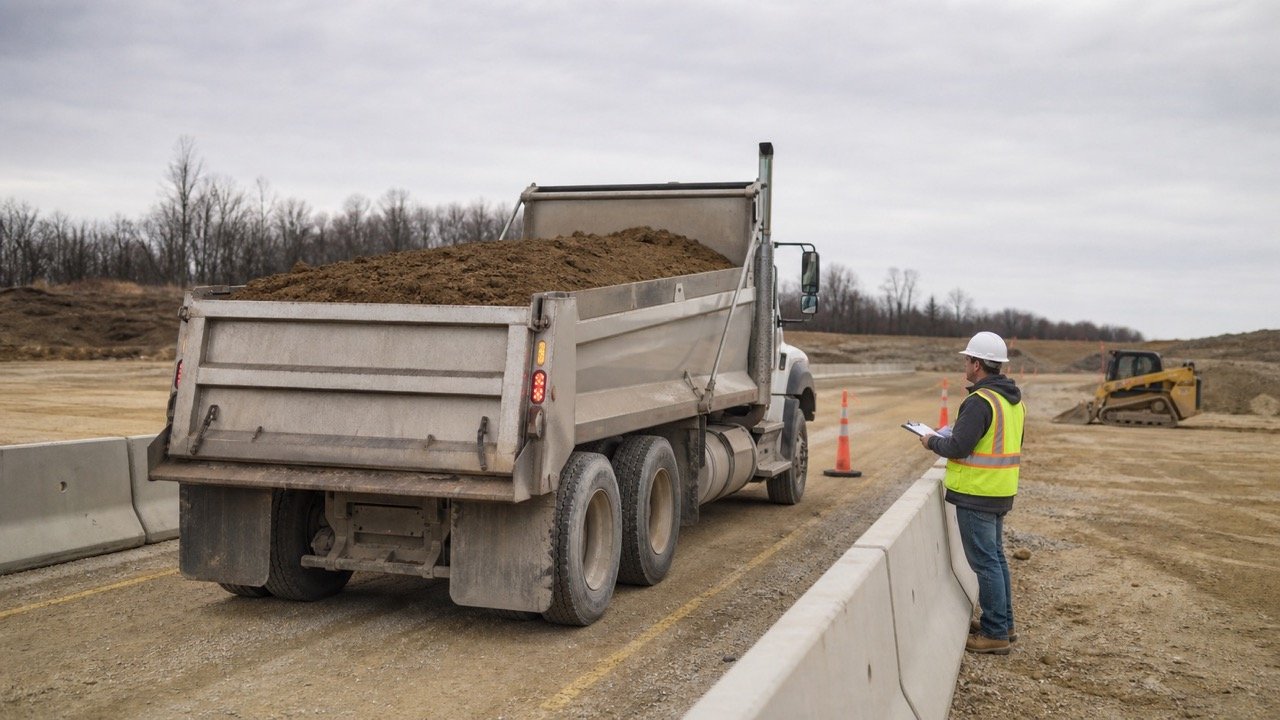
Only after the actual vehicle, trailer, occupants, equipment, material mass, axle and route limits are checked by the responsible people. Cubic volume alone cannot approve payload.
NHTSA explains that the placard on covered U.S. vehicles states a combined occupant-and-cargo capacity. Use the actual vehicle placard and manufacturer instructions, then apply all trailer, tyre, axle, registration and road requirements. A generic pounds-per-yard value cannot approve the load.
How should deliveries and damaged bags be recorded?
| Exception | Record before closing |
|---|---|
| Damaged or wet bag | Package ID, condition, accepted quantity, photograph and retailer resolution |
| Wrong bagged product or lot | Quarantine, label comparison and return or approval |
| Partial bulk load | Ticket quantity, accepted quantity, supplier confirmation and remaining balance |
| Changed bulk source | Hold, new technical data, test review and acceptance authority |
| Visible contamination | Stop unloading or isolate, photograph, sample or reject under the agreed process |
| Missing ticket | Do not infer accepted quantity; resolve the original record |
| Surplus | Measured estimate, approved use or storage, responsible person and date |
Myth versus reality
| Myth | Reality |
|---|---|
| Bulk is always cheaper | Minimums and fixed delivery fees can make bags cheaper for a small requirement. |
| Bags always cost more | Promotions, pickup access, exact package rounding and low surplus can reverse the result. |
| A 40 lb bag replaces a cubic-foot label | Mass and volume need a compatible density and material state; package count uses net volume. |
| All screened compost is equivalent | Feedstock, maturity, analysis, screen, moisture and intended use can differ. |
| A certification logo approves every use | Test disclosure supports review; project suitability still needs a responsible decision. |
| Extra compost is free value | Unusable surplus needs storage, handling or disposal and can cause over-application. |
Common compost quote mistakes
- Comparing a bag mass with a bulk volume.
- Assuming every bag contains 1 or 2 ft³.
- Using 13.5 bags per yard without rounding the actual package count.
- Comparing products before checking feedstock, analysis and intended use.
- Leaving delivery, pickup, pallet, fuel, distance or small-load fees out.
- Ignoring the supplier minimum and increment.
- Using a broad online price as a current local quote.
- Counting surplus as useful without an approved destination.
- Assuming a nominal bulk cubic yard explains how quantity is measured.
- Planning self-haul from volume alone.
- Accepting damaged bags, changed source or contaminated bulk without a record.
- Rounding the measured quantity, allowance and supplier order at several stages.
What should the final comparison contain?
- Project, location, required planning volume and calculation revision.
- Product identity, use, feedstock, analysis, certification and acceptance evidence.
- Bag net volume, whole count, purchased volume, price, fees, tax basis and quote expiry.
- Bulk selling basis, minimum, increment, rounded quantity, unit price, fees, tax basis and quote expiry.
- Required, purchased and usable-surplus volume for both options.
- Landed cost and effective cost per required unit.
- Pickup or delivery route, vehicle, access, unloading and storage plan.
- Ticket, package count, inspection and exception records.
- Chosen option, reason, prepared by, checked by and open assumptions.
Return to the Landscaping Planning hub for compost, topsoil, mulch and fill-dirt workflows that use separate products and order records.
Sources and source scope
- Oregon State University Extension, How to use compost in gardens and landscapes: illustrative package and bulk units and compost-use context.
- NIST Handbook 133, 2026 current edition: official U.S. packaged-goods net-content test procedures.
- NIST Guide to the SI, Appendix B.8: cubic-foot, cubic-yard, litre and cubic-metre conversions.
- U.S. EPA, Comprehensive Procurement Guidelines for Landscaping Products: compost specification and procurement context.
- U.S. Composting Council, STA Program Rules: testing-disclosure program and suitability-warranty boundary.
- NHTSA interpretation GF004408: U.S. vehicle capacity placard context.
Source scope: these sources support units, package-control context, product data and vehicle-label boundaries. They do not supply a current local price, standard package size, universal bulk increment, route approval or product acceptance. Obtain comparable current quotes for the exact location and project. Every price in the worked examples is hypothetical.