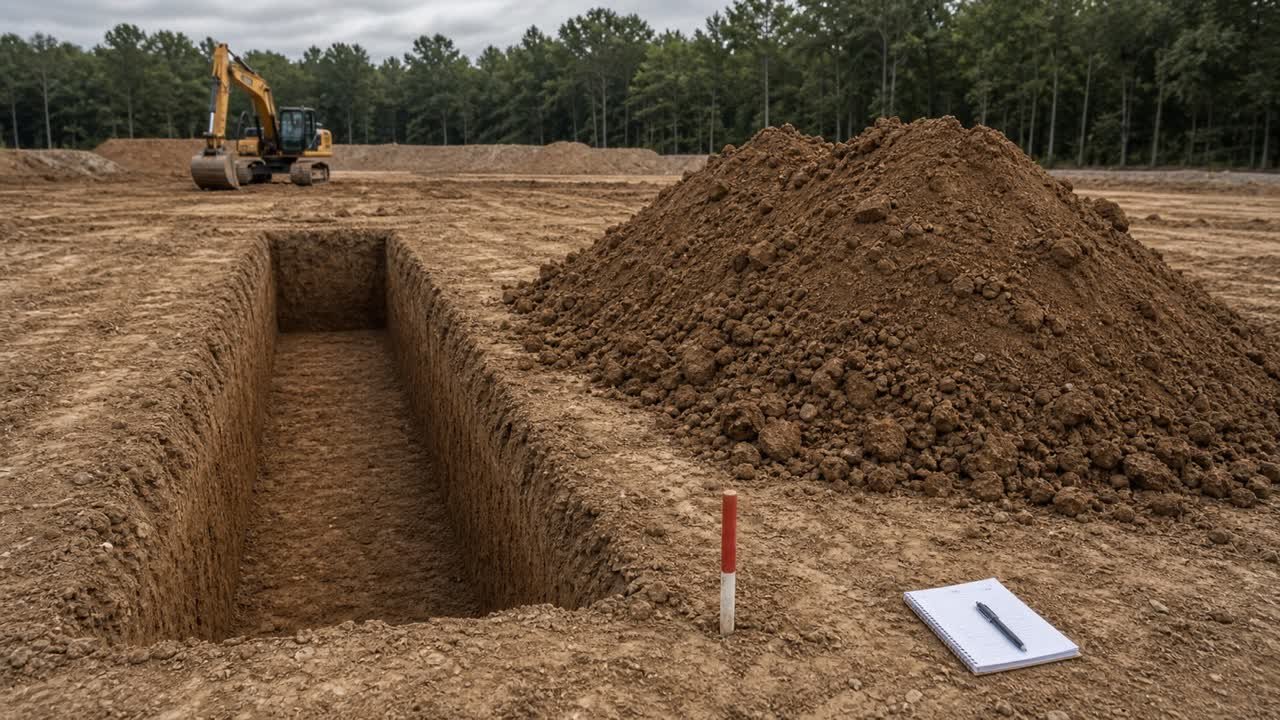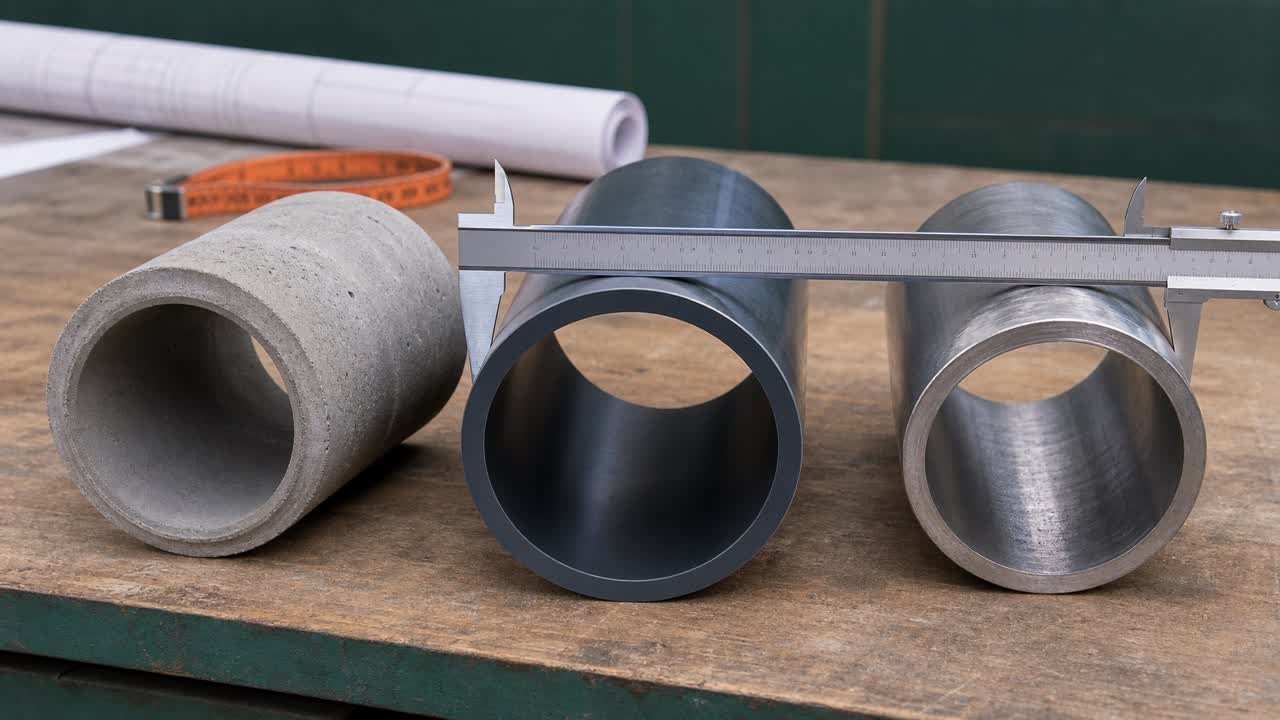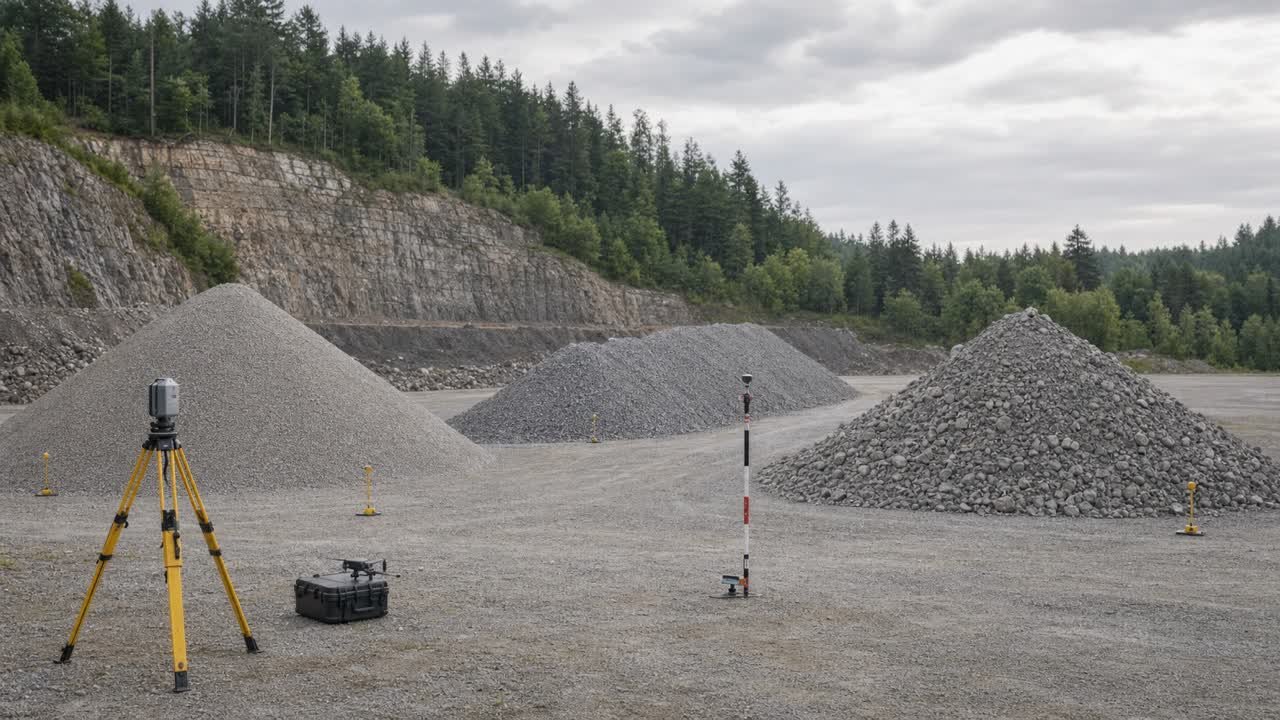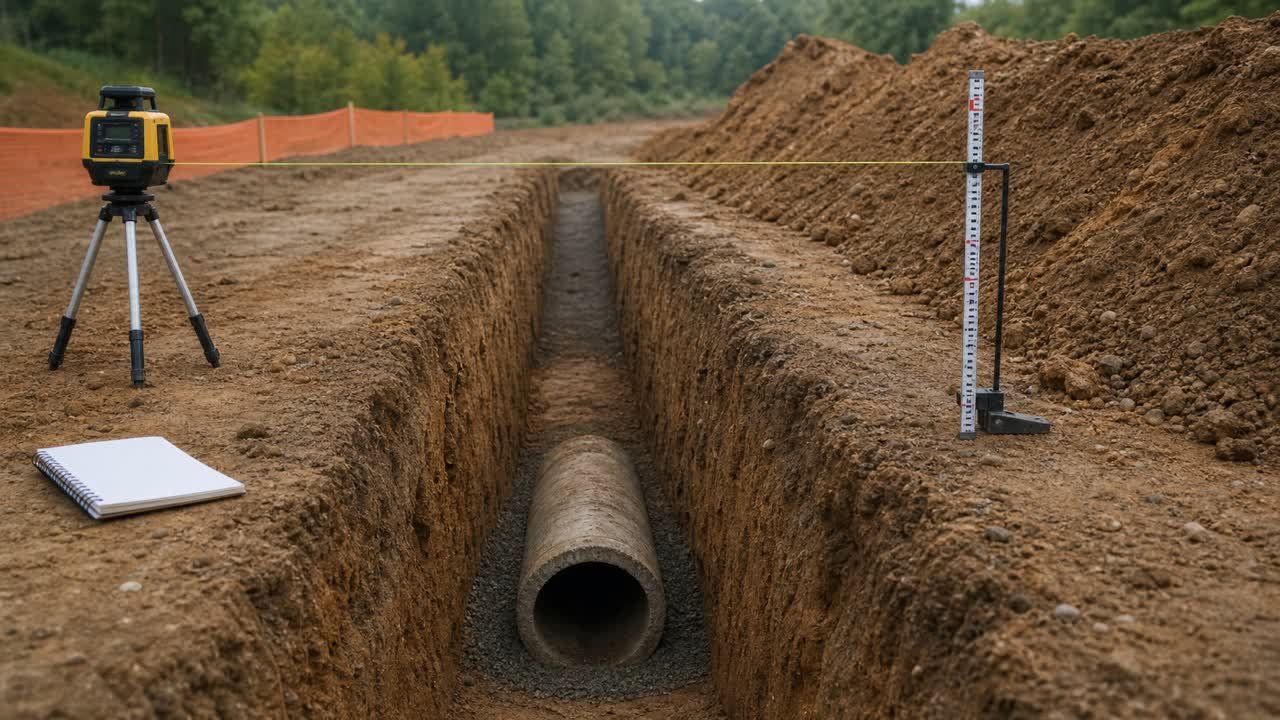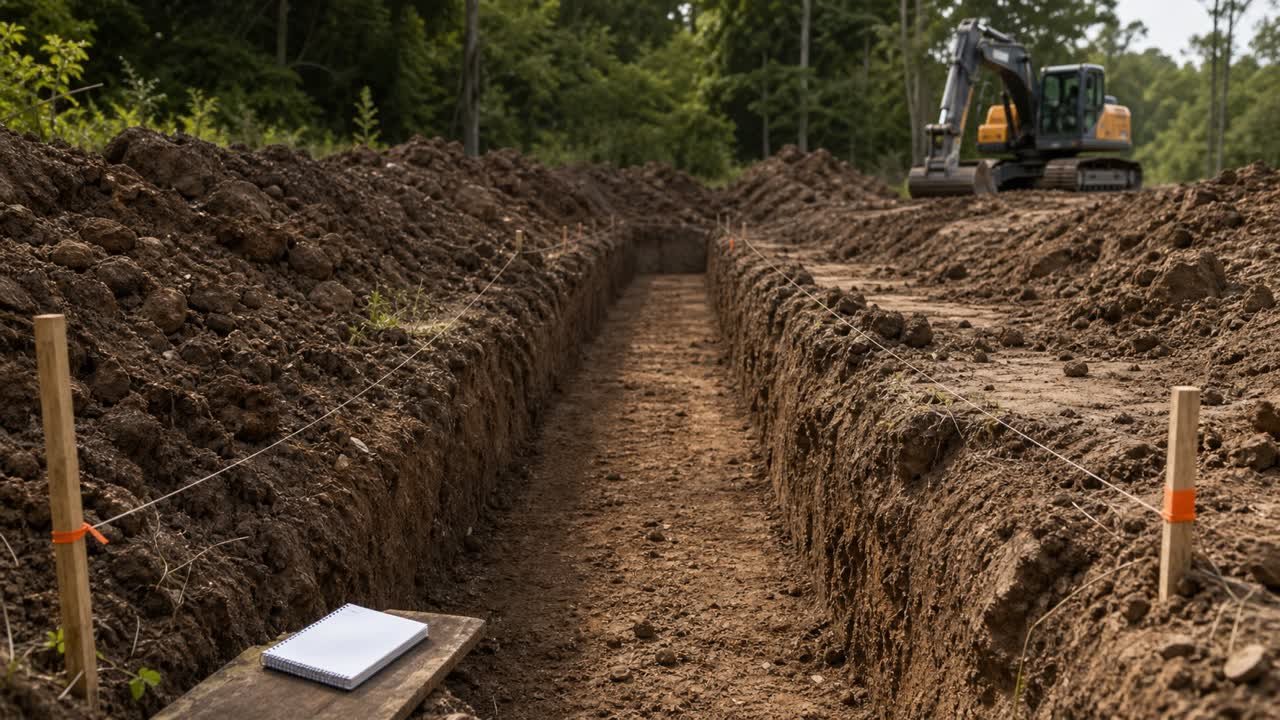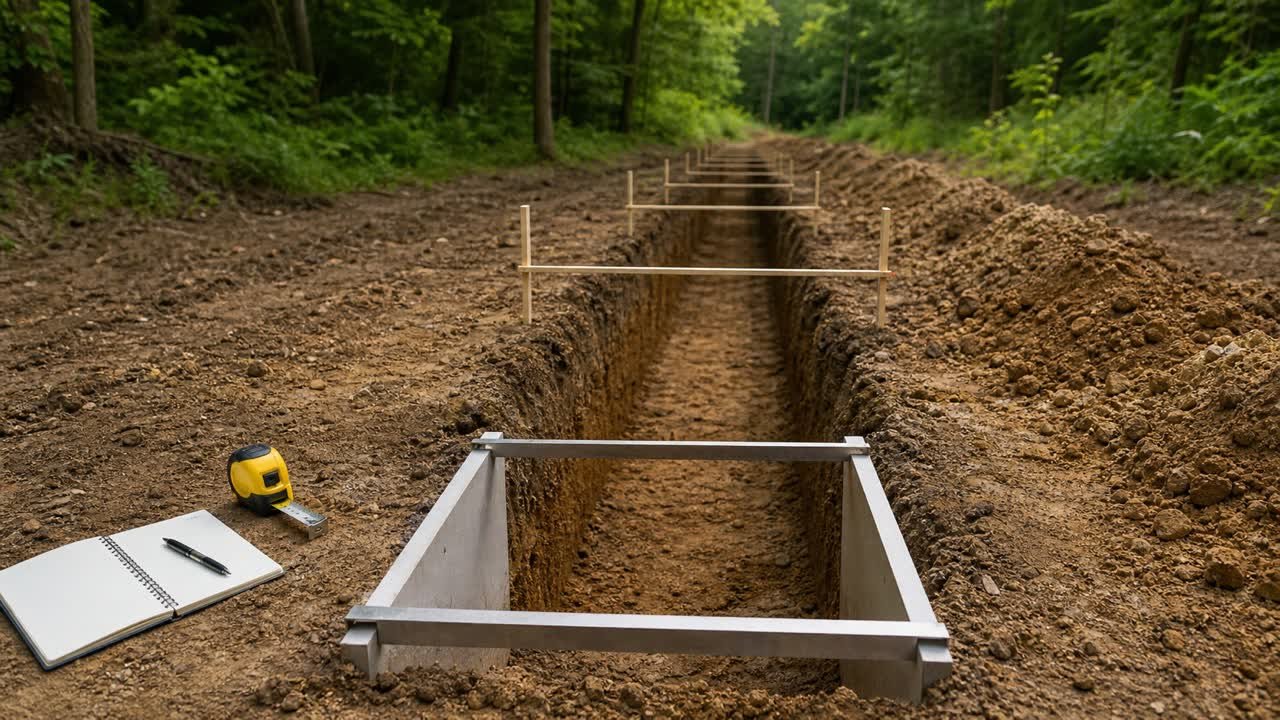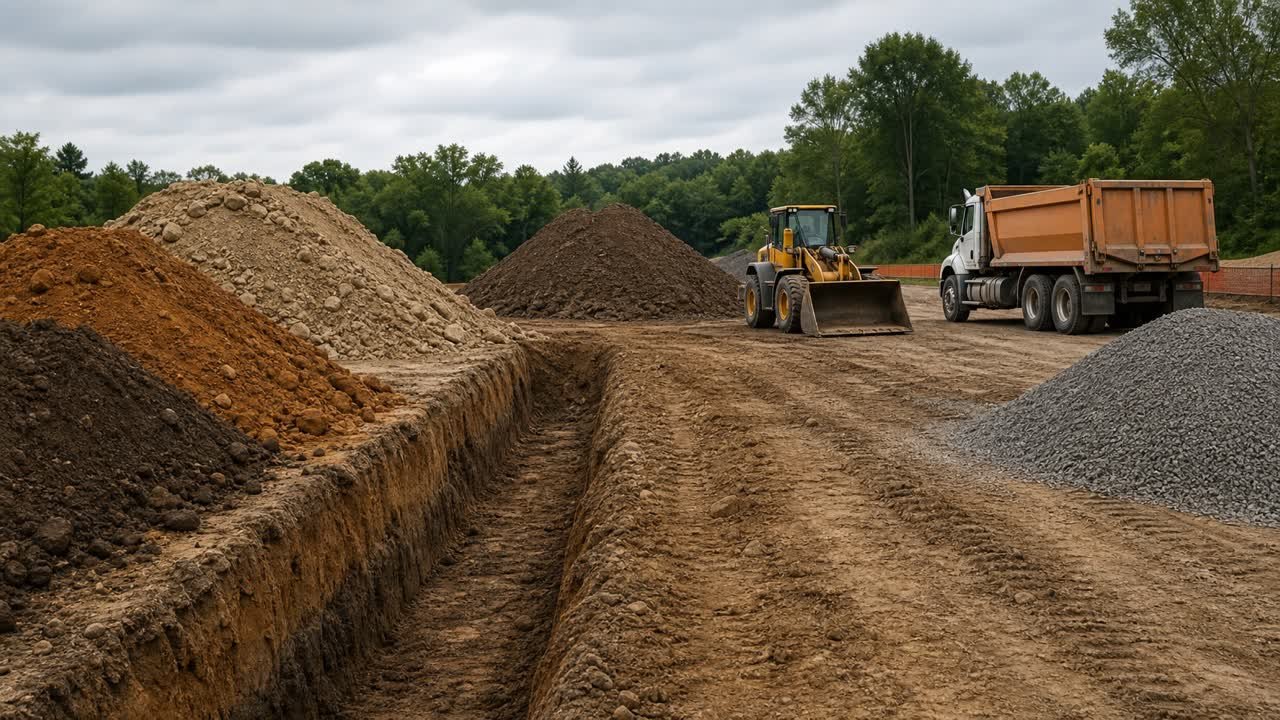
A trench can produce excavated soil while still needing imported backfill. Some excavated material may be approved for reuse, while topsoil, unsuitable material, contaminated material, rock, or excess approved soil follows a different stockpile or export path.
A useful spoil balance keeps source, suitability, and material state separate. It compares approved bank material with compacted backfill demand, then converts only the final surplus or deficit into the loose delivery or haul state.
How do you calculate a trench spoil balance?
Subtract excluded material from total bank excavation to find approved material available for reuse. Convert that approved bank volume into compacted yield capacity, then compare it with the compacted backfill demand assigned to reused material.
Approved available bank volume = total bank excavation - excluded bank volume
Approved compacted capacity = approved bank volume × bank-to-compacted yield
Compacted deficit = max(0, compacted demand - approved compacted capacity)
Loose import = compacted deficit × imported loose-to-compacted factor
Do not subtract a compacted backfill space directly from a loose spoil pile. Convert both quantities to a common state or use a documented yield equation that connects them.
Calculate the excavation boundary with the Trench Excavation Calculator. Use the trench backfill volume guide to establish the compacted or in-place space after pipe, pipe-zone material, structures, and other permanent displacement.
Which material states belong in the balance?
Label bank, loose, and compacted volumes beside every number. Each state describes the same material under a different void structure and measurement boundary.
| State | What it describes | Typical use |
|---|---|---|
| Bank volume | Material before excavation in its measured in-place position | Excavation source and bank-equivalent balance |
| Loose volume | Excavated or delivered material in a stated loose condition | Stockpile, body-volume, import, and export planning |
| Compacted volume | Accepted material after the required placement and compaction process | Finished backfill demand and installed yield |
| Mass | Material weight under a stated moisture and measurement basis | Scale tickets, payload, and supplier orders |
OSMRE earthmoving guidance keeps bank, loose, and compacted cubic quantities separate for this reason. FHWA also states that nearly all materials change volume as they move from cut to fill and that project-specific material data should control shrink and swell factors.
What information is needed before balancing spoil?
Build separate source and demand lists. A single “excavation” total cannot show whether the material is available, approved, or suitable for the intended backfill zone.
| Input | What to record | Evidence |
|---|---|---|
| Total bank excavation | Measured volume by section and material class | Drawings, survey, sections, approved changes, and takeoff |
| Excluded bank material | Material unavailable for the named reuse demand | Classification, testing, contamination status, separate pay item, or project direction |
| Approved reusable bank material | Available source accepted for a specific backfill zone | Specification, geotechnical record, inspection, tests, and approval |
| Compacted reuse demand | Net accepted space assigned to reused site material | Zone ledger, pipe displacement, structures, and restoration boundaries |
| Site-material yield | Compacted volume produced per bank unit | Project factor, trial, density reconciliation, survey, or accepted estimating basis |
| Imported-product factor | Loose delivery required per compacted unit | Product-specific trial, supplier data, project record, or accepted basis |
| Export factors | Loose volume per bank unit for each exported material class | Measured stockpile, density, haul records, or approved planning basis |
How do you build the source-and-demand ledger?
Run the calculation in a fixed order so suitability decisions do not become hidden percentages.
- Split the trench excavation by uniform section and material class.
- Keep every source quantity in bank volume until its reuse status is resolved.
- Remove topsoil, unsuitable, contaminated, oversize, segregated, or otherwise unavailable material from the approved source total.
- Assign the approved material to the exact compacted backfill zone it may serve.
- Apply a documented bank-to-compacted yield for that material and condition.
- Compare compacted capacity with compacted demand.
- Convert any compacted deficit with the imported product's own factor.
- Convert rejected material and surplus approved material to loose export on separate rows.
- Check volume-constrained and payload-constrained loads only after the loose quantities are known.
- Update the ledger with tickets, survey, tests, and accepted installed quantities during construction.
FHWA's Earthwork Representation Guidelines call for unavailable material to be subtracted from the fill balance and for project factors to match geotechnical information. A trench ledger applies that control to a smaller, clearly bounded operation.
Worked metric example with surplus material
A trench produces 120.000 m³ of bank excavation. Project records exclude 24.000 m³ from reuse in the named final-backfill zone, leaving 96.000 m³ of approved available bank material.
The approved site material has a documented bank-to-compacted yield of 0.85 compacted m³ per bank m³. The compacted backfill demand assigned to this material is 70.000 m³.
| Stage | Calculation | Result |
|---|---|---|
| Approved bank material | 120.000 - 24.000 | 96.000 m³ bank |
| Approved bank needed | 70.000 ÷ 0.85 | 82.352941 m³ bank |
| Surplus approved material | 96.000 - 82.352941 | 13.647059 m³ bank |
| Loose approved surplus | 13.647059 × 1.18 | 16.103529 m³ loose |
| Loose excluded material | 24.000 × 1.25 | 30.000000 m³ loose |
| Total loose export | 16.103529 + 30.000000 | 46.103529 m³ loose |
| Loose import | No compacted deficit | 0 m³ |
The yield check is 96.000 × 0.85 = 81.600 m³ of compacted capacity. After 70.000 m³ is used, 11.600 m³ of compacted capacity remains. Dividing 11.600 by 0.85 returns the same 13.647059 m³ bank surplus.
The 0.85, 1.18, and 1.25 factors are calculation fixtures. They are not recommended values for a material or project.
Can a trench need both import and export?
Yes. Excluded excavated material may leave the site while an approved aggregate, selected fill, flowable fill, or other specified product enters to serve a different zone or requirement.
A second metric fixture has 80.000 m³ of bank excavation, including 20.000 m³ excluded from reuse. The remaining 60.000 m³ of approved bank material yields 0.88 compacted m³ per bank m³. Compacted reused-backfill demand is 68.000 m³.
| Stage | Calculation | Result |
|---|---|---|
| Approved bank material | 80.000 - 20.000 | 60.000 m³ bank |
| Approved compacted capacity | 60.000 × 0.88 | 52.800 m³ compacted |
| Compacted deficit | 68.000 - 52.800 | 15.200 m³ compacted |
| Loose import | 15.200 × 1.20 | 18.240 m³ loose |
| Loose excluded export | 20.000 × 1.25 | 25.000 m³ loose |
The imported loose-to-compacted factor belongs to the imported product. The excluded excavation uses a separate loose-to-bank factor. Treating them as one material would hide why both truck directions are required.
Worked cubic-yard example
An imperial project records 200.000 yd³ bank excavation. Of this, 40.000 yd³ is excluded from the named reused-backfill demand. The remaining 160.000 yd³ has a documented 0.90 bank-to-compacted yield.
- Approved compacted capacity: 160.000 × 0.90 = 144.000 yd³ compacted.
- Compacted demand: 150.000 yd³.
- Compacted deficit: 150.000 - 144.000 = 6.000 yd³.
- Imported loose-to-compacted factor: 1.15.
- Loose import: 6.000 × 1.15 = 6.900 yd³ loose.
- Excluded-material loose-to-bank factor: 1.20.
- Loose export: 40.000 × 1.20 = 48.000 yd³ loose.
Keep the cubic-yard state beside each result. A bank cubic yard, loose cubic yard, and compacted cubic yard are not interchangeable purchase or truck quantities.
Where should the conversion factors come from?
Use project-specific geotechnical information, measured field yield, matched density records, accepted trials, or another documented basis approved for the estimate. Record the factor equation and direction.
Bank-to-compacted yield = accepted compacted volume ÷ represented bank source volume
Loose-to-bank factor = measured loose volume ÷ represented bank volume
Imported loose-to-compacted factor = loose delivered volume ÷ accepted compacted volume
FHWA notes that material factors vary with the material and construction conditions. Moisture, source, particle-size distribution, rock content, excavation method, handling, lift thickness, compactive effort, and acceptance method can change the observed result.
The bank versus loose volume guide explains factor direction and field checks in more detail.
How should mixed material classes be handled?
Use one ledger row per material class and approval status. Soil, rock, topsoil, wet material, organics, contaminated material, oversize particles, and imported products can have different reuse decisions and conversion factors.
| Class | Bank source | Reuse status | Conversion path |
|---|---|---|---|
| Approved native soil | Measured trench sections | Accepted for named final-backfill zone | Bank to compacted yield |
| Topsoil | Separate stripping limit | Stockpile or reuse under landscape requirement | Separate bank, loose, and placement records |
| Unsuitable or oversize material | Inspection and station record | Excluded from named backfill demand | Bank to loose export factor |
| Rock | Separate measured class | Project-specific reuse or disposal decision | Rock-specific bank, loose, and fill factors |
| Imported selected product | Supplier or borrow source | Approved for named deficit or pipe zone | Loose delivery to compacted yield |
Do not average unlike factors solely to make the spreadsheet shorter. Separate rows make changes traceable when tests or actual conditions reclassify a section.
How do pipe-zone materials affect surplus spoil?
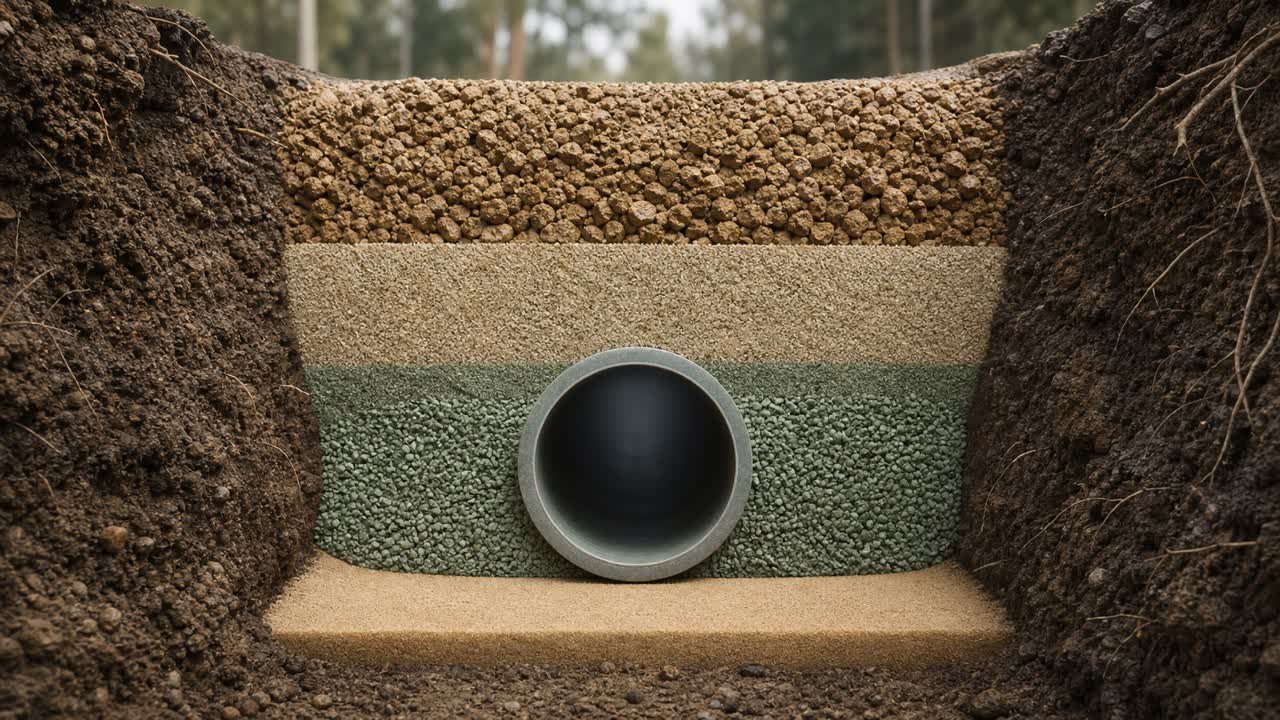
Imported bedding, embedment, concrete encasement, pipe displacement, and structures occupy trench space that excavated native material cannot refill. Their installed net volumes reduce the compacted demand assigned to reusable native soil.
First close the trench zone ledger. Then carry only the compacted space assigned to reused soil into the spoil balance. Subtracting imported pipe-zone material again at the export stage would double count it.
The pipe-zone guide identifies the material zones. The backfill deduction guide shows the gross and net volume check.
Is stockpiled material already an export?
No. A temporary stockpile is an intermediate location and material state. Export requires a confirmed movement outside the stated project balance boundary or to the defined destination.
Record stockpile opening volume, additions, removals, state, survey method, material class, weather or moisture condition, and closing volume. A stockpile survey can check loose volume, while scale tickets check mass. Neither automatically proves the original bank volume without a supported conversion.
Keep on-site transfer, temporary stockpile, approved reuse, off-site transfer, and final disposal or recovery as separate events.
How do you close a temporary stockpile balance?
Compare the measured closing loose volume with the opening loose volume plus recorded additions minus recorded removals. Keep every quantity in the same loose state, material class, survey base, and reporting period.
Expected closing loose volume = opening loose volume + loose additions - loose removals ± documented adjustments
Survey variance = measured closing loose volume - expected closing loose volume
| Ledger line | Calculation | Result |
|---|---|---|
| Opening stockpile | Measured opening survey | 42.0 m³ loose |
| Additions | Recorded incoming loose volume | 31.5 m³ loose |
| Removals | Recorded outgoing loose volume | 18.0 m³ loose |
| Expected closing volume | 42.0 + 31.5 - 18.0 | 55.5 m³ loose |
| Measured closing volume | Closing survey | 54.8 m³ loose |
| Survey variance | 54.8 - 55.5 | -0.7 m³ loose |
Investigate the 0.7 m³ difference before changing a conversion factor. Check the survey base, stockpile limits, mixed material, compaction from handling, moisture condition, ticket timing, unrecorded movement, and measurement precision. A loose-volume variance does not prove an equal bank-volume loss.
Use the stockpile volume and survey guide to choose a shape method, preserve the base surface, and record repeat-survey limits.
How should imported fill be calculated?
Calculate the remaining compacted deficit first. Then use the imported product's own documented conversion and supplier selling unit.
Loose import basis = compacted deficit × imported loose-to-compacted factor
When the supplier sells by mass, convert the supported loose order volume with a matching loose bulk density, or use another supplier-supported mass-yield method. Apply handling allowance and commercial rounding after the base state conversion.
The trench order-quantity guide covers density, package yield, supplier increments, and load checks.
How should loose export and truckloads be planned?
Convert every exported material class to a supported loose volume or measured mass. Add unrounded rows only after each class has its own factor.
Total loose export = Σ (bank export by class × matching loose-to-bank factor)
Calculate loads by both body volume and usable legal payload. Use the larger result and confirm the actual vehicle, material, route, access, permits, loading method, and jurisdiction.
Loads by volume = round up (loose export volume ÷ usable body volume)
Loads by payload = round up (export mass ÷ usable legal payload)
A nominal truck capacity is not a universal load value. Dense or wet material can reach payload before the body is full.
How do you reconcile the estimate during construction?
Update the ledger by section and date. Compare measured excavation, accepted reuse, imports, exports, stockpiles, and finished backfill without deleting the original estimate.
| Record | What it checks |
|---|---|
| Pre-excavation and as-excavated survey | Bank excavation boundary and approved overbreak |
| Material classification and test record | Reuse approval and changing material classes |
| Stockpile survey | Loose volume by material and date |
| Import delivery ticket | Product, source, mass or volume, and received quantity |
| Export ticket or destination record | Material, quantity, vehicle, date, and receiver |
| Backfill survey and test record | Installed compacted geometry and acceptance |
| Daily section ledger | Opening stock, excavation, reuse, import, export, and closing stock |
Investigate a mismatch before changing a factor. Survey limits, unrecorded overbreak, moisture, mixed stockpiles, rejected loads, diverted material, ticket units, and unfinished sections can all change the apparent balance.
Common trench spoil-balance mistakes
- Subtracting compacted backfill directly from bank excavation.
- Treating every excavated cubic unit as approved for reuse.
- Using one factor for soil, rock, topsoil, wet material, and imported aggregate.
- Applying the site-material yield to a different imported product.
- Calling a temporary stockpile an export.
- Assuming a project cannot have import and export at the same time.
- Counting pipe-zone aggregate or pipe displacement twice.
- Combining bank, loose, compacted, and mass quantities in one unlabeled column.
- Rounding each section before the material-class totals are calculated.
- Using a generic truck body volume without a payload check.
- Treating a volume balance as proof that material is legally reusable, transportable, or acceptable.
- Changing a factor to force the estimate to match tickets without investigating boundaries and material state.
What should the final spoil ledger contain?
- Project, route, trench section, station limits, date, drawing, and revision.
- Bank excavation by material class and source boundary.
- Excluded quantities with reason, evidence, and destination status.
- Approved reusable bank material by named backfill zone.
- Compacted demand after permanent displacement and imported zones.
- Every factor equation, direction, source, date, and applicable condition.
- Approved compacted capacity, compacted deficit, and bank-equivalent surplus.
- Loose import and export by material class.
- Supplier order, vehicle, payload, route, and commercial rounding records.
- Stockpile opening and closing balances.
- Tickets, survey, tests, acceptance, and unresolved discrepancies.
- Preparer, checker, review status, and corrections route.
Safety, legal, and project limits
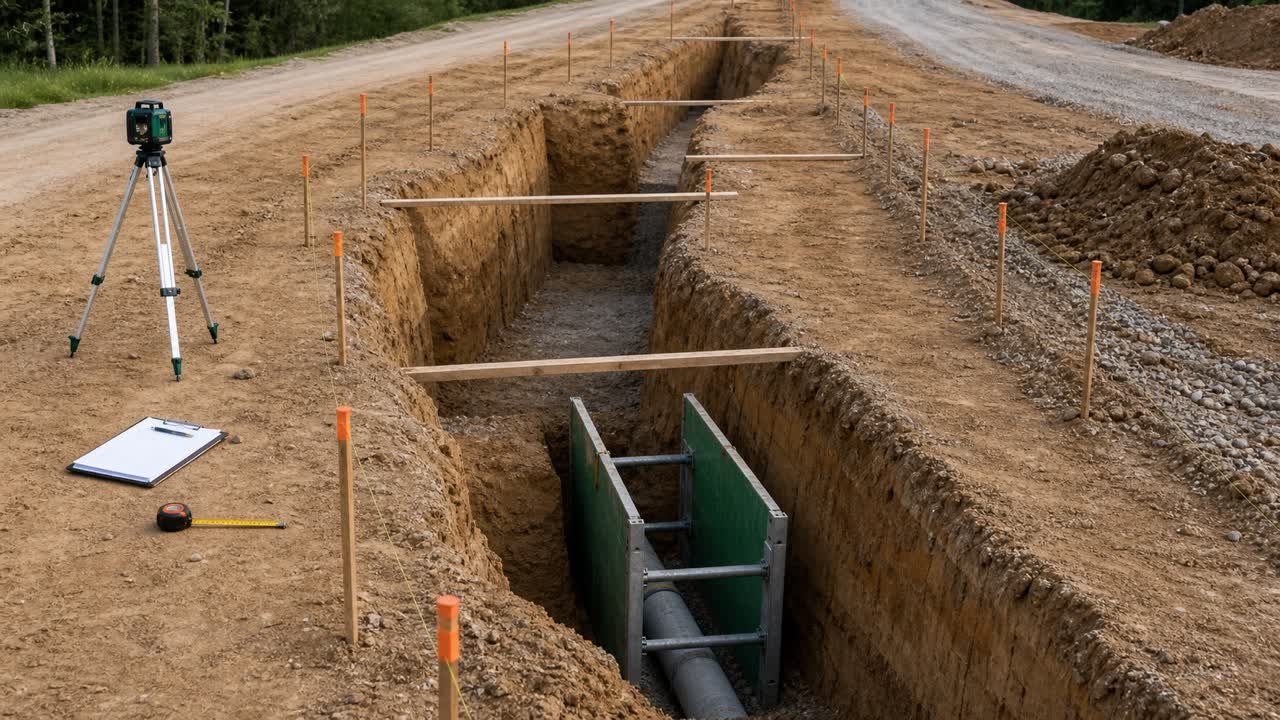
Use approved surveys, records, and safe observation methods. Do not enter an unprotected trench or work beneath loading equipment to measure a quantity.
OSHA's United States trenching guidance addresses cave-ins, access, inspections, water, atmospheres, underground installations, falling loads, and spoil or equipment placement near excavations. The quantity ledger does not approve protective systems, stockpile positions, loading zones, haul routes, or traffic control.
Material suitability, waste status, reuse, transport, destination authorization, testing, permits, environmental controls, and acceptance depend on the project and jurisdiction. A positive spreadsheet balance does not authorize reuse or disposal.
Sources and source scope
- FHWA Federal Lands, Earthwork Design: bank-to-fill state changes, project-factor context, balance, borrow, disposal, and haul planning.
- FHWA Central Federal Lands, Earthwork Representation Guidelines: cumulative excess or deficit, unavailable material, geotechnical factors, assumptions, and mass-haul records.
- OSMRE Technical Reference 1, Appendix A: bank, loose, and compacted volume-state terminology and conversion context.
- NIST Guide to the SI, Appendix B.8: exact foot, yard, and metre conversion relationships.
- OSHA Trenching and Excavation: United States excavation hazard and work-control context.
Scope: these sources support the material-state, balance, documentation, unit, and safety principles. The approved project documents, geotechnical evidence, testing, survey, contract, supplier information, applicable law, and responsible people control material suitability, factors, reuse, transport, disposal, construction, and acceptance.
Review responsibility: Saleem Sial owns the published calculation, source, and editorial checks. Waseem Sial, External Reviewer and Engineer, remains listed for ongoing external review; no completed external-review date is claimed.
Return to the Earthwork and Drainage hub or calculate changing excavation sections in the trench measurement guide.