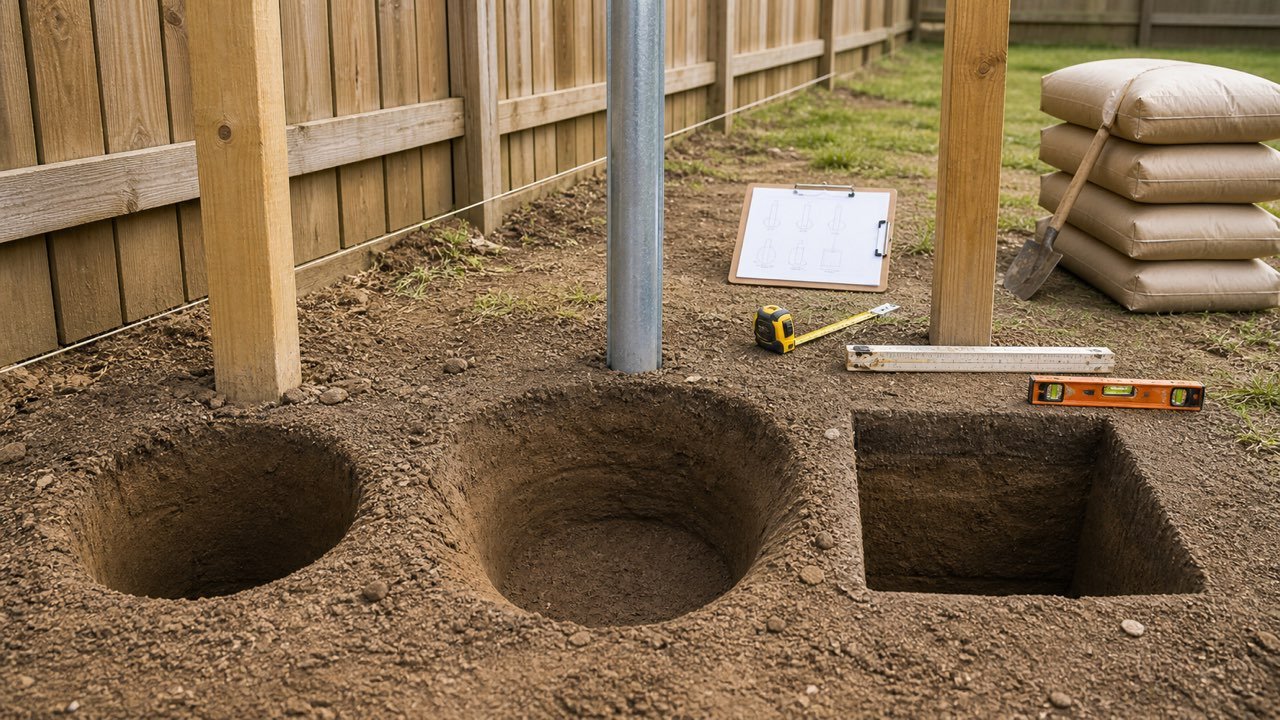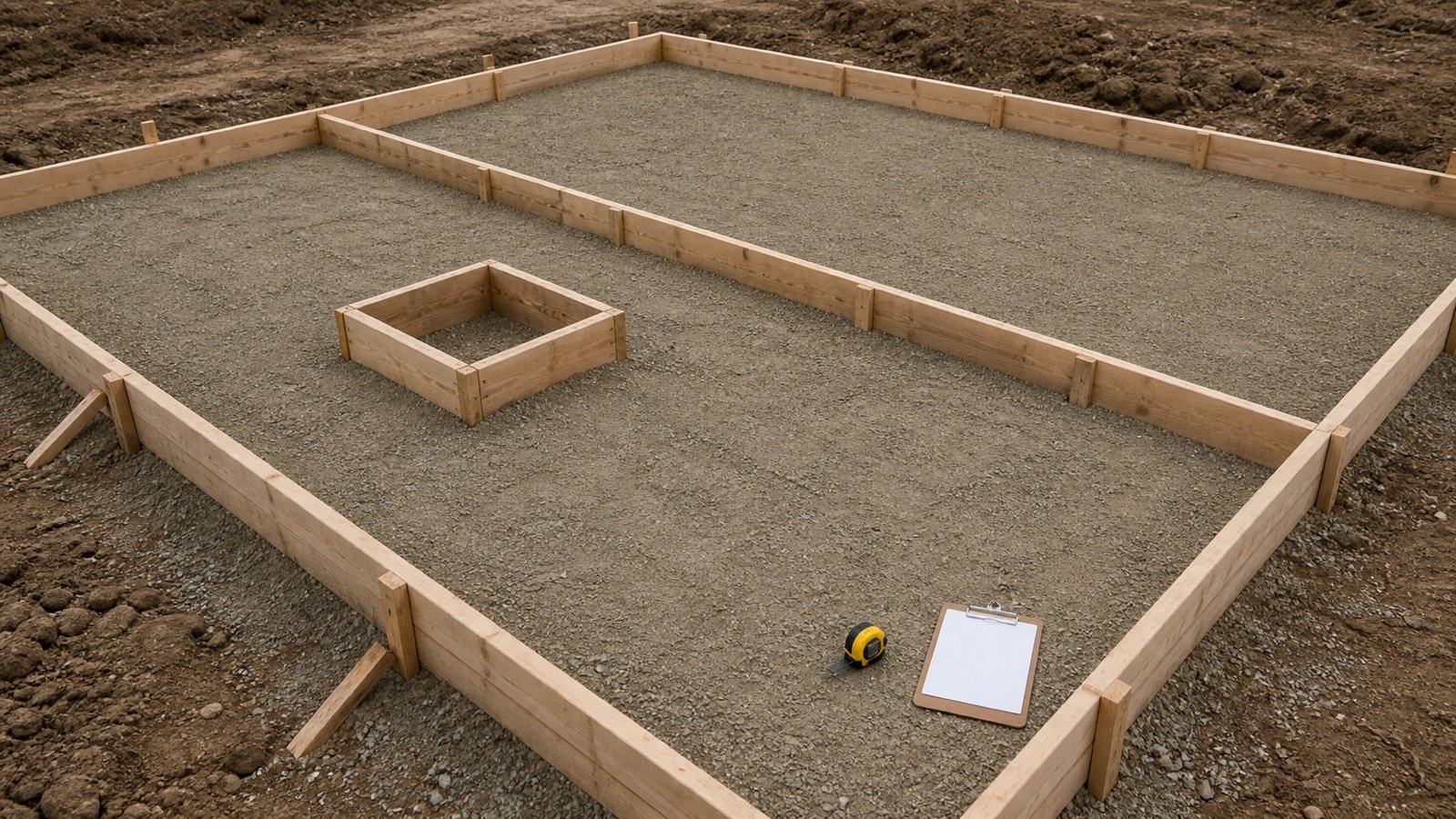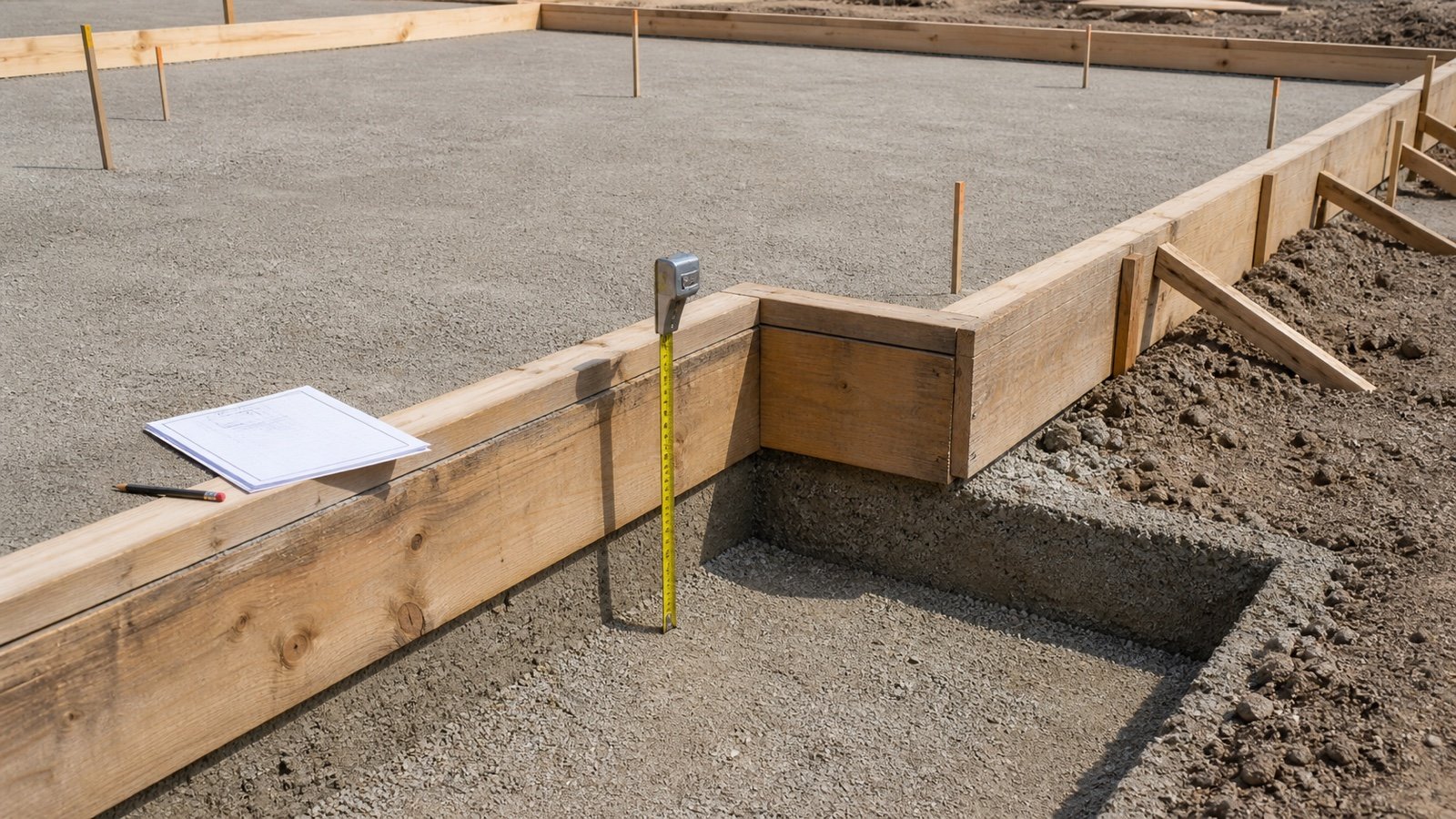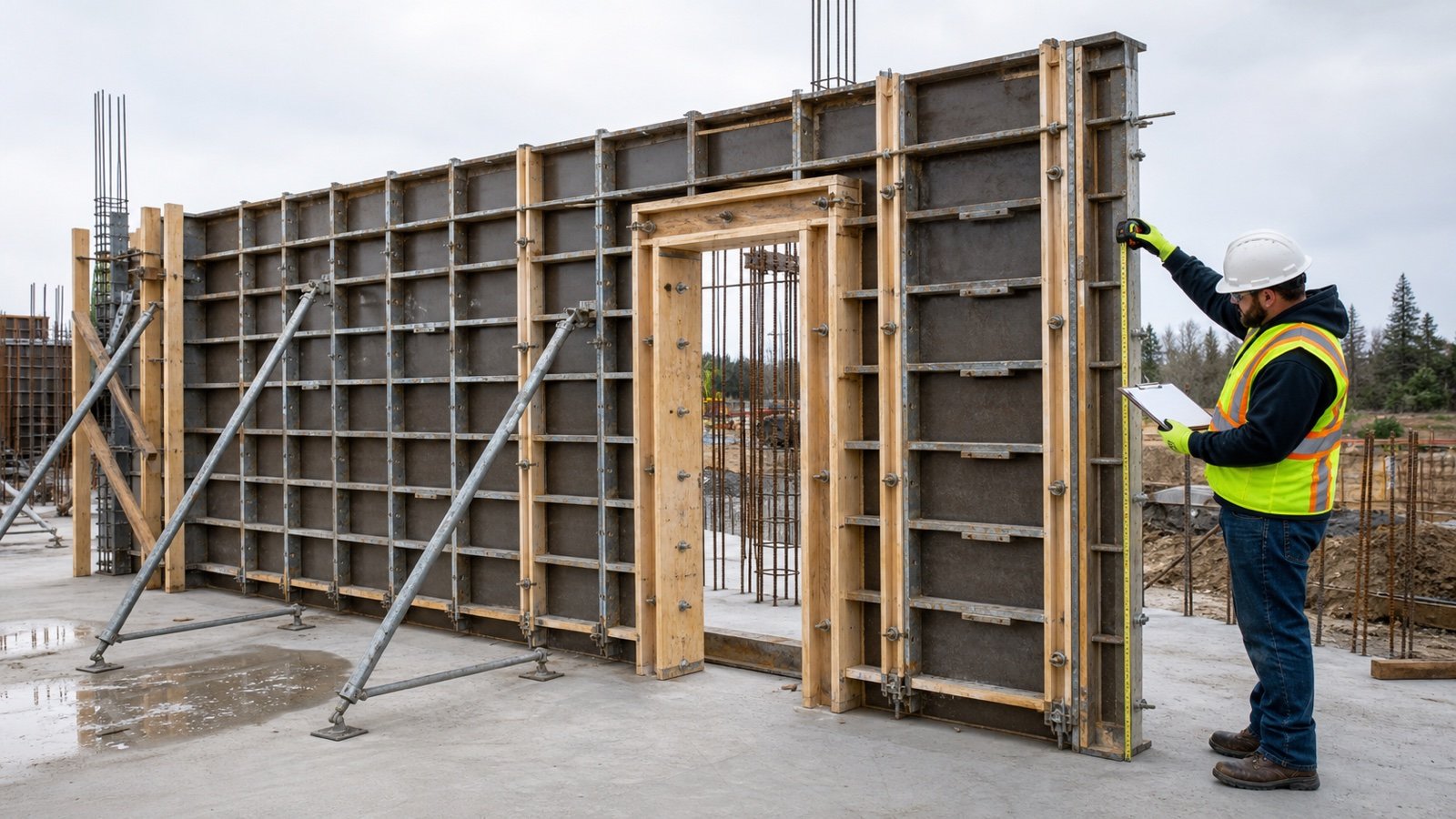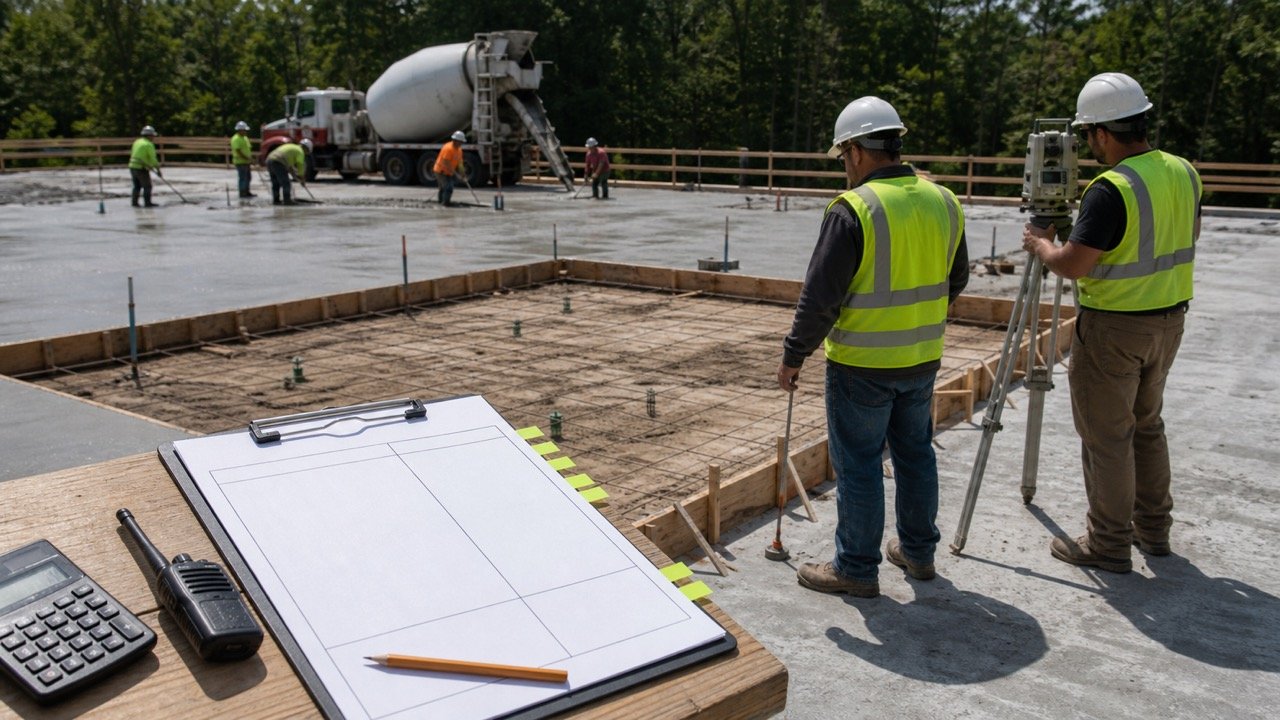
A ready-mix quantity can change while concrete is being placed. Deeper subgrade, form movement, revised limits, rejected material or a changed load plan can alter the amount still needed.
Preserve the original takeoff and order. Create a dated revision from checked unfinished geometry, then subtract only the future supply that the producer confirms remains usable and assigned to the placement.
How do you calculate a ready-mix add-on load?
Calculate the remaining planning volume, subtract confirmed usable future supply and keep any positive balance as the raw add-on need. Apply the current supplier increment or delivered minimum after that calculation.
Remaining planning volume = checked unfinished geometry + approved remaining allowance
Raw add-on need = maximum of 0 and (remaining planning volume - confirmed usable future supply)
Supplier-rounded add-on = ceiling(raw add-on ÷ increment) × increment
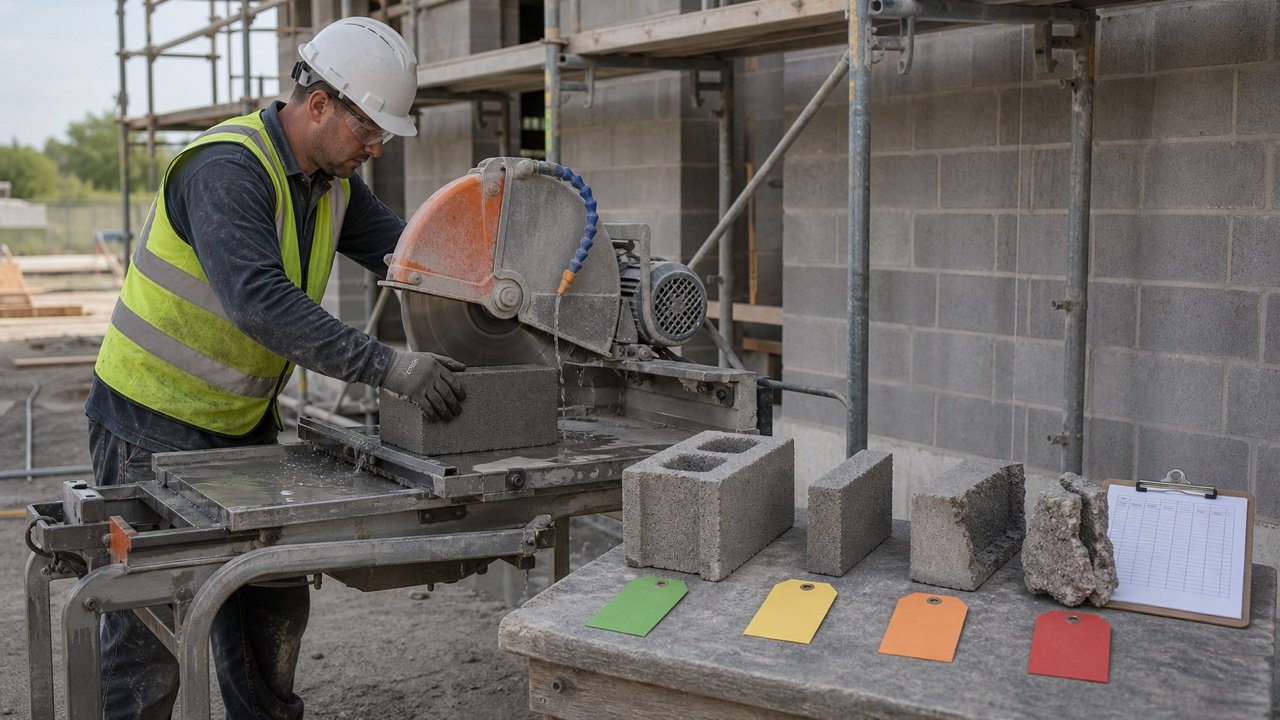
Confirm that each future load remains assigned, acceptable and available to this placement. Record rejected, cancelled, redirected, partly discharged and returned quantities separately.
Use the Ready-Mix Concrete Calculator for a checked revised volume. This worksheet controls the revision trail.
Which quantity states belong in the worksheet?
Keep the original, current and future states visible. One “remaining” field cannot explain where the number came from.
| State | Record | Use in add-on arithmetic |
|---|---|---|
| Original measured | Approved geometry and revision | Reference only |
| Original planning | Measured volume plus approved allowance | Reference only |
| Original ordered | Supplier-confirmed quantity | Reference only |
| Accepted placed | Approved zone and progress record | Reconciliation evidence |
| Unfinished geometry | Checked remaining forms or zones | Yes |
| Remaining allowance | Approved amount tied to unfinished scope | Yes |
| Confirmed usable future supply | Assigned loads still available and acceptable | Subtract once |
| Raw add-on need | Positive uncovered balance | Supplier input basis |
| Supplier-rounded add-on | Confirmed increment or delivered minimum applied | Final request |
How should unfinished concrete geometry be checked?
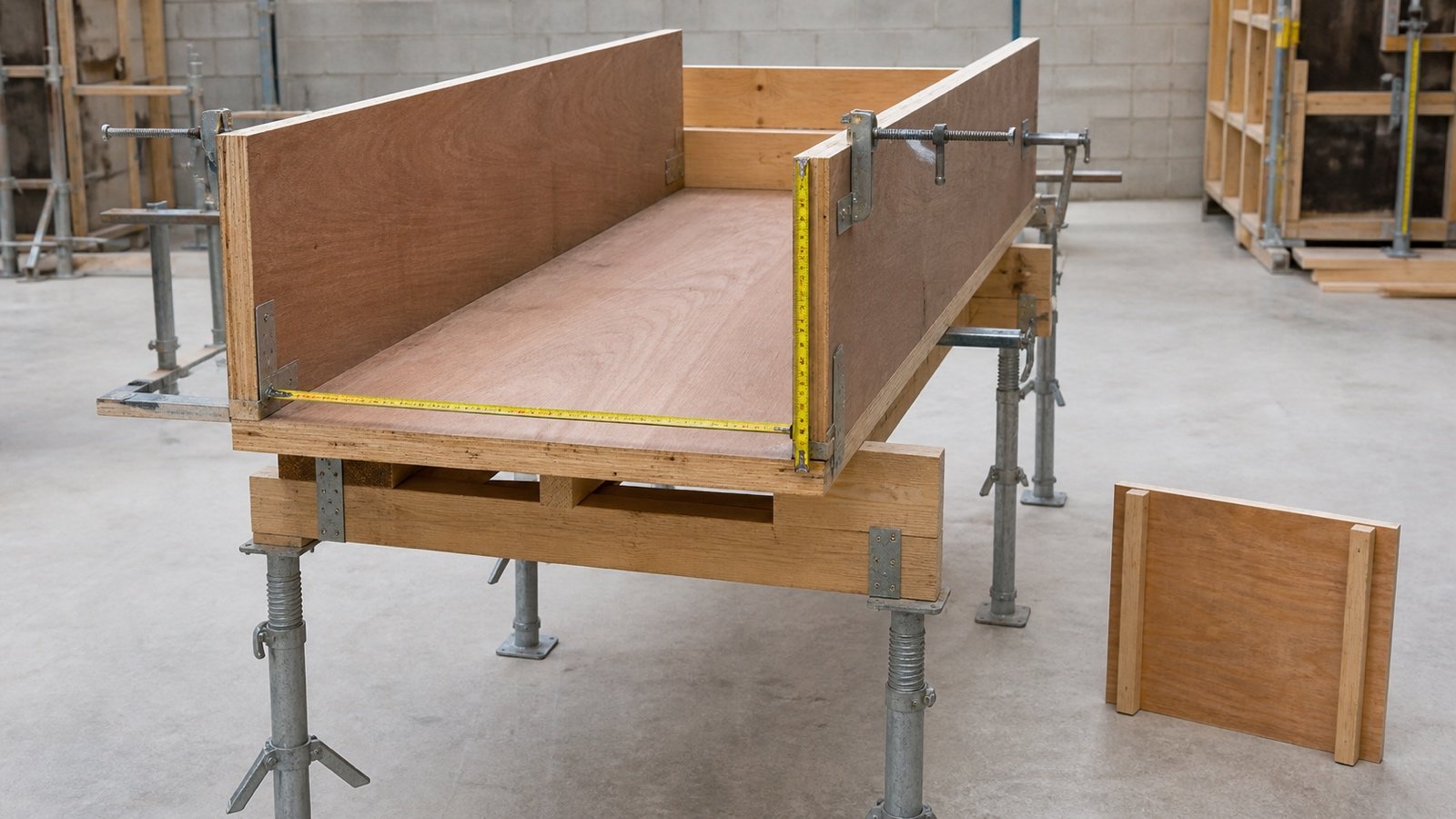
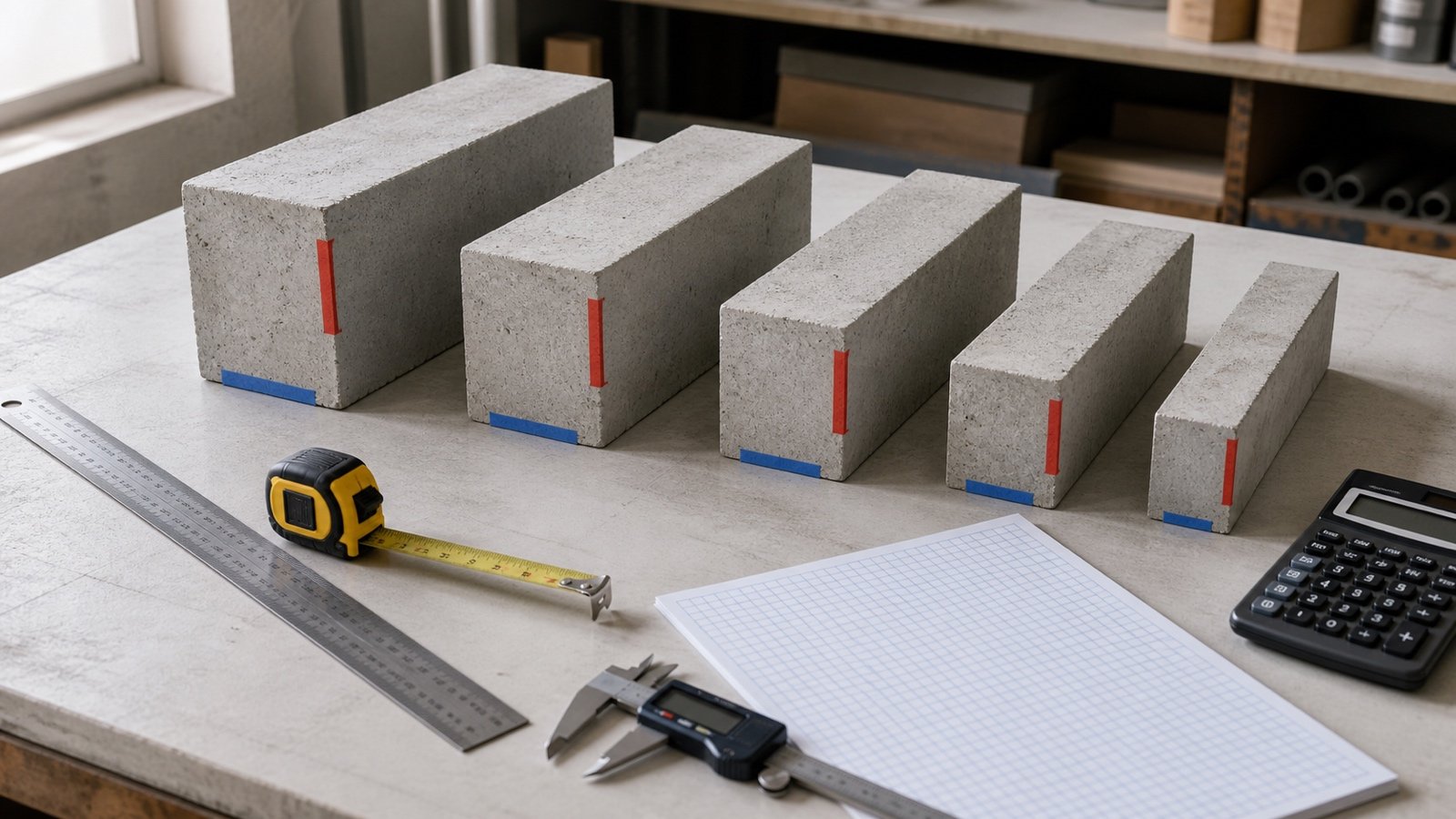
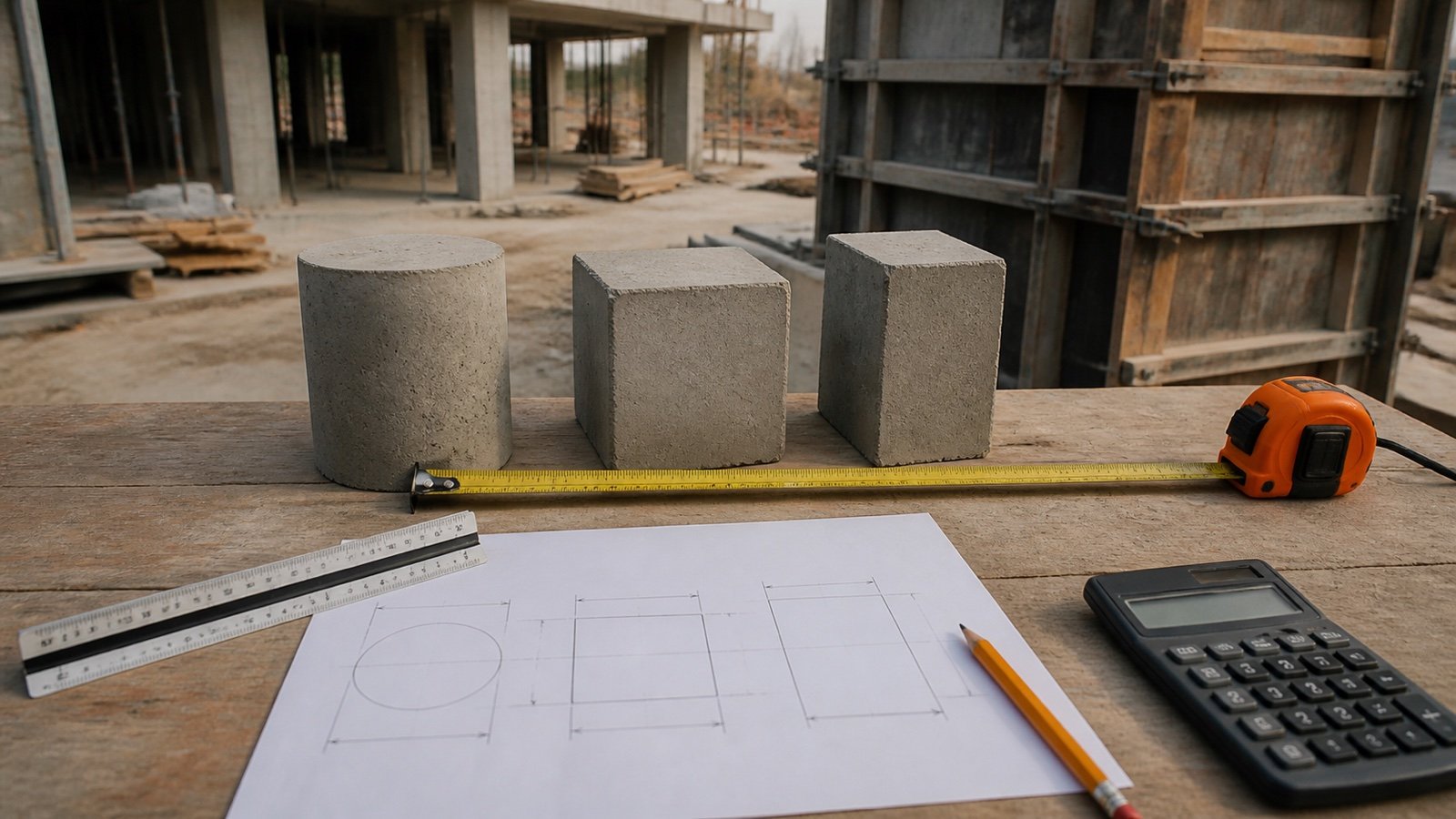
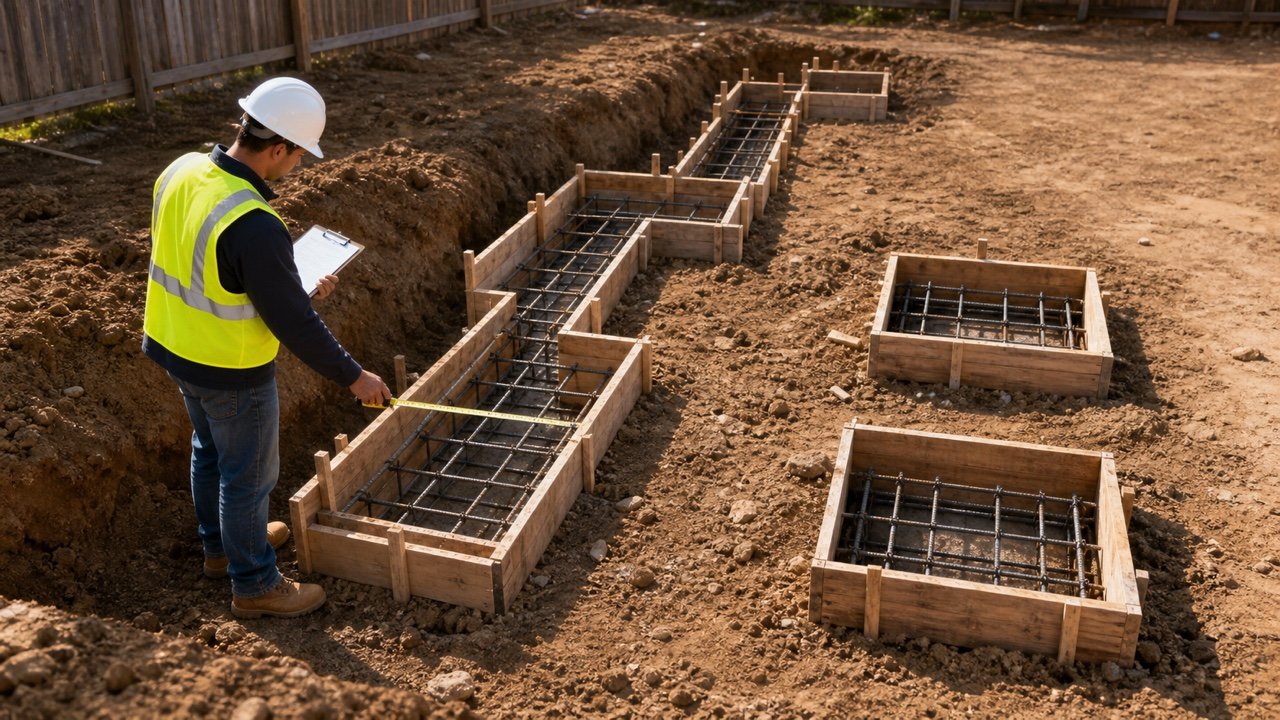
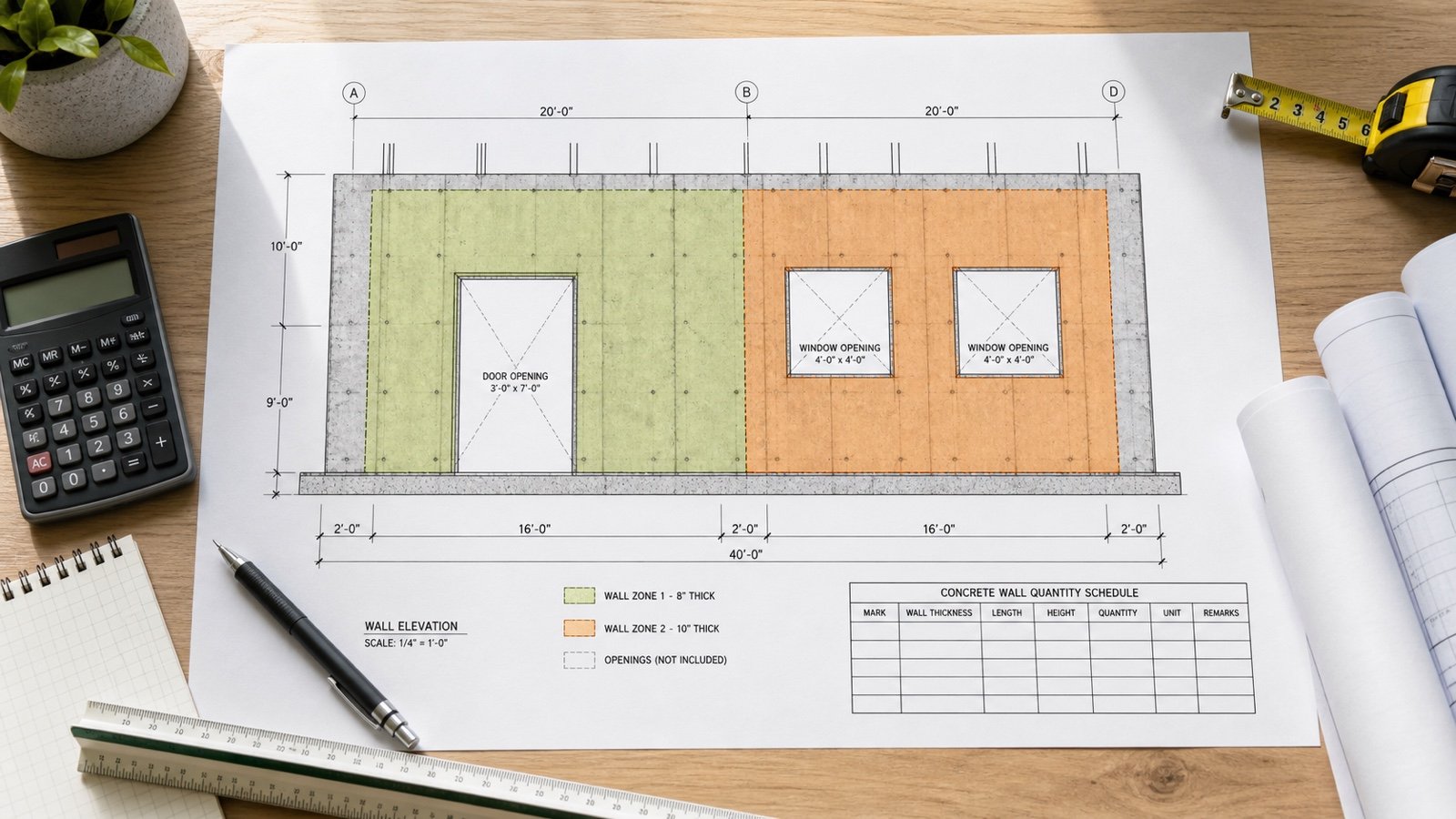
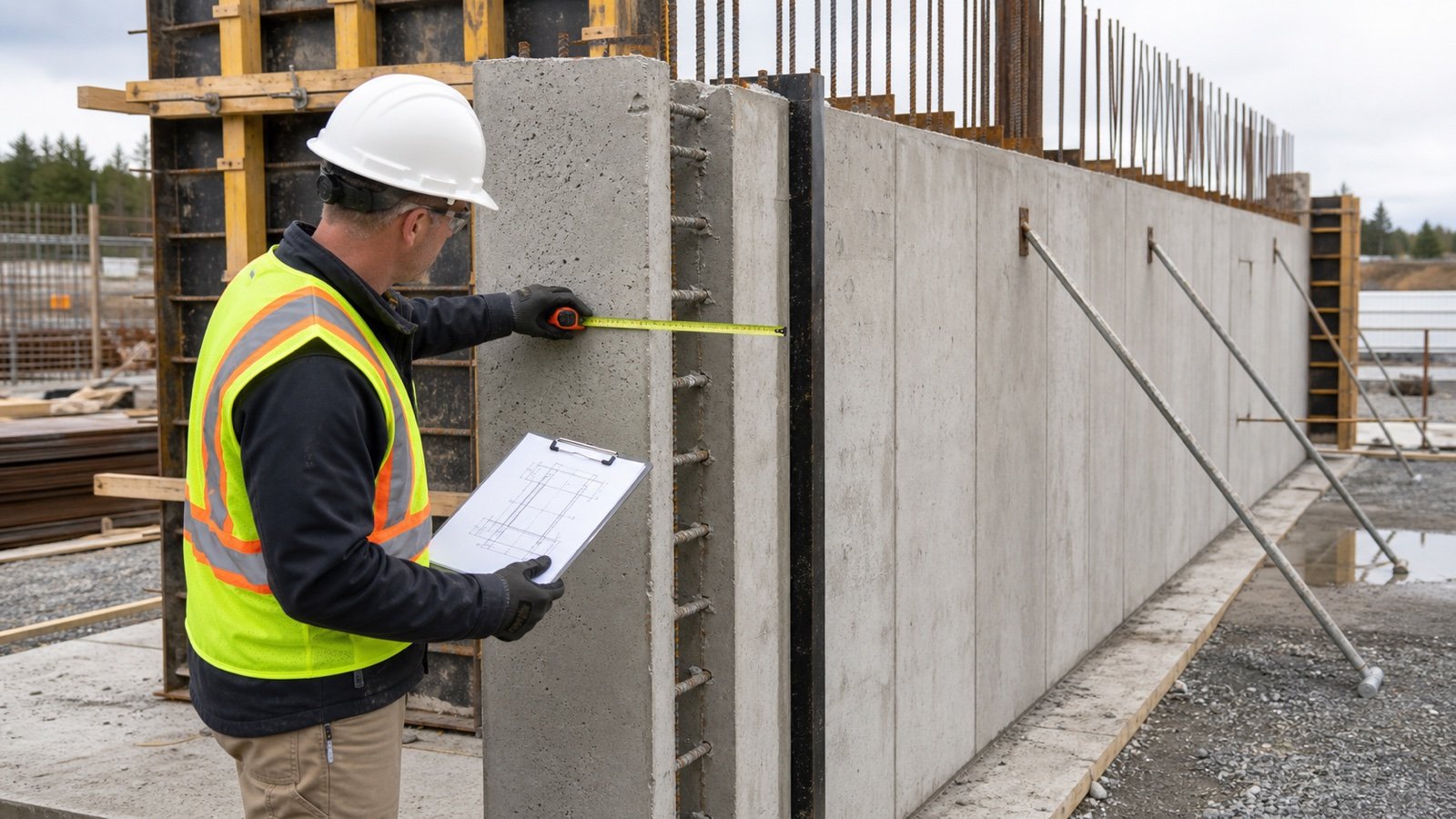
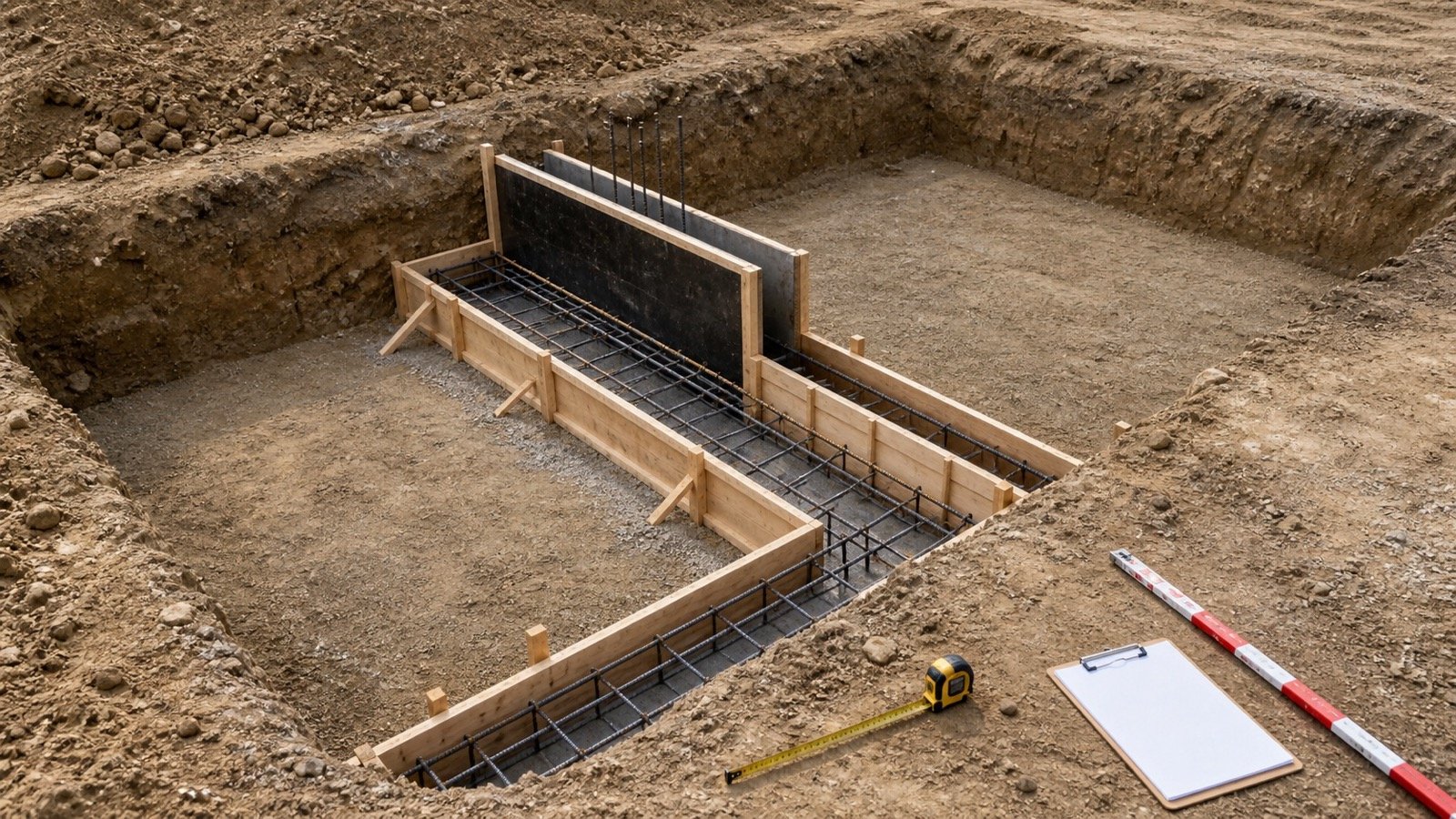
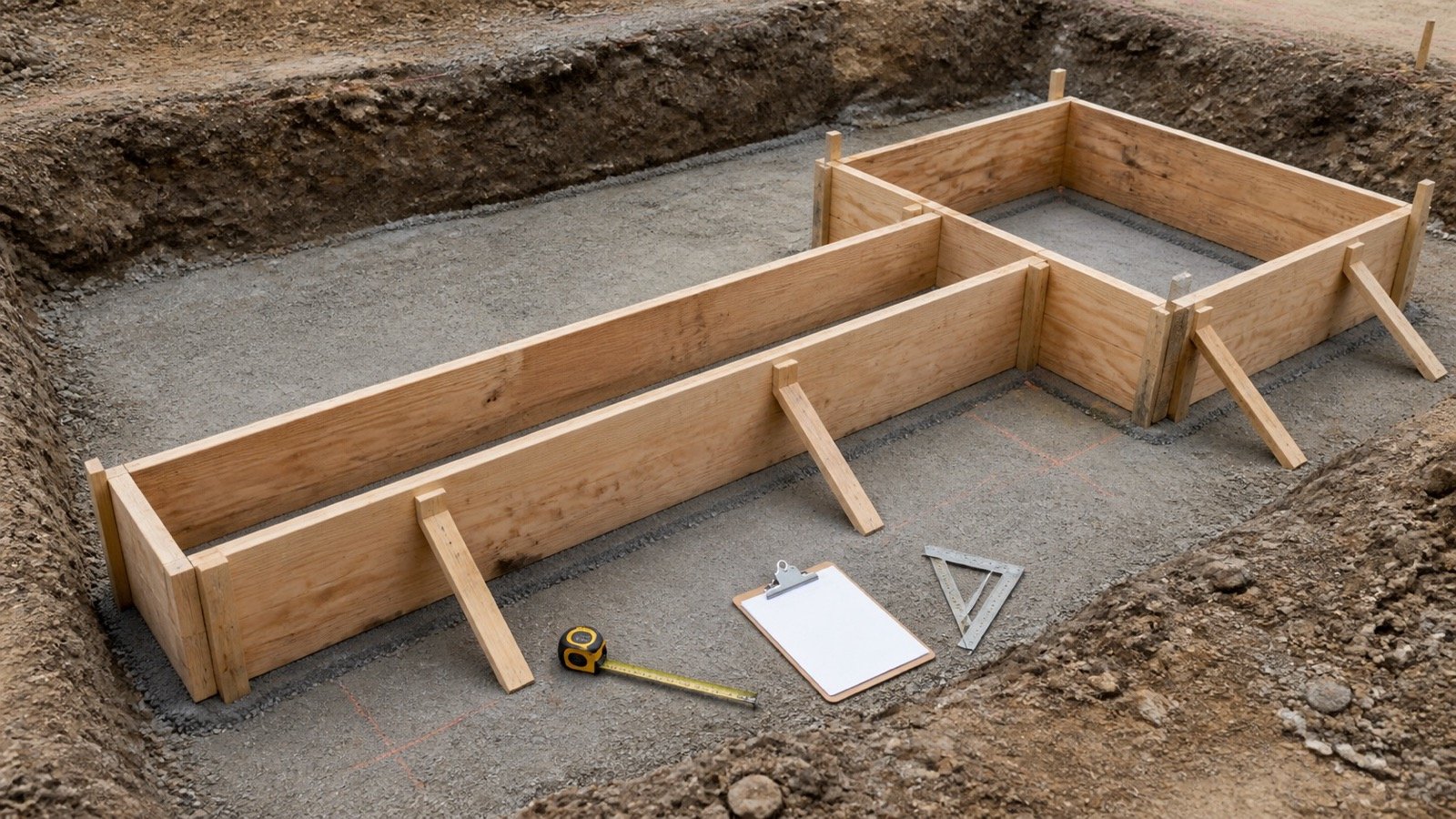
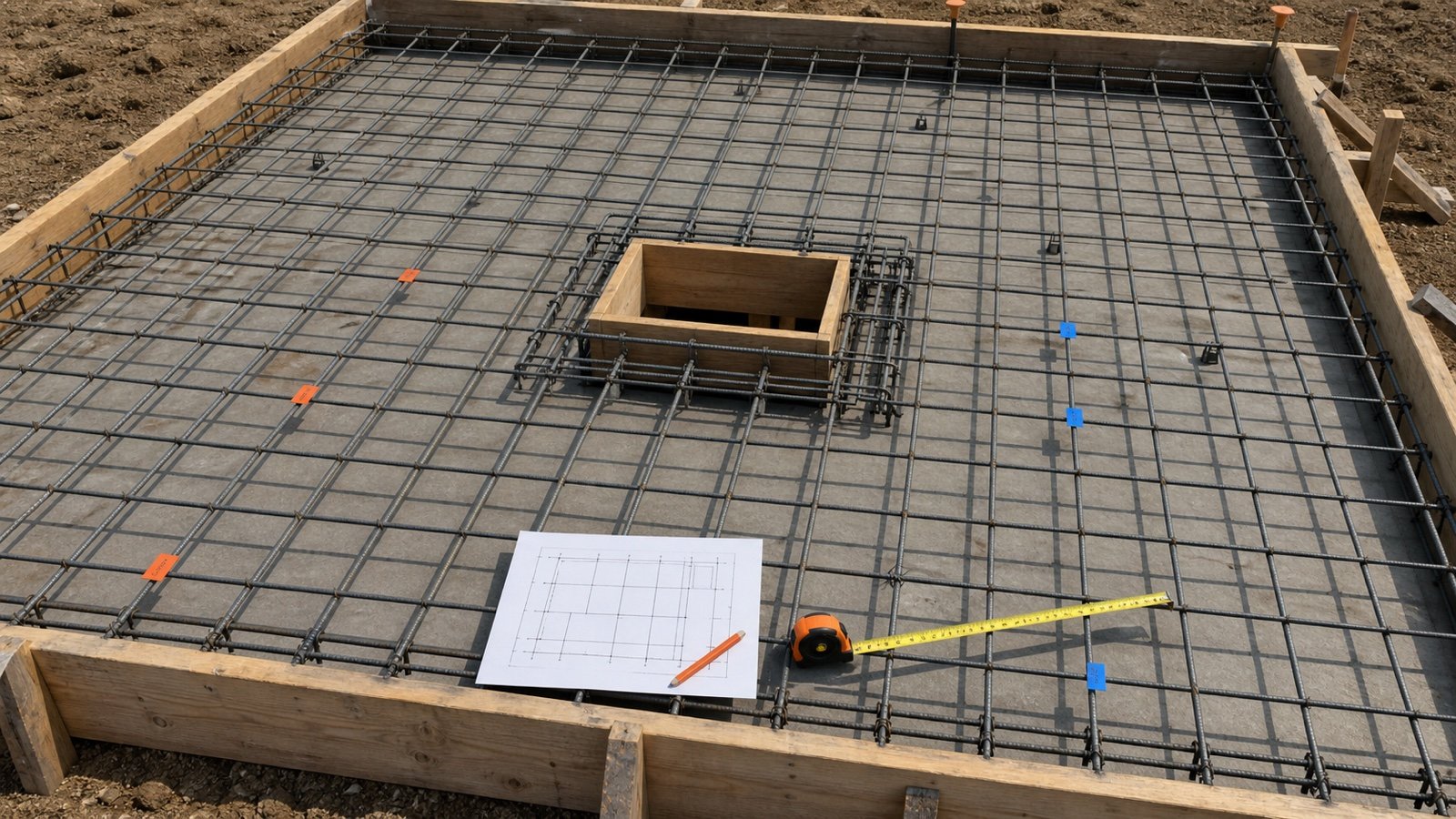
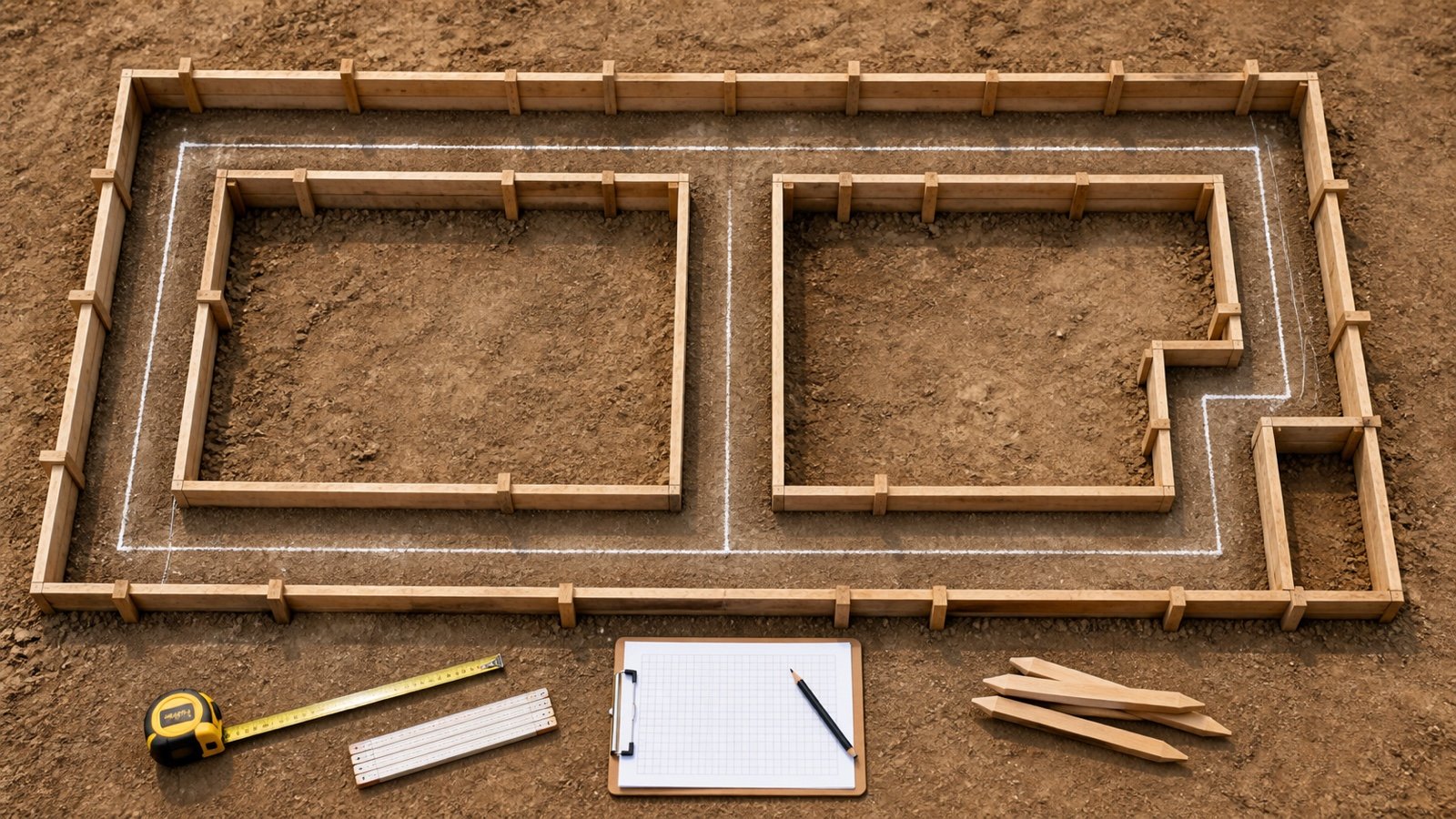
Measure the unfinished forms or approved progress zones with the same discipline used for the original takeoff. Use current field conditions and preserve the drawing or survey reference.
- Identify every unfinished zone by grid, pour, form or station.
- Record current length, width, depth, shape and units.
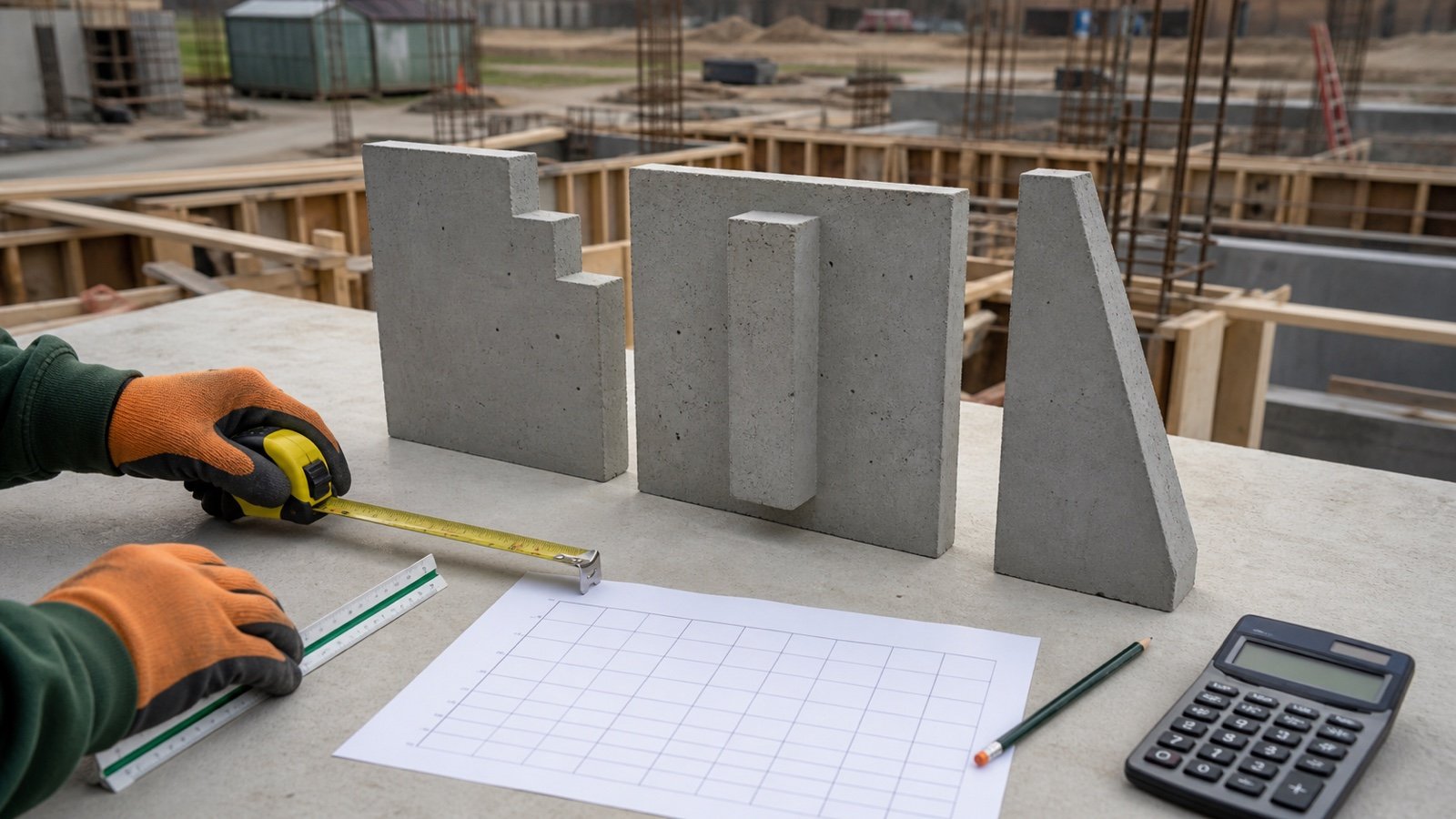
- Separate thickened edges, beams, steps, slopes and irregular sections.
- Record approved deductions and inclusions.
- Keep different mix codes or acceptance lots in separate revisions.
- Name the checker, time, source and approver.
Ordered quantity minus delivered quantity does not prove remaining geometry. That subtraction measures an order balance, while the site check measures unfinished work.
Worked example: a revised add-on request
A field check finds 6.8 yd³ of unfinished geometry. The approved remaining direct allowance is 0.3 yd³. Dispatch confirms that 4.0 yd³ of usable future supply remains assigned. The supplier accepts add-ons in 0.25 yd³ increments.
- Remaining planning volume: 6.8 + 0.3 = 7.1 yd³.
- Raw add-on need: 7.1 - 4.0 = 3.1 yd³.
- Increment quotient: 3.1 ÷ 0.25 = 12.4.
- Supplier-rounded add-on: ceiling(12.4) × 0.25 = 3.25 yd³.
- Supplier-rounding addition: 3.25 - 3.1 = 0.15 yd³.
The 0.3 yd³ allowance and 0.25 yd³ increment are fixture inputs. Another revision needs its own evidence and current supplier terms.
| Quantity | Volume | Source |
|---|---|---|
| Unfinished geometry | 6.8 yd³ | Current field check |
| Remaining allowance | 0.3 yd³ | Approved revision basis |
| Remaining planning | 7.1 yd³ | Geometry plus allowance |
| Confirmed future supply | 4.0 yd³ | Producer confirmation |
| Raw add-on | 3.1 yd³ | Uncovered balance |
| Requested add-on | 3.25 yd³ | Supplier increment |
What if confirmed supply already covers the remainder?
The raw add-on need is 0. Do not request another load from this arithmetic.
If remaining planning volume is 5.2 yd³ and confirmed usable future supply is 6.2 yd³, the worksheet shows 1.0 yd³ of potential excess. The coordinator must review the future loads with the producer and project team.
| Check | Required action |
|---|---|
| Future load still at plant | Ask whether an approved hold, quantity change or cancellation remains possible |
| Load dispatched | Confirm status, arrival plan and authorised disposition |
| Different approved placement available | Obtain design, specification and responsibility approval before reassignment |
| No approved use | Follow producer and project surplus or return procedure |
The 1.0 yd³ difference does not authorise cancellation, redirection or placement.
How can progress markers expose a quantity drift?
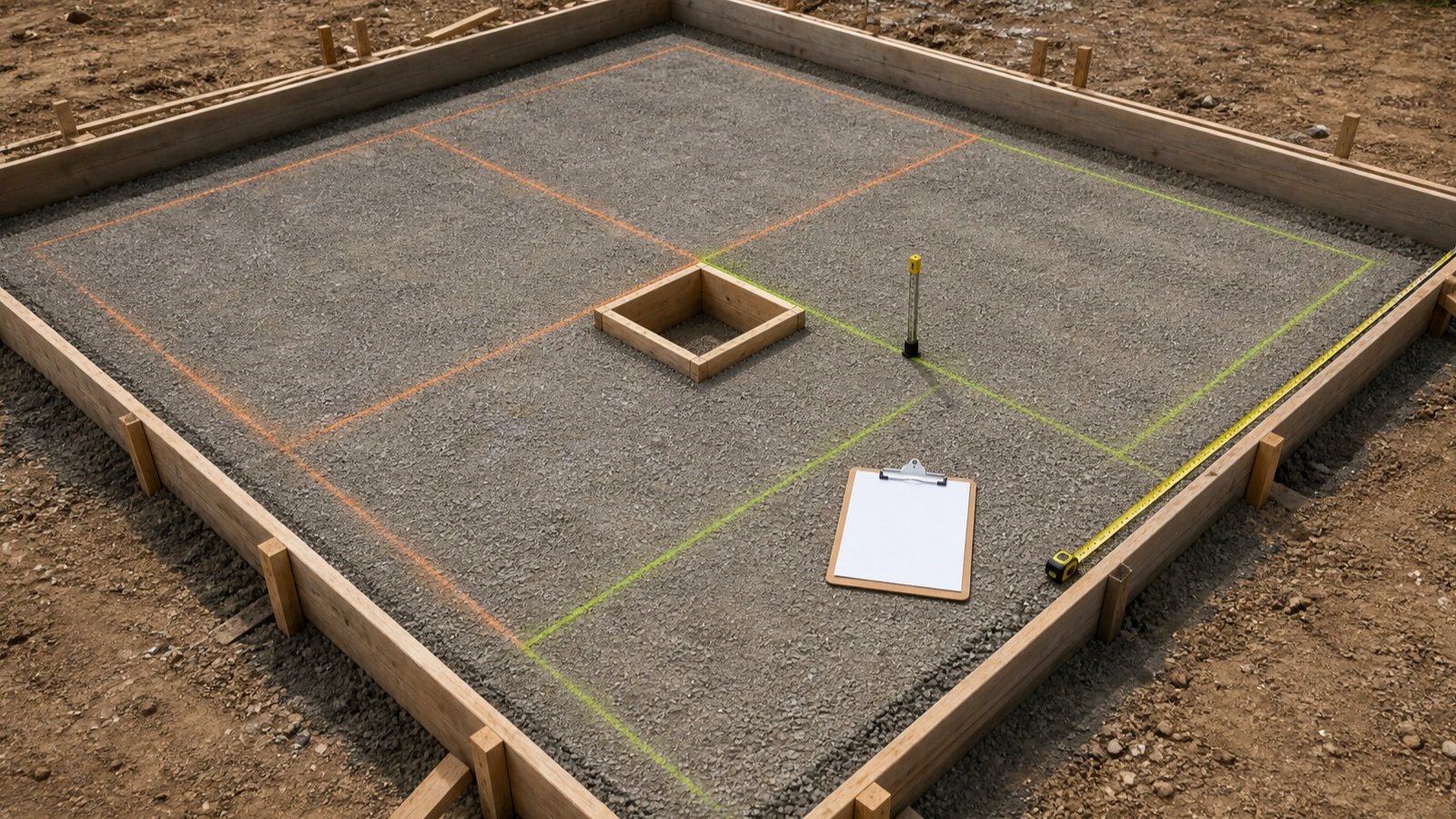
Mark approved geometry checkpoints before placement. Compare the expected placed geometry at each marker with accepted discharge records.
An approved halfway marker represents 10.0 yd³. If accepted discharged quantity reaches 11.5 yd³ at that marker, the difference is 1.5 yd³ above the marker basis.
Recheck the marker, field geometry, load tickets, discharge destinations and placement record. Do not add 1.5 yd³ automatically to the remaining request. The discrepancy identifies a review, not its cause.
Which future loads can be subtracted?
Subtract only supply that dispatch confirms remains usable, assigned and expected for the same mix and placement group.
| Load state | Subtract from remaining planning volume? |
|---|---|
| Confirmed at plant and assigned | Yes, using the producer-confirmed quantity |
| Dispatched and assigned | Yes, after current status confirmation |
| Partly discharged | Use only the confirmed usable remainder assigned to this placement |
| Rejected | No |
| Cancelled or redirected | No |
| Returned | No |
| Unknown status | No until confirmed |
How should remaining allowance be handled?
Apply allowance only to unfinished scope and only under its approved basis. Do not reapply the original percentage to the complete project or to concrete already placed.
A direct-volume allowance can work better when the field check identifies a specific unresolved void or tolerance. Record the reason, affected zone, quantity, approver and expiry condition.
What must be communicated to the producer?
- Project, order, placement and mix-code identifiers.
- Revision time and named caller.
- Checked unfinished geometry and remaining planning volume.
- Future loads included in the subtraction and their current status.
- Raw add-on need and requested supplier-rounded quantity.
- Required timing, placement rate and sequence impact.
- Current access, equipment, weather or stoppage condition.
- Producer acknowledgement, updated order reference and commercial terms.
NRMCA advises purchasers to re-evaluate the quantity needed to complete a placement and communicate changes. Its guidance does not replace the producer's current add-on process.
Common quantity-revision mistakes
- Overwriting the original takeoff or order.
- Using order balance as unfinished geometry.
- Subtracting rejected, cancelled or unknown loads.
- Applying the original allowance to placed work again.
- Combining different mix codes or zones.
- Turning a progress discrepancy into an automatic add-on.
- Rounding before confirmed future supply is subtracted.
- Treating a fee threshold as delivered volume.
- Requesting a cleanup load without producer acknowledgement.
- Leaving the revision time, source and approver blank.
Coordinate revised arrivals with the Ready-Mix Delivery Sequence guide. Return to the Concrete Planning hub for all related tools.
Safety and scope limits
A quantity revision does not approve structural changes, joints, mixture substitutions, delays, placement into another zone, access or disposal. Follow current drawings, specifications, producer controls and qualified professional direction.
Keep workers away from unsafe truck and equipment movements. Follow the current safety data sheet and site controls for fresh concrete, PPE, traffic, communication and washout.
Sources and source scope
- NRMCA CIP 31, Ordering Ready Mixed Concrete: quantity re-evaluation, change communication and cleanup-load context.
- ACI CCS-1(10) preview: progress-marker and load-use comparison example.
- NRMCA and ASCC Ordering and Scheduling Checklist: add-on, change, cleanup, returned-concrete and commercial coordination fields.
- NIST Guide to the SI Appendix B: unit conversions.
Source scope: the sources support re-evaluation, progress checks, communication fields and unit arithmetic. They do not set a universal remaining allowance, cleanup-load quantity, supplier increment, minimum, fee, availability or approved disposition.