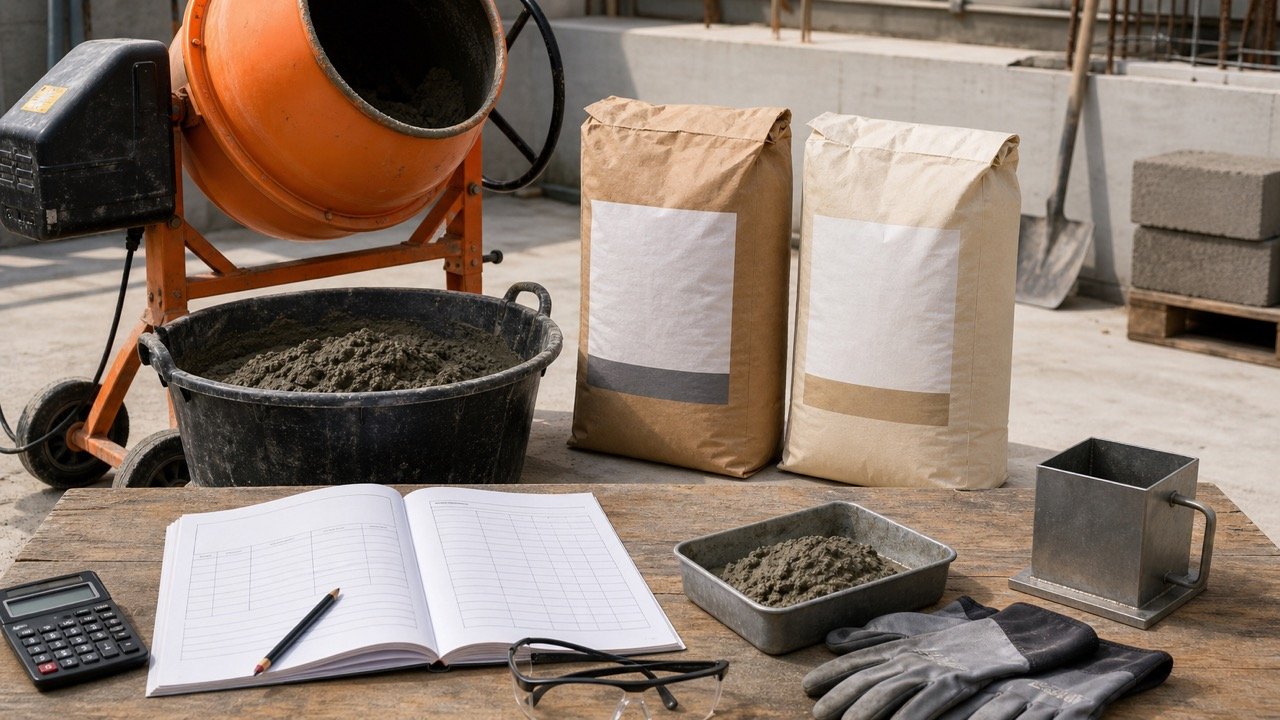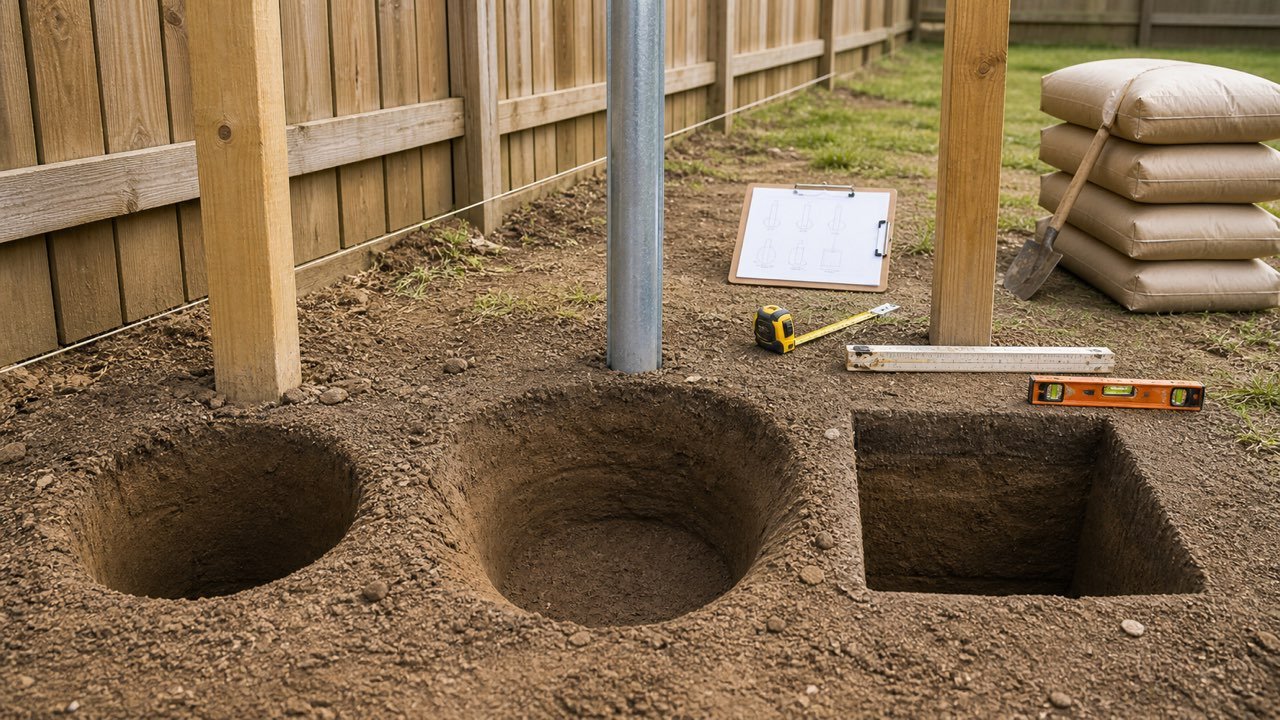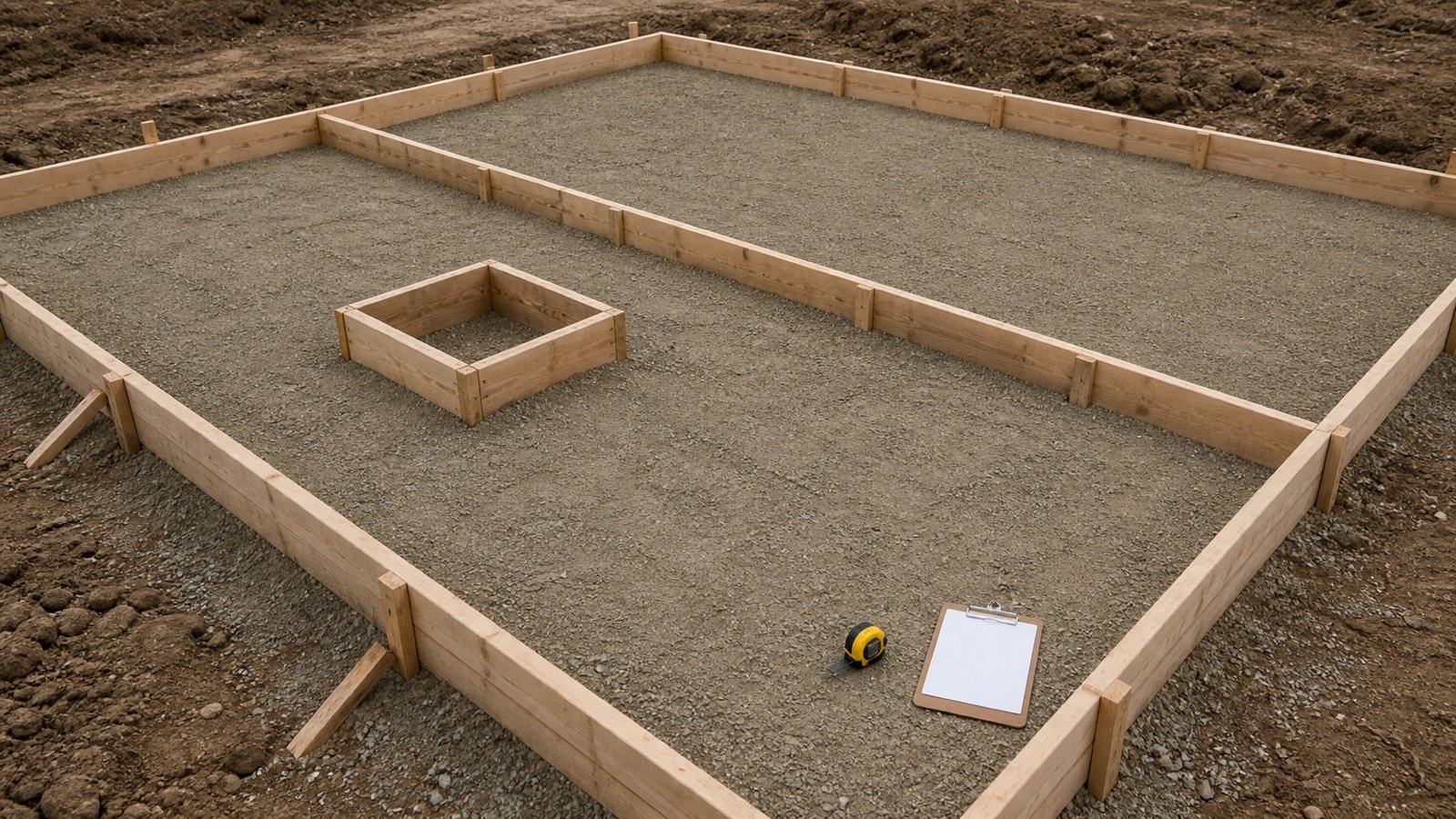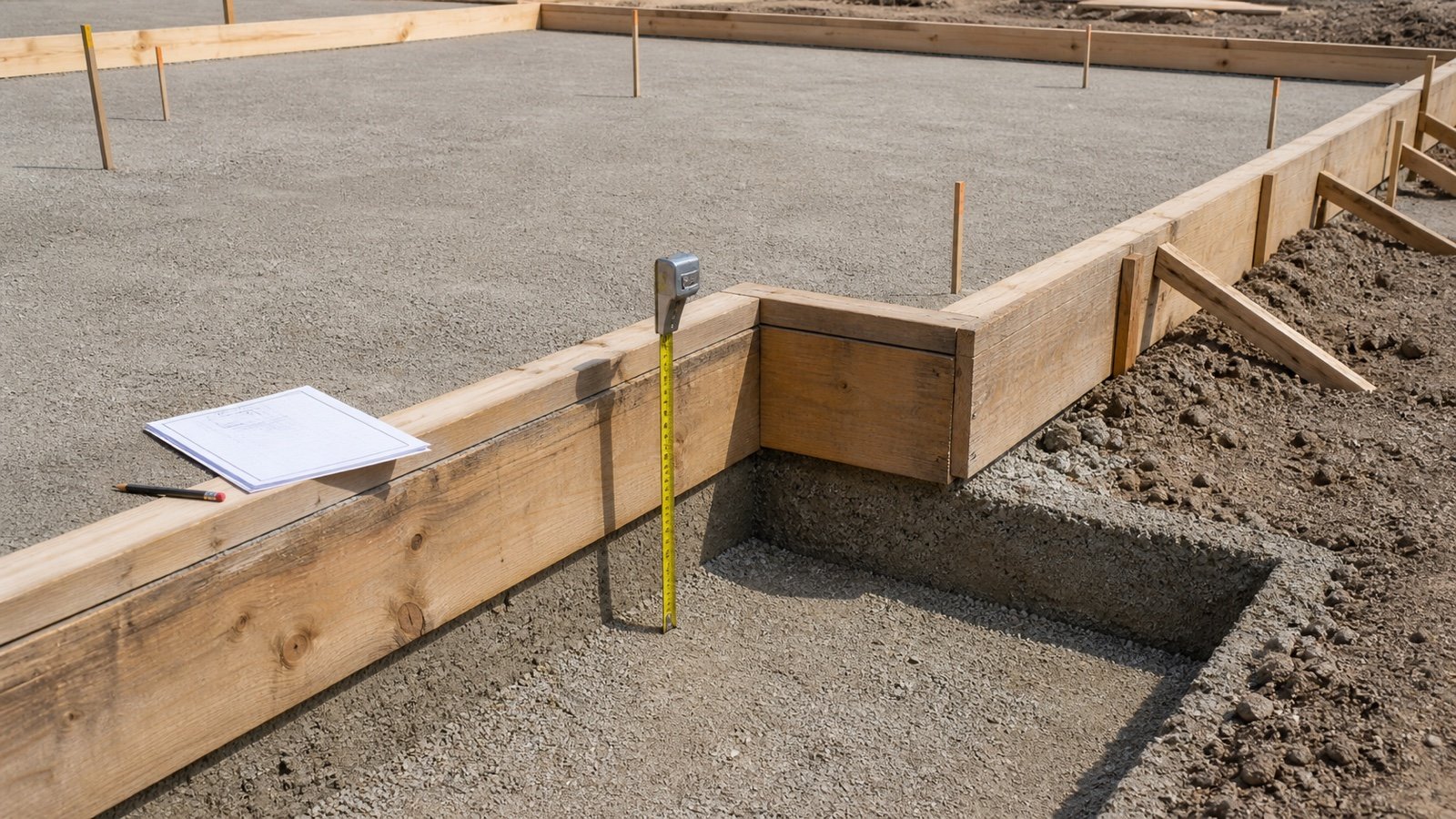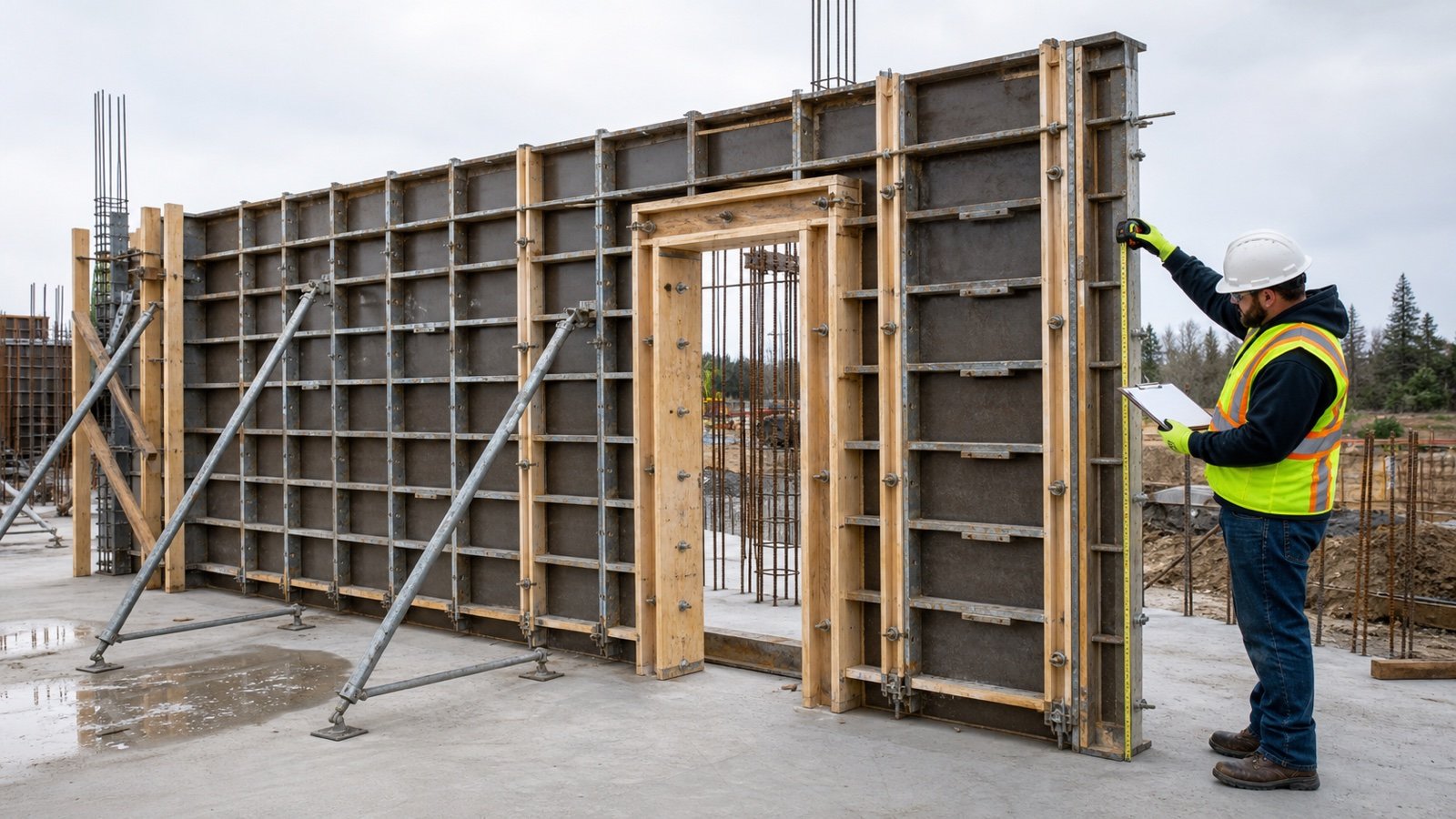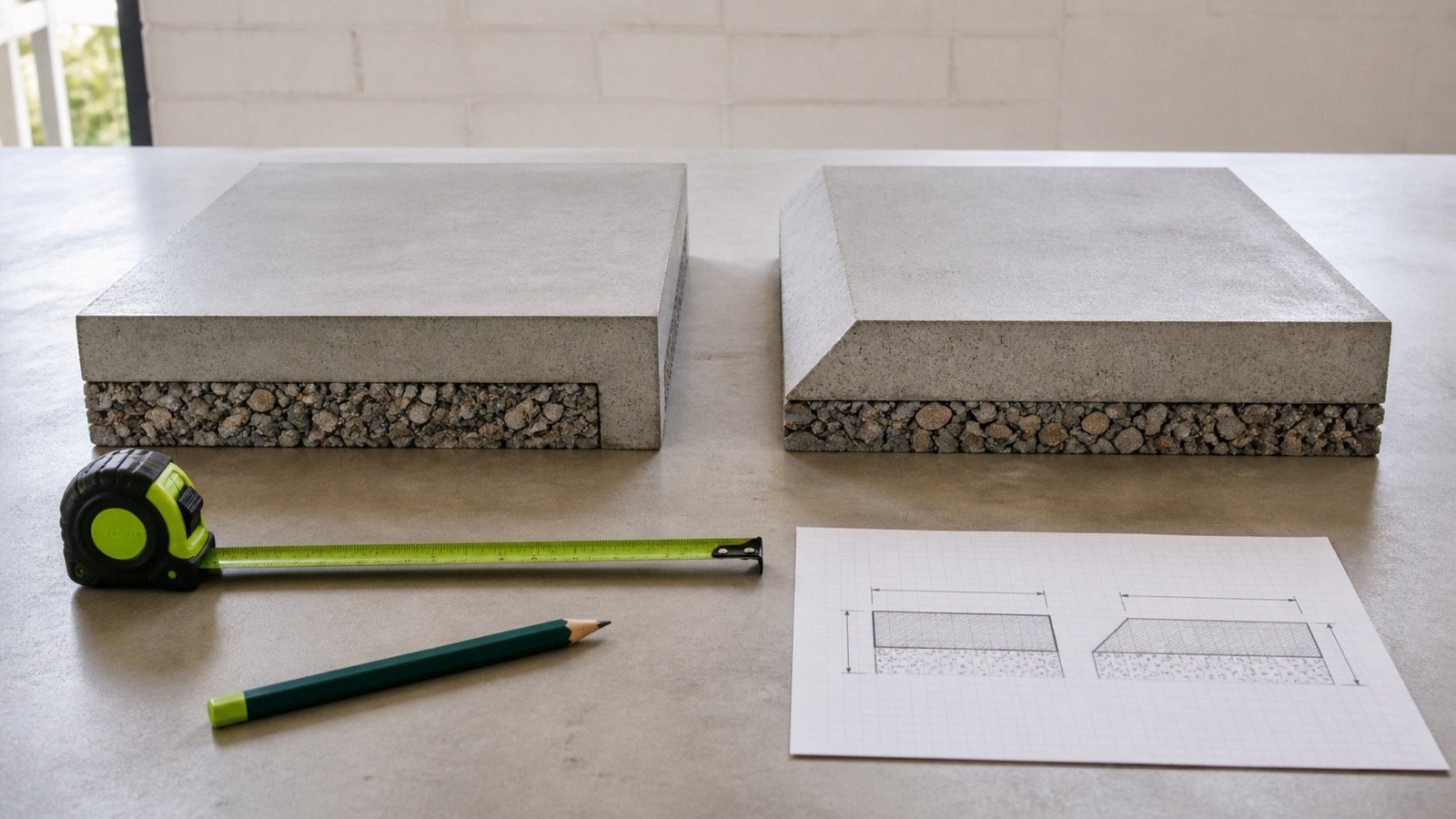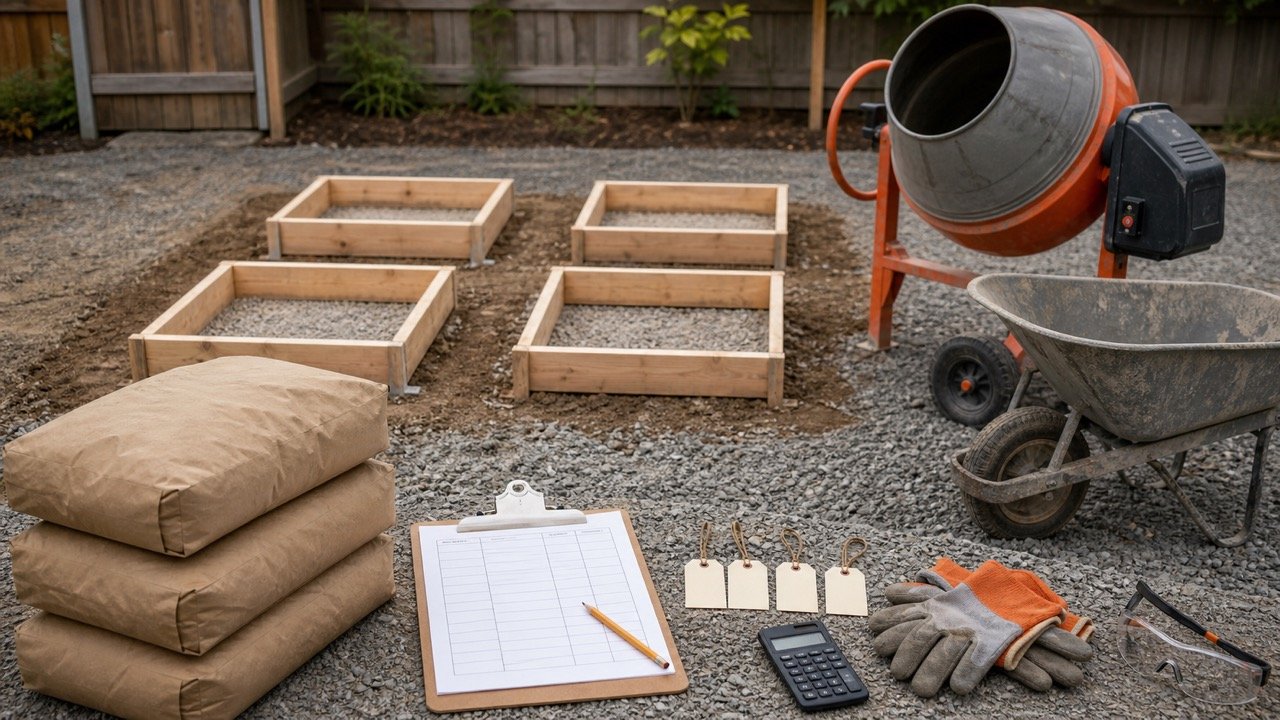
Concrete bags are purchased as whole packages, but that does not mean every hole, pad or form needs its own whole-bag ceiling. The valid rounding point depends on which volumes can share one product and one controlled placement operation.
Keep every geometric volume unrounded, form compatible groups, apply any supported allowance, divide by current product yield and round the final group quotient once.
When should concrete bags be rounded up?
Round upward only after the complete planning volume for one valid group has been divided by the exact product's mixed yield. Apply supplier case or pallet rounding later as a separate procurement step.
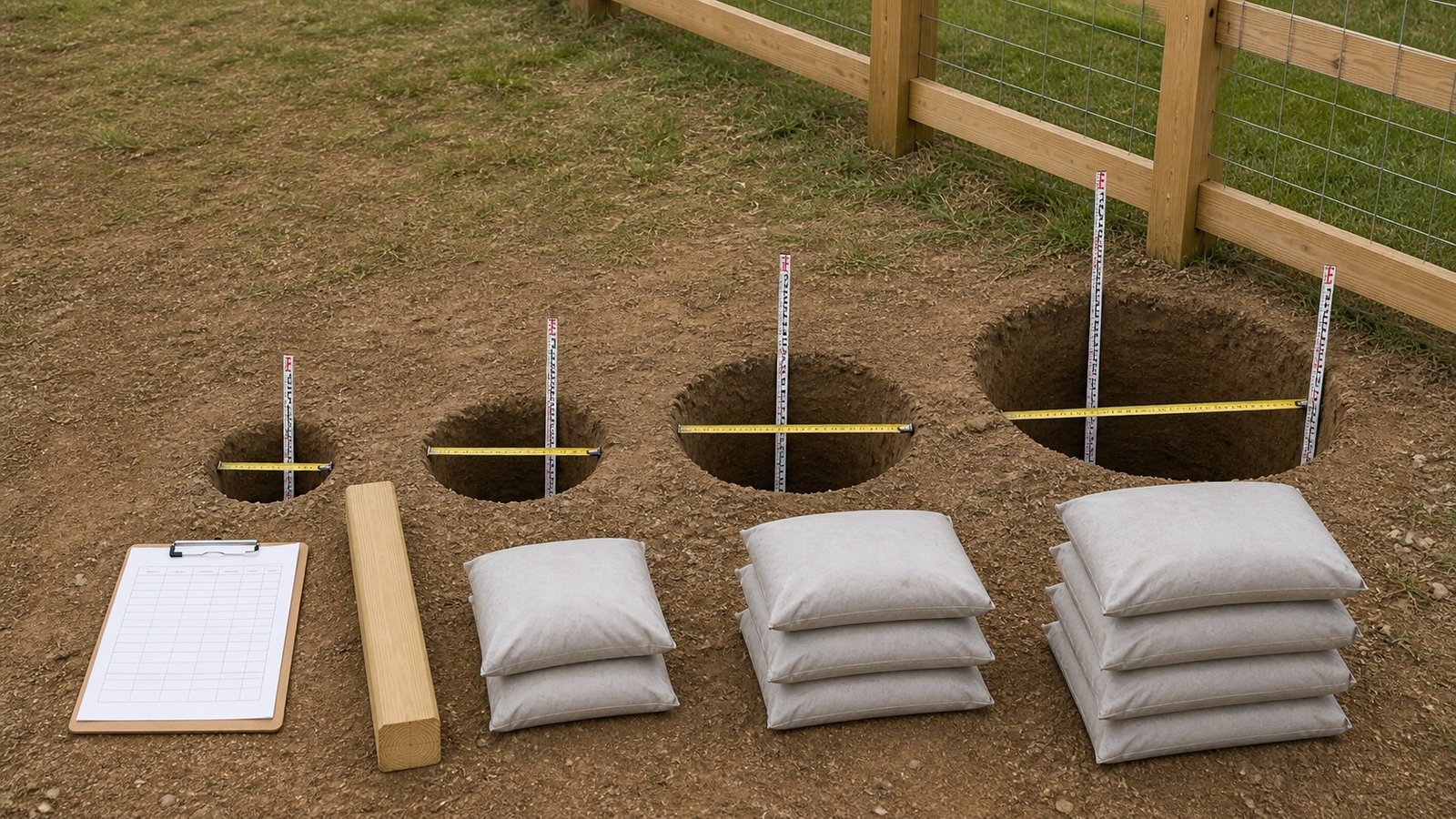
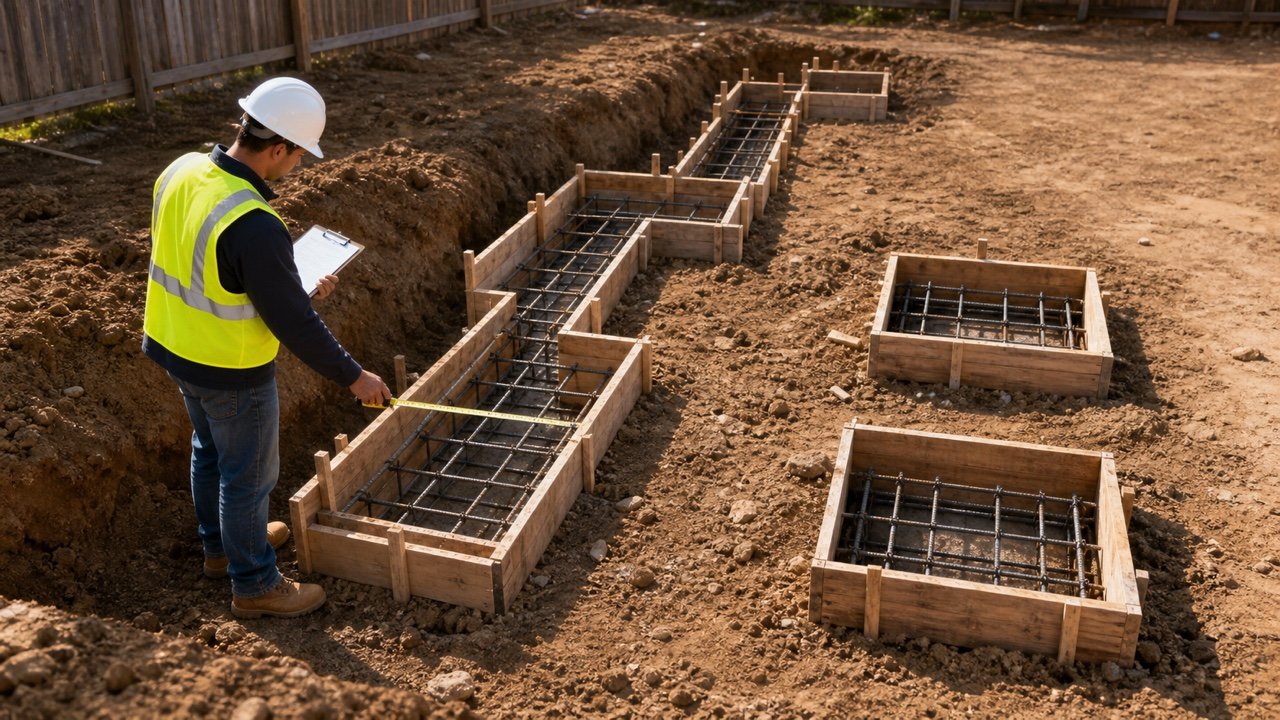
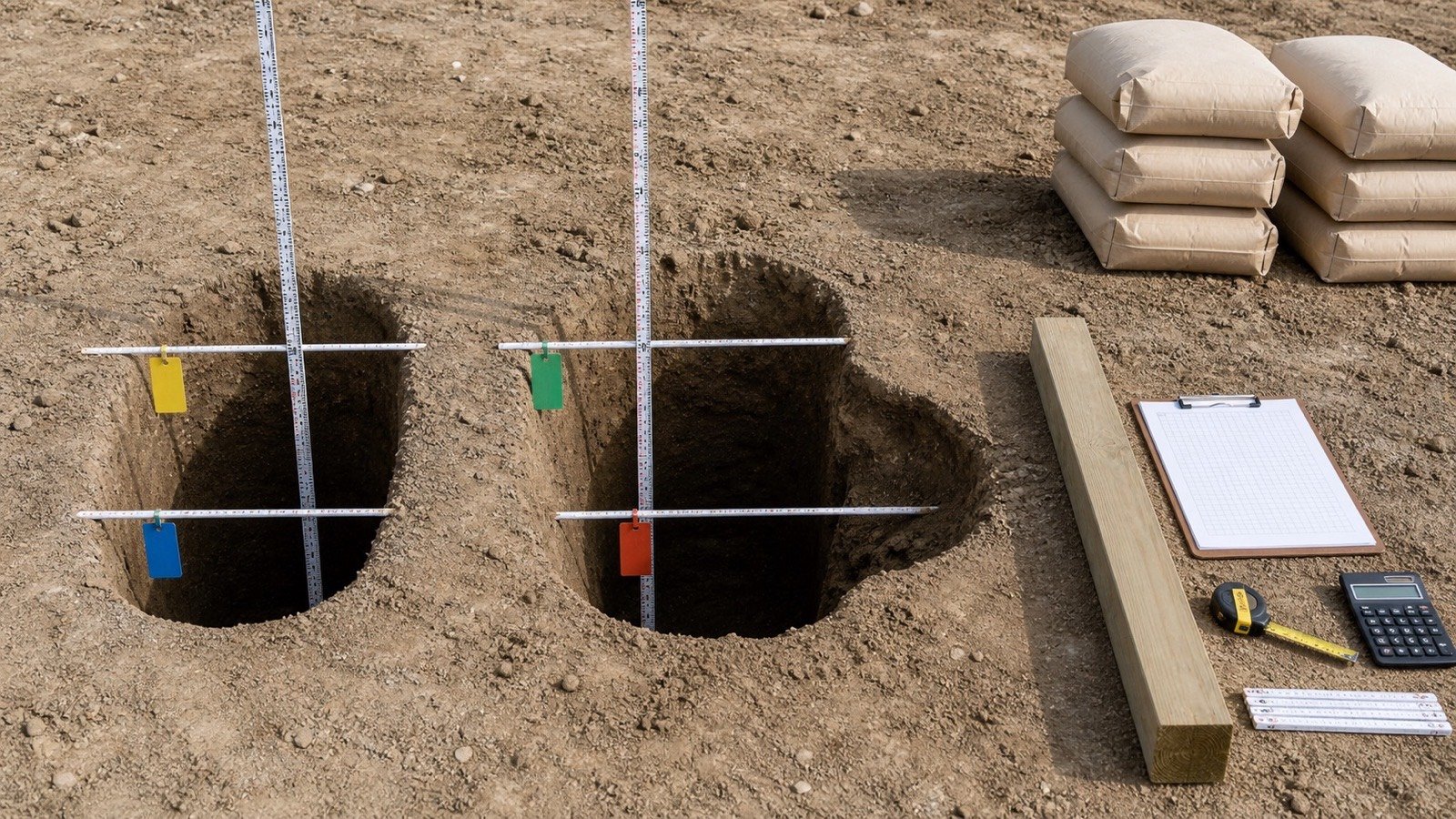
Four compatible pads in one operation may share mixed concrete from the same packages. Four isolated placements on different days may need four separate ceilings.
The Concrete Bags Calculator rounds one completed compatible calculation group. This guide explains where that group begins and ends.
What is the correct concrete bag rounding sequence?
| Step | Record | Rounding action |
|---|---|---|
| 1 | Each checked geometric volume | Keep unrounded |
| 2 | Valid groups by product, operation and requirements | No package rounding |
| 3 | Sum of measured volumes in each group | Keep unrounded |
| 4 | Separately documented volume allowance | Apply before package division |
| 5 | Planning volume ÷ current mixed yield | Keep exact quotient visible |
| 6 | Final group package quotient | Ceiling once to whole packages |
| 7 | Purchased capacity and capacity above planning | Calculate from whole packages |
| 8 | Supplier case, pallet or selling increment | Round the procurement unit separately |
Group whole packages = ceiling(group planning volume ÷ current mixed yield per package)
Purchased mixed capacity = group whole packages × current mixed yield
Capacity above planning = purchased mixed capacity - group planning volume
Which pours can be combined before rounding?
Combine volumes only when the same package basis can genuinely serve the complete group. Use the actual work plan, not convenience.
| Condition | Combine before one ceiling when | Keep separate when |
|---|---|---|
| Product | Exact product and current yield match | Product, package, yield or specification differs |
| Allowance | One supported basis applies to the complete group | Different site conditions require different allowances |
| Operation | Mixed concrete can be distributed during one controlled placement | Separate days, crews, locations or hold points prevent sharing |
| Working time | Batch and travel sequence fits current product instructions | Set, travel or placement limits isolate the work |
| Acceptance | One compatible record and approval applies | Traceability, test, cost or responsibility must remain separate |
| Remaining material | A documented plan allocates full mixed batches across zones | The plan relies on storing an unapproved partial dry package |
One package does not have to belong to one hole. A full package can be mixed as directed and its fresh concrete allocated across compatible zones. That is different from opening a bag, guessing a dry fraction and storing the rest.
Worked example: four compatible pads in one operation
Four hypothetical pads each have a checked planning volume of 0.34 ft³. The exact product yields 0.60 ft³ per package, and all four pads will be placed through one compatible batch plan.
- Each pad quotient: 0.34 ÷ 0.60 = 0.566667 package.
- Early per-pad rounding: ceiling(0.566667) × 4 = 4 packages.
- Combined planning volume: 0.34 × 4 = 1.36 ft³.
- Combined exact quotient: 1.36 ÷ 0.60 = 2.266667.
- Combined whole packages: 3.
- Purchased capacity: 3 × 0.60 = 1.8 ft³.
- Capacity above planning: 1.8 - 1.36 = 0.44 ft³.
The three-package result is valid only when all four pads can receive concrete from the same controlled operation. It does not authorise a product, pad design or placement sequence.
What changes when the same pads are poured separately?
Four isolated placements can form four rounding groups. Each 0.34 ft³ group divided by 0.60 ft³ is 0.566667, which requires 1 whole package when no approved partial-package method or usable carried stock applies.
| Plan | Rounding groups | Whole-package result | Required evidence |
|---|---|---|---|
| One compatible placement | One group at 1.36 ft³ | 3 packages | Shared product, batch and allocation plan |
| Four isolated days | Four groups at 0.34 ft³ | Up to 4 packages | Separate product condition, storage and batch records |
“Up to” matters because unopened accepted stock may carry into a later day under the actual storage and return plan. Do not assume an opened partial bag remains suitable.
Should allowance be applied before or after whole-bag rounding?
Apply a supported allowance to volume before dividing and ceiling. Rounding bags first and then adding a percentage can round the same requirement twice.
A hypothetical measured group is 3.2 ft³. Its documented allowance is 10%, and the product yields 0.60 ft³ per package.
| Step | Correct volume-first sequence | Incorrect double-round sequence |
|---|---|---|
| Measured volume | 3.2 ft³ | 3.2 ft³ |
| First package action | None | ceiling(3.2 ÷ 0.60) = 6 bags |
| Apply 10% | 3.2 × 1.10 = 3.52 ft³ | 6 × 1.10 = 6.6 bags |
| Final ceiling | ceiling(3.52 ÷ 0.60) = 6 bags | ceiling(6.6) = 7 bags |
| Purchased capacity | 3.6 ft³ | 4.2 ft³ |
The double-round method adds one unsupported package. The 10% value is an arithmetic fixture, not a default recommendation.
How is supplier case or pallet rounding handled?
Calculate required whole packages first. Then convert that count into the current supplier selling increment without changing the concrete yield or planning volume.
Packages ordered = ceiling(required whole packages ÷ supplier increment) × supplier increment
If the calculation needs 13 packages and singles are available, order 13. If the chosen supplier sells only cases of 4, ceiling(13 ÷ 4) × 4 = 16 packages. Record the 3-package commercial increment separately.
Pallet count, break-pallet terms, deposit, delivery, stock and return rules can change by product and supplier. They are not part of the geometry formula.
Can products with different yields share one bag quotient?
No. Keep each product, yield and specification in its own group even when the planning volumes match.
For example, Group A needs 1.2 ft³ from a 0.60 ft³ product, giving exactly 2 packages. Group B needs 1.2 ft³ from a 1.0 ft³ product, giving 1.2 and therefore 2 whole packages. Adding both volumes and choosing either yield would erase product identity and misstate at least one group.
Use the Concrete Bag Yield Chart to verify product-specific examples. Use the current package and manufacturer data for the purchase.
Can a partial dry concrete bag be used later?
Only under the exact product's current instructions and a controlled proportioning, storage and condition plan. Do not treat the decimal remainder in a calculator as proof that a dry partial bag can be measured or stored safely.
QUIKRETE No. 1101 provides per-package water tables and tells users to empty bags into a suitable mixing container in its hand-mixing method. It does not establish a universal method for dividing every packaged concrete product into dry fractions.
- Check whether the manufacturer permits partial-package mixing.
- Confirm how all dry constituents remain uniformly represented.
- Measure dry material and water with an approved method.
- Protect material from moisture, contamination and misidentification.
- Record package, opening date, condition and remaining quantity.
- Reject material that fails the product or project acceptance rules.
The Dry Bag vs Mixed Volume guide explains why dry contents, added water and fresh yield are separate states.
How should unopened and surplus packages be recorded?
Separate capacity above planning from physical package inventory. Capacity is arithmetic; inventory shows what was received, opened, used, damaged, rejected, returned or retained.
| Field | Record |
|---|---|
| Required whole packages | Final group ceiling before supplier increment |
| Supplier increment | Additional cases or pallet packages |
| Received | Count, product, lot, condition and receipt |
| Rejected or returned | Count, reason, date and resolution |
| Opened | Count and batch allocation |
| Unopened closing stock | Count, storage, condition and next approved use or return |
| Opened remainder | Measured quantity, product instruction, condition and disposition |
| Fresh concrete surplus | Measured estimate, approved destination and placement record |
Do not place surplus merely to make the package ledger close. Use an approved destination and design.
How do different shapes enter one rounding group?
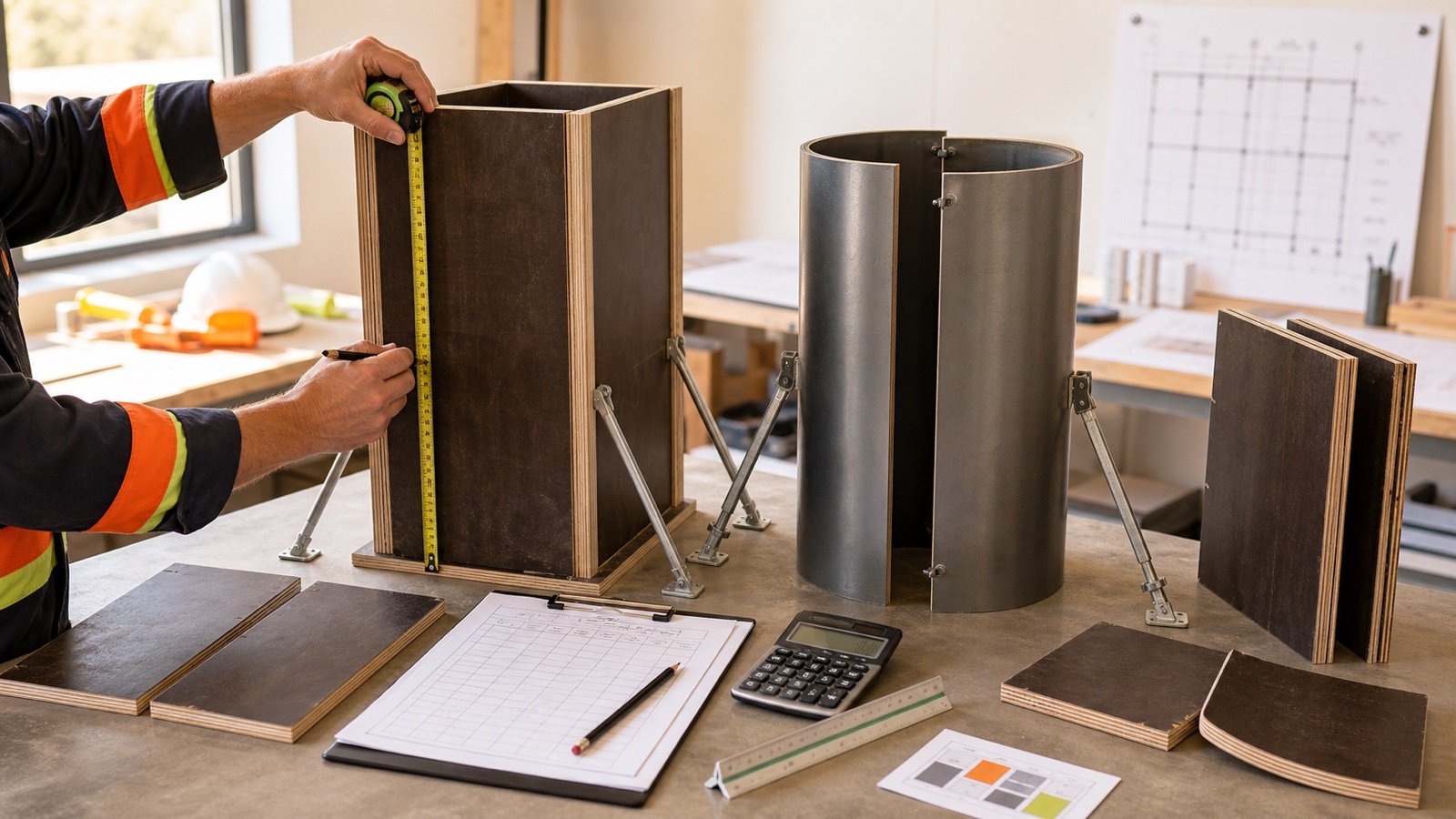
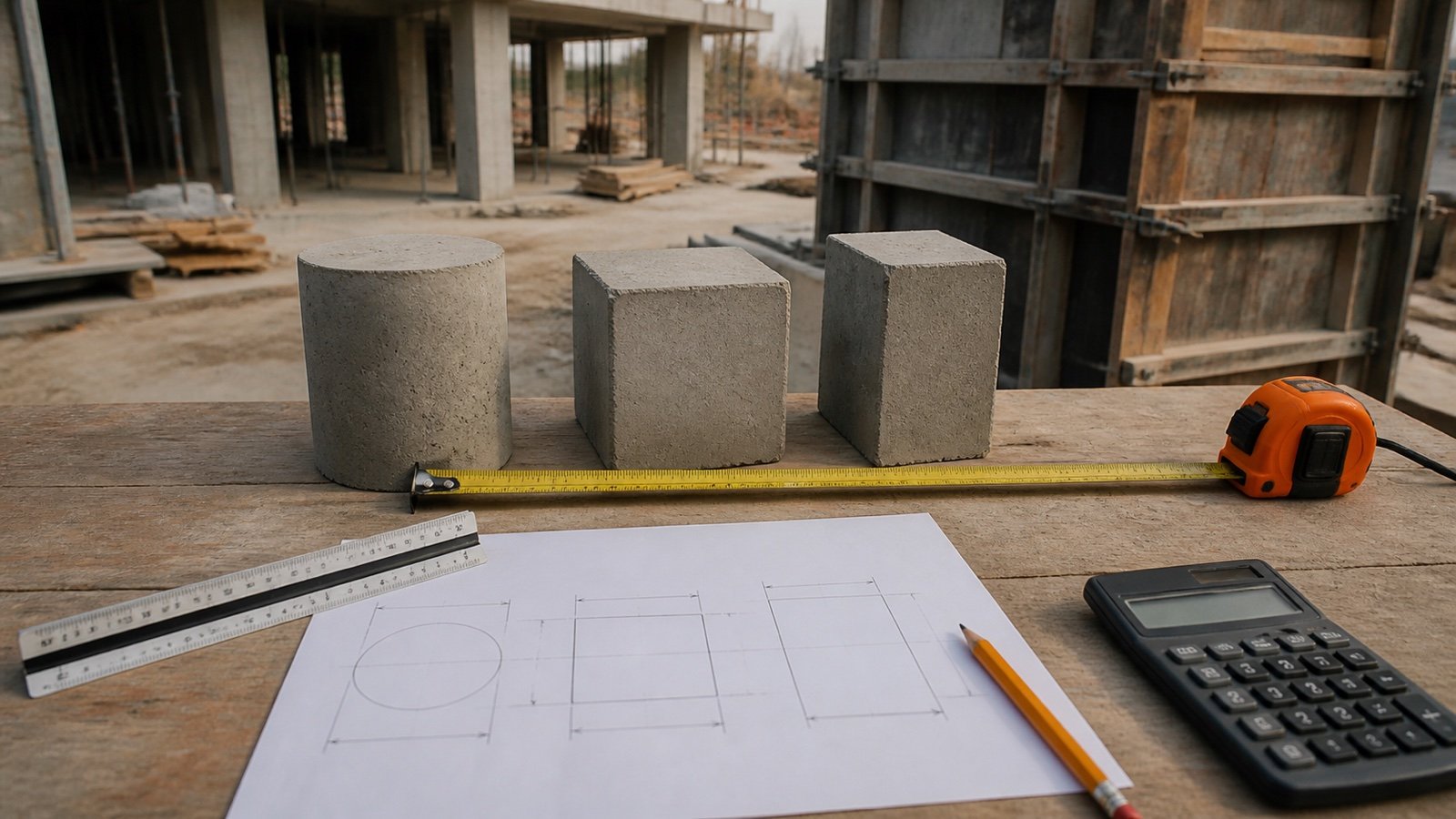
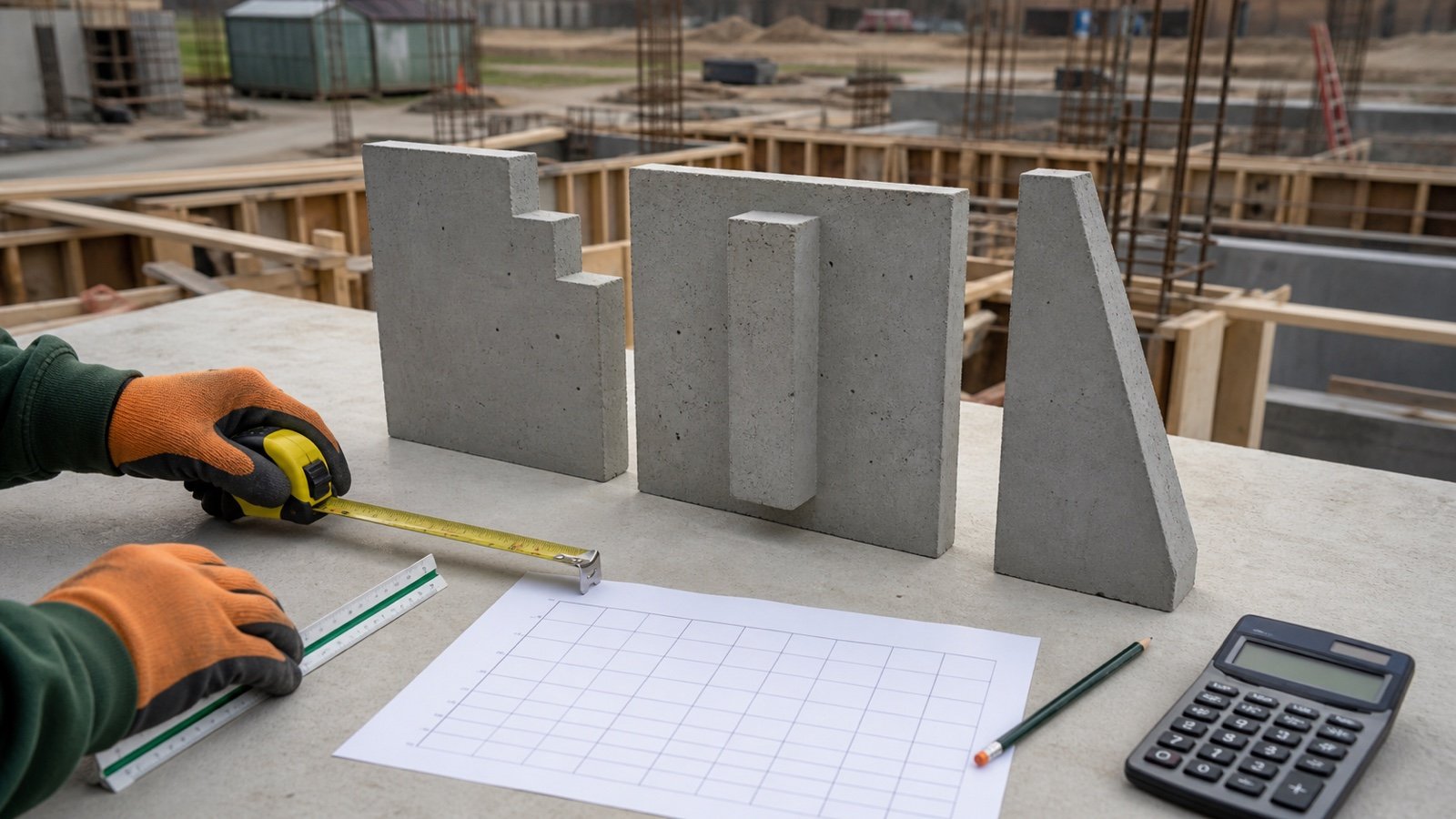
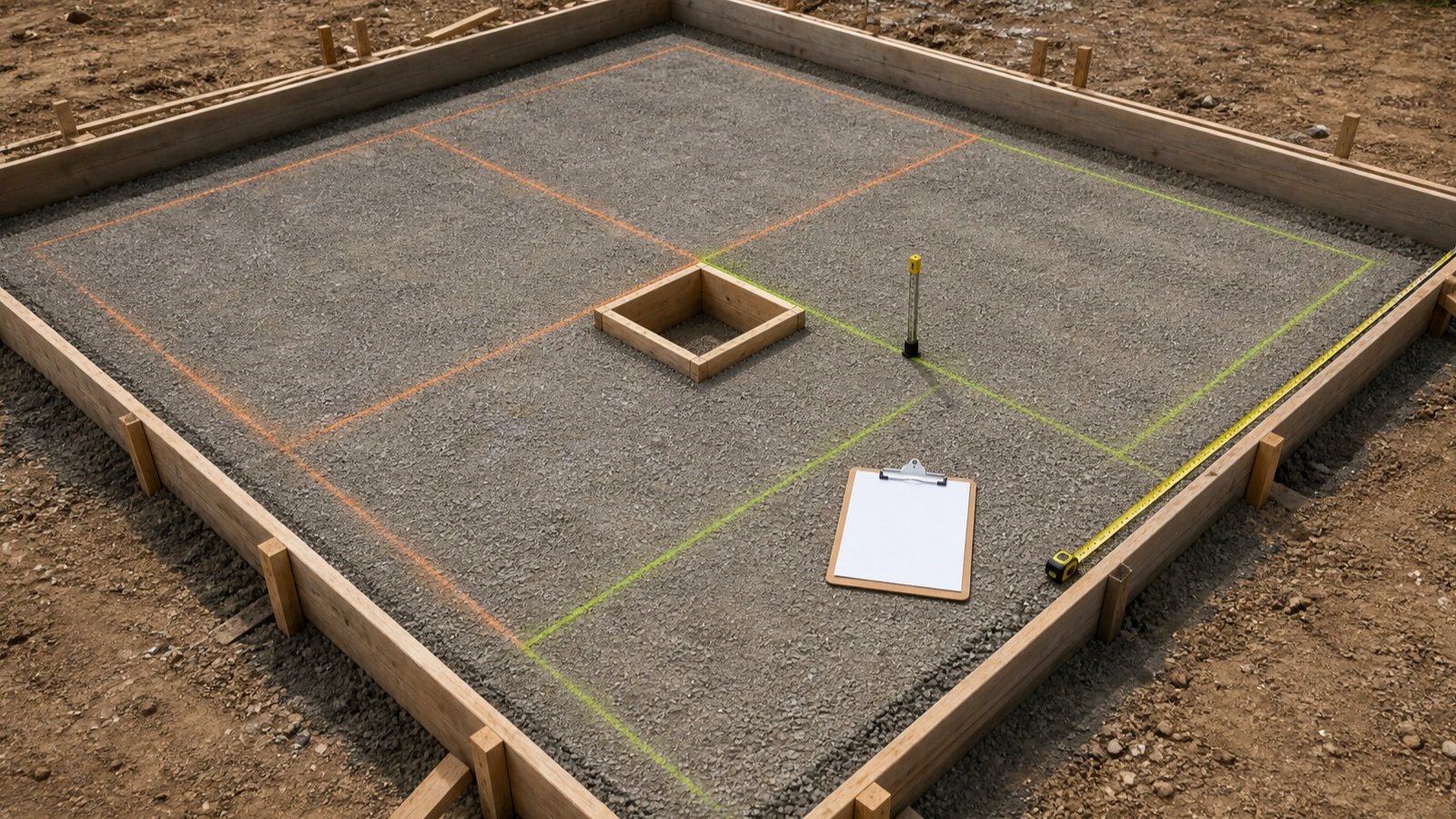
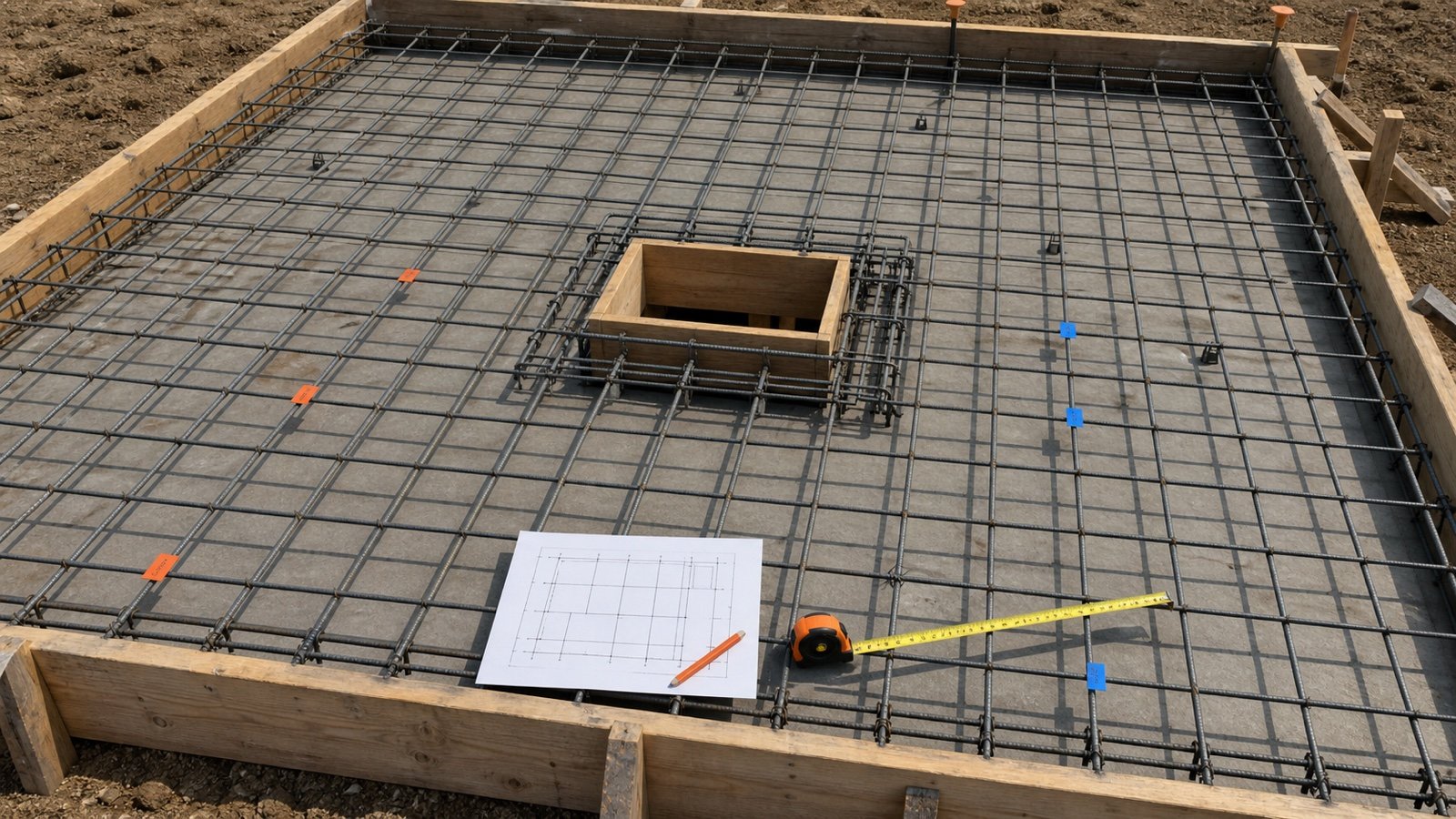
Shape does not prevent combining. A rectangular pad, round form and known-volume repair can share one group when their unrounded planning volumes and all operational conditions are compatible.
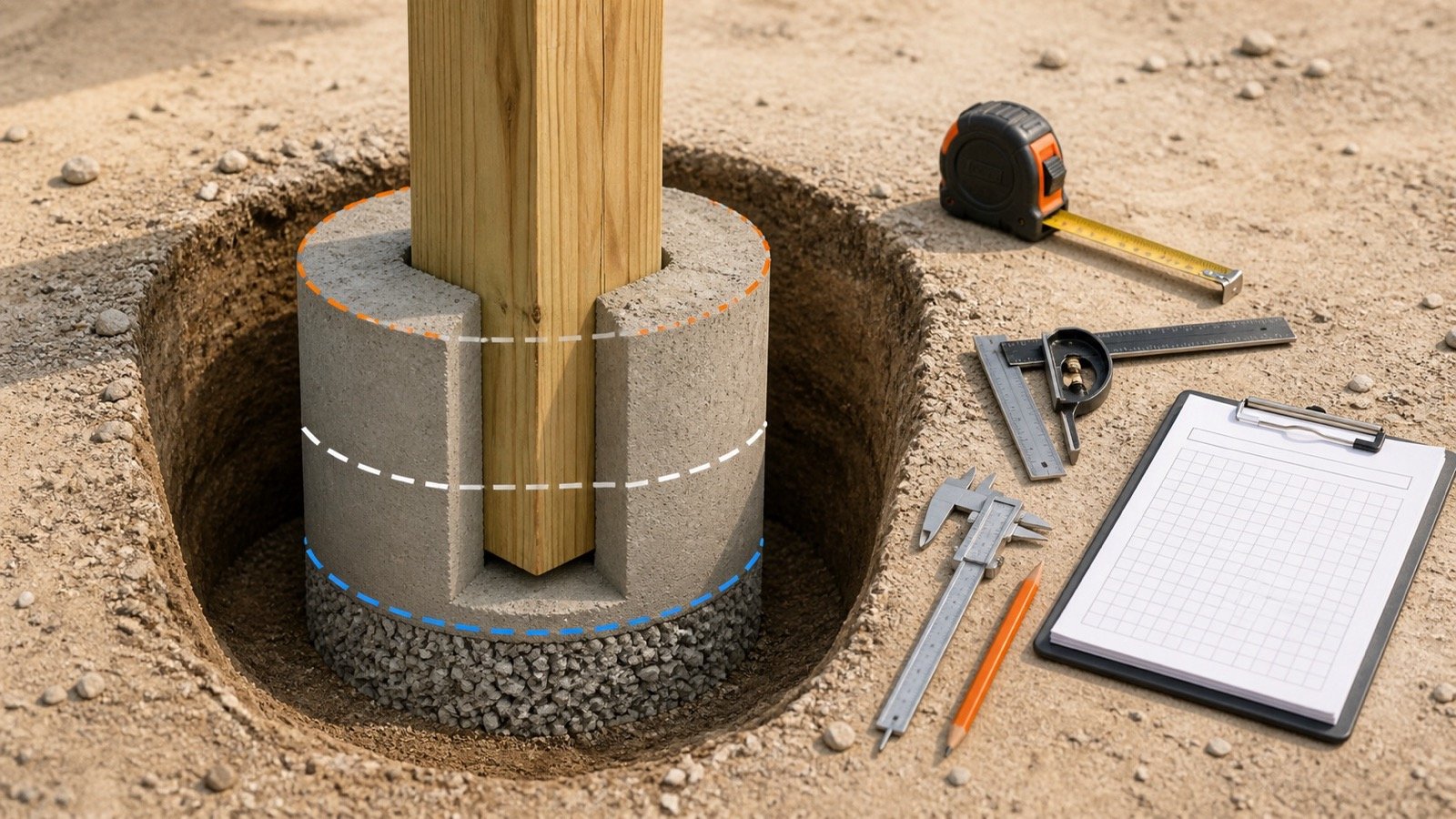
Calculate each shape with the correct geometry, then add the unrounded volumes. The Small Slab Examples guide shows rectangular and thickened-zone methods. Use a separate validated method for cylinders, holes, tapered sections and irregular forms.
What if one group crosses multiple mixer batches?
Package rounding and mixer batching are separate. A group can need 13 whole packages while the mixer safely accepts only a smaller number per batch.
Use the current product instructions, mixer rating and placement plan to divide whole packages into actual batches. Record package IDs, water, start time, output destination and exceptions for each batch. Do not infer safe mixer capacity from mixed yield.
Myth versus reality
| Myth | Reality |
|---|---|
| Every hole must round to a whole bag | Compatible holes in one operation can share mixed concrete from complete packages. |
| All project volume should always round once | Different products, days, allowances or acceptance records need separate groups. |
| Apply allowance after rounding bags | Apply a supported volume allowance before the final package division and ceiling. |
| A 0.4-bag remainder can always be stored | Partial dry material needs manufacturer approval, controlled proportioning and suitable condition. |
| Supplier pallet rounding changes yield | It changes commercial inventory, not product mixed volume. |
| Arithmetic surplus must be placed | Surplus needs an approved destination or inventory decision. |
Common concrete bag rounding mistakes
- Ceiling every shape before compatible volumes are added.
- Combining different products or yields.
- Combining work across days without a storage and placement plan.
- Applying allowance to an already rounded package count.
- Using a universal allowance.
- Hiding supplier case or pallet increments inside project volume.
- Assuming a partial dry bag stays uniform and usable.
- Counting arithmetic capacity as accepted placed concrete.
- Ignoring damaged, wet, lumpy, contaminated or returned packages.
- Using package count to approve mixer capacity or placement sequence.
What should the rounding record contain?
- Project, pour IDs, geometry revisions and unrounded measured volumes.
- Group ID and reason each pour belongs to it.
- Exact product, package, yield and data-sheet revision.
- Allowance, evidence and group planning volume.
- Exact quotient, whole-package ceiling and purchased capacity.
- Supplier increment and packages added only for commercial rounding.
- Mixer batches and allocation to forms or zones.
- Received, rejected, opened, used, unopened, returned and remaining packages.
- Fresh surplus, approved destination and exceptions.
Return to the Concrete Planning hub for packaged and ready-mix quantity workflows.
Safety and scope limits
Rounding does not design a hole, footing, slab, form, reinforcement, placement or joint. Use applicable drawings, specifications, permits, codes, soil information, manufacturer instructions and qualified professionals.
OSHA states that wet portland cement can cause caustic burns and dermatitis. Follow the current product safety data sheet and applicable controls for dust, skin, eyes, lifting, mixing equipment, electricity and washing.
Sources and source scope
- QUIKRETE Concrete Mix No. 1101 data sheet: named-product package yields, water and mixing context.
- QUIKRETE Concrete Calculator: manufacturer disclosure that its results are approximate and exclude uneven substrate or waste.
- NIST Guide to the SI Appendix B: unit conversions.
- OSHA, Concrete and Concrete Products: Controlling Hazards: wet-portland-cement hazard context.
Source scope: the manufacturer sources support the named product and calculator disclosures at the retrieval date. NIST supports unit arithmetic. OSHA supports its U.S. workplace context. None sets a universal grouping rule, allowance, supplier increment, partial-package method, placement sequence or structural design for a specific project.