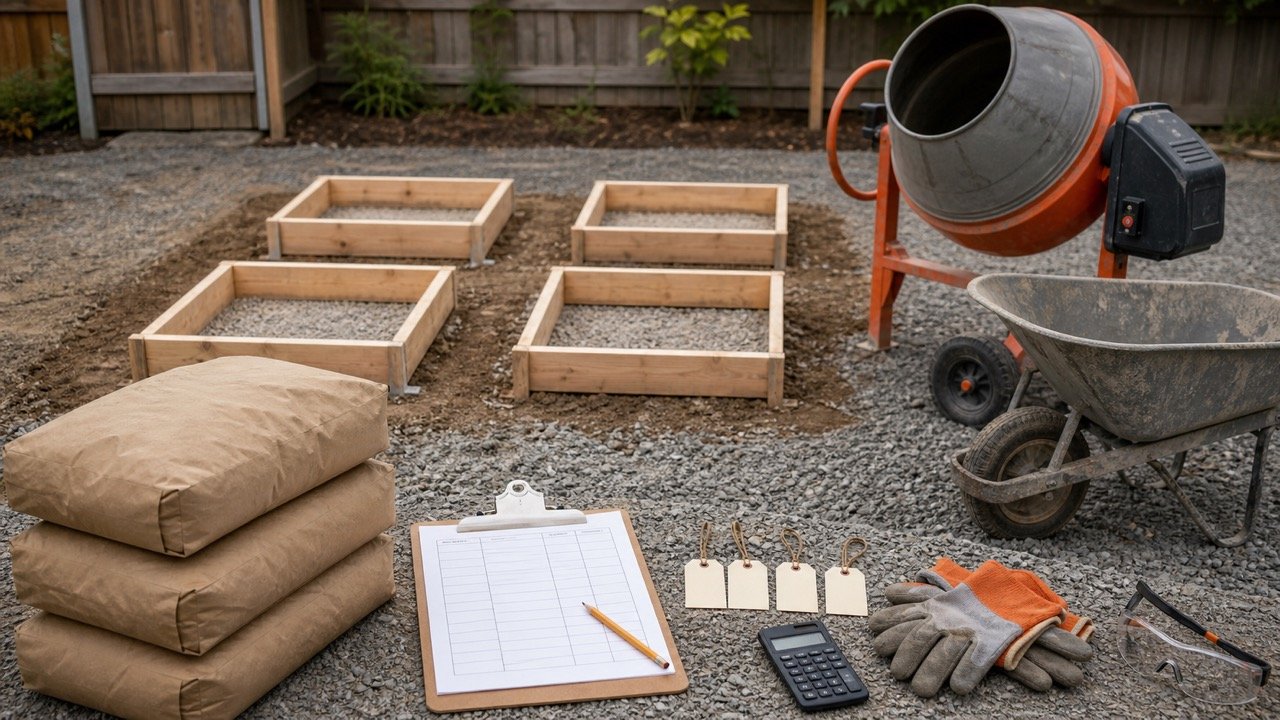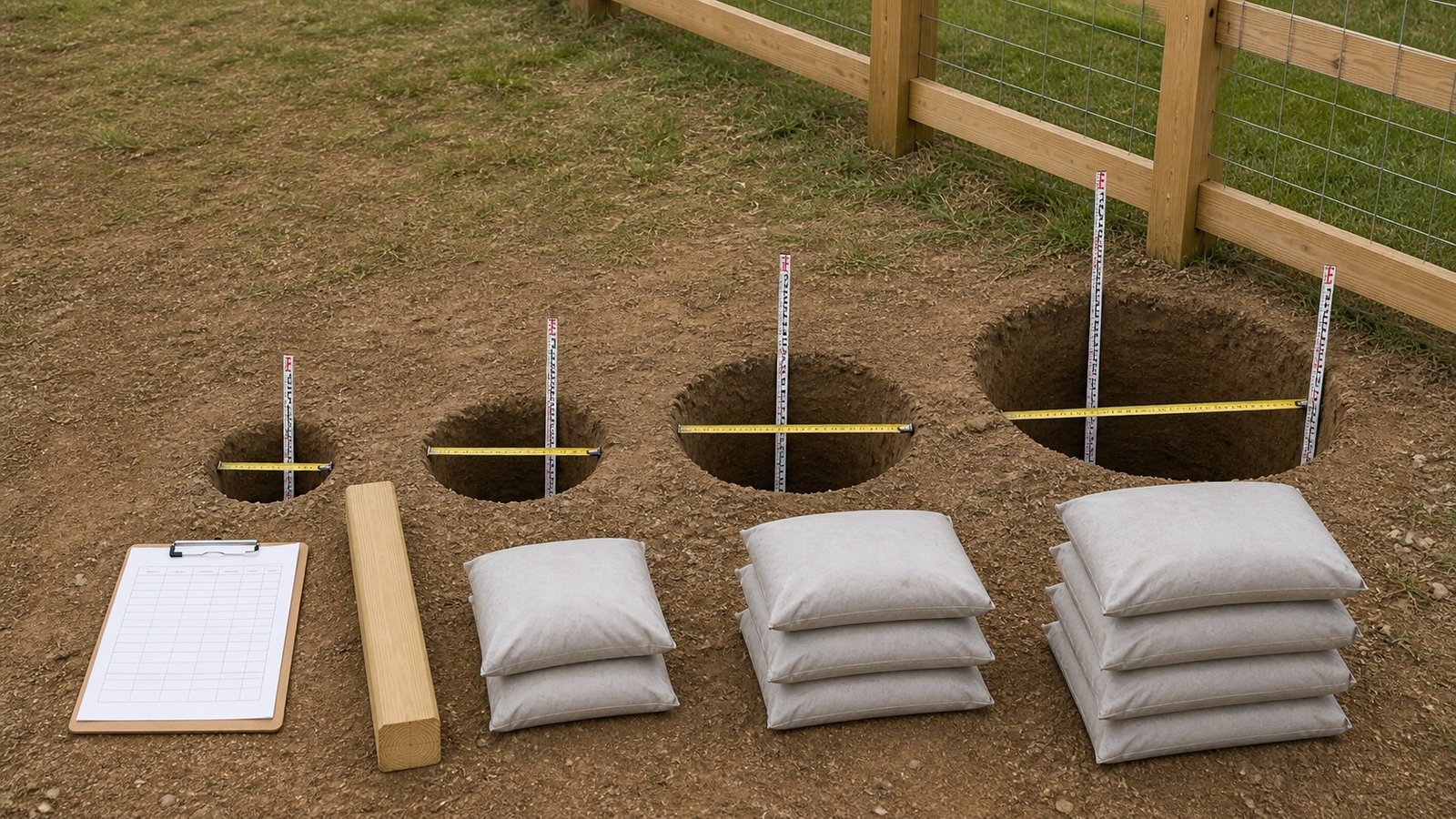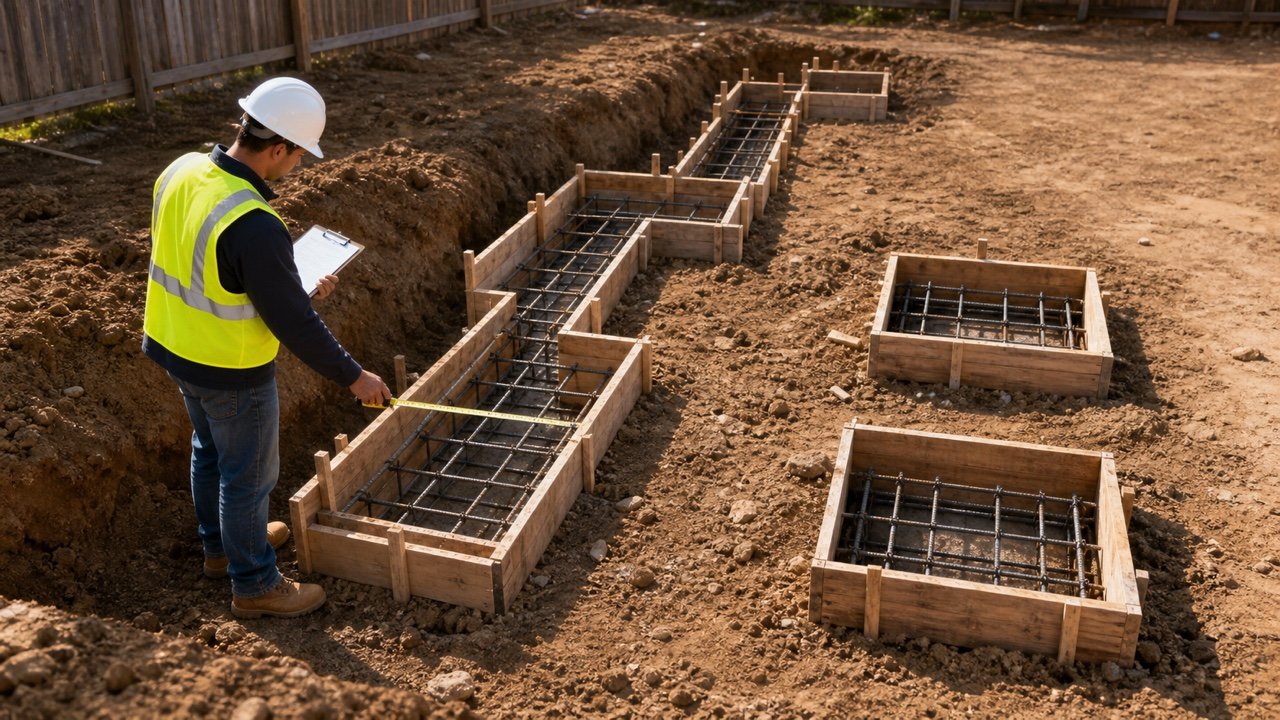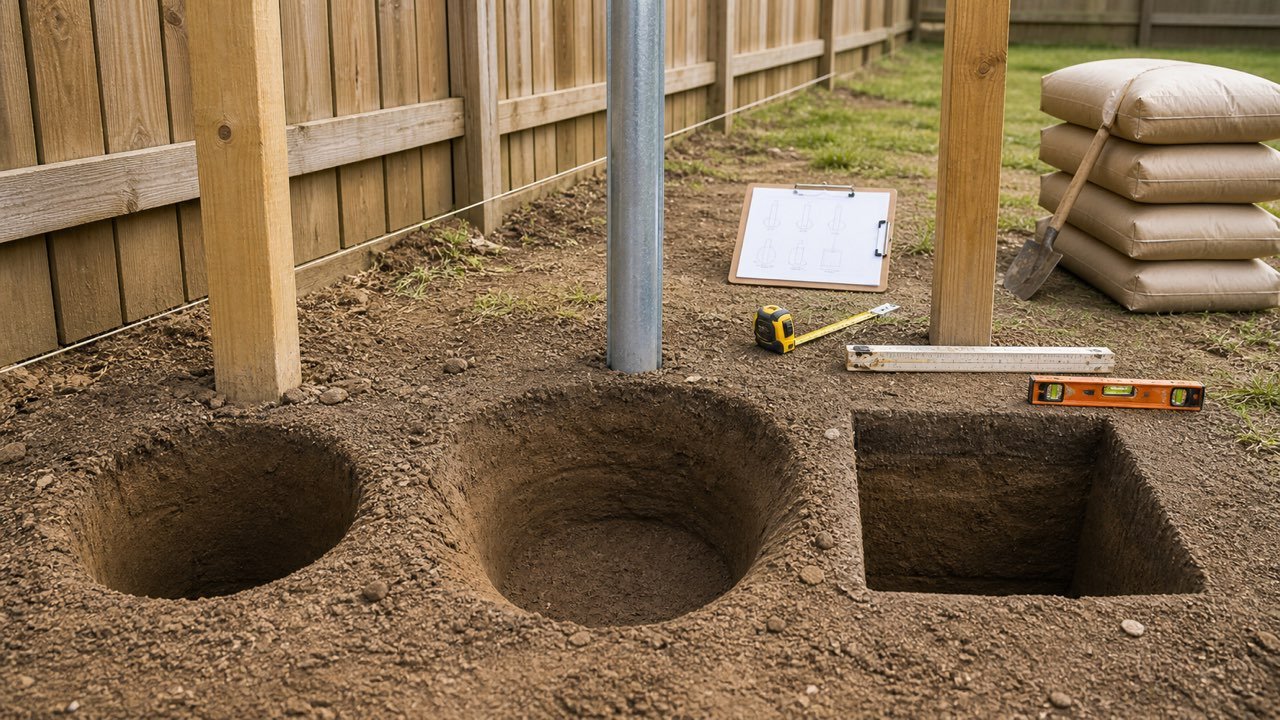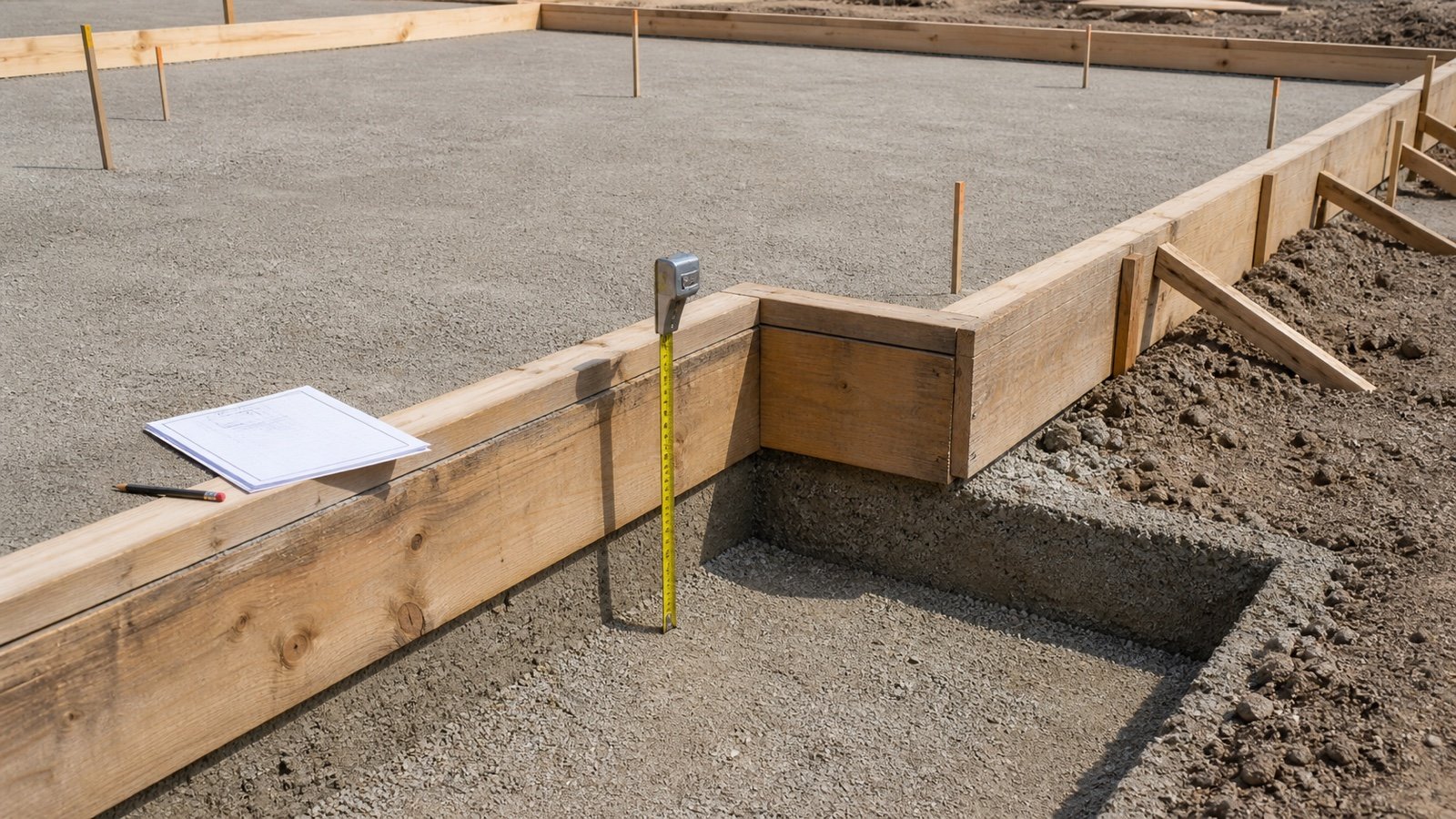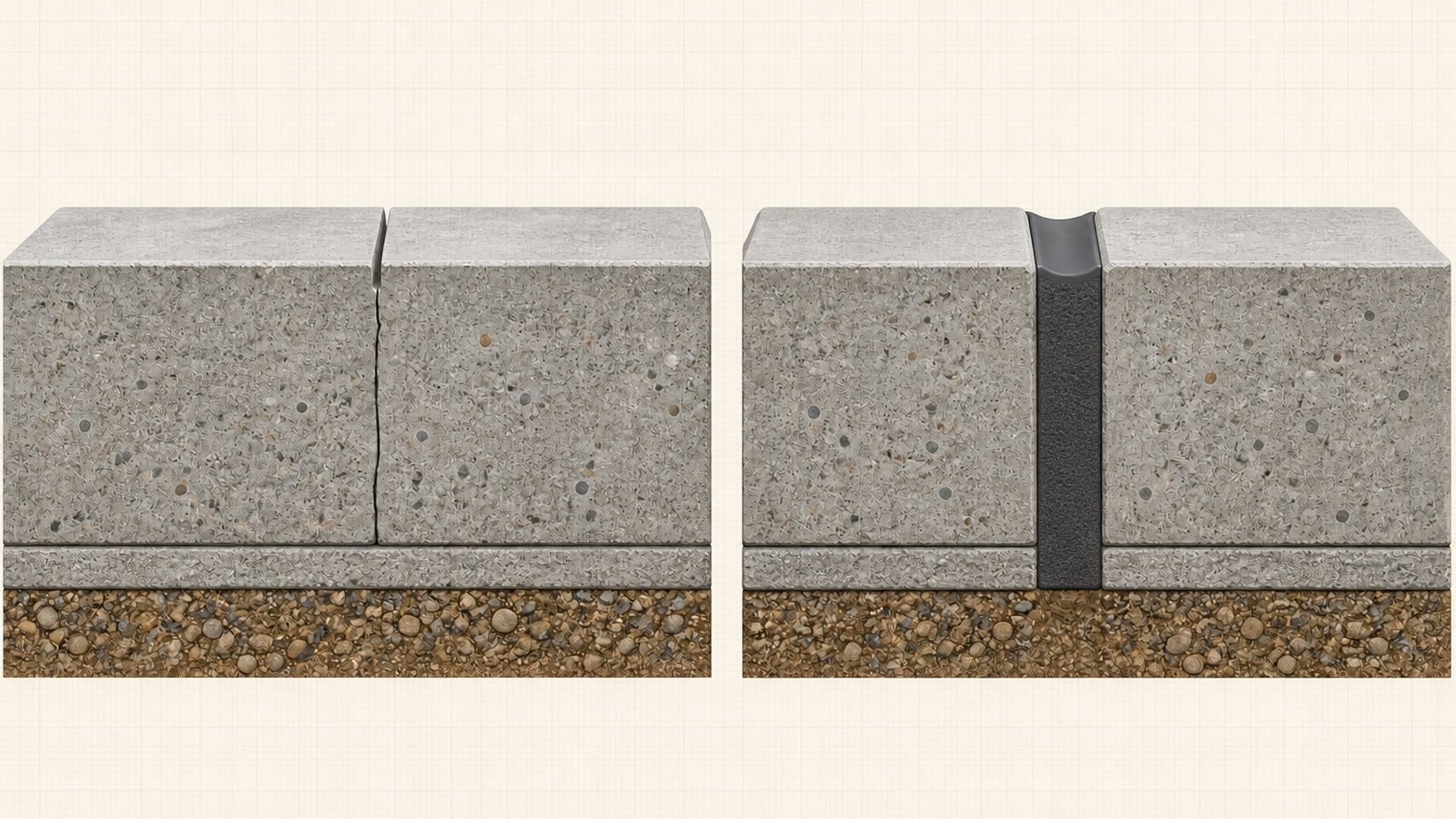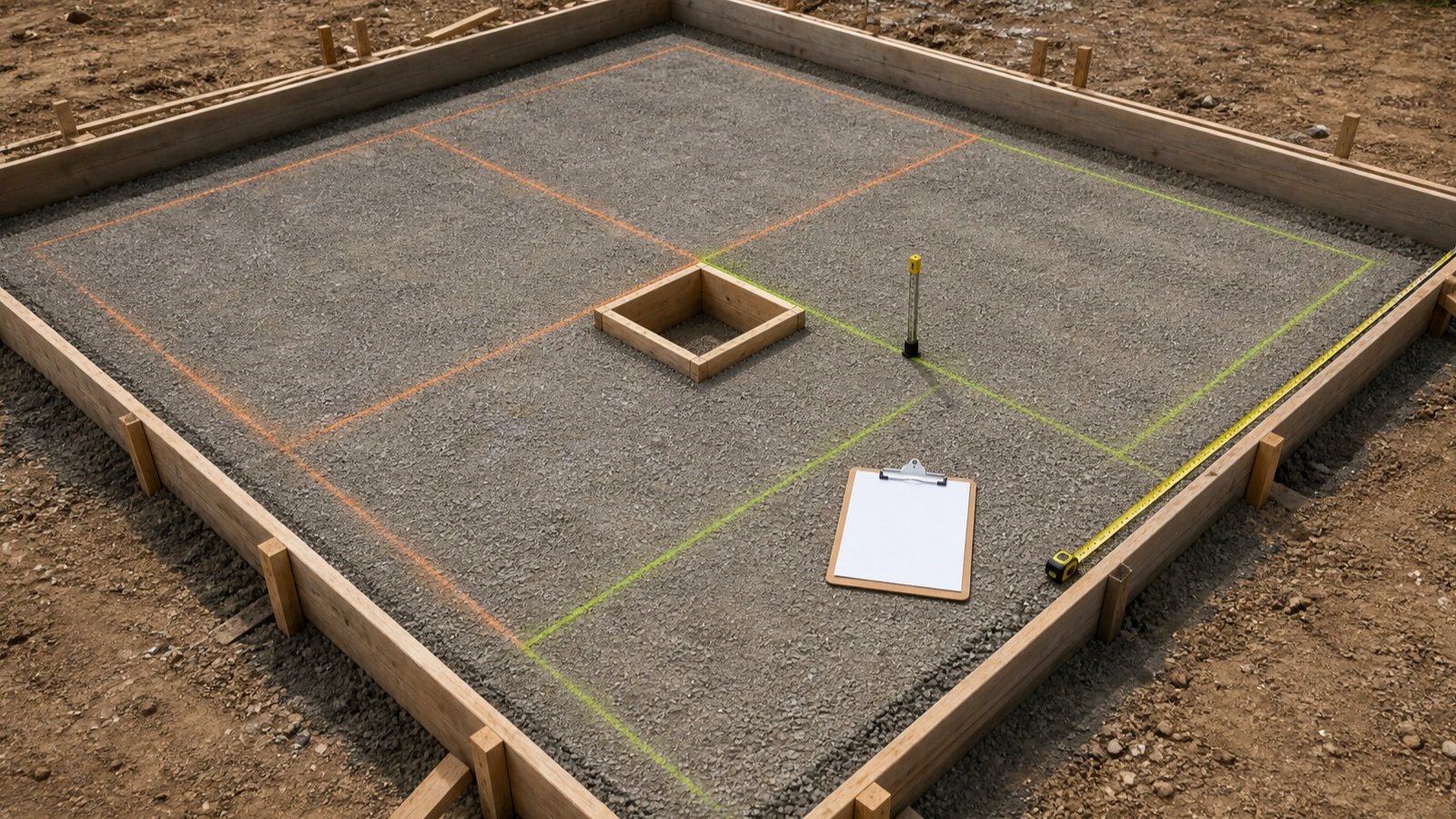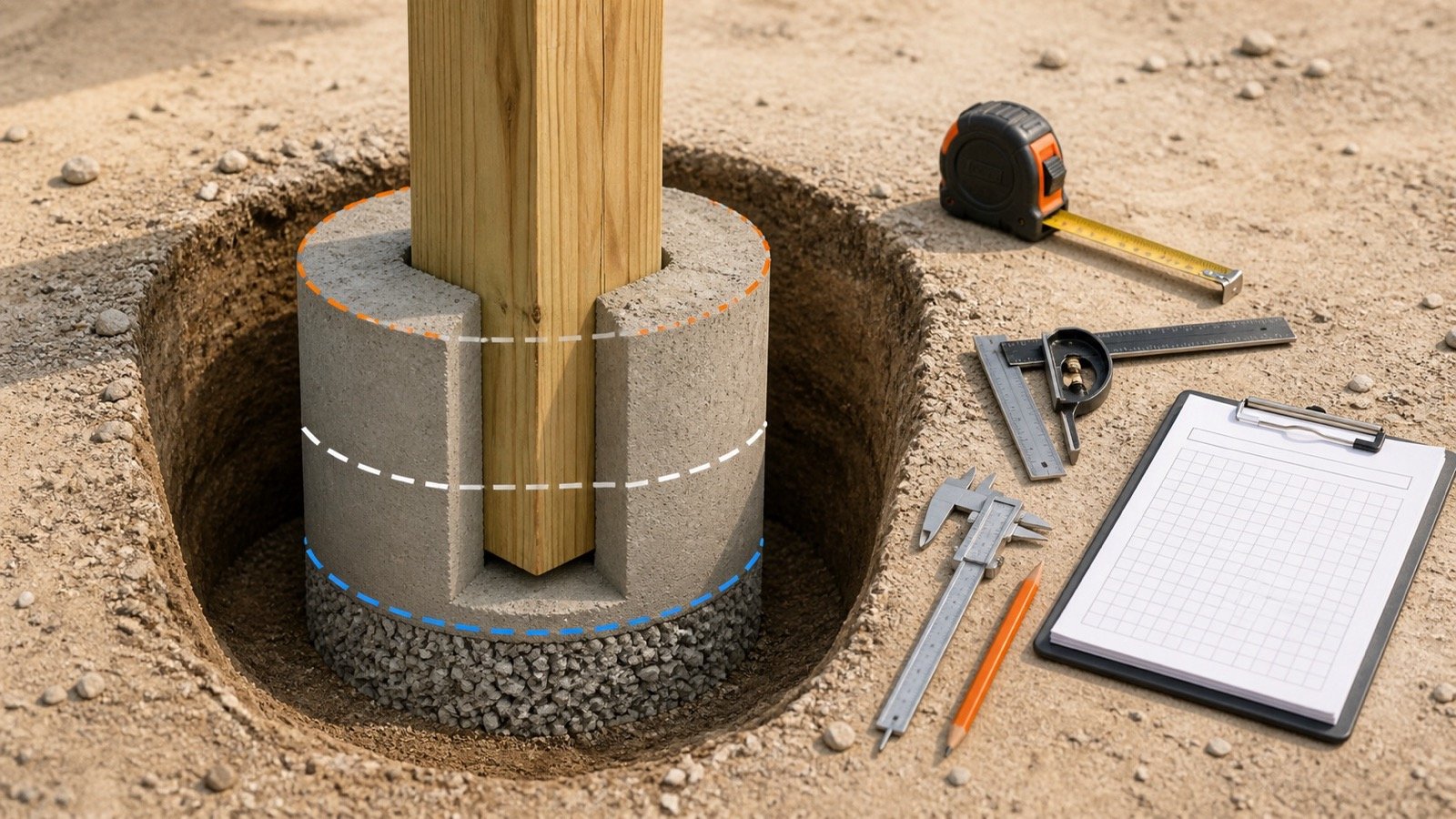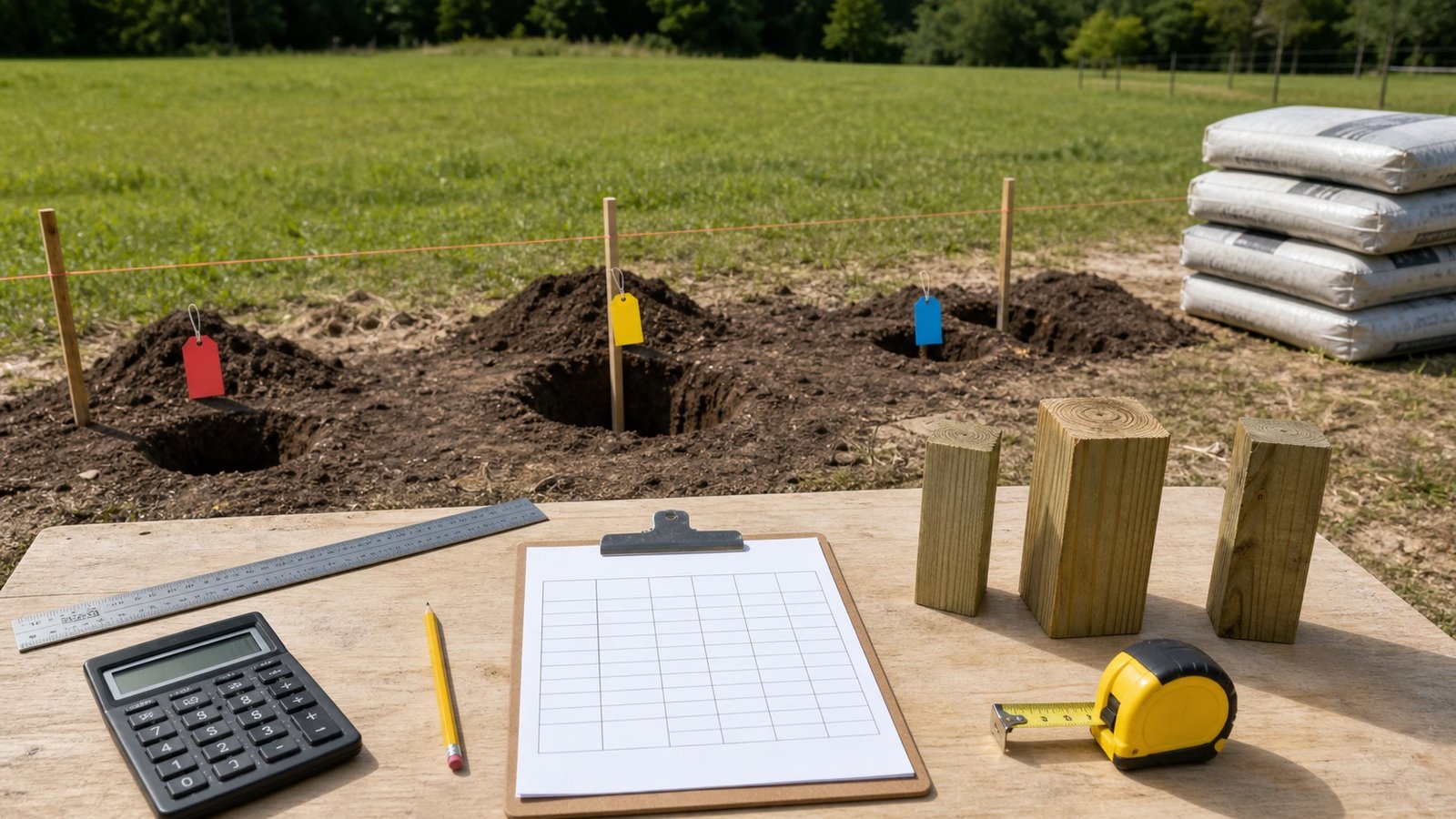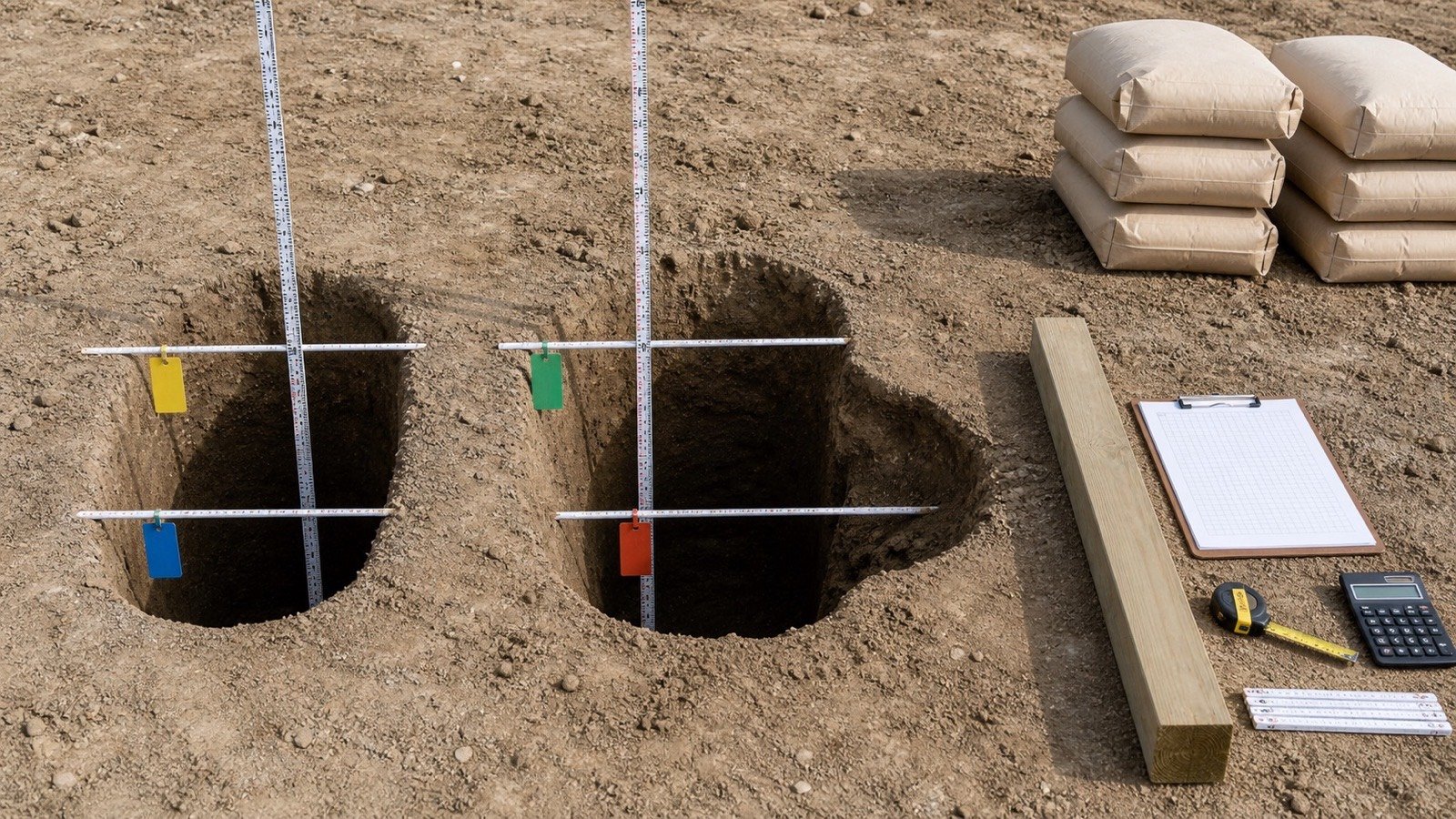
An oversized post hole can change a small bag order into a much larger concrete quantity. The change grows with the square of the diameter, so a few extra inches across several holes can matter more than a routine percentage allowance suggests.
Measure the concrete-filled boundary that the project accepts, compare it with the approved or planned boundary, and keep the difference as a field-change quantity. Loose soil, water, collapse, rock, utilities, and an unapproved hole remain construction or design issues until the responsible process resolves them.
How do you calculate extra concrete for an oversized post hole?
Calculate the accepted actual net concrete volume and subtract the original approved net volume. Use the same post displacement in both quantities only when the post section and its concrete overlap have not changed.
Extra concrete = accepted actual net volume − original approved net volume
For a straight round hole, the diameter difference can be compared directly:
Extra gross volume = π × depth × (actual diameter² − planned diameter²) ÷ 4
Keep dimensions in compatible units. Divide cubic inches by 1,728 for cubic feet. Use the Concrete Post Hole Calculator for each valid straight, tapered, or rectangular group.
A larger excavated void does not automatically become an approved larger concrete footing. Record the condition and obtain the required site, design, permit, inspection, or project decision before ordering against changed geometry.
Why does a small diameter change add so much volume?
Circular area uses the diameter squared. Increasing a 24 in deep hole from 8 in to 12 in raises gross volume from 0.698132 ft³ to 1.570796 ft³. The diameter rises by 50%, while gross volume rises by 125%.
| Measured diameter | Gross volume per hole | Extra vs 8 in hole | Extra for 12 holes |
|---|---|---|---|
| 8 in | 0.698132 ft³ | 0 ft³ | 0 ft³ |
| 9 in | 0.883573 ft³ | 0.185441 ft³ | 2.225295 ft³ |
| 10 in | 1.090831 ft³ | 0.392699 ft³ | 4.712389 ft³ |
| 11 in | 1.319905 ft³ | 0.621774 ft³ | 7.461283 ft³ |
| 12 in | 1.570796 ft³ | 0.872665 ft³ | 10.471976 ft³ |
The table compares gross boundaries with one depth. It does not set an acceptable hole diameter. Use the current approved detail and actual accepted measurements.
Worked example: 12 holes widened from 8 in to 12 in
A checked schedule originally used 12 straight holes, each 8 in in diameter with 24 in of concrete fill. Field measurement finds 12 straight holes at 12 in. Each hole contains the same actual 3.5 in × 3.5 in timber post over 22 in of concrete.
- Post displacement per hole: 3.5 × 3.5 × 22 ÷ 1,728 = 0.155961 ft³.
- Original net per hole: 0.698132 − 0.155961 = 0.542171 ft³.
- Accepted actual net per hole: 1.570796 − 0.155961 = 1.414836 ft³.
- Extra per hole: 1.414836 − 0.542171 = 0.872665 ft³.
- Extra for 12 holes: 0.872665 × 12 = 10.471976 ft³.
The unchanged post displacement cancels in the difference. Keep both net quantities in the record because a changed post, overlap, sleeve, collar, or concrete level can prevent that shortcut.
How many extra bags does the wider group need?
Divide the compatible extra planning volume by the current mixed yield of the exact product and package. Round once for the group that can share material.
The QUIKRETE Concrete Mix No. 1101 data sheet lists an approximate yield of 0.60 ft³ for its named 80 lb package. Using that product only as a dated fixture:
- Extra measured volume: 10.471976 ft³.
- Example allowance: 0%, because no additional basis is supplied.
- Exact extra package quotient: 10.471976 ÷ 0.60 = 17.453293.
- Whole-package difference: 18 additional packages.
- Purchased extra capacity: 18 × 0.60 = 10.8 ft³.
Package weight alone does not prove mixed yield. Verify the product name, number, package, market, current data sheet, approximate yield, water instructions, storage condition, and application limits. The Concrete Bag Yield Chart explains that product record.
How should a locally widened or collapsed hole be measured?
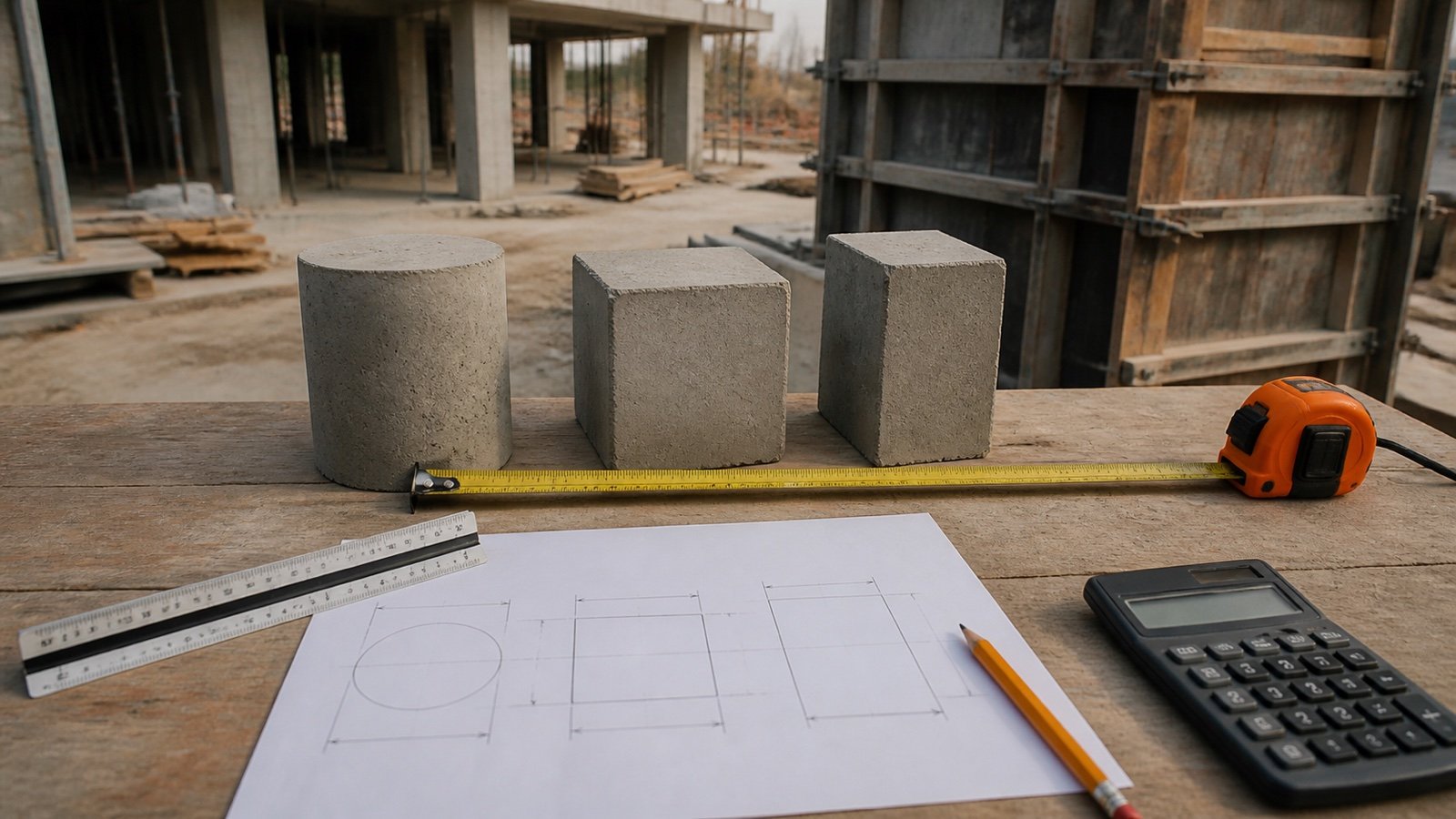
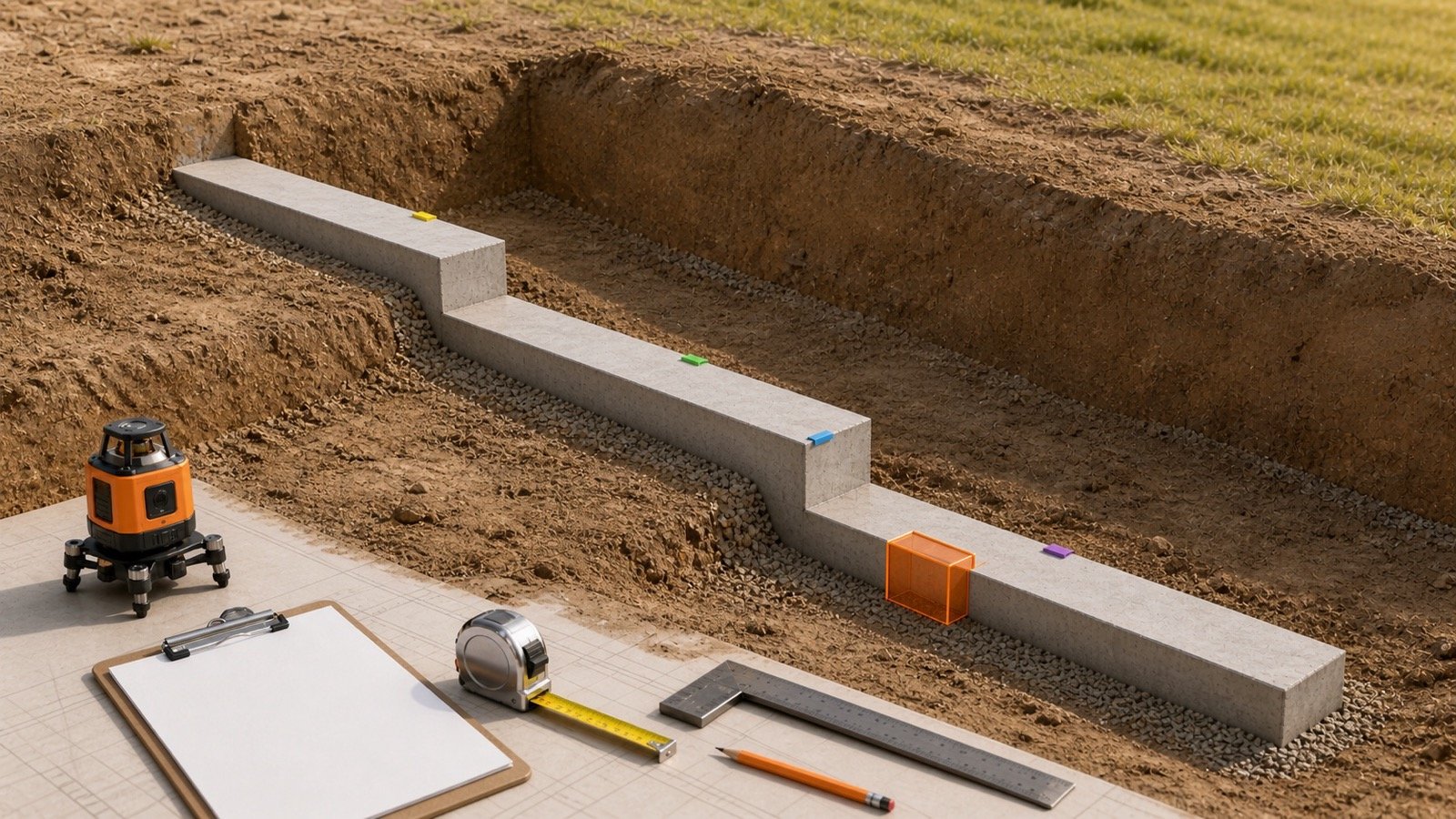
Split the accepted concrete boundary into non-overlapping vertical sections. Record the top and bottom level, shape, dimensions, and measurement method for every section.
| Observed shape | Quantity model | Required record |
|---|---|---|
| Straight round zone | Cylinder | Diameter and vertical depth |
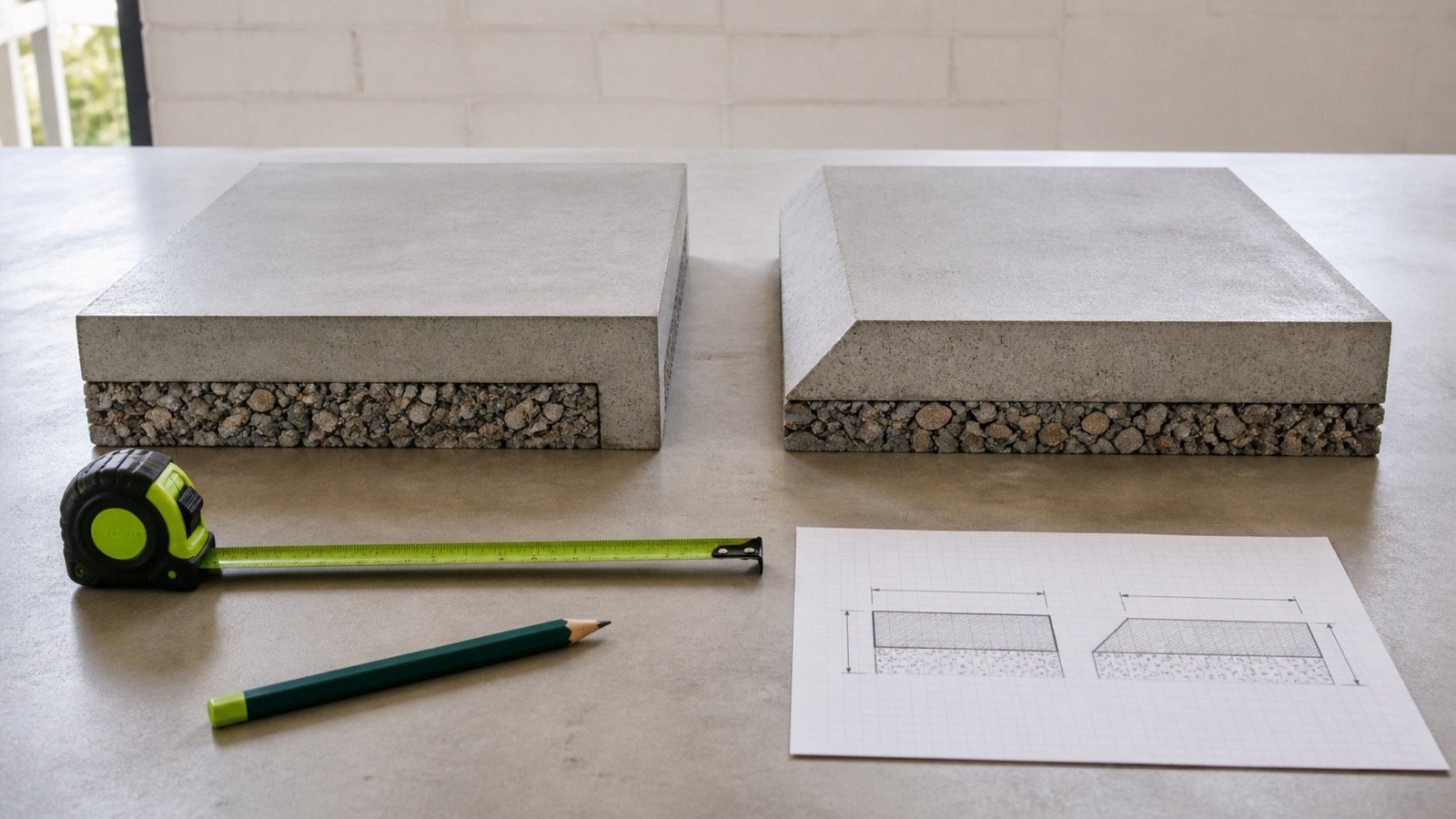
| Steady diameter change | Circular frustum | Top diameter, bottom diameter, and depth |
| Local side widening | Short measured sections or an accepted separate solid | Depth limits and horizontal measurements |
| Step or ledge | Separate solids above and below the step | Each section's actual boundary |
| Loose or continuing collapse | Unresolved | Safe correction and acceptance before quantity handoff |
| Water or buried obstruction | Unresolved | Applicable site and project decision |
Do not average the widest and narrowest diameters across the full depth unless that average represents a valid accepted model. A sketch or section photograph can show where each measurement applies.
Worked example: one hole with a widened lower zone
An original straight round boundary is 10 in in diameter and 30 in deep. The accepted field boundary has a 10 in diameter upper cylinder for 10 in, a frustum from 10 in to 14 in over 8 in, and a 14 in diameter lower cylinder for 12 in.
| Section | Calculation | Gross volume |
|---|---|---|
| Upper cylinder | 10 in diameter × 10 in | 0.454513 ft³ |
| Middle frustum | 10 in top × 14 in bottom × 8 in | 0.528447 ft³ |
| Lower cylinder | 14 in diameter × 12 in | 1.069014 ft³ |
| Accepted actual total | 3 non-overlapping sections | 2.051974 ft³ |
| Original straight boundary | 10 in diameter × 30 in | 1.363538 ft³ |
| Measured change | Actual − original | 0.688435 ft³ |
At the same example 0.60 ft³ package yield, the change equals 1.147392 packages before rounding. This one changed hole needs 2 additional whole packages when it forms its own purchase group. Compatible changed holes can be added at full precision before the group ceiling.
Does post displacement change the extra-volume result?
Post displacement cancels only when the original and accepted actual records use the same post section and the same length inside concrete. Recalculate both net volumes when either input changes.
- A deeper post changes the occupied length.
- A square post substituted for a round post changes cross-sectional area.
- A sleeve or cast-in item can occupy another verified volume.
- Concrete below the post has no post displacement.
- An above-grade collar can add concrete without adding the same post overlap.
Use the Concrete Post Hole Volume guide for post displacement, vertical zones, and tapered-hole formulas.
Can rocks, debris, soil, or a form reduce the concrete quantity?
The quantity record cannot approve material placed inside an oversized hole. Added objects, recompacted soil, forms, sleeves, or a revised footing boundary can change load transfer, drainage, durability, placement, inspection, and the finished foundation.
Forum suggestions often propose rocks, broken concrete, boards, tubes, or backfill. Those comments identify a common cost problem but do not approve a solution for another project. Use only the current accepted detail, compatible materials, manufacturer instructions, local requirements, and responsible project decision.
Why should measured overbreak stay separate from allowance?
Measured overbreak has a location and a calculated volume. An allowance is a documented planning input for uncertainty that remains after measured quantities are complete.
| Record | What it contains | How it enters the total |
|---|---|---|
| Original quantity | Approved or planned geometry and revision | Baseline net volume |
| Measured field change | Hole ID, accepted sections, dimensions, and date | Calculated volume difference |
| Planning allowance | Percentage or quantity with a stated reason | Applied after the measured basis is clear |
| Package ceiling | Exact product yield and compatible group | Applied once to the purchase group |
A flat 10% allowance cannot represent one severe widening beside 11 unchanged holes. The Post Hole Concrete Worksheet keeps the original row, changed row, package basis, and checker together.
When should the changed volume go to ready mix?
Keep the accepted measured change in cubic feet, cubic yards, litres, or cubic metres before choosing supply. Bag planning uses current package yield. Ready-mix planning uses supplier selling increments, mixture requirements, delivery access, placement rate, minimums, fees, and current availability.
Add all compatible approved post-hole groups at full precision, then use the Ready-Mix Concrete Calculator. A quantity comparison does not decide which concrete product, mixture, or placement method the project permits.
What belongs in the field-change record?
- Project, location, hole ID, post type, date, and preparer.
- Original drawing, detail, permit, or quantity revision.
- Original shape, dimensions, fill levels, post section, and concrete overlap.
- Observed condition, including loose soil, water, rock, collapse, or equipment effect.
- Accepted actual sections with measurement points and units.
- Gross, displacement, net, and difference calculations.
- Photograph or sketch references where the project permits them.
- Decision, approver, unresolved items, product group, and placement date.
- Exact yield, package quotient, supplier increment, and whole order quantity.
- Independent checker and revision history.
Common oversized-hole quantity mistakes
- Using the auger diameter after the soil has widened.
- Applying the widest diameter through the full depth.
- Averaging unrelated widths without a valid geometric model.
- Calling a continuing collapse a fixed quantity.
- Using excavation depth when concrete stops higher.
- Subtracting the post below its physical bottom.
- Replacing a measured change with a default waste percentage.
- Rounding each hole before compatible changes are combined.
- Using package mass as mixed yield.
- Letting a bag count approve a changed foundation.
Use the Concrete Bags per Post Hole Chart for quick straight-hole reference rows. Return to the Concrete Planning hub for related quantity tools.
What safety and scope limits apply?
Locate expected underground utilities before excavation. OSHA 29 CFR 1926.651 requires safe location steps as covered United States excavation work approaches an underground installation. Follow the utility-owner process, local law, site controls, and responsible supervision that apply to the project.
Keep people and stored materials away from unsafe hole edges. Resolve loose soil, water, unstable sides, equipment hazards, and access before taking measurements. Wet portland cement can cause caustic burns and dermatitis, so follow the current product safety data sheet and applicable controls.
This page calculates quantities from accepted geometry. It does not design a post foundation, approve an oversized hole, specify remediation, assess soil or frost, select concrete, detail reinforcement or connections, or certify completed work.
Sources and source scope
- NIST Handbook 133 (2026), Appendix E: cubic-inch, cubic-foot, cubic-yard, litre, and cubic-metre relationships.
- QUIKRETE Concrete Mix No. 1101 SPEC-DATA: the named product's post-footing scope, package sizes, approximate yields, and mixing context.
- OSHA 29 CFR 1926.651: the stated United States underground-installation and excavation context.
- OSHA concrete-products hazard guidance: construction-sector concrete hazard resources.
Source scope: NIST supports unit relationships. The manufacturer record supports only its named product and stated workflow. OSHA supports the cited United States workplace boundary. The worked dimensions are arithmetic fixtures. These sources do not approve an oversized hole, remediation, filler, universal allowance, product, yield, price, soil capacity, frost depth, connection, or structural design.